Hinduismus · Yoga · Tantra · Advaita Vedanta
Sri Aurobindo
শ্রীঅরবিন্দ · অরবিন্দ ঘোষ · श्री अरविन्द
1872 – 1950Historisch belegte Person
Bengalischer Philosoph, Dichter und Yogi, in England erzogen, der von der Führung des radikalen indischen Nationalismus zu einem zurückgezogenen Leben in Pondicherry überging. In der Zeitschrift Arya (1914–1921) und in einer gewaltigen Korrespondenz formulierte er den Integralen Yoga: die Evolution des Bewusstseins von der Materie zum Mental und vom Mental zum Supramentalen sowie die Verwandlung des Lebens statt der Flucht aus der Welt. Seine Hauptwerke sind Das göttliche Leben, Die Synthese des Yoga, Essays über die Gita und das Epos Savitri.
- Werke
- 65Werke
- Ausgaben
- 126Ausgaben
- Zitate
- 8Zitate
- Videos
- 15Videos
- Bilder
- 7Bilder
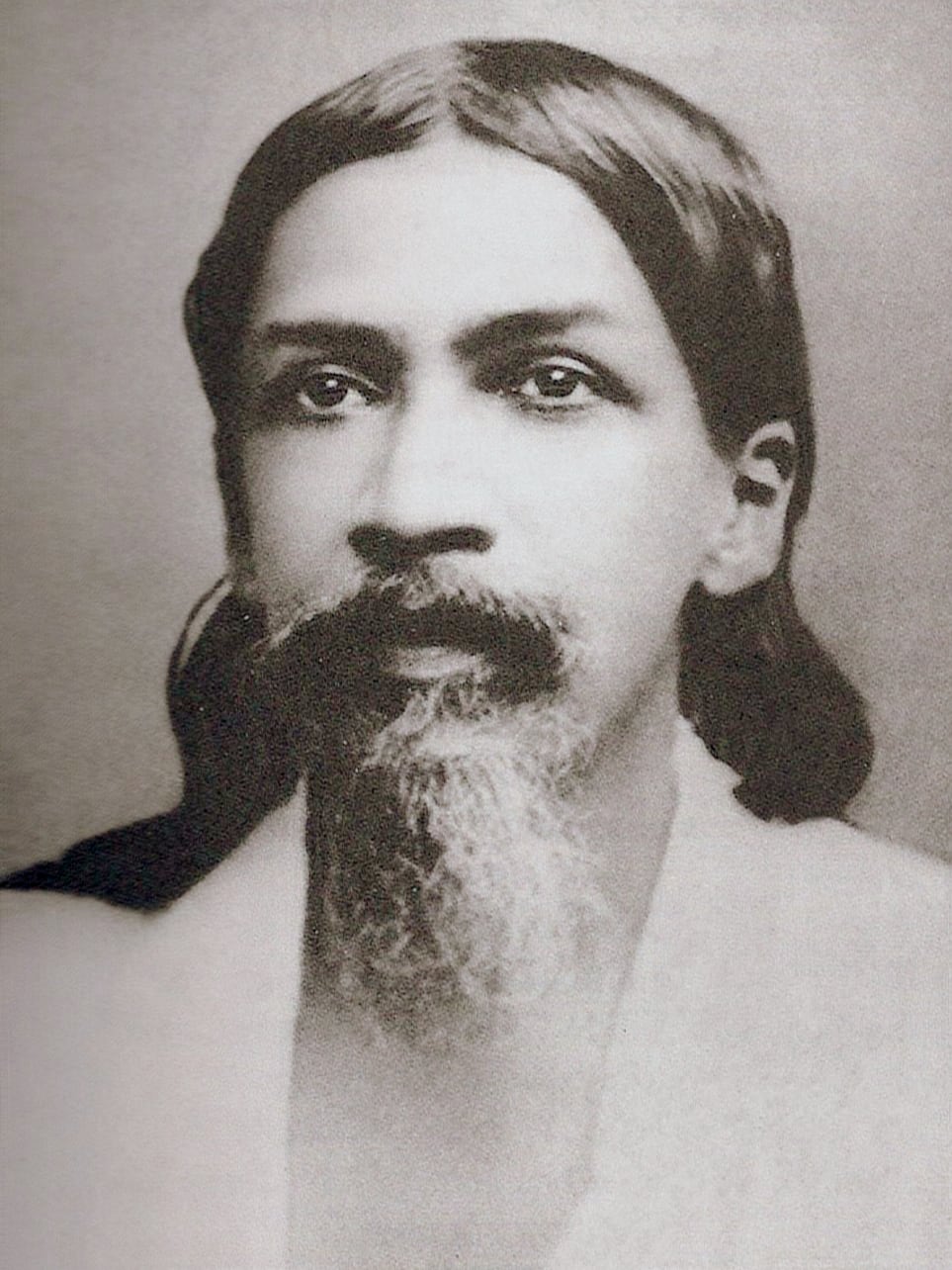
Sri Aurobindo hacia 1900 · Public domain
In eigenen Worten
«The earliest preoccupation of man in his awakened thoughts and, as it seems, his inevitable and ultimate preoccupation,—for it survives the longest periods of scepticism and returns after every banishment,—is also the highest which his thought can envisage.»The Life Divine, libro I, cap. I («The Human Aspiration»); primera frase del libro (texto revisado de 1939, ed. de Nueva York 1951)

Zum Einstieg ein Werk
The Life DivineDer zentrale Gedanke
The Supermind (supramental): The Supermind is the central notion of his thought: a truth-consciousness (rita-chit) intermediate between the absolute Sachchidananda and mind, in which knowledge does not split into subject and object nor proceed by reasoning, but sees unity in diversity directly.
Im Zusammenhang sehen
Biografie
5 Min. Lesezeit
Unterstützte Übersetzung aus dem spanischen Original, Durchsicht durch einen muttersprachlichen Übersetzer ausstehend.
Ein Kind, zum Engländer erzogen
Aurobindo Ghose wurde am 15. August 1872 in Kalkutta geboren, als dritter Sohn von Krishna Dhun Ghose, einem in Edinburgh ausgebildeten, anglophilen und glaubenslosen Arzt, und von Swarnalata Devi, Tochter des Brahmo-Reformers Rajnarayan Bose. Der Vater wollte aus seinen Söhnen englische Gentlemen machen: Nach einer Klosterschule irischer Nonnen in Darjeeling brachte er sie 1879 nach England und vertraute sie einem kongregationalistischen Geistlichen in Manchester an, mit der Anweisung, sie dürften keinen Umgang mit Indern haben. Aurobindo besuchte danach die St Paul's School in London und studierte als Stipendiat am King's College in Cambridge, wo er in den alten Sprachen glänzte. Er bestand die Prüfung für den Indian Civil Service, erschien aber 1892 nicht zur Reitprüfung und wurde ausgeschlossen; später erklärte er, er habe der britischen Regierung nicht dienen wollen. Im Februar 1893 kehrte er nach Indien zurück; sein Vater war kurz zuvor gestorben, als ihn die falsche Nachricht erreichte, das Schiff seines Sohnes sei gesunken.
Baroda: der Beamte und der Verschwörer
Dreizehn Jahre lang diente er dem Maharadscha von Baroda als Beamter, Sekretär und Lehrer – zuletzt als Vizedirektor des Baroda College –, während er Bengali und Sanskrit lernte und die Upanishaden, die Gita und Kalidasa las. 1893 und 1894 veröffentlichte er im Indu Prakash in Bombay eine anonyme Artikelserie, „New Lamps for Old“, die dem Indischen Nationalkongress Unterwürfigkeit vorwarf. Im Verborgenen baute er zusammen mit seinem Bruder Barindra revolutionäre Gruppen in Bengalen auf. 1901 heiratete er die vierzehnjährige Mrinalini Bose, an die er 1905 einen berühmten Brief über seine drei „Verrücktheiten“ schrieb: dem Land alles zu geben, was er verdiente, Gott von Angesicht zu Angesicht zu sehen und Indien wie eine Mutter zu behandeln. Um 1904 begann er Atemkontrolle zu üben, und Anfang 1908 folgte er in Baroda drei Tage lang den Anweisungen eines marathischen Yogi, Vishnu Bhaskar Lele, und erlebte, was er als vollkommenes Schweigen des Geistes beschrieb.
Bande Mataram
Die Teilung Bengalens 1905 führte ihn nach Kalkutta. Er wurde der erste Direktor des Bengal National College und ab 1906 die führende Feder der Tageszeitung Bande Mataram, in der er als einer der Ersten offen die vollständige Unabhängigkeit forderte und einen passiven Widerstand – Boykott, nationale Erziehung, Selbstverwaltung – verfocht, der Gewalt nicht ausschloss. Auf dem Kongress von Surat im Dezember 1907 führte er mit Bal Gangadhar Tilak den sogenannten extremistischen Flügel an. Am 2. Mai 1908, nach dem Anschlag von Muzaffarpur, wurde er als mutmaßlicher Drahtzieher der Maniktala-Verschwörung verhaftet, im sogenannten Alipore-Bombenprozess, und verbrachte ein Jahr in Untersuchungshaft, großenteils in Einzelhaft. Dort, so erzählte er in der Rede von Uttarpara, las er die Gita und sah Vasudeva, Krishna, in den Mauern, in den Bäumen, in den Häftlingen und in den Wärtern. Von Chittaranjan Das verteidigt, wurde er am 6. Mai 1909 freigesprochen.
Pondicherry und die Zeitschrift Arya
Nach seiner Freilassung gab er zwei Wochenblätter heraus, Karmayogin auf Englisch und Dharma auf Bengali, doch die Polizei bereitete einen neuen Prozess vor. Im Februar 1910 zog er sich, einem, wie er es nannte, inneren Befehl folgend, nach Chandernagore zurück, und am 4. April erreichte er Pondicherry, französisches Territorium. In die aktive Politik kehrte er nicht mehr zurück. Im März 1914 lernte er Mirra Alfassa kennen, eine in okkulten Lehren bewanderte Französin, und gründete mit ihrem Mann, Paul Richard, die Monatsschrift Arya, die zwischen August 1914 und Januar 1921 fast sein gesamtes großes Prosawerk in Fortsetzungen veröffentlichte: Das göttliche Leben, Die Synthese des Yoga, Essays über die Gita, Das Geheimnis des Veda, Der Zyklus der menschlichen Entwicklung, Das Ideal einer geeinten Menschheit, Die Dichtung der Zukunft. Zugleich führte er ein Tagebuch seiner Übung, das Record of Yoga, das eine minuziöse Methode und Erfahrungen offenbart, die nur er selbst überprüfen konnte.
Der Ashram und das Schweigen
Mirra Alfassa kehrte 1920 zurück, um zu bleiben. Am 24. November 1926, einem Datum, das seine Anhänger für entscheidend halten, zog sich Aurobindo in seine Räume zurück und übertrug ihr, die er fortan die Mutter nannte, die Leitung der Gruppe, die nun zum Sri Aurobindo Ashram wurde. Vierundzwanzig Jahre lang zeigte er sich nur wenige Male im Jahr. Wohl aber antwortete er schriftlich, oft nachts und an den Rändern der Hefte seiner Schüler: Tausende von Briefen, die heute vier Bände der Briefe über den Yoga füllen. Er überarbeitete Das göttliche Leben für die Buchausgabe (1939–1940), schrieb und schrieb immer wieder neu an Savitri, einem Epos in Blankversen von rund vierundzwanzigtausend Versen, das eine Episode des Mahabharata neu gestaltet, und verfolgte aufmerksam den Gang der Welt: Er unterstützte die Alliierten gegen Hitler und den Cripps-Vorschlag von 1942, und am 15. August 1947, dem Tag der Unabhängigkeit und seinem fünfundsiebzigsten Geburtstag, verbreitete er eine Botschaft, in der er die Teilung beklagte.
Eine Evolution des Geistes
Sein Denken ist eine bewusste Synthese. Es verwirft zugleich den Materialismus, der den Geist leugnet, und die asketische Entsagung, die die Welt für Illusion hält: Der Geist hat sich in die Materie involviert, und die Evolution entfaltet ihn vom Leben zum Mental und vom Mental zu einem höheren Bewusstsein, dem Supramentalen. Der Integrale Yoga will der Welt nicht entfliehen, sondern sie verwandeln, den Körper eingeschlossen. Dieser Horizont – ein neues Bewusstsein auf der Erde – erklärt den Anspruch seines Werks und zugleich seine Schwachstelle in den Augen des Historikers: Viele seiner Aussagen beruhen auf Erfahrungen, die sich von außen nicht überprüfen lassen.
Tod und Gedächtnis
Er starb in Pondicherry am 5. Dezember 1950 um ein Uhr sechsundzwanzig in der Nacht an Urämie, nachdem er seinen Betreuern gesagt hatte, er setze gegen die Krankheit nicht die geistige Kraft ein, die man ihm zuschrieb. Nach Angaben des Ashrams blieb der Leichnam über hundert Stunden ohne Anzeichen von Verwesung; am 9. Dezember wurde er im Hof des Hauptgebäudes beigesetzt. Die Mutter führte sein Werk fort und gründete 1968 die Stadt Auroville. Die Ausgabe seiner Gesammelten Werke in siebenunddreißig Bänden und die kritische Biographie von Peter Heehs, The Lives of Sri Aurobindo (2008), die ein Teil der Anhänger mit Empörung aufnahm, markieren heute die beiden Pole seiner Rezeption: den vollständigen Text und die historische Prüfung, gegenüber einer Hagiographie, die ihn als Avatar darstellt.
Quellen: Sri Aurobindo. Complete Works of Sri Aurobindo (CWSA). 37 vols. Pondicherry: Sri Aurobindo Ashram Publication Department, 1997–2025. Sustituye a la Sri Aurobindo Birth Centenary Library (SABCL, 30 vols., 1972). · Heehs, Peter. The Lives of Sri Aurobindo. Nueva York: Columbia University Press, 2008. · Sri Aurobindo. Autobiographical Notes and Other Writings of Historical Interest. CWSA 36. Pondicherry: Sri Aurobindo Ashram, 2006. · Purani, A. B. The Life of Sri Aurobindo. Pondicherry: Sri Aurobindo Ashram, 1958 (4.ª ed., 1978). · Nirodbaran. Twelve Years with Sri Aurobindo. Pondicherry: Sri Aurobindo Ashram, 1972.
Zeitleiste
Das Leben, Jahr für Jahr
Jeder Punkt ist ein belegtes Ereignis. Klicken Sie, um es mit Quelle und Grad der Gewissheit zu lesen.
15. August 18720 JahreCalcuta
Birth
Aurobindo Ghose is born, third son of the physician Krishna Dhun Ghose and Swarnalata Devi.
BelegtWikidata, «Aurobindo Ghosh» (Q192207): fechas y lugares, 99 enlaces entre wikis.
Nach dem Tod
- 28. Februar 1968Founding of Auroville
- 1997Complete Works of Sri Aurobindo
- 2008The Lives of Sri Aurobindo
15. August 1872 · 0 Jahre
Birth
Aurobindo Ghose is born, third son of the physician Krishna Dhun Ghose and Swarnalata Devi.
Belegt
1879 · 7 Jahre
To England
His father takes him and his brothers to England; he lives with the Rev. W. H. Drewett in Manchester.
Belegt
1890 · 18 Jahre
King’s College and the ICS examination
He enters King’s College on a scholarship and passes the written Indian Civil Service examination.
Belegt
1892 · 20 Jahre
Disqualified from the civil service
He fails to appear for the riding test and is disqualified from the ICS.
Belegt
Februar 1893 · 20 Jahre
Return to India
He lands at Bombay and enters the service of Baroda State. In August he begins “New Lamps for Old” in the Indu Prakash.
Belegt
April 1901 · 28 Jahre
Marriage to Mrinalini Bose
He marries Mrinalini, daughter of Bhupal Chandra Bose; she will die in December 1918.
Belegt
1906 · 34 Jahre
Bande Mataram and the National College
He settles in Calcutta, heads the Bengal National College and writes for the daily Bande Mataram.
Belegt
Dezember 1907 · 35 Jahre
The Surat split
At the Surat Congress he leads the radical nationalist wing with Tilak; the Congress splits.
Belegt
Januar 1908 · 35 Jahre
Silence of mind with Lele
With the yogi Vishnu Bhaskar Lele he experiences the silent Brahman within three days.
Belegt
2. Mai 1908 · 35 Jahre
Arrest: the Alipore Bomb Case
Arrested after the Muzaffarpur bombing; he spends a year in Alipore jail.
Belegt
30. Mai 1909 · 36 Jahre
Acquittal and the Uttarpara speech
Acquitted on 6 May, on 30 May at Uttarpara he recounts his experiences in prison.
Belegt
4. April 1910 · 37 Jahre
Arrival in Pondicherry
After hiding in Chandernagore, he settles in French India and leaves politics.
Belegt
29. März 1914 · 41 Jahre
Meeting Mirra Alfassa
He meets Mirra and Paul Richard; on 15 August the first issue of Arya appears.
Belegt
Januar 1921 · 48 Jahre
End of the Arya
The review ceases publication after six and a half years of monthly instalments.
Belegt
24. November 1926 · 54 Jahre
The “day of siddhi” and the withdrawal
He withdraws to his rooms; the Mother takes charge of the Sri Aurobindo Ashram.
Belegt
1939 · 67 Jahre
The Life Divine in book form
The revised Life Divine appears (1939–1940), published by Arya Publishing House.
Belegt
15. August 1947 · 75 Jahre
Message of 15 August
On Indian Independence Day and his birthday he issues a message on India’s future, lamenting partition.
Belegt
1950 · 78 Jahre
Publication of Savitri
The first part of Savitri is published (the other two in 1951).
Belegt
5. Dezember 1950 · 78 Jahre
Death
He dies at 1.26 a.m.; he is buried on 9 December in the ashram courtyard.
Belegt
28. Februar 1968
Founding of Auroville
The Mother founds the experimental city inspired by his vision of human unity.
Belegt
1997
Complete Works of Sri Aurobindo
The 37-volume edition begins, completed in 2025.
Belegt
2008
The Lives of Sri Aurobindo
Peter Heehs publishes his critical biography, sparking a long controversy with parts of the ashram.
Belegt
Werke
Grundlegende Werke
Die Werke, ohne die sich das Vermächtnis nicht verstehen lässt.
Schriftliches Werk · 1939
The Life Divine
His great metaphysical treatise. It starts from the human aspiration towards God, light, freedom and immortality, and reads it as the sign of an unfinished evolution: the Spirit (Sachchidananda) has involved itself in matter and emerges in it as life, mind and, in the future, supermind. It argues against materialism and against the illusionism of the Vedantins, analyses the Ignorance as partial knowledge rather than error, and culminates in the description of the “gnostic being” and of a divine life on earth. It is the philosophical basis of his whole yoga.
10 Ausgaben

Schriftliches Werk · 1948
The Synthesis of Yoga
The manual of his integral yoga. After an introduction on the conditions of the synthesis—where he cites Ramakrishna’s life as an example of passing through every path—, it studies in turn the yoga of divine works, of integral knowledge, of divine love and of self-perfection, which was to culminate in supramental transformation. It takes up the Gita, Tantra and Vedanta and reorders them around surrender to the divine Shakti. It is his most technical work and the most read by practitioners.
8 Ausgaben

Schriftliches Werk · 1922
Essays on the Gita
A reading of the Bhagavad Gita as a guide to active spirituality rather than a text of renunciation. Aurobindo seeks its “living message”: the union of knowledge, works and devotion, the sacrifice of action to the Lord, the doctrine of the avatar and, in the Second Series, that of the Purushottama, the supreme Being embracing personal and impersonal. Written in implicit dialogue with Tilak, Gandhi and Shankara, it is one of the most influential modern interpretations of the Gita.
5 Ausgaben

Schriftliches Werk · 1950
Savitri: A Legend and a Symbol
A blank-verse epic of some twenty-four thousand lines in twelve books that turns into symbol the Mahabharata episode in which Savitri overcomes Death to win back her husband Satyavan. King Aswapati journeys through the worlds of consciousness; Savitri, incarnation of the divine Mother, confronts Death in a metaphysical dialogue and obtains not only Satyavan’s life but the promise of a divine life on earth. Aurobindo regarded it as his main work and wrote it as mantric poetry.
6 Ausgaben
Das gesamte Werk (65)

The Secret of the Veda
1956

Hymns to the Mystic Fire
1946

Isha Upanishad
1914

Kena and Other Upanishads
1915

The Human Cycle
1949
Sri Aurobindo
The Ideal of Human Unity
The Conscious LibraryThe Ideal of Human Unity
1919

War and Self-Determination
1920

The Future Poetry
1953
Sri Aurobindo
The Renaissance in India
The Conscious LibraryThe Renaissance in India
1920
Sri Aurobindo
A Defence of Indian Culture (The Foundations of Indian Culture)
The Conscious LibraryA Defence of Indian Culture (The Foundations of Indian Culture)
1953

The Problem of Rebirth
1952
Sri Aurobindo
Heraclitus
The Conscious LibraryHeraclitus
1941

The Mother
1928
Sri Aurobindo
Lights on Yoga
The Conscious LibraryLights on Yoga
1935

Bases of Yoga
1936
Sri Aurobindo
More Lights on Yoga
The Conscious LibraryMore Lights on Yoga
1948
Sri Aurobindo
The Riddle of This World
The Conscious LibraryThe Riddle of This World
1933

Letters on Yoga
1958

Letters on Himself and the Ashram
2011

Letters on Poetry and Art
2004

Thoughts and Glimpses
1920

Thoughts and Aphorisms
1958

Essays Divine and Human
1994
Sri Aurobindo
Essays in Philosophy and Yoga
The Conscious LibraryEssays in Philosophy and Yoga
1998
Zitate
Zitate, die in einem bestimmten Werk nachgewiesen sind. Jedes trägt seine Herkunft und seinen Grad an Verlässlichkeit.
The earliest preoccupation of man in his awakened thoughts and, as it seems, his inevitable and ultimate preoccupation,—for it survives the longest periods of scepticism and returns after every banishment,—is also the highest which his thought can envisage.GeprüftThe Life Divine, libro I, cap. I («The Human Aspiration»); primera frase del libro (texto revisado de 1939, ed. de Nueva York 1951)
Letzte Worte
Späterer Bericht von Zeugen
«“No.” … “Can’t explain; you won’t understand.”»No. … Can’t explain; you won’t understand.
No farewell sentence survives. The last words recorded by his attendants are from the day before, 4 December 1950: asked by Nirodbaran whether he was using his spiritual force to rid himself of the illness, he said no, and when pressed added that he could not explain and that they would not understand. Versions differ in the wording of the question (Nirodbaran, Twelve Years with Sri Aurobindo; Amal Kiran recalls “Aren’t you using your Yogic force on yourself?”). He died at 1.26 a.m. on 5 December. The Mother later stated that he had told her he was leaving the body on purpose; this is second-hand testimony.
Quelle: Nirodbaran. Twelve Years with Sri Aurobindo. Pondicherry: Sri Aurobindo Ashram, 1972.
Fragen
Was das Werk beantwortet
Zwölf große Fragen der Menschheit und was sich aus den Texten darauf antworten lässt, mit Belegen. Wir legen niemandem Worte in den Mund.
Was ist das Absolute? Gibt es Gott?
Sachchidananda is at once impersonal Being and divine Person
Persönlich und unpersönlich zugleichAusdrücklich gesagt
In The Life Divine Sri Aurobindo builds a metaphysics in which the Absolute is Sachchidananda, existence, consciousness-force and bliss, not merely a featureless silence. He rejects both the materialist denial and the ascetic refusal that declares illusory everything except the motionless Brahman. The Supreme is at once impersonal and personal: a limitless being and a conscious Ishvara who, through his Shakti, involves himself in matter and re-emerges through evolution. In his writings on the Mother he presents that Shakti as the consciousness and force of the Supreme, at once transcendent, universal and individual. For Aurobindo the personal God is no concession to human weakness, nor is the impersonal Absolute the last word: both are truths of a reality that exceeds and integrates them.
Diese Frage mit anderen Meistern vergleichenWer bin ich? Gibt es ein wahres Selbst?
The psychic being, a divine spark that grows from life to life
Eine sich entwickelnde SeeleAusdrücklich gesagt
Sri Aurobindo distinguishes several levels in the person. The ego is a provisional formation of nature, useful while ignorance lasts. Behind body, life and mind stands the psychic being, a spark of the Divine in the heart that grows and takes shape over many lives, assimilating the essence of each experience. Above it is the Jivatman, the central being, eternal and one with the Divine, which does not evolve but presides. In The Life Divine and in his Letters on Yoga he explains that the task of sadhana is to discover the psychic being, bring it forward and let it transform mind, life and body. The true self does not merely contemplate its origin: it takes part in the evolution of consciousness on earth.
Diese Frage mit anderen Meistern vergleichenWarum leiden wir?
Pain arises from separative consciousness, a stage in an evolution
Unwissenheit über das, was wir sindAusdrücklich gesagt
In The Life Divine Sri Aurobindo devotes several chapters to the origin of falsehood, evil and suffering. His answer is that pain does not belong to the ultimate nature of things, which is bliss (ananda), but to the Ignorance: the consciousness that, emerging from inconscient matter, perceives itself as a separate ego and experiences the world as foreign and threatening. Suffering is the reaction of a limited being not yet able to receive with equanimity the touch of universal life. It is neither a punishment nor a mistake of the Creator but a condition of evolution, meant to disappear when consciousness opens to its source and is transformed. Hence he rejects both resignation and flight from the world.
Diese Frage mit anderen Meistern vergleichenWas geschieht nach dem Tod?
The psychic being is reborn to grow, not merely to pay debts
Wiedergeburt nach dem KarmaAusdrücklich gesagt
In The Problem of Rebirth Sri Aurobindo accepts reincarnation but reinterprets it. He does not understand it as a punishment or a mechanical chain of moral causes, but as the means by which the psychic being grows and consciousness evolves on earth. After death the outer parts of the personality dissolve; the psychic being withdraws to its own world, assimilates the experience of the life and is born again when its development requires. Unlike the schools that seek to escape the cycle, Aurobindo does not see liberation as the end of rebirth: the goal is a divine life on earth, which even envisages the transformation of the body and the overcoming of physical death.
Diese Frage mit anderen Meistern vergleichenWie erlangt man Befreiung oder Erlösung?
Aspiration from below, grace from above: surrender to the Mother
Durch Gnade und LiebeAusdrücklich gesagt
Sri Aurobindo proposes an integral yoga that seeks not merely individual liberation but the transformation of the whole nature. In The Synthesis of Yoga he integrates knowledge, works and devotion, and in The Mother he sums up practice in three movements: aspiration, rejection of what opposes the light, and surrender. But he insists that personal effort is not enough: only two powers can accomplish the work, a constant aspiration calling from below and a supreme grace answering from above. That grace acts through the divine Shakti, the Mother, to whom the disciple must open ever more. Liberation is the first step; the goal is to let the Divine do the yoga in oneself.
Diese Frage mit anderen Meistern vergleichenBraucht es einen Lehrer?
The true guru is the Divine in the heart; the human guru helps
Der Lehrer ist innenAusdrücklich gesagt
In the introduction to The Synthesis of Yoga Sri Aurobindo lists four aids to yoga: knowledge of the scriptures, persistent enthusiasm, the teacher and time. Of the teacher he says that the true guru is the Lord dwelling in the heart, the world-teacher, who guides the seeker even when the seeker does not know it. The human teacher is valuable when acting as a channel for that presence and teaching by example and influence more than by precept; he should not impose himself or create dependence. In practice, however, Aurobindo and the Mother acted as guides of the Pondicherry ashram, and in his letters he insists that the disciple must open to the Mother’s force.
Diese Frage mit anderen Meistern vergleichenIst die Welt wirklich?
The world is real: Spirit involved in matter, now evolving
Offenbarung des GöttlichenAusdrücklich gesagt
Sri Aurobindo expressly rejects the idea that the world is an illusion. In the first chapters of The Life Divine he examines two negations: the materialist’s, which denies Spirit, and the ascetic’s, which denies the world; he considers both partial truths. The universe is a real manifestation of Sachchidananda, which has involved itself in inconscient matter and emerges again, through evolution, as life, mind and, in the future, supermind. That evolution also passes through planes of consciousness, from matter up to spiritual levels. The world is not a mistake to escape from but the stage on which the Divine discovers itself and is called to be transformed.
Diese Frage mit anderen Meistern vergleichenWas ist Liebe?
Divine love descends and transforms; Savitri sets it against death
Sehnsucht und VereinigungAusdrücklich gesagt
The third part of The Synthesis of Yoga is devoted to the yoga of divine love: Sri Aurobindo presents it as one of the great paths to the Supreme, in which the soul turns to the Divine with all its emotions and discovers that He is the Beloved in all beings. Human love, mixed with desire and ego, is for him a still obscure form of a force that comes from the Divine. In Savitri, his epic poem, the heroine’s love defies Death to restore Satyavan to life, a symbol of a spiritual love able to overcome the law of mortality. Love is not merely longing for union: it is a force that transforms life.
Diese Frage mit anderen Meistern vergleichenSind wir frei, oder ist alles vorherbestimmt?
Lower nature is determined; freedom lies in the Spirit
Wir sind Maschinen, bis wir erwachenAusdrücklich gesagt
In the Essays on the Gita Sri Aurobindo devotes a chapter to the determinism of nature. Following the Gita, he holds that on the level of lower nature all acts are performed by the qualities (gunas) of prakriti, and that the ego which thinks itself free is only an instrument of those forces; its supposed freedom is that of choosing among already conditioned impulses. True freedom exists, but on another level: in the Purusha, the spiritual being, which can awaken to itself, rise above the qualities and become a conscious instrument of the divine Will. One who is freed does not stop acting, but stops being moved by blind nature.
Diese Frage mit anderen Meistern vergleichenWozu meditieren oder beten?
Go within, find the psychic being and open upward
Zur Quelle des Ich zurückkehrenAusdrücklich gesagt
Sri Aurobindo proposes no single technique: in The Synthesis of Yoga he states that all life is yoga. But in his Letters on Yoga he gives concrete guidance for meditation: quieten the mind, concentrate in the heart to discover the psychic being, the inner divine presence, or above the head to open to the higher consciousness, and offer up whatever arises. The aim is not only silence but for that silence to allow the descent of a force that transforms nature. He distinguishes meditation, which works with ideas, from contemplation and concentration, and warns against tense effort. To meditate is to return to the inner source so that it may act in life.
Diese Frage mit anderen Meistern vergleichenKann die Vernunft das Letzte erkennen?
Reason is an intermediate instrument; above it lie intuition and supermind
Das Letzte liegt jenseits des VerstandesAusdrücklich gesagt
Sri Aurobindo, educated at Cambridge and author of an extensive philosophical body of work, does not despise reason: in The Human Cycle he analyses its historical role as an agent of progress and critic of custom. But he holds that it is an intermediate instrument, unable on its own to reach ultimate truth, because it divides and works with concepts. Above the rational mind he describes a ladder of planes of consciousness: higher mind, illumined mind, intuition, overmind and, at the summit, supermind, a truth-consciousness that knows by identity. Spiritual experience completes what reason cannot, and reason then serves to order and communicate what has been experienced. His own work is an example of that use.
Diese Frage mit anderen Meistern vergleichenSich von der Welt zurückziehen oder sie verwandeln?
Without a change of consciousness, no social reform suffices
Die Revolution ist innerlichAusdrücklich gesagt
Sri Aurobindo was first a leader of radical Indian nationalism, imprisoned by the British in 1908. In prison he had spiritual experiences that led him in 1910 to withdraw to Pondicherry. He did not experience this as flight: in The Human Cycle and The Ideal of Human Unity he argues that political, economic or cultural revolutions fail if human consciousness does not change, and that humanity is heading towards a subjective and then a spiritual age. His yoga rejects both the asceticism that abandons the world and the activism that reforms it without transforming itself. The goal is a divine life on earth, which can only arise from a collective inner transformation.
Diese Frage mit anderen Meistern vergleichen
Affinitäten und Spannungen
Affinitäten und Spannungen
Frage für Frage aus den Positionen berechnet. Den Grund jeder Übereinstimmung und jedes Widerspruchs zeigt ein Klick.
Denkt ähnlich wie
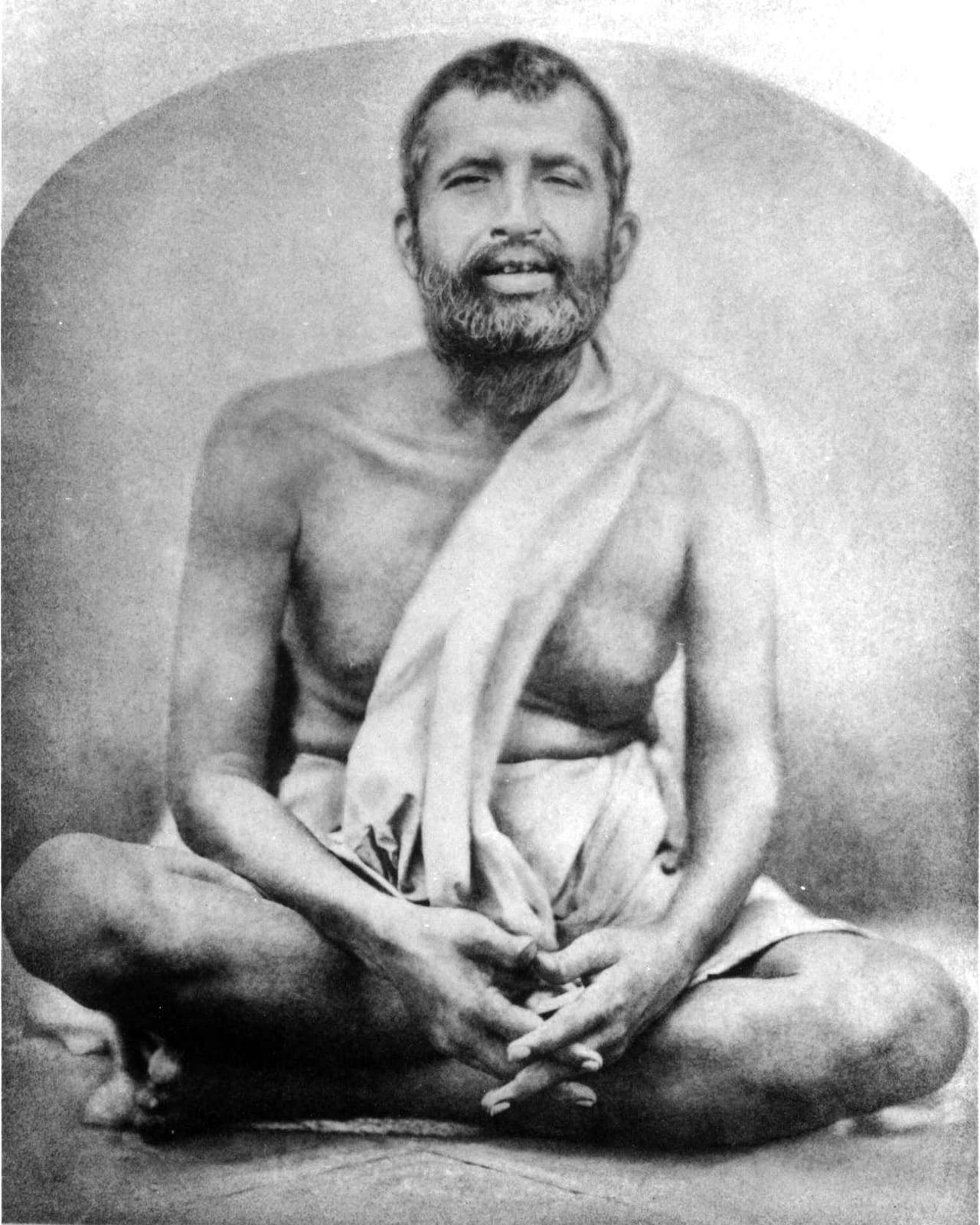
Ramakrishna
Übereinstimmung bei: Was ist das Absolute? Gibt es Gott? · Was geschieht nach dem Tod? · Braucht es einen Lehrer?
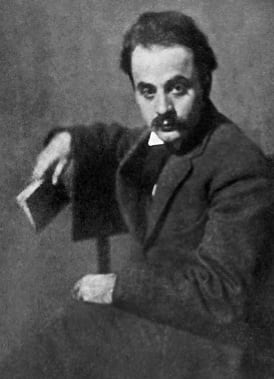
Kahlil Gibran
Übereinstimmung bei: Was ist das Absolute? Gibt es Gott? · Wer bin ich? Gibt es ein wahres Selbst? · Was geschieht nach dem Tod?
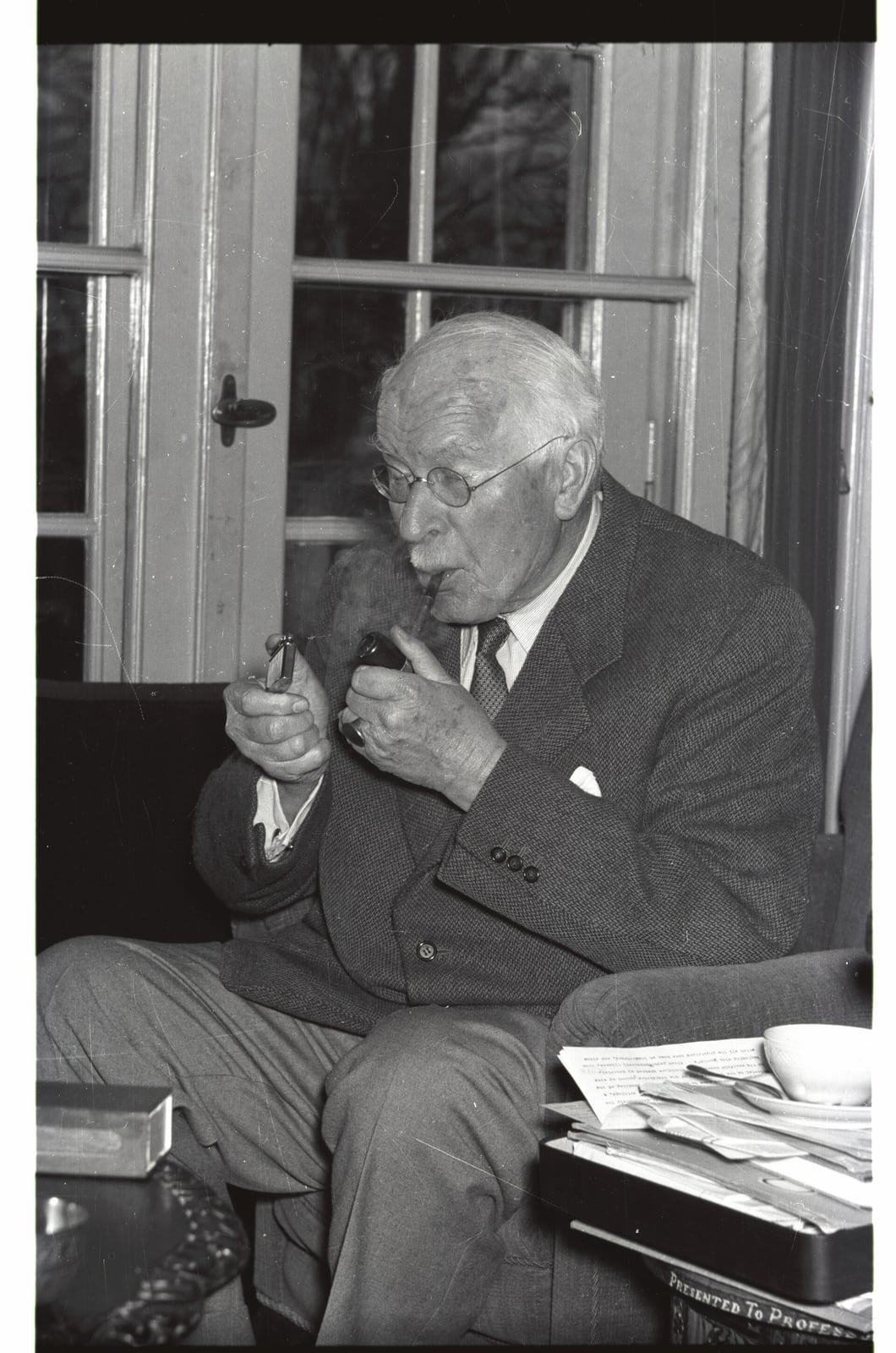
Carl Gustav Jung
Übereinstimmung bei: Wer bin ich? Gibt es ein wahres Selbst? · Warum leiden wir? · Braucht es einen Lehrer?
Eckhart Tolle
Übereinstimmung bei: Braucht es einen Lehrer? · Ist die Welt wirklich? · Sind wir frei, oder ist alles vorherbestimmt?


Anekdoten und Erzählungen
Anekdoten und Erzählungen
Belegt1892
The riding test
Herkunft der Erzählung: The facts are recorded in the Civil Service Commission files studied by Peter Heehs; the deliberate intent comes from Aurobindo’s own later statements (Autobiographical Notes, CWSA 36).
Quelle: Heehs, Peter. The Lives of Sri Aurobindo. Nueva York: Columbia University Press, 2008.
Zeugnisdiciembre de 1892 - febrero de 1893
The ship that did not sink
Herkunft der Erzählung: Aurobindo tells it himself in his autobiographical notes and his biographers repeat it (Purani, Heehs); the detail of the father’s last words is family tradition.
Zeugnisenero de 1908
Three days with Lele
Herkunft der Erzählung: Aurobindo’s account in letters of the 1930s (CWSA 35) and in conversations noted by disciples; there is no testimony from Lele about the inner experience.
Quelle: Sri Aurobindo. Letters on Himself and the Ashram. CWSA 35. Pondicherry: Sri Aurobindo Ashram, 2011.
Zeugnis1908-1909
Vasudeva in Alipore jail
Herkunft der Erzählung: Primary source: the Uttarpara speech (30 May 1909) and the Bengali account Kara-kahini; Vivekananda’s voice in letters of the 1930s (CWSA 35). They are the protagonist’s own testimony.
Zeugnisfebrero-abril de 1910
The command to leave
Herkunft der Erzählung: Aurobindo’s own account (Autobiographical Notes, CWSA 36) and that of witnesses from his Calcutta circle; police reports confirm the flight and the dates, not the voice.
Belegt29-30 de marzo de 1914
“He whom we saw yesterday”
Herkunft der Erzählung: The entry of 30 March 1914 appears in the Mother’s Prières et méditations (published 1932); the recognition of the figure of her visions comes from the Mother’s later conversations recorded at the ashram.
Quelle: La Mère (Mirra Alfassa). Prières et méditations. Pondicherry: Sri Aurobindo Ashram, 1932 (anotación del 30 de marzo de 1914).
Zeugnis5-9 de diciembre de 1950
The hundred hours
Herkunft der Erzählung: It comes from ashram witnesses and statements by the Mother recorded in ashram publications; the existence and wording of the medical certificate are cited in those sources and have not been checked against an original.
Lehren
Lehren
Die Begriffe, die das Denken gliedern, in ihrem Zusammenhang erklärt.
The Supermind (supramental)supramental
Aurobindo links the term to the Vedic notion of rita (truth-order) and the vijnana of the Upanishads; historians stress its relation to nineteenth-century evolutionary theories.
Integral yoga (purna yoga)yoga-integral
Set out in The Synthesis of Yoga and the Letters on Yoga; Aurobindo distinguished it from all earlier yogas, which he regarded as stages or fragments of a possible synthesis.
Involution and evolutioninvolucion-y-evolucion
Developed in The Life Divine; it has been compared with Teilhard de Chardin, Bergson and Whitehead, without demonstrated direct influence.
The psychic beingser-psiquico
Explained above all in the Letters on Yoga and The Life Divine; the Mother made it the axis of her educational teaching.
Quelle: Sri Aurobindo. Letters on Himself and the Ashram. CWSA 35. Pondicherry: Sri Aurobindo Ashram, 2011.
The ladder of mind: from higher mind to overmindplanos-de-la-mente
Set out in The Life Divine (Book II) and in the letters on poetry, where he applies it to the quality of inspiration.
Surrender to the divine Motherentrega-a-la-madre
Set out in The Mother (1928) and in the letters on the Mother (CWSA 32).
Videos
Videos
Aufnahmen, Gespräche und Dokumentarfilme. Die Videos werden von YouTube wiedergegeben; sie werden nicht hier gespeichert.
Rare Footage of Sri Aurobindo’s Mahasamadhi (5 December 1950)
Originalaufnahme· 1950· 7 min
Overman Foundation
The Mother on Sri Aurobindo’s Mahasamadhi, 5th Dec 1950
Originalaufnahme· EN· 12 min
Arvind T Akki Sri Aurobindo Ashram, Pondicherry
Sri Aurobindo: A Life Divine [a 1993 film]
Dokumentarfilm· EN· 1993· 21 min
AuroMaa
THE TRANSFORMATION - A documentary film on Sri Aurobindo
Dokumentarfilm· EN· 54 min
Sri Aurobindo SocietyOffizieller Kanal
नया जन्म | Naya Janma | The Transformation (versión hindi)
Dokumentarfilm· HI· 54 min
Sri Aurobindo
Journey To The Life Divine — Part I
Dokumentarfilm· EN· 104 min
Sri Aurobindo AshramOffizieller Kanal
Sri Aurobindo: An Indian Mystic Who Worked for Human Unity
Dokumentarfilm· EN· 49 min
Sri Aurobindo Ashram Delhi BranchOffizieller Kanal
Film: “Sri Aurobindo Ghose: The Beginning of Spiritual Journey”
Dokumentarfilm· EN· 2022· 38 min
Consulado General de la India en Hamburgo (congendiahamburg)Offizieller Kanal
The Mother reads Savitri by Sri Aurobindo: Book 01 Canto 01
Originalaufnahme· EN· 23 min
AuroMaa
Sri Aurobindo’s Uttarpara Speech
Vortrag· EN· 32 min
Savitri Bhavan Auroville
Dr. Alok Pandey on Sri Aurobindo’s The Life Divine
Vortrag· EN· 60 min
Savitri Bhavan Auroville
Sri Aurobindo’s Savitri - Theme, Structure and Message (Part 1 of 3)
Vortrag· EN· 108 min
Debashish Banerji
Conversation with Peter Heehs - History, Spirituality, and Sri Aurobindo
Gespräch· EN· 45 min
Academia Surge
Vicente Merlo - La conciencia y la evolución espiritual en Sri Aurobindo
Vortrag· ES· 61 min
Taller de Espiritualidad
¿Es Sri Aurobindo uno de los místicos más grandes de todos los tiempos? Un día con… Vicente Merlo
Gespräch· ES· 58 min
Siglantana editorial
Galerie
Galerie
Bilder mit geprüfter Lizenz. Jedes bewahrt seine Urheberschaft und seinen Herkunftsnachweis.
Beziehungen
Beziehungen
Einflüsse, Schülerschaften und Verwandtschaften. Die belegte Beziehung wird von der durch Analyse ermittelten Ähnlichkeit unterschieden.
Lehrer von
La Madre (Mirra Alfassa)
He met her on 29 March 1914 and from 1920 she was his spiritual collaborator; he regarded her as an incarnation of the divine Mother and in 1926 entrusted her with the direction of the ashram, which she continued to lead after his death.
Belegte Beziehung
Beeinflusst von
He wrote that in Alipore jail he heard for a fortnight Vivekananda’s voice guiding him in meditation; they never met in life.
Belegte Beziehung
Beeinflusst von
In the introduction to The Synthesis of Yoga he presents Ramakrishna’s life as an example of a spiritual capacity running through all the disciplines and prefiguring the synthesis.
Belegte Beziehung
Schüler von
Vishnu Bhaskar Lele
Maharashtrian yogi with whom he experienced silence of mind in January 1908; his only outer guide, briefly.
Belegte Beziehung
Begegnete
Bal Gangadhar Tilak
Companion in the radical wing of Congress; he presided with him over the Nationalist meeting at Surat (1907) and devoted an essay to him in 1918.
Belegte Beziehung
Beeinflusst von
Bankim Chandra Chattopadhyay
He devoted essays to him in 1894 and 1907 and translated part of his novel Anandamath, source of the hymn Bande Mataram that named his daily.
Belegte Beziehung
Begegnete
Rabindranath Tagore
Tagore dedicated the poem “Namaskar” to him in 1907 and visited him in Pondicherry in 1928.
Belegte Beziehung
Begegnete
Sister Nivedita (Margaret Noble)
He worked with her in the Bengal nationalist circles from 1902; after his departure for Chandernagore in 1910 she took charge of Karmayogin.
Belegte Beziehung
Widersprach
In The Life Divine he criticises the “illusionism” (mayavada) of Shankara’s Advaita, which holds the world unreal, while acknowledging the truth of the experience of the silent Brahman.
Belegte Beziehung
Verwandte Gedanken mit
He devoted the study Heraclitus (Arya, 1916–1917) to him, comparing his doctrine of fire and becoming with that of the Vedic rishis.
Belegte Beziehung
Zeitgenosse von
Contemporaries in South India; some disciples (such as T. V. Kapali Sastri) frequented both. There is no record of a meeting. Relationship noted by the editors.
Durch Analyse ermittelte Ähnlichkeit
Verwandte Gedanken mit
Two Bengalis who presented yoga as a science of the evolution of consciousness and whose work found a wide echo in the West. Similarity identified by the editors; no meeting is recorded.
Durch Analyse ermittelte Ähnlichkeit
Zeitgenosse von
Contemporaries with teachings opposed in method: Krishnamurti rejected all spiritual authority and every system; Aurobindo built one. No personal relationship is recorded.
Durch Analyse ermittelte Ähnlichkeit
Zeitgenosse von
Bengali contemporaries of the independence generation; there is no record that they met.
Durch Analyse ermittelte Ähnlichkeit
Verwandte Gedanken mit
Both conceived evolution as an ascent of consciousness towards a spiritual culmination; the comparison is common in the literature, without documented mutual influence.
Durch Analyse ermittelte Ähnlichkeit
Von anderen Einträgen aus verknüpft
- Annie Besant · Zeitgenosse von
- Ramana Maharshi · Zeitgenosse von
- Swami Vivekananda · Beeinflusste
- Swami Vivekananda · Verwandte Gedanken mit
- Pierre Teilhard de Chardin · Verwandte Gedanken mit
- Helena Blavatsky · Verwandte Gedanken mit
- Anandamayi Ma · Zeitgenosse von
- Ramakrishna · Beeinflusste
- Paramahansa Yogananda · Zeitgenosse von
- Vyasa · Verwandte Gedanken mit
Quellen
Quellen
Für diesen Eintrag herangezogene Bibliografie und Kataloge.
- Sri Aurobindo. Complete Works of Sri Aurobindo (CWSA). 37 vols. Pondicherry: Sri Aurobindo Ashram Publication Department, 1997–2025. Sustituye a la Sri Aurobindo Birth Centenary Library (SABCL, 30 vols., 1972).
- Heehs, Peter. The Lives of Sri Aurobindo. Nueva York: Columbia University Press, 2008.
- Sri Aurobindo. Autobiographical Notes and Other Writings of Historical Interest. CWSA 36. Pondicherry: Sri Aurobindo Ashram, 2006.
- Purani, A. B. The Life of Sri Aurobindo. Pondicherry: Sri Aurobindo Ashram, 1958 (4.ª ed., 1978).
- Nirodbaran. Twelve Years with Sri Aurobindo. Pondicherry: Sri Aurobindo Ashram, 1972.
- Satprem. Sri Aurobindo ou l’aventure de la conscience. París: Buchet-Chastel, 1964 (trad. inglesa de Luc Venet, 1984).
- Wikidata, «Aurobindo Ghosh» (Q192207): fechas y lugares, 99 enlaces entre wikis.
- Wikipedia en inglés, «Sri Aurobindo» (cronología política, Alipore, Arya, ashram y ediciones).
- Wikimedia Commons, «Category:Sri Aurobindo» y ficheros asociados (metadatos y licencias consultados por API).
- Heehs, Peter. Sri Aurobindo: A Brief Biography. Delhi: Oxford University Press, 1989.
- Sri Aurobindo. «Uttarpara Speech» (30 de mayo de 1909), Karmayogin, 19 de junio de 1909. CWSA 8. Texto en Wikisource.
- SABDA (distribuidora del Sri Aurobindo Ashram), catálogo de las Complete Works y de las ediciones sueltas.
- Wikipedia en inglés, «Savitri: A Legend and a Symbol» (composición 1916–1950, edición 1950–1951).
- Deshpande, R. Y. «Sri Aurobindo’s Withdrawal — 5 December 1950». Overman Foundation (relato de los últimos días a partir de Nirodbaran, Champaklal y la Madre).
- «Yogic Sadhan». Sri Aurobindo: Archives and Research 10, n.º 1 (abril de 1986): texto de la edición de 1920 y notas sobre su origen en escritura automática.
- Sri Aurobindo. Record of Yoga. CWSA 10–11. Pondicherry: Sri Aurobindo Ashram, 2001.
- Sri Aurobindo. Essays on the Gita (First Series). Madrás: V. Ramaswamy Sastrulu & Sons, 1922. Texto parcial en Wikisource.
- Sri Aurobindo. The Life Divine. Nueva York: The Sri Aurobindo Library, 1949–1951 (texto de la edición revisada de 1939–1940). Copia digital en Internet Archive.
- Sri Aurobindo. Letters on Himself and the Ashram. CWSA 35. Pondicherry: Sri Aurobindo Ashram, 2011.
- Sri Aurobindo. The Mother. Calcuta: Arya Publishing House, 1928 (reimpr. 1937–1949). Copia digital en Internet Archive.
- La Mère (Mirra Alfassa). Prières et méditations. Pondicherry: Sri Aurobindo Ashram, 1932 (anotación del 30 de marzo de 1914).
- Rechteinhaber
- Sri Aurobindo Ashram Trust (Pondicherry), que reivindica los derechos de todos sus textos. Situación por territorios: Aurobindo murió en 1950, por lo que su obra es de dominio público en la UE desde 2021 (70 años) y en la India desde 2011 (60 años); en España (80 años para autores fallecidos antes de 1987) no lo será hasta el 1 de enero de 2031; en EE. UU. solo lo publicado antes de 1931 es seguro dominio público. Las ediciones de la CWSA, con aparato y textos inéditos, tienen derechos propios.
- Offizielle Website
- www.sriaurobindoashram.org/
Bestätigung ausstehend
Was dieser Eintrag noch nicht klären konnte. Wir sagen es lieber, als es aufzufüllen.
- Ediciones españolas con ISBN de Ensayos sobre la Gita, Savitri, El ciclo humano, El ideal de la unidad humana, La Madre, Bases del yoga y Cartas sobre el yoga: no localizadas en Open Library (Google Books sin cuota). Revisar catálogos de Kier, Plaza & Janés, Obelisco y del Centro Sri Aurobindo de Barcelona.
- Comprobar la autoría de «La aventura de la consciencia» (Obelisco, 1993, ISBN 9788477200857): Open Library la atribuye a Aurobindo, pero el título corresponde al libro de Satprem.
- Fechas y editoriales de las primeras ediciones de Thoughts and Glimpses (c. 1920), War and Self-Determination (1920), Love and Death (1921), Ahana and Other Poems (1915), Heraclitus (1941) y The Ideal of the Karmayogin.
- Año de la primera compilación titulada Letters on Yoga (se da 1958, aproximado).
- Fecha exacta del primer libro de Satprem (se da 1964) y existencia de una traducción española íntegra con ISBN.
- Cotejar el certificado médico del doctor Barbet (diciembre de 1950) con un original o con una publicación del ashram que lo reproduzca.
- Precisar el barco (y la fecha) cuya noticia falsa de naufragio recibió su padre en 1892.
- Imagen: localizar en Commons un retrato de la etapa de Pondicherry con licencia libre verificada (las fotos de Henri Cartier-Bresson de 1950 están protegidas).
- Sala de lectura: todos los textos llevan caution por la regla española (libres desde 2031). Buscar transcripciones completas de Essays on the Gita y de los artículos de Arya.
Recherchiert am 2026-10-25