Hinduismus · Tantra · Bhakti · Advaita Vedanta
Anandamayi Ma
আনন্দময়ী মা · নির্মলা সুন্দরী · आनन्दमयी माँ
1896 – 1982Historisch belegte Person
Bengalische Mystikerin ohne Schulbildung und ohne menschlichen Lehrer, die sich 1922 selbst die Einweihung gab und ein halbes Jahrhundert lang Indien durchzog, umgeben von Anhängern, die in ihr eine Erscheinungsform der Göttin sahen. Sie schrieb nichts: Ihre Worte, auf Bengali und oft in Wortspielen gesprochen, zeichneten andere auf, in Sad Vani, Matri Vani und den Tagebüchern Gurupriya Devis. Yogananda, Gandhi, Krishnamurti, die Familie Nehru und die Mutter von Pondicherry begegneten ihr.
- Werke
- 22Werke
- Ausgaben
- 32Ausgaben
- Zitate
- 8Zitate
- Videos
- 14Videos
- Bilder
- 7Bilder
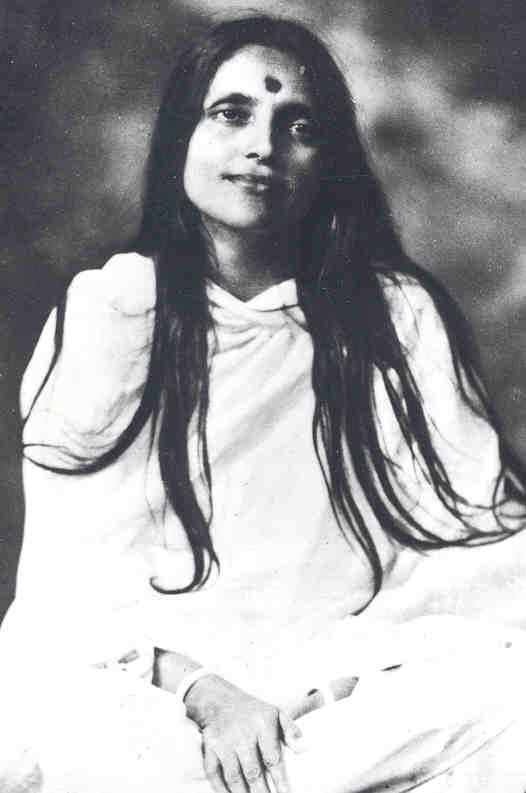
Anandamayi Ma joven · Public domain
In eigenen Worten
«My consciousness has never associated itself with this temporary body. Before I came on this earth, Father, ‘I was the same.’ As a little girl, ‘I was the same.’»Palabras dirigidas a Yogananda en Calcuta (1935), en la versión inglesa de Autobiography of a Yogi, cap. 45
Der zentrale Gedanke
Seeking the realisation of God is every human being’s supreme calling; other obligations are secondary, though they should not be abandoned but carried out as service.
Im Zusammenhang sehen
Biografie
5 Min. Lesezeit
Unterstützte Übersetzung aus dem spanischen Original, Durchsicht durch einen muttersprachlichen Übersetzer ausstehend.
Nirmala aus Kheora
Nirmala Sundari wurde am 30. April 1896 in Kheora geboren, einem Dorf im Distrikt Tripura in Ostbengalen – dem heutigen Bangladesch –, als Tochter von Bipin Bihari Bhattacharya, einem armen Brahmanen und Sänger vishnuitischer Hymnen, und von Mokshada Sundari Devi, die im Alter die Gelübde der Entsagenden ablegen sollte. Die Schule besuchte sie nur wenige Monate. Was über ihre Kindheit erzählt wird – die Ekstase eines zweijährigen Mädchens beim Hören devotionaler Gesänge, ein lichtes Wesen, das sie verehrt, als sie zehn Monate alt ist –, stammt aus der Chronologie ihrer Anhänger und aus dem, was sie selbst Jahrzehnte später berichtete, und gehört ins Register der Hagiographie. Im Februar 1909, mit zwölf Jahren und zehn Monaten, wurde sie mit Ramani Mohan Chakrabarti aus Bikrampur verheiratet, den sie später Bholanath nannte.
Eine Ehefrau, die keine war
Fünf Jahre lebte sie in der Familie ihres Schwagers und zog um 1914 zu ihrem Mann nach Ashtagram. Die Ehe wurde nie vollzogen: Nach dem Bericht, den sie 1935 Yogananda gab, erhielt ihr Mann, als er sie zum ersten Mal begehrend berührte, eine Art Blitzschlag und behandelte sie fortan als seine Führerin. Die Nachbarn sprachen von Hysterie; er verteidigte sie vor den Schwiegereltern. In Bajitpur wurden ihre Zustände zwischen 1918 und 1924 andauernd: Yogastellungen, die, wie sie sagte, der Körper von selbst einnahm, die unablässige Wiederholung des göttlichen Namens, Gesänge und Trancen. In der Vollmondnacht des August 1922 gab sie sich selbst die Einweihung und erklärte später, sie habe als Meisterin das Mantra offenbart und es als Schülerin empfangen. Es folgte eine lange Zeit des Schweigens, und gegen Ende jenes Jahres weihte sie ihren eigenen Mann ein.
Dhaka: die von Glückseligkeit durchdrungene Mutter
1924 wurde Bholanath zum Verwalter der Gärten des Nawab von Dhaka in Shahbag ernannt, und dort begannen die Anhänger zu kommen. Einer von ihnen, Jyotish Chandra Ray, ein hoher Beamter, den alle Bhaiji nannten, gab ihr 1925 den Namen Anandamayi Ma, „die von Glückseligkeit durchdrungene Mutter“. 1926 kam Adarini Mukherjee, die sie als Gurupriya Devi bis zu ihrem Tod begleiten und jahrzehntelang ein Tagebuch über ihr Leben führen sollte. In Dhaka nannte man sie die lebendige Kali, und 1929 errichteten ihr die Anhänger in Ramna, neben dem Kali-Tempel, den ersten Ashram. Sie lehnte es ab, Guru genannt zu werden, bereitete keine Ansprache vor und sprach von sich selbst als „dieser Körper“ oder „dieses kleine Mädchen“.
Die Pilgerin
1932 verließ sie Dhaka mit Bholanath und Bhaiji ohne erklärtes Ziel und ließ sich in Dehradun am Fuß des Himalaya nieder. Von da an hatte sie keinen festen Wohnsitz mehr: Ein halbes Jahrhundert lang durchzog sie Indien, von Ashram zu Ashram und von Haus zu Haus, nach dem, was sie ihr kheyal nannte, einem spontanen Impuls, den ihre Anhänger für göttlichen Willen hielten. Kamala Nehru besuchte sie ab 1933 und über sie die Familie Nehru; Indira Gandhi wurde eine regelmäßige Besucherin. Bholanath starb im Mai 1938 in Kishenpur. Paramahansa Yogananda lernte sie im Dezember 1935 in Kalkutta kennen und porträtierte sie in seiner Autobiographie eines Yogi; Gandhi empfing sie 1942 in Sevagram. Um 1948 sprach sie in Delhi mit Jiddu Krishnamurti und hielt ihm sanft vor, dass er, indem er die Gurus verneine, selbst zum Guru seiner Zuhörer werde, und 1952 besuchte sie in Pondicherry die Mutter des Sri-Aurobindo-Ashrams.
Von anderen aufgezeichnete Worte
Anandamayi Ma hat nichts geschrieben. Sie sprach Bengali, oft mit nahezu unübersetzbaren Wortspielen, und ihre Sätze zeichneten andere auf: Bhaiji sammelte die ersten in Sad Vani (1935); Gurupriya Devi führte ab 1925 ihr Tagebuch; die Österreicherin Blanca Schlamm, Atmananda, die sie 1943 kennenlernte, übersetzte Matri Vani und Words of Sri Anandamayi Ma ins Englische, und die Zeitschrift Ananda Varta veröffentlichte ab den Fünfzigerjahren ihre Gespräche. Es ist ein vielstimmiges Werk, gefiltert durch die Zuneigung und das Gedächtnis ihrer Anhänger, und so ist es zu lesen. Ihre Lehre wiederholt, dass die Suche nach Gott die einzige Berufung des Menschen sei, dass alle Wege berechtigt seien und sie selbst keinen eigenen habe, und sie empfiehlt eine einfache Disziplin: täglich eine feste Zeit für die Kontemplation, die Wiederholung des göttlichen Namens und den Dienst.
Das kheyal
Die Zeugen beschreiben übereinstimmend eher eine Gegenwart als eine Lehre. Anandamayi Ma hielt sich weder an Zeiten noch an Pläne: Sie sagte, sie handle nach ihrem kheyal, einem bengalischen Wort, das etwa Einfall oder plötzlicher Impuls bedeutet und das ihre Anhänger als göttlichen Willen verstanden, der sich ohne Überlegung in ihr äußere. Darum brach sie um Mitternacht von einem Ort auf, sagte einen monatelang vorbereiteten Besuch ab oder erschien dort, wo niemand sie erwartete. Sie sprach von sich in der dritten Person und weigerte sich, die Lehrerin zu spielen: Sie beantwortete Fragen, sang, scherzte und empfahl jedem die Praxis seiner eigenen Tradition. Wer sie fragte, wer sie sei, dem antwortete sie nach dem Zeugnis ihrer Chronisten, sie sei dasselbe, was sie immer gewesen sei, und zugleich das, wofür jeder sie halte.
Eine orthodoxe Heilige
Ihre Gestalt vereint schwer vereinbare Züge. Sie nahm Muslime, Christen und Ausländer auf, doch in ihren Ashrams galten die brahmanischen Regeln ritueller Reinheit, die auch das Essen nichthinduistischer Besucher betrafen; jahrelang aß sie selbst nur aus der Hand ihrer Helferinnen, wie Yogananda beobachtete. Lisa Lassell Hallstrom, Verfasserin der wichtigsten wissenschaftlichen Studie, rückt diese Spannung in den Mittelpunkt ihrer Rolle: eine Frau ohne Bildung, die sich mit vollkommener Freiheit bewegte und zugleich die Orthodoxie der Mönche und Gelehrten um sie stützte, etwa des Sanskritisten Gopinath Kaviraj. Die Heilungen, Bilokationen und Vorhersagen, die ihre Anhänger ihr zuschrieben, gehören zum devotionalen Zeugnis und sind nicht überprüft.
Tod und Verehrung
Sie starb am 27. August 1982 gegen acht Uhr abends in ihrem Ashram in Kishenpur bei Dehradun. Zwei Tage später wurde ihr Leichnam – nicht eingeäschert, wie es entsagenden Heiligen zukommt – im Hof des Ashrams von Kankhal bei Haridwar beigesetzt, in Anwesenheit der Premierministerin Indira Gandhi. Ihr Samadhi ist heute ein Wallfahrtsort, und die Anthropologin Orianne Aymard hat untersucht, wie ihre Anhänger weiterhin mit ihr umgehen, als wäre sie gegenwärtig. Die Shree Shree Anandamayee Sangha unterhält ihre Ashrams in Varanasi, Kankhal, Vrindavan, Dehradun und anderen Städten.
Quellen: Bhaiji (Jyotish Chandra Ray). Sad Vani: A Collection of the Teachings of Sri Anandamayi Ma (original bengalí, 1935). Trad. inglesa de Atmananda. Varanasi / Calcuta: Shree Shree Anandamayee Charitable Society, 1973 (reimpr. 1975). · Gurupriya Devi. Sri Sri Ma Anandamayi (diarios, original bengalí desde 1925). Trad. inglesa, vols. 1–9 y ss. Calcuta: Shree Shree Anandamayee Charitable Society, 1984–1996. · Hallstrom, Lisa Lassell. Mother of Bliss: Ānandamayī Mā (1896–1982). Nueva York: Oxford University Press, 1999. · Lipski, Alexander. Life and Teaching of Śrī Ānandamayī Mā. Delhi: Motilal Banarsidass, 1977. · Mukerji, Bithika. From the Life of Sri Anandamayi Ma. Varanasi: Shree Shree Anandamayee Sangha, 1970; y The Most Gracious Presence, Sri Ma Anandamayi, 3 vols., 2009–2014.
Zeitleiste
Das Leben, Jahr für Jahr
Jeder Punkt ist ein belegtes Ereignis. Klicken Sie, um es mit Quelle und Grad der Gewissheit zu lesen.
30. April 18960 JahreKheora
Birth of Nirmala Sundari
Born at her maternal great-grandparents’ house, daughter of Bipin Bihari Bhattacharya and Mokshada Sundari Devi.
Belegtanandamayi.org (sitio de devotos vinculado a la Shree Shree Anandamayee Sangha): «Life History» 1896–1982, cronología año por año, y páginas «Meeting with Saints and Mahatmas».
Nach dem Tod
- 2014When a Goddess Dies
30. April 1896 · 0 Jahre
Birth of Nirmala Sundari
Born at her maternal great-grandparents’ house, daughter of Bipin Bihari Bhattacharya and Mokshada Sundari Devi.
Belegt
Februar 1909 · 12 Jahre
Marriage to Ramani Mohan Chakrabarti
Married at twelve years and ten months; her husband will be Bholanath. Marriage never consummated.
Belegt
um 1914 · 18 Jahre
With her husband at Ashtagram
She joins Ramani Mohan; first states of absorption in public.
Wahrscheinlich
1918 · 22 Jahre
The Bajitpur years
Period of spontaneous sadhana: postures, repetition of the divine name, trances (1918–1924).
Überlieferung
August 1922 · 26 Jahre
Self-initiation
On the full moon of August she initiates herself; a long silence follows.
Überlieferung
1924 · 28 Jahre
Shahbag
Bholanath is appointed manager of the Nawab’s gardens; the first devotees arrive, among them Bhaiji.
Belegt
1925 · 29 Jahre
The name Anandamayi
Bhaiji calls her Anandamayi Ma, “the bliss-permeated Mother”.
Belegt
1926 · 30 Jahre
Gurupriya Devi arrives
She meets Adarini Mukherjee (Gurupriya Devi), her companion and chronicler for more than fifty years.
Belegt
13. April 1929 · 32 Jahre
First ashram at Ramna
She enters the land bought for the Ramna ashram, beside the Kali temple.
Belegt
Juni 1932 · 36 Jahre
Departure from Dhaka
She leaves Bengal with Bholanath and Bhaiji and settles at Raipur, Dehradun. Half a century of wandering begins.
Belegt
Juli 1933 · 37 Jahre
Kamala Nehru
Jawaharlal Nehru’s mother and wife visit her for the first time.
Belegt
Dezember 1935 · 39 Jahre
Meeting with Yogananda
Paramahansa Yogananda visits her at Bhowanipur and invites her to his Ranchi school.
Belegt
6. Mai 1938 · 42 Jahre
Death of Bholanath
Her husband dies at the Kishenpur ashram.
Belegt
Februar 1942 · 45 Jahre
Meeting with Gandhi
After Jamnalal Bajaj’s death, she visits Gandhi at Sevagram.
Belegt
1943 · 47 Jahre
Atmananda arrives
She meets the Austrian Blanca Schlamm, future translator of her words into English.
Belegt
Januar 1947 · 50 Jahre
Gayatri Mahayajna
A three-year uninterrupted rite begins at the Varanasi ashram, concluded in January 1950.
Belegt
um 1948 · 52 Jahre
Conversation with Krishnamurti
They meet in Kitty Shiva Rao’s garden and discuss the need for a guru.
Wahrscheinlich
3. November 1952 · 56 Jahre
Meeting with the Mother of Pondicherry
On her southern tour she visits Mirra Alfassa at the Sri Aurobindo Ashram and Ramana Maharshi’s ashram at Tiruvannamalai.
Belegt
1959 · 63 Jahre
Arnaud Desjardins’s film
The French filmmaker films her for French television, making her known in Europe.
Belegt
27. August 1982 · 86 Jahre
Death
She dies at about eight in the evening at her Dehradun ashram.
Belegt
29. August 1982
Samadhi at Kankhal
Her body is entombed at the Kankhal ashram in the presence of Indira Gandhi.
Belegt
2014
When a Goddess Dies
Orianne Aymard publishes her study of the worship of Anandamayi Ma after her death.
Belegt
Werke
Grundlegende Werke
Die Werke, ohne die sich das Vermächtnis nicht verstehen lässt.
Anandamayi Ma
Sad Vani (true words)
Spätere Zusammenstellung · 1935
Sad Vani (true words)
সদ্বাণী (Sad Vani)
Short sayings arranged by theme: the search for God as life’s only goal, repetition of the divine name, surrender, the company of saints, duty done without attachment. It records the teaching of the Dhaka years with the closeness of a daily witness and the devotion of one who saw in her the divine Mother. It is the earliest source for her words.
2 Ausgaben · amazon.com
Anandamayi Ma
Matri Vani (words of the Mother)
Spätere Zusammenstellung · 1963
Matri Vani (words of the Mother)
Matri Vani
Personal advice turned into general teaching: how to live in the world without losing sight of God, how to face the death of a loved one, illness or doubt, why to set aside a time each day for contemplation. The tone is intimate and practical rather than doctrinal. It is her most translated work and the one that best conveys her way of addressing each person.
3 Ausgaben · amazon.es
Anandamayi Ma
Sri Sri Ma Anandamayi (Gurupriya Devi’s diaries)
Spätere Zusammenstellung · um 1925
Sri Sri Ma Anandamayi (Gurupriya Devi’s diaries)
শ্রীশ্রীমা আনন্দময়ী (Sri Sri Ma Anandamayi)
The most detailed source for her life: dates, places, people, dialogues and episodes—from the first years in Dhaka to the decades of wandering—noted almost daily by a constant witness. It includes, for example, the account of the meeting with Gandhi at Wardha in 1942. Its documentary value coexists with the devotional perspective of its author.
1 Ausgabe · amazon.es
Anandamayi Ma
Mother as Revealed to Me (Matri Darshan)
Spätere Zusammenstellung
Mother as Revealed to Me (Matri Darshan)
মাতৃদর্শন (Matri Darshan)
Spiritual diary of Bhaiji’s relationship with Anandamayi Ma from 1924 until his death, with his interpretation of her gestures and words. It contains, among other things, the hymn that came from her lips in 1929 on leaving the Ramna ashram, only partly transcribed. It is an essential source for the Dhaka years.
2 Ausgaben · amazon.com
Das gesamte Werk (22)
Anandamayi Ma
Words of Sri Anandamayi Ma
The Conscious LibraryWords of Sri Anandamayi Ma
1961
Anandamayi Ma
Ananda Varta (journal)
The Conscious LibraryAnanda Varta (journal)
1952
Anandamayi Ma
Mother Reveals Herself
The Conscious LibraryMother Reveals Herself
2014
Anandamayi Ma
Svakriya Svarasamrita
The Conscious LibrarySvakriya Svarasamrita
Anandamayi Ma
In Association with Sri Sri Ma Anandamayi
The Conscious LibraryIn Association with Sri Sri Ma Anandamayi
1986
Anandamayi Ma
Vangmayee Ma (the Mother as word)
The Conscious LibraryVangmayee Ma (the Mother as word)
2024
Anandamayi Ma
Ma in Her Words
The Conscious LibraryMa in Her Words
Anandamayi Ma
Amar Vani (immortal words)
The Conscious LibraryAmar Vani (immortal words)
1968
Anandamayi Ma
The Teaching of Ma Ananda Moyi
The Conscious LibraryThe Teaching of Ma Ananda Moyi
1974

Pearls of Light
1995

Death Must Die (Atmananda’s diaries)
2000

Mother of Bliss (Lisa Lassell Hallstrom)
1999

Life and Teaching of Sri Anandamayi Ma (Alexander Lipski)
1977

Life and Teachings of Sri Ma Anandamayi (Bithika Mukerji)
1998

My Days with Sri Ma Anandamayi (Bithika Mukerji)
2002

Anandamayi: Her Life and Wisdom (Richard Lannoy)
1996

Encountering Bliss: My Journey through India with Anandamayi Ma
2002

When a Goddess Dies (Orianne Aymard)
2014
Zitate
Zitate, die in einem bestimmten Werk nachgewiesen sind. Jedes trägt seine Herkunft und seinen Grad an Verlässlichkeit.
My consciousness has never associated itself with this temporary body. Before I came on this earth, Father, ‘I was the same.’ As a little girl, ‘I was the same.’GeprüftPalabras dirigidas a Yogananda en Calcuta (1935), en la versión inglesa de Autobiography of a Yogi, cap. 45
Wesentliche Gedanken (redaktionelle Zusammenfassung)
Aus Achtung vor dem Urheberrecht werden diese Gedanken mit eigenen Worten zusammengefasst und nicht als wörtliche Zitate dargestellt.
- Seeking the realisation of God is every human being’s supreme calling; other obligations are secondary, though they should not be abandoned but carried out as service.
- There is no single path: each person advances according to their innate nature, and every sincere path leads to the same end. She said she had no path of her own.
- One should set aside each day, morning and evening, a fixed time for contemplation, just as working hours are kept; with habit, contemplation becomes part of one’s nature.
- All suffering arises from perceiving duality; whoever finds the One in everything and everyone puts an end to pain.
- Everyone is right from their own standpoint: faced with doctrinal disputes, she invited people to see the point from which the other speaks.
Letzte Worte
Es gibt keine überprüfbaren Aufzeichnungen der letzten Worte.
No recorded final sentence is known. In her last months, already ill, she spoke little; the Sangha’s chronicles note that she died at about eight in the evening of 27 August 1982 at Kishenpur (Dehradun), without recording any farewell words.
Quelle: anandamayi.org (sitio de devotos vinculado a la Shree Shree Anandamayee Sangha): «Life History» 1896–1982, cronología año por año, y páginas «Meeting with Saints and Mahatmas».
Fragen
Was das Werk beantwortet
Zwölf große Fragen der Menschheit und was sich aus den Texten darauf antworten lässt, mit Belegen. Wir legen niemandem Worte in den Mund.
Was ist das Absolute? Gibt es Gott?
There is nothing but Him: with form and without, all is God
Persönlich und unpersönlich zugleichAusdrücklich gesagt
Anandamayi Ma set out no system, but her words, gathered by devotees in Matri Vani and Sad Vani, return again and again to one claim: there is nothing but Him alone, and everyone and everything are but a form of God. That One can be worshipped with form, as Krishna, Shiva or the Mother, or sought as the attributeless Self, and she refused to rank the two ways: with form and without form are the same, seen from different places. To those who asked about her religion she answered that she was also Christian, Muslim, or whatever they wished. For Anandamayi the existence of God is not proved: it is all there is, and the human task is to recognise it.
Diese Frage mit anderen Meistern vergleichenWer bin ich? Gibt es ein wahres Selbst?
‘I was the same’: consciousness was never tied to the body
Das Selbst ist das AbsoluteAusdrücklich gesagt
Anandamayi Ma spoke of herself as ‘this body’, never as ‘I’, and her devotees took this as a sign that she did not identify with the person. To Yogananda she declared that her consciousness had never associated itself with the transient body and that before birth, as a girl and as an adult she had been the same. To those who listened she put the same question: the self that identifies with a name, a family and a history is not what one is, and discovering one’s own nature is discovering God, for there is nothing but Him. That is why she recommended both remembrance of the Name and enquiry: both lead to recognising the one Self that appears in every form.
Diese Frage mit anderen Meistern vergleichenWarum leiden wir?
All suffering comes from seeing duality where there is only One
Unwissenheit über das, was wir sindAusdrücklich gesagt
In the words gathered by her devotees, Anandamayi Ma explains that all suffering arises from perceiving duality: from feeling separate from others and from God, and from seeking outside what one believes to be missing. Whoever finds the One in everything and everyone puts an end to pain, because there is no longer another who threatens nor anything to lose. At the same time she welcomed those who came with concrete sorrows, the death of a child or illness, and told them that suffering is also a way in which God calls his creature to himself. She neither denied pain nor idealised it: she placed it in a horizon where the only lasting cure is to recognise the Self.
Diese Frage mit anderen Meistern vergleichenWas geschieht nach dem Tod?
The body dies; what is does not come or go
Was ich bin, wird nie geboren und stirbt nieAusdrücklich gesagt
Anandamayi Ma said of herself that before coming to earth, as a child and in maturity, she had been the same, and that her consciousness had never associated itself with the transient body. She invited her devotees to look at death from there: what dies is the body, and the Self is neither born nor dies. At the same time she spoke naturally of successive lives and of the value of practice for the hereafter: one of her recorded sayings contrasts the earthly pension, which ends with life, with the divine pension, which continues long after death. Realisation consists in knowing oneself already, now, beyond birth and death.
Diese Frage mit anderen Meistern vergleichenWie erlangt man Befreiung oder Erlösung?
Every sincere path leads to Him; the Name, always
Durch Hingabe und ErgebungAusdrücklich gesagt
Anandamayi Ma said she had no path of her own and accepted that each person advance according to their nature: through knowledge, meditation, action or devotion, every sincere path leads to the same end. Yet what she most often recommended was constant remembrance of God, above all through repetition of the Name (nama japa), and setting aside a fixed time each day for contemplation. She organised annual weeks of intensive discipline (samyam saptah) with fasting, silence and meditation. For her, seeking God-realisation is the supreme calling of the human being, and grace accompanies whoever seeks it steadily. What matters is never to stop seeking.
Diese Frage mit anderen Meistern vergleichenBraucht es einen Lehrer?
Whoever denies the guru becomes guru to those who believe him
UnverzichtbarAusdrücklich gesagt
Anandamayi Ma had no human teacher: according to her biographers she initiated herself in 1922 and went through the practices of many traditions alone. Even so, she defended the need for a guru for others. One of her recorded sayings puts it ironically: when someone says no guru and no practice are needed, they automatically become the guru of those who accept their view. For her the true guru is not an individual but God himself manifesting as teacher when the seeker is ready, and he can come through a person, a book or an event. But that encounter is necessary, and the disciple must obey with trust.
Diese Frage mit anderen Meistern vergleichenIst die Welt wirklich?
Everyone and everything is but a form of God
Offenbarung des GöttlichenAusdrücklich gesagt
Anandamayi Ma’s answer is consistent with her central statement: there is nothing but Him alone, and everyone and everything are but a form of God. For her the world is not an illusion to be despised but the way the One shows itself; hence she asked people to serve others as forms of the divine and to carry out daily duties as an offering. At the same time she recalled that what appears changes and passes, and that whoever clings to forms without seeing what is in them suffers. The world’s reality therefore depends on how it is seen: as something separate it is transient; recognised as a form of God, it is He himself.
Diese Frage mit anderen Meistern vergleichenWas ist Liebe?
To love God is to love Him in every form, for He alone exists
Sehnsucht und VereinigungAus der Lehre abgeleitet
Anandamayi Ma lived in an atmosphere of intense devotion: her biographers describe states of ecstasy during kirtan and a motherly tenderness towards all who approached her. In her words, true love is directed to God, and all human love, if pure, reflects that longing. Since He alone exists, loving God does not take one away from others: it includes them, because each person is a form of Him. Hence she asked people to fulfil their duties with love and serve without expecting reward. She warned, however, against attachment, which confuses love with possession of a passing form. Longing for God is, for her, the supreme calling of the human being.
Diese Frage mit anderen Meistern vergleichenSind wir frei, oder ist alles vorherbestimmt?
All happens by His will; while you think you are the doer, strive
Es gibt keinen HandelndenAusdrücklich gesagt
Anandamayi Ma explained her own way of acting through the word kheyal: a spontaneous impulse that came not from a personal decision but from the divine will. Her devotees learned that there was no point asking her to make plans: whatever had to happen would happen. For her, ultimately, the only doer is God. But she did not apply that view to others as an excuse for passivity. She asked those who felt themselves authors of their acts to strive, to fulfil their duties seriously and to practise every day, because as long as there is a sense of being a doer there is also responsibility. True freedom consists in surrendering the will until only His remains.
Diese Frage mit anderen Meistern vergleichenWozu meditieren oder beten?
A fixed time each day to remember God, until it becomes natural
Freundschaft mit GottAusdrücklich gesagt
Anandamayi Ma asked everyone, lay and monastic, to set aside each day, morning and evening, a fixed time for contemplation, with the same punctuality with which working hours are kept; with habit, she said, contemplation becomes part of one’s nature. She especially recommended repetition of God’s Name (nama japa) and devotional singing, without excluding silent meditation or enquiry. The aim was not to attain experiences but to keep the remembrance of God in every activity, until there is no moment when He is absent. To pray is to live in God’s company, even if the mind does not yet fully know it.
Diese Frage mit anderen Meistern vergleichenKann die Vernunft das Letzte erkennen?
Each is right from their own standpoint; Truth lies beyond
Das Letzte liegt jenseits des VerstandesAus der Lehre abgeleitet
Anandamayi Ma received philosophers, scholars and sceptics, and answered their questions briefly, often with paradoxes. In the face of doctrinal disputes she invited people to look at the point from which the other speaks: everyone is right from their own standpoint. This attitude was not relativism but recognition that the intellect grasps only partial aspects of a Truth that exceeds it. For her, what is reached by thinking remains within the mind; God-realisation is something else, a knowing in which there is no subject separate from object. Reason can orient and purify, but the ultimate is revealed when the mind is stilled and surrendered.
Diese Frage mit anderen Meistern vergleichenSich von der Welt zurückziehen oder sie verwandeln?
Fulfil each day’s duties with love, step by step towards God
Kontemplation im HandelnAusdrücklich gesagt
Anandamayi Ma did not ask most of her devotees to leave family or work. One of her recorded sayings sums it up: with seriousness, love and goodwill, fulfil the duties of each day and try to rise step by step. Seeking God is the supreme calling, but other obligations are not abandoned: they are carried out as service, seeing in each person a form of the divine. She asked people to set aside fixed times for contemplation within the day and to regard work as an offering. She herself lived in constant movement across India, surrounded by people, and her ashrams supported schools, hospitals and relief work.
Diese Frage mit anderen Meistern vergleichen
Affinitäten und Spannungen
Affinitäten und Spannungen
Frage für Frage aus den Positionen berechnet. Den Grund jeder Übereinstimmung und jedes Widerspruchs zeigt ein Klick.
Denkt ähnlich wie
Vyasa
Übereinstimmung bei: Was ist das Absolute? Gibt es Gott? · Wer bin ich? Gibt es ein wahres Selbst? · Was geschieht nach dem Tod?
Ramakrishna
Übereinstimmung bei: Was ist das Absolute? Gibt es Gott? · Wer bin ich? Gibt es ein wahres Selbst? · Wie erlangt man Befreiung oder Erlösung?
Attar
Übereinstimmung bei: Was ist das Absolute? Gibt es Gott? · Wer bin ich? Gibt es ein wahres Selbst? · Braucht es einen Lehrer?
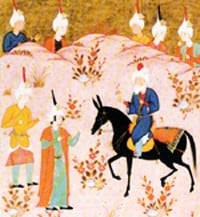
Ibn Arabi
Übereinstimmung bei: Was ist das Absolute? Gibt es Gott? · Wer bin ich? Gibt es ein wahres Selbst? · Ist die Welt wirklich?
Denkt anders als



Anekdoten und Erzählungen
Anekdoten und Erzählungen
Zeugnisagosto de 1922
Teacher and disciple
Herkunft der Erzählung: Known from what she herself told years later, recorded by Bhaiji and in Mother Reveals Herself; there were no witnesses to the ceremony.
Quelle: Hallstrom, Lisa Lassell. Mother of Bliss: Ānandamayī Mā (1896–1982). Nueva York: Oxford University Press, 1999.
Zeugnisdiciembre de 1935
“I was the same”
Herkunft der Erzählung: Yogananda’s account in Autobiography of a Yogi (1946), ch. 45; the date comes from the Sangha’s chronology. Her words are known in Yogananda’s English version.
Zeugnisc. 1948
The guru of those who deny gurus
Herkunft der Erzählung: Two concordant versions: Atmananda’s diary (Death Must Die), recording what Anandamayi Ma told, and Pupul Jayakar’s biography of Krishnamurti (1986). The date is inferred from a conversation of November 1948 recorded by Amulya Kumar Datta Gupta.
Quelle: Atmananda. Death Must Die: A Western Woman’s Life-Long Spiritual Quest in India with Shree Anandamayee Ma, ed. Ram Alexander. Varanasi: Indica Books, 2000.
Zeugnis3 de noviembre de 1952
The rose and the chocolate
Herkunft der Erzählung: Account by devotees present recorded in Anandamayee: The Universal Mother and, in Anandamayi’s own version, in Ananda Varta (vol. VII, no. 4, 1960); both reproduced by anandamayi.org.
Belegtfebrero de 1942
Eight hours at Sevagram
Herkunft der Erzählung: Entry of 20 February 1942 in Gurupriya Devi’s diaries (vol. 10 of the English translation) and a devotee’s recollection, both reproduced by anandamayi.org.
Quelle: Gurupriya Devi. Sri Sri Ma Anandamayi (diarios, original bengalí desde 1925). Trad. inglesa, vols. 1–9 y ss. Calcuta: Shree Shree Anandamayee Charitable Society, 1984–1996.
Zeugnisc. 1925
The name
Herkunft der Erzählung: It comes from Bhaiji’s testimony (Mother as Revealed to Me) and the Sangha’s chronology, which places the episode at Siddheswari in 1925.
Quelle: Bhaiji (Jyotish Chandra Ray). Mother as Revealed to Me (orig. bengalí Matri Darshan). Trad. de G. Das Gupta. Varanasi: Shree Shree Anandamayee Sangha, 2004.
Lehren
Lehren
Die Begriffe, die das Denken gliedern, in ihrem Zusammenhang erklärt.
Kheyalkheyal
Analysed by Hallstrom (1999) and by Anil Ganguli in Anandamayi Ma’s Inscrutable Kheyal (1980).
Quelle: Hallstrom, Lisa Lassell. Mother of Bliss: Ānandamayī Mā (1896–1982). Nueva York: Oxford University Press, 1999.
“This body”: speaking without egoeste-cuerpo
Attested in all the sources (Yogananda, Bhaiji, Gurupriya Devi, Atmananda).
All pathstodos-los-caminos
Comparable to Ramakrishna’s teaching on the plurality of paths, though no direct influence is documented.
Quelle: Hallstrom, Lisa Lassell. Mother of Bliss: Ānandamayī Mā (1896–1982). Nueva York: Oxford University Press, 1999.
The divine name and the fixed timenama-japa
Rooted in the Bengali tradition of nama-japa (Chaitanya) and in the Tantric practice of mantra.
Quelle: Matri Vani: From the Wisdom of Sri Anandamayi Ma, vol. I (cartas recogidas por Gurupriya Devi, trad. de Atmananda, pról. de Gopinath Kaviraj). Varanasi: Shree Shree Anandamayee Sangha, 1963; vol. II (selección de Sister Uma), Calcuta, 1977.
Samyam Saptah: the week of disciplinesamyam-saptah
Described in the Sangha’s chronology and in Ananda Varta; the twenty-fifth was held in 1974.
Videos
Videos
Aufnahmen, Gespräche und Dokumentarfilme. Die Videos werden von YouTube wiedergegeben; sie werden nicht hier gespeichert.
Ma Anandamayi is present at a sacred thread ceremony at Tarapeeth in 1936
Originalaufnahme· 1936· 8 min
SriRam108
Yogananda visits Anandamayi Ma
Originalaufnahme· 1935· 1 min
Heart is Thy Name, O Lord
Ma Anandamayi, vidéo 1959 par Arnaud Desjardins
Dokumentarfilm· FR· 1959· 10 min
Silence Within
Ma Anandamayi 1959 (subtítulos en español)
Dokumentarfilm· ES· 1959· 10 min
CanalGanges
A compilation of cine film clips of Ma Anandamayi from 1956-1981
Originalaufnahme· 76 min
SriRam108
Ma Anandamayi talks at Suktal in 1961 (English subtitles)
Originalaufnahme· BN· 1961· 21 min
SriRam108
Ma Anandamayi at the samyam saptah at Rama Tirtha Mission, Dehra Dun, in 1974
Originalaufnahme· 1974· 27 min
SriRam108
Questions and answers by Sri Ma Anandamayi at Nadiad in 1978 - No 1
Originalaufnahme· 1978· 12 min
SriRam108
Ma & Me: The Anandamayi Ma Documentary
Dokumentarfilm· EN· 2019· 94 min
Ma Documentary
ANANDAMAYI MA (Documental subtitulado en español)
Dokumentarfilm· ES· 94 min
Anandamayi Ma
Arnaud Desjardins talks about his experiences with Ma Anandamayi
Gespräch· FR· 33 min
SriRam108
ANANDAMAYI MA 1 (Recuerdos de Arnaud Desjardins), subtitulado en español
Gespräch· ES
CanalGanges
The Life of Sri Ma Anandamayi, as narrated by Bithika Mukerjee
Vortrag· EN· 43 min
SriRam108
साधना की 10 अवस्थाएँ | सद् वाणी - भाग 4 | श्री आनंदमयी माँ सत्संग
Vortrag· HI· 72 min
MA Sharanam
Galerie
Galerie
Bilder mit geprüfter Lizenz. Jedes bewahrt seine Urheberschaft und seinen Herkunftsnachweis.
Beziehungen
Beziehungen
Einflüsse, Schülerschaften und Verwandtschaften. Die belegte Beziehung wird von der durch Analyse ermittelten Ähnlichkeit unterschieden.
Begegnete
They met in Calcutta in December 1935; he devoted chapter 45 of Autobiography of a Yogi to her and she visited his Ranchi school.
Belegte Beziehung
Begegnete
They talked around 1948 in Delhi, at Kitty Shiva Rao’s house, about the need for a guru; Atmananda and Pupul Jayakar both recount it.
Belegte Beziehung
Begegnete
La Madre (Mirra Alfassa)
Meeting at the Sri Aurobindo Ashram, Pondicherry, on 3 November 1952.
Belegte Beziehung
Zeitgenosse von
Bengali contemporaries; they never met. She visited his ashram in 1952, two years after his death.
Durch Analyse ermittelte Ähnlichkeit
Zeitgenosse von
They never met in life; on her 1952 tour she visited Ramana’s ashram at Tiruvannamalai, two years after his death.
Belegte Beziehung
Begegnete
Mahatma Gandhi
She visited him at Sevagram in February 1942 and in 1946 attended one of his prayer meetings in Delhi at his request.
Belegte Beziehung
Familie von
Bholanath (Ramani Mohan Chakrabarti)
Her husband from 1909, in an unconsummated marriage; he received initiation from her in 1922 and died in 1938.
Belegte Beziehung
Lehrer von
Bhaiji (Jyotish Chandra Ray)
One of the first devotees; he gave her the name Anandamayi and compiled Sad Vani and Matri Darshan.
Belegte Beziehung
Lehrer von
Gurupriya Devi
Companion from 1926 and author of the diaries that are the main chronicle of her life.
Belegte Beziehung
Lehrer von
Gopinath Kaviraj
The great Banaras Sanskritist frequented her from 1928 and wrote the foreword to Matri Vani.
Belegte Beziehung
Verwandte Gedanken mit
Bengali mystics of frequent ecstasies, with no writings of their own, who taught the legitimacy of all paths. Similarity identified by the editors; no personal relationship.
Durch Analyse ermittelte Ähnlichkeit
Verwandte Gedanken mit
Her insistence on the divine name and kirtan continues the Bengali Vaishnava devotion of Chaitanya, in whose tradition her father sang. Relationship noted by the editors.
Durch Analyse ermittelte Ähnlichkeit
Von anderen Einträgen aus verknüpft
Quellen
Quellen
Für diesen Eintrag herangezogene Bibliografie und Kataloge.
- Bhaiji (Jyotish Chandra Ray). Sad Vani: A Collection of the Teachings of Sri Anandamayi Ma (original bengalí, 1935). Trad. inglesa de Atmananda. Varanasi / Calcuta: Shree Shree Anandamayee Charitable Society, 1973 (reimpr. 1975).
- Gurupriya Devi. Sri Sri Ma Anandamayi (diarios, original bengalí desde 1925). Trad. inglesa, vols. 1–9 y ss. Calcuta: Shree Shree Anandamayee Charitable Society, 1984–1996.
- Hallstrom, Lisa Lassell. Mother of Bliss: Ānandamayī Mā (1896–1982). Nueva York: Oxford University Press, 1999.
- Lipski, Alexander. Life and Teaching of Śrī Ānandamayī Mā. Delhi: Motilal Banarsidass, 1977.
- Mukerji, Bithika. From the Life of Sri Anandamayi Ma. Varanasi: Shree Shree Anandamayee Sangha, 1970; y The Most Gracious Presence, Sri Ma Anandamayi, 3 vols., 2009–2014.
- Yogananda, Paramahansa. Autobiography of a Yogi. Nueva York: The Philosophical Library, 1946, cap. 45 («The Bengali “Joy-Permeated” Mother»). Texto de 1946 en Project Gutenberg (n.º 7452).
- Wikidata, «Anandamayi Ma» (Q433594): fechas y lugares, 38 enlaces entre wikis.
- Wikipedia en inglés, «Anandamayi Ma».
- anandamayi.org (sitio de devotos vinculado a la Shree Shree Anandamayee Sangha): «Life History» 1896–1982, cronología año por año, y páginas «Meeting with Saints and Mahatmas».
- Aymard, Orianne. When a Goddess Dies: Worshipping Ma Anandamayi after Her Death. Nueva York: Oxford University Press, 2014.
- Atmananda. Death Must Die: A Western Woman’s Life-Long Spiritual Quest in India with Shree Anandamayee Ma, ed. Ram Alexander. Varanasi: Indica Books, 2000.
- Jayakar, Pupul. J. Krishnamurti: A Biography. San Francisco: Harper & Row, 1986 (sobre el encuentro en casa de Kitty Shiva Rao, Delhi).
- Matri Vani: From the Wisdom of Sri Anandamayi Ma, vol. I (cartas recogidas por Gurupriya Devi, trad. de Atmananda, pról. de Gopinath Kaviraj). Varanasi: Shree Shree Anandamayee Sangha, 1963; vol. II (selección de Sister Uma), Calcuta, 1977.
- Lannoy, Richard. Anandamayi: Her Life and Wisdom. Shaftesbury: Element, 1996.
- Wikimedia Commons: fotografías de Anandamayi Ma y de sus ashrams (metadatos y licencias consultados por API).
- Shree Shree Anandamayee Sangha, catálogo de publicaciones (bookshop) con fechas, compiladores y traductores.
- Bhaiji (Jyotish Chandra Ray). Mother as Revealed to Me (orig. bengalí Matri Darshan). Trad. de G. Das Gupta. Varanasi: Shree Shree Anandamayee Sangha, 2004.
- Maschmann, Melita. Encountering Bliss: My Journey through India with Anandamayi Ma. Trad. de S. B. Shrotri. Delhi: Motilal Banarsidass, 2002.
- Rechteinhaber
- Anandamayi Ma murió en 1982; sus palabras se conocen en recopilaciones cuyos derechos pertenecen a la Shree Shree Anandamayee Sangha (Varanasi/Kankhal), a la Shree Shree Anandamayee Charitable Society (Calcuta) y a los compiladores y traductores (Bhaiji, Gurupriya Devi, Atmananda). Ningún texto suyo es de dominio público en la UE, España o EE. UU.
- Offizielle Website
- www.shreeshreeanandamayeesangha.org/
Bestätigung ausstehend
Was dieser Eintrag noch nicht klären konnte. Wir sagen es lieber, als es aufzufüllen.
- Sala de lectura: ningún texto de Anandamayi Ma (m. 1982) ni de sus compiladores es de dominio público; no se registra reading_texts. La única fuente libre en EE. UU. es el capítulo 45 de Autobiography of a Yogi (Gutenberg), que pertenece a la ficha de Yogananda.
- ISBN de las ediciones de la Sangha (Sad Vani, Matri Vani, Words, diarios de Gurupriya Devi): no figuran en Open Library.
- Ediciones españolas: ISBN de Palabras de la Madre (Advaitavidya, 2024), de La Madre según me fue revelada y de la traducción de Lannoy; identificar el libro con ISBN 9788497773249 («Vida y enseñanzas de Sri Anandamayi Ma», editorial desconocida en Open Library).
- Confirmar si Worte der Glückseligen Mutter (Mangalam, 1986) es la versión alemana de Words of Sri Anandamayi Ma, y el original de Leben und Weisheit der Glückseligen Mutter (Ed. Maitri, 1995).
- Año y título bengalí exactos de Matri Darshan (Bhaiji) y fecha de muerte de Bhaiji (las fuentes oscilan entre 1937 y 1938).
- Citas tomadas de anandamayi.org (respuesta al periodista irlandés, «pensión divina», encuentro con la Madre) marcadas como probables: localizar la página exacta en Matri Vani, Ananda Varta o las biografías de Bithika Mukerji.
- Último mensaje o palabras finales: revisar los diarios de Gurupriya Devi y las crónicas de 1982 por si se registró alguna frase.
- Imágenes: localizar en Commons fotografías de madurez con licencia libre verificada; las de los años cuarenta a ochenta suelen tener derechos de la Sangha o de fotógrafos identificados.
Recherchiert am 2026-10-25