Zeitgenössische Nondualität · Säkulare Kontemplation
Eckhart Tolle
1948 –LebtHistorisch belegte Person
Spiritueller Lehrer und Schriftsteller, 1948 in Deutschland geboren und in Vancouver ansässig. Nach einer depressiven Krise, die er 1977 als Erwachen erlebte, verbrachte er Jahre in Stille in London, bevor er zu lehren begann. „Jetzt! Die Kraft der Gegenwart“ (1997) und „Eine neue Erde“ (2005), von Oprah Winfrey gefördert, machten ihn zum meistgelesenen spirituellen Autor seiner Zeit. Er lehrt die Präsenz im gegenwärtigen Augenblick und die Lösung von der Identifikation mit dem Denken, ohne sich einer Religion zuzuordnen.
- Werke
- 39Werke
- Ausgaben
- 52Ausgaben
- Zitate
- 3Zitate
- Videos
- 14Videos
- Bilder
- 2Bilder
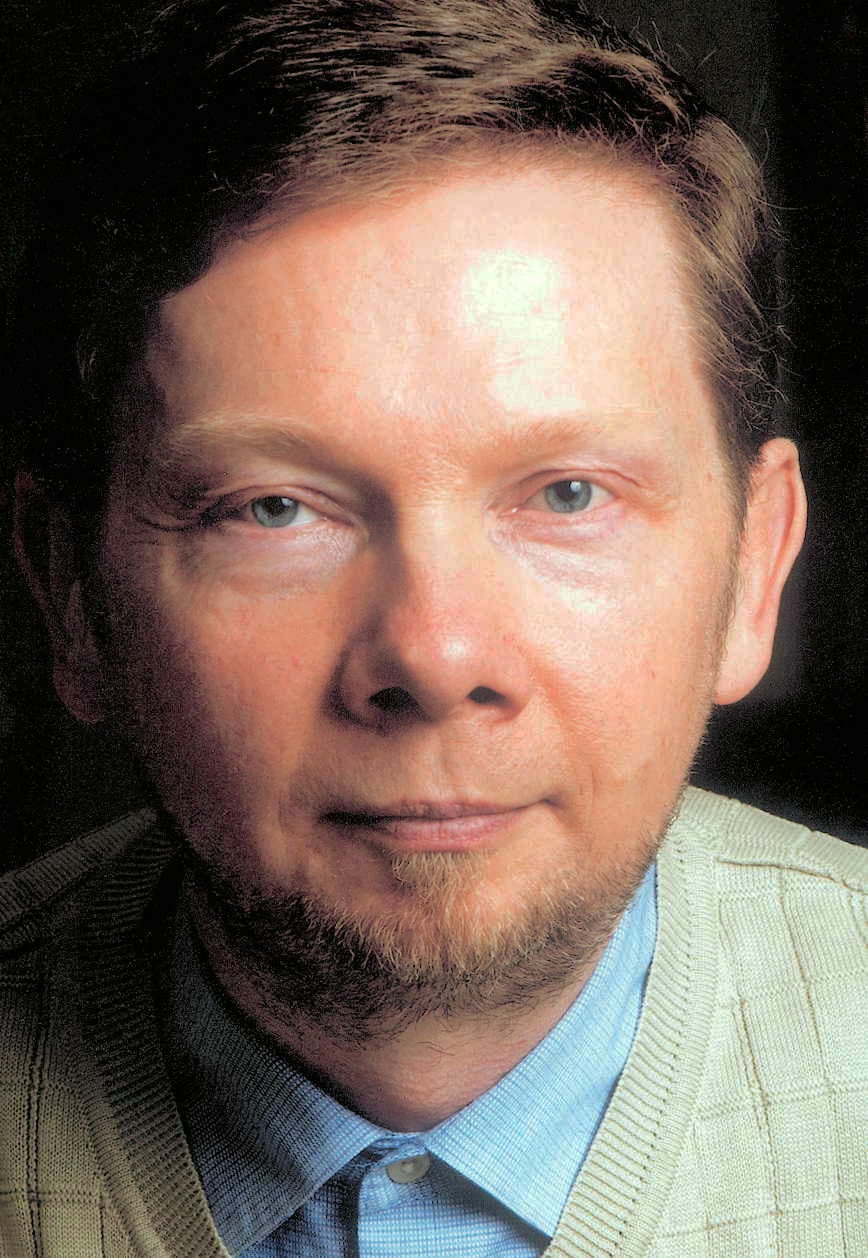
Eckhart Tolle · CC BY-SA 3.0
In eigenen Worten
«You are not your mind.»The Power of Now (1997), título del capítulo 1

Der zentrale Gedanke
Psychological suffering comes from identifying with thought: the inner voice that comments, judges and anticipates is not who one is, and simply watching it begins the release.
Im Zusammenhang sehen
Biografie
5 Min. Lesezeit
Unterstützte Übersetzung aus dem spanischen Original, Durchsicht durch einen muttersprachlichen Übersetzer ausstehend.
Ein Kind aus dem Ruhrgebiet, das die Schule verweigerte
Ulrich Leonard Tölle wurde am 16. Februar 1948 in Lünen geboren, einer kleinen Industriestadt nördlich von Dortmund in der britischen Besatzungszone des Nachkriegsdeutschland. Er wuchs zwischen den noch sichtbaren Trümmern des Krieges auf, in einem Elternhaus, das er selbst als schwierig beschrieben hat: Die Eltern stritten häufig und trennten sich schließlich. Mit dreizehn Jahren zog er zu seinem Vater nach Spanien, wo er den Rest seiner Jugend verbrachte. Dort traf er eine ungewöhnliche Entscheidung: Zwischen dreizehn und zweiundzwanzig verweigerte er jeden regulären Schulbesuch und brachte sich, unterstützt von etwas Privatunterricht, Sprachen, Literatur und Astronomie selbst bei.
Seine erste Begegnung mit der Spiritualität fiel in die Zeit um sein fünfzehntes Lebensjahr, als ihm jemand die Bücher des deutschen Mystikers Joseph Anton Schneiderfranken schenkte, bekannt als Bô Yin Râ. Er hat eingeräumt, dass ihn diese Seiten geprägt haben, auch wenn er damals nichts mit ihnen anzufangen wusste.
London, die Depression und die Nacht von 1977
Mit neunzehn ging er nach England. Drei Jahre lang unterrichtete er Deutsch und Spanisch an einer Londoner Sprachschule, studierte anschließend an der Universität London und begann 1977 ein Promotionsstudium an der Universität Cambridge. Innerlich aber lebte er in einer Not, die nicht nachließ: lange Phasen der Angst und einer Depression, die er als nahezu unerträglich bezeichnet.
In einer Nacht des Jahres 1977, kurz nach seinem neunundzwanzigsten Geburtstag, erwachte er mit einem Gefühl der Verzweiflung, das schärfer war als je zuvor. Nach seinem eigenen Bericht, mit dem sein erstes Buch beginnt, drängte sich ihm ein Satz auf – er könne nicht länger mit sich selbst leben – und mit ihm eine Frage: Wer ist dieses „Ich“, das das „Selbst“ nicht erträgt? Er erzählt, er habe sich in eine Leere gezogen gefühlt, und als er am nächsten Morgen erwachte, sei alles von Frieden erfüllt gewesen. Er ging durch London spazieren und fand alles wunderbar, selbst den Verkehr. Später deutete er jene Nacht als den Zusammenbruch des vom Verstand errichteten Ichs, das gefangen ist zwischen einer unbefriedigenden Vergangenheit und einer gefürchteten Zukunft.
Was folgte, war keine Laufbahn, sondern eine lange Zwischenzeit. Er gab die Promotion auf und verbrachte fast zwei Jahre auf den Bänken des Russell Square im Zentrum Londons, in einem Zustand, den er als tiefe Seligkeit beschreibt, und sah der Welt beim Vorüberziehen zu. Er wohnte bei Freunden, lebte zeitweise in einem buddhistischen Kloster und schlief mitunter unter freiem Himmel auf Hampstead Heath. Seine Familie hielt ihn für verantwortungslos, ja für verrückt.
Vom stillen Ratgeber zum Weltautor
Ehemalige Kommilitonen aus Cambridge suchten ihn auf, um ihm Fragen zu stellen. Ohne es darauf anzulegen, wurde er zum Ratgeber und nach und nach zum spirituellen Lehrer kleiner Gruppen. In diesen Jahren nahm er den Namen Eckhart an. Die Darstellungen gehen auseinander: Manche sehen darin eine Hommage an Meister Eckhart, den rheinischen Mystiker; er selbst erzählte 2012, er habe diesen Namen im Traum auf dem Umschlag eines Buches gesehen, von dem er wusste, dass es seines war, und kurz darauf habe ihn eine Freundin ohne erkennbaren Grund so genannt.
Nach einer Zeit in Glastonbury, dem kleinen englischen Zentrum alternativer Lebensformen, und mehreren Reisen an die nordamerikanische Westküste ließ er sich 1995 in Vancouver in Kanada nieder. Dort lernte er Kim Eng kennen, seitdem seine Lebensgefährtin und Mitarbeiterin in der Lehre.
1997 veröffentlichte ein winziger Verlag in Vancouver, Namaste Publishing, The Power of Now (Jetzt! Die Kraft der Gegenwart) in einer Auflage von etwa dreitausend Exemplaren. Das Buch, als Folge von Fragen und Antworten geschrieben, wurde von Hand zu Hand weitergereicht, bis New World Library es 1999 in großem Stil neu herausbrachte. Im Jahr 2000 empfahl Oprah Winfrey es in ihrer Zeitschrift; im Sommer darauf erschien es auf der Bestsellerliste der New York Times, zwei Jahre später stand es an deren Spitze. 2008 lag es bereits in mehr als dreißig Sprachen vor.
Es folgten Stillness Speaks (Stille spricht, 2003), eine fast aphoristische Verdichtung seiner Lehre, und A New Earth (Eine neue Erde, 2005), das den Blick vom Einzelnen auf die Menschheit weitet: das Ego als kollektive Störung, das Erwachen des Bewusstseins als Ausweg. Als Winfrey dieses zweite Buch im Januar 2008 für ihren Buchklub auswählte, wurden binnen vier Wochen 3,5 Millionen Exemplare ausgeliefert. Die Webinare, die beide Kapitel für Kapitel aufzeichneten, erreichten zig Millionen Abrufe, und die New York Times nannte ihn damals den populärsten spirituellen Autor der Vereinigten Staaten.
Was er lehrt
Tolles Lehre ist bewusst schlicht gehalten und gehört keiner Religion an. Er vertritt die Auffassung, dass seelisches Leiden aus der Identifikation mit dem Denken entsteht, mit jener unablässigen Stimme, die kommentiert, vergleicht und fürchtet; dass der einzige wirkliche Augenblick die Gegenwart ist; und dass das Beobachten des Verstandes, statt sich von ihm fortreißen zu lassen, einen Raum der Stille öffnet, den er Präsenz nennt. Er prägte den Ausdruck „Schmerzkörper“ (pain-body) für den angesammelten emotionalen Rückstand, der sich wieder regt und im Konflikt nach Nahrung sucht. Frei bedient er sich beim Zen-Buddhismus, beim Vedanta, beim Sufismus und bei den christlichen Mystikern, und häufig zitiert er die Evangelien.
Rezeption und Vermächtnis
Sein Erfolg spaltet die Kritik. Die einen loben seine Fähigkeit, in schlichter Sprache zu sagen, was die kontemplativen Traditionen verschlüsselt gesagt haben; der franziskanische Theologe Richard Rohr rechnet ihm an, viele Christen zu ihrer eigenen Mystik zurückgeführt zu haben. Andere werfen ihm mangelnde Originalität vor, eine Vermischung von Pseudowissenschaft und fremden Traditionen oder, aus Sicht der evangelikalen Theologie, eine Sicht, die mit der christlichen Unterscheidung zwischen Gott und Mensch unvereinbar sei. Bemerkt wurde auch der Abstand zwischen seiner erklärten Weigerung, „eine schwerfällige kommerzielle Struktur“ aufzubauen, und dem umfangreichen Produktkatalog, der auf seiner Website angeboten wird.
2009 stand er beim Friedensgipfel in Vancouver gemeinsam mit dem Dalai Lama auf der Bühne. Er hat Bildbände veröffentlicht – Guardians of Being, mit Patrick McDonnell – und eine Kindergeschichte, Milton's Secret, die 2016 verfilmt wurde. 2022 stellte ihn der Rapper Kendrick Lamar auf dem Album Mr. Morale & the Big Steppers als seinen Wegweiser vor; Tolles Stimme ist auf mehreren Stücken zu hören. Im Januar 2025 wählte Oprah Winfrey Eine neue Erde erneut für ihren Buchklub aus – das einzige Mal, dass dort ein Buch zweimal ausgewählt wurde. Er lehrt weiterhin von British Columbia aus, in Retreats, bei Online-Begegnungen und über seine Stiftung.
Quellen: Tolle, Eckhart. The Power of Now: A Guide to Spiritual Enlightenment. Vancouver: Namaste Publishing, 1997 (introducción autobiográfica).
Zeitleiste
Das Leben, Jahr für Jahr
Jeder Punkt ist ein belegtes Ereignis. Klicken Sie, um es mit Quelle und Grad der Gewissheit zu lesen.
16. Februar 19480 JahreLünen (Alemania)
Birth
Ulrich Leonard Tölle is born in Lünen, north of Dortmund, in the British occupation zone.
Belegt«Eckhart Tolle», Wikipedia en inglés (consultada para hechos verificables; texto propio).
16. Februar 1948 · 0 Jahre
Birth
Ulrich Leonard Tölle is born in Lünen, north of Dortmund, in the British occupation zone.
Belegt
1961 · 13 Jahre
To Spain with his father
After his parents separate he moves to Spain with his father and refuses formal schooling until twenty-two.
Belegt
1963 · 15 Jahre
The books of Bô Yin Râ
He is given the books of the German mystic Joseph Anton Schneiderfranken, which he says influenced him deeply.
Wahrscheinlich
1967 · 19 Jahre
Language teacher in London
He moves to England and teaches German and Spanish for three years at a language school, then studies at the University of London.
Wahrscheinlich
1977 · 29 Jahre
The night of transformation
He begins postgraduate study at Cambridge. One night, in deep depression, he experiences what he describes as the collapse of the mental self; he abandons his studies.
Belegt
1978 · 30 Jahre
The benches of Russell Square
He spends about two years on the benches of Russell Square in deep peace, sleeping at friends', in a Buddhist monastery or rough on Hampstead Heath.
Belegt
1982 · 34 Jahre
Counsellor and teacher
Former acquaintances consult him; he begins working as a counsellor and teacher of small groups and takes the name Eckhart. He later lives in Glastonbury.
Wahrscheinlich
1995 · 47 Jahre
Settles in Vancouver
He settles in British Columbia, where he meets Kim Eng, his partner and collaborator.
Belegt
1997 · 49 Jahre
The Power of Now
Namaste Publishing brings out his first book in a small run; New World Library reissues it widely in 1999.
Belegt
2000 · 52 Jahre
Oprah's recommendation
Oprah Winfrey recommends The Power of Now in her magazine; in August it enters The New York Times bestseller list, which it tops in 2002.
Belegt
2003 · 55 Jahre
Stillness Speaks
He publishes his second book, a brief distillation of his teaching.
Belegt
2005 · 57 Jahre
A New Earth
Dutton publishes A New Earth, on the collective ego and the awakening of consciousness.
Belegt
Januar 2008 · 60 Jahre
The book club and the webinars with Oprah
Oprah picks A New Earth for her club; 3.5 million copies in four weeks and a webinar series accessed tens of millions of times.
Belegt
September 2009 · 61 Jahre
Peace Summit with the Dalai Lama
He shares the stage with the Dalai Lama at the Vancouver Peace Summit. Publishes Guardians of Being with Patrick McDonnell.
Belegt
2011 · 63 Jahre
First on the Watkins list
Watkins magazine ranks him first in its inaugural list of the 100 most spiritually influential living people.
Belegt
2016 · 68 Jahre
Milton's Secret on film
His children's story is filmed with Donald Sutherland and Michelle Rodriguez.
Belegt
2022 · 74 Jahre
Kendrick Lamar
The album Mr. Morale & the Big Steppers presents him as the rapper's spiritual guide, with his voice on several tracks.
Belegt
Januar 2025 · 76 Jahre
Back in Oprah's club
Oprah chooses A New Earth again, the only book ever selected twice in the club's history.
Belegt
Werke
Grundlegende Werke
Die Werke, ohne die sich das Vermächtnis nicht verstehen lässt.
Schriftliches Werk · 1997
The Power of Now
The Power of Now: A Guide to Spiritual Enlightenment
His first and most read book: a guide in question-and-answer form for stepping out of identification with the mind and living in the present moment. It explains the pain-body, acceptance of the now and presence, and since 1999 has been translated into over thirty languages.
7 Ausgaben · amazon.de

Schriftliches Werk · 2003
Stillness Speaks
Tolle's second book, made of short texts, almost aphorisms, grouped in ten chapters on inner silence, thought, the body, nature, relationships and death. It seeks to transmit stillness rather than explain it, and is read slowly, like a meditation book.
2 Ausgaben · amazon.com

Schriftliches Werk · 2005
A New Earth
A New Earth: Awakening to Your Life's Purpose
Widens his teaching from the individual to humanity: it describes the ego as a collective dysfunction expressed in violence and greed, and presents the awakening of consciousness as the species' next step. Chosen twice by Oprah Winfrey's book club (2008 and 2025).
5 Ausgaben · amazon.com
Das gesamte Werk (39)

Practicing the Power of Now
2001

Oneness with All Life
2008

Milton's Secret
2008

Guardians of Being
2009

Findhorn Retreat
2006

Peace in the Present Moment
2010

The Power of Now Journal
2019

Living the Liberated Life and Dealing with the Pain-Body
2001

The Realization of Being
2001

Even the Sun Will Die
2002

Realizing the Power of Now
2003

Entering the Now
2003

Gateways to Now
2003

The Flowering of Human Consciousness
2004

Through the Open Door to the Vastness of Your True Being
2005

In the Presence of a Great Mystery
2006

Touching the Eternal: India Retreat
2007

The Art of Presence
2007

Finding Your Life's Purpose
2015
Eckhart Tolle
Breitenbush 01: The "Rains" Retreat — The Journey Home
The Conscious LibraryBreitenbush 01: The "Rains" Retreat — The Journey Home
2001

Know That "I Am"
2002

May the Mind Be the Servant of Awareness
2002
Eckhart Tolle
The Journey into Yourself
The Conscious LibraryThe Journey into Yourself
2003

Practicing Presence: A Guide for the Spiritual Teacher and Health Practitioner
2004
Zitate
Zitate, die in einem bestimmten Werk nachgewiesen sind. Jedes trägt seine Herkunft und seinen Grad an Verlässlichkeit.
You are not your mind.GeprüftThe Power of Now (1997), título del capítulo 1
Wesentliche Gedanken (redaktionelle Zusammenfassung)
Aus Achtung vor dem Urheberrecht werden diese Gedanken mit eigenen Worten zusammengefasst und nicht als wörtliche Zitate dargestellt.
- Psychological suffering comes from identifying with thought: the inner voice that comments, judges and anticipates is not who one is, and simply watching it begins the release.
- The present is the only real moment; past and future exist only as thought. Fully accepting the now is not resignation but ceasing inner resistance to it.
- The pain-body is the accumulation of old painful emotion that reawakens and feeds on conflict; seeing it arise with attention removes its power.
- The ego is not only a personal problem: it is a collective dysfunction of humanity, expressed in violence, greed and the destruction of the planet.
- Inner stillness is not achieved but discovered by allowing space between thoughts; in that space is presence, which is consciousness itself.
- A life's primary purpose is inner — being awake in what one does; the outer purpose, what one does, is secondary and changes.
Fragen
Was das Werk beantwortet
Zwölf große Fragen der Menschheit und was sich aus den Texten darauf antworten lässt, mit Belegen. Wir legen niemandem Worte in den Mund.
Was ist das Absolute? Gibt es Gott?
He prefers to speak of Being: the one formless life beyond forms
Ein unpersönliches AbsolutesAusdrücklich gesagt
Eckhart Tolle does not deny God, but he distrusts the word. In the first chapter of The Power of Now he explains that the term God has been emptied by centuries of misuse, associated with a separate, often male, entity placed outside; he proposes instead to speak of Being, the one eternal life underlying the countless forms subject to birth and death. That Being is not an object of knowledge or belief: it is felt as one's own presence when the mind grows quiet. In A New Earth he keeps the same approach: the divine is not someone judging from outside but formless consciousness recognising itself in the human being. His language is therefore that of an impersonal absolute, though immediate and inward.
Diese Frage mit anderen Meistern vergleichenWer bin ich? Gibt es ein wahres Selbst?
You are not your thoughts: the ego is identification with mind
Das Ego ist ein Konstrukt des DenkensAusdrücklich gesagt
Eckhart Tolle defines the ego as identification with the mind: with thoughts, emotions, personal history and the forms by which the self reinforces itself, such as possessions, opinions or the victim role. In A New Earth (2005) he devotes whole chapters to describing its structure and its need to compare, be right and feel separate. The key of his teaching is that simply observing thought is enough to stop identifying with it: the one who observes is not what is observed. Unlike Krishnamurti, Tolle does affirm a deeper identity, formless presence or awareness, which he calls Being and which is recognised when the mind falls silent. His practical emphasis, however, is on unmasking the ego as a mental construction, and on the claim that seeing it is already the beginning of liberation.
Diese Frage mit anderen Meistern vergleichenWarum leiden wir?
Suffering needs time: it cannot survive in the now
Denken und psychologische ZeitAusdrücklich gesagt
Eckhart Tolle locates the origin of suffering in the mind living in psychological time: the past, from which it draws identity and grievances, and the future, onto which it projects its salvation or its fear. In the opening chapters of The Power of Now he holds that almost all human pain is unnecessary, created by mental resistance to what is, and that suffering cannot survive in full presence to the moment. He adds the notion of the pain-body: a field of accumulated emotional energy, personal and collective, which reactivates periodically and feeds on thoughts and conflict; in A New Earth he devotes a whole chapter to it. The remedy is not to analyse the story of pain but to observe it without identifying with it and to accept the present moment, which, he says, cuts off the supply that keeps it alive.
Diese Frage mit anderen Meistern vergleichenWas geschieht nach dem Tod?
The opposite of death is birth; life has no opposite
Was ich bin, wird nie geboren und stirbt nieAusdrücklich gesagt
Eckhart Tolle distinguishes between form, which is born and dies, and the life or consciousness expressed in it, which has no opposite. What dissolves at death is form and the mental identity built upon it; what one essentially is, conscious presence, neither begins nor ends. That is why, he holds, the death of a loved one or the nearness of one's own can open a door: when one stops resisting the loss of form, a space of peace appears that does not depend on it. In Stillness Speaks he devotes a chapter to death and the eternal, and in The Power of Now he presents surrender to what is as a way of dying before dying. Tolle avoids describing states after death; what he affirms is the timelessness of what we are, accessible now.
Diese Frage mit anderen Meistern vergleichenWie erlangt man Befreiung oder Erlösung?
Awakening is not in time: it is presence, ceasing to identify with the mind
Ohne Methode: totale AufmerksamkeitAusdrücklich gesagt
Eckhart Tolle holds in The Power of Now that suffering arises from identification with the mind and with psychological time, that is, with the continuous projection into past and future. Liberation is not a future state conquered through progressive effort, because seeking it in time reinforces the very mechanism that prevents it: it can only happen now. It consists in being aware of thoughts without identifying with them, in «watching the thinker», and in accepting what is in the present moment. In A New Earth he extends this idea to a collective scale: the ego is a structure of identification with form, and awakening is the emergence of a consciousness that recognises itself beyond that form.
Diese Frage mit anderen Meistern vergleichenBraucht es einen Lehrer?
The teacher's words are signposts; what matters is presence within oneself
Der Lehrer ist innenAus der Lehre abgeleitet
In the introduction to The Power of Now, Eckhart Tolle recounts that his inner transformation happened without a teacher, after a personal crisis, and that he later recognised in various traditions what had happened to him. Consistently, he presents his own books and talks as pointers: words are signposts pointing to something that is not a word, and readers should attend to what the words awaken in them rather than to their conceptual content. The true teacher would be presence itself, the state of consciousness that recognises itself. He does not deny that the company of someone present helps, but avoids presenting himself as a guru and demands neither membership nor devotion.
Diese Frage mit anderen Meistern vergleichenIst die Welt wirklich?
The unmanifested expresses itself in form; the universe awakens to itself
Offenbarung des GöttlichenAus der Lehre abgeleitet
Eckhart Tolle does not consider the world an illusion. In The Power of Now he distinguishes between the manifested, the world of forms, and the unmanifested, the formless source from which they arise, accessed through portals such as silence, space or attention to the inner body. What is illusory is not form but identification with it: the ego, which takes itself to be one form among forms. In A New Earth he holds that the purpose of the universe is for consciousness to awaken in form, and that each thing, a flower or a stone, can be recognised as an expression of that consciousness. The world is thus the realm in which the formless recognises itself.
Diese Frage mit anderen Meistern vergleichenWas ist Liebe?
To love is to recognise oneself in the other beyond form and ego
Was erscheint, wenn das Ich aufhörtAusdrücklich gesagt
Eckhart Tolle separates true love from the relationships the ego calls love. In the chapter on relationships in The Power of Now he describes the love-hate relationship: need, attachment and the search in the other for what is lacking in oneself, which turn love into addiction and soon alternate with resentment and conflict. Real love, he holds, is not an emotion or something obtained from another person: it is the recognition of oneself in the other, of the same presence or consciousness beyond form. It appears when one is present and does not project the mind's past and expectations onto the other. In A New Earth he adds that this recognition extends to all beings and to nature, and that a relationship can become a spiritual practice if it is used to become conscious of the ego.
Diese Frage mit anderen Meistern vergleichenSind wir frei, oder ist alles vorherbestimmt?
While the mind runs on automatic there is no choice; presence makes it possible
Wir sind Maschinen, bis wir erwachenAus der Lehre abgeleitet
Tolle describes the ordinary human being as identified with a mind that thinks compulsively and with a «pain-body» that reacts through inherited patterns. In that state, he holds in *The Power of Now*, what look like decisions are conditioned reactions: the unconscious person does not choose but repeats. Hence his advice towards someone who harms us is to understand that they could not have acted otherwise from their level of consciousness. True choice appears with presence, when one becomes the observer of the mind and stops being dragged along by it. In *A New Earth* he extends this to humanity: collective consciousness runs in a dysfunctional egoic mode from which only an awakening can free it.
Diese Frage mit anderen Meistern vergleichenWozu meditieren oder beten?
Stepping out of compulsive thinking into the now, where stillness arises
Gegenwärtig seinAusdrücklich gesagt
Tolle is the reference for this key. In *The Power of Now* (1997) he holds that most human suffering comes from identification with a mind that thinks ceaselessly and lives in the past or the future. Practice does not consist in a formal method, although he offers exercises —watching the thinker, feeling the inner body, attending to the gaps between thoughts—, but in returning again and again to the present moment, the only thing that exists. When attention leaves thought, a conscious stillness arises that he identifies with one's own being. In *A New Earth* (2005) he adds that this presence also transforms everyday action, which stops serving the ego.
Diese Frage mit anderen Meistern vergleichenKann die Vernunft das Letzte erkennen?
You are not your mind: being is known in stillness, not in thought
Das Letzte liegt jenseits des VerstandesAusdrücklich gesagt
The first chapter of *The Power of Now* is titled «You Are Not Your Mind», and it sums up his stance: thought is a useful instrument, but identification with it is the great human dysfunction, and through it one does not reach what Tolle calls Being. Words and concepts, he insists, are signposts pointing to reality, not reality itself, and most religious disputes arise from confusing the one with the other. True knowledge arises when the mind falls quiet and a space of awareness appears in which thought is observed. In *A New Earth* he puts it as the shift from a consciousness centred on thought to one centred on presence, not as a new doctrine.
Diese Frage mit anderen Meistern vergleichenSich von der Welt zurückziehen oder sie verwandeln?
A new world is born of a new consciousness, not of new ideologies
Die Revolution ist innerlichAusdrücklich gesagt
Eckhart Tolle holds in A New Earth that humanity faces a choice: either it transforms its consciousness or it destroys itself. Wars, exploitation and the ecological crisis are, for him, collective manifestations of the ego, identification with a mind that feels separate and threatened; that is why solutions that do not touch this root — new ideologies, systems or struggles against an enemy — end up reproducing the same pattern. The change that matters is the flowering of consciousness in individuals. He does not advise abandoning the world: in the last chapter he describes «awakened doing», action springing from presence, in three modalities — acceptance, enjoyment and enthusiasm — and speaks of people whose role is to hold a frequency of consciousness amid ordinary life. Outward action is valid if it flows from presence and not from the ego.
Diese Frage mit anderen Meistern vergleichen
Affinitäten und Spannungen
Affinitäten und Spannungen
Frage für Frage aus den Positionen berechnet. Den Grund jeder Übereinstimmung und jedes Widerspruchs zeigt ein Klick.
Denkt ähnlich wie
Osho
Übereinstimmung bei: Was ist das Absolute? Gibt es Gott? · Wer bin ich? Gibt es ein wahres Selbst? · Warum leiden wir?
Alan Watts
Übereinstimmung bei: Was ist das Absolute? Gibt es Gott? · Warum leiden wir? · Was geschieht nach dem Tod?
- BKByron Katie
Byron Katie
Übereinstimmung bei: Was ist das Absolute? Gibt es Gott? · Wer bin ich? Gibt es ein wahres Selbst? · Warum leiden wir?
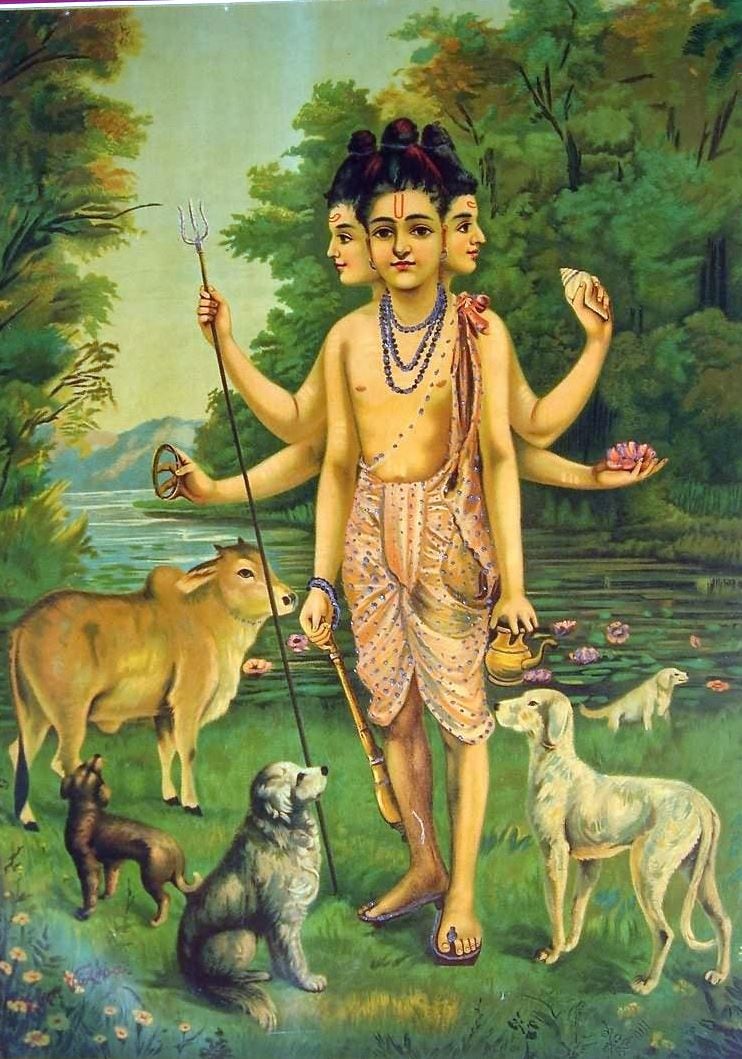
Dattatreya
Übereinstimmung bei: Was ist das Absolute? Gibt es Gott? · Was geschieht nach dem Tod? · Braucht es einen Lehrer?



Übereinstimmung bei
Eckhart Tolle · Ramana Maharshi
You are not what you think: the shift of the subject on the hill and in the now
Warum: The affinity has a contextual explanation: Tolle writes in a contemporary Western milieu that had received Advaita, among other sources, through Ramana and his popularisers, and he adopts a vocabulary without scriptures or gods. The differences are of register and audience. Ramana speaks from the Vedantic tradition, with an explicit metaphysical horizon, since the Self is identical with the Absolute, and with a very precise question-method; Tolle addresses readers without religious training, stresses the now and the inner body, and extends the diagnosis to a collective scale. One asks who; the other asks one to be present. Both point to the same shift of the subject.
Übereinstimmung bei
Eckhart Tolle · P. D. Ouspensky
Waking from automatic pilot: self-remembering and the power of now
Warum: There is no documented relationship between them, although the vocabulary of awakening and automatic pilot found in contemporary spirituality owes much to the Fourth Way. The affinity has clear limits. Self-remembering demands effort, a deliberate division of attention and a system of group work, and its goal is to form a permanent self that does not yet exist; Tolle's presence is presented as something not manufactured or reached in time but recognised as one's own being. Ouspensky writes for a school with discipline and hierarchy; Tolle, for individual readers without a tradition. They agree on the first step, not on the path or the goal.
Übereinstimmung bei
Eckhart Tolle · Jiddu Krishnamurti
Suffering needs time: thought projecting past and future
Warum: No relationship between them is documented in this library, although Tolle writes in a milieu that knew Krishnamurti's work well, published and circulated for decades. The differences are real. Krishnamurti rejects any metaphysics of a true Being, which he considers another projection of thought, and any exercise, which he considers a method; Tolle affirms a presence or formless consciousness he calls Being, proposes concrete exercises such as feeling the inner body and adds the notion of the pain-body. Krishnamurti speaks harshly of conditioning and revolution; Tolle, in a tone of accompaniment. They agree on the diagnosis of psychological time, not on what they find on the other side.
Widerspruch beiScheinbarer Widerspruch
Eckhart Tolle · Adi Shankara
Is the world an illusion? Superimposition on Brahman or form in which consciousness awakens
Warum: The contradiction is largely apparent: both distinguish two levels, a formless source and a world dependent on it, and both locate the error in the subject who confuses the levels, ignorance in Shankara, identification in Tolle. Vocabulary separates them more than structure: maya sounds like negation to a modern reader, although in Shankara it does not amount to a subjective dream. A real difference of evaluation remains. For Shankara multiplicity has no purpose and vanishes for one who knows; for Tolle, along a line closer to manifestation than to illusion, form is the place where consciousness recognises itself, and the universe has an evolutionary meaning.
Anekdoten und Erzählungen
Anekdoten und Erzählungen
Zeugnis1977
The night he could not live with himself
Herkunft der Erzählung: Autobiographical account in the introduction to The Power of Now (1997) and later interviews.
Quelle: Tolle, Eckhart. The Power of Now: A Guide to Spiritual Enlightenment. Vancouver: Namaste Publishing, 1997 (introducción autobiográfica).
Zeugnis1977–1979
Two years on a bench in Russell Square
Herkunft der Erzählung: Tolle's own testimony from interviews, summarised in the Wikipedia biography; no independent sources.
Quelle: «Eckhart Tolle», Wikipedia en inglés (consultada para hechos verificables; texto propio).
Umstritten1980s
A name seen in a dream
Herkunft der Erzählung: Two versions: the homage (attributed by others) and the dream (2012 interview cited by Wikipedia).
Quelle: «Eckhart Tolle», Wikipedia en inglés (consultada para hechos verificables; texto propio).
Belegt2008
Eleven million people in one class
Herkunft der Erzählung: Figures published in the press and collected by Wikipedia.
Quelle: «Eckhart Tolle», Wikipedia en inglés (consultada para hechos verificables; texto propio).
Lehren
Lehren
Die Begriffe, die das Denken gliedern, in ihrem Zusammenhang erklärt.
Pain-bodycuerpo-del-dolor
Developed in The Power of Now (ch. 2) and expanded in A New Earth (chs. 5 and 6).
Quelle: Tolle, Eckhart. The Power of Now: A Guide to Spiritual Enlightenment. Vancouver: Namaste Publishing, 1997 (introducción autobiográfica).
Presencepresencia
Central concept of The Power of Now and Stillness Speaks.
Quelle: Tolle, Eckhart. The Power of Now: A Guide to Spiritual Enlightenment. Vancouver: Namaste Publishing, 1997 (introducción autobiográfica).
Retreats
Retreats und Zentren
Orte und Begegnungen, die mit dieser Lehre verbunden sind. Wir stellen den Kontakt zu den Veranstaltern her.
En línea · Internacional
Eckhart Tolle: membership community and online courses
Eckhart Teachings
Besides his public gatherings, Eckhart Tolle runs a private online membership community which, according to his website, includes quarterly live teachings, monthly video practices and access to more than four hundred hours of recorded teachings, with a free seven-day trial. His shop also offers online courses. It is the most continuous way to follow his teaching from home, with a regular rhythm of practice rather than a one-off event. As in his books, the emphasis is on attention to the present moment and on observing the mind without identifying with it.
Sede variable (retiros recientes en Whistler, Canadá) y en línea · Internacional
Eckhart Tolle: retreats, events and livestreams
Eckhart Teachings
Eckhart Tolle, author of The Power of Now, teaches mainly through public gatherings: multi-day in-person retreats, weekend intensives and evening talks in different cities. His official website publishes the calendar, and many of these events can also be followed live online, so those who cannot get a seat in the hall can take part remotely. The content centres on presence, observing thought and accepting the present moment, without affiliation to any religion. In-person places tend to sell out, so it is worth checking well in advance.
Videos
Videos
Aufnahmen, Gespräche und Dokumentarfilme. Die Videos werden von YouTube wiedergegeben; sie werden nicht hier gespeichert.
Eckhart Tolle: “A New Earth” | Oprah’s Book Club
Gespräch· EN· 2025· 53 min
OprahOffizieller Kanal
Eckhart Tolle: Author of 'A New Earth' | Super Soul Sunday S8E9 | Full Episode
Gespräch· EN· 42 min
OWNOffizieller Kanal
Understanding the Pain-Body | A Special 3 Part Compilation from Eckhart Tolle
Vortrag· EN· 40 min
Eckhart TolleOffizieller Kanal
Why You Don’t Need to Fear Death | Eckhart Tolle Foundation
Vortrag· EN· 2026· 11 min
Eckhart TolleOffizieller Kanal
What being awake actually means
Vortrag· EN· 2026· 10 min
Eckhart TolleOffizieller Kanal
Eckhart Tolle Reveals the Secret to Fulfillment Through Stillness and Action
Vortrag· EN· 95 min
Eckhart TolleOffizieller Kanal
Eckhart Tolle interview with host Nina Rhodes 1998
Gespräch· EN· 1998· 27 min
Craig Delahunt
Eckhart Tolle at the Omega Institute 2001, Session 2
Vortrag· EN· 2001· 73 min
Namaste PublishingOffizieller Kanal
Eckhart Tolle — Reality Is Beyond Thought
Vortrag· EN· 87 min
Namaste PublishingOffizieller Kanal
Eckhart Tolle on The Hour with George Stroumboulopoulos
Gespräch· EN· 2009· 13 min
Strombo
Eckhart Tolle and Tami Simon | Conscious Manifestation and The Present Moment
Gespräch· EN· 2019· 27 min
Sounds TrueOffizieller Kanal
Eckhart Tolle on Finding Your Identity, Meaning & Purpose in Life
Gespräch· EN· 2024· 90 min
Tony Robbins
Eckhart Tolle: Spirituelles Erwachen, das wahre Selbst und die Überwindung des Egos
Gespräch· DE· 2024· 81 min
Laura Malina Seiler
Eckhart Tolle: El 99 % de las Personas MANIFIESTA de Forma Incorrecta (Así Puedes Solucionarlo)
Gespräch· ES· 2026· 95 min
Lewis Howes Español
Galerie
Galerie
Bilder mit geprüfter Lizenz. Jedes bewahrt seine Urheberschaft und seinen Herkunftsnachweis.
Beziehungen
Beziehungen
Einflüsse, Schülerschaften und Verwandtschaften. Die belegte Beziehung wird von der durch Analyse ermittelten Ähnlichkeit unterschieden.
Verwandte Gedanken mit
The question 'who is this I?' of his 1977 night matches Ramana's self-enquiry.
Durch Analyse ermittelte Ähnlichkeit
Begegnete
The 14th Dalai Lama (Tenzin Gyatso)
They shared the stage at the Vancouver Peace Summit (September 2009).
Belegte Beziehung
Verwandte Gedanken mit
Choiceless observation of thought and the rejection of spiritual authority bring the two teachings close; Tolle names him among his references.
Durch Analyse ermittelte Ähnlichkeit
Von anderen Einträgen aus verknüpft
Quellen
Quellen
Für diesen Eintrag herangezogene Bibliografie und Kataloge.
- «Eckhart Tolle», Wikipedia en inglés (consultada para hechos verificables; texto propio).
- Eckhart Tolle — web oficial (biografía, libros y enseñanzas).
- Open Library: obras y ediciones de Eckhart Tolle.
- Tolle, Eckhart. The Power of Now: A Guide to Spiritual Enlightenment. Vancouver: Namaste Publishing, 1997 (introducción autobiográfica).
- Goodreads: ediciones por idioma de las obras de Eckhart Tolle.
- Wikidata Q60137 (Eckhart Tolle).
- Sounds True, fichas de producto de los programas de audio de Eckhart Tolle (At the Source of Being, The Illusion of Time, The Secret of Happiness, Entering the Now, Discovering the Essential Self, Journeys into Stillness, Eckhart Tolle Learning Intensive, Beyond the Thinking Mind).
- Rechteinhaber
- Eckhart Tolle / Eckhart Teachings Inc.
- Offizielle Website
- eckharttolle.com
Bestätigung ausstehend
Was dieser Eintrag noch nicht klären konnte. Wir sagen es lieber, als es aufzufüllen.
- Localizar capítulo y página de las citas marcadas como «probable» en una edición impresa de The Power of Now.
- Ediciones en español de «Milton's Secret», «Oneness with All Life» y de las enseñanzas en audio: no verificadas en catálogo.
- Fecha exacta del cambio de nombre a Eckhart y del traslado a Glastonbury.
- Obra (2026-10-25): cotejada con Wikipedia (en) y Open Library; todos los libros están registrados. Se añadieron 16 programas de audio/vídeo con ISBN y la recopilación alemana Lebendige Beziehungen JETZT! (2013). Quedan fuera, sin ISBN confirmado o por no ser obras: Companion to the Power of Now (casete de Namaste, 2001, contenido sin confirmar), Meditations on the Now: 365 Inspirational Selections from The Power of Now (Hodder & Stoughton, ISBN 9780340919682, año no fiable en el catálogo), The Eckhart Tolle Audio Collection (Sounds True, 2002, reúne programas ya registrados), barajas de cartas (Power of Now Meditation Deck, 2003; Stillness Speaks Inspiration Deck, 2004) y calendarios. El catálogo de audio de Sounds True y Eckhart Teachings es más amplio: Discovering the Essential Self, Journeys into Stillness, Eckhart Tolle Learning Intensive, Beyond the Thinking Mind, Intelligence Beyond the Mind y otros retiros grabados están por registrar con su ISBN. Los prólogos a libros ajenos (Steve Taylor, Peter Russell, Michael Brown, Kim Eng) no son obras suyas.
- Vídeos (2026-10-25): no existe en YouTube ninguna charla o entrevista oficial de Tolle en español; el único vídeo en castellano registrado es un doblaje del canal en español de Lewis Howes.
Recherchiert am 2026-10-25