Buddhismus · Zen / Chan · Daoismus · Christliche Mystik · Advaita Vedanta
Alan Watts
1915 – 1973Historisch belegte Person
Britischer, später amerikanisch eingebürgerter Philosoph und Vermittler (1915–1973), der dem Westen den Zen-Buddhismus, den Taoismus und den Vedanta zugänglich machte. Einige Jahre episkopaler Priester, Dozent in San Francisco, Stimme des Radiosenders KPFA und des öffentlichen Fernsehens, schrieb er Werke wie Vom Geist des Zen, Die Weisheit des ungesicherten Lebens, Psychotherapie und östliche Befreiungswege und Die Illusion des Ich. Seine aufgezeichneten Vorträge finden bis heute massenhafte Verbreitung.
- Werke
- 59Werke
- Ausgaben
- 150Ausgaben
- Zitate
- 8Zitate
- Videos
- 13Videos
- Bilder
- 5Bilder
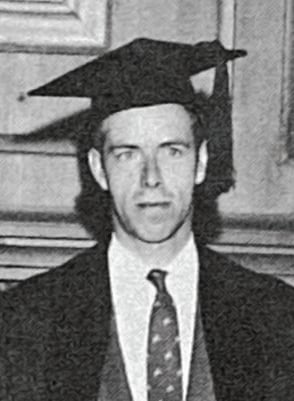
Alan Watts en la Universidad de Vermont (1958) · Public domain
In eigenen Worten
«If you get the message, hang up the phone.»The Joyous Cosmology, ed. Vintage 1970, p. 26 (sobre los psicodélicos como instrumentos)

Der zentrale Gedanke
The feeling of being an isolated self inside the body, facing an alien world, is not a datum of experience but a learned social convention; organism and environment form a single field.
Im Zusammenhang sehen
Biografie
5 Min. Lesezeit
Unterstützte Übersetzung aus dem spanischen Original, Durchsicht durch einen muttersprachlichen Übersetzer ausstehend.
Ein Junge aus Kent im Bann des Ostens
Alan Wilson Watts wurde am 6. Januar 1915 in Chislehurst in der Grafschaft Kent geboren, als einziges Kind von Laurence Wilson Watts, dem Londoner Vertreter des Hauses Michelin, und Emily Mary Buchan, der Tochter eines Missionars. Er wuchs in einem bescheidenen Landhaus auf, lernte die Namen der Blumen und Schmetterlinge und war umgeben von Stickereien und Malereien, die aus China heimgekehrte Missionare seiner Mutter geschenkt hatten. Von diesen Bildern blieb ihm als Erwachsenem die Faszination für „eine gewisse Klarheit, Transparenz und Weite“, die er in der englischen Kunst nicht fand.
Mit sieben Jahren kam er ins Internat, zunächst in die Vorbereitungsschule St Hugh's, dann an die King's School in Canterbury, und erhielt eine anglikanische Erziehung, die er als freudlos beschrieb. In den Ferien reiste er mit Francis Croshaw, einem gebildeten, am Buddhismus interessierten Epikureer, durch Frankreich und entdeckte in dessen Bibliothek die Texte, die seinen Weg bestimmen sollten. Mit sechzehn war er Sekretär der Buddhistischen Loge in London, die der Anwalt Christmas Humphreys leitete. Eine Prüfungsarbeit, die er mit mehr Kühnheit als Umsicht anging, kostete ihn das Stipendium für Oxford, und der junge Mann bildete sich auf eigene Faust weiter: in der Loge, in den Bibliotheken und im Umgang mit dem exzentrischen serbischen Denker Dimitrije Mitrinović. Seine Biografin Monica Furlong beschreibt ihn vor allem als Autodidakten.
Der junge Deuter des Zen
1936 besuchte der Einundzwanzigjährige den in London tagenden Weltkongress der Religionen und lernte D. T. Suzuki kennen, dessen Werk er im selben Jahr in The Spirit of Zen einem breiten Publikum vorgestellt hatte. Es folgte The Legacy of Asia and Western Man (1937). Zwei Jahrzehnte später sollte er selbst dieses Erstlingswerk für wenig gründlich und in vieler Hinsicht irreführend halten; die Berufung aber stand fest: den Zen-Buddhismus, den Taoismus und den Vedanta dem Westen verständlich zu machen.
In der Loge lernte er Eleanor Everett kennen, die Tochter von Ruth Fuller Everett, jener Amerikanerin, die Jahre später als Ruth Fuller Sasaki eine einzigartige Stellung im Zen von Kyōto einnehmen sollte. Die beiden heirateten im April 1938 und ließen sich in New York nieder, wo Watts bei dem Meister Sokei-an Sasaki verkehrte, ohne sich auf eine geregelte Schulung bei ihm einzulassen. 1940 veröffentlichte er The Meaning of Happiness, 1943 erhielt er die amerikanische Staatsbürgerschaft.
Episkopaler Priester
Auf der Suche nach einem beruflichen Rahmen für seine Berufung trat er in das episkopale Seabury-Western-Seminar in Evanston (Illinois) ein und wurde Mitte der Vierzigerjahre zum Priester geweiht: Seine Autobiografie nennt 1945, die von seinen Töchtern herausgegebenen Briefe deuten auf 1944. Er war episkopaler Seelsorger an der Northwestern University, übersetzte die Mystische Theologie des Pseudo-Dionysius Areopagita (1944) und suchte in Behold the Spirit (1947) die christliche Mystik mit der asiatischen Philosophie zu versöhnen. Die Ehe hielt seinem wenig monogamen Temperament nicht stand: Eleanor erwirkte die Annullierung, und 1950 legte Watts das Priesteramt nieder. Im selben Jahr heiratete er Dorothy DeWitt.
San Francisco: Akademie, Radio und Fernsehen
1951 ging er nach Kalifornien, um an der American Academy of Asian Studies in San Francisco zu lehren, die er zugleich verwaltete, an der Seite von Frederic Spiegelberg, Haridas Chaudhuri und dem Maler Saburo Hasegawa, bei dem er chinesische Kalligrafie übte. Ab 1953 gestaltete er ehrenamtlich eine wöchentliche Sendung beim Radiosender KPFA in Berkeley, die ihm ein treues Publikum verschaffte. 1951 war The Wisdom of Insecurity (Die Weisheit des ungesicherten Lebens) erschienen, eine Meditation über die Angst des modernen Menschen; 1957 folgte The Way of Zen (Vom Geist des Zen), die historische und philosophische Darstellung, die ihn berühmt machte und bis heute immer wieder aufgelegt wird.
1958 verlieh ihm die University of Vermont die theologische Ehrendoktorwürde; im Sommer jenes Jahres reiste er mit seinem Vater durch Europa und besuchte Carl Gustav Jung und Karlfried Graf Dürckheim. 1959 und 1960 nahm er für den öffentlichen Fernsehsender KQED in San Francisco die Reihe Eastern Wisdom and Modern Life auf. Psychotherapy East and West (1961; deutsch: Psychotherapie und östliche Befreiungswege) schlug vor, Buddhismus, Taoismus und Vedanta nicht als Religionen oder Philosophien im westlichen Sinn zu lesen, sondern als der Psychotherapie verwandte „Befreiungswege“.
Psychedelik, Gegenkultur und Kritik
Seit Ende der Fünfzigerjahre nahm er an Versuchen mit Meskalin und LSD teil, die kalifornische Forscher leiteten; daraus ging The Joyous Cosmology (1962) hervor, worin er warnte, die Substanzen seien Instrumente wie ein Mikroskop oder ein Telefon – habe man die Botschaft empfangen, solle man auflegen. Von 1962 bis 1964 war er Stipendiat in Harvard; er trennte sich von Dorothy und heiratete Mary Jane Yates King. Mit ihr teilte er sein Leben zwischen der auf Grund gesetzten Fähre Vallejo in Sausalito und einer Hütte in Druid Heights, der Bohème-Gemeinschaft, die die Dichterin Elsa Gidlow an den Hängen des Mount Tamalpais gegründet hatte.
Aus diesen Jahren stammen Beyond Theology (1964) und The Book: On the Taboo Against Knowing Who You Are (1966; deutsch: Die Illusion des Ich), seine persönlichste Synthese: das Universum als kosmisches Versteckspiel, in dem das abgesonderte, in einen Hautsack eingeschlossene Ich sich als Halluzination erweist. Watts hielt sich nicht für einen Gelehrten. Einwände kamen auch aus dem Zen: Philip Kapleau warf ihm vor, die Sitzpraxis geringzuschätzen, und Robert Aitken überlieferte D. T. Suzukis Urteil, Watts habe eine bestimmte klassische Geschichte nicht verstanden. Shunryu Suzuki dagegen, der Gründer des San Francisco Zen Center, verteidigte ihn als „einen großen Bodhisattva“.
Die letzten Jahre
1971 zeichnete er in Druid Heights für das Bildungsfernsehen die Sendung A Conversation with Myself auf, und 1972 veröffentlichte er seine Autobiografie In My Own Way, die er Elsa Gidlow widmete. Jene Jahre waren auch von einem zunehmenden Alkoholismus geprägt, der Freunde und Angehörige beunruhigte. Im Oktober 1973 kehrte er von einer Vortragsreise durch Europa zurück, und am 16. November starb er im Schlaf in seinem Haus in Druid Heights, mit achtundfünfzig Jahren. Seine Asche wurde zwischen Druid Heights und dem Zen-Zentrum Green Gulch aufgeteilt. Das Buch, das er mit dem Taiji-Meister Al Chung-liang Huang vorbereitet hatte, Tao: The Watercourse Way, erschien 1975 mit einem Nachwort Huangs über seine letzten Monate.
Ein Vermächtnis der Stimme
Watts hinterließ mehr als fünfundzwanzig Bücher und Hunderte Stunden Vorträge, die sein Sohn Mark Watts bewahrt und anhand von Transkriptionen zu postumen Büchern verarbeitet hat. Diese Stimme mit ihrer britischen Diktion und ihrem verschmitzten Humor hat Generationen erreicht, die seine Bücher nie gelesen haben: Serien, Filme, Songs und Videos greifen sie unablässig auf, oft aus dem Zusammenhang gerissen. Die Kritik ist sich einig, dass er weder ein Buddhismusgelehrter noch ein Meister einer Überlieferungslinie war, sondern ein außergewöhnlicher Vermittler, dessen Verdienst darin lag, Brücken zu schlagen zwischen Ost und West, zwischen Religion und Psychologie, zwischen Kultur und Natur.
Quellen: Watts, Alan. In My Own Way: An Autobiography, 1915–1965. Nueva York: Pantheon Books, 1972 (reed. New World Library, 2007, ISBN 9781577315841). · Furlong, Monica. Zen Effects: The Life of Alan Watts. Boston: Houghton Mifflin, 1986 (publicado en Reino Unido como Genuine Fake, Heinemann, 1986; reed. SkyLight Paths, 2001, ISBN 9781893361324). · Columbus, Peter J. y Rice, Donadrian L. (eds.). Alan Watts—Here and Now: Contributions to Psychology, Philosophy, and Religion. Albany: State University of New York Press, 2012 (ISBN 9781438441993). · Watts, Joan y Watts, Anne (eds.). The Collected Letters of Alan Watts. Novato: New World Library, 2017 (ISBN 9781608684151). · Chadwick, David. Crooked Cucumber: The Life and Zen Teaching of Shunryu Suzuki. Nueva York: Broadway Books, 1999.
Zeitleiste
Das Leben, Jahr für Jahr
Jeder Punkt ist ein belegtes Ereignis. Klicken Sie, um es mit Quelle und Grad der Gewissheit zu lesen.
6. Januar 19150 JahreChislehurst, Kent
Born in Chislehurst
Born on 6 January in Chislehurst, Kent, the only child of Laurence Wilson Watts and Emily Mary Buchan.
BelegtWatts, Alan. In My Own Way: An Autobiography, 1915–1965. Nueva York: Pantheon Books, 1972 (reed. New World Library, 2007, ISBN 9781577315841).
Nach dem Tod
- 1975Tao: The Watercourse Way
6. Januar 1915 · 0 Jahre
Born in Chislehurst
Born on 6 January in Chislehurst, Kent, the only child of Laurence Wilson Watts and Emily Mary Buchan.
Belegt
1922 · 7 Jahre
Boarder at St Hugh's
Aged seven he is sent as a boarder to St Hugh's preparatory school; he will later attend The King's School, Canterbury.
Belegt
1931 · 16 Jahre
Secretary of the Buddhist Lodge
At sixteen he becomes secretary of the Buddhist Lodge in London, run by Christmas Humphreys.
Belegt
1936 · 21 Jahre
The Spirit of Zen and D. T. Suzuki
Publishes The Spirit of Zen and meets D. T. Suzuki at the World Congress of Faiths in London.
Belegt
April 1938 · 23 Jahre
Marriage and emigration
In April he marries Eleanor Everett and the couple settle in New York.
Belegt
1943 · 28 Jahre
US citizenship
Becomes a United States citizen.
Belegt
1945 · 30 Jahre
Ordination
Ordained an Episcopal priest after studying at Seabury-Western seminary. His autobiography gives 1945; his published letters suggest 1944.
Umstritten
1947 · 32 Jahre
Behold the Spirit
Publishes Behold the Spirit, an attempt to unite mystical Christianity and Eastern philosophy.
Belegt
August 1950 · 35 Jahre
Leaves the priesthood
After the annulment of his marriage he resigns from the priesthood in August; he marries Dorothy DeWitt.
Belegt
1951 · 36 Jahre
American Academy of Asian Studies
Moves to San Francisco to teach at the American Academy of Asian Studies; publishes The Wisdom of Insecurity.
Belegt
1953 – 1962 · 38 Jahre
KPFA programme
Begins a weekly programme on KPFA radio in Berkeley, which he will keep until 1962.
Belegt
1957 · 42 Jahre
The Way of Zen
Publishes The Way of Zen, his most influential book on Zen Buddhism.
Belegt
15. Juni 1958 · 43 Jahre
Honorary doctorate and visit to Jung
On 15 June he receives an honorary Doctor of Divinity from the University of Vermont; that summer he visits Carl Jung in Switzerland.
Belegt
1959 – 1960 · 44 Jahre
Eastern Wisdom and Modern Life
Records the television series Eastern Wisdom and Modern Life for KQED (two seasons, 1959–1960).
Belegt
1961 · 46 Jahre
Psychotherapy East and West
Publishes Psychotherapy East and West.
Belegt
1962 – 1964 · 47 Jahre
The Joyous Cosmology and Harvard
Publishes The Joyous Cosmology; holds a Harvard fellowship until 1964.
Belegt
1966 · 51 Jahre
The Book
Publishes The Book: On the Taboo Against Knowing Who You Are.
Belegt
1971 · 56 Jahre
A Conversation with Myself
Films A Conversation with Myself at Druid Heights for educational television.
Belegt
1972 · 57 Jahre
In My Own Way
Publishes his autobiography, In My Own Way, dedicated to Elsa Gidlow.
Belegt
16. November 1973 · 58 Jahre
Death at Druid Heights
Dies in his sleep on 16 November at his home in Druid Heights, after returning from a European tour.
Belegt
1975
Tao: The Watercourse Way
Tao: The Watercourse Way appears posthumously, completed by Al Chung-liang Huang.
Belegt
Werke
Grundlegende Werke
Die Werke, ohne die sich das Vermächtnis nicht verstehen lässt.
Schriftliches Werk · 1951
The Wisdom of Insecurity
The Wisdom of Insecurity: A Message for an Age of Anxiety
Short treatise written after he left the priesthood and one of his most widely read books. It argues that modern anxiety springs from seeking security in a future that does not exist and from splitting the observing 'I' off from experience; the way out is not another belief but full attention to the present and acceptance of change. Without technical vocabulary it distils what Watts had learned from Zen, Taoism and Christian mysticism.
11 Ausgaben · amazon.de

Schriftliches Werk · 1957
The Way of Zen
His standard work and the book that made him internationally known. Part one reconstructs Zen's background — Indian thought, Taoism and Mahayana Buddhism — and its formation in China; part two sets out its principles and practice: zazen, koans and Zen's expression in the arts. Watts draws on general semantics and cybernetics to explain non-dual experience. In print continuously since 1957 and translated into many languages.
9 Ausgaben · amazon.com

Schriftliches Werk · 1961
Psychotherapy East and West
Proposes that Buddhism, Vedanta, Taoism and Zen are better understood as 'ways of liberation' — disciplines for undoing the social conditioning that produces the feeling of an isolated self — than as religions or philosophies. From there he engages Freud, Jung, existential psychology and Gregory Bateson's double-bind theory, suggesting that the Western therapist and the Eastern teacher perform similar functions. It is one of his most cited books in psychology.
7 Ausgaben · amazon.de

Schriftliches Werk · 1966
The Book
The Book: On the Taboo Against Knowing Who You Are
His most personal and accessible statement. Written as the book a parent might give a child on entering adult life, it argues that the sense of being an ego enclosed in a bag of skin is a social hallucination and that the universe is a single process playing hide-and-seek with itself. It blends Vedanta, Taoism, ecology and cybernetics in a lively, humorous style and became an emblematic book of the counterculture.
6 Ausgaben · amazon.de
Das gesamte Werk (59)
Alan Watts
An Outline of Zen Buddhism
The Conscious LibraryAn Outline of Zen Buddhism
1932

The Spirit of Zen
1936
Alan Watts
The Legacy of Asia and Western Man
The Conscious LibraryThe Legacy of Asia and Western Man
1937
Alan Watts
The Meaning of Happiness
The Conscious LibraryThe Meaning of Happiness
1940
Alan Watts
Theologia Mystica (translation of Pseudo-Dionysius)
The Conscious LibraryTheologia Mystica (translation of Pseudo-Dionysius)
1944

Behold the Spirit
1947
Alan Watts
Easter: Its Story and Meaning
The Conscious LibraryEaster: Its Story and Meaning
1950

The Supreme Identity
1950

Myth and Ritual in Christianity
1953

Nature, Man and Woman
1958

Beat Zen, Square Zen, and Zen
1959

This Is It
1960

The Joyous Cosmology
1962

The Two Hands of God
1963

Beyond Theology
1964
Alan Watts
Nonsense
The Conscious LibraryNonsense
1967
Alan Watts
Psychedelics and Religious Experience
The Conscious LibraryPsychedelics and Religious Experience
1968

Does It Matter?
1970
Alan Watts
Erotic Spirituality
The Conscious LibraryErotic Spirituality
1971
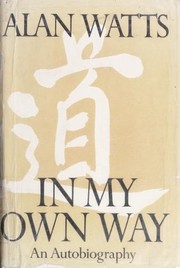
In My Own Way
1972

The Art of Contemplation
1972

Cloud-Hidden, Whereabouts Unknown
1973

Tao: The Watercourse Way
1975

The Essence of Alan Watts
1974
Zitate
Zitate, die in einem bestimmten Werk nachgewiesen sind. Jedes trägt seine Herkunft und seinen Grad an Verlässlichkeit.
If you get the message, hang up the phone.GeprüftThe Joyous Cosmology, ed. Vintage 1970, p. 26 (sobre los psicodélicos como instrumentos)
Wesentliche Gedanken (redaktionelle Zusammenfassung)
Aus Achtung vor dem Urheberrecht werden diese Gedanken mit eigenen Worten zusammengefasst und nicht als wörtliche Zitate dargestellt.
- The feeling of being an isolated self inside the body, facing an alien world, is not a datum of experience but a learned social convention; organism and environment form a single field.
- Seeking psychological security in the future produces the very anxiety one wishes to escape; only acceptance of change and attention to the present dissolve it.
- Asian traditions such as Buddhism, Vedanta and Taoism resemble psychotherapy more than religion: their aim is to free one from conditioning, not to impose beliefs.
- The universe can be understood as a game in which a single reality hides from itself by taking every form, and enlightenment is the moment the player recognises itself.
- The West is not too materialistic but not materialistic enough: it confuses money and symbols with real things and therefore mistreats matter, the body and nature.
- Meditation is not a means of reaching a future state but a purposeless game, like music or dance, whose meaning lies in the act itself.
- Opposites — pleasure and pain, life and death, good and evil — are inseparable poles of one process, and wanting to keep only one of them is the root of frustration.
Apokryphe Zitate oder Zitate umstrittener Zuschreibung (2)
«Trying to define yourself is like trying to bite your own teeth.»
Widely circulated online under Watts's name. It expresses an image he used in lectures (the eye that cannot see itself, teeth that cannot bite themselves), but it has not been located in this wording in any of his published books; it may paraphrase a talk.
«You are an aperture through which the universe is looking at and exploring itself.»
Spread as a Watts quotation on posters and videos with no indication of work. The idea is consistent with his thought, but the sentence has not been found in his books; if it comes from a recorded lecture, the exact source remains to be identified.
Letzte Worte
Es gibt keine überprüfbaren Aufzeichnungen der letzten Worte.
There is no reliable record of any last words. He died in his sleep at Druid Heights on the night of 15–16 November 1973. The phrase 'the secret of life is knowing when to stop', which his widow Mary Jane Watts attributed to him and Monica Furlong records, is presented not as his last words but as something he had told her.
Quelle: Furlong, Monica. Zen Effects: The Life of Alan Watts. Boston: Houghton Mifflin, 1986 (publicado en Reino Unido como Genuine Fake, Heinemann, 1986; reed. SkyLight Paths, 2001, ISBN 9781893361324).
Fragen
Was das Werk beantwortet
Zwölf große Fragen der Menschheit und was sich aus den Texten darauf antworten lässt, mit Belegen. Wir legen niemandem Worte in den Mund.
Was ist das Absolute? Gibt es Gott?
God is no separate monarch: he is the whole playing at being each one
Ein unpersönliches AbsolutesAusdrücklich gesagt
Alan Watts, an Episcopal priest until 1950 and afterwards a popular expositor of Asian traditions, rejected the image of God as a monarch separate from his work. In The Book he contrasts the ceramic model of the world, made by an outside craftsman, and the mechanical model with a dramatic model drawn from his reading of Vedānta: the ultimate hides from and finds itself in all beings, as in a game of hide-and-seek. Beyond Theology carries the idea into Christianity and reproaches it for having made God a jealous king. Already in The Supreme Identity, under the influence of Coomaraswamy and Guénon, he had presented the identity of the human ground with the Absolute as the common core of the great traditions.
Diese Frage mit anderen Meistern vergleichenWer bin ich? Gibt es ein wahres Selbst?
The skin-encapsulated ego is a hallucination: what you are is the whole
Das Selbst ist das AbsoluteAusdrücklich gesagt
The Book, Watts's most personal work, is subtitled on the taboo against knowing who you are, and answers bluntly: the prevalent sensation of oneself as a separate ego enclosed in a bag of skin is a hallucination. For him that ego is a social convention, reinforced by language and upbringing. What one really is, is the whole process of the universe, which manifests as this person just as a wave is the ocean at one point. Watts takes this thesis from his reading of Vedānta, the identity of ātman and brahman, which he had already set out in The Supreme Identity, and combines it with Buddhism and Western psychology; in Psychotherapy East and West he presents those traditions as ways of undoing the feeling of an isolated self.
Diese Frage mit anderen Meistern vergleichenWarum leiden wir?
Anxiety comes from seeking security in a future that does not exist
Denken und psychologische ZeitAusdrücklich gesagt
The Wisdom of Insecurity, one of Watts's most widely read books, states the problem clearly: modern man suffers because he seeks security in a world that is essentially changing, and seeks it in a future that exists only as an idea. Living for a tomorrow that never comes, he misses the only real moment. To this is added an inner split: the self that observes and tries to control experience separates itself from experience itself, and the harder it strives to secure itself the more anxious it becomes; Watts calls this the law of reversed effort. The only way to make sense out of change, he writes, is to plunge into it, move with it and join the dance. It is his own synthesis of Buddhism, Taoism and psychology.
Diese Frage mit anderen Meistern vergleichenWas geschieht nach dem Tod?
The ego dies, not what we are: the universe wakes up again as others
Was ich bin, wird nie geboren und stirbt nieAus der Lehre abgeleitet
Watts did not uphold personal survival or a judgement after death. But, consistently with his reading of Vedānta, he held that what we really are is not the ego that dies. In The Book and in his lectures he proposes imagining death as the end of one waking and the beginning of another: if the ego is a function of the universe, when one dies the universe goes on waking up as every new being that is born, and each of them says «I» as we did. Death for him is the other side of life, as the valley is of the mountain. In Cloud-Hidden, Whereabouts Unknown, his last book, written shortly before he died, he meditates on it with the same serenity.
Diese Frage mit anderen Meistern vergleichenWie erlangt man Befreiung oder Erlösung?
Wanting liberation is the trap: there is nothing to get, only something to see
Ohne Methode: totale AufmerksamkeitAus der Lehre abgeleitet
Watts held that seeking liberation as an achievement prevents it. In The Wisdom of Insecurity he calls this the law of reversed effort: the more one tries to secure oneself or to stop thinking, the more the striving self is reinforced. In Psychotherapy East and West he presents Buddhism, Vedānta and Taoism not as religions but as ways of liberation that undo the double binds by which society convinces us we are a separate self, and notes that Zen masters often use tricks to show the disciple there is nothing to attain. On psychedelics he wrote: if you get the message, hang up the phone. Liberation is sudden understanding, not the accumulation of merit.
Diese Frage mit anderen Meistern vergleichenBraucht es einen Lehrer?
A philosophical entertainer, not a guru: there is nothing to transmit
Keine spirituelle AutoritätAus der Lehre abgeleitet
Watts declined to present himself as a spiritual teacher; he preferred to describe himself as a philosopher and popular expositor, and in his memoir, In My Own Way, he portrays himself ironically as an intellectual, a mystic and a disreputable epicurean. He was not a formal disciple of any lineage, though he acknowledged his debt to D. T. Suzuki and to the texts. On the teacher's role, his thesis, set out in Psychotherapy East and West and in many lectures, is that the authentic teacher transmits nothing: with paradoxes and tricks he leads the disciple to discover that what he sought was not lacking, and then the disciple no longer needs him. He distrusted dependence on gurus and on religious organisations as a substitute for understanding.
Diese Frage mit anderen Meistern vergleichenIst die Welt wirklich?
The world is a game in which the One hides and finds itself
Offenbarung des GöttlichenAusdrücklich gesagt
For Watts, the world is not a machine nor a work made from outside, but a game. From his reading of Hinduism he takes the idea of līlā, divine play, and develops it in The Book and in his lectures: the ultimate hides from itself in the multitude of beings and finds itself again in them, with no purpose but play, just as music does not exist to reach the end of the piece. With the Buddhist image of Indra's net, which he sets out in The Diamond Web, he adds that each thing reflects all the others. Hence his critique of the Western contempt for matter in Does It Matter?: the concrete world is not something to overcome, but the place where the game is played.
Diese Frage mit anderen Meistern vergleichenWas ist Liebe?
Love cannot be commanded: it springs up when the self stops watching itself
Was erscheint, wenn das Ich aufhörtAus der Lehre abgeleitet
Watts applied his analysis of the double bind to love: the command to love, whether religious or social, demands something that cannot be produced at will, and generates a feigned and guilty love. Authentic love is spontaneous, like everything alive, and appears when the person stops seeing himself as a separate ego that calculates and watches itself. In Nature, Man and Woman he carries this idea into love between the sexes: against the Christian distrust of the body he proposes, drawing on Taoism and tantra, a relationship in which sexual love is a form of contemplation and neither a conquest nor an obligation. For Watts, love is not a virtue to be acquired but what flows when it is not forced.
Diese Frage mit anderen Meistern vergleichenSind wir frei, oder ist alles vorherbestimmt?
Neither free will nor determinism: both assume a separate self that does not exist
Es gibt keinen HandelndenAusdrücklich gesagt
Watts considered the dilemma badly framed. Both free will and determinism assume a self separate from the world: one that controls it or one the world pushes around. If, as he holds in The Book, that skin-encapsulated self is a hallucination, the question loses its basis: what one is is not an agent facing the universe, but the universe acting here. That is why the distinction between voluntary and involuntary, as between the heart beating and the hand moving, is for him conventional. In his expositions of Taoism, from The Way of Zen to Tao: The Watercourse Way, he finds the same idea in wu wei, action that does not force and springs up spontaneously.
Diese Frage mit anderen Meistern vergleichenWozu meditieren oder beten?
Meditating is attending to what is without purpose, like listening to music
Gegenwärtig seinAusdrücklich gesagt
Watts understood meditation as purposeless attention to the present. In The Art of Contemplation, published in facsimile of his own handwriting, and in the lectures collected in Still the Mind, he describes it as ceasing to talk inwardly and listening to what is happening, the sounds, the breath, thoughts themselves as if they were noises, without trying to control anything. Meditating to obtain something, enlightenment or calm, would repeat the trap of goal-directed effort; true meditation has no goal, just as music is not played to reach the end. In The Wisdom of Insecurity he had already put it: the only real moment is this one, and full awareness of it dissolves anxiety.
Diese Frage mit anderen Meistern vergleichenKann die Vernunft das Letzte erkennen?
The word is not the thing: reality slips through the net of concepts
Das Letzte liegt jenseits des VerstandesAusdrücklich gesagt
Watts was a brilliant intellectual who devoted much of his work to explaining that what is essential is not grasped by the intellect. In The Way of Zen he shows how conventional thought divides the world into useful things and categories, but confuses that net of concepts with the reality it tries to catch; Zen, in his reading, seeks to return to direct experience, prior to words. In The Wisdom of Insecurity he insists that thinking about life is not living it, and in his lectures he repeated the image that the menu is not the meal. He does not reject reason, which he uses with relish, but its claim to encompass everything.
Diese Frage mit anderen Meistern vergleichenSich von der Welt zurückziehen oder sie verwandeln?
Neither flee nor reform from the ego: live the everyday without standing apart
Kontemplation im HandelnAus der Lehre abgeleitet
Watts distrusted both ascetic flight and the reformism that springs from a separate self. He was drawn to the Zen and Taoist ideal of one who returns to the marketplace after awakening and lives the everyday without pose: in Beat Zen, Square Zen, and Zen he criticised both the use of Zen as an alibi for rebellion and its conversion into a rigid discipline. At the same time he took an interest in the problems of his time: in Does It Matter? he argued that the West is not too materialistic but not materialistic enough, because it despises the matter it consumes, and he wrote about money, technology and ecology. His proposal is not to withdraw, but to live in the world without feeling a stranger in it, and to care for it from there.
Diese Frage mit anderen Meistern vergleichen
Affinitäten und Spannungen
Affinitäten und Spannungen
Frage für Frage aus den Positionen berechnet. Den Grund jeder Übereinstimmung und jedes Widerspruchs zeigt ein Klick.
Denkt ähnlich wie
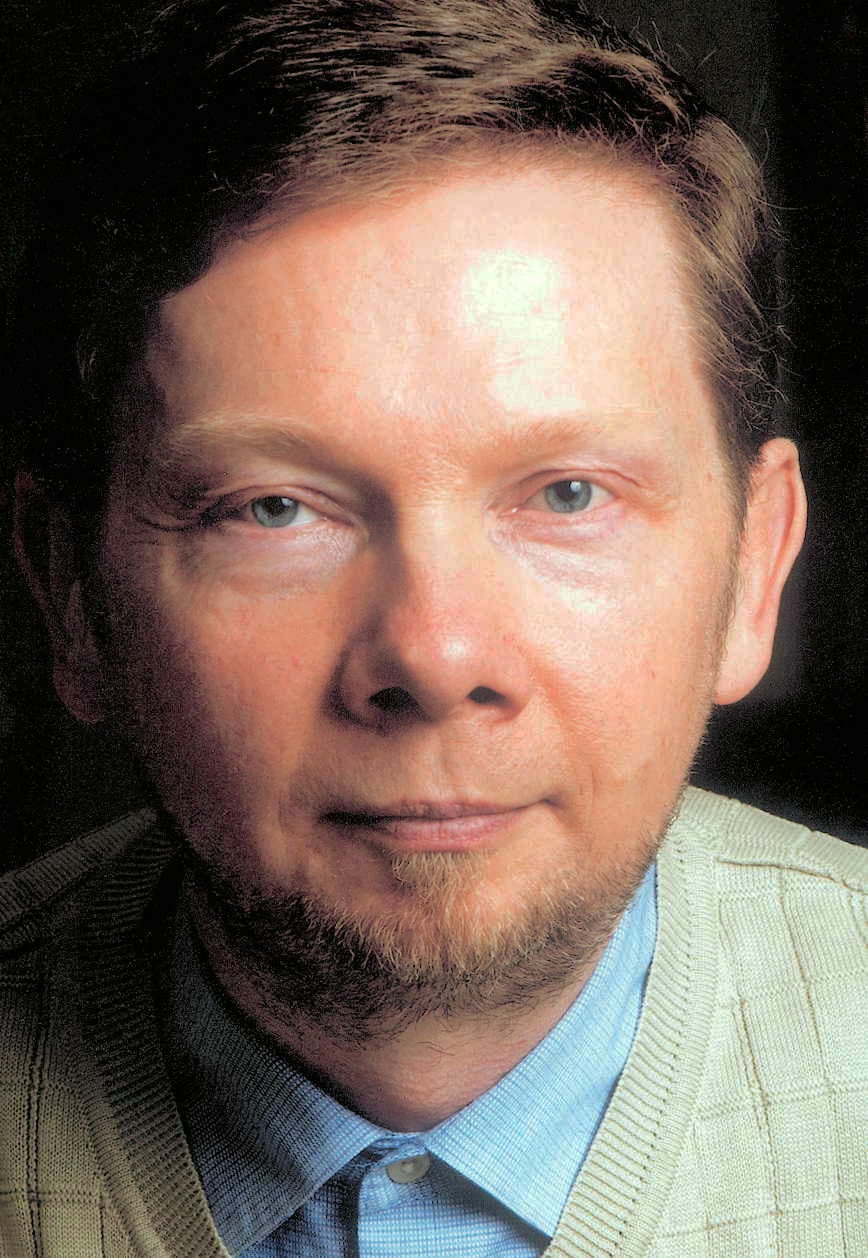
Eckhart Tolle
Übereinstimmung bei: Was ist das Absolute? Gibt es Gott? · Warum leiden wir? · Was geschieht nach dem Tod?
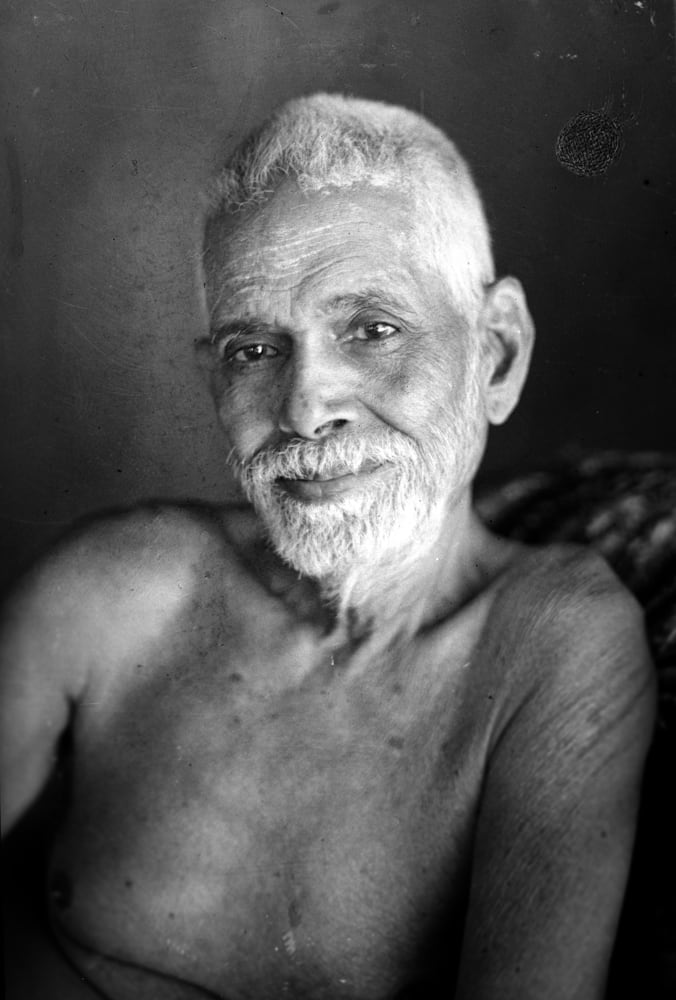
Ramana Maharshi
Übereinstimmung bei: Was ist das Absolute? Gibt es Gott? · Wer bin ich? Gibt es ein wahres Selbst? · Was geschieht nach dem Tod?
Osho
Übereinstimmung bei: Was ist das Absolute? Gibt es Gott? · Warum leiden wir? · Was geschieht nach dem Tod?
Dattatreya
Übereinstimmung bei: Was ist das Absolute? Gibt es Gott? · Wer bin ich? Gibt es ein wahres Selbst? · Was geschieht nach dem Tod?
Denkt anders als
Mirabai
Widerspruch bei: Wie erlangt man Befreiung oder Erlösung? · Braucht es einen Lehrer?

Tsongkhapa
Widerspruch bei: Wer bin ich? Gibt es ein wahres Selbst? · Wie erlangt man Befreiung oder Erlösung? · Braucht es einen Lehrer?
Nicholas Roerich
Widerspruch bei: Braucht es einen Lehrer?

Pema Chödrön
Widerspruch bei: Wer bin ich? Gibt es ein wahres Selbst? · Wie erlangt man Befreiung oder Erlösung?
Anekdoten und Erzählungen
Anekdoten und Erzählungen
Zeugnis1936
The lecture in a diving suit
Herkunft der Erzählung: It comes from Watts's own account in In My Own Way (1972) and is recorded by Monica Furlong in her biography. Later versions differ in details — who helped him remove the helmet and at exactly which event it occurred; it is usually placed in the context of the 1936 World Congress of Faiths.
Quelle: Watts, Alan. In My Own Way: An Autobiography, 1915–1965. Nueva York: Pantheon Books, 1972 (reed. New World Library, 2007, ISBN 9781577315841).
Zeugnisdécada de 1960
'He is a great bodhisattva'
Herkunft der Erzählung: Recorded by David Chadwick in Crooked Cucumber (1999), from testimony by students of the San Francisco Zen Center.
Quelle: Chadwick, David. Crooked Cucumber: The Life and Zen Teaching of Shunryu Suzuki. Nueva York: Broadway Books, 1999.
Zeugnis1960s–1990s
Half a koan
Herkunft der Erzählung: Kapleau, The Three Pillars of Zen (1967 ed.), pp. 21–22; D. T. Suzuki's remark is reported by Robert Aitken in Original Dwelling Place (1997). The Zen story in question is the dialogue of Mazu and Nanyue about the polished tile.
Quelle: Kapleau, Philip. The Three Pillars of Zen. Boston: Beacon Press, 1967 (ed. citada), pp. 21–22.
Zeugnis1958
A visit to Küsnacht
Herkunft der Erzählung: Watts's own account in In My Own Way (1972), p. 321.
Quelle: Watts, Alan. In My Own Way: An Autobiography, 1915–1965. Nueva York: Pantheon Books, 1972 (reed. New World Library, 2007, ISBN 9781577315841).
Belegt1958–1970
Hanging up the phone
Herkunft der Erzählung: The phrase comes from the Vintage edition of The Joyous Cosmology (1970), p. 26; the researchers' identities are recorded in the biographical literature drawing on In My Own Way.
Quelle: Watts, Alan. The Joyous Cosmology: Adventures in the Chemistry of Consciousness. Nueva York: Vintage Books, 1970 (1.ª ed. Pantheon, 1962).
Belegt1960s–1973
Between a beached ferry and a cabin in the woods
Herkunft der Erzählung: In My Own Way (1972), pp. 300–304, and the dedications of The Joyous Cosmology and the autobiography; Elsa Gidlow's memoir, Elsa: I Come with My Songs (1986), completes the picture of Druid Heights.
Quelle: Watts, Alan. In My Own Way: An Autobiography, 1915–1965. Nueva York: Pantheon Books, 1972 (reed. New World Library, 2007, ISBN 9781577315841).
Lehren
Lehren
Die Begriffe, die das Denken gliedern, in ihrem Zusammenhang erklärt.
The skin-encapsulated egoego-encerrado-en-la-piel
Developed above all in The Book (1966) and his 1960s lectures, under the influence of Vedanta, cybernetics and general semantics.
Quelle: Watts, Alan. The Book: On the Taboo Against Knowing Who You Are. Nueva York: Pantheon Books, 1966.
The cosmic game of hide-and-seekjuego-cosmico
The Book (1966) and Beyond Theology (1964); drawn from Vedanta and devotional Hinduism, freely reinterpreted.
Quelle: Watts, Alan. The Book: On the Taboo Against Knowing Who You Are. Nueva York: Pantheon Books, 1966.
The law of reversed effortley-del-esfuerzo-invertido
The Wisdom of Insecurity (1951) and later lectures; connected with the Taoism of Laozi and Zhuangzi.
Quelle: Watts, Alan. The Wisdom of Insecurity: A Message for an Age of Anxiety. Nueva York: Pantheon Books, 1951.
Ways of liberationvias-de-liberacion
Psychotherapy East and West (1961); a forerunner of transpersonal psychology.
Quelle: Watts, Alan. Psychotherapy East and West. Nueva York: Pantheon Books, 1961.
The social double binddoble-vinculo
Psychotherapy East and West (1961) and The Book (1966).
Quelle: Watts, Alan. Psychotherapy East and West. Nueva York: Pantheon Books, 1961.
Beat Zen and square Zenzen-beat-y-zen-cuadrado
Essay published in Chicago Review (1958) and as a City Lights pamphlet (1959).
Videos
Videos
Aufnahmen, Gespräche und Dokumentarfilme. Die Videos werden von YouTube wiedergegeben; sie werden nicht hier gespeichert.
Alan Watts: A Conversation with Myself - Part 1
Originalaufnahme· EN· 1971· 28 min
Mark WattsOffizieller Kanal
Alan Watts: A Conversation with Myself - Part 2
Originalaufnahme· EN· 1971· 28 min
Mark WattsOffizieller Kanal
Eastern Wisdom & Modern Life (1959) with Alan Watts - Program 1: Man & Nature (Recolored)
Originalaufnahme· EN· 1959· 29 min
HermesTrismegistus
Eastern Wisdom and Modern Life - Alan Watts: The Silent Mind, program five (1959)
Originalaufnahme· EN· 1959· 28 min
Torridstream12
Eastern Wisdom and Modern Life - Alan Watts: Death, program six (1959)
Originalaufnahme· EN· 1959· 27 min
Torridstream12
Alan Watts - Myth of Myself Full Lecture Part 1
Vortrag· EN· 37 min
Official Alan Watts OrgOffizieller Kanal
Alan Watts - Individual and the World Pt 1 Full Lecture
Vortrag· EN· 47 min
Official Alan Watts OrgOffizieller Kanal
Alan Watts - Taoist Way Full Lecture
Vortrag· EN· 27 min
Official Alan Watts OrgOffizieller Kanal
Alan Watts - What Is Reality?
Vortrag· EN· 53 min
Official Alan Watts OrgOffizieller Kanal
Alan Watts In Conversation With Elliot Mintz
Gespräch· EN· 1972· 48 min
Elliot MintzOffizieller Kanal
Alan Watts Interview in Dallas - March 1970
Gespräch· EN· 1970· 2 min
SMU Jones FilmOffizieller Kanal
First Wednesday: Following Alan Watts with Mark Watts
Vortrag· EN· 106 min
MillValleyLibraryOffizieller Kanal
Alan Watts en español - Conferencia - El mito del yo
Vortrag· ES· 35 min
fer.de.erratas
Galerie
Galerie
Bilder mit geprüfter Lizenz. Jedes bewahrt seine Urheberschaft und seinen Herkunftsnachweis.
Beziehungen
Beziehungen
Einflüsse, Schülerschaften und Verwandtschaften. Die belegte Beziehung wird von der durch Analyse ermittelten Ähnlichkeit unterschieden.
Beeinflusst von
D. T. Suzuki
Watts met him in 1936 and his first book popularised Suzuki's work.
Belegte Beziehung
Begegnete
Founder of the San Francisco Zen Center; defended Watts as 'a great bodhisattva'.
Belegte Beziehung
Begegnete
Watts visited him in Switzerland in 1958; his psychology influenced The Meaning of Happiness.
Belegte Beziehung
Verwandte Gedanken mit
Both question the separate self and spiritual authority; Watts discussed Krishnamurti in his 1968 radio interview with Laura Huxley.
Durch Analyse ermittelte Ähnlichkeit
Schüler von
Christmas Humphreys
Watts was secretary of the London Buddhist Lodge, which Humphreys led, and was formed there.
Belegte Beziehung
Familie von
Ruth Fuller Sasaki
His mother-in-law during his first marriage and a key figure of American Zen.
Belegte Beziehung
Begegnete
Sokei-an Sasaki
New York Zen teacher with whom Watts kept in contact without entering formal training.
Belegte Beziehung
Stand im Briefwechsel mit
Al Chung-liang Huang
Collaborator on Tao: The Watercourse Way, which he completed after Watts's death.
Belegte Beziehung
Begegnete
Elsa Gidlow
Poet who founded Druid Heights, neighbour and friend; Watts dedicated his autobiography to her.
Belegte Beziehung
Beeinflusst von
His last book expounds the Taoism of Laozi and Zhuangzi.
Belegte Beziehung
Beeinflusst von
A constant source of his lectures on Taoism and wu wei.
Belegte Beziehung
Verwandte Gedanken mit
The identity of self and ultimate ground, central to Watts, comes from the Advaita Vedanta systematised by Shankara.
Durch Analyse ermittelte Ähnlichkeit
Verwandte Gedanken mit
Both popularise attention to the present and the critique of identification with thought for a wide audience.
Durch Analyse ermittelte Ähnlichkeit
Zeitgenosse von
Contemporaries who spread Zen, Tantra and Taoism in the West in a free and provocative style; there is no record that they met.
Durch Analyse ermittelte Ähnlichkeit
Verwandte Gedanken mit
Both explored the dialogue between contemplative Christianity and Zen in the 1950s and 1960s.
Durch Analyse ermittelte Ähnlichkeit
Von anderen Einträgen aus verknüpft
Quellen
Quellen
Für diesen Eintrag herangezogene Bibliografie und Kataloge.
- Wikidata, «Alan Watts» (Q354867).
- Watts, Alan. In My Own Way: An Autobiography, 1915–1965. Nueva York: Pantheon Books, 1972 (reed. New World Library, 2007, ISBN 9781577315841).
- Furlong, Monica. Zen Effects: The Life of Alan Watts. Boston: Houghton Mifflin, 1986 (publicado en Reino Unido como Genuine Fake, Heinemann, 1986; reed. SkyLight Paths, 2001, ISBN 9781893361324).
- Columbus, Peter J. y Rice, Donadrian L. (eds.). Alan Watts—Here and Now: Contributions to Psychology, Philosophy, and Religion. Albany: State University of New York Press, 2012 (ISBN 9781438441993).
- Watts, Joan y Watts, Anne (eds.). The Collected Letters of Alan Watts. Novato: New World Library, 2017 (ISBN 9781608684151).
- «Alan Watts» y «Alan Watts bibliography», Wikipedia en inglés (consultadas para cotejar hechos y bibliografía; texto propio).
- Open Library: obras y ediciones de Alan Watts (autor OL…; búsqueda por autor y por título, ediciones con ISBN).
- Chadwick, David. Crooked Cucumber: The Life and Zen Teaching of Shunryu Suzuki. Nueva York: Broadway Books, 1999.
- Aitken, Robert. Original Dwelling Place: Zen Buddhist Essays. Washington D. C.: Counterpoint, 1997 (ISBN 1887178414).
- Kapleau, Philip. The Three Pillars of Zen. Boston: Beacon Press, 1967 (ed. citada), pp. 21–22.
- Alan Watts Organization (archivo de grabaciones gestionado por la familia Watts) y Alan Watts Official Store.
- Watts, Alan. The Joyous Cosmology: Adventures in the Chemistry of Consciousness. Nueva York: Vintage Books, 1970 (1.ª ed. Pantheon, 1962).
- Watts, Alan. The Book: On the Taboo Against Knowing Who You Are. Nueva York: Pantheon Books, 1966.
- Watts, Alan. The Wisdom of Insecurity: A Message for an Age of Anxiety. Nueva York: Pantheon Books, 1951.
- Watts, Alan. The Way of Zen. Nueva York: Pantheon Books, 1957.
- Stirling, Isabel. Zen Pioneer: The Life and Works of Ruth Fuller Sasaki. Emeryville: Shoemaker & Hoard, 2006 (ISBN 9781593761103).
- University of Vermont, programa de la 154.ª ceremonia de graduación (15 de junio de 1958) y UVM Alumni Magazine, vol. 39, n.º 1, p. 22 (UVM Digital Collections; reproducido en Wikimedia Commons).
- Indiana University Libraries Moving Image Archive, exposición «Eastern Wisdom and Modern Life» (KQED, San Francisco, 1959–1960).
- Watts, Alan. Psychotherapy East and West. Nueva York: Pantheon Books, 1961.
- Gidlow, Elsa. Elsa: I Come with My Songs. San Francisco: Bootlegger Press y Druid Heights Books, 1986.
- Watts, Alan y Huang, Al Chung-liang. Tao: The Watercourse Way. Nueva York: Pantheon Books, 1975 (prólogo y epílogo de Al Chung-liang Huang).
- Open Culture, «Alan Watts Brings Eastern Wisdom to American TV Viewers in 1959» (2012).
- Rechteinhaber
- Herederos de Alan Watts (gestión de grabaciones: Alan Watts Organization / Electronic University, Mark Watts); derechos de los libros según cada editorial
- Offizielle Website
- alanwatts.org
Bestätigung ausstehend
Was dieser Eintrag noch nicht klären konnte. Wir sagen es lieber, als es aufzufüllen.
- Localizar página exacta de las citas marcadas como «probable» (The Book, cap. 1; The Wisdom of Insecurity, cap. 3) en una edición impresa.
- Ediciones con ISBN no verificadas en catálogo: The Book (Vintage, 1989), Tao for Now (2023), Taoism: Way Beyond Seeking (Tuttle, 1997), The Way of Liberation (Weatherhill, 1983), Om: Creative Meditations (1979) y The Essential Alan Watts (1976).
- Identificar la obra inglesa de la que procede «Qué es la realidad» (Kairós, 1995, ISBN 9788472453630), registrada en Open Library sin correspondencia clara.
- Ediciones en español sin ISBN verificado de In My Own Way, The Joyous Cosmology, Does It Matter?, Cloud-Hidden y Tao: The Watercourse Way (Kairós).
- Fecha exacta de la ordenación (1944 según las cartas, 1945 según la autobiografía) y del matrimonio con Mary Jane Yates King.
- Detalles del episodio de la escafandra (acto exacto y quién le ayudó) en la edición impresa de In My Own Way.
- Catálogo de grabaciones: la obra oral (cientos de conferencias en alanwatts.org y alanwatts.com) no se registra pieza a pieza; se incluyen las series de televisión y la antología Out of Your Mind.
- Vídeos: no hay en YouTube conferencias oficiales de Watts en español; el único vídeo en castellano registrado es una versión preparada por un tercero.
Recherchiert am 2026-10-25