Buddhismus · Mahayana · Zen / Chan
Shunryu Suzuki
鈴木俊隆 · 祥岳俊隆
1904 – 1971Historisch belegte Person
Japanischer Mönch und Meister der Sōtō-Schule des Zen, Sohn eines Dorfabtes, der 1959 mit fünfundfünfzig Jahren nach San Francisco kam, um die japanische Gemeinde des Tempels Sokoji zu betreuen, und schließlich die erste Generation amerikanischer Zen-Übender ausbildete. Er gründete das San Francisco Zen Center und Tassajara, das erste Zen-Kloster außerhalb Asiens. Seine zwanglosen Vorträge, von Trudy Dixon als Zen-Geist, Anfänger-Geist (1970) herausgegeben, wurden zu einem der meistgelesenen Bücher über Zen im Westen.
- Werke
- 8Werke
- Ausgaben
- 27Ausgaben
- Zitate
- 8Zitate
- Videos
- 13Videos
- Bilder
- 7Bilder
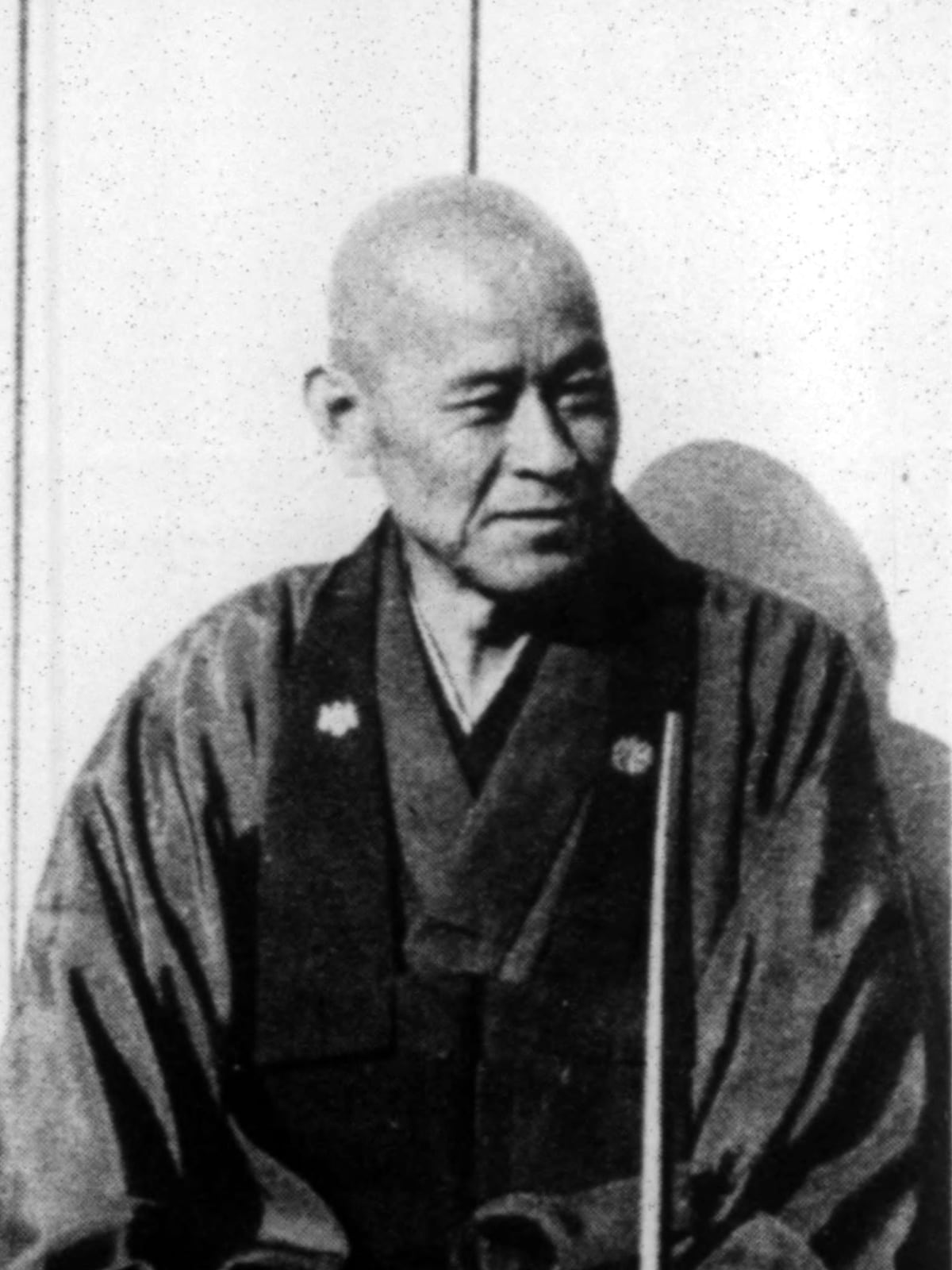
Shunryu Suzuki en el Zen Mountain Center (1969) · Public domain
In eigenen Worten
«In the beginner's mind there are many possibilities, but in the expert's there are few.»Zen Mind, Beginner's Mind (Weatherhill, 1970), prólogo «Beginner's Mind», primera frase (charla oral editada por Trudy Dixon)

Zum Einstieg ein Werk
Zen Mind, Beginner's MindDer zentrale Gedanke
Beginner's mind—shoshin—is an empty and ready mind, open to every possibility; the aim of practice is not to accumulate experience or knowledge but to keep that freshness, which the expert loses when he thinks he knows what Zen is.
Im Zusammenhang sehen
Biografie
5 Min. Lesezeit
Unterstützte Übersetzung aus dem spanischen Original, Durchsicht durch einen muttersprachlichen Übersetzer ausstehend.
Der Sohn des Abtes
Shunryu Suzuki wurde am 18. Mai 1904 in Hiratsuka an der Sagami-Bucht südwestlich von Tokio geboren, als Sohn von Butsumon Sogaku Suzuki, Abt des kleinen Sōtō-Zen-Tempels Shōgan-ji, und von Yone, der Tochter eines Priesters. Der Tempel war arm, und die Familie lebte in bescheidenen Verhältnissen; der empfindsame, lerneifrige Junge litt unter dem Spott seiner Mitschüler über seinen kahlgeschorenen Kopf. Mit zwölf Jahren ging er, zunächst gegen den Willen seiner Eltern, in den Tempel Zōun-in in Mori, um sich bei Gyokujun So-on ausbilden zu lassen, einem Schüler seines Vaters und Meister von legendärer Strenge. Am 18. Mai 1917 ordinierte ihn So-on als Novizen mit dem Namen Shōgaku Shunryū und gab ihm einen Spitznamen, den der Schüler sein Leben lang mit Humor trug: „krumme Gurke“, weil er zerstreut und unberechenbar war.
So-on blieb bis zu seinem Tod 1934 sein Lehrer. Suzuki besuchte die Vorbereitungsschule der Sōtō-Schule und die Komazawa-Universität, die er 1930 abschloss, und empfing im August 1926 von So-on die Dharma-Übertragung. Von 1927 bis 1929 war er Dolmetscher und Gehilfe von Nona Ransom, einer englischen Lehrerin, die den letzten Kaiser von China unterrichtet hatte; die Gespräche mit ihr, die anfangs skeptisch war, brachten ihn zum ersten Mal auf den Gedanken, dass Menschen aus dem Westen den Zen verstehen könnten. Danach übte er in Eihei-ji und Sōji-ji, den beiden Hauptklöstern der Schule, und studierte ab 1932 zwanzig Jahre lang bei Kishizawa Ian, einem bedeutenden Dōgen-Kommentator.
Rinsō-in
1936 wurde er Abt von Rinsō-in, einem Tempel in Yaizu in der Präfektur Shizuoka, wo er mit seiner Familie mehr als zwei Jahrzehnte lebte. 1935 hatte er Chie Muramatsu geheiratet, mit der er vier Kinder hatte. In den Kriegs- und Nachkriegsjahren war er damit beschäftigt, den Tempel wiederaufzubauen, Meditationsgruppen für Laien zu gründen und einen Kindergarten einzurichten. Seine Haltung während des Krieges, die sein Biograph David Chadwick anhand von Zeugnissen rekonstruiert, ist unter Forschern umstritten; im Frühjahr 1945 reiste er in die Mandschurei. Am 25. März 1952 wurde seine Frau im Tempel selbst von einem geistig verwirrten Mönch ermordet, dem Suzuki trotz der Bedenken der Familie erlaubt hatte zu bleiben. Chadwick hält dieses Verbrechen für die tiefste Wunde seines Lebens.
San Francisco
1958 nahm Suzuki eine Stelle an, die viele Priester scheuten: den Tempel Sokoji in San Francisco, das religiöse Zentrum der japanischen Gemeinde der Stadt. Im Dezember desselben Jahres heiratete er Mitsu Matsuno, die erst später nachkommen sollte, und traf am 23. Mai 1959 mit fünfundfünfzig Jahren in Kalifornien ein. Binnen weniger Wochen begannen junge Amerikaner, angezogen von der Zen-Mode, die D. T. Suzuki, Alan Watts und die Schriftsteller der Beat Generation verbreitet hatten, sich mit ihm auf die Bänke des Tempels zu setzen. Er bot ihnen keine Theorien und keine außergewöhnlichen Erfahrungen, sondern jeden Morgen Zazen: in der richtigen Haltung sitzen, atmen, zurückkehren. Wenn man ihn mit dem berühmten Gelehrten verwechselte, pflegte er nach dem Bericht seiner Schüler zu antworten, jener sei der große Suzuki und er der kleine.
Die Gruppe wuchs rasch. 1962 wurde sie als Zen Center rechtlich eingetragen und hielt ihr erstes sechstägiges Sesshin ab; Suzuki ordinierte seine ersten amerikanischen Schüler und eröffnete Zweiggruppen in der Bucht, darunter die in Los Altos, wo seine Schülerin Marian Derby seine Vorträge aufzeichnete. Im Dezember 1966 kaufte das Zen Center ein altes Thermalbad in den Bergen von Los Padres, und 1967 wurde dort Zenshin-ji eröffnet, das Tassajara Zen Mountain Center: das erste Zen-Ausbildungskloster außerhalb Asiens. Im November 1969 verließ die Gemeinschaft Sokoji und zog in ein Wohngebäude in der Page Street im Zentrum von San Francisco.
Zen-Geist, Anfänger-Geist
Suzuki schrieb wenig. Seine Lehre war mündlich, in einem spät erlernten Englisch voller eigenwilliger Wendungen, die seine Schüler zu schätzen lernten. Auf der Grundlage der Abschriften von Marian Derby bereitete seine Schülerin Trudy Dixon monatelang, gemeinsam mit dem Meister selbst, das Buch vor, das Weatherhill 1970 als Zen Mind, Beginner's Mind veröffentlichte (deutsch Zen-Geist, Anfänger-Geist): Sie teilte die Vorträge in drei Teile, gab ihnen Titel und wählte die Leitsätze aus. Dixon starb mit dreißig Jahren an Krebs, kurz nach Abschluss der Arbeit; Richard Baker vollendete die Edition und schrieb die Einleitung. Das Buch, das mit dem Satz über die vielen Möglichkeiten des Anfänger-Geistes beginnt, ist das einzige, das Suzuki gedruckt sah, und wurde zu einem der meistgelesenen Texte über Zen im Westen. Die übrigen Werke unter seinem Namen sind postume Ausgaben seiner Vorträge: Branching Streams Flow in the Darkness (1999) über das Sandōkai und Not Always So (2002).
Sein Zen war der Dōgens und der Sōtō-Schule: Shikantaza, „nur sitzen“, ohne die Erleuchtung als Gegenstand zu suchen, denn die Übung selbst ist Ausdruck der Buddha-Natur. Den Amerikanern, die auf der Suche nach intensiven Erfahrungen kamen, sprach er vom großen Geist, davon, in dem, was man tut, keine Spur zu hinterlassen, und davon, dem Unkraut des Geistes dankbar zu sein, weil es die Übung am Ende bereichert. Er bestand auf der Form — der Haltung, den Verbeugungen, dem Ritual — als etwas, das nicht Mittel zu irgendetwas ist, sondern die Übung selbst.
Das Ende
1971 wurde bei ihm Krebs festgestellt. Am 21. November zeigte er sich zum letzten Mal in der Öffentlichkeit, bei der Zeremonie, in der er Richard Baker als seinen Nachfolger an der Spitze des Zen Center einsetzte. Er starb in den frühen Morgenstunden des 4. Dezember 1971, unmittelbar nachdem die Glocke das Rohatsu-Sesshin eröffnet hatte, das der Erleuchtung des Buddha gedenkt, im Beisein seiner Frau, seines Sohnes Otohiro und Bakers. Bei der Trauerfeier erzählte Baker, er habe den Meister wenige Tage zuvor, als dieser kaum noch sprechen konnte, gefragt, wo sie ihm wiederbegegnen würden; da habe Suzuki eine Hand unter der Decke hervorgezogen, eine kleine Verbeugung angedeutet und einen Kreis in die Luft gezeichnet.
Das San Francisco Zen Center mit Tassajara, dem Stadttempel und der kurz nach seinem Tod eröffneten Farm Green Gulch ist heute eine der einflussreichsten buddhistischen Organisationen der Vereinigten Staaten, und von seinen Schülern stammen Dutzende Zen-Zentren im ganzen Land ab. Sein Sohn Hoitsu folgte ihm in Rinsō-in nach. Chadwicks Biographie Crooked Cucumber (1999) und das Archiv seiner aufgezeichneten Vorträge haben es ermöglicht, jenseits des berühmten Buches den Menschen kennenzulernen: klein, heiter, fordernd und bisweilen verblüffend.
Quellen: Chadwick, David. Crooked Cucumber: The Life and Zen Teaching of Shunryu Suzuki. Nueva York: Broadway Books, 1999. · Suzuki, Shunryu. Zen Mind, Beginner's Mind: Informal Talks on Zen Meditation and Practice. Ed. Trudy Dixon; introducción de Richard Baker; prefacio de Huston Smith. Nueva York y Tokio: Weatherhill, 1970. · Suzuki, Shunryu. Branching Streams Flow in the Darkness: Zen Talks on the Sandokai. Ed. Mel Weitsman y Michael Wenger. Berkeley: University of California Press, 1999. · Suzuki, Shunryu. Not Always So: Practicing the True Spirit of Zen. Ed. Edward Espe Brown. Nueva York: HarperCollins, 2002. · Chadwick, David (ed.). Zen Is Right Here: Teaching Stories and Anecdotes of Shunryu Suzuki. Boston: Shambhala, 2007 (versión revisada de To Shine One Corner of the World, Broadway, 2001).
Zeitleiste
Das Leben, Jahr für Jahr
Jeder Punkt ist ein belegtes Ereignis. Klicken Sie, um es mit Quelle und Grad der Gewissheit zu lesen.
18. Mai 19040 JahreHiratsuka (Kanagawa)
Born in a village temple
Born to Butsumon Sogaku Suzuki, abbot of the small Sōtō temple of Shōgan-ji, and to Yone; the family lives frugally.
BelegtChadwick, David (comp.). «Shunryu Suzuki Roshi – Dates», cronología de trabajo del Cucumber Project (cuke.com).
Nach dem Tod
- 1999Crooked Cucumber
18. Mai 1904 · 0 Jahre
Born in a village temple
Born to Butsumon Sogaku Suzuki, abbot of the small Sōtō temple of Shōgan-ji, and to Yone; the family lives frugally.
Belegt
1916 · 12 Jahre
Disciple of Gyokujun So-on
Aged twelve he goes to live at Zōun-in temple with So-on Suzuki, his father's disciple and a strict teacher, who will be his master for life.
Belegt
18. Mai 1917 · 13 Jahre
Novice ordination: the 'crooked cucumber'
So-on ordains him a novice with the name Shōgaku Shunryū and nicknames him 'crooked cucumber' for being forgetful and unpredictable.
Belegt
August 1926 · 22 Jahre
Dharma transmission
While a student at Komazawa University, he receives Dharma transmission (shihō) from So-on; sources differ between 21 and 26 August.
Belegt
1. August 1927 – 1929 · 23 Jahre
Interpreter for Nona Ransom
He lives as interpreter and assistant to the English teacher Nona Ransom; his conversations with her about Buddhism convince him that Westerners can understand Zen.
Belegt
10. April 1930 · 25 Jahre
Komazawa and the great monasteries
He graduates from Komazawa University and trains at the head monasteries of the Sōtō school, Eihei-ji (1930–1931) and Sōji-ji (1931–1932); from 1932 he studies with Kishizawa Ian.
Belegt
23. April 1936 – 1959 · 31 Jahre
Abbot of Rinsō-in
After So-on's death (1934) he takes over the temple of Rinsō-in, where he will live with his family until he leaves for America.
Belegt
25. März 1952 · 47 Jahre
Murder of his wife Chie
His wife Chie is killed at the temple by a disturbed monk whom Suzuki had allowed to stay; she leaves four children. His biographer regards it as the great wound of his life.
Belegt
23. Mai 1959 · 55 Jahre
Arrival in San Francisco
He arrives to serve as head priest of Sokoji, the Japanese community's temple; within weeks young Americans begin to sit zazen with him.
Belegt
1962 · 58 Jahre
The San Francisco Zen Center is born
The practice group is legally registered as Zen Center; that year the first six-day sesshin is held.
Belegt
1967 · 63 Jahre
Tassajara, a monastery in the mountains
Having bought an old hot-springs resort in 1966, he founds Zenshin-ji, the Tassajara Zen Mountain Center, the first Zen training monastery outside Asia.
Belegt
November 1969 · 65 Jahre
The Page Street city center
He leaves Sokoji and moves Zen Center to a residential building on Page Street, where practice is organised as a community.
Belegt
1970 · 66 Jahre
Zen Mind, Beginner's Mind
Weatherhill publishes the talks to the Los Altos group edited by Trudy Dixon, who had died of cancer in 1969; the book is his only work published in his lifetime.
Belegt
21. November 1971 · 67 Jahre
Richard Baker's succession
Already ill with cancer, he makes his last public appearance at the ceremony installing Richard Baker as his successor at the head of Zen Center.
Belegt
4. Dezember 1971 · 67 Jahre
Death at the start of the Rohatsu sesshin
He dies early in the morning, just after the bell opening the sesshin commemorating the Buddha's enlightenment, with his wife Mitsu, his son Otohiro and Richard Baker at his side.
Belegt
1999
Crooked Cucumber
David Chadwick, a former student, publishes the standard biography, based on interviews in Japan and the United States; his talks on the Sandōkai also appear that year.
Belegt
Werke
Grundlegende Werke
Die Werke, ohne die sich das Vermächtnis nicht verstehen lässt.
Spätere Zusammenstellung · 1970
Zen Mind, Beginner's Mind
Zen Mind, Beginner's Mind: Informal Talks on Zen Meditation and Practice
Informal talks Suzuki gave over several years in the late 1960s to the meditation group in Los Altos (California), recorded and transcribed by Marian Derby and edited over many months by Trudy Dixon with the teacher himself; Richard Baker completed the editing after Dixon's death. The book, divided into 'Right Practice', 'Right Attitude' and 'Right Understanding', explains Sōtō zazen in plain language: posture as the expression of Buddha nature, breathing, big mind, leaving no trace, beginner's mind. It is the only book Suzuki saw published and one of the most widely read texts on Zen in the West; its prologue opens with the sentence on the many possibilities of the beginner's mind.
11 Ausgaben

Veröffentlichte Vorträge · 1999
Branching Streams Flow in the Darkness
Branching Streams Flow in the Darkness: Zen Talks on the Sandokai
A series of talks Suzuki gave at Tassajara in 1970 commenting on the Sandōkai, the Chinese poem by master Shitou Xiqian (8th century) on the identity of the absolute and the relative, chanted daily in Sōtō temples. Edited by Mel Weitsman and Michael Wenger, they show him as a commentator on texts and his way of grounding the doctrine of non-duality in everyday practice.
4 Ausgaben

Veröffentlichte Vorträge · 2002
Not Always So
Not Always So: Practicing the True Spirit of Zen
The second major anthology of talks, prepared by Edward Espe Brown—Tassajara's cook and Suzuki's disciple—from transcriptions not used in Zen Mind. The title echoes one of his favourite formulas: the truth of a moment is not always so. It deals with goalless practice, acceptance of impermanence and the everyday ethics of Zen.
5 Ausgaben
Das gesamte Werk (8)
Shunryu Suzuki
Talks published in Wind Bell
The Conscious LibraryTalks published in Wind Bell
1961
Shunryu Suzuki
Shunryu Suzuki Lectures (archive)
The Conscious LibraryShunryu Suzuki Lectures (archive)
1959

To Shine One Corner of the World
2001
Shunryu Suzuki
Dogen's Genjo Koan: Three Commentaries
The Conscious LibraryDogen's Genjo Koan: Three Commentaries
2011

Zen Is Right Now
2021
Zitate
Zitate, die in einem bestimmten Werk nachgewiesen sind. Jedes trägt seine Herkunft und seinen Grad an Verlässlichkeit.
In the beginner's mind there are many possibilities, but in the expert's there are few.GeprüftZen Mind, Beginner's Mind (Weatherhill, 1970), prólogo «Beginner's Mind», primera frase (charla oral editada por Trudy Dixon)
Wesentliche Gedanken (redaktionelle Zusammenfassung)
Aus Achtung vor dem Urheberrecht werden diese Gedanken mit eigenen Worten zusammengefasst und nicht als wörtliche Zitate dargestellt.
- Beginner's mind—shoshin—is an empty and ready mind, open to every possibility; the aim of practice is not to accumulate experience or knowledge but to keep that freshness, which the expert loses when he thinks he knows what Zen is.
- Zazen is not a method for attaining enlightenment: sitting in the right posture is already the expression of Buddha nature. Practising in pursuit of a result turns practice into a transaction and estranges it from itself.
- The thoughts that arise in meditation are not to be fought; like waves, they settle when given room, and like weeds pulled up and buried beside the plant, they end up nourishing practice.
- Doing something fully, burning oneself up in it, leaves no residue of oneself; what leaves a trace and breeds attachment is activity done by halves, with the mind divided between what one is doing and what one expects.
- Forms—posture, bowing, ritual—are neither mere means nor empty conventions: in the Sōtō school the right form is practice itself, and in it the person is freed from his small self.
- Everything changes: the truth of a moment is not always so. Accepting impermanence rather than resisting it is the condition of serenity, and practice consists in living each moment without clinging to it.
Apokryphe Zitate oder Zitate umstrittener Zuschreibung (1)
«'Each of you is perfect the way you are, and you can use a little improvement.'»
Widely circulated and attributed to Suzuki by his students, but it does not appear in Zen Mind and has not been located in a dated transcript; it is handed down as an oral recollection.
Letzte Worte
Späterer Bericht von Zeugen
«(No words.) Asked by his disciple Richard Baker 'Where will we meet you?', he brought a hand out from under the covers, made a small bow and drew a circle in the air.»No last words are recorded. The gesture was related by Richard Baker in his statement at the funeral of 12 December 1971—'a few days before he died, when it was difficult for him to speak'—published by Zen Center in Wind Bell. The letter of Yvonne Rand, Zen Center's president, specifies that he died early on 4 December, just after the bell opening the Rohatsu sesshin, with his wife Mitsu, his son Otohiro and Baker present. The circle (ensō) is a classic Zen symbol.
Quelle: Zen Center. «Suzuki-roshi's Funeral» / memorial de diciembre de 1971 (carta de Yvonne Rand y declaración de Richard Baker en el funeral del 12 de diciembre de 1971), Wind Bell, 1972; reproducido en cuke.com.
Fragen
Was das Werk beantwortet
Zwölf große Fragen der Menschheit und was sich aus den Texten darauf antworten lässt, mit Belegen. Wir legen niemandem Worte in den Mund.
Was ist das Absolute? Gibt es Gott?
The absolute is the darkness where nothing is distinguished, inseparable from the relative
Das UnnennbareAus der Lehre abgeleitet
Shunryu Suzuki does not speak of a creator God. When he refers to the ultimate he does so in the language of his school: big mind as opposed to small mind, the emptiness from which things arise and to which they return. His most explicit treatment is in the 1970 Tassajara talks on the Sandōkai, Shitou's poem recited daily in Sōtō temples, collected in Branching Streams Flow in the Darkness. There he reads light as the relative world of distinguishable things and darkness as the absolute, where there are no distinctions to name. But he insists that these are not two realities: the absolute is found only in the relative, and practice consists in living that identity, not in describing it.
Diese Frage mit anderen Meistern vergleichenWer bin ich? Gibt es ein wahres Selbst?
In breathing there is no self: only a swinging door
Es gibt kein bleibendes SelbstAusdrücklich gesagt
Shunryu Suzuki approaches the question through practice. In Zen Mind, Beginner's Mind he describes zazen in terms of breathing: air comes in and goes out, and if one follows it attentively there is no self that breathes and no world outside, but something like a swinging door that moves. He distinguishes small mind, which clings to itself and measures everything against its own interest, from big mind, which includes everything. He does not present that big mind as a higher self to be possessed, but as what is expressed when practice is done without leaving a trace, burning oneself up completely like a good bonfire. The small self is not fought: it is given room until it loses importance.
Diese Frage mit anderen Meistern vergleichenWarum leiden wir?
Without accepting that everything changes, no composure is possible
Begehren und AnhaftenAusdrücklich gesagt
For Shunryu Suzuki, suffering arises from not accepting impermanence. In Zen Mind, Beginner's Mind he holds that the basic teaching of Buddhism is that everything changes, and that without accepting this fact composure cannot be found; we suffer when we want something to remain as it is. His favourite formula for this would give its title to the second anthology of his talks, Not Always So: the truth of a moment is not always so. Practice eliminates neither change nor pain, but the resistance to them. That is why he advises not fighting the thoughts that trouble meditation, but being grateful for them as weeds which, buried beside the plant, end up nourishing practice.
Diese Frage mit anderen Meistern vergleichenWas geschieht nach dem Tod?
The drop returns to the river: separate, we fear death; united, nothing to fear
Was ich bin, wird nie geboren und stirbt nieAusdrücklich gesagt
Shunryu Suzuki left a celebrated image in a talk collected in Zen Mind, Beginner's Mind: that of a great waterfall. The water comes down from the river as a single body, but in falling it separates into drops, and each drop has difficulties as it falls; on reaching the bottom it becomes river again. Life, he says, is like water separated into drops, and death like the return to the river of which it never ceased to be part. If we understand that we are one with the river, there is nothing to fear; fear arises from feeling ourselves isolated drops. Suzuki does not present this image as a doctrine of what survives, but as a way of living life without a trace and accepting death with composure.
Diese Frage mit anderen Meistern vergleichenWie erlangt man Befreiung oder Erlösung?
One does not practise to obtain something: the posture is already the purpose
Durch disziplinierte ÜbungAusdrücklich gesagt
Shunryu Suzuki conveys Dōgen's teaching to American listeners in simple words. Zazen practice, he says in Zen Mind, Beginner's Mind, is the direct expression of our true nature, and the forms of the posture are not a means of obtaining the right state of mind: to take them is itself the purpose of practice. Practising with the idea of obtaining enlightenment turns practice into a transaction. That is why enlightenment, once attained, is nothing special. What is cultivated is not an achievement but an attitude: beginner's mind, open and unpretentious, which accumulated experience tends to close and which daily practice must preserve.
Diese Frage mit anderen Meistern vergleichenBraucht es einen Lehrer?
One practises with others and with forms, not by following a person
Gemeinschaft und TraditionAus der Lehre abgeleitet
Shunryu Suzuki, a Sōtō priest who arrived in San Francisco in 1959, became the teacher of a large community and founded with it the San Francisco Zen Center and Tassajara monastery. His way of teaching, as his students remember it in the anecdotes collected by David Chadwick in To Shine One Corner of the World, was not that of a guru: he practised with them, corrected posture, cleaned and worked in the temple. He gave great importance to shared forms, posture, bowing, the schedule, and to practising together; in Zen Mind, Beginner's Mind he presents the practice of the group as what sustains that of each person. As a priest of his lineage he transmitted the Dharma to disciples, but without making himself the centre.
Diese Frage mit anderen Meistern vergleichenIst die Welt wirklich?
Everything changes and everything depends on everything: the absolute lives in the relative
Ein Geflecht von Ursachen ohne SubstanzAus der Lehre abgeleitet
Shunryu Suzuki does not regard the world as an illusion to be left behind: it is the place of practice. His talks insist that everything changes, that nothing has a fixed and separate existence, and that each thing exists in relation to the others. In the commentaries on the Sandōkai collected in Branching Streams Flow in the Darkness he develops the poem's teaching on the identity of absolute and relative: each thing has its own place and function, distinct from the others, and yet is not separate from the whole, like a box and the lid that fits it. His formula for being in that world is big mind, which does not divide it into what it wants and what it rejects.
Diese Frage mit anderen Meistern vergleichenWas ist Liebe?
He barely thematised love; he speaks of big mind and welcoming what arises
Nicht geäußert
In Shunryu Suzuki's published talks love is not a topic of its own; he offers no definition or doctrine of it. The closest thing is his description of big mind, which does not separate what it likes from what it dislikes and welcomes everything, and his insistence on treating each thing, each person and each object, with the same attention. In Zen Mind, Beginner's Mind he even asks us to be grateful for the weeds in our own mind instead of fighting them. The anecdotes his students collected show him kind, patient and attentive to each person. But that attitude appears as the fruit of practice, not as an explicit teaching on love or compassion.
Diese Frage mit anderen Meistern vergleichenSind wir frei, oder ist alles vorherbestimmt?
He did not address the dilemma; he speaks of freedom within form
Nicht geäußert
Shunryu Suzuki did not concern himself with the philosophical problem of free will and determinism. The closest thing in his teaching is an idea of freedom that is not opposed to limitation: the fixed posture, the schedule and the forms of the temple are for him not obstacles but the place where the person is freed from his small self. In Zen Mind, Beginner's Mind he illustrates it with an image about control: the way to control a sheep or a cow is to give it a large, spacious meadow; likewise the mind is not mastered by repressing it but by giving it room. The freedom that interests him is not that of choosing between options, but that of acting completely, without leaving a trace.
Diese Frage mit anderen Meistern vergleichenWozu meditieren oder beten?
The posture is not a means to a state: taking it is the purpose
Meditation ist keine TechnikAusdrücklich gesagt
Shunryu Suzuki teaches his school's shikantaza, «just sitting», with the same thesis as Dōgen. In Zen Mind, Beginner's Mind he describes the posture in detail, but warns that these forms are not a means of obtaining the right state of mind: to take them is itself the purpose of practice. Meditating in search of enlightenment, calm or any other result turns practice into something other than itself. Thoughts are not fought: they are allowed to come and go, like waves that settle by themselves, and are even welcomed as weeds that enrich practice. What is sought, if one can put it that way, is to keep beginner's mind, without the pretension of already knowing what Zen is.
Diese Frage mit anderen Meistern vergleichenKann die Vernunft das Letzte erkennen?
In the beginner's mind there are many possibilities; in the expert's, few
Das Denken ist begrenztAusdrücklich gesagt
The sentence with which Shunryu Suzuki opens Zen Mind, Beginner's Mind sums up his position: in the beginner's mind there are many possibilities; in the expert's, few. Accumulated knowledge is not useless, but it tends to close the mind: whoever believes he knows what Zen is can no longer receive it. That is why the real secret of the arts is always to be a beginner. Suzuki does not despise study, and devoted whole series of talks to the Sandōkai or Dōgen's Genjōkōan; but he warns that intellectual understanding does not replace practice, and that the truth of a moment is not always so. The ultimate is not possessed as knowledge, but expressed in practice.
Diese Frage mit anderen Meistern vergleichenSich von der Welt zurückziehen oder sie verwandeln?
Doing each thing completely, like a good bonfire, leaving no trace
Kontemplation im HandelnAusdrücklich gesagt
Shunryu Suzuki founded the first Zen monastery in the West, Tassajara, but most of his students were lay people who worked, had families and practised in the city. His teaching does not separate practice from daily life: in Zen Mind, Beginner's Mind he asks that, when one does something, one burn oneself completely, like a good bonfire, leaving no trace of oneself. What leaves a trace and breeds attachment is activity done by halves, with a divided mind. Cooking, cleaning or talking with someone are as much practice as zazen if done in this way. He preached neither social engagement nor withdrawal, but a way of being anywhere with full attention.
Diese Frage mit anderen Meistern vergleichen
Affinitäten und Spannungen
Affinitäten und Spannungen
Frage für Frage aus den Positionen berechnet. Den Grund jeder Übereinstimmung und jedes Widerspruchs zeigt ein Klick.
Denkt ähnlich wie
Thich Nhat Hanh
Übereinstimmung bei: Was ist das Absolute? Gibt es Gott? · Wer bin ich? Gibt es ein wahres Selbst? · Warum leiden wir?
Zhuangzi
Übereinstimmung bei: Was ist das Absolute? Gibt es Gott? · Wer bin ich? Gibt es ein wahres Selbst? · Warum leiden wir?
Ajahn Chah
Übereinstimmung bei: Wer bin ich? Gibt es ein wahres Selbst? · Warum leiden wir? · Wie erlangt man Befreiung oder Erlösung?

Pema Chödrön
Übereinstimmung bei: Wer bin ich? Gibt es ein wahres Selbst? · Warum leiden wir? · Wie erlangt man Befreiung oder Erlösung?
Denkt anders als




Anekdoten und Erzählungen
Anekdoten und Erzählungen
Zeugnis1916–1918
The crooked cucumber
Herkunft der Erzählung: Told by Suzuki himself in his talks and recorded by David Chadwick in Crooked Cucumber (1999) and in the Cucumber Project chronology.
Quelle: Chadwick, David. Crooked Cucumber: The Life and Zen Teaching of Shunryu Suzuki. Nueva York: Broadway Books, 1999.
Zeugnis1927–1929
The English teacher
Herkunft der Erzählung: Dates from the Cucumber Project chronology; the story comes from Suzuki's recollections as recorded by Chadwick in Crooked Cucumber.
Quelle: Chadwick, David. Crooked Cucumber: The Life and Zen Teaching of Shunryu Suzuki. Nueva York: Broadway Books, 1999.
Belegt1952
The crime at Rinsō-in
Herkunft der Erzählung: Date from the Cucumber Project chronology (25 March 1952); circumstances according to David Chadwick's Crooked Cucumber and reviews of the book. The insanity verdict comes from a letter by a Japanese witness published on cuke.com, who reports it at second hand.
Quelle: Chadwick, David. Crooked Cucumber: The Life and Zen Teaching of Shunryu Suzuki. Nueva York: Broadway Books, 1999.
Mündliche Überlieferungc. 1959–1966
'I am the little Suzuki'
Herkunft der Erzählung: Handed down by his students and repeated in the Spanish Wikipedia and popular literature; it has not been located in a dated transcript.
Belegt1966–1967
A spa in the mountains
Herkunft der Erzählung: Dates from the Cucumber Project chronology and the Wikipedia article on the San Francisco Zen Center; the talks of the first sesshin in August 1967 are preserved in the Zen Center archive.
Zeugnis1971
The circle in the air
Herkunft der Erzählung: Richard Baker's statement at the funeral of 12 December 1971 and Yvonne Rand's letter, published by Zen Center (Wind Bell) and reproduced on cuke.com.
Lehren
Lehren
Die Begriffe, die das Denken gliedern, in ihrem Zusammenhang erklärt.
Beginner's mind (shoshin)shoshin
A common Japanese term, traditionally applied to the resolve of one beginning a path; Suzuki reinterpreted it as the permanent attitude of practice.
Quelle: Suzuki, Shunryu. Zen Mind, Beginner's Mind: Informal Talks on Zen Meditation and Practice. Ed. Trudy Dixon; introducción de Richard Baker; prefacio de Huston Smith. Nueva York y Tokio: Weatherhill, 1970.
Just sitting (shikantaza)shikantaza
Dōgen's (13th-century) doctrine of the oneness of practice and realisation (shushō ittō), transmitted in the Sōtō school and commented on by Kishizawa Ian, Suzuki's teacher.
Quelle: Suzuki, Shunryu. Zen Mind, Beginner's Mind: Informal Talks on Zen Meditation and Practice. Ed. Trudy Dixon; introducción de Richard Baker; prefacio de Huston Smith. Nueva York y Tokio: Weatherhill, 1970.
Big mindmente-grande
A colloquial reformulation of the Mahayana doctrine of one mind and Buddha nature; the scheme of the three minds comes from Dōgen's Instructions for the Cook (Tenzo kyōkun).
Quelle: Suzuki, Shunryu. Zen Mind, Beginner's Mind: Informal Talks on Zen Meditation and Practice. Ed. Trudy Dixon; introducción de Richard Baker; prefacio de Huston Smith. Nueva York y Tokio: Weatherhill, 1970.
Leaving no tracesin-rastro
An everyday application of emptiness and non-self (anātman) in the monastic ethic of the Sōtō school.
Quelle: Suzuki, Shunryu. Zen Mind, Beginner's Mind: Informal Talks on Zen Meditation and Practice. Ed. Trudy Dixon; introducción de Richard Baker; prefacio de Huston Smith. Nueva York y Tokio: Weatherhill, 1970.
'Not always so'no-siempre-es-asi
An expression of anitya (impermanence) and of the two-truths doctrine in the Mahayana tradition.
Quelle: Suzuki, Shunryu. Not Always So: Practicing the True Spirit of Zen. Ed. Edward Espe Brown. Nueva York: HarperCollins, 2002.
Videos
Videos
Aufnahmen, Gespräche und Dokumentarfilme. Die Videos werden von YouTube wiedergegeben; sie werden nicht hier gespeichert.
Beginner's Mind – Shunryu Suzuki Roshi – Archived Dharma Talk – Nov. 11, 1965
Originalaufnahme· EN· 1965
San Francisco Zen CenterOffizieller Kanal
Most Of You Are Beginners — Shunryu Suzuki Roshi — Archived Dharma Talk — Dec. 11, 1965
Originalaufnahme· EN· 1965
San Francisco Zen CenterOffizieller Kanal
Genjo Koan — Shunryu Suzuki Roshi — Archived Dharma Talk — Aug. 20, 1967
Originalaufnahme· EN· 1967
San Francisco Zen CenterOffizieller Kanal
Buddhism Is Not a Special Teaching — Shunryu Suzuki Roshi — Archived Dharma Talk — Aug. 23, 1967
Originalaufnahme· EN· 1967
San Francisco Zen CenterOffizieller Kanal
To Polish a Tile — Shunryu Suzuki Roshi — Archived Dharma Talk — Aug. 23, 1967 — Tassajara Sesshin
Originalaufnahme· EN· 1967
San Francisco Zen CenterOffizieller Kanal
Think the Unthinkable — Shunryu Suzuki Roshi — Archived Dharma Talk — Dec. 4, 1967
Originalaufnahme· EN· 1967
San Francisco Zen CenterOffizieller Kanal
Bodhidharma — Shunryu Suzuki Roshi — Archived Dharma Talk — July 23, 1968
Originalaufnahme· EN· 1968
San Francisco Zen CenterOffizieller Kanal
On the way to Zen Mt. Center - Tassajara - Shunryu Suzuki
Dokumentarfilm· EN· 1968
cuke video
Introduction to Zen Mt. Center film - Richard Baker
Dokumentarfilm· EN· 1968
cuke video
Suzuki, Baker, Katagiri at Sokoji
Originalaufnahme· EN
cuke video
Rinso Ed Sattizahn on the death of Shunryu Suzuki Roshi
Gespräch· EN
Zen in America
Shunryu Suzuki: Aprovecha tu Mente de Principiante (Audio Podcast)
Analyse· ES
Almas de la Historia
Mente Zen, mente da principiante. Parte Prima: Retta Pratica, Discorsi di Suzuki Roshi
Originalaufnahme· IT
La voce di Doeia
Galerie
Galerie
Bilder mit geprüfter Lizenz. Jedes bewahrt seine Urheberschaft und seinen Herkunftsnachweis.
Beziehungen
Beziehungen
Einflüsse, Schülerschaften und Verwandtschaften. Die belegte Beziehung wird von der durch Analyse ermittelten Ähnlichkeit unterschieden.
Beeinflusst von
Founder of the Japanese Sōtō school; his goalless zazen (shikantaza) and texts such as the Genjōkōan are the basis of Suzuki's teaching.
Belegte Beziehung
Beeinflusst von
Siddhartha Gautama, the Buddha
He died during the sesshin commemorating the Buddha's enlightenment; his teaching presents itself as transmission of the Buddha's Dharma.
Belegte Beziehung
Zeitgenosse von
Watts, a populariser of Zen in California, knew Suzuki and moved in Zen Center circles; he was one of the influences that brought young Americans to Sokoji.
Belegte Beziehung
Beeinflusst von
Founding patriarch of Chan in tradition; Suzuki devoted talks to him, such as the one of 23 July 1968 preserved by Zen Center.
Durch Analyse ermittelte Ähnlichkeit
Verwandte Gedanken mit
Suzuki's insistence on the original, empty mind recalls the Sixth Patriarch's teaching on original nature; an affinity of tradition, not concrete documented influence.
Durch Analyse ermittelte Ähnlichkeit
Verwandte Gedanken mit
Both offered the West a simple, everyday practice in plain language; no meeting between them is recorded.
Durch Analyse ermittelte Ähnlichkeit
Verwandte Gedanken mit
They shared a distrust of the pursuit of special states and both formed Western communities in the 1960s and 1970s; no contact is documented.
Durch Analyse ermittelte Ähnlichkeit
Zeitgenosse von
Contemporaries in the dialogue between Zen and the West; Merton dealt with D. T. Suzuki, not with Shunryu Suzuki.
Durch Analyse ermittelte Ähnlichkeit
Quellen
Quellen
Für diesen Eintrag herangezogene Bibliografie und Kataloge.
- Wikidata, «Shunryu Suzuki» (Q572599).
- Chadwick, David. Crooked Cucumber: The Life and Zen Teaching of Shunryu Suzuki. Nueva York: Broadway Books, 1999.
- Chadwick, David (comp.). «Shunryu Suzuki Roshi – Dates», cronología de trabajo del Cucumber Project (cuke.com).
- Suzuki, Shunryu. Zen Mind, Beginner's Mind: Informal Talks on Zen Meditation and Practice. Ed. Trudy Dixon; introducción de Richard Baker; prefacio de Huston Smith. Nueva York y Tokio: Weatherhill, 1970.
- Zen Center. «Suzuki-roshi's Funeral» / memorial de diciembre de 1971 (carta de Yvonne Rand y declaración de Richard Baker en el funeral del 12 de diciembre de 1971), Wind Bell, 1972; reproducido en cuke.com.
- Wikipedia (en), «Shunryū Suzuki».
- Wikipedia (es), «Shunryu Suzuki».
- Open Library, autor «Shunryū Suzuki» (OL27128A): obras y ediciones con ISBN.
- Suzuki, Shunryu. Branching Streams Flow in the Darkness: Zen Talks on the Sandokai. Ed. Mel Weitsman y Michael Wenger. Berkeley: University of California Press, 1999.
- Suzuki, Shunryu. Not Always So: Practicing the True Spirit of Zen. Ed. Edward Espe Brown. Nueva York: HarperCollins, 2002.
- San Francisco Zen Center, sitio oficial («About»).
- shunryusuzuki.com — archivo de transcripciones, audio, fotografías y vídeo de Shunryu Suzuki (Cucumber Project / San Francisco Zen Center).
- Wikipedia (en), «San Francisco Zen Center».
- Chadwick, David (ed.). Zen Is Right Here: Teaching Stories and Anecdotes of Shunryu Suzuki. Boston: Shambhala, 2007 (versión revisada de To Shine One Corner of the World, Broadway, 2001).
- Wind Bell (Zen Center, San Francisco), vol. 8, n.º 3–4, primavera de 1969, p. 4 (fotografía de Suzuki en el Zen Mountain Center). Internet Archive.
- Rechteinhaber
- San Francisco Zen Center y herederos de Shunryu Suzuki (Mitsu Suzuki y familia) para las charlas y transcripciones; las ediciones pertenecen a sus editoriales (Weatherhill/Shambhala, University of California Press, HarperCollins)
- Offizielle Website
- www.sfzc.org
Bestätigung ausstehend
Was dieser Eintrag noch nicht klären konnte. Wir sagen es lieber, als es aufzufüllen.
- La foto principal de 1969 es de dominio público en EE. UU. por publicarse sin aviso de copyright (PD-US-no notice); su situación en la UE y en España no está verificada (autoría dudosa entre tres fotógrafos).
- Confirmar que «Libre de soi, libre de tout» (Points, 2013) y «Seid wie reine Seide und scharfer Stahl» (Integral, 2003) son traducciones de Not Always So, y localizar traductores de las ediciones españolas.
- Fecha exacta de la transmisión del Dharma: 21 de agosto de 1926 (cronología de Chadwick) o 26 de agosto (Wikipedia).
- Posibles escritos o folletos de Suzuki en japonés anteriores a 1959 (Rinsō-in, guardería Tokiwa): no localizados en catálogo.
- El dato «el pequeño Suzuki» y la frase «Cada uno de vosotros es perfecto…» no se han localizado en transcripciones fechadas.
- Edición china de Zen Mind (禪者的初心): editorial e ISBN sin confirmar.
- Sin textos para la sala de lectura: derechos vigentes (Suzuki murió en 1971; editores vivos o fallecidos recientemente).
Recherchiert am 2026-10-25