Buddhismus · Mahayana · Tibetischer Buddhismus
Śāntideva
शान्तिदेव · ཞི་བ་ལྷ། · zhi ba lha · 寂天
um 685 – um 763Historisch belegte Person
Indischer Mönch und Dichter des 8. Jahrhunderts, verbunden mit dem Kloster Nālandā und der Madhyamaka-Schule. Er ist der Verfasser des Bodhicaryāvatāra, des im tibetischen Buddhismus meiststudierten Gedichts über den Weg des Bodhisattva, und des Śikṣāsamuccaya, einer Anthologie von Mahāyāna-Sūtras. Sein Leben ist nur aus späten Hagiographien bekannt; die moderne Forschung hat in Dunhuang eine kürzere und ältere Fassung seines Gedichts entdeckt.
- Werke
- 11Werke
- Ausgaben
- 33Ausgaben
- Zitate
- 7Zitate
- Videos
- 14Videos
- Bilder
- 3Bilder
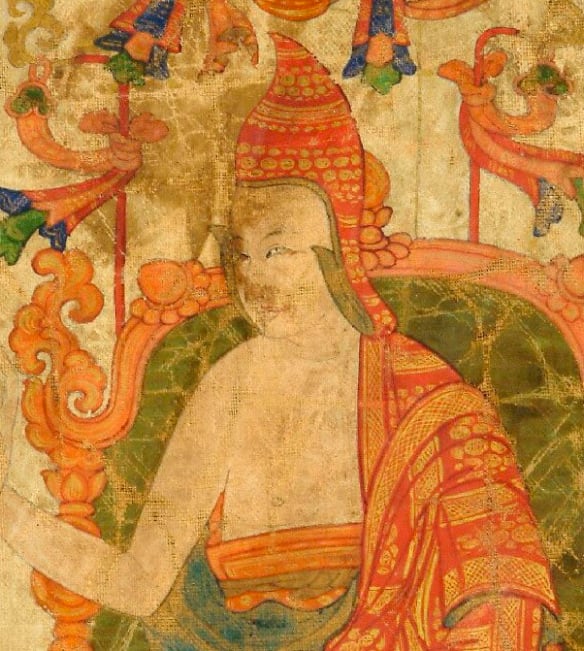
Śāntideva, pintura del siglo XIX · Public domain
In eigenen Worten
«For as long as space endures and as long as the world endures, may I too endure, to destroy the sufferings of beings.»Bodhicaryāvatāra 10.55. Es la estrofa con que el Dalái Lama cerró su conferencia del Nobel (1989). Traducción propia del sánscrito, cotejada con Crosby y Skilton (1996) y Wallace (1997).

Der zentrale Gedanke
The mind of awakening (bodhicitta) is the centre of all practice: whoever generates it, though still bound to the world, becomes a child of the buddhas; its worth depends not on what is done but on the intention to free all beings.
Im Zusammenhang sehen
Biografie
5 Min. Lesezeit
Unterstützte Übersetzung aus dem spanischen Original, Durchsicht durch einen muttersprachlichen Übersetzer ausstehend.
Ein Name, zwei Bücher und eine Legende
Von Śāntideva, dem Dichter, den der tibetische Buddhismus liest, wie man ein Gebet spricht, hat die Geschichte nur sehr wenig bewahrt: einen Namen, der „Gott des Friedens“ bedeutet, ein Kloster – Nālandā, die große buddhistische Universität in Bihar – und zwei Werke, deren Urheberschaft niemand bestreitet, den Bodhicaryāvatāra und den Śikṣāsamuccaya. Alles Übrige stammt aus Lebensbeschreibungen, die fünf oder neun Jahrhunderte später verfasst wurden. Die immer wieder genannten Daten 685–763 sind eine späte Rekonstruktion; die Forschung setzt ihn lieber, ohne nähere Festlegung, in die erste Hälfte des 8. Jahrhunderts, bevor seine Verse gegen Ende desselben Jahrhunderts ins Tibetische übersetzt wurden. Was an ihm zählt, ist genau genommen kein Leben, sondern ein Gedicht und eine Anthologie.
Der Prinz, der von Mañjuśrī träumte
Das legendarische Leben ist in drei Quellen überliefert: in der Geschichte des Buddhismus von Butön (1322), in der Tāranāthas (1608) und in einer kurzen Sanskrit-Biographie, die in einer nepalesischen Handschrift des 14. Jahrhunderts erhalten ist und die J. W. de Jong 1975 untersucht hat. Im Wesentlichen stimmen sie überein. Śāntideva sei als Prinz in einem Königreich im Westen Indiens geboren worden – in den meisten Fassungen Saurāṣṭra –, und am Vorabend seiner Krönung habe er geträumt, der Thron sei bereits von Mañjuśrī besetzt, dem Bodhisattva der Weisheit, der zu ihm sprach: „Dies ist mein Sitz.“ Er floh aus dem Palast, lernte bei Meistern im Wald und diente nach Tāranātha und Butön eine Zeit lang als Minister eines Königs im Osten Indiens, bewaffnet mit einem Holzschwert, das, als es entblößt wurde, den, der es ansah, erblinden ließ. Es sind Episoden nach einem bekannten Muster: Verzicht auf den Thron, Schutz durch den Bodhisattva, Wunder.
Der Müßiggänger von Nālandā
In Nālandā ordinierte ihn der Abt Jayadeva und gab ihm den Namen, unter dem er bekannt ist. Dort, so erzählt die Legende, verachteten ihn die Mönche, weil er nur drei Dinge zu tun schien: essen, schlafen und sich auf den Abort zurückziehen – auf Sanskrit bhuñjāna, supta, kuṭiṃ gataḥ –, woher ihm der Spitzname Bhusuku kam. Um ihn zu demütigen, forderte man ihn auf, vor der ganzen Gemeinschaft auf einem hohen Thron sitzend einen Text vorzutragen. Śāntideva fragte, ob man etwas Bekanntes oder etwas Neues hören wolle, und begann den Bodhicaryāvatāra zu rezitieren. Als er zu der Strophe des neunten Kapitels kam, die besagt, dass der Geist, wenn ihm weder Sein noch Nichtsein mehr gegenüberstehen, ohne Stütze zur Ruhe kommt, erhob er sich in die Luft, bis er verschwand, und man hörte nur noch seine Stimme, die das Gedicht zu Ende sprach. Später erfuhr man, dass er in seiner Zelle zwei weitere Bücher hinterlassen hatte, den Śikṣāsamuccaya und einen Sūtrasamuccaya. Die Geschichte erklärt auf ihre Weise einen literarischen Befund: dass das Gedicht in verschiedenen Fassungen umlief.
Der Eintritt in den Wandel des Bodhisattva
Der Bodhicaryāvatāra, „der Eintritt in den Wandel zum Erwachen“, ist ein Sanskrit-Gedicht von rund neunhundert Strophen in zehn Kapiteln. Es beginnt mit dem Lob der bodhicitta, des Geistes, der zum Wohl aller Wesen nach dem Erwachen strebt, fährt mit dem Bekenntnis der Verfehlungen und der Annahme des Gelübdes fort und durchmisst dann die Vollkommenheiten des Bodhisattva: Achtsamkeit und Wachsamkeit, die Geduld – das sechste Kapitel, eine unerbittliche Analyse des Zorns –, die freudige Anstrengung, die Meditation, in der der Autor lehrt, sich den anderen gleichzusetzen und sich mit ihnen auszutauschen, und die Weisheit, ein gedrängter Traktat der Madhyamaka-Philosophie, der mit den buddhistischen Realisten, mit den Yogācārins und mit dem Sāṃkhya streitet. Den Abschluss bildet eine lange Widmung, die zu einem der meistrezitierten Gebete des Mahāyāna-Buddhismus geworden ist. Das Außergewöhnliche an dem Buch ist sein Ton: Es spricht in der ersten Person, macht sich Vorwürfe, zweifelt, ermahnt sich selbst; es ist Handbuch, Bekenntnis und Gedicht zugleich.
Zwei Gedichte in einem
Der wichtigste Fund der modernen Forschung stammt aus den Höhlen von Dunhuang. Unter den tibetischen Handschriften, die dort um das Jahr 1000 eingemauert wurden, identifizierte Akira Saito in den 1990er-Jahren eine kürzere Fassung des Gedichts: etwa 700 Strophen in neun Kapiteln, weil das zweite und das dritte der kanonischen Fassung ein einziges bilden, und mit deutlich weniger Stoff in den Kapiteln über Meditation und Weisheit. Eines der Kolophone schreibt sie Akṣayamati zu, den die Tradition für einen anderen Namen des Autors hielt; der tibetische Reichskatalog vom Beginn des 9. Jahrhunderts verzeichnet den Text in einem Umfang, der zu dieser Kurzfassung passt. Die lange Fassung von rund 913 Strophen ist demnach eine spätere Erweiterung; sie war es, die Rinchen Zangpo und seine Mitarbeiter im 11. Jahrhundert ins Tibetische übertrugen und die Loden Sherab später revidierte. Schon Tāranātha wusste, dass es drei Rezensionen gab, und die Legende vom Mönch, der während des Rezitierens verschwindet, ist vermutlich die Art, wie die Überlieferung sich die Unterschiede erklärte. Die einzige chinesische Übersetzung, vom Ende des 10. Jahrhunderts, schreibt den Text noch Nāgārjuna zu.
Die Anthologie
Der Śikṣāsamuccaya, das „Kompendium der Unterweisung“, ist etwas ganz anderes: siebenundzwanzig Merkstrophen, entfaltet in neunzehn Prosakapiteln, die vor allem aus Zitaten aus mehr als hundert Mahāyāna-Sūtras bestehen, von denen viele im Sanskrit verloren und nur durch ihn bekannt sind. Er ist in einer einzigen Sanskrit-Handschrift erhalten, die Cecil Bendall zwischen 1897 und 1902 herausgab und 1922 zusammen mit W. H. D. Rouse ins Englische übersetzte; Charles Goodman legte 2016 die erste vollständige moderne Übersetzung vor. Das Gedicht selbst verweist auf diese Anthologie und auf einen Sūtrasamuccaya für alle, die die Regeln des Bodhisattva kennenlernen wollen; Letzterer ist nicht erhalten und darf nicht mit dem gleichnamigen, Nāgārjuna zugeschriebenen Kompendium verwechselt werden.
Von Tibet in die Welt
In Indien wurde das Gedicht kommentiert, am ausführlichsten von Prajñākaramati um das Jahr 1000. Zu einem zentralen Text aber wurde es in Tibet: Kommentiert haben es Gyaltsab Je – ein Schüler Tsongkhapas –, Thogme Zangpo und Mipham, dessen Kommentar zum neunten Kapitel eine jahrzehntelange Kontroverse auslöste, und im 19. Jahrhundert predigte es der wandernde Patrul Rinpoche unermüdlich. Der 14. Dalai Lama lehrt es seit Jahrzehnten und hat Kommentare zum Ganzen, zum Kapitel über die Geduld und zu dem über die Weisheit veröffentlicht; seine Nobelvorlesung von 1989 beschloss er mit der Strophe, die darum bittet, zu bleiben, „solange der Raum besteht“, um den Schmerz der Welt zu lindern. Ins Französische übertragen von Louis de La Vallée Poussin 1907 und von Louis Finot 1920, ins Englische von Lionel Barnett 1909 und danach noch viele Male, hat das Gedicht auch unter Moralphilosophen Leser gefunden, die in seinen Argumenten gegen den Egoismus eine Ethik des Wohls aller erkannt haben, formuliert tausend Jahre vor jener der Utilitaristen. Wer auch immer sein Verfasser war: Das Werk hat seinen Namen überlebt.
Quellen: Śāntideva. The Bodhicaryāvatāra. Trad., introd. y notas de Kate Crosby y Andrew Skilton; introducción general de Paul Williams. Oxford: Oxford University Press (Oxford World's Classics), 1996. ISBN 0192829793. · Śāntideva. A Guide to the Bodhisattva Way of Life (Bodhicaryāvatāra). Trad. del sánscrito y del tibetano de Vesna A. Wallace y B. Alan Wallace. Ithaca (NY): Snow Lion, 1997. ISBN 1559390611. · Saito, Akira. A Study of Akṣayamati (= Śāntideva)'s Bodhisattvacaryāvatāra as Found in the Tibetan Manuscripts from Tun-huang. Mie (Japón): Mie University, 1993 (informe de investigación). · Goodman, Charles (trad.). The Training Anthology of Śāntideva: A Translation of the Śikṣā-samuccaya. Nueva York: Oxford University Press, 2016. ISBN 9780199391356. · Bendall, Cecil y W. H. D. Rouse (trads.). Śikshā-samuccaya: A Compendium of Buddhist Doctrine, compiled by Śāntideva chiefly from earlier Mahāyāna Sūtras. Londres: John Murray (Indian Texts Series), 1922.
Zeitleiste
Das Leben, Jahr für Jahr
Jeder Punkt ist ein belegtes Ereignis. Klicken Sie, um es mit Quelle und Grad der Gewissheit zu lesen.
um 6850 JahreSaurāṣṭra (Guyarat), según la leyenda
Birth, according to traditional chronology
The dates 685–763 come from late chronologies; hagiography has him born a prince in Saurāṣṭra (western India). Scholarship only affirms that he lived in the first half of the eighth century.
ÜberlieferungWikidata, «Shantideva», QID Q445460 (VIAF 23444930; LCCN n80102717).
Nach dem Tod
- um 790First Tibetan translation (short version)
- um 812The Ldan dkar ma catalogue records the poem
- um 985Chinese translation attributed to Nāgārjuna
- um 1000Prajñākaramati's commentary
- um 1020Tibetan revision of the long version
- 1322Biography in Butön's History
- 1608Biography in Tāranātha's History
- 1897 – 1902Bendall edits the Śikṣāsamuccaya
- 1907First European translations
- 11. Dezember 1989The Dalai Lama closes his Nobel lecture with Śāntideva
- 1993Saito identifies the Dunhuang version
um 685 · 0 Jahre
Birth, according to traditional chronology
The dates 685–763 come from late chronologies; hagiography has him born a prince in Saurāṣṭra (western India). Scholarship only affirms that he lived in the first half of the eighth century.
Überlieferung
um 705
Renunciation of the throne
On the eve of his coronation he dreams that Mañjuśrī occupies his throne and flees to the forest. Hagiographic episode.
Überlieferung
um 720 – 750
Monk at Nālandā: the Bodhicaryāvatāra and the Śikṣāsamuccaya
Ordained by abbot Jayadeva, he composes his two surviving works. The recitation before the assembly and the vanishing belong to legend.
Wahrscheinlich
um 790
First Tibetan translation (short version)
Sarvajñādeva and Paltseg translate into Tibetan a recension of some 700 stanzas in nine chapters, the one preserved in the Dunhuang manuscripts.
Wahrscheinlich
um 812
The Ldan dkar ma catalogue records the poem
The early ninth-century Tibetan imperial catalogue records the text at a length that fits the short version.
Wahrscheinlich
um 985
Chinese translation attributed to Nāgārjuna
Tianxizai translates the poem into Chinese as Putixing jing (Taishō 1662), in eight chapters and under Nāgārjuna's name.
Wahrscheinlich
um 1000
Prajñākaramati's commentary
Around 1000 the Bodhicaryāvatārapañjikā, the longest surviving Indian commentary, is written.
Wahrscheinlich
um 1020
Tibetan revision of the long version
Dharmaśrībhadra, Rinchen Zangpo and Śākya Lodrö translate the ten-chapter version; Sumatikīrti and Loden Sherab later revise it: this is the canonical text.
Wahrscheinlich
1322
Biography in Butön's History
Butön Rinchen Drub includes Śāntideva's legendary life in his history of Buddhism.
Belegt
1608
Biography in Tāranātha's History
Tāranātha expands the legend and records the existence of three versions of the poem.
Belegt
1897 – 1902
Bendall edits the Śikṣāsamuccaya
Cecil Bendall publishes in St Petersburg, in instalments until 1902, the edition of the only Sanskrit manuscript; with W. H. D. Rouse he will translate it into English in 1922.
Belegt
1907
First European translations
Louis de La Vallée Poussin translates the poem into French (1907); Barnett follows in English (1909) and Finot in French (1920).
Belegt
11. Dezember 1989
The Dalai Lama closes his Nobel lecture with Śāntideva
In Oslo, on 11 December 1989, the Fourteenth Dalai Lama ends his lecture with stanza 10.55 of the Bodhicaryāvatāra.
Belegt
1993
Saito identifies the Dunhuang version
Akira Saito publishes his study of the Tibetan Dunhuang manuscripts, which preserve an earlier and shorter recension attributed to Akṣayamati.
Belegt
Werke
Grundlegende Werke
Die Werke, ohne die sich das Vermächtnis nicht verstehen lässt.
Schriftliches Werk · um 720
Entering the Way of the Bodhisattva (Bodhicaryāvatāra)
बोधिचर्यावतार (Bodhicaryāvatāra; también Bodhisattvacaryāvatāra) · tib. བྱང་ཆུབ་སེམས་དཔའི་སྤྱོད་པ་ལ་འཇུག་པ། (byang chub sems dpa'i spyod pa la 'jug pa) · chino 入菩薩行論 / 菩提行經
A Sanskrit poem in ten chapters tracing the bodhisattva's path: praise of the mind of awakening (bodhicitta), confession, taking the vow, mindfulness and vigilance, patience, effort, meditation—with the practice of equalising and exchanging self and others—, wisdom (a Madhyamaka exposition arguing with realists, Yogācāra and Sāṃkhya) and dedication. Written in the first person, it blends exhortation, confession and argument; it is the most studied Mahāyāna text in Tibetan Buddhism and one of the most translated into Western languages.
18 Ausgaben

Schriftliches Werk · um 720
The Training Anthology (Śikṣāsamuccaya)
शिक्षासमुच्चय (Śikṣāsamuccaya) · tib. བསླབ་པ་ཀུན་ལས་བཏུས་པ། (bslab pa kun las btus pa) · chino 大乘集菩薩學論
Twenty-seven mnemonic stanzas (kārikā) commented on in nineteen prose chapters that consist mostly of quotations from more than a hundred Mahāyāna sūtras, many lost in Sanskrit. It organises the bodhisattva's ethics around protecting, purifying and increasing one's body, possessions and merit in order to give them to beings. It is a first-rate source for lost Mahāyāna literature and the doctrinal complement to the Bodhicaryāvatāra.
4 Ausgaben
Das gesamte Werk (11)
Śāntideva
The short Dunhuang recension of the Bodhicaryāvatāra
The Conscious LibraryThe short Dunhuang recension of the Bodhicaryāvatāra
790
Śāntideva
Verses of the Training Anthology
The Conscious LibraryVerses of the Training Anthology
720
Śāntideva
Compendium of Sūtras (lost)
The Conscious LibraryCompendium of Sūtras (lost)
Śāntideva
Caryāpada songs signed by Bhusuku
The Conscious LibraryCaryāpada songs signed by Bhusuku
Śāntideva
Prajñākaramati's commentary on the Bodhicaryāvatāra
The Conscious LibraryPrajñākaramati's commentary on the Bodhicaryāvatāra
1000

A Flash of Lightning in the Dark of Night (Dalai Lama)
1994

The Nectar of Manjushri's Speech (Kunzang Pelden)
2007

No Time to Lose (Pema Chödrön)
2005
Śāntideva
Altruism and Reality (Paul Williams)
The Conscious LibraryAltruism and Reality (Paul Williams)
1998
Zitate
Zitate, die in einem bestimmten Werk nachgewiesen sind. Jedes trägt seine Herkunft und seinen Grad an Verlässlichkeit.
For as long as space endures and as long as the world endures, may I too endure, to destroy the sufferings of beings.ākāśasya sthitir yāvad yāvac ca jagataḥ sthitiḥ | tāvan mama sthitir bhūyāj jagadduḥkhāni nighnataḥ ||
GeprüftBodhicaryāvatāra 10.55. Es la estrofa con que el Dalái Lama cerró su conferencia del Nobel (1989). Traducción propia del sánscrito, cotejada con Crosby y Skilton (1996) y Wallace (1997).
Wesentliche Gedanken (redaktionelle Zusammenfassung)
Aus Achtung vor dem Urheberrecht werden diese Gedanken mit eigenen Worten zusammengefasst und nicht als wörtliche Zitate dargestellt.
- The mind of awakening (bodhicitta) is the centre of all practice: whoever generates it, though still bound to the world, becomes a child of the buddhas; its worth depends not on what is done but on the intention to free all beings.
- Pain has no owner: if there is no substantial self who suffers, there is no reason to prefer relieving one's own pain over another's. The argument against selfishness is metaphysical before it is moral.
- Anger is the inner enemy that destroys in an instant the merit of aeons; the adversary who harms us is in fact the occasion to practise patience, and so deserves gratitude.
- One cannot cover the world so that it does not wound, but one can guard one's own mind: mindfulness (smṛti) and vigilance (saṃprajanya) are the true discipline.
- The wisdom of emptiness is not a theoretical add-on to compassion but its foundation: all the preceding perfections exist for its sake.
Apokryphe Zitate oder Zitate umstrittener Zuschreibung (1)
«If a problem can be solved, why worry? If it cannot be solved, worrying will do no good.»
It is authentic Śāntideva (Bodhicaryāvatāra 6.10), but circulates massively attributed to the Dalai Lama or the Buddha by quotation sites; it is recorded here to correct the attribution, not the quotation.
Letzte Worte
Es gibt keine überprüfbaren Aufzeichnungen der letzten Worte.
There is no record of his death. Hagiography (Butön, Tāranātha, the Sanskrit biography) narrates not an end but a disappearance: the monk rises into the air while reciting stanza 9.34 and is seen no more; later versions have him reappear in south India. The dates 685–763 are a late reconstruction.
Quelle: de Jong, J. W. «La légende de Śāntideva». Indo-Iranian Journal 16 (1975): 161–182.
Fragen
Was das Werk beantwortet
Zwölf große Fragen der Menschheit und was sich aus den Texten darauf antworten lässt, mit Belegen. Wir legen niemandem Worte in den Mund.
Was ist das Absolute? Gibt es Gott?
He refutes the creator god; buddhas do not create the world, they teach the path
Kein SchöpfergottAusdrücklich gesagt
In chapter 9 of the Bodhicaryāvatāra, devoted to wisdom, Śāntideva expressly discusses the thesis of a creator god (Īśvara) and rejects it: if it were an eternal and independent cause, it could not produce effects that arise and cease; if it depended on other conditions, it would no longer be the origin of everything. In the same section he refutes the primordial matter of the Sāṃkhya school. What he upholds instead is the Madhyamaka analysis: nothing has its own existence, and when neither being nor non-being remains before the mind, it comes to rest without support (9.34). This does not make his work a cold text: chapters 2 and 3 are of veneration and offering to the buddhas and bodhisattvas. But those awakened beings neither create nor govern the world; they teach the path.
Diese Frage mit anderen Meistern vergleichenWer bin ich? Gibt es ein wahres Selbst?
The self is like a row or an army: an aggregate without an owner
Es gibt kein bleibendes SelbstAusdrücklich gesagt
Śāntideva approaches the self by two complementary paths in the Bodhicaryāvatāra. In chapter 9 he searches for it in body and mind, part by part, and finds it in none: neither the teeth, nor the hair, nor the sensations, nor consciousness are the self, and there is no self apart from them either. In chapter 8 he draws an ethical consequence from this. The continuum and the collection are unreal like a row or an army, so there is no owner of suffering who would justify protecting oneself alone; therefore one must meditate on the equality of self and others, who feel pain and joy equally (8.90). The absence of self is not, for him, a philosophical curiosity: it is the rational foundation of compassion.
Diese Frage mit anderen Meistern vergleichenWarum leiden wir?
All who suffer suffer from desiring their own happiness
Begehren und AnhaftenAusdrücklich gesagt
Śāntideva's answer is at once psychological and moral. In the Bodhicaryāvatāra he states that all who suffer in the world suffer from desiring their own happiness, and all who are happy are so from desiring that of others (8.129). Attachment to oneself, the exclusive care for one's own well-being, is the source of pain; hatred is its most destructive form, and therefore there is no evil like it (6.2). Chapter 5 adds an image: one cannot cover the whole earth with leather, but the leather of one's sandals suffices; one cannot subdue the outer world, but one can subdue one's own mind. Behind all this lies the ignorance that believes in a self with its own existence, examined in chapter 9.
Diese Frage mit anderen Meistern vergleichenWas geschieht nach dem Tod?
Death comes without warning, and only our deeds follow us
Wiedergeburt nach dem KarmaAusdrücklich gesagt
Śāntideva writes within the Indian framework of rebirth and uses it as a spur. In chapter 2 of the Bodhicaryāvatāra he depicts himself facing death: one must depart leaving everything, friends and enemies fade like a dream, and only the evil deeds committed on their account weigh. Chapter 4 recalls how hard it is to obtain a human birth with freedom to practise, like the blind turtle that finds the yoke in the ocean, and chapter 7 describes the hells to combat laziness. Death is not an end but a passage to another birth conditioned by conduct. The ultimate horizon is broader: the bodhisattva does not aspire to leave the cycle for himself, but to remain as long as there are beings who suffer (10.55).
Diese Frage mit anderen Meistern vergleichenWie erlangt man Befreiung oder Erlösung?
Awaken the mind of awakening and practise the perfections, up to wisdom
Durch disziplinierte ÜbungAusdrücklich gesagt
The Bodhicaryāvatāra is, from beginning to end, a programme of practice. It starts by awakening the mind of awakening (bodhicitta), the aspiration to be liberated in order to liberate all, and sustains it with the confession and vow of chapters 2 and 3. Then come heedfulness, mindfulness and introspection (chapters 4 and 5), patience (6), effort (7), meditation (8) and wisdom (9). Each perfection corrects a specific obstacle: hatred, laziness, distraction. Śāntideva declares at the beginning of chapter 9 that the Buddha taught all the preceding for the sake of wisdom, which is what cuts the root. But without the prior discipline wisdom does not hold, and without compassion it is not the bodhisattva's.
Diese Frage mit anderen Meistern vergleichenBraucht es einen Lehrer?
Never abandon the spiritual friend, even at the cost of one's life
UnverzichtbarAusdrücklich gesagt
Śāntideva gives the spiritual friend (kalyāṇamitra) a central place. In chapter 5 of the Bodhicaryāvatāra he asks that one never abandon, not even to save one's life, the spiritual friend who knows the meaning of the Great Vehicle and keeps the bodhisattva vows, and immediately refers to the sūtras, to the Compendium of Training and to Nāgārjuna's Compendium of Sūtras as guides to conduct. The Compendium of Training indeed gathers passages from the sūtras on how to serve and listen to the master. The spiritual friend is indispensable because he transmits discipline and view; yet the whole work is an exhortation to oneself, written, the author says at the outset, to familiarise his own mind with the teaching.
Diese Frage mit anderen Meistern vergleichenIst die Welt wirklich?
Things are like illusions: they lack own-being, yet they function
Ein Geflecht von Ursachen ohne SubstanzAusdrücklich gesagt
Chapter 9 of the Bodhicaryāvatāra sets out the Madhyamaka view of the world against other Buddhist and non-Buddhist schools. Śāntideva distinguishes two truths, conventional and ultimate, and warns that what is real in the ultimate sense is beyond the reach of the intellect, which is itself conventional. Things arise from causes and conditions and, on examination, show no nature of their own; they are like a magical illusion, which appears and produces effects without being what it seems. He answers the objection that, if all is illusory, compassion would be meaningless: the illusion keeps operating on its own level, and the suffering of beings, though empty, is undergone. The world is not denied; it is seen without the solidity we attribute to it.
Diese Frage mit anderen Meistern vergleichenWas ist Liebe?
As long as space endures, may I endure to end suffering
Grenzenloses MitgefühlAusdrücklich gesagt
Few works have given compassion as accomplished a form as the Bodhicaryāvatāra. Its engine is the mind of awakening: the aspiration to attain buddhahood for the good of all. Chapter 8 grounds it in reasoning: one must meditate on the equality of self and others, since all feel pain and joy equally (8.90), and then on exchange, placing others where one used to place oneself. All who suffer do so from desiring their own happiness, and the happy are so from desiring that of others (8.129). Chapter 10 culminates in the vow the Dalai Lama read on receiving the Nobel Prize: for as long as space endures and the world endures, may I too endure to destroy the sufferings of beings.
Diese Frage mit anderen Meistern vergleichenSind wir frei, oder ist alles vorherbestimmt?
No one acts by their will alone, and yet one must strive
Karma und WahlAusdrücklich gesagt
Śāntideva holds two claims at once. In chapter 6 of the Bodhicaryāvatāra, on patience, he argues that whoever harms us does so moved by conditions they do not control, just as bile causes illness without wishing to; nothing arises by itself, and so anger at a person has no proper object. But chapter 4, on heedfulness, and chapter 7, on effort, urge insistently that the human birth not be wasted: today's actions determine future births and one's own path depends on diligence. Freedom does not consist in an independent self that chooses, but in the real possibility of changing causes: cultivating mindfulness, patience and the mind of awakening alters what is to come.
Diese Frage mit anderen Meistern vergleichenWozu meditieren oder beten?
Mindfulness, introspection and meditation in the service of wisdom
Die Wirklichkeit sehen, wie sie istAusdrücklich gesagt
The Bodhicaryāvatāra integrates prayer and meditation into a single path. Chapters 2 and 3 are liturgy: offering, confession, rejoicing in others' good, supplication to the buddhas and taking the bodhisattva vow. Chapter 5 teaches how to guard the mind with mindfulness and introspection, like someone watching over a wild elephant. Chapter 8, devoted to meditation, recommends the solitude of the forest and develops the equality and exchange of self and others. But all of this, he says on opening chapter 9, the Buddha taught for the sake of wisdom, which sees that nothing has its own existence. Meditation is ultimately seeing reality as it is, and that seeing is what frees the mind from its support (9.34).
Diese Frage mit anderen Meistern vergleichenKann die Vernunft das Letzte erkennen?
The ultimately real is beyond the reach of the intellect
Das Letzte liegt jenseits des VerstandesAusdrücklich gesagt
At the beginning of chapter 9 of the Bodhicaryāvatāra, Śāntideva concisely formulates his answer: there are two truths, conventional and ultimate, and the ultimately real is not the domain of the intellect, because the intellect itself is conventional (9.2). This does not prevent him from arguing throughout the chapter against other schools, Buddhist and non-Buddhist, with meticulous dialectic: reason serves to dismantle false ideas, such as the permanent self or the creator god. But its function is negative. When neither being nor non-being remains before the mind, there being no other option, it comes to rest without support (9.34). Realisation is not the conclusion of an argument but what remains when all the arguments have done their work.
Diese Frage mit anderen Meistern vergleichenSich von der Welt zurückziehen oder sie verwandeln?
Be for beings whatever they need: medicine, food, path, boat
Sich in der Welt engagierenAusdrücklich gesagt
The Bodhicaryāvatāra has two movements. Chapter 8 recommends withdrawing to the forest, far from the company of fools and the craving for gain, as a condition for meditation. But the horizon of the whole poem is service. In chapter 3, on taking the vow, the author wishes to be medicine and physician for the sick, food in times of famine, protector of the destitute, guide for travellers, boat and bridge for those who wish to cross. Chapter 10 ends with the vow to remain as long as the world lasts to end its sufferings. Retreat is a means; the end is to abandon no being. That is why the text has become a reference for contemporary engaged Buddhism.
Diese Frage mit anderen Meistern vergleichen
Affinitäten und Spannungen
Affinitäten und Spannungen
Frage für Frage aus den Positionen berechnet. Den Grund jeder Übereinstimmung und jedes Widerspruchs zeigt ein Klick.
Denkt ähnlich wie
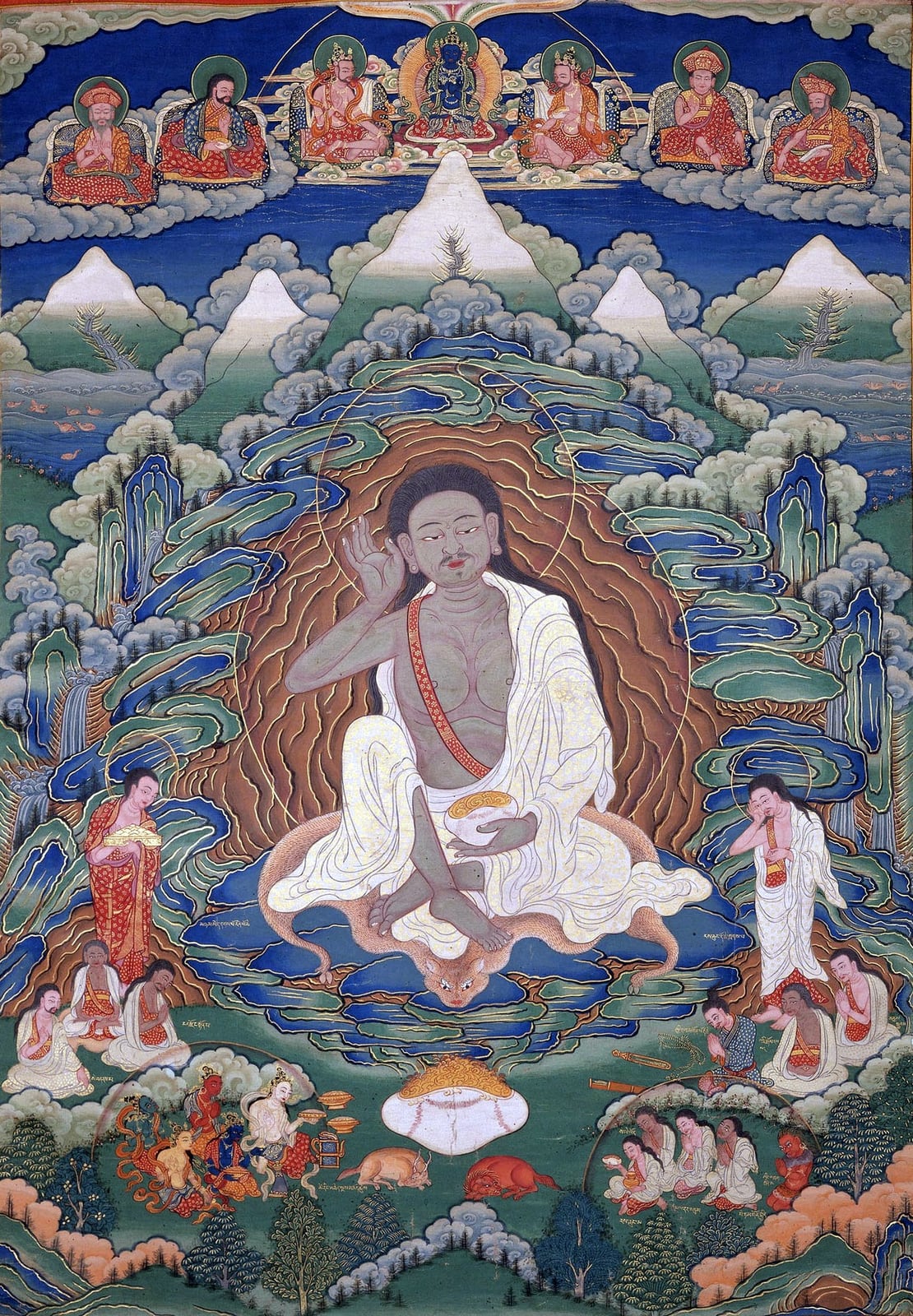
Milarepa
Übereinstimmung bei: Was ist das Absolute? Gibt es Gott? · Wer bin ich? Gibt es ein wahres Selbst? · Ist die Welt wirklich?

Siddhartha Gautama, the Buddha
Übereinstimmung bei: Was ist das Absolute? Gibt es Gott? · Wer bin ich? Gibt es ein wahres Selbst? · Warum leiden wir?
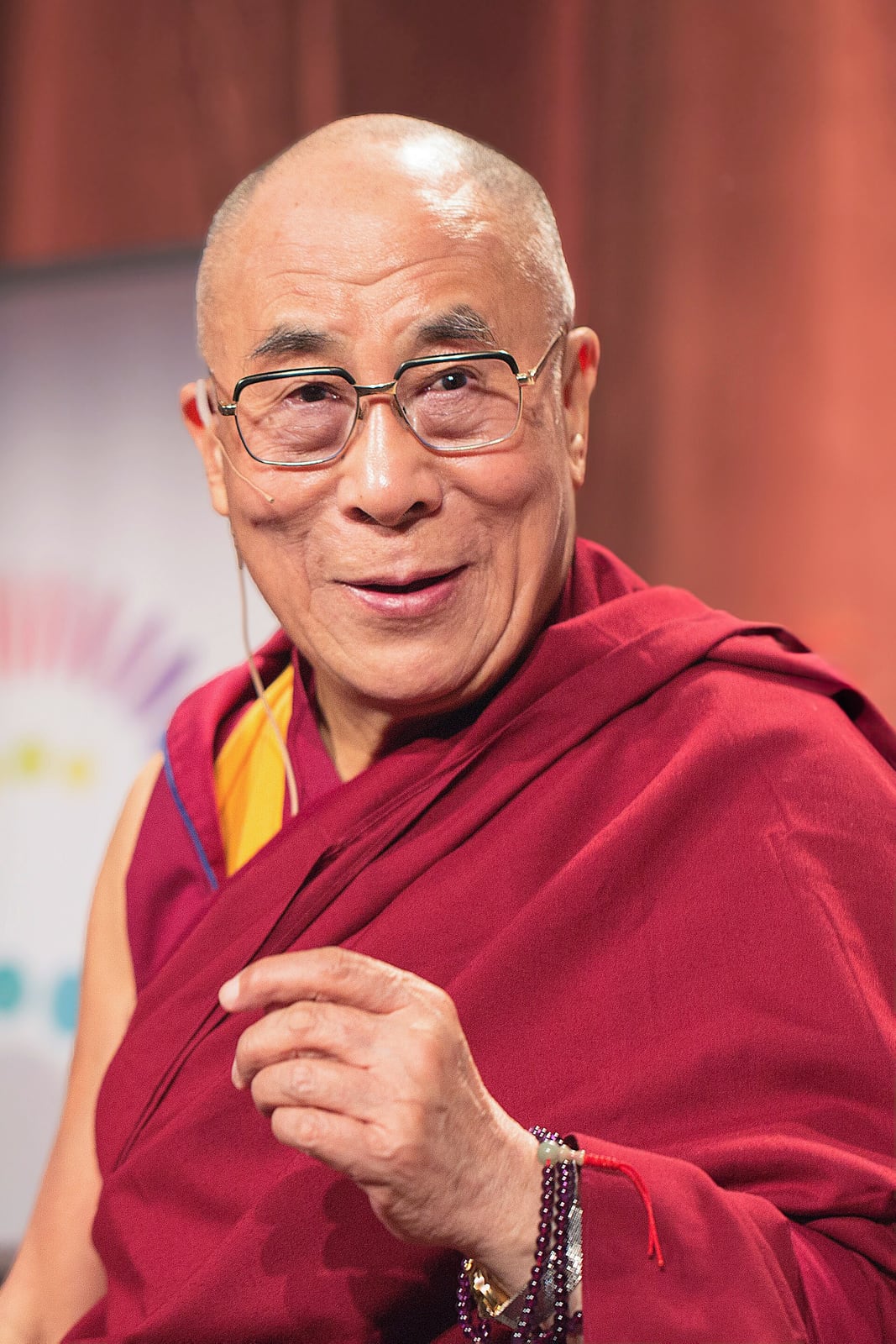
The 14th Dalai Lama (Tenzin Gyatso)
Übereinstimmung bei: Was ist das Absolute? Gibt es Gott? · Wer bin ich? Gibt es ein wahres Selbst? · Warum leiden wir?
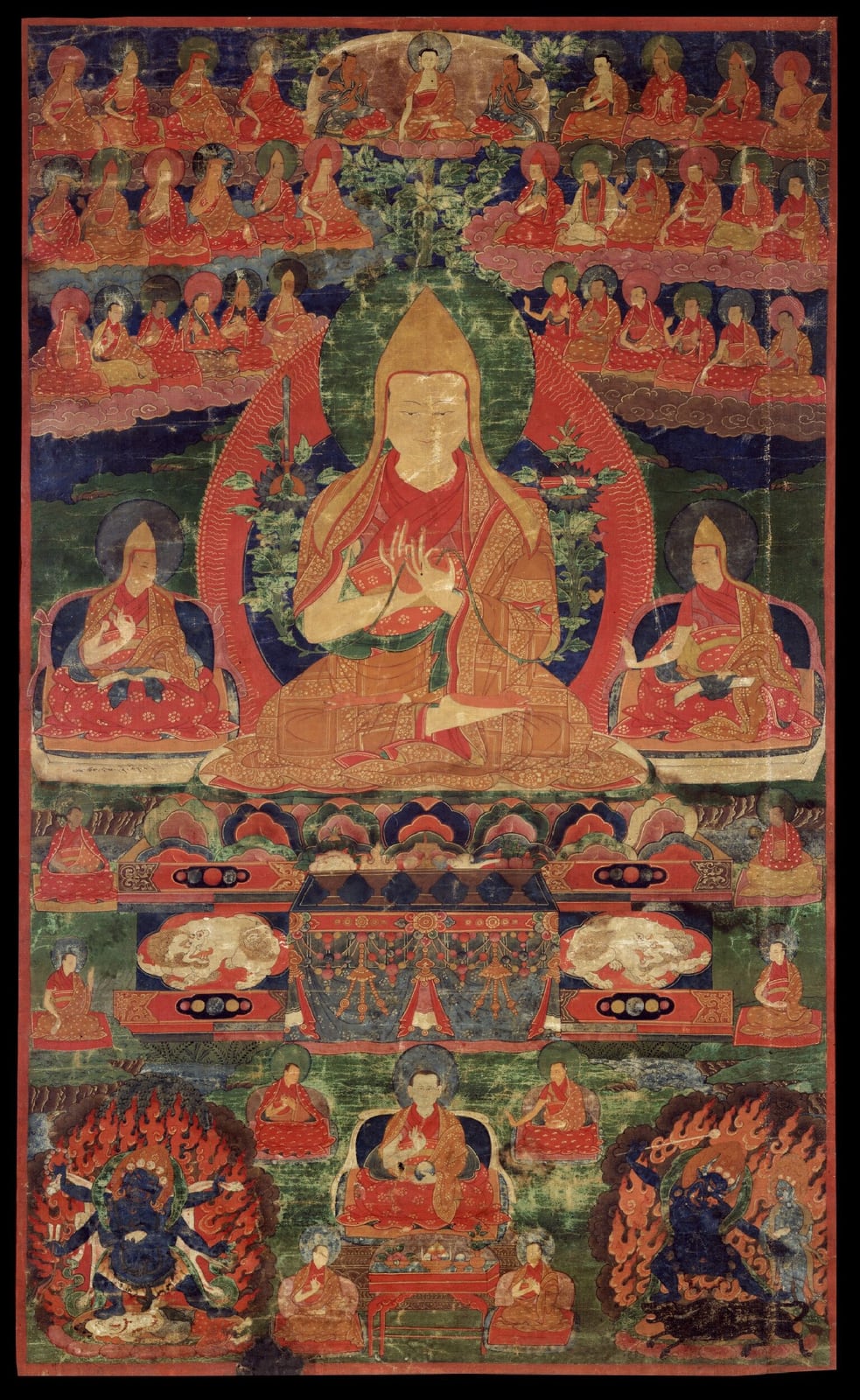
Tsongkhapa
Übereinstimmung bei: Was ist das Absolute? Gibt es Gott? · Wer bin ich? Gibt es ein wahres Selbst? · Warum leiden wir?
Denkt anders als

Francis of Assisi
Widerspruch bei: Was ist das Absolute? Gibt es Gott? · Wer bin ich? Gibt es ein wahres Selbst? · Was geschieht nach dem Tod?

Rabia al-Adawiyya
Widerspruch bei: Was ist das Absolute? Gibt es Gott? · Was geschieht nach dem Tod?
Julian of Norwich
Widerspruch bei: Was ist das Absolute? Gibt es Gott? · Wer bin ich? Gibt es ein wahres Selbst? · Was geschieht nach dem Tod?
Ignatius Brianchaninov
Widerspruch bei: Was ist das Absolute? Gibt es Gott? · Wer bin ich? Gibt es ein wahres Selbst? · Was geschieht nach dem Tod?
Anekdoten und Erzählungen
Anekdoten und Erzählungen
Hagiographische Erzählungsiglo VIII (según la leyenda)
The occupied throne
Herkunft der Erzählung: Butön, History of Buddhism (1322), Tāranātha, History of Buddhism in India (1608), and the Sanskrit biography in a fourteenth-century Nepalese manuscript studied by de Jong (1975). None is less than five centuries later than the life it narrates.
Quelle: Tāranātha. Tāranātha's History of Buddhism in India. Trad. Lama Chimpa y Alaka Chattopadhyaya. Simla: Indian Institute of Advanced Study, 1970.
Hagiographische Erzählungsiglo VIII (según la leyenda)
The wooden sword
Herkunft der Erzählung: Butön, History of Buddhism (1322), Tāranātha, History of Buddhism in India (1608), and the Sanskrit biography in a fourteenth-century Nepalese manuscript studied by de Jong (1975). None is less than five centuries later than the life it narrates.
Quelle: Bu-ston (Butön Rinchen Drub). History of Buddhism (Chos-ḥbyung). Trad. E. Obermiller. Heidelberg: Harrassowitz, 1931–1932, 2 vols.
Hagiographische Erzählungsiglo VIII (según la leyenda)
The one who ate, slept and went to the latrine
Herkunft der Erzählung: Butön, History of Buddhism (1322), Tāranātha, History of Buddhism in India (1608), and the Sanskrit biography in a fourteenth-century Nepalese manuscript studied by de Jong (1975). None is less than five centuries later than the life it narrates.
Quelle: de Jong, J. W. «La légende de Śāntideva». Indo-Iranian Journal 16 (1975): 161–182.
Hagiographische Erzählungsiglo VIII (según la leyenda)
The vanishing at stanza 9.34 and the three versions
Herkunft der Erzählung: Butön and Tāranātha (as summarised by van Schaik, 2014); the connection with the Dunhuang recension is Akira Saito's (1993).
Hagiographische Erzählungsiglo VIII (según la leyenda)
The bowl that fed five hundred
Herkunft der Erzählung: Butön, History of Buddhism (1322), Tāranātha, History of Buddhism in India (1608), and the Sanskrit biography in a fourteenth-century Nepalese manuscript studied by de Jong (1975). None is less than five centuries later than the life it narrates.
Quelle: Bu-ston (Butön Rinchen Drub). History of Buddhism (Chos-ḥbyung). Trad. E. Obermiller. Heidelberg: Harrassowitz, 1931–1932, 2 vols.
Zeugnis1960s–1989
The Dalai Lama and the master from Kinnaur
Herkunft der Erzählung: The Dalai Lama's own account in his public teachings and in the introduction to A Flash of Lightning in the Dark of Night (1994); the Nobel lecture, at nobelprize.org.
Quelle: Dalái Lama XIV (Tenzin Gyatso). A Flash of Lightning in the Dark of Night: A Guide to the Bodhisattva's Way of Life. Trad. Padmakara Translation Group. Boston: Shambhala, 1994. ISBN 0877739714.
Lehren
Lehren
Die Begriffe, die das Denken gliedern, in ihrem Zusammenhang erklärt.
Mind of awakening (bodhicitta)bodhicitta
Indian Mahāyāna; the tradition of “generating the mind” (cittotpāda) in the sūtras.
Quelle: Śāntideva. The Bodhicaryāvatāra. Trad., introd. y notas de Kate Crosby y Andrew Skilton; introducción general de Paul Williams. Oxford: Oxford University Press (Oxford World's Classics), 1996. ISBN 0192829793.
Equalising and exchanging self and othersparatmaparivartana
Chapter 8 (meditation) of the Bodhicaryāvatāra; reception in Tibetan lojong.
Quelle: Williams, Paul. Altruism and Reality: Studies in the Philosophy of the Bodhicaryāvatāra. Richmond (Surrey): Curzon, 1998.
Patience (kṣānti)ksanti
Third of the six perfections (pāramitā).
Quelle: Śāntideva. The Bodhicaryāvatāra. Trad., introd. y notas de Kate Crosby y Andrew Skilton; introducción general de Paul Williams. Oxford: Oxford University Press (Oxford World's Classics), 1996. ISBN 0192829793.
Mindfulness and vigilance (smṛti and saṃprajanya)smrti-samprajanya
Discipline (śīla) in Mahāyāna ethics.
Quelle: Śāntideva. The Bodhicaryāvatāra. Trad., introd. y notas de Kate Crosby y Andrew Skilton; introducción general de Paul Williams. Oxford: Oxford University Press (Oxford World's Classics), 1996. ISBN 0192829793.
The Madhyamaka wisdom of the ninth chaptermadhyamaka-bca9
Indian Madhyamaka; Tibetan reception (Gyaltsab Je, Mipham).
Quelle: Williams, Paul. Altruism and Reality: Studies in the Philosophy of the Bodhicaryāvatāra. Richmond (Surrey): Curzon, 1998.
Dedication of merit (pariṇāmanā)parinamana
Mahāyāna liturgy; prayer recited in Tibetan Buddhism.
Videos
Videos
Aufnahmen, Gespräche und Dokumentarfilme. Die Videos werden von YouTube wiedergegeben; sie werden nicht hier gespeichert.
Shantideva's "Guide to the Bodhisattva's Way of Life" - Day 1
Vortrag· EN· 2010
Dalai LamaOffizieller Kanal
Guide to the Bodhisattva's Way of Life - Day 1
Vortrag· EN· 2018
Dalai LamaOffizieller Kanal
Day 1 - "Shantideva's A Guide to the Bodhisattva's Way of Life" - Chapter 1
Vortrag· EN· 2022
Dalai LamaOffizieller Kanal
Día 1 - Guía del Modo de Vida de los Bodisatvas de Shantideva - Capítulo 9
Vortrag· ES· 2022
El Dalái LamaOffizieller Kanal
Stephen Batchelor on Shantideva
Vortrag· EN
Belfast Buddhist
[#1: Jul 13, 2026] How to be Caring: Shantideva's Bodhicaryāvatāra - Jay Garfield
Vortrag· EN· 2026
Shantideva Center, FPMT
Pema Chodron – On Shantideva
Gespräch· EN
Pema Chodron FoundationOffizieller Kanal
The Story of Shantideva with Yongey Mingyur Rinpoche
Vortrag· EN
Yongey Mingyur RinpocheOffizieller Kanal
The Way of the Bodhisattva with Yongey Mingyur Rinpoche
Vortrag· EN
Yongey Mingyur RinpocheOffizieller Kanal
Chapter 6: Patience (Intro) - Shantideva's Guide to the Bodhisattva's Way of Life with Ven. Jamyang
Vortrag· EN
Tushita Mahayana Meditation Centre DelhiOffizieller Kanal
Shantideva's Bodhicharyavatara | Swami Yogatmananda
Vortrag· EN
Vedanta Society of New York
Bodhicharyavatara de Shantideva, clase 1
Vortrag· ES
Carlo R. Carranza
Enseñanzas de Shantideva - Capítulo de la dedicación del Bodhicharyavatara
Vortrag· ES
Druk Manjushri
Full Audio-Book: The Path of Light: The Bodhicaryavatara by ShantiDeva
Aufnahme Dritter· EN
Global Well-Being
Galerie
Galerie
Bilder mit geprüfter Lizenz. Jedes bewahrt seine Urheberschaft und seinen Herkunftsnachweis.
Handschriften
Handschriften
Handschriftliche Zeugen und alte Texte, mit ihrer verwahrenden Einrichtung und ihren Einsichtsbedingungen.
SA · Escritura nepalesa (bhujimol/newari) · Siglo VIII
Śikṣāsamuccaya
- Erhaltener Textzeuge
- Único manuscrito sánscrito completo conocido, base de la edición de Bendall (1897–1902)
- Verwahrende Einrichtung
- Cambridge University Library (colección Wright)
BO · Tibetano (dbu can) · Siglo VIII (traducción tibetana de finales del VIII)
byang chub sems dpa'i spyod pa la 'jug pa (recensión breve)
- Erhaltener Textzeuge
- Copia completa repartida entre IOL Tib J 628 y Pelliot tibétain 794; copia parcial (c. 60 %) IOL Tib J 629; copia del capítulo de la dedicatoria IOL Tib J 630
- Verwahrende Einrichtung
- British Library (Londres) y Bibliothèque nationale de France (París) · IOL Tib J 628, 629, 630; Pelliot tibétain 794
- Digitalisierung
- idp.bl.uk/…
Beziehungen
Beziehungen
Einflüsse, Schülerschaften und Verwandtschaften. Die belegte Beziehung wird von der durch Analyse ermittelten Ähnlichkeit unterschieden.
Beeinflusst von
The ninth chapter expounds Nāgārjuna's middle way, and the poem itself (5.106) refers to a compendium attributed to him.
Belegte Beziehung
Beeinflusst von
Siddhartha Gautama, the Buddha
The Śikṣāsamuccaya is an anthology of more than a hundred sūtras attributed to the Buddha.
Belegte Beziehung
Beeinflusste
Tsongkhapa and his disciple Gyaltsab Je read the ninth chapter as a Prāsaṅgika text and commented on it; Paul Williams studies that reading.
Belegte Beziehung
Beeinflusste
The 14th Dalai Lama (Tenzin Gyatso)
The poem is the axis of his public teaching: he has commented on it in full and by chapters, and closed his Nobel lecture with it (1989).
Belegte Beziehung
Beeinflusste
Author of a commentary on the poem, No Time to Lose (2005).
Belegte Beziehung
Verwandte Gedanken mit
The Kagyu tradition joins the yogi's renunciation to the bodhisattva ethics Gampopa took from the Kadam school, where the Bodhicaryāvatāra was a central text.
Durch Analyse ermittelte Ähnlichkeit
Verwandte Gedanken mit
Both ground practice in the interdependence of one's own and others' suffering; Thich Nhat Hanh called it “interbeing”.
Durch Analyse ermittelte Ähnlichkeit
Zeitgenosse von
Rough contemporaries at the two ends of Asia: while the poem was being composed at Nālandā, the legend of the sixth Chan patriarch was taking shape in south China.
Durch Analyse ermittelte Ähnlichkeit
Verwandte Gedanken mit
Hakuin insisted that awakening without the vow to save beings is incomplete (“post-satori practice”), an idea close to the primacy of bodhicitta.
Durch Analyse ermittelte Ähnlichkeit
Verwandte Gedanken mit
Both treat practice as an everyday attitude rather than an achievement; a thematic coincidence, with no documented influence.
Durch Analyse ermittelte Ähnlichkeit
Quellen
Quellen
Für diesen Eintrag herangezogene Bibliografie und Kataloge.
- van Schaik, Sam. «The original Bodhicaryāvatāra». early Tibet (blog), 4 de febrero de 2014; revisado el 21 de julio de 2021.
- Wikidata, «Shantideva», QID Q445460 (VIAF 23444930; LCCN n80102717).
- Śāntideva. The Bodhicaryāvatāra. Trad., introd. y notas de Kate Crosby y Andrew Skilton; introducción general de Paul Williams. Oxford: Oxford University Press (Oxford World's Classics), 1996. ISBN 0192829793.
- Śāntideva. A Guide to the Bodhisattva Way of Life (Bodhicaryāvatāra). Trad. del sánscrito y del tibetano de Vesna A. Wallace y B. Alan Wallace. Ithaca (NY): Snow Lion, 1997. ISBN 1559390611.
- de Jong, J. W. «La légende de Śāntideva». Indo-Iranian Journal 16 (1975): 161–182.
- Saito, Akira. A Study of Akṣayamati (= Śāntideva)'s Bodhisattvacaryāvatāra as Found in the Tibetan Manuscripts from Tun-huang. Mie (Japón): Mie University, 1993 (informe de investigación).
- Goodman, Charles (trad.). The Training Anthology of Śāntideva: A Translation of the Śikṣā-samuccaya. Nueva York: Oxford University Press, 2016. ISBN 9780199391356.
- Bendall, Cecil y W. H. D. Rouse (trads.). Śikshā-samuccaya: A Compendium of Buddhist Doctrine, compiled by Śāntideva chiefly from earlier Mahāyāna Sūtras. Londres: John Murray (Indian Texts Series), 1922.
- Bendall, Cecil (ed.). Çikshāsamuccaya: A Compendium of Buddhistic Teaching compiled by Çāntideva chiefly from earlier Mahāyāna-sūtras. San Petersburgo: Academia Imperial de Ciencias (Bibliotheca Buddhica I), 1897–1902.
- Bu-ston (Butön Rinchen Drub). History of Buddhism (Chos-ḥbyung). Trad. E. Obermiller. Heidelberg: Harrassowitz, 1931–1932, 2 vols.
- Tāranātha. Tāranātha's History of Buddhism in India. Trad. Lama Chimpa y Alaka Chattopadhyaya. Simla: Indian Institute of Advanced Study, 1970.
- Lele, Amod. «Śāntideva». Internet Encyclopedia of Philosophy, 2009.
- Pezzali, Amalia. Śāntideva, mystique bouddhiste des VIIe et VIIIe siècles. Florencia: Vallecchi, 1968.
- NTI Reader. «菩提行經 (Putixing jing), Taishō n.º 1662», trad. china atribuida a Nāgārjuna, traducida por Tianxizai (天息災), dinastía Song del Norte.
- Dalái Lama XIV (Tenzin Gyatso). A Flash of Lightning in the Dark of Night: A Guide to the Bodhisattva's Way of Life. Trad. Padmakara Translation Group. Boston: Shambhala, 1994. ISBN 0877739714.
- Williams, Paul. Altruism and Reality: Studies in the Philosophy of the Bodhicaryāvatāra. Richmond (Surrey): Curzon, 1998.
- Finot, Louis (trad.). La Marche à la lumière (Bodhicaryāvatāra), poème sanskrit de Çāntideva. París: Bossard (Les Classiques de l'Orient), 1920. Texto validado en Wikisource.
- La Vallée Poussin, Louis de (trad.). Bodhicaryāvatāra. Introduction à la pratique des futurs Bouddhas, poème de Çāntideva. París: Bloud, 1907.
- Barnett, Lionel D. (trad.). The Path of Light, rendered for the first time into English from the Bodhi-charyāvatāra of Śānti-Deva: A Manual of Mahā-yāna Buddhism. Londres: John Murray (Wisdom of the East), 1909.
- Kværne, Per. An Anthology of Buddhist Tantric Songs: A Study of the Caryāgīti. Oslo: Universitetsforlaget, 1977.
- The Nobel Prize. «The 14th Dalai Lama — Nobel Lecture», Oslo, 11 de diciembre de 1989; la conclusión con la estrofa de Śāntideva se reproduce en CBS News, «Almanac: The Dalai Lama».
- Chödrön, Pema. No Time to Lose: A Timely Guide to the Way of the Bodhisattva. Boston: Shambhala, 2005. ISBN 1590301358.
- Prajñākaramati. Bodhicaryāvatārapañjikā. Ed. Louis de La Vallée Poussin. Calcuta: Asiatic Society of Bengal (Bibliotheca Indica), 1901–1914.
- Rechteinhaber
- Obra original en dominio público (siglo VIII). Las traducciones modernas tienen derechos propios: Oxford University Press (Crosby y Skilton; Goodman), Shambhala Publications (Padmakara; Karma Choephel; comentarios del Dalái Lama, Kunzang Pelden y Pema Chödrön), Snow Lion (Wallace), Wisdom Publications, Tharpa Publications, Ediciones Dharma, Miraguano.
Bestätigung ausstehend
Was dieser Eintrag noch nicht klären konnte. Wir sagen es lieber, als es aufzufüllen.
- Fechas: 685–763 es la cronología tradicional que recoge Wikidata; la erudición solo afirma «primera mitad del siglo VIII». Se han mantenido como aproximadas y marcadas «traditional».
- Signatura del manuscrito sánscrito único del Śikṣāsamuccaya en la Cambridge University Library (colección Wright): no se ha podido confirmar en un catálogo accesible.
- Traductores de las ediciones españolas de Ediciones Dharma (2008) y Miraguano (2015): no constan en Open Library; comprobar en el colofón.
- Obras tántricas atribuidas a un «Śāntideva» en el Tengyur (rituales del ciclo Guhyasamāja): no se han podido verificar los números Tōhoku; si se confirman, añadir como «attributed» con nota de homonimia probable.
- No hay texto sánscrito del Bodhicaryāvatāra en Wikisource; las ediciones de Vaidya (1960) y Bhattacharya (1960) están en Internet Archive solo como escaneo.
- Barnett (1909) y Bendall-Rouse (1922) registrados con caution: true (derechos en la UE/España hasta 2031/2041).
- Duraciones y años de varios vídeos: oEmbed no los devuelve; se han dejado en null salvo los del canal oficial del Dalái Lama.
Recherchiert am 2026-10-25