Christentum · Christliche Mystik · Katholizismus
Julian of Norwich
um 1342 – um 1416Historisch belegte Person
Englische Klausnerin und Schriftstellerin (um 1342 – nach 1416). Im Mai 1373 empfing sie, schwer erkrankt, sechzehn Visionen von der Passion Christi und der Liebe Gottes, die sie in zwei Fassungen festhielt: einem Kurzen Text und, nach jahrzehntelanger Betrachtung, einem Langen Text, den Offenbarungen der göttlichen Liebe – dem ältesten erhaltenen Buch, das eine Frau in englischer Sprache schrieb. Sie lebte eingemauert neben der Kirche St. Julian in Norwich. Ihre Theologie des Vertrauens – „Alles wird gut sein“ –, eines Gottes ohne Zorn und der Mutterschaft Christi hat sie zur klassischen Autorin gemacht.
- Werke
- 3Werke
- Ausgaben
- 14Ausgaben
- Zitate
- 8Zitate
- Videos
- 13Videos
- Bilder
- 5Bilder

Estatua de Juliana en la fachada oeste de la catedral de Norwich (David Holgate) · CC0
In eigenen Worten
«It behoved that there should be sin; but all shall be well, and all shall be well, and all manner of thing shall be well.»Texto largo según la versión modernizada del Sloane 2499 de Grace Warrack (1901), cap. 27 (decimotercera mostración)
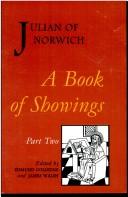
Der zentrale Gedanke
'All shall be well': behovely sin: In the thirteenth showing Julian asks why God in his wisdom did not prevent sin, which, she thinks, would have left everything well.
Im Zusammenhang sehen
Biografie
5 Min. Lesezeit
Unterstützte Übersetzung aus dem spanischen Original, Durchsicht durch einen muttersprachlichen Übersetzer ausstehend.
Eine Frau ohne eigenen Namen
Von der Verfasserin des ältesten erhaltenen Buches, das eine Frau in englischer Sprache geschrieben hat, kennen wir weder den Taufnamen noch die Namen ihrer Eltern noch den genauen Ort ihrer Geburt. Wir nennen sie Juliana, weil Testamente und Abschreiber sie so bezeichnen und weil sie eingemauert neben der Kirche St. Julian in Conisford in Norwich lebte; möglicherweise nahm sie, wie andere Rekluse auch, den Namen des Kirchenpatrons an. Was wir sicher wissen, erzählt sie selbst: dass sie im Mai 1373, als sie „dreißig Winter und ein halbes“ alt war, während einer Krankheit, die sie an den Rand des Todes brachte, eine Reihe von Visionen empfing. Daraus lässt sich schließen, dass sie gegen Ende des Jahres 1342 geboren wurde.
Norwich war damals eine der volkreichsten Städte Englands, ein Zentrum des Wollhandels mit Dutzenden von Pfarrkirchen, Konventen aller vier Bettelorden und einem benediktinischen Kathedralpriorat. Julianas Jugend fiel in die Zeit des Schwarzen Todes, der die Stadt 1349 heimsuchte und in den folgenden Jahrzehnten wiederkehrte, in die Zeit des Hundertjährigen Krieges und, 1381, des Bauernaufstands, den Bischof Henry Despenser in Norfolk mit Härte niederschlug. Nichts davon erscheint ausdrücklich in ihrem Buch, doch viele Leser haben in ihrem beharrlichen „Alles wird gut sein“ die Antwort auf eine verwundete Welt gehört.
Die drei Gaben und die Krankheit
Juliana berichtet, sie habe Gott in ihrer Jugend um drei Gnaden gebeten: um ein lebendiges Gedenken an die Passion Christi, als hätte sie mit Maria Magdalena unter dem Kreuz gestanden; um eine schwere körperliche Krankheit mit dreißig Jahren; und um drei „Wunden“: wahre Reue, Mitleid und Sehnsucht nach Gott. Die beiden ersten Bitten vergaß sie; die dritte bewahrte sie zeitlebens. Mit dreißigeinhalb Jahren erkrankte sie. Drei Tage und drei Nächte lang verschlechterte sich ihr Zustand, sie empfing die Sterbesakramente, und unter anderen wachte ihre Mutter bei ihr. Der Pfarrer hielt ihr ein Kruzifix vor und sagte, sie solle auf das Bild ihres Schöpfers und Erlösers blicken und Trost darin finden. Ihr Blick verdunkelte sich, nur nicht um das Kreuz herum.
Sechzehn Schauungen
Dann, am 8. oder 13. Mai 1373 – die Handschriften weichen voneinander ab –, sah sie die Dornenkrone bluten, und mit dieser Vision begann eine Folge von sechzehn „Schauungen“ (shewings): fünfzehn zwischen vier Uhr morgens und dem Nachmittag, die letzte in der darauffolgenden Nacht. Sie verbinden Passionsbilder von außerordentlichem körperlichem Realismus – das Blut, das wie Regentropfen von einer Dachtraufe fällt, das Antlitz, das austrocknet und die Farbe wechselt –, innere Worte und „geistige Schauungen“ ohne Bild. In einer von ihnen sieht sie in ihrer Handfläche etwas von der Größe einer Haselnuss: „Es ist alles, was geschaffen ist“, und es besteht fort, weil Gott es liebt. Als es ihr besser ging, sagte sie einem Geistlichen, sie habe „phantasiert“, und bereute sogleich, verleugnet zu haben, was sie gesehen hatte; in jener Nacht erlitt sie den Ansturm einer teuflischen Vision und empfing die letzte Schauung, die die früheren bestätigte.
Zwei Bücher
Bald darauf schrieb sie einen ersten Bericht, heute als Kurzer Text bekannt, in dem sie die Visionen und ihren unmittelbarsten Sinn darlegt. Jahrzehntelang dachte sie weiter über sie nach. Sie erzählt, sie habe „fünfzehn Jahre danach und mehr“ die Antwort auf ihre Frage nach dem Sinn des Ganzen erhalten: „Liebe war seine Absicht.“ Zwanzig Jahre nach den Visionen, weniger drei Monate, verstand sie das Gleichnis vom Herrn und vom Knecht, das sie im ersten Bericht ausgelassen hatte. Das Ergebnis ist der Lange Text, sechsundachtzig Kapitel, die die Erfahrung in eine Theologie verwandeln: die Sünde, die „unumgänglich“ ist und doch keine Substanz hat; ein Gott, in dem sie keinen Zorn sieht; die Mutterschaft Christi; das Gebet, das „die Seele mit Gott eint“. Nicholas Watson hat vorgeschlagen, die Abfassung des Kurzen Textes in die 1380er Jahre zu verlegen und die des Langen bis weit ins 15. Jahrhundert hinein zu verlängern.
Die Klausnerin von St. Julian
Wir wissen nicht, wann sie sich in die an die Kirche St. Julian angebaute Zelle einschließen ließ; die Kirche unterstand dem Priorat der Benediktinerinnen von Carrow. Die erste urkundliche Erwähnung stammt von 1394: Das Testament Roger Reeds, Rektors von St. Michael Coslany, vermacht ihr zwei Schilling. Es folgen weitere Vermächtnisse 1404, 1415 und 1416, das letzte von Isabel Ufford, Gräfin von Suffolk. Eine Klausnerin lebte lebenslang in einem oder zwei Räumen, mit einem Fenster zur Kirche, um der Messe zu folgen, und einem zweiten zur Straße, um denen Rat zu geben, die zu ihr kamen; eine oder zwei Dienerinnen sorgten für ihren Unterhalt. Man hat vermutet, sie sei zuvor Nonne in Carrow gewesen oder aber Witwe und Mutter, angesichts der Genauigkeit, mit der sie über die Kindererziehung spricht; beides sind Mutmaßungen.
Margery Kempe am Fenster
Um 1413 besuchte sie Margery Kempe, die ungestüme Mystikerin aus King's Lynn, um sie zu fragen, ob ihre Tränen und Offenbarungen von Gott kämen. Das Buch der Margery Kempe, etwa zwanzig Jahre später diktiert, erinnert daran, dass „Frau Juliana“ ihr mehrere Tage lang zuhörte und ihr riet, Gott zu gehorchen, auf seine Güte zu vertrauen und sich nicht um den Unglauben anderer zu sorgen, denn wer immerzu zweifelt, gleicht der Woge des Meeres. Es ist das einzige Bild Julianas, das von jemandem stammt, der sie kannte. Im selben Jahr 1413 war ihre Verfasserin laut der Rubrik der Handschrift des Kurzen Textes noch am Leben; ihr Tod, nach 1416, hat keine urkundliche Spur hinterlassen.
Eine brüchige Überlieferung
Der Kurze Text ist in einer einzigen Handschrift erhalten, die um die Mitte des 15. Jahrhunderts kopiert wurde, der sogenannten Amherst-Handschrift (British Library, Add. MS 37790). Der Lange Text gelangte zu uns dank der englischen Benediktinerinnen, die im 17. Jahrhundert im Exil in Cambrai und Paris lebten und ihn abschrieben und bewahrten: Aus diesem Umfeld stammen die Pariser Handschrift (Bibliothèque nationale de France, Fonds anglais 40) sowie die Handschriften Sloane 2499 und 3705 der British Library. Der Benediktiner Serenus Cressy ließ ihn 1670 drucken. Die Ausgabe von Grace Warrack (1901) gab ihn den Lesern zurück, und die kritische Edition von Edmund Colledge und James Walsh (1978) legte den Text beider Fassungen fest.
Die Theologin des Vertrauens
Das 20. Jahrhundert machte sie zu einer klassischen Autorin. T. S. Eliot schloss „Little Gidding“, das letzte seiner Vier Quartette, mit ihren Worten über die „unumgängliche“ Sünde und darüber, dass alles gut sein wird; die Kirche von England gedenkt ihrer am 8. Mai, und Benedikt XVI. widmete ihr 2010 eine Generalaudienz. Die Kirche St. Julian, 1942 von deutschen Bomben zerstört, wurde mit einer Zelle wiederaufgebaut, die heute Pilger empfängt. Jenseits der Etiketten, die man ihr angeheftet hat – feministisch, universalistisch, ökologisch –, bleibt eine Stimme, die sich als „einfaches, ungelehrtes Geschöpf“ vorstellte und mit einer für ihr Jahrhundert seltenen theologischen Genauigkeit schrieb: Sie hielt an der Lehre der Kirche fest und zugleich an einer Schau Gottes, in der sie keinen Zorn fand.
Quellen: Colledge, Edmund, y James Walsh (eds.). A Book of Showings to the Anchoress Julian of Norwich. 2 vols. Studies and Texts 35. Toronto: Pontifical Institute of Mediaeval Studies, 1978. · Watson, Nicholas, y Jacqueline Jenkins (eds.). The Writings of Julian of Norwich: A Vision Showed to a Devout Woman and A Revelation of Love. University Park: Pennsylvania State University Press / Turnhout: Brepols, 2006. · Warrack, Grace (ed.). Revelations of Divine Love Recorded by Julian, Anchoress at Norwich, Anno Domini 1373. Londres: Methuen, 1901 (Project Gutenberg n.º 52958). · Windeatt, Barry (trad. e intr.). Julian of Norwich: Revelations of Divine Love. Oxford World's Classics. Oxford: Oxford University Press, 2015. · The Book of Margery Kempe. Ed. Sanford Brown Meech y Hope Emily Allen. Early English Text Society, o.s. 212. Londres: Oxford University Press, 1940, cap. 18.
Zeitleiste
Das Leben, Jahr für Jahr
Jeder Punkt ist ein belegtes Ereignis. Klicken Sie, um es mit Quelle und Grad der Gewissheit zu lesen.
um 13420 JahreProbablemente Norwich o Norfolk
Birth
Date inferred from her own statement that she was 'thirty winters and a half' old in May 1373 (Long Text, ch. 3). Her baptismal name and family are unknown.
WahrscheinlichColledge, Edmund, y James Walsh (eds.). A Book of Showings to the Anchoress Julian of Norwich. 2 vols. Studies and Texts 35. Toronto: Pontifical Institute of Mediaeval Studies, 1978.
Nach dem Tod
- um 1450The Amherst manuscript is copied
- 1670First printed edition
- 1901Grace Warrack's edition
- Juni 1942St Julian's church destroyed
- 1978Critical edition
- 1. Dezember 2010Benedict XVI's audience
um 1342 · 0 Jahre
Birth
Date inferred from her own statement that she was 'thirty winters and a half' old in May 1373 (Long Text, ch. 3). Her baptismal name and family are unknown.
Wahrscheinlich
1349 · 7 Jahre
The Black Death in Norwich
The epidemic decimates the city; new waves in 1361–1362 and 1369. The context of her childhood.
Belegt
Mai 1373 · 30 Jahre
The sixteen showings
Gravely ill, she receives fifteen visions between early morning and afternoon and the sixteenth the following night. The manuscripts give 8 or 13 May.
Belegt
um 1380 – 1388 · 38 Jahre
The Short Text
Writing of the first account of the visions; the traditional date (soon after 1373) was challenged by Nicholas Watson, who places it in the 1380s.
Umstritten
um 1388 · 45 Jahre
'Love was his meaning'
'Fifteen years after and more' she receives the understanding that closes the book: love is the meaning of all the showings (Long Text, ch. 86).
Belegt
um 1393 · 50 Jahre
The example of the lord and the servant
'Twenty years after the time of the showing, save three months' she understands the parable of the lord and the servant (Long Text, ch. 51), the core of the Long Text.
Belegt
März 1394 · 51 Jahre
First mention as an anchoress
The will of Roger Reed, rector of St Michael Coslany, leaves two shillings to 'Julian anakorite'.
Belegt
1404 · 61 Jahre
Bequest of Thomas Emund
A chantry priest of Aylsham leaves a bequest to the anchoress of St Julian's and to her servant Sara.
Belegt
um 1413 · 70 Jahre
Margery Kempe's visit
Margery Kempe consults her over several days about her experiences (Book of Margery Kempe, ch. 18). The rubric of the Amherst manuscript states she was alive in 1413.
Belegt
1416 · 73 Jahre
Last mention: the will of Isabel Ufford
The Countess of Suffolk leaves twenty shillings to 'Julian recluse a Norwich'. It is the last document mentioning her alive; the date of her death is unknown.
Belegt
um 1450
The Amherst manuscript is copied
A scribe copies the Short Text into an anthology of contemplative texts (British Library, Add. MS 37790), the only witness to that version.
Wahrscheinlich
1670
First printed edition
The Benedictine Serenus Cressy publishes XVI Revelations of Divine Love from a Long Text manuscript related to the Paris one.
Belegt
1901
Grace Warrack's edition
Methuen publishes Grace Warrack's modernised version of Sloane 2499, which popularises the work.
Belegt
Juni 1942
St Julian's church destroyed
German bombing destroys the church; it is rebuilt in 1953 with a chapel on the site of the cell.
Belegt
1978
Critical edition
Edmund Colledge and James Walsh publish the critical edition of both versions (Pontifical Institute of Mediaeval Studies).
Belegt
1. Dezember 2010
Benedict XVI's audience
Benedict XVI devotes his general audience catechesis to Julian.
Belegt
Werke
Grundlegende Werke
Die Werke, ohne die sich das Vermächtnis nicht verstehen lässt.
Handschrift · um 1385
The Short Text: A Vision Showed to a Devout Woman
A Vision Showed to a Devout Woman
The first version of the account of the visions of May 1373, in twenty-five chapters. It narrates the three gifts requested, the illness, the crucifix and the sixteen showings in a more personal and immediate tone than the long version: Julian presents herself as a woman and apologises for teaching ('Should I believe, because I am a woman, that I ought not to tell you of the goodness of God?'). It does not yet contain the example of the lord and the servant or the theology of Christ's motherhood. It is the earliest surviving English text known to be by a woman.
5 Ausgaben · amazon.com

Handschrift · um 1393
The Long Text: Revelations of Divine Love
A Revelation of Love (Revelations of Divine Love)
A reworking of the same visions in eighty-six chapters, the fruit of twenty years or more of meditation. Besides expanding each showing, it adds theological chapters: the example of the lord and the servant (ch. 51), in which Adam and Christ are both the servant who falls in serving; the teaching that there is no wrath in God and that sin is 'behovely' but has no substance; the 'substance' and 'sensuality' of the soul; and the motherhood of Christ and of the Trinity (chs. 58–63). It closes with the answer received 'fifteen years after and more': 'Love was his meaning'. It is the major work of medieval English mysticism.
9 Ausgaben · amazon.com
Zitate
Zitate, die in einem bestimmten Werk nachgewiesen sind. Jedes trägt seine Herkunft und seinen Grad an Verlässlichkeit.
It behoved that there should be sin; but all shall be well, and all shall be well, and all manner of thing shall be well.GeprüftTexto largo según la versión modernizada del Sloane 2499 de Grace Warrack (1901), cap. 27 (decimotercera mostración)
Apokryphe Zitate oder Zitate umstrittener Zuschreibung (1)
«Be a gardener. Dig a ditch, toil and sweat, and turn the earth upside down…»
It circulates online and on devotional cards as a quotation from Julian. It does not appear in that form in either version: it is a free reworking of the image of the servant labouring as a gardener in the example of the lord and the servant (Long Text, ch. 51).
Letzte Worte
Es gibt keine überprüfbaren Aufzeichnungen der letzten Worte.
Neither the date nor the circumstances of her death are known. The last document mentioning her alive is the will of Isabel Ufford, Countess of Suffolk (1416); no source transmits final words.
Quelle: Tanner, Norman P. The Church in Late Medieval Norwich, 1370–1532. Studies and Texts 66. Toronto: Pontifical Institute of Mediaeval Studies, 1984 (testamentos de Norwich con legados a anacoretas).
Fragen
Was das Werk beantwortet
Zwölf große Fragen der Menschheit und was sich aus den Texten darauf antworten lässt, mit Belegen. Wir legen niemandem Worte in den Mund.
Was ist das Absolute? Gibt es Gott?
God is Trinitarian love, Father and also Mother
Ein persönlicher GottAusdrücklich gesagt
Julian of Norwich does not argue for God's existence: she describes what was «shown» to her in sixteen revelations during an illness in 1373. In them God is Trinity and is love: in the final chapter of the Long Text she sums up that the meaning of everything shown was love. This God is courteous, homely, rejoices in creatures and holds them in being, like the hazelnut that lasts because God loves it. Her most original contribution is to call God Mother with the same truth with which he is called Father, and to ascribe that motherhood especially to Christ, the second Person. The Absolute is for her a Thou who loves without wrath, whose love precedes creation and never lessens.
Diese Frage mit anderen Meistern vergleichenWer bin ich? Gibt es ein wahres Selbst?
Our substance is in God; our sensuality awaits union with it
Eine geschaffene, unsterbliche SeeleAusdrücklich gesagt
Julian of Norwich distinguishes in the human being the «substance», the highest part, which was never separated from God, and the «sensuality», the embodied, temporal life where sin and pain occur. In chapter 54 of the Long Text she states that she saw no difference between God and our substance, as if it were all God, and yet understood that our substance is a creature in God. In the parable of the lord and the servant (ch. 51), the soul's fall arises not from malice but from haste to serve. The true self is a created soul, loved forever and kept in God, which is reconciled with itself when substance and sensuality are united through Christ.
Diese Frage mit anderen Meistern vergleichenWarum leiden wir?
Sin was behovely, but all shall be well
Die Trennung von GottAusdrücklich gesagt
Julian of Norwich asked why, if God is love, he did not prevent sin, which is the cause of all pain. The answer shown to her is one of the most famous sentences of English mysticism: sin was behovely, but all shall be well, and all manner of thing shall be well. She did not see sin, because she believes it has no substance, and knew it only by the pain it causes. In the parable of the lord and the servant, the fall appears as the stumbling of a servant running to do his lord's will. Suffering arises from separation, but God does not look on it with wrath, and every pain will be turned to honour.
Diese Frage mit anderen Meistern vergleichenWas geschieht nach dem Tod?
A great deed at the end will make all things well
Ewiges Leben und AuferstehungAusdrücklich gesagt
Julian of Norwich's revelations were born at the edge of death: she was thirty and a half, received the last rites, and the priest held a crucifix before her, before which the visions began. Her hope is the Church's: eternal life in God, joy and bliss. But she adds something of her own: in chapter 32 she is shown that there is a great deed that the Trinity will do on the last day, hidden from every creature, by which all shall be well. Julian acknowledges the tension with the Church's teaching on damnation and does not resolve it: she holds it in faith and in the promise that what is impossible for her is not so for God.
Diese Frage mit anderen Meistern vergleichenWie erlangt man Befreiung oder Erlösung?
God is the ground of our beseeching
Durch Gnade und LiebeAusdrücklich gesagt
Julian of Norwich sees salvation as the work of God's love that precedes everything: in chapter 41 of the Long Text she is shown that God is the ground of our beseeching, that it is he who makes us desire and ask for what he wishes to give us. The human role is real but humble: to pray, to trust, not to despair of one's own sin, and to remain in the faith of the Church. In chapter 68 she receives the promise that the soul will not be overcome, though it be tossed and afflicted. Liberation consists in Christ, our Mother, restoring us to the union of substance and sensuality, and keeping us in a love that never withdraws.
Diese Frage mit anderen Meistern vergleichenBraucht es einen Lehrer?
What was shown is received within the Church's common faith
Gemeinschaft und TraditionAus der Lehre abgeleitet
Julian of Norwich does not raise the question of the spiritual teacher; she received her revelations directly and spent some twenty years meditating on them. But she refuses to make them a separate authority. In chapter 9 of the Long Text she declares that she is not good because of the visions, but only if she loves God more, and that what she saw she believes according to the teaching of Holy Church. In chapter 80 she sums up the three things by which a human being stands in this life: the use of natural reason, the common teaching of the Church and the inward working of the Holy Spirit. Her text, moreover, is addressed to all her «fellow Christians», not to disciples.
Diese Frage mit anderen Meistern vergleichenIst die Welt wirklich?
All creation fits in a hazelnut and lasts because God loves it
Eine gute und wirkliche SchöpfungAusdrücklich gesagt
Julian of Norwich's best-known image answers this question. In the first revelation, God shows her in the palm of her hand a little thing, the size of a hazelnut, round as a ball, and she is told that it is all that is made. Julian marvels that it can last, for it seems that, in its littleness, it might suddenly fall into nothing; and she is answered that it lasts and ever shall because God loves it. In that vision she understands three things: that God made it, that God loves it and that God keeps it. The world is real, fragile and small before its Creator, and good because it is loved.
Diese Frage mit anderen Meistern vergleichenWas ist Liebe?
Love was the meaning of everything shown
Liebe zu Gott und zum NächstenAusdrücklich gesagt
Julian of Norwich's Long Text ends with the answer to the question she had asked herself for fifteen years: what the Lord's meaning was in what he showed her. She was answered that it was love: who showed it to her, love; what he showed her, love; why he showed it, for love. Julian adds that she saw with certainty that God loved us before he made us and that this love has never diminished nor ever shall. Love is God's essence, and from it proceeds the love creatures have for one another: her text is addressed to all her fellow Christians, because what was shown was for all, and in loving them she sees the concrete form of loving God.
Diese Frage mit anderen Meistern vergleichenSind wir frei, oder ist alles vorherbestimmt?
God does all that is done; the how remains a secret
Nicht geäußert
Julian of Norwich does not treat human freedom as a problem. What is shown to her points elsewhere: in the third revelation she sees God in a point and understands that he is in all things and does all that is done; nothing happens by chance, but by God's foreseeing wisdom. That raises for her the question of sin, which is no deed, and she resolves it by trusting that all that is done is well done. She neither denies human responsibility —she speaks of repentance, prayer and the fall— nor theorises about predestination: she leaves the how in God's secret, who in his time will make all things well.
Diese Frage mit anderen Meistern vergleichenWozu meditieren oder beten?
Prayer unites the soul to God, who is its ground
Freundschaft mit GottAusdrücklich gesagt
Julian of Norwich devotes several chapters of the Long Text to prayer. There she is told that God is the ground of beseeching: it is he who makes us desire what he wants to give, and so prayer is never in vain, even when it seems dry or fruitless. Prayer unites the soul to God: although the soul is always like God in nature, it is often unlike him through sin, and prayer makes it like him in will. She distinguishes beseeching, which asks, from contemplation, in which the soul can no longer ask but only behold and give thanks. The tone is one of homely trust: God is courteous and wants to be spoken to with the simplicity of a child with its mother.
Diese Frage mit anderen Meistern vergleichenKann die Vernunft das Letzte erkennen?
Natural reason, the Church's teaching and the Spirit's work
Glaube und Vernunft helfen einanderAusdrücklich gesagt
Julian of Norwich presents herself as an «unlettered creature», but her work shows great theological intelligence, and she gives reason an explicit place. In chapter 80 of the Long Text she lists the three things by which the human being stands in this life and by which God is honoured: the use of natural reason, the common teaching of Holy Church and the inward gracious working of the Holy Spirit, and adds that all three come from one God. The revelations do not replace reason: Julian spent twenty years meditating on them in order to understand them, and the Long Text is the fruit of that reflection. Reason helps; faith and grace complete.
Diese Frage mit anderen Meistern vergleichenSich von der Welt zurückziehen oder sie verwandeln?
An anchoress who writes for all her fellow Christians
Sich zurückziehen, um zu findenAus der Lehre abgeleitet
Julian of Norwich lived as an anchoress, enclosed in a cell attached to the church of Saint Julian in Norwich, from which she probably takes her name; wills of the period mention her as an anchorite in the early fifteenth century. Her form of life was thus the strictest withdrawal known to the medieval Church. But her work does not argue for enclosure or despise those who live in the world: she declares that what was shown is not only for her but for all her fellow Christians, and her theology of God's love addresses ordinary life, the falling and falling again of anyone. From the cell, the window opened onto the street.
Diese Frage mit anderen Meistern vergleichen
Affinitäten und Spannungen
Affinitäten und Spannungen
Frage für Frage aus den Positionen berechnet. Den Grund jeder Übereinstimmung und jedes Widerspruchs zeigt ein Klick.
Denkt ähnlich wie
Seraphim of Sarov
Übereinstimmung bei: Was ist das Absolute? Gibt es Gott? · Wer bin ich? Gibt es ein wahres Selbst? · Warum leiden wir?

Francis of Assisi
Übereinstimmung bei: Was ist das Absolute? Gibt es Gott? · Wer bin ich? Gibt es ein wahres Selbst? · Warum leiden wir?

Teresa of Ávila
Übereinstimmung bei: Was ist das Absolute? Gibt es Gott? · Wer bin ich? Gibt es ein wahres Selbst? · Warum leiden wir?
Catherine of Siena
Übereinstimmung bei: Was ist das Absolute? Gibt es Gott? · Wer bin ich? Gibt es ein wahres Selbst? · Warum leiden wir?
Denkt anders als

Pema Chödrön
Widerspruch bei: Was ist das Absolute? Gibt es Gott? · Wer bin ich? Gibt es ein wahres Selbst? · Was geschieht nach dem Tod?

Nāgārjuna
Widerspruch bei: Was ist das Absolute? Gibt es Gott? · Wer bin ich? Gibt es ein wahres Selbst? · Was geschieht nach dem Tod?

Śāntideva
Widerspruch bei: Was ist das Absolute? Gibt es Gott? · Wer bin ich? Gibt es ein wahres Selbst? · Was geschieht nach dem Tod?

Sadhguru
Widerspruch bei: Wer bin ich? Gibt es ein wahres Selbst? · Was geschieht nach dem Tod? · Ist die Welt wirklich?
Anekdoten und Erzählungen
Anekdoten und Erzählungen
Zeugnismayo de 1373
The parish priest's crucifix
Herkunft der Erzählung: Julian's own account in the Short Text (chs. 2–3) and the Long Text (chs. 3–4).
Zeugnismayo de 1373
'I said I had raved'
Herkunft der Erzählung: Long Text, chs. 66–67; the episode also appears in the Short Text (chs. 21–22).
Belegtc. 1413
Margery Kempe at the cell window
Herkunft der Erzählung: The Book of Margery Kempe, book I, ch. 18, dictated c. 1436–1438. The meeting is known only from this account.
Quelle: The Book of Margery Kempe. Ed. Sanford Brown Meech y Hope Emily Allen. Early English Text Society, o.s. 212. Londres: Oxford University Press, 1940, cap. 18.
Nicht überprüfbars. XX (tradición)
The anchoress's cat
Herkunft der Erzählung: The rule comes from the Ancrene Wisse (part VIII). The attribution of a cat to Julian has no medieval source and spread with modern iconography.
Quelle: Jantzen, Grace M. Julian of Norwich: Mystic and Theologian. Londres: SPCK, 1987 (nueva ed. 2000).
Belegts. XVII
The nuns of Cambrai
Herkunft der Erzählung: Watson and Jenkins (2006) and Colledge and Walsh (1978) study the provenance of the Long Text manuscripts in the milieu of the Cambrai and Paris communities.
Quelle: Watson, Nicholas, y Jacqueline Jenkins (eds.). The Writings of Julian of Norwich: A Vision Showed to a Devout Woman and A Revelation of Love. University Park: Pennsylvania State University Press / Turnhout: Brepols, 2006.
Lehren
Lehren
Die Begriffe, die das Denken gliedern, in ihrem Zusammenhang erklärt.
'All shall be well': behovely sintodo-ira-bien
Late medieval debate on predestination and salvation, in the England of Wyclif and Langland.
Quelle: Colledge, Edmund, y James Walsh (eds.). A Book of Showings to the Anchoress Julian of Norwich. 2 vols. Studies and Texts 35. Toronto: Pontifical Institute of Mediaeval Studies, 1978.
A God without wrathdios-sin-ira
Contrast with fourteenth-century penitential preaching and with the image of judgement in scholastic theology.
Quelle: Jantzen, Grace M. Julian of Norwich: Mystic and Theologian. Londres: SPCK, 1987 (nueva ed. 2000).
The example of the lord and the servantsenor-y-siervo
Medieval multi-layered exegesis and the tradition of parable as a form of theological teaching.
Quelle: Watson, Nicholas, y Jacqueline Jenkins (eds.). The Writings of Julian of Norwich: A Vision Showed to a Devout Woman and A Revelation of Love. University Park: Pennsylvania State University Press / Turnhout: Brepols, 2006.
The motherhood of Christ and of Godmaternidad-de-cristo
Medieval tradition of Jesus as mother (Anselm, Bernard of Clairvaux, William of Saint-Thierry).
Quelle: Jantzen, Grace M. Julian of Norwich: Mystic and Theologian. Londres: SPCK, 1987 (nueva ed. 2000).
Substance and sensualitysustancia-y-sensualidad
Augustinian anthropology of the image and the English contemplative tradition (Hilton, The Cloud of Unknowing).
Quelle: Watson, Nicholas, y Jacqueline Jenkins (eds.). The Writings of Julian of Norwich: A Vision Showed to a Devout Woman and A Revelation of Love. University Park: Pennsylvania State University Press / Turnhout: Brepols, 2006.
The courtesy and homeliness of Godcortesia-de-dios
The courtly language of fourteenth-century England applied to theology.
Quelle: Windeatt, Barry (trad. e intr.). Julian of Norwich: Revelations of Divine Love. Oxford World's Classics. Oxford: Oxford University Press, 2015.
Videos
Videos
Aufnahmen, Gespräche und Dokumentarfilme. Die Videos werden von YouTube wiedergegeben; sie werden nicht hier gespeichert.
2024 Julian Festival Lecture, Julian and the Trinity, Archbishop Rowan Williams
Vortrag· EN· 2024· 89 min
Julian of NorwichOffizieller Kanal
Julian of Norwich: mother, mystic, radical
Vortrag· EN· 2023· 81 min
Jesus College, CambridgeOffizieller Kanal
Julian of Norwich: Revelations of Divine Love - Robert Fruehwirth
Vortrag· EN· 2016· 61 min
St Paul's CathedralOffizieller Kanal
Prayer in the Teachings of Julian of Norwich: A Journey of Desire | Philip Sheldrake
Vortrag· EN· 2019· 84 min
Oblate School of TheologyOffizieller Kanal
How to Read Julian of Norwich / Ryan McAnnally-Linz
Vortrag· EN· 2024· 54 min
Yale Center for Faith & CultureOffizieller Kanal
Julian of Norwich and the English Mystics: A Lecture by Fr. Groeschel
Vortrag· EN· 2019· 73 min
International Institute for Culture
Cecilia Twinch: Julian of Norwich: All manner of things shall be well
Vortrag· EN· 2023· 42 min
Ibn 'Arabi SocietyOffizieller Kanal
Revelations of Divine Love by Julian of NORWICH read by David Barnes | Full Audio Book
Aufnahme Dritter· EN· 2018· 441 min
LibriVox Audiobooks
3º clase - Javier Melloni sj expone sobre Juliana de Norwich, teóloga de su propia experiencia
Vortrag· ES· 2022· 113 min
Fraternidad del Santo Nombre
Juliana de Norwich, Mística de la cortesía de Dios - El primer documental español
Dokumentarfilm· ES· 2026· 15 min
Radio Monastero Interiore
El Papa dedica la audiencia general a Juliana de Norwich, mística inglesa
Aufnahme Dritter· ES· 2010· 3 min
ROME REPORTS en EspañolOffizieller Kanal
Juliana de Norwich
Vortrag· ES· 2026· 104 min
Cruzando Fronteras con Fernando Cordero sscc
Giuliana di Norwich, Mistica della cortesia di Dio - il primo documentario italiano
Dokumentarfilm· IT· 2025· 16 min
Radio Monastero Interiore
Galerie
Galerie
Bilder mit geprüfter Lizenz. Jedes bewahrt seine Urheberschaft und seinen Herkunftsnachweis.
Handschriften
Handschriften
Handschriftliche Zeugen und alte Texte, mit ihrer verwahrenden Einrichtung und ihren Einsichtsbedingungen.
ENM · Gótica cursiva inglesa (tipo no verificado) · Texto: c. 1373–1390; copia: c. 1435–1450
A Vision Showed to a Devout Woman (Texto breve), en antología contemplativa
- Erhaltener Textzeuge
- Único testimonio del Texto breve, dentro de una antología de textos contemplativos (Rolle, Ruusbroec, Suso, entre otros). La rúbrica afirma que la autora seguía viva en 1413.
- Verwahrende Einrichtung
- British Library, Londres · Add. MS 37790 (manuscrito Amherst)
ENM · Cursiva (tipo no verificado) · Copia de finales del s. XVI
Revelations of Divine Love (Texto largo), copia de París
- Erhaltener Textzeuge
- Texto largo completo con el explicit «Explicit liber revelationum Julyane anatorite Norwyche»; texto próximo al de la edición de Cressy (1670).
- Verwahrende Einrichtung
- Bibliothèque nationale de France, París · Fonds anglais 40
ENM · Cursiva del s. XVII · Mediados del s. XVII
Revelations of Divine Love (Texto largo), Sloane 2499
- Erhaltener Textzeuge
- Texto largo completo con ortografía arcaizante; base de las ediciones de Warrack (1901), Glasscoe (1976) y Crampton (1993).
- Verwahrende Einrichtung
- British Library, Londres · Sloane MS 2499
ENM · Cursiva del s. XVIII · S. XVIII
Revelations of Divine Love (Texto largo), Sloane 3705
- Erhaltener Textzeuge
- Copia tardía del Texto largo, con ortografía modernizada.
- Verwahrende Einrichtung
- British Library, Londres · Sloane MS 3705
ENM · Gótica cursiva inglesa (tipo no verificado) · c. 1500
Extractos del Texto largo (manuscrito de Westminster)
- Erhaltener Textzeuge
- Antología de pasajes del Texto largo junto a comentarios a los salmos; el testimonio más antiguo de esa versión.
- Verwahrende Einrichtung
- Westminster Cathedral Treasury, Londres · MS 4
Beziehungen
Beziehungen
Einflüsse, Schülerschaften und Verwandtschaften. Die belegte Beziehung wird von der durch Analyse ermittelten Ähnlichkeit unterschieden.
Beeinflusst von
The sixteen showings centre on Christ's passion, which Julian had asked to behold 'as if she had been there', and her whole theology is built around him as servant, mother and saviour.
Belegte Beziehung
Verwandte Gedanken mit
Julian works within the Augustinian horizon (fall, original sin, grace, God's image in the soul), but her vision of a God who does not blame departs from the rigour of the late Augustine. No direct reading is documented.
Durch Analyse ermittelte Ähnlichkeit
Zeitgenosse von
Exact contemporaries (Catherine was born in 1347 and Julian had her visions in 1373), both laywomen without Latin learning who dictated or wrote theology in the vernacular. There was no contact.
Durch Analyse ermittelte Ähnlichkeit
Verwandte Gedanken mit
Two women who wrote of their experience of God in domestic language and with a theological sharpness that exceeded their 'unlettered' status. Teresa did not know Julian's work.
Durch Analyse ermittelte Ähnlichkeit
Verwandte Gedanken mit
Both visionaries received visions in sickness and interpreted them over years; but Hildegard was an abbess, prophetic and cosmological, and Julian a recluse and introspective. No documented relation.
Durch Analyse ermittelte Ähnlichkeit
Verwandte Gedanken mit
Affective devotion to the suffering humanity of Christ, spread in fourteenth-century England by Franciscan spirituality, forms the background of her visions of the passion. No direct relation.
Durch Analyse ermittelte Ähnlichkeit
Verwandte Gedanken mit
Julian's 'substance' of the soul ever united to God recalls Eckhart's 'ground' of the soul, but her language is narrative and concrete, not speculative. There is no sign that she knew Rhineland mysticism.
Durch Analyse ermittelte Ähnlichkeit
Von anderen Einträgen aus verknüpft
Quellen
Quellen
Für diesen Eintrag herangezogene Bibliografie und Kataloge.
- Wikidata, Q236699 «Juliana de Norwich / Julian of Norwich» (P31=Q5; 45 enlaces entre wikis).
- Colledge, Edmund, y James Walsh (eds.). A Book of Showings to the Anchoress Julian of Norwich. 2 vols. Studies and Texts 35. Toronto: Pontifical Institute of Mediaeval Studies, 1978.
- Watson, Nicholas, y Jacqueline Jenkins (eds.). The Writings of Julian of Norwich: A Vision Showed to a Devout Woman and A Revelation of Love. University Park: Pennsylvania State University Press / Turnhout: Brepols, 2006.
- Warrack, Grace (ed.). Revelations of Divine Love Recorded by Julian, Anchoress at Norwich, Anno Domini 1373. Londres: Methuen, 1901 (Project Gutenberg n.º 52958).
- Windeatt, Barry (trad. e intr.). Julian of Norwich: Revelations of Divine Love. Oxford World's Classics. Oxford: Oxford University Press, 2015.
- The Book of Margery Kempe. Ed. Sanford Brown Meech y Hope Emily Allen. Early English Text Society, o.s. 212. Londres: Oxford University Press, 1940, cap. 18.
- Jantzen, Grace M. Julian of Norwich: Mystic and Theologian. Londres: SPCK, 1987 (nueva ed. 2000).
- Benedicto XVI. Audiencia general del 1 de diciembre de 2010: Juliana de Norwich. Libreria Editrice Vaticana.
- Spearing, Elizabeth (trad.), y A. C. Spearing (intr. y notas). Julian of Norwich: Revelations of Divine Love (Short Text and Long Text). Londres: Penguin Books, 1998.
- Watson, Nicholas. «The Composition of Julian of Norwich's Revelation of Love». Speculum 68, n.º 3 (1993), pp. 637–683.
- Ward, Benedicta. «Julian the Solitary». En Kenneth Leech y Benedicta Ward, Julian Reconsidered. Oxford: SLG Press, 1988.
- Glasscoe, Marion (ed.). Julian of Norwich: A Revelation of Love. Exeter Medieval English Texts. Exeter: University of Exeter, 1976 (ed. del Sloane 2499).
- Beer, Frances (ed.). Julian of Norwich's Revelations of Divine Love: The Shorter Version Ed. from B. L. Add. MS 37790. Heidelberg: Carl Winter, 1978.
- Open Library (Internet Archive), registros de edición consultados por ISBN para las ediciones listadas.
- Eliot, T. S. «Little Gidding» (1942), en Four Quartets. Londres: Faber & Faber, 1944, sección V.
- Tanner, Norman P. The Church in Late Medieval Norwich, 1370–1532. Studies and Texts 66. Toronto: Pontifical Institute of Mediaeval Studies, 1984 (testamentos de Norwich con legados a anacoretas).
- The Julian Shrine, St Julian's Church, Norwich: historia de la iglesia y de la celda reconstruida.
- Friends of Julian of Norwich (asociación que mantiene el Julian Centre y promueve su lectura).
- Holloway, Julia Bolton, Anna Maria Reynolds et al. (eds.). Julian of Norwich, Showing of Love: Extant Texts and Translation. Florencia: SISMEL – Edizioni del Galluzzo, 2001.
- Wikisource en inglés: Revelations of Divine Love (Grace Warrack, ed. de 1907), transcripción con subpáginas por capítulo.
- Rechteinhaber
- Dominio público (obra del siglo XIV). Las ediciones críticas, traducciones y modernizaciones posteriores a 1955 (PIMS, Penn State, Penguin, Oxford, Paulist Press, Trotta…) están sujetas a los derechos de sus editores.
- Offizielle Website
- www.julianshrine.org/
Bestätigung ausstehend
Was dieser Eintrag noch nicht klären konnte. Wir sagen es lieber, als es aufzufüllen.
- Confirmar la fecha de muerte de Dundas Harford (n. 1858) para liberar su edición del Texto breve (1911) en la sala de lectura; hasta entonces queda con caution.
- Comprobar la calidad del OCR de la reimpresión de 1843 de la edición de Cressy en Internet Archive.
- Localizar el traductor de la edición española de Trotta (Libro de visiones y revelaciones, 2002; ISBN 9788481645590), que Open Library no registra, y buscar otras ediciones españolas con ISBN (Revelaciones del amor divino).
- Localizar ISBN de ediciones francesa, alemana e italiana: Open Library no devuelve registros fiables.
- Verificar si el manuscrito de París (BnF, Fonds anglais 40) y los Sloane 2499 y 3705 están digitalizados (Gallica; British Library Digitised Manuscripts, afectado por la caída del servicio de la BL desde 2023).
- Fijar con Colledge–Walsh y con Tanner (1984) las cuantías y fechas exactas de cada legado testamentario (Reed 1394, Emund 1404, Plumpton 1415, Ufford 1416).
- No hay traducción española de dominio público conocida; la sala de lectura queda solo en inglés.
- Programas de afiliación: ninguno verificado.
Recherchiert am 2026-10-25