Christentum · Christliche Mystik · Katholizismus · Neuplatonismus
Augustine of Hippo
354 – 430Historisch belegte Person
Nordafrikanischer Rhetor, Philosoph und Bischof (354–430). Nach Jahren des Manichäismus und der Skepsis führten ihn die Lektüre der Platoniker und die Predigten des Ambrosius 386 in Mailand zur Bekehrung. Vierunddreißig Jahre lang Bischof von Hippo, verfasste er mehr als neunzig Werke – die Bekenntnisse, Vom Gottesstaat, Über die Dreieinigkeit – sowie Hunderte von Briefen und Predigten und stritt gegen Manichäer, Donatisten und Pelagianer. Seine Lehre von der Gnade, der Zeit, der Innerlichkeit und den zwei Bürgerschaften hat die abendländische Theologie und Philosophie geprägt.
- Werke
- 139Werke
- Ausgaben
- 28Ausgaben
- Zitate
- 14Zitate
- Videos
- 15Videos
- Bilder
- 7Bilder
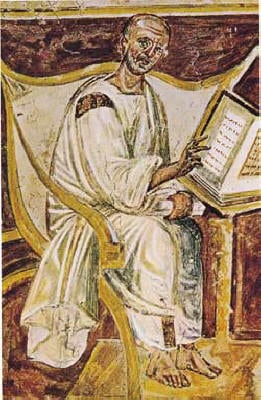
El retrato más antiguo de Agustín (fresco de Letrán, s. VI) · Public domain
In eigenen Worten
«You have made us for yourself, and our heart is restless until it rests in you.»Confesiones I,1,1

Der zentrale Gedanke
Inwardness (redi in te ipsum): The Augustinian road to truth runs through the interior: 'do not go outside, return into yourself; truth dwells in the inner man' (De vera religione 39.72).
Im Zusammenhang sehen
Biografie
5 Min. Lesezeit
Unterstützte Übersetzung aus dem spanischen Original, Durchsicht durch einen muttersprachlichen Übersetzer ausstehend.
Ein Afrikaner aus Thagaste
Aurelius Augustinus wurde am 13. November 354 in Thagaste geboren, einem Municipium der römischen Provinz Numidien, dem heutigen Souk Ahras in Algerien. Sein Vater Patricius gehörte dem örtlichen Stadtrat an, ohne wohlhabend zu sein, und blieb bis kurz vor seinem Tod Heide; seine Mutter Monika, eine Christin von glühendem Glauben, beherrscht mit ihrer Gestalt die Bekenntnisse. Die Familie brachte Opfer, damit der begabte Sohn in Madaura Grammatik und in Karthago Rhetorik studieren konnte, unterstützt von Romanianus, einem reichen Mitbürger. Fast alles, was wir über diese Jahre wissen, stammt von Augustinus selbst, der sie zwei Jahrzehnte später in bekennender und theologischer Absicht erzählte – ein Grund, sie mit Vorsicht zu lesen.
In Karthago ging er um 371 eine feste Verbindung mit einer Frau ein, deren Namen er nie niederschrieb; aus ihr ging um 372 sein Sohn Adeodatus hervor. Mit neunzehn Jahren entzündete die Lektüre von Ciceros heute verlorenem Hortensius in ihm die Liebe zur Weisheit; die lateinische Bibel hingegen erschien ihm ungeschliffen. Neun Jahre lang war er Hörer der Manichäer, einer dualistischen Religion, die eine vernünftige Erklärung des Bösen versprach, ohne Glauben zu verlangen.
Karthago, Rom, Mailand
Er lehrte Rhetorik in Thagaste und in Karthago, wo er sein erstes Buch schrieb, De pulchro et apto, das schon zu seinen Lebzeiten verloren war. Die Enttäuschung über Faustus von Mileve, den manichäischen Bischof, der seine Fragen nicht zu beantworten vermochte, kühlte seine Anhänglichkeit ab. 383 ging er nach Rom, und 384 erhielt er mit Unterstützung des Stadtpräfekten Symmachus den öffentlichen Lehrstuhl für Rhetorik in Mailand, damals Residenz des kaiserlichen Hofes.
In Mailand hörte er Bischof Ambrosius, dessen allegorische Exegese ihm zeigte, dass sich das Alte Testament jenseits der manichäischen Einwände lesen ließ, und er las in der Übersetzung des Marius Victorinus die „Bücher der Platoniker“: Schriften Plotins und wahrscheinlich des Porphyrios. Diese Lektüre gab ihm, was er seit Jahren gesucht hatte: die Vorstellung einer geistigen, unveränderlichen Wirklichkeit und die Auffassung des Bösen als Mangel an Gutem, nicht als Substanz. Seine Mutter, die ihm gefolgt war, bahnte eine standesgemäße Heirat an, und die Gefährtin von fünfzehn Jahren wurde nach Afrika zurückgeschickt; Augustinus schildert das als eine Wunde, die sich nie schloss.
Die Bekehrung und Cassiciacum
Im August 386 hörte er nach seinem eigenen Bericht in einem Mailänder Garten eine Kinderstimme, die „Nimm und lies“ wiederholte; er schlug die Briefe des Paulus auf und las Römer 13,13–14. Pierre Courcelle hat gezeigt, dass die Szene bewusst literarisch gestaltet ist; dass es eine entscheidende Krise und einen Verzicht auf Laufbahn und Ehe gab, bestreitet niemand. Augustinus zog sich mit seiner Mutter, seinem Sohn, seinem Bruder Navigius und einigen Schülern auf das Landgut Cassiciacum in der Brianza nördlich von Mailand zurück. Dort schrieb er philosophische Dialoge – Gegen die Akademiker, Über das glückliche Leben, Über die Ordnung, die Selbstgespräche –, die einen christlichen Neuplatoniker zeigen, der der Kraft der Vernunft noch sehr vertraut.
Ambrosius taufte ihn zusammen mit Adeodatus und seinem Freund Alypius in der Osternacht 387. Auf der Rückreise nach Afrika starb Monika in Ostia, wenige Tage nach einem Gespräch mit ihrem Sohn an einem Fenster, das die Bekenntnisse zu einer der erhabensten Seiten der abendländischen Mystik machen.
Hippo
Nach seiner Rückkehr nach Thagaste 388 gründete er mit seinen Freunden eine asketische Lebensgemeinschaft. Adeodatus starb kurz darauf. Als er 391 durch Hippo Regius kam, einen regen Hafen an der numidischen Küste, hielten ihn die Gläubigen fest, und der greise Bischof Valerius weihte ihn beinahe gegen seinen Willen zum Priester. 395 oder 396 wurde er zum Koadjutorbischof geweiht und folgte Valerius bald darauf nach. Vierunddreißig Jahre lang war er Hirte einer mittelgroßen Stadt: Er predigte mehrmals in der Woche, entschied Rechtsstreitigkeiten im bischöflichen Schiedsgericht, verwaltete das Kirchengut, kaufte Sklaven frei und reiste zu den Konzilien von Karthago. Um 397 begann er die Bekenntnisse, in denen ein frisch geweihter Bischof vor Gott und vor seinen Lesern darlegt, was er gewesen war und was er nun war.
Drei Kontroversen
Sein Werk ist zu einem guten Teil Streitschrift. Gegen die Manichäer, die er von innen kannte, verteidigte er die Güte der Schöpfung und die Willensfreiheit. Gegen die Donatisten – die Mehrheitskirche weiter Teile Afrikas, die sich für die Kirche der reinen Märtyrer hielt – vertrat er, dass die Gültigkeit der Sakramente nicht von der Heiligkeit des Spenders abhängt, und nach dem Religionsgespräch von Karthago 411 billigte er mit Argumenten, über die die Nachwelt gestritten hat, dass die kaiserliche Gewalt die Abweichler zwang. Gegen Pelagius und später gegen Julian von Eclanum verfocht er, dass der Mensch, durch die Erbsünde verwundet, ohne die Gnade das Gute nicht wollen kann, und trieb diese These bis zu einer Prädestinationslehre, die schon zu seinen Lebzeiten die Mönche von Hadrumetum und der Provence beunruhigte.
Der Gottesstaat und die Trinität
Die Plünderung Roms durch die Goten Alarichs im Jahr 410 erschütterte das Reich und belebte den heidnischen Vorwurf neu, die Abkehr von den Göttern habe den Untergang herbeigeführt. Augustinus antwortete zwischen 413 und 426 mit den zweiundzwanzig Büchern Vom Gottesstaat: einer Kritik der römischen Religion und Geschichte und einer Theologie der Geschichte als Nebeneinander zweier Bürgerschaften, die auf zwei Arten der Liebe gegründet sind. Zugleich schrieb er die fünfzehn Bücher Über die Dreieinigkeit, in denen er im menschlichen Geist – Gedächtnis, Einsicht und Wille – ein Abbild des dreieinigen Gottes sucht, sowie die zwölf Bücher des Wortkommentars zur Genesis.
Das eigene Werk prüfen
Um 426/427, mit zweiundsiebzig Jahren, bestimmte er den Priester Eraclius zu seinem Nachfolger und nahm eine beispiellose Aufgabe in Angriff: seine Bücher in chronologischer Folge wiederzulesen und zu berichtigen. Die Retractationes mustern dreiundneunzig Werke in zweihundertzweiunddreißig Büchern; Briefe und Predigten blieben ausgespart. Possidius von Calama, sein Schüler und erster Biograph, fügte der Vita einen Indiculum bei, der auch die in der Bibliothek von Hippo erhaltenen Traktate, Briefe und Predigten verzeichnet. Kein antiker Autor hat uns ein so vollständiges Verzeichnis seiner selbst hinterlassen.
Die Belagerung
429 setzten die Vandalen unter Geiserich von Hispanien nach Afrika über, und im Frühjahr 430 schlossen sie Hippo ein. Im dritten Monat der Belagerung erkrankte Augustinus an Fieber. Nach Possidius ließ er die Bußpsalmen abschreiben, sie an der Wand gegenüber seinem Lager anbringen und las sie unter Tränen; zehn Tage vor seinem Tod bat er, niemand möge eintreten außer den Ärzten und dem, der ihm das Essen brachte. Er starb am 28. August 430. Ein Testament machte er nicht, denn als Armer Gottes besaß er nichts; er bat jedoch, die Bibliothek der Kirche und alle seine Handschriften sorgsam zu bewahren.
Das Erbe
Wenige Autoren haben eine Kultur so tief geprägt. Die lateinische Theologie des Mittelalters, die protestantische Reformation und der Jansenismus erkannten sich als augustinisch; die Leser Descartes’ sahen im „Wenn ich mich täusche, bin ich“ einen Vorläufer des Cogito; Petrarca bestieg den Mont Ventoux mit den Bekenntnissen in der Tasche; Wittgenstein eröffnete die Philosophischen Untersuchungen mit einer Stelle aus ihnen, und Hannah Arendt widmete ihm ihre Dissertation. Seine Regel bestimmt bis heute das Leben von Ordensgemeinschaften. Dass er auch der Theoretiker des religiösen Zwangs und einer düsteren Anthropologie der Sexualität war, gehört zum selben Erbe – und erklärt, warum er ein Gesprächspartner bleibt und kein Denkmal.
Quellen: Brown, Peter. Augustine of Hippo: A Biography. Londres: Faber & Faber, 1967; nueva edición con epílogo, Berkeley: University of California Press, 2000. Trad. esp.: Agustín de Hipona. Madrid: Acento, 2001. · Agustín de Hipona. Confessionum libri XIII. Ed. Lucas Verheijen. Corpus Christianorum Series Latina 27. Turnhout: Brepols, 1981. Trad. inglesa de Henry Chadwick, Oxford: Oxford University Press, 1991. · Posidio de Calama. Vita Augustini y Operum S. Augustini elenchus (Indiculum). Ed. A. Wilmart, «Operum S. Augustini Elenchus a Possidio eiusdem discipulo Calamensi episcopo digestus», en Miscellanea Agostiniana II. Roma: Tipografia Poliglotta Vaticana, 1931, pp. 149–233; Vita ed. A. A. R. Bastiaensen, Vita di Cipriano, Vita di Ambrogio, Vita di Agostino. Milán: Fondazione Lorenzo Valla / Mondadori, 1975. · Agustín de Hipona. Retractationum libri II. Ed. Almut Mutzenbecher. Corpus Christianorum Series Latina 57. Turnhout: Brepols, 1984. · Fitzgerald, Allan D. (dir.). Augustine through the Ages: An Encyclopedia. Grand Rapids: William B. Eerdmans, 1999 (trad. esp.: Diccionario de San Agustín. Burgos: Monte Carmelo, 2001).
Zeitleiste
Das Leben, Jahr für Jahr
Jeder Punkt ist ein belegtes Ereignis. Klicken Sie, um es mit Quelle und Grad der Gewissheit zu lesen.
13. November 3540 JahreTagaste (Numidia)
Birth
Aurelius Augustinus is born, son of Patricius, a member of the local curia, and of Monica, a Christian. He gives the date himself in De beata vita 1.6.
BelegtPosidio de Calama. Vita Augustini y Operum S. Augustini elenchus (Indiculum). Ed. A. Wilmart, «Operum S. Augustini Elenchus a Possidio eiusdem discipulo Calamensi episcopo digestus», en Miscellanea Agostiniana II. Roma: Tipografia Poliglotta Vaticana, 1931, pp. 149–233; Vita ed. A. A. R. Bastiaensen, Vita di Cipriano, Vita di Ambrogio, Vita di Agostino. Milán: Fondazione Lorenzo Valla / Mondadori, 1975.
Nach dem Tod
- 1298Doctor of the Church
- 1981The Divjak letters
- um 1990 – 1996The Dolbeau sermons
13. November 354 · 0 Jahre
Birth
Aurelius Augustinus is born, son of Patricius, a member of the local curia, and of Monica, a Christian. He gives the date himself in De beata vita 1.6.
Belegt
um 370 – 371 · 16 Jahre
Studies of rhetoric at Carthage
After an idle year at Thagaste, he goes to Carthage with Romanianus's support. There he begins his union with the mother of his son.
Belegt
um 372 · 18 Jahre
Adeodatus is born
His only son, Adeodatus, is born of a companion whose name Augustine never wrote.
Wahrscheinlich
um 373 · 19 Jahre
The Hortensius and the Manichaeans
Reading Cicero's Hortensius awakens his philosophical vocation; soon after he becomes a Manichaean hearer, which he will remain for nine years (Conf. 3.4.7; 4.1.1).
Belegt
383 · 29 Jahre
Faustus of Milevis and the journey to Rome
His conversation with the Manichaean bishop Faustus disappoints him. He sails for Rome without his mother's knowledge.
Belegt
384 · 30 Jahre
Chair of rhetoric at Milan
On the recommendation of the prefect Symmachus he obtains the official chair of rhetoric at Milan. He hears Ambrose preach.
Belegt
386 · 31 Jahre
The books of the Platonists
He reads Neoplatonic treatises (Plotinus, probably Porphyry) in Marius Victorinus's translation, which transform his idea of God and of evil (Conf. 7.9.13).
Belegt
August 386 · 31 Jahre
The garden scene: 'take up and read'
Conversion crisis narrated in Confessions 8.12.29. He gives up his chair and the planned marriage.
Belegt
um 386 – 387 · 32 Jahre
Retreat at Cassiciacum
Philosophical retreat with his mother, son and pupils; he writes Contra Academicos, De beata vita, De ordine and the Soliloquia.
Belegt
April 387 · 32 Jahre
Baptised by Ambrose
He is baptised at the Easter vigil, together with Adeodatus and Alypius.
Belegt
387 · 33 Jahre
The vision at Ostia and Monica's death
Contemplative conversation with his mother at a window (Conf. 9.10) and Monica's death a few days later.
Belegt
388 · 34 Jahre
Community at Thagaste
After a stay in Rome he returns to Africa and organises with his friends an ascetic common life in his family home.
Belegt
391 · 37 Jahre
Ordained priest
The faithful of Hippo present him to Bishop Valerius, who ordains him priest against his will (Possidius, Life 4).
Belegt
um 395 – 396 · 41 Jahre
Bishop of Hippo
Consecrated coadjutor bishop to Valerius, whom he soon succeeds.
Belegt
um 397 – 401 · 43 Jahre
The Confessions
Writing of the thirteen books of the Confessions (date debated between 397 and 401).
Wahrscheinlich
Juni 411 · 56 Jahre
Conference of Carthage against the Donatists
Great debate between Catholic and Donatist bishops presided over by the tribune Marcellinus; Augustine is the main Catholic spokesman and summarises its acts in the Breviculus collationis.
Belegt
um 413 – 426 · 59 Jahre
The City of God
After the sack of Rome in 410 he begins the twenty-two books of The City of God, completed around 426.
Belegt
Mai 418 · 63 Jahre
Condemnation of Pelagius
The general council of Carthage condemns Pelagian theses, which Augustine had been refuting since 411–412.
Belegt
26. September 426 · 71 Jahre
Names his successor and begins the Retractationes
Before the people he designates the priest Eraclius as successor (Letter 213) and devotes himself to revising his works: the Retractationes record ninety-three works in two hundred and thirty-two books.
Belegt
28. August 430 · 75 Jahre
Death during the Vandal siege
He dies in the third month of the Vandal siege of Hippo, according to Possidius's testimony (Life 28–31).
Belegt
1298
Doctor of the Church
Boniface VIII recognises Ambrose, Jerome, Augustine and Gregory the Great as Doctors of the Church.
Belegt
1981
The Divjak letters
Johannes Divjak publishes in CSEL 88 twenty-nine unknown letters found in manuscripts at Marseille and Paris.
Belegt
um 1990 – 1996
The Dolbeau sermons
François Dolbeau identifies in a codex of the Mainz city library twenty-six sermons unknown or complete for the first time, edited between 1991 and 1996.
Belegt
Werke
Grundlegende Werke
Die Werke, ohne die sich das Vermächtnis nicht verstehen lässt.
Schriftliches Werk · um 397
Confessions
Confessionum libri XIII
Thirteen books addressed to God in the second person. The first nine narrate Augustine's life from infancy to his conversion in 386, his baptism and Monica's death at Ostia: the theft of the pears, the death of his friend, Manichaeism, Ambrose, the books of the Platonists, the garden in Milan. Book X examines memory and the temptations of the bishop who is writing; book XI is a meditation on time as the distension of the soul; books XII and XIII interpret the first chapter of Genesis. Confessio means both acknowledgement of guilt and praise; the unity of the book, much debated by critics, lies in that double confession. It is the first great introspective autobiography of the West and one of the most read books of late antiquity.
11 Ausgaben · amazon.de

Schriftliches Werk · um 413
The City of God
De civitate Dei contra paganos libri XXII
A monumental answer, in twenty-two books written between 413 and 426, to the pagans who blamed Christianity for the sack of Rome in 410. The first ten books dismantle Roman civic religion, Varro's theology and the Platonists' cult of demons; the remaining twelve narrate the origin, course and ends of two cities (the earthly, founded on love of self to the contempt of God, and the heavenly, founded on love of God to the contempt of self) which are intermingled in history until the judgement. Book XIX, on peace and order, founded medieval Christian political theory. It is the West's first great philosophy of history.
5 Ausgaben · amazon.com

Schriftliches Werk · um 400
On the Trinity
De Trinitate libri XV
Fifteen books composed over some twenty years (c. 399–c. 420), published after an unfinished copy had circulated without permission. The first seven expound Trinitarian doctrine from Scripture and discuss the missions of the Son and the Spirit and the language of relations; the last eight seek in the human being, God's image, analogies of the Trinity: lover, beloved and love; mind, knowledge and love; and above all memory, understanding and will. The work is at once a dogmatic treatise and an exercise in inward ascent, and its so-called psychological analogy dominated Latin Trinitarian theology up to Thomas Aquinas and beyond.
4 Ausgaben · amazon.com

Schriftliches Werk · um 396
On Christian Teaching
De doctrina christiana libri IV
A manual for interpreting and preaching Scripture. Begun around 396–397 and left off at book III, 25.35, it was completed by Augustine in 426–427 while writing the Retractationes. Book I distinguishes between things to be enjoyed (frui) and things to be used (uti) and makes charity the key to all reading; books II and III set out a theory of signs and rules for resolving ambiguities, with the appropriation of pagan learning as 'the gold of Egypt'; book IV adapts Ciceronian rhetoric to Christian preaching. It was the programme of Christian school culture throughout the Middle Ages.
2 Ausgaben · amazon.com

Schriftliches Werk · um 421
Enchiridion on Faith, Hope and Charity
Enchiridion ad Laurentium de fide et spe et caritate
A short compendium of the Christian faith written around 421–422 at the request of one Laurentius, who wanted a handbook. Organised according to the three theological virtues, it comments on the Creed (faith), the Lord's Prayer (hope) and charity as the end of the commandment. It summarises concisely Augustine's mature positions on creation, evil as privation, original sin, grace, predestination, purgation and resurrection, and was for centuries the most read synthesis of his theology.
0 Ausgaben · amazon.com

Spätere Zusammenstellung · um 392
Expositions of the Psalms
Enarrationes in Psalmos
The largest of his biblical commentaries: expositions of the hundred and fifty psalms composed between c. 392 and c. 422, some dictated and others preached before the people and taken down by stenographers, including thirty-two sermons on Psalm 118. Augustine reads the psalms as the voice of the whole Christ, head and body, singing and groaning in the pilgrim Church. It is the work in which the preacher is best heard and his spirituality of desire and praise is expressed most freely. The title Enarrationes is Erasmus's.
1 Ausgabe · amazon.es

Spätere Zusammenstellung · um 406
Tractates on the Gospel of John
In Iohannis evangelium tractatus CXXIV
One hundred and twenty-four homilies on the fourth Gospel, the first preached at Hippo around 406–407 and the later ones dictated for reading at subsequent dates, perhaps until 419–420. They combine verse-by-verse exegesis with anti-Donatist and anti-Arian polemic and with a theology of the Word and of inwardness that has shaped the Latin reading of John. They contain famous formulas on the sacrament as 'visible word' and on the Church as Christ's body.
0 Ausgaben · amazon.com

Briefwechsel · um 386
Letters
Epistulae
A corpus of about three hundred surviving letters (the Maurist series numbers 270, including letters from his correspondents), to which were added in 1981 the twenty-nine letters discovered by Johannes Divjak. Written between 386 and 430, they include the correspondence with Jerome on biblical translation and the useful lie, with Paulinus of Nola, with imperial officials such as Marcellinus, Macedonius or Boniface, letter-treatises such as Letter 147 on seeing God or 187 on God's presence, and pastoral matters: slaves sold by traffickers, unruly bishops, widows and virgins. They are the most direct source for the bishop's daily life.
1 Ausgabe · amazon.es

Spätere Zusammenstellung · um 391
Sermons
Sermones ad populum
About five hundred authentic sermons preached between 391 and 430 at Hippo, Carthage and other African cities and taken down by stenographers (Possidius reckons he preached several thousand). The Maurist series (1683) numbers 396, to which have been added the finds of Morin, Lambot, Étaix, the twenty-six Dolbeau sermons from Mainz (1990) and the six from Erfurt (2008). Arranged by tradition into sermons on the Old and New Testaments, for the liturgical seasons, on saints and on various topics, they show the oral Augustine: dialogical, playful with words and attentive to his audience's reactions.
1 Ausgabe · amazon.es
Das gesamte Werk (139)

Homilies on the First Epistle of John
407
Augustine of Hippo
Retractations
The Conscious LibraryRetractations
426
Augustine of Hippo
On the Beautiful and the Fitting
The Conscious LibraryOn the Beautiful and the Fitting
380

Against the Academics
386
On the Happy Life
386

On Order
386
Augustine of Hippo
Soliloquies
The Conscious LibrarySoliloquies
387

On the Immortality of the Soul
387
Augustine of Hippo
On Grammar
The Conscious LibraryOn Grammar
387

On Dialectic
387
Augustine of Hippo
On Music
The Conscious LibraryOn Music
388
Augustine of Hippo
On the Morals of the Catholic Church and of the Manichaeans
The Conscious LibraryOn the Morals of the Catholic Church and of the Manichaeans
388
Augustine of Hippo
On the Greatness of the Soul
The Conscious LibraryOn the Greatness of the Soul
388

On Free Choice of the Will
388
Augustine of Hippo
On Genesis against the Manichaeans
The Conscious LibraryOn Genesis against the Manichaeans
388
Augustine of Hippo
On the Teacher
The Conscious LibraryOn the Teacher
389

On True Religion
390
On the Advantage of Believing
391
Augustine of Hippo
On the Two Souls
The Conscious LibraryOn the Two Souls
391
Augustine of Hippo
Debate with Fortunatus the Manichaean
The Conscious LibraryDebate with Fortunatus the Manichaean
392

On Faith and the Creed
393
Augustine of Hippo
Unfinished Literal Commentary on Genesis
The Conscious LibraryUnfinished Literal Commentary on Genesis
393

On the Lord's Sermon on the Mount
394
Augustine of Hippo
Psalm against the Party of Donatus
The Conscious LibraryPsalm against the Party of Donatus
393
Zitate
Zitate, die in einem bestimmten Werk nachgewiesen sind. Jedes trägt seine Herkunft und seinen Grad an Verlässlichkeit.
You have made us for yourself, and our heart is restless until it rests in you.Fecisti nos ad te et inquietum est cor nostrum, donec requiescat in te.
GeprüftConfesiones I,1,1
Apokryphe Zitate oder Zitate umstrittener Zuschreibung (3)
«In essentials, unity; in doubtful things, liberty; in all things, charity.»
It appears in no work of Augustine. The formula 'in necessariis unitas, in non necessariis libertas, in utrisque caritas' comes from the irenic treatise Paraenesis votiva pro pace ecclesiae (1626) by the Lutheran theologian Peter Meiderlin (Rupertus Meldenius), and has been attributed to Augustine since the nineteenth century.
«He who sings prays twice.»
The proverbial form ('qui cantat, bis orat') is not found in his works. It is usually linked to Enarrationes in Psalmos 72.1, where Augustine says that whoever sings praise not only praises but praises joyfully, and to his reflection on singing in Confessions X.33.49–50; the abbreviated formula is later.
«The world is a book, and those who do not travel read only one page.»
A modern attribution with no basis in the Augustinian corpus or the manuscript tradition; it circulates in quotation anthologies and travel advertising without reference to any work.
Letzte Worte
Es gibt keine überprüfbaren Aufzeichnungen der letzten Worte.
No last words survive. Possidius of Calama, witness of his last illness during the Vandal siege of Hippo, relates that Augustine had the four penitential psalms 'of David' copied, had them fixed to the wall facing his bed and read them weeping; that during the ten days before his death he asked not to be visited except by the doctors and whoever brought his food, so as to devote himself to prayer; and that he died on 28 August 430 with his limbs sound and his sight and hearing intact, in the presence of his own, who were praying (Life 31). He transmits no final sentence.
Quelle: Posidio de Calama. Vita Augustini y Operum S. Augustini elenchus (Indiculum). Ed. A. Wilmart, «Operum S. Augustini Elenchus a Possidio eiusdem discipulo Calamensi episcopo digestus», en Miscellanea Agostiniana II. Roma: Tipografia Poliglotta Vaticana, 1931, pp. 149–233; Vita ed. A. A. R. Bastiaensen, Vita di Cipriano, Vita di Ambrogio, Vita di Agostino. Milán: Fondazione Lorenzo Valla / Mondadori, 1975.
Fragen
Was das Werk beantwortet
Zwölf große Fragen der Menschheit und was sich aus den Texten darauf antworten lässt, mit Belegen. Wir legen niemandem Worte in den Mund.
Was ist das Absolute? Gibt es Gott?
God is immutable, triune Being, more inward than one's inmost self
Ein persönlicher GottAusdrücklich gesagt
Augustine reaches God by a double path: that of Platonist philosophy, which teaches him to think of God as immutable, incorporeal being and eternal truth (Confessions VII), and that of Scripture, which reveals him as creator, Father and Trinity. This Being is also someone: the Confessions are written entirely in the second person and open by declaring that the heart is restless until it rests in him. God is more inward than the soul's inmost part and higher than its highest. In On the Trinity he seeks in the human mind —memory, understanding and will— an image of the three Persons. And he warns that a God who is comprehended is no longer God: the Absolute is personal, yet exceeds every concept.
Diese Frage mit anderen Meistern vergleichenWer bin ich? Gibt es ein wahres Selbst?
I am a riddle to myself; I know myself by turning inward
Eine geschaffene, unsterbliche SeeleAusdrücklich gesagt
Augustine made the self a philosophical problem: in the Confessions he says he had become a great question to himself. His answer is the soul: a spiritual substance, created, distinct from the body and destined for immortality, to which he devoted early works such as On the Immortality of the Soul. Against the sceptics he formulates a certainty prior to Descartes: if I am mistaken, I exist. In On the Trinity he analyses the mind that remembers, understands and loves itself, an image of the three Persons. But the self is not self-sufficient: the God it seeks is more inward than its inmost part. To know oneself is to discover a creature made for God and restless without him.
Diese Frage mit anderen Meistern vergleichenWarum leiden wir?
Evil is privation of good; we suffer from disordered love
Die Trennung von GottAusdrücklich gesagt
Augustine spent nine years among the Manichaeans, who explained evil as a substance opposed to good. His mature answer, in the Confessions and On the Nature of the Good, is that everything that exists is good and that evil is not a thing, but a privation of good. Moral evil arises from the will that turns away from the immutable Good toward lesser goods: it is disordered love. Human suffering —mortality, ignorance, concupiscence— is for him a consequence of original sin, which humanity inherits from Adam. But the restless heart is also a sign of its origin: it suffers because it is made for God.
Diese Frage mit anderen Meistern vergleichenWas geschieht nach dem Tod?
The end without end: we shall see, love and praise
Ewiges Leben und AuferstehungAusdrücklich gesagt
Augustine awaits the resurrection of the flesh and eternal life. The City of God ends, in its book XXII, by describing that rest: there we shall rest and see, see and love, love and praise, in the end that has no end. He upholds the resurrection of bodies against the Platonists who despised the flesh, and also the eternal damnation of those not saved, which he defends harshly in book XXI. Book IX of the Confessions recounts the vision shared with his mother at Ostia, days before her death, as a foretaste of that life. On the Care of the Dead justifies prayer for the departed.
Diese Frage mit anderen Meistern vergleichenWie erlangt man Befreiung oder Erlösung?
Give what you command and command what you will
Durch Gnade und LiebeAusdrücklich gesagt
Augustine is the doctor of grace. His own conversion, narrated in book VIII of the Confessions, shows a divided will that cannot wholly will what it wills until a reading of Paul in the garden at Milan sets it free. Hence the prayer of book X: give what you command and command what you will, which scandalised Pelagius. In the Pelagian controversy he maintains that, after original sin, the human will cannot do the saving good without the grace of Christ, which precedes it, heals it and sustains it to the end; in his last works he speaks of predestination and of the gift of perseverance. The human being cooperates, but because he has first been moved.
Diese Frage mit anderen Meistern vergleichenBraucht es einen Lehrer?
The only Teacher is Christ, who teaches in the inner man
Der Lehrer ist innenAusdrücklich gesagt
In On the Teacher, a dialogue with his son Adeodatus, Augustine reaches a radical conclusion: human words teach nothing by themselves; at most they prompt and refer. The one who truly teaches is the Truth that dwells in the inner man, Christ, whom each person consults within. Hence, in On True Religion, the watchword is not to go outside, but to return to oneself, for truth dwells in the inner man. Yet Augustine is no individualist: he himself was a teacher and bishop, and upheld the Church's authority, to the point of writing that he would not believe the Gospel unless the authority of the Catholic Church moved him to do so.
Diese Frage mit anderen Meistern vergleichenIst die Welt wirklich?
Everything that exists is good, because God made it from nothing
Eine gute und wirkliche SchöpfungAusdrücklich gesagt
Against the Manichaeans, who saw matter as the work of an evil principle, Augustine defends the goodness of all creation: in the Confessions he concludes that all things that exist are good, and On the Nature of the Good develops the view that every nature, as nature, is good. God created the world from nothing, not from his own substance: hence the world is real, distinct from God and changeable. Augustine also meditates on time, created with the world, in book XI of the Confessions. Creatures, when questioned, answer that they are not God, but that he made them; their beauty is a voice pointing to their author.
Diese Frage mit anderen Meistern vergleichenWas ist Liebe?
My weight is my love: it carries me wherever I go
Sehnsucht und VereinigungAusdrücklich gesagt
Augustine thinks of love as a force that moves the soul toward its place, as weight moves bodies: my weight is my love, he writes in the Confessions. Every human being loves; the question is what one loves and in what order. Charity is ordered love, which loves God for his own sake and everything else in God; cupidity is love that stops at creatures. Hence two loves found two cities: love of self to the contempt of God and love of God to the contempt of self. And hence too his boldest formula: love and do what you will, because from the root of love nothing but good can come.
Diese Frage mit anderen Meistern vergleichenSind wir frei, oder ist alles vorherbestimmt?
The will is free, but only grace frees it for the good
Echter freier WilleAusdrücklich gesagt
Augustine wrote On Free Choice of the Will against the Manichaeans, to show that evil comes from free will and not from an evil substance: God gave the human being free will as a good, and sin is its misuse. Years later, in the controversy with Pelagius, he stressed that after the fall that will, though it still chooses, cannot effectively will the saving good without grace, which sets it free. In On Grace and Free Will he holds that both exist and do not cancel each other out. In his last works he radicalises the doctrine of predestination. Freedom is real, but full freedom is that of one who can no longer sin.
Diese Frage mit anderen Meistern vergleichenWozu meditieren oder beten?
Return to yourself, and then transcend yourself
Zur Quelle des Ich zurückkehrenAusdrücklich gesagt
Augustine describes the path to God as a movement inward. In On True Religion he puts it thus: do not go outside, return to yourself, truth dwells in the inner man; and if you find your nature changeable, transcend yourself as well. Book X of the Confessions roams the «vast palaces of memory» looking for where God is, and discovers that he was within while Augustine sought him outside. Prayer, moreover, is desire: in the Expositions of the Psalms he writes that desire itself is prayer, and that if desire is continuous, prayer is continuous. In the letter to Proba he teaches above all to ask for the happy life.
Diese Frage mit anderen Meistern vergleichenKann die Vernunft das Letzte erkennen?
Believe in order to understand, understand in order to believe
Glaube und Vernunft helfen einanderAusdrücklich gesagt
Augustine came to faith after passing through academic scepticism and Neoplatonism, and never stopped thinking. His formula, in sermon 43, unites the two movements: understand in order to believe, my word; believe in order to understand, the word of God. Reason prepares faith, showing that it is reasonable to believe; faith, in turn, purifies the mind and enables it to understand what it previously only accepted. Against the Academics he refutes the claim that nothing can be known with certainty. But Augustine also knows there is a limit: if you comprehend it, it is not God. On the Trinity ends by acknowledging that he has said much without reaching what he seeks.
Diese Frage mit anderen Meistern vergleichenSich von der Welt zurückziehen oder sie verwandeln?
Never so idle as to neglect others, nor so busy as to forget God
Kontemplation im HandelnAusdrücklich gesagt
Augustine dreamed of a retired life of study and prayer —he lived it at Cassiciacum and Thagaste— but was ordained priest against his will and spent more than thirty years as bishop of Hippo, preaching, judging lawsuits and engaging in controversy. In book XIX of the City of God he formulates the balance: no one should be so idle that in his leisure he does not think of his neighbour's benefit, nor so busy that he does not seek the contemplation of God; love of truth seeks holy leisure, and the necessity of charity accepts righteous work. The city of God coexists with the earthly city and makes use of its peace, though it is a pilgrim toward another homeland.
Diese Frage mit anderen Meistern vergleichen
Affinitäten und Spannungen
Affinitäten und Spannungen
Frage für Frage aus den Positionen berechnet. Den Grund jeder Übereinstimmung und jedes Widerspruchs zeigt ein Klick.
Denkt ähnlich wie

Teresa of Ávila
Übereinstimmung bei: Was ist das Absolute? Gibt es Gott? · Wer bin ich? Gibt es ein wahres Selbst? · Warum leiden wir?

Francis of Assisi
Übereinstimmung bei: Was ist das Absolute? Gibt es Gott? · Wer bin ich? Gibt es ein wahres Selbst? · Warum leiden wir?
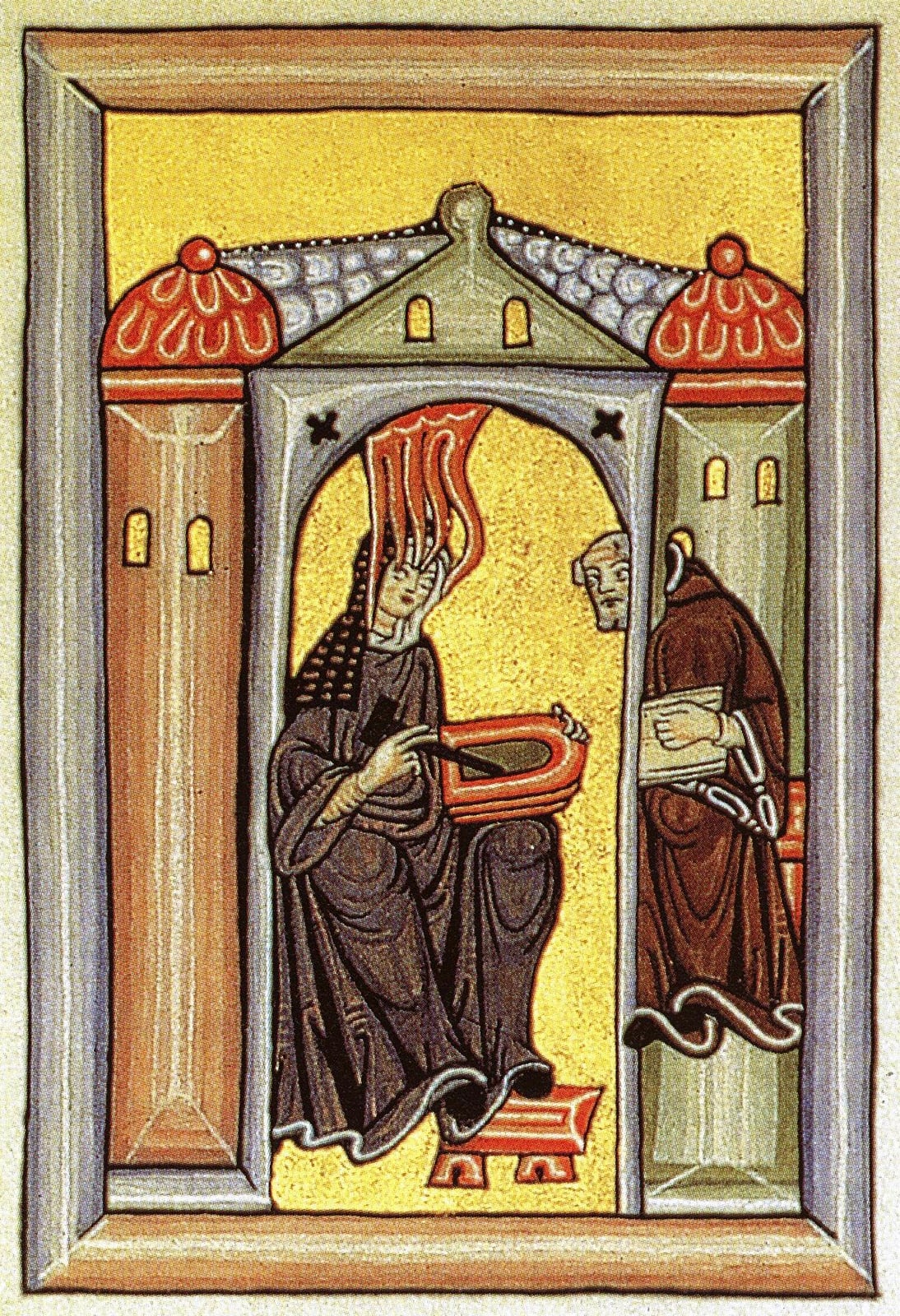
Hildegard of Bingen
Übereinstimmung bei: Was ist das Absolute? Gibt es Gott? · Wer bin ich? Gibt es ein wahres Selbst? · Was geschieht nach dem Tod?
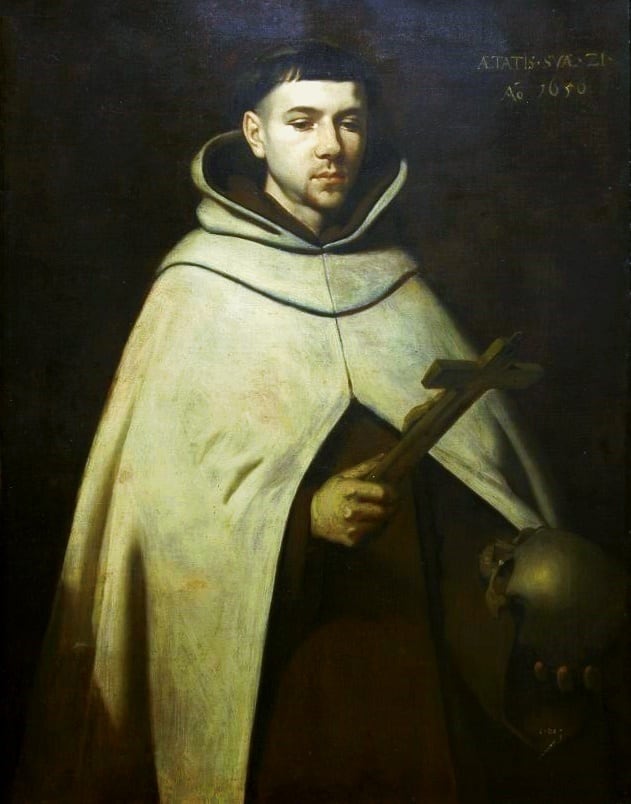
John of the Cross
Übereinstimmung bei: Was ist das Absolute? Gibt es Gott? · Wer bin ich? Gibt es ein wahres Selbst? · Warum leiden wir?
Denkt anders als

Patañjali
Widerspruch bei: Was ist das Absolute? Gibt es Gott? · Wer bin ich? Gibt es ein wahres Selbst? · Was geschieht nach dem Tod?

Pema Chödrön
Widerspruch bei: Was ist das Absolute? Gibt es Gott? · Wer bin ich? Gibt es ein wahres Selbst? · Was geschieht nach dem Tod?

Nāgārjuna
Widerspruch bei: Was ist das Absolute? Gibt es Gott? · Wer bin ich? Gibt es ein wahres Selbst? · Was geschieht nach dem Tod?

Dōgen
Widerspruch bei: Was ist das Absolute? Gibt es Gott? · Wer bin ich? Gibt es ein wahres Selbst? · Was geschieht nach dem Tod?
Anekdoten und Erzählungen
Anekdoten und Erzählungen
Belegtc. 370
The stolen pears
Herkunft der Erzählung: Told by Augustine himself in Confessions II.4.9–10.18. It is the only testimony of the event.
Quelle: Agustín de Hipona. Confessionum libri XIII. Ed. Lucas Verheijen. Corpus Christianorum Series Latina 27. Turnhout: Brepols, 1981. Trad. inglesa de Henry Chadwick, Oxford: Oxford University Press, 1991.
Belegt384–386
Ambrose reads in silence
Herkunft der Erzählung: Confessions VI.3.3. The reading of the passage as evidence of the rarity of silent reading has been disputed, among others by B. M. W. Knox (1968).
Quelle: Agustín de Hipona. Confessionum libri XIII. Ed. Lucas Verheijen. Corpus Christianorum Series Latina 27. Turnhout: Brepols, 1981. Trad. inglesa de Henry Chadwick, Oxford: Oxford University Press, 1991.
Zeugnisagosto de 386
'Take up and read'
Herkunft der Erzählung: Autobiographical account in Confessions VIII.8.19–12.30, written about eleven years later. Pierre Courcelle (1950) emphasised its literary construction (Nathanael's fig tree, the model of the Life of Antony); later scholarship accepts the real crisis and debates the degree of stylisation.
Quelle: Agustín de Hipona. Confessionum libri XIII. Ed. Lucas Verheijen. Corpus Christianorum Series Latina 27. Turnhout: Brepols, 1981. Trad. inglesa de Henry Chadwick, Oxford: Oxford University Press, 1991.
Zeugnis387
The window at Ostia
Herkunft der Erzählung: Confessions IX.10.23–11.28. Scholars (Courcelle, O'Donnell) have pointed out its Plotinian vocabulary; the account is the only testimony of the conversation.
Quelle: Agustín de Hipona. Confessionum libri XIII. Ed. Lucas Verheijen. Corpus Christianorum Series Latina 27. Turnhout: Brepols, 1981. Trad. inglesa de Henry Chadwick, Oxford: Oxford University Press, 1991.
Belegt391
Ordained by force
Herkunft der Erzählung: Possidius, Life 4, and Augustine himself in Sermon 355.2 (preached in 425), where he recalls avoiding vacant sees.
Quelle: Posidio de Calama. Vita Augustini y Operum S. Augustini elenchus (Indiculum). Ed. A. Wilmart, «Operum S. Augustini Elenchus a Possidio eiusdem discipulo Calamensi episcopo digestus», en Miscellanea Agostiniana II. Roma: Tipografia Poliglotta Vaticana, 1931, pp. 149–233; Vita ed. A. A. R. Bastiaensen, Vita di Cipriano, Vita di Ambrogio, Vita di Agostino. Milán: Fondazione Lorenzo Valla / Mondadori, 1975.
Nicht überprüfbarsin fecha
The child and the shell
Herkunft der Erzählung: A medieval legend with no basis in the ancient sources. Scholars place it in late medieval preaching and exempla, where the protagonist was not always Augustine; its first written appearance could not be fixed here.
Quelle: Fitzgerald, Allan D. (dir.). Augustine through the Ages: An Encyclopedia. Grand Rapids: William B. Eerdmans, 1999 (trad. esp.: Diccionario de San Agustín. Burgos: Monte Carmelo, 2001).
Zeugnisagosto de 430
The psalms on the wall
Herkunft der Erzählung: Possidius, Life 28–31, the eyewitness account of a disciple who lived through the siege inside Hippo.
Quelle: Posidio de Calama. Vita Augustini y Operum S. Augustini elenchus (Indiculum). Ed. A. Wilmart, «Operum S. Augustini Elenchus a Possidio eiusdem discipulo Calamensi episcopo digestus», en Miscellanea Agostiniana II. Roma: Tipografia Poliglotta Vaticana, 1931, pp. 149–233; Vita ed. A. A. R. Bastiaensen, Vita di Cipriano, Vita di Ambrogio, Vita di Agostino. Milán: Fondazione Lorenzo Valla / Mondadori, 1975.
Lehren
Lehren
Die Begriffe, die das Denken gliedern, in ihrem Zusammenhang erklärt.
Inwardness (redi in te ipsum)interioridad
Christian reception of the Plotinian ascent (Enneads I.6; V.1), filtered through the reading of the 'books of the Platonists' in Milan.
Quelle: Agustín de Hipona. Confessionum libri XIII. Ed. Lucas Verheijen. Corpus Christianorum Series Latina 27. Turnhout: Brepols, 1981. Trad. inglesa de Henry Chadwick, Oxford: Oxford University Press, 1991.
Grace and original singracia-y-pecado-original
The Pelagian controversy (411–430) and the reading of Paul (Romans, Galatians) from 394.
Quelle: Bonner, Gerald. St Augustine of Hippo: Life and Controversies. Londres: SCM Press, 1963; 3.ª ed., Norwich: Canterbury Press, 2002.
The two citiesdos-ciudades
An answer to the crisis of 410 and to the Christian imperial theology of Eusebius of Caesarea and Orosius.
Quelle: Agustín de Hipona. De civitate Dei libri XXII. Ed. Bernhard Dombart y Alfons Kalb. Corpus Christianorum Series Latina 47–48. Turnhout: Brepols, 1955.
Divine illuminationiluminacion
Platonic inheritance (the Form of the Good as sun in the Republic) and an answer to Academic scepticism.
The psychological analogy of the Trinityanalogia-psicologica
Latin Trinitarian theology after Nicaea and Constantinople, in dialogue with Marius Victorinus and Plotinus.
Time as distension of the soultiempo-distensio-animi
An answer to Aristotle's physics of time as the number of motion and to Plotinus (Enneads III.7).
Evil as privation of goodmal-como-privacion
Anti-Manichaean polemic and reception of Plotinus (Enneads I.8).
Quelle: Lancel, Serge. Saint Augustin. París: Fayard, 1999. Trad. inglesa de Antonia Nevill, Saint Augustine. Londres: SCM Press, 2002.
Videos
Videos
Aufnahmen, Gespräche und Dokumentarfilme. Die Videos werden von YouTube wiedergegeben; sie werden nicht hier gespeichert.
05. St. Augustine's Confessions
Vortrag· EN· 2012· 46 min
YaleCoursesOffizieller Kanal
Why Study St Augustine of Hippo with John Milbank
Vortrag· EN· 2016· 11 min
University of NottinghamOffizieller Kanal
Augustine's Confessions and Language
Vortrag· EN· 2017· 40 min
Villanova UniversityOffizieller Kanal
St Augustine Lecture 2012 | 'A Tangle of Two Cities' Dr. James Wetzel
Vortrag· EN· 2012· 94 min
Villanova UniversityOffizieller Kanal
St. Augustine Lecture 2016 | Fr. Allan Fitzgerald, OSA 'Engaging the Gospel of John'
Vortrag· EN· 2016· 70 min
Villanova UniversityOffizieller Kanal
The City of God: The Philosophical Vision of St. Augustine of Hippo with Dr. Chad Pecknold
Vortrag· EN· 2026· 79 min
Institute of Catholic CultureOffizieller Kanal
Christians in Times of Catastrophe: Augustine's 'City of God'
Vortrag· EN· 2020· 99 min
Lumen Christi InstituteOffizieller Kanal
The Confessions (Pusey translation) by Saint AUGUSTINE OF HIPPO Part 1/2 | Full Audio Book
Aufnahme Dritter· EN· 2018· 624 min
LibriVox Audiobooks
Agustín de Hipona | Un Documental por Agustín Remesal | Completo
Dokumentarfilm· ES· 2022· 61 min
Centro de Espiritualidad AgustinosOffizieller Kanal
Conferencia - Conociendo más a San Agustín por Fray Enrique Eguiarte
Vortrag· ES· 2018· 54 min
Recoletos TVOffizieller Kanal
Conferencia 'La Espiritualidad de San Agustín', Fray Enrique Eguiarte
Vortrag· ES· 2017· 65 min
Recoletos TVOffizieller Kanal
7ª.-8ª.- San Agustín de Hipona
Vortrag· ES· 2023· 161 min
Fundación Universitaria EspañolaOffizieller Kanal
La Ciudad de Dios y la Ciudad de los Hombres en San Agustín
Vortrag· ES· 2020· 52 min
Instituto de Ciencias Teológicas
Augustinus | Josef Schmidt
Vortrag· DE· 2016· 10 min
uni auditorium – wissen online
Saint Augustin
Dokumentarfilm· FR· 2012· 52 min
KTO TVOffizieller Kanal
Galerie
Galerie
Bilder mit geprüfter Lizenz. Jedes bewahrt seine Urheberschaft und seinen Herkunftsnachweis.
Handschriften
Handschriften
Handschriftliche Zeugen und alte Texte, mit ihrer verwahrenden Einrichtung und ihren Einsichtsbedingungen.
LA · Semiuncial · 397–401
Confessiones (códice Sessoriano)
- Erhaltener Textzeuge
- Testimonio más antiguo conocido de las Confesiones (s. VI), base de las ediciones críticas modernas
- Verwahrende Einrichtung
- Biblioteca Nazionale Centrale Vittorio Emanuele II, Roma · Sessor. 55
LA · Minúscula · 386–430
Epistulae (cartas Divjak)
- Erhaltener Textzeuge
- Dos manuscritos medievales que transmiten, junto a cartas conocidas, veintinueve cartas inéditas identificadas por Johannes Divjak en 1975
- Verwahrende Einrichtung
- Bibliothèque municipale de Marseille; Bibliothèque nationale de France, París · Marseille, BM 209; Paris, BnF lat. 16861
LA · Minúscula gótica · 391–430
Sermones (códice de Maguncia, sermones Dolbeau)
- Erhaltener Textzeuge
- Códice del s. XV procedente de la cartuja de Maguncia que conserva una colección africana de sermones, entre ellos veintiséis desconocidos o incompletos, identificados por François Dolbeau en 1990
- Verwahrende Einrichtung
- Stadtbibliothek Mainz · I 9
LA · Minúscula · s. V (sermones)
Sermones (códice de Erfurt)
- Erhaltener Textzeuge
- Manuscrito medieval en el que Isabella Schiller, Dorothea Weber y Clemens Weidmann identificaron en 2007–2008 seis sermones desconocidos
- Verwahrende Einrichtung
- Universitätsbibliothek Erfurt
Beziehungen
Beziehungen
Einflüsse, Schülerschaften und Verwandtschaften. Die belegte Beziehung wird von der durch Analyse ermittelten Ähnlichkeit unterschieden.
Beeinflusst von
The 'books of the Platonists' Augustine read in Milan in 386 were, at least in part, treatises of Plotinus in Marius Victorinus's Latin translation (Confessions VII.9.13). He names him in The City of God (IX.10; X.14), and his inward ascent, his theory of evil as privation and his conception of time respond to the Enneads.
Belegte Beziehung
Beeinflusst von
Augustine did not read Greek fluently and knew Plato mainly through Cicero and the Neoplatonists; even so, in The City of God VIII he considers the Platonists the philosophers closest to Christianity and discusses the Timaeus. His theory of ideas as divine thoughts (De diversis quaestionibus 83, q. 46) Christianises Platonic doctrine.
Belegte Beziehung
Beeinflusst von
All Augustine's work is an interpretation of the figure of Christ, whom he calls the 'inner teacher' and the 'way'; his commentaries on the Gospels (the Sermon on the Mount, the Tractates on John, the harmony of the evangelists) form the largest part of his exegesis.
Belegte Beziehung
Beeinflusste
Teresa read the Confessions in the Castilian translation just published, at the time of her conversion in 1554, and relates in the Book of Her Life (9.7–8) that on reaching the garden scene she felt herself addressed: 'it seemed to me the Lord said it to me'.
Belegte Beziehung
Beeinflusste
Augustine is, with Dionysius, the authority Eckhart cites most, taking up his theme of the inner man, God's image in the soul and the Trinity of the mind; the trials of Cologne and Avignon debated precisely whether his readings of Augustine were orthodox.
Belegte Beziehung
Verwandte Gedanken mit
Catherine's Dialogue organises the soul's life according to the Augustinian triad of memory, understanding and will, mediated by Dominican preaching; there is no evidence she read Augustine directly, since she did not know scholarly Latin.
Durch Analyse ermittelte Ähnlichkeit
Verwandte Gedanken mit
Julian reflects on sin, the fall and grace within an Augustinian horizon, but her vision of sin as 'behovely' and of a God who does not blame departs from the late Augustine's rigour. There is no documented reading.
Durch Analyse ermittelte Ähnlichkeit
Verwandte Gedanken mit
Both embody a radical conversion transforming a worldly life, but Francis is a preacher of poverty without theological pretension, and his spirituality of creation contrasts with Augustinian inwardness. No documented relation.
Durch Analyse ermittelte Ähnlichkeit
Verwandte Gedanken mit
Hildegard was formed in monastic theology of Augustinian tradition and, like Augustine, wrote a theology of salvation history; but her visionary and cosmological mode is foreign to Augustinian introspection. No specific documented reading.
Durch Analyse ermittelte Ähnlichkeit
Verwandte Gedanken mit
The Socratic 'know thyself', which Augustine knew through Cicero, reappears transformed in his search for God through self-knowledge.
Durch Analyse ermittelte Ähnlichkeit
Verwandte Gedanken mit
Al-Ghazali's spiritual memoir (The Deliverer from Error) narrates, like the Confessions, a sceptical crisis overcome by illumination and a conversion to the contemplative life. There is no historical relation.
Durch Analyse ermittelte Ähnlichkeit
Von anderen Einträgen aus verknüpft
- Aristotle · Beeinflusste
- Plotinus · Beeinflusste
- Marcus Aurelius · Verwandte Gedanken mit
- Catherine of Siena · Verwandte Gedanken mit
- Epictetus · Beeinflusste
- Julian of Norwich · Verwandte Gedanken mit
- Thomas Merton · Beeinflusst von
- Maimonides · Verwandte Gedanken mit
- Al-Ghazali · Verwandte Gedanken mit
- Plato · Beeinflusste
Quellen
Quellen
Für diesen Eintrag herangezogene Bibliografie und Kataloge.
- Wikidata, Q8018 «Agustín de Hipona / Augustine of Hippo» (P31=Q5; 228 enlaces entre wikis; P569 354-11-13, P570 430-08-28).
- Brown, Peter. Augustine of Hippo: A Biography. Londres: Faber & Faber, 1967; nueva edición con epílogo, Berkeley: University of California Press, 2000. Trad. esp.: Agustín de Hipona. Madrid: Acento, 2001.
- Agustín de Hipona. Confessionum libri XIII. Ed. Lucas Verheijen. Corpus Christianorum Series Latina 27. Turnhout: Brepols, 1981. Trad. inglesa de Henry Chadwick, Oxford: Oxford University Press, 1991.
- Posidio de Calama. Vita Augustini y Operum S. Augustini elenchus (Indiculum). Ed. A. Wilmart, «Operum S. Augustini Elenchus a Possidio eiusdem discipulo Calamensi episcopo digestus», en Miscellanea Agostiniana II. Roma: Tipografia Poliglotta Vaticana, 1931, pp. 149–233; Vita ed. A. A. R. Bastiaensen, Vita di Cipriano, Vita di Ambrogio, Vita di Agostino. Milán: Fondazione Lorenzo Valla / Mondadori, 1975.
- Agustín de Hipona. Retractationum libri II. Ed. Almut Mutzenbecher. Corpus Christianorum Series Latina 57. Turnhout: Brepols, 1984.
- Fitzgerald, Allan D. (dir.). Augustine through the Ages: An Encyclopedia. Grand Rapids: William B. Eerdmans, 1999 (trad. esp.: Diccionario de San Agustín. Burgos: Monte Carmelo, 2001).
- Mendelson, Michael. «Saint Augustine». Stanford Encyclopedia of Philosophy, ed. Edward N. Zalta (primera publicación 2000; revisiones posteriores).
- Lancel, Serge. Saint Augustin. París: Fayard, 1999. Trad. inglesa de Antonia Nevill, Saint Augustine. Londres: SCM Press, 2002.
- Agustín de Hipona. De civitate Dei libri XXII. Ed. Bernhard Dombart y Alfons Kalb. Corpus Christianorum Series Latina 47–48. Turnhout: Brepols, 1955.
- Dekkers, Eligius, y Aemilius Gaar. Clavis Patrum Latinorum. 3.ª ed. Turnhout: Brepols / Steenbrugge: Abbatia Sancti Petri, 1995, núms. 250–386 (Agustín).
- Divjak, Johannes (ed.). Sancti Aureli Augustini Opera: Epistolae ex duobus codicibus nuper in lucem prolatae. Corpus Scriptorum Ecclesiasticorum Latinorum 88. Viena: Hoelder-Pichler-Tempsky, 1981.
- Dolbeau, François. Augustin d'Hippone, Vingt-six sermons au peuple d'Afrique. París: Institut d'Études Augustiniennes, 1996 (2.ª ed., 2009).
- Sant'Agostino – Augustinus Hipponensis. Opera omnia (texto latino de la Nuova Biblioteca Agostiniana y traducción italiana, Città Nuova Editrice).
- New Advent, Fathers of the Church: textos de Agustín según Nicene and Post-Nicene Fathers, First Series, vols. 1–8, ed. Philip Schaff. Buffalo: Christian Literature Publishing Co., 1886–1888; transcripción de Kevin Knight.
- Wikipedia en inglés, «Bibliography of Augustine of Hippo» (consultada para el cotejo de la lista de obras).
- O'Donnell, James J. Augustine: Confessions. Introduction, Text and Commentary. 3 vols. Oxford: Clarendon Press, 1992 (versión electrónica en stoa.org).
- Courcelle, Pierre. Recherches sur les Confessions de saint Augustin. París: De Boccard, 1950 (2.ª ed. ampliada, 1968).
- Bonner, Gerald. St Augustine of Hippo: Life and Controversies. Londres: SCM Press, 1963; 3.ª ed., Norwich: Canterbury Press, 2002.
- Machielsen, John. Clavis Patristica Pseudepigraphorum Medii Aevi. Vol. I A–B: Opera homiletica; vol. II A–B: Theologica, exegetica… Turnhout: Brepols, 1990–1994 (pseudoagustinianos).
- Schiller, Isabella, Dorothea Weber y Clemens Weidmann. «Sechs neue Augustinuspredigten. Teil 1 mit Edition dreier Sermones». Wiener Studien 121 (2008), pp. 227–284; Teil 2, Wiener Studien 122 (2009), pp. 171–213.
- Verheijen, Luc. La Règle de saint Augustin. 2 vols. París: Études Augustiniennes, 1967.
- Project Gutenberg: The Confessions of St. Augustine (trad. E. B. Pusey, n.º 3296); The City of God, vols. I–II (trad. Marcus Dods, n.º 45304–45305); Confessiones (latín, n.º 33849); Writings in Connection with the Donatist Controversy (trad. J. R. King, n.º 45843).
- The Latin Library: Augustinus (Confessiones, De civitate Dei, De Trinitate y otros textos latinos).
- Open Library (Internet Archive), registros de edición consultados por ISBN para las ediciones listadas.
- Wikisource en español: Agustín de Hipona, La ciudad de Dios, trad. José Cayetano Díaz de Beyral (Madrid: Viuda de Hernando, Biblioteca Clásica, 1893).
- Rechteinhaber
- Dominio público (obra del siglo V). Las ediciones críticas (Brepols/Corpus Christianorum, CSEL de la Academia de Viena), traducciones y aparatos modernos (BAC, New City Press, Oxford, Penguin, Cambridge, Città Nuova) están sujetos a los derechos de sus editores.
Bestätigung ausstehend
Was dieser Eintrag noch nicht klären konnte. Wir sagen es lieber, als es aufzufüllen.
- Verificar en catálogo los ISBN de las ediciones del Corpus Christianorum y del CSEL (se citan sin ISBN) y localizar ISBN de ediciones españolas de De doctrina christiana, Enchiridion, De libero arbitrio y los diálogos de Casiciaco (BAC, Obras completas I–III): Open Library no los devuelve con título fiable.
- Confirmar el contenido exacto de los volúmenes de las Obras completas de la BAC registrados por ISBN (V: Trinidad; XIX: Enarraciones; XIb: Cartas; VII: Sermones): los títulos de Open Library mezclan el título de la serie («Escritos apologéticos») con el del volumen.
- Los ISBN 9788479144593 (La ciudad de Dios, BAC, 2000) y 9788430946495 (Tecnos, 2007) aparecen en Open Library sin traductor: completar traductor y colección.
- Localizar una traducción española de dominio público de las Confesiones con texto completo (Wikisource no la tiene transcrita; Gutenberg tampoco): candidata, la de Eugenio de Zeballos (1781) en escaneos de bibliotecas digitales; no se ha registrado porque los escaneos sin OCR no sirven a la sala de lectura.
- Verificar el tipo de escritura y la datación exacta del códice Sessoriano 55 de las Confesiones y la signatura del códice de Erfurt de los sermones nuevos (Universitätsbibliothek Erfurt, Dep. Erf. CA 2° 12, según la bibliografía consultada de memoria; se ha dejado sin signatura).
- Añadir el códice de Verona (Biblioteca Capitolare, XXVIII [26]), testimonio uncial del s. V de La ciudad de Dios, tras confirmar en CLA (Lowe) qué libros contiene.
- Los traductores de NPNF registrados en reading_texts son del siglo XIX; conviene comprobar uno a uno las fechas de muerte (en especial R. E. Wallis, C. C. Starbuck y R. G. MacMullen) para la regla española de ochenta años.
- New Advent agrupa en la página 1401 las dos partes del De moribus; la segunda (De moribus Manichaeorum) está en https://www.newadvent.org/fathers/1402.htm: el importador debe tratarlas como una sola obra.
- Primera aparición escrita de la leyenda del niño y la concha: no se ha podido fijar con una fuente concreta (se marca como «unverifiable»).
- Las descripciones de obras perdidas (Contra Hilarum, Ad Emeritum, Probationum et testimoniorum, etc.) son breves porque solo las conocemos por una frase de las Retractationes; no se han alargado artificialmente.
- Programas de afiliación: ninguno verificado para las editoriales listadas; lista vacía.
- Vídeos: no se encontró una clase universitaria en italiano de canal institucional verificable; se dejan quince vídeos en inglés, español, alemán y francés.
Recherchiert am 2026-10-25