Christentum · Christliche Mystik · Katholizismus
Catherine of Siena
1347 – 1380Historisch belegte Person
Sienesische Mystikerin, Schriftstellerin und öffentliche Gestalt (1347–1380), Dominikanerterziarin. Die ungebildete Tochter eines Färbers versammelte eine „Familie“ von Schülern um sich, pflegte Pestkranke und Verurteilte, vermittelte zwischen Florenz und dem Papsttum und drängte Gregor XI. zur Rückkehr von Avignon nach Rom. Sie diktierte den Dialog über die göttliche Vorsehung, etwa 380 Briefe an Päpste, Könige, Söldnerführer und einfache Leute sowie sechsundzwanzig Gebete, die sie zu einer der großen Prosaautorinnen des Italienischen machen. Sie starb mit dreiunddreißig Jahren in Rom. Sie ist Kirchenlehrerin (1970) und Mitpatronin Italiens und Europas.
- Werke
- 9Werke
- Ausgaben
- 17Ausgaben
- Zitate
- 7Zitate
- Videos
- 13Videos
- Bilder
- 6Bilder
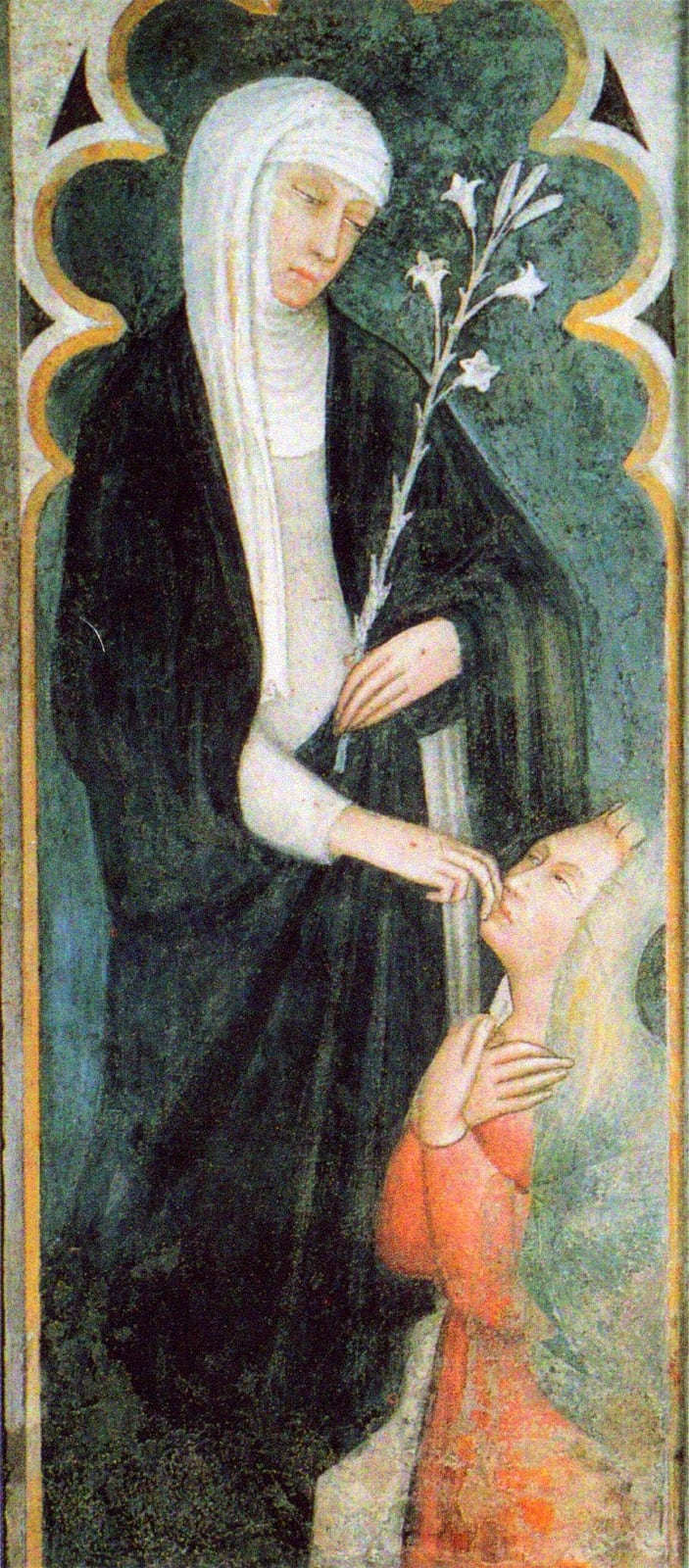
Santa Catalina, por Andrea Vanni (San Domenico, Siena) · Public domain
In eigenen Worten
«You, eternal Trinity, are a deep sea: the more I enter you, the more I find, and the more I find, the more I seek you.»Diálogo, ed. Fiorilli (1912), cap. CLXVII

Der zentrale Gedanke
The cell of self-knowledge: The Dialogue begins with a soul 'accustomed to dwell in the cell of self-knowledge'.
Im Zusammenhang sehen
Biografie
5 Min. Lesezeit
Unterstützte Übersetzung aus dem spanischen Original, Durchsicht durch einen muttersprachlichen Übersetzer ausstehend.
Die Tochter des Färbers
Caterina di Jacopo di Benincasa wurde am 25. März 1347, dem Fest Mariä Verkündigung, in Siena geboren, zusammen mit einer Zwillingsschwester, Giovanna, die bald darauf starb. Sie war das dreiundzwanzigste oder vierundzwanzigste Kind des Wollfärbers Jacopo Benincasa und der Lapa di Puccio de' Piacenti und wuchs in einem Haus im Viertel Fontebranda auf, neben den Bottichen der Färber und im Schatten der Dominikanerkirche San Domenico. Ein Jahr später raffte der Schwarze Tod fast die Hälfte der Stadt dahin. Beinahe alles, was wir über ihre Kindheit wissen, stammt aus der Legenda maior, die ihr Beichtvater Raimund von Capua zwischen 1385 und 1395 schrieb, um ihre Heiligsprechung zu betreiben, und die man als das lesen muss, was sie ist: eine sorgfältig komponierte Hagiographie.
Dieser Überlieferung zufolge sah sie mit etwa sechs Jahren Christus über dem Dach von San Domenico und legte mit sieben ein Jungfräulichkeitsgelübde ab. Als die Familie sie nach dem Tod ihrer Schwester Bonaventura 1362 verheiraten wollte, schnitt sie sich das Haar ab; daraufhin machte man sie zur Magd des Hauses, bis ihr Vater sie nach ihrer Weise leben ließ. Um 1364 oder 1365 erhielt sie, nicht ohne Widerstand, das Gewand der Mantellate, der dominikanischen Büßerinnen, die in ihren Häusern und nicht in einem Kloster lebten und meist Witwen waren. Etwa drei Jahre verbrachte sie, beinahe eingeschlossen in ihrer Kammer, mit Gebet und Fasten und lernte lesen.
Die Vermählung und die Familie
Am letzten Tag des Karnevals 1367 nahm Christus sie, so Raimund, mit einem Ring, den nur sie sah, zur Braut und bat sie, ihre Zelle zu verlassen, um den anderen zu dienen. Damit begann ein tätiges Leben in der Stadt: Sie pflegte Kranke im Hospital Santa Maria della Scala und in den Häusern, stand den Aussätzigen bei, verschenkte, was im Haus ihres Vaters war. 1370 machte sie eine Erfahrung, die ihre Schüler ihren „mystischen Tod“ nannten. Um sie bildete sich eine bella brigata, die „Familie“: Dominikanerbrüder, Einsiedler, junge Adlige wie Stefano Maconi, Dichter wie Neri di Landoccio Pagliaresi, Frauen der Stadt. Sie nannten sie mamma. Dass eine junge, ungebildete Laiin Priester und Theologen geistlich führte, erregte Verdacht; 1374 prüfte sie das in Florenz versammelte Generalkapitel der Dominikaner und gab ihr Raimund von Capua als Seelenführer.
Die Politik des Blutes
Seit 1374 richten sich ihre Briefe zunehmend an die Mächtigen. Sie verlangte dreierlei: die Rückkehr des Papstes von Avignon nach Rom, die Reform des Klerus und einen Kreuzzug, der die Christen versöhnen sollte, indem er ihre Waffen gegen die Türken lenkte. 1375 stand sie Niccolò di Toldo bei seiner Hinrichtung bei, einem jungen Peruginer, der wegen Worten gegen die Regierung Sienas verurteilt worden war, und fing sein Haupt in ihren Händen auf; sie erzählt davon in einem Brief an Raimund von seltener Eindringlichkeit. Am 1. April desselben Jahres empfing sie in Pisa nach dem Zeugnis ihrer Begleiter die Stigmata, die auf ihre Bitte zu Lebzeiten unsichtbar blieben. Dem englischen Condottiere John Hawkwood schrieb sie, er möge sein Heer in den Orient führen.
Als Florenz, das mit dem Papsttum im Krieg lag, mit dem Interdikt belegt wurde, bot sich Katharina als Vermittlerin an und reiste im Juni 1376 nach Avignon. Die Florentiner desavouierten sie, doch sie nutzte die Gelegenheit, um Gregor XI. – den sie babbo, Papa, nannte – zur Rückkehr nach Rom zu drängen. Gregor verließ Avignon im September 1376 und zog im Januar 1377 in Rom ein. Die Historiker streiten darüber, wie viel Gewicht Katharina bei einer Entscheidung hatte, die der Papst schon länger erwog; unbestreitbar ist, dass eine Frau von neunundzwanzig Jahren ohne jedes Amt auf Augenhöhe mit der mächtigsten Kurie Europas sprach.
Das Buch
1377 zog sie sich auf die Rocca d'Orcia im sienesischen Umland zurück, um verfeindete Adelsfamilien zu versöhnen; dort lernte sie nach einem ihrer Briefe, selbst zu schreiben. Im folgenden Jahr, abermals als Gesandte des Papstes in Florenz, wäre sie im Aufruhr der Ciompi im Juni 1378 beinahe umgekommen. Zurück in Siena, diktierte sie zwischen Ende 1377 und Oktober 1378 ihren Sekretären, nach deren Zeugnis oft in Ekstase, das Buch der göttlichen Lehre, das später als Dialog bekannt wurde: ein Zwiegespräch zwischen der Seele und Gott Vater über die Selbsterkenntnis, die Brücke, die Christus ist, die Tränen, die Vorsehung, den Gehorsam und die Reform der Kirche.
Das Schisma
Im September 1378 wählten die französischen Kardinäle, unzufrieden mit Urban VI., einen Gegenpapst, Clemens VII., und das Abendländische Schisma begann. Katharina ergriff ohne Zögern Partei für Urban, der sie nach Rom rief. Sie kam im November 1378 mit etwa zwanzig Schülern dort an und verließ die Stadt nicht mehr. Von dort schrieb sie an die Könige von Frankreich und Ungarn, an Königin Johanna von Neapel, an die abtrünnigen Kardinäle und an die italienischen Städte, und sie betete laut vor dem Papst und der Kurie. Ihre letzten Gebete wurden in diesen Monaten von den Sekretären aufgezeichnet.
Dreiunddreißig Jahre
Sie aß kaum noch. In der Fastenzeit 1380 ging sie jeden Tag zu Fuß bis Sankt Peter. Ende Januar brach sie nach einer Vision zusammen, in der sie das Schiff der Kirche auf ihren Schultern lasten fühlte, und am 26. Februar konnte sie sich nicht mehr erheben. Sie starb am 29. April 1380 in Rom, dreiunddreißig Jahre alt, umgeben von ihrer geistlichen Familie. Ihr Schüler Barduccio Canigiani schilderte den Todeskampf in einem Brief. Sie wurde in Santa Maria sopra Minerva begraben; ihr Haupt wurde 1384 nach Siena gebracht.
Die Heilige Italiens
Raimund von Capua, Ordensmeister der Dominikaner, und Tommaso Caffarini begründeten ihren Kult: die Legenda maior, der Libellus de supplemento und der Prozess von Venedig 1411–1416. Der aus Siena stammende Papst Pius II. sprach sie 1461 heilig. Ihre Briefe, 1492 in Bologna und 1500 von Aldus Manutius in Venedig gedruckt, machten sie zu einer Klassikerin der Sprache; Pius XII. erklärte sie 1939 zusammen mit Franz von Assisi zur Patronin Italiens, Paul VI. am 4. Oktober 1970, eine Woche nach Teresa von Ávila, zur Kirchenlehrerin, und Johannes Paul II. 1999 zur Mitpatronin Europas. Die heutige Forschung hat die Frau geduldig von der Legende geschieden: Es bleibt eine Laiin, die ohne Amt und ohne Latein den Glauben als Feuer und die Politik als Verantwortung der Seele dachte.
Quellen: Raimundo de Capua. Legenda maior sive Legenda admirabilis virginis Catherine de Senis. Ed. Silvia Nocentini. Florencia: SISMEL – Edizioni del Galluzzo, 2013. Trad. inglesa de Conleth Kearns, The Life of Catherine of Siena. Wilmington: Michael Glazier, 1980. · Caterina da Siena. Il Dialogo della divina provvidenza ovvero Libro della divina dottrina. Ed. Giuliana Cavallini. Roma: Edizioni Cateriniane, 1968 (2.ª ed., Siena: Cantagalli, 1995). · Caterina da Siena. Libro della divina dottrina volgarmente detto Dialogo della divina provvidenza. Ed. Matilde Fiorilli. Scrittori d'Italia. Bari: Laterza, 1912 (Project Gutenberg n.º 26961). · Noffke, Suzanne (trad. y ed.). The Letters of Catherine of Siena. 4 vols. Tempe: Arizona Center for Medieval and Renaissance Studies, 2000–2008. · Tommaseo, Niccolò (ed.). Le lettere di S. Caterina da Siena. 4 vols. Florencia: G. Barbèra, 1860; reed. ampliada por Piero Misciattelli, 6 vols., Siena: Giuntini-Bentivoglio, 1913–1922.
Zeitleiste
Das Leben, Jahr für Jahr
Jeder Punkt ist ein belegtes Ereignis. Klicken Sie, um es mit Quelle und Grad der Gewissheit zu lesen.
25. März 13470 JahreSiena (Fontebranda)
Birth
Born with a twin, Giovanna, daughter of Jacopo Benincasa, a dyer, and Lapa di Puccio de' Piacenti.
BelegtRaimundo de Capua. Legenda maior sive Legenda admirabilis virginis Catherine de Senis. Ed. Silvia Nocentini. Florencia: SISMEL – Edizioni del Galluzzo, 2013. Trad. inglesa de Conleth Kearns, The Life of Catherine of Siena. Wilmington: Michael Glazier, 1980.
Nach dem Tod
- um 1385 – 1395The Legenda maior
- um 1411 – 1416The Processo Castellano
- 29. Juni 1461Canonisation
- 1500The Aldine edition of the letters
- 1939Patroness of Italy
- 4. Oktober 1970Doctor of the Church
- 1. Oktober 1999Co-patroness of Europe
25. März 1347 · 0 Jahre
Birth
Born with a twin, Giovanna, daughter of Jacopo Benincasa, a dyer, and Lapa di Puccio de' Piacenti.
Belegt
um 1353 · 6 Jahre
The first vision
According to Raymond of Capua, she sees Christ above the church of San Domenico; the following year she vows virginity.
Überlieferung
um 1362 · 15 Jahre
Refusal of marriage
After the death of her sister Bonaventura she resists marriage plans and cuts off her hair.
Überlieferung
um 1364 – 1365 · 17 Jahre
Habit of the mantellate
She joins the Dominican penitent women (mantellate), who live in their own homes.
Wahrscheinlich
1367 · 20 Jahre
Mystical espousal
On the last day of Carnival, according to Raymond, she receives a ring visible only to her and leaves her seclusion to serve the sick.
Überlieferung
Mai 1374 · 27 Jahre
Examined by the Dominican general chapter
She appears before the order's general chapter, which assigns Raymond of Capua as her confessor. In the summer she tends plague victims in Siena.
Belegt
1. April 1375 · 28 Jahre
The stigmata
In the church of Santa Cristina she receives, according to her witnesses, the stigmata, invisible during her lifetime.
Überlieferung
1375 · 28 Jahre
The execution of Niccolò di Toldo
She accompanies a young condemned man to the scaffold and receives his head; she narrates it in a letter to Raymond of Capua.
Belegt
Juni 1376 · 29 Jahre
Embassy to Avignon
She travels to the papal court as Florence's mediator and urges Gregory XI to return to Rome; the pope leaves in September.
Belegt
1377 · 30 Jahre
Peacemaking and learning to write
Stay at the Salimbeni castle to reconcile families; according to her letter to Raymond, she learns to write there. She founds the monastery of Belcaro.
Belegt
Juni 1378 · 31 Jahre
The Ciompi tumult
Urban VI's envoy for peace with Florence, she narrowly escapes a mob seeking to kill her.
Belegt
Oktober 1378 · 31 Jahre
The Dialogue completed
She finishes dictating the Book of Divine Doctrine to her secretaries.
Belegt
November 1378 · 31 Jahre
In Rome, in the service of Urban VI
Summoned by the pope after the outbreak of the Western Schism, she settles in Rome with her disciples.
Belegt
29. April 1380 · 33 Jahre
Death
She dies after months of exhaustion, accompanied by her disciples. Barduccio Canigiani narrates her agony.
Belegt
um 1385 – 1395
The Legenda maior
Raymond of Capua writes Catherine's official life.
Belegt
um 1411 – 1416
The Processo Castellano
In Venice testimonies about her holiness are gathered, promoted by Tommaso Caffarini.
Belegt
29. Juni 1461
Canonisation
She is canonised by the Sienese pope Pius II.
Belegt
1500
The Aldine edition of the letters
Aldus Manutius prints Catherine's Epistole devotissime.
Belegt
1939
Patroness of Italy
Pius XII proclaims her principal patroness of Italy together with Francis of Assisi.
Belegt
4. Oktober 1970
Doctor of the Church
Paul VI proclaims her a Doctor of the Church, a week after Teresa of Ávila.
Belegt
1. Oktober 1999
Co-patroness of Europe
John Paul II proclaims her co-patroness of Europe with Bridget of Sweden and Teresa Benedicta of the Cross (motu proprio Spes aedificandi).
Belegt
Werke
Grundlegende Werke
Die Werke, ohne die sich das Vermächtnis nicht verstehen lässt.
Schriftliches Werk · 1378
The Dialogue (Book of Divine Doctrine)
Libro della divina dottrina (Dialogo della divina provvidenza)
A book dictated by Catherine to her secretaries between late 1377 and October 1378. It opens with a soul that, 'dwelling in the cell of self-knowledge', addresses four petitions to God (for herself, for the reform of the Church, for the world and for a particular case) and the Father answers in a long colloquy. Its great images are the bridge that is Christ, with its three steps (the feet, the side, the mouth), stretched over the river of the world; the doctrine of tears; providence; obedience; and the reform of the Church's ministers, the 'mystical body'. It closes with a prayer to the Trinity as a 'deep sea'. Since Girolamo Gigli (1707) it has usually been divided into treatises (on discretion, prayer, providence and obedience). It is one of the summits of fourteenth-century Italian prose.
7 Ausgaben · amazon.com

Briefwechsel · um 1370
Letters
Lettere (Epistolario)
Some 380 letters dictated between c. 1370 and 1380 (381 according to the most widely cited count; editions range between 373 and 383), addressed to two popes, cardinals, kings and queens, condottieri, city governments, friars, nuns, disciples, her mother and anonymous people. Almost all begin with the formula 'In the name of Jesus Christ crucified and of sweet Mary' and end with 'Sweet Jesus, Jesus love'. They mix spiritual doctrine and concrete politics: the pope's return to Rome, peace with Florence, the crusade, the defence of Urban VI in the schism. Among them stand out the letters to Gregory XI, whom she calls babbo, the letter to Raymond on the execution of Niccolò di Toldo and the one recounting her experience of January 1380. Their vigour and imagery make them a monument of Italian prose.
5 Ausgaben · amazon.com

Aufgezeichnete mündliche Lehre · um 1376
Prayers
Orazioni
Twenty-six prayers spoken aloud by Catherine, almost always in ecstasy after communion, and transcribed by her secretaries between 1376 and 1380, most of them in Rome during the schism. They are prayers to the Trinity, to Christ and to the 'eternal Godhead', of a lyrical intensity culminating in the identification of God's nature with fire and in intercession for the Church and her disciples. They show the final Catherine, consumed by the Church's crisis.
2 Ausgaben · amazon.com
Das gesamte Werk (9)

Raymond of Capua's Legenda maior
1385
Catherine of Siena
Tommaso Caffarini's Supplement to the Legend
The Conscious LibraryTommaso Caffarini's Supplement to the Legend
1412
Catherine of Siena
Tommaso Caffarini's Legenda minor
The Conscious LibraryTommaso Caffarini's Legenda minor
1414
Catherine of Siena
The Processo Castellano
The Conscious LibraryThe Processo Castellano
1411
Catherine of Siena
The Miracles of Catherine, by an Anonymous Florentine
The Conscious LibraryThe Miracles of Catherine, by an Anonymous Florentine
1374
Catherine of Siena
Barduccio Canigiani's Letter on Catherine's Death
The Conscious LibraryBarduccio Canigiani's Letter on Catherine's Death
1380
Zitate
Zitate, die in einem bestimmten Werk nachgewiesen sind. Jedes trägt seine Herkunft und seinen Grad an Verlässlichkeit.
You, eternal Trinity, are a deep sea: the more I enter you, the more I find, and the more I find, the more I seek you.Tu, Trinitá etterna, se' uno mare profondo, che quanto piú c'entro tanto piú truovo, e quanto piú truovo piú cerco di te.
GeprüftDiálogo, ed. Fiorilli (1912), cap. CLXVII
Apokryphe Zitate oder Zitate umstrittener Zuschreibung (1)
«Be who God meant you to be and you will set the world on fire.»
A widespread modern version of the sentence in the letter to Stefano Maconi ('If you are what you ought to be, you will set fire to all Italy'). The original speaks of Italy and of duty, not of the world or personal identity and became popular in twentieth-century anthologies and Catholic youth gatherings.
Letzte Worte
Späterer Bericht von Zeugen
«Father, into your hands I commend my soul and my spirit.»Padre, nelle tue mani raccomando l'anima e lo spirito mio.
According to the letter of her secretary Barduccio Canigiani, present at her agony, Catherine died in Rome on Sunday 29 April 1380, at the hour of Sext, after blessing her disciples and praying: 'You, Lord, call me, and I come to you, not through my merits but through your mercy alone, which I ask of you by virtue of your Blood'; she cried out several times 'Blood, blood!' and, following Christ's example, finally said: 'Father, into your hands I commend my soul and my spirit'. The Italian wording follows the tradition of Barduccio's text; the version consulted is Thorold's English translation (1907).
Quelle: Canigiani, Barduccio. Carta sobre el tránsito de Catalina, dirigida a sor Caterina Petriboni (1380). Trad. inglesa en Algar Thorold, The Dialogue of the Seraphic Virgin Catherine of Siena… together with an account of her death by an eye-witness. Londres: Kegan Paul, 1907.
Fragen
Was das Werk beantwortet
Zwölf große Fragen der Menschheit und was sich aus den Texten darauf antworten lässt, mit Belegen. Wir legen niemandem Worte in den Mund.
Was ist das Absolute? Gibt es Gott?
God is the eternal Trinity, a deep sea, mad with love
Ein persönlicher GottAusdrücklich gesagt
In The Dialogue, Catherine of Siena hears and transcribes the voice of a God who speaks to the soul in the first person: the eternal Father who explains, rebukes, promises and answers her petitions. This God is the first Truth and is, above all, love that precedes the creature: in the Dialogue's closing prayer she confesses that God loved her before she existed, «mad» for his creature. The closing prayer of the Dialogue calls the eternal Trinity a deep sea in which the more one enters the more one finds, and the more one finds the more one seeks. The Absolute is therefore personal, Trinitarian and inexhaustible: someone with whom one converses and whose knowledge never closes.
Diese Frage mit anderen Meistern vergleichenWer bin ich? Gibt es ein wahres Selbst?
The soul is an image of the Trinity, known in the cell of self
Eine geschaffene, unsterbliche SeeleAusdrücklich gesagt
For Catherine of Siena, the soul is a creature made in the image of the Trinity: in The Dialogue she thanks God for giving it memory to hold his benefits, intellect to know and will to love. Self-knowledge is indispensable, and the book sets it out from its first page as dwelling in the «cell of self-knowledge». But this knowledge has two faces: the soul discovers itself as something that of itself is not, since it has received everything, and in that same cell it knows God's goodness, which love follows. The true self is therefore a created, immortal soul whose being depends on the love that created it.
Diese Frage mit anderen Meistern vergleichenWarum leiden wir?
The root of every evil is self-love that turns away from God
Die Trennung von GottAusdrücklich gesagt
In The Dialogue, Catherine of Siena places in God's mouth a constant diagnosis: the root of all evils is sensual self-love, which makes the human being love itself apart from God. Whoever broke the road through sin drowns in the river of the world, and that is why God laid down the bridge of his Son. But not all suffering is punishment: the pains of this life, borne with patience and with desire for God, purify and make satisfaction, because what gives them value is not the pain itself but the infinite desire with which it is suffered. Pain separates when it springs from self-love and unites when it becomes charity.
Diese Frage mit anderen Meistern vergleichenWas geschieht nach dem Tod?
At death each soul sees what it chose and receives what it loved
Ewiges Leben und AuferstehungAusdrücklich gesagt
In The Dialogue, God explains to Catherine of Siena how the just, sinners and those who have lived in intermediate states die. At the moment of death, each soul sees clearly what it has loved: the just man dies in peace, because his will is united to God's and the devil finds nothing of his own in him; one who dies in self-love judges himself before being judged. Eternal blessedness is seeing God face to face and rejoicing in the good of the other blessed through charity. The letter of Barduccio Canigiani recounts her own death in Rome in 1380, amid prayers for the Church.
Diese Frage mit anderen Meistern vergleichenWie erlangt man Befreiung oder Erlösung?
One climbs the bridge that is Christ by three steps of love
Durch Hingabe und ErgebungAusdrücklich gesagt
The central image of The Dialogue is the bridge: the road between heaven and earth, broken by sin, has been rebuilt in the Son, and whoever wishes to be saved must climb it. One climbs by three steps, which are the body of the crucified Christ: the feet, representing affection stripped of self-love; the open side, where the soul discovers the secret of the heart; and the mouth, where it finds peace. The engine of the ascent is love: holy desire, kindled by the blood of Christ, which Catherine invokes ceaselessly in her letters. Grace is the foundation, but the way is a loving surrender proved in service to one's neighbour.
Diese Frage mit anderen Meistern vergleichenBraucht es einen Lehrer?
Obedience to the Church, the confessor and truth known in the cell
Gemeinschaft und TraditionAusdrücklich gesagt
Catherine of Siena was at once disciple and teacher. A laywoman of the Dominican Order of Penance, she submitted to confessors such as Raymond of Capua and called the pope, in her letters, the «sweet Christ on earth», to be obeyed even if he were a devil incarnate. But around her formed a famiglia of disciples, clerics and laypeople, who called her «mamma», and her letters are an immense work of spiritual direction. The Dialogue devotes a long section to obedience, the key that opens heaven. For Catherine one learns within the body of the Church, in a living community, but every soul must also dwell in the cell of self-knowledge.
Diese Frage mit anderen Meistern vergleichenIst die Welt wirklich?
Everything was made out of love and to serve humankind
Eine gute und wirkliche SchöpfungAus der Lehre abgeleitet
Catherine of Siena does not develop a cosmology, but The Dialogue presents creation as the work of love: God created the human being moved by the fire of his charity, and all things were made to serve him, so that he might serve God. The world is good in itself; what makes it dangerous is the disordered use that self-love makes of it. Hence Catherine's image of the river: the world, when loved for its own sake, is a stormy river in which those who do not cross by the bridge drown. Created things should be held without attachment, as on loan. Real, good and dangerous at once: such is creation for her.
Diese Frage mit anderen Meistern vergleichenWas ist Liebe?
We cannot be useful to God: love is returned to him in our neighbour
Liebe zu Gott und zum NächstenAusdrücklich gesagt
Catherine of Siena places in God's mouth, in The Dialogue, a precise reason for love of neighbour: God loved us first and without self-interest, and we cannot return that love in the same way, because we cannot be useful to him; that is why he has set our neighbour beside us, so that we may do for him what we cannot do for God. Every virtue is proved and exercised through one's neighbour, and every sin reaches him. Love springs from knowledge of self and of God's goodness, and has its model in the Christ «mad with love» who gave himself to the point of blood. Catherine lived it by tending the sick and the condemned and working for peace in Italy.
Diese Frage mit anderen Meistern vergleichenSind wir frei, oder ist alles vorherbestimmt?
No one can force the will: neither the devil nor any creature
Echter freier WilleAusdrücklich gesagt
In The Dialogue, Catherine of Siena attributes to God a repeated assertion: the human being was created free, and neither the devil nor any creature can force his will to sin unless he consents. Temptations may besiege it, but the will is like a city whose gate opens only from within. That freedom is the condition of merit and responsibility: each person is saved or lost according to what his will loves. God's providence, to which she devotes a long section of the book, orders everything for the soul's salvation, but respects the freedom he himself gave. Free will and providence coexist without cancelling each other out.
Diese Frage mit anderen Meistern vergleichenWozu meditieren oder beten?
Prayer is holy desire: a continual dialogue with God
Freundschaft mit GottAusdrücklich gesagt
Catherine of Siena's main work is, literally, a prayer turned into dialogue: the soul asks and God answers. The Dialogue describes prayer as a path running from vocal to mental prayer, and from this to a continual prayer that is holy desire, present in every work done for love. Prayer is born in the cell of self-knowledge, where the soul recognises itself as creature and discovers God's goodness; and it flows into petition for others, for the Church and for the world. Her Prayers, taken down by her disciples as she spoke in ecstasy, show that bold familiarity with the eternal Father.
Diese Frage mit anderen Meistern vergleichenKann die Vernunft das Letzte erkennen?
The eye of the intellect sees through the pupil of faith
Glaube und Vernunft helfen einanderAusdrücklich gesagt
Catherine of Siena learned to read late and never studied theology, but in The Dialogue the intellect holds a central place: it is the eye of the soul, and its pupil is faith. Without that light the intellect is darkened by self-love; with it, it knows the truth of God and of itself. Hence in The Dialogue God explains that there are learned men who, without charity, understand Scripture less than the simple enlightened by grace, and that many unlettered saints received from him the knowledge of truth. Reason is not opposed to faith, but sees well only when faith illuminates it and love purifies it. In 1970 she was proclaimed a doctor of the Church.
Diese Frage mit anderen Meistern vergleichenSich von der Welt zurückziehen oder sie verwandeln?
If you are what you should be, you will set all Italy on fire
Sich in der Welt engagierenAusdrücklich gesagt
Catherine of Siena spent three years in seclusion in her family home, and from that solitude went forth into the most intense public life known to any woman of her century. She nursed plague victims and accompanied men condemned to death; she mediated between Florence and the papacy; she wrote to popes, kings, cardinals and condottieri, and went to Avignon to urge Gregory XI to return the see to Rome, which happened in 1377. In a letter to her disciple Stefano Maconi she writes that, if they were what they ought to be, they would set all Italy on fire. For her, the charity born in the inner cell is proved in service to one's neighbour and the Church.
Diese Frage mit anderen Meistern vergleichen
Affinitäten und Spannungen
Affinitäten und Spannungen
Frage für Frage aus den Positionen berechnet. Den Grund jeder Übereinstimmung und jedes Widerspruchs zeigt ein Klick.
Denkt ähnlich wie

Julian of Norwich
Übereinstimmung bei: Was ist das Absolute? Gibt es Gott? · Wer bin ich? Gibt es ein wahres Selbst? · Warum leiden wir?

Francis of Assisi
Übereinstimmung bei: Was ist das Absolute? Gibt es Gott? · Wer bin ich? Gibt es ein wahres Selbst? · Warum leiden wir?
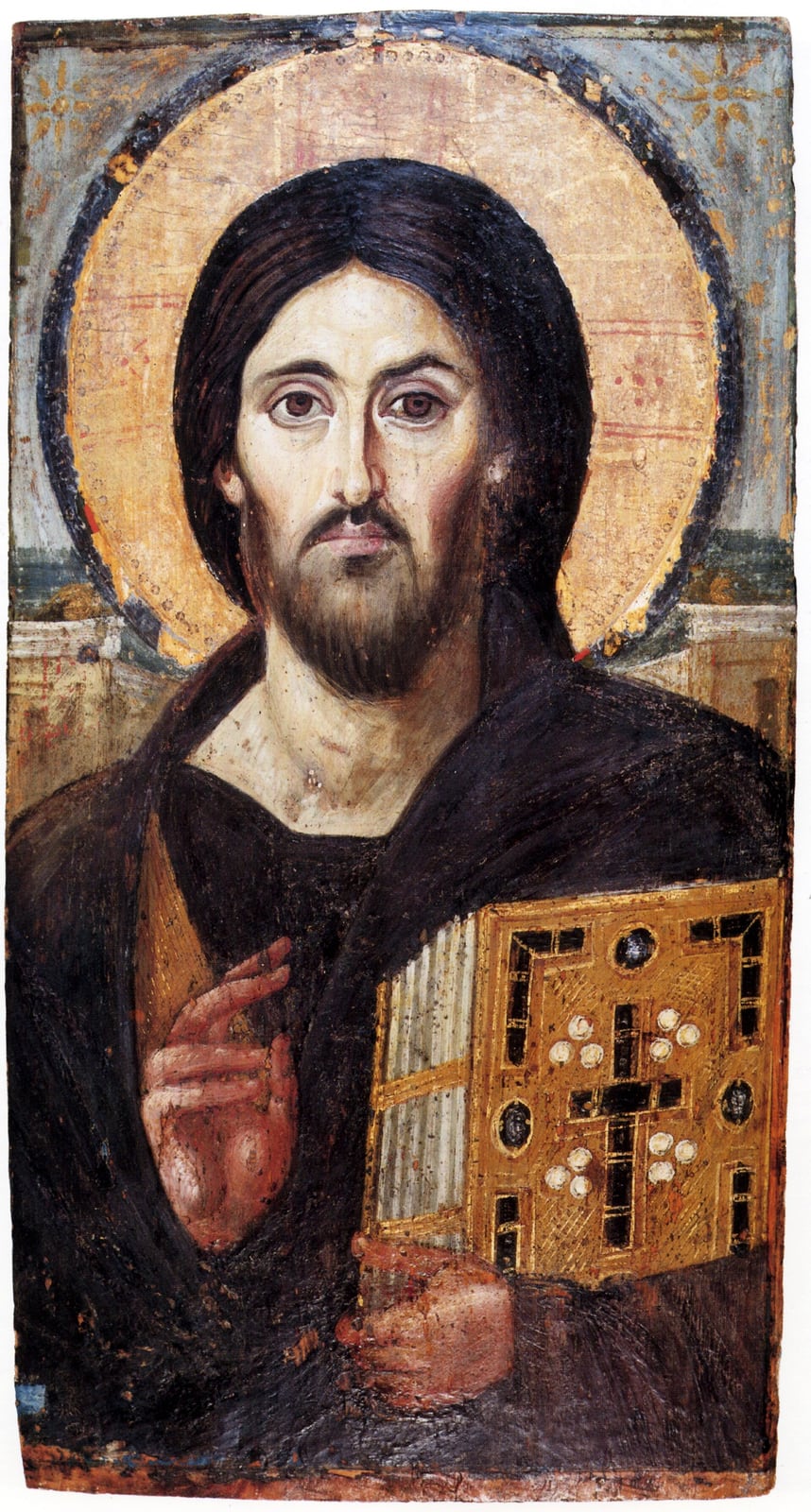
Jesus of Nazareth
Übereinstimmung bei: Was ist das Absolute? Gibt es Gott? · Ist die Welt wirklich? · Wer bin ich? Gibt es ein wahres Selbst?
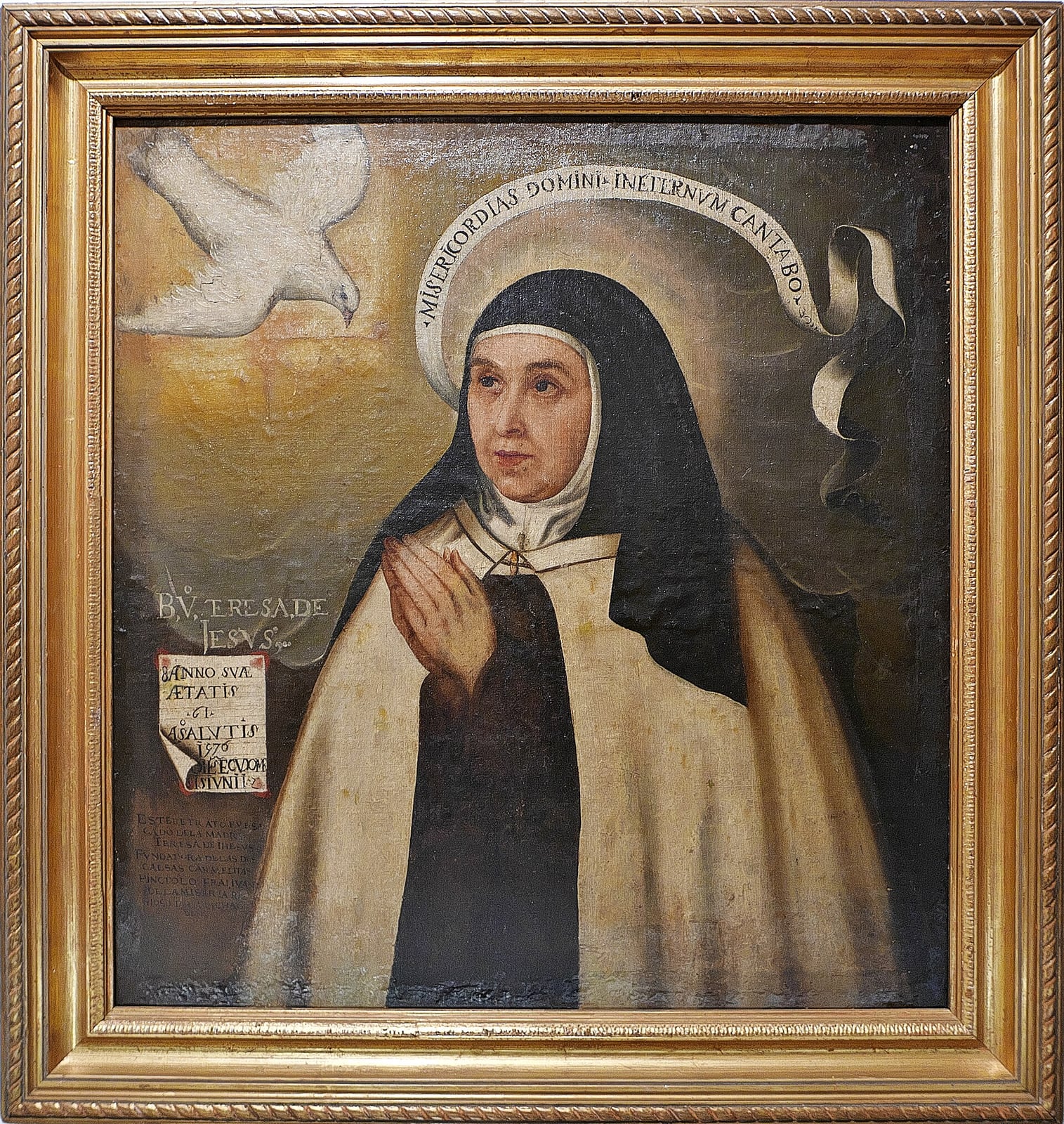
Teresa of Ávila
Übereinstimmung bei: Was ist das Absolute? Gibt es Gott? · Wer bin ich? Gibt es ein wahres Selbst? · Warum leiden wir?
Denkt anders als

Patañjali
Widerspruch bei: Was ist das Absolute? Gibt es Gott? · Wer bin ich? Gibt es ein wahres Selbst? · Was geschieht nach dem Tod?

Pema Chödrön
Widerspruch bei: Was ist das Absolute? Gibt es Gott? · Wer bin ich? Gibt es ein wahres Selbst? · Was geschieht nach dem Tod?

Nāgārjuna
Widerspruch bei: Was ist das Absolute? Gibt es Gott? · Wer bin ich? Gibt es ein wahres Selbst? · Was geschieht nach dem Tod?

Dōgen
Widerspruch bei: Was ist das Absolute? Gibt es Gott? · Wer bin ich? Gibt es ein wahres Selbst? · Was geschieht nach dem Tod?
Anekdoten und Erzählungen
Anekdoten und Erzählungen
Hagiographische Erzählungc. 1353
The vision above San Domenico
Herkunft der Erzählung: Raymond of Capua, Legenda maior I.2, from the account he says he heard from Catherine herself and her family.
Quelle: Raimundo de Capua. Legenda maior sive Legenda admirabilis virginis Catherine de Senis. Ed. Silvia Nocentini. Florencia: SISMEL – Edizioni del Galluzzo, 2013. Trad. inglesa de Conleth Kearns, The Life of Catherine of Siena. Wilmington: Michael Glazier, 1980.
Belegt1375
The head of Niccolò di Toldo
Herkunft der Erzählung: Catherine's letter to Raymond of Capua (no. 273 in Tommaseo's numbering). It is the only account of the event and comes from the protagonist.
Quelle: Noffke, Suzanne (trad. y ed.). The Letters of Catherine of Siena. 4 vols. Tempe: Arizona Center for Medieval and Renaissance Studies, 2000–2008.
Zeugnisoctubre de 1377
Learning to write
Herkunft der Erzählung: Letter to Raymond of Capua (no. 272 in Tommaseo's numbering); the miraculous interpretation comes from Raymond and Caffarini.
Quelle: Noffke, Suzanne (trad. y ed.). The Letters of Catherine of Siena. 4 vols. Tempe: Arizona Center for Medieval and Renaissance Studies, 2000–2008.
Belegt1376
'My sweet babbo'
Herkunft der Erzählung: Letters to Gregory XI preserved in the correspondence (Scudder, 1905; Noffke, 2000–2008); historical assessment in Luongo (2006) and Vauchez (2015).
Zeugnisenero–febrero de 1380
The ship of the Church on her shoulders
Herkunft der Erzählung: Letter to Raymond of Capua of February 1380 (no. 373 in Tommaseo's numbering) and Barduccio Canigiani's letter.
Quelle: Noffke, Suzanne (trad. y ed.). The Letters of Catherine of Siena. 4 vols. Tempe: Arizona Center for Medieval and Renaissance Studies, 2000–2008.
Mündliche Überlieferung1384
The head that turned to roses
Herkunft der Erzählung: The translation of the head to Siena is documented; the story of the roses is a late Sienese tradition without support in fourteenth-century sources.
Quelle: Vauchez, André. Catherine de Sienne: vie et passions. París: Éditions du Cerf, 2015.
Lehren
Lehren
Die Begriffe, die das Denken gliedern, in ihrem Zusammenhang erklärt.
The cell of self-knowledgecelda-del-conocimiento-de-si
The Augustinian legacy of knowledge of God and of self, transmitted through Dominican preaching.
Quelle: Caterina da Siena. Il Dialogo della divina provvidenza ovvero Libro della divina dottrina. Ed. Giuliana Cavallini. Roma: Edizioni Cateriniane, 1968 (2.ª ed., Siena: Cantagalli, 1995).
Christ the bridgeel-puente
Tradition of the degrees of love (Bernard of Clairvaux) and the theology of Christ's mediation.
Quelle: Caterina da Siena. Il Dialogo della divina provvidenza ovvero Libro della divina dottrina. Ed. Giuliana Cavallini. Roma: Edizioni Cateriniane, 1968 (2.ª ed., Siena: Cantagalli, 1995).
The bloodla-sangre
The piety of the passion in fourteenth-century Italy and Dominican sacramental theology.
Quelle: Noffke, Suzanne (trad. y ed.). The Letters of Catherine of Siena. 4 vols. Tempe: Arizona Center for Medieval and Renaissance Studies, 2000–2008.
The doctrine of tearsdoctrina-de-las-lagrimas
The monastic tradition of the gift of tears, from Cassian and Gregory the Great.
Quelle: Noffke, Suzanne (trad.). Catherine of Siena: The Dialogue. Classics of Western Spirituality. Nueva York: Paulist Press, 1980.
The mystical body and the reform of the Churchcuerpo-mistico
Crisis of the Avignon papacy and of the Great Schism (1378).
Quelle: Luongo, F. Thomas. The Saintly Politics of Catherine of Siena. Ithaca: Cornell University Press, 2006.
God as fire and 'mad with love'fuego-de-amor
Medieval bridal mysticism and the tradition of the excessus amoris.
Quelle: Caterina da Siena. Il Dialogo della divina provvidenza ovvero Libro della divina dottrina. Ed. Giuliana Cavallini. Roma: Edizioni Cateriniane, 1968 (2.ª ed., Siena: Cantagalli, 1995).
Videos
Videos
Aufnahmen, Gespräche und Dokumentarfilme. Die Videos werden von YouTube wiedergegeben; sie werden nicht hier gespeichert.
Catherine of Siena as Woman of the Word: 'It is Silence that Kills the World'
Vortrag· EN· 2015· 53 min
McGrath Institute for Church LifeOffizieller Kanal
Sister Barbara Reid, O.P. - St. Catherine of Siena Lecture
Vortrag· EN· 2017· 60 min
Providence CollegeOffizieller Kanal
St. Catherine of Siena Lecture - Dr. Perry Cahall
Vortrag· EN· 2015· 47 min
Ohio Dominican UniversityOffizieller Kanal
The Apostle of the Blood of Christ: St. Catherine of Siena
Dokumentarfilm· EN· 2024· 58 min
Bishop Robert BarronOffizieller Kanal
André Vauchez - Santa Caterina da Siena
Vortrag· IT· 2019· 46 min
Festival del MedioevoOffizieller Kanal
La tradizione delle lettere di Caterina da Siena: status quaestionis e prospettive di ricerca
Vortrag· IT· 2022· 34 min
DUSIC - Università di ParmaOffizieller Kanal
Santa Caterina - prima lezione
Vortrag· IT· 2022· 84 min
Arcidiocesi di SienaOffizieller Kanal
Lezioni di storia a Trieste, 'I volti del potere': Caterina da Siena secondo Muzzarelli
Vortrag· IT· 2020· 73 min
Il PiccoloOffizieller Kanal
Camino a la CELDA INTERIOR - Doctrina de Santa Catalina de Siena
Vortrag· ES· 2024· 75 min
fraynelson
SANTA CATALINA DE SIENA: biografía [Al encuentro de Dios Padre con S. Catalina de Siena, 09 de 12]
Vortrag· ES· 2025· 78 min
fraynelson
Santa Catalina de Siena IV - Cisma de Occidente, muerte y canonización
Vortrag· ES· 2021· 39 min
Dominicos EspañaOffizieller Kanal
Catherine de Sienne ou la conduite du monde - partie 1/2
Dokumentarfilm· FR· 2018· 67 min
KTO TVOffizieller Kanal
Sainte Catherine de Sienne
Dokumentarfilm· FR· 2019· 52 min
KTO TVOffizieller Kanal
Galerie
Galerie
Bilder mit geprüfter Lizenz. Jedes bewahrt seine Urheberschaft und seinen Herkunftsnachweis.
Beziehungen
Beziehungen
Einflüsse, Schülerschaften und Verwandtschaften. Die belegte Beziehung wird von der durch Analyse ermittelten Ähnlichkeit unterschieden.
Beeinflusst von
Her whole spirituality revolves around Christ crucified: her letters begin 'in the name of Jesus Christ crucified' and the Dialogue presents Christ as the bridge between God and the world.
Belegte Beziehung
Verwandte Gedanken mit
Pius XII proclaimed them together principal patrons of Italy in 1939. They share identification with the passion (both stigmatised according to their hagiographers) and the preaching of peace; Catherine, a Dominican, shows no particular devotion to Francis in her writings.
Durch Analyse ermittelte Ähnlichkeit
Verwandte Gedanken mit
The first two women proclaimed Doctors of the Church, a week apart (27 September and 4 October 1970). Both combined mysticism and reform, and wrote without Latin learning.
Durch Analyse ermittelte Ähnlichkeit
Verwandte Gedanken mit
Her anthropology of memory, understanding and will as the image of the Trinity (Dialogue, ch. XIII) and her theme of self-knowledge come from the Augustinian tradition, mediated by Dominican preaching; no direct reading is documented.
Durch Analyse ermittelte Ähnlichkeit
Zeitgenosse von
Exact contemporaries, both laywomen without Latin learning who left a theology in the vernacular; they never had contact.
Durch Analyse ermittelte Ähnlichkeit
Verwandte Gedanken mit
Like Hildegard two centuries earlier, Catherine wrote to popes and the powerful with prophetic authority and denounced clerical corruption; both are Doctors of the Church. No documented relation.
Durch Analyse ermittelte Ähnlichkeit
Verwandte Gedanken mit
Both belong to the Dominican family and share the idea of a self-knowledge that issues in God, but Catherine is narrative, affective and ecclesial where Eckhart is speculative. No documented relation.
Durch Analyse ermittelte Ähnlichkeit
Von anderen Einträgen aus verknüpft
Quellen
Quellen
Für diesen Eintrag herangezogene Bibliografie und Kataloge.
- Wikidata, Q229190 «Catalina de Siena / Catherine of Siena» (P31=Q5; 83 enlaces entre wikis; P569 1347-03-25, P570 1380-04-29).
- Raimundo de Capua. Legenda maior sive Legenda admirabilis virginis Catherine de Senis. Ed. Silvia Nocentini. Florencia: SISMEL – Edizioni del Galluzzo, 2013. Trad. inglesa de Conleth Kearns, The Life of Catherine of Siena. Wilmington: Michael Glazier, 1980.
- Caterina da Siena. Il Dialogo della divina provvidenza ovvero Libro della divina dottrina. Ed. Giuliana Cavallini. Roma: Edizioni Cateriniane, 1968 (2.ª ed., Siena: Cantagalli, 1995).
- Caterina da Siena. Libro della divina dottrina volgarmente detto Dialogo della divina provvidenza. Ed. Matilde Fiorilli. Scrittori d'Italia. Bari: Laterza, 1912 (Project Gutenberg n.º 26961).
- Noffke, Suzanne (trad. y ed.). The Letters of Catherine of Siena. 4 vols. Tempe: Arizona Center for Medieval and Renaissance Studies, 2000–2008.
- Tommaseo, Niccolò (ed.). Le lettere di S. Caterina da Siena. 4 vols. Florencia: G. Barbèra, 1860; reed. ampliada por Piero Misciattelli, 6 vols., Siena: Giuntini-Bentivoglio, 1913–1922.
- Noffke, Suzanne (ed. y trad.). The Prayers of Catherine of Siena. Nueva York: Paulist Press, 1983.
- Vauchez, André. Catherine de Sienne: vie et passions. París: Éditions du Cerf, 2015.
- Luongo, F. Thomas. The Saintly Politics of Catherine of Siena. Ithaca: Cornell University Press, 2006.
- Benedicto XVI. Audiencia general del 24 de noviembre de 2010: Santa Catalina de Siena. Libreria Editrice Vaticana.
- Juan Pablo II. Motu proprio Spes aedificandi, proclamación de las copatronas de Europa (1 de octubre de 1999). Libreria Editrice Vaticana.
- Noffke, Suzanne (trad.). Catherine of Siena: The Dialogue. Classics of Western Spirituality. Nueva York: Paulist Press, 1980.
- Tommaso Caffarini. Libellus de supplemento: legende prolixe virginis beate Catherine de Senis. Ed. Giuliana Cavallini e Imelda Foralosso. Roma: Edizioni Cateriniane, 1974.
- Laurent, M.-H. (ed.). Il Processo Castellano. Fontes vitae S. Catharinae Senensis historici IX. Milán: Fratelli Bocca, 1942.
- Scudder, Vida D. (trad. y ed.). Saint Catherine of Siena as Seen in Her Letters. Londres: J. M. Dent / Nueva York: E. P. Dutton, 1905 (Project Gutenberg n.º 7403).
- Thorold, Algar (trad.). The Dialogue of the Seraphic Virgin Catherine of Siena. Londres: Kegan Paul, Trench, Trübner & Co., 1896 (nueva ed. abreviada, 1907).
- Salvador y Conde, José (intr. y trad.). Obras de Santa Catalina de Siena: El Diálogo, Oraciones y Soliloquios. Madrid: Biblioteca de Autores Cristianos, 1991.
- Open Library (Internet Archive), registros de edición consultados por ISBN para las ediciones listadas.
- Wikisource en italiano: Caterina da Siena, Libro della divina dottrina (ed. Fiorilli, 1912) y Le lettere di S. Caterina da Siena (ed. Misciattelli, 1922).
- Gardner, Edmund G. Saint Catherine of Siena: A Study in the Religion, Literature and History of the Fourteenth Century in Italy. Londres: J. M. Dent, 1907.
- Canigiani, Barduccio. Carta sobre el tránsito de Catalina, dirigida a sor Caterina Petriboni (1380). Trad. inglesa en Algar Thorold, The Dialogue of the Seraphic Virgin Catherine of Siena… together with an account of her death by an eye-witness. Londres: Kegan Paul, 1907.
- Anónimo florentino. I Miracoli di Caterina di Iacopo da Siena di anonimo fiorentino. Ed. Francesco Valli. Fontes vitae S. Catharinae Senensis historici IV. Siena: R. Università di Siena, 1936.
- Associazione Internazionale dei Caterinati (Siena).
- Rechteinhaber
- Dominio público (obra del siglo XIV). Las ediciones críticas, traducciones y aparatos modernos (Cantagalli, Edizioni Cateriniane, BAC, Paulist Press, ACMRS, Studio Domenicano…) están sujetos a los derechos de sus editores. El Centro Nazionale di Studi Cateriniani (Roma) y la Associazione Internazionale dei Caterinati (Siena) promueven su estudio y su culto.
- Offizielle Website
- www.caterinati.org/
Bestätigung ausstehend
Was dieser Eintrag noch nicht klären konnte. Wir sagen es lieber, als es aufzufüllen.
- Localizar en catálogo los principales manuscritos del Diálogo y del epistolario (Siena, Biblioteca Comunale degli Intronati; Roma, Biblioteca Casanatense; Florencia, Biblioteca Nazionale) con sus signaturas: no se han registrado manuscritos para no aportar signaturas sin verificar.
- Confirmar el número de cartas según la edición crítica en curso (Antonio Volpato, Centro Nazionale di Studi Cateriniani): las cifras habituales oscilan entre 373 y 383.
- Verificar la redacción italiana exacta de la carta a Stefano Maconi («Se sarete quello che dovete essere…»), aquí marcada como «probable», contra la edición Misciattelli.
- Localizar ISBN de la edición crítica de Cavallini del Diálogo (Cantagalli, 1995), de Le Orazioni (1978) y de la Legenda maior de Nocentini (SISMEL, 2013).
- Ediciones españolas de las cartas y de la Leyenda de Raimundo de Capua con ISBN: no localizadas en Open Library.
- Buscar una traducción española de dominio público del Diálogo con texto completo en línea (hay traducciones de los siglos XVI–XVIII en bibliotecas digitales, sin OCR utilizable).
- Revisar la calidad del OCR de los textos de Internet Archive (Thorold 1896 y 1907; Hamilton 1862).
- La edición de Thorold de 1907 (reading_texts, lettera-di-barduccio) reúne la carta de Barduccio con una versión abreviada del Diálogo: queda con caution hasta extraer solo la carta.
- Programas de afiliación: ninguno verificado.
Recherchiert am 2026-10-25