Stoizismus
Epictetus
Ἐπίκτητος
50er Jahre – um 135Historisch belegte Person
Griechischer stoischer Philosoph (um 50 – um 135), als Sklave in Hierapolis in Phrygien geboren. In Rom diente er Epaphroditos, einem Freigelassenen Neros, hörte Musonius Rufus und lehrte, freigelassen, Philosophie, bis Domitian die Philosophen aus Italien vertrieb. Daraufhin gründete er in Nikopolis in Epirus eine Schule. Er schrieb nichts: Seine Lehrvorträge hielt sein Schüler Arrian in den Lehrgesprächen und im Handbüchlein fest, die die innere Freiheit und die Unterscheidung zwischen dem, was in unserer Macht steht, und dem, was nicht in unserer Macht steht, zum Mittelpunkt der Ethik machten.
- Werke
- 13Werke
- Ausgaben
- 31Ausgaben
- Zitate
- 10Zitate
- Videos
- 11Videos
- Bilder
- 8Bilder
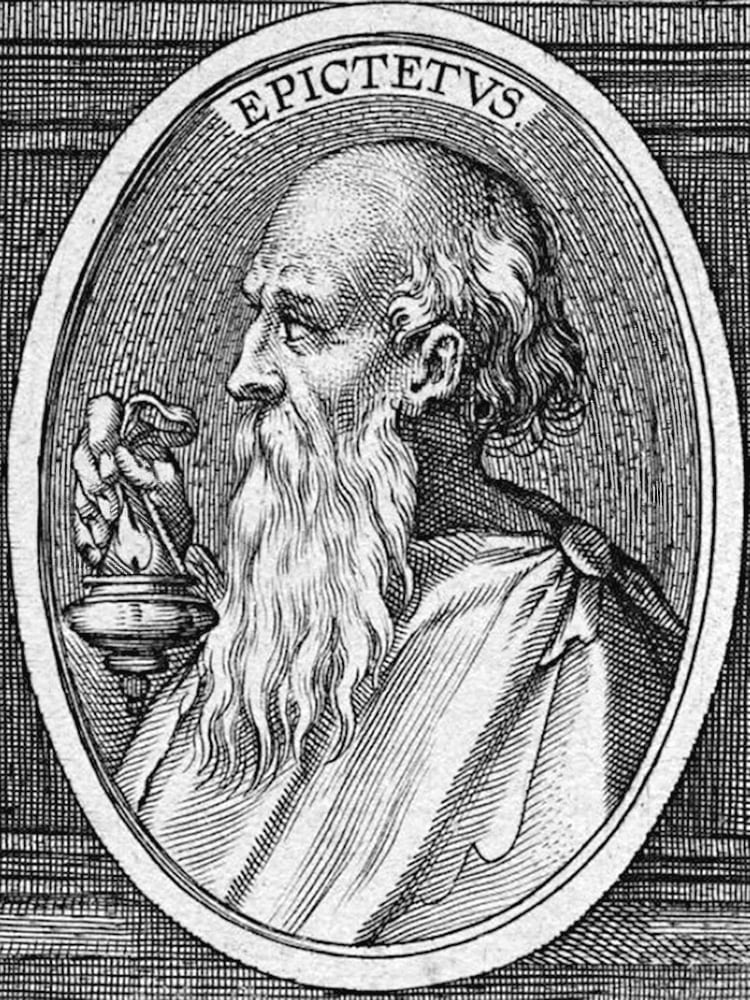
Epicteto en la portada de las obras de Séneca (Amberes, 1605) · Public domain
In eigenen Worten
«Of things some are in our power, and others are not.»Manual 1, 1. Griego: Wikisource; inglés: George Long (1877); español: traducción propia.

Der zentrale Gedanke
What is up to us (ta eph' hēmin): It is the starting point of all Epictetus' teaching, with which both the Handbook and the Discourses open.
Im Zusammenhang sehen
Biografie
5 Min. Lesezeit
Unterstützte Übersetzung aus dem spanischen Original, Durchsicht durch einen muttersprachlichen Übersetzer ausstehend.
Ein Sklave, der Freiheit lehrte
Kein antiker Philosoph hat so viel von der Freiheit gesprochen wie Epiktet, und keiner hatte mehr Grund, ihren Preis zu kennen. Er war als Sklave geboren, hinkte und schrieb keine einzige Zeile. Was wir von seiner Lehre wissen, verdanken wir einem Schüler, Flavius Arrianus, der in der Schule von Nikopolis seine Lehrvorträge mitschrieb und als Lehrgespräche (Diatriben) veröffentlichte, sowie einem Auszug aus diesen Aufzeichnungen, dem Handbüchlein, das zu einem der meistgelesenen Moralbücher des Abendlandes werden sollte. Über sein Leben dagegen sind nur wenige gesicherte Angaben erhalten, verstreut bei ihm selbst, bei Aulus Gellius, in der byzantinischen Suda und im Kommentar, den Simplikios vier Jahrhunderte später dem Handbüchlein widmete.
Hierapolis und Rom
Er wurde um das Jahr 50 in Hierapolis geboren, einer griechischen Stadt in Phrygien, in Kleinasien, die für ihre Thermalquellen bekannt war. Sein Name, Epíktētos, bedeutet „hinzuerworben“ und war ein gängiger Sklavenname; wir wissen nicht, welchen Namen er vorher trug, ob er überhaupt einen anderen hatte, noch wie er nach Rom gelangte. Dort gehörte er Epaphroditos, einem Freigelassenen, der Neros Sekretär für die Bittschriften gewesen war und nach der Suda zu seiner Leibwache gehörte; Epiktet erinnert sich in den Lehrgesprächen an ihn als eitlen Herrn, der einem Schuster nur deshalb unterwürfig begegnete, weil dieser in den Dienst des Kaisers getreten war. Aulus Gellius hielt im 2. Jahrhundert seinen Sklavenstand für eine zu junge und zu bekannte Tatsache, als dass sie eines Beweises bedurft hätte.
Er war lahm. Die Suda führt dies auf ein rheumatisches Leiden zurück; der heidnische Polemiker Kelsos, den Origenes zitiert, erzählte, sein Herr habe ihm das Bein verdreht, und Epiktet habe ihn lächelnd gewarnt, er werde es ihm brechen, und als es dann brach, gesagt: „Habe ich es dir nicht gesagt?“ Zwischen beiden Fassungen lässt sich nicht entscheiden, doch die Lahmheit taucht in seinen eigenen Beispielen auf: Krankheit ist ein Hindernis für den Körper, nicht für den Willen, sagt das Handbüchlein; Lahmheit eines für das Bein, nicht für den Willen.
Musonius Rufus
Sein Herr erlaubte ihm, die Vorlesungen des römischen Stoikers Gaius Musonius Rufus zu besuchen, des angesehensten Philosophen im Rom Neros und der Flavier, der mehrmals verbannt wurde. Epiktet erwähnt ihn mit Verehrung: Rufus habe so gesprochen, dass jeder Zuhörer glaubte, jemand habe ihm seine Fehler hinterbracht; wer ihn lobte, dem erwiderte er, wenn man Zeit habe, ihn zu loben, dann habe er umsonst gesprochen. Von Musonius übernahm er eine als praktische Übung verstandene Philosophie und ein Vorbild, Sokrates, den er häufiger zitiert als jeden anderen Autor. Wann er die Freiheit erlangte, ist unbekannt; gegen Ende des 1. Jahrhunderts lehrte er bereits in Rom.
Die Verbannung und die Schule von Nikopolis
Domitian wies die Philosophen aus Rom und Italien aus, wahrscheinlich im Jahr 89 oder um 93–95; Aulus Gellius sagt ausdrücklich, Epiktet sei unter den Verbannten gewesen. Er ließ sich in Nikopolis nieder, der „Siegesstadt“, die Augustus in Epirus zur Erinnerung an Actium gegründet hatte, einer wohlhabenden Stadt am Seeweg zwischen Italien und Griechenland. Dort eröffnete er eine Schule, die junge Männer aus begüterten Familien besuchten, viele davon Römer, um sich vor dem Eintritt in die öffentliche Laufbahn vorzubereiten. Die Historia Augusta behauptet, Hadrian habe ihm große Freundschaft erwiesen, eine Nachricht, die die Forschung mit Vorsicht aufnimmt.
In der Schule wurden die Texte Chrysipps gelesen und kommentiert und Logik geübt, doch die Lehrgespräche bewahren etwas anderes: die zwanglosen Unterhaltungen, die auf die Fachlektion folgten und in denen der Lehrer seine Hörer anspricht, ironisiert, Dialoge mit einem Tyrannen oder einem jammernden Schüler erfindet und immer wieder dieselbe Frage stellt: Steht das in deiner Macht oder nicht? „Der Hörsaal des Philosophen ist ein Krankenhaus“, mahnt er; man soll ihn nicht zufrieden verlassen, sondern unter Schmerzen.
Das Leben eines armen Lehrers
Er lebte sehr einfach und heiratete nicht. Simplikios berichtet, er habe lange allein gelebt und im Alter ein Kind angenommen, das ein Freund aus Armut aussetzen wollte, und eine Frau ins Haus genommen, um es aufzuziehen. Lukian von Samosata spottet über einen Sammler, der dreitausend Drachmen für die tönerne Lampe des Philosophen bezahlte, in der Hoffnung, seine Weisheit zu erwerben, wenn er nachts bei ihrem Licht lese. Er starb um 135 in Nikopolis; die Suda verlängert sein Leben bis in die Regierungszeit Mark Aurels, was die Fachleute für unwahrscheinlich halten.
Arrian und die Bücher
Flavius Arrianus aus Nikomedien, später Konsul, Statthalter von Kappadokien und Geschichtsschreiber Alexanders des Großen, besuchte die Schule um das Jahr 108. In einem Brief an Lucius Gellius, der den Lehrgesprächen vorangestellt ist, erklärt er, er habe sie nicht als literarisches Werk verfasst, sondern versucht, Wort für Wort aufzuzeichnen, was er hörte, um die Erinnerung an das Denken und den Freimut des Lehrers zu bewahren, und sie seien ohne seine Zustimmung veröffentlicht worden. Photios kannte im 9. Jahrhundert acht Bücher Lehrgespräche und zwölf Bücher Homilien; erhalten sind nur vier der ersteren, durch eine in der Bodleian Library aufbewahrte Handschrift des 11. oder 12. Jahrhunderts, von der alle übrigen Abschriften abhängen. Das Handbüchlein oder Encheiridion, eine aus den Lehrgesprächen gezogene Auswahl von Lehrsätzen, blieb dank der Mönche besser erhalten, die es in christlichen Fassungen bearbeiteten.
Was in unserer Macht steht
Epiktets Denken geht von einer Unterscheidung aus: „Von den Dingen stehen die einen in unserer Macht, die anderen nicht.“ In unserer Macht stehen Urteil, Antrieb, Begehren und Abneigung; nicht in unserer Macht stehen Körper, Besitz, Ansehen und Ämter. Das einzig wirklich Eigene ist die Prohairesis, das Vermögen der Wahl, das nicht einmal Zeus bezwingen kann. Nicht die Dinge beunruhigen uns, sondern unsere Urteile über die Dinge. Daraus folgt ein Übungsprogramm in drei Bereichen — Begehren, Handeln und Zustimmung —, das Pierre Hadot als Schlüssel zu den Selbstbetrachtungen Mark Aurels erwiesen hat, seines berühmtesten Lesers, der seine Lehren durch Iunius Rusticus kennenlernte.
Das Nachleben
Das Handbüchlein wurde im 6. Jahrhundert von Simplikios kommentiert, 1479 von Angelo Poliziano ins Lateinische übersetzt und von Montaigne gelesen, von Pascal — der es in seinem Gespräch mit Herrn de Sacy Montaigne gegenüberstellte — und von den Neustoikern des 16. und 17. Jahrhunderts. Ins Kastilische übertrugen es 1600 der Brocense und 1635 in Versen Francisco de Quevedo. Im 20. Jahrhundert führte der Psychologe Albert Ellis seinen Satz über die Urteile als Vorläufer der kognitiven Therapie an, und der amerikanische Pilot James Stockdale erzählte, das, was er von Epiktet im Gedächtnis behalten hatte, habe ihm geholfen, mehr als sieben Jahre Gefangenschaft in Vietnam durchzustehen.
Quellen: Epicteto. Disertaciones (por Arriano) y Manual. Texto griego en Wikisource en griego; trad. inglesa de George Long, The Discourses of Epictetus; with the Encheiridion and Fragments (Londres: George Bell, 1877), en Wikisource en inglés. · Long, A. A. Epictetus: A Stoic and Socratic Guide to Life. Oxford: Clarendon Press, 2002. · Aulo Gelio. Noches áticas, I 2; II 18; XV 11; XVII 19; XIX 1. Trad. inglesa de John C. Rolfe, The Attic Nights, Loeb Classical Library 195, 200, 212. Londres: Heinemann, 1927 (libros I–II en LacusCurtius). · Simplicio. Comentario al Manual de Epicteto. Trad. inglesa de Tad Brennan y Charles Brittain, Simplicius: On Epictetus' Handbook, 2 vols. Londres: Duckworth / Ithaca: Cornell University Press, 2002. · Orígenes. Contra Celso, VII 53. Trad. inglesa de Frederick Crombie, Ante-Nicene Fathers, vol. IV. Buffalo: Christian Literature Publishing, 1885.
Zeitleiste
Das Leben, Jahr für Jahr
Jeder Punkt ist ein belegtes Ereignis. Klicken Sie, um es mit Quelle und Grad der Gewissheit zu lesen.
50er Jahre0 JahreHierápolis (Frigia)
Birth
Born a slave around the year 50 (the date is inferred from his life; there is no direct evidence) in Hierapolis in Phrygia, according to the Suda.
WahrscheinlichSuda, s. v. «Epiktetos» (épsilon 2424). Suda On Line, trad. inglesa revisada.
Nach dem Tod
- um 140Publication of the Discourses
- um 146Marcus Aurelius reads Epictetus
- um 530Simplicius' commentary
- 1479Poliziano's Latin translation
- 1600El Brocense translates it into Spanish
- 1635Quevedo in verse
- 1758Elizabeth Carter
50er Jahre · 0 Jahre
Birth
Born a slave around the year 50 (the date is inferred from his life; there is no direct evidence) in Hierapolis in Phrygia, according to the Suda.
Wahrscheinlich
um 65 · 15 Jahre
Slave of Epaphroditus
In Rome he belongs to Epaphroditus, a freedman and Nero's secretary for petitions (a libellis), who helped the emperor kill himself in 68 and was executed by Domitian around 95.
Wahrscheinlich
um 70 · 20 Jahre
Pupil of Musonius Rufus
Attends the lectures of the Stoic Gaius Musonius Rufus, whom he quotes in the Discourses (I.1.27; I.9.29; III.23.29).
Belegt
um 85 · 35 Jahre
Freedman and teacher in Rome
He obtains his freedom at an unknown date and begins teaching philosophy in Rome.
Wahrscheinlich
um 89 · 39 Jahre
Expulsion of the philosophers
Domitian expels the philosophers from Italy (in 89 or around 93–95). Aulus Gellius (XV.11.5) counts Epictetus among the exiles. He settles in Nicopolis in Epirus and founds his school.
Wahrscheinlich
um 108 · 58 Jahre
Arrian at the school
The young Flavius Arrian of Nicomedia attends the lectures and takes the notes that will become the Discourses (date proposed by Fergus Millar).
Wahrscheinlich
um 125 · 75 Jahre
Friendship with Hadrian
The Historia Augusta (Hadrian 16.10) states that the emperor treated the philosophers Epictetus and Heliodorus "with the greatest friendship". The report is isolated.
Umstritten
um 130 · 80 Jahre
Adoption of a child
According to Simplicius, in old age he adopts a child whom a friend was going to abandon out of poverty and takes a woman into his house to raise it.
Überlieferung
um 135 · 85 Jahre
Death
Dies in Nicopolis around 135. The Suda extends his life into the reign of Marcus Aurelius, which is considered unlikely.
Wahrscheinlich
um 140
Publication of the Discourses
Arrian's notes circulate with a letter to Lucius Gellius explaining that they were made public without his consent. Photius (cod. 58) will know eight books of Discourses and twelve of Conversations; four survive.
Wahrscheinlich
um 146
Marcus Aurelius reads Epictetus
Junius Rusticus lends the young Marcus Aurelius the notes of Epictetus (Meditations I.7); the emperor will quote him often.
Belegt
um 530
Simplicius' commentary
The Neoplatonist Simplicius writes an extensive commentary on the Handbook, the source of several biographical reports.
Wahrscheinlich
1479
Poliziano's Latin translation
Angelo Poliziano translates the Handbook into Latin and dedicates it to Lorenzo de' Medici.
Belegt
1600
El Brocense translates it into Spanish
Francisco Sánchez de las Brozas publishes "Doctrina del estoico filósofo Epicteto, que se llama comúnmente Enchiridion".
Belegt
1635
Quevedo in verse
Francisco de Quevedo publishes "Epicteto y Phocílides en español con consonantes", a verse paraphrase of the Handbook.
Belegt
1758
Elizabeth Carter
Elizabeth Carter publishes the first complete English translation of Epictetus' works.
Belegt
Werke
Grundlegende Werke
Die Werke, ohne die sich das Vermächtnis nicht verstehen lässt.
Aufgezeichnete mündliche Lehre · um 108
Discourses (as reported by Arrian)
Ἀρριανοῦ τῶν Ἐπικτήτου διατριβῶν βιβλία
Four surviving books (of the eight Photius knew) containing ninety-five talks given by Epictetus at his school in Nicopolis, preceded by Arrian's letter to Lucius Gellius. They are not treatises but lively conversations in which the master challenges pupils and visitors, invents dialogues, draws on examples from daily life—the bath, the sea voyage, the dinner, the gymnasium—and offers Socrates, Diogenes and Zeno as models. The theme running through them all is the distinction between what is up to us (our judgements, desires, impulses: prohairesis) and what is not (body, goods, reputation, office), and the freedom that comes from applying it. They deal with providence and man's kinship with God, friendship and family, illness, exile and death, the true Cynic and the false philosopher. They are preserved by an eleventh- or twelfth-century Bodleian manuscript on which all other copies depend.
9 Ausgaben · amazon.com

Spätere Zusammenstellung · um 130
Handbook (Enchiridion)
Ἐγχειρίδιον Ἐπικτήτου
Fifty-three short chapters condensing Epictetus' ethics as rules of conduct. It opens with the division "of things, some are up to us and others are not", goes on to the maxim that we are disturbed not by things but by our judgements about them (5), life as a role in a play written by another (17), the banquet at which one takes moderately what comes (15), piety (31) and the signs of one who is making progress (48), and ends with lines of Cleanthes and Euripides and words of Socrates. It has been the most read text of Epictetus since late antiquity: Simplicius commented on it, Byzantine monks adapted it, Poliziano translated it into Latin (1479) and el Brocense (1600) and Quevedo (1635) into Spanish.
10 Ausgaben · amazon.com
Das gesamte Werk (13)
Discourses, Book I
108
Discourses, Book II
108
Discourses, Book III
108
Discourses, Book IV
108
Fragments
Epictetus
Discourses, Books V–VIII (lost)
The Conscious LibraryDiscourses, Books V–VIII (lost)
108
Epictetus
Conversations (lost)
The Conscious LibraryConversations (lost)
Epictetus
Life and Death of Epictetus (by Arrian, lost)
The Conscious LibraryLife and Death of Epictetus (by Arrian, lost)
Epictetus
Debate of the Emperor Hadrian and the Philosopher Epictetus
The Conscious LibraryDebate of the Emperor Hadrian and the Philosopher Epictetus
Epictetus
Christian paraphrases of the Handbook
The Conscious LibraryChristian paraphrases of the Handbook
Epictetus
Simplicius' Commentary on the Handbook
The Conscious LibrarySimplicius' Commentary on the Handbook
530
Zitate
Zitate, die in einem bestimmten Werk nachgewiesen sind. Jedes trägt seine Herkunft und seinen Grad an Verlässlichkeit.
Of things some are in our power, and others are not.Τῶν ὄντων τὰ μέν ἐστιν ἐφ’ ἡμῖν, τὰ δὲ οὐκ ἐφ’ ἡμῖν.
GeprüftManual 1, 1. Griego: Wikisource; inglés: George Long (1877); español: traducción propia.
Apokryphe Zitate oder Zitate umstrittener Zuschreibung (3)
«We have two ears and one mouth so that we can listen twice as much as we speak.»
Often attributed to Epictetus, but Diogenes Laertius (VII.23) gives it to Zeno of Citium, founder of Stoicism, addressing a young man who would not stop talking.
«It's not what happens to you, but how you react to it that matters.»
A modern paraphrase, not a literal quotation, of Handbook 5. The original speaks not of "reactions" but of the judgements (dogmata) we form about things.
«I was Epictetus, a slave, maimed in body, poor as Irus, and dear to the immortals.»
An anonymous epigram in the Palatine Anthology (VII.676), sometimes presented as an epitaph Epictetus composed for himself. There is no basis for attributing it to him; it is a eulogy written by someone else.
Letzte Worte
Es gibt keine überprüfbaren Aufzeichnungen der letzten Worte.
No account of his death or of his last words survives. The biography Arrian wrote, according to Simplicius, the Life and Death of Epictetus, is lost.
Fragen
Was das Werk beantwortet
Zwölf große Fragen der Menschheit und was sich aus den Texten darauf antworten lässt, mit Belegen. Wir legen niemandem Worte in den Mund.
Was ist das Absolute? Gibt es Gott?
God is a father: he gave us reason, sees us, assigns our role
Ein persönlicher GottAusdrücklich gesagt
Epictetus, whose lectures Arrian transcribed, is the Stoic who speaks most of God in a personal tone. In the Discourses he calls him father of gods and men, holds that being a son of Zeus should be enough never to think meanly of oneself, and asserts that God sees each of our movements because souls are joined to him as parts. God has given us the faculty that uses impressions and has brought us into the world as spectators and interpreters of his works; hence the fitting response is gratitude and hymn. The background remains the Stoic physics of an immanent god, but the language is relational: filial obedience, trust and thanksgiving.
Diese Frage mit anderen Meistern vergleichenWer bin ich? Gibt es ein wahres Selbst?
You are not your body: you are your choice, a fragment of God
Das Selbst ist das AbsoluteAusdrücklich gesagt
The first line of the Handbook divides things into those that depend on us and those that do not, and all of Epictetus rests on that border. Body, property, reputation or office are not ours; the only thing truly our own is the faculty of choice (prohairesis), which uses impressions and decides about them, and which not even Zeus can overcome. In the Discourses he goes further: each person is a fragment of God and carries a part of him within, and should therefore be ashamed to defile with impure thoughts the god he carries inside. The true self is not the one that can be imprisoned or fall ill, but that free reason akin to the divine.
Diese Frage mit anderen Meistern vergleichenWarum leiden wir?
Things do not disturb us, but our judgements about what is not ours
Unwissenheit über das, was wir sindAusdrücklich gesagt
Epictetus' most quoted sentence sums up his diagnosis: it is not things that disturb people but the judgements they form about them. Death is not terrible; terrible is the opinion that it is. The underlying error concerns identity: we take as ours what does not depend on us — body, possessions, reputation, the lives of those we love — and invest it with desire and aversion. Whoever desires what belongs to another will be hindered and will lament. The Handbook proposes correcting that judgement from the start, examining each impression and asking whether it concerns what depends on us; if not, it is nothing to us.
Diese Frage mit anderen Meistern vergleichenWas geschieht nach dem Tod?
There is no Hades: we return to the elements we came from
Schweigen oder ZurückhaltungAusdrücklich gesagt
Epictetus treats death as the prime example of what does not depend on us. It is not terrible; terrible is the judgement that it is. In the Discourses he describes dying as a return to what is friendly and akin, to the elements we are made of, and specifies that there is no Hades or Acheron or Pyriphlegethon, but everything is full of gods and daimons. He recommends remembering, when kissing a child, that it is mortal, and regards death as an act of obedience to the one who gave us life: I must die, but I need not do so lamenting. There is no personal reward beyond death in his work.
Diese Frage mit anderen Meistern vergleichenWie erlangt man Befreiung oder Erlösung?
Watching oneself like an enemy in ambush: the school is a hospital
Durch bewusste innere ArbeitAusdrücklich gesagt
Epictetus organises moral progress into three fields of exercise: desire and aversion, so as not to desire what does not depend on us; impulses and duties, so as to act in keeping with one's relationships; and assent, so as not to accept impressions without examination. None of this is done by reading: whoever boasts of understanding Chrysippus has not progressed, and the philosopher's school is a hospital one should leave in pain, not pleased. He demands constant attention, because a moment's carelessness loses what was gained, and asks the one who progresses to watch himself like an enemy lying in wait. Freedom is the fruit of conscious, daily work on oneself.
Diese Frage mit anderen Meistern vergleichenBraucht es einen Lehrer?
The teacher heals like a physician, but progress is each person's own
Hilfreich, aber nicht unverzichtbarAusdrücklich gesagt
Epictetus was a pupil of Musonius Rufus and ran a school in Nicopolis, and he conceives the teacher as a physician: the school is a hospital and the philosopher should discomfort, not please. He holds up Socrates and Diogenes as models to keep in mind. Yet he insists that no one can progress for another: the teacher cannot will in the disciple's place, and whoever seeks applause for his lectures has confused philosophy with oratory. Moreover, God has placed beside each person a guardian daimon who never sleeps and cannot be deceived, so that we are never alone. Outer guidance orients; the task belongs to each one's faculty of choice.
Diese Frage mit anderen Meistern vergleichenIst die Welt wirklich?
Everything that happens praises providence, for those who know how to look
Eine gute und wirkliche SchöpfungAusdrücklich gesagt
Epictetus hardly deals with physics, but he treats the world in a language of creation and providence. In the Discourses he holds that, for anyone with two qualities — the ability to see the whole and gratitude —, every single thing in the world is enough to praise providence: the sheep's wool, milk, the harmony between the sexes. God has made man a spectator and interpreter of his works, and it would be shameful to die without having contemplated them. Even what seems adverse has its place in the government of the whole. The world is real, good and ordered, and the fitting response to it is gratitude and song to God.
Diese Frage mit anderen Meistern vergleichenWas ist Liebe?
Only one who does not place his good in externals truly loves
Geordnetes WohlwollenAusdrücklich gesagt
Epictetus gives great importance to natural affection for one's own — children, parents, siblings, fellow citizens —, but wants to order it by reason. In the Discourses he criticises a father who abandoned his sick daughter because he could not bear to see her suffer: what he called love was inability to bear his own distress. In the discourse on friendship he holds that only the wise can love, because whoever places his good in money, fame or pleasure will end up in conflict with his friend, brother or father when interests collide. He advises remembering, when kissing a child, that it is mortal. It is affection without attachment, ordered by the duties of each relationship.
Diese Frage mit anderen Meistern vergleichenSind wir frei, oder ist alles vorherbestimmt?
You will chain my leg, but not even Zeus can overcome my will
Echter freier WilleAusdrücklich gesagt
For Epictetus freedom is the centre of philosophy. Free is the one who lives as he wills, who cannot be compelled, hindered or forced, and only the one who places his desire in what depends on him achieves this. What depends on us is judgement, impulse, desire and aversion: in a word, our faculty of choice (prohairesis), which not even Zeus can overcome. Body, property and life can be chained; the will cannot. Epictetus at the same time accepts that the role we play in the drama is decided by another, like an actor receiving his part: ours is to play it well.
Diese Frage mit anderen Meistern vergleichenWozu meditieren oder beten?
Before each impression: “You are an appearance, not what you seem”
Die Wirklichkeit sehen, wie sie istAusdrücklich gesagt
Epictetus' central practice is to examine impressions before assenting to them. The Handbook advises saying to each harsh impression that it is an appearance and not the thing it represents, and testing it by the rule of whether it concerns what depends on us. That vigilance must be constant: a moment's carelessness is enough to lose what was gained. To this are added the morning and evening review, for which he quotes the Golden Verses, and gratitude: if we were nightingales we would do what nightingales do; being rational, we must sing hymns to God. To meditate is to see things as they are and not as hasty judgement paints them.
Diese Frage mit anderen Meistern vergleichenKann die Vernunft das Letzte erkennen?
Reason examines itself, but reading Chrysippus is not enough
Studium und GelehrsamkeitAusdrücklich gesagt
For Epictetus reason is the only faculty that examines itself and all the others, and it is the gift by which God made us spectators and interpreters of his work. It can know what is necessary: what depends on us, what our nature is, how the whole is governed. Hence it demands study, beginning with logic, which teaches how to examine impressions. But study is not an end in itself: whoever boasts of being able to interpret Chrysippus' books should remember that had Chrysippus written clearly, he would have nothing to boast of. What matters is living according to what has been learned; knowledge that does not transform conduct has not truly been learned.
Diese Frage mit anderen Meistern vergleichenSich von der Welt zurückziehen oder sie verwandeln?
Play well the role assigned to you: son, brother, citizen
Kontemplation im HandelnAusdrücklich gesagt
Epictetus advises neither withdrawing from the world nor reforming it, but rightly occupying the place that belongs to each. In the Handbook he compares life to a play: the author decides whether the part is long or short, a beggar's or a king's; ours is to play it well. Duties are measured by relationships — father, brother, neighbour, citizen —, and in the Discourses he lists what being a human, a son, a brother or a councillor requires. All this without setting one's heart on what does not depend on oneself: acting in the world with attention turned to one's own faculty of choice. Only for the ideal Cynic, God's messenger, does he reserve a life without family or city.
Diese Frage mit anderen Meistern vergleichen
Affinitäten und Spannungen
Affinitäten und Spannungen
Frage für Frage aus den Positionen berechnet. Den Grund jeder Übereinstimmung und jedes Widerspruchs zeigt ein Klick.
Denkt ähnlich wie

Thomas Merton
Übereinstimmung bei: Was ist das Absolute? Gibt es Gott? · Warum leiden wir? · Braucht es einen Lehrer?
Aristotle
Übereinstimmung bei: Was geschieht nach dem Tod? · Braucht es einen Lehrer? · Was ist Liebe?
Diogenes of Sinope
Übereinstimmung bei: Was geschieht nach dem Tod? · Braucht es einen Lehrer? · Sind wir frei, oder ist alles vorherbestimmt?
Heraclitus
Übereinstimmung bei: Wer bin ich? Gibt es ein wahres Selbst? · Warum leiden wir? · Was geschieht nach dem Tod?
Denkt anders als

Dōgen
Widerspruch bei: Was ist das Absolute? Gibt es Gott? · Wer bin ich? Gibt es ein wahres Selbst?

Nikolai Berdyaev
Widerspruch bei: Wer bin ich? Gibt es ein wahres Selbst? · Ist die Welt wirklich?

Nāgārjuna
Widerspruch bei: Was ist das Absolute? Gibt es Gott? · Wer bin ich? Gibt es ein wahres Selbst?
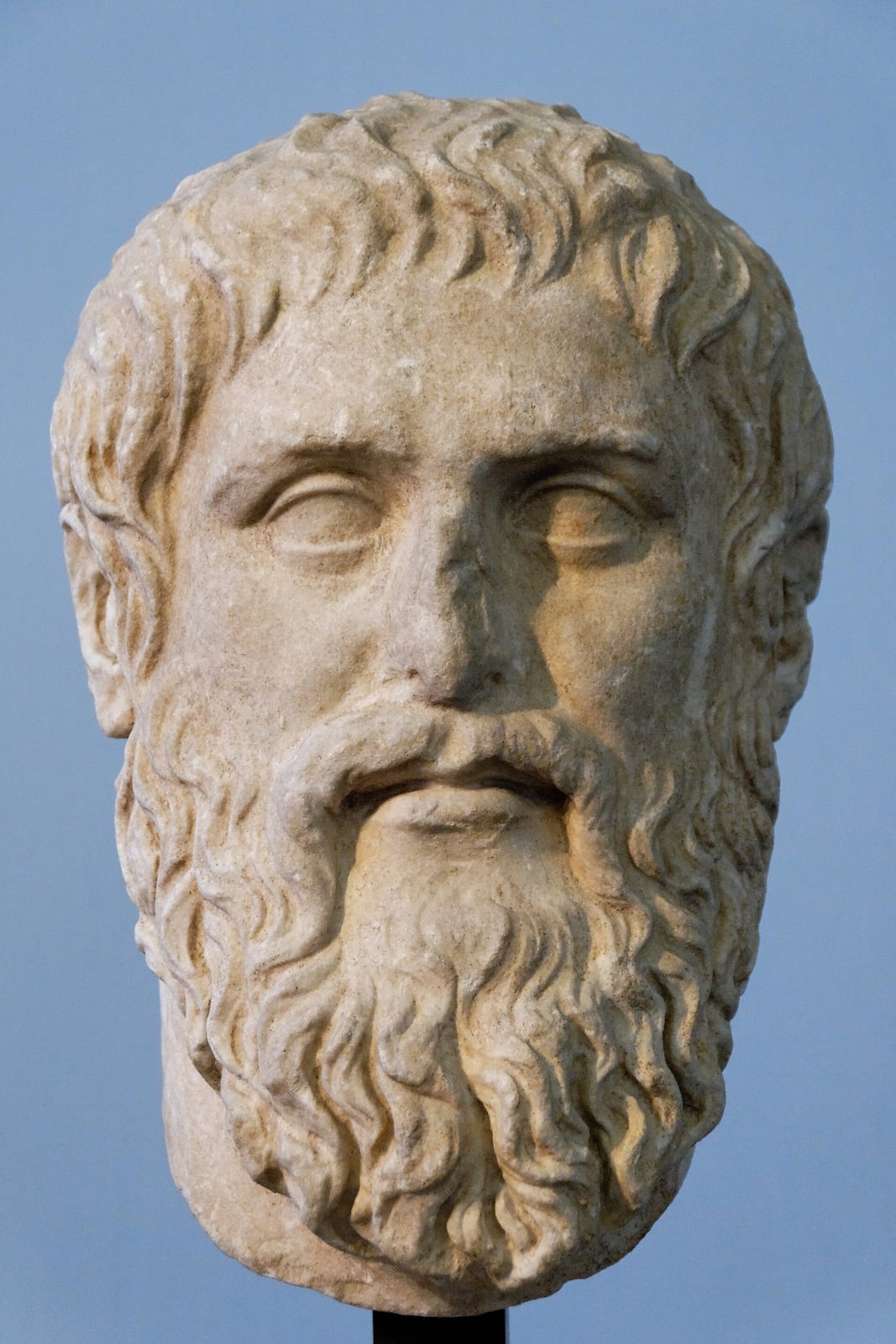
Plato
Widerspruch bei: Wer bin ich? Gibt es ein wahres Selbst? · Ist die Welt wirklich?
Anekdoten und Erzählungen
Anekdoten und Erzählungen
Umstrittensegunda mitad del s. I
The broken leg
Herkunft der Erzählung: Origen, Against Celsus VII.53, quoting Celsus' True Doctrine (c. 178). It is a polemical account, written a century later with an apologetic purpose; the Suda (epsilon 2424) gives another cause. It cannot be verified.
Quelle: Orígenes. Contra Celso, VII 53. Trad. inglesa de Frederick Crombie, Ante-Nicene Fathers, vol. IV. Buffalo: Christian Literature Publishing, 1885.
Belegtc. 100–170
The iron lamp and the clay lamp
Herkunft der Erzählung: The theft is told by Epictetus himself in Discourses I.18.15. The purchase of the lamp comes from Lucian, The Ignorant Book-Collector 13, a satire: the price may be exaggerated.
Belegtc. 65–68
The master and the shoemaker
Herkunft der Erzählung: Discourses I.19.19–22, in Epictetus' own words as transmitted by Arrian.
Zeugnismediados del s. II
The philosopher in the storm
Herkunft der Erzählung: Aulus Gellius, Attic Nights XIX.1, in the first person; Augustine summarises it in The City of God IX.4. It is fragment 9 in Schenkl's edition.
Zeugnisc. 125–135
The adopted child
Herkunft der Erzählung: Simplicius, Commentary on the Handbook (on the chapter about marriage), four centuries later; there is no other source. Discourses I.11 and III.22.67–82 for the doctrinal context.
Quelle: Simplicio. Comentario al Manual de Epicteto. Trad. inglesa de Tad Brennan y Charles Brittain, Simplicius: On Epictetus' Handbook, 2 vols. Londres: Duckworth / Ithaca: Cornell University Press, 2002.
Umstrittenc. 117–135; leyenda medieval
The emperor and the philosopher
Herkunft der Erzählung: Historia Augusta, Life of Hadrian 16.10 (a late source, end of the fourth century). The Altercatio Hadriani Augusti et Epicteti philosophi is a late, spurious anonymous work.
Lehren
Lehren
Die Begriffe, die das Denken gliedern, in ihrem Zusammenhang erklärt.
What is up to us (ta eph' hēmin)lo-que-depende-de-nosotros
Already formulated by the early Stoics in the debate on fate and responsibility, Epictetus makes it the practical axis of ethics and a daily exercise: before each impression, ask whether it is up to oneself or not.
Prohairesis (the faculty of choice)proairesis
Margaret Graver and A. A. Long stress that it is Epictetus' most original contribution to Stoic vocabulary; it influenced Marcus Aurelius and, through the Christian versions, the idea of free will.
Quelle: Long, A. A. Epictetus: A Stoic and Socratic Guide to Life. Oxford: Clarendon Press, 2002.
The use of impressionsuso-de-las-representaciones
Part of Stoic epistemology, which distinguished impression from assent; Epictetus turns it into moral practice. Modern cognitive psychotherapy (Albert Ellis, Aaron Beck) has claimed it as a precedent.
The three fields of trainingtres-campos
Pierre Hadot related these three fields to the three parts of Stoic philosophy (physics, ethics, logic) and showed that they structure Marcus Aurelius' Meditations as disciplines of desire, action and assent.
Quelle: Hadot, Pierre. La Citadelle intérieure. Introduction aux Pensées de Marc Aurèle. París: Fayard, 1992 (cap. sobre las tres disciplinas de Epicteto).
The role in the playpapel-en-el-drama
The theory of roles derives from Panaetius (via Cicero, On Duties I), but Epictetus gives it a religious accent: the author of the play is God.
Kinship with Godparentesco-con-dios
The personal tone of his theology made Christians read him sympathetically and adapt the Handbook for monasteries; some moderns have looked, without success, for direct Christian influence.
Quelle: Long, A. A. Epictetus: A Stoic and Socratic Guide to Life. Oxford: Clarendon Press, 2002.
Videos
Videos
Aufnahmen, Gespräche und Dokumentarfilme. Die Videos werden von YouTube wiedergegeben; sie werden nicht hier gespeichert.
Estoicismo romano (II): Epicteto | La March
Vortrag· ES· 2023· 60 min
Fundación Juan MarchOffizieller Kanal
La filosofía helenística (III): El estoicismo · La March
Vortrag· ES· 2022· 59 min
Fundación Juan MarchOffizieller Kanal
Cynics, Stoics, Epicureans
Vortrag· EN· 2021· 45 min
Gresham CollegeOffizieller Kanal
The Slave Who Was Free | Berkeley's AA Long on Epictetus
Gespräch· EN· 2025· 65 min
Johnathan Bi
Stoicon 2018: Tony Long "Stoicism Ancient and Modern"
Vortrag· EN· 2018· 49 min
Modern StoicismOffizieller Kanal
The philosophy of Stoicism - Massimo Pigliucci
Analyse· EN· 2017· 5 min
TED-EdOffizieller Kanal
A History of Philosophy | 16 Stoicism
Vortrag· EN· 2015· 63 min
wheatoncollegeOffizieller Kanal
Epictetus, the Enchiridion - Introduction to Philosophy
Vortrag· EN· 2011· 56 min
Gregory B. Sadler - That Philosophy Guy
Epictetus, Discourses | Habits and Practice | Philosophy Core Concepts
Vortrag· EN· 2015· 14 min
Gregory B. Sadler - That Philosophy Guy
Geschichte der Philosophie (5): Stoa, Epikureer und pyrrhonische Skepsis, Prof. Dr. Torsten Wilholt
Vortrag· DE· 2013· 76 min
InstPhilOffizieller Kanal
Monografia su EPITTETO
Analyse· IT· 2021· 97 min
Rick DuFer
Galerie
Galerie
Bilder mit geprüfter Lizenz. Jedes bewahrt seine Urheberschaft und seinen Herkunftsnachweis.
Handschriften
Handschriften
Handschriftliche Zeugen und alte Texte, mit ihrer verwahrenden Einrichtung und ihren Einsichtsbedingungen.
GRC · Minúscula griega · Lecciones de c. 108; copia de los ss. XI–XII
Ἀρριανοῦ τῶν Ἐπικτήτου διατριβῶν
- Erhaltener Textzeuge
- Arquetipo del que dependen todos los demás manuscritos de las Disertaciones
- Verwahrende Einrichtung
- Bodleian Library, Oxford · MS. Auct. T. 4. 13 (Misc. gr. 251)
Beziehungen
Beziehungen
Einflüsse, Schülerschaften und Verwandtschaften. Die belegte Beziehung wird von der durch Analyse ermittelten Ähnlichkeit unterschieden.
Beeinflusst von
Socrates is his constant model: he quotes him more than any other author, takes from the Apology and the Crito the idea that "Anytus and Meletus can kill me, but they cannot harm me" (Handbook 53) and proposes imitating his answer "I am a citizen of the world" (Discourses I.9).
Belegte Beziehung
Beeinflusst von
He belongs to the school Zeno founded, and names him among his models alongside Socrates and Diogenes (Discourses III.23.32).
Belegte Beziehung
Beeinflusst von
Diogenes is for him the example of the true Cynic and the free man; he devotes much of the discourse "About Cynism" (III.22) to him.
Belegte Beziehung
Beeinflusst von
He frequently quotes Plato's Socratic dialogues (Apology, Crito, Gorgias) as the source for the figure of Socrates.
Belegte Beziehung
Widersprach
He argues against Epicurus and the Epicureans in several discourses (I.23 "Against Epicurus"; II.20; III.7), reproaching them for denying man's natural sociability.
Belegte Beziehung
Beeinflusste
Marcus Aurelius came to know the notes of his lectures through Junius Rusticus (Meditations I.7), quotes him repeatedly and organises his Meditations according to his three fields of training.
Belegte Beziehung
Verwandte Gedanken mit
There is no evidence he read Aristotle, but his key term, prohairesis, comes from Aristotle's vocabulary of deliberate decision, which Epictetus turns into the name of the moral self.
Durch Analyse ermittelte Ähnlichkeit
Beeinflusste
Augustine summarises in The City of God (IX.4) Aulus Gellius' story of the Stoic philosopher who, in a storm, justified his fear with a book of Epictetus, and uses it to discuss the Stoic doctrine of the passions.
Belegte Beziehung
Verwandte Gedanken mit
There is no evidence that Plotinus read him. His fullest commentator, Simplicius, was a sixth-century Neoplatonist who read the Handbook as ethical preparation for Platonic philosophy.
Durch Analyse ermittelte Ähnlichkeit
Quellen
Quellen
Für diesen Eintrag herangezogene Bibliografie und Kataloge.
- Wikidata, entidad Q183144 «Epictetus» (117 enlaces entre wikis; P31=Q5). Registra nacimiento hacia el 50 en Hierápolis y muerte en el 135 o el 138 en Nicópolis.
- Graver, Margaret. «Epictetus». Stanford Encyclopedia of Philosophy, ed. Edward N. Zalta (publicada en 2008, revisión sustancial de 2025).
- Epicteto. Disertaciones (por Arriano) y Manual. Texto griego en Wikisource en griego; trad. inglesa de George Long, The Discourses of Epictetus; with the Encheiridion and Fragments (Londres: George Bell, 1877), en Wikisource en inglés.
- Long, A. A. Epictetus: A Stoic and Socratic Guide to Life. Oxford: Clarendon Press, 2002.
- Aulo Gelio. Noches áticas, I 2; II 18; XV 11; XVII 19; XIX 1. Trad. inglesa de John C. Rolfe, The Attic Nights, Loeb Classical Library 195, 200, 212. Londres: Heinemann, 1927 (libros I–II en LacusCurtius).
- Simplicio. Comentario al Manual de Epicteto. Trad. inglesa de Tad Brennan y Charles Brittain, Simplicius: On Epictetus' Handbook, 2 vols. Londres: Duckworth / Ithaca: Cornell University Press, 2002.
- Orígenes. Contra Celso, VII 53. Trad. inglesa de Frederick Crombie, Ante-Nicene Fathers, vol. IV. Buffalo: Christian Literature Publishing, 1885.
- Luciano de Samósata. Contra un ignorante que compraba muchos libros, 13. Trad. inglesa de A. M. Harmon, Lucian, vol. III, Loeb Classical Library 130. Londres: Heinemann, 1921.
- Historia Augusta, «Vida de Adriano» 16, 10. Trad. inglesa de David Magie, Loeb Classical Library 139, 1921 (texto en LacusCurtius).
- Millar, Fergus. «Epictetus and the Imperial Court». Journal of Roman Studies 55 (1965): 141–148.
- Oldfather, W. A. «Introduction», en Epictetus: The Discourses as Reported by Arrian, the Manual, and Fragments, vol. I. Loeb Classical Library 131. Londres: Heinemann / Nueva York: Putnam, 1925.
- Seddon, Keith H. «Epictetus (55–135 C.E.)». Internet Encyclopedia of Philosophy.
- «Epictetus», Wikipedia en inglés, y «Epicteto», Wikipedia en español (consultadas para hechos verificables y bibliografía; texto propio).
- Focio. Biblioteca, códice 58 (sobre Arriano). Trad. inglesa de J. H. Freese, The Library of Photius, vol. I. Londres: SPCK, 1920.
- Marco Aurelio. Meditaciones, I 7. Trad. inglesa de George Long (1862), Wikisource.
- Suda, s. v. «Epiktetos» (épsilon 2424). Suda On Line, trad. inglesa revisada.
- Hadot, Pierre. La Citadelle intérieure. Introduction aux Pensées de Marc Aurèle. París: Fayard, 1992 (cap. sobre las tres disciplinas de Epicteto).
- Antología Palatina, VII 676 (epigrama anónimo sobre Epicteto). Texto griego en Wikisource en griego.
- Bodleian Library, MS. Auct. T. 4. 13 (Arriano, Disertaciones de Epicteto; s. XI–XII). Ficha del catálogo de manuscritos medievales.
- Dobbin, Robert F. Epictetus: Discourses, Book I. Clarendon Later Ancient Philosophers. Oxford: Clarendon Press, 1998.
- Open Library: registros de las traducciones españolas antiguas del Manual — Francisco Sánchez de las Brozas, «Dotrina del estoico filosofo Epicteto, que se llama comunmente Enchiridion» (1600), y Francisco de Quevedo, «Epicteto y Phocilides en español con consonantes» (Madrid, 1635).
- Diógenes Laercio. Vidas de los filósofos ilustres, VII 23 («Zenón»). Trad. inglesa de R. D. Hicks, Lives of Eminent Philosophers, vol. II, Loeb Classical Library 185. Londres: Heinemann, 1925 (texto en Wikisource).
- Agustín de Hipona. La ciudad de Dios, IX 4. Trad. inglesa de Marcus Dods, Nicene and Post-Nicene Fathers, serie I, vol. II. Buffalo: Christian Literature Publishing, 1887 (texto en New Advent).
- Rechteinhaber
- Textos antiguos en dominio público; cada traducción y edición moderna pertenece a su traductor o editorial
Bestätigung ausstehend
Was dieser Eintrag noch nicht klären konnte. Wir sagen es lieber, als es aufzufüllen.
- Antonio Brum (o Brun), traductor del Enquiridión en «Obras de los moralistas griegos» (1888): identificar y fechar su muerte para confirmar el dominio público.
- Loeb de Oldfather: el ISBN 9780674992405 figura en Open Library sin número de volumen; confirmar que corresponde al vol. II (LCL 218).
- Pláticas por Arriano (trad. Pablo Jordán de Urríes, 1957–1973): confirmar volúmenes y editorial de cada tomo.
- Simplicio, On Epictetus' Handbook (Brennan y Brittain, 2002): falta ISBN verificado.
- Ediciones con ISBN en francés (Les Belles Lettres, Souilhé), alemán e italiano no registradas en esta pasada.
- Fragmentos: no se han inventariado uno a uno los fragmentos de la edición de Schenkl.
- Fecha de nacimiento: solo «hacia el 50»; la de muerte, hacia el 135 (Wikidata da también 125 y 138).
- Sin programa de afiliación verificado ni titular de derechos: autor antiguo; las editoriales citadas no se han comprobado como programas de afiliados.
Recherchiert am 2026-10-25