Stoizismus
Marcus Aurelius
Marcus Aurelius Antoninus Augustus · Μάρκος Αὐρήλιος Ἀντωνῖνος
121 – 180Historisch belegte Person
Römischer Kaiser (121–180) und stoischer Philosoph. Er regierte ab 161, in den ersten Jahren gemeinsam mit Lucius Verus, und verbrachte einen großen Teil seiner Herrschaft an der Donaugrenze im Krieg gegen Markomannen, Quaden und Sarmaten, während die Pest das Reich verheerte. Im Feldlager schrieb er auf Griechisch Aufzeichnungen an sich selbst, die wir als Selbstbetrachtungen kennen, eines der meistgelesenen Bücher der Antike. Sein im 19. Jahrhundert wiederentdeckter Briefwechsel aus der Jugend mit dem Rhetor Fronto ergänzt sein Bild.
- Werke
- 9Werke
- Ausgaben
- 24Ausgaben
- Zitate
- 12Zitate
- Videos
- 12Videos
- Bilder
- 8Bilder
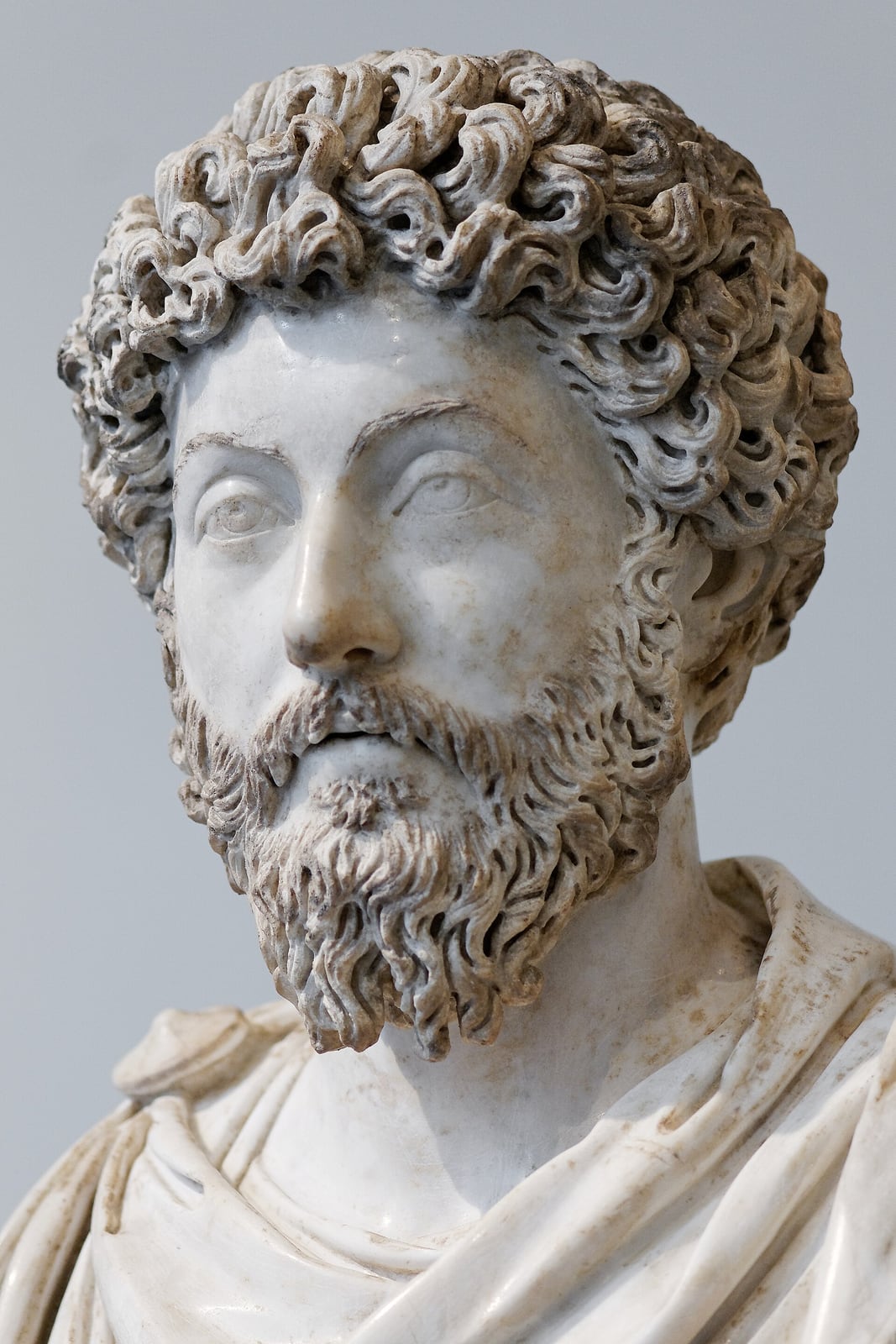
Busto de Marco Aurelio (Louvre, MR 561) · CC BY 2.5
In eigenen Worten
«Begin the morning by saying to thyself, I shall meet with the busybody, the ungrateful, arrogant, deceitful, envious, unsocial.»Meditaciones II 1. Griego: Wikisource; inglés: George Long (1862); español: traducción propia.

Der zentrale Gedanke
The inner citadel: The expression comes from Meditations VIII.48: "the mind which is free from passions is a citadel", the place where a person takes refuge and becomes impregnable.
Im Zusammenhang sehen
Biografie
5 Min. Lesezeit
Unterstützte Übersetzung aus dem spanischen Original, Durchsicht durch einen muttersprachlichen Übersetzer ausstehend.
Ein Buch, für niemanden geschrieben
Unter den Papieren, die Kaiser Mark Aurel bei seinem Tod hinterließ, befanden sich griechisch geschriebene Hefte, die für keinen Leser bestimmt waren. Es sind weder Memoiren noch ein Traktat, sondern Übungen, Ermahnungen und Erinnerungen, die ein Mensch an sich selbst richtet, oft in der zweiten Person, um nicht zu vergessen, woran er glaubt. Der Titel, den die Handschriften überliefern, Ta eis heauton, bedeutet „An sich selbst“; im Deutschen heißen sie gewöhnlich Selbstbetrachtungen. Dass der mächtigste Herrscher seiner Zeit die Nächte im Feldlager darauf verwandte, sein Verhalten mit den Werkzeugen der stoischen Philosophie zu prüfen, hat ihn seit der Renaissance zu einer einzigartigen Gestalt gemacht: Er ist der einzige römische Kaiser, der zugleich ein Autor ist, den man noch heute liest.
Verissimus
Er wurde am 26. April 121 in Rom geboren, in einer Villa auf dem Caelius. Die Familie des Vaters, die Annii Veri, stammte aus Ucubi in der Baetica und hatte Konsulat und Patriziat erlangt; seine Mutter, Domitia Lucilla, war Erbin eines großen Vermögens. Der Vater starb als Prätor, als der Junge etwa drei Jahre alt war, und Mutter und Großvater zogen ihn auf. Hadrian, der ihn schätzte, spielte mit seinem Namen und nannte ihn Verissimus, „den Wahrhaftigsten“. Die Historia Augusta erzählt, er habe mit zwölf Jahren den rauen Mantel der Philosophen angelegt und auf dem Boden schlafen wollen, bis ihn seine Mutter überredete, ein mit Fellen bedecktes Lager zu benutzen. Das erste Buch der Selbstbetrachtungen, eine Aufzählung dessen, was er jedem seiner Verwandten und Lehrer verdankt, setzt genau in diesen Jahren ein.
Der Erbe
Im Februar 138 adoptierte der kranke und kinderlose Hadrian Antoninus unter der Bedingung, dass dieser seinerseits Marcus, damals sechzehn Jahre alt, und den kleinen Lucius Verus adoptierte. Nach Hadrians Tod im Juli lebte Marcus mehr als zwanzig Jahre an der Seite des Antoninus Pius als designierter Nachfolger: Caesar 139, erstmals Konsul 140, im Jahr 145 vermählt mit seiner Cousine Faustina, der Tochter des Kaisers, die ihm mindestens dreizehn Kinder gebar, von denen viele früh starben. Er erhielt die beste Bildung seiner Zeit: lateinische Rhetorik bei Marcus Cornelius Fronto, griechische bei Herodes Atticus, Philosophie bei Stoikern wie Apollonios von Chalkedon, Sextus von Chaironeia und vor allem Iunius Rusticus, der ihm aus seiner eigenen Bibliothek die Mitschriften der Lehrvorträge Epiktets lieh.
Die Briefe Frontos
Aus jenen Jahren ist ein außergewöhnliches Zeugnis erhalten: der Briefwechsel zwischen Marcus und Fronto, lateinische — und einige griechische — Briefe aus der Zeit vom Ende der 130er bis zur Mitte der 160er Jahre. Jahrhundertelang galten sie als verloren, bis Angelo Mai 1815 und 1819 in der Biblioteca Ambrosiana in Mailand und in der Vaticana einen Palimpsest entdeckte, dessen Text ein Mönch getilgt hatte, um darüber die Akten eines Konzils abzuschreiben. Die Briefe zeigen einen herzlichen, fleißigen, der Rhetorik gegenüber bisweilen ungeduldigen jungen Mann, der von seinen Erkältungen erzählt, von der Weinlese, von seinen neugeborenen Töchtern und von einem Lehrer, den er mehr als alles andere zu lieben beteuert. Um 146 gesteht er Fronto, die Lektüre des Stoikers Ariston habe ihn den rednerischen Übungen entfremdet: Es ist die Hinwendung zur Philosophie, für die der Kaiser selbst in den Selbstbetrachtungen Rusticus danken wird.
Zwei Kaiser und eine Seuche
Antoninus Pius starb am 7. März 161. Marcus nahm sofort seinen Adoptivbruder Lucius Verus zum Mitregenten, und zum ersten Mal hatte Rom zwei Augusti mit gleichen Titeln. Die Regierung begann mit einem Krieg gegen die Parther in Armenien und Mesopotamien, den nominell Verus führte; bei seiner Rückkehr um 165/166 schleppte das Heer eine Epidemie ein, die sogenannte Antoninische Pest, die das Reich jahrelang heimsuchte. Verus starb Anfang 169, und Marcus regierte allein, bis er seinen Sohn Commodus zum Mitregenten erhob.
Die Donaugrenze
Seit dem Ende der 160er Jahre überschritten Markomannen, Quaden, Jazygen und andere Völker die Donau, und ein Einfall drang bis Aquileia in Italien vor. Um den Krieg zu finanzieren, ließ Marcus nach der Historia Augusta zwei Monate lang auf dem Trajansforum Hausrat und Juwelen des Palastes versteigern. Fast alle folgenden Jahre verbrachte er in den Lagern Pannoniens, in Carnuntum und Sirmium. In diese Zeit fällt die Niederschrift eines großen Teils der Selbstbetrachtungen: Das zweite Buch trägt die Überschrift „Bei den Quaden am Granua“, das dritte „In Carnuntum“. Aus diesen Feldzügen stammt auch die Episode vom Regenwunder, das ein verdurstendes römisches Heer rettete; die Mark-Aurel-Säule stellt es als Eingreifen eines Regengottes dar, die Christen schrieben es später dem Gebet ihrer Soldaten zu.
Die Erhebung und die Reise in den Osten
Im Frühjahr 175 ließ sich der Feldherr Avidius Cassius, Statthalter von Syrien, auf eine falsche Nachricht vom Tod des Marcus hin zum Kaiser ausrufen. Die Erhebung dauerte drei Monate und endete mit der Ermordung des Cassius durch seine eigenen Offiziere. Cassius Dio berichtet, Marcus habe bedauert, ihm nicht verzeihen zu können, habe seine Anhänger mit Milde behandelt und die kompromittierende Korrespondenz ungelesen verbrannt. Danach reiste er in den Osten; Faustina starb unterwegs in Halala in Kappadokien. In Athen ließ er sich in die Mysterien von Eleusis einweihen und stiftete besoldete Lehrstühle für die vier großen Philosophenschulen: die platonische, die aristotelische, die stoische und die epikureische. Im Jahr 177 erhob er Commodus, den einzigen ihn überlebenden Sohn, zum Augustus; im selben Jahr wurden unter seiner Herrschaft die Christen von Lyon hingerichtet.
Der Tod an der Front
178 kehrte er zu einem zweiten Feldzug an die Donau zurück. Er starb am 17. März 180 im Alter von achtundfünfzig Jahren, nach Aurelius Victor in Vindobona — dem heutigen Wien —, nach Tertullian in Sirmium. Die Historia Augusta erzählt, er habe in seiner Krankheit aufgehört zu essen und zu trinken, die Freunde gebeten, nicht um ihn zu weinen, sondern an die Seuche und an den allen gemeinsamen Tod zu denken, und am siebten Tag das Haupt verhüllt und sei in der Nacht gestorben. Dio fügt hinzu, dem Tribun, der ihn um die Parole bat, habe er geantwortet: „Geh zur aufgehenden Sonne, ich gehe schon unter.“ Er wurde unter die Götter erhoben, Commodus folgte ihm nach, und mit ihm endete die Epoche, die Edward Gibbon 1776 als die glücklichste und blühendste der Menschheitsgeschichte beschreiben sollte.
Die innere Burg
Die Selbstbetrachtungen haben nur mit knapper Not überlebt. Um das Jahr 900 erwähnt Bischof Arethas von Caesarea, ein altes Exemplar zu besitzen; das byzantinische Lexikon der Suda zitiert sie, und Wilhelm Xylander veröffentlichte 1558 in Zürich die Erstausgabe mit lateinischer Übersetzung nach einer heute verlorenen Handschrift. Pierre Hadot hat gezeigt, dass ihre Wiederholungen nicht Unordnung, sondern Methode sind: geistige Übungen, in denen Marcus die Grundsätze der Stoa Epiktets — die Disziplin des Urteils, des Begehrens und des Handelns — immer wieder neu niederschreibt, um sie sich zu eigen zu machen. Von Meric Casaubon 1634 und von George Long 1862 ins Englische übersetzt, von John Stuart Mill in Über die Freiheit als Beispiel angeführt, ist das Buch eines Kaisers, der sich ermahnte, nicht zu „verkaisern“, achtzehn Jahrhunderte später noch immer einer der meistbegangenen Zugänge zur antiken Philosophie.
Quellen: Historia Augusta, «Vida de Marco Antonino el Filósofo» (Vita Marci Antonini Philosophi). Trad. inglesa de David Magie, The Scriptores Historiae Augustae, vol. I, Loeb Classical Library 139. Londres: Heinemann, 1921 (texto en LacusCurtius). Fuente tardía (finales del s. IV) y poco fiable en muchos pasajes. · Dion Casio, Historia romana, epítome de los libros LXXI–LXXII. Trad. inglesa de Earnest Cary, Dio's Roman History, vol. IX, Loeb Classical Library 177. Londres: Heinemann, 1927 (texto en LacusCurtius; numeración de Cary). · Birley, Anthony R. Marcus Aurelius: A Biography. Ed. revisada. Londres: B. T. Batsford, 1987 (reimpr. Routledge, 2000). · Hadot, Pierre. La Citadelle intérieure. Introduction aux Pensées de Marc Aurèle. París: Fayard, 1992. Trad. inglesa: The Inner Citadel, Harvard University Press, 1998; trad. española: La ciudadela interior, Alpha Decay, 2013. · Marco Aurelio. Τὰ εἰς ἑαυτόν (Meditaciones). Texto griego en Wikisource en griego; trad. inglesa de George Long, The Thoughts of the Emperor Marcus Aurelius Antoninus (Londres, 1862), en Wikisource en inglés.
Zeitleiste
Das Leben, Jahr für Jahr
Jeder Punkt ist ein belegtes Ereignis. Klicken Sie, um es mit Quelle und Grad der Gewissheit zu lesen.
26. April 1210 JahreRoma (monte Celio)
Birth
Born on 26 April (the sixth day before the Kalends of May) in the family villa on the Caelian, son of Marcus Annius Verus and Domitia Lucilla (Historia Augusta, Marcus 1.5).
BelegtHistoria Augusta, «Vida de Marco Antonino el Filósofo» (Vita Marci Antonini Philosophi). Trad. inglesa de David Magie, The Scriptores Historiae Augustae, vol. I, Loeb Classical Library 139. Londres: Heinemann, 1921 (texto en LacusCurtius). Fuente tardía (finales del s. IV) y poco fiable en muchos pasajes.
Nach dem Tod
- um 193The Column of Marcus Aurelius
- 1538The equestrian statue on the Capitoline
- 1558First edition of the Meditations
- 1815Discovery of the letters to Fronto
- 1992Pierre Hadot's The Inner Citadel
26. April 121 · 0 Jahre
Birth
Born on 26 April (the sixth day before the Kalends of May) in the family villa on the Caelian, son of Marcus Annius Verus and Domitia Lucilla (Historia Augusta, Marcus 1.5).
Belegt
um 124 · 3 Jahre
Death of his father
His father dies as praetor; he is raised by his mother and his grandfather, Marcus Annius Verus, three times consul. Hadrian calls him "Verissimus".
Wahrscheinlich
um 133 · 12 Jahre
The philosopher's cloak
At twelve he adopts the Greek cloak and the austere life of the philosophers and sleeps on the ground until his mother persuades him to use a couch with skins (Historia Augusta, Marcus 2.6).
Überlieferung
Februar 138 · 16 Jahre
Adoption by Antoninus
On 25 February Hadrian adopts Antoninus, who in turn adopts Marcus and Lucius Verus. Hadrian dies on 10 July and Antoninus (Pius) succeeds him.
Belegt
um 139 · 18 Jahre
Correspondence with Fronto begins
Towards the end of the 130s the letters with his teacher of Latin rhetoric, Marcus Cornelius Fronto, begin; they continue until Fronto's death, around 166–167.
Wahrscheinlich
140 · 18 Jahre
First consulship
Consul together with Antoninus Pius, having received the title of Caesar in 139.
Belegt
145 · 24 Jahre
Marriage to Faustina the Younger
He marries his cousin Faustina, daughter of Antoninus Pius. They will have at least thirteen children; only one son, Commodus, will outlive his father.
Belegt
um 146 · 25 Jahre
The turn to philosophy
In a letter to Fronto he says that reading the Stoic Aristo has made him lose his taste for rhetorical exercises. His chief teacher of philosophy will be Junius Rusticus, who introduces him to the notes of Epictetus' lectures (Meditations I.7).
Wahrscheinlich
7. März 161 · 39 Jahre
Emperor with Lucius Verus
Antoninus Pius dies on 7 March. Marcus takes power and shares the title of Augustus with Lucius Verus: the first time Rome has two emperors with equal prerogatives.
Belegt
um 165 – 180 · 44 Jahre
The Antonine plague
The army returning from the Parthian war (161–166) brings an epidemic that spreads through the Empire for more than a decade.
Belegt
um 167 – 180 · 46 Jahre
Marcomannic Wars
The wars against the Marcomanni, Quadi and Iazyges begin. To fund them he auctions the palace furnishings in the Forum of Trajan (Historia Augusta, Marcus 17.4). Lucius Verus dies early in 169.
Belegt
um 172 · 51 Jahre
The rain miracle
A surrounded and thirsty Roman army is saved by a sudden storm. Cassius Dio credits the spells of the Egyptian Arnuphis; the Column of Marcus Aurelius, a rain god; Christian writers, the prayer of Christian soldiers. The date (172 or 174) is debated.
Umstritten
um 172 – 180 · 51 Jahre
Writing the Meditations
The headings of Books II ("Among the Quadi, on the Granua") and III ("At Carnuntum") place part of the work in the Danube campaigns of the 170s.
Wahrscheinlich
175 · 54 Jahre
Revolt of Avidius Cassius
Avidius Cassius proclaims himself emperor; he is murdered by his officers three months later. Marcus treats his supporters with clemency and destroys their papers unread (Cassius Dio LXXII 27–29). Faustina dies at Halala during the journey east.
Belegt
176 · 55 Jahre
Eleusis and the Athenian chairs
He is initiated into the Eleusinian mysteries and endows salaried chairs for the Platonist, Aristotelian, Stoic and Epicurean schools (Cassius Dio LXXII 31). On 23 December he celebrates a triumph in Rome with Commodus.
Belegt
177 · 56 Jahre
Commodus Augustus; the martyrs of Lyon
He makes Commodus co-emperor. That year the Christians of Lyon and Vienne are martyred (Eusebius, Ecclesiastical History V.1).
Belegt
17. März 180 · 58 Jahre
Death
Dies on 17 March during the second Danube expedition (Cassius Dio LXXII 33). The place is uncertain: Vindobona according to Aurelius Victor, Sirmium according to Tertullian.
Belegt
um 193
The Column of Marcus Aurelius
The column commemorating the Marcomannic Wars is completed, with the relief of the rain miracle; it stands today in Piazza Colonna.
Wahrscheinlich
1538
The equestrian statue on the Capitoline
Michelangelo sets the bronze equestrian statue in the Capitoline square; it had survived the Middle Ages because it was believed to represent Constantine.
Belegt
1558
First edition of the Meditations
Wilhelm Xylander publishes the Greek text with a Latin translation at Andreas Gesner's press, from a Palatine manuscript now lost.
Belegt
1815
Discovery of the letters to Fronto
Angelo Mai identifies the correspondence of Fronto with Marcus in a palimpsest in the Ambrosian Library; in 1819 he publishes the part kept in the Vatican (Vat. lat. 5750).
Belegt
1992
Pierre Hadot's The Inner Citadel
Hadot interprets the Meditations as spiritual exercises organised according to Epictetus' three disciplines, a reading that has shaped later scholarship.
Belegt
Werke
Grundlegende Werke
Die Werke, ohne die sich das Vermächtnis nicht verstehen lässt.
Schriftliches Werk · um 172
Meditations
Τὰ εἰς ἑαυτόν
Twelve books of short notes, in Koine Greek, in which the emperor urges himself to live according to nature and reason on Stoic principles. Book I differs from the rest: an account of what he learned from his family, his teachers—Rusticus, Apollonius, Sextus, Fronto—and Antoninus Pius, and of what he owes to the gods. Book II is headed "Among the Quadi, on the Granua" and Book III "At Carnuntum". Books IV to XII alternate maxims, meditations on death and transience, the examination of one's own impressions, the view from above on human affairs, patience with others as kin in a common reason, and acceptance of what fate brings. He quotes Heraclitus, Epicurus and above all Epictetus. The first printed edition is Xylander's (Zurich, 1558); the other complete witness is the Vaticanus graecus 1950 (14th century).
10 Ausgaben · amazon.com

Briefwechsel · um 145
Correspondence with Fronto
Epistulae M. Cornelii Frontonis et M. Aurelii
Letters, many of them fragmentary, exchanged between Marcus and his teacher of Latin rhetoric, Marcus Cornelius Fronto, from the late 130s to the mid-160s. Arranged in books by addressee (Ad M. Caesarem, Ad Antoninum imperatorem, De feriis Alsiensibus, De eloquentia…), they show the heir's rhetorical training, his declared affection for his teacher, the domestic life of the imperial family, everyone's illnesses and Marcus' gradual move away from rhetoric to philosophy, which he confesses around 146 after reading the Stoic Aristo. They were thought lost until Angelo Mai found them in a palimpsest (Ambrosiana, 1815; Vatican, 1819). The standard critical edition is Michel van den Hout's (Teubner, 1988).
7 Ausgaben · amazon.com
Das gesamte Werk (9)
Marcus Aurelius
Letter to the Athenians
The Conscious LibraryLetter to the Athenians
175
Marcus Aurelius
Imperial constitutions and rescripts
The Conscious LibraryImperial constitutions and rescripts
161
Marcus Aurelius
Speech to the troops on Cassius' revolt
The Conscious LibrarySpeech to the troops on Cassius' revolt
175
Marcus Aurelius
Letter to the Senate on the rain miracle
The Conscious LibraryLetter to the Senate on the rain miracle
Marcus Aurelius
Edict to the Assembly of Asia
The Conscious LibraryEdict to the Assembly of Asia
Marcus Aurelius
Letters quoted in the Historia Augusta
The Conscious LibraryLetters quoted in the Historia Augusta

The Golden Book of Marcus Aurelius
1528
Zitate
Zitate, die in einem bestimmten Werk nachgewiesen sind. Jedes trägt seine Herkunft und seinen Grad an Verlässlichkeit.
Begin the morning by saying to thyself, I shall meet with the busybody, the ungrateful, arrogant, deceitful, envious, unsocial.Ἕωθεν προλέγειν ἑαυτῷ· συντεύξομαι περιέργῳ, ἀχαρίστῳ, ὑβριστῇ, δολερῷ, βασκάνῳ, ἀκοινωνήτῳ.
GeprüftMeditaciones II 1. Griego: Wikisource; inglés: George Long (1862); español: traducción propia.
Apokryphe Zitate oder Zitate umstrittener Zuschreibung (4)
«What we do in life echoes in eternity.»
A line spoken by the general Maximus in the film Gladiator (Ridley Scott, 2000). It does not appear in the Meditations or in any ancient text about Marcus Aurelius.
«Live a good life. If there are gods and they are just, then they will not care how devout you have been, but will welcome you based on the virtues you have lived by.»
A modern text circulating online. It is not found in the Meditations; it vaguely recalls the dilemma of providence or atoms (II 11; XII 14), but neither its form nor its meaning is Marcus Aurelius'.
«Everything we hear is an opinion, not a fact. Everything we see is a perspective, not the truth.»
It does not appear in the Meditations. It is usually offered as a paraphrase of passages such as "all is opinion" (II 15; XII 26), which say something different: that our judgement about things is up to us.
«The happiness of your life depends upon the quality of your thoughts.»
A modern paraphrase, not a literal quotation, of Meditations V.16 ("the soul is dyed by the thoughts"). The original passage should be quoted instead.
Letzte Worte
Widersprüchliche Fassungen
«"Go to the rising sun; I am already setting."»Cassius Dio (LXXII 34.1, in Xiphilinus' epitome) says that, at the point of death, he commended his son to the soldiers and gave this reply to the tribune asking for the day's watchword. The Historia Augusta (Marcus 28) gives another account of the last days: on the sixth day he asked his friends why they wept for him instead of thinking about the plague and the death common to all; on taking leave, that if they gave him leave to go he bade them farewell and went on ahead; on the seventh day he received only Commodus, sent him away for fear of contagion, covered his head as if to sleep and died in the night. Neither author was a witness: Dio wrote a few decades later and the Historia Augusta at the end of the fourth century. Dio's Greek text has not been checked in this pass; the translation follows Earnest Cary.
Quelle: Dion Casio, Historia romana, epítome de los libros LXXI–LXXII. Trad. inglesa de Earnest Cary, Dio's Roman History, vol. IX, Loeb Classical Library 177. Londres: Heinemann, 1927 (texto en LacusCurtius; numeración de Cary).
Fragen
Was das Werk beantwortet
Zwölf große Fragen der Menschheit und was sich aus den Texten darauf antworten lässt, mit Belegen. Wir legen niemandem Worte in den Mund.
Was ist das Absolute? Gibt es Gott?
One rational living being and gods who help, or else atoms
Persönlich und unpersönlich zugleichAusdrücklich gesagt
In the Meditations, Marcus Aurelius thinks of the universe in Stoic fashion as a single living being with one substance and one soul, in which everything is interwoven by a common reason. This impersonal ground coexists with a personal dealing with the gods: in book I he thanks them for good parents, teachers and friends, and in book IX he recommends asking them not to be spared something but not to fear it. Most distinctive is the alternative he repeats again and again: either providence, order and unity, or a jumble and scattering of atoms. Marcus chooses the first, but holds that his conduct must not depend on the answer: even if all were chance, he must not act by chance.
Diese Frage mit anderen Meistern vergleichenWer bin ich? Gibt es ein wahres Selbst?
A rational ruling part born for cooperation
Ein in Beziehung gebildetes SelbstAusdrücklich gesagt
Marcus Aurelius describes himself in the Meditations as a little flesh, a little breath and a ruling part, and only the last is properly his own. He also calls that inner reason the daimon Zeus has given each person as guide, a fragment of himself. But he equally insists that this reason is social: we are born to cooperate, like feet, hands or rows of teeth; we are limbs of a single body of rational beings, and what does not benefit the hive does not benefit the bee. His first reflection of the morning already prepares him to deal with difficult people without ceasing to recognise them as kin. Marcus's self is always thought within a community.
Diese Frage mit anderen Meistern vergleichenWarum leiden wir?
Only the present is lived; picturing all of life at once overwhelms
Denken und psychologische ZeitAusdrücklich gesagt
Marcus Aurelius returns again and again to two ideas. The first, Stoic, is that what harms us is not things but our opinion about them: remove the opinion and “I have been harmed” is removed. The second is more his own: each person lives only this instant, and the rest has either been lived or is uncertain. Hence he advises not to be troubled by the picture of one's whole life and to ask, before each present thing, what in it is unbearable; isolated, the present becomes small. The Meditations invite one to circumscribe it. Suffering grows when the mind adds to what happens the past it remembers and the future it fears.
Diese Frage mit anderen Meistern vergleichenWas geschieht nach dem Tod?
Dispersal or transformation: either way, an operation of nature
Schweigen oder ZurückhaltungAusdrücklich gesagt
Death is one of the most frequent themes of the Meditations, and Marcus Aurelius approaches it without taking any doctrine for certain. Sometimes he reasons with the alternative between atoms and providence: if we are atoms, dispersal; if we are a unity, extinction or change of abode. At other times he adopts Stoic physics: souls, after a time, are reabsorbed into the seminal reason of the whole, as bodies decompose in the earth; we exist as parts and will vanish into what produced us. In every case the practical conclusion is the same: death is an operation of nature, like birth, and the urgent thing is to become good while one lives.
Diese Frage mit anderen Meistern vergleichenWie erlangt man Befreiung oder Erlösung?
Enough arguing about what a good man should be: be one
Durch Tugend und HarmonieAusdrücklich gesagt
The Meditations do not seek to leave the world but to live in it in agreement with common nature and one's own, which is rational and social. Marcus Aurelius often lists the virtues that suffice for him — justice, truth, temperance, courage — and urges himself to act with them in each deed, as if it were the last. The inner strength he seeks is a citadel: a mind free of passions where nothing external can enter. The tone is urgent: do not live as if you were going to live ten thousand years; while you live, become good. And he often reproaches himself for the tendency to theorise instead of practise: enough of arguing about what a good man should be.
Diese Frage mit anderen Meistern vergleichenBraucht es einen Lehrer?
A whole book of gratitude to those who taught him how to live
Hilfreich, aber nicht unverzichtbarAusdrücklich gesagt
The first book of the Meditations is an inventory of debts. Marcus Aurelius lists what he learned from his grandfather, his mother, his tutor, Diognetus, Rusticus — who lent him Epictetus' notes —, Apollonius, Sextus, Alexander, Fronto, his brother Severus and his adoptive father Antoninus. Each left him a concrete trait: not being carried away by rhetoric, freedom of judgement, simplicity, gentleness. The teachers were decisive, but he does the work: the rest of the book consists of exercises written for himself, and he repeats that nobody can prevent him from being good. The teacher forms; each person's ruling part decides.
Diese Frage mit anderen Meistern vergleichenIst die Welt wirklich?
The universe is change: everything flows and nature transforms all
Natürliche Ordnung im WandelAusdrücklich gesagt
Marcus Aurelius contemplates the world as ceaseless flux within an order. The universe is change and life is opinion, he writes; the substance of human life is a flux, and time, a river of events. The nature of the whole loves nothing so much as transforming what exists and making new things like them; what decomposes serves as seed for what is born. But that flux is not chance: it is the work of a rational nature in which everything is interwoven and has its place. The resulting attitude is active acceptance: to love what happens, because what suits the world suits each part, and to keep step with the course of things.
Diese Frage mit anderen Meistern vergleichenWas ist Liebe?
Love humankind, follow God; love even those who go astray
Liebe zu Gott und zum NächstenAusdrücklich gesagt
In book VII of the Meditations Marcus Aurelius gives himself a short watchword: love humankind, follow God. In another passage of the same book he states that it is proper to man to love even those who go astray, and that this is achieved by remembering that they are kin, that they err through ignorance and unwillingly, that soon we shall all be dead, and that they have not harmed us, since they have not made our ruling part worse. The foundation is common reason: all rational beings are limbs of a single body, born to help one another. This love is not a feeling dependent on how we are treated but a disposition of reason imitating the divine order.
Diese Frage mit anderen Meistern vergleichenSind wir frei, oder ist alles vorherbestimmt?
Welcome what fate weaves and act justly in what depends on oneself
Schicksal und VerantwortungAusdrücklich gesagt
Marcus Aurelius accepts the Stoic order of fate: everything that happens was woven from the beginning into the fabric of the whole, and one must hand oneself willingly to Clotho to spin with us what she will. Love what befalls you, he tells himself, because it was destined for you and comes from the same source as you. But that consent is not passivity. What depends on him — his judgement, his intention, his just dealing with others — is his responsibility and his field of freedom, and nobody can prevent him from using it well. Even facing the alternative between providence and atoms, he concludes that, even if all were chance, he must not act by chance.
Diese Frage mit anderen Meistern vergleichenWozu meditieren oder beten?
Do each act as if it were the last, and retreat into yourself
Gegenwärtig seinAusdrücklich gesagt
The Meditations are themselves an exercise: notes Marcus Aurelius addresses to himself to recall what is essential. His most constant practice is attention to the present: to do each action as if it were the last of one's life, without haste or pretence; to remember that each person lives only this instant; to circumscribe the present so that it does not overwhelm him. To this is added inner retreat: there is no quieter place than one's own soul, and one can withdraw into it whenever one wishes to be renewed. On prayer, he proposes asking the gods not to be spared something but not to fear or desire it. To pray and meditate is to return to what is here and depends on oneself.
Diese Frage mit anderen Meistern vergleichenKann die Vernunft das Letzte erkennen?
Defining each thing and knowing the nature of the whole, without thirst for books
Studium und GelehrsamkeitAusdrücklich gesagt
Marcus Aurelius trusts that reason, which he shares with the gods, can comprehend the order of the universe: whoever does not know what the cosmos is does not know where he is, he writes. He recommends defining and describing each object that presents itself, breaking it down into its parts and seeing what it is in itself, so as to judge it without deceit. But his study is practical: he urges himself to give up the thirst for books and regrets not having been able to read more, though he decides that living by what he has learned is enough. He also acknowledges that things are wrapped in such a veil that many philosophers find them incomprehensible. Reason knows enough to live well, though not everything.
Diese Frage mit anderen Meistern vergleichenSich von der Welt zurückziehen oder sie verwandeln?
An emperor writing to himself on campaign: the retreat is within
Kontemplation im HandelnAusdrücklich gesagt
Marcus Aurelius wrote much of the Meditations during the Danube campaigns, amid the duties of government. His answer to the question is explicit: people seek retreats in the country, on the coast or in the mountains, but wishing for that is the mark of an ordinary man, because one can retreat into oneself at any hour one likes, and there is no quieter place than one's own soul. That inner retreat does not take him away from duty: he must rise each morning to do the work of a human being, act justly in the place that has fallen to him and take care not to become a Caesar. Contemplation and action coexist in a single day.
Diese Frage mit anderen Meistern vergleichen
Affinitäten und Spannungen
Affinitäten und Spannungen
Frage für Frage aus den Positionen berechnet. Den Grund jeder Übereinstimmung und jedes Widerspruchs zeigt ein Klick.
Denkt ähnlich wie
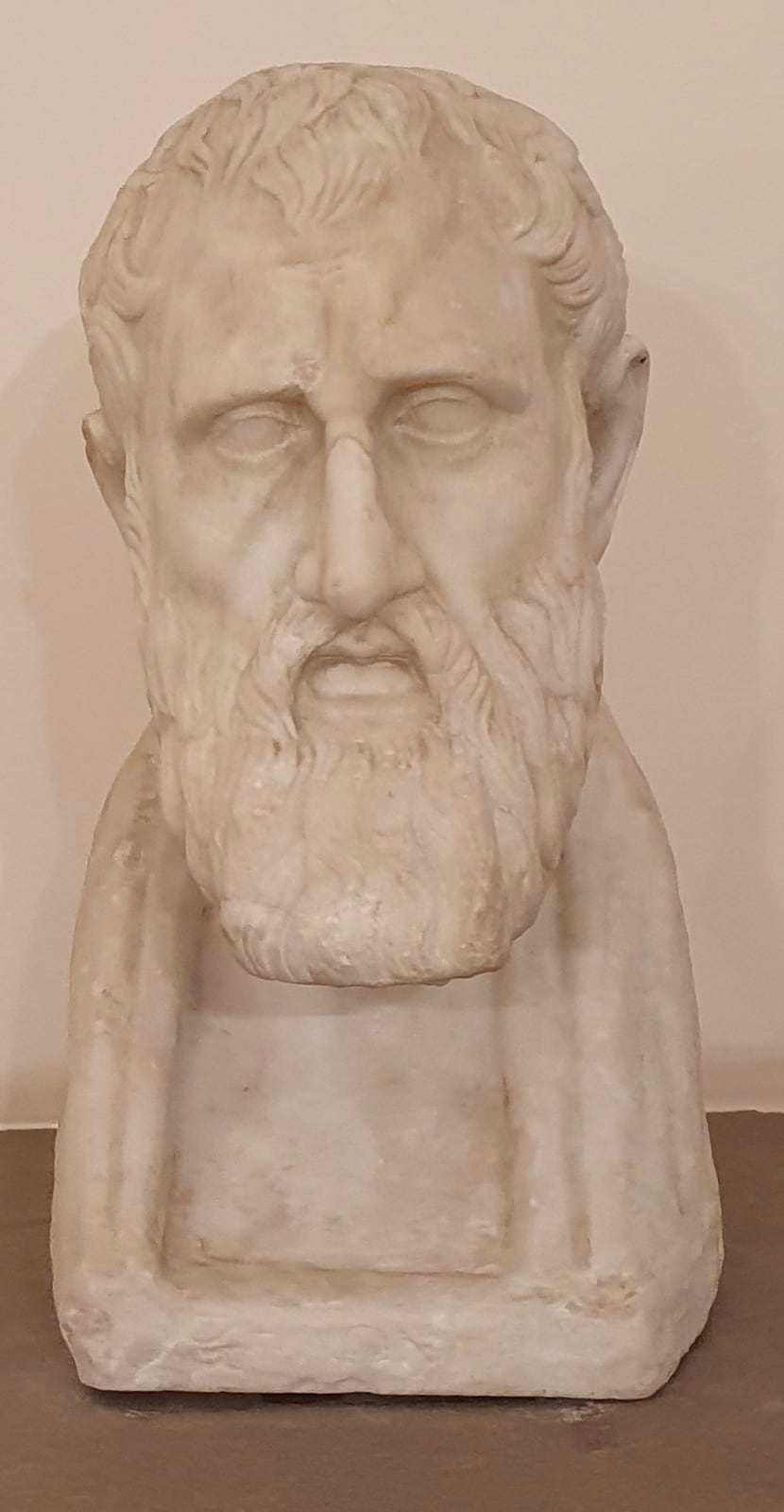
Zeno of Citium
Übereinstimmung bei: Wer bin ich? Gibt es ein wahres Selbst? · Was geschieht nach dem Tod? · Wie erlangt man Befreiung oder Erlösung?
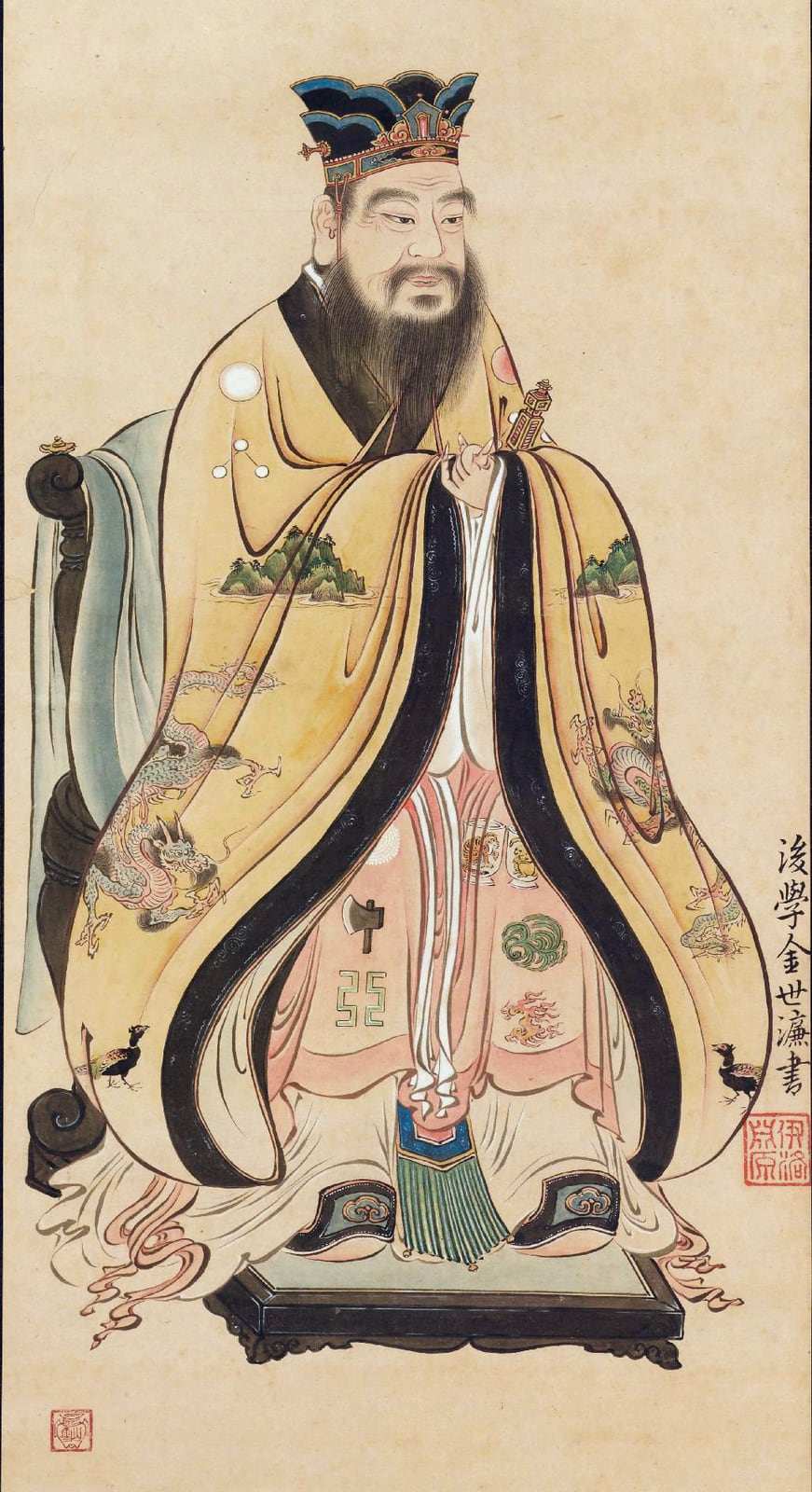
Confucius
Übereinstimmung bei: Wer bin ich? Gibt es ein wahres Selbst? · Was geschieht nach dem Tod? · Wie erlangt man Befreiung oder Erlösung?
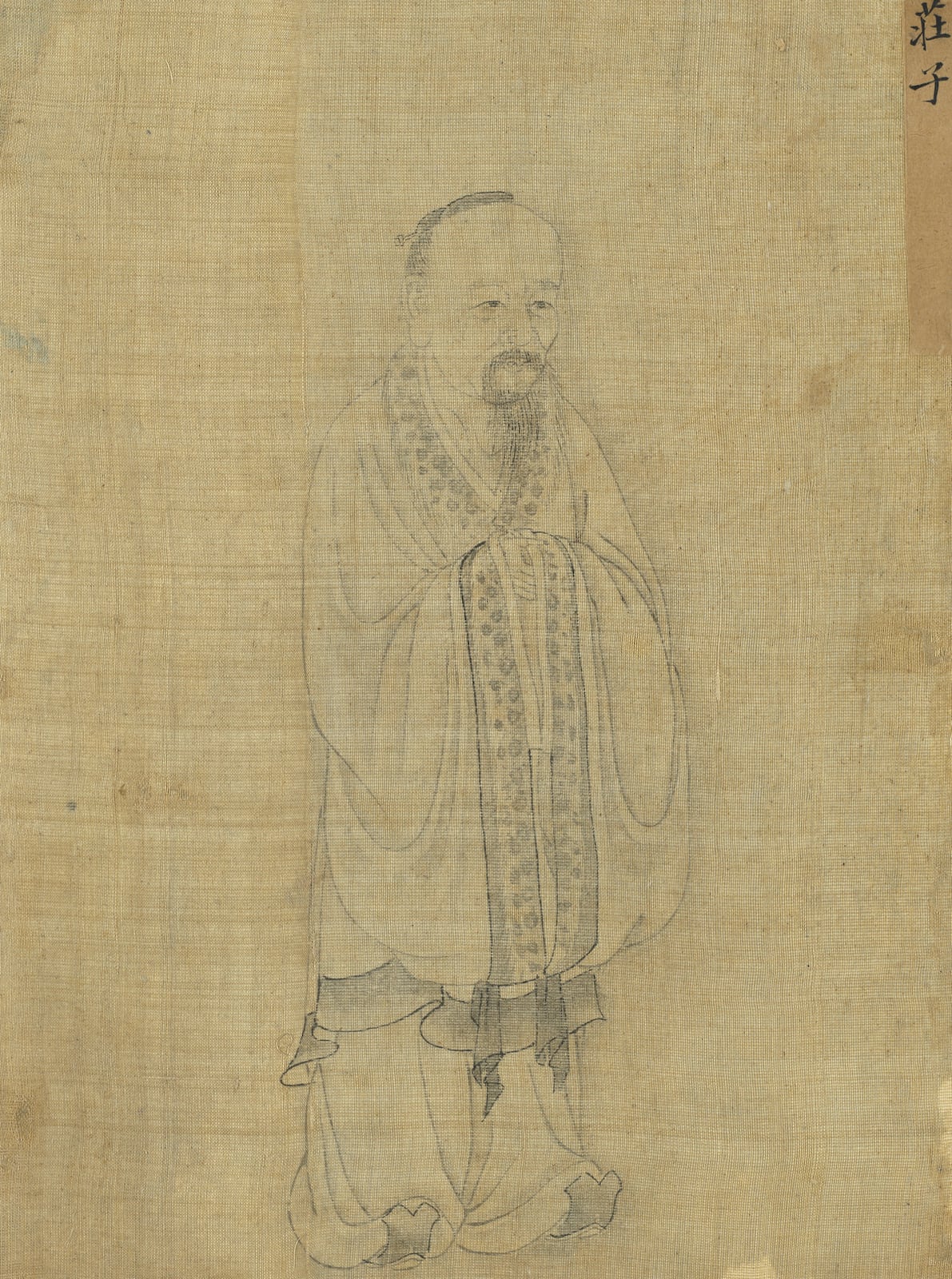
Zhuangzi
Übereinstimmung bei: Was geschieht nach dem Tod? · Wie erlangt man Befreiung oder Erlösung? · Braucht es einen Lehrer?
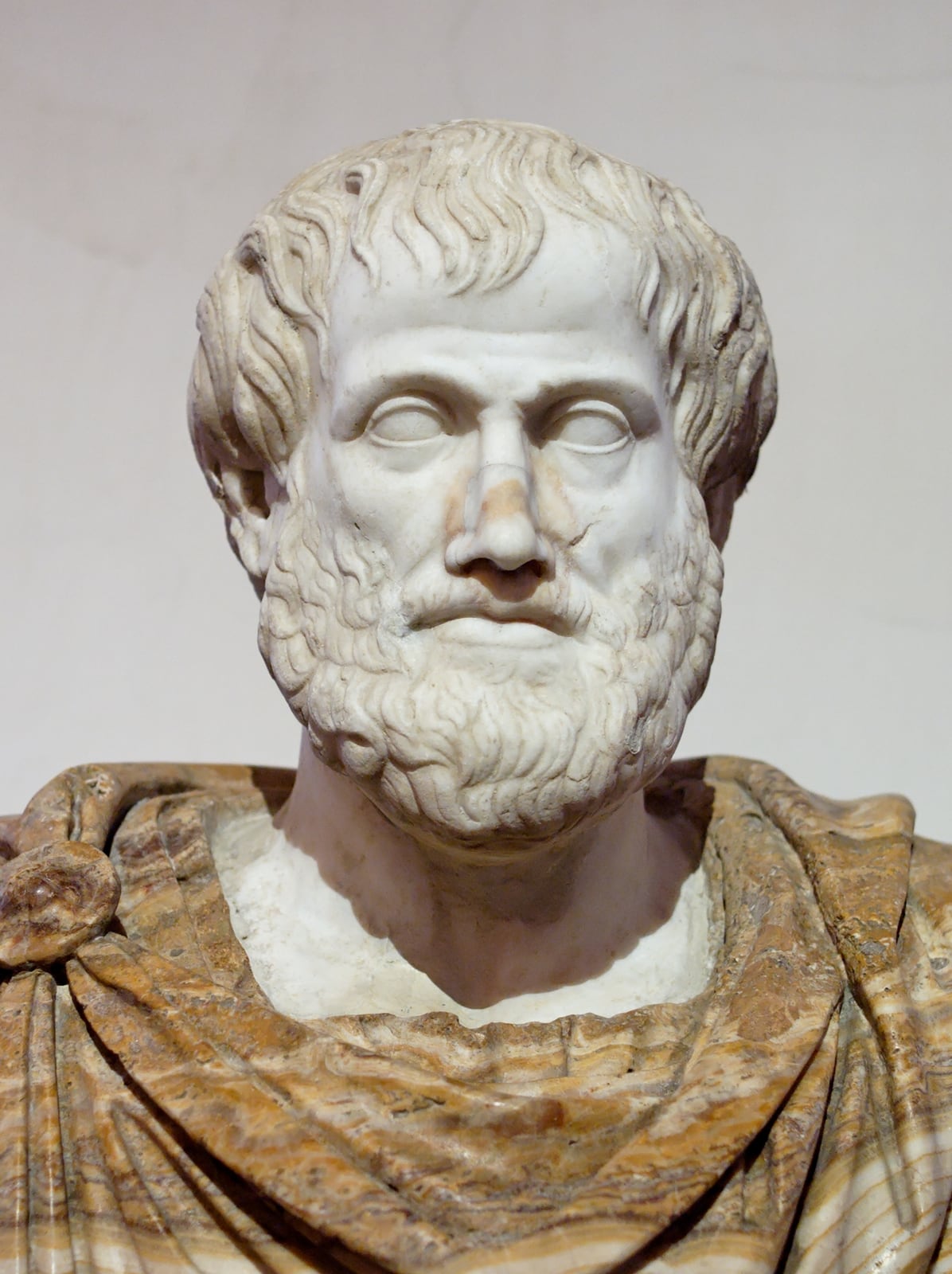
Aristotle
Übereinstimmung bei: Wer bin ich? Gibt es ein wahres Selbst? · Was geschieht nach dem Tod? · Wie erlangt man Befreiung oder Erlösung?
Denkt anders als

Dattatreya
Widerspruch bei: Was ist das Absolute? Gibt es Gott? · Wer bin ich? Gibt es ein wahres Selbst? · Warum leiden wir?
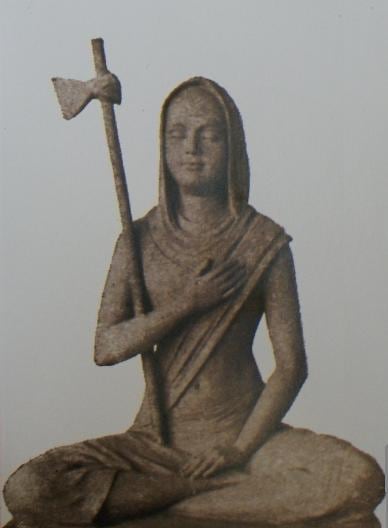
Gaudapada
Widerspruch bei: Was ist das Absolute? Gibt es Gott? · Wer bin ich? Gibt es ein wahres Selbst? · Warum leiden wir?
Uddalaka Aruni
Widerspruch bei: Was ist das Absolute? Gibt es Gott? · Wer bin ich? Gibt es ein wahres Selbst? · Was geschieht nach dem Tod?
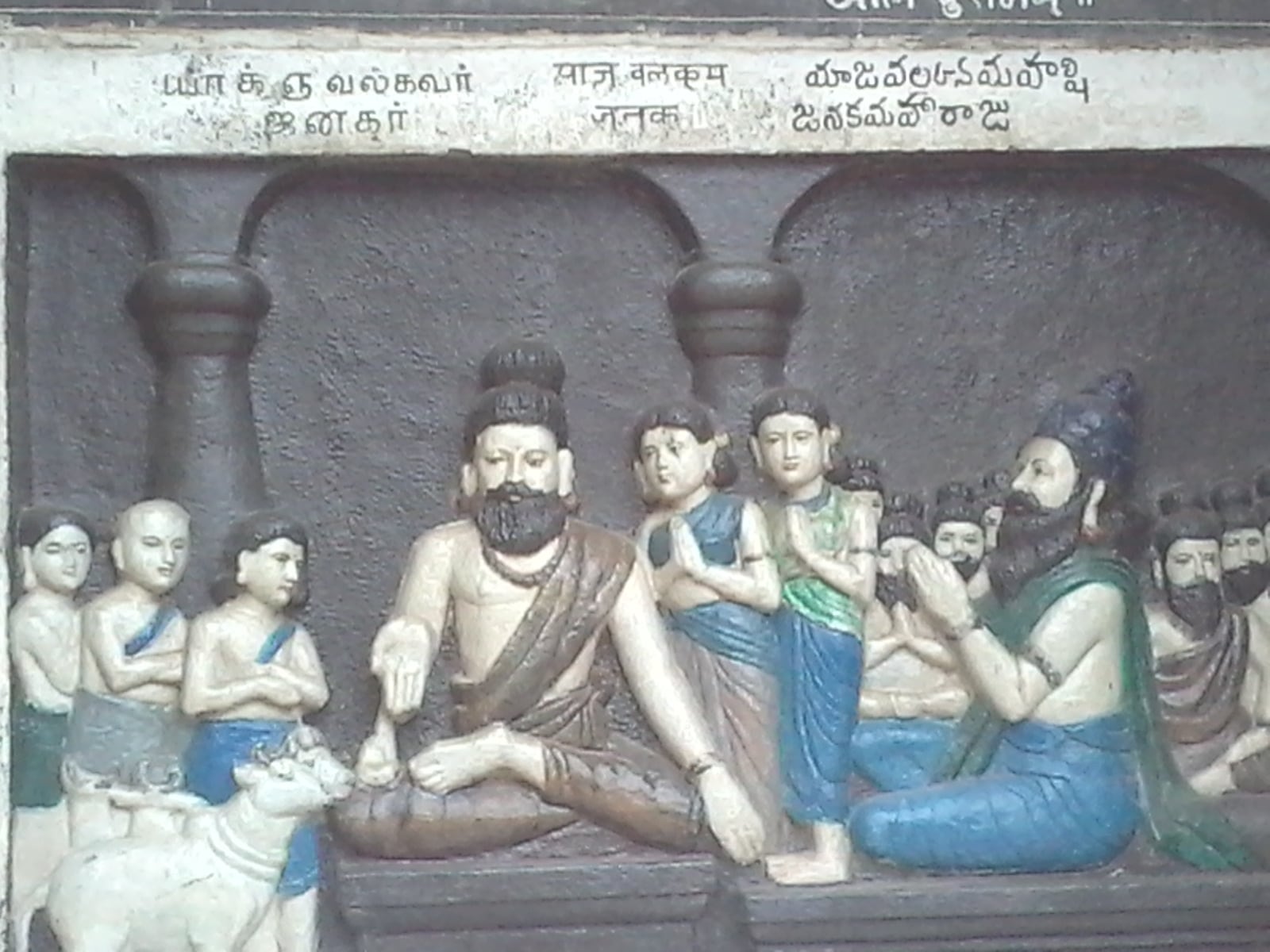
Yajnavalkya
Widerspruch bei: Was ist das Absolute? Gibt es Gott? · Wer bin ich? Gibt es ein wahres Selbst? · Warum leiden wir?
Anekdoten und Erzählungen
Anekdoten und Erzählungen
Zeugnisc. 124–133
Verissimus
Herkunft der Erzählung: The nickname is recorded by Cassius Dio (LXIX 21) and the Historia Augusta (Marcus 1.10), and the dedication in Justin, First Apology 1. The episode of the cloak and the couch comes only from the Historia Augusta (Marcus 2.6), a late source; the lines about his mother from Meditations I.3.
Zeugnisdécada del 160
The emperor who went to school
Herkunft der Erzählung: Cassius Dio LXXI (LXXII Cary) 1.2; Historia Augusta, Marcus 3.1–2; Meditations I.8–9. The later anecdote in which a philosopher asks the emperor where he is going with his books and is told that he is going to learn (Philostratus, Lives of the Sophists II.1) has not been checked in this pass.
Zeugnisc. 169
The palace auction
Herkunft der Erzählung: Historia Augusta, Marcus 17.4–5 and 21.9. There is no confirmation in Cassius Dio; Birley considers it plausible, but the source is late and prone to edifying anecdote.
Umstritten172 o 174
The miraculous rain
Herkunft der Erzählung: Cassius Dio LXXII 8–10 (with the Christian rejoinder of the epitomator Xiphilinus); relief on the Column of Marcus Aurelius; Tertullian, Apology 5; Eusebius, Ecclesiastical History V.5. Péter Kovács (2009) gathers and discusses all the sources and the dating. The rain may have been a real event; its religious interpretation is partisan in every version.
Quelle: Kovács, Péter. Marcus Aurelius' Rain Miracle and the Marcomannic Wars. Leiden: Brill, 2009.
Zeugnis175
The letters left unread
Herkunft der Erzählung: Cassius Dio LXXII 27–29 (epitome). The Historia Augusta (Marcus 25–26 and Life of Avidius Cassius) repeats the story and embellishes it with letters scholars regard as invented.
Belegtc. 176; 1538
The statue saved by a mistake
Herkunft der Erzählung: The identification with Constantine is recorded in medieval documents that call it "the horse of Constantine"; the 1538 move and the relocation of the original are documented by the Capitoline Museums. Summarised from Smarthistory and general scholarship.
Lehren
Lehren
Die Begriffe, die das Denken gliedern, in ihrem Zusammenhang erklärt.
The inner citadelciudadela-interior
Pierre Hadot took this image as the title of his 1992 study. It draws on the early Stoic doctrine of the soul as ruling reason and on Epictetus' insistence that only our judgements are up to us.
Quelle: Hadot, Pierre. La Citadelle intérieure. Introduction aux Pensées de Marc Aurèle. París: Fayard, 1992. Trad. inglesa: The Inner Citadel, Harvard University Press, 1998; trad. española: La ciudadela interior, Alpha Decay, 2013.
The three disciplinestres-disciplinas
The scheme comes from Epictetus' Discourses (III.2), which Marcus knew through Junius Rusticus; Hadot made it the key to reading the Meditations.
Quelle: Hadot, Pierre. La Citadelle intérieure. Introduction aux Pensées de Marc Aurèle. París: Fayard, 1992. Trad. inglesa: The Inner Citadel, Harvard University Press, 1998; trad. española: La ciudadela interior, Alpha Decay, 2013.
The view from abovemirada-desde-lo-alto
Hadot connected it with a tradition running from Plato (Theaetetus) and Cicero's Dream of Scipio to the Stoics; Marcus uses it as therapy rather than theory.
Quelle: Hadot, Pierre. La Citadelle intérieure. Introduction aux Pensées de Marc Aurèle. París: Fayard, 1992. Trad. inglesa: The Inner Citadel, Harvard University Press, 1998; trad. española: La ciudadela interior, Alpha Decay, 2013.
The river of time and deathfugacidad
The image of the river comes from Heraclitus, whom Marcus quotes several times; the doctrine that death is not an evil is shared by Stoics and Epicureans.
The city of Zeuscosmopolis
The idea of the cosmopolis goes back to Zeno of Citium and Chrysippus; Marcus gives it a personal and affective inflection, tied to patience with others.
Providence or atoms?providencia-o-atomos
It shows Marcus' free use of tradition: he quotes Epicurus respectfully and adopts his argument against fear when it serves him.
Quelle: Rutherford, R. B. The Meditations of Marcus Aurelius: A Study. Oxford: Clarendon Press, 1989.
Videos
Videos
Aufnahmen, Gespräche und Dokumentarfilme. Die Videos werden von YouTube wiedergegeben; sie werden nicht hier gespeichert.
Estoicismo romano (III): Marco Aurelio | La March
Vortrag· ES· 2023· 56 min
Fundación Juan MarchOffizieller Kanal
La filosofía helenística (III): El estoicismo · La March
Vortrag· ES· 2022· 59 min
Fundación Juan MarchOffizieller Kanal
El estoicismo romano: Marco Aurelio
Vortrag· ES· 2023· 17 min
UNED RadioOffizieller Kanal
Cynics, Stoics, Epicureans
Vortrag· EN· 2021· 45 min
Gresham CollegeOffizieller Kanal
Marcus Aurelius' Meditations: The Stoic Ideal
Vortrag· EN· 2020· 42 min
Michael Sugrue
A History of Philosophy | 16 Stoicism
Vortrag· EN· 2015· 63 min
wheatoncollegeOffizieller Kanal
The philosophy of Stoicism - Massimo Pigliucci
Analyse· EN· 2017· 5 min
TED-EdOffizieller Kanal
The Equestrian Sculpture of Marcus Aurelius
Analyse· EN· 2026· 7 min
SmarthistoryOffizieller Kanal
Equestrian Sculpture of Marcus Aurelius
Analyse· EN· 2010· 3 min
SmarthistoryOffizieller Kanal
Bernard Collette | l'action politique de Marc Aurèle à la lumière du stoïcisme
Vortrag· FR· 2018· 51 min
Faculté de philosophie - Université LavalOffizieller Kanal
Et si on s'était trompé sur Marc Aurèle ? - Dialogue avec Pierre Vesperini
Gespräch· FR· 2024· 57 min
Dialogues par Fabrice Midal
Marco Aurelio, il principe filosofo. Stoicismo, arte del governo e diritti individuali
Vortrag· IT· 2020· 86 min
Istituto Bruno LeoniOffizieller Kanal
Galerie
Galerie
Bilder mit geprüfter Lizenz. Jedes bewahrt seine Urheberschaft und seinen Herkunftsnachweis.
Handschriften
Handschriften
Handschriftliche Zeugen und alte Texte, mit ihrer verwahrenden Einrichtung und ihren Einsichtsbedingungen.
GRC · Minúscula griega · Obra de c. 170–180; copia del s. XIV
Τὰ εἰς ἑαυτόν (en un códice misceláneo)
- Erhaltener Textzeuge
- Único manuscrito medieval que conserva la mayor parte de la obra
- Verwahrende Einrichtung
- Biblioteca Apostólica Vaticana · Vat. gr. 1950
GRC · Minúscula griega · Copia medieval de fecha desconocida
Codex Palatinus (perdido)
- Erhaltener Textzeuge
- Manuscrito usado por Xylander para la editio princeps de 1558; se perdió después
- Verwahrende Einrichtung
- Perdido
LA · Mayúscula latina (texto inferior) · Cartas de c. 139–166; copia de la Antigüedad tardía (s. V–VI)
Palimpsesto de Frontón (Vat. lat. 5750 + Ambrosianus E 147 sup.)
- Erhaltener Textzeuge
- Palimpsesto: el texto de Frontón fue raspado para copiar encima las actas del concilio de Calcedonia
- Verwahrende Einrichtung
- Biblioteca Apostólica Vaticana y Biblioteca Ambrosiana (Milán) · Vat. lat. 5750; Ambr. E 147 sup.
- Digitalisierung
- digi.vatlib.it/view/MSS_Vat.lat.5750…
Beziehungen
Beziehungen
Einflüsse, Schülerschaften und Verwandtschaften. Die belegte Beziehung wird von der durch Analyse ermittelten Ähnlichkeit unterschieden.
Beeinflusst von
Junius Rusticus introduced him to the notes of Epictetus' lectures (Meditations I.7). Marcus quotes him often (IV.41, XI.34–39) and adopts his distinction between what is and is not up to us.
Belegte Beziehung
Beeinflusst von
His teachers of philosophy, Junius Rusticus and Apollonius, "professed Zeno's doctrines" (Cassius Dio LXXII 35). Marcus belongs to the school Zeno founded.
Belegte Beziehung
Beeinflusst von
Socrates appears in the Meditations as a model of life and death (III.6, VII.66, XI.23–28); Marcus sets him beside Diogenes and Heraclitus against Alexander, Caesar and Pompey (VIII.3).
Belegte Beziehung
Beeinflusst von
He quotes the Republic and the Apology (VII.35, VII.44–46) and knew the maxim that states prosper if philosophers rule them, which according to the Historia Augusta he often repeated (Marcus 27.7). He endowed a Platonist chair at Athens.
Belegte Beziehung
Verwandte Gedanken mit
He does not quote Aristotle, but studied with the Peripatetic Claudius Severus (Historia Augusta, Marcus 3.3) and endowed an Aristotelian chair at Athens (Cassius Dio LXXII 31). They agree that the human good is activity in accordance with reason and on the social nature of man.
Durch Analyse ermittelte Ähnlichkeit
Beeinflusst von
Despite the rivalry between schools, he quotes Epicurus approvingly on how to bear pain and illness (VII.33, VII.64, IX.41) and often poses the dilemma "providence or atoms". He also endowed an Epicurean chair at Athens.
Belegte Beziehung
Beeinflusst von
He quotes Heraclitus several times (IV.46, VI.42) and adopts his image of time as a river.
Belegte Beziehung
Verwandte Gedanken mit
Plotinus was born around 205, a generation after Marcus' death, and does not mention him. Both practise philosophy as an inner conversion: Marcus' "retire into yourself" and Plotinus' "go back into yourself" (Enneads I.6.9) have been compared by Pierre Hadot.
Durch Analyse ermittelte Ähnlichkeit
Verwandte Gedanken mit
There is no evidence that Augustine read the Meditations. They are compared as two great ancient writings of self-examination in the second person, although the Confessions are addressed to God and the Meditations to their own author.
Durch Analyse ermittelte Ähnlichkeit
Quellen
Quellen
Für diesen Eintrag herangezogene Bibliografie und Kataloge.
- Wikidata, entidad Q1430 «Marcus Aurelius» (176 enlaces entre wikis; P31=Q5). Registra nacimiento el 26-4-121 en Roma y muerte el 17-3-180 en Vindobona.
- Historia Augusta, «Vida de Marco Antonino el Filósofo» (Vita Marci Antonini Philosophi). Trad. inglesa de David Magie, The Scriptores Historiae Augustae, vol. I, Loeb Classical Library 139. Londres: Heinemann, 1921 (texto en LacusCurtius). Fuente tardía (finales del s. IV) y poco fiable en muchos pasajes.
- Dion Casio, Historia romana, epítome de los libros LXXI–LXXII. Trad. inglesa de Earnest Cary, Dio's Roman History, vol. IX, Loeb Classical Library 177. Londres: Heinemann, 1927 (texto en LacusCurtius; numeración de Cary).
- Birley, Anthony R. Marcus Aurelius: A Biography. Ed. revisada. Londres: B. T. Batsford, 1987 (reimpr. Routledge, 2000).
- Hadot, Pierre. La Citadelle intérieure. Introduction aux Pensées de Marc Aurèle. París: Fayard, 1992. Trad. inglesa: The Inner Citadel, Harvard University Press, 1998; trad. española: La ciudadela interior, Alpha Decay, 2013.
- Kamtekar, Rachana. «Marcus Aurelius». Stanford Encyclopedia of Philosophy, ed. Edward N. Zalta (publicada en 2010, revisión sustancial de 2025).
- Marco Aurelio. Τὰ εἰς ἑαυτόν (Meditaciones). Texto griego en Wikisource en griego; trad. inglesa de George Long, The Thoughts of the Emperor Marcus Aurelius Antoninus (Londres, 1862), en Wikisource en inglés.
- Frontón, Marco Cornelio. The Correspondence of Marcus Cornelius Fronto with Marcus Aurelius Antoninus, Lucius Verus, Antoninus Pius, and Various Friends. Ed. y trad. de C. R. Haines. 2 vols., Loeb Classical Library 112–113. Londres: Heinemann, 1919–1920.
- Rutherford, R. B. The Meditations of Marcus Aurelius: A Study. Oxford: Clarendon Press, 1989.
- Hays, Gregory. «Introduction», en Marcus Aurelius, Meditations: A New Translation. Nueva York: Modern Library, 2003.
- «Marcus Aurelius», Wikipedia en inglés, y «Marco Aurelio», Wikipedia en español (consultadas para hechos verificables y bibliografía; texto propio).
- Richlin, Amy. Marcus Aurelius in Love: The Letters of Marcus and Fronto. Chicago: University of Chicago Press, 2006.
- Eusebio de Cesarea. Historia eclesiástica, V 1–5. Trad. inglesa de Kirsopp Lake, Ecclesiastical History, vol. I, Loeb Classical Library 153. Londres: Heinemann, 1926; Tertuliano, Apologético 5.
- Kovács, Péter. Marcus Aurelius' Rain Miracle and the Marcomannic Wars. Leiden: Brill, 2009.
- Gibbon, Edward. The History of the Decline and Fall of the Roman Empire, vol. I, cap. III. Londres: Strahan y Cadell, 1776 (texto en Project Gutenberg).
- Mill, John Stuart. On Liberty, cap. II. Londres: John W. Parker and Son, 1859 (texto en Project Gutenberg).
- Aurelio Víctor, Liber de Caesaribus 16, 14 (muerte en Vindobona); Tertuliano, Apologeticum 25, 5 (muerte en Sirmio). Discusión de ambas noticias en Birley 1987, cap. 10.
- Harris, Beth, y Steven Zucker. «The Equestrian Sculpture of Marcus Aurelius». Smarthistory, 2026 (vídeo).
- Biblioteca Apostólica Vaticana, Vat. lat. 5750 (palimpsesto de Frontón; texto superior: actas del concilio de Calcedonia). Digitalización en DigiVatLib.
- Gill, Christopher. «Introduction», en Marcus Aurelius, Meditations, trad. de Robin Hard. Oxford World's Classics. Oxford: Oxford University Press, 2011.
- Real Academia Española. Antonio de Guevara, Libro áureo de Marco Aurelio, ed. crítica de Emilio Blanco, Biblioteca Clásica de la RAE.
- Oliver, James H. Marcus Aurelius: Aspects of Civic and Cultural Policy in the East. Hesperia Supplements 13. Princeton: American School of Classical Studies at Athens, 1970.
- Justino Mártir, Primera apología, apéndice con la «Carta de Marco Aurelio al Senado». Trad. inglesa en Ante-Nicene Fathers, vol. I, ed. A. Roberts y J. Donaldson. Buffalo: Christian Literature Publishing, 1885.
- Rechteinhaber
- Textos antiguos en dominio público; cada traducción y edición moderna pertenece a su traductor o editorial
Bestätigung ausstehend
Was dieser Eintrag noch nicht klären konnte. Wir sagen es lieber, als es aufzufüllen.
- Últimas palabras: cotejar el texto griego de Dion Casio LXXII 34, 1 (ed. Boissevain) para rellenar text_original; hoy solo se da la traducción de Cary.
- Manuscrito Vat. gr. 1950: no se ha localizado su digitalización en DigiVatLib (404 el 2026-10-25); comprobar si existe con otra signatura o en otra plataforma.
- Alianza, «Meditaciones o Soliloquios» (ISBN 9788420688466, trad. Antonio Guzmán Guerra): confirmar año en el colofón; la edición de Alianza de 1985 (ISBN 9788420636740) aparece en Open Library sin traductor.
- Libro áureo de Marco Aurelio (RAE, ed. Emilio Blanco): falta año e ISBN verificados.
- Ediciones con ISBN en francés (Les Belles Lettres, Pierre Hadot / A. I. Trannoy), alemán (Reclam, Insel) e italiano no registradas en esta pasada.
- El Digesto de Justiniano (trad. Alan Watson, 1985) se registra sin ISBN; las constituciones de Marco Aurelio no se han inventariado una a una.
- Anécdota de Filóstrato (Vidas de los sofistas II 1) sobre el emperador que va a clase: no cotejada.
- Sin programa de afiliación verificado ni titular de derechos: Marco Aurelio es autor antiguo; las editoriales citadas no se han comprobado como programas de afiliados.
Recherchiert am 2026-10-25