Konfuzianismus
Confucius
孔子 · 孔丘 · 仲尼 · 孔夫子
551 v. Chr. – 479 v. Chr.Historisch belegte Person
Lehrer, enttäuschter Beamter und Herausgeber der Überlieferung: Kong Qiu (551–479 v. Chr.) ist die am besten belegte und einflussreichste Gestalt des altchinesischen Denkens. Die Gespräche schrieb er nicht selbst; seine Schüler und deren Schüler stellten sie zusammen. Er lehrte, dass die Ordnung der Welt aus der Menschlichkeit (ren) erwächst, die durch Ritus (li) und Lernen gepflegt wird, und dass man zum Edlen nicht geboren wird, sondern wird. Zwei Jahrtausende lang galt er als „Lehrer der zehntausend Generationen“; seine historische Gestalt verlangt unter den Schichten von Hagiographie und Staatsdoktrin weiterhin Vorsicht.
- Werke
- 11Werke
- Ausgaben
- 33Ausgaben
- Zitate
- 12Zitate
- Videos
- 14Videos
- Bilder
- 9Bilder
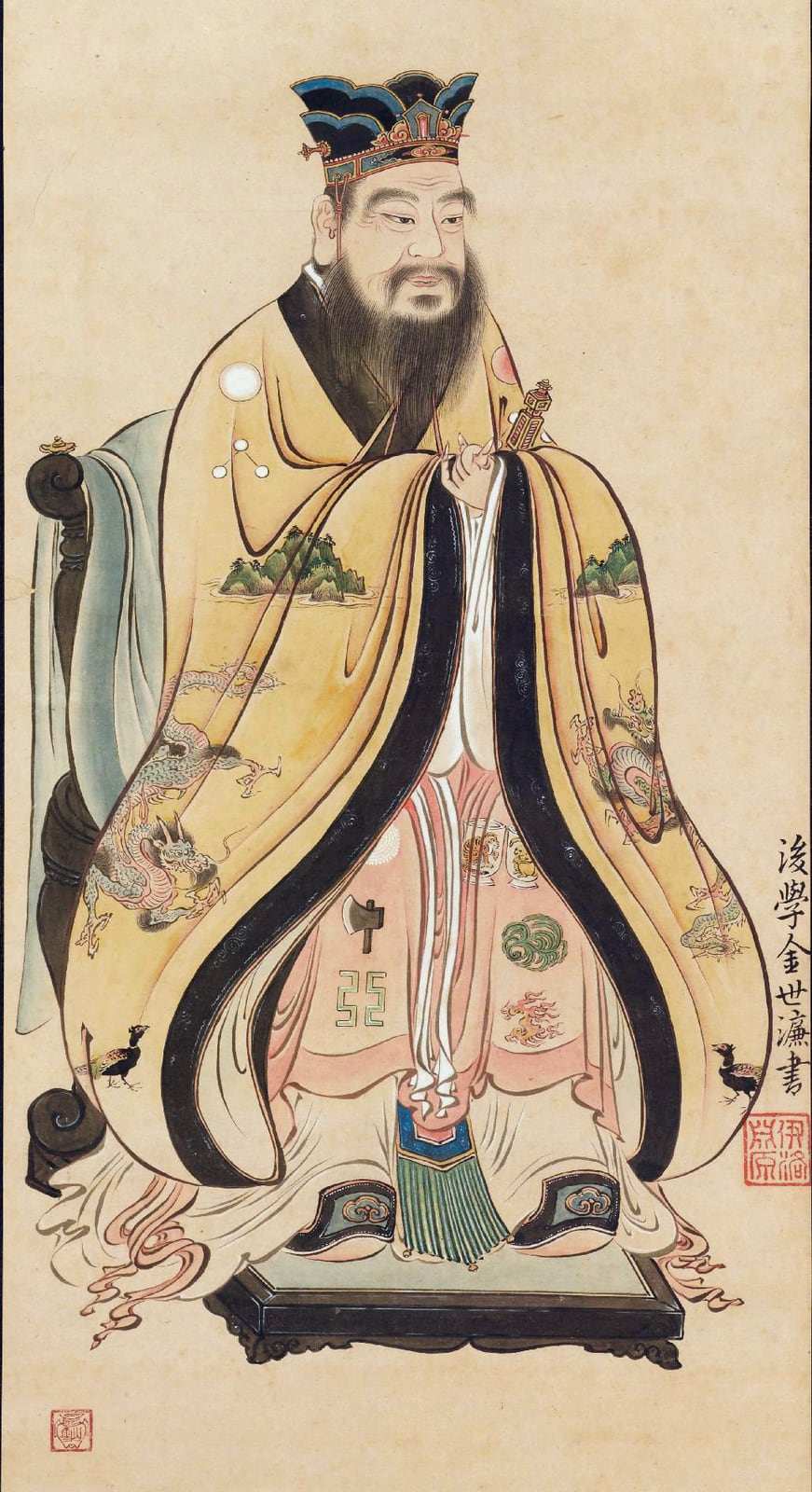
Retrato de Confucio por Kanō Sansetsu · CC BY 4.0
In eigenen Worten
«Is it not pleasant to learn with a constant perseverance and application? Is it not delightful to have friends coming from distant quarters?»Analectas 1.1 (trad. inglesa de Legge, 1861)

Der zentrale Gedanke
Ren (humaneness, benevolence): Ren is the central virtue of the Analects and the one that most resists definition: the Master answers each disciple who asks about it differently.
Im Zusammenhang sehen
Biografie
5 Min. Lesezeit
Unterstützte Übersetzung aus dem spanischen Original, Durchsicht durch einen muttersprachlichen Übersetzer ausstehend.
Ein Mann aus Lu
Anders als Laozi hat Konfuzius eine Biographie. Wir wissen, dass er Kong Qiu hieß, dass sein Mannesname Zhongni lautete, dass er in Zou im kleinen Staat Lu geboren wurde – dem heutigen Qufu in Shandong – und dass er ebendort im Jahr 479 v. Chr. starb, im sechzehnten Regierungsjahr des Herzogs Ai, wie es die Chronik von Lu, das Chunqiu, verzeichnet und ihr Kommentar, das Zuozhuan, erläutert. Sein Vater, Shuliang He, ein Offizier niederen Ranges, starb, als das Kind drei Jahre alt war; seine Mutter, Yan Zhengzai, zog ihn in Armut auf. „In meiner Jugend war ich von niederem Stand“, wird er selbst in den Gesprächen (9.6) sagen, „darum verstehe ich mich auf viele gewöhnliche Dinge.“ Die ersten Ämter, die ihm die Überlieferung zuschreibt – Verwalter von Kornspeichern, Aufseher über Herden –, haben denselben Klang: ein Mann aus heruntergekommener Familie, zugehörig zur Schicht der shi, jener Gelehrten-Krieger niedrigsten Ranges, die im 6. Jahrhundert v. Chr. begannen, eher von ihrem Können als von ihrer Herkunft zu leben.
Dieses Können war in seinem Fall die Kenntnis der Riten und Texte der alten Zhou-Dynastie, deren Ordnung Lu besser bewahrte als andere Staaten. Konfuzius machte aus diesem Wissen eine Berufung und später eine Schule. Er nahm Schüler an, ohne nach ihrer Herkunft zu fragen – „nie habe ich jemandem Unterweisung verweigert, der mir ein Bündel getrockneten Fleisches brachte“ (7.7) – und bildete sie in den sechs Künsten aus, in den Riten, der Musik, der Dichtung und vor allem in einer Weise zu sein. Die Überlieferung spricht von dreitausend Schülern, von denen zweiundsiebzig die Meisterschaft erlangten; die Gespräche bewahren Namen und Charaktere von etwa zwei Dutzend, vom ungestümen Zilu bis zum schweigsamen Yan Hui, dem Lieblingsschüler, dessen früher Tod ihn ausrufen ließ, der Himmel vernichte ihn.
Der Beamte und der Verbannte
Konfuzius wollte regieren. Um sein fünfzigstes Lebensjahr erlangte er in Lu Ämter von einigem Gewicht: Die Überlieferung macht ihn zum Verwalter von Zhongdu und danach zum Minister für öffentliche Arbeiten und für Justiz (sikou). Das Zuozhuan zeigt ihn im Jahr 500 v. Chr., wie er Herzog Ding bei der Zusammenkunft von Jiagu mit dem mächtigen Staat Qi beisteht, wo seine rituelle Standhaftigkeit Qi gezwungen haben soll, widerrechtlich angeeignete Gebiete zurückzugeben. Zwei Jahre später versuchte er, die Festungen der drei Familien zu schleifen, die Lu faktisch regierten; das Vorhaben scheiterte zur Hälfte, und um 497 verließ er den Staat. So begann ein vierzehnjähriges Exil durch Wei, Song, Chen, Cai und die Grenzgebiete von Chu, auf der Suche nach einem Fürsten, der den Weg in die Tat umsetzen würde. Er fand ihn nicht. In Kuang wurde er bedroht, zwischen Chen und Cai litt er Hunger, man verglich ihn mit dem „Hund eines Trauerhauses“, und er hörte die Einsiedler des Südens über seine Beharrlichkeit spotten. „Das ist der, der weiß, dass es nicht geht, und es dennoch versucht“, sagte ein Torhüter über ihn (14.38). Im Jahr 484 v. Chr. kehrte er, achtundsechzigjährig, auf Ruf des Ministers Ji Kangzi nach Lu zurück und widmete seine letzten Jahre der Lehre und der Ordnung der alten Texte. Er verlor seinen Sohn Kong Li, verlor Yan Hui und Zilu, der bei einem Aufstand in Wei ums Leben kam. Er starb 479 v. Chr. und wurde am Fluss Si nördlich von Qufu bestattet, wo sein Grab, der Wald der Kong, bis heute Besucher empfängt.
Was er sagte und was man ihn sagen ließ
Das Wesentliche seines Denkens findet sich in den Gesprächen (Lunyu), einer Sammlung von etwa fünfhundert Sprüchen und kurzen Dialogen, die seine Schüler und deren Schüler über mehrere Generationen zusammentrugen. Die zwanzig Bücher sind nicht einheitlich: Die moderne Philologie, von den Qing-Gelehrten bis zu Bruce und Taeko Brooks, unterscheidet Schichten, und die Handschriften von Dingzhou (1. Jahrhundert v. Chr.) und aus dem Grab des Markgrafen von Haihun zeigen, dass der Text unter den Han noch in verschiedenen Fassungen umlief. Doch der Kern ist stimmig und seine Stimme unverwechselbar. Konfuzius stellt sich als einer dar, der „überliefert und nicht schafft“ (7.1): Was er lehrt, ist die Ordnung der alten Könige. Seine Neuerung ist dennoch radikal: Er verlagert den Mittelpunkt dieser Ordnung vom Ritus als Protokoll auf die innere Haltung, die ihn beseelt, das ren – Menschlichkeit, Güte –, das er mit einer negativ gefassten Goldenen Regel bestimmt: „Was du selbst nicht wünschst, das tu auch anderen nicht an“ (15.24). Der Edle (junzi), zuvor ein Rang des Blutes, wird zu einer sittlichen Errungenschaft, die jedem offensteht, der lernt und sich bildet. Der Himmel hat ihm einen Auftrag anvertraut, doch die Geister will er lieber „ehren und sich von ihnen fernhalten“ (6.22): „Wenn du das Leben noch nicht kennst, wie willst du den Tod kennen?“ (11.12).
Diesem Kern lagerten sich bald weitere Schichten an. Die Überlieferung schrieb ihm die Herausgabe der Fünf Klassiker zu – des Buches der Lieder, des Buches der Urkunden, der Riten, des Buches der Wandlungen mit seinen „Zehn Flügeln“ und vor allem der Frühlings- und Herbstannalen, deren Feinheiten ein moralisches Urteil über jeden Fürsten verborgen haben sollen. Menzius erhob ihn anderthalb Jahrhunderte später zum Weisen ohne Thron; Sima Qian widmete ihm um 94 v. Chr. ein „Erbhaus“, als wäre er ein Herrscher, und versammelte darin alles, was man von ihm erzählte, Wunder und Abschiede inbegriffen. Die Han erhoben den Konfuzianismus 136 v. Chr. zur Staatslehre; Kaiser Ping verlieh ihm im Jahr 1 n. Chr. seinen ersten posthumen Titel; unter den Song wurden die von Zhu Xi kommentierten Vier Bücher zum Prüfungsstoff der kaiserlichen Beamtenprüfungen und blieben es bis 1905. 1687 stellten die Jesuiten von Peking ihn Europa als Confucius Sinarum Philosophus vor, und aus seiner Latinisierung – Kong Fuzi, „Meister Kong“ – stammt der Name, unter dem wir ihn kennen.
Vorbehalte
Den Menschen vom Monument zu trennen ist die Aufgabe des Historikers. Fast alles, was über sein Leben farbig und in Einzelheiten erzählt wird, stammt aus dem Shiji, vier Jahrhunderte später entstanden, und aus dem noch jüngeren Kongzi jiayu; was sich mit zeitnahen Quellen – dem Zuozhuan, den Gesprächen selbst, dem Mengzi – belegen lässt, ist weit nüchterner: ein Lehrer aus Lu, ein kurzes Wirken an der Macht, eine lange, erfolglose Reise, eine Schule, die überdauerte. Selbst sein Geburtsjahr schwankt zwischen 552 und 551 v. Chr., je nachdem, welchem Kommentar zum Chunqiu man folgt. Diese Nüchternheit verkleinert die Gestalt nicht: Was von ihm belegt bleibt – eine Stimme, die lehrt, durch Lernen, Ritus und Zuneigung zu den anderen menschlich zu sein –, genügt, um zu erklären, warum er zweitausendfünfhundert Jahre später noch immer der Lehrer eines Viertels der Menschheit ist.
Quellen: Sima Qian. Shiji (Memorias históricas), juan 47, «Kongzi shijia» (Casa hereditaria de Confucio), c. 94 a. C. Ed. Zhonghua shuju, Pekín, 1959. Trad. francesa: Chavannes, Les Mémoires historiques de Se-ma Ts'ien, vol. 5, 1905; trad. inglesa en Nienhauser (ed.), The Grand Scribe's Records, vol. 5.1, Indiana University Press, 2006. · Legge, James (trad.). The Chinese Classics, vol. 1: Confucian Analects, The Great Learning, The Doctrine of the Mean. Trübner, Londres, 1861; 2.ª ed. Clarendon Press, 1893. Project Gutenberg nº 4094. · Slingerland, Edward (trad.). Confucius: Analects, with Selections from Traditional Commentaries. Hackett Publishing Company, Indianápolis, 2003. ISBN 9780872206359. · Lau, D. C. (trad.). Confucius: The Analects (Lun yü). Penguin Classics, Harmondsworth, 1979. ISBN 9780140443486. · Cheng, Anne (trad.). Entretiens de Confucius. Éditions du Seuil (Points Sagesses), París, 1981. ISBN 9782020057752. Y Cheng, Anne. Histoire de la pensée chinoise. Seuil, París, 1997.
Zeitleiste
Das Leben, Jahr für Jahr
Jeder Punkt ist ein belegtes Ereignis. Klicken Sie, um es mit Quelle und Grad der Gewissheit zu lesen.
551 v. Chr.0 JahreZou, estado de Lu (hoy Qufu, Shandong)
Birth
Kong Qiu is born, son of Shuliang He and Yan Zhengzai. The Zuozhuan and Shiji give 551 BCE; the Gongyang commentary, 552. The traditional date of 28 September is a late convention. Years BCE are expressed as negative numbers.
WahrscheinlichSima Qian. Shiji (Memorias históricas), juan 47, «Kongzi shijia» (Casa hereditaria de Confucio), c. 94 a. C. Ed. Zhonghua shuju, Pekín, 1959. Trad. francesa: Chavannes, Les Mémoires historiques de Se-ma Ts'ien, vol. 5, 1905; trad. inglesa en Nienhauser (ed.), The Grand Scribe's Records, vol. 5.1, Indiana University Press, 2006.
Nach dem Tod
- 136 v. Chr.The Five Classics become state doctrine
- 1 v. Chr.First posthumous title
- 1313The Four Books become the imperial examination syllabus
- 1687Confucius Sinarum Philosophus
- 2011 – 2016The Analects of the Marquis of Haihun
551 v. Chr. · 0 Jahre
Birth
Kong Qiu is born, son of Shuliang He and Yan Zhengzai. The Zuozhuan and Shiji give 551 BCE; the Gongyang commentary, 552. The traditional date of 28 September is a late convention. Years BCE are expressed as negative numbers.
Wahrscheinlich
um 549 v. Chr. · 3 Jahre
Death of his father
Shuliang He dies when the boy is about three; his mother raises him in humble conditions, as he himself would recall (Analects 9.6).
Überlieferung
um 533 v. Chr. · 19 Jahre
Marriage and birth of his son
He marries at about nineteen; the following year his son Kong Li, called Boyu ("Fish"), is born, according to the Shiji and the Kongzi jiayu.
Überlieferung
517 v. Chr. · 34 Jahre
Follows Duke Zhao to Qi
After Duke Zhao's expulsion from Lu by the three families, Confucius goes to Qi. There, according to the Analects (7.14), he hears the Shao music and "for three months did not know the taste of meat".
Wahrscheinlich
500 v. Chr. · 51 Jahre
The Jiagu meeting
He assists Duke Ding of Lu at his meeting with Duke Jing of Qi. According to the Zuozhuan (Ding 10), his firmness in protocol foils an intimidation by Qi and obtains the return of territories. It is the best-attested political episode of his life.
Wahrscheinlich
498 v. Chr. · 53 Jahre
Minister of justice; attempt to dismantle the three fortresses
As sikou (minister of justice) he promotes, with Zilu, the demolition of the walls of the cities of the Ji, Shu and Meng families, who dominate Lu. Two fall; the third resists and the project fails (Zuozhuan, Ding 12).
Wahrscheinlich
497 v. Chr. – 484 v. Chr. · 54 Jahre
Fourteen years of travel through the states
He leaves Lu and travels the neighbouring states with his disciples seeking a prince who will adopt his Way: Wei (where he is received by Nanzi), Song (where Huan Tui tries to kill him), Chen and Cai (where he goes hungry), as far as the border of Chu.
Wahrscheinlich
484 v. Chr. · 67 Jahre
Return to Lu
Summoned by Ji Kangzi, he returns to Lu (Zuozhuan, Ai 11). He receives no office; he devotes himself to teaching and to putting the Songs, the Documents and the rites in order.
Belegt
481 v. Chr. · 70 Jahre
Death of Yan Hui; capture of the lin
Yan Hui, the favourite disciple, dies ("Heaven is destroying me!", Analects 11.9). The same year a hunt captures a lin, an auspicious beast; tradition has the Chunqiu annals end there.
Überlieferung
480 v. Chr. · 71 Jahre
Death of Zilu
Zilu dies in a revolt in Wei, straightening his cap before falling (Zuozhuan, Ai 15). On learning of it, Confucius has the pickled meat removed from his table.
Wahrscheinlich
479 v. Chr. · 72 Jahre
Death
He dies in the fourth month of the sixteenth year of Duke Ai, according to the Chunqiu and Zuozhuan (Ai 16). He is buried by the river Si; his disciples keep three years of mourning, Zigong six.
Belegt
136 v. Chr.
The Five Classics become state doctrine
Emperor Wu of the Han establishes the Erudites of the Five Classics: Confucianism becomes the orthodoxy of the empire.
Belegt
1 v. Chr.
First posthumous title
Emperor Ping grants him the title Duke Baocheng Xuanni, the start of a long series of honours culminating in 1530 with "Supreme Sage and First Teacher".
Belegt
1313
The Four Books become the imperial examination syllabus
The Yuan dynasty restores the examinations with the Four Books as annotated by Zhu Xi as their basis; the Analects would remain a set text until the system's abolition in 1905.
Belegt
1687
Confucius Sinarum Philosophus
The Jesuits Couplet, Intorcetta, Herdtrich and Rougemont publish in Paris the first Latin translation of the Analects, the Great Learning and the Doctrine of the Mean: Europe meets "Confucius".
Belegt
2011 – 2016
The Analects of the Marquis of Haihun
The excavation of the tomb of Liu He, Marquis of Haihun (d. 59 BCE), brings to light bamboo slips of the Analects with a chapter, "Zhi dao", that tradition held lost with the Qi version.
Belegt
Werke
Grundlegende Werke
Die Werke, ohne die sich das Vermächtnis nicht verstehen lässt.
Spätere Zusammenstellung · um 400 v. Chr.
Analects (Lunyu)
論語
Twenty books of brief sayings, dialogues with disciples and princes, and notes on the Master's conduct. Without systematic order, they set out an ethic of self-cultivation: humaneness (ren) as the central virtue, ritual (li) as its form, study and the rectification of names as method, and the gentleman (junzi) as ideal. Three versions circulated under the Han (Lu, Qi and the "old text"); Zheng Xuan's recension and He Yan's commentary fixed the text, and Zhu Xi's (1190) made it the first of the Four Books. It is the main, and almost the only reliable, source on Confucius's thought.
18 Ausgaben · amazon.de
Confucius
Spring and Autumn Annals (Chunqiu)
Traditionelle Zuschreibung · um 481 v. Chr.
Spring and Autumn Annals (Chunqiu)
春秋
Terse year-by-year annals of twelve dukes of Lu, in just over sixteen thousand characters. The Confucian tradition read into their laconism a system of "praise and blame" encoded in the choice of each word, and on that reading three canonical commentaries were built: the Zuozhuan, the Gongyang and the Guliang. It is the only one of the Five Classics whose composition tradition attributes directly to Confucius.
2 Ausgaben · amazon.com

Spätere Zusammenstellung · 1190
The Four Books (Sishu)
四書
The Neo-Confucian synthesis that for six centuries was the syllabus of the imperial examinations and therefore the basic education of the whole Chinese, Korean, Japanese and Vietnamese elite. Its reading order—Daxue, Analects, Mencius, Zhongyong—encodes a pedagogy of self-cultivation running from the individual to the order of the world.
2 Ausgaben · amazon.es
Das gesamte Werk (11)
Confucius
Book of Songs (Shijing)
The Conscious LibraryBook of Songs (Shijing)
600
Confucius
Book of Documents (Shujing)
The Conscious LibraryBook of Documents (Shujing)
500
Confucius
The Ten Wings of the Book of Changes
The Conscious LibraryThe Ten Wings of the Book of Changes
300
Confucius
Record of Rites (Liji)
The Conscious LibraryRecord of Rites (Liji)
100

Classic of Filial Piety (Xiaojing)
300
Confucius
Sayings of the Confucian School (Kongzi jiayu)
The Conscious LibrarySayings of the Confucian School (Kongzi jiayu)
240
The Great Learning (Daxue)
200
Confucius
Confucius's Discussion of the Odes (Kongzi shilun)
The Conscious LibraryConfucius's Discussion of the Odes (Kongzi shilun)
300
Zitate
Zitate, die in einem bestimmten Werk nachgewiesen sind. Jedes trägt seine Herkunft und seinen Grad an Verlässlichkeit.
Is it not pleasant to learn with a constant perseverance and application? Is it not delightful to have friends coming from distant quarters?學而時習之,不亦說乎?有朋自遠方來,不亦樂乎?
GeprüftAnalectas 1.1 (trad. inglesa de Legge, 1861)
Apokryphe Zitate oder Zitate umstrittener Zuschreibung (3)
«Choose a job you love, and you will never have to work a day in your life.»
Found neither in the Analects nor in any ancient source. It is a maxim of twentieth-century American motivational literature, attributed to Confucius since the 1980s.
«Our greatest glory is not in never falling, but in rising every time we fall.»
No literal correspondence in the Analects. The phrase derives from Oliver Goldsmith (The Vicar of Wakefield, 1766: "our greatest glory consists not in never falling, but in rising every time we fall"). The closest in Confucius is 15.30 on correcting faults.
«Before you embark on a journey of revenge, dig two graves.»
Not found in the Analects or the Shiji; documented in English only from the twentieth century, with no identifiable Chinese source.
Letzte Worte
Traditionelle Zuschreibung
«The great mountain crumbles! The main beam breaks! The wise man withers away!»太山壞乎!梁柱摧乎!哲人萎乎!
According to Sima Qian (Shiji 47), seven days before his death Confucius rose early, walked before his door with his hands behind his back and sang these lines; then he told Zigong, who came on hearing him, "The world has long been without the Way and no one has been able to follow me," recounted a dream in which he saw himself seated between two pillars, as in the funerals of the Yin dynasty from which he descended, and took to his bed ill until he died. The Liji ("Tangong") transmits the same scene. It is a traditional account, four centuries after the events, not a testimony; the Analects record no words from his last days.
Quelle: Sima Qian. Shiji (Memorias históricas), juan 47, «Kongzi shijia» (Casa hereditaria de Confucio), c. 94 a. C. Ed. Zhonghua shuju, Pekín, 1959. Trad. francesa: Chavannes, Les Mémoires historiques de Se-ma Ts'ien, vol. 5, 1905; trad. inglesa en Nienhauser (ed.), The Grand Scribe's Records, vol. 5.1, Indiana University Press, 2006.
Fragen
Was das Werk beantwortet
Zwölf große Fragen der Menschheit und was sich aus den Texten darauf antworten lässt, mit Belegen. Wir legen niemandem Worte in den Mund.
Was ist das Absolute? Gibt es Gott?
He acknowledges Heaven but does not speculate on spirits: conduct is what is urgent
Zurückhaltung vor dem TranszendentenAusdrücklich gesagt
Confucius, as transmitted in the Analects, does not deny a transcendent order: he speaks of Heaven (tian) as the power that entrusted virtue to him and that cannot be deceived, and in moments of danger he appeals to it. But his interest is deliberately directed elsewhere. The disciples record that the Master did not speak of prodigies, force, disorder or spirits, and one of them admits he never heard him discourse on human nature and the way of Heaven. He advises respecting the spirits while keeping them at a distance, and understands ritual as a way of ordering human life rather than as a theory of the divine. The Absolute, for him, is acknowledged without being defined; what calls for attention is virtue (de), humaneness (ren) and right relationship between persons.
Diese Frage mit anderen Meistern vergleichenWer bin ich? Gibt es ein wahres Selbst?
One becomes a person by overcoming oneself and returning to ritual
Ein in Beziehung gebildetes SelbstAus der Lehre abgeleitet
The Analects do not speculate on the nature of the self, but all their teaching concerns how it is formed. When Yan Hui asks about humaneness (ren), Confucius replies that it consists in overcoming oneself and returning to ritual, and that a single day of doing so would turn the whole world towards humaneness. Whoever wishes to establish himself establishes others; whoever wishes to succeed helps others to succeed. Confucius summarises his own life as a staged apprenticeship, from setting his heart on learning at fifteen to being able, at seventy, to follow his heart's desires without overstepping the measure. The self here is not a substance to be discovered but something cultivated in relationships — parents, ruler, friends — and in the ritual forms that order them.
Diese Frage mit anderen Meistern vergleichenWarum leiden wir?
Let the ruler be ruler and the father father: without order there is no peace
Soziale und moralische UnordnungAus der Lehre abgeleitet
Confucius does not elaborate an explanation of suffering, but the Analects show where he sees its origin: in the breakdown of the order that makes common life possible. To Duke Jing of Qi he answers that good government consists in the ruler being ruler, the minister minister, the father father and the son son. If the people are led by laws and punishments they will avoid punishment but feel no shame; if guided by virtue and ritual, they will have a sense of shame and correct themselves. One lacking humaneness (ren), he says, cannot long endure hardship nor long enjoy prosperity. He lived in an age of wars between states and saw in that chaos the consequence of abandoning the rites of the ancient kings. Collective pain arises from moral and social disorder; the remedy is rectification.
Diese Frage mit anderen Meistern vergleichenWas geschieht nach dem Tod?
If one does not yet know life, how can one know death?
Schweigen oder ZurückhaltungAusdrücklich gesagt
Confucius expressly refuses to speculate about the beyond. When his disciple Zilu asks him about death, he answers with another question: while you do not yet know life, how can you know death? In the same passage he declines to speak of serving the spirits while one does not yet know how to serve men. The Analects add that the Master did not speak of prodigies or spirits, and define wisdom as devoting oneself to what is right for the people while keeping the spirits at a respectful distance. This reserve is not indifference: Confucius requires the funeral rites and the sacrifices to the ancestors to be performed with full sincerity, as if they were present. What survives death, in his horizon, is the continuity of lineage, rite and transmitted virtue; on the fate of the dead he keeps a deliberate silence.
Diese Frage mit anderen Meistern vergleichenWie erlangt man Befreiung oder Erlösung?
Not liberation from the world but perfection within it, through humaneness and ritual
Durch Tugend und HarmonieAus der Lehre abgeleitet
Confucius does not frame the question in terms of salvation: in the Analects there is no beyond to reach and no condition to escape. His horizon is self-cultivation until one becomes a junzi, an exemplary person. When Yan Hui asks him about humaneness (ren), he answers that it consists in overcoming oneself and returning to ritual (12.1). The Way is travelled by studying, practising what one has learned and correcting one's faults, and it is a lifelong task: in 2.4 Confucius sums up his own course up to seventy, when he could follow his heart's desires without transgressing the norm. The closest thing to fulfilment is that coincidence of desire and order, lived out in human relationships.
Diese Frage mit anderen Meistern vergleichenBraucht es einen Lehrer?
One learns from the ancients, from the rites and from anyone walking beside you
Gemeinschaft und TraditionAusdrücklich gesagt
Confucius was above all a teacher, and the Analects are largely a record of his teaching to a circle of disciples. Yet he presented himself as a transmitter, not a creator: he trusted the ancients and loved them (7.1). For him, authority lies in the living tradition, the classical texts and the rites, and the teacher is the one who keeps and renews it, as 2.11 indicates: whoever reviews the old and discovers the new can be a teacher. Moreover, learning does not depend on a single figure: when three people walk together, there is surely a teacher among them, whose good to learn from and whose faults to correct in oneself (7.22). Transmission is communal and continuous.
Diese Frage mit anderen Meistern vergleichenIst die Welt wirklich?
Heaven does not speak: the seasons follow their course and all things are born
Natürliche Ordnung im WandelAus der Lehre abgeleitet
Confucius does not speculate on the nature of the world or its ultimate reality, and his disciples noted that he hardly spoke of human nature or the Way of Heaven. But the Analects reveal an assumption: the world is a real order that works by itself. When he wishes to stop speaking, he explains that Heaven does not speak either and yet the four seasons follow their course and all things are born (17.19). Beside a river he remarks that everything passes like this, ceasing neither day nor night (9.17). The human task is not to question that order but to reflect it in conduct, in the rites and in government.
Diese Frage mit anderen Meistern vergleichenWas ist Liebe?
Ren is loving others, beginning with one's parents and with measure
Geordnetes WohlwollenAusdrücklich gesagt
For Confucius the central virtue is ren, usually translated as humaneness or benevolence. When Fan Chi asks him what ren is, he answers: to love others. That love has an order: the Analects present filial piety and fraternal respect as the root of ren, and from the family it extends to friends, to the community and to the state. Its practical rule is reciprocity (shu): what you do not want for yourself, do not do to others. Confucius rejects, however, an undifferentiated or naive love: asked whether one should repay injury with kindness, he replies that then with what would one repay kindness, and proposes answering injury with uprightness and kindness with kindness. Confucian love is expressed in ritual, which gives form and measure to the affections, and in government by virtue.
Diese Frage mit anderen Meistern vergleichenSind wir frei, oder ist alles vorherbestimmt?
There is a mandate of Heaven to know, but virtue depends on oneself alone
Schicksal und VerantwortungAusdrücklich gesagt
The *Analects* hold two things at once that Confucius did not experience as contradictory. There is a *ming*, a mandate or destiny of Heaven: whether his teaching prevails, the length of a life or a disciple's ruin are not in human hands (14.36), and one who does not know the mandate cannot be a noble person (20.3). He says he came to know the mandate of Heaven at fifty (2.4). Yet virtue does not depend on destiny: «Is humaneness far away? If I desire it, it is already here» (7.30). The *junzi* accepts what he does not control —fortune, recognition— and answers wholly for what he does: his conduct, his study, his uprightness in ritual.
Diese Frage mit anderen Meistern vergleichenWozu meditieren oder beten?
Thinking without study is useless: practice is rite, study and conduct
Ritual und SelbstkultivierungAusdrücklich gesagt
The *Analects* know neither meditation in the Indian sense nor prayer as petition; what takes their place is self-cultivation through ritual (*li*), study and conduct. Confucius recounts that he once spent a whole day without eating and a night without sleeping in order to think, and it was of no use: better to study (15.31). When he fell ill and his disciple Zilu proposed praying for him, he replied that he had been praying for a long time (7.35), usually read as meaning that his whole life was his prayer. Of sacrifice he says it should be offered as if the spirits were present (3.12): what matters is the attitude of reverence. Mastering oneself and returning to ritual is humaneness (12.1).
Diese Frage mit anderen Meistern vergleichenKann die Vernunft das Letzte erkennen?
Learning without thought is lost; thought without learning is perilous
Studium und GelehrsamkeitAusdrücklich gesagt
The *Analects* make study the path of wisdom while keeping reserve about the ultimate. Confucius says of himself that he was not born knowing but loved antiquity and sought knowledge diligently (7.20), and he states the balance between study and reflection: learning without thinking leads to confusion, and thinking without learning is perilous (2.15). Intellectual honesty is part of that knowledge: to know that one knows what one knows and does not know what one does not know (2.17). On human nature and the Way of Heaven, according to his disciple Zigong, he was not heard to speak (5.13). Reason, cultivated in texts and rites, is directed to human life; what exceeds it is not speculated upon.
Diese Frage mit anderen Meistern vergleichenSich von der Welt zurückziehen oder sie verwandeln?
One cannot live among birds and beasts: the sage belongs in society
Die Gesellschaft ordnenAusdrücklich gesagt
Confucius devoted his life to seeking a ruler who would put his doctrine into practice and expressly rejected withdrawal. In the Analects, two hermits working the fields criticise his disciples for following a man who goes from court to court in a disordered world; Confucius replies that one cannot live in the company of birds and beasts, that if not with men he does not know with whom to be, and that if the world followed the Way he would not need to try to change it. His political ideal is government by virtue, which draws the people as the pole star orders the others, and the rectification of names: that the prince be a prince, the minister a minister, the father a father and the son a son. Wisdom is realised in ritual, the family and public service.
Diese Frage mit anderen Meistern vergleichen
Affinitäten und Spannungen
Affinitäten und Spannungen
Frage für Frage aus den Positionen berechnet. Den Grund jeder Übereinstimmung und jedes Widerspruchs zeigt ein Klick.
Denkt ähnlich wie
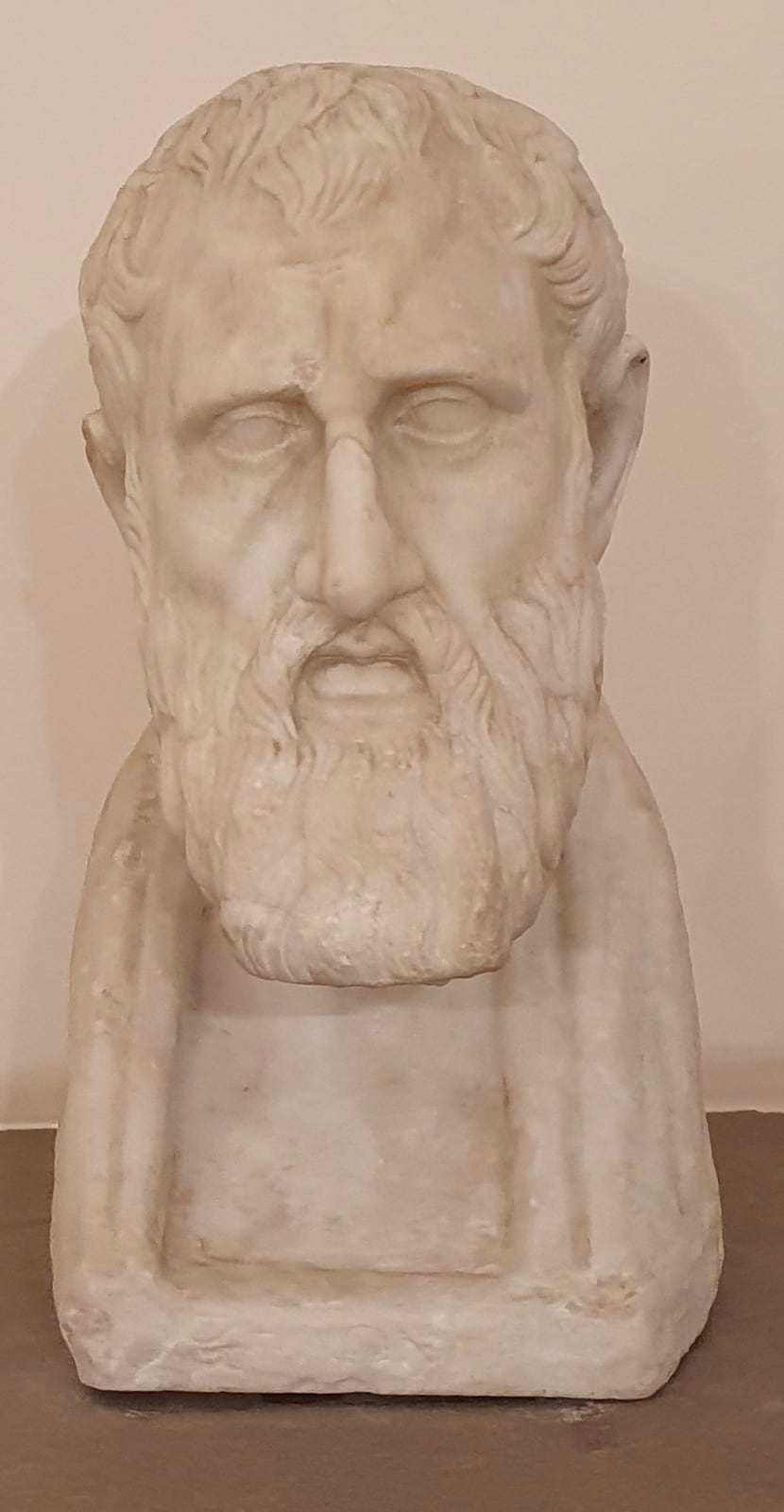
Zeno of Citium
Übereinstimmung bei: Wer bin ich? Gibt es ein wahres Selbst? · Warum leiden wir? · Was geschieht nach dem Tod?
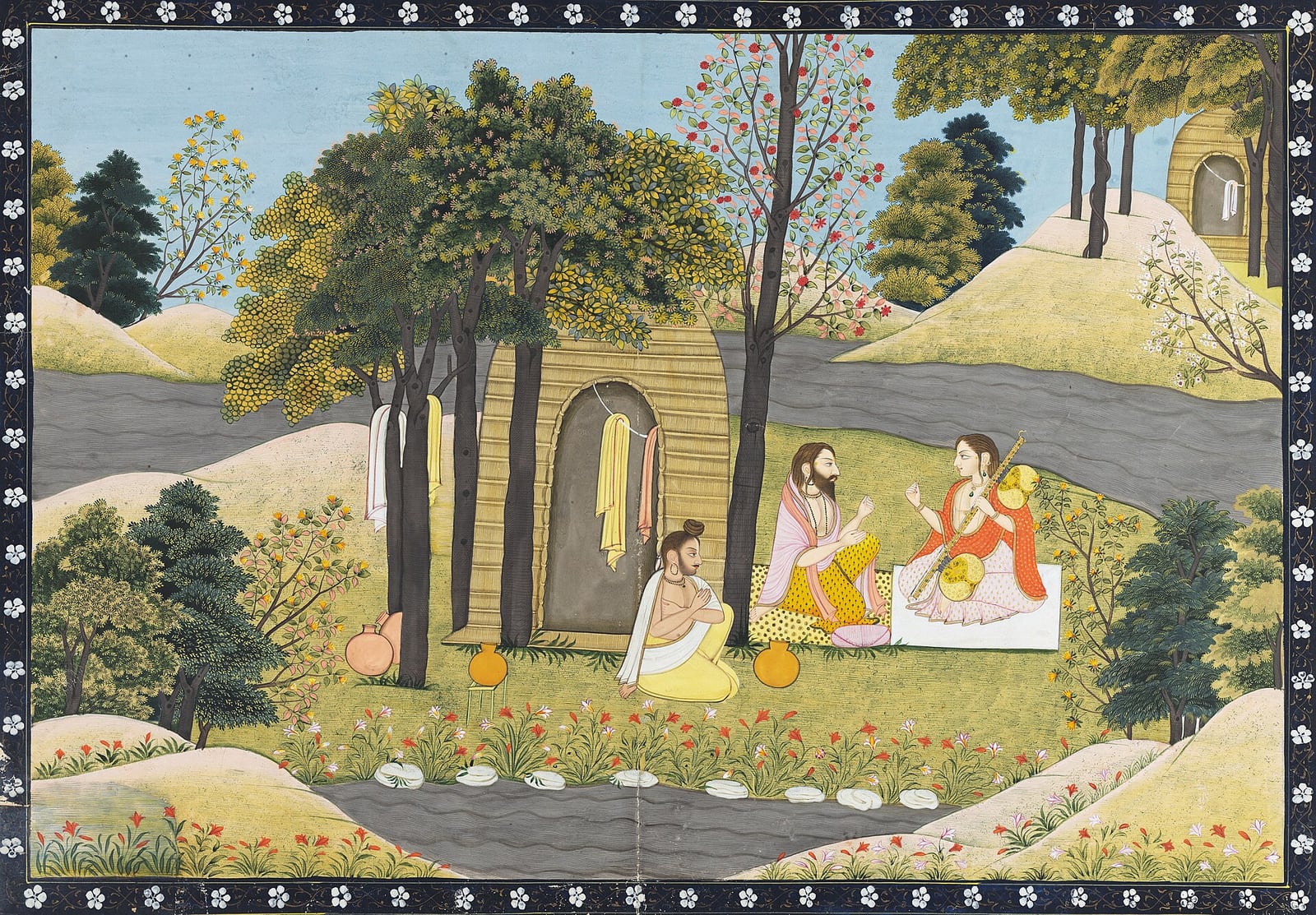
Valmiki
Übereinstimmung bei: Warum leiden wir? · Was geschieht nach dem Tod? · Wie erlangt man Befreiung oder Erlösung?
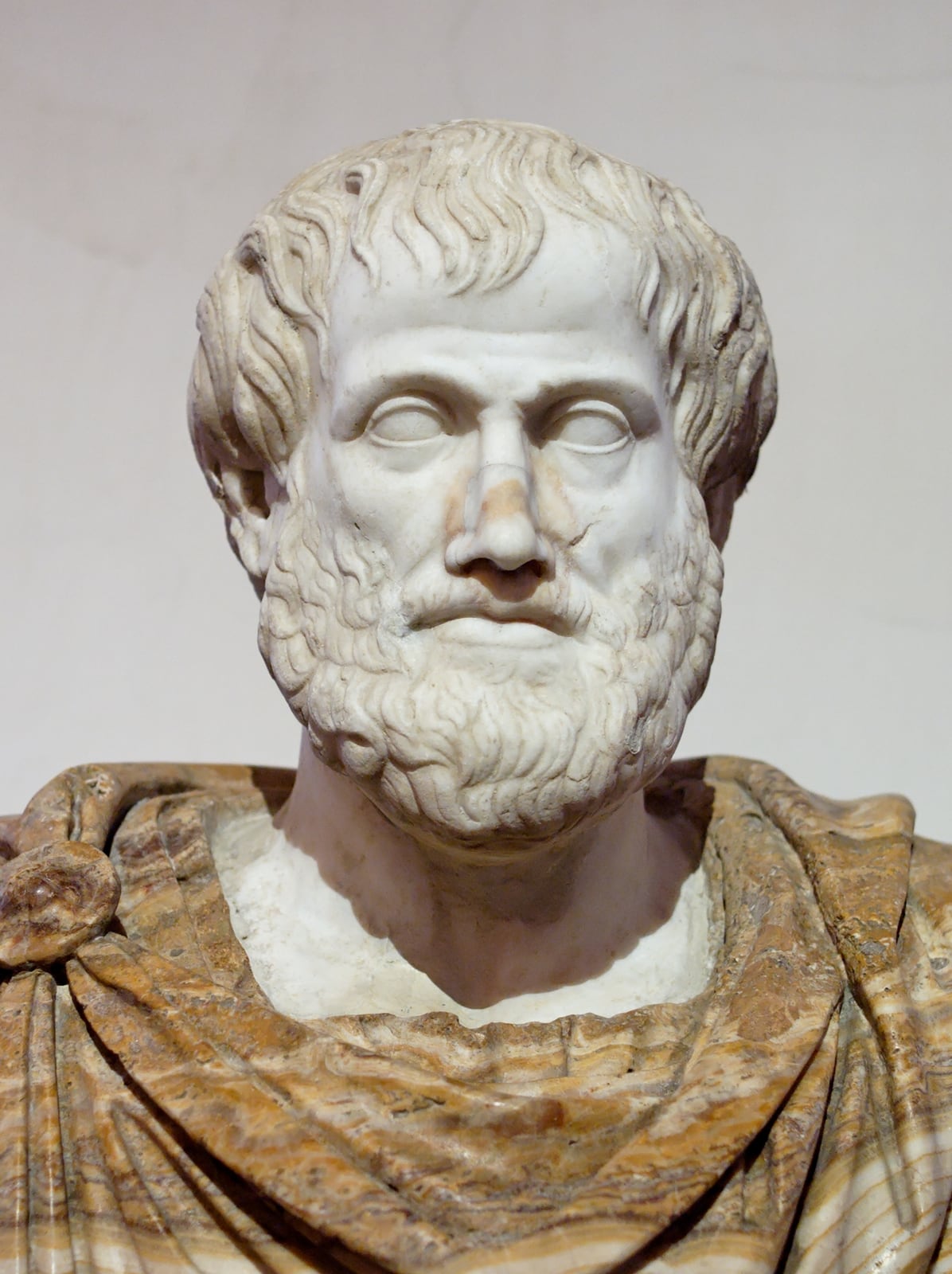
Aristotle
Übereinstimmung bei: Wer bin ich? Gibt es ein wahres Selbst? · Warum leiden wir? · Was geschieht nach dem Tod?
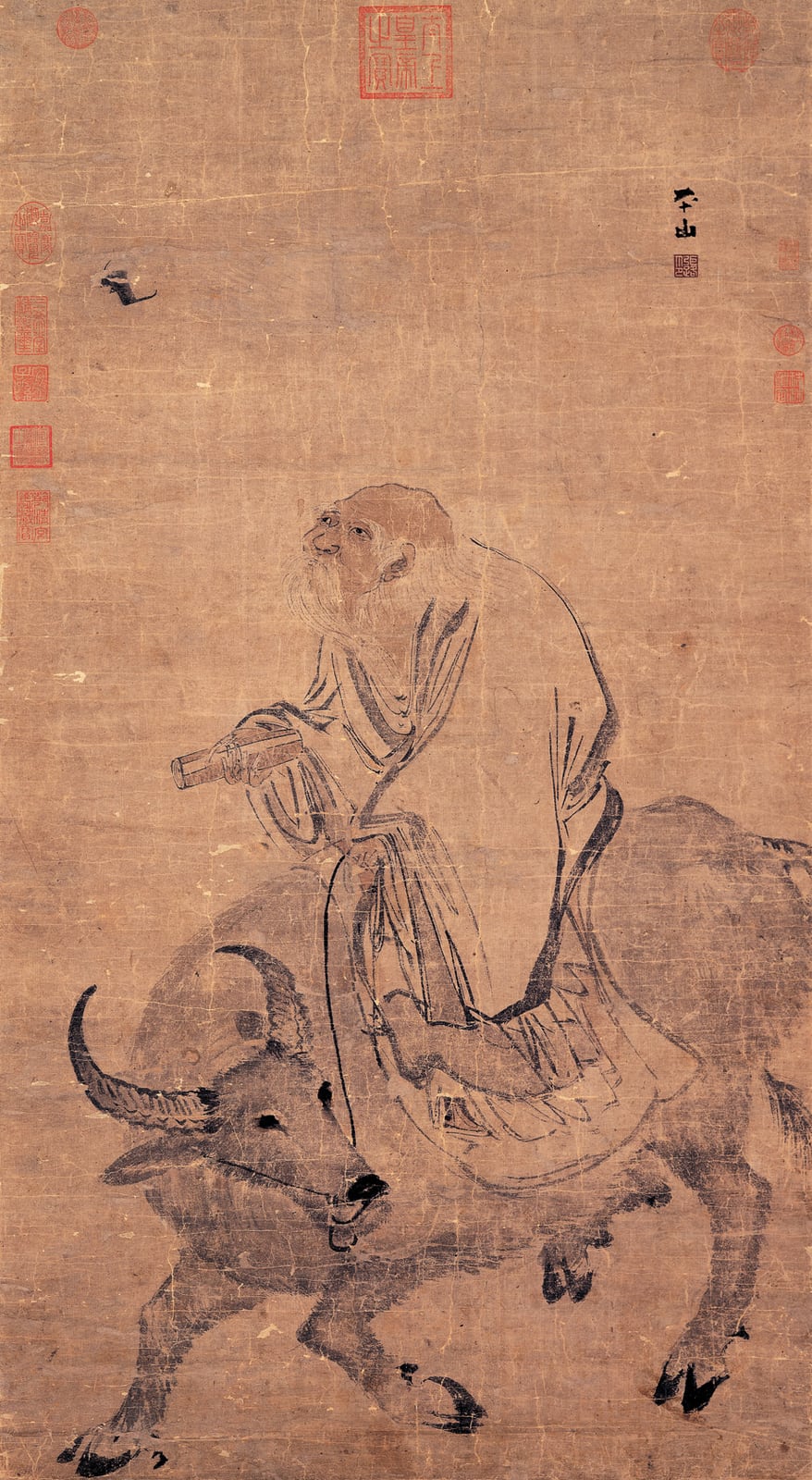
Laozi
Übereinstimmung bei: Warum leiden wir? · Was geschieht nach dem Tod? · Wie erlangt man Befreiung oder Erlösung?
Denkt anders als

Dattatreya
Widerspruch bei: Was ist das Absolute? Gibt es Gott? · Wer bin ich? Gibt es ein wahres Selbst? · Warum leiden wir?
Gaudapada
Widerspruch bei: Was ist das Absolute? Gibt es Gott? · Wer bin ich? Gibt es ein wahres Selbst? · Warum leiden wir?
Uddalaka Aruni
Widerspruch bei: Was ist das Absolute? Gibt es Gott? · Wer bin ich? Gibt es ein wahres Selbst? · Was geschieht nach dem Tod?
Vyasa
Widerspruch bei: Was ist das Absolute? Gibt es Gott? · Wer bin ich? Gibt es ein wahres Selbst? · Warum leiden wir?
Widerspruch beiGrundsätzliche Meinungsverschiedenheit
Confucius · Laozi
Two orders for a world at war: ritual that gives form and the Way that removes it
Warum: The conflict is real and polemical, though between texts and schools rather than persons. The Daodejing names and discredits the central Confucian concepts, humaneness, righteousness and ritual, which suggests it was composed, at least in part, against that school. The meeting between Confucius and Laozi recounted by Sima Qian in the Records of the Grand Historian (ch. 63) belongs to legend and is not considered historical. The underlying difference is anthropological: Confucius trusts that cultivated form educates human nature; the Daodejing suspects that every imposed form falsifies it. Chinese culture eventually read them as complementary, one for public office and the other for retirement.
Übereinstimmung bei
Confucius · Jesus of Nazareth
The golden rule in two languages, and the exact point where they part
Warum: There was no contact between them; the convergence comes from a widespread moral intuition, reciprocity, found in very diverse traditions. The divergence before the enemy is explained by each one's framework. Confucius thinks of a society ordered by graded relationships, beginning with the family, where love has measure and justice requires that each act receive its due. Jesus speaks from the imminence of the Kingdom of God and from the imitation of a Father who loves all without distinction, which breaks every measure. One seeks the harmony of the city; the other announces a justice that overflows it.
Übereinstimmung bei
Confucius · Hildegard of Bingen
Ritual and music as the form of the soul: the master of Lu and the abbess of the Rhine
Warum: The affinity is purely comparative and rests on a shared ancient intuition: music and ritual do not adorn moral life, they constitute it, because body and voice are educated before ideas. The Confucian tradition joined ritual and music very early as instruments of government and self-cultivation; Benedictine liturgy made the singing of psalms the axis of the monastic day. The difference is theological: Confucian ritual looks to human conduct and keeps the spirits at a distance, whereas Hildegard's chant is addressed to a personal God and is participation in the praise of the angels. They agree on pedagogy, not on the addressee.
Widerspruch beiGrundsätzliche Meinungsverschiedenheit
Confucius · Siddhartha Gautama, the Buddha
Filial piety as the root, or leaving home as open air
Warum: The contradiction is real and had historical consequences: when Buddhism reached China, Confucian scholars reproached it for centuries because monks abandoned their parents and left no descendants, and Chinese Buddhists answered by stressing the filial duties found in the canon. The two masters never met; the clash arises from their aims. Confucius seeks the harmony of a society at war and sees in the family the model of the state. The Buddha seeks the end of suffering, which arises from attachment, and sees in domestic ties one more attachment. Neither despises what the other values: one leaves renunciation as an exception; the other, the household as a stage.
Übereinstimmung bei
Confucius · The 14th Dalai Lama (Tenzin Gyatso)
An ethics that needs no metaphysics: humaneness and universal responsibility
Warum: The convergence is comparative and responds to similar situations: Confucius teaches in a China divided by war between states, and the Dalai Lama in a plural, secularised world, as the leader of a people in exile. Both seek a moral basis that can be shared without requiring a common faith. They differ, however, in the scope of love. Confucius wants it graded, beginning with parents, and rejects repaying evil with good (14.34); the Dalai Lama, from Buddhist compassion, extends it to all beings equally, the enemy included. One orders affection; the other universalises it. And ritual, central in Confucius, carries little weight in the Dalai Lama's secular ethics.
Anekdoten und Erzählungen
Anekdoten und Erzählungen
Mündliche Überlieferungc. 496–484 a. C.
The dog of a house in mourning
Herkunft der Erzählung: Shiji 47, "Hereditary House of Confucius". Not in the Analects. Reworked in the Kongzi jiayu.
Belegtc. 489 a. C.
Hunger between Chen and Cai
Herkunft der Erzählung: Analects 15.2 (core); Shiji 47 (expansion); Zhuangzi, chs. 14, 17, 20 and 28 (Taoist versions).
Belegtfinales del s. VI – principios del V a. C.
The stable fire
Herkunft der Erzählung: Analects 10.17 (10.12 in Legge's numbering). Commentary on the alternative punctuation in Slingerland (2003), ad loc.
Belegtc. 496 a. C.
The visit to Nanzi
Herkunft der Erzählung: Analects 6.28 (6.26 in Legge); expansion in Shiji 47. The saying on virtue and beauty also appears in Analects 9.18 and 15.13 without context.
Belegt500 a. C.
The Jiagu meeting
Herkunft der Erzählung: Zuozhuan, Duke Ding, year 10; Guliang zhuan, Ding 10; Shiji 47 (with the execution of the jesters, absent from the Zuozhuan).
Belegtc. 481 a. C.
The death of Yan Hui
Herkunft der Erzählung: Analects 11.8–11.11 (11.7–11.10 in Legge) and 6.11. The date comes from Shiji 47 and the traditional chronology; some place it earlier.
Hagiographische Erzählung481 a. C.
The capture of the lin
Herkunft der Erzählung: Chunqiu, Ai 14 (one line); Gongyang zhuan, Ai 14 (the weeping and the end of the annals); Shiji 47 (the premonition).
Lehren
Lehren
Die Begriffe, die das Denken gliedern, in ihrem Zusammenhang erklärt.
Ren (humaneness, benevolence)ren
Ethical core of Confucianism; contested by the Daodejing (ch. 18) as a symptom of decline; central in Mencius, Zhu Xi and Wang Yangming.
Quelle: Slingerland, Edward (trad.). Confucius: Analects, with Selections from Traditional Commentaries. Hackett Publishing Company, Indianápolis, 2003. ISBN 9780872206359.
Li (ritual, proper form)li
Inherits Zhou ritual culture; systematised by Xunzi and the Liji; criticised by Mohists, Legalists and Taoists.
Quelle: Slingerland, Edward (trad.). Confucius: Analects, with Selections from Traditional Commentaries. Hackett Publishing Company, Indianápolis, 2003. ISBN 9780872206359.
Junzi (the gentleman, the exemplary person)junzi
Ideal shared by the whole Confucian tradition; rough equivalents: the Aristotelian spoudaios, the honnête homme of seventeenth-century Europe.
Quelle: Slingerland, Edward (trad.). Confucius: Analects, with Selections from Traditional Commentaries. Hackett Publishing Company, Indianápolis, 2003. ISBN 9780872206359.
Xiao (filial piety)xiao
A Zhou-culture virtue systematised by Confucius; central in the Xiaojing, the Liji and imperial law.
Quelle: Slingerland, Edward (trad.). Confucius: Analects, with Selections from Traditional Commentaries. Hackett Publishing Company, Indianápolis, 2003. ISBN 9780872206359.
Zhengming (rectification of names)zhengming
Developed by Xunzi ("Zhengming") and the Legalists; debated in Chinese philosophy of language (Mohists, School of Names).
Quelle: Slingerland, Edward (trad.). Confucius: Analects, with Selections from Traditional Commentaries. Hackett Publishing Company, Indianápolis, 2003. ISBN 9780872206359.
Shu (reciprocity) and zhong (doing one's utmost)shu
The Confucian golden rule; parallels in Judaism (Hillel), Christianity (Mt 7:12) and Buddhism.
Quelle: Slingerland, Edward (trad.). Confucius: Analects, with Selections from Traditional Commentaries. Hackett Publishing Company, Indianápolis, 2003. ISBN 9780872206359.
Xue (study, learning)xue
Foundation of the imperial examination system and of Neo-Confucian pedagogy (Zhu Xi, "Articles of the White Deer Grotto Academy").
Quelle: Slingerland, Edward (trad.). Confucius: Analects, with Selections from Traditional Commentaries. Hackett Publishing Company, Indianápolis, 2003. ISBN 9780872206359.
Retreats
Retreats und Zentren
Orte und Begegnungen, die mit dieser Lehre verbunden sind. Wir stellen den Kontakt zu den Veranstaltern her.
Qufu, provincia de Shandong · China
Qufu: Temple, Cemetery and Mansion of Confucius
Patrimonio Mundial de la UNESCO (ficha oficial)
Qufu, Confucius's home town, preserves the three sites UNESCO inscribed as World Heritage in 1994: the temple raised in his memory shortly after his death and enlarged over the centuries into one of China's great architectural complexes; the cemetery where he and thousands of his descendants lie; and the mansion of the Kong family, home of his direct heirs. It is the pilgrimage site par excellence of Confucianism and the setting for annual ceremonies in his honour. The UNESCO website sometimes rejects automated requests, but it is the official listing.
Videos
Videos
Aufnahmen, Gespräche und Dokumentarfilme. Die Videos werden von YouTube wiedergegeben; sie werden nicht hier gespeichert.
Who was Confucius? — Bryan W. Van Norden
Analyse· EN· 2015· 5 min
TED-EdOffizieller Kanal
¿Quién fue Confucio? — Bryan W. Van Norden
Analyse· ES· 5 min
Sé Curioso — TED-EdOffizieller Kanal
Who Was Confucius? And What Did He Really Say?
Vortrag· EN· 62 min
Bryan Van Norden
Confucius on Language: How NOT to Rectify Names
Vortrag· EN· 66 min
Bryan Van Norden
The Analects of Confucius, read by Jing Li (LibriVox)
Aufnahme Dritter· EN· 212 min
LibriVox AudiobooksOffizieller Kanal
《孔子》Confucius — 半部论语治天下 (CCTV纪录)
Dokumentarfilm· ZH· 90 min
CCTV纪录 (CCTV Documentary)Offizieller Kanal
如果国宝会说话 — 孔子见老子画像石 (El relieve «Confucio visita a Laozi»)
Dokumentarfilm· ZH· 5 min
CCTV纪录Offizieller Kanal
Confucio. «El Maestro de Diez Mil Siglos»
Dokumentarfilm· ES· 21 min
UNED DocumentosOffizieller Kanal
Confucio — Analectas «Lún Yǔ» (audiolibro completo en español)
Aufnahme Dritter· ES· 261 min
AMA Audiolibros
Professor Michael Puett on Zhuangzi in Relation to Confucius
Vortrag· EN· 44 min
China X (HarvardX)Offizieller Kanal
Views of Nature in the Analects with Annping Chin
Gespräch· EN· 4 min
Yale Forum on Religion and EcologyOffizieller Kanal
Confucian Analects in the Modern World: Five Generations
Vortrag· EN· 68 min
UC Berkeley EventsOffizieller Kanal
Confucius, 551 BC: Ancient China's Philosopher Who Changed The World
Dokumentarfilm· EN· 89 min
Timeline — World History Documentaries
Confucianism, Buddhism, and Daoism: Chinese Popular Religion
Analyse· EN· 13 min
CrashCourseOffizieller Kanal
Galerie
Galerie
Bilder mit geprüfter Lizenz. Jedes bewahrt seine Urheberschaft und seinen Herkunftsnachweis.
Handschriften
Handschriften
Handschriftliche Zeugen und alte Texte, mit ihrer verwahrenden Einrichtung und ihren Einsichtsbedingungen.
ZH · Escritura de los escribas (lishu) de los Han occidentales · Anterior a 55 a. C. (año de la muerte de Liu Xiu, príncipe Huai de Zhongshan, en cuya tumba se halló)
定州漢墓竹簡《論語》
- Erhaltener Textzeuge
- 620 tablillas de bambú, unos 7.576 caracteres, aproximadamente la mitad del texto recibido; dañadas por un incendio antiguo y por el terremoto de Tangshan (1976)
- Verwahrende Einrichtung
- Instituto Provincial de Reliquias Culturales de Hebei (Hebei sheng wenwu yanjiusuo), Shijiazhuang
ZH · Escritura de los escribas (lishu) de los Han occidentales · Anterior a 59 a. C. (muerte de Liu He, marqués de Haihun, antiguo emperador depuesto)
海昏侯墓竹簡《論語》
- Erhaltener Textzeuge
- Más de 500 tablillas de bambú identificadas como Analectas, en curso de restauración y publicación
- Verwahrende Einrichtung
- Instituto Provincial de Reliquias Culturales y Arqueología de Jiangxi; Museo del Sitio de Haihunhou, Nanchang
ZH · Escritura de los escribas (lishu) de los Han occidentales · c. 45 a. C. (fecha de un registro censal hallado en la misma tumba)
平壤貞柏洞364號墓《論語》竹簡
- Erhaltener Textzeuge
- 39 tablillas de bambú con los capítulos «Xianjin» y «Yan Yuan»
- Verwahrende Einrichtung
- Instituciones de la República Popular Democrática de Corea (Pyongyang); custodio concreto no confirmado
ZH · Escritura regular (kaishu) de la dinastía Tang · Grabado entre 833 y 837 (era Kaicheng)
開成石經《論語》
- Erhaltener Textzeuge
- Texto íntegro de las Analectas en estelas de piedra, parte de los Doce Clásicos de Kaicheng (114 estelas, más de 650.000 caracteres)
- Verwahrende Einrichtung
- Museo del Bosque de Estelas (Beilin), Xi'an
Beziehungen
Beziehungen
Einflüsse, Schülerschaften und Verwandtschaften. Die belegte Beziehung wird von der durch Analyse ermittelten Ähnlichkeit unterschieden.
Begegnete
Tradition (Shiji 47 and 63, Liji, Zhuangzi) relates that Confucius consulted Laozi on the rites. A school narrative, unverifiable; recorded as undocumented.
Durch Analyse ermittelte Ähnlichkeit
Beeinflusste
The Zhuangzi (4th–3rd c. BCE) makes Confucius a recurring character, sometimes mocked and sometimes spokesman for Taoist doctrine itself: an influence by contrast, documented in the text.
Belegte Beziehung
Zeitgenosse von
Siddhartha Gautama, the Buddha
Approximate contemporaries according to traditional chronologies (6th–5th c. BCE), with no contact whatsoever. The comparison is a commonplace of the history of religions (Jaspers's "Axial Age").
Durch Analyse ermittelte Ähnlichkeit
Verwandte Gedanken mit
The negative golden rule of Analects 15.24 and 12.2 is routinely compared with the positive one of Mt 7:12; no historical relation.
Durch Analyse ermittelte Ähnlichkeit
Quellen
Quellen
Für diesen Eintrag herangezogene Bibliografie und Kataloge.
- Wikidata, entidad Q4604 «Confucius» (P31=Q5; 313 enlaces entre wikis). Nombre nativo 孔夫子; nacimiento registrado en 552/551 a. C.; lugar de nacimiento Q210287 (Zou/Qufu).
- Sima Qian. Shiji (Memorias históricas), juan 47, «Kongzi shijia» (Casa hereditaria de Confucio), c. 94 a. C. Ed. Zhonghua shuju, Pekín, 1959. Trad. francesa: Chavannes, Les Mémoires historiques de Se-ma Ts'ien, vol. 5, 1905; trad. inglesa en Nienhauser (ed.), The Grand Scribe's Records, vol. 5.1, Indiana University Press, 2006.
- Legge, James (trad.). The Chinese Classics, vol. 1: Confucian Analects, The Great Learning, The Doctrine of the Mean. Trübner, Londres, 1861; 2.ª ed. Clarendon Press, 1893. Project Gutenberg nº 4094.
- Slingerland, Edward (trad.). Confucius: Analects, with Selections from Traditional Commentaries. Hackett Publishing Company, Indianápolis, 2003. ISBN 9780872206359.
- Lau, D. C. (trad.). Confucius: The Analects (Lun yü). Penguin Classics, Harmondsworth, 1979. ISBN 9780140443486.
- Cheng, Anne (trad.). Entretiens de Confucius. Éditions du Seuil (Points Sagesses), París, 1981. ISBN 9782020057752. Y Cheng, Anne. Histoire de la pensée chinoise. Seuil, París, 1997.
- Nylan, Michael y Wilson, Thomas. Lives of Confucius: Civilization's Greatest Sage Through the Ages. Doubleday, Nueva York, 2010.
- Hunter, Michael. Confucius Beyond the Analects. Brill, Leiden, 2017.
- Zuozhuan (Zuo Tradition), años Ding 10, Ding 12, Ai 11, Ai 15 y Ai 16. Trad. Durrant, Stephen; Li, Wai-yee; Schaberg, David. Zuo Tradition / Zuozhuan: Commentary on the Spring and Autumn Annals. University of Washington Press, Seattle, 2016.
- Liji, «Tangong» (cap. 3). Trad. Legge, James. The Lî Kî. Sacred Books of the East, vols. XXVII–XXVIII. Clarendon Press, Oxford, 1885.
- Csikszentmihalyi, Mark. «Confucius». The Stanford Encyclopedia of Philosophy (ed. Edward N. Zalta).
- Meynard, Thierry (ed.). Confucius Sinarum Philosophus (1687): The First Translation of the Confucian Classics. Institutum Historicum Societatis Iesu, Roma, 2011. ISBN 9788870412062.
- Zhuangzi (莊子), caps. 4, 5, 6, 14, 20, 28 y 31. Chinese Text Project.
- Jiangxi sheng wenwu kaogu yanjiusuo y otros. «Nanchang shi Xi Han Haihunhou mu» (La tumba del marqués de Haihun, de los Han occidentales, en Nanchang). Kaogu, 2016, nº 7, pp. 45–62.
- Hebei sheng wenwu yanjiusuo Dingzhou Han mu zhujian zhengli xiaozu (ed.). Dingzhou Han mu zhujian Lunyu. Wenwu chubanshe, Pekín, 1997.
- Kim, Kyung-ho. «A Study of Excavated Bamboo and Wooden-strip Analects: The Spread of Confucianism and Chinese Script». Sungkyun Journal of East Asian Studies, vol. 11, nº 1 (2011), pp. 59–88.
- Chinese Text Project. «The Analects» (論語), texto chino con traducción de James Legge en paralelo.
- Suárez Girard, Anne-Hélène (trad.). Confucio. Lun Yu. Reflexiones y enseñanzas. Editorial Kairós, Barcelona, 1997. ISBN 9788472453661.
- Pérez Arroyo, Joaquín (trad.). Confucio y Mencio. Los cuatro libros. Ediciones Paidós (Paidós Orientalia), Barcelona, 2002. ISBN 9788449312076.
- Brooks, E. Bruce y Brooks, A. Taeko. The Original Analects: Sayings of Confucius and His Successors. Columbia University Press, Nueva York, 1998. ISBN 9780231104302 (tela); 9780231104319 (rústica).
- Ma Chengyuan (ed.). Shanghai bowuguan cang Zhanguo Chu zhushu (上海博物館藏戰國楚竹書), vol. 1. Shanghai guji chubanshe, Shanghái, diciembre de 2001. Incluye la primera edición del manuscrito «Kongzi shilun» (孔子詩論).
- Rechteinhaber
- Obra en dominio público; cada traducción pertenece a su traductor o editorial
Bestätigung ausstehend
Was dieser Eintrag noch nicht klären konnte. Wir sagen es lieber, als es aufzufüllen.
- No se ha localizado ninguna edición de las Analectas de Joaquín Pérez Arroyo en Alianza ni en Kairós (el encargo las mencionaba): su traducción es Los cuatro libros (Alfaguara 1981; Paidós 2002); la de Kairós es de Anne-Hélène Suárez Girard; la de Alianza (2021) es una selección de García-Noblejas y Torres Marín. Confirmar en la BNE si existió una edición suelta.
- ISBN pendientes de ver en catálogo: Waley (reediciones Vintage/Routledge), Durrant–Li–Schaberg (Zuozhuan, 2016), Gardner (Four Books, Hackett 2007), Kramers (Kongzi jiayu, 1950). Se han dejado en null.
- La traducción de la edición de Herder (2020, ISBN 9788425443886) no figura en el catálogo consultado; identificar traductor.
- No se han encontrado en Open Library ediciones en ruso, hindi ni árabe con ISBN fiable.
- Custodio concreto de las tablillas de Pyongyang (tumba 364 de Jeongbaek-dong): no confirmado; se conocen solo por fotografías publicadas en Corea del Sur.
- La fecha de las pinturas 孔子燕居像 y 孔子爲魯司寇像 (Museo de Confucio de Qufu) no consta en las fichas de Commons; datarlas con el catálogo del museo.
- Programas de afiliación: no se ha verificado ninguno; lista vacía.
- Fecha de nacimiento: 551 a. C. (Zuozhuan/Shiji) frente a 552 (Gongyang); se adopta 551 con precisión «year». El día tradicional (28 de septiembre) no se registra por ser convención tardía.
- Sala de lectura: no se ha localizado en Gutenberg, Wikisource ni Internet Archive una traducción española de las Analectas en dominio público con texto completo.
- Sala de lectura: las traducciones de Legge del Shujing, del Liji y de los apéndices del Yijing (Sacred Books of the East, vols. III, XVI, XXVII–XXVIII) están en Wikisource en subpáginas anidadas (Parte/Libro/Sección) que el ingestor ordena mal; no se registran hasta poder ordenarlas. Tampoco hay en línea una edición separada de dominio público del Daxue en inglés (la de Legge va dentro del vol. 1 de The Chinese Classics) ni del Chunqiu sin el Zuozhuan.
- Sala de lectura: el Xiaojing de Legge en Wikisource intercala las tres secciones de su introducción entre los capítulos al ordenarlos por número; revisar el orden tras la ingesta. La versión de Ivan Chên (Gutenberg #75878, 1908) no se registra por no haberse podido acreditar la fecha de muerte del traductor.
- Obras: ISBN de la edición de Shanghai guji (2001) del Kongzi shilun no verificado. El Zhongyong no se registra como obra de Confucio: la tradición lo atribuye a su nieto Zisi.
Recherchiert am 2026-10-22