Stoizismus
Zeno of Citium
Ζήνων ὁ Κιτιεύς
um 334 v. Chr. – um 262 v. Chr.Historisch belegte Person
Griechischer Philosoph aus Kition auf Zypern (um 334–262 v. Chr.), Begründer der Stoa. Ein Kaufmann, der nach einem Schiffbruch nach Athen kam, lernte er bei dem Kyniker Krates, bei Megarikern und Akademikern und begann um 300 v. Chr. in der Stoa Poikile zu lehren, der bemalten Säulenhalle, die der Schule ihren Namen gab. Er bestimmte das Ziel des Lebens als übereinstimmendes Leben und teilte die Philosophie in Logik, Physik und Ethik. Sein Werk, allen voran die Politeia, ist verloren: Wir kennen es aus Fragmenten und Zeugnissen.
- Werke
- 28Werke
- Ausgaben
- 24Ausgaben
- Zitate
- 10Zitate
- Videos
- 10Videos
- Bilder
- 5Bilder
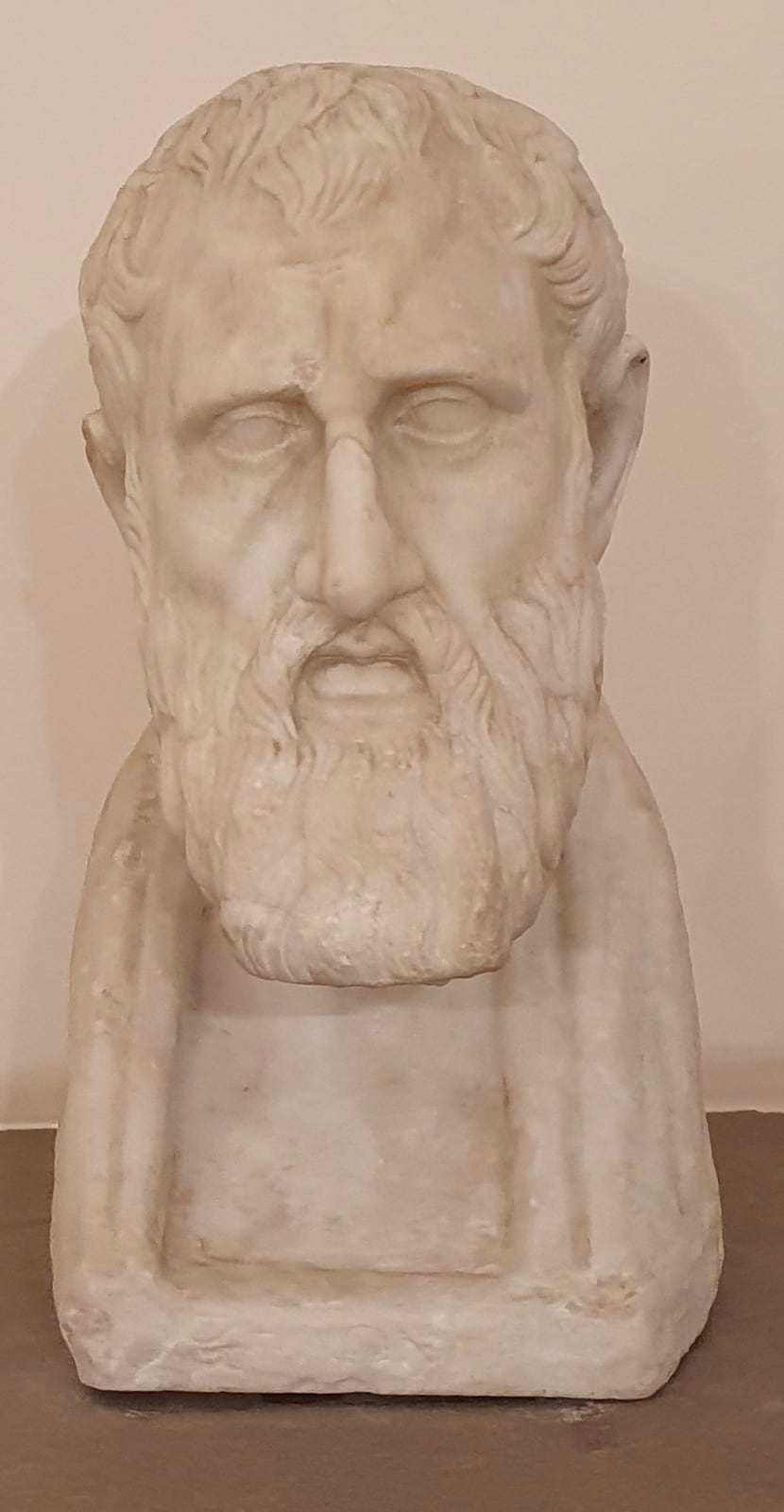
Busto de Zenón de Citio (colección Farnese, Nápoles) · CC BY-SA 4.0
In eigenen Worten
«I made a prosperous voyage when I suffered shipwreck.»Diógenes Laercio VII 4; Laercio advierte que otros sitúan el dicho en la época en que seguía a Crates. Griego: Diógenes Laercio VII, ed. de Wikisource griega; inglés: R. D. Hicks (Loeb, 1925, dominio público); español: traducción propia.

Der zentrale Gedanke
Living in agreement (homologia): The end (*telos*) of human life, according to Zeno, is "living in agreement".
Im Zusammenhang sehen
Biografie
5 Min. Lesezeit
Unterstützte Übersetzung aus dem spanischen Original, Durchsicht durch einen muttersprachlichen Übersetzer ausstehend.
Ein Gründer ohne Bücher
Zenon von Kition gründete eine der einflussreichsten Schulen der Antike, und wir besitzen keine einzige Seite von ihm. Seine mehr als zwanzig Bücher gingen verloren, zum Teil, so darf man vermuten, weil die Abhandlungen seines dritten Nachfolgers Chrysipp sie für die Schule selbst entbehrlich machten. Was wir wissen, stammt aus dem siebten Buch der Leben des Diogenes Laertios, das Anekdoten, ein athenisches Dekret und das Verzeichnis seiner Werke enthält, und aus Hunderten von Zitaten und Paraphrasen bei Cicero, Plutarch, Stobaios, Sextus Empiricus oder Athenaios, die Hans von Arnim 1905 im ersten Band der Stoicorum veterum fragmenta sammelte. Oft sprechen diese Quellen von „den Stoikern“, ohne den Gründer von seinen Schülern zu unterscheiden, und das Seine herauszulösen ist eine heikle Aufgabe.
Der Kaufmann aus Kition
Er wurde um 334 v. Chr. in Kition an der Südküste Zyperns geboren, einer griechischen Stadt mit starker phönizischer Bevölkerung; seine Gegner nannten ihn „den Phönizier“, und er selbst verbarg seine Herkunft nie. Er war der Sohn des Mnaseas, eines Händlers, der ihm nach Demetrios von Magnesia schon als Kind sokratische Bücher aus Athen mitbrachte. Laertios beschreibt ihn als hager, hochgewachsen, dunkelhäutig, mit schief gehaltenem Hals, als Liebhaber grüner Feigen und der Sonne. Um 312, nach seinem Schüler Persaios mit etwa zweiundzwanzig Jahren, erlitt er mit einer Ladung Purpur nahe dem Piräus Schiffbruch. Er ging hinauf nach Athen, setzte sich in einen Buchladen und las das zweite Buch von Xenophons Erinnerungen an Sokrates; er fragte, wo man Männer wie Sokrates finden könne, und der Buchhändler zeigte auf Krates den Kyniker, der gerade vorbeiging: „Folge dem da.“
Lehrjahre: der Hund, Megara und die Akademie
Bei Krates lernte er die Gleichgültigkeit gegenüber den Konventionen, auch wenn er, wie Laertios erzählt, für die kynische Schamlosigkeit zu schamhaft war: Der Lehrer ließ ihn einen Topf Linsensuppe durch den Kerameikos tragen, und als Zenon ihn zu verbergen suchte, zerschlug er ihn mit einem Stockhieb. Danach verkehrte er bei Stilpon von Megara, bei Diodoros Kronos und bei Polemon, dem Schulhaupt der Akademie, der ihm vorwarf, durch die Gartenpforte hereinzuschleichen, um ihm die Lehren zu stehlen und sie phönizisch einzukleiden. Jahre später sagte er, er habe eine gute Fahrt gemacht, als er Schiffbruch erlitt. Aus dieser vielfältigen Schulung ging ein eigenes System hervor: die kynische Ethik der Selbstgenügsamkeit und der Tugend, die megarische Dialektik und das sokratische und platonische Erbe.
Die Politeia „auf dem Schwanz des Hundes“
Noch als Schüler des Krates schrieb er sein berühmtestes Werk, die Politeia, und manche sagten im Scherz, er habe sie „auf dem Schwanz des Hundes“ geschrieben. Sie war eine Antwort auf Platon und eine Fortführung des Diogenes von Sinope: eine Gemeinschaft von Weisen, den einzigen wahren Bürgern, Freunden und Freien, ohne Tempel, Gerichte und Gymnasien, ohne Geld, mit Frauengemeinschaft und gleicher Kleidung für Männer und Frauen. Plutarch fasste sein Ideal zusammen: Wir sollten nicht nach Städten und Gemeinden mit je eigenen Gesetzen getrennt leben, sondern alle Menschen als Mitbürger betrachten, wie eine Herde, die unter einem gemeinsamen Gesetz weidet. Seine Nachfolger schämten sich bisweilen des Buches; Chrysipp verteidigte es als echt, und ein Bibliothekar in Pergamon ging so weit, die anstößigen Stellen aus seinen Werken herauszuschneiden.
Die bemalte Halle
Um 300 v. Chr. begann er, auf und ab gehend in der Stoa Poikile zu lehren, der von Polygnot ausgemalten Säulenhalle an der Agora, in der zur Zeit der Dreißig vierzehnhundert Bürger hingerichtet worden waren. Dort kamen die Leute, um ihn zu hören, und seine Anhänger, zuerst Zenoneer genannt, hießen bald Stoiker, „die von der Halle“. Er sprach knapp und herb, mied die Menge und lebte von sprichwörtlicher Genügsamkeit: Brot, Honig, ein wenig Wein, ein dünner Mantel; „enthaltsamer als der Philosoph Zenon“ sagte man in Athen, und die Komödiendichter spotteten über eine Philosophie, die das Hungern lehrte. Antigonos Gonatas, König von Makedonien, hörte seine Vorträge, wenn er in Athen weilte, und lud ihn an seinen Hof; Zenon, schon betagt, schickte ihm seine Schüler Persaios und Philonides.
Logik, Physik und Ethik
Zenon war nach Laertios der Erste, der die Philosophie in Logik, Physik und Ethik einteilte. Das Ziel des Lebens bestimmte er als „übereinstimmend leben“, das heißt gemäß einer in sich stimmigen Vernunft; Kleanthes, sein Nachfolger, soll „mit der Natur“ hinzugefügt haben, wenngleich andere Quellen schon Zenon die vollständige Formel zuschreiben. Er führte den Begriff kathekon ein, das Angemessene oder Gebührende, und bestimmte die Leidenschaft als vernunftwidrige Bewegung der Seele, als übermäßigen Trieb, mit vier Gattungen: Kummer, Furcht, Begierde und Lust. In der Physik ist die Welt ein lebendiges und vernünftiges Wesen, gebildet aus einem aktiven Prinzip, dem Logos oder Gott, und einem passiven, der Materie; die Seele ist ein warmer Hauch. Cicero bewahrt die Geste, mit der er die Erkenntnis erklärte: Die offene Hand war die Vorstellung, die leicht gekrümmten Finger die Zustimmung, die geschlossene Faust das Begreifen, und die von der anderen Hand umschlossene Faust das Wissen, das allein der Weise besitzt.
Ein stoischer Tod
Er starb um 262 v. Chr. Nach Laertios stolperte er beim Verlassen der Schule und brach sich eine Zehe; er schlug mit der Hand auf die Erde, zitierte einen Vers aus der Niobe des Timotheos – „Ich komme schon, was rufst du mich?“ – und starb auf der Stelle, indem er den Atem anhielt. Eine andere Fassung sagt, er habe aufgehört zu essen. Persaios gab ihm zweiundsiebzig Jahre, andere Quellen achtundneunzig. Die Athener, die ihm die Schlüssel der Stadtmauern anvertraut hatten, beschlossen, ihn mit einem goldenen Kranz zu ehren und auf Staatskosten im Kerameikos zu bestatten, weil er die Jugend zur Tugend ermahnt und sein Leben ein Beispiel dessen gewesen sei, was er lehrte. Antigonos sagte, als er davon erfuhr, er habe sein Publikum verloren.
Das Erbe der Stoa
Ihm folgten Kleanthes von Assos und dann Chrysipp von Soloi, der seine Einsichten zu einem so vollständigen System ausbaute, dass die Schule aufhörte, den Gründer zu lesen. Die Stoa durchlief fünf Jahrhunderte, gelangte mit Panaitios und Poseidonios nach Rom und gipfelte in Seneca, Epiktet und Mark Aurel; Epiktet riet, sich vor jedem Mächtigen zu fragen, was Sokrates oder Zenon getan hätten. Seine Idee eines Gesetzes und einer Bürgerschaft, die allen vernunftbegabten Wesen gemeinsam sind, nährte das moderne Naturrecht und den Kosmopolitismus. In Larnaka, dem antiken Kition, erinnert die Stadt heute an ihren berühmtesten Sohn.
Quellen: Diógenes Laercio. Vidas y opiniones de los filósofos ilustres, libro VII, 1–160 (Zenón y la doctrina estoica), s. III d. C. Trad. inglesa de R. D. Hicks, Loeb Classical Library 185, 1925 (Wikisource en inglés); texto griego en Wikisource griega; trad. de C. D. Yonge, Bohn, 1853 (Project Gutenberg n.º 57342). · Diógenes Laercio. Los diez libros de Diógenes Laercio sobre las vidas, opiniones y sentencias de los filósofos más ilustres, trad. de José Ortiz y Sanz, tomo II (libros VI–X). Imprenta Real, Madrid, 1792 (Internet Archive). · Arnim, Hans von (ed.). Stoicorum veterum fragmenta, vol. I: Zeno et Zenonis discipuli. Teubner, Leipzig, 1905 (Internet Archive). · Pearson, Alfred C. (ed.). The Fragments of Zeno and Cleanthes, with Introduction and Explanatory Notes. C. J. Clay, Londres, 1891 (Internet Archive). · Cappelletti, Ángel J. (introd., trad. y notas). Los estoicos antiguos: Zenón, Aristón, Apolófanes, Herilo, Dionisio de Heraclea, Perseo, Cleantes, Esfero. Gredos (Biblioteca Clásica Gredos, 230), Madrid, 1996.
Zeitleiste
Das Leben, Jahr für Jahr
Jeder Punkt ist ein belegtes Ereignis. Klicken Sie, um es mit Quelle und Grad der Gewissheit zu lesen.
um 334 v. Chr.0 JahreCitio (Chipre)
Birth
Born at Citium, son of Mnaseas (or Demeas). The date is inferred from Persaeus' chronology (arrival in Athens at 22, death at 72) and the Athenian decree of the archonship of Arrhenides (262/261 BCE). Wikidata records 334. Years BCE are expressed as negative numbers.
WahrscheinlichDiógenes Laercio. Vidas y opiniones de los filósofos ilustres, libro VII, 1–160 (Zenón y la doctrina estoica), s. III d. C. Trad. inglesa de R. D. Hicks, Loeb Classical Library 185, 1925 (Wikisource en inglés); texto griego en Wikisource griega; trad. de C. D. Yonge, Bohn, 1853 (Project Gutenberg n.º 57342).
Nach dem Tod
- um 230 v. Chr.Chrysippus heads the Stoa
- um 50 v. Chr.Philodemus, On the Stoics
- 1891Pearson edits the fragments
- 1905Stoicorum veterum fragmenta, vol. I
um 334 v. Chr. · 0 Jahre
Birth
Born at Citium, son of Mnaseas (or Demeas). The date is inferred from Persaeus' chronology (arrival in Athens at 22, death at 72) and the Athenian decree of the archonship of Arrhenides (262/261 BCE). Wikidata records 334. Years BCE are expressed as negative numbers.
Wahrscheinlich
um 312 v. Chr. · 22 Jahre
Shipwreck and meeting with Crates
He is shipwrecked with a cargo of purple near Piraeus, reads Xenophon's Memorabilia in an Athenian bookshop and becomes a pupil of Crates the Cynic (Diogenes Laertius VII 2–3). Laertius also gives the age of thirty.
Überlieferung
um 310 v. Chr.
The Republic
While still a pupil of Crates he writes the Republic, inspired by that of Diogenes of Sinope; it was jokingly said that he had written it "on the dog's tail" (Diogenes Laertius VII 4).
Wahrscheinlich
um 305 v. Chr.
With Stilpo, Diodorus and Polemo
He leaves Crates and studies with the Megarian Stilpo, the dialectician Diodorus Cronus and Polemo, head of the Academy; according to Laertius, for some twenty years (VII 2, 4, 16, 25).
Wahrscheinlich
um 300 v. Chr.
Begins teaching in the Painted Stoa
He begins teaching in the Stoa Poikile in the agora; his followers, first called Zenonians, come to be called Stoics (Diogenes Laertius VII 5).
Wahrscheinlich
um 276 v. Chr.
Antigonus Gonatas' invitation
Antigonus Gonatas, king of Macedon from 277/276, who attended his lectures, invites him to his court; Zeno sends Persaeus and Philonides. Laertius copies the exchange of letters, of disputed authenticity (VII 6–9).
Wahrscheinlich
um 262 v. Chr. · 72 Jahre
Death and public honours
He dies after tripping as he left the school (Diogenes Laertius VII 28). An Athenian decree of the archonship of Arrhenides grants him a golden crown and a tomb in the Ceramicus at public expense (VII 10–12).
Wahrscheinlich
um 262 v. Chr.
Cleanthes, second scholarch
Cleanthes of Assos succeeds him at the head of the school; Zeno compared him to hard wax tablets, hard to write on but retaining what is written (Diogenes Laertius VII 37).
Belegt
um 230 v. Chr.
Chrysippus heads the Stoa
Chrysippus of Soli heads the school around 230–206 BCE and systematises the doctrine; his treatises displace Zeno's.
Belegt
um 50 v. Chr.
Philodemus, On the Stoics
Philodemus of Gadara discusses the Republics of Zeno and Diogenes and the Stoic attempts to disown them (PHerc. 155 and 339).
Belegt
1891
Pearson edits the fragments
Alfred C. Pearson publishes The Fragments of Zeno and Cleanthes, the first annotated edition of Zeno's fragments.
Belegt
1905
Stoicorum veterum fragmenta, vol. I
Hans von Arnim collects in the first volume of the SVF the fragments and testimonies of Zeno and his immediate pupils; its numbering remains the standard reference.
Belegt
Werke
Grundlegende Werke
Die Werke, ohne die sich das Vermächtnis nicht verstehen lässt.
Schriftliches Werk · um 310 v. Chr.
Republic (Politeia)
Πολιτεία
Zeno's most famous work, written in his youth while he still followed Crates. According to the critics cited by Diogenes Laertius (VII 32–33), it declared ordinary education useless, called those who are not virtuous enemies and strangers to one another and reserved for the good the status of citizens, friends and free men; it established community of wives, forbade building temples, law courts and gymnasia, dispensed with coinage and ordered men and women to dress alike. Plutarch sums it up as the project of a single way of life and a single order for all men, like a herd under a common law. It is the founding text of Stoic cosmopolitanism.
5 Ausgaben · amazon.com
Schriftliches Werk
On Impulse, or On Human Nature
Περὶ ὁρμῆς ἢ περὶ ἀνθρώπου φύσεως
In this treatise, according to Diogenes Laertius (VII 87), Zeno was the first to designate as the end of life "living in agreement with nature", which amounts to living according to virtue, since nature leads us to it. The double title indicates that the work studied impulse (horme), the tendency that moves animals and that in man should be governed by reason. Other sources (Stobaeus) credit Zeno with the short formula "living in agreement" and Cleanthes with the addition "with nature"; the contradiction between the two testimonies is still debated.
4 Ausgaben
Spätere Zusammenstellung · 1905
Fragments and testimonies
Ζήνωνος ἀποσπάσματα (SVF I 1–332)
The only form in which Zeno can be read today. It comprises the life and sayings in Diogenes Laertius VII 1–38—the shipwreck, the pot of lentils, "a friend is another self", "we have two ears and one mouth to listen more and speak less"—the doctrines the sources expressly attribute to him in logic (comprehension illustrated with the hand), physics (the two principles, fire, the soul as warm breath) and ethics (the end, the appropriate, the passions), and the testimonies on his Republic. Von Arnim's edition numbers 332 fragments of Zeno.
11 Ausgaben · amazon.com
Das gesamte Werk (28)
Zeno of Citium
On Life according to Nature
The Conscious LibraryOn Life according to Nature
Zeno of Citium
On the Passions
The Conscious LibraryOn the Passions
Zeno of Citium
On the Appropriate (Duty)
The Conscious LibraryOn the Appropriate (Duty)
Zeno of Citium
On Law
The Conscious LibraryOn Law
Zeno of Citium
On Greek Education
The Conscious LibraryOn Greek Education
Zeno of Citium
On Vision
The Conscious LibraryOn Vision
Zeno of Citium
On the Whole (the Universe)
The Conscious LibraryOn the Whole (the Universe)
Zeno of Citium
On Signs
The Conscious LibraryOn Signs
Zeno of Citium
Pythagorean Questions
The Conscious LibraryPythagorean Questions
Zeno of Citium
Universals (General Questions)
The Conscious LibraryUniversals (General Questions)
Zeno of Citium
On Diction
The Conscious LibraryOn Diction
Zeno of Citium
Homeric Problems (5 books)
The Conscious LibraryHomeric Problems (5 books)
Zeno of Citium
On Listening to Poetry
The Conscious LibraryOn Listening to Poetry
Zeno of Citium
Art (Handbook of Rhetoric)
The Conscious LibraryArt (Handbook of Rhetoric)
Zeno of Citium
Solutions
The Conscious LibrarySolutions
Zeno of Citium
Refutations (2 books)
The Conscious LibraryRefutations (2 books)
Zeno of Citium
Memoirs of Crates
The Conscious LibraryMemoirs of Crates
Zeno of Citium
Ethics
The Conscious LibraryEthics
Zeno of Citium
On Reason (Discourse)
The Conscious LibraryOn Reason (Discourse)
Zeno of Citium
On Substance
The Conscious LibraryOn Substance
Zeno of Citium
On the Soul
The Conscious LibraryOn the Soul
Zeno of Citium
Art of Love
The Conscious LibraryArt of Love
Zeno of Citium
Diatribes (Interludes)
The Conscious LibraryDiatribes (Interludes)
Zeno of Citium
Chreiai (Anecdotes)
The Conscious LibraryChreiai (Anecdotes)
Zitate
Zitate, die in einem bestimmten Werk nachgewiesen sind. Jedes trägt seine Herkunft und seinen Grad an Verlässlichkeit.
I made a prosperous voyage when I suffered shipwreck.Νῦν εὐπλόηκα, ὅτε νεναυάγηκα.
WahrscheinlichDiógenes Laercio VII 4; Laercio advierte que otros sitúan el dicho en la época en que seguía a Crates. Griego: Diógenes Laercio VII, ed. de Wikisource griega; inglés: R. D. Hicks (Loeb, 1925, dominio público); español: traducción propia.
Apokryphe Zitate oder Zitate umstrittener Zuschreibung (2)
«Man conquers the world by conquering himself.»
It circulates online attributed to Zeno of Citium without any reference. It does not appear in Diogenes Laertius nor in the fragments collected by Pearson and von Arnim.
«We have two ears and one mouth so that we can listen twice as much as we speak.»
A modern, arithmetical version of the saying genuinely transmitted by Diogenes Laertius (VII 23), which says only "that we may listen more and talk less". The "twice as much" form is not in the ancient text.
Letzte Worte
Widersprüchliche Fassungen
«"I come, I come, why dost thou call for me?"»Ἔρχομαι· τί μ' αὔεις;
Diogenes Laertius VII 28: leaving the school he tripped and broke a toe; striking the ground with his hand, he recited this line from the poet Timotheus' Niobe, addressed to the earth or to death, and died on the spot by holding his breath. At VII 31 Laertius himself records the variant "I come of my own accord; why then call me?" and another tradition according to which he died by ceasing to eat, with no final words. English: R. D. Hicks; Spanish: own translation.
Quelle: Diógenes Laercio. Vidas y opiniones de los filósofos ilustres, libro VII, 1–160 (Zenón y la doctrina estoica), s. III d. C. Trad. inglesa de R. D. Hicks, Loeb Classical Library 185, 1925 (Wikisource en inglés); texto griego en Wikisource griega; trad. de C. D. Yonge, Bohn, 1853 (Project Gutenberg n.º 57342).
Fragen
Was das Werk beantwortet
Zwölf große Fragen der Menschheit und was sich aus den Texten darauf antworten lässt, mit Belegen. Wir legen niemandem Worte in den Mund.
Was ist das Absolute? Gibt es Gott?
God is the reason pervading matter, and its substance is the whole cosmos
Ein unpersönliches AbsolutesAusdrücklich gesagt
Only testimonies and fragments of Zeno survive, but they already contain the core of Stoic theology. According to Diogenes Laertius, Zeno distinguished two principles of the whole, a passive one, unqualified matter, and an active one, the reason in it, which is god; and he held that the substance of god is the whole cosmos and the heaven. God is thus immanent, corporeal in the Stoic sense, craftsman and seminal reason of all that exists, and may be given the names of Zeus or of fate. It is not a separate being creating from outside but the rational order of the world, conceived as a craftsmanlike fire proceeding methodically towards generation.
Diese Frage mit anderen Meistern vergleichenWer bin ich? Gibt es ein wahres Selbst?
A soul of warm breath, citizen of a single human community
Ein in Beziehung gebildetes SelbstAus der Lehre abgeleitet
For Zeno, according to the testimonies, the soul is a warm, corporeal breath that holds the living being together and has a ruling part where impression, assent and impulse reside. The human end is to live in agreement with nature, which is to live according to virtue, and that nature is rational and therefore common. His Republic, known from Plutarch's summary, drew the political consequence: not to live apart in cities with their own laws, but to regard all humans as fellow citizens under a single law. The Stoic self is not an isolated substance: it discovers itself in its kinship with the other rational beings.
Diese Frage mit anderen Meistern vergleichenWarum leiden wir?
Passion is an excessive impulse, against right reason and nature
Soziale und moralische UnordnungAusdrücklich gesagt
According to the testimonies, Zeno defined passion as an irrational movement of the soul contrary to nature, or an excessive impulse. The four basic passions — desire, fear, pleasure and distress — are not blows from outside: they arise from hasty judgements about what is good or bad, to which the soul gives its assent. Since the human end is to live in agreement with nature, which is to live according to virtue, suffering appears when impulse overflows rational measure. The anecdote of the shipwreck that led him to philosophy sums up the other side: a setback is no evil if reason is in order.
Diese Frage mit anderen Meistern vergleichenWas geschieht nach dem Tod?
The soul is corporeal and not eternal: it lasts a while and dissolves
Schweigen oder ZurückhaltungAus der Lehre abgeleitet
The testimonies about Zeno are scarce on this point. According to Diogenes Laertius, for him the soul is warm breath, that is, a body, and the Stoic school held that it survives death, but not for ever. The known variants belong to his successors: Cleanthes thought all souls last until the conflagration that closes each cosmic cycle, and Chrysippus, only those of the wise. No source attributes to Zeno a description of the beyond or a personal reward. The ethics he founded rests not on what is to come but on living now in agreement with nature; death is an indifferent, neither good nor bad.
Diese Frage mit anderen Meistern vergleichenWie erlangt man Befreiung oder Erlösung?
To live in agreement with nature, which is to live by virtue
Durch Tugend und HarmonieAusdrücklich gesagt
Diogenes Laertius attributes to Zeno the formula that defined Stoicism: the end is to live in agreement with nature, which amounts to living according to virtue, since nature leads us to it. Virtue suffices for happiness, and all else — health, wealth, fame, even life — is indifferent. The sage, who possesses virtue, is free, a king and happy even in chains. There is no leap and no grace: the good is reached little by little, says a saying Laertius attributes to him, but it is no little thing. Zeno's own conversion, who came to philosophy after a shipwreck, became an example of that slow transformation.
Diese Frage mit anderen Meistern vergleichenBraucht es einen Lehrer?
He learned from several masters and founded a school open in a portico
Hilfreich, aber nicht unverzichtbarAus der Lehre abgeleitet
According to Diogenes Laertius, Zeno reached Athens after a shipwreck, read Xenophon in a bookshop and asked where he could find men like Socrates; the bookseller pointed to Crates, who was passing by, and he became his disciple. Afterwards he studied with Stilpo, Polemo and the dialectician Diodorus, some twenty years in all, and only then founded his own school in the Painted Portico, a public place. The path shows the teacher as a guide, not as the exclusive holder of truth: Zeno took from each what seemed right to him. His doctrine places the weight on each person's reason, which the sage embodies perfectly.
Diese Frage mit anderen Meistern vergleichenIst die Welt wirklich?
The cosmos is god's body, a craftsmanlike fire that generates all
Offenbarung des GöttlichenAusdrücklich gesagt
For Zeno, according to the testimonies, the world is real and corporeal, and penetrated through and through by divine reason. God is the active principle acting in matter, and his substance is the whole cosmos and the heaven; nature is a craftsmanlike fire proceeding methodically towards generation. This rational cosmos is a living being, ensouled and intelligent, and periodically resolves into fire in a conflagration from which the same order is born again. There is no distance between the divine and the world: the world is the divine visible and at work, and each thing bears a seminal reason within it. To understand it is to understand fate.
Diese Frage mit anderen Meistern vergleichenWas ist Liebe?
Eros is the god of friendship and of the city's concord
Geordnetes WohlwollenAus der Lehre abgeleitet
Only scattered reports about love survive from Zeno, but they are significant. Athenaeus relates that, in his Republic, he presented Eros as the god of friendship and freedom, and also as the author of the city's concord. The Stoic definition of love transmitted by Diogenes Laertius — an impulse to form a friendship aroused by visible beauty — points the same way: the sage's love seeks not the union of bodies but friendship. Asked what a friend is, Zeno replied: “Another self.” His ideal of a single human community under a common law extends that bond to all humans, though with an order marked by reason.
Diese Frage mit anderen Meistern vergleichenSind wir frei, oder ist alles vorherbestimmt?
“It was fated that I should steal.” “And that you should be flogged”
Schicksal und VerantwortungAusdrücklich gesagt
The Stoics held that everything happens according to fate, a chain of causes coinciding with the divine reason governing the cosmos, and Diogenes Laertius' report already places Zeno in that line. But they did not therefore exempt humans from responsibility. The best-known anecdote sums it up: to a slave caught stealing, who claimed it was fated that he should steal, Zeno replied that it was also fated that he should be flogged. Fate is no excuse: the assent we give to our impressions is our own work, and we answer for it. The formula attributed to the school — fate leads the willing and drags the unwilling — expresses that reconciliation.
Diese Frage mit anderen Meistern vergleichenWozu meditieren oder beten?
His Republic would have no temples; no testimony of his practice remains
Nicht geäußert
No teaching of Zeno on prayer or meditation survives, nor any report of how he practised them. The only thing the sources transmit is a controversial thesis of his Republic: in the ideal city no temples should be built, because it is not fitting to hold sacred a work of builders and craftsmen, which is worth little. Plutarch records it to reproach the Stoics for inconsistency, since they attended the rites. The thesis suggests that the sacred lies in reason rather than in buildings, but it is not enough to attribute a doctrine of prayer to him. The spiritual exercises now associated with Stoicism belong to later authors.
Diese Frage mit anderen Meistern vergleichenKann die Vernunft das Letzte erkennen?
From assent to knowledge: the sage's clenched fist
Studium und GelehrsamkeitAusdrücklich gesagt
Zeno founded the Stoic theory of knowledge, according to which reason can grasp reality with certainty. Cicero relates how he explained it with a gesture: the open hand with fingers outstretched was impression; the fingers slightly bent, assent; the closed fist, comprehension; and the fist gripped by the other hand, knowledge, which only the sage possesses. There are “cognitive” impressions that cannot be false, and on them a firm knowledge is built. Since the cosmos is governed by reason, human reason can know its order. That knowledge is reached through long study of logic, physics and ethics, which the school taught as a whole.
Diese Frage mit anderen Meistern vergleichenSich von der Welt zurückziehen oder sie verwandeln?
A single human community under a common law, like a herd grazing together
Die Gesellschaft ordnenAusdrücklich gesagt
Zeno's Republic, written according to tradition while he still followed Crates, was a political manifesto. Plutarch summarises it thus: that we should not live apart in cities and villages, each with its own laws, but regard all humans as fellow citizens, and that there be one life and one order, like a herd grazing together under a common law. Other testimonies add provocative traits: no temples, no law courts, no coinage, community of wives among the wise. More than a programme of immediate government, it is the image of a just order founded on shared reason. The later Stoic school held that the sage takes part in politics if nothing prevents him.
Diese Frage mit anderen Meistern vergleichen
Affinitäten und Spannungen
Affinitäten und Spannungen
Frage für Frage aus den Positionen berechnet. Den Grund jeder Übereinstimmung und jedes Widerspruchs zeigt ein Klick.
Denkt ähnlich wie
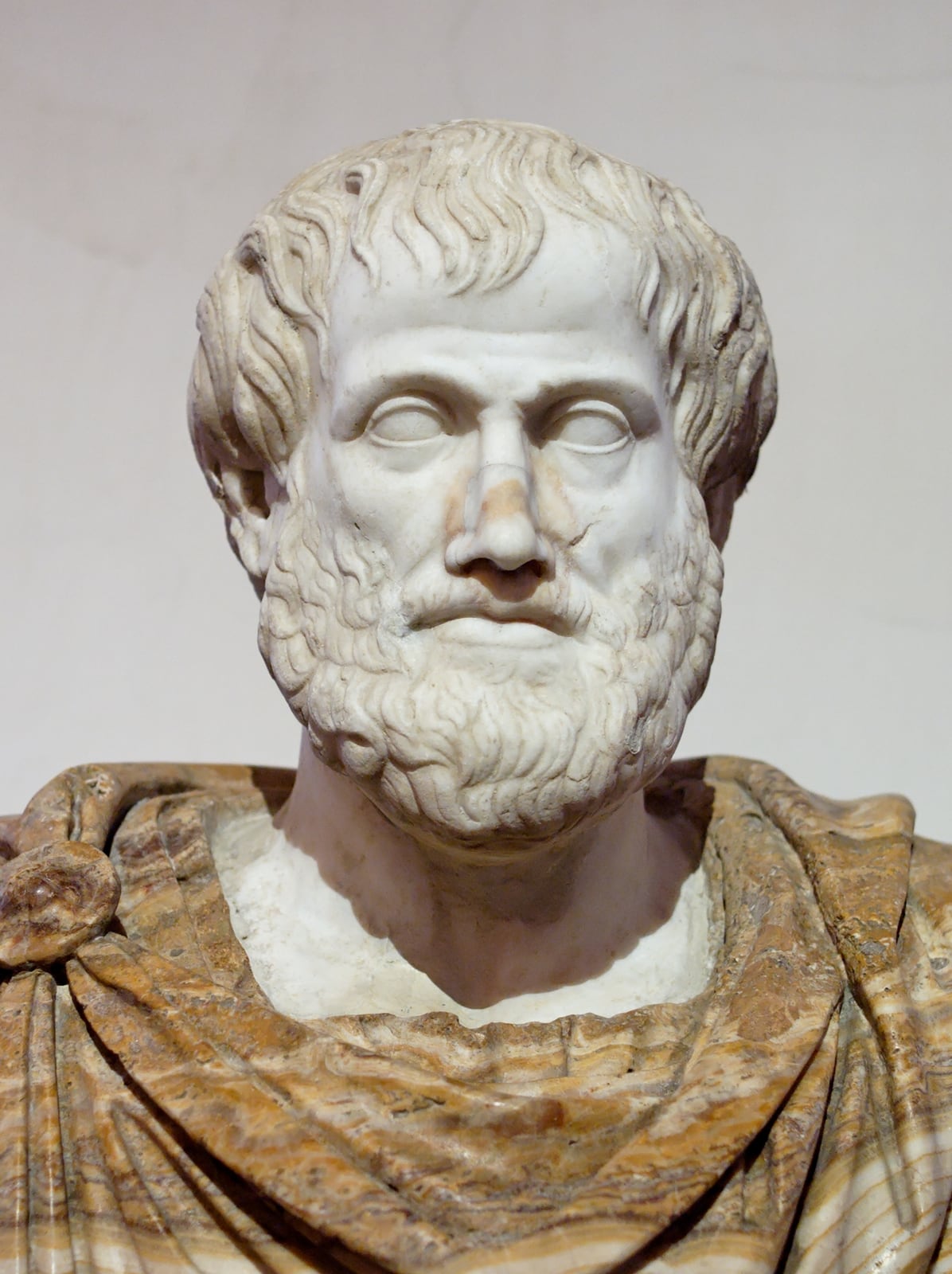
Aristotle
Übereinstimmung bei: Was ist das Absolute? Gibt es Gott? · Wer bin ich? Gibt es ein wahres Selbst? · Warum leiden wir?
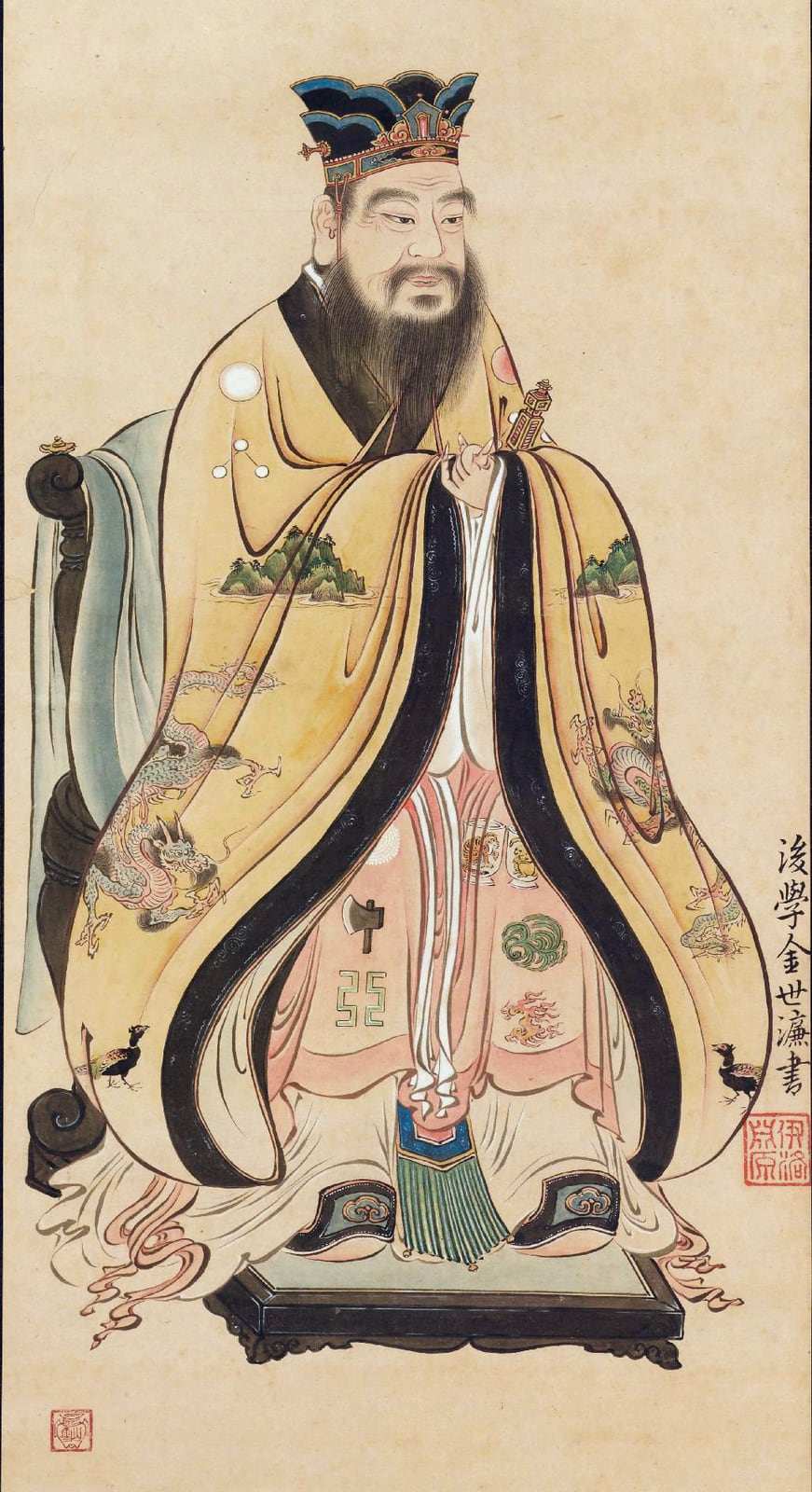
Confucius
Übereinstimmung bei: Wer bin ich? Gibt es ein wahres Selbst? · Warum leiden wir? · Was geschieht nach dem Tod?
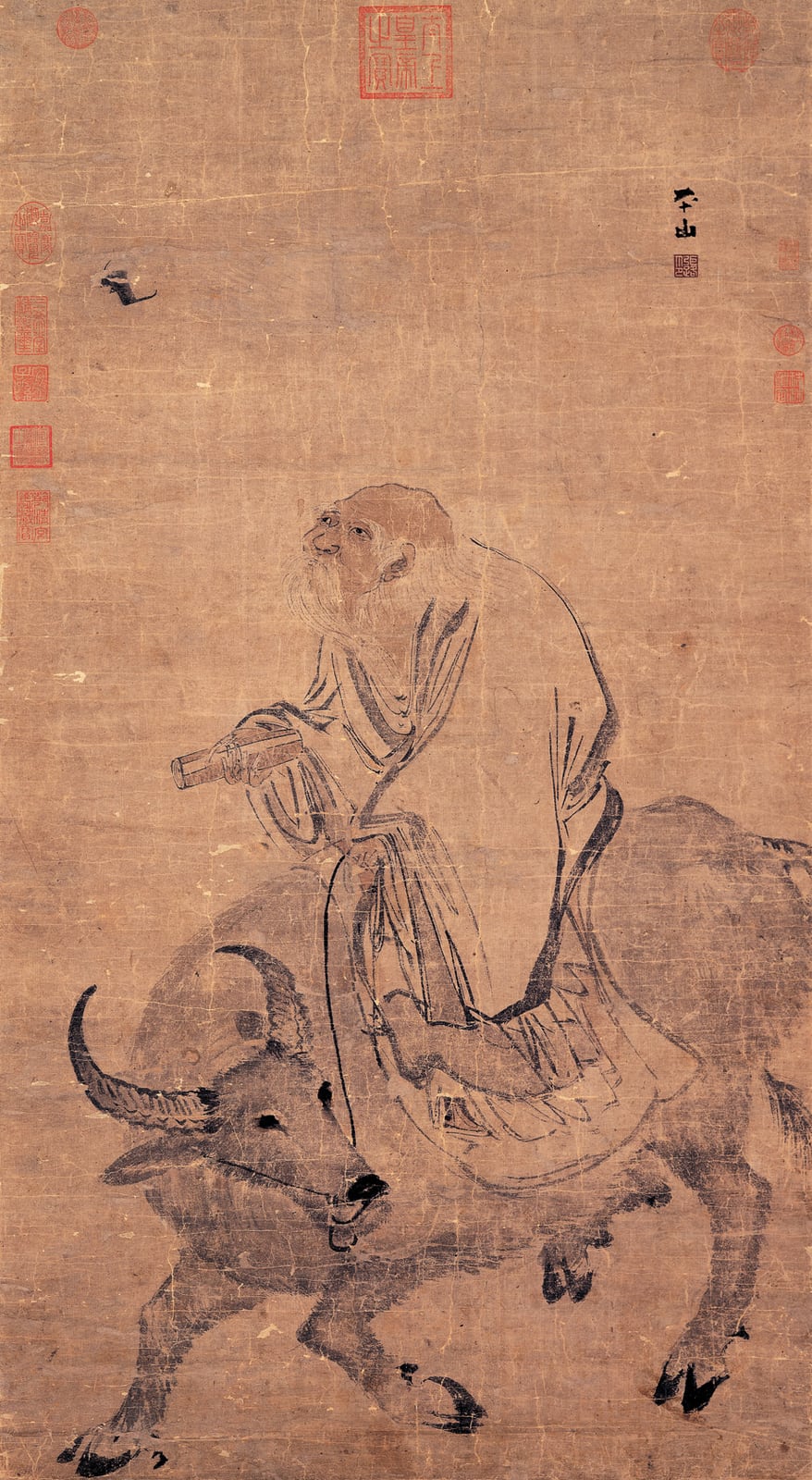
Laozi
Übereinstimmung bei: Warum leiden wir? · Was geschieht nach dem Tod? · Wie erlangt man Befreiung oder Erlösung?
Valmiki
Übereinstimmung bei: Warum leiden wir? · Was geschieht nach dem Tod? · Wie erlangt man Befreiung oder Erlösung?
Denkt anders als
Yajnavalkya
Widerspruch bei: Was ist das Absolute? Gibt es Gott? · Wer bin ich? Gibt es ein wahres Selbst? · Warum leiden wir?
Maimonides
Widerspruch bei: Was ist das Absolute? Gibt es Gott? · Wer bin ich? Gibt es ein wahres Selbst? · Warum leiden wir?
Al-Hallaj
Widerspruch bei: Was ist das Absolute? Gibt es Gott? · Wer bin ich? Gibt es ein wahres Selbst? · Warum leiden wir?

Rabia al-Adawiyya
Widerspruch bei: Was ist das Absolute? Gibt es Gott? · Warum leiden wir? · Was geschieht nach dem Tod?
Anekdoten und Erzählungen
Anekdoten und Erzählungen
Mündliche Überlieferungc. 312 a. C.
The shipwreck and the bookshop
Herkunft der Erzählung: Diogenes Laertius VII 2–5 and 31–32, with several contradictory versions (Hecato, Apollonius of Tyre, Demetrius of Magnesia). The story has the shape of an exemplary conversion and was probably embellished in the school; Zeno's mercantile background and his arrival in Athens with Crates are, by contrast, plausible.
Mündliche Überlieferungc. 312–310 a. C.
The pot of lentil soup
Herkunft der Erzählung: Diogenes Laertius VII 3, with no named source. It is a chreia of school tradition; it reflects the relationship between Cynicism and Stoicism well, but cannot be taken as verified fact.
Zeugnisc. 300–262 a. C.
Zeno's hand
Herkunft der Erzählung: Cicero, Academica II (Lucullus) 145, voiced by the Academic Cicero criticising Zeno and Antiochus; a report transmitted more than two centuries later, but consistent with the terminology other sources attribute to Zeno (katalepsis, phantasia kataleptike).
Belegtc. 262 a. C.
The keys of the city and the golden crown
Herkunft der Erzählung: Diogenes Laertius VII 6, 10–12 and 15, who copies the decree. Some scholars believe the transmitted text conflates two different decrees (one during his life and one posthumous); no one doubts that Athens officially honoured Zeno.
Umstrittenc. 276–262 a. C.
Zeno and Antigonus
Herkunft der Erzählung: Diogenes Laertius VII 6–9 and 13–15 (the letters, from Apollonius of Tyre); Epictetus, Discourses II 13. The friendship between king and philosopher is well attested; the letters are generally regarded as later compositions.
Umstrittenc. 262 a. C.
"I come"
Herkunft der Erzählung: Diogenes Laertius VII 28 and 31, with two versions of the death. Timotheus' Niobe was a well-known dithyramb; the gesture of striking the ground addresses the earth or the underworld. On the "reasonable exit" (eulogos exagoge), see Diogenes Laertius VII 130.
Lehren
Lehren
Die Begriffe, die das Denken gliedern, in ihrem Zusammenhang erklärt.
Living in agreement (homologia)homologia
Diogenes Laertius VII 87; Stobaeus, Eclogae II 7 (LS 63B). It is the founding definition of Stoic ethics, taken up by Seneca, Epictetus and Marcus Aurelius.
The appropriate (kathekon)kathekon
Diogenes Laertius VII 25 and 107–109.
The passions (pathe)pathe
Diogenes Laertius VII 110–111 (citing Zeno's On the Passions).
Presentation and comprehension (katalepsis)katalepsis
Cicero, Academica II 145 and I 40–42; Diogenes Laertius VII 46–54.
The two principles: logos and matterlogos-y-materia
Diogenes Laertius VII 134, 136, 142 and 157 (On Substance, On the Whole, On the Soul).
The world-city (cosmopolis)cosmopolis
Diogenes Laertius VII 32–34; Plutarch, Moralia 329a–b; Schofield (1991).
Quelle: Schofield, Malcolm. The Stoic Idea of the City. Cambridge University Press, Cambridge, 1991.
Virtue and indifferentsadiaphora
Diogenes Laertius VII 101–105 and 160 (Ariston); Cicero, De finibus III–IV.
Videos
Videos
Aufnahmen, Gespräche und Dokumentarfilme. Die Videos werden von YouTube wiedergegeben; sie werden nicht hier gespeichert.
La filosofía helenística (III): El estoicismo · La March
Vortrag· ES· 2022· 59 min
Fundación Juan MarchOffizieller Kanal
La filosofía helenística (I) · La March
Vortrag· ES· 2022· 57 min
Fundación Juan MarchOffizieller Kanal
Diógenes, Epicuro y Crisipo | Historia de la filosofía (8/61)
Vortrag· ES· 2017· 87 min
Ernesto Castro
Cynics, Stoics, Epicureans
Vortrag· EN· 2021· 46 min
Gresham CollegeOffizieller Kanal
A History of Philosophy | 16 Stoicism
Vortrag· EN· 2015· 64 min
wheatoncollegeOffizieller Kanal
Stoicon 2018: Tony Long "Stoicism Ancient and Modern"
Vortrag· EN· 2018· 50 min
Modern StoicismOffizieller Kanal
Stoics vs. Skeptics vs. Epicureans | AA Long on Hellenistic Philosophy
Gespräch· EN· 2025· 86 min
Johnathan Bi
The philosophy of Stoicism - Massimo Pigliucci
Analyse· EN· 2017· 6 min
TED-EdOffizieller Kanal
Introducing... The Early and Middle Stoics
Vortrag· EN· 2020· 107 min
Dan Taylor
Geschichte der Philosophie (5): Stoa, Epikureer und pyrrhonische Skepsis, Prof. Dr. Torsten Wilholt
Vortrag· DE· 2013· 76 min
InstPhilOffizieller Kanal
Galerie
Galerie
Bilder mit geprüfter Lizenz. Jedes bewahrt seine Urheberschaft und seinen Herkunftsnachweis.
Handschriften
Handschriften
Handschriftliche Zeugen und alte Texte, mit ihrer verwahrenden Einrichtung und ihren Einsichtsbedingungen.
GRC · Mayúscula griega (papiro) · s. I a. C.
Φιλοδήμου Περὶ τῶν Στωικῶν (PHerc. 155 y 339)
- Erhaltener Textzeuge
- Rollos carbonizados de la Villa de los Papiros de Herculano.
- Verwahrende Einrichtung
- Biblioteca Nazionale «Vittorio Emanuele III», Officina dei Papiri Ercolanesi, Nápoles · PHerc. 155; PHerc. 339
Beziehungen
Beziehungen
Einflüsse, Schülerschaften und Verwandtschaften. Die belegte Beziehung wird von der durch Analyse ermittelten Ähnlichkeit unterschieden.
Schüler von
Crates de Tebas
His first teacher in Athens (Diogenes Laertius VII 2–4); Zeno wrote Memoirs of Crates.
Belegte Beziehung
Beeinflusst von
Through Crates, Diogenes' pupil, he inherited Cynic ethics; his Republic continues Diogenes', as Philodemus notes, and it was said he wrote it "on the dog's tail" (Diogenes Laertius VII 4).
Belegte Beziehung
Beeinflusst von
He came to philosophy by reading Xenophon's Memorabilia of Socrates (Diogenes Laertius VII 3); Epictetus names them together as models (Encheiridion 33).
Belegte Beziehung
Widersprach
He studied with Polemo, head of the Academy (VII 2, 25); his Republic and his corporeal physics oppose Plato's, and his pupil Persaeus wrote against the Laws (VII 36).
Belegte Beziehung
Zeitgenosse von
Zeno was born around 334, when Aristotle was teaching at the Lyceum; no direct relationship is recorded. The Athenian decree in his honour was also to be inscribed at the Lyceum (Diogenes Laertius VII 11).
Durch Analyse ermittelte Ähnlichkeit
Zeitgenosse von
They taught at the same time in Athens, the Stoa and the Garden; Epicurus mentions in his letters Zeno's followers called Stoics and Persaeus and Philonides at Antigonus' court (Diogenes Laertius VII 5, 9).
Belegte Beziehung
Lehrer von
Cleantes de Aso
Pupil and successor at the head of the school (Diogenes Laertius VII 37, 168–176).
Belegte Beziehung
Beeinflusste
Crisipo de Solos
Third scholarch, he systematised the doctrine and defended the authenticity of Zeno's Republic (Diogenes Laertius VII 34).
Belegte Beziehung
Beeinflusste
Epictetus holds up Zeno as an example of freedom before Antigonus (Discourses II 13) and advises asking what Socrates or Zeno would have done (Encheiridion 33).
Belegte Beziehung
Beeinflusste
The last great representative of the Stoa that Zeno founded; the Meditations do not name him, but develop his ethics of agreement with nature and the idea of the universal city.
Belegte Beziehung
Begegnete
Antígono Gonatas
The king of Macedon attended his lectures, invited him to his court and asked for him to be buried in the Ceramicus (Diogenes Laertius VII 6–9, 15).
Belegte Beziehung
Verwandte Gedanken mit
A typological parallel: both conceive virtue as the harmony of the individual with a rational world order and make ethics the basis of public life; there is no historical contact.
Durch Analyse ermittelte Ähnlichkeit
Quellen
Quellen
Für diesen Eintrag herangezogene Bibliografie und Kataloge.
- Wikidata, entidad Q171303 «Zeno of Citium» (91 enlaces entre wikis; P31=Q5). Registra nacimiento en 334 a. C. y muerte en 263 a. C.; lugar de nacimiento, Citio.
- Diógenes Laercio. Vidas y opiniones de los filósofos ilustres, libro VII, 1–160 (Zenón y la doctrina estoica), s. III d. C. Trad. inglesa de R. D. Hicks, Loeb Classical Library 185, 1925 (Wikisource en inglés); texto griego en Wikisource griega; trad. de C. D. Yonge, Bohn, 1853 (Project Gutenberg n.º 57342).
- Diógenes Laercio. Los diez libros de Diógenes Laercio sobre las vidas, opiniones y sentencias de los filósofos más ilustres, trad. de José Ortiz y Sanz, tomo II (libros VI–X). Imprenta Real, Madrid, 1792 (Internet Archive).
- Arnim, Hans von (ed.). Stoicorum veterum fragmenta, vol. I: Zeno et Zenonis discipuli. Teubner, Leipzig, 1905 (Internet Archive).
- Pearson, Alfred C. (ed.). The Fragments of Zeno and Cleanthes, with Introduction and Explanatory Notes. C. J. Clay, Londres, 1891 (Internet Archive).
- Cappelletti, Ángel J. (introd., trad. y notas). Los estoicos antiguos: Zenón, Aristón, Apolófanes, Herilo, Dionisio de Heraclea, Perseo, Cleantes, Esfero. Gredos (Biblioteca Clásica Gredos, 230), Madrid, 1996.
- Durand, Marion; Shogry, Simon; Baltzly, Dirk. «Stoicism». The Stanford Encyclopedia of Philosophy, ed. Edward N. Zalta; primera publicación del 20 de enero de 2023.
- Schofield, Malcolm. The Stoic Idea of the City. Cambridge University Press, Cambridge, 1991.
- Dorandi, Tiziano. «Filodemo, Gli Stoici (PHerc. 155 e 339)». Cronache Ercolanesi 12 (1982).
- Cicerón. Académicos II (Lúculo) 145, 45 a. C. Trad. inglesa de C. D. Yonge, The Academic Questions, Treatise De Finibus, and Tusculan Disputations, Bohn, Londres, 1853 (Project Gutenberg n.º 29247).
- Plutarco. Sobre la fortuna o la virtud de Alejandro I 6 (Moralia 329a–b), s. I–II d. C. Texto griego en Wikisource griega.
- Epicteto. Disertaciones II 13 y Enquiridión 33, c. 108 d. C. Trad. inglesa de George Long, A Selection from the Discourses of Epictetus with the Encheiridion (Project Gutenberg n.º 10661).
- Long, A. A. y Sedley, D. N. The Hellenistic Philosophers, vol. 1. Cambridge University Press, Cambridge, 1987 (Estobeo, Églogas II 7 sobre el fin: LS 63B).
- Sellars, John. Stoicism. Acumen, Chesham, 2006 (Ancient Philosophies, 1).
- Inwood, Brad y Gerson, Lloyd P. (trads.). The Stoics Reader: Selected Writings and Testimonia. Hackett, Indianápolis, 2008.
- «Zeno of Citium», Wikipedia en inglés, y «Zenón de Citio», Wikipedia en español (consultadas para contrastar datos y bibliografía; texto propio).
- Open Library (Internet Archive): ediciones de los estoicos antiguos y de Diógenes Laercio verificadas por ISBN.
- Inwood, Brad (ed.). The Cambridge Companion to the Stoics. Cambridge University Press, Cambridge, 2003.
- Rechteinhaber
- Textos antiguos en dominio público; cada traducción y edición moderna pertenece a su traductor o editorial
Bestätigung ausstehend
Was dieser Eintrag noch nicht klären konnte. Wir sagen es lieber, als es aufzufüllen.
- Fechas: se adopta c. 334–262 a. C. (cronología de Perseo y decreto del arcontado de Arrénides, 262/261); Wikidata da la muerte en 263. Laercio da también 98 años de vida y una llegada a Atenas a los 30.
- Numeración SVF: comprobar los números de fragmento de la República y de cada tratado en SVF I (se ha citado solo el total, 1–332, para Zenón).
- Edición española de Gredos de 2001 (ISBN 9788424925918): confirmar si es reedición del volumen de Cappelletti (BCG 230) o una obra distinta.
- Traducción española de dominio público de los fragmentos de Zenón: no localizada; solo la de Diógenes Laercio por Ortiz y Sanz (1792).
- Manuscritos: no hay manuscritos de obras de Zenón; se registra el papiro de Filodemo. Verificar su digitalización.
- Imágenes: la estatua moderna de Zenón en Lárnaca (Plaza de Europa) existe en Commons, pero no se ha incluido por ser una escultura moderna que puede estar protegida por derechos de autor; revisar su licencia y la libertad de panorama en Chipre.
- Programas de afiliación: ninguno verificado. Lista vacía.
- Vídeos: no se ha encontrado un documental de televisión pública dedicado a Zenón en canal oficial; los vídeos son lecciones generales sobre el estoicismo antiguo.
Recherchiert am 2026-10-25