Judentum · Aristotelismus
Maimonides
משה בן מימון · רמב״ם · أبو عمران موسى بن ميمون بن عبيد الله القرطبي
um 1138 – 1204Historisch belegte Person
Maimonides (Córdoba, um 1138 – Fustat, 1204), Rabbiner, Philosoph und Arzt, ist die überragende Gestalt des mittelalterlichen jüdischen Denkens. Von den Almohaden ins Exil getrieben, ließ er sich in Ägypten nieder, wo er Oberhaupt der Gemeinde und Arzt am Hof der Ayyubiden wurde. Er schrieb die Mischne Tora, einen Kodex des gesamten jüdischen Gesetzes, den Führer der Unschlüssigen, der die Bibel mit der aristotelischen Philosophie versöhnt, und den Mischna-Kommentar mit den dreizehn Glaubensgrundsätzen.
- Werke
- 35Werke
- Ausgaben
- 46Ausgaben
- Zitate
- 11Zitate
- Videos
- 13Videos
- Bilder
- 9Bilder
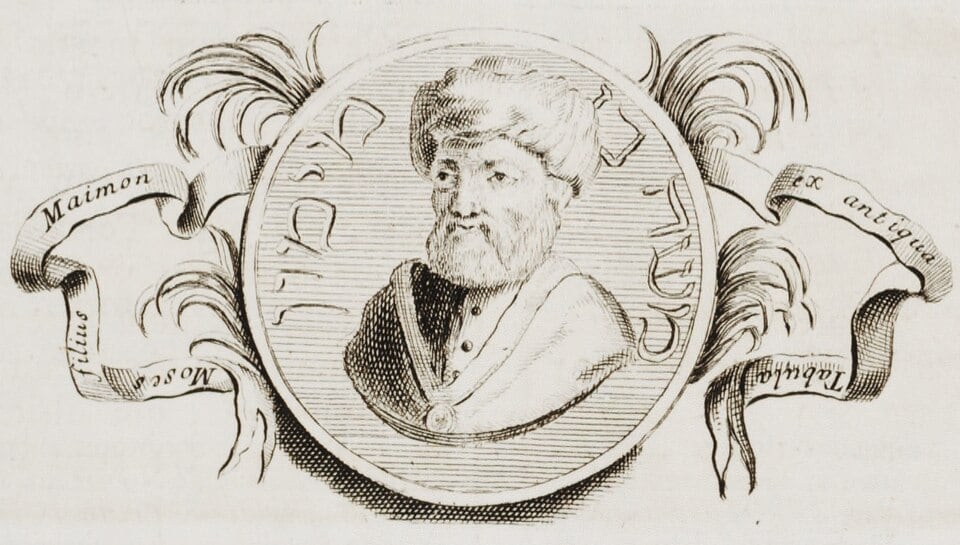
Retrato imaginario de Maimónides (Ugolini, 1744) · Public domain
In eigenen Worten
«The foundation of foundations and the pillar of the sciences is to know that there is a First Being, and that He brings into being all that exists.»Mishné Torá, Leyes de los fundamentos de la Torá 1:1
Maimonides
Commentary on the Mishnah (Kitāb al-Sirāj)
Zum Einstieg ein Werk
Commentary on the Mishnah (Kitāb al-Sirāj)Der zentrale Gedanke
The thirteen principles of faith: At the end of the introduction to chapter *Helek*, Maimonides lists thirteen "foundations" (*yesodot*) whose acceptance defines whoever belongs to Israel and has a share in the world to come: God's existence; His unity; His incorporeality; His eternity; that worship is due to Him alone; prophecy; the superiority of Moses's prophecy; the divine origin of the Torah; its immutability; God's knowledge of human deeds; reward and punishment; the coming of the Messiah; and the resurrection of the dead.
Im Zusammenhang sehen
Biografie
4 Min. Lesezeit
Unterstützte Übersetzung aus dem spanischen Original, Durchsicht durch einen muttersprachlichen Übersetzer ausstehend.
Ein Cordobese im Exil
Mose ben Maimon, den die Juden nach seinen Initialen Rambam nennen und den die lateinische Welt als Maimonides kannte, wurde am Vorabend des Pessachfestes 1138 in Córdoba geboren, nach der Berechnung, der heute die meisten Forscher folgen; eine alte Überlieferung nennt 1135. Sein Vater Maimon war Rabbinatsrichter und Schüler der großen andalusischen Talmudgelehrten, und der Knabe wuchs in der letzten Blüte der jüdischen Kultur von al-Andalus auf, mit dem Hebräisch der Schrift und dem Arabisch der Philosophie, der Medizin und der Astronomie. 1148 eroberten die Almohaden Córdoba und beseitigten die Duldung, die bis dahin Juden und Christen geschützt hatte; die Familie begab sich auf eine lange Wanderschaft durch al-Andalus und Nordafrika, die sie um 1160 nach Fès führte, in eine weitere almohadische Stadt. Ob sie in diesen Jahren nach außen hin als Muslime lebten, wie einige arabische Autoren behaupteten, ist unter Historikern bis heute umstritten.
Fustat
Im Frühjahr 1165 schiffte sich die Familie nach Akko im Kreuzfahrerkönigreich Jerusalem ein; im Herbst besuchte Mose Jerusalem und Hebron und ließ sich bald darauf in Ägypten nieder, zuerst in Alexandria, ab 1168 in Fustat, der alten Hauptstadt neben Kairo. Dort vollendete er im selben Jahr sein erstes großes Werk, den Mischna-Kommentar, auf Arabisch in hebräischen Buchstaben geschrieben, dessen Einleitungen eine ethische Abhandlung, die Acht Kapitel, und die berühmte Formulierung der dreizehn Glaubensgrundsätze des Judentums enthalten. Die Dokumente der Kairoer Geniza zeigen ihn bald als öffentliche Gestalt: Er organisierte den Loskauf der von den Kreuzfahrern in Bilbeis gefangenen Juden und war zeitweise Oberhaupt der jüdischen Gemeinschaft Ägyptens.
Briefe an ferne Gemeinden
Von Fustat aus beantwortete er Anfragen aus der ganzen jüdischen Welt, vom Jemen bis in die Provence. Um 1172 schrieb er an die Juden des Jemen, die Zwangsbekehrungen ausgesetzt und von einem Mann aufgewühlt waren, der sich zum Messias erklärt hatte, ein Sendschreiben, das sie tröstete, ihnen davon abriet, den Zeitpunkt der Erlösung zu berechnen, und den Betrüger entlarvte. Obadja, einem Proselyten, der fragte, ob er im Gebet „Gott unserer Väter“ sagen dürfe, antwortete er mit Ja, denn Abraham sei der Vater aller, die unter den Flügeln der göttlichen Gegenwart Zuflucht suchen. Und als man ihn 1191 beschuldigte, die Auferstehung der Toten zu leugnen, antwortete er mit einer Abhandlung, die sie als Glaubensartikel bekräftigte. Diese Briefe, zum Teil in der Geniza erhalten, zeigen den Seelsorger hinter dem Juristen und dem Philosophen.
Der Kodex
Die Familie lebte vom Edelsteinhandel, den sein jüngerer Bruder David betrieb. Um 1170 ertrank David im Indischen Ozean mit dem Vermögen aller; Mose schrieb Jahre später, dies sei der schwerste Schlag seines Lebens gewesen, und er sei fast ein Jahr lang krank gewesen. Er musste seinen Lebensunterhalt als Arzt verdienen und nahm zugleich das Werk in Angriff, das ihn unentbehrlich machen sollte: die Mischne Tora, die „Wiederholung des Gesetzes“, einen Kodex in klarem Hebräisch, der in vierzehn Büchern das gesamte jüdische Gesetz ordnet, von den Grundlagen des Glaubens bis zu den Gesetzen über die Könige und den Messias, ohne die Diskussionen des Talmuds. Er vollendete ihn um 1178. Sein Anspruch – es solle genügen, die Tora und danach dieses Buch zu lesen, um das ganze mündliche Gesetz zu kennen – weckte im Orient Bewunderung und in der Provence scharfe Kritik, wo Abraham ben David von Posquières ihm vorwarf, seine Quellen nicht anzugeben.
Der Arzt des Wesirs
Sein Ruf als Arzt brachte ihn in den Dienst des Wesirs al-Qadi al-Fadil, des großen Kanzlers Saladins, und später al-Afdals, des Sohnes des Sultans, für den er eine Diätetik (Regimen sanitatis) schrieb. Er verfasste etwa zehn medizinische Abhandlungen auf Arabisch in der Tradition Galens: Aphorismen, Kommentare zu Hippokrates, Schriften über Gifte, Asthma und Hämorrhoiden. In einem Brief von 1199 an seinen Übersetzer Samuel ibn Tibbon beschrieb er seinen Tag: den Vormittag am Hof, den Nachmittag zu Hause bei einer Menge jüdischer und nichtjüdischer Patienten bis zur Erschöpfung, und allein den Sabbat, um seine Gemeinde zu unterweisen. In Ägypten heiratete er eine Frau aus einer Beamtenfamilie, und 1186 wurde sein Sohn Abraham geboren, der ihm als Arzt und als Oberhaupt der Gemeinschaft nachfolgen sollte.
Der Führer der Unschlüssigen
Sein philosophisches Werk, die Dalālat al-ḥā'irīn, der Führer der Unschlüssigen, um 1190 vollendet, richtet sich an einen Schüler, Josef ben Jehuda, und an alle, die wie er das Gesetz befolgten und Philosophie studiert hatten und angesichts jener Bibelstellen ratlos waren, die Gott einen Körper oder Leidenschaften zuzuschreiben scheinen. Maimonides erklärt diese Ausdrücke als mehrdeutig oder metaphorisch; er vertritt, dass wir von Gott nur sagen können, was er nicht ist, und dass seine Attribute seine Handlungen beschreiben, nicht sein Wesen; er setzt sich mit Aristoteles über die Ewigkeit der Welt auseinander und verteidigt die Schöpfung als die vernünftigere Position; er entwirft eine natürliche Theorie der Prophetie und sucht nach den Gründen der Gebote. Er schrieb mit bewusster Dunkelheit und verstreute seine heikelsten Thesen, um diejenigen nicht zu verwirren, die nicht darauf vorbereitet waren.
Tod und Kontroversen
Er starb in Fustat am 20. Tewet 4965, dem 13. Dezember 1204 nach julianischem Kalender. Nach einer seit dem 13. Jahrhundert bezeugten Überlieferung wurde sein Leichnam nach Tiberias gebracht, wo heute sein Grab verehrt wird. Samuel ibn Tibbon vollendete im selben Jahr die hebräische Übersetzung des Führers, und sein Werk löste in der Provence und in Katalonien eine Kontroverse aus, die ein Jahrhundert lang Befürworter und Gegner des Philosophiestudiums gegeneinander aufbrachte; um 1232 wurden seine Bücher in Montpellier sogar verbrannt. Ins Lateinische übersetzt als Dux neutrorum, wurde der Führer von Thomas von Aquin und Meister Eckhart gelesen, die ihn als „Rabbi Moyses“ zitieren, und später von Spinoza, der mit ihm stritt. In der jüdischen Tradition sagte man von ihm: „Von Mose bis Mose erstand keiner wie Mose.“
Quellen: Davidson, Herbert A. Moses Maimonides: The Man and His Works. Oxford/Nueva York: Oxford University Press, 2005. · Kraemer, Joel L. Maimonides: The Life and World of One of Civilization's Greatest Minds. Nueva York: Doubleday, 2008. · Halbertal, Moshe. Maimonides: Life and Thought. Trad. Joel Linsider. Princeton: Princeton University Press, 2014. · Maimonides, Moses. The Guide for the Perplexed. Trad. del árabe por M. Friedländer. 2.ª ed. revisada en un volumen. Londres: George Routledge & Sons, 1904 (Project Gutenberg n.º 73584). · Maimonides, Moses. The Guide of the Perplexed. Trad. Shlomo Pines, con ensayo introductorio de Leo Strauss. 2 vols. Chicago: University of Chicago Press, 1963.
Zeitleiste
Das Leben, Jahr für Jahr
Jeder Punkt ist ein belegtes Ereignis. Klicken Sie, um es mit Quelle und Grad der Gewissheit zu lesen.
um 11380 JahreCórdoba
Birth
Born in Córdoba on the eve of Passover (14 Nisan). Most scholars prefer 1138, on the basis of a statement in his own Commentary on the Mishnah; an old tradition gives 30 March 1135.
WahrscheinlichDavidson, Herbert A. Moses Maimonides: The Man and His Works. Oxford/Nueva York: Oxford University Press, 2005.
Nach dem Tod
- um 1232His books burned
- um 1240Dux neutrorum
um 1138 · 0 Jahre
Birth
Born in Córdoba on the eve of Passover (14 Nisan). Most scholars prefer 1138, on the basis of a statement in his own Commentary on the Mishnah; an old tradition gives 30 March 1135.
Wahrscheinlich
1148 · 10 Jahre
The Almohads take Córdoba
The Almohad conquest abolishes the protection of Jews and Christians; Maimon's family leaves the city and wanders through al-Andalus and the Maghreb.
Belegt
um 1160 · 22 Jahre
In Fez
The family settles in Fez, under Almohad rule. The Epistle on Apostasy is placed there and, according to Arabic writers, an outward conversion to Islam, now disputed.
Wahrscheinlich
Mai 1165 · 27 Jahre
Journey to the Holy Land
After a stormy crossing he reaches Acre; in the autumn he visits the Temple Mount in Jerusalem and the Cave of the Patriarchs in Hebron, according to a note attributed to his hand.
Wahrscheinlich
1168 · 30 Jahre
Commentary on the Mishnah
Settled in Egypt, he completes the Commentary on the Mishnah in Arabic, with the Eight Chapters and the thirteen principles of faith.
Belegt
um 1169 · 31 Jahre
Ransom of the Bilbeis captives
He writes to the Jewish communities of Egypt to raise the ransom of Jews captured by the crusaders at Bilbeis; the autograph letter survives in the Genizah.
Belegt
um 1170 · 32 Jahre
Death of his brother David
David, who traded precious stones for the family, drowns in the Indian Ocean; Maimonides spends nearly a year ill and turns to medicine.
Belegt
um 1172 · 34 Jahre
Epistle to Yemen
He writes to the Jews of Yemen, persecuted and stirred by a false messiah, a letter of consolation and warning.
Belegt
um 1178 · 40 Jahre
Mishneh Torah
Completes the Mishneh Torah, a code of the whole of Jewish law in fourteen books, written in Hebrew.
Belegt
1186 · 48 Jahre
Birth of his son Abraham
Abraham ben Moses is born, who will succeed him as court physician and head of the Jewish community of Egypt.
Belegt
um 1190 · 52 Jahre
Guide of the Perplexed
Completes the Dalālat al-ḥā'irīn, addressed to his disciple Joseph ben Judah.
Belegt
1191 · 53 Jahre
Treatise on Resurrection
Answers those who accused him of denying the resurrection of the dead with the Ma'amar teḥiyyat ha-metim.
Belegt
1199 · 61 Jahre
Letter to Samuel ibn Tibbon
Writes to his Hebrew translator with advice on translation and a description of his exhausting day as a physician.
Belegt
13. Dezember 1204 · 66 Jahre
Death
Dies in Fustat on 20 Tevet 4965. Tradition, recorded from the thirteenth century, holds that he was buried in Tiberias.
Belegt
1204
Hebrew translation of the Guide
Samuel ibn Tibbon completes the Hebrew translation of the Guide, Moreh nevukhim.
Belegt
um 1232
His books burned
At the height of the Maimonidean controversy, his philosophical works are burned in Montpellier after his opponents denounce them to church authorities.
Wahrscheinlich
um 1240
Dux neutrorum
The Latin translation of the Guide (Dux neutrorum) appears, to be read by Thomas Aquinas and Meister Eckhart.
Wahrscheinlich
Werke
Grundlegende Werke
Die Werke, ohne die sich das Vermächtnis nicht verstehen lässt.
Maimonides
Commentary on the Mishnah (Kitāb al-Sirāj)
Schriftliches Werk · 1168
Commentary on the Mishnah (Kitāb al-Sirāj)
كتاب السراج (Kitāb al-Sirāj) / פירוש המשניות
Maimonides' first great book, begun at about twenty-three during the exile and completed in Fustat in 1168. Written in Arabic in Hebrew characters, it is the first complete commentary on the Mishnah: it explains each rule clearly and indicates the legal decision. Its three introductions are independent and highly influential treatises: the general Introduction on the oral tradition and the difference between prophet and sage; the introduction to chapter *Helek* of tractate Sanhedrin, with the thirteen principles of faith; and the *Eight Chapters*, an ethical introduction to tractate *Avot*. It survives partly in autograph (Bodleian, MS. Pococke 295) and circulated in medieval Hebrew translations.
1 Ausgabe
Maimonides
Introduction to Perek Helek: the Thirteen Principles of Faith
Schriftliches Werk · 1168
Introduction to Perek Helek: the Thirteen Principles of Faith
הקדמה לפרק חלק (שלושה עשר עיקרים)
Eschatological essay introducing the tenth chapter of tractate Sanhedrin ("All Israel have a share in the world to come"). It distinguishes vulgar conceptions of reward from the true happiness of the soul, and concludes with thirteen principles every Jew must believe: God's existence, unity and incorporeality, His eternity, that worship is due to Him alone, prophecy, the primacy of Moses's prophecy, the divine origin of the Torah and its immutability, providence, reward and punishment, the coming of the Messiah and the resurrection. They entered the liturgy as a hymn (*Yigdal*) and a creed (*Ani maamin*) composed by others.
1 Ausgabe · amazon.es
Maimonides
Mishneh Torah (The Strong Hand)
Schriftliches Werk · um 1178
Mishneh Torah (The Strong Hand)
משנה תורה (Mishneh Torah) / היד החזקה
Complete code of Jewish law in fourteen books (hence the nickname *Yad ha-Hazakah*, "the strong hand", since *yad* equals fourteen), written in clear Mishnaic Hebrew between about 1168 and 1178. It covers everything: the *Book of Knowledge*, with the foundations of faith, ethics and repentance; prayer, the Sabbath and festivals; marriage; food; the Temple and sacrifices; civil and criminal law; and it concludes with the laws of kings and the messianic era. It omits the Talmudic discussions and the sources to give only the decision, which provoked criticism such as the glosses of Abraham ben David of Posquières, printed ever since alongside the text. It became the basis of later codes such as the *Arba'ah Turim* and the *Shulhan Arukh*, and is still studied daily.
8 Ausgaben · amazon.de

Schriftliches Werk · um 1190
The Guide of the Perplexed
دلالة الحائرين (Dalālat al-ḥā'irīn) / מורה נבוכים
His philosophical work, written in Arabic in Hebrew letters around 1185–1190 for his disciple Joseph ben Judah. In three parts: the first explains biblical terms that seem to attribute to God a body, place or passions, and develops negative theology; the second discusses the proofs of God's existence, creation versus Aristotle's eternity of the world and the nature of prophecy; the third treats Ezekiel's divine chariot, evil, providence, the reasons for the commandments and human perfection, and concludes with the imitation of God's ways. Maimonides warns that he writes with deliberate contradictions to guide only those who are prepared, which has given rise to widely divergent readings. Translated into Hebrew by Samuel ibn Tibbon (1204) and Judah al-Harizi, and into Latin as *Dux neutrorum*, it influenced Christian scholasticism and Spinoza.
12 Ausgaben · amazon.de
Das gesamte Werk (35)

Introduction to the Mishnah
1168

Eight Chapters
1168
Maimonides
Book of the Commandments (Sefer ha-Mitzvot)
The Conscious LibraryBook of the Commandments (Sefer ha-Mitzvot)
1170

Epistle to Yemen
1172
Epistle on Martyrdom (Iggeret ha-Shemad)
1165
Treatise on Resurrection
1191

Letter on Astrology (to the Sages of Montpellier)
1195
Letter to Obadiah the Proselyte
1180
Letter to Samuel ibn Tibbon
1199
Maimonides
Responsa (Teshuvot)
The Conscious LibraryResponsa (Teshuvot)
1204
Maimonides
Letters (Iggerot)
The Conscious LibraryLetters (Iggerot)
1204
Maimonides
Laws of the Jerusalem Talmud (fragment)
The Conscious LibraryLaws of the Jerusalem Talmud (fragment)
1170
Maimonides
Commentaries on the Babylonian Talmud (lost)
The Conscious LibraryCommentaries on the Babylonian Talmud (lost)
1160
Maimonides
Treatise on the Art of Logic
The Conscious LibraryTreatise on the Art of Logic
1160
Maimonides
Treatise on the Calendar
The Conscious LibraryTreatise on the Calendar
1158
Maimonides
Extracts from Galen (The Art of Cure)
The Conscious LibraryExtracts from Galen (The Art of Cure)
1190
Maimonides
Commentary on Hippocrates' Aphorisms
The Conscious LibraryCommentary on Hippocrates' Aphorisms
1195

Medical Aphorisms (Chapters of Moses)
1190
Maimonides
Treatise on Hemorrhoids
The Conscious LibraryTreatise on Hemorrhoids
1190
Maimonides
Treatise on Cohabitation
The Conscious LibraryTreatise on Cohabitation
1190

Treatise on Asthma
1190
Maimonides
Treatise on Poisons and Their Antidotes
The Conscious LibraryTreatise on Poisons and Their Antidotes
1199
Maimonides
Regimen of Health
The Conscious LibraryRegimen of Health
1198
Maimonides
On the Elucidation of Some Symptoms and the Response to Them
The Conscious LibraryOn the Elucidation of Some Symptoms and the Response to Them
1200
Zitate
Zitate, die in einem bestimmten Werk nachgewiesen sind. Jedes trägt seine Herkunft und seinen Grad an Verlässlichkeit.
The foundation of foundations and the pillar of the sciences is to know that there is a First Being, and that He brings into being all that exists.יְסוֹד הַיְסוֹדוֹת וְעַמּוּד הַחָכְמוֹת לֵידַע שֶׁיֵּשׁ שָׁם מָצוּי רִאשׁוֹן. וְהוּא מַמְצִיא כָּל נִמְצָא
GeprüftMishné Torá, Leyes de los fundamentos de la Torá 1:1
Apokryphe Zitate oder Zitate umstrittener Zuschreibung (2)
«"It is better to acquit a thousand guilty persons than to put a single innocent one to death."»
A widely quoted paraphrase of negative commandment 290 of the Book of Commandments. The idea is his, but the figure of "a thousand" comes from modern translations of the Arabic original; the medieval Hebrew version consulted (Warsaw, 1883) states the argument without that formula.
«"The risk of a wrong decision is preferable to the terror of indecision."»
A phrase widely circulated online attributed to Maimonides. It has not been located in any of his works.
Letzte Worte
Es gibt keine überprüfbaren Aufzeichnungen der letzten Worte.
No reliable account of his last words survives. Arabic chronicles (Ibn al-Qifti, Ibn Abi Usaybi'a) and Jewish sources record his death in Fustat in December 1204 and the public mourning, without attributing a final sentence to him.
Quelle: Kraemer, Joel L. Maimonides: The Life and World of One of Civilization's Greatest Minds. Nueva York: Doubleday, 2008.
Fragen
Was das Werk beantwortet
Zwölf große Fragen der Menschheit und was sich aus den Texten darauf antworten lässt, mit Belegen. Wir legen niemandem Worte in den Mund.
Was ist das Absolute? Gibt es Gott?
A free Creator of whom one can only say what He is not
Ein persönlicher GottAusdrücklich gesagt
Maimonides places at the foundation of the whole law the knowledge that there exists a First Being who gives existence to all that exists, and in the Guide of the Perplexed he defends that the world was created by divine will, and does not emanate from God by necessity as the Aristotelians held; he grants that the question cannot be demonstrated, but holds creation to be the more reasonable thesis and the one the Torah requires. This God creates, reveals Himself to the prophets and exercises providence. But Maimonides is also the great master of negative theology: God has no positive attributes, His names describe His actions and not His essence, and everything said to praise Him contains something that diminishes Him, so that silence is most fitting. His God is personal in what He does and unsayable in what He is.
Diese Frage mit anderen Meistern vergleichenWer bin ich? Gibt es ein wahres Selbst?
What we are is intellect, and only the intellect that knows endures
Eine geschaffene, unsterbliche SeeleAusdrücklich gesagt
Maimonides opens the Guide of the Perplexed by explaining that the image of God in which man was created is not a bodily shape but his natural form: the intellect. That is what man properly is. In the Mishneh Torah he distinguishes the soul that animates the body, which perishes with it, from the form that knows the separate intelligences, which comes from God and does not die. The world to come consists, for him, in this existence of souls without bodies, like the angels, enjoying the knowledge of God. But that immortality is not received ready-made: it depends on what each person has come to know. The true self is the intellect which, through study and right living, has passed from potentiality to act.
Diese Frage mit anderen Meistern vergleichenWarum leiden wir?
Most evils we bring on ourselves by desiring the superfluous
Begehren und AnhaftenAusdrücklich gesagt
In the third part of the Guide of the Perplexed, Maimonides classifies evils into three species. The first come from matter: man, like everything that is born, falls ill and dies, and to complain of it is to ask to be something else. The second are those some men inflict on others, wars and tyrannies, rarer than they seem. The third, the most numerous, are those each person brings on himself through his vices: excess in food, drink and sex, and above all the desire for the superfluous, which has no limit, whereas what is necessary is little and easily obtained. He has noted earlier that evils are at bottom born of ignorance, a privation of knowledge. The remedy is the middle way and knowledge.
Diese Frage mit anderen Meistern vergleichenWas geschieht nach dem Tod?
The world to come is the intellect's life; resurrection, a principle of faith
Ewiges Leben und AuferstehungAusdrücklich gesagt
Maimonides distinguishes three things that tradition confused. The messianic era is a historical time of peace and study, with no alteration of the natural order. The world to come, the ultimate reward, is the soul's existence without a body, like that of the angels, enjoying the knowledge of God: there is no food or drink there, and whoever imagines it as a feast has understood nothing. The resurrection of the dead is among his thirteen principles of faith; accused of denying it because the Mishneh Torah barely mentions it, he wrote a treatise to affirm it, while maintaining that the resurrected will die again and that the final destiny remains the life of the soul. What endures is the intellect that has known God.
Diese Frage mit anderen Meistern vergleichenWie erlangt man Befreiung oder Erlösung?
Ultimate perfection is to know God, and from that knowledge love is born
Durch unmittelbare ErkenntnisAusdrücklich gesagt
At the end of the Guide of the Perplexed, Maimonides distinguishes four perfections: of possessions, of the body, of the moral virtues and of the intellect. Only the last truly belongs to man and gives him eternal life: to know God as far as possible. The commandments and the virtues are necessary, for they order the body and society and prepare the mind, but they are not the end. In the Mishneh Torah he describes the love of God as the fruit of this knowledge: whoever contemplates the works and creatures and sees in them a wisdom beyond measure at once loves. And knowledge flows into action: whoever knows God seeks to imitate His ways of lovingkindness, judgement and righteousness on earth.
Diese Frage mit anderen Meistern vergleichenBraucht es einen Lehrer?
A chain of tradition from Moses, and truth from whoever speaks it
Gemeinschaft und TraditionAusdrücklich gesagt
Maimonides opens his Introduction to the Mishnah and the Mishneh Torah by tracing the chain of transmission of the oral law from Moses, generation after generation, down to the sages of the Talmud: Judaism is received within a community and its teachers. For the secrets of the Torah — the work of creation and the work of the chariot — he requires a master: they are transmitted only from mouth to mouth to a wise and able disciple, and the Guide itself is written as a letter to a pupil. But that authority does not replace reason. In the preface to the Eight Chapters he declares that he has taken ideas from ancient and modern philosophers and that one should hear the truth from whoever speaks it. Tradition transmits; the intellect examines.
Diese Frage mit anderen Meistern vergleichenIst die Welt wirklich?
A world created, ordered and good: evil is privation
Eine gute und wirkliche SchöpfungAusdrücklich gesagt
Maimonides defends in the Guide of the Perplexed that the world was created by God's will and does not exist eternally by necessity, and describes it as an ordered whole, comparable to a single living individual whose parts are related to one another. His acts are neither vain nor arbitrary, though their ultimate ends are not always accessible to us. Evil is not a positive reality created by God but privation: illness is absence of health, ignorance absence of knowledge, and what proceeds from God is only existence, which is a good; hence the Torah declares the work of the six days very good. The world is real, has stable laws, and its study, the science of nature, leads to knowledge and love of its Creator.
Diese Frage mit anderen Meistern vergleichenWas ist Liebe?
To love God like a lover who cannot stop thinking of his beloved
Sehnsucht und VereinigungAusdrücklich gesagt
Maimonides, the most rationalist of medieval Jewish thinkers, describes the love of God with the most passionate image. In the Mishneh Torah he says one must love Him with a great and very strong love, until the soul is bound to Him and thinks of Him always, like someone lovesick who cannot turn his thoughts from a woman and thinks of her sitting, standing, eating and drinking. But that love is born of knowledge and is proportional to it: whoever contemplates the creatures and discovers in them a wisdom beyond measure at once loves, and the more he knows, the more he loves. That is why serving God out of love, and not in hope of reward, is the rank of the wise. Love of others is ordered in charity.
Diese Frage mit anderen Meistern vergleichenSind wir frei, oder ist alles vorherbestimmt?
Every man can be righteous like Moses or wicked like Jeroboam
Echter freier WilleAusdrücklich gesagt
Maimonides makes free will a pillar of the Torah. In the laws of repentance in the Mishneh Torah he states that every man has been given the power to choose: if he wishes to incline towards the good way and be righteous, he can; if he wishes to incline towards the evil one and be wicked, he can too. Each can become righteous like Moses or wicked like Jeroboam, and no one compels him or decrees his path. Without that freedom, the commandments, repentance, reward and punishment would be meaningless. That is why he rejects astrology, which in his letter to the sages of Montpellier he calls superstition, and the opinions that make destiny something fixed. He grants that reconciling this freedom with divine knowledge exceeds human understanding.
Diese Frage mit anderen Meistern vergleichenWozu meditieren oder beten?
Prayer culminates in continuous intellectual contemplation of God
Die Wirklichkeit sehen, wie sie istAusdrücklich gesagt
In chapter 51 of the third part of the Guide of the Perplexed, Maimonides describes the worship proper to one who has attained knowledge of God: it is no longer the outward repetition of words but the concentration of the intellect upon Him. He proposes a gradual exercise: begin by reciting the Shema and the prayers with full attention, without being distracted by anything else; then extend that attention to the reading of the Torah and the other commandments; and finally keep one's thought on God even while eating or conversing. Solitude and retreat favour that state. In the Mishneh Torah he rules that prayer without intention is not prayer; the end of worship is to contemplate, not to ask.
Diese Frage mit anderen Meistern vergleichenKann die Vernunft das Letzte erkennen?
Torah and demonstration cannot contradict each other; if they clash, the text is interpreted
Schrift und DenkenAusdrücklich gesagt
The Guide of the Perplexed was born for the reader who, trained in Torah and in philosophy, feels perplexed by their apparent contradictions. Maimonides holds that revealed truth and demonstrated truth cannot be opposed: when Scripture seems to ascribe a body or passions to God, it must be interpreted, because demonstration proves He has none. But he also marks the limits of reason: there are things the human intellect cannot reach, such as God's essence, and questions it cannot demonstrate, such as the eternity or creation of the world; on these, and only these, prophetic tradition decides. The study of science and philosophy is therefore a religious duty, and the summit of worship is knowledge.
Diese Frage mit anderen Meistern vergleichenSich von der Welt zurückziehen oder sie verwandeln?
The intellect with God and the body among men, like Moses
Kontemplation im HandelnAusdrücklich gesagt
Maimonides rejects extreme asceticism: in the Mishneh Torah he teaches the middle way and warns against those who deprive themselves of food, abstain from marriage or withdraw to the deserts thinking they thus serve God better. His ideal appears in chapter 51 of the third part of the Guide: the patriarchs and Moses had their intellect always united with God while their bodies were busy with flocks, family and the government of the people. And the Guide ends by asking us to imitate God's ways by practising lovingkindness, judgement and righteousness on earth. He lived it himself: physician at Saladin's court, head of the Jewish community of Egypt and lawgiver, without abandoning contemplation.
Diese Frage mit anderen Meistern vergleichen
Affinitäten und Spannungen
Affinitäten und Spannungen
Frage für Frage aus den Positionen berechnet. Den Grund jeder Übereinstimmung und jedes Widerspruchs zeigt ein Klick.
Denkt ähnlich wie

Theophan the Recluse
Übereinstimmung bei: Was ist das Absolute? Gibt es Gott? · Wer bin ich? Gibt es ein wahres Selbst? · Was geschieht nach dem Tod?

Francis of Assisi
Übereinstimmung bei: Was ist das Absolute? Gibt es Gott? · Wer bin ich? Gibt es ein wahres Selbst? · Was geschieht nach dem Tod?
Hildegard of Bingen
Übereinstimmung bei: Was ist das Absolute? Gibt es Gott? · Wer bin ich? Gibt es ein wahres Selbst? · Was geschieht nach dem Tod?
Augustine of Hippo
Übereinstimmung bei: Was ist das Absolute? Gibt es Gott? · Wer bin ich? Gibt es ein wahres Selbst? · Was geschieht nach dem Tod?
Denkt anders als
Patañjali
Widerspruch bei: Was ist das Absolute? Gibt es Gott? · Wer bin ich? Gibt es ein wahres Selbst? · Was geschieht nach dem Tod?
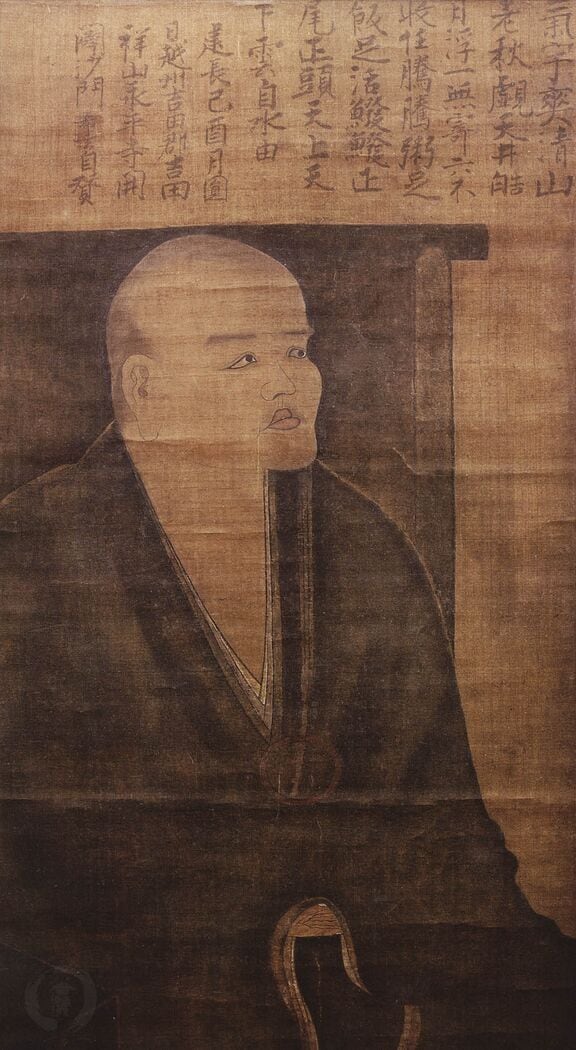
Dōgen
Widerspruch bei: Was ist das Absolute? Gibt es Gott? · Wer bin ich? Gibt es ein wahres Selbst? · Was geschieht nach dem Tod?
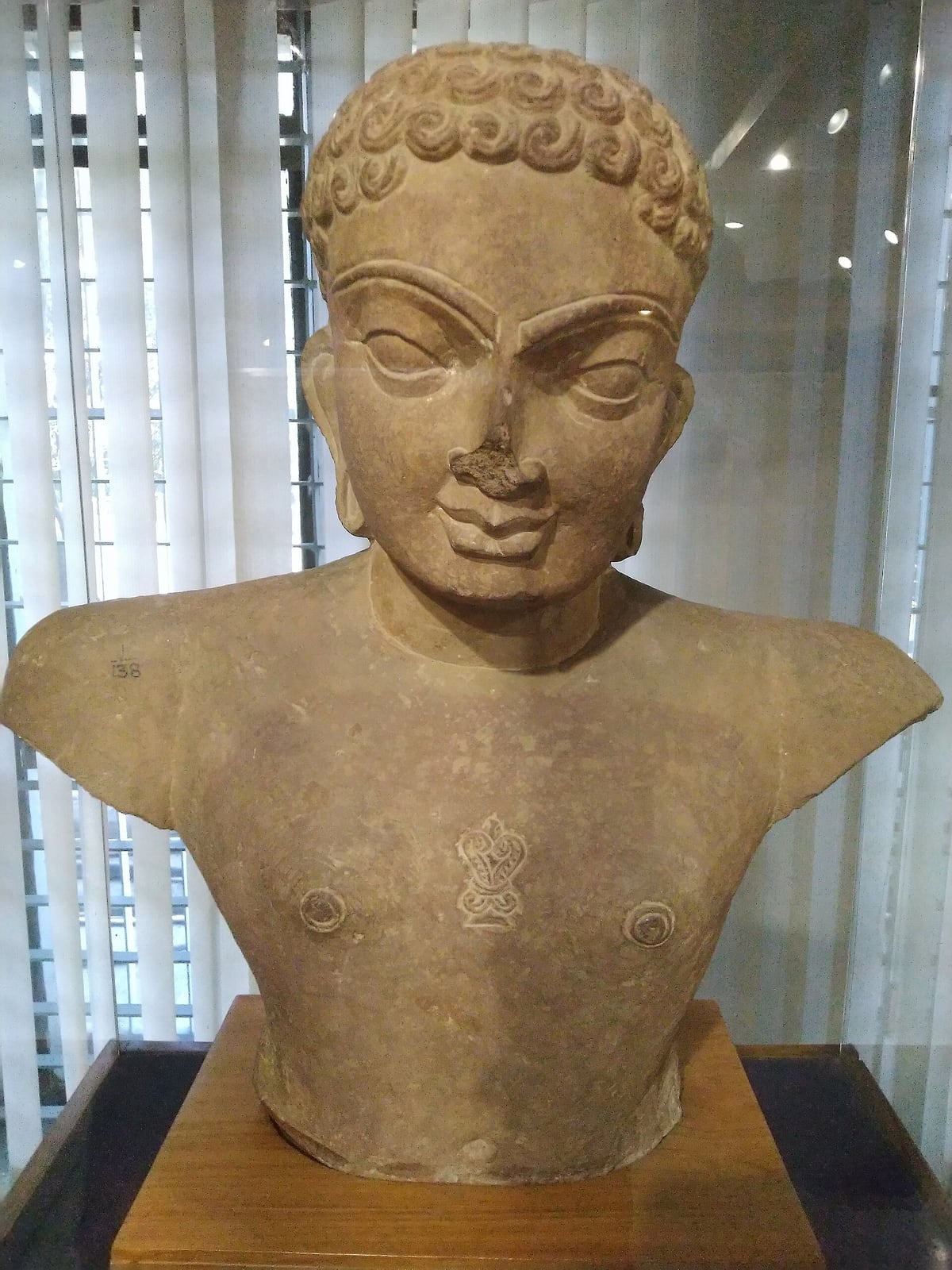
Mahāvīra
Widerspruch bei: Was ist das Absolute? Gibt es Gott? · Was geschieht nach dem Tod?

Sadhguru
Widerspruch bei: Wer bin ich? Gibt es ein wahres Selbst? · Was geschieht nach dem Tod? · Ist die Welt wirklich?
Anekdoten und Erzählungen
Anekdoten und Erzählungen
Zeugnis1165
The storm and the Temple Mount
Herkunft der Erzählung: The note is known from Eleazar Azikri's quotation of it in Sefer Haredim (Safed, sixteenth century), who says he copied it from a writing of Maimonides; historians accept it with caution.
Quelle: Kraemer, Joel L. Maimonides: The Life and World of One of Civilization's Greatest Minds. Nueva York: Doubleday, 2008.
Belegt1168–1169
The captives of Bilbeis
Herkunft der Erzählung: Autograph letter from the Cairo Genizah, edited by S. D. Goitein and analysed by Kraemer (2008).
Quelle: Kraemer, Joel L. Maimonides: The Life and World of One of Civilization's Greatest Minds. Nueva York: Doubleday, 2008.
Belegtc. 1170–1178
The death of David
Herkunft der Erzählung: Maimonides's letter to Japheth ben Elijah, preserved in the epistolary tradition (ed. Shailat) and partly confirmed by a letter from David at Aydhab found in the Genizah.
Quelle: Kraemer, Joel L. Maimonides: The Life and World of One of Civilization's Greatest Minds. Nueva York: Doubleday, 2008.
Belegt1199
The physician's day
Herkunft der Erzählung: Maimonides's letter to Samuel ibn Tibbon (1199), preserved in Hebrew translation (ed. Shailat, Iggerot).
Quelle: Kraemer, Joel L. Maimonides: The Life and World of One of Civilization's Greatest Minds. Nueva York: Doubleday, 2008.
Umstrittenc. 1160–1190
The accusation of apostasy
Herkunft der Erzählung: Ibn al-Qifti, Ta'rikh al-hukama' (13th century); discussed by Davidson (2005), Kraemer (2008) and Stroumsa (2009).
Quelle: Kraemer, Joel L. Maimonides: The Life and World of One of Civilization's Greatest Minds. Nueva York: Doubleday, 2008.
Belegt1232–1242
Books on the pyre
Herkunft der Erzählung: Letters of the Maimonidean controversy and thirteenth-century Jewish chronicles; the link between the 1232 burning and the burning of the Talmuds in Paris is a contemporary interpretation taken up by historians.
Quelle: Kraemer, Joel L. Maimonides: The Life and World of One of Civilization's Greatest Minds. Nueva York: Doubleday, 2008.
Umstrittens. XIII–XVI
The epitaph of Tiberias
Herkunft der Erzählung: Gedaliah ibn Yahya, Shalshelet ha-Kabbalah (Venice, 1587). Not confirmed by contemporary sources.
Quelle: Kraemer, Joel L. Maimonides: The Life and World of One of Civilization's Greatest Minds. Nueva York: Doubleday, 2008.
Lehren
Lehren
Die Begriffe, die das Denken gliedern, in ihrem Zusammenhang erklärt.
The thirteen principles of faithtrece-principios
Commentary on the Mishnah, Sanhedrin 10; taken up in the Mishneh Torah, Laws of Repentance 3.
Negative theology and attributes of actionteologia-negativa
Guide of the Perplexed I, 50–60; sources in kalam and Arabic philosophy (Avicenna).
The middle wayjusto-medio
Eight Chapters, ch. 4; Mishneh Torah, Laws of Dispositions 1–2.
Quelle: Mishneh Torah, texto hebreo de la edición Torat Emet (dominio público) en Sefaria.
Prophecyprofecia
Guide of the Perplexed II, 32–48; Mishneh Torah, Laws of the Foundations of the Torah 7.
The reasons for the commandmentsrazones-de-los-preceptos
Guide of the Perplexed III, 25–49.
Human perfection and imitation of Godimitatio-dei
Guide of the Perplexed III, 51 and 54.
The eight degrees of charitygrados-de-la-tsedaka
Mishneh Torah, Laws of Gifts to the Poor 10:7–14.
Quelle: Mishneh Torah, texto hebreo de la edición Torat Emet (dominio público) en Sefaria.
Videos
Videos
Aufnahmen, Gespräche und Dokumentarfilme. Die Videos werden von YouTube wiedergegeben; sie werden nicht hier gespeichert.
Maimónides, entre la filosofía y la medicina | Mariano Gómez Aranda
Vortrag· ES· 53 min
Fundación Juan MarchOffizieller Kanal
MAIMONIDES
Dokumentarfilm· ES· 4 min
PTV Córdoba
Conferencia: Maimónides en los documentos de la Genizah por Dr. Mario Eduardo Cohén
Vortrag· ES· 71 min
Mem Guímel
Kenneth Seeskin, "What the Guide of the Perplexed is Really About"
Vortrag· EN· 52 min
Anne Tanenbaum Centre for Jewish StudiesOffizieller Kanal
Maimonides on Monotheism - Prof. Kenneth Seeskin
Vortrag· EN· 51 min
Institute for Tolerance Studies
The Essence of Maimonides: Sherwin B. Nuland (2005)
Vortrag· EN· 67 min
The 92nd Street Y, New YorkOffizieller Kanal
Who Was Moses Maimonides? The Life of the Mind | Dr. Henry Abramson
Vortrag· EN· 57 min
Henry Abramson
Maimonides: The Revered & Controversial Sephardic Rabbi | The Jewish Story | Unpacked
Dokumentarfilm· EN· 5 min
Unpacked
Maimonides on Mourning: Jewish Law and Emotion
Vortrag· EN· 80 min
UC Berkeley School of LawOffizieller Kanal
10 - רמב"ם - חלק א: תולדות חייו וכתביו
Vortrag· HE· 36 min
The Open University of IsraelOffizieller Kanal
Moshe Halbertal: "Maimonides: Life and Thought" Book Launch
Vortrag· HE· 57 min
NYU School of LawOffizieller Kanal
Maïmonide : entre judaïsme, islam et christianisme
Gespräch· FR· 30 min
Storiavoce, un podcast d'Histoire & Civilisations
René Levy : si l'Occident avait lu Maïmonide...
Vortrag· FR· 32 min
AkademOffizieller Kanal
Galerie
Galerie
Bilder mit geprüfter Lizenz. Jedes bewahrt seine Urheberschaft und seinen Herkunftsnachweis.
Handschriften
Handschriften
Handschriftliche Zeugen und alte Texte, mit ihrer verwahrenden Einrichtung und ihren Einsichtsbedingungen.
HE · Hebrew · c. 1178
משנה תורה (ספר המדע וספר אהבה)
- Erhaltener Textzeuge
- Copia egipcia de finales del siglo XII con la nota autógrafa «corregido sobre mi libro, yo, Moisés hijo de Rabí Maimón» (fol. 165r)
- Verwahrende Einrichtung
- Bodleian Library, Oxford · MS. Huntington 80
- Digitalisierung
- iiif.biblissima.fr/collections/manifest/de2371fd…
AR · Hebrew · c. 1167–1168
كتاب السراج (פירוש המשניות), סדר נזיקין וקדשים
- Erhaltener Textzeuge
- Borrador autógrafo con correcciones del autor
- Verwahrende Einrichtung
- Bodleian Library, Oxford · MS. Pococke 295
AR · Hebrew · 1168–1204
קטעי גניזה בכתב ידו של הרמב״ם
- Erhaltener Textzeuge
- Borradores de responsa, cartas y fragmentos de obras halladas en la Genizá de la sinagoga Ben Ezra de Fustat
- Verwahrende Einrichtung
- Cambridge University Library (colección Taylor-Schechter) y otras bibliotecas
- Digitalisierung
- cudl.lib.cam.ac.uk/collections/genizah…
Beziehungen
Beziehungen
Einflüsse, Schülerschaften und Verwandtschaften. Die belegte Beziehung wird von der durch Analyse ermittelten Ähnlichkeit unterschieden.
Beeinflusst von
The *Guide* relies on Aristotle's physics, metaphysics and ethics; Maimonides regards him as the summit of human knowledge in the sublunar realm, but disagrees with him on the eternity of the world, which he does not consider demonstrated.
Belegte Beziehung
Beeinflusste
Eckhart frequently cites "Rabbi Moyses" and draws from the *Guide* (in Latin translation) elements of his doctrine of the divine names and of negative theology.
Belegte Beziehung
Beeinflusste
Spinoza studied the *Guide* and argued against its method of allegorical interpretation of the Bible in the *Theological-Political Treatise* (ch. 7); the one's critique grew out of reading the other.
Belegte Beziehung
Verwandte Gedanken mit
Both lived the tension between Aristotelian philosophy and revelation; Maimonides knew the philosophical and theological literature of Islam, and it has been suggested that the title of the *Guide* echoes an expression used by al-Ghazali. No direct dependence is documented.
Durch Analyse ermittelte Ähnlichkeit
Zeitgenosse von
Contemporaries born in al-Andalus (Ibn Arabi in Murcia in 1165), they represent two opposite paths of Andalusian thought: Aristotelian rationalism and visionary mysticism. There is no record that they met.
Belegte Beziehung
Verwandte Gedanken mit
Opposite poles of Jewish spirituality in a frequent reading: the intellectualism of the *Guide* and the affective mysticism of Hasidism. Both, however, place cleaving to God at the centre of religious life.
Durch Analyse ermittelte Ähnlichkeit
Verwandte Gedanken mit
Buber opposes to Maimonidean negative theology and intellectualism the personal relation with the eternal Thou; both deny, however, that God can be an object of description.
Durch Analyse ermittelte Ähnlichkeit
Verwandte Gedanken mit
Like Augustine in *De doctrina christiana*, Maimonides proposes rules for interpreting figuratively those passages of Scripture that, read literally, would contradict reason or faith.
Durch Analyse ermittelte Ähnlichkeit
Quellen
Quellen
Für diesen Eintrag herangezogene Bibliografie und Kataloge.
- Davidson, Herbert A. Moses Maimonides: The Man and His Works. Oxford/Nueva York: Oxford University Press, 2005.
- Kraemer, Joel L. Maimonides: The Life and World of One of Civilization's Greatest Minds. Nueva York: Doubleday, 2008.
- Seeskin, Kenneth. «Maimonides». Stanford Encyclopedia of Philosophy (primera publicación 2006; revisión sustancial 2024).
- Halbertal, Moshe. Maimonides: Life and Thought. Trad. Joel Linsider. Princeton: Princeton University Press, 2014.
- Wikidata, Q127398: «Moshe ben Maimon» (Maimónides), 110 enlaces entre wikis.
- Maimonides, Moses. The Guide for the Perplexed. Trad. del árabe por M. Friedländer. 2.ª ed. revisada en un volumen. Londres: George Routledge & Sons, 1904 (Project Gutenberg n.º 73584).
- Maimonides, Moses. The Guide of the Perplexed. Trad. Shlomo Pines, con ensayo introductorio de Leo Strauss. 2 vols. Chicago: University of Chicago Press, 1963.
- Mishneh Torah, texto hebreo de la edición Torat Emet (dominio público) en Sefaria.
- Stroumsa, Sarah. Maimonides in His World: Portrait of a Mediterranean Thinker. Princeton: Princeton University Press, 2009.
- Gorfinkle, Joseph I. (ed. y trad.). The Eight Chapters of Maimonides on Ethics (Shemonah Perakim). Nueva York: Columbia University Press, 1912 (ejemplar digitalizado en Internet Archive).
- Wikimedia Commons, categoría «Moshe ben Maimon» y subcategorías (licencias leídas por la API imageinfo).
- Bos, Gerrit (ed. y trad.). Maimonides, Medical Aphorisms: A Parallel Arabic-English Edition (The Medical Works of Moses Maimonides). Provo: Brigham Young University Press, 2004–2017.
- Sefaria: Sefer ha-Mitzvot (Varsovia, 1883), Shemonah Perakim (Wikisource) y Moreh Nevukhim en la traducción hebrea de Samuel ibn Tibbon.
- Bodleian Library, Oxford, MS. Huntington 80 (Mishneh Torah, libros I–II, con certificación autógrafa de Maimónides) y MS. Pococke 295 (Comentario a la Misná, autógrafo); registros de Biblissima y del antiguo portal Maimonides de la Bodleiana.
- Twersky, Isadore. Introduction to the Code of Maimonides (Mishneh Torah). New Haven: Yale University Press, 1980.
- Rechteinhaber
- Dominio público: los textos de Maimónides y sus traducciones medievales. Las ediciones críticas y las traducciones modernas (Pines, Gonzalo Maeso, Munk-Verdier, Weiss-Meiner, Touger, Bos) tienen derechos de sus editores y traductores.
Bestätigung ausstehend
Was dieser Eintrag noch nicht klären konnte. Wir sagen es lieber, als es aufzufüllen.
- Confirmar la fecha de muerte de Joseph I. Gorfinkle (n. 1880) para decidir si su traducción de los Ocho capítulos es de dominio público en la UE y en España (registrada con caution: true).
- Localizar ISBN de una edición española completa de la Mishné Torá (solo hay traducciones parciales registradas) y de la Epístola al Yemen.
- Verificar en Kraemer (2008) la fecha exacta del rescate de los cautivos de Bilbeis (1168 o 1169) y de la quema de Montpellier (1232 o 1233).
- Comprobar en Digital Bodleian el enlace estable de MS. Huntington 80 y MS. Pococke 295.
- Confirmar qué traducción hebrea de la Epístola al Yemen reproduce Wikisource (Nahum ha-Ma'aravi u otra).
- Buscar vídeos en alemán (televisión pública) y en árabe sobre Maimónides; no se han encontrado en canales solventes.
- Las fichas de los tratados médicos menores no tienen ediciones con ISBN verificadas (Rosner, Maimonides Research Institute; Bos, BYU Press): completar con el catálogo de BYU Press.
Recherchiert am 2026-10-25