Judentum · Kabbala
Baal Shem Tov
ישראל בן אליעזר · הבעל שם טוב (הבעש״ט) · דער בעל־שם־טובֿ
um 1700 – 1760Historisch belegte Person
Israel ben Elieser (um 1700–1760), genannt Baal Schem Tov oder Bescht, war ein Heiler und Mystiker aus Podolien, den der Chassidismus als seinen Gründer betrachtet. Bücher schrieb er nicht: Bis auf einen Brief sind seine Lehren vom Anhaften an Gott in jeder Handlung, vom freudigen Gebet und von der Gegenwart Gottes in allem Geschaffenen nur durch seine Schüler überliefert. Die Steuerregister von Międzybóż belegen seine Existenz; die Hagiographie von 1815 schuf seine Legende.
- Werke
- 16Werke
- Ausgaben
- 29Ausgaben
- Zitate
- 8Zitate
- Videos
- 12Videos
- Bilder
- 8Bilder
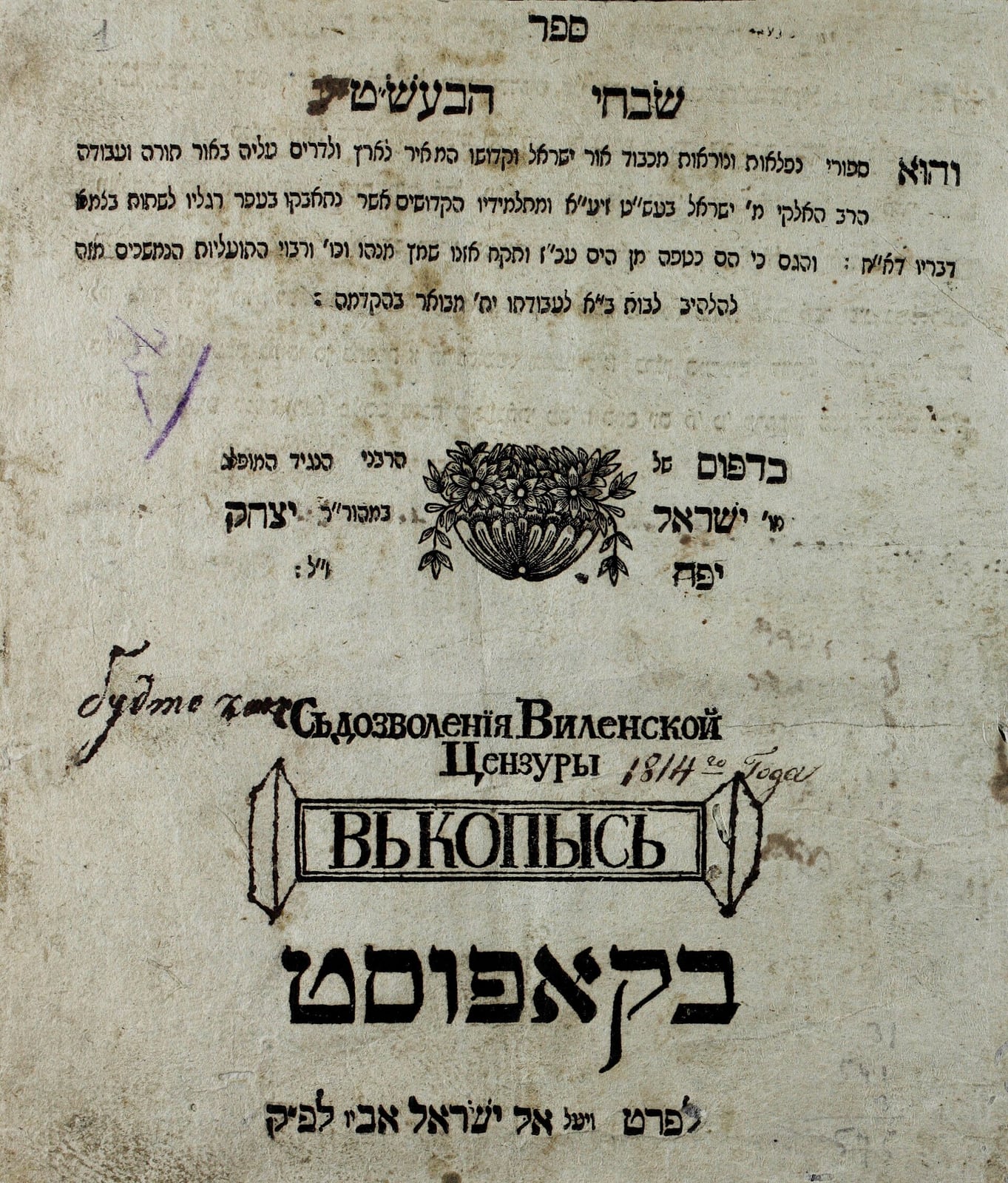
Portada de la primera edición de Shivhei ha-Besht (Kopys, 1814–1815) · Public domain
In eigenen Worten
«When your teaching is publicised and revealed in the world, and your springs overflow outward.»Igeret ha-Kodesh, respuesta del Mesías al Besht (Ben Porat Yosef, Korets, 1781)
Der zentrale Gedanke
Devekut (cleaving to God): *Devekut*, from the Hebrew root "to cleave", designates in the kabbalistic tradition the union of thought with God, which earlier authors reserved for a few and for exceptional moments.
Im Zusammenhang sehen
Biografie
5 Min. Lesezeit
Unterstützte Übersetzung aus dem spanischen Original, Durchsicht durch einen muttersprachlichen Übersetzer ausstehend.
Ein Gründer ohne Buch
Nur wenige Gestalten haben das religiöse Leben des Judentums so tiefgreifend verändert und dabei so wenige schriftliche Spuren hinterlassen. Israel ben Elieser, den seine Anhänger Baal Schem Tov – „Meister des guten Namens“ – oder nach seinen Initialen den Bescht nannten, verfasste keine einzige Abhandlung. Was wir von ihm wissen, stammt aus drei Schichten von sehr ungleichem Wert: aus einer Handvoll polnischer Verwaltungsakten und Zeugnissen von Zeitgenossen außerhalb seines Kreises; aus einem Brief, den er selbst schrieb und der zwei Jahrzehnte nach seinem Tod gedruckt wurde; und aus der Masse von Lehren und Erzählungen, die seine Schüler und deren Schüler ab 1780 niederschrieben. Die Forschung der letzten Jahrzehnte, vor allem Moshe Rosman und Immanuel Etkes, hat gelernt, diese Schichten zu trennen: den urkundlich fassbaren Menschen, den Lehrer, an den sich seine Schüler erinnern, und den Heiligen der Legende.
Die dunklen Jahre
Er wurde um 1700 im Grenzgebiet zwischen der polnisch-litauischen Adelsrepublik und dem Fürstentum Moldau geboren. Schivche ha-Bescht, die 1814/15 in Kopys gedruckte hagiographische Sammlung, verortet seinen Vater Elieser „im Land Walachei, nahe der Grenze“; die spätere chassidische Überlieferung, die die Geburt auf 1698 datiert, bevorzugt das podolische Dorf Okopy, für das es keinen urkundlichen Beleg gibt. Dasselbe Buch erzählt, seine Eltern hätten ihn im hohen Alter bekommen, er sei früh verwaist und von der Gemeinde großgezogen worden; er sei Hilfslehrer und Synagogendiener gewesen, habe mit seiner Frau Channa, der Schwester des Gelehrten Abraham Gerschon von Kuty, in den Karpaten Lehm gegraben und eine Schenke betrieben.
Diese Einzelheiten lassen sich nicht überprüfen, und manche folgen einem erkennbaren hagiographischen Muster: dem verborgenen Gerechten, der unter den Geringen lebt, bis die Stunde seiner Offenbarung gekommen ist, oder den geheimen Schriften eines rätselhaften Adam Baal Schem, die in seine Hände gelangen. Doch sie zeichnen einen Zug, den die Dokumente bestätigen: Der Bescht kam nicht aus den großen rabbinischen Lehrhäusern, sondern aus der Welt der bescheidenen Berufe, der Wanderprediger und der Volksheiler des podolischen Grenzlandes.
Der Baal Schem von Międzybóż
Ein Baal Schem war im Osteuropa des 18. Jahrhunderts ein anerkannter Fachmann: Er schrieb Amulette, trieb Dämonen aus, verordnete Heilmittel und schützte Gebärende und Kinder durch den Gebrauch göttlicher Namen. Israel übte diesen Beruf aus, und sein Beiname sagt es offen. Die ersten verlässlichen Erwähnungen zeigen ihn schon vor 1738 als bekannte Gestalt: Salomon Isaak Halpern erinnerte sich, dass sein Vater, Rabbiner von Schwanez, mit dem „berühmten Israel Baal Schem“ Umgang gehabt habe. Um 1740 ließ er sich in Międzybóż (heute Medschybisch in der Ukraine) nieder, einer Privatstadt der Magnatenfamilie Czartoryski. Die Steuerregister, die Rosman in deren Familienarchiv fand, verzeichnen ihn in einem steuerfreien Haus im Besitz der Gemeinde, zunächst als „Kabbalist“, 1758 als „Baal Schem doktor“. Weit davon entfernt, ein Rebell gegen die Gemeindeobrigkeit zu sein, war er ein religiöser Spezialist, den die Gemeinde selbst unterhielt.
Der Aufstieg der Seele
Der einzige Text, der mit großer Wahrscheinlichkeit von seiner Hand stammt, ist ein Brief an seinen Schwager Abraham Gerschon von Kuty, der ins Land Israel ausgewandert war. Darin berichtet er, er habe am jüdischen Neujahrsfest 1746 „wie du weißt“ eine Beschwörung zum Aufstieg der Seele vollzogen, die himmlischen Paläste durchschritten und den Palast des Messias erreicht, den er fragte, wann er komme. Die Antwort – wenn deine Lehre bekannt und in der Welt offenbar wird und deine Quellen sich nach außen ergießen – sollte zum missionarischen Leitspruch des Chassidismus werden. Der Brief erzählt außerdem von einem weiteren Aufstieg am Neujahrsfest 1749, von der Fürbitte während einer Seuche, von Ritualmordbeschuldigungen in Zasław und anderen Gemeinden, und er schließt mit einem Rat zum Gebet: In jedem Buchstaben sind Welten, Seelen und Göttlichkeit, und wer betet, soll seine Seele mit ihnen verbinden. Jakob Josef von Polonne zur Überbringung nach Palästina anvertraut, erreichte der Brief nie sein Ziel und wurde 1781 am Ende von Ben Porat Josef gedruckt.
Die heilige Gemeinschaft
Etkes hat gezeigt, dass der Bescht zugleich Magier, Mystiker und Führer war. Um ihn sammelte sich eine kleine „heilige Gemeinschaft“ gelehrter Männer, darunter angesehene Rabbiner und Prediger, die seine charismatische Autorität anerkannten: Jakob Josef ha-Kohen, Rabbiner von Schargorod und später von Polonne; Dov Bär, der Prediger von Mesritsch; Pinchas von Korez; Nachman von Horodenka. Eine Organisation gründete er nicht: Der Chassidismus als Bewegung, mit Höfen, Dynastien und Netzen von Anhängern, nahm erst nach seinem Tod Gestalt an, vor allem unter Dov Bär und dessen Schülern. Doch an seiner Gestalt bildete sich die Überzeugung, ein heiliger Mann könne für die Gemeinde Fürsprache einlegen, die Seelen erheben und den Segen herabziehen – die spätere Lehre vom Zaddik.
Was er lehrte
Seine Lehren erreichen uns stets nur als Zitate. Jakob Josef führt Hunderte von ihnen mit der Formel „ich hörte von meinem Lehrer“ in Toldot Jaakow Josef (1780) an, dem ersten gedruckten chassidischen Buch, und Sammlungen wie Zawaat ha-Riwasch (1793) und Keter Schem Tov (1794/95) trugen sie zusammen und vermischten sie mit denen des Predigers von Mesritsch. Durch diesen Filter hindurch zeichnet sich ein schlüssiger Kern ab. Ziel des religiösen Lebens ist die Dewekut, das Anhaften des Denkens an Gott zu jeder Zeit und nicht nur im Gebet oder beim Studium; da „die ganze Erde voll Seiner Herrlichkeit“ ist, kann man Gott auch beim Essen, bei der Arbeit oder im Gespräch dienen, und selbst die fremden Gedanken, die den Betenden überfallen, lassen sich zu ihrer Wurzel emporheben. Freude ist die Bedingung des Gottesdienstes, Traurigkeit sein größtes Hindernis; die unter den Frommen seiner Zeit verbreitete Askese von Fasten und Kasteiungen erscheint in diesen Quellen als gefährlicher Weg. Ein in Keter Schem Tov überlieferter Spruch fasst diese spirituelle Psychologie zusammen: Wo der Mensch denkt, dort ist er ganz.
Tod und Nachleben
Er starb in Międzybóż am ersten Tag von Schawuot 1760, dem 6. Siwan 5520 (nach gregorianischer Rechnung dem 21. Mai). Schivche ha-Bescht enthält einen ausführlichen Bericht über seine letzten Stunden, der Zeugen aus seinem Kreis zugeschrieben wird. Seine Schüler trugen seinen Namen durch Podolien, Wolhynien und Galizien; 1772 belegten die rabbinischen Autoritäten von Wilna die Chassidim mit dem Bann, und der Streit zwischen Chassidim und Mitnagdim prägte ein halbes Jahrhundert lang das jüdische Leben Osteuropas. Schivche ha-Bescht legte 1815 das Bild des wundertätigen Heiligen fest; im 20. Jahrhundert erzählte Martin Buber seine Legenden für ein europäisches Publikum neu, und Gershom Scholem verortete ihn in der Geschichte der jüdischen Mystik als Begründer ihrer „letzten Phase“. Heute ist sein Grab in Medschybisch ein Wallfahrtsort, und die Debatte über den historischen Bescht ist noch nicht abgeschlossen.
Quellen: Rosman, Moshe. Founder of Hasidism: A Quest for the Historical Ba'al Shem Tov. Berkeley: University of California Press, 1996; 2.ª ed. Oxford/Portland: Littman Library of Jewish Civilization, 2013. · Etkes, Immanuel. The Besht: Magician, Mystic, and Leader. Trad. Saadya Sternberg. Waltham (Mass.): Brandeis University Press, 2005 (original hebreo: Ba'al ha-Shem, Jerusalén, Merkaz Zalman Shazar, 2000). · Ben-Amos, Dan, y Jerome R. Mintz (trads. y eds.). In Praise of the Baal Shem Tov [Shivhei ha-Besht]: The Earliest Collection of Legends about the Founder of Hasidism. Bloomington: Indiana University Press, 1970 (reed. Northvale: Jason Aronson, 1993). · Biale, David; Assaf, David; Brown, Benjamin; Gellman, Uriel; Heilman, Samuel C.; Rosman, Moshe; Sagiv, Gadi; Wodziński, Marcin. Hasidism: A New History. Princeton: Princeton University Press, 2018. · Scholem, Gershom. Major Trends in Jewish Mysticism. Jerusalén: Schocken, 1941 (reed. Nueva York: Schocken, 1946 y ss.), «Ninth Lecture: Hasidism, the Latest Phase». Trad. esp.: Las grandes tendencias de la mística judía, Madrid, Siruela.
Zeitleiste
Das Leben, Jahr für Jahr
Jeder Punkt ist ein belegtes Ereignis. Klicken Sie, um es mit Quelle und Grad der Gewissheit zu lesen.
um 17000 JahreFrontera podolio-moldava
Birth
Israel, son of Eliezer, is born on the border between Poland and Moldavia. Hasidic tradition gives 18 Elul 5458 (1698) and the village of Okopy; neither is attested in documents.
ÜberlieferungRosman, Moshe. Founder of Hasidism: A Quest for the Historical Ba'al Shem Tov. Berkeley: University of California Press, 1996; 2.ª ed. Oxford/Portland: Littman Library of Jewish Civilization, 2013.
Nach dem Tod
- 1772First bans on the Hasidim
- 1780First Hasidic book
- 1793 – 1795Tsava'at ha-Rivash and Keter Shem Tov
- 1815Shivhei ha-Besht
- 1908The legend according to Buber
- 1996The historical Besht
um 1700 · 0 Jahre
Birth
Israel, son of Eliezer, is born on the border between Poland and Moldavia. Hasidic tradition gives 18 Elul 5458 (1698) and the village of Okopy; neither is attested in documents.
Überlieferung
1730er Jahre · 30 Jahre
Years of humble trades
According to Shivhei ha-Besht he works as a teacher's assistant, beadle, clay-digger with his wife Hannah and tavern-keeper, living as a hidden saint until his "revelation". Hagiographic account, unverifiable.
Überlieferung
um 1738 · 38 Jahre
First outside testimony
Before 1738, the year of his death, Rabbi Jacob Halpern of Zhvanets has dealings with "the renowned Israel Baal Shem", as his son Solomon Isaac Halpern, no Hasid, would recall.
Wahrscheinlich
um 1740 · 40 Jahre
Settles in Międzybóż
The records of this Czartoryski private town place him from 1740 in a tax-exempt community house, first described as a "kabbalist".
Belegt
September 1746 · 46 Jahre
The Rosh Hashanah ascent
On the New Year of 5507 he performs an "ascent of the soul" in which, according to his own letter, he reaches the palace of the Messiah and asks him when he will come.
Belegt
um 1747 · 47 Jahre
His brother-in-law emigrates to Palestine
Abraham Gershon of Kuty, his wife's brother and a student of Kabbalah, settles in the Land of Israel; he will be the addressee of the Besht's letter.
Wahrscheinlich
um 1750 · 50 Jahre
The letter to Gershon of Kuty
Having received a letter from his brother-in-law at the Luka fair of 5510, he replies with the account of his ascents of 1746 and 1749. He entrusts it to Jacob Joseph of Polonne, who never makes the journey.
Belegt
1758 · 58 Jahre
"Baal Shem doktor"
The Międzybóż tax inventory lists the "Baal Shem doktor" in a tax-exempt house.
Belegt
21. Mai 1760 · 60 Jahre
Death on Shavuot
He dies on the first day of Shavuot 5520. Shivhei ha-Besht narrates his last hours according to witnesses from his circle.
Belegt
1772
First bans on the Hasidim
The rabbinic authorities of Vilna and Brody excommunicate the Hasidim: the quarrel with the mitnagdim begins.
Belegt
1780
First Hasidic book
Jacob Joseph of Polonne publishes Toledot Ya'akov Yosef, with hundreds of teachings introduced by "I heard from my master". In 1781, Ben Porat Yosef prints the Besht's letter.
Belegt
1793 – 1795
Tsava'at ha-Rivash and Keter Shem Tov
The anthologies Tsava'at ha-Rivash (1793) and Keter Shem Tov (Zolkiew, 1794–1795) are printed, mixing teachings of the Besht and the Maggid of Mezeritch.
Belegt
1815
Shivhei ha-Besht
Israel Jaffe prints in Kopys the tales collected by Dov Ber of Linits: the Besht's hagiography is born. Yiddish editions appear the same year.
Belegt
1908
The legend according to Buber
Martin Buber publishes Die Legende des Baalschem, which introduces the Besht to a non-Jewish European readership.
Belegt
1996
The historical Besht
Moshe Rosman publishes Founder of Hasidism, based on the Czartoryski archives: the Besht appears as a religious specialist integrated into the community.
Belegt
Werke
Grundlegende Werke
Die Werke, ohne die sich das Vermächtnis nicht verstehen lässt.
Baal Shem Tov
Igeret ha-Kodesh (Letter to Abraham Gershon of Kuty)
Briefwechsel · um 1750
Igeret ha-Kodesh (Letter to Abraham Gershon of Kuty)
אגרת הקודש (אגרת הבעש״ט לר׳ גרשון מקוטוב)
Letter to his brother-in-law, who had emigrated to the Land of Israel, written shortly after 1750. It recounts the ascent of the soul on the New Year of 1746, in which the Besht reaches the palace of the Messiah and asks him when he will come ("when your teaching is publicised and your springs overflow outward"), a second ascent in 1749, his intercession during an epidemic and against ritual-murder accusations in Zasław and two other communities, and closes with instruction on prayer through the letters. It is the key document for his self-understanding as mystic and intercessor, and the origin of Hasidism's missionary drive.
3 Ausgaben · amazon.com

Spätere Zusammenstellung · 1793
Tsava'at ha-Rivash (The Testament of Rabbi Israel Baal Shem)
צוואת הריב״ש
Some hundred and forty short paragraphs on the inner life: equanimity before praise and contempt (*hishtavut*), constant cleaving to God (*devekut*), prayer in joy rather than in tears, the raising of stray thoughts, distrust of sadness and scruples, and moderate asceticism. It was one of the books the *mitnagdim* cited as proof of Hasidic heterodoxy, and at the same time one of the movement's most read manuals of piety. Jacob Immanuel Schochet's annotated edition (Kehot) traces the sources of each paragraph.
3 Ausgaben · amazon.com

Spätere Zusammenstellung · 1794
Keter Shem Tov (Crown of the Good Name)
כתר שם טוב
It is the first anthology devoted explicitly to the Besht's teachings. In two parts, it gathers comments on biblical verses and sayings on prayer, humility, the divine presence in all things and the relation between the righteous man and the people. Some of the most quoted maxims come from here, such as that a man is wholly where his thought is. The Kehot edition (*Keter Shem Tov ha-Shalem*), prepared by J. I. Schochet, corrects the text and adds sources and commentary.
3 Ausgaben · amazon.com

Spätere Zusammenstellung · 1815
Shivhei ha-Besht (In Praise of the Baal Shem Tov)
שבחי הבעש״ט
Some two hundred and fifty narratives that follow the Besht's life from the legend of his father, captive in a distant land, to his death on Shavuot 1760: the orphaned childhood, the years as a hidden saint, the revelation, the healings and exorcisms, the ascents of the soul, the encounters with disciples and opponents, the thwarted journey to the Land of Israel. Each tale usually states from whom the compiler heard it, which allows historians to reconstruct chains of transmission. The annotated English translation by Dan Ben-Amos and Jerome R. Mintz (1970) is the reference in that language.
5 Ausgaben · amazon.com
Das gesamte Werk (16)
Baal Shem Tov
Toledot Ya'akov Yosef
The Conscious LibraryToledot Ya'akov Yosef
1780
Baal Shem Tov
Ben Porat Yosef
The Conscious LibraryBen Porat Yosef
1781
Baal Shem Tov
Tsafnat Pa'neah
The Conscious LibraryTsafnat Pa'neah
1782
Baal Shem Tov
Ketonet Passim
The Conscious LibraryKetonet Passim
1866
Baal Shem Tov
Likkutim Yekarim (Precious Gleanings)
The Conscious LibraryLikkutim Yekarim (Precious Gleanings)
1792
Baal Shem Tov
Degel Mahaneh Efrayim
The Conscious LibraryDegel Mahaneh Efrayim
1810
Baal Shem Tov
Sefer Baal Shem Tov (The Book of the Baal Shem Tov)
The Conscious LibrarySefer Baal Shem Tov (The Book of the Baal Shem Tov)
1938
Baal Shem Tov
Kabbalistic commentary on Psalm 107 (attributed)
The Conscious LibraryKabbalistic commentary on Psalm 107 (attributed)
1804
Baal Shem Tov
Letters of the "Kherson genizah" (spurious)
The Conscious LibraryLetters of the "Kherson genizah" (spurious)
1918

Founder of Hasidism (Moshe Rosman)
1996
Baal Shem Tov
The Besht: Magician, Mystic, and Leader (Immanuel Etkes)
The Conscious LibraryThe Besht: Magician, Mystic, and Leader (Immanuel Etkes)
2000

The Circle of the Baal Shem Tov (Abraham J. Heschel)
1985
Zitate
Zitate, die in einem bestimmten Werk nachgewiesen sind. Jedes trägt seine Herkunft und seinen Grad an Verlässlichkeit.
When your teaching is publicised and revealed in the world, and your springs overflow outward.בעת שיתפרסם למודך ויתגלה בעולם ויפוצו מעינותיך חוצה
GeprüftIgeret ha-Kodesh, respuesta del Mesías al Besht (Ben Porat Yosef, Korets, 1781)
Letzte Worte
Traditionelle Zuschreibung
«I know that the clock has stopped, and I do not worry about myself, for I know for certain that I shall go out by this door and at once enter by another.»ידעתי שעמד הזייגר ואין אני דואג על עצמי כי יודע אני בבירור שאצא מפתח זה ותיכף אכנס בפתח אחר
Shivhei ha-Besht (Kopys, 1815), in the account of his death on Shavuot 1760, which the compiler says he heard from Rabbi Jacob of Międzybóż. After these words he is said to have asked those present to recite the psalm "May the pleasantness of the Lord" (Ps 90:17), to have taught his disciples about the upper worlds and to have expired covered with a sheet. It is second-hand testimony written down half a century later, within a hagiographic work.
Quelle: Dov Ber ben Shmuel de Linits, Shivhei ha-Besht, Kopys, 1814–1815; texto hebreo de la edición de Kopys en Sefaria (dominio público).
Fragen
Was das Werk beantwortet
Zwölf große Fragen der Menschheit und was sich aus den Texten darauf antworten lässt, mit Belegen. Wir legen niemandem Worte in den Mund.
Was ist das Absolute? Gibt es Gott?
The King one serves fills everything: in every letter there is divinity
Persönlich und unpersönlich zugleichAusdrücklich gesagt
The Baal Shem Tov wrote no books: apart from one letter, his teachings come to us through the homilies of his disciples, above all Jacob Joseph of Polonne, and through later anthologies. In those sources the God of Israel to whom one prays and to whom one cleaves (devekut) is at the same time the presence that fills everything, so that no place is empty of Him. In his own letter to his brother-in-law, instructing him on prayer, he states that in every letter there are worlds, souls and divinity. From Lurianic Kabbalah he takes the idea of divine sparks scattered in things, which man raises when he eats, works or prays with intention. God is thus the King served with joy and the vitality hidden in each thing: concealment exists only for one who cannot see Him.
Diese Frage mit anderen Meistern vergleichenWer bin ich? Gibt es ein wahres Selbst?
A soul that ascends, and a man is where his thought is
Eine geschaffene, unsterbliche SeeleAus der Lehre abgeleitet
The Baal Shem Tov wrote no treatise on the soul; what we know of his view of the self comes through his letter and the sayings his disciples transmitted. In the letter to his brother-in-law he tells how his soul ascended, at the New Year of 1746, to the palace of the Messiah: the soul can leave the body and travel through the upper worlds. The anthologies record a maxim that shifts the centre of the person: wherever a man thinks with his thought, there he is entirely. The true self is the soul cleaving to God; the ego that compares itself and grows vain is a hindrance, which is why he warns that whoever serves with devotion must not think himself greater than his fellow, for he is a creature like the others, made to serve.
Diese Frage mit anderen Meistern vergleichenWarum leiden wir?
Sadness distances from God; behind every concealment He is there
Die Trennung von GottAus der Lehre abgeleitet
The teachings his disciples attribute to the Baal Shem Tov place the greatest evil not in outward misfortune but in the sadness that separates from God. Weeping, says the Testament of Rabbi Israel, is very bad, because the Creator is served with joy; only weeping for joy is good. Melancholy and scruples are traps that draw one away from cleaving to God (devekut). Suffering itself is not foreign to God: according to a teaching his disciples transmit, God hides behind the walls of misfortune like a king behind illusory walls, and whoever knows He is there dissolves the concealment. In his letter the Besht also appears as an intercessor in epidemics and persecutions: the community's pain calls for prayer, not resignation.
Diese Frage mit anderen Meistern vergleichenWas geschieht nach dem Tod?
To go out by one door and at once enter by another
Ewiges Leben und AuferstehungAus der Lehre abgeleitet
The Baal Shem Tov left no written teaching on death; what is known comes through his letter and through tradition. In the letter to his brother-in-law he describes how, in his ascents of the soul, he saw souls of the living and the dead rising from world to world, and how he himself interceded for them: the life of the soul continues and can be helped. Hasidic tales, gathered in In Praise of the Baal Shem Tov, speak of souls returning in another body to repair what they left undone, according to the kabbalistic doctrine of transmigration. The same book narrates his death at Shavuot in 1760: he is said to have declared that he did not fear for himself, because he knew he would go out by one door and at once enter by another.
Diese Frage mit anderen Meistern vergleichenWie erlangt man Befreiung oder Erlösung?
Cleaving to God with joy in every act, the bodily included
Durch Hingabe und ErgebungAusdrücklich gesagt
The teachings his disciples attribute to the Baal Shem Tov place at the centre cleaving to God (devekut), not as a state reserved for ascetics but as a constant orientation of the heart. It is reached through prayer made with joy, which is more acceptable than prayer made with weeping, through equanimity before praise and contempt, and through serving God in bodily things: eating, working, conversing with the intention of raising the divine sparks present in everything. The Besht discouraged excessive fasting and mortification, common in the pious circles of his time. Personal and collective redemption are linked: in his letter, the Messiah answers him that he will come when his teaching is spread abroad and his springs overflow outward.
Diese Frage mit anderen Meistern vergleichenBraucht es einen Lehrer?
The righteous man raises his generation; the people reach God through him
UnverzichtbarAus der Lehre abgeleitet
The Baal Shem Tov was master of a circle of disciples who ascribed singular authority to him, and later Hasidism made the righteous man (tsaddik) the centre of religious life. The teachings transmitted by Jacob Joseph of Polonne describe the relationship between «men of form», the sages who cleave to God, and «men of matter», the simple people, who are raised through them; the righteous man is responsible for his generation. According to the tradition recorded in Hasidic tales, the Besht himself had a heavenly master, the prophet Ahijah the Shilonite. His letter shows him interceding for entire communities. For the simple people, the way to God passed through closeness to a righteous man.
Diese Frage mit anderen Meistern vergleichenIst die Welt wirklich?
No place is empty of God: divine sparks in all things
Offenbarung des GöttlichenAusdrücklich gesagt
The teachings transmitted by the Baal Shem Tov's disciples make the world the stage of divine presence: the whole earth is full of His glory, and no place is empty of Him. From Lurianic Kabbalah they take the idea that at creation sparks of holiness were scattered in things, and that man raises them when he uses the world with intention: when eating, trading, working or conversing. Hence the service of God in bodily things that marked nascent Hasidism. In his letter the Besht himself states that in every letter there are worlds, souls and divinity. The world is neither illusion nor obstacle but a garment of the divine: what conceals is the same as what reveals, for one who knows how to look.
Diese Frage mit anderen Meistern vergleichenWas ist Liebe?
To love God with joy and one's fellow without thinking oneself above him
Liebe zu Gott und zum NächstenAus der Lehre abgeleitet
In the transmitted teachings of the Baal Shem Tov, love of God takes the form of joyful cleaving (devekut): serving Him with joy, in prayer and in every act. That love does not set the devout apart from others. The Testament of Rabbi Israel warns that whoever serves with devotion should not say in his heart that he is greater than his fellow, for he is one more creature, made for service. Hasidic tales present the Besht as someone who sought out the simple, the unlettered and sinners, and who valued the prayer of the unlearned man above learning without heart. Love for every Jew, which Hasidism made one of its marks, goes back in tradition to his figure.
Diese Frage mit anderen Meistern vergleichenSind wir frei, oder ist alles vorherbestimmt?
Nothing happens by chance: what one encounters is a task for him
Schicksal und VerantwortungAus der Lehre abgeleitet
The teachings attributed to the Baal Shem Tov extend divine providence to everything: nothing a man sees or hears reaches him by chance, but so that he may learn something with which to serve God. That providence does not cancel choice: every encounter, every place one comes to and every object one touches contains sparks that only he can raise, and whether he does so depends on his intention. The Testament of Rabbi Israel teaches equanimity: to accept praise and contempt alike, because everything comes from God. Freedom does not consist in escaping destiny but in responding well to what it brings. Later tradition developed this idea as individual providence reaching even the leaf the wind stirs.
Diese Frage mit anderen Meistern vergleichenWozu meditieren oder beten?
Praying with joy, with the whole body, cleaving to every letter
Freundschaft mit GottAusdrücklich gesagt
Prayer is at the centre of the teachings the disciples attribute to the Baal Shem Tov. It must be done with joy, which makes it more acceptable than prayer with weeping, and with the whole body and all one's strength, so that the one who prays cleaves to God in every word. The Testament of Rabbi Israel describes it with a bold image taken from Kabbalah: prayer is union with the divine Presence (Shekhinah). The strange thoughts that assail the one praying are not simply rejected but raised to their root. In his letter the Besht himself advises his brother-in-law to concentrate his intention on the letters of each word, because in every letter there are worlds, souls and divinity.
Diese Frage mit anderen Meistern vergleichenKann die Vernunft das Letzte erkennen?
The simple man's sincere prayer outweighs learning without fear of God
Das Letzte liegt jenseits des VerstandesAus der Lehre abgeleitet
The Baal Shem Tov was not a first-rank Talmudic scholar nor did he claim to be, and the teachings his disciples transmit shift the centre of religious life from study to cleaving to God. Jacob Joseph of Polonne, in the books where he quotes his master, harshly criticises scholars who study out of pride or profession, without fear of God, and Hasidic tales present the Besht valuing the prayer of the simple man above casuistry. Torah study keeps its value, but it must be done with devotion, attending to the light of the letters more than to sharpness of reasoning. What unites with God is not the intellect that argues but the soul that cleaves.
Diese Frage mit anderen Meistern vergleichenSich von der Welt zurückziehen oder sie verwandeln?
Serving God in bodily things: eating, trading and speaking with intention
Kontemplation im HandelnAusdrücklich gesagt
The Baal Shem Tov lived in the world: he was a healer, a writer of amulets and a religious specialist in the community of Międzybóż, and his life was spent among people, not in isolation. The teachings his disciples attribute to him make that presence a doctrine: God is served also in bodily things, in food, trade, conversation and work, because in everything there are divine sparks to raise. That is why he discouraged the excessive fasting and mortification common among the pious of his time. His letter also shows him occupied with his people's troubles, interceding in epidemics and against blood-libel accusations. Cleaving to God does not require leaving the world but inhabiting it with another intention.
Diese Frage mit anderen Meistern vergleichen
Affinitäten und Spannungen
Affinitäten und Spannungen
Frage für Frage aus den Positionen berechnet. Den Grund jeder Übereinstimmung und jedes Widerspruchs zeigt ein Klick.
Denkt ähnlich wie
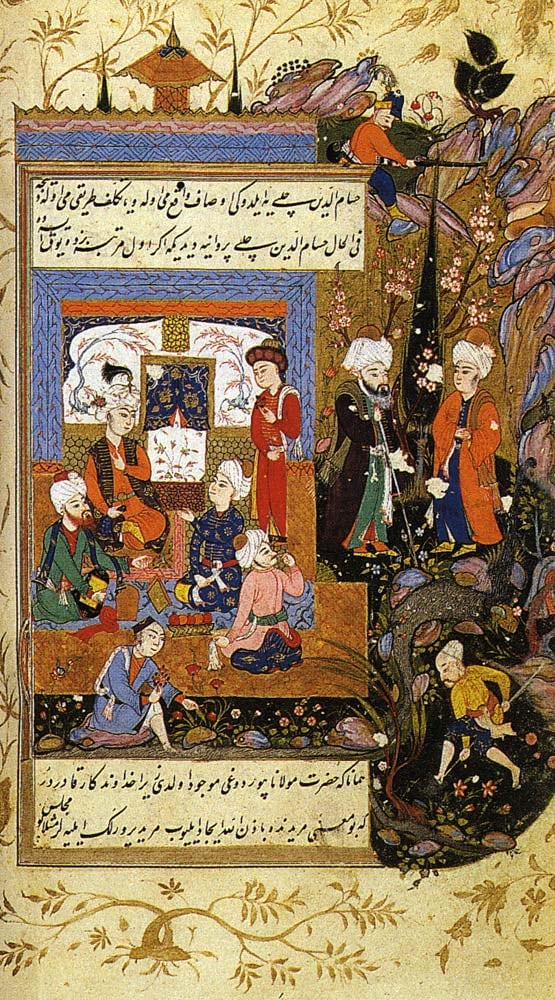
Rumi
Übereinstimmung bei: Wer bin ich? Gibt es ein wahres Selbst? · Warum leiden wir? · Was geschieht nach dem Tod?

Chaitanya Mahaprabhu
Übereinstimmung bei: Wer bin ich? Gibt es ein wahres Selbst? · Warum leiden wir? · Was geschieht nach dem Tod?
Hafez
Übereinstimmung bei: Wer bin ich? Gibt es ein wahres Selbst? · Warum leiden wir? · Was geschieht nach dem Tod?
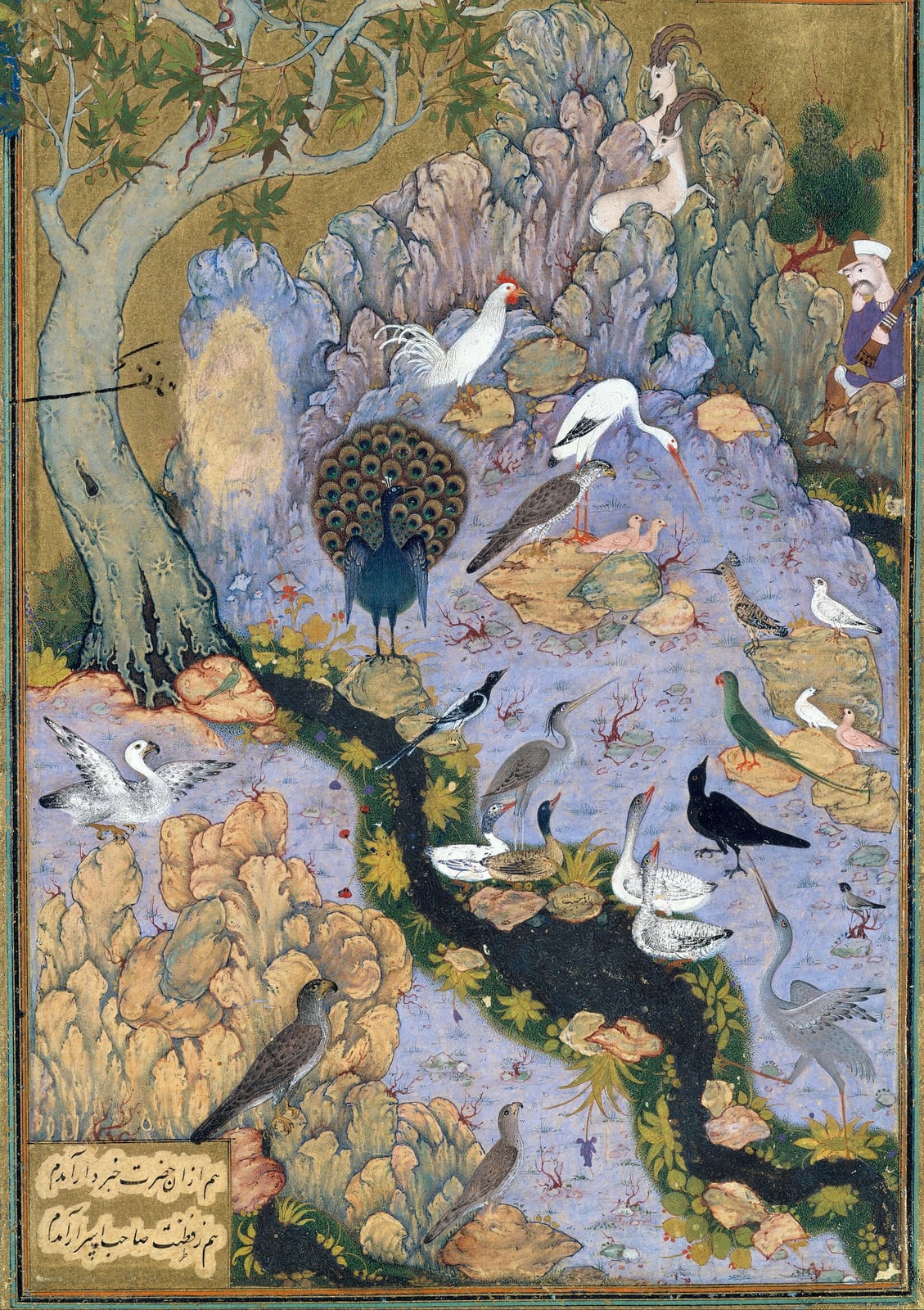
Attar
Übereinstimmung bei: Was ist das Absolute? Gibt es Gott? · Warum leiden wir? · Was geschieht nach dem Tod?
Denkt anders als

Pema Chödrön
Widerspruch bei: Wer bin ich? Gibt es ein wahres Selbst? · Was geschieht nach dem Tod?

Epicurus
Widerspruch bei: Wer bin ich? Gibt es ein wahres Selbst? · Was geschieht nach dem Tod?

The 14th Dalai Lama (Tenzin Gyatso)
Widerspruch bei: Wer bin ich? Gibt es ein wahres Selbst? · Was geschieht nach dem Tod?
Jiddu Krishnamurti
Widerspruch bei: Wie erlangt man Befreiung oder Erlösung? · Braucht es einen Lehrer?
Anekdoten und Erzählungen
Anekdoten und Erzählungen
Zeugnis1746
The question to the Messiah
Herkunft der Erzählung: First-person account by the Besht himself in his letter to Abraham Gershon of Kuty, printed in 1781 in Ben Porat Yosef. What is documented is that the Besht wrote that he had this experience, not the experience itself; Etkes and Rosman read it as evidence of his self-understanding as a mystical intercessor.
Hagiographische Erzählungdécada de 1740–1750
The pipe and the weeping
Herkunft der Erzählung: Shivhei ha-Besht (Kopys, 1815), a tale the compiler Dov Ber of Linits says he heard from Jacob Joseph of Polonne himself and from Rabbi Gedaliah. Jacob Joseph's forced departure from Shargorod is accepted by historians; the details of the conversion are tradition.
Hagiographische Erzählungc. 1750
The shoes of Simhat Torah
Herkunft der Erzählung: Shivhei ha-Besht (Kopys, 1815). The chain of transmission is not stated. Baruch of Międzybóż (1753–1811), the Besht's grandson, is a historical figure.
Hagiographische Erzählung1760
The last lesson
Herkunft der Erzählung: Shivhei ha-Besht (Kopys, 1815), section on his death; the compiler says he heard it from Rabbi Jacob of Międzybóż, who later died in the Land of Israel, and cites Leib Kessler as witness to the soul's departure.
Belegt1740–1760
The "Baal Shem doktor" in the account books
Herkunft der Erzählung: Rosman, "Miedzyboz and Rabbi Israel Baal Shem Tov", Zion 52 (1987), and Founder of Hasidism (1996), based on the Czartoryski holdings in Kraków.
Nicht überprüfbarsin fecha
The boy's whistle on Yom Kippur
Herkunft der Erzählung: It does not appear in the Kopys edition of Shivhei ha-Besht nor in the eighteenth-century anthologies consulted. It circulates in twentieth-century collections of Hasidic tales and in popular teaching, with variants (flute, whistle, the recited alphabet); we have not been able to trace its first printed appearance.
Quelle: Ben-Amos, Dan, y Jerome R. Mintz (trads. y eds.). In Praise of the Baal Shem Tov [Shivhei ha-Besht]: The Earliest Collection of Legends about the Founder of Hasidism. Bloomington: Indiana University Press, 1970 (reed. Northvale: Jason Aronson, 1993).
Lehren
Lehren
Die Begriffe, die das Denken gliedern, in ihrem Zusammenhang erklärt.
Devekut (cleaving to God)devekut
It takes up kabbalistic mysticism (Nahmanides, the Zohar, Safed Kabbalah) and redirects it toward everyday life.
Quelle: Scholem, Gershom. Major Trends in Jewish Mysticism. Jerusalén: Schocken, 1941 (reed. Nueva York: Schocken, 1946 y ss.), «Ninth Lecture: Hasidism, the Latest Phase». Trad. esp.: Las grandes tendencias de la mística judía, Madrid, Siruela.
Worship through corporeality (avodah be-gashmiyut)avodah-be-gashmiyut
It develops the Lurianic doctrine of raising the sparks in an ethical and everyday direction.
Hishtavut (equanimity)hishtavut
It has precedents in the ethics of Bahya ibn Paquda and in Safed Kabbalah; in Hasidism it becomes a central virtue.
Raising of stray thoughtshaalat-mahshavot-zarot
Application of the Lurianic doctrine of sparks to the psychology of prayer.
Ascent of the soul (aliyat ha-neshamah)aliyat-ha-neshamah
It goes back to the mysticism of the palaces (hekhalot) and to practical Kabbalah; in the Besht it joins the figure of the intercessor.
Quelle: Etkes, Immanuel. The Besht: Magician, Mystic, and Leader. Trad. Saadya Sternberg. Waltham (Mass.): Brandeis University Press, 2005 (original hebreo: Ba'al ha-Shem, Jerusalén, Merkaz Zalman Shazar, 2000).
Joy (simhah)simha
A reaction against the penitential and ascetic piety widespread after the Sabbatean crisis; it has roots in the Talmud ("the Presence does not rest amid sadness").
Videos
Videos
Aufnahmen, Gespräche und Dokumentarfilme. Die Videos werden von YouTube wiedergegeben; sie werden nicht hier gespeichert.
ר' ישראל בעל שם טוב (הבעש"ט) וראשית החסידות
Vortrag· HE· 73 min
Hebrew University of Jerusalem
Prof. Moshe Rosman on "Yisrael Ba'al Shem Tov and the Beginnings of Hasidism"
Vortrag· EN· 78 min
Brooklyn College Judaic Studies Department
The Baal Shem Tov | An Introduction to Hasidism | Rabbi Dr. Nehemia Polen
Vortrag· EN· 60 min
Beit Avi Chai
בעקבות הבעש"ט | שיעור 1 - דמותו המיתולוגית | פרופ' יונתן מאיר
Vortrag· HE· 40 min
בית אבי חי (Beit Avi Chai)
בעקבות הבעש"ט | שיעור 2 - היסטוריה ותיאולוגיה | פרופ' יונתן מאיר
Vortrag· HE· 44 min
בית אבי חי (Beit Avi Chai)
Who Was The Ba'al Shem Tov? Founder of Hasidism | Jewish History Lecture | Dr. Henry Abramson
Vortrag· EN· 60 min
Henry Abramson
Prof. Marcin Wodziński | Understanding Hasidism: Theology, Tales, Charisma | 2026 Buber Lecture
Vortrag· EN· 71 min
The Israel Academy of Sciences and HumanitiesOffizieller Kanal
Historical Atlas of Hasidism by Marcin Wodziński
Vortrag· EN· 73 min
YIVO Institute for Jewish ResearchOffizieller Kanal
The Origins of Hasidic Judaism: The Ba'al Shem Tov | The Jewish Story | Unpacked
Dokumentarfilm· EN· 6 min
Unpacked
Fernando Carbonell - Baal Shem Tov, un precursor de nuestro tiempo
Vortrag· ES· 56 min
EspacioRonda
JaZ"L: Las Vidas de los Sabios Asquenazi; 14 El Baal Shem Tov y el Jasidismo
Vortrag· ES· 100 min
Rabino Rigoberto Manny Viñas
HEBRAICA - Cycle Histoire Juive - Roger Attali : Le Baal Shem Tov
Auf YouTube ansehen
Dieses Video lässt sich nicht einbetten; es wird auf YouTube geöffnet.
HEBRAICA - Cycle Histoire Juive - Roger Attali : Le Baal Shem Tov
Vortrag· FR· 92 min
Association Hebraica
Galerie
Galerie
Bilder mit geprüfter Lizenz. Jedes bewahrt seine Urheberschaft und seinen Herkunftsnachweis.
Beziehungen
Beziehungen
Einflüsse, Schülerschaften und Verwandtschaften. Die belegte Beziehung wird von der durch Analyse ermittelten Ähnlichkeit unterschieden.
Beeinflusste
Buber retold the Besht's legends in German (*Die Legende des Baalschem*, 1908) and saw in Hasidism a model of dialogical religious life; his reading spread the figure of the Besht in Europe and was criticised by Scholem for its selectivity.
Belegte Beziehung
Verwandte Gedanken mit
Opposite poles of Jewish spirituality according to a frequent reading: the Aristotelian rationalism of the *Guide of the Perplexed* versus the Besht's affective mysticism. Both share, however, the pursuit of an intellectual or cleaving love of God as the end of religious life.
Durch Analyse ermittelte Ähnlichkeit
Verwandte Gedanken mit
The *hishtavut* (equanimity) of *Tsava'at ha-Rivash* and Eckhartian detachment (*Abgeschiedenheit*) propose an evenness of mind founded on union with God; there is no historical connection.
Durch Analyse ermittelte Ähnlichkeit
Verwandte Gedanken mit
Both embody a religiosity of joy, simplicity and closeness to the humble as opposed to learned or penitential piety, and both are known above all through collections of tales by their disciples.
Durch Analyse ermittelte Ähnlichkeit
Verwandte Gedanken mit
Song, dance and joyful ecstasy as forms of prayer link nascent Hasidism and the Mevlevi tradition; no contact between them is documented.
Durch Analyse ermittelte Ähnlichkeit
Verwandte Gedanken mit
Charismatic mystics without written works, known through the accounts of their circles, who valued the devotion of the heart above learning.
Durch Analyse ermittelte Ähnlichkeit
Verwandte Gedanken mit
The claim that "there is no place empty of Him" has led to talk of Hasidic panentheism; the comparison with Spinozan immanence is frequent in historiography, though the premises are very different.
Durch Analyse ermittelte Ähnlichkeit
Von anderen Einträgen aus verknüpft
Quellen
Quellen
Für diesen Eintrag herangezogene Bibliografie und Kataloge.
- Rosman, Moshe. Founder of Hasidism: A Quest for the Historical Ba'al Shem Tov. Berkeley: University of California Press, 1996; 2.ª ed. Oxford/Portland: Littman Library of Jewish Civilization, 2013.
- Etkes, Immanuel. The Besht: Magician, Mystic, and Leader. Trad. Saadya Sternberg. Waltham (Mass.): Brandeis University Press, 2005 (original hebreo: Ba'al ha-Shem, Jerusalén, Merkaz Zalman Shazar, 2000).
- Ben-Amos, Dan, y Jerome R. Mintz (trads. y eds.). In Praise of the Baal Shem Tov [Shivhei ha-Besht]: The Earliest Collection of Legends about the Founder of Hasidism. Bloomington: Indiana University Press, 1970 (reed. Northvale: Jason Aronson, 1993).
- Biale, David; Assaf, David; Brown, Benjamin; Gellman, Uriel; Heilman, Samuel C.; Rosman, Moshe; Sagiv, Gadi; Wodziński, Marcin. Hasidism: A New History. Princeton: Princeton University Press, 2018.
- Scholem, Gershom. Major Trends in Jewish Mysticism. Jerusalén: Schocken, 1941 (reed. Nueva York: Schocken, 1946 y ss.), «Ninth Lecture: Hasidism, the Latest Phase». Trad. esp.: Las grandes tendencias de la mística judía, Madrid, Siruela.
- Wikidata, Q319062: «Baal Shem Tov» (Israel ben Eliezer), 47 enlaces entre wikis.
- Israel Baal Shem Tov, Igeret ha-Kodesh (carta a Abraham Gershon de Kuty), impresa en Jacob Joseph de Polonne, Ben Porat Yosef, Korets, 1781; texto hebreo en Sefaria (ed. Eichen, Jerusalén, 2011).
- Tsava'at ha-Rivash (primera impresión 1793); texto hebreo de la edición de Varsovia, 1913, en Sefaria (dominio público).
- Keter Shem Tov, compilado por Aharon ha-Kohen de Apta, Zolkiew, 1794–1795; texto hebreo en Sefaria.
- Dov Ber ben Shmuel de Linits, Shivhei ha-Besht, Kopys, 1814–1815; texto hebreo de la edición de Kopys en Sefaria (dominio público).
- Kohler, Kaufmann, y Louis Ginzberg. «Ba'al Shem-Ṭob, Israel b. Eliezer». The Jewish Encyclopedia, vol. 2. Nueva York: Funk & Wagnalls, 1902.
- Idel, Moshe. Hasidism: Between Ecstasy and Magic. Albany: State University of New York Press, 1995.
- Schochet, Jacob Immanuel (trad. y notas). Tzava'at Harivash: The Testament of Rabbi Israel Baal Shem Tov. Brooklyn: Kehot Publication Society, 1998.
- Wikimedia Commons, categoría «Baal Shem Tov» y subcategorías (licencias leídas por la API imageinfo).
- Jacob Joseph ha-Kohen de Polonne, Toledot Ya'akov Yosef, Korets, 1780; texto hebreo en Sefaria.
- Buber, Martin. Die Legende des Baalschem. Fráncfort del Meno: Rütten & Loening, 1908 (trad. ingl. de Maurice Friedman, The Legend of the Baal-Shem, Nueva York, Harper, 1955).
- Sefaria, «Ba'al Shem Tov» (Sefer Baal Shem Tov, antología de Shimon Menahem Mendel Wodnik de Gowarczów, Łódź, 1938).
- Rechteinhaber
- Dominio público: la carta del Besht y las antologías de los siglos XVIII–XIX. Las traducciones y ediciones anotadas modernas (Kehot, Indiana University Press, Jason Aronson, BST Publishing) tienen derechos de sus editores y traductores.
Bestätigung ausstehend
Was dieser Eintrag noch nicht klären konnte. Wir sagen es lieber, als es aufzufüllen.
- Localizar ediciones españolas con ISBN de Tsava'at ha-Rivash, Keter Shem Tov y Shivhei ha-Besht (Open Library no registra ninguna; consultar el catálogo de Kehot Lubavitch Sudamericana y de la Biblioteca Nacional de España).
- Identificar al conferenciante del vídeo de la Universidad Hebrea (2qMI8RKtHgs): el título no lo indica.
- Verificar en Etkes (2005, cap. 2) la fecha exacta de redacción de la carta (la recepción de la carta de Gershon en la feria de Luka de 5510 da un término post quem de 1750) y la procedencia de la versión larga.
- Confirmar en catálogo la primera edición de Tsava'at ha-Rivash (1793): lugar de impresión (Zolkiew u Ostroh, según fuentes).
- Rastrear la primera aparición impresa del relato del muchacho que silba en Yom Kipur.
- Comprobar si el importador de la sala de lectura admite Sefaria (formato «other»); si no, sustituir por Wikisource hebreo o por los escaneos de la Biblioteca Nacional de Israel.
- Buscar vídeos de televisiones públicas (Kan, Arte) o del Museo ANU sobre el Besht y el jasidismo.
Recherchiert am 2026-10-25