Islam · Sufismus
Rumi
جلالالدین محمد بلخی رومی · مولانا · Mevlânâ Celâleddîn-i Rûmî
1207 – 1273Historisch belegte Person
Hanafitischer Rechtsgelehrter und Prediger (1207–1273), geboren in Chorasan und ansässig in Konya, der seldschukischen Hauptstadt Anatoliens. Mit siebenunddreißig Jahren machte ihn die Begegnung mit dem Derwisch Schams aus Täbris zum Dichter: Der Diwan-e Schams vereint mehr als dreitausend Ghaselen, geschrieben aus der Abwesenheit des Freundes, und das Masnawi, sechs Bücher kommentierter Geschichten, ist das große Lehrwerk des persischen Sufismus. Sein Sohn gründete den Mevlevi-Orden der tanzenden Derwische. Viele moderne „Rumi-Zitate“ stammen nicht aus seinem Werk.
- Werke
- 8Werke
- Ausgaben
- 39Ausgaben
- Zitate
- 8Zitate
- Videos
- 10Videos
- Bilder
- 8Bilder
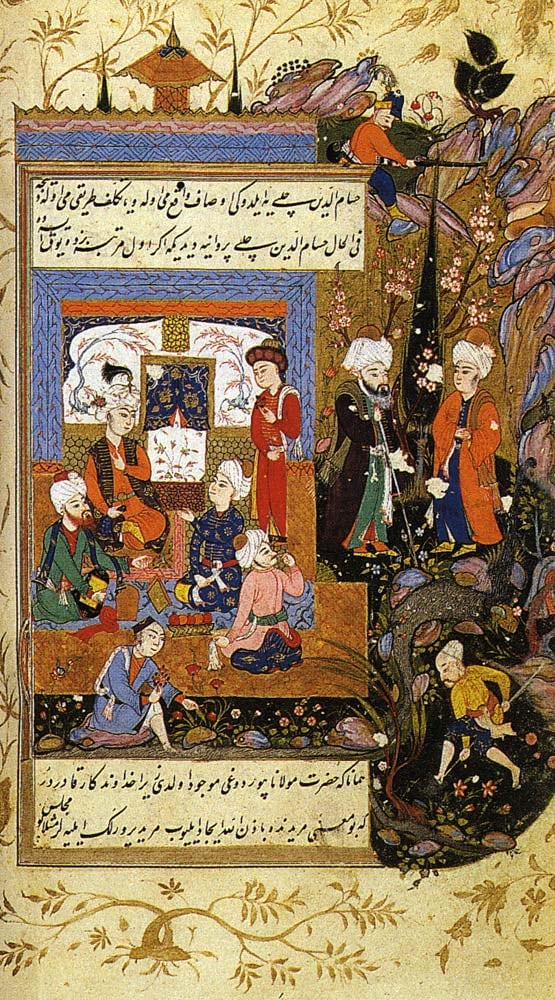
Rumi y su discípulo Husam al-Din Chelebi · Public domain
In eigenen Worten
«Listen to the reed how it tells a tale, complaining of separations— Saying, "Ever since I was parted from the reed-bed, my lament hath caused man and woman to moan."»Masnavi, libro I, vv. 1–2 (trad. inglesa de Nicholson, 1926; texto persa según Ganjoor; la versión de Nicholson sigue una lectura que invierte «queja» y «relato»)

Der zentrale Gedanke
Love (ishq): In Rumi love (*ishq*) is not one feeling among others but the force that moves the cosmos and the only knowledge capable of reaching God.
Im Zusammenhang sehen
Biografie
5 Min. Lesezeit
Unterstützte Übersetzung aus dem spanischen Original, Durchsicht durch einen muttersprachlichen Übersetzer ausstehend.
Ein Kind aus Chorasan auf dem Weg nach Westen
Dschalal ad-Din Muhammad wurde nach dem Datum, das die Überlieferung seines eigenen Hauses festlegte, am 6. Rabi al-awwal des Jahres 604 der Hidschra geboren, also am 30. September 1207. Die spätere Erinnerung machte ihn zu einem Sohn von Balch, der großen Stadt Chorasans; die Studie von Franklin Lewis hat gezeigt, dass die Familie damals in Wachsch lebte, einer kleinen Stadt am gleichnamigen Fluss im heutigen Tadschikistan, wo sein Vater als Prediger und Rechtsgelehrter wirkte. Er selbst erinnert sich in seinen Gesprächen, während der Belagerung durch den Schah von Choresm um 1212 in Samarkand gewesen zu sein, und manche Forscher vermuten deshalb, er könnte einige Jahre früher geboren sein. Gewiss ist das Milieu: ein persisches, sunnitisches Haus hanafitischer Rechtsschule, an dessen Spitze Baha ad-Din Walad stand, ein Prediger von glühendem Temperament, dessen geistliches Notizbuch, die Maarif, der Sohn sein Leben lang lesen sollte.
Um 1216 verließ die Familie Chorasan. Die Mevlevi-Überlieferung führte den Aufbruch auf einen Streit mit dem Schah oder auf eine Vorahnung des Mongoleneinfalls zurück, der die Region zwischen 1219 und 1221 verwüsten sollte; sicher ist, dass der Auszug sie rettete. Nach der Pilgerfahrt nach Mekka und einem Aufenthalt in Syrien ließen sie sich in Anatolien nieder, dem Land, das die Perser Rum nannten – das einstige römische Gebiet –, woher der Beiname stammt, unter dem ihn der Westen kennt. In Larende, dem heutigen Karaman, heiratete der junge Dschalal ad-Din Gauhar Chatun, starb seine Mutter und wurde sein erster Sohn geboren, Sultan Walad (1226). Um 1229 ließ sich Baha ad-Din, eingeladen aus dem Umkreis des Seldschukensultans Ala ad-Din Kai Qubad I., in Konya nieder, der Hauptstadt. Er starb im Februar 1231, und sein Sohn übernahm mit dreiundzwanzig Jahren seinen Lehrstuhl.
Der Jurist und der Meister der Disziplin
1232 kam Burhan ad-Din Muhaqqiq Tirmidhi nach Konya, ein früherer Schüler des Vaters. Rund neun Jahre lang führte er den jungen Mann durch die sufische Askese – Fasten, vierzigtägige Klausuren – und schickte ihn, nach den Quellen des Ordens, zur Vervollständigung seiner Ausbildung an die Madrasen von Aleppo und Damaskus. Als Burhan um 1241 in Kayseri starb, war Dschalal ad-Din bereits ein maulana, „unser Meister“: Er lehrte Recht, predigte in der Moschee und hatte Schüler. Die Sieben Sitzungen, die von seinen Predigten erhalten sind, zeigen einen gelehrten Prediger, der einen Hadith und einen Koranvers mit erbaulichen Anekdoten auszulegen weiß. Noch deutet nichts auf den Dichter hin.
Schams aus Täbris
Am 29. November 1244 kam ein umherziehender Derwisch von etwa sechzig Jahren nach Konya: Schams ad-Din aus Täbris. Was wir über ihn wissen, stammt vor allem aus seinen eigenen Maqalat, von Zuhörern aufgezeichneten Aussprüchen, und aus drei Quellen des Ordens: dem erzählenden Gedicht Sultan Walads (1291), der Epistel des Sipahsalar und, später und weit legendenreicher, den Manaqib al-arifin des Aflaki, verfasst zwischen 1318 und 1353. Im Wesentlichen stimmen sie überein: Die Begegnung warf den Juristen aus der Bahn. Monatelang schlossen sich die beiden zu langen Gesprächen ein; die verdrängten Schüler murrten; 1246 ging Schams nach Damaskus. Erst da begann Dschalal ad-Din Gedichte zu schreiben, Musik zu hören und sich im sama, dem ekstatischen Hören, zu drehen. Sultan Walad holte Schams 1247 zurück; die Feindseligkeit flammte erneut auf, und gegen Ende jenes Jahres oder zu Beginn des folgenden verschwand Schams für immer. Aflaki überliefert die Version eines Mordes unter Mitwisserschaft Ala ad-Dins, des zweiten Sohnes Rumis; Sultan Walad spricht nur von einem Verschwinden, und die moderne Forschung hält das Verbrechen für möglich, aber nicht erwiesen.
Rumi reiste zweimal nach Damaskus, um ihn zu suchen. Er kehrte, so sein Sohn, mit der Gewissheit zurück, dass er ihn nicht draußen finden musste: Er hatte ihn in sich selbst gefunden. Aus dieser Abwesenheit entstand der Diwan-e Schams, mehr als dreitausendzweihundert Ghaselen und fast zweitausend Vierzeiler, in denen der Dichter oft mit dem Namen des verlorenen Freundes zeichnet oder mit dem Namen Chamusch, „der Schweigende“.
Der Goldschmied, der Schüler und das Buch
Die Fülle, die Schams verkörpert hatte, ging danach auf einen fast analphabetischen Goldschmied aus dem Basar über, Salah ad-Din Zarkub, dessen Tochter Sultan Walad heiratete, und nach dessen Tod 1258 auf Husam ad-Din Tschelebi, einen jungen Mann aus einer Familie der Handwerkerbruderschaften. Husam bat ihn um ein Lehrgedicht nach Art Sanais und Attars, damit die Schüler nicht die Werke anderer lesen müssten. So entstand um 1258–1261 das Masnawi-ye manawi, die „Geistlichen Doppelverse“: rund fünfundzwanzigtausendsechshundert Verse in sechs Büchern, diktiert an Husam, der sie abschrieb und laut vorlas. Nach dem ersten Buch unterbrach der Tod von Husams Frau die Arbeit für zwei Jahre; sie wurde 1263/64 wieder aufgenommen, und das sechste Buch blieb offen, als der Autor starb. Das Masnawi ist kein Traktat: Es ist ein Strom von Geschichten, die einander ins Wort fallen – der Elefant im Dunkeln, der Kaufmann und der Papagei, Moses und der Hirte –, kommentiert mit der Freiheit eines Menschen, der laut denkt. Daneben sind die Fihi ma fihi erhalten (deutsch „Von Allem und vom Einen“), Tischgespräche, die Schüler aufzeichneten, sowie etwa hundertfünfzig Briefe, viele davon Fürsprachen für Menschen, die ihn um Hilfe bei den Mächtigen baten.
Die Hochzeitsnacht
Im Herbst 1273 erkrankte er. Er starb in Konya bei Sonnenuntergang am 17. Dezember 1273 (5. Dschumada al-achira 672). Aflaki beschreibt ein Begräbnis, zu dem neben den Muslimen auch die Christen und Juden der Stadt kamen, und bewahrt den Ausdruck, mit dem der Orden diesen Tag seither bezeichnet: seine Hochzeitsnacht, schab-e arus, die Vereinigung mit dem Geliebten. Man begrub ihn neben seinem Vater, unter dem, was später die grüne Kuppel des heutigen Mevlana-Museums werden sollte.
Was blieb und was man ihm zuschreibt
Sultan Walad gab dem Mevlevi-Orden seine Gestalt; dieser kodifizierte den rituellen Drehtanz und breitete sich in der ganzen osmanischen Welt aus, bis die Türkische Republik 1925 die Sufi-Orden schloss. In der persischen Welt wurde das Masnawi nach dem Koran zum meistkommentierten Buch; ein Vers, den die Überlieferung Dschami zuschreibt, nannte es „den Koran in persischer Sprache“. Europa entdeckte es mit Hammer-Purgstall und Friedrich Rückert und erforschte es gründlich dank Reynold Nicholson, der zwischen 1925 und 1940 den vollständigen Text edierte und übersetzte, sowie dank Arberry und Annemarie Schimmel. Ende des 20. Jahrhunderts machten die freien Nachdichtungen von Coleman Barks Rumi zum meistverkauften Dichter der Vereinigten Staaten – um den Preis, den Islam aus Gedichten zu tilgen, die vom Koran durchtränkt sind. Viele Sätze, die unter seinem Namen kursieren, haben keinerlei Grundlage in einer Handschrift. In seiner Sprache gelesen ist Rumi etwas anderes: ein Jurist, der den Boden unter den Füßen verlor, ein Theologe, der entdeckte, dass die Liebe mehr weiß als die Erklärung der Liebe, und ein Dichter, der die Abwesenheit zum Ort der Gegenwart machte.
Quellen: Sultán Walad. Ibtida-nama (Walad-nama), 1291; y Faridun Sipahsalar, Risala dar ahwal-e Mawlana. Fuentes primarias de la cofradía, citadas a través de Lewis 2000 y Schimmel 1978. · Jalaluddin Rumi. The Mathnawi of Jalalu'ddin Rumi. Ed., trad. y comentario de Reynold A. Nicholson. E. J. W. Gibb Memorial, New Series IV, 8 vols. Londres: Luzac, 1925–1940 (vol. II: trad. libros I–II, 1926; vol. IV: trad. libros III–IV, 1930). · Lewis, Franklin D. Rumi: Past and Present, East and West. The Life, Teachings and Poetry of Jalal al-Din Rumi. Oxford: Oneworld, 2000 (ed. revisada 2008). · Lewis, Franklin D. Rumi: Past and Present, East and West. Oxford: Oneworld, 2000, caps. 1–7 (cronología de Baha al-Din Walad, Burhan al-Din, Shams y Husam al-Din; discusión de las fechas de nacimiento y de la desaparición de Shams). · Aflaki, Shams al-Din Ahmad. Manaqib al-arifin (1318–1353). Ed. Tahsin Yazıcı, Ankara: Türk Tarih Kurumu, 1959–1961. Trad. inglesa: John O'Kane, The Feats of the Knowers of God. Leiden: Brill, 2002.
Zeitleiste
Das Leben, Jahr für Jahr
Jeder Punkt ist ein belegtes Ereignis. Klicken Sie, um es mit Quelle und Grad der Gewissheit zu lesen.
30. September 12070 JahreWajsh o Balj (Jorasán)
Birth
Jalal al-Din Muhammad is born, son of the preacher Baha al-Din Walad. The date (6 Rabi al-Awwal 604) is the order's tradition; Lewis places the family in Wakhsh rather than Balkh.
WahrscheinlichLewis, Franklin D. Rumi: Past and Present, East and West. Oxford: Oneworld, 2000, caps. 1–7 (cronología de Baha al-Din Walad, Burhan al-Din, Shams y Husam al-Din; discusión de las fechas de nacimiento y de la desaparición de Shams).
Nach dem Tod
- 1291Sultan Walad organises the order
- 1925Closure of the orders
- 1925Nicholson publishes the critical *Masnavi*
30. September 1207 · 0 Jahre
Birth
Jalal al-Din Muhammad is born, son of the preacher Baha al-Din Walad. The date (6 Rabi al-Awwal 604) is the order's tradition; Lewis places the family in Wakhsh rather than Balkh.
Wahrscheinlich
um 1212 · 5 Jahre
In Samarkand during the siege
In *Fihi ma fihi* he recalls being in Samarkand when the Khwarazmshah besieged it.
Wahrscheinlich
um 1216 · 9 Jahre
The family's exodus
The family leaves Central Asia shortly before the Mongol invasion; pilgrimage to Mecca and passage through Syria.
Wahrscheinlich
um 1222 · 15 Jahre
Larende: marriage and first son
The family settles in Larende; Rumi marries Gowhar Khatun. In 1226 Sultan Walad, future organiser of the order, is born.
Wahrscheinlich
um 1229 · 22 Jahre
Arrival in Konya
Baha al-Din Walad settles in the Seljuq capital under Ala al-Din Kayqubad I.
Wahrscheinlich
Februar 1231 · 24 Jahre
Father's death; he inherits the chair
Baha al-Din Walad dies (February 1231). His son succeeds him as preacher and teacher.
Belegt
um 1232 · 25 Jahre
Discipleship under Burhan al-Din
Burhan al-Din Muhaqqiq Tirmidhi guides him for some nine years; studies in Aleppo and Damascus.
Wahrscheinlich
29. November 1244 · 37 Jahre
Meeting with Shams of Tabriz
Shams arrives in Konya (26 Jumada al-Akhira 642). The friendship that will turn the jurist into a poet begins.
Belegt
1246 · 38 Jahre
Shams's first departure
Faced with the disciples' hostility, Shams leaves for Damascus. Rumi begins composing poetry and practising *sama*.
Belegt
um 1247 · 40 Jahre
Disappearance of Shams
After his return, Shams vanishes for good (late 1247 or 1248). The murder theory comes from Aflaki and is unproven.
Umstritten
um 1258 · 51 Jahre
The *Masnavi* begins
With Salah al-Din Zarkub dead (1258), Husam al-Din Chelebi asks him for a didactic poem. He dictates the first book around 1258–1261.
Wahrscheinlich
um 1263 · 56 Jahre
The *Masnavi* resumed
After a two-year interruption, the second book is begun (662 AH), as its own prologue states.
Belegt
17. Dezember 1273 · 66 Jahre
Death: the "wedding night"
He dies at sunset on 17 December (5 Jumada al-Akhira 672). The order commemorates the date as *shab-e arus*.
Belegt
1291
Sultan Walad organises the order
Sultan Walad composes his narrative poem (*Ibtidanama*) and gives institutional form to the Mevlevi order.
Belegt
1925
Closure of the orders
The Turkish Republic bans the Sufi orders; the Konya mausoleum opens as a museum in 1926–1927.
Belegt
1925
Nicholson publishes the critical *Masnavi*
Reynold A. Nicholson's complete edition, translation and commentary begins (1925–1940).
Belegt
Werke
Grundlegende Werke
Die Werke, ohne die sich das Vermächtnis nicht verstehen lässt.
Schriftliches Werk · um 1273
Masnavi (Spiritual Couplets)
مثنوی معنوی (Masnavi-ye manavi)
A didactic poem of some 25,600 couplets in six books, written in the ramal metre of the *masnavis* of Sanai and Attar. It opens with the lament of the reed severed from the reed-bed, image of the soul far from its origin, and moves through linked stories (the king and the handmaiden, the merchant and the parrot, the elephant in the dark, Moses and the shepherd) which the narrator interrupts to comment on in the light of the Qur'an and hadith. It follows no systematic plan: it thinks by association, retraces its steps and leaves tales unfinished. Persian tradition called it "the Qur'an in the Persian tongue" and has commented on it without pause for seven centuries.
15 Ausgaben · amazon.de

Schriftliches Werk · um 1273
Divan of Shams of Tabriz
دیوان شمس تبریزی / کلیات شمس (Divan-e Shams-e Tabrizi; Divan-e kabir)
The great lyric collection: some 3,229 ghazals, forty-odd strophic poems and nearly two thousand quatrains in Foruzanfar's edition. Written out of Shams's absence and in his name, it is poetry meant to be sung, strongly rhythmic, with the vocabulary of the tavern, of wine and of the Beloved, swinging between the ecstasy of union and the tearing of separation. Alongside the summits of Persian mysticism it contains occasional poems, wordplay and verses in Arabic, Greek and Turkish. Many modern "translations" are very free paraphrases; for the demanding reader the versions of Nicholson (1898) and Arberry (1968–1979) remain the most faithful.
8 Ausgaben · amazon.de

Aufgezeichnete mündliche Lehre · um 1273
Fihi ma fihi (Discourses)
فیه ما فیه (Fihi ma fihi)
Table talk and answers to visitors' questions (among them the Seljuq minister Muin al-Din Parvana), in plain Persian prose with passages in Arabic. It is Rumi at his most conversational: he explains his parables, discusses theology, politics and the relation between master and disciple, and lets his humour show. It contains the famous passage on the one thing that must not be forgotten, the task for which the human being was sent into the world, and many parallels with the *Masnavi*.
7 Ausgaben · amazon.de


Zitate
Zitate, die in einem bestimmten Werk nachgewiesen sind. Jedes trägt seine Herkunft und seinen Grad an Verlässlichkeit.
Listen to the reed how it tells a tale, complaining of separations— Saying, "Ever since I was parted from the reed-bed, my lament hath caused man and woman to moan."بشنو این نی چون شکایت میکند / از جداییها حکایت میکند // کز نیستان تا مرا ببریدهاند / در نفیرم مرد و زن نالیدهاند
GeprüftMasnavi, libro I, vv. 1–2 (trad. inglesa de Nicholson, 1926; texto persa según Ganjoor; la versión de Nicholson sigue una lectura que invierte «queja» y «relato»)
Apokryphe Zitate oder Zitate umstrittener Zuschreibung (6)
«Come, come, whoever you are; wanderer, idolater, worshipper of fire, come. Ours is not a caravan of despair; though you have broken your vows a hundred times, come again.»
The quatrain "Baz a, baz a…" (literally "return, return", in the Qur'anic sense of repentance) is displayed at the Mevlana Museum, but it does not appear in the early manuscripts of Rumi's quatrains and circulated earlier under the names of Abu Said Abul-Khayr or Baba Afzal Kashani.
«The wound is the place where the Light enters you.»
A viral line with no located counterpart in the *Masnavi*, the *Divan* or *Fihi ma fihi*. It comes from the circuit of free English versions and spreads without reference.
«Out beyond ideas of wrongdoing and rightdoing, there is a field. I'll meet you there.»
Coleman Barks's version (The Essential Rumi, 1995), rewriting an original about what lies beyond unbelief (*kufr*) and Islam: the religious context disappears in the paraphrase, as Rozina Ali points out.
«Yesterday I was clever, so I wanted to change the world. Today I am wise, so I am changing myself.»
No source in any work of Rumi; it appears on social media and in self-help books from the 2010s onward.
«What you seek is seeking you.»
Not located in the Persian corpus. It is sometimes presented as a summary of *Fihi ma fihi*, but corresponds to no identifiable passage.
«Raise your words, not voice. It is rain that grows flowers, not thunder.»
No located source; it circulates only in quote compilations.
Letzte Worte
Traditionelle Zuschreibung
«Go, lay your head on the pillow and leave me alone; leave this ruined, night-wandering, love-stricken one.»رو سر بنه به بالین، تنها مرا رها کن / ترک من خراب شبگرد مبتلا کن
No last words attested by a witness survive. Mevlevi tradition, recorded by Aflaki, holds that ghazal 2039 of the *Divan* (Foruzanfar numbering) was the last he composed, addressed to Sultan Walad, who kept exhausted watch at his bedside; Aflaki also records several words of comfort to those close to him. The attribution of the ghazal to the deathbed cannot be verified.
Quelle: Aflaki, Shams al-Din Ahmad. Manaqib al-arifin (1318–1353). Ed. Tahsin Yazıcı, Ankara: Türk Tarih Kurumu, 1959–1961. Trad. inglesa: John O'Kane, The Feats of the Knowers of God. Leiden: Brill, 2002.
Fragen
Was das Werk beantwortet
Zwölf große Fragen der Menschheit und was sich aus den Texten darauf antworten lässt, mit Belegen. Wir legen niemandem Worte in den Mund.
Was ist das Absolute? Gibt es Gott?
God is the Beloved: someone who calls, loves and awaits the soul's return
Ein persönlicher GottAusdrücklich gesagt
Jalal al-Din Rumi writes within Sufi Islam and his God is the God of the Qur'an, one and creator, but he lives Him above all as the Beloved. The Masnavi opens with the lament of the reed flute torn from the reed bed, an image of the soul separated from its origin and longing to return; the whole work is a commentary on that separation and that longing. In the Divan of Shams of Tabriz, love for the master Shams merges with love for God, who is addressed in the second person, reproached for absence and celebrated in presence. This God loves first, draws, wounds and consoles: not a principle to be contemplated but someone with whom one converses. At the same time, Rumi insists that in union the lover vanishes and only the Beloved remains, which brings him close to the experience of unity.
Diese Frage mit anderen Meistern vergleichenWer bin ich? Gibt es ein wahres Selbst?
The soul comes from God and returns to Him after dying to its ego
Eine geschaffene, unsterbliche SeeleAusdrücklich gesagt
For Rumi, the human being is a soul that came from God and is exiled in the world, like the reed torn from the reed bed with which the Masnavi opens. Following Sufi psychology, he distinguishes the lower ego (nafs), seat of desire, vanity and cunning, which he compares to wild beasts and to the donkey that must be tamed, from the spirit (ruh), which recognises its origin. In Book III of the Masnavi he describes the soul's ascent: it died as mineral and became plant, died as plant and became animal, died as animal and became human, and will yet die as human to rise beyond the angels. The true self is found by dying to the ego; in that extinction (fana) the soul does not vanish but returns to the Beloved from whom it came.
Diese Frage mit anderen Meistern vergleichenWarum leiden wir?
Every lament is that of the reed torn from its reed bed
Die Trennung von GottAusdrücklich gesagt
Rumi opens the Masnavi with a reed flute that laments: since it was torn from the reed bed, men and women have wept at its cry, and it seeks a breast torn by separation to tell the pain of longing. That is his diagnosis: human suffering is, at bottom, the homesickness of the soul separated from its origin, seeking in the world's objects what it will only find on returning. But pain is not only lack. In his verses the wound is also the opening through which grace enters; suffering breaks the ego's pride and awakens the longing that leads back. Rumi therefore celebrates burning, sorrow and searching as signs of spiritual life, and distrusts the comfort that lulls. Love turns what is bitter into sweetness.
Diese Frage mit anderen Meistern vergleichenWas geschieht nach dem Tod?
Death is the wedding night: the soul's return to its Beloved
Ewiges Leben und AuferstehungAusdrücklich gesagt
Rumi thinks about death within Islam — resurrection, judgement, return to God — but lives it as an encounter. The Mevlevi tradition calls his death Şeb-i Arûs, «wedding night», because in his poems dying means rejoining the Beloved from whom the soul was separated, like the reed flute torn from the reed bed. In Book III of the Masnavi he describes an ascent: he died as a mineral and became a plant, died as a plant and became an animal, died as an animal and became a man; why fear, when nothing was ever lost by dying? — and he concludes that he will also leave the human condition to return to God, for to Him we return. Rumi also takes up the Sufi saying of dying before one dies: the extinction of the ego in life anticipates physical death and takes away its bitterness. For the lover, death is not an end but a door.
Diese Frage mit anderen Meistern vergleichenWie erlangt man Befreiung oder Erlösung?
Love is the path: the reed cut from its bed longs to return
Durch Hingabe und ErgebungAusdrücklich gesagt
Rumi expresses the human condition in the eighteen verses that open the Masnavi: the reed flute laments because it was torn from the reed bed, and its complaint is that of the soul separated from its origin. What brings it back is not reasoning, which often appears as insufficient in his work, but love, a fire that consumes the lover and leads him to the extinction of self (fana) in the Beloved. For Rumi that love was kindled in his encounter with Shams of Tabriz and is cultivated through the relationship with the master, listening, music and the ritual dance practised by his circle. All of this belongs within Islamic life: law and prayer are the starting point, not an obstacle.
Diese Frage mit anderen Meistern vergleichenBraucht es einen Lehrer?
Without the master the path is lost; Shams was the fire that transformed him
UnverzichtbarAusdrücklich gesagt
Rumi lived the relationship with the master as the central event of his life: the encounter with Shams of Tabriz in 1244 turned a respected jurist and preacher into the poet of love, and his lyrical work bears Shams's name. In the Masnavi the need for a spiritual guide (pir) is a recurring theme: the disciple who wants the fruits of the path without bearing the master's discipline is ridiculed in the story of the man from Qazvin who asks for a lion tattoo and cannot bear the needle. For Rumi, the traveller without a guide goes astray, and surrender to the master is the means by which the lover learns to die to himself. After Shams, he transferred that relationship to successors.
Diese Frage mit anderen Meistern vergleichenIst die Welt wirklich?
Forms are foam on an invisible sea: the world reflects the Beloved
Offenbarung des GöttlichenAus der Lehre abgeleitet
Rumi does not build a systematic metaphysics, but his poetry continually refers the forms of the world to a reality that exceeds them. Recurring images such as the sea and the foam, or the sun and its reflections, present creatures as passing appearances of a single source: the visible is real as sign and reflection, not as independent reality. The human error is to stop at form and forget meaning, to love the image without recognising where its beauty comes from. The Masnavi is built on this distinction between form (surat) and meaning (ma'na). At the same time, the world is the place where the separated soul learns to return through love.
Diese Frage mit anderen Meistern vergleichenWas ist Liebe?
Love is the lament of the reed longing to return to the reed bed
Sehnsucht und VereinigungAusdrücklich gesagt
Rumi is perhaps the great poet of love as longing for union. The Masnavi opens with the complaint of the reed flute: ever since it was torn from the reed bed, its lament has made men and women weep, and all who are far from their origin seek the time of union. The fire that sounds in the flute, he says, is the fire of love. For Rumi love is the force that moves the cosmos and returns the soul to God; no reasoning can explain it, and in the same first book he calls it the astrolabe of divine mysteries. His encounter with Shams of Tabriz, to whom he dedicated the Divan-e Shams, turned the jurist into a poet: human love for the master becomes a mirror and path of divine love. The lover must be consumed, like the candle, until only the Beloved remains.
Diese Frage mit anderen Meistern vergleichenSind wir frei, oder ist alles vorherbestimmt?
Our shame proves that we choose: Rumi against fatalism
Echter freier WilleAusdrücklich gesagt
The *Masnavi* returns again and again to the theological dispute between *jabr* (divine compulsion) and *ikhtiyār* (choice), and Rumi sides with responsibility. In Book I, the debate between the lion and the other beasts sets pure trust in God against effort, and the poem ends by vindicating the Prophet's saying: trust in God, but tie your camel's knee. In another passage of the same book he argues that our supplication shows our dependence on God, but our shame after doing wrong shows we could have acted otherwise. For Rumi the fatalist uses the divine will as an excuse; human freedom is real, even if it is a gift of God and is fulfilled in surrender to Him.
Diese Frage mit anderen Meistern vergleichenWozu meditieren oder beten?
God looks at the heart, not the words: prayer as a lover's conversation
Freundschaft mit GottAusdrücklich gesagt
In Book II of the *Masnavi*, Rumi tells the story of Moses and the shepherd: a shepherd offers to comb God's hair, wash his feet and bring him milk, and Moses rebukes him for blasphemy; then God reproaches Moses for separating a servant from Him, for He looks not at words or form but at the heart and its burning. Prayer, for Rumi, is above all a dialogue of love with the Beloved, born of the separated soul's longing, like the lament of the reed flute that opens the poem. Alongside ritual prayer, which he respected as jurist and preacher, the Mevlevi tradition links his name to the remembrance of God (*dhikr*) and to *samāʿ*, musical audition with whirling, as forms of that same intimacy.
Diese Frage mit anderen Meistern vergleichenKann die Vernunft das Letzte erkennen?
The reasoners' leg is made of wood: love sees further
Das Letzte liegt jenseits des VerstandesAusdrücklich gesagt
In the *Masnavi* Rumi distinguishes between the partial intellect (*ʿaql-i juzwī*), calculating and bound to appearances, and the universal intellect, which is divine light. He mocks the former with famous images: in Book I he says the leg of those who argue by proofs is wooden, and a wooden leg is very unsteady. Against it he sets love, which knows by union rather than demonstration, and the vision of the purified heart. He is not simply an anti-rationalist: he was a jurist and preacher trained in the religious sciences, and he values intelligence placed at the service of love. But access to God does not go through logic but through the seeker's transformation, which in his case came with the encounter with Shams of Tabriz.
Diese Frage mit anderen Meistern vergleichenSich von der Welt zurückziehen oder sie verwandeln?
Do not become a monk: the path is walked in the midst of people
Kontemplation im HandelnAusdrücklich gesagt
Rumi lived at the centre of urban life in Konya: he was a jurist and preacher, a family man, teacher of a large community and adviser to rulers. The conversations collected in Fihi ma fihi are largely addressed to Muʿin al-Din Parvana, the powerful Seljuk vizier, whom he urges to govern justly without attachment to power. In Book V of the Masnavi, the story of the peacock that plucks out its feathers to escape vanity serves him to reject monasticism: the point is not to mutilate oneself or flee, but to fight the ego amid temptations, since without them there is no virtue. The Mevlevi practice, with its whirling dance, likewise unites the inner and the visible. For Rumi contemplation does not require abandoning the world, but living in it with the heart turned towards the Beloved.
Diese Frage mit anderen Meistern vergleichen
Affinitäten und Spannungen
Affinitäten und Spannungen
Frage für Frage aus den Positionen berechnet. Den Grund jeder Übereinstimmung und jedes Widerspruchs zeigt ein Klick.
Denkt ähnlich wie
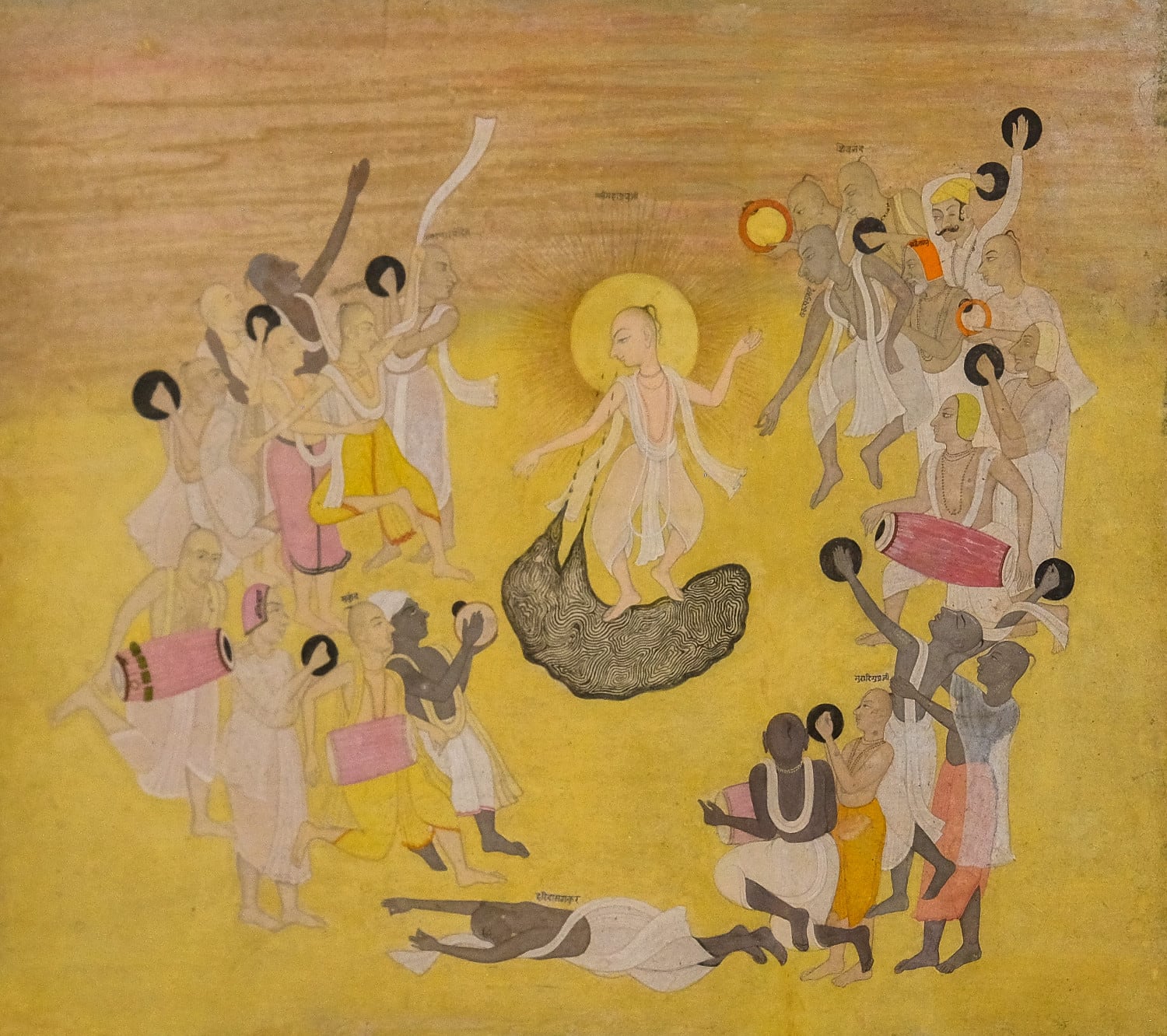
Chaitanya Mahaprabhu
Übereinstimmung bei: Was ist das Absolute? Gibt es Gott? · Wer bin ich? Gibt es ein wahres Selbst? · Warum leiden wir?
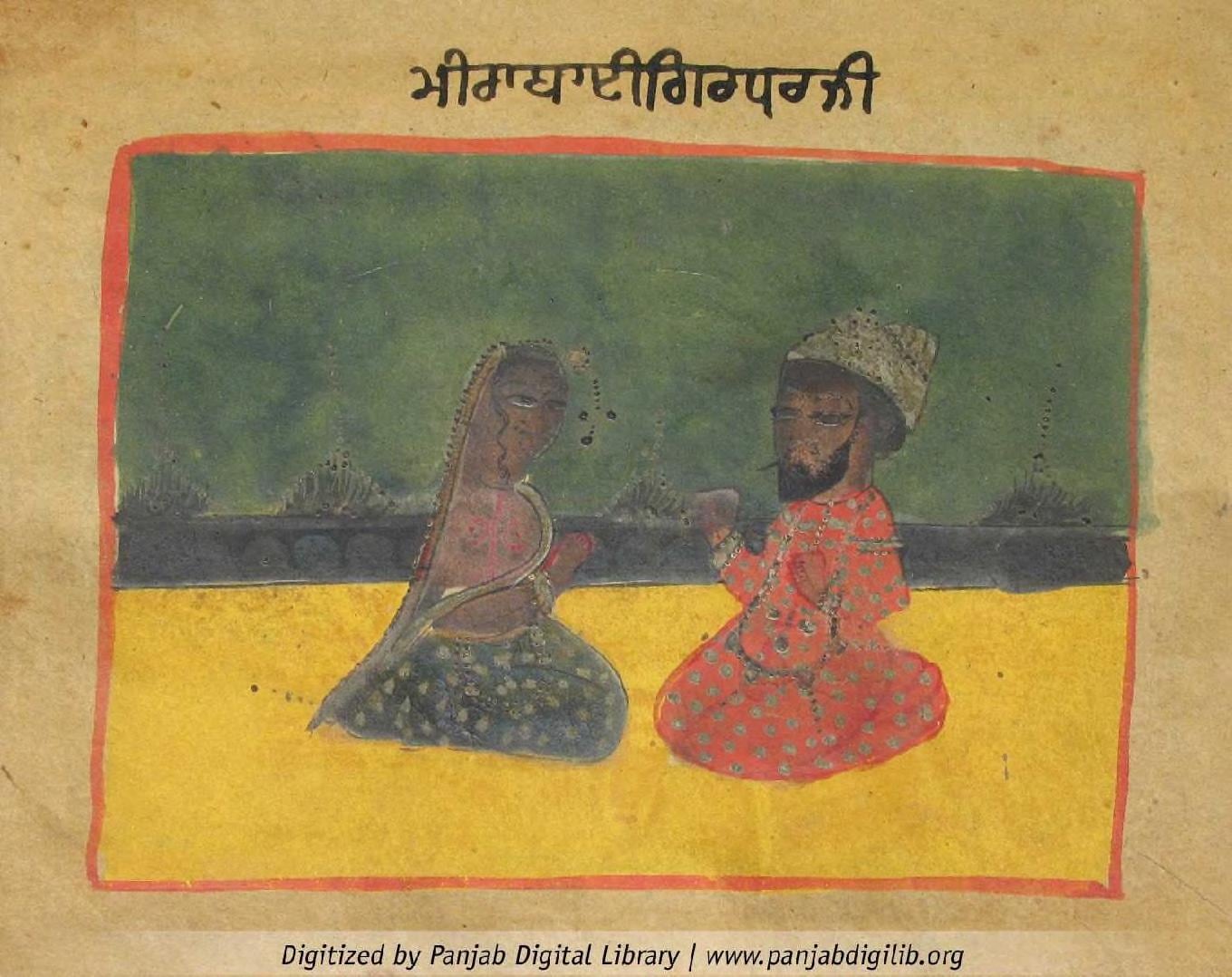
Mirabai
Übereinstimmung bei: Was ist das Absolute? Gibt es Gott? · Warum leiden wir? · Wie erlangt man Befreiung oder Erlösung?

Rabia al-Adawiyya
Übereinstimmung bei: Was ist das Absolute? Gibt es Gott? · Warum leiden wir? · Was geschieht nach dem Tod?
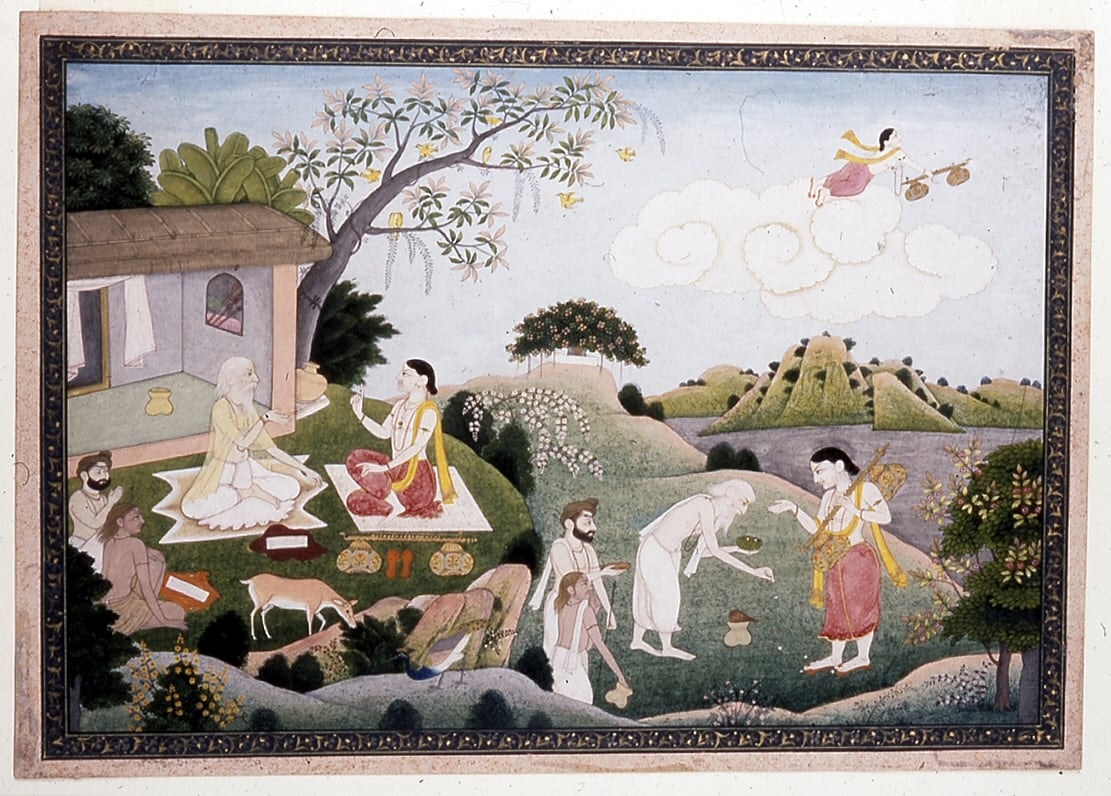
Narada
Übereinstimmung bei: Was ist das Absolute? Gibt es Gott? · Warum leiden wir? · Wie erlangt man Befreiung oder Erlösung?
Denkt anders als

Pema Chödrön
Widerspruch bei: Was ist das Absolute? Gibt es Gott? · Wer bin ich? Gibt es ein wahres Selbst? · Was geschieht nach dem Tod?

The 14th Dalai Lama (Tenzin Gyatso)
Widerspruch bei: Was ist das Absolute? Gibt es Gott? · Wer bin ich? Gibt es ein wahres Selbst? · Was geschieht nach dem Tod?
Kapila
Widerspruch bei: Was ist das Absolute? Gibt es Gott? · Was geschieht nach dem Tod?

Patañjali
Widerspruch bei: Was ist das Absolute? Gibt es Gott? · Wer bin ich? Gibt es ein wahres Selbst? · Was geschieht nach dem Tod?
Übereinstimmung bei
Rumi · Hildegard of Bingen
Love as the fire that moves the cosmos, and music as memory of the origin
Warum: There was no contact between the twelfth-century Rhineland abbess and the thirteenth-century poet of Konya, but they share a distant inheritance: the idea of a harmonious cosmos, Pythagorean and Neoplatonic in origin, which Latin Christianity and Persian Sufism received by different routes. Both also write in a symbolic and poetic register, not a scholastic one, where the image teaches more than the concept. The difference lies in emphasis: Hildegard sings love as the order that sustains a good creation and as the liturgy of the community; Rumi, as the wound and longing of the separated soul. In her love orders; in him, it consumes.
Widerspruch beiScheinbarer Widerspruch
Rumi · Ramana Maharshi
The path of knowledge and the path of love: two ways ending in the same burning of the ego
Warum: The contradiction is apparent at the level of the path: both seek the dissolution of the ego and attribute it to something that exceeds the subject, the Beloved who draws in Rumi, the Self or grace in Ramana. The difference of language comes from their traditions: Persian Sufism expresses the way in terms of lover and Beloved; Advaita, in terms of knowledge of the Self. A metaphysical difference remains, however, that is not apparent: Rumi stays within the Islamic doctrine of creation, and the soul returns to a God who is not itself, while Ramana affirms that the Self is the Absolute. They agree on the how more than on the what.
Übereinstimmung bei
Rumi · Ibn Arabi
Love as the origin and return of the world: two summits of Sufism in the same century
Warum: They share an era, a religious language and sources: the Qur'an, the sayings attributed to the Prophet and the Sufi tradition that made love the principal way. There was also an indirect link: Sadr al-Din al-Qunawi, Ibn Arabi's stepson and chief disciple, taught in Konya in the same years as Rumi, and the Mevlevi hagiographies present them on cordial terms; there is no evidence that Rumi read Ibn Arabi or that they met. The difference is one of register. Ibn Arabi elaborates a technical metaphysics of the divine Names and of manifestation; Rumi writes narrative and lyrical poetry, without a system, where love is an experience of separation and longing before it is doctrine.
Widerspruch beiGrundsätzliche Meinungsverschiedenheit
Rumi · Annie Besant
He died as a mineral and became a plant: the soul's ascent, not reincarnation
Warum: The contradiction is real, although it is often presented as an affinity. Besant systematises a Theosophical doctrine that takes reincarnation and karma from Hinduism and Buddhism and combines them with a modern idea of the soul's evolution. Rumi writes in the thirteenth century within Islam, which affirms a single earthly life followed by resurrection; his verses on mineral, plant and animal refer to the Neoplatonic cosmology of the grades of being and to the Sufi saying about dying before death. Reading them as reincarnation, or as an anticipation of evolutionism, projects foreign categories onto the poem. Both see death as a passage and not an end; they differ over whether the passage repeats.
Übereinstimmung bei
Rumi · Teresa of Ávila
It is not a matter of thinking much: love knows more than reasoning
Warum: The affinity is comparative: there is no relation between the Castilian Carmelite and the poet of Konya. They converge because both speak from monotheistic traditions with a highly developed scholastic theology, Christian and Islamic, which reserved for mysticism a knowledge through love and experience that does not contradict theology but exceeds it. Both also write for readers who are not professional theologians: nuns in one case, disciples and listeners in the other. The difference lies in the form of that experience: Teresa lives it as friendship with a personal Christ and describes it with almost clinical precision; Rumi, as longing and fire, in poetic images.
Anekdoten und Erzählungen
Anekdoten und Erzählungen
Hagiographische Erzählung1244
The meeting with Shams and the question about Bayazid
Herkunft der Erzählung: Aflaki, *Manaqib al-arifin* (1318–1353); there are other versions of the first meeting. The one about books thrown into a pool comes from even later sources (Dawlatshah, 15th c.) and Lewis considers it legendary.
Quelle: Aflaki, Shams al-Din Ahmad. Manaqib al-arifin (1318–1353). Ed. Tahsin Yazıcı, Ankara: Türk Tarih Kurumu, 1959–1961. Trad. inglesa: John O'Kane, The Feats of the Knowers of God. Leiden: Brill, 2002.
Nicht überprüfbar1244
The books in the pool
Herkunft der Erzählung: First recorded in sources of the 15th century and later (Dawlatshah Samarqandi, *Tadhkirat al-shuara*, 1487) and spread through Jami; Lewis classes it among legends with no basis in 13th-century sources.
Quelle: Lewis, Franklin D. Rumi: Past and Present, East and West. The Life, Teachings and Poetry of Jalal al-Din Rumi. Oxford: Oneworld, 2000 (ed. revisada 2008).
Hagiographische Erzählungc. 1248
The goldsmiths' hammers
Herkunft der Erzählung: Aflaki, *Manaqib al-arifin*. The relationship with Salah al-Din and his position in the order are attested by Sultan Walad and by the ghazals Rumi addresses to him; the bazaar scene, only by Aflaki.
Quelle: Aflaki, Shams al-Din Ahmad. Manaqib al-arifin (1318–1353). Ed. Tahsin Yazıcı, Ankara: Türk Tarih Kurumu, 1959–1961. Trad. inglesa: John O'Kane, The Feats of the Knowers of God. Leiden: Brill, 2002.
Hagiographische Erzählungc. 1258
The eighteen verses in the turban
Herkunft der Erzählung: Aflaki, *Manaqib al-arifin*; Husam's role is documented in the prologues to books II–VI of the *Masnavi* (Nicholson ed.).
Quelle: Aflaki, Shams al-Din Ahmad. Manaqib al-arifin (1318–1353). Ed. Tahsin Yazıcı, Ankara: Türk Tarih Kurumu, 1959–1961. Trad. inglesa: John O'Kane, The Feats of the Knowers of God. Leiden: Brill, 2002.
Hagiographische Erzählung1273
A funeral of all religions
Herkunft der Erzählung: Aflaki, *Manaqib al-arifin*, chapter III; neither Sultan Walad nor Sipahsalar describes the participation of Christians and Jews in such detail.
Quelle: Aflaki, Shams al-Din Ahmad. Manaqib al-arifin (1318–1353). Ed. Tahsin Yazıcı, Ankara: Türk Tarih Kurumu, 1959–1961. Trad. inglesa: John O'Kane, The Feats of the Knowers of God. Leiden: Brill, 2002.
Umstritten1247–1248
The end of Shams: disappearance or murder?
Herkunft der Erzählung: Sultan Walad, *Ibtidanama* (1291): disappearance; Aflaki, *Manaqib al-arifin*: murder. Discussion in Lewis 2000, ch. 4.
Quelle: Lewis, Franklin D. Rumi: Past and Present, East and West. Oxford: Oneworld, 2000, caps. 1–7 (cronología de Baha al-Din Walad, Burhan al-Din, Shams y Husam al-Din; discusión de las fechas de nacimiento y de la desaparición de Shams).
Nicht überprüfbarc. 1216
Attar and the boy from Balkh
Herkunft der Erzählung: Dawlatshah Samarqandi (1487) and Jami, *Nafahat al-uns* (1478); Lewis treats it as legend.
Quelle: Lewis, Franklin D. Rumi: Past and Present, East and West. The Life, Teachings and Poetry of Jalal al-Din Rumi. Oxford: Oneworld, 2000 (ed. revisada 2008).
Lehren
Lehren
Die Begriffe, die das Denken gliedern, in ihrem Zusammenhang erklärt.
Love (ishq)ishq
It inherits the love mysticism of Ahmad Ghazali, Sanai and Attar, as opposed to the more intellectual path of Ibn Arabi's school.
Quelle: Chittick, William C. The Sufi Path of Love: The Spiritual Teachings of Rumi. Albany: State University of New York Press, 1983.
Separation and longing for the origin (firaq)firaq
It takes up the Neoplatonic and Qur'anic theme of return ("to Him we shall return", Qur'an 2:156).
Mystical audition and turning (sama)sama
Debate on the lawfulness of *sama* since al-Ghazali (*Ihya*, book XVIII).
Quelle: Lewis, Franklin D. Rumi: Past and Present, East and West. The Life, Teachings and Poetry of Jalal al-Din Rumi. Oxford: Oneworld, 2000 (ed. revisada 2008).
Dying before dying (fana)fana
Fana and baqa since al-Junayd and al-Qushayri; the scale of beings is of Aristotelian and Neoplatonic origin.
Silence (khamush)khamush
A topos of Persian apophatic mysticism; contrast between *qal* (word) and *hal* (state).
Quelle: Schimmel, Annemarie. The Triumphal Sun: A Study of the Works of Jalaloddin Rumi. Londres: Fine Books / East-West Publications, 1978; Albany: SUNY Press, 1993.
Retreats
Retreats und Zentren
Orte und Begegnungen, die mit dieser Lehre verbunden sind. Wir stellen den Kontakt zu den Veranstaltern her.
Barons Court, Londres · Reino Unido
The Study Society, Colet House (London)
The Study Society
The Study Society was registered in 1951, four years after Ouspensky's death, at the initiative of his pupil Dr Francis Roles, to continue his work as a school of the Fourth Way. It is based at Colet House in west London, which presents itself as a spiritual gateway in the centre of the city. Its current programme brings together meditation, the Movements, study groups on the Masnavi and meetings devoted to Rumi, the dervish turning and a Sunday Advaita gathering. Its main website sometimes rejects automated requests; the Colet House site responds normally.
Chisholme House (Escocia), Sutton Courtenay (Oxfordshire), Londres y en línea · Reino Unido
Beshara: Foundation course and Masnavi study
The Beshara Trust
Beshara is the educational offering of the Beshara Trust, a British charity founded in 1971. Its foundation course takes the metaphysics of Ibn Arabi as its starting point to explore what it means to know oneself and the world in the light of the Unity of Existence, combining an introductory weekend, fortnightly online sessions and an optional residential at Chisholme House in the Scottish Borders. It also runs study groups on Rumi's Masnavi and other texts of the Sufi tradition. It is funded by philanthropic donations and voluntary work, and bookings are made by contacting the trust.
Centro Cultural Mevlana, Konya · Turquía
Şeb-i Arûs: commemoration of Rumi in Konya
Ministerio de Cultura y Turismo de Turquía
Şeb-i Arûs, the wedding night, is the name the Mevlevi tradition gives to Rumi's death on 17 December 1273, understood as his reunion with the Beloved. Every year, in the days leading up to that date, Konya holds the international commemoration ceremonies organised by the Ministry of Culture and Tourism, with concerts, lectures and performances of the sema, the whirling ceremony of the dervishes, in the hall of the Mevlana Cultural Centre. The cultural activities are free and the final ceremony on the 17th requires a ticket. It is the time of year when most pilgrims come to the city.
Konya (distrito de Karatay) · Turquía
Mevlana Museum: Rumi's mausoleum in Konya
Ministerio de Cultura y Turismo de Turquía (Mevlâna Müzesi)
The Mevlana Museum occupies the former lodge of the Mevlevi dervishes in Konya, built around the mausoleum of Jalal al-Din Rumi, constructed in 1274, a year after his death. Beneath the famous green dome lie Rumi, his father and other members of the order. The lodge was closed in 1925 under the law that abolished the Sufi orders and reopened the following year as a museum, now run by the Turkish Ministry of Culture. It holds manuscripts of the Masnavi, musical instruments and the dervishes' cells, and remains one of the most visited places of pilgrimage in the Islamic world.
Videos
Videos
Aufnahmen, Gespräche und Dokumentarfilme. Die Videos werden von YouTube wiedergegeben; sie werden nicht hier gespeichert.
Franklin Lewis: Rumi's Poetic Theology of Love
Vortrag· EN· 70 min
Theosophical Society
What Would Rumi Make of His Popularity in the Modern West? w/ William Chittick
Gespräch· EN· 9 min
Rumi Center for Spirituality & the Arts
Rumi Lecture with Prof. Bilal Kuspinar | Bradford Literature Festival 2025
Vortrag· EN· 2025· 70 min
Bradford Literature FestivalOffizieller Kanal
How to love, according to Rumi - Stephanie Honchell Smith
Analyse· EN· 6 min
TED-EdOffizieller Kanal
A Meditation on Rumi and the Power of Poetry | Leili Anvar | TED
Vortrag· EN· 10 min
TEDOffizieller Kanal
Rumi - The Most Famous Sufi Poet in the World
Analyse· EN· 79 min
Let's Talk Religion
Masnavi-ye-Ma'navi of Rumi | مثنوی معنوی | Volume 1 Part 1 | Persian with English Translations
Aufnahme Dritter· FA· 7 min
Sadai Salah
Mevlana Celaleddin-i Rumi / Belgesel - TRT Avaz
Dokumentarfilm· TR· 65 min
TRT AvazOffizieller Kanal
Sirus Shahnavaz - Rumi: El brillante sol del Sufismo
Vortrag· ES· 61 min
EspacioRonda
The Mevlevi Sema Ceremony
Dokumentarfilm· EN· 2009
UNESCOOffizieller Kanal
Galerie
Galerie
Bilder mit geprüfter Lizenz. Jedes bewahrt seine Urheberschaft und seinen Herkunftsnachweis.
Handschriften
Handschriften
Handschriftliche Zeugen und alte Texte, mit ihrer verwahrenden Einrichtung und ihren Einsichtsbedingungen.
FA · Nasj · c. 1258–1273 (texto); rayab de 677 / nov.–dic. de 1278 (copia)
مثنوی معنوی (Masnavi-ye manavi), copia de Konya
- Erhaltener Textzeuge
- Códice completo en seis libros, 50 × 32 cm, tinta, oro y color sobre papel
- Verwahrende Einrichtung
- Museo Mevlana, Konya · Ms. 51
- Digitalisierung
- artsandculture.google.com/asset/masnavi-s-first-…
FA · Nastaliq · c. 1460 (copia)
مثنوی (Masnavi), copia de Shiraz
- Erhaltener Textzeuge
- Códice iluminado con página inicial ornamentada
- Verwahrende Einrichtung
- Bodleian Library, Oxford · MS. Elliott 251
- Digitalisierung
- commons.wikimedia.org/wiki/File:Opening_page_of_…
FA · Nastaliq · 1073 H. / 1663 (copia)
مثنوی (Masnavi), códice ilustrado
- Erhaltener Textzeuge
- Códice ilustrado con miniaturas de las historias del *Masnavi*
- Verwahrende Einrichtung
- Walters Art Museum, Baltimore · W.626
- Digitalisierung
- art.thewalters.org/…
TR · Nasj / nastaliq otomano · c. 1590–1599 (copia ilustrada)
Tercüme-i Sevakib (traducción turca del Thawaqib al-manaqib, compendio de las Manaqib al-arifin de Aflaki)
- Erhaltener Textzeuge
- Códice ilustrado con miniaturas de la vida de Rumi y de sus sucesores
- Verwahrende Einrichtung
- Morgan Library & Museum, Nueva York · MS M.466
- Digitalisierung
- www.themorgan.org/…
Beziehungen
Beziehungen
Einflüsse, Schülerschaften und Verwandtschaften. Die belegte Beziehung wird von der durch Analyse ermittelten Ähnlichkeit unterschieden.
Zeitgenosse von
Contemporaries; no meeting is recorded. The documented link is Sadr al-Din Qunawi, Ibn Arabi's stepson and chief disciple, who lived in Konya, knew Rumi and, according to Aflaki, was to lead his funeral prayer. The anecdote that Ibn Arabi saw the boy Rumi in Damascus walking behind his father is late and unverifiable.
Belegte Beziehung
Beeinflusst von
The *Masnavi* draws tales and arguments from the Ghazalian tradition (Abu Hamid and his brother Ahmad, the theorist of love); Nicholson's commentary notes many parallels with the *Ihya*.
Belegte Beziehung
Verwandte Gedanken mit
Mystical poetry in the vernacular, critique of formal religion, and the language of love and separation. No documented contact or influence.
Durch Analyse ermittelte Ähnlichkeit
Verwandte Gedanken mit
Approximate contemporaries (Eckhart was born c. 1260). They share the theme of the death of the self and silence before the divine; there was no contact.
Durch Analyse ermittelte Ähnlichkeit
Von anderen Einträgen aus verknüpft
- Kabir · Verwandte Gedanken mit
- Chaitanya Mahaprabhu · Verwandte Gedanken mit
- Meher Baba · Verwandte Gedanken mit
- Guru Nanak · Verwandte Gedanken mit
- Jesus of Nazareth · Beeinflusste
- Al-Ghazali · Beeinflusste
- Hafez · Verwandte Gedanken mit
- Ibn Arabi · Zeitgenosse von
- Kahlil Gibran · Verwandte Gedanken mit
- Rabia al-Adawiyya · Verwandte Gedanken mit
- Al-Hallaj · Beeinflusste
- Baal Shem Tov · Verwandte Gedanken mit
- Attar · Beeinflusste
Quellen
Quellen
Für diesen Eintrag herangezogene Bibliografie und Kataloge.
- Sultán Walad. Ibtida-nama (Walad-nama), 1291; y Faridun Sipahsalar, Risala dar ahwal-e Mawlana. Fuentes primarias de la cofradía, citadas a través de Lewis 2000 y Schimmel 1978.
- Wikidata, Q43347 «Rumi» (P31=Q5; 160 enlaces entre wikis; P569 1207-09-30; P570 1273-12-17).
- Jalaluddin Rumi. The Mathnawi of Jalalu'ddin Rumi. Ed., trad. y comentario de Reynold A. Nicholson. E. J. W. Gibb Memorial, New Series IV, 8 vols. Londres: Luzac, 1925–1940 (vol. II: trad. libros I–II, 1926; vol. IV: trad. libros III–IV, 1930).
- Lewis, Franklin D. Rumi: Past and Present, East and West. The Life, Teachings and Poetry of Jalal al-Din Rumi. Oxford: Oneworld, 2000 (ed. revisada 2008).
- Lewis, Franklin D. Rumi: Past and Present, East and West. Oxford: Oneworld, 2000, caps. 1–7 (cronología de Baha al-Din Walad, Burhan al-Din, Shams y Husam al-Din; discusión de las fechas de nacimiento y de la desaparición de Shams).
- Aflaki, Shams al-Din Ahmad. Manaqib al-arifin (1318–1353). Ed. Tahsin Yazıcı, Ankara: Türk Tarih Kurumu, 1959–1961. Trad. inglesa: John O'Kane, The Feats of the Knowers of God. Leiden: Brill, 2002.
- Schimmel, Annemarie. The Triumphal Sun: A Study of the Works of Jalaloddin Rumi. Londres: Fine Books / East-West Publications, 1978; Albany: SUNY Press, 1993.
- Chittick, William C. The Sufi Path of Love: The Spiritual Teachings of Rumi. Albany: State University of New York Press, 1983.
- Ali, Rozina. «The Erasure of Islam from the Poetry of Rumi». The New Yorker, 5 de enero de 2017.
- Nicholson, Reynold A. (ed. y trad.). Selected Poems from the Divani Shamsi Tabriz. Cambridge: Cambridge University Press, 1898.
- Ganjoor (گنجور), texto persa del Masnavi-ye manavi y del Divan-e Shams, edición digital.
- Gamard, Ibrahim. Dar al-Masnavi: «About Nicholson» (lista de los siete gazales de la selección de Nicholson —IV, VIII, XII, XVII, XXXI, XXXIII, XLIV— ausentes de los manuscritos más antiguos y omitidos por Arberry).
- Semazen.net, «Some popular pieces of false knowledge regarding Rumi and his works» (Kulliyat), sobre la cuarteta «Baz a, baz a…».
- Open Library, registros de ediciones de las obras de Rumi (Masnavi, Divan, Fihi ma fihi, Majalis-e sab'a, Maktubat).
- Rechteinhaber
- Dominio público (obra del siglo XIII). Las ediciones críticas (Nicholson/Gibb Memorial Trust; Foruzanfar) y las traducciones modernas (Oxford, Penguin, University of Chicago Press, Paidós, Hiperión, Éditions du Rocher, Albin Michel, Seuil…) están sujetas a los derechos de sus editores. Las versiones de Coleman Barks (HarperCollins) son paráfrasis con derechos vigentes.
Bestätigung ausstehend
Was dieser Eintrag noch nicht klären konnte. Wir sagen es lieber, als es aufzufüllen.
- Confirmar en Open Library/Google Books el traductor de «El Masnavi» (Edicomunicación, 1998) y de «Poemas sufíes» (Hiperión, 1988), y si se tradujeron directamente del persa.
- Localizar ISBN de la edición crítica de Foruzanfar del Divan (Kulliyat-e Shams) y de las ediciones de Subhani de Majalis-e sab'a y Maktubat.
- Buscar una traducción castellana completa y directa del persa del Masnavi con ISBN verificado (no localizada en Open Library).
- Verificar el idioma de la charla TED de Leili Anvar (iyabl4dlxbY).
- Confirmar con una fuente impresa la numeración exacta de los gazales 636, 1919 y 2039 en la edición de Foruzanfar (se ha usado la de Ganjoor).
- Comprobar los enlaces de las fichas de la Walters (W.626) y la Morgan (MS M.466): se enlaza el portal, no el ítem.
- Obras completas (2026-10-25): las obras de Rumi son cinco —Masnavi, Divan-e Shams (que incluye los cuartetos, registrados aparte como «rubaiyat»), Fihi ma fihi, Majalis-e sab'a y Maktubat— y están todas registradas. Se añaden como recopilaciones las dos antologías en inglés de mayor circulación (Barks 1995, Nicholson 1950); las demás antologías y versiones libres (Barks, Helminski, Harvey, Star) son ediciones de esas obras y no obras nuevas.
- Vídeos: añadido el de la UNESCO sobre el sema mevleví (diez en total); siguen faltando vídeos en francés, alemán y persa de canales institucionales verificables.
- Sala de lectura: el vol. VI de la traducción de Nicholson (libros V–VI, 1934; archive.org/details/in.ernet.dli.2015.285559) no se registra porque en EE. UU. podría seguir protegido hasta 2030 (restauración URAA); es dominio público en los países de 70 años post mortem. No se ha localizado ninguna traducción española de dominio público, ni una transcripción del Fihi ma fihi libre de derechos; el texto persa de Wikisource (fa) está troceado por relatos sin orden numérico y no se ha registrado.
Recherchiert am 2026-10-23