Kynismus
Diogenes of Sinope
Διογένης ὁ Σινωπεύς · Διογένης ὁ Κυνικός
um 412 v. Chr. – um 323 v. Chr.Historisch belegte Person
Griechischer Philosoph (um 412–323 v. Chr.), Zentralgestalt des Kynismus. Nach einem Falschmünzerskandal aus Sinope verbannt, lebte er in Athen und Korinth in gewollter Armut, schlief in einem tönernen Vorratsgefäß und führte öffentlich ein Leben „gemäß der Natur“ gegen die Konventionen. Von seinen Schriften ist nichts erhalten: Wir kennen ihn aus Hunderten von Aussprüchen und Anekdoten, viele davon legendär, gesammelt vor allem von Diogenes Laertios. Er nannte sich selbst einen „Weltbürger“.
- Werke
- 33Werke
- Ausgaben
- 17Ausgaben
- Zitate
- 11Zitate
- Videos
- 12Videos
- Bilder
- 6Bilder
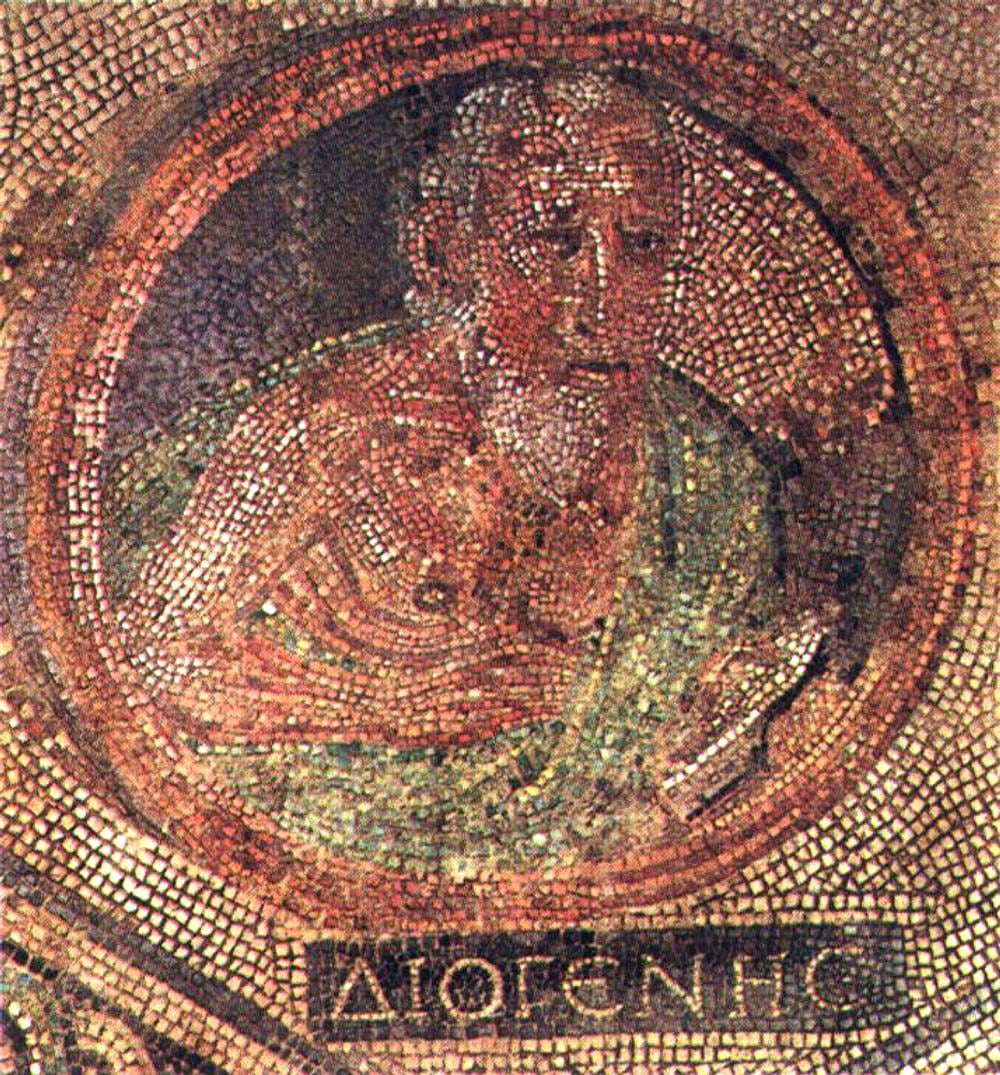
Mosaico de Diógenes (Colonia) · Public domain
In eigenen Worten
«Diogenes the Dog called taverns "the mess-rooms of Attica".»Aristóteles, Retórica III 10, 1411a24, como ejemplo de metáfora. Es el único dicho de Diógenes atestiguado por un contemporáneo. Griego: Wikisource griega (Ρητορική/3); inglés: W. Rhys Roberts (1924); español: traducción propia.

Der zentrale Gedanke
Defacing the currency (paracharattein to nomisma): Literally, the phrase names the offence that banished Diogenes from Sinope: defacing or debasing the coinage.
Im Zusammenhang sehen
Biografie
6 Min. Lesezeit
Unterstützte Übersetzung aus dem spanischen Original, Durchsicht durch einen muttersprachlichen Übersetzer ausstehend.
Ein Mann aus Anekdoten
Von Diogenes von Sinope ist keine einzige gesicherte Zeile erhalten. Was wir wissen, stammt fast ausschließlich aus einer einzigen späten Quelle, dem sechsten Buch der Leben und Meinungen berühmter Philosophen des Diogenes Laertios, mehr als fünf Jahrhunderte nach seinem Tod verfasst, das Nachrichten hellenistischer Biographen sammelt und vor allem Hunderte von Chreien: kurze, witzige, leicht zu behaltende Aussprüche, die von Mund zu Mund gingen, in die Rhetorenschulen gelangten und oft mehreren Personen zugleich zugeschrieben wurden. Der einzige sichere zeitgenössische Zeuge ist Aristoteles, der in der Rhetorik ein Bonmot „des Hundes“ über die Athener Schenken anführt. Wer sein Leben schreiben will, muss daher geduldig das Bezeugte von dem trennen, was ihm die Überlieferung nach und nach angehängt hat.
Sinope und die Münze
Er wurde um 412 v. Chr. in Sinope geboren, einer milesischen Kolonie an der Südküste des Schwarzen Meeres: Das Datum ergibt sich daraus, dass er nach Laertios 323 „fast neunzigjährig“ starb, wenngleich Censorinus ihm einundachtzig Jahre gibt. Er war der Sohn des Hikesias, eines Bankiers (trapezites), der öffentliche Gelder verwaltete. Laertios überliefert mehrere Fassungen eines Skandals: Nach Diokles verfälschte der Vater die Münze, und der Sohn musste ins Exil gehen; nach Eubulides tat es Diogenes selbst, der es in seinem Dialog Pordalos eingestanden habe. Eine weitere Fassung fügt ein Orakel Apollons hinzu, das ihm befohlen habe, „die Münze umzuprägen“ (paracharattein to nomisma) – ein Rat, den er wörtlich nahm, bevor er erkannte, dass er die Sitten meinte. Sinopische Münzen aus der Mitte des 4. Jahrhunderts v. Chr., die mit dem Meißel entstellt sind, und andere mit dem Namen des Hikesias geben dem Skandal einen gewissen Grund; das Orakel dagegen scheint eine spätere, dem des Sokrates nachgebildete Konstruktion zu sein.
Athen: der Lehrer und das Tongefäß
Als Verbannter kam er nach Athen. Laertios erzählt, er habe Antisthenes aufgesucht, den Gefährten des Sokrates, der keine Schüler annahm; als dieser den Stock hob, um ihn zu vertreiben, habe Diogenes ihm den Kopf hingehalten: Er werde kein Holz finden, das hart genug sei, ihn zu verjagen, solange er ihm etwas zu lehren habe. Die Begegnung ist unsicher, denn Antisthenes starb um 366, und das Exil des Diogenes könnte später liegen; ein Teil der Forschung vermutet, die Kette Sokrates–Antisthenes–Diogenes sei nachträglich konstruiert worden, um dem Kynismus und später der Stoa einen sokratischen Stammbaum zu verschaffen. Da der Freund, den er um ein Häuschen gebeten hatte, sich Zeit ließ, nahm er ein Vorratsgefäß (pithos) im Metroon, dem Heiligtum der Göttermutter an der Agora, zur Wohnung. Es war kein Holzfass, ein dem Griechenland seiner Zeit fremdes Behältnis, sondern ein großes Tongefäß für Getreide oder Öl; noch Juvenal nennt es testa, Ton. Das Fass ist ein späteres Bild, das die neuzeitliche Malerei festgeschrieben hat.
Leben gemäß der Natur
Was Diogenes lehrte, war eine Lebensform. Laertios schreibt ihm den Gedanken zu, es gebe zwei Arten der Übung, die des Körpers und die der Seele, und beständige Übung (askesis) könne alles bezwingen; man solle die Mühen, die die Natur verlangt, den nutzlosen vorziehen, die die Gewohnheit auferlegt, und die Verachtung der Lust werde, hat man sich erst an sie gewöhnt, lustvoller als die Lust selbst. Er setze, sagte er, dem Schicksal den Mut entgegen, dem Gesetz die Natur und der Leidenschaft die Vernunft. Daher seine Schamlosigkeit (anaideia): Er aß auf der Agora und tat öffentlich, was als privat galt, mit der Begründung, was zu Hause nicht schändlich sei, sei es auch auf dem Markt nicht. Und daher sein Freimut, die Parrhesia, die er nach Laertios für „das Schönste unter den Menschen“ hielt. Gefragt, woher er sei, antwortete er mit einem Wort von großer Zukunft: kosmopolites, Weltbürger.
Platon, Alexander und die Laterne
Viele seiner Anekdoten zeigen ihn im Streit mit Philosophen und Mächtigen. Als er hörte, Platon definiere den Menschen als „federloses zweibeiniges Lebewesen“, brachte er ihm einen gerupften Hahn: „Das ist Platons Mensch.“ Er zündete am helllichten Tag eine Lampe an und ging umher mit den Worten „Ich suche einen Menschen“; keine antike Quelle fügt „einen ehrlichen“ hinzu. Und im Kraneion von Korinth, als Alexander sich vor ihm aufpflanzte und ihm anbot, was immer er wolle, bat er ihn, ihm aus der Sonne zu gehen. Die Szene erzählen Cicero, Plutarch, Arrian und Laertios, und Plutarch fügt hinzu, der König habe gesagt, wäre er nicht Alexander, so wollte er Diogenes sein. Begegnet sein könnten sie sich 336 oder 335, als Alexander am Isthmos weilte; doch der Dialog hat die vollendete Form der Chreia und diente jahrhundertelang als Schultopos über den Weisen und den König, sodass seine Geschichtlichkeit nicht als gesichert gelten kann.
Korinth und der Sklavenmarkt
Seine letzten Jahre verbrachte er in Korinth. Nach einer Geschichte, die Laertios zum Teil der Satire Der Verkauf des Diogenes des Menippos entnimmt, fingen ihn Piraten auf dem Weg nach Aigina und verkauften ihn auf Kreta; dem Ausrufer, der ihn fragte, was er könne, antwortete er „über Menschen herrschen“ und zeigte auf einen reichen Korinther, Xeniades: „Verkauf mich dem da, der braucht einen Herrn.“ Xeniades vertraute ihm die Erziehung seiner Söhne an. Der satirische Ursprung der Erzählung und ihr exemplarischer Charakter – der Sklave, der freier ist als sein Herr – mahnen zur Vorsicht, und schon in der Antike liefen abweichende Fassungen darüber um, ob er freigelassen wurde oder im Haus seines Käufers alt wurde.
Ein Tod in mehreren Fassungen
Er starb um 323 v. Chr., der Überlieferung nach im Kraneion, dem Gymnasion vor den Toren Korinths. Laertios nennt drei Ursachen: eine Kolik, weil er einen rohen Kraken gegessen habe, den Biss eines Hundes, als er einen Kraken mit ihm teilen wollte, oder das freiwillige Anhalten des Atems – eine Fassung, die schon der Dichter Kerkidas feierte und die seine Schüler daraus erschlossen, dass sie ihn tot in seinen Mantel gehüllt fanden. Demetrios von Magnesia behauptete, er sei am selben Tag gestorben wie Alexander in Babylon, ein Gleichklang, zu rund, um glaubhaft zu sein. Cicero erzählt, er habe verlangt, unbestattet hinausgeworfen zu werden, und als seine Freunde einwandten, die wilden Tiere würden ihn fressen, um einen Stock gebeten, sie zu verscheuchen: Wenn er doch nichts mehr spüren werde, was könne ihm daran liegen?
Was er schrieb – oder nicht
Laertios gibt eine Liste von dreizehn Dialogen, Briefen und sieben Tragödien, fügt aber hinzu, Sosikrates und Satyros hätten bestritten, dass Diogenes überhaupt etwas geschrieben habe, und Satyros habe die Tragödien seinem Schüler Philiskos von Aigina zugeschrieben; Sotion bot eine andere, abweichende Liste. Von alledem sind Titel und Zeugnisse geblieben. Das umstrittenste Werk ist die Politeia, die die Gemeinschaft von Frauen und Kindern, Knöchel als Geld und Gleichgültigkeit gegenüber Tabus wie dem Kannibalismus vertrat. Manche Stoiker, verlegen über einen Text, der den Gründer ihrer Schule inspiriert hatte, erklärten sie für unecht; Philodemos von Gadara entgegnete in einer unter den Papyri von Herculaneum erhaltenen Abhandlung, Kleanthes und Chrysipp hätten sie als echt zitiert, und die meisten Forscher halten sie heute für authentisch. Die einundfünfzig Briefe unter seinem Namen sind dagegen rhetorische Übungen aus römischer Zeit.
Das Erbe des Hundes
Sein Schüler Krates von Theben gab die kynische Lebensform an Zenon von Kition weiter, der die Stoa gründen sollte; über die Stoiker gelangte Diogenes zu Epiktet, der ihn als Vorbild des freien Philosophen hinstellt, und zu Mark Aurel, der ihn mit Heraklit und Sokrates über Alexander und Caesar stellt. Der Kynismus lebte in der Kaiserzeit wieder auf, und die Gestalt des Diogenes – die Laterne, das Tongefäß, Alexanders Sonne – ging in die Malerei ein, von Gérôme bis Waterhouse, und in die moderne Philosophie: In seinen letzten Vorlesungen von 1984 las Michel Foucault in ihm die bis zum Äußersten getriebene Parrhesia, die mit dem eigenen Leben ausgesprochene Wahrheit.
Quellen: Hard, Robin (trad.). Diogenes the Cynic: Sayings and Anecdotes, with Other Popular Moralists. Oxford University Press (Oxford World's Classics), Oxford, 2012. · Diógenes Laercio. Vidas y opiniones de los filósofos ilustres, libro VI, 20–81 (Diógenes), 85–93 (Crates) y 104–105 (doctrina cínica), s. III d. C. Trad. inglesa de R. D. Hicks, Lives of Eminent Philosophers, vol. II, Loeb Classical Library 185, Heinemann / Harvard University Press, 1925 (Wikisource en inglés); texto griego en Wikisource griega; trad. de C. D. Yonge, Bohn, Londres, 1853 (Project Gutenberg n.º 57342). · Diógenes Laercio. Los diez libros de Diógenes Laercio sobre las vidas, opiniones y sentencias de los filósofos más ilustres, trad. de José Ortiz y Sanz, tomo II (libros VI–X). Imprenta Real, Madrid, 1792 (ejemplar de la Biblioteca de la Universidad de Sevilla en Internet Archive). · Plutarco. Vida de Alejandro 14, en Vidas paralelas, s. I–II d. C. Trad. inglesa llamada «de Dryden», revisada por Arthur Hugh Clough, Plutarch's Lives, 1864 (Project Gutenberg n.º 674). · Cicerón. Disputaciones tusculanas I 104 y V 92, 45 a. C. Texto latino en The Latin Library; trad. inglesa de C. D. Yonge, Cicero's Tusculan Disputations, Harper, Nueva York, 1877 (Project Gutenberg n.º 14988).
Zeitleiste
Das Leben, Jahr für Jahr
Jeder Punkt ist ein belegtes Ereignis. Klicken Sie, um es mit Quelle und Grad der Gewissheit zu lesen.
um 412 v. Chr.0 JahreSinope (Paflagonia)
Birth
Born in Sinope, son of the banker Hicesias. The date is inferred from his death in 323 "at nearly ninety" (Diogenes Laertius VI 76); Censorinus gives eighty-one, which would point to 404. Wikidata records 412, 403 and 400. Years BCE are expressed as negative numbers.
WahrscheinlichDiógenes Laercio. Vidas y opiniones de los filósofos ilustres, libro VI, 20–81 (Diógenes), 85–93 (Crates) y 104–105 (doctrina cínica), s. III d. C. Trad. inglesa de R. D. Hicks, Lives of Eminent Philosophers, vol. II, Loeb Classical Library 185, Heinemann / Harvard University Press, 1925 (Wikisource en inglés); texto griego en Wikisource griega; trad. de C. D. Yonge, Bohn, Londres, 1853 (Project Gutenberg n.º 57342).
Nach dem Tod
- um 312 v. Chr.Zeno of Citium, pupil of Crates
- um 225 v. Chr.Diogenes Laertius writes his life
- um 108 v. Chr.Epictetus and the ideal Cynic
- um 50 v. Chr.Philodemus defends Diogenes' Republic
- 1860Gérôme's Diogenes
- 1984Foucault and Cynic parrhesia
um 412 v. Chr. · 0 Jahre
Birth
Born in Sinope, son of the banker Hicesias. The date is inferred from his death in 323 "at nearly ninety" (Diogenes Laertius VI 76); Censorinus gives eighty-one, which would point to 404. Wikidata records 412, 403 and 400. Years BCE are expressed as negative numbers.
Wahrscheinlich
um 362 v. Chr.
The coinage scandal and exile
He or his father debases the coinage of Sinope and Diogenes goes into exile (Diogenes Laertius VI 20–21, in contradictory versions). Sinopean coins of the mid-fourth century BCE defaced with a chisel support a historical core; the exact date is unknown and it is debated whether it preceded or followed Antisthenes' death (c. 366).
Umstritten
um 360 v. Chr.
Arrival in Athens and the jar in the Metroon
He settles in Athens, adopts the doubled cloak and the wallet and lives in a clay jar (pithos) in the Metroon beside the agora (Diogenes Laertius VI 22–23). His link with Antisthenes (VI 21) is uncertain on chronological grounds.
Wahrscheinlich
338 v. Chr.
Prisoner of Philip
According to Dionysius the Stoic (in Diogenes Laertius VI 43), after the battle of Chaeronea he is brought before Philip II; asked who he is, he answers "a spy upon your insatiable greed" and is set free.
Überlieferung
um 336 v. Chr.
The encounter with Alexander
Alexander, chosen at the Isthmus as leader of the expedition against Persia, visits him at the Craneum and receives the answer "stand out of my sun" (Plutarch, Alexander 14; Arrian, Anabasis VII 2.1; Cicero, Tusculans V 92; Diogenes Laertius VI 38). An episode of disputed historicity.
Umstritten
um 330 v. Chr.
Aristotle quotes "the Dog"
In the Rhetoric (III 10, 1411a24), written in these years, Aristotle records a metaphor by "the Dog": taverns are "the common messes of Attica". It is the only certain contemporary testimony about Diogenes.
Wahrscheinlich
um 323 v. Chr.
Death
He dies at a great age. Diogenes Laertius (VI 76–79) gives three causes—raw octopus, dog bite, holding his breath—and the report by Demetrius of Magnesia that he died on the same day as Alexander (10–11 June 323). He is buried by the gate to the Isthmus, beneath a pillar topped by a marble dog.
Wahrscheinlich
um 312 v. Chr.
Zeno of Citium, pupil of Crates
Zeno of Citium reaches Athens and becomes a pupil of Crates of Thebes, Diogenes' pupil (Diogenes Laertius VII 2–4); his Republic, written "on the dog's tail", continues Diogenes' own.
Wahrscheinlich
um 225 v. Chr.
Diogenes Laertius writes his life
Diogenes Laertius writes the Lives of Eminent Philosophers; Book VI (20–81) is the main source on Diogenes and preserves the list of his writings. The date of the work is approximate (first half of the third century).
Wahrscheinlich
um 108 v. Chr.
Epictetus and the ideal Cynic
In the Discourses recorded by Arrian (III 22, "On Cynicism"), Epictetus presents Diogenes as the model of the free philosopher and messenger of the gods. Years BCE are negative; this one, CE, is positive.
Wahrscheinlich
um 50 v. Chr.
Philodemus defends Diogenes' Republic
In his treatise On the Stoics (PHerc. 155 and 339), Philodemus of Gadara maintains, against the Stoics who held it spurious, that Diogenes' Republic is genuine and that Cleanthes and Chrysippus quoted it.
Belegt
1860
Gérôme's Diogenes
Jean-Léon Gérôme paints Diogenes seated in his clay jar lighting his lamp, surrounded by dogs; the painting is now in the Walters Art Museum, Baltimore.
Belegt
1984
Foucault and Cynic parrhesia
In his last course, The Courage of Truth (February–March 1984), Michel Foucault devotes several lectures to Cynicism and to Diogenes as a radical form of telling the truth with one's own life.
Belegt
Werke
Grundlegende Werke
Die Werke, ohne die sich das Vermächtnis nicht verstehen lässt.
Spätere Zusammenstellung · um 300 v. Chr.
Sayings and anecdotes (chreiai)
Χρεῖαι / Ἀποφθέγματα Διογένους
Hundreds of short replies and exemplary scenes that in effect make up Diogenes' surviving work: the lamp lit in broad daylight, the plucked fowl shown to Plato, the "stand out of my sun" said to Alexander, the cup thrown away on seeing a child drink, the sale into slavery, the "citizen of the world". The genre, the chreia, was a school exercise in rhetoric, which explains its polished form and its ease in migrating from one figure to another. Read together, they sketch a coherent ethic: self-sufficiency, training, frankness and mockery of convention.
7 Ausgaben · amazon.com

Traditionelle Zuschreibung
Republic (Politeia)
Πολιτεία
A political treatise known only from testimonies, chiefly Philodemus and Diogenes Laertius (VI 72–73). It proposed a community without marriage—the free union of the man who persuades with the woman who consents—with children held in common, knucklebones instead of coinage, indifference to dietary and religious taboos, cannibalism included, and the idea that the only right constitution is that of the cosmos. It inspired the Republic of Zeno of Citium, written according to tradition "on the dog's tail", and stands at the origin of ancient cosmopolitanism.
2 Ausgaben · amazon.es
Das gesamte Werk (33)
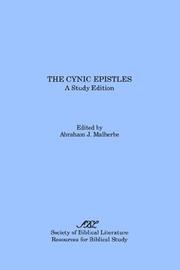
Letters of Diogenes (Cynic Epistles)
50
Diogenes of Sinope
Letters
The Conscious LibraryLetters
Diogenes of Sinope
Cephalion
The Conscious LibraryCephalion
Diogenes of Sinope
Ichthyas
The Conscious LibraryIchthyas
Diogenes of Sinope
The Jackdaw
The Conscious LibraryThe Jackdaw
Diogenes of Sinope
Pordalus
The Conscious LibraryPordalus
Diogenes of Sinope
The Athenian Demos
The Conscious LibraryThe Athenian Demos
Diogenes of Sinope
Art of Ethics
The Conscious LibraryArt of Ethics
Diogenes of Sinope
On Wealth
The Conscious LibraryOn Wealth
Diogenes of Sinope
Erotikos (On Love)
The Conscious LibraryErotikos (On Love)
Diogenes of Sinope
Theodorus
The Conscious LibraryTheodorus
Diogenes of Sinope
Hypsias
The Conscious LibraryHypsias
Diogenes of Sinope
Aristarchus
The Conscious LibraryAristarchus
Diogenes of Sinope
On Death
The Conscious LibraryOn Death
Diogenes of Sinope
Helen
The Conscious LibraryHelen
Diogenes of Sinope
Thyestes
The Conscious LibraryThyestes
Diogenes of Sinope
Heracles
The Conscious LibraryHeracles
Diogenes of Sinope
Achilles
The Conscious LibraryAchilles
Diogenes of Sinope
Medea
The Conscious LibraryMedea
Diogenes of Sinope
Chrysippus
The Conscious LibraryChrysippus
Diogenes of Sinope
Oedipus
The Conscious LibraryOedipus
Diogenes of Sinope
On Virtue
The Conscious LibraryOn Virtue
Diogenes of Sinope
On the Good
The Conscious LibraryOn the Good
Diogenes of Sinope
The Beggar
The Conscious LibraryThe Beggar
Zitate
Zitate, die in einem bestimmten Werk nachgewiesen sind. Jedes trägt seine Herkunft und seinen Grad an Verlässlichkeit.
I am looking for a man.Ἄνθρωπον ζητῶ.
WahrscheinlichDiógenes Laercio VI 41: lo decía mientras recorría la ciudad con una lámpara encendida a pleno día. Dicho transmitido como chreía, sin fuente nombrada. Griego: Diógenes Laercio, ed. de Wikisource griega; inglés: R. D. Hicks (Loeb, 1925, dominio público); español: traducción propia.
Apokryphe Zitate oder Zitate umstrittener Zuschreibung (2)
«I am looking for an honest man.»
The ancient saying (Diogenes Laertius VI 41) is "I am looking for a man" (anthropon zeto), that is, a human being worthy of the name. The adjective "honest" is a modern addition found in no Greek or Latin source.
«Diogenes lived in a barrel.»
Not a quotation but a commonplace that often accompanies his sayings. Greek sources speak of a pithos, a large clay storage jar (Diogenes Laertius VI 23 and 43), and Juvenal calls it a testa, earthenware (Satires XIV 308–310). The wooden barrel is a later image spread by modern iconography.
Letzte Worte
Widersprüchliche Fassungen
«"How am I then injured by being torn by those animals, if I have no sensation?"»quid igitur mihi ferarum laniatus oberit nihil sentienti?
There are no reliable last words. What is transmitted are instructions about his body, in versions that do not agree. Cicero (Tusculans I 104) relates that he ordered himself to be thrown out unburied; when his friends objected—"to the birds and beasts?"—he asked them to leave a stick beside him to drive them off, and when they said he would not perceive them, he answered with the sentence quoted. Diogenes Laertius (VI 79) records other variants: that he be cast out unburied for any beast to feed on, thrust into a ditch with a little dust over him, or thrown into the Ilissus to be useful to his brethren; and, according to Eubulus (VI 32), that he asked to be buried face down because what was below would soon be on top. The circumstances of his death also vary (raw octopus, dog bite, holding his breath, VI 76–77), and Antisthenes of Rhodes' version says his friends found him already dead, wrapped in his cloak, which would rule out any final words. English: C. D. Yonge (1877); Spanish: own translation.
Quelle: Cicerón. Disputaciones tusculanas I 104 y V 92, 45 a. C. Texto latino en The Latin Library; trad. inglesa de C. D. Yonge, Cicero's Tusculan Disputations, Harper, Nueva York, 1877 (Project Gutenberg n.º 14988).
Fragen
Was das Werk beantwortet
Zwölf große Fragen der Menschheit und was sich aus den Texten darauf antworten lässt, mit Belegen. Wir legen niemandem Worte in den Mund.
Was ist das Absolute? Gibt es Gott?
The gods exist, but the Dog's philosophy is played out in conduct
Zurückhaltung vor dem TranszendentenAus der Lehre abgeleitet
Diogenes left no theology, and his writings were lost; what survives are sayings and anecdotes collected centuries later, above all by Diogenes Laertius. In them the gods appear as a model of self-sufficiency: it belongs to the gods to need nothing, and to those like them to need little. Laertius also attributes to him a syllogism by which everything belongs to the gods, the wise are friends of the gods and friends hold their goods in common, so everything belongs to the wise. At the same time he mocks votive offerings and ritual purifications. The divine serves as a horizon; attention is set on living according to nature.
Diese Frage mit anderen Meistern vergleichenWer bin ich? Gibt es ein wahres Selbst?
He did not theorise the self: he tested it by stripping off conventions
Nicht geäußert
The sayings and anecdotes Diogenes Laertius collects about Diogenes of Sinope contain no theory of the soul and no answer to the question of who I am. What they do show is a practice: reducing what one needs in order to discover what remains once wealth, reputation and customs are removed. That is why he throws away his cup on seeing a child drink with his hands, answers “citizen of the world” to someone asking where he is from, and looks for a man with a lamp in broad daylight. The Cynic self is defined by what it does not need and by the frankness with which it speaks, not by a substance to be known.
Diese Frage mit anderen Meistern vergleichenWarum leiden wir?
Whoever needs much suffers; free is whoever comes close to needing nothing
Begehren und AnhaftenAus der Lehre abgeleitet
The anecdotes Diogenes Laertius transmits sketch a consistent diagnosis. Humans make themselves wretched by depending on the superfluous: wealth, comforts, honours, other people's opinions. The gods need nothing and whoever resembles them needs little; that is why Diogenes lived in a jar and threw away his cup on seeing a child drink with his hands. Against fortune he set courage, against convention nature, and against passion reason. Suffering comes not from things but from attachment to needs that convention has created; the remedy is training, a daily exercise of privation that makes light what once seemed indispensable.
Diese Frage mit anderen Meistern vergleichenWas geschieht nach dem Tod?
How can something be an evil if we do not feel it?
Schweigen oder ZurückhaltungAusdrücklich gesagt
The anecdotes collected by Diogenes Laertius show Diogenes treating death with the same nonchalance as other conventions. Asked whether death was an evil, he replied how could it be, since we do not feel it when it is present. He asked to be thrown out unburied when he died so that the beasts could have their share, and when told they would tear him apart he suggested leaving him a stick to drive them off; if he would not feel them, what did it matter. None of the sayings describes a life after death. Attention is directed to living now without fear, and funeral rites appear as one more convention.
Diese Frage mit anderen Meistern vergleichenWie erlangt man Befreiung oder Erlösung?
Nothing is achieved without training, of body and soul together
Durch disziplinierte ÜbungAusdrücklich gesagt
Diogenes Laertius attributes to Diogenes a doctrine of training (askesis) that is the closest thing to a method in Cynicism. There is a twofold exercise, of body and soul, and neither suffices without the other; nothing in life succeeds without training, and training can overcome everything. That is why Diogenes rolled in hot sand in summer and embraced frozen statues in winter, and begged from statues to get used to refusal. The aim is self-sufficiency and freedom: to be prepared for any fortune, as he said when asked what he had gained from philosophy. To be freed is to strip oneself, by daily exercise, of the needs imposed by convention.
Diese Frage mit anderen Meistern vergleichenBraucht es einen Lehrer?
He followed Antisthenes against his will, but taught by example
Hilfreich, aber nicht unverzichtbarAus der Lehre abgeleitet
Tradition relates that Diogenes wished to become a disciple of Antisthenes, who admitted no one, and that when Antisthenes raised his staff against him he offered his head, saying he would find no stick hard enough to drive him off while he had something to say. Later, sold as a slave, he offered to govern men and educated the sons of his buyer, Xeniades, teaching them to live simply. But his pedagogy is above all demonstrative: showing with his own body that one can live without the superfluous. The teacher orients and provokes; the training, however, each person does, and Diogenes distrusted any authority not proved by conduct.
Diese Frage mit anderen Meistern vergleichenIst die Welt wirklich?
I see the table, not “tableness”: the real is what is before us
Natürliche Ordnung im WandelAus der Lehre abgeleitet
Diogenes elaborated no cosmology, but the anecdotes passed down by Laertius show his attitude. When Plato spoke of the Forms and named “tableness” and “cupness”, Diogenes replied that he saw the table and the cup but not tableness or cupness. To a sophist proving by arguments that motion does not exist, he answered by getting up and walking about. His ethical programme — to live according to nature, not convention — presupposes that nature is real and holds the measure. The world is not an appearance over another reality but the only stage, to be inhabited with the least.
Diese Frage mit anderen Meistern vergleichenWas ist Liebe?
Erotic love, a pastime of the idle; frankness, the most beautiful thing
Nicht geäußert
Diogenes wrote an Erotic dialogue, now lost, and what survives about love in his sayings is scant and disdainful. According to Diogenes Laertius, he called erotic love the occupation of those with nothing to do, and treated sexual desire as a natural need to be satisfied without fuss or convention. In the surviving material there is no doctrine of love as a path, nor an ethic of compassion. The closest is his cosmopolitanism — being a citizen of the world — and his idea that the most beautiful thing among humans is frankness, exercised precisely towards those one wishes to improve. Later tradition made the Cynics physicians of humanity.
Diese Frage mit anderen Meistern vergleichenSind wir frei, oder ist alles vorherbestimmt?
Setting courage against fortune: freedom is won by training
Echter freier WilleAus der Lehre abgeleitet
Diogenes did not theorise about determinism, but freedom (eleutheria) is one of the axes of Cynicism. According to Diogenes Laertius, he said he set courage against fortune, nature against convention and reason against passion; and he declared that he preferred freedom above all. When he was sold as a slave, he asked to be sold to someone who needed a master, reversing the roles. Philosophy had at least given him readiness for any fortune. That freedom is not metaphysical but practical: that of one who, needing little, depends on no one. Fortune exists and strikes, but the response to it lies in each person's hands.
Diese Frage mit anderen Meistern vergleichenWozu meditieren oder beten?
He mocks purifications and votive offerings; his practice is training
Nicht geäußert
The anecdotes attribute to Diogenes no positive teaching on prayer or meditation; what they transmit is mockery. To someone purifying himself with water he said that errors of life were not washed off that way, any more than errors of grammar. Before the votive offerings at Samothrace, dedicated by those who had been saved, he remarked that there would have been many more if those who were not saved had offered them too. He criticised people for asking the gods for what seemed good to them and not for what truly is. His daily exercise is not prayer or contemplation but the training of body and soul to need little.
Diese Frage mit anderen Meistern vergleichenKann die Vernunft das Letzte erkennen?
He cared for reason to live by, not to speculate on the ultimate
Nicht geäußert
Diogenes did not pronounce on whether reason can know the ultimate, and the anecdotes show a deliberate lack of interest in such questions. He marvelled that grammarians investigated the ills of Odysseus and ignored their own, that musicians tuned the lyre and left their souls out of tune, and that mathematicians gazed at the sun and moon without seeing what lay at their feet. At the same time, he valued reason as a practical guide: he said that to live one needed reason or a halter. Cynic reason serves to unmask conventions and live according to nature; speculation about the ultimate seemed to him time wasted.
Diese Frage mit anderen Meistern vergleichenSich von der Welt zurückziehen oder sie verwandeln?
Defacing the currency: overturning the city's values through one's own life
Die Revolution ist innerlichAus der Lehre abgeleitet
Diogenes did not withdraw to the desert: he lived right in the street, in Athens and Corinth, in full view. But neither did he seek to govern or reform the laws. His motto, according to tradition, was “deface the currency”, an allusion to an episode of counterfeiting at Sinope that he turned into a programme: to discredit current values — wealth, fame, lineage, conventional modesty — and replace them with those of nature. He declared himself a citizen of the world and said that the only right constitution is the one that embraces the cosmos. His method was provocative example and frankness. The transformation he sought was not political but a revolution in each person's way of living.
Diese Frage mit anderen Meistern vergleichen
Affinitäten und Spannungen
Affinitäten und Spannungen
Frage für Frage aus den Positionen berechnet. Den Grund jeder Übereinstimmung und jedes Widerspruchs zeigt ein Klick.
Denkt ähnlich wie
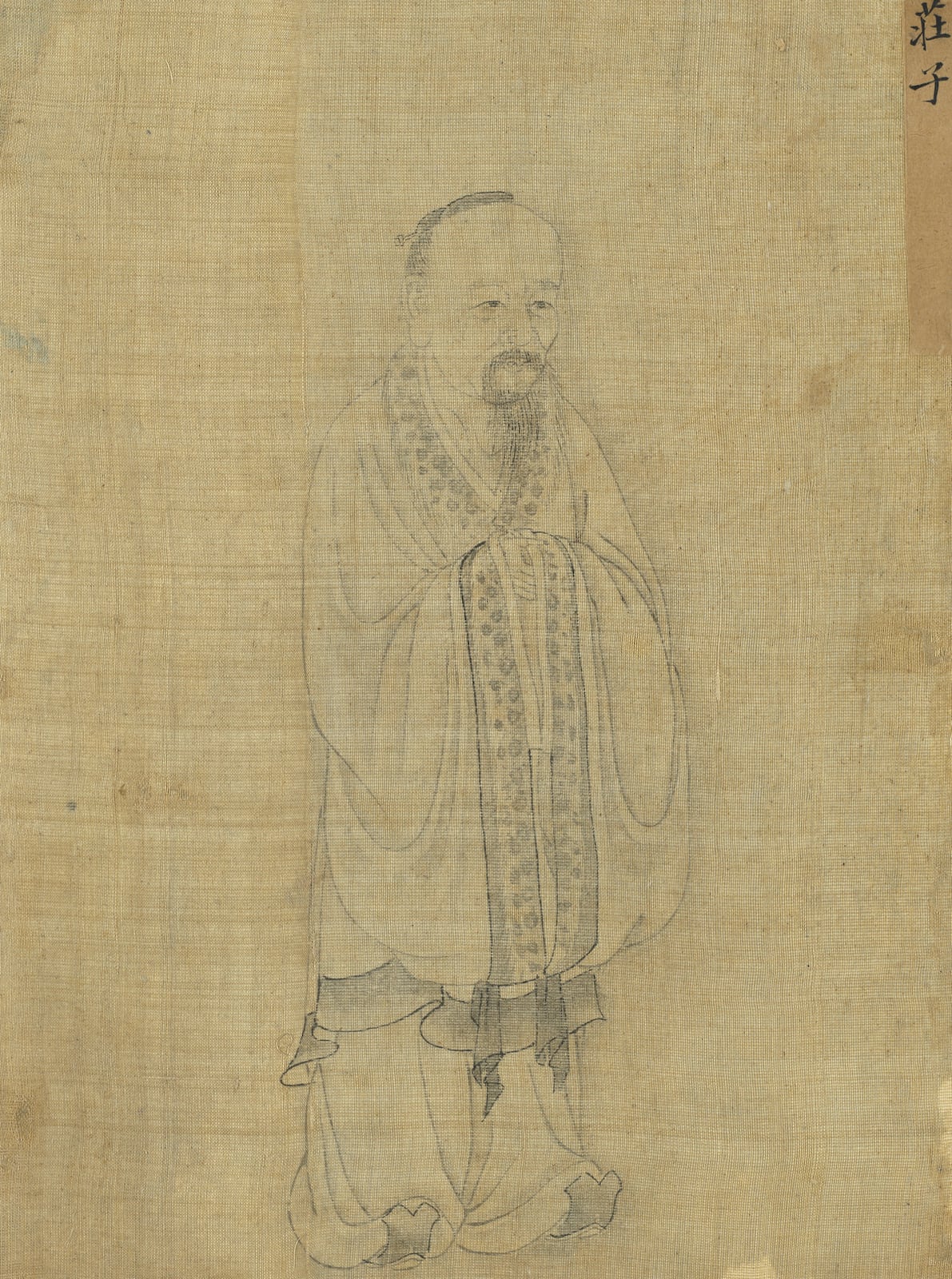
Zhuangzi
Übereinstimmung bei: Warum leiden wir? · Was geschieht nach dem Tod? · Braucht es einen Lehrer?
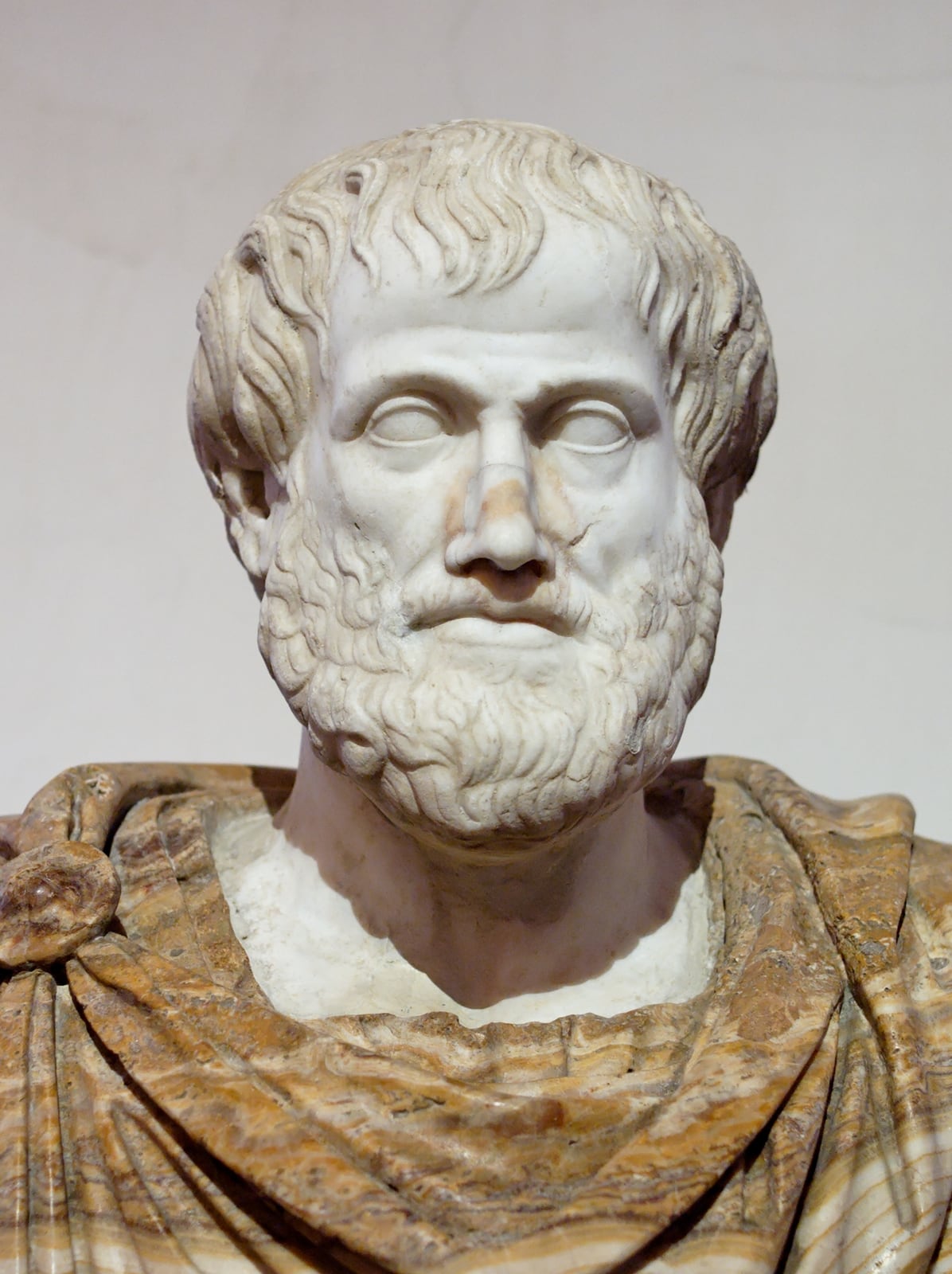
Aristotle
Übereinstimmung bei: Was geschieht nach dem Tod? · Braucht es einen Lehrer? · Ist die Welt wirklich?

Epicurus
Übereinstimmung bei: Warum leiden wir? · Wie erlangt man Befreiung oder Erlösung? · Ist die Welt wirklich?

Pema Chödrön
Übereinstimmung bei: Warum leiden wir? · Wie erlangt man Befreiung oder Erlösung? · Braucht es einen Lehrer?
Denkt anders als
Alan Watts
Widerspruch bei: Wie erlangt man Befreiung oder Erlösung?
Narada
Widerspruch bei: Was ist das Absolute? Gibt es Gott? · Warum leiden wir? · Wie erlangt man Befreiung oder Erlösung?
Gaudapada
Widerspruch bei: Was ist das Absolute? Gibt es Gott? · Warum leiden wir? · Was geschieht nach dem Tod?
Uddalaka Aruni
Widerspruch bei: Was ist das Absolute? Gibt es Gott? · Was geschieht nach dem Tod? · Wie erlangt man Befreiung oder Erlösung?
Anekdoten und Erzählungen
Anekdoten und Erzählungen
Umstritten336–335 a. C. (si ocurrió)
Stand out of my sun
Herkunft der Erzählung: Plutarch, Alexander 14 (with the line "were I not Alexander…"); Arrian, Anabasis VII 2.1; Cicero, Tusculans V 92; Diogenes Laertius VI 32, 38, 60 and 68. The sources date from the first century BCE to the third CE. The meeting is chronologically possible, but the reply has the shape of a school chreia and circulated as a rhetorical exercise; most historians regard it as of uncertain historicity or legendary. The same-day death comes from Demetrius of Magnesia (Diogenes Laertius VI 79).
Zeugnisc. 360–340 a. C.
The jar in the Metroon (and the barrel that never was)
Herkunft der Erzählung: Diogenes Laertius VI 23, citing Diogenes' own (lost) letters, and VI 43; Juvenal, Satires XIV 308–314. Life in the pithos is well attested in the ancient tradition; its transformation into a barrel comes from later readings of the Latin dolium and from medieval and modern iconography (Roubineau 2023).
Mündliche Überlieferungs. IV a. C.
The lamp in broad daylight
Herkunft der Erzählung: Diogenes Laertius VI 41 (the lamp), VI 32 (citing Hecato's Chreiai: "I called for men") and VI 60 (Olympia). Laertius gives no source for the lamp. It is a chreia of oral and school transmission; its meaning is certain, its historicity is not. The adjective "honest" is modern.
Mündliche Überlieferungc. 360–347 a. C.
Plato's man
Herkunft der Erzählung: Diogenes Laertius VI 40 (the fowl), VI 26 (the carpets, with a variant attributed to Sotion), VI 53 ("tablehood") and VI 54 ("a Socrates gone mad", a phrase Aelian, Varia Historia XIV 33, puts in Plato's mouth). They are chreiai with no contemporary source; the playful definition of featherless bipeds is in Plato, Statesman 266e.
Umstrittenfecha desconocida
Sell me to that man; he needs a master
Herkunft der Erzählung: Diogenes Laertius VI 29–31 and 74–75, citing The Sale of Diogenes by the satirist Menippus of Gadara (third century BCE), a work of the same title by Eubulus and Cleomenes' On Pedagogues. The origin in a satire, the exemplary tone and the contradictory versions of his release lead many specialists to regard it as literary fiction; others accept a historical core. Lucian took up the motif in Philosophies for Sale.
Umstrittenmediados del s. IV a. C.
Defacing the currency
Herkunft der Erzählung: Diogenes Laertius VI 20–21, 56 and 71, with contradictory sources (Diocles, Eubulides and Diogenes' own lost Pordalus). Sinopean coins of c. 350–340 BCE defaced with a chisel and issues bearing the name of Hicesias (Hikesio) support a historical core, according to Navia and Branham; the oracle is generally considered a later invention inspired by Socrates' own.
Quelle: Navia, Luis E. Diogenes the Cynic: The War Against the World. Humanity Books, Amherst (Nueva York), 2005.
Umstrittenc. 323 a. C.
Three deaths and a marble dog
Herkunft der Erzählung: Diogenes Laertius VI 76–79, with multiple sources (Cercidas, Antisthenes of Rhodes, Demetrius of Magnesia). The tomb with the marble dog is also mentioned by Pausanias (II 2.4) at the entrance to Corinth. The causes of death are mutually incompatible and several have a symbolic intent (the dog, self-mastery); the synchronism with Alexander is legendary.
Lehren
Lehren
Die Begriffe, die das Denken gliedern, in ihrem Zusammenhang erklärt.
Defacing the currency (paracharattein to nomisma)paracharattein-to-nomisma
Diogenes Laertius VI 20–21, 56 and 71. It is the key through which ancient tradition read his whole life, and the one modern studies take up (Desmond, Roubineau).
Askesis (training)askesis
Diogenes Laertius VI 70–71, a passage studied by Marie-Odile Goulet-Cazé (L'Ascèse cynique, 1986). The notion passed into Stoicism and, by other routes, into the vocabulary of Christian monasticism.
Self-sufficiency (autarkeia)autarkeia
Diogenes Laertius VI 37, 78 and 105. The idea has Socratic roots (Xenophon, Memorabilia I 6.10) and will be central to Stoicism and Epicureanism, though with different content.
Shamelessness (anaideia)anaideia
Diogenes Laertius VI 35, 58, 61 and 69. The early Stoics inherited part of this programme, as Zeno's Republic shows; the Stoics of the imperial age softened it.
Frankness (parrhesia)parresia
Diogenes Laertius VI 69; Foucault, Le Courage de la vérité (2009). Cynic parrhesia became a commonplace of imperial-age moral literature (Epictetus, Dio of Prusa, Lucian).
Quelle: Foucault, Michel. Le Courage de la vérité. Le gouvernement de soi et des autres II. Cours au Collège de France, 1983–1984, ed. Frédéric Gros. Gallimard / Seuil (Hautes Études), París, 2009.
Citizen of the world (kosmopolites)kosmopolites
Diogenes Laertius VI 63 and 72; Schofield, The Stoic Idea of the City (1991). It is one of Cynicism's legacies most studied by contemporary political philosophy.
Quelle: Schofield, Malcolm. The Stoic Idea of the City. Cambridge University Press, Cambridge, 1991 (cap. 1 y apéndices sobre la República de Diógenes y la de Zenón).
Nature versus convention (physis and nomos)physis-nomos
Diogenes Laertius VI 22, 37, 38 and 71–73. The tension between Cynic radicalism and its Stoic domestication is well documented in Philodemus (On the Stoics) and in Diogenes Laertius VII 32–34.
Videos
Videos
Aufnahmen, Gespräche und Dokumentarfilme. Die Videos werden von YouTube wiedergegeben; sie werden nicht hier gespeichert.
Los filósofos cínicos (I): los sabios insumisos · La March
Vortrag· ES· 2025· 64 min
Fundación Juan MarchOffizieller Kanal
Los filósofos cínicos (II): la búsqueda de valores naturales · La March
Vortrag· ES· 2025· 69 min
Fundación Juan MarchOffizieller Kanal
Cinismos. Parte I. Carlos García Gual
Vortrag· ES· 2025· 92 min
A 6 Mil Pies. Crítica y transvaloración
Cynics, Stoics, Epicureans
Vortrag· EN· 2021· 46 min
Gresham CollegeOffizieller Kanal
The philosophy of cynicism - William D. Desmond
Analyse· EN· 2019· 5 min
TED-EdOffizieller Kanal
Thomas W. Laqueur: Diogenes and His "Preposterous" Views on the Dead || Radcliffe Institute
Vortrag· EN· 2014· 3 min
Harvard UniversityOffizieller Kanal
Hellenistic Philosophy 2.3.2 Diogenes of Sinope and Cynicism (version 1)
Vortrag· EN· 2020· 30 min
Monte Johnson
Diogenes of Sinope, Cynicism, & Ancient Athens | Philosophers In The Midst Of History
Vortrag· EN· 2025· 85 min
Gregory B. Sadler - That Philosophy Guy
Diogenes Laertes, Lives of Philosophers | Diogenes' Cynic Mode of Living | Philosophy Core Concepts
Analyse· EN· 2021· 17 min
Gregory B. Sadler - That Philosophy Guy
Diogenes Expert Inger Kuin On The Most Misunderstood Philosopher | Daily Stoic Podcast
Gespräch· EN· 2026· 70 min
Daily Stoic
Diógenes, Epicuro y Crisipo | Historia de la filosofía (8/61)
Vortrag· ES· 2017· 87 min
Ernesto Castro
Foucault - Le courage de la vérité 5 - 29 février 1984 - Cours au Collège de France
Vortrag· FR· 1984· 103 min
Cours Philo
Galerie
Galerie
Bilder mit geprüfter Lizenz. Jedes bewahrt seine Urheberschaft und seinen Herkunftsnachweis.
Handschriften
Handschriften
Handschriftliche Zeugen und alte Texte, mit ihrer verwahrenden Einrichtung und ihren Einsichtsbedingungen.
GRC · Minúscula griega · Obra de c. 225 d. C.; copia del s. XII
Βίοι καὶ γνῶμαι τῶν ἐν φιλοσοφίᾳ εὐδοκιμησάντων (Codex Borbonicus, «B»)
- Erhaltener Textzeuge
- Uno de los tres testimonios principales y completos de la obra, con el Parisinus graecus 1759 (P) y el Laurentianus 69.13 (F), según la edición crítica de Tiziano Dorandi.
- Verwahrende Einrichtung
- Biblioteca Nazionale «Vittorio Emanuele III», Nápoles · Neapolitanus III B 29
GRC · Mayúscula griega (papiro) · s. I a. C.
Φιλοδήμου Περὶ τῶν Στωικῶν (PHerc. 155 y 339)
- Erhaltener Textzeuge
- Rollos de papiro carbonizados en la erupción del Vesubio del 79 d. C., hallados en la Villa de los Papiros de Herculano.
- Verwahrende Einrichtung
- Biblioteca Nazionale «Vittorio Emanuele III», Officina dei Papiri Ercolanesi, Nápoles · PHerc. 155; PHerc. 339
Beziehungen
Beziehungen
Einflüsse, Schülerschaften und Verwandtschaften. Die belegte Beziehung wird von der durch Analyse ermittelten Ähnlichkeit unterschieden.
Beeinflusst von
Cynicism claimed descent from Socrates through Antisthenes; Plato reportedly called Diogenes "a Socrates gone mad" (Diogenes Laertius VI 54; Aelian, Varia Historia XIV 33).
Belegte Beziehung
Schüler von
Antístenes
Diogenes Laertius (VI 21) relates that Antisthenes accepted him as a pupil after trying to drive him off with his staff; the relationship is doubtful on chronological grounds (Antisthenes died around 366).
Belegte Beziehung
Widersprach
Diogenes Laertius (VI 24–26, 40, 53–54, 58) transmits many jibes between them—the plucked fowl, the carpets, "tablehood"; they are anecdotes of late tradition, but reflect a real opposition between Cynicism and the Academy.
Belegte Beziehung
Zeitgenosse von
Aristotle quotes in the Rhetoric (III 10, 1411a24) a metaphor by "the Dog" about taverns: the only certain contemporary testimony on Diogenes. Diogenes Laertius (V 18) adds an anecdote about figs between them, of doubtful historicity.
Belegte Beziehung
Lehrer von
Crates de Tebas
Crates, the "door-opener", was his most famous pupil according to Diogenes Laertius (VI 85–87) and passed Cynicism on to Zeno of Citium.
Belegte Beziehung
Beeinflusste
A pupil of Crates (Diogenes Laertius VII 2–4); his Republic, which an ancient joke says he wrote "on the dog's tail", continues Diogenes', as Philodemus stresses in On the Stoics.
Belegte Beziehung
Zeitgenosse von
Epicurus (b. 341 BCE) did his ephebic service in Athens around 323, the year Diogenes died; there is no report that they met. Epicurean ethics expressly rejected the Cynic life: the sage, according to Epicurus, "will not play the Cynic" (Diogenes Laertius X 119).
Durch Analyse ermittelte Ähnlichkeit
Beeinflusste
Epictetus devotes Discourse III 22 ("On Cynicism") to the ideal Cynic and holds up Diogenes as a model of freedom and frankness.
Belegte Beziehung
Beeinflusste
In the Meditations (VIII 3) he places Diogenes, with Heraclitus and Socrates, above Alexander, Caesar and Pompey; in XI 6 he compares his freedom of speech with that of Old Comedy.
Belegte Beziehung
Begegnete
Alejandro Magno
The encounter at the Craneum is transmitted by Plutarch, Arrian, Cicero and Diogenes Laertius; it is chronologically possible (336–335 BCE), but its historicity is debated.
Durch Analyse ermittelte Ähnlichkeit
Verwandte Gedanken mit
Some scholars (F. Gerald Downing, John Dominic Crossan) have compared Jesus' itinerancy, poverty and social critique with those of the Cynics; the hypothesis is much debated and implies no direct influence.
Durch Analyse ermittelte Ähnlichkeit
Verwandte Gedanken mit
A typological parallel: rejection of convention, humour and a preference for the natural over the artificial bring them together, without any historical contact.
Durch Analyse ermittelte Ähnlichkeit
Quellen
Quellen
Für diesen Eintrag herangezogene Bibliografie und Kataloge.
- Hard, Robin (trad.). Diogenes the Cynic: Sayings and Anecdotes, with Other Popular Moralists. Oxford University Press (Oxford World's Classics), Oxford, 2012.
- Wikidata, entidad Q59180 «Diogenes of Sinope» (122 enlaces entre wikis; P31=Q5). Registra nacimiento en 412, 403 o 400 a. C. y muerte en 323 a. C. (precisión: año); lugar de muerte, Corinto.
- Diógenes Laercio. Vidas y opiniones de los filósofos ilustres, libro VI, 20–81 (Diógenes), 85–93 (Crates) y 104–105 (doctrina cínica), s. III d. C. Trad. inglesa de R. D. Hicks, Lives of Eminent Philosophers, vol. II, Loeb Classical Library 185, Heinemann / Harvard University Press, 1925 (Wikisource en inglés); texto griego en Wikisource griega; trad. de C. D. Yonge, Bohn, Londres, 1853 (Project Gutenberg n.º 57342).
- Diógenes Laercio. Los diez libros de Diógenes Laercio sobre las vidas, opiniones y sentencias de los filósofos más ilustres, trad. de José Ortiz y Sanz, tomo II (libros VI–X). Imprenta Real, Madrid, 1792 (ejemplar de la Biblioteca de la Universidad de Sevilla en Internet Archive).
- Plutarco. Vida de Alejandro 14, en Vidas paralelas, s. I–II d. C. Trad. inglesa llamada «de Dryden», revisada por Arthur Hugh Clough, Plutarch's Lives, 1864 (Project Gutenberg n.º 674).
- Cicerón. Disputaciones tusculanas I 104 y V 92, 45 a. C. Texto latino en The Latin Library; trad. inglesa de C. D. Yonge, Cicero's Tusculan Disputations, Harper, Nueva York, 1877 (Project Gutenberg n.º 14988).
- Aristóteles. Retórica III 10, 1411a24 («el Perro» llama a las tabernas «los comedores comunes del Ática»). Trad. inglesa de W. Rhys Roberts, Oxford, 1924 (Internet Classics Archive, MIT); texto griego en Wikisource griega (Ρητορική/3).
- Malherbe, Abraham J. (ed. y trad.). The Cynic Epistles: A Study Edition. Scholars Press para la Society of Biblical Literature, Missoula, 1977 (Sources for Biblical Study, 12).
- Giannantoni, Gabriele (ed.). Socratis et Socraticorum Reliquiae, 4 vols. Bibliopolis, Nápoles, 1990; vol. II, sección V B: testimonios y fragmentos de Diógenes de Sinope.
- Dorandi, Tiziano. «Filodemo, Gli Stoici (PHerc. 155 e 339)». Cronache Ercolanesi 12 (1982). Edición del tratado de Filodemo que defiende la autenticidad de la República de Diógenes y discute la de Zenón.
- Schofield, Malcolm. The Stoic Idea of the City. Cambridge University Press, Cambridge, 1991 (cap. 1 y apéndices sobre la República de Diógenes y la de Zenón).
- Dudley, Donald R. A History of Cynicism from Diogenes to the 6th Century A.D. Methuen, Londres, 1937.
- Navia, Luis E. Diogenes the Cynic: The War Against the World. Humanity Books, Amherst (Nueva York), 2005.
- Desmond, William D. Cynics. Acumen, Stocksfield, 2008 (Ancient Philosophies, 3); ed. estadounidense University of California Press, 2008.
- Roubineau, Jean-Manuel. Diogène. L'antiphilosophe. Presses Universitaires de France, París, 2020; trad. inglesa: Dangerous Life and Ideas of Diogenes the Cynic, Oxford University Press, Nueva York, 2023.
- Piering, Julie. «Diogenes of Sinope». Internet Encyclopedia of Philosophy (ISSN 2161-0002), Universidad de Tennessee en Martin.
- Branham, R. Bracht y Goulet-Cazé, Marie-Odile (eds.). The Cynics: The Cynic Movement in Antiquity and Its Legacy. University of California Press, Berkeley, 1996.
- Epicteto. Disertaciones recogidas por Arriano III 22 («Sobre el cinismo»), c. 108 d. C. Trad. inglesa de George Long, A Selection from the Discourses of Epictetus with the Encheiridion (Project Gutenberg n.º 10661).
- Marco Aurelio. Meditaciones VIII 3 y XI 6 (numeración estándar; en la traducción de Casaubon, VIII 3 y XI 5), c. 170–180 d. C. Trad. inglesa de Meric Casaubon (1634), Meditations (Project Gutenberg n.º 2680).
- «Diogenes», Wikipedia en inglés, y «Diógenes de Sinope», Wikipedia en español (consultadas para contrastar datos y bibliografía; texto propio).
- Open Library (Internet Archive): ediciones de Diógenes Laercio y de los cínicos verificadas por ISBN.
- García Gual, Carlos. La secta del perro. Diógenes Laercio: Vidas de los filósofos cínicos. Alianza Editorial, Madrid, 1987.
- Juvenal. Sátiras XIV 308–314 («dolia nudi non ardent Cynici… testa cum vidit in illa magnum habitatorem»), comienzos del s. II d. C. Texto latino en The Latin Library.
- Arriano. Anábasis de Alejandro VII 2.1, s. II d. C. Trad. inglesa de E. J. Chinnock, The Anabasis of Alexander, Hodder and Stoughton, Londres, 1884 (Project Gutenberg n.º 46976).
- Foucault, Michel. Le Courage de la vérité. Le gouvernement de soi et des autres II. Cours au Collège de France, 1983–1984, ed. Frédéric Gros. Gallimard / Seuil (Hautes Études), París, 2009.
- Wikimedia Commons: Jean-Léon Gérôme, «Diogenes» (1860), Walters Art Museum, Baltimore, n.º 37.131; ficha del fichero con la descripción del museo.
- Juliano. Discursos «Contra los cínicos ignorantes» y «Al cínico Heraclio», 362 d. C. Trad. inglesa de Wilmer Cave Wright, The Works of the Emperor Julian, vol. II, Loeb Classical Library, 1913 (Wikisource en inglés).
- Dorandi, Tiziano (ed.). Diogenes Laertius: Lives of Eminent Philosophers. Cambridge University Press (Cambridge Classical Texts and Commentaries, 50), Cambridge, 2013 (edición crítica; introducción sobre la tradición manuscrita: B, P y F).
- Martín García, José Antonio (ed. y trad.). Los filósofos cínicos y la literatura moral serioburlesca, 2 vols., revisión de Cristóbal Macías Villalobos. Akal (Clásica), Madrid, 2008.
- Rechteinhaber
- Textos antiguos en dominio público; cada traducción y edición moderna pertenece a su traductor o editorial
Bestätigung ausstehend
Was dieser Eintrag noch nicht klären konnte. Wir sagen es lieber, als es aufzufüllen.
- Fecha de nacimiento: se adopta c. 412 a. C. (muerte en 323 «casi a los noventa», Diógenes Laercio VI 76); Censorino da 81 años (c. 404) y Wikidata registra 412, 403 y 400. Fecha y lugar exactos de la muerte, inciertos (Corinto según la tradición mayoritaria).
- Tradiciones: el catálogo (content/traditions.json) no tiene «cinismo»; se asigna provisionalmente «stoicism» por la filiación Diógenes–Crates–Zenón. Valorar dar de alta una tradición «cynicism».
- Edición española con ISBN de la República y de los testimonios: solo se ha verificado el ISBN de Akal (2008), que Open Library registra sin tomo; confirmar si corresponde al vol. I o al II.
- Manuscritos: no se ha verificado digitalización oficial del Neapolitanus III B 29 de Diógenes Laercio ni de los papiros PHerc. 155 y 339; añadir también el Parisinus gr. 1759 (P) y el Laurentianus 69.13 (F) con sus enlaces cuando se comprueben.
- Numismática: citar la publicación original sobre las monedas de Sinope desfiguradas y con el nombre de Hicesias (se ha usado la síntesis de Navia y Branham).
- Programas de afiliación: ninguno verificado (Alianza, Akal, OUP, Harvard). Lista vacía.
- Vídeos: no se ha encontrado un documental de televisión pública dedicado a Diógenes en un canal oficial; el curso de Foucault y la conferencia de García Gual proceden de canales no oficiales.
Recherchiert am 2026-10-25