Hinduismus · Advaita Vedanta · Vedische Tradition
Uddalaka Aruni
उद्दालक आरुणि
Historizität umstritten
Vedischer Weiser aus Kuru-Pañcāla aus dem Geschlecht der Gautama, den die Upaniṣaden als Lehrer seines Sohnes Śvetaketu und Yājñavalkyas zeigen. Im sechsten Buch der Chāndogya lehrt er durch Experimente – den Ton, den Samen der Banyanfeige, das im Wasser gelöste Salz –, dass alles aus dem Seienden hervorgeht, „eines ohne Zweites“, und fasst es im Kehrvers „tat tvam asi“ zusammen. Er schrieb nichts; seine Gestalt, deren Historizität umstritten ist, stammt aus dem Śatapatha Brāhmaṇa und den ältesten Upaniṣaden, etwa aus dem 7.–6. Jahrhundert v. Chr.
- Werke
- 9Werke
- Ausgaben
- 24Ausgaben
- Zitate
- 7Zitate
- Videos
- 12Videos
- Bilder
- 4Bilder
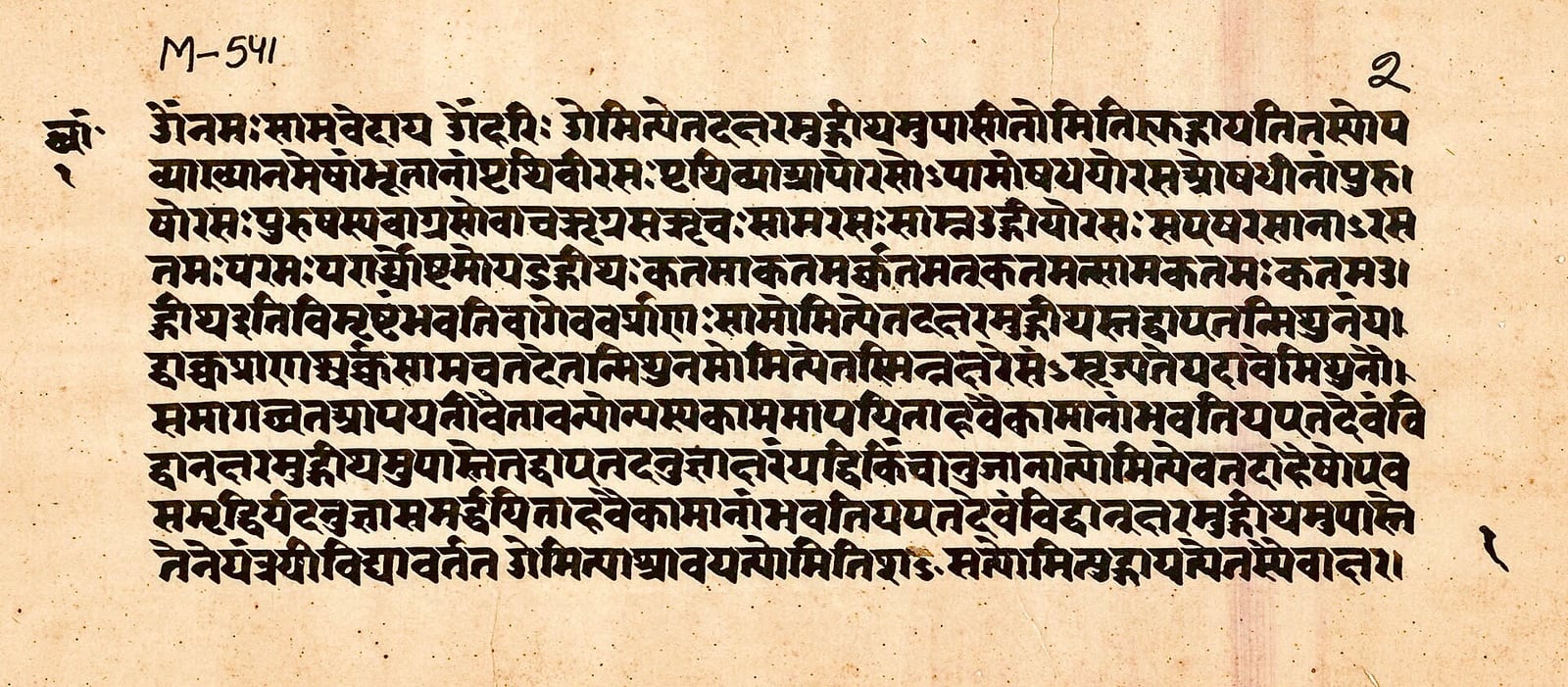
Manuscrito de la Chāndogya Upaniṣad (1849) · CC BY-SA 4.0
In eigenen Worten
«In the beginning, my dear, this was being alone, one only, without a second.»Chāndogya Upaniṣad 6.2.1 (traducción propia)

Der zentrale Gedanke
Tat tvam asi ("you are that"): The refrain that closes nine of Uddālaka's lessons to Śvetaketu in the Chāndogya (6.8.7–6.16.3): that subtle essence (aṇiman) is what all this has as its self; that is the real; that is the ātman; tat tvam asi.
Im Zusammenhang sehen
Biografie
5 Min. Lesezeit
Unterstützte Übersetzung aus dem spanischen Original, Durchsicht durch einen muttersprachlichen Übersetzer ausstehend.
Ein Lehrer in den Lehrerlisten
Uddālaka Āruṇi hat keine Schrift hinterlassen. Sein Name taucht in der spätvedischen Prosa immer wieder auf – im Śatapatha Brāhmaṇa, in der Bṛhadāraṇyaka und der Chāndogya Upaniṣad, in der Kauṣītaki, im Jaiminīya Upaniṣad Brāhmaṇa –, als rituelle Autorität, als Gesprächspartner in Debatten und vor allem als Lehrer. Die Texte nennen ihn nach seinem Geschlecht auch Gautama und geben ihm einen Vater, Aruṇa Aupaveśi, und einen Sohn, Śvetaketu Āruṇeya; aus diesen Erwähnungen hat Michael Witzel einen Stammbaum über vier Generationen rekonstruiert. Er war ein Brahmane aus Kuru-Pañcāla, dem Herzland der vedischen Welt in der westlichen Gangesebene, und die Lehrerlisten der Bṛhadāraṇyaka machen ihn zum Lehrer Yājñavalkyas: „Yājñavalkya von Uddālaka; Uddālaka von Aruṇa.“
Der Reisende im Norden
Das Śatapatha Brāhmaṇa bewahrt eine Episode, die ihn als wandernden Priester zeigt. Uddālaka zog als Opferpriester durch das Land des Nordens und trug ein Goldstück bei sich, denn in alter Zeit, sagt der Text, setzte, wer so reiste, einen Preis aus, um die anderen zum Streitgespräch herauszufordern. Die Brahmanen des Nordens fürchteten, dieser Brahmane aus Kuru-Pañcāla könne ihnen ihr Gebiet streitig machen, und schickten Svaidāyana Śaunaka. Der stellte ihm eine Reihe von Fragen über den verborgenen Sinn der Neumond- und Vollmondopfer; Uddālaka übergab ihm das Goldstück, erkannte sein Wissen an und kehrte später mit Brennholz in der Hand zurück – der Geste dessen, der darum bittet, Schüler zu werden –, damit er sie ihm erkläre. An anderer Stelle ist er es, der die Fragen des Śauceya Prācīnayogya zum Agnihotra eine nach der anderen beantwortet.
Vater und Lehrer
Die Lehre, die ihn berühmt gemacht hat, steht im sechsten Buch der Chāndogya. Sein Sohn Śvetaketu, mit zwölf Jahren zum Studium fortgeschickt, kehrt mit vierundzwanzig zurück, so erzählt der Text, „aufgeblasen, dünkelhaft, sich für gelehrt haltend“. Der Vater fragt ihn, ob er die Unterweisung kenne, durch die man das Ungehörte hört, das Ungedachte denkt und das Unerkannte erkennt. Da der Sohn sie nicht kennt, bietet er sie ihm an: Wie man durch einen einzigen Klumpen Ton alles erkennt, was aus Ton gemacht ist – und die Gefäße sind nichts als „eine Sache der Worte, eine Abwandlung, ein Name“ –, so erkennt man durch das Seiende (sat) alles, was existiert. „Im Anfang, mein Lieber, war dies das Seiende allein, eines ohne Zweites.“ Aus ihm gehen Hitze, Wasser und Nahrung hervor, die sich zu allen Dingen verbinden.
Neun Lektionen und ein Kehrvers
Uddālaka lehrt durch Experimente. Er lässt seinen Sohn fünfzehn Tage fasten, nur Wasser trinkend, und stellt fest, dass er die Veden nicht mehr aufsagen kann; als er wieder isst, kehrt das Gedächtnis zurück wie eine Glut, die man mit Stroh anfacht. Es folgen neun Lektionen: der Honig, der den Nektar vieler Bäume vereint, ohne dass ein Tropfen wüsste, von welchem Baum er stammt; die Flüsse, die sich im Meer verlieren; der Baum, der lebt, solange das Leben ihn durchdringt; der Same der Banyanfeige, der, aufgebrochen, nichts zeigt und aus dem doch der große Baum wächst; das im Wasser gelöste Salz, das man nicht sieht und überall schmeckt; der Mann mit verbundenen Augen, der den Weg zurück nach Gandhāra findet, weil ihn jemand weist. Jede Lektion endet mit demselben Kehrvers: Diese feine Essenz ist es, die all dies zum Wesen hat; das ist das Wirkliche; das ist der Ātman; tat tvam asi, Śvetaketu.
Was „tat tvam asi“ bedeutet
Die Advaita-Tradition hat den Satz seit Śaṅkara als Identität gelesen – „das bist du“: der individuelle Ātman ist das Brahman – und ihn zu den vier „großen Aussprüchen“ der Upaniṣaden gezählt. Joel Brereton schlug 1986 eine andere, auf Grammatik und Kontext achtende Lesart vor: Das neutrale Pronomen verweise auf die feine Essenz, von der eben die Rede war, und der Satz bedeute etwa „so bist du“. Patrick Olivelle übersetzt folgerichtig „und so bist du, Śvetaketu“. Beide Lesarten stimmen im Wesentlichen überein – der Sohn ist aus derselben unsichtbaren Wirklichkeit gemacht wie alles andere –, gehen aber in der Frage auseinander, ob der Text eine metaphysische Identität formuliert oder eine Erklärung vom Wesen der Person.
Ein Brahmane, der zu lernen bereit war
Die Texte betonen einen Zug seines Charakters: Uddālaka scheut sich nicht, wieder Schüler zu werden. Am Hof des Janaka befragt er Yājñavalkya nach dem „Faden“, der die Welten verbindet, und dem „inneren Lenker“, erinnert an das, was er bei Patañcala Kāpya im Land der Madra gelernt hat, und schweigt nach der Antwort. Als König Pravāhaṇa Jaivali Śvetaketu mit fünf Fragen über das Schicksal nach dem Tod demütigt, geht der Vater an den Hof, bittet um Unterweisung und empfängt die Lehre von den fünf Feuern, die, wie der König erklärt, nie zuvor zu einem Brahmanen gelangt sei. Anderen Brahmanen, die ihn nach dem universalen Ātman fragen, gesteht er, er werde nicht vollständig antworten können, und führt sie zu König Aśvapati Kaikeya. Brian Black hat diese Szenen untersucht, in denen das Wissen von den Königen zu den Priestern übergeht.
Was man weiß und was nicht
Daten gibt es keine: Uddālakas Historizität ist so umstritten wie die der ganzen Generation der frühen Upaniṣaden, die Olivelle in das 7. und 6. Jahrhundert v. Chr. und Witzel in die spätvedische Zeit vor dem Buddha setzt. Ben-Ami Scharfstein zählt ihn zu den ersten Philosophen der Geschichte, und der Marxist Debiprasad Chattopadhyaya sah in ihm wegen seiner Methode der Beobachtung und des Experiments den ersten „Naturwissenschaftler“. Die Kaṭha Upaniṣad erwähnt einen Auddālaki Āruṇi, Vater des Naciketas, den Śaṅkara mit ihm gleichsetzte; Max Müller wies darauf hin, dass die Form des Namens Zweifel aufwirft.
Der Āruṇi des Epos
Das Mahābhārata hat ihm eine legendäre Jugend geschenkt. Āruṇi aus Pañcāla, Schüler des Weisen Āyoda Dhaumya, wurde ausgeschickt, eine Bresche im Damm eines Feldes zu schließen; da es ihm nicht gelang, legte er sich hinein und hielt das Wasser mit seinem Körper auf. Als der Lehrer ihn rief, erhob er sich und durchbrach dabei den Damm, und Dhaumya gab ihm den Namen Uddālaka, „der sich aus dem Damm erhob“. Dasselbe Epos macht seine Tochter Sujātā zur Mutter des Aṣṭāvakra und schreibt Śvetaketu die Einführung der ehelichen Treue zu. Eine späte Upaniṣad der Entsagung trägt seinen Namen, die Āruṇi Upaniṣad, und Madhva zitierte eine heute verlorene „Āruṇi-śruti“. Der Kehrvers der Chāndogya ist unterdessen zu einem der meistwiederholten Sätze der indischen Spiritualität geworden.
Quellen: Olivelle, Patrick (ed. y trad.). The Early Upaniṣads: Annotated Text and Translation. Nueva York: Oxford University Press, 1998. Chāndogya 5.3–5.24 y 6; Bṛhadāraṇyaka 3.7, 6.2, 6.3.7 y 6.5; Kauṣītaki 1.1. · Olivelle, Patrick (trad.). Upaniṣads. Oxford World's Classics. Oxford: Oxford University Press, 1996 (traducción «And that's how you are, Śvetaketu» de Chāndogya 6.8.7 y ss.). · Müller, F. Max (trad.). The Upanishads, Part I (Sacred Books of the East, vol. 1). Oxford: Clarendon Press, 1879 (Khândogya y Kaushîtaki-brâhmaṇa-upanishad); y Part II (SBE 15), 1884, nota a Kaṭha 1.11. · Eggeling, Julius (trad.). The Śatapatha-Brāhmaṇa, Part V (Sacred Books of the East, vol. 44). Oxford: Clarendon Press, 1900. XI.4.1 (Uddālaka Āruṇi y Svaidāyana) y XI.5.3 (Śauceya Prācīnayogya y Uddālaka Āruṇi sobre el agnihotra). · Chattopadhyaya, Debiprasad. Science and Society in Ancient India. Calcuta: Research India Publications, 1977.
Zeitleiste
Das Leben, Jahr für Jahr
Jeder Punkt ist ein belegtes Ereignis. Klicken Sie, um es mit Quelle und Grad der Gewissheit zu lesen.
VIII. Jahrhundert v. Chr. – 600 v. Chr.Kuru-Pañcāla
Ritual authority of the Śatapatha Brāhmaṇa
His opinions and debates appear in the later books of the Śatapatha (XI.4.1, XI.5.3) and in the Jaiminīya Upaniṣad Brāhmaṇa. The range is an estimate of the period of the texts.
WahrscheinlichEggeling, Julius (trad.). The Śatapatha-Brāhmaṇa, Part V (Sacred Books of the East, vol. 44). Oxford: Clarendon Press, 1900. XI.4.1 (Uddālaka Āruṇi y Svaidāyana) y XI.5.3 (Śauceya Prācīnayogya y Uddālaka Āruṇi sobre el agnihotra).
VIII. Jahrhundert v. Chr. – 600 v. Chr.
Ritual authority of the Śatapatha Brāhmaṇa
His opinions and debates appear in the later books of the Śatapatha (XI.4.1, XI.5.3) and in the Jaiminīya Upaniṣad Brāhmaṇa. The range is an estimate of the period of the texts.
Wahrscheinlich
VII. Jahrhundert v. Chr.
Svaidāyana's challenge
Travelling in the north as an officiant, he loses a disputation to Svaidāyana Śaunaka and returns with firewood in hand to be instructed (Śatapatha XI.4.1).
Überlieferung
VII. Jahrhundert v. Chr.
The teaching to Śvetaketu
Chāndogya 6: being, one without a second, the experiments and the refrain "tat tvam asi".
Überlieferung
VII. Jahrhundert v. Chr.
Pupil of King Pravāhaṇa Jaivali
After his son's humiliation at the Pañcāla assembly, he receives from the king the doctrine of the five fires (Chāndogya 5.3–10; Bṛhadāraṇyaka 6.2).
Überlieferung
VII. Jahrhundert v. Chr.
He questions Yājñavalkya
He asks about the "thread" and the "inner controller" and falls silent after the answer (Bṛhadāraṇyaka 3.7).
Überlieferung
II. Jahrhundert v. Chr. – 400
The Āruṇi of the Mahābhārata
The epic, fixed between the third century BCE and the fourth century CE, tells the episode of the dyke and how his teacher Dhaumya gave him the name Uddālaka.
Wahrscheinlich
1862
First English translation of the Chāndogya
Rājendralāla Mitra publishes the Chāndogya with extracts from Śaṅkara's commentary in the Bibliotheca Indica.
Belegt
1879
The Chāndogya in the Sacred Books of the East
Max Müller opens the series with the Chāndogya and popularizes the rendering "Thou art that".
Belegt
1986
Brereton rereads "tat tvam asi"
Joel Brereton proposes reading the refrain in its grammatical context as "that's how you are", a reading Olivelle adopts.
Belegt
Werke
Grundlegende Werke
Die Werke, ohne die sich das Vermächtnis nicht verstehen lässt.
Traditionelle Zuschreibung · VII. Jahrhundert v. Chr.
The teaching to Śvetaketu (Chāndogya Upaniṣad, book VI)
छान्दोग्योपनिषद् षष्ठोऽध्यायः (Chāndogya Upaniṣad VI)
Sixteen prose sections. Śvetaketu returns conceited after twelve years of study, and his father teaches him what he did not learn: how, by knowing one thing, everything is known. He sets out the origin of the world from being (sat), "one without a second", which produces heat, water and food; the threefold composition of all things; the experiment of fasting; and nine illustrations — honey, rivers, the tree, the fig seed, salt in water, the man from Gandhāra, the dying man, the thief put to the ordeal of the axe — ending with the refrain "tat tvam asi, Śvetaketu". It is one of the founding texts of Vedānta.
9 Ausgaben
Uddalaka Aruni
Chāndogya Upaniṣad (passages of Uddālaka Āruṇi)
Spätere Zusammenstellung · VII. Jahrhundert v. Chr.
Chāndogya Upaniṣad (passages of Uddālaka Āruṇi)
छान्दोग्योपनिषद् (Chāndogya Upaniṣad)
Together with the Bṛhadāraṇyaka, the oldest of the Upaniṣads. Its first books interpret the chants (sāman) and the syllable Om; the following ones contain teachings on the ātman and brahman attributed to various masters. In book 5 Uddālaka receives from King Pravāhaṇa the doctrine of the five fires and the two paths of the dead, and accompanies other brahmins to Aśvapati Kaikeya to learn the universal ātman (vaiśvānara). Book 6 is his teaching to Śvetaketu.
6 Ausgaben
Das gesamte Werk (9)
The question of the thread and the inner controller (Bṛhadāraṇyaka 3.7)
650
The doctrine of the five fires (pañcāgni-vidyā), received from Pravāhaṇa Jaivali
650
The teaching of the universal ātman (vaiśvānara-vidyā), before Aśvapati Kaikeya
650
Uddalaka Aruni
Uddālaka's debates in the Śatapatha Brāhmaṇa
The Conscious LibraryUddālaka's debates in the Śatapatha Brāhmaṇa
700
Kauṣītaki Upaniṣad, chapter 1: Āruṇi and Citra Gāṅgyāyani
500

Āruṇi Upaniṣad (Āruṇeyī Upaniṣad)
Uddalaka Aruni
Āruṇi-śruti (lost text)
The Conscious LibraryĀruṇi-śruti (lost text)
Zitate
Zitate, die in einem bestimmten Werk nachgewiesen sind. Jedes trägt seine Herkunft und seinen Grad an Verlässlichkeit.
In the beginning, my dear, this was being alone, one only, without a second.सदेव सोम्येदमग्र आसीदेकमेवाद्वितीयम् ।
GeprüftChāndogya Upaniṣad 6.2.1 (traducción propia)
Letzte Worte
Es gibt keine überprüfbaren Aufzeichnungen der letzten Worte.
There is no account of his death or last words in the Vedic texts, the epic or the Purāṇas. The only words of his that survive are the teachings and dialogues attributed to him by the Śatapatha Brāhmaṇa and the Upaniṣads.
Quelle: Olivelle, Patrick (ed. y trad.). The Early Upaniṣads: Annotated Text and Translation. Nueva York: Oxford University Press, 1998. Chāndogya 5.3–5.24 y 6; Bṛhadāraṇyaka 3.7, 6.2, 6.3.7 y 6.5; Kauṣītaki 1.1.
Fragen
Was das Werk beantwortet
Zwölf große Fragen der Menschheit und was sich aus den Texten darauf antworten lässt, mit Belegen. Wir legen niemandem Worte in den Mund.
Was ist das Absolute? Gibt es Gott?
In the beginning there was only being, one without a second
Ein unpersönliches AbsolutesAusdrücklich gesagt
In the sixth book of the Chāndogya Upaniṣad, Uddālaka Āruṇi teaches his son Śvetaketu that in the beginning there was only being (sat), one without a second, and rejects those who held that being was born from non-being. From that principle come heat, water and food, and from their mixture all things. He does not describe a god who judges or loves: he describes a single substance, so subtle that it is not perceived, which is the ātman of all that exists. His examples —the clay of which all pots are made, the dissolved salt that is unseen yet present in every sip, the invisible seed from which the fig tree grows— aim to make the disciple recognise that principle in things and in himself.
Diese Frage mit anderen Meistern vergleichenWer bin ich? Gibt es ein wahres Selbst?
The subtle essence of all is the ātman, «and that's how you are»
Das Selbst ist das AbsoluteAusdrücklich gesagt
Nine of Uddālaka's lessons to Śvetaketu in the Chāndogya end with the same refrain: that subtle essence (aṇiman) is what all this has as its ātman; that is the real; that is the ātman; tat tvam asi (6.8.7–6.16.3). Śvetaketu's self is therefore not something apart: like the river that returns to the sea and no longer knows it was that river, or like honey made from different flowers, the individual comes from being and shares its essence. The Advaita tradition read the refrain as the great saying «you are that», a strict identity between the individual and brahman. The lesson is not presented as a theory, but as something the disciple must verify in things and recognise in himself.
Diese Frage mit anderen Meistern vergleichenWarum leiden wir?
He does not analyse pain; he speaks of one lost who needs guidance
Nicht geäußert
The teachings the Chāndogya puts in Uddālaka Āruṇi's mouth contain no diagnosis of suffering. Their subject is the origin and essence of things, not the cause of pain. The closest is a parable (6.14): a man is blindfolded, led far from his land of Gandhāra and abandoned in a deserted place; he cries out that he has been brought there blindfolded, until someone removes the blindfold and points out the way, and he, asking from village to village, returns home. So, says Uddālaka, one who has a teacher knows that he will remain here only as long as he is not set free. The image suggests that the human condition is a disorientation that knowledge corrects, but the text does not formulate it as a theory of suffering.
Diese Frage mit anderen Meistern vergleichenWas geschieht nach dem Tod?
The body deprived of life dies; life does not die
Was ich bin, wird nie geboren und stirbt nieAus der Lehre abgeleitet
Uddālaka explains death to Śvetaketu with the image of a great tree: if its root, trunk or crown is struck, it bleeds but lives, because life pervades it; if life leaves a branch, the branch withers. So, he concludes, it is the body deprived of life that dies; life does not die (Chāndogya 6.11.3). In another passage he describes the process: in the dying person, speech is gathered into the mind, the mind into breath, breath into heat and heat into the highest deity, the being from which all proceeds (6.8.6; 6.15). Death is thus a return to the subtle essence that never ceased to be. Uddālaka also appears, in book V, receiving from a king the doctrine of the five fires and of the paths beyond.
Diese Frage mit anderen Meistern vergleichenWie erlangt man Befreiung oder Erlösung?
To know that by which the unheard is heard and the unthought is thought
Durch unmittelbare ErkenntnisAus der Lehre abgeleitet
Uddālaka's teaching in the Chāndogya begins with a reproach: Śvetaketu returns proud after twelve years of Vedic study, and his father asks whether he knows the teaching by which the unheard becomes heard, the unthought thought and the unknown known (6.1.2–3). The goal is that knowledge of the being from which everything proceeds, and what follows are the lessons through which it is reached: clay, salt, the fig seed. The parable of the man from Gandhāra shows where it leads: one who has a teacher knows that he will remain here only as long as he is not set free, and then he will arrive (6.14.2). In the last lesson, the one who speaks the truth is not burned when he grasps the red-hot axe (6.16). Known truth protects and frees.
Diese Frage mit anderen Meistern vergleichenBraucht es einen Lehrer?
One who has a teacher knows the way home
UnverzichtbarAusdrücklich gesagt
Uddālaka is, in the Chāndogya, the figure of the father who teaches: his entire sixth book is an instruction to his son Śvetaketu, made of questions, examples and small tests. And it is in that book that the need for a teacher is most clearly formulated. A blindfolded man is abandoned far from his land of Gandhāra; only when someone removes the blindfold and points out the direction can he return, asking from village to village. So, Uddālaka concludes, one who has a teacher (ācāryavān) knows: I remain here only as long as I am not set free, and then I shall arrive (6.14.2). The teacher does not replace the path, which the disciple walks himself, but without him one does not know which way to go.
Diese Frage mit anderen Meistern vergleichenIst die Welt wirklich?
Being became many: heat, water and food, and entered into them
Offenbarung des GöttlichenAusdrücklich gesagt
For Uddālaka, the world comes from being (sat), which, wishing to be many, emitted heat; heat, water; and water, food (Chāndogya 6.2.3–4). It then entered those three «deities» with the living ātman and made them threefold, so that each thing contains all three: the red of fire is that of heat, the white that of water, the black that of food (6.3–4). His most famous example is clay: by one lump everything made of clay is known, because the modification is «a matter of words», a name, and the real is the substance (6.1.4). The world is not a dream, but being itself under names and forms; what dissolves on understanding it is the belief that things are something apart from their source.
Diese Frage mit anderen Meistern vergleichenWas ist Liebe?
His lessons concern being, not love; they ask for trust
Nicht geäußert
The teachings the Chāndogya and the Bṛhadāraṇyaka put in Uddālaka Āruṇi's mouth do not address love. Their subject is the origin of things, the subtle essence that sustains them and the relation between that essence and the disciple. The closest thing to an affective dimension lies in the tone of the teaching: he is a father instructing his son, calls him «dear one» (somya) again and again and, when Śvetaketu cannot see the invisible essence of the fig seed, asks him for trust (śraddhā). But the trust he asks for is that of a disciple who accepts what he does not yet understand, not a love directed to God or to one's neighbour, and the text does not develop it as a teaching.
Diese Frage mit anderen Meistern vergleichenSind wir frei, oder ist alles vorherbestimmt?
He does not treat freedom; his last lesson is about truth
Nicht geäußert
The teachings ascribed to Uddālaka Āruṇi do not address the question of freedom or fate. Their interest lies in the origin of things and in the subtle essence that sustains them, not in human action or its consequences. The doctrine of rebirth according to deeds, which the Chāndogya sets out in book V, Uddālaka receives from a king, Pravāhaṇa Jaivali, who warns him that this knowledge had not previously reached the brahmins. The closest thing to an ethic in his teaching is the last lesson to Śvetaketu (6.16): a man accused of theft is made to grasp a red-hot axe; if he has lied he is burned, and if he speaks the truth, protected by it, he is not. Truth is what frees, not a choice between alternatives.
Diese Frage mit anderen Meistern vergleichenWozu meditieren oder beten?
He teaches no meditation: he teaches looking and verifying
Nicht geäußert
Uddālaka's lessons in the Chāndogya contain no practice of meditation or prayer. His method is different: questions, observation and small tests. He has Śvetaketu fast for fifteen days so that he finds that, without food, he cannot recall the Vedas, and that on eating he remembers them again (6.7); he asks him to dissolve salt in water and look for it by sight and by taste (6.13); he has him split a fig fruit and then a seed until he sees nothing inside (6.12). What is sought is not an induced inner state, but that the disciple should see for himself the subtle essence in things. When observation no longer reaches, Uddālaka proposes not a technique, but trust: «have faith, my dear».
Diese Frage mit anderen Meistern vergleichenKann die Vernunft das Letzte erkennen?
Observe, compare, verify; and where sight fails, trust
Glaube und Vernunft helfen einanderAus der Lehre abgeleitet
Uddālaka's method in the Chāndogya is almost experimental. To teach Śvetaketu, who returns proud after twelve years of study, he does not cite texts: he has him fast for fifteen days to verify the relation between food and mind (6.7), dissolve salt in water and taste it (6.13), split a fig seed until he sees nothing (6.12). He reasons by analogies drawn from clay, copper and iron, and argues against those who said that being was born from non-being: how could that happen? (6.2.2). But observation has a limit: when the essence of the seed cannot be seen, Uddālaka asks for trust (śraddhā). Reason prepares and trust completes, in a knowledge the disciple must end up recognising in himself.
Diese Frage mit anderen Meistern vergleichenSich von der Welt zurückziehen oder sie verwandeln?
A householder who teaches his son; he does not raise renunciation
Nicht geäußert
Uddālaka Āruṇi's teachings do not address the choice between withdrawing from the world and transforming it. His figure, as presented by the Śatapatha Brāhmaṇa and the Upaniṣads, is that of a brahmin householder, an expert in ritual, who debates in assemblies, travels to learn from others —including kings such as Pravāhaṇa Jaivali and Aśvapati Kaikeya— and passes his knowledge on to his son and his disciples. He sends Śvetaketu to study with a teacher, receives him on his return and instructs him at home. The knowledge of being that he teaches does not require leaving that life, but the text does not raise it as a question either. The renunciation associated with his name belongs to the Āruṇi Upaniṣad, a much later text.
Diese Frage mit anderen Meistern vergleichen
Affinitäten und Spannungen
Affinitäten und Spannungen
Frage für Frage aus den Positionen berechnet. Den Grund jeder Übereinstimmung und jedes Widerspruchs zeigt ein Klick.
Denkt ähnlich wie
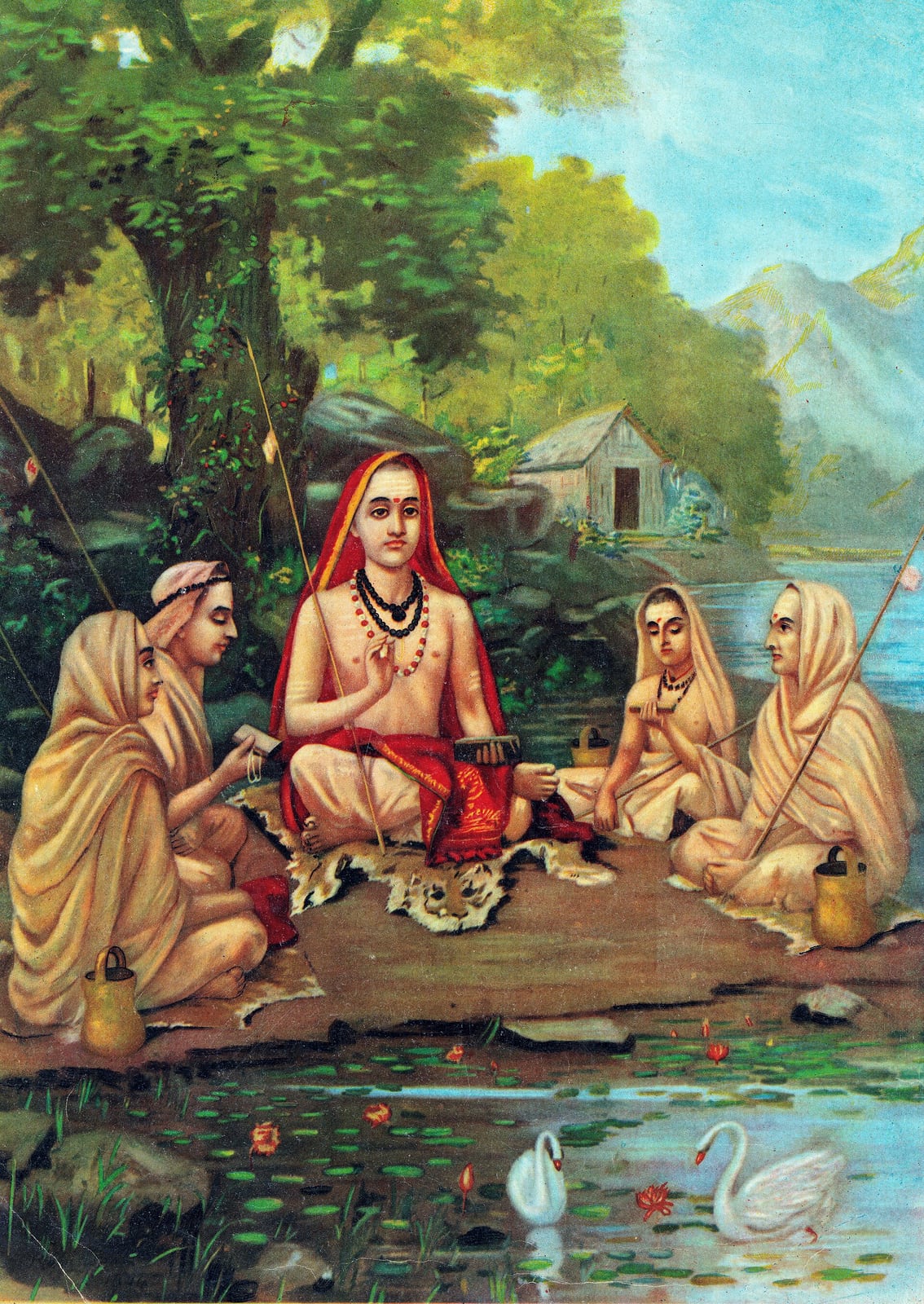
Adi Shankara
Übereinstimmung bei: Was ist das Absolute? Gibt es Gott? · Wer bin ich? Gibt es ein wahres Selbst? · Was geschieht nach dem Tod?
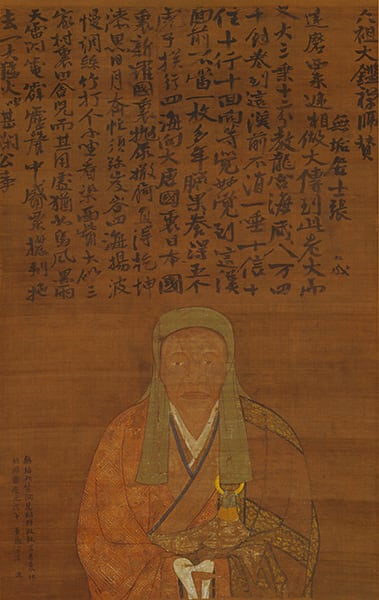
Huineng
Übereinstimmung bei: Was ist das Absolute? Gibt es Gott? · Wer bin ich? Gibt es ein wahres Selbst? · Was geschieht nach dem Tod?
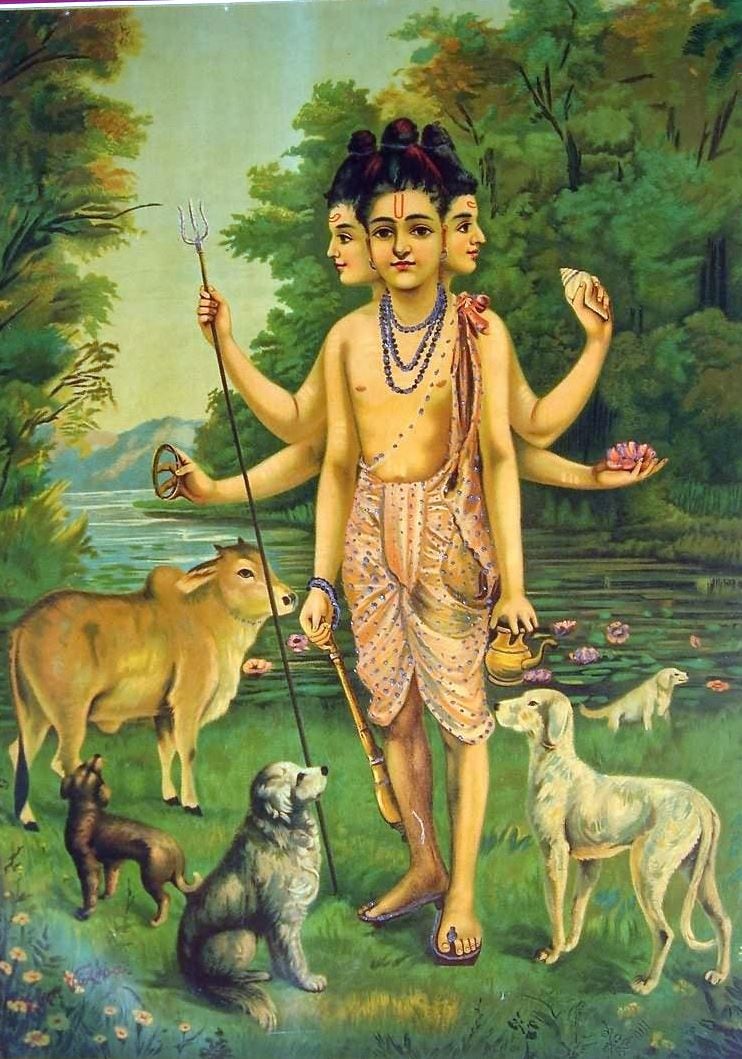
Dattatreya
Übereinstimmung bei: Was ist das Absolute? Gibt es Gott? · Wer bin ich? Gibt es ein wahres Selbst? · Was geschieht nach dem Tod?
Leo Tolstoy
Übereinstimmung bei: Was ist das Absolute? Gibt es Gott? · Wer bin ich? Gibt es ein wahres Selbst? · Was geschieht nach dem Tod?
Denkt anders als

Nikolai Berdyaev
Widerspruch bei: Wer bin ich? Gibt es ein wahres Selbst? · Braucht es einen Lehrer?

Pema Chödrön
Widerspruch bei: Wer bin ich? Gibt es ein wahres Selbst?

Emanuel Swedenborg
Widerspruch bei: Wer bin ich? Gibt es ein wahres Selbst?

Francis of Assisi
Widerspruch bei: Wer bin ich? Gibt es ein wahres Selbst?
Anekdoten und Erzählungen
Anekdoten und Erzählungen
Belegtépoca védica tardía (Chāndogya, ss. VII–VI a. C.)
Salt in water
Herkunft der Erzählung: Chāndogya Upaniṣad 6.13. "Documented" indicates that the story is in the text, not that the scene is historical.
Quelle: Olivelle, Patrick (ed. y trad.). The Early Upaniṣads: Annotated Text and Translation. Nueva York: Oxford University Press, 1998. Chāndogya 5.3–5.24 y 6; Bṛhadāraṇyaka 3.7, 6.2, 6.3.7 y 6.5; Kauṣītaki 1.1.
Belegtépoca védica tardía
The fifteen-day fast
Herkunft der Erzählung: Chāndogya Upaniṣad 6.7. The "scientific" reading is Chattopadhyaya's (1977).
Quelle: Chattopadhyaya, Debiprasad. Science and Society in Ancient India. Calcuta: Research India Publications, 1977.
Belegtépoca védica tardía
The gold coin and the firewood
Herkunft der Erzählung: Śatapatha Brāhmaṇa XI.4.1.1–10 (Eggeling's translation, SBE 44, pp. 50–54), with a parallel version in Gopatha Brāhmaṇa 1.3.6. The exact meaning of some phrases (the coin, the "head that splits") is disputed, as Eggeling notes.
Belegtépoca védica tardía
The king's five questions
Herkunft der Erzählung: Chāndogya Upaniṣad 5.3 (with another version in Bṛhadāraṇyaka 6.2). Black (2007) analyses these scenes of knowledge passing from kings to brahmins.
Quelle: Black, Brian. The Character of the Self in Ancient India: Priests, Kings, and Women in the Early Upaniṣads. Albany: State University of New York Press, 2007.
Hagiographische Erzählungrelato épico (Mahābhārata, ss. III a. C.–IV d. C.)
The pupil who lay down in the dyke
Herkunft der Erzählung: Mahābhārata 1.3 (Pauṣya-parvan; section 3 of Ganguli's translation). There is no Vedic parallel; the relation between this Āruṇi and the Uddālaka of the Upaniṣads is a traditional identification.
Mündliche Überlieferungrelato épico
Śvetaketu and the law of marriage
Herkunft der Erzählung: Mahābhārata 1.113 of the critical edition (section 122 of Ganguli's translation). It is an epic legend with no basis in the Vedic texts.
Lehren
Lehren
Die Begriffe, die das Denken gliedern, in ihrem Zusammenhang erklärt.
Tat tvam asi ("you are that")tat-tvam-asi
Chāndogya Upaniṣad 6; Brereton 1986; Olivelle 1996.
Quelle: Brereton, Joel P. «Tat Tvam Asi in Context». Zeitschrift der Deutschen Morgenländischen Gesellschaft 136 (1986): 98–109.
Sat (being, one without a second)sat
Chāndogya 6.2.
Quelle: Olivelle, Patrick (ed. y trad.). The Early Upaniṣads: Annotated Text and Translation. Nueva York: Oxford University Press, 1998. Chāndogya 5.3–5.24 y 6; Bṛhadāraṇyaka 3.7, 6.2, 6.3.7 y 6.5; Kauṣītaki 1.1.
Trivṛtkaraṇa (the triplication of the elements)trivrtkarana
Chāndogya 6.3–6.6.
Quelle: Chattopadhyaya, Debiprasad. Science and Society in Ancient India. Calcuta: Research India Publications, 1977.
Aṇiman (the subtle essence)animan
Chāndogya 6.8–6.16.
Quelle: Olivelle, Patrick (ed. y trad.). The Early Upaniṣads: Annotated Text and Translation. Nueva York: Oxford University Press, 1998. Chāndogya 5.3–5.24 y 6; Bṛhadāraṇyaka 3.7, 6.2, 6.3.7 y 6.5; Kauṣītaki 1.1.
Vācārambhaṇa (modification is only a name)vacarambhana
Chāndogya 6.1.4–6; Brahmasūtra 2.1.14 and its commentaries.
Quelle: Olivelle, Patrick (ed. y trad.). The Early Upaniṣads: Annotated Text and Translation. Nueva York: Oxford University Press, 1998. Chāndogya 5.3–5.24 y 6; Bṛhadāraṇyaka 3.7, 6.2, 6.3.7 y 6.5; Kauṣītaki 1.1.
Videos
Videos
Aufnahmen, Gespräche und Dokumentarfilme. Die Videos werden von YouTube wiedergegeben; sie werden nicht hier gespeichert.
Tat Tvam Asi (That Thou Art) | Swami Sarvapriyananda
Vortrag· EN· 2021· 101 min
Vedanta Society of New YorkOffizieller Kanal
Talk on Tat Tvam Asi - The Ultimate Equation by Swami Sarvapriyananda
Vortrag· EN· 2026· 115 min
Ramakrishna Vedanta Centre U.K.Offizieller Kanal
The Story of Svetaketu - Thou Art That - Chandogya Upanishad | Pravrajika Divyanandaprana
Vortrag· EN· 2018· 20 min
VivekaVani
Chandogya Upanishad Chapter-6 01
Vortrag· EN· 2022· 74 min
Chinmaya Mission San JoseOffizieller Kanal
Chandogya Upanishad Ch 6 – An Exposition of Tat Tvam Asi | Swami Ramakrishnananda | Dis 01
Vortrag· EN· 2026· 68 min
Shravana Mangalam
Chandogya Upanishad Lecture - 1 (Chapter 6 - 1 - 1 to 6 - 1 - 4)
Vortrag· EN· 2026· 76 min
Vedanta Students
श्वेतकेतु और उद्दालक, उपनिषद की कहानी, छान्द्योग्यापनिषद
Vortrag· HI· 2020· 35 min
G.V.B. The University of Veda
CHANDOGYA. VER LO INVISIBLE
Analyse· ES· 2022· 14 min
Vedanta en Español
El pensamiento en la India: Hinduismo
Dokumentarfilm· ES· 2017· 25 min
UNED DocumentosOffizieller Kanal
The Upanishads: The Sacred Text that Changed India and the West | Jeffery Long, Ph.D.
Vortrag· EN· 2022· 56 min
Theosophical SocietyOffizieller Kanal
Introduction to the Rig Veda and Upanishads | Kendall Sharp | First Friday Lecture
Vortrag· EN· 2024· 78 min
The University of Chicago Graham SchoolOffizieller Kanal
The Central Doctrines of the Upanishads
Vortrag· EN· 2016· 37 min
Vidya-mitraOffizieller Kanal
Galerie
Galerie
Bilder mit geprüfter Lizenz. Jedes bewahrt seine Urheberschaft und seinen Herkunftsnachweis.
Handschriften
Handschriften
Handschriftliche Zeugen und alte Texte, mit ihrer verwahrenden Einrichtung und ihren Einsichtsbedingungen.
SA · Devanagari · c. ss. VII–VI a. C. (Olivelle)
छान्दोग्योपनिषद् (1.1.1–1.1.9)
- Erhaltener Textzeuge
- Manuscrito fechado en 1849
- Digitalisierung
- commons.wikimedia.org/wiki/File:Chandogya_Upanis…
SA · Grantha
छान्दोग्योपनिषद्विवरण
- Erhaltener Textzeuge
- Hoja de palma adquirida en julio de 1836
- Verwahrende Einrichtung
- Kahle-Austin Foundation (según la descripción de Commons)
- Digitalisierung
- commons.wikimedia.org/wiki/File:1836_CE_July_pur…
Beziehungen
Beziehungen
Einflüsse, Schülerschaften und Verwandtschaften. Die belegte Beziehung wird von der durch Analyse ermittelten Ähnlichkeit unterschieden.
Lehrer von
The Bṛhadāraṇyaka's lists of teachers make Yājñavalkya Uddālaka's pupil ("Yājñavalkya from Uddālaka; Uddālaka from Aruṇa").
Belegte Beziehung
Widersprach
He questions him at Janaka's court about the thread and the inner controller and falls silent after his answer (Bṛhadāraṇyaka 3.7).
Belegte Beziehung
Familie von
Śvetaketu Āruṇeya
His son and pupil, recipient of the teaching of Chāndogya 6.
Belegte Beziehung
Familie von
According to the Mahābhārata (3.132–134), Aṣṭāvakra was the son of Sujātā, Uddālaka's daughter, and of his pupil Kahoḍa; that is, his grandson. A legendary, not Vedic, relationship.
Durch Analyse ermittelte Ähnlichkeit
Schüler von
Pravāhaṇa Jaivali
The king of the Pañcālas teaches him the doctrine of the five fires (Chāndogya 5.3–10; Bṛhadāraṇyaka 6.2).
Belegte Beziehung
Beeinflusste
Śaṅkara commented on the Chāndogya and made "tat tvam asi" one of the great sayings of Advaita; he analyses it at length in the Upadeśasāhasrī.
Belegte Beziehung
Verwandte Gedanken mit
Inquiry into the self as the substratum of all experience extends the Advaita reading of "tat tvam asi".
Durch Analyse ermittelte Ähnlichkeit
Verwandte Gedanken mit
Comparative philosophy (Scharfstein) has linked Uddālaka's search for a single principle behind change with that of the first Greek philosophers.
Durch Analyse ermittelte Ähnlichkeit
Verwandte Gedanken mit
The theory of three elements combining in all things has been compared with Empedocles' roots.
Durch Analyse ermittelte Ähnlichkeit
Verwandte Gedanken mit
The rejection of being arising from non-being (Chāndogya 6.2.2) is a frequent parallel in comparative philosophy.
Durch Analyse ermittelte Ähnlichkeit
Beeinflusste
Gauḍapāda's Kārikā develops, in terms of non-origination, the thesis that the effect is not different from its cause, illustrated by the clay of Chāndogya 6.1.
Durch Analyse ermittelte Ähnlichkeit
Quellen
Quellen
Für diesen Eintrag herangezogene Bibliografie und Kataloge.
- Wikidata, «Aruni» (Uddālaka Āruṇi), QID Q2724299.
- Olivelle, Patrick (ed. y trad.). The Early Upaniṣads: Annotated Text and Translation. Nueva York: Oxford University Press, 1998. Chāndogya 5.3–5.24 y 6; Bṛhadāraṇyaka 3.7, 6.2, 6.3.7 y 6.5; Kauṣītaki 1.1.
- Olivelle, Patrick (trad.). Upaniṣads. Oxford World's Classics. Oxford: Oxford University Press, 1996 (traducción «And that's how you are, Śvetaketu» de Chāndogya 6.8.7 y ss.).
- Müller, F. Max (trad.). The Upanishads, Part I (Sacred Books of the East, vol. 1). Oxford: Clarendon Press, 1879 (Khândogya y Kaushîtaki-brâhmaṇa-upanishad); y Part II (SBE 15), 1884, nota a Kaṭha 1.11.
- Brereton, Joel P. «Tat Tvam Asi in Context». Zeitschrift der Deutschen Morgenländischen Gesellschaft 136 (1986): 98–109.
- Eggeling, Julius (trad.). The Śatapatha-Brāhmaṇa, Part V (Sacred Books of the East, vol. 44). Oxford: Clarendon Press, 1900. XI.4.1 (Uddālaka Āruṇi y Svaidāyana) y XI.5.3 (Śauceya Prācīnayogya y Uddālaka Āruṇi sobre el agnihotra).
- Chattopadhyaya, Debiprasad. Science and Society in Ancient India. Calcuta: Research India Publications, 1977.
- Witzel, Michael. «Yājñavalkya as Ritualist and Philosopher, and His Personal Language». En S. Adhami (ed.), Paitimāna: Essays in Iranian, Indo-European, and Indian Studies in Honor of Hanns-Peter Schmidt. Costa Mesa: Mazda, 2003, pp. 103–143 (n. 13: árbol genealógico Upaveśi – Aruṇa Aupaveśi – Uddālaka Āruṇi Gautama – Śvetaketu Āruṇeya).
- Black, Brian. The Character of the Self in Ancient India: Priests, Kings, and Women in the Early Upaniṣads. Albany: State University of New York Press, 2007.
- Ganguli, Kisari Mohan (trad.). The Mahabharata of Krishna-Dwaipayana Vyasa, vol. 1: Adi Parva. Calcuta, 1883–1896; Project Gutenberg n.º 15474 (sección 3, Āruṇi y Dhaumya; sección 122 de la vulgata, Śvetaketu). Para Aṣṭāvakra, Vana Parva 132–134 de la edición crítica.
- Olivelle, Patrick (trad.). The Saṃnyāsa Upaniṣads: Hindu Scriptures on Asceticism and Renunciation. Nueva York: Oxford University Press, 1992 (Āruṇi Upaniṣad).
- Scharfstein, Ben-Ami. A Comparative History of World Philosophy: From the Upanishads to Kant. Albany: State University of New York Press, 1998.
- Wikisource en sánscrito, «छान्दोग्योपनिषद्» (texto por adhyāya; adhyāya 5 y 6) y «बृहदारण्यकोपनिषद्» (6.5).
- Wikipedia (en inglés), «Uddalaka Aruni», consultada el 26 de octubre de 2026 (Āruṇi Upaniṣad, Āruṇi-śruti citada por Madhva, episodio de Dhaumya).
- Hume, Robert Ernest (trad.). The Thirteen Principal Upanishads. Londres: Oxford University Press, 1921.
- Ilárraz, Félix G., y Óscar Pujol (trads.). La sabiduría del bosque: antología de las principales Upaniṣad. Madrid: Trotta, 2003.
- Wikimedia Commons, ficheros y metadatos de licencia consultados mediante la API (imageinfo/extmetadata).
- Mitra, Rājendralāla (trad.). The Chhándogya Upanishad of the Sáma Veda, with Extracts from the Commentary of Śankara Áchárya. Calcuta: Baptist Mission Press (Bibliotheca Indica), 1862.
- Gambhirananda, Swami (trad.). Chāndogya Upaniṣad, with the Commentary of Śaṅkarācārya. Calcuta: Advaita Ashrama, 1983 (reimpr. 2006).
- Deussen, Paul (trad.). Sechzig Upanishad's des Veda. Leipzig: F. A. Brockhaus, 1897.
- Rechteinhaber
- Los textos sánscritos son de dominio público. Las traducciones modernas tienen derechos propios: Oxford University Press (Olivelle; Hume hasta 2029 en España), Trotta (Ilárraz y Pujol), Penguin (Roebuck), Advaita Ashrama (Gambhirananda), Hastinapura (versión española de Nikhilananda). Las de Mitra (1862), Müller (1879), Eggeling (1900) y Deussen (1897) son de dominio público.
Bestätigung ausstehend
Was dieser Eintrag noch nicht klären konnte. Wir sagen es lieber, als es aufzufüllen.
- Mahābhārata: comprobar en la edición crítica las referencias 1.3 (Āruṇi y Dhaumya), 1.113 (Śvetaketu) y 3.132–134 (Aṣṭāvakra) frente a la numeración de Ganguli.
- Kaṭha Upaniṣad 1.11: localizar la nota exacta de Max Müller (SBE 15) sobre «Auddālaki Āruṇi» y la identificación de Śaṅkara.
- Chattopadhyaya, Science and Society in Ancient India: confirmar paginación del capítulo sobre Uddālaka y la editorial de la primera edición (Calcuta, 1977; reimpresión de B. R. Grüner, Ámsterdam).
- Āruṇi-śruti citada por Madhva: localizar la referencia en las obras de Madhva o en un estudio especializado.
- Ediciones: buscar ISBN de traducciones de la Chāndogya al francés, alemán, ruso e hindi; identificar al traductor español de la edición de Hastinapura (ISBN 9789509102699).
- Relaciones: los slugs svetaketu y pravahana-jaivali no existen en el Atlas.
- Vídeos: no se ha encontrado un documental de televisión pública ni una clase universitaria monográfica sobre Uddālaka; los vídeos registrados son conferencias de instituciones vedánticas y clases generales sobre las Upaniṣad.
Recherchiert am 2026-10-26