Hinduismus · Advaita Vedanta · Vedische Tradition
Ashtavakra
अष्टावक्र
Legendäre Gestalt
Weiser der Sanskrit-Überlieferung, dessen Name „der an acht Stellen Gekrümmte“ bedeutet. Das Mahābhārata erzählt, wie er, schon vor der Geburt vom Vater verflucht, als Kind den Disputator Bandin am Hof des Königs Janaka besiegte und seinen Vater aus den Wassern befreite. Die Überlieferung schreibt ihm die Aṣṭāvakra-Gītā zu, einen Dialog mit Janaka in zwanzig Kapiteln und einen der radikalsten Texte der Nondualität, von unbekanntem Verfasser und ungewisser Datierung (nach Brockington zwischen dem 8. und dem 14. Jahrhundert).
- Werke
- 3Werke
- Ausgaben
- 19Ausgaben
- Zitate
- 6Zitate
- Videos
- 13Videos
- Bilder
- 2Bilder
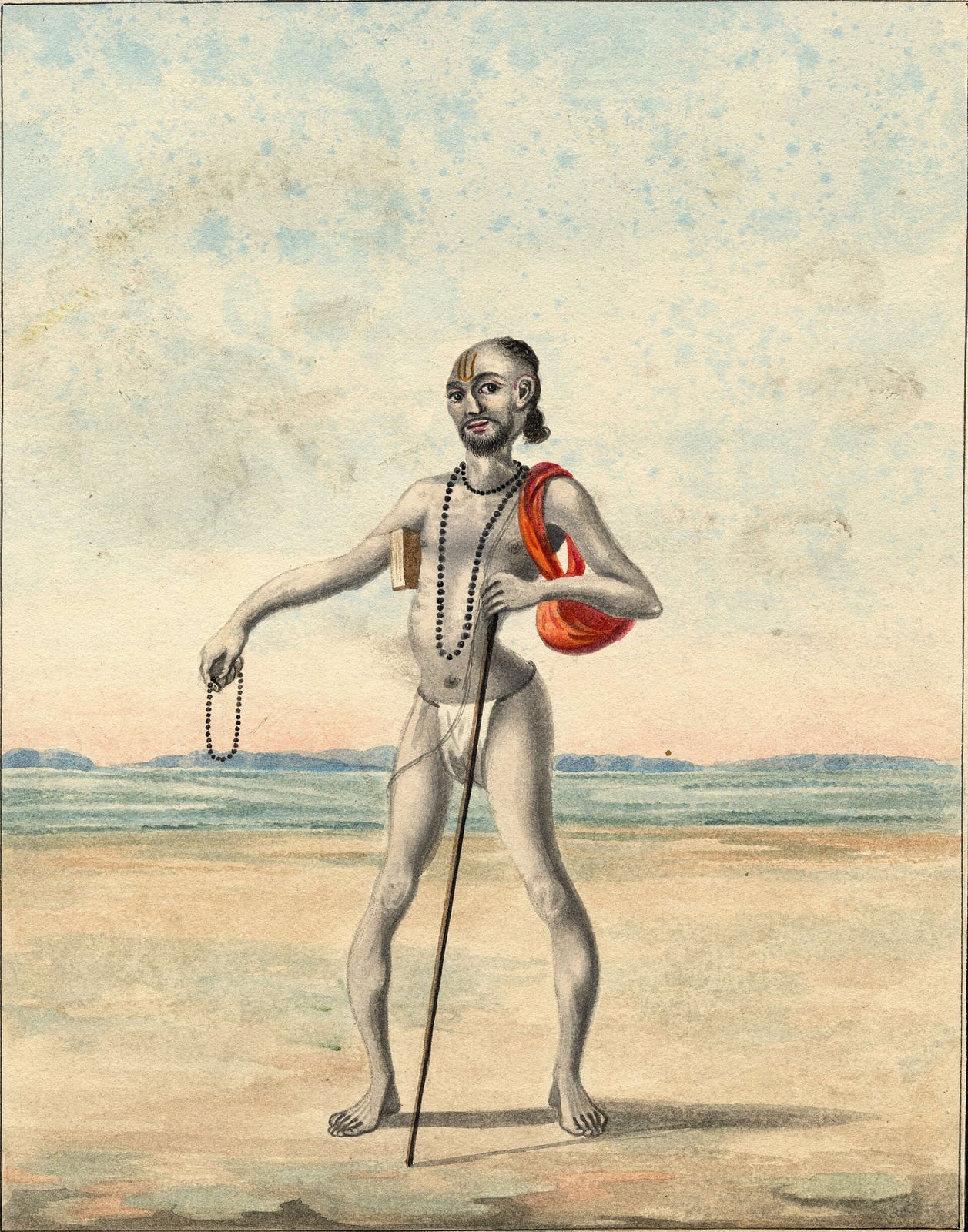
Aṣṭāvakra, acuarela de principios del siglo XIX · Public domain
In eigenen Worten
«You are not earth, nor water, nor fire, nor air, nor space. For liberation, know yourself as the witness of all these, whose form is consciousness.»Aṣṭāvakra Gītā 1.3 (texto sánscrito de Wikisource); versiones española e inglesa del investigador

Der zentrale Gedanke
The witness (sākṣin): This is the central notion of the Aṣṭāvakra Gītā.
Im Zusammenhang sehen
Biografie
5 Min. Lesezeit
Unterstützte Übersetzung aus dem spanischen Original, Durchsicht durch einen muttersprachlichen Übersetzer ausstehend.
Ein Name, der eine Wunde ist
Aṣṭāvakra bedeutet „der an acht Stellen Gekrümmte“. Nur wenige Weise des alten Indien tragen eine Missbildung im Namen, und keiner macht sie so wirkungsvoll zum Argument: Die ganze Überlieferung, die sich um ihn rankt, wiederholt, dass der Körper nicht das Maß des Weisen ist, das Alter nicht das Maß des Wissens und das Selbst nicht die Gestalt, die man sieht. Von Anfang an gilt es jedoch, zwei Ebenen auseinanderzuhalten, die die Frömmigkeit gern vermengt. Auf der einen Seite steht die Gestalt des Sanskrit-Epos, deren ausführlichste Geschichte im Mahābhārata überliefert ist; auf der anderen das philosophische Gedicht, das unter seinem Namen umläuft, die Aṣṭāvakra-Gītā oder Aṣṭāvakra-Saṃhitā, ein Text unbekannter Verfasserschaft, den keine alte Stelle mit jener Gestalt verbindet. Kein Datum, kein Ort und kein Zeugnis erlaubt es, Aṣṭāvakra als historische Person zu behandeln: Er ist eine Gestalt der Überlieferung.
Das Kind, das seinen Vater berichtigte
Die kanonische Erzählung füllt drei Kapitel des Āraṇyakaparvan (3.132–134 in der kritischen Ausgabe), wo der Weise Lomaśa sie Yudhiṣṭhira während der Pilgerfahrt der Pāṇḍavas erzählt. Kahoḍa, Schüler des vedischen Lehrers Uddālaka, heiratet Sujātā, die Tochter seines Lehrers. Als sie schwanger ist, spricht das Kind aus dem Mutterleib und hält dem Vater vor, er rezitiere zwar die ganze Nacht, aber nicht richtig. Vor seinen Schülern gedemütigt, verflucht Kahoḍa es: Es werde an acht Stellen gekrümmt zur Welt kommen. Bald darauf begibt sich Kahoḍa, von Armut getrieben, an den Hof des Königs Janaka von Videha, um dort Reichtum zu erlangen; er unterliegt im Streitgespräch dem Disputator Bandin (oder Vandin) und wird nach der Regel des Wettstreits ins Wasser geworfen. Uddālaka befiehlt, es dem Kind zu verschweigen, und so wächst Aṣṭāvakra in dem Glauben auf, sein Großvater sei sein Vater und Śvetaketu, sein gleichaltriger Onkel, sein Bruder.
Das Turnier der Zahlen
Mit zwölf Jahren, als Śvetaketu ihn mit den Worten „das ist nicht der Schoß deines Vaters“ von Uddālakas Schoß stößt, erfährt Aṣṭāvakra die Wahrheit und macht sich mit seinem Onkel zum Opferfest des Janaka auf. Der Torhüter verwehrt ihm den Zutritt, weil nur alte und gelehrte Brahmanen eingelassen werden, und der Knabe antwortet mit einem Spruch, den das Gedicht berühmt machen sollte: Alt ist nicht, wessen Haupt ergraut, sondern wer erkennt, und die Weisen haben das Verdienst nicht auf Jahre, graues Haar, Reichtum oder Verwandtschaft gegründet. Vor dem König fordert er Bandin heraus. Das Duell ist ein einzigartiges Stück der Sanskrit-Literatur: Jeder der Kontrahenten muss aus dem Stegreif Verse über die Zahlen von eins bis dreizehn dichten, und als Bandin von der Strophe über die Dreizehn nur die erste Hälfte zustande bringt, vollendet Aṣṭāvakra sie und siegt. Der Besiegte enthüllt daraufhin, dass er ein Sohn des Gottes Varuṇa ist und die ertränkten Brahmanen zu einem zwölfjährigen Opfer auf dem Grund der Wasser geschickt hat; er gibt sie zurück, Kahoḍa unter ihnen, und der Vater heißt den Sohn im Fluss Samaṅgā baden, aus dem er mit geraden Gliedern wieder hervorgeht.
Weitere Spuren in Epos und Purāṇas
Der Name taucht auch andernorts auf. Vālmīkis Rāmāyaṇa gebraucht ihn als Sinnbild des Sohnes, der den Vater erlöst: Im Buch des Krieges (6.119.17 in der Zählung der Vulgata) sagt der verstorbene Daśaratha zu Rāma, er sei durch ihn errettet worden, wie der Brahmane Kahoḍa durch Aṣṭāvakra. Das Anuśāsanaparvan des Mahābhārata (Abschnitte 19–21 in Gangulis Übersetzung) erzählt von einer anderen Prüfung: Um die Hand der Suprabhā, der Tochter des Weisen Vadānya, zu gewinnen, reist Aṣṭāvakra in den Norden und widersteht der Verführung durch eine alte Frau, die sich als die Gottheit dieser Himmelsrichtung, Diś, erweist. Das Viṣṇu-Purāṇa (5.38) schreibt ihm dagegen eine Gebärde des Zorns zu: Einige Apsaras, die ihn gepriesen hatten, lachten, als sie ihn missgestaltet aus dem Wasser steigen sahen, und er verfluchte sie, in die Hände von Räubern zu fallen – was nach Vyāsa den Raub der Gemahlinnen Kṛṣṇas nach dem Tod des Gottes erklärt.
Ein Gedicht ohne Datum
Die Aṣṭāvakra-Gītā ist etwas anderes. Es sind rund dreihundert Verse in zwanzig Kapiteln, die die Form eines Dialogs zwischen Janaka und Aṣṭāvakra annehmen, auch wenn sich der Dialog bald in eine nahezu ununterbrochene Erklärung der Identität mit dem Bewusstsein auflöst. Weder der Text noch das Epos stellen die Verbindung zwischen dem Kind des Wettstreits und dem Lehrer des Gedichts her; das tut die Überlieferung, über den Namen und über die Gestalt des Janaka. Die vorgeschlagenen Datierungen gehen weit auseinander. Radhakamal Mukerjee setzte sie in einer 1971 postum erschienenen Studie um das 5. bis 4. Jahrhundert v. Chr. an; J. L. Brockington hält sie in seinem Vorwort zur Übersetzung von Thomas Byrom (1990) für das Werk eines Advaitin nach Śaṅkara, aus dem 8. oder dem 14. Jahrhundert, in einer Zeit der Erneuerung dieser Schule. Die kritische Ausgabe von Richard Hauschild (Berlin 1967) ist nach wie vor die maßgebliche philologische Untersuchung.
Was der Text sagt
Das Gedicht beginnt mit drei Fragen des Königs: Wie erlangt man Erkenntnis, wie Befreiung, wie Leidenschaftslosigkeit? Die Antwort ist schroff: Du bist nicht Erde, Wasser, Feuer, Luft oder Raum, sondern der bewusste Zeuge von alledem; wenn du dich vom Körper löst und im Bewusstsein ruhst, wirst du schon jetzt glücklich und frei sein. Der Text schreibt weder Riten noch Kastenpflichten noch Lebensstadien vor und geht so weit zu behaupten, die Fesselung bestehe gerade darin, weiterhin Versenkung zu üben, um zu erreichen, was man schon ist. Sein berühmter Spruch – „Wer sich für frei hält, ist frei, wer sich für gebunden hält, ist gebunden: Wie man denkt, so wird man“ – verdichtet eine Lehre, die jede Stufenfolge ausschließt. Das 18. Kapitel, das längste, beschreibt den zu Lebzeiten Befreiten, gleichgültig gegenüber Erfolg und Misserfolg, der handelt, ohne sich als Handelnder zu fühlen.
Moderne Leser
Europäische Leser erreichte das Werk im 19. Jahrhundert: Der Italiener Silvio Pagani erinnerte 1912 an die Prosaübersetzung von Carlo Giussani, die 1867–1868 in Angelo De Gubernatis’ Rivista Orientale erschienen war und die er in Verse brachte; 1904 veröffentlichte Lala Baij Nath die erste bekannte englische Fassung. Im modernen Indien wurde sie zu einer Lieblingslektüre der vedantischen Bewegung: Vivekananda zitierte ihren Vers über die Freiheit, um zu sagen, dass alles von der Meinung abhängt, die man von sich selbst hat, und Ramana Maharshi erzählte seinen Besuchern die Geschichte von Aṣṭāvakra und Janaka und schrieb den Sanskrittext des Gedichts eigenhändig ab, den Sri Ramanasramam als Faksimile zusammen mit der Übersetzung von Swami Nityaswarupananda (1940) herausgegeben hat. Osho widmete ihr auf Hindi eine lange Reihe von Vorträgen, die unter dem Titel Ashtavakra Mahageeta erschienen, und die Fassungen von Thomas Byrom (1990) und John Richards, der die seine 1994 gemeinfrei machte, haben sie zu einem der meistgelesenen Texte der zeitgenössischen Nondualität gemacht.
Quellen: Mahābhārata, Āraṇyakaparvan 3.132–134 (ed. crítica de Poona: V. S. Sukthankar et al., Bhandarkar Oriental Research Institute, 1942). Traducción inglesa: Kisari Mohan Ganguli (trad.), The Mahabharata of Krishna-Dwaipayana Vyasa, vol. «Vana Parva», Calcuta, Bharata Press (Pratap Chandra Roy), 1884, secciones CXXXII–CXXXIV (Tirtha-yatra Parva), pp. 396–407. · Mahābhārata, Anuśāsanaparvan, secciones XIX–XXI de la traducción de Kisari Mohan Ganguli (The Mahabharata of Krishna-Dwaipayana Vyasa, vol. «Anusasana Parva», Calcuta, Pratap Chandra Roy, 1883–1896): diálogo de Aṣṭāvakra con la dama Diś. · Wilson, Horace Hayman (trad.). The Vishnu Purana: A System of Hindu Mythology and Tradition. Londres: Oriental Translation Fund / John Murray, 1840, libro V, cap. XXXVIII, pp. 617–618. · Byrom, Thomas (trad.). The Heart of Awareness: A Translation of the Ashtavakra Gita. Prólogo de J. L. Brockington. Boston y Londres: Shambhala, 1990. ISBN 9780877735748. · Hauschild, Richard (ed. y trad.). Die Aṣṭāvakra-Gītā. Berlín: Akademie-Verlag, 1967 (reimpresión De Gruyter, ISBN 9783112742679).
Zeitleiste
Das Leben, Jahr für Jahr
Jeder Punkt ist ein belegtes Ereignis. Klicken Sie, um es mit Quelle und Grad der Gewissheit zu lesen.
um 300 v. Chr.
The story in the Āraṇyakaparvan
The Mahābhārata, composed and expanded over several centuries around the turn of the era, includes in its forest book (3.132–134) the story of Aṣṭāvakra, Kahoḍa and Bandin. The date is only an order of magnitude: the epic does not allow individual episodes to be dated.
WahrscheinlichMahābhārata, Āraṇyakaparvan 3.132–134 (ed. crítica de Poona: V. S. Sukthankar et al., Bhandarkar Oriental Research Institute, 1942). Traducción inglesa: Kisari Mohan Ganguli (trad.), The Mahabharata of Krishna-Dwaipayana Vyasa, vol. «Vana Parva», Calcuta, Bharata Press (Pratap Chandra Roy), 1884, secciones CXXXII–CXXXIV (Tirtha-yatra Parva), pp. 396–407.
um 300 v. Chr.
The story in the Āraṇyakaparvan
The Mahābhārata, composed and expanded over several centuries around the turn of the era, includes in its forest book (3.132–134) the story of Aṣṭāvakra, Kahoḍa and Bandin. The date is only an order of magnitude: the epic does not allow individual episodes to be dated.
Wahrscheinlich
VIII. Jahrhundert
Composition of the Aṣṭāvakra Gītā (hypothesis)
J. L. Brockington ascribes the poem to a follower of Śaṅkara in the eighth or the fourteenth century. Other authors propose much earlier dates (Mukerjee: fifth to fourth centuries BCE); there is no consensus.
Umstritten
1840
Wilson translates the Viṣṇu Purāṇa
Horace Hayman Wilson publishes in London his translation of the Viṣṇu Purāṇa, which includes (5.38) Aṣṭāvakra's curse on the apsarases who laughed at his body.
Belegt
um 1867
First Italian translation
Carlo Giussani publishes a prose translation of the Aṣṭāvakra Gītā in Angelo De Gubernatis's Rivista Orientale (Milan, 1867–1868), as Silvio Pagani recalled in 1912.
Belegt
1884
Ganguli translates the forest book
Kisari Mohan Ganguli publishes in Calcutta the English translation of the Vana Parva, with the full story of the contest of numbers.
Belegt
1904
First English translation of the poem
Lala Baij Nath publishes The Ashtavakra Gita: A Treatise on Adwaita Philosophy, with notes and an introduction.
Belegt
1912
Pagani's verse version
Silvio Pagani publishes in Milan (Sonzogno) an Italian version in hendecasyllables based on Giussani's prose.
Belegt
6. Februar 1937
Ramana Maharshi comments on the story of Aṣṭāvakra and Janaka
In talk 350 Ramana explains to a devotee that the point of the story of Aṣṭāvakra and Janaka is the disciple's complete surrender, and warns that "the anecdotes differ in different books".
Belegt
1940
Nityaswarupananda's translation
Advaita Ashrama publishes Swami Nityaswarupananda's Aṣṭāvakra Saṃhitā, with word-by-word translation and commentary; it would become the reference version of the Ramakrishna movement.
Belegt
1967
Hauschild's critical edition
Richard Hauschild publishes in Berlin the edition and German translation Die Aṣṭāvakra-Gītā.
Belegt
1990
The Heart of Awareness
Shambhala publishes Thomas Byrom's free rendering with a foreword by J. L. Brockington, one of the most widely read in the West.
Belegt
Werke
Grundlegende Werke
Die Werke, ohne die sich das Vermächtnis nicht verstehen lässt.
Traditionelle Zuschreibung ·
Aṣṭāvakra Gītā (The Song of Aṣṭāvakra)
अष्टावक्रगीता (Aṣṭāvakragītā), también अष्टावक्रसंहिता (Aṣṭāvakrasaṃhitā)
A Sanskrit poem of some three hundred verses in twenty chapters, cast as a dialogue between King Janaka of Mithilā and Aṣṭāvakra. After the king's opening questions on knowledge, liberation and dispassion, the teacher asserts that the self is the conscious witness, formless and actionless, and that bondage is merely a mistaken identification with body and mind. Janaka answers with songs of wonder at his own nature, and the text culminates in a long chapter (XVIII) on the one liberated while living. It dispenses with rites, duties and stages of life, and even regards the practice of concentration itself as bondage.
16 Ausgaben
Ashtavakra
The number debate with Bandin (Mahābhārata 3.132–134)
Traditionelle Zuschreibung
The number debate with Bandin (Mahābhārata 3.132–134)
अष्टावक्रीय (Aṣṭāvakrīya), Mahābhārata 3.132–134
Aṣṭāvakra's answers to the gatekeeper, to King Janaka and to the disputant Bandin. They include the maxim on true old age, which lies in knowledge and not in grey hair, and the tournament of improvised stanzas on the numbers from one to thirteen, in which each figure evokes ritual, cosmological and philosophical groups (two friends, Indra and Agni; twelve months of the year; thirteen metres). Commentators read in it a controversy between doctrines about the unity of the Self.
2 Ausgaben
Zitate
Zitate, die in einem bestimmten Werk nachgewiesen sind. Jedes trägt seine Herkunft und seinen Grad an Verlässlichkeit.
You are not earth, nor water, nor fire, nor air, nor space. For liberation, know yourself as the witness of all these, whose form is consciousness.न पृथ्वी न जलं नाग्निर्न वायुर्द्यौर्न वा भवान्। एषां साक्षिणमात्मानं चिद्रूपं विद्धि मुक्तये॥
GeprüftAṣṭāvakra Gītā 1.3 (texto sánscrito de Wikisource); versiones española e inglesa del investigador
Letzte Worte
Es gibt keine überprüfbaren Aufzeichnungen der letzten Worte.
There is no record of his death or of his last words. The epic and Purāṇic texts present him in isolated episodes (his birth, the contest, his marriage, the curse on the apsarases) and none narrates his end.
Fragen
Was das Werk beantwortet
Zwölf große Fragen der Menschheit und was sich aus den Texten darauf antworten lässt, mit Belegen. Wir legen niemandem Worte in den Mund.
Was ist das Absolute? Gibt es Gott?
The Absolute is the witnessing consciousness, one, full and actionless
Ein unpersönliches AbsolutesAusdrücklich gesagt
The Aṣṭāvakra Gītā does not speak of a God to be addressed but of a consciousness that the disciple already is. In the first chapter the teacher describes the Self as witness, all-pervading, full, one, free, pure consciousness and actionless (1.12), and compares it to space, which is at once inside and outside a jar: so the eternal brahman is in the multitude of beings (1.20). The whole world appears in it like the snake in the rope (1.10) or the waves in the ocean (2.4), adding nothing to it and taking nothing away. The text does not expressly deny a personal God, but grants him no role: the ultimate is not someone who creates or judges, but the conscious ground of all experience, identical with the one who asks.
Diese Frage mit anderen Meistern vergleichenWer bin ich? Gibt es ein wahres Selbst?
You are not the elements: you are the witness, whose form is consciousness
Das Selbst ist das AbsoluteAusdrücklich gesagt
The Aṣṭāvakra Gītā answers the question from its third verse: the disciple is not earth, water, fire, air or space, but the witness of them all, whose form is consciousness (1.3). That witness belongs to no caste or stage of life, neither acts nor enjoys (1.5–1.6), and is one with the brahman that is in all beings as space is in jars (1.20). Bondage consists in seeing the seer as if it were another, that is, in taking oneself for an object (1.7). That is why the poem does not propose building a higher self, but recognising what one already is: whoever considers himself free is free, and whoever considers himself bound is bound (1.11).
Diese Frage mit anderen Meistern vergleichenWarum leiden wir?
The bite of the serpent of ego: believing oneself the doer
Unwissenheit über das, was wir sindAusdrücklich gesagt
The Aṣṭāvakra Gītā places the root of suffering in a mistaken identification. The disciple, says the teacher, has been bitten by the great black serpent of the pride of thinking «I am the doer», and the antidote is to drink the nectar of the conviction «I am not the doer» (1.8). Bondage consists in taking the seer for another, that is, for an object (1.7), and in identifying for a long time with the body (1.14). Desire, aversion, pleasure and pain belong to the mind, not to the Self; whoever separates from the body and rests in consciousness is happy and serene right now (1.4). Suffering is neither punishment nor trial: it is the price of not knowing what one is.
Diese Frage mit anderen Meistern vergleichenWas geschieht nach dem Tod?
The witness is neither born nor dies; the sage neither craves life nor fears death
Was ich bin, wird nie geboren und stirbt nieAusdrücklich gesagt
The Aṣṭāvakra Gītā does not describe what happens after death, because for it death affects something the disciple is not. From the first chapter it asks him to recognise himself as the witness of the elements (1.3) and to stop identifying with the body, the rope by which he has long been bound (1.14). Body and world arise and dissolve in consciousness like waves in the ocean (2.4); consciousness neither comes nor goes. Chapter XVIII, devoted to one liberated in life, describes someone who neither desires life nor fears death, indifferent to pleasure and pain. The text neither discusses rebirth nor expressly denies it: it simply leaves it on the side of what is not the Self.
Diese Frage mit anderen Meistern vergleichenWie erlangt man Befreiung oder Erlösung?
You are already free: your bondage is that you keep practising concentration
Durch unmittelbare ErkenntnisAusdrücklich gesagt
The Aṣṭāvakra Gītā understands liberation as recognition, not achievement. The teacher asks Janaka to burn the forest of ignorance with the fire of the conviction «I am the one pure consciousness» (1.9), and assures him that if he rests in consciousness, separating from the body, he will be free right now (1.4). The most radical feature of the poem is its distrust of discipline: Janaka is already free, actionless and luminous, and his bondage consists precisely in continuing to practise concentration (1.15). Hence the text states that a disciple of pure mind reaches his goal through a mere instruction, while the other seeks all his life (15.1). In chapter II Janaka does indeed awaken at the first dialogue.
Diese Frage mit anderen Meistern vergleichenBraucht es einen Lehrer?
One instruction suffices for the ripe disciple; in the end there is no teacher or disciple
Hilfreich, aber nicht unverzichtbarAus der Lehre abgeleitet
The Aṣṭāvakra Gītā is a dialogue between teacher and disciple, and its very form grants a role to the sage's word: Janaka asks, Aṣṭāvakra answers, and in the second chapter the king declares that he has awakened. The text explains why: the disciple of pure mind reaches his goal through a mere instruction, while the other goes on seeking all his life (15.1). But the instruction conveys nothing the disciple does not already have; it only points to what he already is. Hence the poem distrusts learning (16.1) and, in its last chapter, lists among the things that no longer exist for the liberated one the scriptures, knowledge and the distinction between the one who teaches and the one who learns. The teacher is an occasion, not a condition.
Diese Frage mit anderen Meistern vergleichenIst die Welt wirklich?
The world appears through not knowing the Self, like the snake in the rope
Erscheinung über der einen WirklichkeitAusdrücklich gesagt
The Aṣṭāvakra Gītā treats the world as a superimposition on consciousness. It appears through not knowing the Self and ceases to appear when the Self is known, as the snake appears through not recognising the rope and vanishes once it is recognised (2.7). The poem also uses other classical Vedānta images: the silver seen in mother-of-pearl, the water of a mirage (2.9). But alongside them it offers a more conciliatory one: as waves, foam and bubbles are not different from water, the universe that has arisen from the Self is not different from it (2.4). The world is unreal as an independent reality and, at the same time, nothing but the Self appearing. That is why the liberated one need not flee it: it is enough not to take it for what it is not.
Diese Frage mit anderen Meistern vergleichenWas ist Liebe?
It does not speak of love: it describes the sage free from attachment and aversion
Nicht geäußert
The Aṣṭāvakra Gītā contains no teaching on love. Its vocabulary is that of detachment: desire and aversion belong to the mind, not to the Self (15.5), and the liberated one of chapter XVIII is indifferent to pleasure and pain, praise and blame, with neither affection nor hatred towards anything. It would be a mistake to read coldness there: the text describes someone who has stopped dividing the world into what is his and what is another's, and who acts without feeling himself the doer. But it does not call that state love, nor develop it as compassion towards others. If anything follows from its doctrine, it is that the sage's equanimity arises from seeing himself in all beings and all beings in himself (6.4).
Diese Frage mit anderen Meistern vergleichenSind wir frei, oder ist alles vorherbestimmt?
Drink the nectar of the conviction «I am not the doer» and be happy
Es gibt keinen HandelndenAusdrücklich gesagt
The Aṣṭāvakra Gītā answers the question by displacing it. The problem is not whether the self chooses freely or is determined, but the very belief in a self that acts: the disciple has been bitten by the great black serpent of the pride of thinking «I am the doer», and the antidote is the nectar of the conviction «I am not the doer» (1.8). The Self is witness, actionless (1.12); merit and demerit, pleasure and pain, belong to the mind (1.6). Chapter XVIII describes the liberated one as someone who does what comes without feeling himself the author, gaining nothing by acting and losing nothing by not acting. The freedom that concerns the poem is not that of the will, but that of not being identified with any agent.
Diese Frage mit anderen Meistern vergleichenWozu meditieren oder beten?
Your bondage is precisely that you practise concentration
Meditation ist keine TechnikAusdrücklich gesagt
The Aṣṭāvakra Gītā is one of the texts most critical of meditative practice in all Indian literature. In the first chapter the teacher tells Janaka that he is already free, actionless, self-luminous and stainless, and that his bondage consists precisely in continuing to practise concentration (samādhi) (1.15). The idea recurs throughout the poem: whoever strives to still the mind still presupposes a self that strives and a goal to be reached, and the sage neither meditates nor ceases to meditate. This is not a recommendation of laxity: what the text points out is that what is sought is not a produced state. All it asks is to rest in the consciousness one already is (1.4).
Diese Frage mit anderen Meistern vergleichenKann die Vernunft das Letzte erkennen?
Though you read and hear many scriptures, you will find no rest until you forget all
Das Letzte liegt jenseits des VerstandesAusdrücklich gesagt
The Aṣṭāvakra Gītā distrusts study as much as practice. In chapter XVI the teacher tells Janaka that he may expound or hear many scriptures, again and again, but that he will not attain rest in himself until he forgets everything (16.1). Reason and learning belong to the mind, and what is sought is that to which the mind appears: the witness, which is not an object of the senses or of thought (1.5). The poem does not despise instruction —it is what awakens Janaka— but it understands it as a pointer that is exhausted once understood. In the last chapter, the liberated one no longer has any scripture or knowledge to defend.
Diese Frage mit anderen Meistern vergleichenSich von der Welt zurückziehen oder sie verwandeln?
King or ascetic, it matters not: the liberated one acts without feeling the author
Kontemplation im HandelnAusdrücklich gesagt
The Aṣṭāvakra Gītā is a dialogue with a king, Janaka, whom tradition considers liberated without leaving his throne, and its answer to the question is consistent with that frame. Chapter XVIII describes the sage liberated in life as someone not distinguished by outward conduct: he may act or not act, live at court or in the forest, because he no longer feels himself the author of what he does. He neither seeks solitude nor flees it: in the fool, the poem observes, even abstention turns into activity, while in the sage activity itself bears the fruit of abstention (18.61). Nor is there in the text any programme for reforming the world: the sage's action happens, but pursues nothing. What changes is not where one lives, but who one believes is living.
Diese Frage mit anderen Meistern vergleichen
Affinitäten und Spannungen
Affinitäten und Spannungen
Frage für Frage aus den Positionen berechnet. Den Grund jeder Übereinstimmung und jedes Widerspruchs zeigt ein Klick.
Denkt ähnlich wie
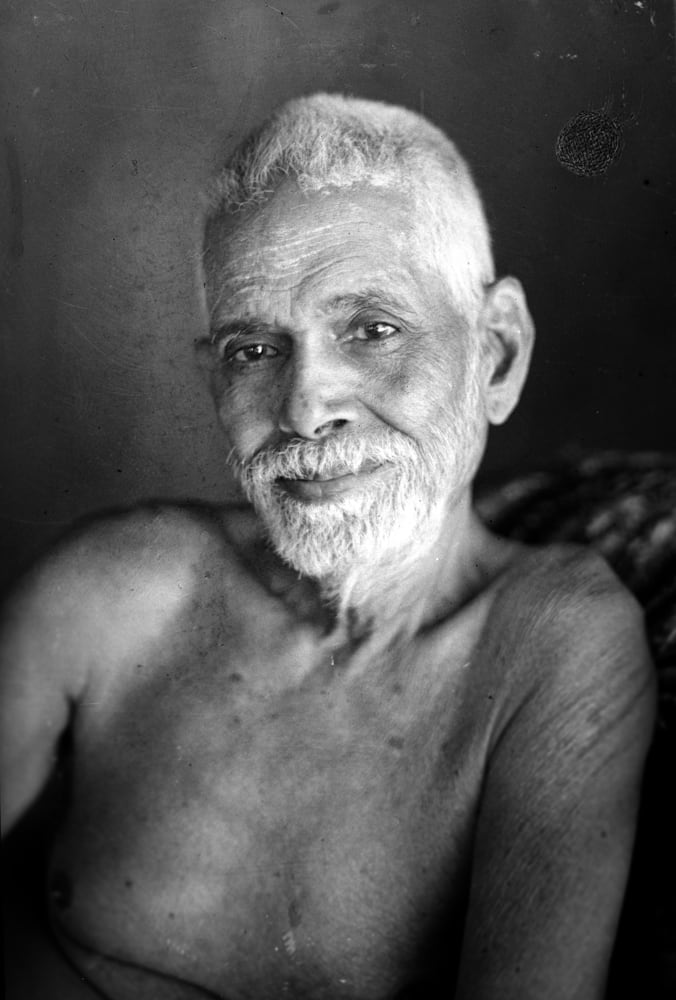
Ramana Maharshi
Übereinstimmung bei: Was ist das Absolute? Gibt es Gott? · Ist die Welt wirklich? · Wer bin ich? Gibt es ein wahres Selbst?
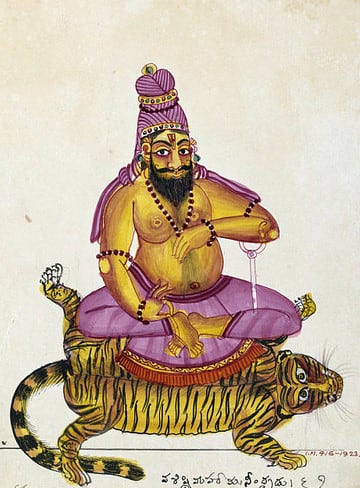
Vasishtha
Übereinstimmung bei: Was ist das Absolute? Gibt es Gott? · Wer bin ich? Gibt es ein wahres Selbst? · Warum leiden wir?
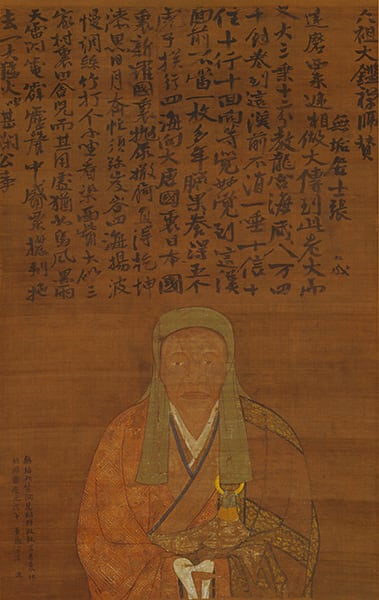
Huineng
Übereinstimmung bei: Was ist das Absolute? Gibt es Gott? · Wer bin ich? Gibt es ein wahres Selbst? · Warum leiden wir?
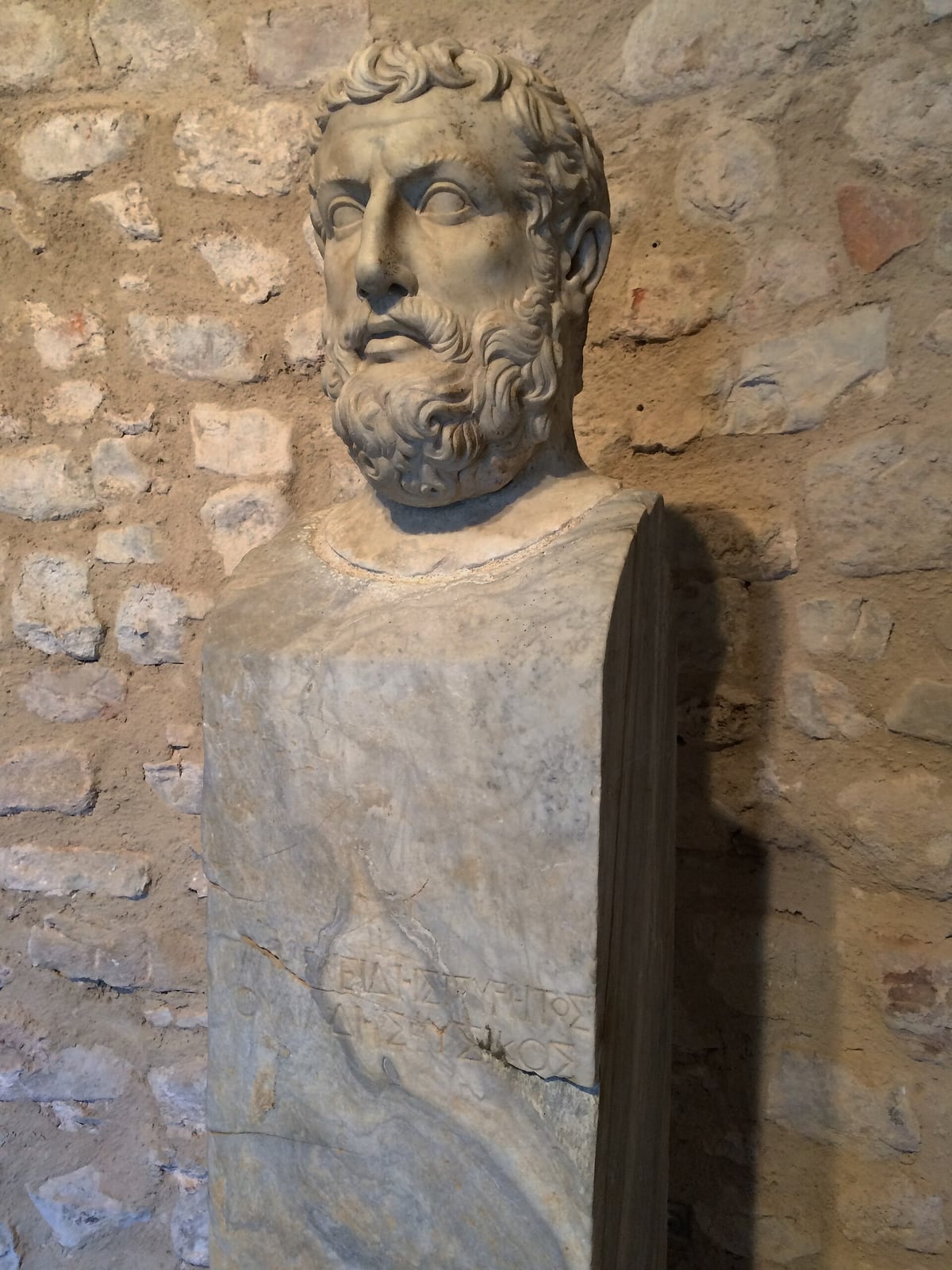
Parmenides
Übereinstimmung bei: Was ist das Absolute? Gibt es Gott? · Wie erlangt man Befreiung oder Erlösung? · Braucht es einen Lehrer?
Denkt anders als

Julian of Norwich
Widerspruch bei: Wer bin ich? Gibt es ein wahres Selbst? · Ist die Welt wirklich?
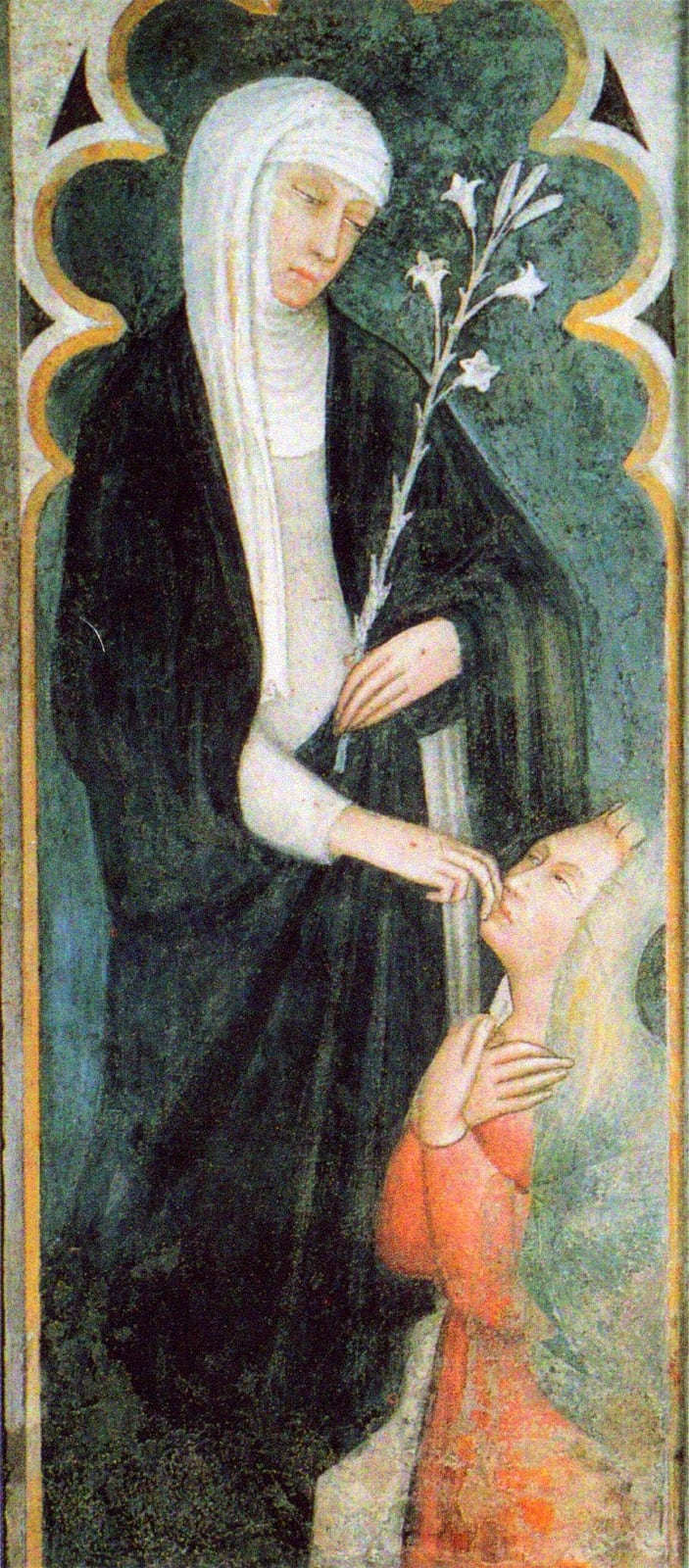
Catherine of Siena
Widerspruch bei: Wer bin ich? Gibt es ein wahres Selbst? · Ist die Welt wirklich?
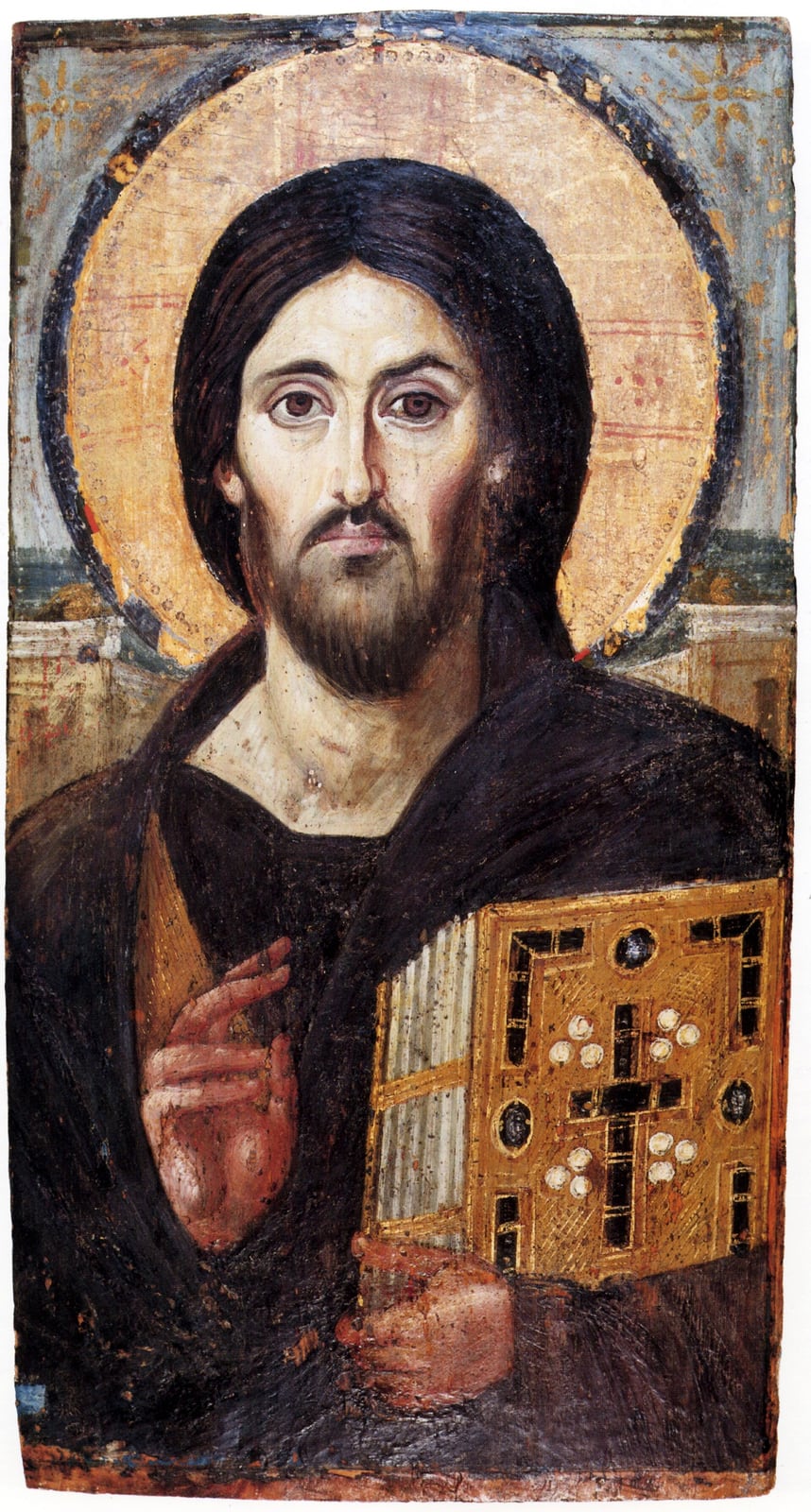
Jesus of Nazareth
Widerspruch bei: Ist die Welt wirklich? · Wer bin ich? Gibt es ein wahres Selbst?

Francis of Assisi
Widerspruch bei: Wer bin ich? Gibt es ein wahres Selbst? · Ist die Welt wirklich?
Anekdoten und Erzählungen
Anekdoten und Erzählungen
Hagiographische Erzählungtiempo legendario
The reproach from the womb
Herkunft der Erzählung: Mahābhārata 3.132 (critical edition), narrated by the sage Lomaśa to Yudhiṣṭhira; English translation by Ganguli (1884), pp. 396–397. H. H. Wilson summarises it in a note to his translation of the Viṣṇu Purāṇa (1840).
Hagiographische Erzählungtiempo legendario
The boy before Janaka's gatekeeper
Herkunft der Erzählung: Mahābhārata 3.133; Ganguli's translation (1884), pp. 398–399. The maxim on grey hair has parallels in normative Sanskrit literature.
Hagiographische Erzählungtiempo legendario
The contest of numbers
Herkunft der Erzählung: Mahābhārata 3.134; Ganguli's translation (1884), pp. 402–407, with notes interpreting each number as the thesis of a philosophical school.
Hagiographische Erzählungtiempo legendario
The bath in the Samaṅgā
Herkunft der Erzählung: Mahābhārata 3.134, end of the episode; Ganguli's translation (1884), p. 407. It is an aetiology of a sacred site (tīrtha) within the book of pilgrimages.
Hagiographische Erzählungtiempo legendario
The trial of the North
Herkunft der Erzählung: Mahābhārata, Anuśāsanaparvan, sections XIX–XXI of Ganguli's translation.
Hagiographische Erzählungtiempo legendario
The apsarases who laughed
Herkunft der Erzählung: Viṣṇu Purāṇa 5.38; H. H. Wilson's translation (1840), pp. 617–618. It is a Purāṇic story that does not appear in the Mahābhārata.
Nicht überprüfbartiempo legendario (circulación moderna)
The king with one foot in the stirrup
Herkunft der Erzählung: It has not been located in the Mahābhārata, in the Purāṇas consulted or in the Aṣṭāvakra Gītā. It circulates in oral versions and in modern devotional literature, with variants; Ramana Maharshi refers to "the story of Aṣṭāvakra and Janaka" and to its differences between books in talk 350 (6 February 1937), without citing a source.
Lehren
Lehren
Die Begriffe, die das Denken gliedern, in ihrem Zusammenhang erklärt.
The witness (sākṣin)sakshin
The notion of sākṣin, the unchanging witness, is common to Advaita Vedānta and has precedents in Sāṃkhya (puruṣa as spectator) and in the Upaniṣads.
Bondage and liberation as convictionbandha-moksha
It corresponds to the Advaita doctrine of superimposition (adhyāsa) and of liberation through knowledge, not through action.
Practice as bondagesamadhi-como-atadura
It contrasts with Patañjali's yoga, which defines yoga as the stilling of the movements of the mind and organises it into eight limbs.
Liberation while living (jīvanmukti)jivanmukti
Jīvanmukti is a classic theme of post-Śaṅkara Advaita (Vidyāraṇya's Jīvanmuktiviveka) and of texts such as the Yogavāsiṣṭha.
The contest of sages at Janaka's courtvada-certamen
The Bṛhadāraṇyaka Upaniṣad (book 3) presents another famous contest at Janaka's court, that of Yājñavalkya.
Videos
Videos
Aufnahmen, Gespräche und Dokumentarfilme. Die Videos werden von YouTube wiedergegeben; sie werden nicht hier gespeichert.
Selected Verses of the Ashtavakra Gita (Part 1) | Swami Sarvapriyananda
Vortrag· EN· 2019· 88 min
Vedanta Society of New YorkOffizieller Kanal
Ashtavakra Samhita by Swami Sarvapriyananda
Vortrag· EN· 2017· 74 min
Vedanta Society of Southern CaliforniaOffizieller Kanal
Ashtavakra Gita - The Enlightened Life | Swami Sarvapriyananda
Vortrag· EN· 2022· 99 min
Vedanta Society of New YorkOffizieller Kanal
Why Astavakra Gita Stands Apart in Spiritual Wisdom | Swami Sarvapriyananda
Vortrag· EN· 2025· 33 min
Ramakrishna Math & Ramakrishna Mission MangaluruOffizieller Kanal
Concluding Talk on Ashtavakra Gita at Sri Ramanasramam
Vortrag· EN· 2024· 27 min
Swami ShantanandaOffizieller Kanal
Introduction to Ashtavakra Gita — Non-dual Teachings for Vedantic Contemplation
Vortrag· EN· 2026· 9 min
ArshaBodha - Swami TadatmanandaOffizieller Kanal
Upanishad Ganga Episode 4 | Ashtavakra's Wisdom!
Dokumentarfilm· HI· 2022· 23 min
ChinmayaChannelOffizieller Kanal
The GREATEST Spiritual STORY Ever Told | Ashtavakra Gita | Gurudev
Vortrag· EN· 2022· 15 min
Gurudev Sri Sri Ravi ShankarOffizieller Kanal
A Story of Ashtavakra and Janaka Maharaj's Relationship | Sadhguru
Aufnahme Dritter· EN· 2017· 13 min
SadhguruOffizieller Kanal
అరణ్యపర్వం 32 • అష్టావక్రుని వృత్తాంతం • Chaganti • Mahabharatham
Vortrag· TE· 2023· 23 min
Sanatana Bharathi
Ashtavakra Gîta - Chapitres 1 à 6 [Advaita Vedanta]
Aufnahme Dritter· FR· 2021· 32 min
Le Vieux Sage
Manik "Ashtavakra Gita 1. Kapitel - Teil 1/8 - Wie kann Erkenntnis entstehen" Satsang-Auszug
Vortrag· DE· 2025· 33 min
Manik Satsang
Day 1 Ashtavakara Gita Ch 1 Verse 1 & 2
Vortrag· ES· 2020· 45 min
Shivender Nagar Gita Vedanta
Galerie
Galerie
Bilder mit geprüfter Lizenz. Jedes bewahrt seine Urheberschaft und seinen Herkunftsnachweis.
Beziehungen
Beziehungen
Einflüsse, Schülerschaften und Verwandtschaften. Die belegte Beziehung wird von der durch Analyse ermittelten Ähnlichkeit unterschieden.
Familie von
According to the Mahābhārata (3.132), Aṣṭāvakra is the son of Sujātā, Uddālaka's daughter, and of Kahoḍa, Uddālaka's disciple; he grows up believing his grandfather to be his father.
Belegte Beziehung
Beeinflusste
Ramana commented on the story of Aṣṭāvakra and Janaka (Talks, talk 350, 1937) and copied by hand the Sanskrit text of the Aṣṭāvakra Gītā, published in facsimile by Sri Ramanasramam.
Belegte Beziehung
Beeinflusste
Vivekananda quotes Aṣṭāvakra Saṃhitā 1.11 ("he who considers himself free is free") in the conversations recorded by Sharat Chandra Chakravarty.
Belegte Beziehung
Beeinflusste
Osho devoted an extensive series of Hindi discourses to the Aṣṭāvakra Gītā, published as Ashtavakra Mahageeta.
Belegte Beziehung
Verwandte Gedanken mit
In tradition both are protagonists of contests of knowledge at the court of Janaka of Videha (Yājñavalkya's in the Bṛhadāraṇyaka Upaniṣad, book 3).
Durch Analyse ermittelte Ähnlichkeit
Verwandte Gedanken mit
The Aṣṭāvakra Gītā sets out a radical Advaita; Brockington ascribes it to a follower of Śaṅkara (eighth or fourteenth century).
Durch Analyse ermittelte Ähnlichkeit
Verwandte Gedanken mit
Some commentators (Swami Shantananda Puri) see in the poem a seed of the doctrine of non-origination (ajātivāda) that Gauḍapāda develops in the Māṇḍūkya Kārikā.
Durch Analyse ermittelte Ähnlichkeit
Verwandte Gedanken mit
The Aṣṭāvakra Gītā and the Yogavāsiṣṭha share the ideal of the one liberated while living; Ramana Maharshi engaged with both (he copied the Gītā's Sanskrit by hand, and a selection of the Yogavāsiṣṭha was published at his ashram).
Durch Analyse ermittelte Ähnlichkeit
Verwandte Gedanken mit
The Aṣṭāvakra Gītā and the Avadhūta Gītā, ascribed to Dattātreya, are often published together (Alexandra David-Néel translated them in a single volume) because of their uncompromising non-dualism.
Durch Analyse ermittelte Ähnlichkeit
Verwandte Gedanken mit
The insistence on the self as witness and on the futility of gradual seeking brings his teaching close to that of the poem.
Durch Analyse ermittelte Ähnlichkeit
Von anderen Einträgen aus verknüpft
Quellen
Quellen
Für diesen Eintrag herangezogene Bibliografie und Kataloge.
- Mahābhārata, Āraṇyakaparvan 3.132–134 (ed. crítica de Poona: V. S. Sukthankar et al., Bhandarkar Oriental Research Institute, 1942). Traducción inglesa: Kisari Mohan Ganguli (trad.), The Mahabharata of Krishna-Dwaipayana Vyasa, vol. «Vana Parva», Calcuta, Bharata Press (Pratap Chandra Roy), 1884, secciones CXXXII–CXXXIV (Tirtha-yatra Parva), pp. 396–407.
- Mahābhārata, Anuśāsanaparvan, secciones XIX–XXI de la traducción de Kisari Mohan Ganguli (The Mahabharata of Krishna-Dwaipayana Vyasa, vol. «Anusasana Parva», Calcuta, Pratap Chandra Roy, 1883–1896): diálogo de Aṣṭāvakra con la dama Diś.
- Wilson, Horace Hayman (trad.). The Vishnu Purana: A System of Hindu Mythology and Tradition. Londres: Oriental Translation Fund / John Murray, 1840, libro V, cap. XXXVIII, pp. 617–618.
- Byrom, Thomas (trad.). The Heart of Awareness: A Translation of the Ashtavakra Gita. Prólogo de J. L. Brockington. Boston y Londres: Shambhala, 1990. ISBN 9780877735748.
- Hauschild, Richard (ed. y trad.). Die Aṣṭāvakra-Gītā. Berlín: Akademie-Verlag, 1967 (reimpresión De Gruyter, ISBN 9783112742679).
- Mukerjee, Radhakamal. Aṣṭāvakragītā (The Song of the Self Supreme). Delhi: Motilal Banarsidass, 1971 (póstumo). Datación citada según la entrada «Ashtavakra Gita» de la Wikipedia en inglés (consultada el 26-10-2026); no se ha visto el libro.
- Baij Nath, Rai Bahadur Lala (trad.). The Ashtavakra Gita: A Treatise on Adwaita Philosophy, translated into English with brief notes and introduction. Meerut: oficina del Vaishya Hitkari (impreso en Allahabad, Liddell's Printing Works), 1904.
- Nityaswarupananda, Swami (trad.). Aṣṭāvakra Saṃhitā. Mayavati: Advaita Ashrama, 1940. Edición facsímil con el texto sánscrito copiado a mano por Ramana Maharshi: Tiruvannamalai, Sri Ramanasramam, 2001 (ficha del distribuidor Society of Abidance in Truth).
- Venkataramiah, Munagala (comp.). Talks with Sri Ramana Maharshi. Tiruvannamalai: Sri Ramanasramam, 1955; charlas 104 y 350 (6 de febrero de 1937).
- Vivekananda, Swami. The Complete Works of Swami Vivekananda, vol. 7, «Conversations and Dialogues», V (notas de Sharat Chandra Chakravarty). Mayavati: Advaita Ashrama. Cita de la Aṣṭāvakra Saṃhitā 1.11.
- Wikidata: «Ashtavakra» (Q2722992, sabio védico) y «Ashtavakra Gita» (Q780145).
- Osho. Ashtavakra Mahageeta, bhāg 1 (discursos en hindi). Nueva Delhi: Diamond Books, 2021. ISBN 9788189605773 (serie en varios volúmenes).
- Vālmīki, Rāmāyaṇa, Yuddhakāṇḍa 6.119.17 (numeración de la vulgata), texto y traducción inglesa de Desiraju Hanumanta Rao y K. M. K. Murthy, Valmiki Ramayan.
- अष्टावक्रगीता (Aṣṭāvakragītā), texto sánscrito completo en veinte capítulos, Wikisource en sánscrito.
- Pagani, Silvio (versión en verso). Asht'avakragìtà o il canto di Asht'àvakra. Poemetto filosofico indiano. Milán: Sonzogno (Biblioteca Universale), 1912. Prefacio sobre la traducción en prosa de Carlo Giussani (Rivista Orientale, 1867–1868).
- Rechteinhaber
- Texto sánscrito anónimo en dominio público. Las traducciones modernas tienen derechos propios: Shambhala (Byrom), Advaita Ashrama (Nityaswarupananda), Shanti Sadan (Shastri), José J. de Olañeta, Luis Cárcamo, Éditions du Rocher (David-Néel), Éditions de l'Éclat (Porte), De Gruyter (Hauschild), Diamond Books (Osho). La versión de John Richards fue cedida por su autor al dominio público (1994); las de Baij Nath (1904) y Pagani (1912) son de dominio público.
Bestätigung ausstehend
Was dieser Eintrag noch nicht klären konnte. Wir sagen es lieber, als es aufzufüllen.
- Fechas: no existen fechas de nacimiento ni muerte; la línea de tiempo usa la recepción de los textos.
- Comprobar en el libro de Radhakamal Mukerjee (1971) la datación que le atribuye la Wikipedia (siglos V–IV a. C.); no se ha visto el volumen.
- Comprobar en la edición de Hauschild (1967) su propuesta de datación, los manuscritos utilizados y la serie exacta (Abhandlungen de la Academia Sajona de Ciencias); registrar después los manuscritos en manuscripts[].
- Traducción de Janaki Nath Mukerjee: no se ha localizado en ningún catálogo (Open Library, Internet Archive, búsqueda general). No se registra.
- Comprobar en el catálogo del British Museum (objeto 1880,0.2073) el título y la identificación de la figura de la acuarela; la identificación como Aṣṭāvakra procede de la ficha de Commons.
- Confirmar el año de publicación del fascículo del Anuśāsana Parva de Ganguli y la numeración de la edición crítica (13.19–21) del diálogo con Diś.
- Edición de Sri Ramanasramam con la caligrafía de Ramana (2001): confirmar el ISBN (el distribuidor da 8188018570).
- Osho: no se ha encontrado un canal oficial (OSHO International) con los discursos de la Ashtavakra Mahageeta; las subidas encontradas son de terceros y no se registran.
- Sala de lectura: la traducción de Baij Nath y la versión de Pagani tienen OCR deficiente; buscar transcripciones limpias. No se ha encontrado ningún texto español en dominio público.
- Vídeo ivZ9kPLxMqA: confirmar que la clase es en español.
- Project Gutenberg no tiene ninguna edición de estas obras (búsqueda en gutenberg.org el 2026-10-26: «No records found»).
Recherchiert am 2026-10-26