Christentum · Christliche Mystik · Katholizismus
John of the Cross
1542 – 1591Historisch belegte Person
Kastilischer Karmelit (1542–1591), mit Teresa von Ávila Mitbegründer der Unbeschuhten Karmeliten und einer der größten Dichter spanischer Sprache. Als Sohn einer verwitweten Weberin lernte er die Armut kennen, dann den Kerker seines eigenen Ordens in Toledo und am Ende seines Lebens die Ächtung. Seine Gedichte — Geistlicher Gesang, Dunkle Nacht, Lebendige Liebesflamme — und die Prosatraktate, die sie auslegen, beschreiben den Weg der Seele zur Einung mit Gott durch das „Nichts“ und durch die Nacht. Er wurde 1726 heiliggesprochen und 1926 zum Kirchenlehrer erhoben.
- Werke
- 29Werke
- Ausgaben
- 125Ausgaben
- Zitate
- 9Zitate
- Videos
- 14Videos
- Bilder
- 5Bilder
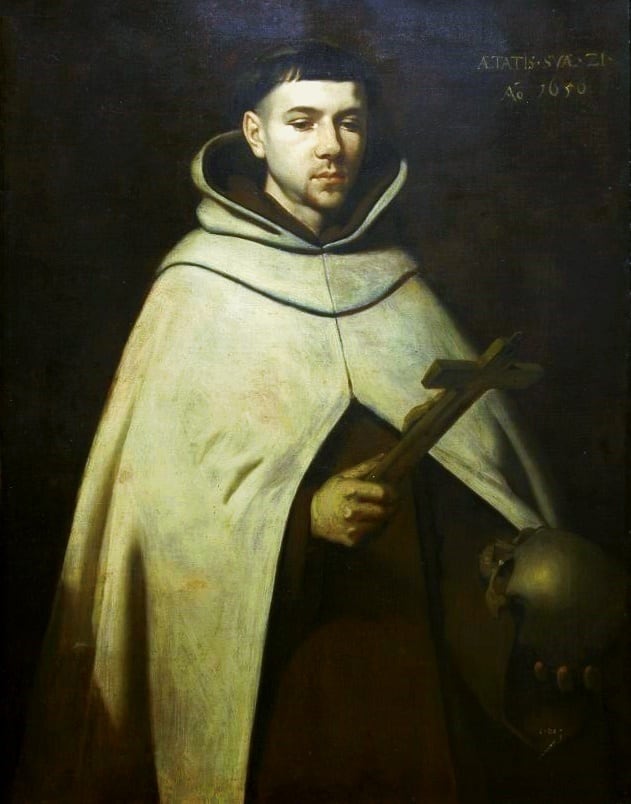
Retrato de san Juan de la Cruz (atribuido a Zurbarán) · Public domain
In eigenen Worten
«One dark night, fired with love's urgent longings, ah, the sheer grace!, I went out unseen, my house being now all stilled.»Noche oscura, estrofa 1

Der zentrale Gedanke
The dark night: The 'night' is John's name for the whole process of purification by which the soul passes from attachment to creatures to union with God.
Im Zusammenhang sehen
Biografie
5 Min. Lesezeit
Unterstützte Übersetzung aus dem spanischen Original, Durchsicht durch einen muttersprachlichen Übersetzer ausstehend.
Ein armes Kind aus Kastilien
Juan de Yepes Álvarez wurde 1542 in Fontiveros geboren, einem Weberstädtchen in der Moraña bei Ávila; das Datum des 24. Juni ist überliefert, nicht belegt. Sein Vater Gonzalo de Yepes stammte aus einer wohlhabenden Familie in Toledo, die ihn enterbte, weil er Catalina Álvarez, eine arme Weberin, geheiratet hatte. Gonzalo starb um 1545, und die Witwe bat mit drei Söhnen vergeblich die reichen Verwandten in Toledo und Torrijos um Hilfe. Der zweite Sohn, Luis, starb an Hunger oder Krankheit. Die Familie zog nach Arévalo und um 1551 nach Medina del Campo, der großen Messestadt Kastiliens.
In Medina besuchte Juan das Colegio de la Doctrina, ein Heim für arme Kinder, in dem man lesen und ein Handwerk lernte; ohne Erfolg versuchte er sich als Zimmermann, Schneider, Holzschnitzer und Maler. Danach arbeitete er als Krankenpfleger im Hospital de la Concepción, das Syphiliskranke aufnahm; dessen Verwalter erlaubte ihm, von 1559 bis 1563 bei den Jesuiten die humanistischen Fächer zu studieren. Dort erwarb er das Latein und die rhetorische Bildung, die man in seiner Prosa ahnt.
Ordensmann und Reformer
1563 nahm er im Karmel von Medina als Fray Juan de Santo Matía das Ordenskleid und studierte von 1564 bis 1568 an der Universität Salamanca die Artes und Theologie; er wohnte im Karmelitenkolleg San Andrés. 1567 zum Priester geweiht, erwog er, zu den Kartäusern überzutreten, als ihn im Herbst desselben Jahres Teresa von Jesus, die gerade in Medina eine Gründung vornahm, dafür gewann, mit ihr die Reform der Brüder zu beginnen. Teresa beschrieb ihn in einem Brief als klein von Gestalt, aber „groß in den Augen Gottes“.
Am 28. November 1568 eröffnete er zusammen mit Antonio de Heredia in einem Bauernhaus in Duruelo das erste Kloster der Unbeschuhten Karmeliten und nahm den Namen Johannes vom Kreuz an. Er war Novizenmeister in Mancera und Pastrana, Rektor des Kollegs von Alcalá und ab 1572 Beichtvater des Menschwerdungsklosters (Encarnación) in Ávila, dessen Priorin Teresa war. Dort zeichnete er, der Überlieferung nach nach einer Vision, den kleinen, von oben gesehenen Gekreuzigten, der 1951 Dalí inspirieren sollte.
Der Kerker von Toledo
Die Reform entzweite Unbeschuhte und Beschuhte in einem Zuständigkeitsstreit zwischen dem Nuntius, dem Ordensgeneral und dem König. In der Nacht vom 2. auf den 3. Dezember 1577 nahmen die Beschuhten Juan in Ávila gefangen und brachten ihn in das Karmelitenkloster von Toledo. Fast neun Monate lebte er in einer engen Kammer beinahe ohne Licht, wurde im Refektorium öffentlich gegeißelt und gedrängt, die Reform aufzugeben. In dieser Zelle verfasste er aus dem Gedächtnis den größten Teil des Geistlichen Gesangs, die Romanze über den Johannesprolog und das Lied „Qué bien sé yo la fonte“ („Wie gut kenn ich den Quell“), die er später in ein Heft schrieb, das ihm ein neuer Kerkermeister verschafft hatte.
Mitte August 1578 floh er nachts, indem er sich an Streifen seiner Decken aus einem Fenster abseilte, und fand Zuflucht im Kloster der Unbeschuhten Karmelitinnen in Toledo, wo er die im Gefängnis entstandenen Verse vortrug. Die Zeugen der Seligsprechungsprozesse schmückten den Bericht mit Lichterscheinungen und wunderbarem Beistand der Jungfrau aus; die Flucht selbst und ihre äußeren Umstände sind gut bezeugt.
Andalusien und die großen Traktate
Die folgenden Jahre verbrachte er in Andalusien: als Prior von El Calvario in der Sierra von Jaén, Beichtvater der Unbeschuhten Karmelitinnen von Beas, Rektor des Kollegs von Baeza und ab 1582 Prior von Los Mártires in Granada. Um die Fragen von Brüdern und Schwestern zu beantworten, begann er, seine Gedichte in Prosa auszulegen: So entstanden der Aufstieg zum Berg Karmel und die Dunkle Nacht, beide unvollendet, die Erklärung des Geistlichen Gesangs, 1584 für Ana de Jesús abgeschlossen, und die Lebendige Liebesflamme, geschrieben für die Witwe Ana de Peñalosa. Später überarbeitete er den Gesang und die Flamme; die Echtheit dieser zweiten Fassungen war im 20. Jahrhundert umstritten, bis die Forschung sie mehrheitlich anerkannte.
Neben den großen Traktaten schrieb er kurze Stücke für die geistliche Begleitung: die Worte von Licht und Liebe, Sinnsprüche, die er auf losen Zetteln verteilte und von denen ein Autograph in Andújar erhalten ist; die Vorsichtsregeln und die Ratschläge an einen Ordensmann; ein Gutachten über den Geist einer Nonne und einige Dutzend Briefe, viele an die Unbeschuhten Karmelitinnen von Beas, Granada und Segovia. Für die Nonnen von Beas zeichnete er auch das „Bergchen der Vollkommenheit“, ein Schema des Berges Karmel, dessen mittlerer Pfad „nichts, nichts, nichts“ sagt und auf dessen Gipfel zu lesen ist, dass „hier kein Weg mehr ist“. Ein guter Teil seiner Korrespondenz ging verloren oder wurde in den Jahren der Verfolgung von 1591 vernichtet.
Seine Lehre lässt sich in einem Paradox zusammenfassen: Um dahin zu gelangen, alles zu besitzen, muss man nichts besitzen wollen. Die Seele durchschreitet eine aktive und passive „Nacht“ der Sinne und des Geistes, in der Glaube, Hoffnung und Liebe Verstand, Gedächtnis und Willen von jeder Stütze leeren, die nicht Gott ist, bis zur umwandelnden Einung, die er mit einem vom Feuer durchdrungenen Holzscheit vergleicht.
Als Dichter verband Johannes die italianisierende Lira Garcilasos, die „a lo divino“ gewendete volkstümliche Lyrik und das Hohelied zu einer Sprache von beispielloser Dichte. Dámaso Alonso hat diese Synthese untersucht, und Luce López-Baralt hat auf Parallelen zur Sufi-Mystik hingewiesen, die weiterhin diskutiert werden.
Die letzten Jahre
Er war Provinzialvikar von Andalusien und 1588 Prior von Segovia sowie Ratsmitglied in der Ordensleitung unter Nicolás Doria, mit dem er über die Behandlung Jerónimo Graciáns und der Nonnen in Konflikt geriet. Auf dem Kapitel von Madrid im Juni 1591 verlor er alle Ämter; nach La Peñuela versetzt, erkrankte er an Fieber und Geschwüren an einem Bein und wurde nach Úbeda gebracht, wo ihn der Prior kühl empfing, während ein Visitator Aussagen gegen ihn sammelte. Er starb um Mitternacht vom 13. auf den 14. Dezember 1591.
Sein Leichnam wurde 1593 heimlich nach Segovia überführt. Seine Prosawerke erschienen 1618 in Alcalá im Druck, ohne den Geistlichen Gesang, der 1622 in französischer Übersetzung und 1627 in Brüssel auf Spanisch herauskam. Er wurde 1675 seliggesprochen, 1726 heiliggesprochen und 1926 von Pius XI. zum Kirchenlehrer erhoben; 1952 wurde er zum Patron der spanischen Dichter erklärt.
Im 20. Jahrhundert wanderte sein Werk von der Spiritualität in Literatur und Philosophie: Jean Baruzi untersuchte es als Problem der mystischen Erfahrung, Edith Stein widmete ihm ihre Kreuzeswissenschaft, T. S. Eliot paraphrasierte den Aufstieg in „East Coker“, und Dichter wie Jorge Guillén oder Claudio Rodríguez betrachteten ihn als ihren Meister.
Quellen: San Juan de la Cruz. Obras completas. Ed. José Vicente Rodríguez; introducciones y notas doctrinales de Federico Ruiz Salvador. Madrid: Editorial de Espiritualidad, 1980 (ed. revisada 2008, ISBN 9788470683459). · Ruiz Salvador, Federico (dir.). Dios habla en la noche: vida, palabra, ambiente de San Juan de la Cruz. Madrid: Editorial de Espiritualidad, 1990. · Crisógono de Jesús Sacramentado, O.C.D. Vida de San Juan de la Cruz. Madrid: BAC, 1946; ed. revisada por Matías del Niño Jesús en San Juan de la Cruz, Vida y obras (BAC 15), 1964. · John of the Cross. The Collected Works of St. John of the Cross. Trad. Kieran Kavanaugh y Otilio Rodriguez. Ed. revisada. Washington, D.C.: ICS Publications, 1991 (ISBN 9780935216936). · Alonso, Dámaso. La poesía de San Juan de la Cruz (desde esta ladera). Madrid: CSIC, 1942.
Zeitleiste
Das Leben, Jahr für Jahr
Jeder Punkt ist ein belegtes Ereignis. Klicken Sie, um es mit Quelle und Grad der Gewissheit zu lesen.
15420 JahreFontiveros (Ávila)
Birth
Juan de Yepes Álvarez is born to Gonzalo de Yepes and the weaver Catalina Álvarez. The date of 24 June is traditional.
BelegtCrisógono de Jesús Sacramentado, O.C.D. Vida de San Juan de la Cruz. Madrid: BAC, 1946; ed. revisada por Matías del Niño Jesús en San Juan de la Cruz, Vida y obras (BAC 15), 1964.
Nach dem Tod
- 1618First edition of his works
- 27. Dezember 1726Canonisation
- 24. August 1926Doctor of the Church
- 1952Patron of Spanish poets
1542 · 0 Jahre
Birth
Juan de Yepes Álvarez is born to Gonzalo de Yepes and the weaver Catalina Álvarez. The date of 24 June is traditional.
Belegt
um 1545 · 3 Jahre
Death of his father
Gonzalo de Yepes dies; the family's destitution begins.
Wahrscheinlich
um 1551 · 9 Jahre
Move to Medina del Campo
After a stay in Arévalo, the family settles in Medina; Juan enters the Colegio de la Doctrina.
Wahrscheinlich
1559 · 17 Jahre
Studies with the Jesuits
A nurse at the hospital of the Conception, he studies humanities at the Jesuit college (1559–1563).
Belegt
1563 · 21 Jahre
Takes the Carmelite habit
He enters the Carmel of Medina as Fray Juan de Santo Matía.
Belegt
1564 · 22 Jahre
Studies at Salamanca
He studies arts and theology at the University of Salamanca (1564–1568).
Belegt
1567 · 25 Jahre
Meeting with Teresa of Jesus
Newly ordained, he is won over by Teresa to the reform of the friars.
Belegt
28. November 1568 · 26 Jahre
First Discalced friary
With Antonio de Heredia he inaugurates the friary at Duruelo and takes the name John of the Cross.
Belegt
1572 · 30 Jahre
Confessor at the Incarnation
Confessor at the monastery of the Incarnation, where Teresa is prioress (1572–1577).
Belegt
2. Dezember 1577 · 35 Jahre
Imprisonment in Toledo
Seized by the Calced Carmelites on the night of 2–3 December and imprisoned in their Toledo convent; there he composes much of the Canticle.
Belegt
August 1578 · 36 Jahre
Escape
He escapes at night through a window and takes refuge with the Discalced nuns of Toledo.
Belegt
1579 · 37 Jahre
Rector of the college at Baeza
He founds and directs the Discalced college beside the University of Baeza (1579–1582).
Belegt
1582 · 40 Jahre
Prior of Los Mártires
Prior in Granada (1582–1588); he writes most of his treatises.
Belegt
1584 · 42 Jahre
Spiritual Canticle in prose
He completes the commentary on the Canticle dedicated to Ana de Jesús (first redaction).
Belegt
1588 · 46 Jahre
Prior of Segovia
Prior of Segovia and councillor of the Consulta governing the order under Nicolás Doria.
Belegt
Juni 1591 · 49 Jahre
Loss of office
The general chapter leaves him without office; he is sent to La Peñuela.
Belegt
14. Dezember 1591 · 49 Jahre
Death
He dies at midnight in the convent of San Miguel, Úbeda.
Belegt
1618
First edition of his works
The prose works are printed, without the Spiritual Canticle.
Belegt
27. Dezember 1726
Canonisation
Benedict XIII canonises him.
Belegt
24. August 1926
Doctor of the Church
Pius XI declares him a Doctor of the universal Church.
Belegt
1952
Patron of Spanish poets
He is proclaimed patron of Spanish-language poets.
Belegt
Werke
Grundlegende Werke
Die Werke, ohne die sich das Vermächtnis nicht verstehen lässt.
Schriftliches Werk · um 1585
The Ascent of Mount Carmel
Subida del Monte Carmelo
A commentary, soon abandoning the poem, on the 'Dark Night' as an active night: what the soul can do to empty the senses of appetites (book I) and the intellect, memory and will through faith, hope and charity (books II–III). It contains the verses 'to come to enjoy everything', the critique of visions and revelations and the claim that in Christ God has said everything.
9 Ausgaben · amazon.de

Schriftliches Werk · um 1585
The Dark Night
Noche oscura (declaración de las canciones)
A treatise on the passive night, what God does in the soul: the night of sense, with the signs for leaving discursive meditation and passing to contemplation, and the night of the spirit, a painful purification by infused contemplation, a 'ray of darkness'. Its description of dryness and abandonment has given it relevance beyond Christian spirituality.
9 Ausgaben · amazon.de

Schriftliches Werk · 1584
Spiritual Canticle (redaction A)
Declaración de las canciones que tratan del ejercicio de amor entre el alma y el Esposo Cristo (Cántico A)
A stanza-by-stanza commentary on the poem, reading the Bride's itinerary as the passage from the purgative to the illuminative and unitive ways, with long meditations on the beauty of creatures as the Beloved's trace. It is the most lyrical of his treatises.
4 Ausgaben · amazon.es

Schriftliches Werk · um 1586
The Living Flame of Love (commentary)
Declaración de las canciones que tratan de la muy íntima y calificada unión y transformación del alma en Dios (Llama de amor viva)
A commentary on the poem's four stanzas describing transforming union from within: the soul as a log already turned to fire, the action of the Holy Spirit, the 'lamps of fire' of the divine attributes and God's awakening in the soul. It includes a stern warning against bad spiritual directors.
6 Ausgaben · amazon.com
Das gesamte Werk (29)

Spiritual Canticle (poem)
1578
Dark Night (poem)
1579
Living Flame of Love (poem)
1585
Song of the Soul that Rejoices in Knowing God through Faith ('How well I know the fount')
1578
Romances on the Gospel 'In principio erat Verbum'
1578
Romance on the Psalm 'Super flumina Babylonis'
1578
Stanzas Concerning an Ecstasy Experienced in High Contemplation ('I entered into unknowing')
1580
Stanzas of the Soul that Suffers with Longing to See God ('I live, but not in myself')
1580
'Upon a quest of love' (stanzas a lo divino)
1580
'A lone young shepherd lived in pain'
1584
Gloss 'Without support and with support'
1580
Gloss 'Not for all of beauty'
1580
'With the divine Word' (Christmas song)
1585
Summary of Perfection ('Forgetfulness of creation')
1585
John of the Cross
'My soul is detached' (attributed stanzas)
The Conscious Library'My soul is detached' (attributed stanzas)
1600

Spiritual Canticle (redaction B)
1586

Sayings of Light and Love
1585

The Precautions
1580
Counsels to a Religious on How to Reach Perfection
1585
Censure and Opinion on the Spirit of a Nun
1588
The Mount of Perfection (drawing of Mount Carmel)
1579
Letters
1591
Points of Love Gathered at Beas
1580
John of the Cross
Spiritual Maxims and Sentences (later collections)
The Conscious LibrarySpiritual Maxims and Sentences (later collections)
1700
Zitate
Zitate, die in einem bestimmten Werk nachgewiesen sind. Jedes trägt seine Herkunft und seinen Grad an Verlässlichkeit.
One dark night, fired with love's urgent longings, ah, the sheer grace!, I went out unseen, my house being now all stilled.En una noche oscura, / con ansias, en amores inflamada, / ¡oh dichosa ventura!, / salí sin ser notada, / estando ya mi casa sosegada.
GeprüftNoche oscura, estrofa 1
Apokryphe Zitate oder Zitate umstrittener Zuschreibung (2)
«In the evening of life we shall be judged on love.»
A widespread modern paraphrase of the authentic saying 'In the evening you will be examined in love' (Sayings of Light and Love). It is not false in meaning, but it is not his wording.
«To reach a point you do not know, you must take a road you do not know.»
A free version of Ascent I,13,11 ('To come to what you know not, you must go by a way you know not'), circulating without reference and with its meaning shifted towards self-help.
Letzte Worte
Späterer Bericht von Zeugen
«Into your hands, Lord, I commend my spirit.»In manus tuas, Domine, commendo spiritum meum.
He died in Úbeda at midnight on 13–14 December 1591, surrounded by friars of the convent. According to the testimonies gathered at the beatification processes, shortly before he asked that the commendation of the soul not be read to him but the Song of Songs, remarking 'What precious pearls!'; on hearing the bell for matins he said he was going to say them in heaven, and he died uttering the words of Psalm 30 that Jesus repeated on the cross. The witnesses agree on the essentials and vary in the details.
Quelle: Procesos de beatificación y canonización de San Juan de la Cruz. Ed. Silverio de Santa Teresa, O.C.D. Biblioteca Mística Carmelitana, vol. 14. Burgos: El Monte Carmelo, 1931 (vol. 5 de las Obras).
Fragen
Was das Werk beantwortet
Zwölf große Fragen der Menschheit und was sich aus den Texten darauf antworten lässt, mit Belegen. Wir legen niemandem Worte in den Mund.
Was ist das Absolute? Gibt es Gott?
God is the Beloved who hides and gives himself in dark faith
Ein persönlicher GottAusdrücklich gesagt
For John of the Cross, God is the Beloved: someone who wounds, hides, calls and finally unites himself to the soul. The Spiritual Canticle opens with the question «Where have you hidden, Beloved?», and the Living Flame of Love describes the soul's transformation in the Holy Spirit, who works in it as a flame. The Trinity lies at the centre of union: in the commentary on the Flame, the soul shares in the life of the Father, the Son and the Spirit. At the same time, no concept or image reaches this God: the Ascent of Mount Carmel teaches that the only means proportionate to union with him is faith, which is dark to the intellect. The Absolute is thus personal and loving, but known in darkness, through love rather than representation.
Diese Frage mit anderen Meistern vergleichenWer bin ich? Gibt es ein wahres Selbst?
The soul is a creature that can become God by participation
Eine geschaffene, unsterbliche SeeleAusdrücklich gesagt
John of the Cross thinks of the self as a created soul, with its faculties —intellect, memory and will— and a «centre» that is God himself. The Ascent of Mount Carmel offers the decisive image: a clean window, struck by a ray of sunlight, looks like the ray itself without ceasing to be a window; so the soul, once purified, «seems more God than soul, and is even God by participation», though its natural being remains distinct from God's. The path requires emptying the faculties of every appetite and every possession, including that of spiritual experiences. The self is not dissolved: it is transformed by love without losing its creaturely condition.
Diese Frage mit anderen Meistern vergleichenWarum leiden wir?
The dark night hurts because it purifies for union
Die Trennung von GottAusdrücklich gesagt
John of the Cross distinguishes two kinds of suffering. The first comes from the appetites: in the Ascent of Mount Carmel he describes how they weary, torment, darken, defile and weaken the soul, because they bind it to what is not God. The second is that of the dark night, which God himself works: infused contemplation, entering a still impure soul, is darkness and torment to it, as excessive light blinds a diseased eye. That pain —feeling abandoned, dry, undone— is not punishment but purification. Suffering arises from the distance between the soul and God and is also the path by which that distance is cancelled.
Diese Frage mit anderen Meistern vergleichenWas geschieht nach dem Tod?
I die because I do not die: death is meeting the Beloved
Ewiges Leben und AuferstehungAusdrücklich gesagt
John of the Cross awaits eternal life as the consummation of the union of love. In the stanzas «I live without living in myself» the present life is exile and the soul dies because it does not die, longing to see God. The first stanza of the Living Flame of Love asks God to tear the veil of this sweet encounter, that is, the mortal life that separates the soul from vision; and its commentary states that the death of those who have reached this state, though natural, is far sweeter and gentler than their life, for they die in impulses and encounters of love. Death is not an end: it is the passage to seeing God face to face.
Diese Frage mit anderen Meistern vergleichenWie erlangt man Befreiung oder Erlösung?
The soul disposes itself in the night; God works the union
Durch Gnade und LiebeAusdrücklich gesagt
John of the Cross describes liberation as union with God through love, and distinguishes two movements. In the active night, treated in the Ascent of Mount Carmel, the soul does what it can: it denies its appetites, empties its faculties and walks by faith, hope and charity, with the watchword of desiring to taste nothing in order to come to taste everything. But the decisive purification is passive: the Dark Night shows that it is God who, through infused contemplation, purges what the soul cannot reach. In the Living Flame of Love he insists that the principal agent and guide is the Holy Spirit. Effort prepares; union is a gift.
Diese Frage mit anderen Meistern vergleichenBraucht es einen Lehrer?
A good director helps; the principal guide is the Holy Spirit
Hilfreich, aber nicht unverzichtbarAusdrücklich gesagt
John of the Cross attaches great importance to spiritual direction and, at the same time, criticises it harshly. In the Sayings of Light and Love he compares the soul that is alone and without a master, even if virtuous, to a burning coal left alone, which cools rather than kindles. But in the Living Flame of Love he devotes severe pages to spiritual masters who, not understanding the ways of contemplation, force the soul to go on meditating when God is already leading it by another path, and compares them to blacksmiths who only know how to hammer. He recalls that the principal agent and guide of souls is the Holy Spirit; the human director must serve him, not hinder him.
Diese Frage mit anderen Meistern vergleichenIst die Welt wirklich?
God passed through the groves and left them clothed in beauty
Eine gute und wirkliche SchöpfungAusdrücklich gesagt
John of the Cross holds at once the beauty of the world and its nothingness before God. In the Ascent of Mount Carmel, compared with God's infinite being, all creatures are nothing, and the soul that binds itself to them becomes like what it loves; hence one must pass through the night of sense. But the Spiritual Canticle sings of creatures as traces of the Beloved: pouring out a thousand graces, he passed through these groves in haste and, looking at them, left them clothed in beauty by his gaze alone. In consummated union, the soul knows creatures from God and finds them more beautiful. The world is good; what hinders is possession.
Diese Frage mit anderen Meistern vergleichenWas ist Liebe?
Living flame of love: the longing that wounds and unites
Sehnsucht und VereinigungAusdrücklich gesagt
John of the Cross is, in the Spanish language, the great poet of love as longing for union. In the Spiritual Canticle the soul is the wounded bride who goes out after the Beloved, seeks him over mountains and riverbanks and rests only in union; the Dark Night recounts the beloved's going forth, «inflamed with love», until she lies with her face reclined upon the Beloved. The Living Flame of Love describes consummated love as the fire of the Holy Spirit wounding tenderly in the soul's deepest centre. That love is also a criterion of life: in the evening, says one of his sayings, you will be examined on love. And in a letter he advises putting love where there is none in order to draw love out.
Diese Frage mit anderen Meistern vergleichenSind wir frei, oder ist alles vorherbestimmt?
Union is the conformity of two free wills
Echter freier WilleAus der Lehre abgeleitet
John of the Cross does not treat the problem of determinism, but his whole doctrine presupposes a free will. In the Ascent of Mount Carmel he defines the union he seeks not as substantial union but as union of likeness, which occurs when two wills, the soul's and God's, are conformed in one, with nothing in the one repugnant to the other. To reach it, the soul must freely deny its voluntary appetites: not the natural ones, which do not depend on it, but those it consents to. In the passive night, God works where the soul cannot reach, but the will goes on cooperating through its consent and its love.
Diese Frage mit anderen Meistern vergleichenWozu meditieren oder beten?
From meditation to loving attentiveness in God
Freundschaft mit GottAusdrücklich gesagt
John of the Cross distinguishes two moments of prayer. At the beginning, discursive meditation is fitting, using images and reasoning to fall in love with God. But a time comes when that meditation dries up, and the Ascent of Mount Carmel gives three signs to recognise it: one can no longer reason, one has no desire to fix the imagination on other things, and the soul delights in remaining alone with loving attentiveness to God, without particular considerations. Then reasoning must be set aside and one should remain in that loving, quiet and passive knowledge. Prayer culminates in a communication of love between the soul and the Beloved, which the Spiritual Canticle describes as the intimacy of spouses.
Diese Frage mit anderen Meistern vergleichenKann die Vernunft das Letzte erkennen?
Transcending all knowledge: God is reached by dark faith
Das Letzte liegt jenseits des VerstandesAusdrücklich gesagt
John of the Cross, trained at the University of Salamanca, does not despise theology, but denies that the intellect can reach God by its own powers. In the Ascent of Mount Carmel he maintains that nothing the imagination and intellect can conceive is a proximate means to union, because God falls under no distinct form or knowledge; the only proportionate means is faith, which is dark night for the soul. His stanzas «I entered where I did not know» sing it: whoever truly arrives there faints from himself, and remains unknowing, transcending all knowledge. Reason serves to discern and to avoid deception; union takes place beyond it.
Diese Frage mit anderen Meistern vergleichenSich von der Welt zurückziehen oder sie verwandeln?
Forgetting the created, remembering the Creator
Sich zurückziehen, um zu findenAusdrücklich gesagt
John of the Cross is the master of solitude and nakedness. His brief Summary of Perfection condenses it into four lines: forgetfulness of the created, remembrance of the Creator, attention to what is within, and remaining in love with the Beloved. The Precautions advise the religious to guard against the world, the devil and the flesh, and not to meddle in what is not his concern. The Spiritual Canticle sings of solitude: in solitude the dove lived, and in solitude her beloved guides her alone. Yet John did not live in a cave: he was a reformer, prior, confessor, tireless traveller and prisoner. The withdrawal he asks for is above all inward: detachment from everything, so that nothing takes God's place.
Diese Frage mit anderen Meistern vergleichen
Affinitäten und Spannungen
Affinitäten und Spannungen
Frage für Frage aus den Positionen berechnet. Den Grund jeder Übereinstimmung und jedes Widerspruchs zeigt ein Klick.
Denkt ähnlich wie

Rabia al-Adawiyya
Übereinstimmung bei: Was ist das Absolute? Gibt es Gott? · Warum leiden wir? · Was geschieht nach dem Tod?
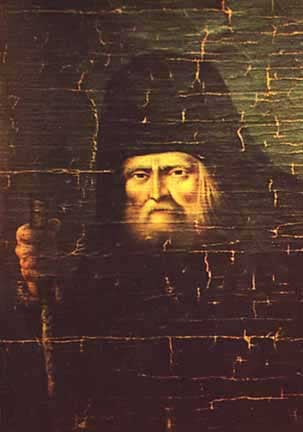
Seraphim of Sarov
Übereinstimmung bei: Was ist das Absolute? Gibt es Gott? · Wer bin ich? Gibt es ein wahres Selbst? · Warum leiden wir?
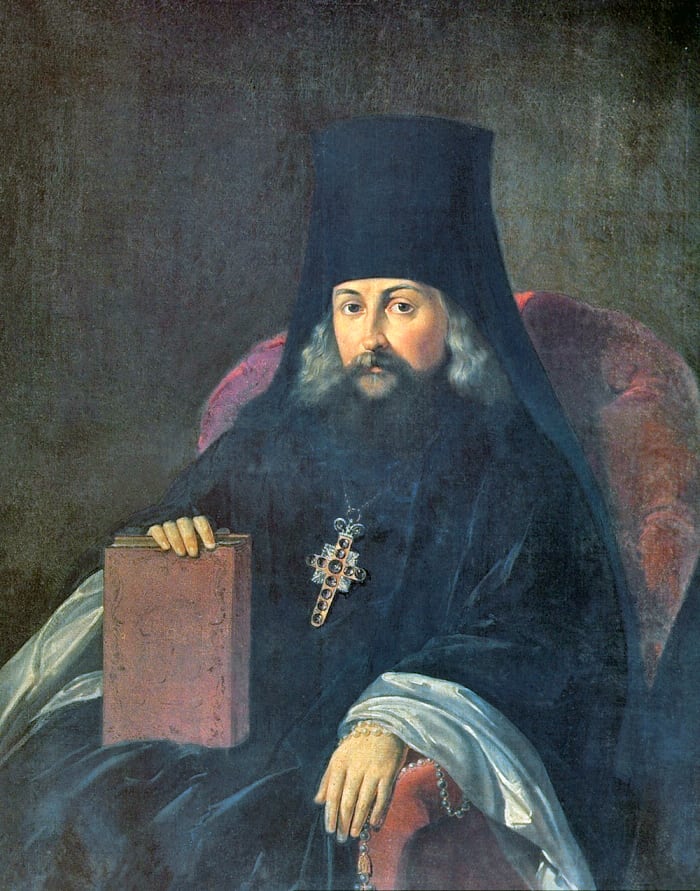
Ignatius Brianchaninov
Übereinstimmung bei: Was ist das Absolute? Gibt es Gott? · Wer bin ich? Gibt es ein wahres Selbst? · Warum leiden wir?
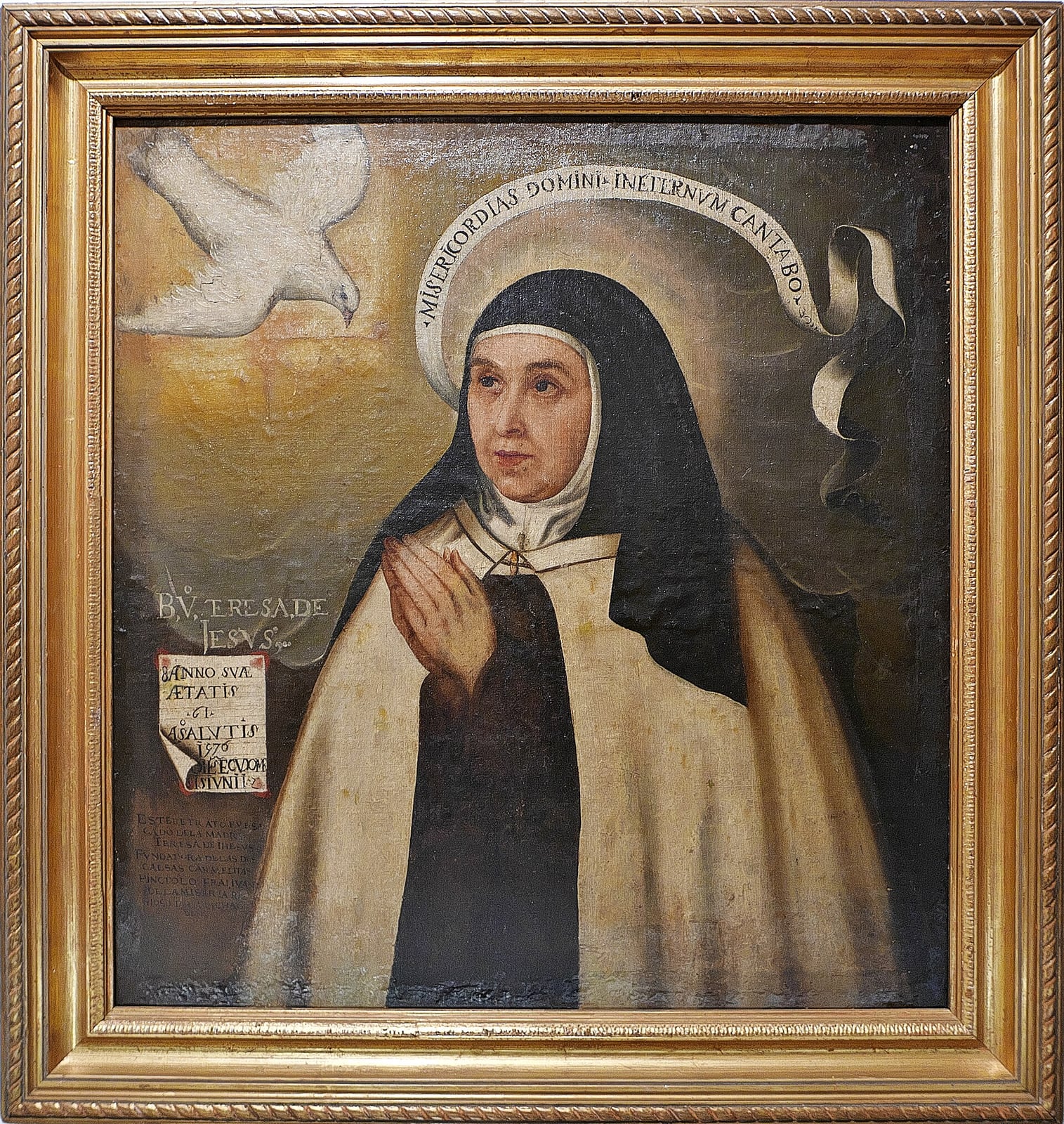
Teresa of Ávila
Übereinstimmung bei: Was ist das Absolute? Gibt es Gott? · Wer bin ich? Gibt es ein wahres Selbst? · Warum leiden wir?
Denkt anders als

Pema Chödrön
Widerspruch bei: Was ist das Absolute? Gibt es Gott? · Wer bin ich? Gibt es ein wahres Selbst? · Was geschieht nach dem Tod?

Nāgārjuna
Widerspruch bei: Was ist das Absolute? Gibt es Gott? · Wer bin ich? Gibt es ein wahres Selbst? · Was geschieht nach dem Tod?

Tsongkhapa
Widerspruch bei: Was ist das Absolute? Gibt es Gott? · Wer bin ich? Gibt es ein wahres Selbst? · Was geschieht nach dem Tod?
Śāntideva
Widerspruch bei: Was ist das Absolute? Gibt es Gott? · Wer bin ich? Gibt es ein wahres Selbst? · Was geschieht nach dem Tod?
Anekdoten und Erzählungen
Anekdoten und Erzählungen
Mündliche Überlieferung1567–1568
'A friar and a half'
Herkunft der Erzählung: Teresa of Jesus, Foundations 3 and 13–14 and letter to Francisco de Salcedo (September 1568). The phrase 'a friar and a half' comes from later Carmelite tradition.
Quelle: Teresa de Jesús. Libro de las fundaciones, caps. 3 y 13–14, y carta a Francisco de Salcedo (Valladolid, septiembre de 1568), en Obras completas, ed. Efrén de la Madre de Dios y Otger Steggink. Madrid: BAC, 1962.
Zeugnisagosto de 1578
The escape from Toledo
Herkunft der Erzählung: Statements at the beatification processes (BMC 14) and accounts by Inocencio de San Andrés and Magdalena del Espíritu Santo; critical synthesis in Crisógono de Jesús (1946).
Hagiographische Erzählungc. 1572–1577
The Christ drawn at the Incarnation
Herkunft der Erzählung: The drawing is kept in the monastery of the Incarnation in Ávila; the vision comes from testimony at the processes. The connection with Dalí is documented by the painter himself and by Father Bruno.
Quelle: Ruiz Salvador, Federico (dir.). Dios habla en la noche: vida, palabra, ambiente de San Juan de la Cruz. Madrid: Editorial de Espiritualidad, 1990.
Zeugnisc. 1589
'To suffer and be despised for you'
Herkunft der Erzählung: Statement by Francisco de Yepes at the beatification processes (BMC 14). It is second-hand testimony of an inner experience.
Zeugnisseptiembre–diciembre de 1591
The last days in Úbeda
Herkunft der Erzählung: Beatification processes (BMC 14); Crisógono de Jesús (1946).
Lehren
Lehren
Die Begriffe, die das Denken gliedern, in ihrem Zusammenhang erklärt.
The dark nightnoche-oscura
Scholastic mystical theology and the Dionysian tradition of divine darkness.
Quelle: San Juan de la Cruz. Obras completas. Ed. José Vicente Rodríguez; introducciones y notas doctrinales de Federico Ruiz Salvador. Madrid: Editorial de Espiritualidad, 1980 (ed. revisada 2008, ISBN 9788470683459).
All and nothingnada
Christian ascetic renunciation and negative theology; a possible echo of Rhineland mysticism through Tauler.
Quelle: San Juan de la Cruz. Obras completas. Ed. José Vicente Rodríguez; introducciones y notas doctrinales de Federico Ruiz Salvador. Madrid: Editorial de Espiritualidad, 1980 (ed. revisada 2008, ISBN 9788470683459).
Transforming unionunion-de-amor
Nuptial mysticism (Bernard of Clairvaux), Trinitarian theology and the Thomist doctrine of grace as participation.
Quelle: San Juan de la Cruz. Obras completas. Ed. José Vicente Rodríguez; introducciones y notas doctrinales de Federico Ruiz Salvador. Madrid: Editorial de Espiritualidad, 1980 (ed. revisada 2008, ISBN 9788470683459).
Infused contemplation and the three signscontemplacion-infusa
Sixteenth-century debate on mental prayer and Illuminism; the tradition of medieval mystical theology.
Quelle: San Juan de la Cruz. Obras completas. Ed. José Vicente Rodríguez; introducciones y notas doctrinales de Federico Ruiz Salvador. Madrid: Editorial de Espiritualidad, 1980 (ed. revisada 2008, ISBN 9788470683459).
The theological virtues as night of the facultiesfe-esperanza-caridad
The Augustinian psychology of the three faculties and Salamancan scholastic theology.
Quelle: San Juan de la Cruz. Obras completas. Ed. José Vicente Rodríguez; introducciones y notas doctrinales de Federico Ruiz Salvador. Madrid: Editorial de Espiritualidad, 1980 (ed. revisada 2008, ISBN 9788470683459).
Videos
Videos
Aufnahmen, Gespräche und Dokumentarfilme. Die Videos werden von YouTube wiedergegeben; sie werden nicht hier gespeichert.
Paisaje con figuras: Juan de la Cruz
Dokumentarfilm· ES· 1984· 44 min
RTVE ArchivoOffizieller Kanal
«Y véante mis ojos». El cielo de San Juan de la Cruz. Aula Pedro Fabro
Vortrag· ES· 2024· 52 min
Universidad Pontificia ComillasOffizieller Kanal
Isabel Ordaz, «La poesía de San Juan de la Cruz. El nombre que multiplica los nombres»
Vortrag· ES· 2026· 49 min
Carmelitas Descalzos ÚbedaOffizieller Kanal
Silvia Bara Bancel: «San Juan de la Cruz, lector del Maestro Eckhart»
Vortrag· ES· 2026· 109 min
Centro de Estudios de HermenéuticaOffizieller Kanal
Poesía «Noche oscura» de San Juan de la Cruz
Originalaufnahme· ES· 2015· 2 min
Carmelitas DescalzosOffizieller Kanal
Adónde te escondiste
Aufnahme Dritter· ES· 2016· 3 min
Amancio PradaOffizieller Kanal
José María Rodero lee a San Juan de la Cruz
Aufnahme Dritter· ES· 2014· 5 min
SCM1974spain
John of the Cross: A Mystic's Poetry with Keith Egan
Vortrag· EN· 2014· 70 min
Lumen Christi InstituteOffizieller Kanal
Carmelite Authors 101: St. John of the Cross
Vortrag· EN· 2018· 68 min
Boston College Clough School of Theology and MinistryOffizieller Kanal
The Dark Night of the Soul
Analyse· EN· 2021· 41 min
Bishop Robert BarronOffizieller Kanal
Gottes Gegenwart erfahren: Die Mystik des Johannes vom Kreuz
Vortrag· DE· 2023· 55 min
CTS Hochschule MünsterOffizieller Kanal
Licht – geboren aus der Nacht. Die „Dunkle Nacht“ des Johannes vom Kreuz – Sr. Veronika E. Schmitt
Vortrag· DE· 2025· 58 min
CTS Hochschule MünsterOffizieller Kanal
Iain Matthew ocd – Giovanni della Croce per i giovani?
Vortrag· IT· 2018· 51 min
Pontificia Facoltà Teologica Teresianum – RomaOffizieller Kanal
La Chiesa ricorda San Giovanni della Croce
Dokumentarfilm· IT· 2018· 14 min
Tv2000itOffizieller Kanal
Galerie
Galerie
Bilder mit geprüfter Lizenz. Jedes bewahrt seine Urheberschaft und seinen Herkunftsnachweis.
Handschriften
Handschriften
Handschriftliche Zeugen und alte Texte, mit ihrer verwahrenden Einrichtung und ihren Einsichtsbedingungen.
ES · Latina (cursiva castellana del s. XVI) · c. 1585–1587
Dichos de luz y amor (autógrafo)
- Erhaltener Textzeuge
- Autógrafo parcial (códice de Andújar)
- Verwahrende Einrichtung
- Carmelitas descalzas de Andújar (Jaén)
ES · Latina · 1584
Cántico espiritual (manuscrito de Sanlúcar de Barrameda)
- Erhaltener Textzeuge
- Redacción A con anotaciones del autor
- Verwahrende Einrichtung
- Carmelitas descalzas de Sanlúcar de Barrameda (Cádiz)
ES · Latina · c. 1586–1591 (copia)
Cántico espiritual y poesías (manuscrito de Jaén)
- Erhaltener Textzeuge
- Testigo principal de la redacción B
- Verwahrende Einrichtung
- Carmelitas descalzas de Jaén
ES · — · c. 1572–1577
Cristo crucificado (dibujo)
- Erhaltener Textzeuge
- Dibujo original a pluma
- Verwahrende Einrichtung
- Monasterio de la Encarnación, Ávila
Beziehungen
Beziehungen
Einflüsse, Schülerschaften und Verwandtschaften. Die belegte Beziehung wird von der durch Analyse ermittelten Ähnlichkeit unterschieden.
Begegnete
They met at Medina del Campo in 1567; Teresa won him over to the reform, recounted the foundation of Duruelo in her Foundations and had him as confessor at the Incarnation (1572–1577).
Belegte Beziehung
Beeinflusst von
From Teresa he received the project of the male reform and the Discalced way of life; his teaching systematises in another register the experience of prayer she describes.
Belegte Beziehung
Beeinflusst von
His work is Christocentric: in Ascent II,22 he states that in Christ God has said everything, and his drawing of the crucified and the poem of the young shepherd express his meditation on the Passion.
Belegte Beziehung
Beeinflusst von
Rhineland mysticism reached sixteenth-century Spain through works attributed to Tauler, Eckhart's disciple. John has been studied as an indirect reader of Eckhart in the doctrine of nothingness and the ground of the soul; the exact route of transmission is unproven.
Durch Analyse ermittelte Ähnlichkeit
Verwandte Gedanken mit
John's 'nada' and the Franciscan 'without anything of one's own' share the idea of total dispossession, material and spiritual, as the condition of love.
Durch Analyse ermittelte Ähnlichkeit
Verwandte Gedanken mit
Both are at once mystics and first-rank poets or musicians, but their paths are opposite: Hildegard's symbolic, prophetic vision versus John's distrust of visions and his way of dark faith.
Durch Analyse ermittelte Ähnlichkeit
Verwandte Gedanken mit
Luce López-Baralt has pointed to parallels of symbols and vocabulary between John's poetry and Andalusian Sufi mysticism (night, fount, wine, the solitary bird); the hypothesis of a Morisco transmission remains debated.
Durch Analyse ermittelte Ähnlichkeit
Beeinflusste
Merton studied and commented on John of the Cross as a master of contemplation; it is a relation of reception.
Durch Analyse ermittelte Ähnlichkeit
Von anderen Einträgen aus verknüpft
- Francis of Assisi · Verwandte Gedanken mit
- Simone Weil · Beeinflusst von
- Chaitanya Mahaprabhu · Verwandte Gedanken mit
- Milarepa · Verwandte Gedanken mit
- Ignatius of Loyola · Verwandte Gedanken mit
- Thomas Merton · Beeinflusst von
- Ibn Arabi · Verwandte Gedanken mit
- Meister Eckhart · Beeinflusste
- Teresa of Ávila · Begegnete
- Teresa of Ávila · Beeinflusste
Quellen
Quellen
Für diesen Eintrag herangezogene Bibliografie und Kataloge.
- Wikidata, Q190388 «John of the Cross» (P31=Q5; 82 enlaces entre wikis; P569 1542-06-24, P570 1591-12-14).
- San Juan de la Cruz. Obras completas. Ed. José Vicente Rodríguez; introducciones y notas doctrinales de Federico Ruiz Salvador. Madrid: Editorial de Espiritualidad, 1980 (ed. revisada 2008, ISBN 9788470683459).
- Ruiz Salvador, Federico (dir.). Dios habla en la noche: vida, palabra, ambiente de San Juan de la Cruz. Madrid: Editorial de Espiritualidad, 1990.
- Crisógono de Jesús Sacramentado, O.C.D. Vida de San Juan de la Cruz. Madrid: BAC, 1946; ed. revisada por Matías del Niño Jesús en San Juan de la Cruz, Vida y obras (BAC 15), 1964.
- Procesos de beatificación y canonización de San Juan de la Cruz. Ed. Silverio de Santa Teresa, O.C.D. Biblioteca Mística Carmelitana, vol. 14. Burgos: El Monte Carmelo, 1931 (vol. 5 de las Obras).
- John of the Cross. The Collected Works of St. John of the Cross. Trad. Kieran Kavanaugh y Otilio Rodriguez. Ed. revisada. Washington, D.C.: ICS Publications, 1991 (ISBN 9780935216936).
- Alonso, Dámaso. La poesía de San Juan de la Cruz (desde esta ladera). Madrid: CSIC, 1942.
- Baruzi, Jean. Saint Jean de la Croix et le problème de l'expérience mystique. París: Alcan, 1924 (trad. esp.: Valladolid, Junta de Castilla y León, 1991).
- López-Baralt, Luce. San Juan de la Cruz y el Islam. México: El Colegio de México, 1985 (reed. Madrid: Hiperión, 1990).
- Thompson, Colin P. St John of the Cross: Songs in the Night. Londres: SPCK, 2002.
- Wikisource en español, página «Autor:Juan de la Cruz» (poemas mayores, glosas, cantares y romances).
- Open Library, registros de edición de las obras de Juan de la Cruz (consultados por ISBN y por obra).
- Obras de San Juan de la Cruz, Doctor de la Iglesia. Ed. Silverio de Santa Teresa, O.C.D. 5 vols. Burgos: El Monte Carmelo, 1929–1931 (Biblioteca Mística Carmelitana 10–14).
- The Complete Works of Saint John of the Cross, of the Order of Our Lady of Mount Carmel. Trad. David Lewis; prefacio del cardenal Wiseman. 2 vols. Londres: Longman, 1864.
- Bara Bancel, Silvia. «San Juan de la Cruz, lector del Maestro Eckhart». Conferencia, Centro de Estudios de Hermenéutica, 2026.
- Stein, Edith. Kreuzeswissenschaft. Studie über Johannes a Cruce (1942). Lovaina / Friburgo: Nauwelaerts / Herder, 1950 (Edith Steins Werke I).
- Teresa de Jesús. Libro de las fundaciones, caps. 3 y 13–14, y carta a Francisco de Salcedo (Valladolid, septiembre de 1568), en Obras completas, ed. Efrén de la Madre de Dios y Otger Steggink. Madrid: BAC, 1962.
- Rechteinhaber
- Dominio público (obra del siglo XVI). Las ediciones críticas, traducciones y aparatos modernos están sujetos a los derechos de sus editores (Editorial de Espiritualidad, Monte Carmelo, Alianza, BAC, ICS Publications, Herder…).
- Offizielle Website
- www.carmelitaniscalzi.com/es/
Bestätigung ausstehend
Was dieser Eintrag noch nicht klären konnte. Wir sagen es lieber, als es aufzufüllen.
- Localizar en una fuente apta (Wikisource o equivalente con capítulos) el texto en prosa de la Subida, la Noche, el Cántico, la Llama, los Dichos y las Cartas: Wikisource en español solo tiene los poemas; se han registrado los volúmenes de Silverio (1929) y Gerardo (1912) en Internet Archive, cuyo OCR hay que revisar.
- Identificar al traductor de The Dark Night of the Soul (J. M. Watkins, 1905) para retirar la marca de precaución.
- Fijar con la edición crítica la numeración del dicho «A la tarde te examinarán en el amor» (59, 60 o 64 según las ediciones) y la redacción exacta de la carta a María de la Encarnación de 6 de julio de 1591.
- Añadir ISBN de la edición de la BAC (Vida y obras / Obras completas, Lucinio Ruano) y de una edición francesa de conjunto (Cerf): no localizadas en Open Library.
- Confirmar signaturas y digitalizaciones de los manuscritos de Sanlúcar, Jaén y Andújar.
- Las fechas de los vídeos se han deducido de la fecha relativa que muestra YouTube; el programa de RTVE «Paisaje con figuras» se fecha de forma aproximada.
- Programas de afiliación: ninguno verificado.
Recherchiert am 2026-10-25