Christentum · Christliche Mystik · Orthodoxes Christentum
Seraphim of Sarov
Серафим Саровский · Прохор Исидорович Мошнин
1754 – 1833Historisch belegte Person
Russischer Mönch und Starez (1754–1833) des Klosters Sarow, geistlicher Gründer des Klosters Diwejewo und einer der meistverehrten Heiligen der russischen Orthodoxie. Einsiedler im Wald, fünfzehn Jahre Rekluse und danach geistlicher Führer von Scharen, die er mit „Meine Freude, Christus ist auferstanden!“ grüßte, schrieb er nichts: Seine Lehre vom Erwerb des Heiligen Geistes ist durch die „Unterweisungen“ von 1839, die Chronik von Diwejewo und das 1903 veröffentlichte, in seiner Wörtlichkeit umstrittene „Gespräch mit Motowilow“ überliefert. Er wurde 1903 heiliggesprochen.
- Werke
- 11Werke
- Ausgaben
- 27Ausgaben
- Zitate
- 11Zitate
- Videos
- 12Videos
- Bilder
- 9Bilder
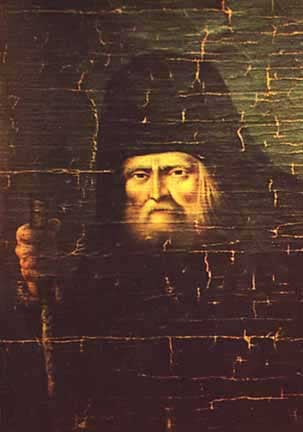
Retrato de Serafín de Sarov pintado en vida · Public domain
In eigenen Worten
«Nothing so helps to acquire inner peace as silence and, as far as possible, constant converse with oneself and rare converse with others.»Instrucciones espirituales, cap. «О мире душевном» (De la paz del alma).

Der zentrale Gedanke
The acquisition of the Holy Spirit: The Russian term stiazhanie means to acquire, gain, accumulate: it is the word of trade and saving.
Im Zusammenhang sehen
Biografie
5 Min. Lesezeit
Unterstützte Übersetzung aus dem spanischen Original, Durchsicht durch einen muttersprachlichen Übersetzer ausstehend.
Ein Junge aus Kursk
Prochor Isidorowitsch Moschnin wurde am 19. Juli 1754 nach dem julianischen Kalender (30. Juli nach dem gregorianischen) in Kursk geboren, in einer wohlhabenden Kaufmannsfamilie. Das Jahr ist nicht sicher: Die Viten aus der Zeit vor der Revolution nannten 1759, abgeleitet aus dem auf seinem Grabstein in Sarow eingemeißelten Alter, und erst 2004, nach den Forschungen des Lokalhistorikers Wladimir Stepaschkin in den Kirchenbüchern von Kursk und im Klosterarchiv, übernahm die russische Kirche das Jahr 1754. Sein Vater Isidor baute im Auftrag eine Kirche der Stadt und starb, als das Kind noch klein war; die Mutter Agafja vollendete den Bau. Die Hagiographien erzählen, er sei mit sieben Jahren von der Höhe der im Bau befindlichen Kirche gestürzt, ohne sich zu verletzen, und als er mit etwa zehn Jahren erkrankte, sei er genesen, als er die Ikone der Gottesmutter des Zeichens küsste, die in einer Prozession an seinem Haus vorbeigetragen wurde. Es sind Erzählungen der Familienüberlieferung, Jahrzehnte später aufgezeichnet: Das Detail des Glockenturms etwa taucht erst in der 1863 veröffentlichten Vita auf, und 1761 gab es diesen Glockenturm noch gar nicht.
Sarow
Nach einer Pilgerfahrt nach Kiew, wo ihm der Überlieferung nach der Rekluse Dosifej den Weg nach Sarow wies, trat er am 20. November 1778 als Novize in dieses Kloster in den Wäldern von Tambow ein. Er war Bäcker, Zimmermann und Sakristan; er überstand eine Krankheit, eine Wassersucht, die ihn fast drei Jahre ans Lager fesselte; am 13. August 1786 empfing er das Mönchsgewand mit dem Namen Seraphim, wurde bald darauf zum Diakon und am 2. September 1793 zum Priester geweiht. Sarow folgte einer strengen Regel, Erbe der monastischen Erneuerung, die Paissi Welitschkowski mit der kirchenslawischen Übersetzung der Philokalie angestoßen hatte, und der junge Mönch bildete sich an diesen Texten: Die ihm zugeschriebenen „Geistlichen Unterweisungen“ zitieren immer wieder Isaak den Syrer, Johannes Klimakos, Barsanuphios oder Gregor den Sinaiten.
Die Wüste
1794 zog er sich in eine Hütte im Wald zurück, etwa fünf Kilometer vom Kloster entfernt, in die sogenannte „ferne Wüste“. Er bestellte einen Garten, las die Evangelien und die Väter, fastete, bis er sich nur noch von Gemüse und einem Wildkraut, dem Giersch (russisch snyt), ernährte, und kehrte sonntags zur Kommunion nach Sarow zurück. 1804 schlugen ihn den Viten zufolge Räuber, die das Geld der Besucher suchten, mit dem Stiel seiner eigenen Axt nieder; er blieb für immer gebeugt und bat darum, sie nicht zu bestrafen. In diese Zeit gehört die berühmteste Episode seiner Askese, die tausend Tage und tausend Nächte des Gebets auf einem Stein. Die älteste Quelle ist nüchterner: 1848 schrieb Abt Jesaja, Seraphim habe zu Beginn seines Einsiedlerlebens einem Gefährten anvertraut, er bete stehend und reglos siebzehn Stunden am Tag, und habe dies über drei Jahre lang getan; die „tausend Tage auf dem Stein“ setzten sich erst in späteren Hagiographien fest, vor allem in der Tschitschagows.
Ähnlich verhält es sich mit dem Bären. 1849 veröffentlichte der Hieromönch Ioasaf das Zeugnis einer Nonne aus Diwejewo, Matrona Pleschtschejewa, die gesehen haben wollte, wie der Starez einen Bären mit Brot fütterte. Unter den Papieren des Metropoliten Filaret von Moskau, heute in der Handschriftenabteilung der Russischen Staatsbibliothek, liegt eine Akte, nach der Matrona selbst vor ihrem Tod gestand, Ioasaf habe sie angewiesen, dies zu erzählen, falls die Zarenfamilie das Kloster besuche. Das Bild des Einsiedlers mit dem Bären, das die Ikonographie populär machte, ist also eine Legende mit nachweisbarem Ursprung.
Klausur und offene Türen
Am 8. Mai 1810 kehrte er ins Kloster zurück und schloss sich in seiner Zelle ein: fünf Jahre, ohne jemanden zu empfangen, und weitere zehn mit offener Tür für jeden, der kam, aber ohne sie zu verlassen, bis zum 25. November 1825. Von da an, besonders in seinen letzten acht Jahren, wurde Sarow zum Wallfahrtsort. Er empfing Hunderte von Menschen, Bauern wie Adlige, grüßte jeden zu jeder Jahreszeit mit „Meine Freude, Christus ist auferstanden!“, verneigte sich vor ihnen und antwortete oft, bevor sie fragten. Er nahm sich der kleinen Frauengemeinschaft von Diwejewo an, zwölf Kilometer entfernt, und gründete daneben eine zweite, die sogenannte Mühlengemeinschaft, nur für Jungfrauen. Zu seinen Besuchern gehörten Michail Manturow, der sein Gut verkaufte, um Diwejewo zu dienen, und ein junger Gutsbesitzer aus Simbirsk, Nikolai Motowilow, der die Heilung einer Lähmung im September 1831 seinen Gebeten zuschrieb.
Was er hinterließ
Seraphim schrieb keine Bücher. Seine Lehre ist auf drei Wegen überliefert, keiner davon von seiner Hand. Der erste sind die „Geistlichen Unterweisungen“, gesammelt von dem Mönch Sergij von Sarow und 1839 in einer Vita des Einsiedlers Markus veröffentlicht, nachdem Metropolit Filaret Ausdrücke korrigiert hatte, „damit die Sprache korrekter sei“, und um gewisse Gedanken „vor falscher Auslegung“ zu schützen, wie er selbst 1838 schrieb. Der zweite sind die in Diwejewo bewahrten Aussprüche und Erzählungen, die Archimandrit Seraphim Tschitschagow in der „Chronik des Seraphim-Diwejewo-Klosters“ (1896, erweitert 1903) ordnete. Der dritte ist das „Gespräch über das Ziel des christlichen Lebens“, das Motowilow als Handschrift hinterließ.
Darin erklärt der Starez an einem Novembertag des Jahres 1831 auf einer verschneiten Lichtung am Fluss Sarowka, Gebet, Fasten, Nachtwache und Almosen seien nur Mittel, das wahre Ziel des christlichen Lebens aber sei der Erwerb des Heiligen Geistes; dann fasst er den jungen Mann bei den Schultern und lässt ihn sein Gesicht „heller als die Sonne“ sehen. Der Text erschien 1903, am Vorabend der Heiligsprechung, in Sergei Nilus' „Das Große im Kleinen“; Nilus erzählte, er habe ihn unter mehr als siebzig Kilo mit Federn und Vogelkot bedeckter Papiere gefunden, die ihm Motowilows Witwe übergeben habe. Seine Wörtlichkeit ist umstritten: Erzpriester Wsewolod Roschko, der den Kern der Episode nicht bezweifelt, verweist auf eine für einen Zweiundzwanzigjährigen unwahrscheinliche Dichte theologischer Zitate, auf den Vätern fremde Vorstellungen über die Seele der Tiere und auf die Hand von Nilus, den er „einen Mythenschmied, aber keinen bewussten Fälscher“ nennt; es ist derselbe Herausgeber, der 1905 die „Protokolle der Weisen von Zion“ in sein Buch aufnahm.
Tod und Heiligsprechung
Er starb allein in seiner Zelle am 2. Januar 1833 (14. Januar nach dem gregorianischen Kalender). Die Mönche, durch Brandgeruch alarmiert, fanden ihn kniend vor der Ikone der Gottesmutter der Zärtlichkeit, die er „Freude aller Freuden“ nannte. Seine Verehrung wuchs in den folgenden Jahrzehnten mit immer neuen Viten, jede wunderreicher als die vorige. Die Heiligsprechung war zudem eine politische Angelegenheit: Archimandrit Tschitschagow betrieb sie bei Nikolaus II., unterstützt von der Zarin, die auf einen Thronfolger hoffte, und gegen die Vorbehalte des Oberprokurors des Synods, Pobedonoszew. Die Kommission, die im Januar 1903 die Gebeine untersuchte, fand keinen unverwesten Leib, wie ihn die Volksfrömmigkeit erwartete, und Metropolit Antonij musste in der Presse erklären, dass dies nicht notwendig sei. Am 19. Juli 1903 wurde Seraphim vor dem Zaren und mehr als hunderttausend Pilgern heiliggesprochen.
Die Reliquien wurden 1920–1922 von den Bolschewiki beschlagnahmt, verschwanden in den Beständen eines antireligiösen Museums und tauchten 1990 in Leningrad wieder auf; am 1. August 1991 kehrten sie in einer Prozession nach Diwejewo zurück. Heute ist Seraphim einer der meistverehrten Heiligen Russlands, wird auch von der Anglikanischen Gemeinschaft kommemoriert und wurde von Johannes Paul II. als Heiliger bezeichnet. Die Gestalt, die die frühesten Quellen zeichnen — ein strenger Mönch von entwaffnender Freude, der vom völligen Schweigen zur geistlichen Führung von Scharen überging —, ist weniger spektakulär als die der Legende und wahrscheinlich seltener.
Quellen: Roshko, Vsévolod, prot. [Rochcau, Vsévolod]. Преподобный Серафим: Саров и Дивеево. Исследования и материалы. Moscú: Sampo, 2001 (ed. francesa: Saint Séraphim, Sarov et Divéyevo. Bégrolles-en-Mauges: Abbaye de Bellefontaine, 1987). Primera parte, «Historia y crítica histórica». · Nilus, Serguéi A. «Цель жизни христианской» [El fin de la vida cristiana], en Великое в малом, 1.ª ed., 1903; epílogo del editor fechado el 19 de mayo de 1903. Texto en Azbuka very. · Serafín de Sarov (atrib.). Духовные наставления мирянам и инокам [Instrucciones espirituales a laicos y monjes]. Recogidas por el monje Sergio (Vasíliev) de Sarov, revisadas por el metropolita Filaret (Drozdov) y publicadas en Краткое начертание жизни старца Саровской пустыни, схимонаха и пустынника Марка. Troitse-Sérguieva Lavra, 1839. Texto cotejado (ediciones de 1839, 1856, 1863 y 1903–1904) en Azbuka very. · Serafín (Chichagov), archimandrita. Летопись Серафимо-Дивеевского монастыря Нижегородской губ. Ардатовского уезда. Moscú: Pechatnia A. I. Snegirevoi, 1896; 2.ª ed. ampliada, San Petersburgo, 1903. Reed. Diveyevo: Izd-vo Bratstva sv. Aleksandra Nevskogo, 2004 (ISBN 9785882130649). · Stepashkin, Vladímir A. Преподобный Серафим Саровский: предания и факты. 3.ª ed. corregida y aumentada. Sarov: ZAO «INFO», 2009. ISBN 978-5-89269-010-2; y Серафим Саровский. Moscú: Molodaya gvardiya (ЖЗЛ), 2018.
Zeitleiste
Das Leben, Jahr für Jahr
Jeder Punkt ist ein belegtes Ereignis. Klicken Sie, um es mit Quelle und Grad der Gewissheit zu lesen.
30. Juli 17540 JahreKursk
Birth of Prokhor Moshnin
Born into a merchant family of Kursk (19 July, Julian calendar). Nineteenth-century lives gave 1759; the Russian Church adopted 1754 in 2004 on the basis of parish registers and the Sarov archive.
Wahrscheinlich«Серафим Саровский», Wikipedia en ruso (biografía, fuentes hagiográficas, expediente de Matrona Plescheeva en el fondo del metropolita Filaret, carta del abad Isaías II de 1848, canonización y reliquias). Consultada el 25-10-2026.
Nach dem Tod
- 1839First edition of the Instructions
- 19. Juli 1903Canonisation
- 1. August 1991Return of the relics
30. Juli 1754 · 0 Jahre
Birth of Prokhor Moshnin
Born into a merchant family of Kursk (19 July, Julian calendar). Nineteenth-century lives gave 1759; the Russian Church adopted 1754 in 2004 on the basis of parish registers and the Sarov archive.
Wahrscheinlich
um 1761 · 7 Jahre
The fall from the church under construction
According to the lives, he falls from the top of the church his family was building and is unhurt. Hieromonk Sergius (1841) speaks of 'the building'; the bell tower appears in 1863.
Überlieferung
1776 · 22 Jahre
Pilgrimage to Kiev
He visits the Kiev Caves Lavra; tradition says the recluse Dositheus directed him to Sarov monastery.
Überlieferung
20. November 1778 · 24 Jahre
Novice at Sarov
He enters Sarov monastery, in the forests of Tambov province, as a novice under the elder Joseph.
Belegt
13. August 1786 · 32 Jahre
Monastic profession as Seraphim
He is tonsured a monk with the name Seraphim; shortly afterwards he is ordained hierodeacon.
Belegt
2. September 1793 · 39 Jahre
Priestly ordination
He is ordained hieromonk (priest-monk).
Belegt
1794 · 40 Jahre
Hermit in the forest
He withdraws to a hut some five kilometres from the monastery, with a garden and beehives; he returns on Sundays for communion.
Belegt
1804 · 50 Jahre
The robbers' attack
Robbers beat him; he is left bent for life and asks that they go unpunished. He convalesces for five months in the monastery.
Wahrscheinlich
um 1807 – 1810 · 53 Jahre
Prayer on the stone
A period of standing prayer that the hagiographies fixed as 'a thousand days on a stone'. Abbot Isaiah II's letter (1848) speaks of seventeen hours a day standing for more than three years.
Umstritten
8. Mai 1810 · 55 Jahre
Return to the monastery and seclusion
He returns to Sarov at the decision of the council of elders and shuts himself in his cell: five years without receiving anyone.
Belegt
1815 · 61 Jahre
He opens the door of his cell
He begins to receive visitors without leaving his cell; sources differ on whether this was 1815 or, regularly, around 1823.
Wahrscheinlich
25. November 1825 · 71 Jahre
End of the seclusion
He ends his seclusion and again visits his forest hermitage; he begins his spiritual direction of the Diveyevo community.
Belegt
um 1827 – 1829 · 73 Jahre
The Mill community
Next to the Kazan community at Diveyevo he founds a second community, for unmarried girls only; its Nativity church is built in 1828–1829.
Belegt
1828 · 74 Jahre
A portrait from life
The painter Serebryakov (later the monk Joseph of Sarov) makes the only portrait from life, the basis of later iconography.
Wahrscheinlich
November 1831 · 77 Jahre
Conversation with Motovilov
Date of the conversation on the acquisition of the Holy Spirit that Nikolai Motovilov left in writing; the text was published in 1903.
Umstritten
14. Januar 1833 · 78 Jahre
Death
He is found dead, kneeling before the icon of the Virgin of Tenderness (2 January, Julian calendar).
Belegt
1839
First edition of the Instructions
The Spiritual Instructions, revised by Metropolitan Philaret, are published within the life of the hermit Mark; the first life of Seraphim, by the monk Sergius, appears in 1841.
Belegt
19. Juli 1903
Canonisation
Following the Synod's decree of 29 January, his glorification is celebrated at Sarov in the presence of Nicholas II and over a hundred thousand pilgrims (19 July, Julian calendar). That same year Nilus publishes the Conversation with Motovilov.
Belegt
1. August 1991
Return of the relics
The relics, seized in 1920–1922 and found in 1990 in the Museum of the History of Religion in Leningrad, arrive in procession at Diveyevo.
Belegt
Werke
Grundlegende Werke
Die Werke, ohne die sich das Vermächtnis nicht verstehen lässt.
Traditionelle Zuschreibung · 1831
Conversation with Motovilov on the Aim of the Christian Life
О цели христианской жизни. Беседа преподобного Серафима Саровского с Н. А. Мотовиловым
In a snowy clearing by his hermitage, the elder answers the question Motovilov had asked since childhood: the aim of the Christian life is not prayer, fasting, vigil or almsgiving, which are means, but the acquisition of the Holy Spirit, likened to the accumulation of a capital 'of grace and eternal'; prayer is the means most to hand. When the young man asks how to know whether he is in the Spirit, Seraphim takes him by the shoulders and his face becomes 'brighter than the sun': Motovilov describes the light, peace, sweetness, warmth and fragrance he feels in the depth of winter. It is the most widely read text of modern Russian spirituality, the basis of Seraphim's iconography and of the interest of theologians such as Florensky and Lossky.
8 Ausgaben

Spätere Zusammenstellung · 1839
Spiritual Instructions to Laypeople and Monks
Духовные наставления мирянам и инокам
Short chapters on God, faith, hope, prayer, tears, sorrow and despondency, peace of soul and its preservation, guarding the heart, the light of Christ, attention to oneself, silence, fasting and the active and contemplative life, with advice for the novice and for the superior. Woven from quotations of Isaac the Syrian, John Climacus, Barsanuphius, Gregory of Sinai, Ephrem and John Chrysostom, they convey a sober hesychast teaching: the Jesus Prayer repeated in the mind, inner peace as the condition of all light, and caution towards contemplation without a guide. It is the earliest and least manipulated source of his teaching.
7 Ausgaben
Seraphim of Sarov
Chronicle of the Seraphim-Diveyevo Monastery (sayings and accounts)
Spätere Zusammenstellung · 1896
Chronicle of the Seraphim-Diveyevo Monastery (sayings and accounts)
Летопись Серафимо-Дивеевского монастыря
A history of the Diveyevo communities from their founder, Mother Alexandra, to the end of the nineteenth century, which is also the main collection of Seraphim's oral teaching to the sisters: advice on prayer, work, obedience and joy, prophecies about the convent, the ditch he had dug around the Mill community, his farewell words and the lives of his disciples. The second edition (1903) includes a new life of Seraphim and was the documentary basis for the canonisation.
3 Ausgaben
Das gesamte Werk (11)
Seraphim of Sarov
The Short Prayer Rule for Laypeople
The Conscious LibraryThe Short Prayer Rule for Laypeople
Seraphim of Sarov
The Rule of the Theotokos
The Conscious LibraryThe Rule of the Theotokos
Seraphim of Sarov
Notes of Nikolai Motovilov, Servant of the Mother of God and of St Seraphim
The Conscious LibraryNotes of Nikolai Motovilov, Servant of the Mother of God and of St Seraphim
Seraphim of Sarov
The Great Mystery of Diveyevo and other prophecies
The Conscious LibraryThe Great Mystery of Diveyevo and other prophecies
Seraphim of Sarov
Account of the Life and Labours of Father Seraphim (Hieromonk Sergius, 1841)
The Conscious LibraryAccount of the Life and Labours of Father Seraphim (Hieromonk Sergius, 1841)
1841
Seraphim of Sarov
Accounts of the Life of the Elder Seraphim (Hieromonk Georgy, 1844)
The Conscious LibraryAccounts of the Life of the Elder Seraphim (Hieromonk Georgy, 1844)
1844
Seraphim of Sarov
Accounts of the Labours of the Elder Seraphim (Hieromonk Joasaph, 1849)
The Conscious LibraryAccounts of the Labours of the Elder Seraphim (Hieromonk Joasaph, 1849)
1849
Seraphim of Sarov
Life of the Elder Seraphim (Nikolai Elagin, 1863)
The Conscious LibraryLife of the Elder Seraphim (Nikolai Elagin, 1863)
1863
Zitate
Zitate, die in einem bestimmten Werk nachgewiesen sind. Jedes trägt seine Herkunft und seinen Grad an Verlässlichkeit.
The true aim of our Christian life consists in the acquisition of the Holy Spirit of God.Истинная же цель жизни нашей христианской состоит в стяжании Духа Святого Божьего.
WahrscheinlichConversación con Motovílov (noviembre de 1831), en Nilus, Великое в малом (1903). Atribución sujeta a las dudas sobre la literalidad del manuscrito.
Apokryphe Zitate oder Zitate umstrittener Zuschreibung (3)
«"Acquire the spirit of peace, and thousands around you will be saved."»
It is his most quoted saying, but it is not found in this form either in the Instructions of 1839 or in the Conversation with Motovilov as published by Nilus. The idea is in the chapter 'On peace of soul' of the Instructions ('when a man comes to a peaceful state, he can pour out on others the light…'); the short formula circulates in twentieth- and twenty-first-century devotional collections without reference to a primary source.
«Prophecies about the Antichrist, the fall of the dynasty and Seraphim's resurrection ('The Great Mystery of Diveyevo').»
They come from Motovilov manuscripts published by Nilus, who presented them as the elder's exact words; no independent source confirms them and church authority banned them.
«"This is the Christian way of crossing oneself! […] Crossing oneself with two fingers is contrary to the holy statutes."»
A condemnation of the Old Believer rite that first appears in the 1863 life (Elagin), written by a censor; the episode of the four Old Believers had been expanded in the 1844 life. Mikhail Novoselov held that Seraphim's polemic with the priestless Old Believers of Nizhny Novgorod became anti-ritual under the pen of synodal censors; the question remains open.
Letzte Worte
Es gibt keine überprüfbaren Aufzeichnungen der letzten Worte.
He died alone in his cell on the night of 1–2 January 1833 (Julian) and no one heard his last words: the monks, alerted by the smell of a candle that had set some books smouldering, found him dead, kneeling before the icon of the Virgin of Tenderness. The Diveyevo tradition recorded by Chichagov preserves as his farewell the charge he had earlier given the sisters: to come to his grave and tell him their sorrows 'as to a living man', for to them he would always be alive; these are not, however, words spoken at his death.
Quelle: Serafín (Chichagov), archimandrita. Летопись Серафимо-Дивеевского монастыря Нижегородской губ. Ардатовского уезда. Moscú: Pechatnia A. I. Snegirevoi, 1896; 2.ª ed. ampliada, San Petersburgo, 1903. Reed. Diveyevo: Izd-vo Bratstva sv. Aleksandra Nevskogo, 2004 (ISBN 9785882130649).
Fragen
Was das Werk beantwortet
Zwölf große Fragen der Menschheit und was sich aus den Texten darauf antworten lässt, mit Belegen. Wir legen niemandem Worte in den Mund.
Was ist das Absolute? Gibt es Gott?
God is the Trinity giving itself as the Holy Spirit to be acquired
Ein persönlicher GottAusdrücklich gesagt
Seraphim of Sarov did not write; his teaching comes through testimonies. In them God is not an object of speculation but a presence to be received. The Spiritual Instructions of 1839 open with a chapter on God: where God is there is no evil, and everything that comes from him is peaceful and leads to humility. The Conversation with Motovilov, published in 1903, defines the aim of Christian life as the acquisition of the Holy Spirit of God, and recounts how Motovilov saw the elder's face illumined while both were, in his words, in the Spirit of God. The God of this testimony is that of the Orthodox faith: Father, Son and Spirit, who seeks the human heart as his throne and allows himself to be experienced as light, peace, sweetness and joy.
Diese Frage mit anderen Meistern vergleichenWer bin ich? Gibt es ein wahres Selbst?
The human being is body, soul and spirit, made to receive the Holy Spirit
Eine geschaffene, unsterbliche SeeleAusdrücklich gesagt
In the Conversation with Motovilov, a testimony published in 1903, Seraphim explains the creation of the human being on the basis of Genesis: Adam was formed from dust and received from God the breath of life, so that the complete man is body, soul and spirit, and was made to live in the Spirit of God. The fall made him lose that fullness, and the meaning of Christian life is to recover it by acquiring the Holy Spirit. The true self is not, in this testimony, an impersonal consciousness nor a flow of elements, but a created and immortal person whose heart is the place where God wishes to dwell. The Spiritual Instructions add that without humility there is nothing in man but darkness: the self is illumined by receiving, not by asserting itself.
Diese Frage mit anderen Meistern vergleichenWarum leiden wir?
Losing the Spirit of God darkened man; patience brings him back
Die Trennung von GottAus der Lehre abgeleitet
In the testimony of the Conversation with Motovilov, the root of human evil lies in Adam's fall, which lost the fullness of the Spirit of God with which he had been created; since then man has lived in darkness, and Christian life consists in recovering that grace. The Spiritual Instructions draw the practical consequences: where God is there is no evil, and what comes from him brings peace and humility, while agitation reveals another source. In the face of sorrows they recommend patience and humility, without which there is nothing in man but darkness. Seraphim, who according to the lives was beaten by robbers and remained bent for ever, does not speculate on the why of pain: he treats it as an occasion for acquiring inner peace, whose fruit reaches others as well.
Diese Frage mit anderen Meistern vergleichenWas geschieht nach dem Tod?
Christ is risen: the joy of the Kingdom can already be tasted in this life
Ewiges Leben und AuferstehungAusdrücklich gesagt
Seraphim greeted everyone, at any time of year, with the words of Easter: my joy, Christ is risen. In the testimonies that preserve his teaching, death is viewed from the resurrection and eternal life of Orthodox faith, and what is distinctive is that this life is not postponed: in the Conversation with Motovilov, when his companion sees his face illumined, Seraphim asks him what he feels, and describes peace, sweetness, warmth and joy as a foretaste, a very small one, of what God prepares for those who love him. The Diveyevo chronicles also record his predictions of his own death and his promise to go on speaking with those who came to his grave. He died on his knees, at prayer, in 1833.
Diese Frage mit anderen Meistern vergleichenWie erlangt man Befreiung oder Erlösung?
The aim of Christian life is to acquire the Holy Spirit; all else is means
Durch Gnade und LiebeAusdrücklich gesagt
Seraphim of Sarov's best-known formula, handed down by the Conversation with Motovilov, answers this question directly: the true aim of Christian life consists in the acquisition of the Holy Spirit of God. Fasting, vigil, prayer, almsgiving and every good deed done for Christ's sake are not the end, but means of acquiring it; and the acquisition of the Spirit is also a capital, but one of grace and eternal. Among the means, prayer is the most accessible, because it is always in anyone's hands. Salvation is thus God's gift, received and accumulated, not merit; and its sign is peace: according to the Instructions, whoever attains inner peace can pour out on others the light he has received. Motovilov claims to have seen it in the elder's luminous face.
Diese Frage mit anderen Meistern vergleichenBraucht es einen Lehrer?
An elder within the Church, guiding towards the Spirit and not towards himself
Gemeinschaft und TraditionAus der Lehre abgeleitet
Seraphim embodied the figure of the starets, the elder who, after years of solitude, receives those who come seeking counsel; in his last years crowds visited him, and he was spiritual director of the nuns of Diveyevo. He himself was formed in obedience to the superiors and confessors of Sarov, and his teaching, handed down by the Spiritual Instructions and testimonies, constantly relies on the Scriptures and the Fathers, whose reading he recommended. But the elder does not occupy the centre: in the Conversation with Motovilov, the true teacher is the Holy Spirit, acquired through prayer and good works within the life of the Church and its sacraments. His prayer rules for lay people show, moreover, that he did not require monastic life or constant direction of everyone.
Diese Frage mit anderen Meistern vergleichenIst die Welt wirklich?
Creation is good; the hermit lived in the forest at peace with the animals
Eine gute und wirkliche SchöpfungAus der Lehre abgeleitet
Seraphim left no reflections on the nature of the world, but his teaching and life presuppose the Orthodox vision of a good creation, God's work, wounded by the fall and called to transfiguration. In the Conversation with Motovilov the Genesis account serves as the starting point: Adam lived in a world created for him, in which nothing could harm him while he possessed the Spirit. During his years as a hermit in the forest near Sarov, according to the lives compiled after his death, he shared his bread with a bear and other animals, an image tradition read as a sign of paradisal harmony recovered through holiness. The world is neither illusion nor evil: it is the place where grace can become visible, like the light Motovilov claims to have seen.
Diese Frage mit anderen Meistern vergleichenWas ist Liebe?
God seeks a heart full of love for him and for neighbour: that is his throne
Liebe zu Gott und zum NächstenAusdrücklich gesagt
At the end of the Conversation with Motovilov, according to the testimony published in 1903, Seraphim sums up his teaching in an image: the Lord seeks a heart full of love for God and neighbour, and that is the throne on which he likes to sit and on which he appears in the fullness of his glory. Love is for him not an isolated moral effort, but the fruit and dwelling place of the acquired Spirit. His way of treating others expressed it: he called each visitor my joy, received everyone without distinction and, according to the lives, forgave the robbers who left him badly injured and asked that they not be punished. The Spiritual Instructions add that one must judge no one and that the inner peace of the one who loves is communicated to those around him.
Diese Frage mit anderen Meistern vergleichenSind wir frei, oder ist alles vorherbestimmt?
Grace does not force: each person decides whether to acquire the Spirit
Echter freier WilleAus der Lehre abgeleitet
Seraphim did not address the theoretical question of freedom and determinism, but the testimonies of his teaching presuppose the Orthodox doctrine of cooperation between grace and human freedom. In the Conversation with Motovilov, acquiring the Holy Spirit is compared to acquiring capital: each person chooses the good works that bear him most fruit and practises them, and what he receives depends on how he uses the means. God compels no one; he calls and awaits the answer. The Spiritual Instructions insist on vigilance over one's own thoughts and on repentance, which only make sense if the person can choose. God's providence governs all, but does not cancel each person's responsibility for his heart.
Diese Frage mit anderen Meistern vergleichenWozu meditieren oder beten?
Prayer is the most readily available means of acquiring the Holy Spirit
Freundschaft mit GottAusdrücklich gesagt
In the Conversation with Motovilov, Seraphim explains that among all the good works that serve to acquire the Spirit, prayer is the one most easily within anyone's reach, rich or poor, learned or simple, and that when God himself comes to visit the one who prays, one must fall silent and let him act. The Spiritual Instructions advise those who wish to serve God to practise remembrance of God and unceasing prayer to Jesus Christ, saying with the mind: Lord Jesus Christ, Son of God, have mercy on me, a sinner; and a counsel handed down by Ignatius Brianchaninov warns that merely outward prayer is not enough. For lay people he left a small rule of prayer that could be said even while walking. To pray is to live before God until he himself speaks.
Diese Frage mit anderen Meistern vergleichenKann die Vernunft das Letzte erkennen?
The ultimate is known by the light of grace, which illumines the pacified mind
Das Letzte liegt jenseits des VerstandesAus der Lehre abgeleitet
Seraphim did not discuss the scope of reason, but the testimonies of his teaching place the knowledge of God on another plane. In the Conversation with Motovilov, his companion wants to understand how the presence of the Spirit is recognised, and Seraphim gives him not an explanation but an experience: he lets him see his illumined face and feel peace, warmth and joy. The Spiritual Instructions speak of the enlightenment of the mind attained by one who reaches inner peace and who can pour it out on others, and they recommend silence and recollection as its condition. Reason is not despised, and Seraphim read Scripture and the Fathers assiduously; but knowledge of the ultimate is a gift of grace, received in a humble heart, not the fruit of reasoning.
Diese Frage mit anderen Meistern vergleichenSich von der Welt zurückziehen oder sie verwandeln?
Acquire peace in silence, and then you will be able to enlighten others
Sich zurückziehen, um zu findenAusdrücklich gesagt
Seraphim's life has two halves. For decades he withdrew: he lived as a hermit in the forest near Sarov, spent, according to the lives, a thousand nights praying on a stone, kept silence for years and remained enclosed in his cell for another fifteen. Only then did he open his door and receive crowds. The Spiritual Instructions state the logic of that itinerary: nothing helps so much to acquire inner peace as silence and rare conversation with others; and when a man reaches a state of peace, he can pour out on others the light of the enlightenment of the mind. Withdrawal is not flight from one's neighbour, but preparation to serve him. Of lay people, however, he did not demand monastic life, but a small rule of prayer compatible with work.
Diese Frage mit anderen Meistern vergleichen
Affinitäten und Spannungen
Affinitäten und Spannungen
Frage für Frage aus den Positionen berechnet. Den Grund jeder Übereinstimmung und jedes Widerspruchs zeigt ein Klick.
Denkt ähnlich wie

Fyodor Dostoevsky
Übereinstimmung bei: Was ist das Absolute? Gibt es Gott? · Wer bin ich? Gibt es ein wahres Selbst? · Warum leiden wir?

Julian of Norwich
Übereinstimmung bei: Was ist das Absolute? Gibt es Gott? · Wer bin ich? Gibt es ein wahres Selbst? · Warum leiden wir?

Francis of Assisi
Übereinstimmung bei: Was ist das Absolute? Gibt es Gott? · Wer bin ich? Gibt es ein wahres Selbst? · Warum leiden wir?
John of the Cross
Übereinstimmung bei: Was ist das Absolute? Gibt es Gott? · Wer bin ich? Gibt es ein wahres Selbst? · Warum leiden wir?
Denkt anders als

Pema Chödrön
Widerspruch bei: Was ist das Absolute? Gibt es Gott? · Wer bin ich? Gibt es ein wahres Selbst? · Was geschieht nach dem Tod?

The 14th Dalai Lama (Tenzin Gyatso)
Widerspruch bei: Was ist das Absolute? Gibt es Gott? · Wer bin ich? Gibt es ein wahres Selbst? · Was geschieht nach dem Tod?

Parmenides
Widerspruch bei: Ist die Welt wirklich?

Nāgārjuna
Widerspruch bei: Was ist das Absolute? Gibt es Gott? · Wer bin ich? Gibt es ein wahres Selbst? · Was geschieht nach dem Tod?
Anekdoten und Erzählungen
Anekdoten und Erzählungen
Zeugnis1804
The robbers in the forest
Herkunft der Erzählung: The lives tell it from Sergius's (1841) onwards, written from the testimony of Sarov monks; the bent back is confirmed by the 1828 portrait. The apparition during convalescence is a hagiographic element of monastic transmission.
Umstrittenc. 1807–1810
A thousand days on the stone
Herkunft der Erzählung: Letter of Abbot Isaiah II (Putilov) to Hieromonk Abel (Vanyukov), December 1848, cited in Russian scholarship; the figure of a thousand days comes from the later lives, above all Chichagov's Chronicle (1903). The core—a long period of standing prayer—is plausible; the canonical form is undocumented.
Umstrittenpublicado en 1849
The bear
Herkunft der Erzählung: Published by Joasaph in 1849; the retraction is in the Manuscripts Department of the Russian State Library, papers of Metropolitan Philaret (Drozdov), according to recent Russian scholarship (Stepashkin). The 1844 life already mentioned animals coming to him; the bear as an episode with witnesses is a documented invention.
Zeugnis1815–1833
"My joy, Christ is risen!"
Herkunft der Erzählung: The greeting and the form of address are attested by many visitors, gathered in the Diveyevo Chronicle and the lives; the advice to keep a joyful spirit appears in the Instructions ('On preserving peace of soul').
Zeugnisnoviembre de 1831
The light on his face
Herkunft der Erzählung: A single witness: Motovilov's manuscript published by Nilus in 1903. Rochcau accepts the historicity of the episode; the literal wording is doubtful, and Sanidopoulos notes that another Motovilov manuscript claims he saw the illumined face many times, which weakens the uniqueness of the account. Florensky reproduced it in 1914 as an example of the light of grace.
Hagiographische Erzählungc. 1761
The fall from the church
Herkunft der Erzählung: Hieromonk Sergius, Account… (1841) for the original version; Elagin (1863) introduces the bell tower. A family tradition with no independent witnesses.
Zeugnis1–2 de enero de 1833
Kneeling before the Tenderness icon
Herkunft der Erzählung: The Sarov monks' account handed down by the first life (1841) and its successors; the icon's fate, in the literature on the canonisation and relics.
Lehren
Lehren
Die Begriffe, die das Denken gliedern, in ihrem Zusammenhang erklärt.
The acquisition of the Holy Spiritadquisicion-del-espiritu-santo
It gathers the patristic doctrine of deification (theosis) and the emphasis of Symeon the New Theologian and of hesychasm on the conscious experience of grace. Twentieth-century theologians such as Vladimir Lossky made it a summary of Orthodox spirituality.
Peace of soulpaz-del-alma
It develops the hesychast notion of hesychia (stillness) from Isaac the Syrian, Barsanuphius and John Climacus, whom the Instructions cite explicitly.
The Jesus Prayer and the short ruleoracion-de-jesus
It continues the hesychast practice spread in Russia by Paisius Velichkovsky's Slavonic Philokalia (1793), which half a century later Theophan the Recluse would expand in Russian.
The light of graceluz-de-la-gracia
Related to Gregory Palamas's fourteenth-century doctrine of the uncreated light of Tabor and to the Desert Fathers' accounts of faces illumined in prayer.
The starets and spiritual directionstarchestvo
The revival of Russian eldership goes back to Paisius Velichkovsky (1722–1794); Florensky cites Seraphim alongside the Optina elders as those who 'gather as in a burning focus' popular holiness.
Videos
Videos
Aufnahmen, Gespräche und Dokumentarfilme. Die Videos werden von YouTube wiedergegeben; sie werden nicht hier gespeichert.
Великое чудо преподобного Серафима Саровского
Dokumentarfilm· RU· 2016· 43 min
Свято-Троицкий Серафимо-Дивеевский монастырьOffizieller Kanal
«Дивное Дивеево» — фильм о Серафимо-Дивеевском монастыре (2016)
Dokumentarfilm· RU· 2016· 53 min
Дивное ДивеевоOffizieller Kanal
Серафим Саровский. Рожденный пламенным
Dokumentarfilm· RU· 2008· 10 min
SpasTVOffizieller Kanal
Серафим Саровский и современность — А. И. Осипов
Vortrag· RU· 2023· 148 min
Алексей Ильич ОсиповOffizieller Kanal
Преп. Серафим Саровский (святость и миф) — Вячеслав Рубский
Vortrag· RU· 2017· 89 min
Вячеслав РубскийOffizieller Kanal
Преподобный Серафим Саровский. Священник Валерий Духанин
Vortrag· RU· 2026· 19 min
БИБЛИЯ и толкования — Экзегет.руOffizieller Kanal
Серафим Саровский. Фрагмент лекции К. В. Корепанова в Храме на Крови (23.12.2013)
Vortrag· RU· 2013· 48 min
Официальный лекторий свящ. Константина КорепановаOffizieller Kanal
Особая книга. В. Степашкин «Серафим Саровский»
Analyse· RU· 2023· 3 min
Библиотека Маяковского СаровOffizieller Kanal
Metropolitan Kallistos Ware on Saint Seraphim of Sarov (Part 1/6)
Vortrag· EN· 2017· 56 min
OLTelevisionOffizieller Kanal
AE40: Saint Seraphim of Sarov: Part 2/6
Vortrag· EN· 2025· 42 min
OLTelevisionOffizieller Kanal
Saint Séraphim de Sarov 1/4 — Un moine russe
Dokumentarfilm· FR· 2023· 26 min
RCF Hauts de FranceOffizieller Kanal
Saint Séraphim de Sarov 4/4 — Sa spiritualité
Analyse· FR· 2023· 25 min
RCF Hauts de FranceOffizieller Kanal
Galerie
Galerie
Bilder mit geprüfter Lizenz. Jedes bewahrt seine Urheberschaft und seinen Herkunftsnachweis.
Handschriften
Handschriften
Handschriftliche Zeugen und alte Texte, mit ihrer verwahrenden Einrichtung und ihren Einsichtsbedingungen.
RU · Cyrillic · Fecha de redacción desconocida (entre 1831 y 1879)
Рукопись Н. А. Мотовилова «Дух Божий, явно почивший на отце Серафиме Саровском, в беседе его о цели христианской жизни…» (гл. VI)
- Erhaltener Textzeuge
- Manuscrito único, conocido sólo por la edición de Nilus (1903)
Beziehungen
Beziehungen
Einflüsse, Schülerschaften und Verwandtschaften. Die belegte Beziehung wird von der durch Analyse ermittelten Ähnlichkeit unterschieden.
Lehrer von
Nikolái Motovílov
A Simbirsk landowner (1809–1879), healed by his own account through Seraphim's prayers in September 1831 and from then on a disciple, 'servant of the Mother of God and of Seraphim' and benefactor of Diveyevo. His manuscripts are the source of the Conversation and of many accounts, and of the doubtful prophecies as well.
Belegte Beziehung
Beeinflusst von
Isaac el Sirio
The author most quoted in the Spiritual Instructions (homilies on humility, despondency and stillness), together with John Climacus, Barsanuphius and Gregory of Sinai.
Belegte Beziehung
Beeinflusst von
Padres del desierto
The Instructions quote Barsanuphius, Antiochus, Ephrem and the apophthegms; his life of forest, fasting and silence was consciously modelled on that of the ancient hermits.
Belegte Beziehung
Beeinflusst von
Paisi Velichkovski
Sarov's spirituality belongs to the hesychast revival Paisius launched with the Slavonic Philokalia (1793); no personal link has been documented.
Durch Analyse ermittelte Ähnlichkeit
Verwandte Gedanken mit
Gregorio Palamas
The light of the face in the Conversation has been read as a manifestation of the light of Tabor defended by Palamas in the fourteenth century.
Durch Analyse ermittelte Ähnlichkeit
Beeinflusste
Florensky cites Seraphim in several letters of The Pillar and Ground of the Truth (1914) and reproduces in the fourth, 'The Light of Truth', the passage of the luminous face from the Conversation, following Nilus's 1905 edition; he places him alongside the Optina elders as a focus of Russian popular holiness.
Belegte Beziehung
Beeinflusste
Dmitri Merezhkovski
His essay 'The Last Saint' (in Not Peace but a Sword, 1908) examines Seraphim and his canonisation as a cipher of Russian religiosity; Florensky cites it.
Belegte Beziehung
Verwandte Gedanken mit
The Easter joy, the bowing before each visitor and the spiritual direction of laypeople of the elder Zosima in The Brothers Karamazov have been compared with Seraphim, though Dostoevsky's declared models were Tikhon of Zadonsk and the elder Ambrose of Optina.
Durch Analyse ermittelte Ähnlichkeit
Verwandte Gedanken mit
Theophan carried into Russian, for laypeople, the hesychast teaching on the prayer of the heart and the acquisition of grace that Seraphim transmitted orally; they never met. As Bishop of Tambov he was for a few months in 1861 in charge of the Diveyevo convent founded by Seraphim, to end its disorders.
Durch Analyse ermittelte Ähnlichkeit
Beeinflusste
In On the Jesus Prayer (Ascetic Experiences, vol. I) Ignatius relates, on the word of 'old monks', that at Sarov the Jesus Prayer was taught to everyone who entered and that 'the blessed elder Seraphim' advised monks to lead an attentive life and practise that prayer, and he quotes a saying of his on the insufficiency of merely outward prayer. There is no record that they met.
Belegte Beziehung
Quellen
Quellen
Für diesen Eintrag herangezogene Bibliografie und Kataloge.
- Wikidata, «Seraphim of Sarov» (Q44717): P31=Q5, nacimiento 1754/1759, muerte 1833, 48 enlaces entre wikis.
- Roshko, Vsévolod, prot. [Rochcau, Vsévolod]. Преподобный Серафим: Саров и Дивеево. Исследования и материалы. Moscú: Sampo, 2001 (ed. francesa: Saint Séraphim, Sarov et Divéyevo. Bégrolles-en-Mauges: Abbaye de Bellefontaine, 1987). Primera parte, «Historia y crítica histórica».
- Nilus, Serguéi A. «Цель жизни христианской» [El fin de la vida cristiana], en Великое в малом, 1.ª ed., 1903; epílogo del editor fechado el 19 de mayo de 1903. Texto en Azbuka very.
- Serafín de Sarov (atrib.). Духовные наставления мирянам и инокам [Instrucciones espirituales a laicos y monjes]. Recogidas por el monje Sergio (Vasíliev) de Sarov, revisadas por el metropolita Filaret (Drozdov) y publicadas en Краткое начертание жизни старца Саровской пустыни, схимонаха и пустынника Марка. Troitse-Sérguieva Lavra, 1839. Texto cotejado (ediciones de 1839, 1856, 1863 y 1903–1904) en Azbuka very.
- Serafín (Chichagov), archimandrita. Летопись Серафимо-Дивеевского монастыря Нижегородской губ. Ардатовского уезда. Moscú: Pechatnia A. I. Snegirevoi, 1896; 2.ª ed. ampliada, San Petersburgo, 1903. Reed. Diveyevo: Izd-vo Bratstva sv. Aleksandra Nevskogo, 2004 (ISBN 9785882130649).
- Stepashkin, Vladímir A. Преподобный Серафим Саровский: предания и факты. 3.ª ed. corregida y aumentada. Sarov: ZAO «INFO», 2009. ISBN 978-5-89269-010-2; y Серафим Саровский. Moscú: Molodaya gvardiya (ЖЗЛ), 2018.
- «Серафим Саровский», Wikipedia en ruso (biografía, fuentes hagiográficas, expediente de Matrona Plescheeva en el fondo del metropolita Filaret, carta del abad Isaías II de 1848, canonización y reliquias). Consultada el 25-10-2026.
- Polovtsov, A. A. (dir.). «Серафим (Мошнин)», en Русский биографический словарь, t. 18 (Sabanéiev–Smyslov). San Petersburgo, 1904, pp. 343–344. Texto en Wikisource.
- Sanidopoulos, John. «The Authenticity of the Conversation of St. Seraphim of Sarov with Nicholas Motovilov», Mystagogy Resource Center, 2 de enero de 2020.
- Zander, Valentine. St. Seraphim of Sarov. Trad. de la hermana Gabriel Anne; introducción de Boris Bobrinskoy. Crestwood (NY): St Vladimir's Seminary Press, 1975. ISBN 9780913836286.
- «Seraphim of Sarov», Wikipedia en inglés (reliquias, conmemoración anglicana, Juan Pablo II, bibliografía). Consultada el 25-10-2026.
- Motovílov, Nikolái A. Записки Николая Александровича Мотовилова, служки Божией Матери и преподобного Серафима. Ed. de Gueorgui Pávlovich. Moscú: Otchi dom, 2005. ISBN 9785873011278.
- Freeze, Gregory L. «Subversive Piety: Religion and the Political Crisis in Late Imperial Russia», The Journal of Modern History 68, n.º 2 (1996), pp. 308–350 (sobre la canonización de 1903).
- «Нилус, Сергей Александрович», Wikipedia en ruso (recepción del archivo de Motovílov en 1902, ediciones de Великое в малом de 1903, 1905 y 1911, inclusión de los «Protocolos» en la 2.ª ed.). Consultada el 25-10-2026.
- Azbuka very, página de autor «Серафим Саровский» (textos de la Conversación, las Instrucciones, el pequeño Правило y traducciones).
- Florenski, Pável. Столп и утверждение истины. Опыт православной теодицеи в двенадцати письмах. Moscú: Put', 1914. Carta cuarta, «Свет Истины» (cita la Conversación según Nilus, Великое в малом, 2.ª ed., Tsárskoie Seló, 1905, pp. 197–199) y cartas novena a duodécima. Texto en Azbuka very.
- Ignati (Brianchanínov). «О молитве Иисусовой. Отдел I», en Аскетические опыты, t. I (1865), cap. 26. Texto en Azbuka very.
- Merezhkovski, Dmitri S. «Последний святой» [El último santo], en Не мир, но меч. San Petersburgo, 1908. Texto en Wikisource.
- Rechteinhaber
- Dominio público: Serafín no escribió; las fuentes rusas (Motovílov †1879, Nilus †1929, Sergio, Elaguin, Chichagov) están publicadas antes de 1917. Las traducciones modernas pertenecen a sus traductores y editoriales.
Bestätigung ausstehend
Was dieser Eintrag noch nicht klären konnte. Wir sagen es lieber, als es aufzufüllen.
- Primera publicación de la Conversación: confirmar editorial y lugar de la 1.ª ed. de «Великое в малом» (1903) y si hubo publicación previa en prensa (se cita a veces «Московские ведомости», julio de 1903, sin verificar).
- Paradero actual del manuscrito de Motovílov de la Conversación y de los cuadernos 40–60 del archivo de Diveyevo.
- Fuente primaria exacta de la fórmula «Стяжи дух мирен…» (no está en las Instrucciones de 1839 ni en la Conversación según el texto de Nilus): revisar la Crónica de Chichagov y la vida de Elaguin.
- Texto completo de la carta del abad Isaías II al hieromonje Abel (1848) y signatura del expediente de Matrona Plescheeva en el fondo del metropolita Filaret (Biblioteca Estatal de Rusia).
- Traductor de la versión inglesa de la Conversación (SPCK, 1936) y de las traducciones del portal Azbuka very: sin identificar, por lo que no se han incluido en la sala de lectura en inglés.
- Ediciones inglesa e italiana de la Crónica de Diveyevo con ISBN verificado; edición española de la Crónica: no localizada.
- Web oficial del convento de Diveyevo (diveevo.ru): no respondió desde fuera de Rusia el 2026-10-25; no se ha consignado como official_site.
- Relación con León Tolstói y Vladímir Soloviov: no se ha encontrado ningún vínculo documentado; no se registran.
Recherchiert am 2026-10-25