Christentum · Christliche Mystik · Orthodoxes Christentum
Vladimir Solovyov
Владимир Сергеевич Соловьёв
1853 – 1900Historisch belegte Person
Russischer Philosoph, Laientheologe und Dichter (1853–1900), der erste systematische Denker Russlands. Er formulierte die „All-Einheit“, das „Gottmenschentum“ und eine Mystik der göttlichen Weisheit, Sophia, die er dreimal gesehen haben wollte. Als Freund Dostojewskis bat er 1881 um Begnadigung der Zarenmörder und verlor seinen Lehrstuhl; er träumte von der Wiedervereinigung der Kirchen des Ostens und des Westens und beschloss sein Leben mit der „Kurzen Erzählung vom Antichrist“. Von ihm gehen Berdjajew, Bulgakow, Florenski und die symbolistische Dichtung aus.
- Werke
- 79Werke
- Ausgaben
- 89Ausgaben
- Zitate
- 7Zitate
- Videos
- 13Videos
- Bilder
- 9Bilder
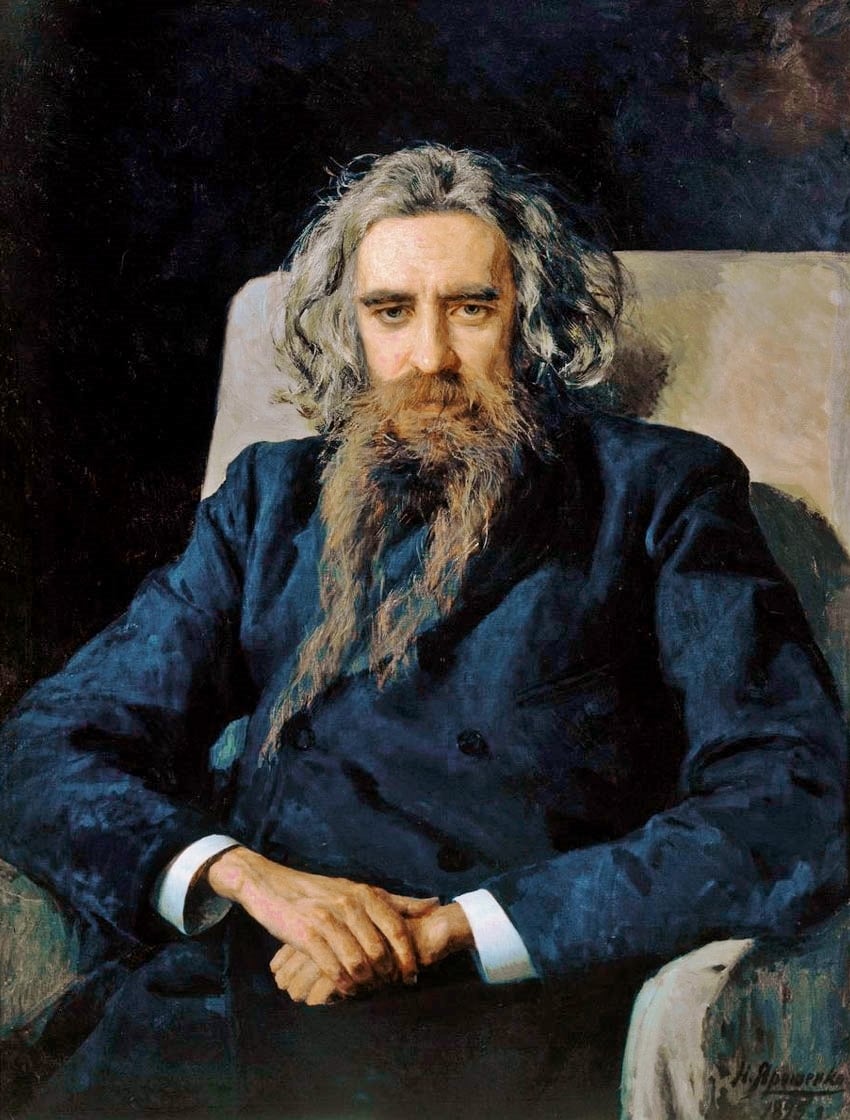
Retrato de Vladímir Soloviov, por Nikolái Yaroshenko · Public domain
In eigenen Worten
«The meaning and worth of love as a feeling lies in this: it really forces us, with all our being, to acknowledge in another the absolute central significance which, owing to egoism, we feel only in ourselves.»«Смысл любви» [El sentido del amor], artículo tercero, I (1892–1894).

Der zentrale Gedanke
All-unity (vseedinstvo): All-unity is the central category of Solovyov's philosophy: true reality is neither the abstract unity that absorbs the parts (as in pantheism or in Eastern mysticism as he understood it) nor the multiplicity of isolated individuals of atomism and Western individualism, but a unity that positively contains all things, each with its own place and value.
Im Zusammenhang sehen
Biografie
5 Min. Lesezeit
Unterstützte Übersetzung aus dem spanischen Original, Durchsicht durch einen muttersprachlichen Übersetzer ausstehend.
Der Sohn eines Historikers
Wladimir Sergejewitsch Solowjow wurde am 28. Januar 1853 (nach julianischem Kalender am 16.) in Moskau geboren. Sein Vater war Sergei Michailowitsch Solowjow, der Historiker, der die monumentale „Geschichte Russlands seit den ältesten Zeiten“ schrieb und es bis zum Rektor der Moskauer Universität brachte. Die Mutter, Poliksena Wladimirowna Romanowa, stammte aus einer Familie mit polnischen und kosakischen Wurzeln, zu deren Ahnen der Wanderphilosoph Hryhorij Skoworoda zählte. Er wuchs in einem Haus methodischer Arbeit und unaufgeregter orthodoxer Frömmigkeit auf; sein Bruder Wsewolod wurde Romancier, seine Schwester Poliksena Dichterin.
Als Heranwachsender durchlebte er die Krise seiner ganzen Generation: Er las Büchner, Feuerbach und die Materialisten, erklärte sich zum Atheisten und wechselte, nachdem er 1869 an der Moskauer Universität begonnen hatte, von Geschichte und Philologie zu den Naturwissenschaften. Um 1871/72 genügte ihm der Positivismus nicht mehr: Spinoza, Schopenhauer und vor allem der späte Schelling gaben ihm die metaphysische Frage zurück. Er gab die Naturwissenschaften auf, legte 1873 als Externer die Kandidatenprüfungen in Geschichte und Philologie ab und verbrachte das folgende Studienjahr als Gasthörer an der Geistlichen Akademie in Sergijew Possad – für einen Universitätsstudenten seines Milieus etwas Unerhörtes.
Die Krise der westlichen Philosophie
Am 24. November 1874 verteidigte er, einundzwanzigjährig, in Sankt Petersburg seine Magisterdissertation „Die Krise der westlichen Philosophie. Gegen die Positivisten“. Darin vertrat er die These, das europäische Denken münde, nachdem es Rationalismus und Empirismus erschöpft habe, aus eigener Logik in die Forderung nach einem religiösen Wissen, das Wissenschaft, Philosophie und Glauben vereine. Die Verteidigung war ein öffentliches Ereignis und brachte ihm eine Dozentur in Moskau ein.
Drei Begegnungen
Im Juni 1875 reiste er nach London, um im Lesesaal des British Museum indische Philosophie, Gnosis und mittelalterliche Mystik zu studieren; er las Kabbala, Böhme und Swedenborg. Dort hatte er, wie er später erzählte, die zweite Vision einer leuchtenden Frauengestalt, die er zum ersten Mal mit neun Jahren während einer Messe in der Moskauer Universitätskirche gesehen hatte. Eine innere Stimme befahl ihm, nach Ägypten zu gehen; er brach im Herbst auf und sah sie in einer Nacht gegen Ende 1875 in der Wüste bei Kairo in ihrer ganzen Gestalt. Über diese Erfahrungen schwieg Solowjow mehr als zwanzig Jahre und erzählte sie erst 1898 in dem zugleich humorvollen und ernsten Gedicht „Drei Begegnungen“. Diese Gegenwart war für ihn die göttliche Weisheit, Sophia, und um sie herum baute er sein Werk.
Das Gottmenschentum
1877 verließ er nach einem Konflikt im Professorenkollegium die Moskauer Universität und ließ sich als Mitglied des Wissenschaftlichen Komitees des Ministeriums für Volksaufklärung in Sankt Petersburg nieder. Dort vertiefte er seine Freundschaft mit dem dreißig Jahre älteren Dostojewski, den er seit 1873 kannte. Im Frühjahr 1878 hielt er im Saal des Soljanoi Gorodok seine „Vorlesungen über das Gottmenschentum“, zu denen die Elite der Hauptstadt erschien: Dostojewski, Pobedonoszew und an einem Märzabend auch Tolstoi, der den Verfasser von „Schuld und Sühne“ nicht kennenlernte, obwohl beide im Saal saßen. Im Juni, nach dem Tod des kleinen Aljoscha Dostojewski, begleitete der Philosoph den Romancier ins Kloster Optina, wo sie mit dem Starez Amwrossi sprachen.
Am 6. April 1880 wurde er mit der „Kritik der abstrakten Prinzipien“ promoviert. Sein System stand nun in den Grundzügen: Die gesamte Wirklichkeit ist eine „All-Einheit“, die von Gott ausgeht und zu Ihm zurückkehrt; der Mensch ist der Ort, an dem sich die materielle Welt mit dem Göttlichen vereinen kann, und Christus, der menschgewordene Gott, ist der Schlüssel dieses Prozesses, den die Menschheit in der Geschichte fortsetzen muss, bis sie zum Gottmenschentum wird.
Die Rede vom 28. März
Am 1. März 1881 ermordeten die Terroristen der Narodnaja Wolja Alexander II. Vier Wochen später, am 28. März, schloss Solowjow einen öffentlichen Vortrag mit der Bitte an den neuen Zaren, die Königsmörder im Namen christlicher Vergebung nicht hinrichten zu lassen. Der Saal spaltete sich in Beifall und Protest, die Sache gelangte bis zum Kaiser, und ihm wurden öffentliche Vorträge für einige Zeit untersagt. Die Verurteilten wurden am 3. April gehängt. Im folgenden Jahr gab er die Universitätslehre auf und hatte danach nie wieder eine feste Stellung: Er lebte von seiner Feder, bei Freunden und in Hotels, ohne Besitz und ohne Familie.
Der Traum von der universalen Kirche
Die 1880er-Jahre widmete er einer Idee, die ihn mit fast allen entzweite: der Wiedervereinigung von Orthodoxie und Katholizismus in einer „freien Theokratie“, in der der Papst die geistliche Autorität, der Zar die weltliche Macht und die Propheten die Freiheit verkörpern sollten. Er schloss Freundschaft mit dem kroatischen Bischof Josip Juraj Strossmayer, veröffentlichte in Zagreb „Geschichte und Zukunft der Theokratie“ (1887) und brachte angesichts der russischen Zensur auf Französisch „L’Idée russe“ (1888) und „La Russie et l’Église universelle“ (Paris 1889) heraus. Zugleich prangerte er Nationalismus, Antisemitismus und die Verfolgung der Altgläubigen an. Im Februar 1896 empfing er, einer umstrittenen Überlieferung zufolge, die Kommunion aus der Hand eines griechisch-katholischen Priesters, Nikolai Tolstoi; er selbst betrachtete sich weiterhin als Glied einer einzigen Kirche, die die Trennung in ihrer Wurzel nicht zerbrochen hatte.
Liebe, das Gute und das Schöne
In den Neunzigerjahren kehrte er, von der Theokratie ernüchtert, zur Philosophie zurück. Er leitete die philosophische Abteilung des Enzyklopädischen Wörterbuchs von Brockhaus und Efron, engagierte sich während der Hungersnot von 1891/92 und erregte in Moskau Anstoß mit seinem Vortrag „Über den Verfall der mittelalterlichen Weltanschauung“, in dem er behauptete, Ungläubige, die für Gerechtigkeit arbeiteten, dienten Christus besser als viele Christen. Er veröffentlichte „Der Sinn der Liebe“ (1892–1894), in dem der Eros die Kraft ist, die den Egoismus überwindet und die Unsterblichkeit vorwegnimmt, und „Die Rechtfertigung des Guten“ (1897), seine große Ethik. Er schrieb Gedichte von einer Zartheit, die Fet und die Symbolisten bewunderten, und begann mit seinem Bruder Michail, Platon zu übersetzen.
Der Antichrist
Seine letzten Jahre verdüsterte eine apokalyptische Vorahnung. 1899/1900 schrieb er die „Drei Gespräche über Krieg, Fortschritt und das Ende der Weltgeschichte“, die in der „Kurzen Erzählung vom Antichrist“ gipfeln: ein philanthropischer Übermensch, Wohltäter der Menschheit, der die Welt eint und von den Christen nur verlangt, ihn anzuerkennen; der Starez Johannes, Papst Petrus und Professor Pauli, Zeugen der drei Kirchen, entlarven ihn und vereinigen sich am Ende der Zeiten. Im Juli 1900 ließ er sich krank nach Uskoje bringen, dem Gut der Trubezkois; er beichtete und kommunizierte bei einem orthodoxen Priester, betete auf Hebräisch für das jüdische Volk und starb in der Nacht zum 13. August (31. Juli nach julianischem Kalender) 1900. Er liegt auf dem Friedhof des Neujungfrauenklosters neben seinem Vater begraben.
Nachwirkung
Kein russischer Denker hat das folgende halbe Jahrhundert so stark geprägt. Von seiner Sophiologie und seiner Idee des Gottmenschentums gehen Sergei Bulgakow und Pawel Florenski aus; Berdjajew, Frank und die Brüder Trubezkoi setzten sich ihr Leben lang mit ihm auseinander; Blok, Bely und Wjatscheslaw Iwanow machten seine Sophia zur Muse des Symbolismus. Im 20. Jahrhundert wurde seine Kritik am philanthropischen Antichrist von katholischen und orthodoxen Theologen neu gelesen, und 2020 brachte Cristi Puiu die „Drei Gespräche“ mit „Malmkrog“ auf die Leinwand.
Quellen: Mochulski, Konstantín. Владимир Соловьев: жизнь и учение [Vladímir Soloviov: vida y doctrina]. París: YMCA-Press, 1936 (2.ª ed., 1951). · Lósev, Alekséi F. Владимир Соловьев и его время [Vladímir Soloviov y su tiempo]. Moscú: Progress, 1990. · Soloviov, V. S. «Три свидания» [Tres encuentros] (1898), en Стихотворения и шуточные пьесы, ed. Z. G. Mints. Leningrado: Sovetski pisatel (Biblioteka poeta), 1974, pp. 125–132. Texto en Wikisource ruso. · Kornblatt, Judith Deutsch (ed. y trad.). Divine Sophia: The Wisdom Writings of Vladimir Solovyov. Ithaca: Cornell University Press, 2009. · Dostoiévskaya, Anna Grigórievna. Воспоминания [Memorias]. Moscú: Judózhestvennaya literatura, 1971 (primera edición, 1925). Texto en Wikisource ruso.
Zeitleiste
Das Leben, Jahr für Jahr
Jeder Punkt ist ein belegtes Ereignis. Klicken Sie, um es mit Quelle und Grad der Gewissheit zu lesen.
28. Januar 18530 JahreMoscú
Birth
Born in Moscow (16 January Old Style), fourth child of the historian Sergei Mikhailovich Solovyov and Poliksena Vladimirovna Romanova.
BelegtWikidata, Q282280: Vladimir Solovyov, filósofo ruso (1853–1900). P31=Q5; 64 enlaces entre wikis.
Nach dem Tod
- 1911The volume On Vladimir Solovyov
28. Januar 1853 · 0 Jahre
Birth
Born in Moscow (16 January Old Style), fourth child of the historian Sergei Mikhailovich Solovyov and Poliksena Vladimirovna Romanova.
Belegt
1862 · 9 Jahre
First vision
During an Ascension Day liturgy in the Moscow University church he sees, by his own 1898 account, a luminous female figure: the first of his 'three meetings'.
Überlieferung
1869 · 16 Jahre
Moscow University
Finishes secondary school with a gold medal and enters Moscow University; after a spell in History and Philology he enrols in natural sciences.
Belegt
September 1873 · 20 Jahre
Auditor at the Theological Academy
Having graduated in History and Philology, he spends a year auditing courses at the Moscow Theological Academy in Sergiev Posad.
Belegt
24. November 1874 · 21 Jahre
The Crisis of Western Philosophy
Defends his master's thesis against the positivists at St Petersburg University and obtains a lectureship in Moscow.
Belegt
Juni 1875 · 22 Jahre
The British Museum
Travels to London to study Indian philosophy, Gnosticism and medieval mysticism; in the Reading Room he has the second vision of Sophia.
Überlieferung
um 1875 · 22 Jahre
The third meeting
An inner voice sends him to Egypt; in the desert east of Cairo he sees Sophia 'whole' for the third time. He stays in Egypt until March 1876.
Überlieferung
März 1877 · 24 Jahre
Move to St Petersburg
Having resigned in Moscow over a faculty dispute, he joins the Scholarly Committee of the Ministry of Public Education and grows close to Dostoevsky.
Belegt
10. März 1878 · 25 Jahre
The Lectures on Godmanhood
Gives his series of public lectures at the Solyanoy Gorodok. Tolstoy, Strakhov and Dostoevsky attend the one on 10 March: the two novelists never meet.
Belegt
Juni 1878 · 25 Jahre
Journey to Optina with Dostoevsky
Accompanies Dostoevsky, stricken by the death of his son Alexei, to Optina monastery, where they talk with the elder Ambrose.
Belegt
6. April 1880 · 27 Jahre
Doctorate
Defends his doctoral thesis, The Critique of Abstract Principles; he is not given a chair.
Belegt
28. März 1881 · 28 Jahre
Plea for clemency for the regicides
At the end of a public lecture he asks the new Tsar not to execute Alexander II's assassins. He is temporarily barred from lecturing; in 1882 he leaves the university.
Belegt
um 1886 · 33 Jahre
With Bishop Strossmayer
Visits Bishop Josip Juraj Strossmayer in Croatia, an ally in his project for the reunion of the Churches; The History and Future of Theocracy appears in Zagreb in 1887.
Wahrscheinlich
1889 · 36 Jahre
Russia and the Universal Church
Publishes in French, in Paris, his great ecumenical book, which ecclesiastical censorship made impossible to publish in Russia.
Belegt
19. Oktober 1891 · 38 Jahre
On the Decline of the Medieval Worldview
His lecture at the Moscow Psychological Society, in the midst of the famine, causes a public scandal and attacks in the conservative press.
Wahrscheinlich
1892 – 1894 · 39 Jahre
The Meaning of Love
Begins publishing in Questions of Philosophy and Psychology the five articles of The Meaning of Love (1892–1894).
Belegt
Februar 1896 · 43 Jahre
Communion with a Greek Catholic priest
According to a disputed account, he receives communion from the Greek Catholic priest Nikolai Tolstoy He left no written record of the episode himself, which we know from the priest.
Umstritten
1897 · 44 Jahre
The Justification of the Good
His system of moral philosophy appears; revised and enlarged edition in 1899.
Belegt
1898 · 45 Jahre
Three Meetings
Returns to Egypt and writes the autobiographical poem in which he tells for the first time his three visions of Sophia.
Belegt
Januar 1900 · 47 Jahre
Honorary academician
He is elected honorary academician of the Imperial Academy of Sciences in the belles-lettres category. Publishes Three Conversations.
Wahrscheinlich
30. Juli 1900 · 47 Jahre
Confession and last days
He arrives ill at Uzkoye on 27 July (15 July OS); on the 30th (18 July OS) he confesses and receives communion from the Orthodox priest Belyaev, of the Uzkoye parish.
Belegt
13. August 1900 · 47 Jahre
Death
Dies at half past nine in the evening (31 July Old Style) in Prince Pyotr Trubetskoy's study. He is buried on 16 August (3 August OS) in the Novodevichy Convent cemetery.
Belegt
1911
The volume On Vladimir Solovyov
The Put publishing house issues the tribute volume 'First Collection: On Vladimir Solovyov' for the tenth anniversary of his death; the second edition of his collected works begins (1911–1914).
Wahrscheinlich
Werke
Grundlegende Werke
Die Werke, ohne die sich das Vermächtnis nicht verstehen lässt.
Schriftliches Werk · 1874
The Crisis of Western Philosophy (Against the Positivists)
Кризис западной философии (против позитивистов)
Master's thesis defended in St Petersburg on 24 November 1874. It surveys modern philosophy from Descartes to Hegel, Schopenhauer and Hartmann and argues that, rationalism and empiricism having been exhausted, Western thought leads to the need for an integral knowledge reconciling reason with faith and mystical experience. Positivism appears not as a way beyond but as a symptom of that crisis. It was the young Solovyov's public debut and the programme of all his later work.
2 Ausgaben

Veröffentlichte Vorträge · 1878
Lectures on Godmanhood
Чтения о Богочеловечестве
Twelve public lectures given in St Petersburg in 1878 before an audience that included Dostoevsky and, one evening, Tolstoy; published 1878–1881. Solovyov presents Christianity as the culmination of religious history: God is all-unity; Sophia, the divine idea of the world; man, the place where creation can freely unite with God; Christ, the God-man, inaugurates the process by which all humanity must become Godmanhood. It is the text that founded modern Russian religious philosophy.
5 Ausgaben

Schriftliches Werk · 1889
Russia and the Universal Church
La Russie et l'Église universelle
His great ecumenical book, written in French and published in Paris in 1889 because Russian censorship would have banned it. In three parts — the Russian ecclesiastical question, the ecclesiastical monarchy founded by Christ, and the Trinity and its manifestation in the world — it defends the primacy of the Bishop of Rome as centre of unity of a universal Church, recognises the full orthodoxy of the Russian people's faith and culminates in a sophiology. It was his most contested work in Russia.
7 Ausgaben

Schriftliches Werk · 1894
The Meaning of Love
Смысл любви
Five articles published in Questions of Philosophy and Psychology between 1892 and 1894. It denies that sexual love serves only the species: its meaning is to overcome egoism by recognising in another the absolute value each attributes to himself, and so restore the image of God in the human being. The union of man and woman foreshadows 'syzygy', the reunion of all creation with God, and the victory over death. It is his most read text outside Russia.
5 Ausgaben

Schriftliches Werk · 1897
The Justification of the Good: An Essay on Moral Philosophy
Оправдание добра. Нравственная философия
His great treatise on ethics, published in 1897 and reissued in enlarged form in 1899. It starts from three primary data of moral consciousness — shame, pity and reverence, which govern the relation to what is lower, to equals and to what is higher — and builds from them an ethics autonomous with respect to positive religion that nevertheless leads to the absolute good. The second part applies the principle to the person, the nation, law, economics, war and capital punishment.
8 Ausgaben

Schriftliches Werk · 1900
Three Conversations on War, Progress and the End of World History, Including a Short Tale of the Antichrist
Три разговора о войне, прогрессе и конце всемирной истории, со включением краткой повести об антихристе
His last work (1899–1900): three dialogues in a villa on the Riviera between a general, a politician, a lady, a Tolstoyan prince and Mr Z, on war, progress and evil. The book closes with the 'Short Tale of the Antichrist', attributed to a dead monk: in the twenty-first century a philanthropic superman unifies the world, offers each Church what it most desires and meets resistance only from the elder John, Pope Peter and Professor Pauli, who recognise that what is most precious in Christianity is Christ himself. It is Solovyov's most read work in the twentieth century.
7 Ausgaben
Das gesamte Werk (79)
Vladimir Solovyov
The Mythological Process in Ancient Paganism
The Conscious LibraryThe Mythological Process in Ancient Paganism
1873
Vladimir Solovyov
Auguste Comte's Theory of the Three Phases in the Intellectual Development of Mankind
The Conscious LibraryAuguste Comte's Theory of the Three Phases in the Intellectual Development of Mankind
1874
Vladimir Solovyov
On the Philosophical Works of P. D. Yurkevich
The Conscious LibraryOn the Philosophical Works of P. D. Yurkevich
1874
Vladimir Solovyov
A Strange Misunderstanding (Reply to Mr Lesevich)
The Conscious LibraryA Strange Misunderstanding (Reply to Mr Lesevich)
1874
Vladimir Solovyov
Metaphysics and Positive Science
The Conscious LibraryMetaphysics and Positive Science
1875
Vladimir Solovyov
On the Reality of the External World and the Foundation of Metaphysical Knowledge (Reply to Kavelin)
The Conscious LibraryOn the Reality of the External World and the Foundation of Metaphysical Knowledge (Reply to Kavelin)
1875

La Sophia
1876
Vladimir Solovyov
The Three Forces
The Conscious LibraryThe Three Forces
1877
Vladimir Solovyov
The Philosophical Principles of Integral Knowledge
The Conscious LibraryThe Philosophical Principles of Integral Knowledge
1877
Vladimir Solovyov
Critique of Abstract Principles
The Conscious LibraryCritique of Abstract Principles
1880
Vladimir Solovyov
The Historical Deeds of Philosophy
The Conscious LibraryThe Historical Deeds of Philosophy
1880
Vladimir Solovyov
Three Speeches in Memory of Dostoevsky
The Conscious LibraryThree Speeches in Memory of Dostoevsky
1883
Vladimir Solovyov
A Note in Defence of Dostoevsky against the Charge of a 'New' Christianity
The Conscious LibraryA Note in Defence of Dostoevsky against the Charge of a 'New' Christianity
1883
Vladimir Solovyov
On Spiritual Authority in Russia
The Conscious LibraryOn Spiritual Authority in Russia
1881
Vladimir Solovyov
On the Schism in the Russian People and Society
The Conscious LibraryOn the Schism in the Russian People and Society
1882

The Spiritual Foundations of Life
1884
Vladimir Solovyov
The Great Controversy and Christian Politics
The Conscious LibraryThe Great Controversy and Christian Politics
1883

Jewry and the Christian Question
1884
Vladimir Solovyov
Love for the People and the Russian National Ideal (Open Letter to I. S. Aksakov)
The Conscious LibraryLove for the People and the Russian National Ideal (Open Letter to I. S. Aksakov)
1884
Vladimir Solovyov
Russia and Europe. Reply to N. Ya. Danilevsky
The Conscious LibraryRussia and Europe. Reply to N. Ya. Danilevsky
1888
Vladimir Solovyov
How to Awaken Our Church Forces? (Open Letter to S. A. Rachinsky)
The Conscious LibraryHow to Awaken Our Church Forces? (Open Letter to S. A. Rachinsky)
1885
Vladimir Solovyov
The Israel of the New Testament
The Conscious LibraryThe Israel of the New Testament
1885
Vladimir Solovyov
The Teaching of the Twelve Apostles (Introduction to the Russian Edition of the Didache)
The Conscious LibraryThe Teaching of the Twelve Apostles (Introduction to the Russian Edition of the Didache)
1886

The Dogmatic Development of the Church in Connection with the Question of Church Reunion
1886
Zitate
Zitate, die in einem bestimmten Werk nachgewiesen sind. Jedes trägt seine Herkunft und seinen Grad an Verlässlichkeit.
The meaning and worth of love as a feeling lies in this: it really forces us, with all our being, to acknowledge in another the absolute central significance which, owing to egoism, we feel only in ourselves.Смысл и достоинство любви как чувства состоит в том, что она заставляет нас действительно всем нашим существом признать за другим то безусловное центральное значение, которое, в силу эгоизма, мы ощущаем только в самих себе.
Geprüft«Смысл любви» [El sentido del amor], artículo tercero, I (1892–1894).
Letzte Worte
Späterer Bericht von Zeugen
«"Hard is the work of the Lord."»Трудна работа Господня.
Told by his friend Sergei Trubetskoy, in whose house at Uzkoye he died, in the article 'The Death of V. S. Solovyov' published weeks later in Vestnik Evropy (1900): "'Hard is the work of the Lord', he said on his deathbed." Trubetskoy also records other words from those days: after confessing and receiving communion, Solovyov asked his host's wife, "Keep me from falling asleep, make me pray for the Jewish people, I must pray for them", and began to recite a psalm aloud in Hebrew. Neither sentence is presented as the last he spoke: Trubetskoy says that in his last days he was at times delirious and died quietly at half past nine on the evening of 31 July (13 August) 1900. The account of the priest who confessed him, published in 1910, adds that on the day of his confession he lost consciousness and never regained it, which does not fully agree with Trubetskoy's, according to whom he recognised his mother and sisters on 24 July.
Quelle: Trubetskói, Serguéi Nikoláievich. «Смерть В. С. Соловьева» [La muerte de V. S. Soloviov]. Вестник Европы, 1900, n.º 9. Texto en Wikisource ruso (procedente de az.lib.ru).
Fragen
Was das Werk beantwortet
Zwölf große Fragen der Menschheit und was sich aus den Texten darauf antworten lässt, mit Belegen. Wir legen niemandem Worte in den Mund.
Was ist das Absolute? Gibt es Gott?
The Absolute is all-unity: a superessential ground and a Trinitarian God at once
Persönlich und unpersönlich zugleichAusdrücklich gesagt
Soloviev builds the first systematic Russian metaphysics around all-unity. In the Lectures on Godmanhood, the Absolute is at once what stands above every determination, free of all particular content, and what positively contains everything; hence it can be described both as nothing and as all. This Absolute is no cold principle: it is expressed in the Christian Trinity, and its content, the ideal world in its unity, is Sophia, which he calls the body of God. In the Critique of Abstract Principles and the Philosophical Principles of Integral Knowledge he argues that reason, experience and mysticism must be united to think it. His God is personal and Trinitarian, but the way in passes through an ontology of totality reminiscent of Plotinus, Schelling and the Kabbalah, sources he himself studied.
Diese Frage mit anderen Meistern vergleichenWer bin ich? Gibt es ein wahres Selbst?
The person is absolute in form and is called to Godmanhood
Eine geschaffene, unsterbliche SeeleAusdrücklich gesagt
For Soloviev the human being occupies the hinge between God and nature. In the Lectures on Godmanhood he describes it as a being which, by its form, has unconditional value, since it can embrace in its consciousness the idea of the whole, although by its real content it is limited and dependent on the world. Its destiny is to fill that form with divine content, to unite freely with God without being lost in him: that is Godmanhood, fulfilled in Christ and promised to all humanity. In The Meaning of Love he adds that individuality is not saved by closing in on itself, but through the sacrifice of egoism, recognising in another the absolute value that egoism feels only in oneself. The true self is thus an immortal person realised in union.
Diese Frage mit anderen Meistern vergleichenWarum leiden wir?
Evil is the disintegration of a world that broke away from all-unity
Die Trennung von GottAusdrücklich gesagt
For Soloviev suffering has a cosmic root. In the Lectures on Godmanhood, the world soul, which was to keep creation united in God, sought to assert itself and fell from all-unity; hence the scattering of nature into mutually exclusive elements, strife, death and egoism, which in the human being is the assertion of oneself against all. History is the process by which that disintegrated world is reintegrated, culminating in Christ and to be extended to society. In The Justification of the Good he studies shame, pity and reverence as moral roots that resist this disintegration. In Three Conversations, his last book, he confronts evil as a reality and not a mere lack, and embodies it in the figure of the Antichrist.
Diese Frage mit anderen Meistern vergleichenWas geschieht nach dem Tod?
Christ's resurrection is the centre: true love aspires to conquer death
Ewiges Leben und AuferstehungAusdrücklich gesagt
Soloviev understands death as the ultimate form of the disintegration egoism introduces into the world, and resurrection as its real, not merely symbolic, overcoming. In The Meaning of Love he argues that love between two persons, if taken seriously, cannot accept the death of the beloved: its meaning is immortality, the restoration of the complete image of the human being. In Three Conversations, his last book, Christ's resurrection is the criterion that separates true Christianity from its imitation, and the Antichrist of the tale is a benefactor of humanity who cannot bear it. His eschatology is not individualistic: victory over death reaches all of humanity and the cosmos, which are to be transfigured in the process of Godmanhood.
Diese Frage mit anderen Meistern vergleichenWie erlangt man Befreiung oder Erlösung?
Salvation is Godmanhood: the free union of God and man, social as well
Durch Gnade und LiebeAusdrücklich gesagt
For Soloviev salvation is not the individual flight of a soul, but the reintegration of the world into God, which he calls the divine-human process. It began in Christ, in whom divine and human nature were united without confusion, and must be extended in humanity through man's free cooperation with grace. In The Spiritual Foundations of Life he describes the acts that open the individual to that cooperation: prayer, which unites him with God; fasting, which masters material nature; and almsgiving, which unites him with his neighbour. But he insists that salvation must also reach social and political life: hence his programme of a free theocracy and his defence, in The Justification of the Good, of a social order conforming to the moral good.
Diese Frage mit anderen Meistern vergleichenBraucht es einen Lehrer?
Spiritual authority lives in the universal Church, which must be reunited
Gemeinschaft und TraditionAusdrücklich gesagt
Soloviev was no disciple of any guru, nor did he present himself as a master of initiates, although he recounted his visions of Sophia in the poem Three Meetings. For him spiritual authority resides in the Church as the body of Christ, bearer of tradition and sacraments, and his great concern was that Church's division. In Russia and the Universal Church, written in French in 1889, he argues for the reunion of East and West and grants the bishop of Rome a primacy of unity, which earned him censorship in Russia. The master-disciple relationship, in his work, shifts to the figure of the prophet, who speaks freely in the name of truth, alongside the priest and the king of his free theocracy. In Three Conversations the elder John, Pope Peter and Professor Pauli represent the three traditions reunited at the end of time.
Diese Frage mit anderen Meistern vergleichenIst die Welt wirklich?
The world is the world soul on its way to God; beauty embodies the idea
Offenbarung des GöttlichenAusdrücklich gesagt
For Soloviev the world is neither illusion nor a mere artefact external to God. In the Lectures on Godmanhood he conceives it as God's other: ideal all-unity, Sophia, eternal in God, exists in the world in a state of dispersion, because the world soul separated from divine unity. Natural and human history is the process by which that soul is reunited with God, first in nature, then in human consciousness and finally in Christ and in deified humanity. In Beauty in Nature he defines beauty as the incarnation of the idea in matter: every beautiful form already announces the transfiguration of the world. He also defended, against subjective idealism, the reality of the external world.
Diese Frage mit anderen Meistern vergleichenWas ist Liebe?
Love overcomes egoism by recognising absolute value in another
Sehnsucht und VereinigungAusdrücklich gesagt
The Meaning of Love, published between 1892 and 1894, is one of the most original philosophical meditations on eros. Soloviev holds that the meaning and dignity of love lie in its compelling us to recognise truly, with our whole being, in another the central and unconditional value that egoism feels only in oneself. Love between man and woman does not have procreation as its end, which perpetuates the succession of mortal generations, but the creation of a complete human being, the union of two persons in a fullness that anticipates immortality and the reunion of the world with God. The meaning of human love is the justification and salvation of individuality through the sacrifice of egoism. Behind this vision lies his experience of Sophia, to whom he devoted the poem Three Meetings.
Diese Frage mit anderen Meistern vergleichenSind wir frei, oder ist alles vorherbestimmt?
Union with God must be free; moral freedom is self-determination by the good
Echter freier WilleAusdrücklich gesagt
All of Soloviev's philosophy depends on the union between God and the world being free: in the Lectures on Godmanhood, the human being is not absorbed by the divine, but must unite with it by his own decision, which is why history is a drama and not a mechanism. His political programme of a free theocracy carries the same demand into the social sphere: no unity imposed by force has religious value. In The Justification of the Good he refines the philosophical question: he rejects free will understood as choice without motive and maintains that moral freedom consists in the will being determined by the good recognised by reason, not by the passions. The person is responsible precisely because he can know the good and adhere to it.
Diese Frage mit anderen Meistern vergleichenWozu meditieren oder beten?
To pray is to surrender to God; with fasting and alms it founds spiritual life
Freundschaft mit GottAusdrücklich gesagt
In The Spiritual Foundations of Life, written between 1882 and 1884, Soloviev describes three acts that ground the individual's religious life, corresponding to his three fundamental relations: prayer, which unites him with God above him; fasting, which gives him mastery over material nature below him; and almsgiving, which unites him with other human beings beside him. Prayer consists in setting aside one's own will in order to open oneself to the divine will, and its model is the Lord's Prayer, which he comments on petition by petition. It is not an exercise in concentration, but a personal relation to the Father, to be extended in the life of the Church and its sacraments. His mystical experience of Sophia, narrated in Three Meetings, shows that he also knew visionary contemplation.
Diese Frage mit anderen Meistern vergleichenKann die Vernunft das Letzte erkennen?
An integral knowledge uniting experience, reason and mysticism
Glaube und Vernunft helfen einanderAusdrücklich gesagt
Soloviev is the great Russian systematiser of the relation between faith and reason. In The Crisis of Western Philosophy, his thesis of 1874, he argues that both empiricism and rationalism have reached their limit, and that Western philosophy ends in the need for a synthesis with the religious wisdom of the East. In The Philosophical Principles of Integral Knowledge and the Critique of Abstract Principles he develops that synthesis: sense experience, rational thought and mystical intuition are three sources of knowledge which, separated, become abstract and false, and only united in an integral knowledge reach the truth. Revelation does not cancel reason, but gives it its ultimate content, and reason allows faith to be understood and articulated.
Diese Frage mit anderen Meistern vergleichenSich von der Welt zurückziehen oder sie verwandeln?
Christianising society: a free theocracy and law in the service of the good
Die Gesellschaft ordnenAusdrücklich gesagt
Soloviev rejected a spirituality that abandons social life to its fate. His project of a free theocracy, set out in The History and Future of Theocracy and Russia and the Universal Church, proposes that Church, State and society cooperate, each in its own function, in transforming collective life according to the Gospel, without coercion in matters of faith. In Law and Morality he defines law as the minimum of morality society can demand, and in The Justification of the Good he defends every person's right to a dignified existence, the abolition of the death penalty and the critique of nationalism. He acted accordingly: in 1881 he publicly asked for clemency for the assassins of Alexander II, which cost him his chair. Holiness is measured also in social justice.
Diese Frage mit anderen Meistern vergleichen
Affinitäten und Spannungen
Affinitäten und Spannungen
Frage für Frage aus den Positionen berechnet. Den Grund jeder Übereinstimmung und jedes Widerspruchs zeigt ein Klick.
Denkt ähnlich wie

Julian of Norwich
Übereinstimmung bei: Wer bin ich? Gibt es ein wahres Selbst? · Warum leiden wir? · Was geschieht nach dem Tod?

Francis of Assisi
Übereinstimmung bei: Wer bin ich? Gibt es ein wahres Selbst? · Warum leiden wir? · Was geschieht nach dem Tod?
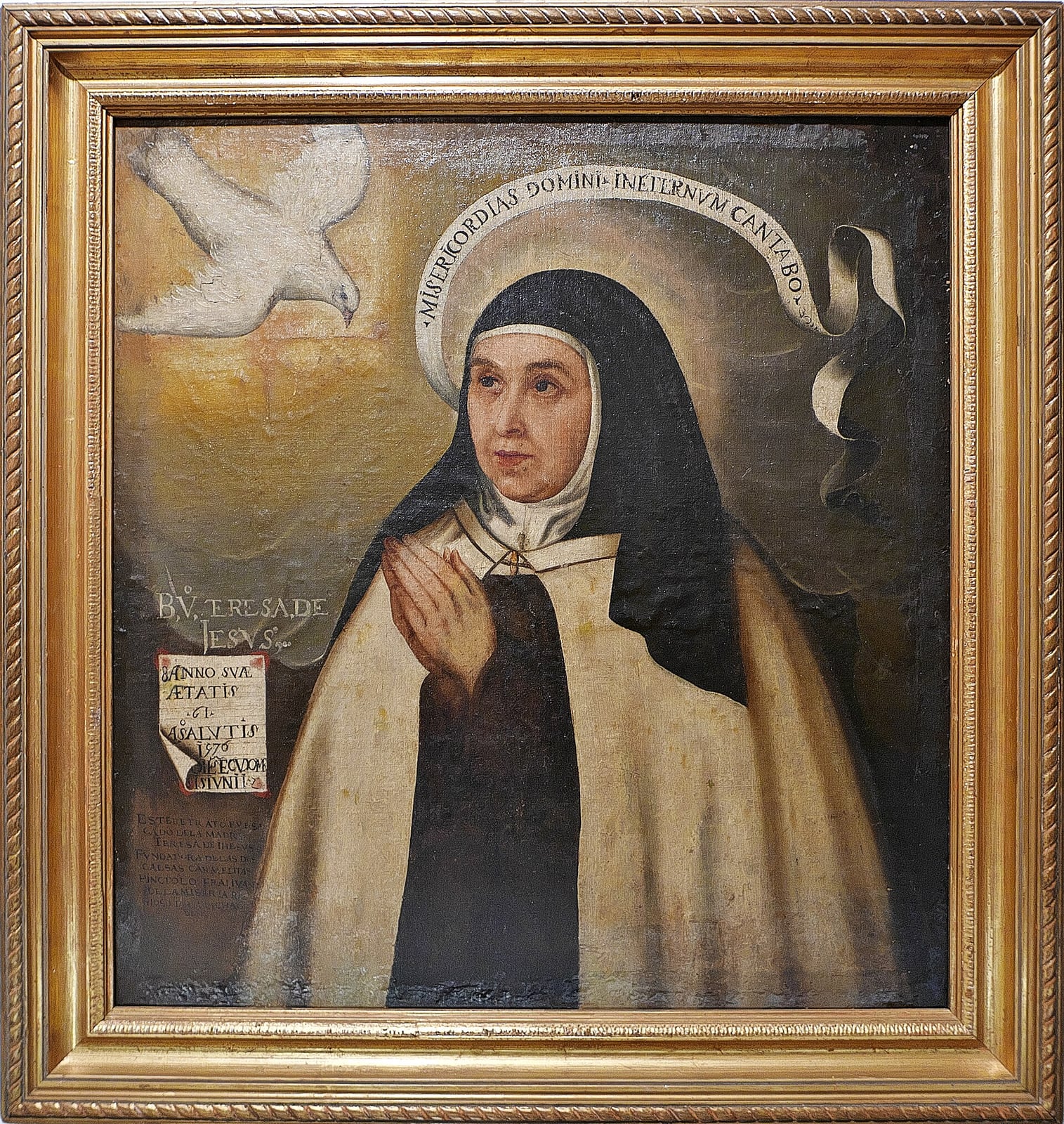
Teresa of Ávila
Übereinstimmung bei: Wer bin ich? Gibt es ein wahres Selbst? · Warum leiden wir? · Was geschieht nach dem Tod?
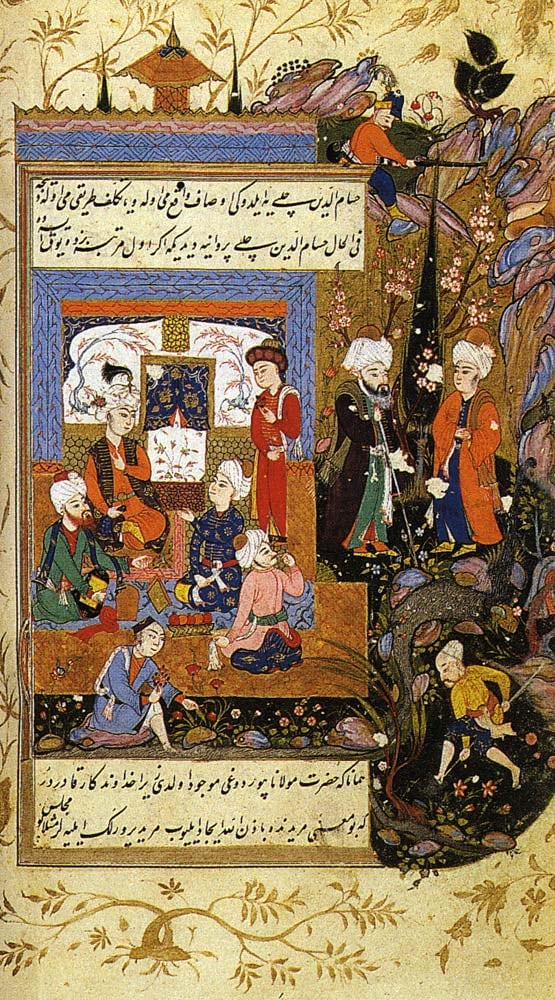
Rumi
Übereinstimmung bei: Wer bin ich? Gibt es ein wahres Selbst? · Warum leiden wir? · Was geschieht nach dem Tod?
Denkt anders als

Patañjali
Widerspruch bei: Wer bin ich? Gibt es ein wahres Selbst? · Was geschieht nach dem Tod?

Pema Chödrön
Widerspruch bei: Wer bin ich? Gibt es ein wahres Selbst? · Was geschieht nach dem Tod?
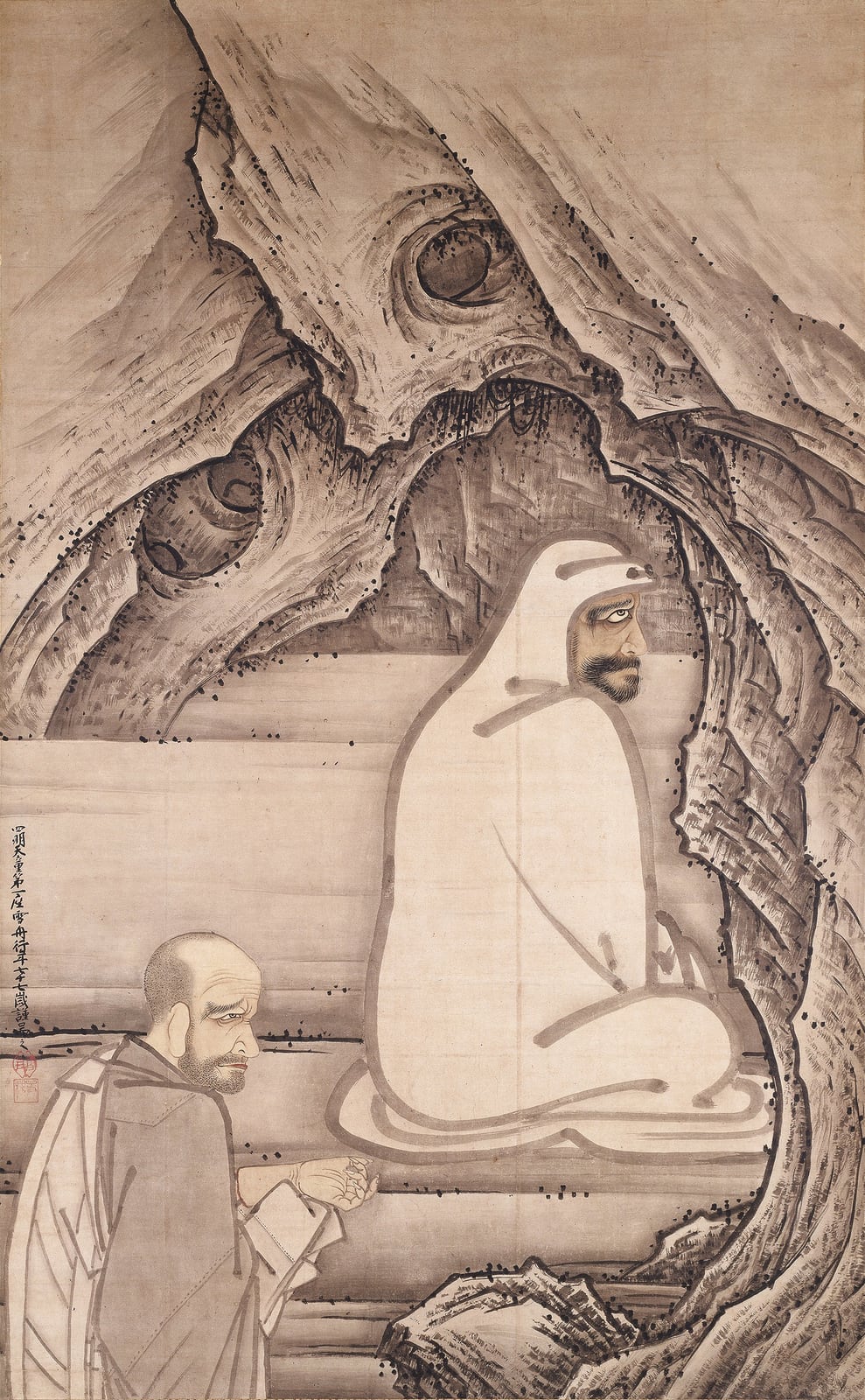
Bodhidharma
Widerspruch bei: Wer bin ich? Gibt es ein wahres Selbst? · Was geschieht nach dem Tod?

Tsongkhapa
Widerspruch bei: Wer bin ich? Gibt es ein wahres Selbst? · Was geschieht nach dem Tod?
Anekdoten und Erzählungen
Anekdoten und Erzählungen
Zeugnis1862; 1875–1876
Three meetings with Sophia
Herkunft der Erzählung: The only testimony is Solovyov's own, in the poem Three Meetings (1898), written in a deliberately humorous tone and with the author's footnotes; the general is Rostislav Fadeyev, whom he names. His letters of 1875–1876 from London and Cairo speak of the journey but not of the visions.
Belegt10 de marzo de 1878
Two novelists in the same hall
Herkunft der Erzählung: The presence of the three at the 10 March lecture is recorded in the Tolstoy–Strakhov correspondence and in Anna Dostoevskaya's memoirs; the reconstruction and the quotation from Tolstoy's letter of 5 February 1881 come from Pavel Basinsky's article in Rossiyskaya Gazeta (2011).
Belegtjunio de 1878
With Dostoevsky at Optina
Herkunft der Erzählung: Told by Anna Grigoryevna Dostoevskaya in her Reminiscences (chapter on 1878). The identification of Solovyov with Alyosha or Ivan is a critical interpretation, not Dostoevsky's own statement.
Belegt28 de marzo de 1881
'Let him not execute them'
Herkunft der Erzählung: The episode is recorded in official documents (Solovyov's written explanations) and by biographers (Mochulsky, Losev). The full text of the lecture does not survive; the exact words addressed to the Tsar are known from summaries and witnesses, which do not agree in every detail.
Quelle: Mochulski, Konstantín. Владимир Соловьев: жизнь и учение [Vladímir Soloviov: vida y doctrina]. París: YMCA-Press, 1936 (2.ª ed., 1951).
Umstritten1896; 1900
A disputed communion
Herkunft der Erzählung: The 1896 communion is known from the testimony of the priest Nikolai Tolstoy, spread by Catholic authors after the philosopher's death; Solovyov mentions it in no writing, and its scope — conversion or ecumenical gesture? — is still debated (Besschetnova, 2021). The 1900 confession was related by the Uzkoye priest in Moskovskie Vedomosti (1910). E. Trubetskoy's interpretation comes from The Worldview of Vl. S. Solovyov (1913).
Zeugnisjulio de 1900
Praying for the Jewish people
Herkunft der Erzählung: Direct testimony of Sergei Trubetskoy, published in Vestnik Evropy in 1900, a few weeks after the death.
Lehren
Lehren
Die Begriffe, die das Denken gliedern, in ihrem Zusammenhang erklärt.
All-unity (vseedinstvo)unitotalidad
It takes up the Neoplatonic One-All, Schelling's philosophy of identity and the 'integral knowledge' of the Slavophiles Kireyevsky and Khomyakov; it became the axis of the Russian 'philosophy of all-unity' (Frank, Karsavin, Losev).
Quelle: Nemeth, Thomas. «Solovyov, Vladimir». Internet Encyclopedia of Philosophy.
Godmanhood (bogochelovechestvo)divinohumanidad
Set out in the Lectures on Godmanhood (1878); it was the concept that named the Russian religious philosophy of the Silver Age and was developed by Bulgakov and Berdyaev.
Sophia, divine Wisdomsofia
First formulated in La Sophia (1875–1876); set out in the Lectures (lectures VII–VIII) and in book III of Russia and the Universal Church; poetic testimony in Three Meetings.
Free theocracy and the universal Churchteocracia-libre
In dialogue with the Catholic ecclesiology of Vatican I, with Bishop Strossmayer and with the Slavophile critique of Rome (Khomyakov).
Quelle: Nemeth, Thomas. «Solovyov, Vladimir». Internet Encyclopedia of Philosophy.
The meaning of love and syzygysentido-del-amor
Set out in The Meaning of Love (1892–1894); it influenced Berdyaev, Russian Symbolism and twentieth-century theology of the body.
The philanthropic Antichristel-anticristo
The culmination of Three Conversations (1900); its reading by Cardinal Giacomo Biffi and other theologians gave it wide circulation in late twentieth-century Catholicism.
Videos
Videos
Aufnahmen, Gespräche und Dokumentarfilme. Die Videos werden von YouTube wiedergegeben; sie werden nicht hier gespeichert.
История Западной философии. Лекция №41. «Владимир Соловьев — отец русской христианской мысли»
Vortrag· RU
Лекции А.Б. ЗубоваOffizieller Kanal
Лекция Сидорина В. В. «Владимир Соловьев — поэт, философ, гражданин»
Vortrag· RU· 2022
Институт философии РАНOffizieller Kanal
Владимир Сергеевич Соловьев: поэт, философ, гражданин
Vortrag· RU
РГБМ • Библиотека для молодёжиOffizieller Kanal
«Неподвижно лишь солнце любви»: к 170-летию со дня рождения Владимира Соловьёва
Vortrag· RU· 2023
Новосибирская областная научная библиотекаOffizieller Kanal
О русском философе Владимире Соловьеве
Vortrag· RU
Алексей Ильич ОсиповOffizieller Kanal
Владимир Соловьёв — Смысл любви (лекция)
Vortrag· RU
Мастерская Валерия Бондаренко
Владимир Соловьев. Смысл любви. Аудиокнига
Aufnahme Dritter· RU
Библиотека горсовета
Philosophy of Love in the Context of Russian Philosophy. V. Solovyov and P. Florensky
Vortrag· EN
Studium Europy Wschodniej (Universidad de Varsovia)Offizieller Kanal
Religion and the State in Russian Philosophy (Vladimir Soloviev and Nikolai Berdiaev)
Vortrag· EN· 2021
REES Queens (Queen's University)Offizieller Kanal
War, Progress, and the End of History — Vladimir Solovyov | Full Audiobook
Aufnahme Dritter· EN
Allellu
Breve relato del Anticristo, por Vladimir Soloviev
Aufnahme Dritter· ES
Roberto Langella
Análisis de «Breve relato del Anticristo», de V. Soloviev
Analyse· ES
Roberto Langella
Vladimir Solov'ëv: il ritratto dell'anticristo — Elena Bianchini Braglia
Analyse· IT
Cronache di Cielo e Terra
Galerie
Galerie
Bilder mit geprüfter Lizenz. Jedes bewahrt seine Urheberschaft und seinen Herkunftsnachweis.
Beziehungen
Beziehungen
Einflüsse, Schülerschaften und Verwandtschaften. Die belegte Beziehung wird von der durch Analyse ermittelten Ähnlichkeit unterschieden.
Begegnete
Friends from 1873 despite a thirty-year age gap. In 1878 Dostoevsky followed his Lectures on Godmanhood and in June they travelled together to Optina monastery. Solovyov devoted Three Speeches in Memory of Dostoevsky (1881–1883) to him, and critics have seen traits of his in Alyosha and Ivan Karamazov.
Belegte Beziehung
Beeinflusst von
In his Three Speeches Solovyov read Dostoevsky as a prophet of the universal Church and of Godmanhood; the theme of the 'man-god' against the God-man, central to both, grew out of their conversations.
Belegte Beziehung
Widersprach
He shared Tolstoy's critique of capital punishment and nationalism but rejected his non-resistance to evil and his Christianity without resurrection. In Three Conversations (1900) he portrayed him in the Prince, a Tolstoyan whose morality without metaphysics cannot answer evil, and his Antichrist is a pacifist philanthropist. Tolstoy attended one of his 1878 lectures.
Belegte Beziehung
Beeinflusste
Berdyaev, who never met him, considered him the founder of Russian religious philosophy and argued with him all his life: he devoted 'The Problem of East and West in the Religious Consciousness of Vl. Solovyov' (1911) to him and inherited from him the idea of Godmanhood, though he reproached him for an over-rational system and a theocratic optimism.
Belegte Beziehung
Beeinflusste
Florensky's sophiology in The Pillar and Ground of the Truth (1914) starts from Solovyov's, which it corrects with patristic tradition and the Russian iconography of Holy Wisdom.
Belegte Beziehung
Widersprach
Solovyov criticised Theosophy in a review of The Key to Theosophy (1890) and in 'A Note on H. P. Blavatsky' (1892), written amid the controversy over the revelations of his brother Vsevolod, who had known the founder in Paris and denounced her in A Modern Priestess of Isis.
Belegte Beziehung
Beeinflusst von
In his formative years, and particularly in London in 1875, Solovyov read Böhme along with the Gnostics, the Kabbalah and Swedenborg; Böhme's Sophia, eternal virgin and mirror of the Godhead, is one of the acknowledged sources of his sophiology.
Belegte Beziehung
Beeinflusst von
For Solovyov Plato was the first philosopher of all-unity and of eros as a path to the divine. In his last years he translated him with his brother Mikhail and devoted The Life Drama of Plato (1898) to him, presenting him as the idealist who discovered the world of ideas without managing to embody it.
Belegte Beziehung
Verwandte Gedanken mit
No direct relation is recorded. Solovyov's idea of Godmanhood and of the transfiguration of matter shares with Seraphim's teaching on the acquisition of the Holy Spirit the Orthodox inheritance of deification (theosis); Seraphim was canonised in 1903, three years after Solovyov's death.
Durch Analyse ermittelte Ähnlichkeit
Von anderen Einträgen aus verknüpft
- Leo Tolstoy · Widersprach
- Nikolai Berdyaev · Beeinflusst von
- Pierre Teilhard de Chardin · Verwandte Gedanken mit
- Emanuel Swedenborg · Beeinflusste
- Rudolf Steiner · Verwandte Gedanken mit
- Jakob Böhme · Beeinflusste
- Pavel Florensky · Beeinflusst von
- Fyodor Dostoevsky · Begegnete
- Fyodor Dostoevsky · Beeinflusste
Quellen
Quellen
Für diesen Eintrag herangezogene Bibliografie und Kataloge.
- Wikidata, Q282280: Vladimir Solovyov, filósofo ruso (1853–1900). P31=Q5; 64 enlaces entre wikis.
- Trubetskói, Serguéi Nikoláievich. «Смерть В. С. Соловьева» [La muerte de V. S. Soloviov]. Вестник Европы, 1900, n.º 9. Texto en Wikisource ruso (procedente de az.lib.ru).
- Mochulski, Konstantín. Владимир Соловьев: жизнь и учение [Vladímir Soloviov: vida y doctrina]. París: YMCA-Press, 1936 (2.ª ed., 1951).
- Lósev, Alekséi F. Владимир Соловьев и его время [Vladímir Soloviov y su tiempo]. Moscú: Progress, 1990.
- Nemeth, Thomas. «Solovyov, Vladimir». Internet Encyclopedia of Philosophy.
- Soloviov, V. S. «Три свидания» [Tres encuentros] (1898), en Стихотворения и шуточные пьесы, ed. Z. G. Mints. Leningrado: Sovetski pisatel (Biblioteka poeta), 1974, pp. 125–132. Texto en Wikisource ruso.
- Wikisource ruso: «Автор:Владимир Сергеевич Соловьёв» (índice de obras y poemas con fechas).
- Kornblatt, Judith Deutsch (ed. y trad.). Divine Sophia: The Wisdom Writings of Vladimir Solovyov. Ithaca: Cornell University Press, 2009.
- Dostoiévskaya, Anna Grigórievna. Воспоминания [Memorias]. Moscú: Judózhestvennaya literatura, 1971 (primera edición, 1925). Texto en Wikisource ruso.
- Open Library, autor OL83077A: Vladimir Sergeyevich Solovyov (1853–1900), obras y ediciones.
- Soloviov, Serguéi Mijáilovich (sobrino). Владимир Соловьев: жизнь и творческая эволюция [Vladímir Soloviov: vida y evolución creadora]. Moscú: Respublika, 1997 (escrito en 1923; primera ed., Bruselas: Zhizn s Bogom, 1977).
- Kólosov, N. (sacerdote), con el testimonio del sacerdote Beliáiev, que lo confesó. «Об исповедании В. С. Соловьева» [Sobre la confesión de V. S. Soloviov], carta al editor. Московские ведомости, n.º 253, 3 (16) de noviembre de 1910; reimpr. en Письма Владимира Сергеевича Соловьева, t. 3, San Petersburgo, 1911, pp. 214–217.
- Soloviov, V. S. Собрание сочинений [Obras reunidas], 2.ª ed., ed. S. M. Soloviov y E. L. Rádlov, 10 vols. San Petersburgo: Prosveshchenie, 1911–1914.
- «Соловьёв, Владимир Сергеевич». Wikipedia en ruso (biografía, relación de obras con enlaces a las ediciones digitales).
- Basinski, Pável. «130 лет назад ушел из жизни Федор Михайлович Достоевский». Российская газета, 9 de febrero de 2011 (la conferencia de Soloviov del 10 de marzo de 1878 y la carta de Tolstói a Strájov de febrero de 1881).
- Soloviov, V. S. «Смысл любви» [El sentido del amor]. Вопросы философии и психологии, 1892–1894. Texto en Wikisource ruso (procedente de az.lib.ru).
- Soloviev, Vladimir. L'Idée russe. París: Perrin et Cie, 1888. Texto validado en Wikisource francés.
- Soloviov, V. S. «Три разговора о войне, прогрессе и конце всемирной истории, со включением краткой повести об антихристе» [Tres conversaciones…]. San Petersburgo, 1900. Texto en Wikisource ruso (según la ed. «Смысл любви. Избранные произведения», Moscú: Sovremennik, 1991).
- Soloviov, V. S. «Чтения о Богочеловечестве» [Lecciones sobre la divinohumanidad]. 1878–1881. Texto en Wikisource ruso (procedente de az.lib.ru).
- Besschétnova, E. V. «Стал ли Вл. С. Соловьев католиком (историко-философский анализ)» [¿Se hizo católico Vl. S. Soloviov?]. История философии, 2021, vol. 26, n.º 1, pp. 76–86.
- Rechteinhaber
- Dominio público (Soloviov murió en 1900). Las traducciones modernas pertenecen a sus traductores y editoriales.
Bestätigung ausstehend
Was dieser Eintrag noch nicht klären konnte. Wir sagen es lieber, als es aufzufüllen.
- Ediciones españolas con ISBN de «La crisis de la filosofía occidental», «Crítica de los principios abstractos», «Tres discursos en memoria de Dostoievski» (salvo ediciones independientes) y «El sentido del amor» fuera de Monte Carmelo: no localizadas en los catálogos consultados (Google Books sin cuota durante la investigación).
- Confirmar qué textos contiene «Introducción a los principios del conocimiento y otros escritos» (Sígueme, ISBN 9788430122073) y el traductor de «Teohumanidad» (Sígueme, 2006) y de «Los tres diálogos y el relato del Anticristo» (El Buey Mudo).
- Registrar uno por uno los cerca de doscientos poemas (índice completo en Wikisource ruso) y las piezas humorísticas; hoy figuran la colección «Poesías» y ocho poemas principales.
- Registrar individualmente los artículos menores de 1890–1900 y los artículos del diccionario Brokgauz-Efrón (sólo agrupados).
- Confirmar la primera publicación (revista y año) de «La teoría de Auguste Comte…», «Teoría filosófica» y la traducción de «El puchero de oro» de Hoffmann.
- Fecha exacta (día) y testigos de la comunión de febrero de 1896 con Nikolái Tolstói: no cotejados con el relato original del sacerdote.
- Traducciones inglesas de dominio público en Internet Archive (Bakshy, 1915) no incluidas en la sala de lectura: falta verificar la fecha de muerte de Alexander Bakshy.
- Duración y año de publicación de los vídeos: oEmbed no los proporciona; se han dejado null salvo los fechados en su título o descripción.
Recherchiert am 2026-10-25