Christliche Mystik · Theosophie · Anthroposophie
Rudolf Steiner
1861 – 1925Historisch belegte Person
Österreichischer Philosoph, Esoteriker und Reformer (1861–1925). Als Herausgeber von Goethes naturwissenschaftlichen Schriften und Verfasser der Philosophie der Freiheit (1894) leitete er die deutsche Sektion der Theosophischen Gesellschaft und begründete 1913 die Anthroposophie, eine „Geisteswissenschaft“ christlicher und goethescher Prägung. Aus seinem Werk gingen die Waldorfpädagogik, die biologisch-dynamische Landwirtschaft, die anthroposophische Medizin und die Eurythmie hervor. Er hinterließ mehr als dreißig Bücher und rund sechstausend Vorträge, die wegen ihres pseudowissenschaftlichen Charakters umstritten sind.
- Werke
- 68Werke
- Ausgaben
- 131Ausgaben
- Zitate
- 7Zitate
- Videos
- 12Videos
- Bilder
- 10Bilder
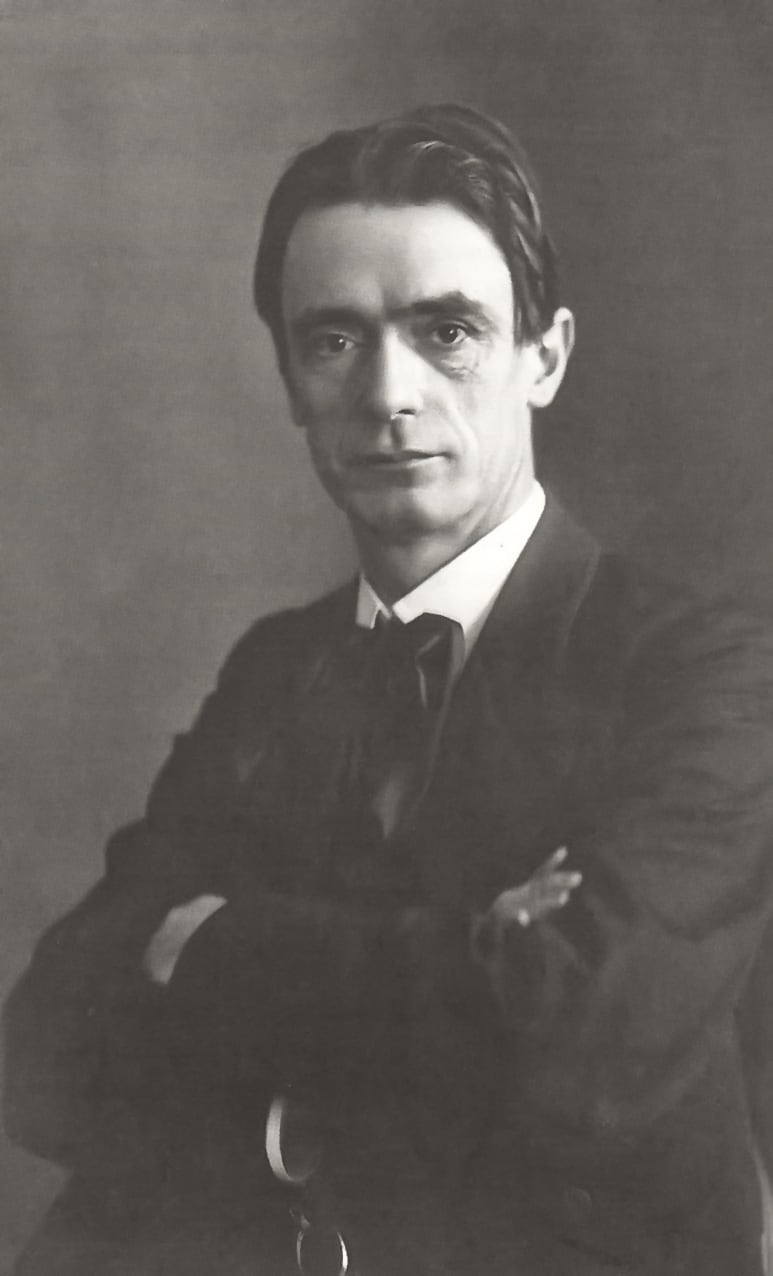
Rudolf Steiner hacia 1905 · Public domain
In eigenen Worten
«Nur wenn ich meiner Liebe zu dem Objekte folge, dann bin ich es selbst, der handelt.»Die Philosophie der Freiheit (1894), cap. «Die Idee der Freiheit»

Der zentrale Gedanke
Anthroposophy (spiritual science): Steiner took the term 'anthroposophy' from a book by the Austrian philosopher Robert Zimmermann (1856) and defined it as 'a path of knowledge that would lead the spiritual in the human being to the spiritual in the universe'.
Im Zusammenhang sehen
Biografie
5 Min. Lesezeit
Unterstützte Übersetzung aus dem spanischen Original, Durchsicht durch einen muttersprachlichen Übersetzer ausstehend.
Der Sohn des Telegrafisten
Rudolf Joseph Lorenz Steiner wurde in Kraljevec auf der Murinsel (Muraköz) geboren – damals Teil des Königreichs Ungarn, heute Kroatiens –, und zwar am 27. Februar 1861, wie er selbst stets angab, wenngleich Familiendokumente auf den 25. hindeuten. Sein Vater Johann Steiner war Jäger im Dienst der Grafen Hoyos gewesen und arbeitete als Telegrafist der österreichischen Südbahn; seine Mutter Franziska Blie hatte im selben Haus gedient. Die Familie lebte an kleinen Bahnstationen in Niederösterreich – Mödling, Pottschach – und von 1869 an in Neudörfl, einem ungarischen Dorf an der Grenze zu Niederösterreich, zwischen Telegraf, Zügen und alpiner Landschaft. In seiner Autobiographie erzählt Steiner, er habe als Kind in der Geometrie den Beweis gefunden, dass die Seele etwas erkennen kann, was die Sinne nicht sehen, und mit acht oder neun Jahren zum ersten Mal wahrgenommen, was er später die geistige Welt nennen sollte. Es sind Erinnerungen, die sechzig Jahre später niedergeschrieben wurden, und die Kritik liest sie als Teil der Inszenierung seiner eigenen Gestalt.
Wien und Goethe
Er besuchte die Realschule in Wiener Neustadt und von 1879 bis 1883 die Technische Hochschule in Wien, wo er Vorlesungen in Mathematik, Naturwissenschaften, Literatur und Philosophie hörte, ohne einen Abschluss zu erwerben. Dort fand er seinen Lehrer, den Germanisten Karl Julius Schröer, der ihn 1882 Joseph Kürschner empfahl, um Goethes naturwissenschaftliche Schriften in der Reihe Deutsche National-Litteratur herauszugeben. Der Einundzwanzigjährige verfasste die Einleitungen zu diesen Bänden (1883–1897) sowie die Grundlinien einer Erkenntnistheorie der Goetheschen Weltanschauung (1886). Seinen Lebensunterhalt verdiente er sechs Jahre lang als Hauslehrer der Familie Specht in Wien, wo er einen wasserköpfigen, für bildungsunfähig gehaltenen Jungen mit Erfolg unterrichtete, der später Arzt wurde.
Weimar und die Philosophie der Freiheit
1890 übersiedelte er nach Weimar, um im Goethe- und Schiller-Archiv an der großen Ausgabe von Goethes Werken mitzuarbeiten. 1891 wurde er an der Universität Rostock mit einer Dissertation über Fichtes Erkenntnistheorie zum Doktor der Philosophie promoviert; im folgenden Jahr erschien sie erweitert als Wahrheit und Wissenschaft. 1894 veröffentlichte er Die Philosophie der Freiheit, das Werk, das er stets als Grundlage alles Späteren betrachtete: eine Erkenntnistheorie, die das Denken zu jener Tätigkeit macht, in der sich der Mensch als frei erlebt, und eine Ethik des „ethischen Individualismus“, in der die freie Handlung aus der „Liebe zum Handeln“ selbst hervorgeht und nicht aus äußeren Normen. In diesen Jahren verkehrte er mit Ernst Haeckel, bewunderte Max Stirner und schrieb Friedrich Nietzsche, ein Kämpfer gegen seine Zeit (1895); 1896 führte ihn Elisabeth Förster-Nietzsche zu dem kranken Philosophen.
Berlin: vom Freidenkertum zur Theosophie
1897 ließ er sich als Herausgeber des Magazins für Literatur in Berlin nieder und bewegte sich in den Kreisen der Boheme und der individualistischen Anarchisten der Hauptstadt. An der von Wilhelm Liebknecht gegründeten Arbeiterbildungsschule unterrichtete er Geschichte und Redekunst (1899–1904), und 1899 heiratete er Anna Eunike, eine Witwe, in deren Haus er wohnte. Im Jahr darauf, 1900, begann er in der theosophischen Bibliothek des Grafen und der Gräfin Brockdorff Vorträge zu halten; 1902, nachdem er erst im Januar desselben Jahres der Theosophischen Gesellschaft beigetreten war, übernahm er das Amt des Generalsekretärs ihrer neuen deutschen Sektion, an der Seite von Marie von Sivers, die seine Mitarbeiterin und von 1914 an seine zweite Frau werden sollte. Innerhalb weniger Jahre veröffentlichte er die Bücher, die den Kern seiner Lehre bilden: Theosophie (1904), Wie erlangt man Erkenntnisse der höheren Welten? (1904–1905) und Die Geheimwissenschaft im Umriß (1910).
Die Anthroposophie und das Goetheanum
Steiner lenkte die Theosophie zur abendländischen esoterischen Überlieferung hin – zum Rosenkreuzertum, zur deutschen Mystik, zu Goethe – und stellte das „Mysterium von Golgatha“, die Menschwerdung Christi als einmaliges kosmisches Ereignis, in ihren Mittelpunkt. Die Spannungen mit der Leitung in Adyar spitzten sich zu, als Annie Besant den jungen Jiddu Krishnamurti zum künftigen Weltenlehrer ausrief; 1912/13 trennte sich die Mehrheit der deutschen Sektion und gründete die Anthroposophische Gesellschaft. Zwischen 1910 und 1913 schrieb er vier Mysteriendramen und brachte sie in München zur Uraufführung, und gemeinsam mit Marie von Sivers entwickelte er die Eurythmie, eine Bewegungskunst. 1913 wurde in Dornach bei Basel der Grundstein zum Goetheanum gelegt, einem großen Holzbau mit zwei Kuppeln, den er selbst entwarf und den Freiwillige aus siebzehn Ländern während des Ersten Weltkriegs errichteten.
Die praktischen Impulse
Die deutsche Niederlage von 1918 trieb Steiner zum sozialen Handeln. In Die Kernpunkte der sozialen Frage (1919) entwarf er die „Dreigliederung des sozialen Organismus“ – die Trennung von Geistesleben, Rechtsleben und Wirtschaftsleben. Im selben Jahr gründete er auf Bitten des Fabrikanten Emil Molt in Stuttgart für die Kinder der Arbeiter der Zigarettenfabrik Waldorf-Astoria die erste Waldorfschule. Es folgten Kurse für Ärzte, gemeinsam mit Ita Wegman, aus denen die anthroposophische Medizin und das Laboratorium Weleda hervorgingen; ein Kurs für Priester, aus dem 1922 die Christengemeinschaft Friedrich Rittelmeyers entstand; und 1924 der Landwirtschaftliche Kurs in Koberwitz, der Ursprung der biologisch-dynamischen Landwirtschaft. Zugleich wurde er von der nationalistischen Rechten angegriffen: 1922 wurde einer seiner Vorträge in München gewaltsam gestört.
Der Brand und die Weihnachtstagung 1923
In der Silvesternacht 1922 brannte das erste Goetheanum vollständig nieder, ein Brand, den die Polizei wahrscheinlich auf Brandstiftung zurückführte. Steiner entwarf einen zweiten Bau, diesmal aus Beton, der 1928 vollendet wurde. Zu Weihnachten 1923 begründete er die Gesellschaft als Allgemeine Anthroposophische Gesellschaft neu, übernahm selbst ihren Vorsitz und die Leitung ihrer Freien Hochschule für Geisteswissenschaft und sprach die Grundsteinmeditation. Das Jahr 1924 war von erschöpfender Tätigkeit erfüllt: Hunderte von Vorträgen, darunter die Zyklen über karmische Zusammenhänge sowie die Kurse über Heilpädagogik, Landwirtschaft und Sprachgestaltung.
Ende und Vermächtnis
Am 28. September 1924 hielt er seinen letzten Vortrag; krank verbrachte er die folgenden Monate in seinem Atelier in Dornach, wo er an seiner Autobiographie Mein Lebensgang weiterschrieb, bis sie bei den Ereignissen um 1907 abbrach. Dort starb er am 30. März 1925 im Alter von vierundsechzig Jahren. Er hinterließ mehr als dreißig Bücher und rund sechstausend Vorträge, die meisten von Stenografen mitgeschrieben und von ihm nicht durchgesehen, die heute eine Gesamtausgabe von über 350 Bänden bilden. Sein Werk hat ebenso Anhängerschaft wie scharfe Kritik hervorgerufen: Historiker wie Helmut Zander haben auf seine Entlehnungen aus der theosophischen Literatur, den pseudowissenschaftlichen Charakter vieler seiner Behauptungen und seine Rassenlehre hingewiesen, während seine Initiativen – mehr als tausend Waldorfschulen, die biologisch-dynamische Landwirtschaft, die anthroposophische Medizin, die Camphill-Gemeinschaften – weltweit fortbestehen.
Quellen: Steiner, Rudolf. Mein Lebensgang. Eine nicht vollendete Autobiographie (GA 28). Dornach: Philosophisch-Anthroposophischer Verlag, 1925; ed. actual Basilea: Rudolf Steiner Verlag. · Lindenberg, Christoph. Rudolf Steiner. Eine Biographie. 2 vols. Stuttgart: Verlag Freies Geistesleben, 1997. · Zander, Helmut. Rudolf Steiner. Die Biografie. Múnich: Piper, 2011 (ed. rústica 2016). · Lachman, Gary. Rudolf Steiner: An Introduction to His Life and Work. Nueva York: Jeremy P. Tarcher/Penguin, 2007. · Steiner, Rudolf. Die Philosophie der Freiheit. Grundzüge einer modernen Weltanschauung. Berlín: Emil Felber, 1894 (texto en Project Gutenberg, ebook n.º 53493).
Zeitleiste
Das Leben, Jahr für Jahr
Jeder Punkt ist ein belegtes Ereignis. Klicken Sie, um es mit Quelle und Grad der Gewissheit zu lesen.
27. Februar 18610 JahreKraljevec (Muraköz, Reino de Hungría; hoy Donji Kraljevec, Croacia)
Birth
The first child of the railway telegraphist Johann Steiner and Franziska Blie is born. Steiner always gave 27 February; family documents suggest the 25th.
UmstrittenSteiner, Rudolf. Mein Lebensgang. Eine nicht vollendete Autobiographie (GA 28). Dornach: Philosophisch-Anthroposophischer Verlag, 1925; ed. actual Basilea: Rudolf Steiner Verlag.
Nach dem Tod
- 29. September 1928Second Goetheanum
- 1956The Gesamtausgabe begins
27. Februar 1861 · 0 Jahre
Birth
The first child of the railway telegraphist Johann Steiner and Franziska Blie is born. Steiner always gave 27 February; family documents suggest the 25th.
Umstritten
1869 · 8 Jahre
Neudörfl
The family settles in Neudörfl; Steiner would date his first supersensible experiences and his fascination with geometry to these years.
Wahrscheinlich
1879 – 1883 · 18 Jahre
Vienna Technical University
He studies science and attends Karl Julius Schröer's literature lectures; he leaves in 1883 without a degree.
Belegt
1882 · 21 Jahre
Editor of Goethe
On Schröer's recommendation, Joseph Kürschner commissions him to edit Goethe's scientific writings (published 1883–1897).
Belegt
1884 – 1890 · 23 Jahre
Tutor to the Specht family
For six years he tutors the children of the merchant Ladislaus Specht, among them a hydrocephalic boy who later becomes a physician.
Belegt
1890 – 1897 · 29 Jahre
Goethe and Schiller Archive
He works on the Weimar (Sophien) edition of Goethe's scientific works until 1897.
Belegt
Oktober 1891 · 30 Jahre
Doctorate
He takes his doctorate at the University of Rostock with a thesis on Fichte's theory of knowledge.
Wahrscheinlich
1894 · 33 Jahre
The Philosophy of Freedom
He publishes Die Philosophie der Freiheit (dated 1894, issued at the end of 1893).
Belegt
Januar 1896 · 34 Jahre
Before Nietzsche
Elisabeth Förster-Nietzsche takes him to see her brother, already incapacitated; for a time Steiner arranges the philosopher's library.
Wahrscheinlich
1897 · 36 Jahre
Magazin für Literatur
He moves to Berlin as co-owner and editor of the literary magazine; in 1899 he marries Anna Eunike and begins teaching at the Workers' Education School.
Belegt
Oktober 1902 · 41 Jahre
General Secretary of the German Section of the Theosophical Society
With Marie von Sivers he takes charge of the new German Section; he publishes Christianity as Mystical Fact.
Belegt
1904 · 43 Jahre
Theosophy and the path of knowledge
He publishes Theosophy and begins serialising How to Know Higher Worlds in Lucifer-Gnosis.
Belegt
Mai 1907 · 46 Jahre
Munich Congress
He organises the congress of the Federation of European Sections of the Theosophical Society, with a Rosicrucian aesthetic announcing his own direction.
Belegt
1910 · 49 Jahre
Occult Science and the first mystery drama
Die Geheimwissenschaft im Umriss appears (dated 1910) and The Portal of Initiation is premiered in Munich.
Belegt
Februar 1913 · 51 Jahre
Founding of the Anthroposophical Society
After expulsion from the Theosophical Society over the Krishnamurti dispute, most of the German Section forms the Anthroposophical Society.
Belegt
20. September 1913 · 52 Jahre
Foundation stone of the Goetheanum
The foundation stone of the double-domed wooden building designed by Steiner is laid.
Belegt
24. Dezember 1914 · 53 Jahre
Marriage to Marie von Sivers
He marries his collaborator of twelve years; Anna Eunike had died in 1911.
Wahrscheinlich
7. September 1919 · 58 Jahre
First Waldorf school
He opens the Freie Waldorfschule for the children of workers at Emil Molt's Waldorf-Astoria factory; that year he publishes Towards Social Renewal.
Belegt
31. Dezember 1922 · 61 Jahre
Fire at the Goetheanum
On New Year's Eve the first Goetheanum burns to the ground; police point to arson.
Belegt
24. Dezember 1923 – 1924 · 62 Jahre
Christmas Conference
He refounds the General Anthroposophical Society, assumes its presidency and gives the Foundation Stone Meditation (24 December 1923 – 1 January 1924).
Belegt
7. Juni 1924 · 63 Jahre
Agriculture course
He gives the eight lectures that originate biodynamic agriculture (7–16 June).
Belegt
28. September 1924 · 63 Jahre
Last lecture
He gives his last address, on the eve of Michaelmas; thereafter he remains ill in his studio.
Belegt
30. März 1925 · 64 Jahre
Death
He dies in his studio beside the Goetheanum under construction; the autobiography is left unfinished.
Belegt
29. September 1928
Second Goetheanum
The second Goetheanum, in concrete, built to Steiner's model, is inaugurated.
Wahrscheinlich
1956
The Gesamtausgabe begins
The Rudolf Steiner Nachlassverwaltung begins the complete edition (GA), which today exceeds 350 volumes.
Wahrscheinlich
Werke
Grundlegende Werke
Die Werke, ohne die sich das Vermächtnis nicht verstehen lässt.
Schriftliches Werk · 1894
Die Philosophie der Freiheit. Grundzüge einer modernen Weltanschauung (GA 4)
Steiner's central philosophical work. Part one, 'The Science of Freedom', analyses the observation of thinking as the secure starting point of knowledge and the relation between percept and concept; part two, 'The Reality of Freedom', founds an 'ethical individualism': free action springs from a moral intuition loved for its own sake, guided by 'moral imagination'. Steiner reissued it in 1918 with additions and regarded it as the philosophical germ of anthroposophy.
5 Ausgaben
Schriftliches Werk · 1904
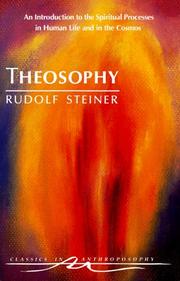
Theosophie. Einführung in übersinnliche Welterkenntnis und Menschenbestimmung (GA 9)
A fundamental book of his teaching. It describes the human being in three aspects—body, soul and spirit—subdivided into nine members; explains reincarnation and karma as spiritual law; surveys the three worlds (physical, soul and spiritual) through which the human being passes between death and a new birth; and ends with an outline of the 'path of knowledge'. Steiner revised it in many editions.
4 Ausgaben

Schriftliches Werk · um 1904
Wie erlangt man Erkenntnisse der höheren Welten? (GA 10)
A manual of inner development serialised in Lucifer-Gnosis (1904–1905) and published as a book in 1909. It describes the conditions of discipleship—reverence, inner calm, control of thought, equanimity—meditation exercises and the stages of preparation, illumination and initiation, with the warning to take three steps in moral improvement for every step in occult knowledge.
5 Ausgaben

Schriftliches Werk · 1910
Die Geheimwissenschaft im Umriss (GA 13)
His principal cosmological work, issued in December 1909 with the date 1910. It describes the nature of the human being, sleep and death, and the evolution of the cosmos through the planetary states of Saturn, Sun, Moon, Earth and the future Jupiter, Venus and Vulcan, with the intervention of the spiritual hierarchies, of Lucifer and Ahriman and of Christ; it closes with the path of knowledge of higher worlds.
5 Ausgaben
Das gesamte Werk (68)

Einleitungen zu Goethes Naturwissenschaftlichen Schriften (GA 1)
1883

Grundlinien einer Erkenntnistheorie der Goetheschen Weltanschauung mit besonderer Rücksicht auf Schiller (GA 2)
1886

Wahrheit und Wissenschaft. Vorspiel einer «Philosophie der Freiheit» (GA 3)
1892

Dokumente zur «Philosophie der Freiheit» (GA 4a)
1994

Friedrich Nietzsche, ein Kämpfer gegen seine Zeit (GA 5)
1895

Goethes Weltanschauung (GA 6)
1897

Die Mystik im Aufgange des neuzeitlichen Geisteslebens und ihr Verhältnis zur modernen Weltanschauung (GA 7)
1901

Das Christentum als mystische Tatsache und die Mysterien des Altertums (GA 8)
1902

Aus der Akasha-Chronik (GA 11)
1904

Die Stufen der höheren Erkenntnis (GA 12)
1905

Die Erziehung des Kindes vom Gesichtspunkte der Geisteswissenschaft
1907

Vier Mysteriendramen (GA 14)
1910

Die geistige Führung des Menschen und der Menschheit (GA 15)
1911

Ein Weg zur Selbsterkenntnis des Menschen. In acht Meditationen (GA 16)
1912

Die Schwelle der geistigen Welt. Aphoristische Ausführungen (GA 17)
1913

Die Rätsel der Philosophie in ihrer Geschichte als Umriss dargestellt (GA 18)
1914

Vom Menschenrätsel (GA 20)
1916

Von Seelenrätseln (GA 21)
1917

Goethes Geistesart in ihrer Offenbarung durch seinen Faust und durch das Märchen von der Schlange und der Lilie (GA 22)
1918

Die Kernpunkte der sozialen Frage in den Lebensnotwendigkeiten der Gegenwart und Zukunft (GA 23)
1919

Aufsätze über die Dreigliederung des sozialen Organismus und zur Zeitlage 1915–1921 (GA 24)
1961
Rudolf Steiner
Kosmologie, Religion und Philosophie (GA 25)
The Conscious LibraryKosmologie, Religion und Philosophie (GA 25)
1922

Anthroposophische Leitsätze. Der Erkenntnisweg der Anthroposophie – Das Michael-Mysterium (GA 26)
1925
Rudolf Steiner
Grundlegendes für eine Erweiterung der Heilkunst nach geisteswissenschaftlichen Erkenntnissen (GA 27)
The Conscious LibraryGrundlegendes für eine Erweiterung der Heilkunst nach geisteswissenschaftlichen Erkenntnissen (GA 27)
1925
Zitate
Zitate, die in einem bestimmten Werk nachgewiesen sind. Jedes trägt seine Herkunft und seinen Grad an Verlässlichkeit.
Nur wenn ich meiner Liebe zu dem Objekte folge, dann bin ich es selbst, der handelt.GeprüftDie Philosophie der Freiheit (1894), cap. «Die Idee der Freiheit»
Apokryphe Zitate oder Zitate umstrittener Zuschreibung (1)
«"Receive the child in reverence, educate him in love, and send him forth in freedom."»
A widely circulated Waldorf motto attributed to Steiner. We have not found this literal wording in his books or in the GA education cycles; it summarises ideas from his lectures to teachers and appears to be a later synthesis by the Waldorf movement. It should be cited as a motto, not as a verbatim quotation.
Letzte Worte
Es gibt keine überprüfbaren Aufzeichnungen der letzten Worte.
No reliable last words survive. He died on the morning of 30 March 1925 in his studio at Dornach, attended by the physician Ita Wegman; Marie Steiner arrived from Stuttgart after he had died. The accounts of those present, gathered by Guenther Wachsmuth, describe a peaceful death, with his hands crossed on his breast, but record no final sentence.
Quelle: Wachsmuth, Guenther. Die Geburt der Geisteswissenschaft. Rudolf Steiners Lebensgang von der Jahrhundertwende bis zum Tode. Dornach: Philosophisch-Anthroposophischer Verlag, 1941 (trad. ingl. The Life and Work of Rudolf Steiner, 1955).
Fragen
Was das Werk beantwortet
Zwölf große Fragen der Menschheit und was sich aus den Texten darauf antworten lässt, mit Belegen. Wir legen niemandem Worte in den Mund.
Was ist das Absolute? Gibt es Gott?
A divine-spiritual world with hierarchies of beings and a cosmic Christ
Persönlich und unpersönlich zugleichAus der Lehre abgeleitet
Steiner hardly uses the word God in the abstract. In The Philosophy of Freedom he defends a monism that needs no lawgiver outside the world. In his anthroposophical period he describes, in An Outline of Esoteric Science, a divine-spiritual world populated by hierarchies of beings who, through the cosmic phases he calls Saturn, Sun, Moon and Earth, have guided the evolution of the human being. Within that picture he places a trinity: the paternal ground of the world, Christ as a cosmic being incarnated in Jesus, whose death at Golgotha he regards as the centre of earthly evolution, and the Spirit. The divine thus has an aspect of universal ground and another of personal beings with whom the human being relates, but both are to be known through spiritual research, not accepted on faith.
Diese Frage mit anderen Meistern vergleichenWer bin ich? Gibt es ein wahres Selbst?
The I is the spiritual core that reincarnates in body, soul and spirit
Eine sich entwickelnde SeeleAusdrücklich gesagt
In Theosophy, of 1904, Steiner describes the human being as body, soul and spirit, and divides these members into a physical body, an etheric or life body, an astral body and the I, to which are added spiritual members still in germ. The I is the centre: the instance that says I of itself and that no other person can utter for it. This spiritual core is not exhausted in one life; in the chapter on the reincarnation of the spirit and destiny he maintains that it incarnates again, and that the capacities and destiny of each biography are the fruit of earlier lives. Already in The Philosophy of Freedom he had placed individuality in thinking and free action. The true self is not an illusion: it is a spiritual individuality in evolution.
Diese Frage mit anderen Meistern vergleichenWarum leiden wir?
Destiny is the fruit of earlier lives and an organ of the I's development
Karma und das Lernen der SeeleAusdrücklich gesagt
Steiner approaches suffering through karma. In Theosophy he maintains that each person's destiny, including their pains, is the consequence of what their individuality did in earlier lives; and in the lecture cycle Manifestations of Karma, of 1910, he studies how illnesses, accidents and catastrophes relate to spiritual causes. But he insists that karma is neither punishment nor fatalism: the I, before birth, in some way seeks out the circumstances it needs in order to compensate and develop, and pain can become strength and capacity in a future life. In his cosmology, moreover, suffering is inscribed in the evolution of humanity, in which act powers he calls Luciferic and Ahrimanic, which the Christ impulse makes it possible to balance.
Diese Frage mit anderen Meistern vergleichenWas geschieht nach dem Tod?
The I passes through the soul world and spirit land before reincarnating
Wiedergeburt nach dem KarmaAusdrücklich gesagt
Steiner describes the path after death in the chapter on the three worlds in Theosophy. At death the human being leaves the physical body and, shortly afterwards, the etheric, at which point he beholds his past life as a great tableau. He then passes through the soul world, where he must free himself from desires bound to the physical, a phase he elsewhere calls kamaloka, and enters spirit land, where he works over the fruits of the completed life and prepares the next. Afterwards he incarnates again, according to accumulated karma. In his lectures he developed these stages in detail, as well as the relation between the living and the dead, to whom he recommended reading spiritual texts. Death is neither end nor fusion, but a rhythm in the evolution of the I.
Diese Frage mit anderen Meistern vergleichenWie erlangt man Befreiung oder Erlösung?
A path of conscious exercises awakening organs of spiritual perception
Durch bewusste innere ArbeitAusdrücklich gesagt
Steiner does not speak of salvation in an ecclesiastical sense, but of a development of the human being that each person can freely undertake. In How to Know Higher Worlds and in An Outline of Esoteric Science he describes a path of exercises: reverence, inner calm, a retrospective review of the day, concentration of thought, control of the will, equanimity, unprejudiced openness and meditation on images and phrases, which gradually awaken faculties of spiritual perception he calls imagination, inspiration and intuition. The moral condition is strict: for every step in occult knowledge, three must be taken in the perfection of character. To one's own work he adds the Christ impulse, which he regards as the force that makes the freedom of the I possible in the Earth's evolution, but which does not replace conscious effort.
Diese Frage mit anderen Meistern vergleichenBraucht es einen Lehrer?
The teacher gives directions, but the modern pupil must test everything by thinking
Hilfreich, aber nicht unverzichtbarAusdrücklich gesagt
Steiner was for decades the teacher of a large movement and gave personal esoteric instruction to many pupils, but he insisted that the modern path of knowledge does not require blind obedience. In How to Know Higher Worlds he explains that the spiritual teacher can indicate the exercises and conditions, but that the pupil must travel them freely and understand what he is doing; the communications of spiritual research, he adds in other writings, can be examined with sound thinking even before one has verified them by one's own vision. Already in The Philosophy of Freedom he had argued that authentic moral action springs from one's own intuition and not from authority. He therefore recognises the guide's value, but subordinates it to the freedom of the I.
Diese Frage mit anderen Meistern vergleichenIst die Welt wirklich?
Physical world, soul world and spirit land, in cosmic evolution
DaseinsebenenAusdrücklich gesagt
In Theosophy, Steiner describes three worlds: the physical, perceived by the senses; the soul world, made of forces of sympathy and antipathy, desires and feelings; and spirit land, where the archetypes of everything that exists reside. The human being belongs to all three through body, soul and spirit. In An Outline of Esoteric Science he adds a temporal dimension: the present world is the fourth phase of a cosmic evolution, preceded by those he calls Saturn, Sun and Moon, in which hierarchies of spiritual beings have gradually formed the cosmos and the human being. The physical world is real and must be studied with the rigour of natural science, which Steiner admired since his work on Goethe, but it is the outer manifestation of spiritual realities accessible to an extended knowledge.
Diese Frage mit anderen Meistern vergleichenWas ist Liebe?
The Earth is the cosmos of love; free action is born of love for the deed
Liebe zu Gott und zum NächstenAusdrücklich gesagt
Steiner treats love on two levels. In The Philosophy of Freedom, truly free action proceeds not from duty or authority but from love of the action's object: only when I follow my love for the object am I the one who acts; and the maxim of free human beings is to live in love for the deed and let live in understanding of the other's will. In An Outline of Esoteric Science he gives love a cosmic dimension: the old Moon was the cosmos of wisdom, and the Earth's mission is to become the cosmos of love. In that process he assigns a central role to the Christ impulse, which he regards as the source of a love able to unite human beings without cancelling their individuality. Love is thus both the fruit of freedom and the task of evolution.
Diese Frage mit anderen Meistern vergleichenSind wir frei, oder ist alles vorherbestimmt?
Freedom is not given: it is won in pure thinking, within karma
Karma und WahlAusdrücklich gesagt
The Philosophy of Freedom, of 1894, asks whether the human being is free or determined, and answers that he is neither in advance: he can become free. He is free when he acts moved by moral intuitions he himself grasps through thinking, and not by impulses, habits or others' commands; Steiner calls this view ethical individualism. In his anthroposophical period he adds the law of karma: the circumstances of each life are the consequence of earlier lives, but they do not determine how the I responds to them, which can transform them and, by present action, sow future destiny. In his writings and lectures on karma he insists that it does not contradict freedom: it inherits the starting situation, not the response.
Diese Frage mit anderen Meistern vergleichenWozu meditieren oder beten?
Meditating to awaken organs that perceive spiritual reality
Die Wirklichkeit sehen, wie sie istAusdrücklich gesagt
Steiner conceives meditation as an instrument of knowledge. In How to Know Higher Worlds and An Outline of Esoteric Science he proposes exercises of concentration on symbolic images and phrases, such as the cross with roses, which strengthen the soul until faculties of spiritual perception awaken in it: imagination, inspiration and intuition. The aim is to see reality as it is, including what the senses do not reach, with the same clarity with which scientific thinking sees nature. Meditation must be practised in full consciousness, without losing the I or falling into trance states, and accompanied by moral work. He also wrote meditative verses for each week of the year in the Calendar of the Soul.
Diese Frage mit anderen Meistern vergleichenKann die Vernunft das Letzte erkennen?
There are no limits to knowledge: thinking can investigate the spiritual
Esoterisches WissenAusdrücklich gesagt
Steiner argues expressly with Kant and with those who assert insuperable limits to knowledge. In Truth and Knowledge, in A Theory of Knowledge Implicit in Goethe's World-Conception and in The Philosophy of Freedom he holds that knowing is the synthesis of percept and concept, and that thinking, which lies beyond subject and object, grasps reality itself, not a subjective representation of it. From there he takes the step to his spiritual science: if thinking is strengthened through meditative exercises, it can investigate the spiritual worlds with a rigour comparable to that of natural science. He calls this research anthroposophy and maintains that its results, though born of supersensible experience, can be examined with sound thinking.
Diese Frage mit anderen Meistern vergleichenSich von der Welt zurückziehen oder sie verwandeln?
Spiritual science must fertilise school, farm, medicine and social order
Sich in der Welt engagierenAusdrücklich gesagt
Few spiritual teachers have left so practical a mark as Steiner. From 1919 he applied his spiritual science to almost every field: he founded in Stuttgart the first Waldorf school for the children of workers at a cigarette factory; in 1924 he gave the agriculture course from which biodynamic farming arose; with the physician Ita Wegman he developed anthroposophical medicine and a curative education; and in The Threefold Social Order he proposed a threefolding of the social organism into three autonomous spheres, free spiritual life, egalitarian legal life and fraternal economic life. He warned that there is no panacea for ordering social relations. Inner life is not separated from the world: it must transform it.
Diese Frage mit anderen Meistern vergleichen
Affinitäten und Spannungen
Affinitäten und Spannungen
Frage für Frage aus den Positionen berechnet. Den Grund jeder Übereinstimmung und jedes Widerspruchs zeigt ein Klick.
Denkt ähnlich wie
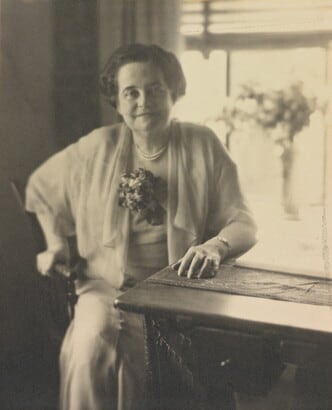
Alice A. Bailey
Übereinstimmung bei: Was ist das Absolute? Gibt es Gott? · Wer bin ich? Gibt es ein wahres Selbst? · Warum leiden wir?
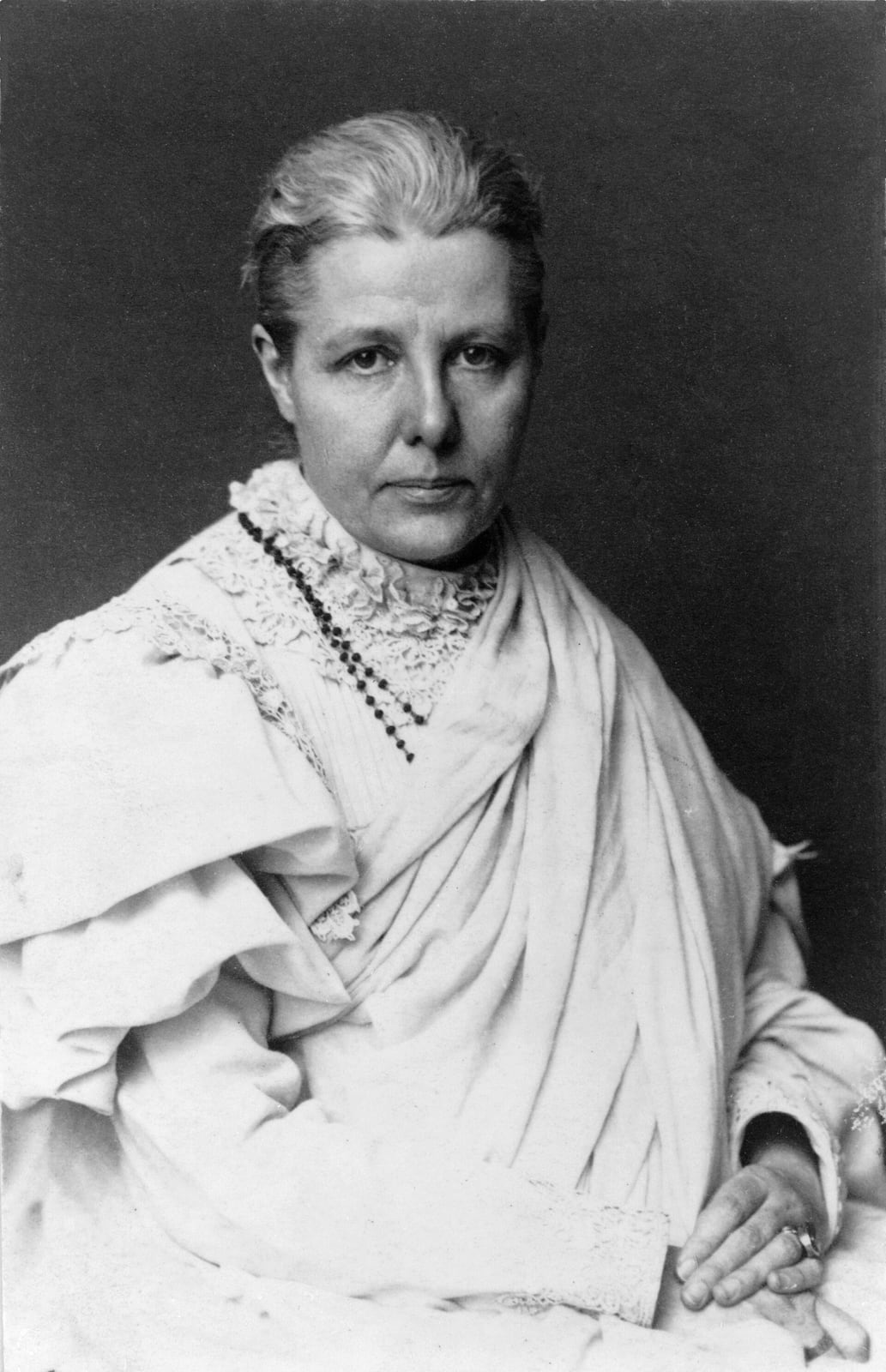
Annie Besant
Übereinstimmung bei: Was ist das Absolute? Gibt es Gott? · Ist die Welt wirklich? · Wer bin ich? Gibt es ein wahres Selbst?
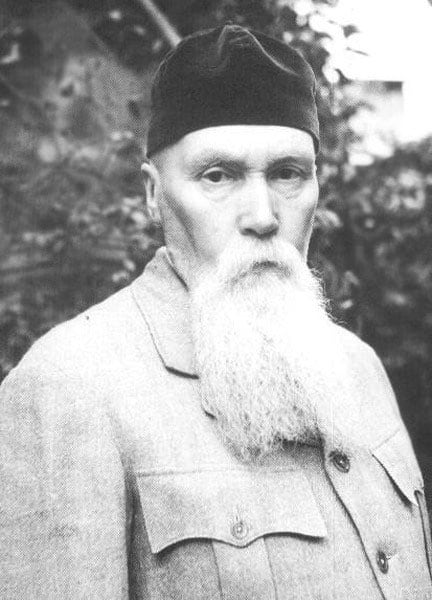
Nicholas Roerich
Übereinstimmung bei: Ist die Welt wirklich? · Kann die Vernunft das Letzte erkennen? · Sich von der Welt zurückziehen oder sie verwandeln?
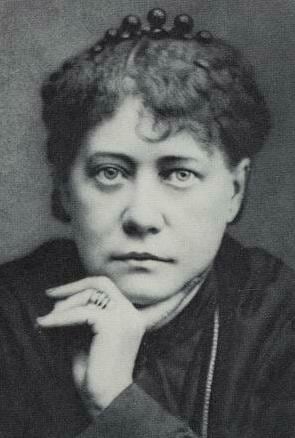
Helena Blavatsky
Übereinstimmung bei: Ist die Welt wirklich? · Wer bin ich? Gibt es ein wahres Selbst? · Warum leiden wir?


Anekdoten und Erzählungen
Anekdoten und Erzählungen
Zeugnisc. 1868
The visit of the dead aunt
Herkunft der Erzählung: Steiner's autobiographical lecture in Berlin, 4 February 1913 (published in the Beiträge zur Rudolf Steiner Gesamtausgabe); recorded by Lindenberg and critically discussed by Zander.
Quelle: Lindenberg, Christoph. Rudolf Steiner. Eine Biographie. 2 vols. Stuttgart: Verlag Freies Geistesleben, 1997.
Zeugnisc. 1879–1882
The herb gatherer on the train
Herkunft der Erzählung: The Course of My Life, ch. III; Koguzki's identity and house were documented by anthroposophical researchers. The figure of the 'Master' has no documentary support (Zander).
Quelle: Steiner, Rudolf. Mein Lebensgang. Eine nicht vollendete Autobiographie (GA 28). Dornach: Philosophisch-Anthroposophischer Verlag, 1925; ed. actual Basilea: Rudolf Steiner Verlag.
Zeugnis1884–1890
The boy who could not learn
Herkunft der Erzählung: The Course of My Life, ch. VI. Otto Specht's medical career and death in the war are confirmed by biographers (Lindenberg); the degree of his initial disability is known only from Steiner.
Quelle: Steiner, Rudolf. Mein Lebensgang. Eine nicht vollendete Autobiographie (GA 28). Dornach: Philosophisch-Anthroposophischer Verlag, 1925; ed. actual Basilea: Rudolf Steiner Verlag.
Belegt1896
Before the sick Nietzsche
Herkunft der Erzählung: The Course of My Life, ch. XVIII, and Steiner's articles on the Nietzsche archive (1900). The lessons and the break with Elisabeth Förster-Nietzsche are documented in letters.
Quelle: Steiner, Rudolf. Mein Lebensgang. Eine nicht vollendete Autobiographie (GA 28). Dornach: Philosophisch-Anthroposophischer Verlag, 1925; ed. actual Basilea: Rudolf Steiner Verlag.
Belegt1922–1923
The night of the fire
Herkunft der Erzählung: Police reports and contemporary press; eyewitness accounts gathered by Wachsmuth and Lindenberg. Responsibility for the fire remains unproven.
Quelle: Zander, Helmut. Rudolf Steiner. Die Biografie. Múnich: Piper, 2011 (ed. rústica 2016).
Belegt1924
The farmers of Koberwitz
Herkunft der Erzählung: Transcript of the course (GA 327) and documentation of the Agriculture Section of the Goetheanum.
Quelle: Steiner, Rudolf. Geisteswissenschaftliche Grundlagen zum Gedeihen der Landwirtschaft. Landwirtschaftlicher Kurs (GA 327). Koberwitz, 7–16 de junio de 1924.
Lehren
Lehren
Die Begriffe, die das Denken gliedern, in ihrem Zusammenhang erklärt.
Anthroposophy (spiritual science)antroposofia
From German idealism and Goethe to Theosophy and Western esotericism.
Quelle: Zander, Helmut. Rudolf Steiner. Die Biografie. Múnich: Piper, 2011 (ed. rústica 2016).
Ethical individualism and free thinkingindividualismo-etico
Post-Kantian epistemology; nineteenth-century individualism.
The members of the human beingmiembros-del-ser-humano
Reworked Theosophical anthropology.
Quelle: Zander, Helmut. Rudolf Steiner. Die Biografie. Múnich: Piper, 2011 (ed. rústica 2016).
Reincarnation and karmareencarnacion-y-karma
Theosophy; German idealism (Lessing).
Quelle: Zander, Helmut. Rudolf Steiner. Die Biografie. Múnich: Piper, 2011 (ed. rústica 2016).
Imagination, Inspiration, Intuitionimaginacion-inspiracion-intuicion
Western mysticism and Rosicrucian esotericism.
Quelle: Steiner, Rudolf. Mein Lebensgang. Eine nicht vollendete Autobiographie (GA 28). Dornach: Philosophisch-Anthroposophischer Verlag, 1925; ed. actual Basilea: Rudolf Steiner Verlag.
The threefold social ordertriformacion-social
Postwar German crisis; European social thought.
The Mystery of Golgotha, Lucifer and Ahrimanmisterio-del-golgota
Esoteric Christology; break with the Theosophical Society.
Quelle: Zander, Helmut. Rudolf Steiner. Die Biografie. Múnich: Piper, 2011 (ed. rústica 2016).
Videos
Videos
Aufnahmen, Gespräche und Dokumentarfilme. Die Videos werden von YouTube wiedergegeben; sie werden nicht hier gespeichert.
Rudolf Steiner and his Waldorf philosophy
Dokumentarfilm· EN· 2025· 43 min
DW DocumentaryOffizieller Kanal
Rudolf Steiner y su universo Waldorf
Dokumentarfilm· ES· 2025· 43 min
DW DocumentalOffizieller Kanal
Mythos Rudolf Steiner – was steckt hinter Waldorfschulen, Weleda und Demeter?
Dokumentarfilm· DE· 2024· 30 min
Terra X HistoryOffizieller Kanal
Rudolf Steiner und die Anthroposophie (Sternstunde Philosophie)
Gespräch· DE· 2022· 65 min
SRF Kultur SternstundenOffizieller Kanal
Dr. Rudolf Steiner, aus seinem Lebensgang (ARTE)
Dokumentarfilm· DE· 2025· 90 min
videoattac2
The Life of Rudolf Steiner (Rudolf Steiners Leben)
Dokumentarfilm· DE· 59 min
Steinerfilms
The Challenge of Rudolf Steiner, part one
Dokumentarfilm· DE· 93 min
Steinerfilms
The Life and Work of Rudolf Steiner with Gary Lachman
Gespräch· EN· 2018· 66 min
New Thinking Allowed with Jeffrey Mishlove
Rudolf Steiner's First Goetheanum with Brian Gray
Vortrag· EN· 2022· 94 min
Anthroposophical Society · Faust Branch Sacramento
André Leu — Rudolf Steiner: 100 years ahead of the science of his time
Vortrag· EN· 2019· 31 min
Sektion für LandwirtschaftOffizieller Kanal
Intuitive Thinking as a Spiritual Path (The Philosophy of Freedom) — audiolibro
Aufnahme Dritter· EN· 2019· 457 min
Rudolf Steiner Press AudioOffizieller Kanal
El desafío de Rudolf Steiner
Auf YouTube ansehen
Dieses Video lässt sich nicht einbetten; es wird auf YouTube geöffnet.
El desafío de Rudolf Steiner
Dokumentarfilm· ES· 93 min
Benjamin Moreno
Galerie
Galerie
Bilder mit geprüfter Lizenz. Jedes bewahrt seine Urheberschaft und seinen Herkunftsnachweis.
Handschriften
Handschriften
Handschriftliche Zeugen und alte Texte, mit ihrer verwahrenden Einrichtung und ihren Einsichtsbedingungen.
DE · Latin (Kurrent y escritura latina) · 1879–1925
Nachlass Rudolf Steiner (manuscritos, cuadernos de notas, cartas, dibujos de pizarra)
- Erhaltener Textzeuge
- Unos 600 cuadernos de notas, manuscritos de libros, cartas y alrededor de 1100 dibujos en pizarra
- Verwahrende Einrichtung
- Rudolf Steiner Archiv, Dornach (Suiza)
DE · Taquigrafía Gabelsberger · 1900–1924
Mitschriften der Vorträge (estenogramas)
- Erhaltener Textzeuge
- Unas 3700 transcripciones taquigráficas de conferencias
- Verwahrende Einrichtung
- Rudolf Steiner Archiv, Dornach
Beziehungen
Beziehungen
Einflüsse, Schülerschaften und Verwandtschaften. Die belegte Beziehung wird von der durch Analyse ermittelten Ähnlichkeit unterschieden.
Beeinflusst von
Her cosmology (root races, Atlantis, planes) is a reworked source of Cosmic Memory and Occult Science; Steiner acknowledged her work and disagreed with its Eastern orientation.
Belegte Beziehung
Widersprach
She appointed him head of the Esoteric School in Germany (1904); the proclamation of Krishnamurti as World Teacher led to the 1912–1913 break.
Belegte Beziehung
Widersprach
Steiner publicly rejected the doctrine that Krishnamurti was the vehicle of the World Teacher; it was the immediate cause of the German Section's separation.
Belegte Beziehung
Begegnete
Friedrich Nietzsche
He devoted a book to him (1895) and saw him ill at Naumburg in 1896.
Belegte Beziehung
Beeinflusst von
Johann Wolfgang von Goethe
Editor of his scientific writings (1883–1897); his method of observation is the basis of Steiner's theory of knowledge and gives the Goetheanum its name.
Belegte Beziehung
Schüler von
Karl Julius Schröer
His teacher in Vienna, who introduced him to Goethe and recommended him to Kürschner.
Belegte Beziehung
Familie von
Marie Steiner-von Sivers
Collaborator from 1902 and wife from 1914; co-founder of eurythmy and speech formation and editor of his legacy.
Belegte Beziehung
Begegnete
Ita Wegman
Physician, co-author of Extending Practical Medicine and member of the Society's executive from 1923; she attended him in his last illness.
Belegte Beziehung
Beeinflusst von
The first chapter of Mysticism at the Dawn of the Modern Age (1901).
Belegte Beziehung
Beeinflusst von
Studied in Mysticism at the Dawn of the Modern Age (1901) as a precursor of his spiritual science.
Belegte Beziehung
Beeinflusst von
The centre of his Christology: he devoted cycles to the four Gospels and to the 'fifth Gospel'.
Belegte Beziehung
Begegnete
Édouard Schuré
Friend and collaborator; Steiner adapted and staged his dramas (GA 42), and Schuré prefaced the French translation of Christianity as Mystical Fact.
Belegte Beziehung
Beeinflusst von
Ernst Haeckel
Steiner defended his evolutionary monism in Haeckel and His Opponents (1900) before his Theosophical period.
Belegte Beziehung
Zeitgenosse von
Contemporaries in the German-speaking world with shared interests in Goethe, Gnosis and the life of the spirit, with no documented relationship.
Durch Analyse ermittelte Ähnlichkeit
Zeitgenosse von
Contemporaries in early twentieth-century European esotericism; no direct relationship is recorded.
Durch Analyse ermittelte Ähnlichkeit
Verwandte Gedanken mit
Both conceived Christ and Sophia within a religious philosophy of evolution; the affinity was noted by Russian anthroposophists, not by Steiner himself.
Durch Analyse ermittelte Ähnlichkeit
Zeitgenosse von
Both reworked Blavatsky's Theosophy in their own directions; there was no relationship.
Durch Analyse ermittelte Ähnlichkeit
Quellen
Quellen
Für diesen Eintrag herangezogene Bibliografie und Kataloge.
- Steiner, Rudolf. Mein Lebensgang. Eine nicht vollendete Autobiographie (GA 28). Dornach: Philosophisch-Anthroposophischer Verlag, 1925; ed. actual Basilea: Rudolf Steiner Verlag.
- Lindenberg, Christoph. Rudolf Steiner. Eine Biographie. 2 vols. Stuttgart: Verlag Freies Geistesleben, 1997.
- Zander, Helmut. Rudolf Steiner. Die Biografie. Múnich: Piper, 2011 (ed. rústica 2016).
- Lachman, Gary. Rudolf Steiner: An Introduction to His Life and Work. Nueva York: Jeremy P. Tarcher/Penguin, 2007.
- Steiner, Rudolf. Die Philosophie der Freiheit. Grundzüge einer modernen Weltanschauung. Berlín: Emil Felber, 1894 (texto en Project Gutenberg, ebook n.º 53493).
- Goetheanum, Dornach: sede de la Sociedad Antroposófica General y de la Escuela Superior de Ciencia Espiritual.
- McDermott, Robert (ed.). The Essential Steiner. San Francisco: Harper & Row, 1984 (nueva ed. The New Essential Steiner, Lindisfarne, 2009).
- Wikipedia (de), «Rudolf Steiner» (secciones «Edition des Werkes» y «Schriften»), y Wikipedia (en), «Rudolf Steiner», consultadas el 25 de octubre de 2026.
- Wikidata, «Rudolf Steiner» (Q78484).
- Rudolf Steiner Archiv, Dornach / Rudolf Steiner Verlag, Basilea: Rudolf Steiner Gesamtausgabe (GA).
- Rudolf Steiner Archive (Steiner Online Library), rsarchive.org: índice de la GA con traducciones inglesas (p. ej. «GA 37. Writings on the History of the Anthroposophical Movement and Society 1902–1925»).
- Jonas, Margaret (comp.). GA–RSE Titles: Listing of GA volumes and published English translations. Londres: Rudolf Steiner House Library, 1999, act. 2019.
- Deutsche Nationalbibliothek, catálogo en línea (SRU): ediciones del Rudolf Steiner Verlag por número de GA.
- Project Gutenberg: obras de Rudolf Steiner en alemán e inglés (Die Philosophie der Freiheit, n.º 53493; Die Kernpunkte der sozialen Frage, n.º 28494; The Way of Initiation, n.º 39986; etc.).
- Wachsmuth, Guenther. Die Geburt der Geisteswissenschaft. Rudolf Steiners Lebensgang von der Jahrhundertwende bis zum Tode. Dornach: Philosophisch-Anthroposophischer Verlag, 1941 (trad. ingl. The Life and Work of Rudolf Steiner, 1955).
- Steiner, Rudolf. Geisteswissenschaftliche Grundlagen zum Gedeihen der Landwirtschaft. Landwirtschaftlicher Kurs (GA 327). Koberwitz, 7–16 de junio de 1924.
- Rechteinhaber
- Dominio público en la UE (desde 1996) y en España (desde 2006) para toda la obra de Steiner (m. 1925), y en EE. UU. para lo publicado antes de 1930. Las ediciones de la GA, sus aparatos críticos y las traducciones modernas pertenecen a la Rudolf Steiner-Nachlassverwaltung / Rudolf Steiner Verlag (Basilea) y a sus editoriales.
- Offizielle Website
- www.rudolf-steiner.com/
Bestätigung ausstehend
Was dieser Eintrag noch nicht klären konnte. Wir sagen es lieber, als es aufzufüllen.
- Fecha de nacimiento: Steiner dio siempre el 27 de febrero de 1861; algunos documentos y biógrafos apuntan al 25. Se registra el 27 con certeza «disputed» en la cronología.
- Verificar el título y contenido exactos de la GA 41 y de la reordenación reciente de documentos (GA 46) que aparece en rsarchive.org; no se han registrado por falta de fuente fiable.
- Completar ISBN españoles e ingleses para varias obras escritas (GA 5, 7, 11, 14, 16, 18, 20, 22, 24–25, 29–39, 42–44) y localizar ediciones en francés, italiano y ruso.
- Registrar uno por uno los demás ciclos de conferencias significativos (p. ej. GA 107, 113, 129, 136, 146, 157, 194, 230, 233) siempre como transcripciones no revisadas.
- Cotejar con el texto alemán de GA 4 (ed. 1918) y GA 10 las dos citas marcadas como «probable».
- Confirmar las fechas marcadas como probables: doctorado (octubre de 1891), boda con Marie von Sivers (24-XII-1914), inauguración del segundo Goetheanum (29-IX-1928) e inicio de la GA (1956).
- Localizar textos alemanes de dominio público en línea (Wikisource alemán, Internet Archive con OCR limpio) de Theosophie, Wie erlangt man…? y Die Geheimwissenschaft im Umriss para la sala de lectura.
Recherchiert am 2026-10-25