Theosophie
Alice A. Bailey
1880 – 1949Historisch belegte Person
Alice A. Bailey (1880–1949), britische esoterische Schriftstellerin mit Wohnsitz in den Vereinigten Staaten, zeichnete vierundzwanzig Bücher, die eines der einflussreichsten Korpora der Theosophie nach Blavatsky bilden. Neunzehn davon stellte sie als telepathische Diktate eines Meisters dar, den sie »den Tibeter« nannte (später Djwhal Khul), fünf als ihr eigenes Werk. Mit ihrem Mann, Foster Bailey, gründete sie Lucis Trust und die Arkanschule, verbreitete die Große Invokation und machte den Ausdruck »New Age« populär. Ihr Vermächtnis ist ebenso umfangreich wie umstritten.
- Werke
- 33Werke
- Ausgaben
- 55Ausgaben
- Zitate
- 8Zitate
- Videos
- 9Videos
- Bilder
- 3Bilder
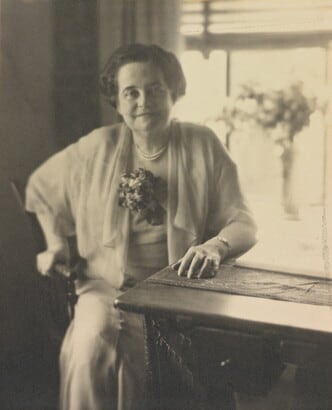
Alice A. Bailey en la década de 1940 · Public domain
In eigenen Worten
«From the point of Light within the Mind of God / Let light stream forth into the minds of men.»La Gran Invocación (versión de 1945), en The Reappearance of the Christ, páginas preliminares

Der zentrale Gedanke
Bailey distinguishes automatic writing, which she considers dangerous because it requires passivity, from the conscious telepathy she claimed to practise: positive attention, full control of the senses and faithful transcription, correcting only the English.
Im Zusammenhang sehen
Biografie
5 Min. Lesezeit
Unterstützte Übersetzung aus dem spanischen Original, Durchsicht durch einen muttersprachlichen Übersetzer ausstehend.
Ein Kind des viktorianischen Großbürgertums
Alice La Trobe-Bateman wurde am 16. Juni 1880 in Manchester in eine Ingenieursfamilie geboren. Ihr Großvater, John Frederic La Trobe-Bateman, war einer der großen Erbauer von Staudämmen und Wasserleitungen im industriellen England; ihr Vater, Frederic Foster La Trobe-Bateman, arbeitete für das Familienunternehmen und nahm das wenige Monate alte Kind mit nach Montreal, wo er an den Arbeiten an der Victoria-Brücke über den Sankt-Lorenz-Strom beteiligt war. Alles, was wir über diese Jahre wissen, stammt aus einem einzigen Zeugnis: der Unvollendeten Autobiographie, die sie selbst zwischen 1945 und 1948 verfasste und die ihr Witwer 1951 veröffentlichte. Es ist eine kostbare Quelle und zugleich eine interessengeleitete, geschrieben von einer Frau, die ihr eigenes Leben im Licht der Sendung las, die sie empfangen zu haben glaubte.
In dieser Erzählung erscheint die Kindheit umgeben von Luxus und von einer anhaltenden Traurigkeit. Die Mutter starb mit neunundzwanzig Jahren, als Alice sechs war; der kranke Vater starb kurz darauf auf einer Seereise nach Tasmanien. Die beiden Schwestern wuchsen bei den Großeltern in Moor Park (Surrey) auf und nach dem Tod des Großvaters zwischen Gouvernanten und langen Aufenthalten in Castramont, dem schottischen Haus einer Tante, Margaret Maxwell. Die Autorin verschweigt nicht, was viele Biographen verschwiegen hätten: Bevor sie fünfzehn wurde, habe sie dreimal versucht, sich das Leben zu nehmen.
Der Besucher mit dem Turban
Die Episode, die ihre ganze Autobiographie ordnet, ereignete sich am Sonntag, dem 30. Juni 1895, in Castramont. Allein im Salon, während die Familie in der Kirche war, sah sie – so ihr Bericht – einen hochgewachsenen Mann eintreten, europäisch gekleidet und mit einem Turban, der ihr verkündete, es sei eine Aufgabe in der Welt für sie vorgesehen, wenn es ihr gelinge, ihr Temperament zu beherrschen. Jahre später, im Porträtsaal der Esoterischen Sektion der Theosophischen Gesellschaft in Krotona, glaubte sie ihn im Bild des Meisters Koot Hoomi wiederzuerkennen. Kein anderer Zeuge bestätigt die Szene; sie ist im strengen Sinn ein persönliches Zeugnis.
Evangelistin, Ehefrau, Arbeiterin
Die junge Anglikanerin fand ihre Berufung zunächst in der Evangelisation. Sie arbeitete in den Soldatenheimen, die Elise Sandes in Irland leitete, und danach in Britisch-Indien, wo sie Zentren in Umballa und Ranikhet eröffnete. Dort lernte sie Walter Evans kennen, einen Soldaten, der Priester werden wollte; sie heirateten um 1907 in Großbritannien und zogen nach Cincinnati, wo er am Lane Theological Seminary studierte, bevor er in der Episkopalkirche ordiniert wurde. Die Ehe, die sie mit Härte schildert, war eine Abfolge von Entbehrungen und Gewalt. Drei Töchter kamen zur Welt – Dorothy, Mildred und Ellison –, und 1915, inzwischen in Pacific Grove (Kalifornien), trennte sich das Paar. Um die Mädchen zu ernähren, arbeitete die Enkelin des Ingenieurs aus Manchester in einer Sardinenkonservenfabrik.
Theosophie und Bruch
In Pacific Grove nahmen zwei Engländerinnen sie in die örtliche theosophische Loge mit. Die Lektüre von Blavatskys Geheimlehre verdrängte die Bibel von ihrem Nachttisch, und um 1917–1918 ließ sie sich in Krotona nieder, dem kalifornischen Sitz der Theosophischen Gesellschaft, wo sie die Cafeteria leitete, in die Esoterische Sektion eintrat und schließlich die Zeitschrift The Messenger herausgab. Im Januar 1919 lernte sie Foster Bailey kennen, der im selben Jahr zum Nationalsekretär ernannt wurde; nach der Scheidung heirateten sie 1921.
Das Paar stand an der Spitze einer Strömung, die der Führung in Adyar und dem Einfluss der Esoterischen Sektion auf die Gesellschaft kritisch gegenüberstand – mitten im Streit um Annie Besants Prophezeiungen über Krishnamurti. Die Versammlung von Chicago 1920 endete damit, dass beide ihrer Ämter enthoben wurden. Historiker – Bruce F. Campbell, Olav Hammer – nennen einen tieferen Grund: Besants Misstrauen gegenüber den Mitteilungen, die Alice zu empfangen behauptete.
Die Stimme des Tibeters
Im November 1919, auf einem Hügel bei ihrem Haus in Hollywood sitzend, hörte Bailey nach eigener Aussage einen musikalischen Ton und eine Stimme, die sie bat, Bücher für die Öffentlichkeit zu schreiben. Sie lehnte ab; nach drei Wochen kehrte die Stimme zurück, und sie willigte ein, es zu versuchen. So entstanden die ersten Kapitel von Initiation, menschliche und solare Einweihung (1922). Dreißig Jahre lang schrieb sie – stets mit Nachdruck darauf bestehend, es handle sich nicht um automatisches Schreiben, sondern um bewusste Telepathie – neunzehn Bände nach Diktat, die sie »dem Tibeter« zuschrieb, den sie schließlich als Djwhal Khul identifizierte, einen Meister der theosophischen Überlieferung. Fünf Bücher zeichnete sie als ihre eigenen. Die Urheberschaft ist daher die zentrale Frage ihres Werks: Theosophische Leser nehmen es als Übermittlung an; Historiker behandeln es als literarische Hervorbringung Baileys, die sich der Form der Offenbarung bedient. Sie selbst berichtet mit Ironie, Jung habe im Tibeter die Personifizierung ihres höheren Selbst gesehen.
Lucis Trust und die Arkanschule
In New York ansässig, gründeten die Baileys 1922 den Verlag, der ihr gesamtes Werk herausbringen sollte – zunächst Lucifer Publishing Company, ein Name, der auf das Licht anspielt und den sie bald in Lucis änderten –, und im April 1923 die Arkanschule, eine Fernausbildung in Meditation und Dienst, die keine Gehorsamseide verlangte. Um sie herum entstanden die Zeitschrift The Beacon, World Goodwill (mit ausdrücklicher Unterstützung der Vereinten Nationen) und das Netz der Dreiecke, Gruppen von drei Personen, die täglich meditieren. 1937 erschien eine erste Strophe der Großen Invokation und 1945 die Fassung, die heute in Dutzenden von Sprachen verbreitet ist.
Lehre, Einfluss und Kontroverse
Ihr System verarbeitet die Theosophie Blavatskys und Leadbeaters neu: eine Hierarchie von Meistern, die die Evolution lenkt, sieben Energiestrahlen, die Menschen und Nationen prägen, eine »esoterische« Astrologie und Heilkunst sowie die Erwartung einer Wiederkunft Christi, die eine universale Religion begründen werde. Ihr beharrlicher Gebrauch des Ausdrucks »Neues Zeitalter« erklärt, warum viele Forscher sie – über Findhorn und andere Gruppen – zu den Vorläufern der gleichnamigen Bewegung, des New Age, zählen.
Die Kontroverse gehört zum Erbe und muss ohne Abschwächung festgehalten werden. Texte wie Erziehung im Neuen Zeitalter und Die Bestimmung der Nationen enthalten eine Theorie geistiger Rassen und Passagen über das Judentum, die Autoren wie Yonassan Gershom, Hannah Newman und Victor Shnirelman als antisemitisch oder rassistisch bezeichnet haben. Lucis Trust hält dagegen, diese Lesarten rissen eine evolutionäre und symbolische Sprache aus ihrem Zusammenhang; der Leser findet hier beide Argumente.
Ende
Herz- und blutkrank, weigerte sich Bailey ab 1946, sich als Invalidin zu betrachten, und diktierte noch vom Krankenhaus aus Briefe. Sie starb am 15. Dezember 1949 in New York. Ihre Autobiographie blieb unvollendet; Die Strahlen und die Einweihungen, der letzte Band der Abhandlung über die sieben Strahlen, erschien 1960. Lucis Trust hält die Rechte und stellt ihre Bücher online sowie in zahlreiche Sprachen übersetzt zur Verfügung.
Quellen: Bailey, Alice A. The Unfinished Autobiography. Nueva York: Lucis Publishing Company, 1951 (© 1951, renovado 1979, Lucis Trust). · Campbell, Bruce F. Ancient Wisdom Revived: A History of the Theosophical Movement. Berkeley: University of California Press, 1980. · Hammer, Olav. Claiming Knowledge: Strategies of Epistemology from Theosophy to the New Age. Leiden: Brill, 2001. · Sutcliffe, Steven J. Children of the New Age: A History of Spiritual Practices. Londres: Routledge, 2003. · Bailey, Alice A. The Reappearance of the Christ. Nueva York: Lucis Publishing Company, 1948 (texto de la Gran Invocación en las páginas preliminares).
Zeitleiste
Das Leben, Jahr für Jahr
Jeder Punkt ist ein belegtes Ereignis. Klicken Sie, um es mit Quelle und Grad der Gewissheit zu lesen.
16. Juni 18800 JahreMánchester
Born in Manchester
Alice La Trobe-Bateman is born, daughter of the engineer Frederic Foster La Trobe-Bateman and Alice Hollinshead, granddaughter of the waterworks builder John Frederic La Trobe-Bateman.
BelegtBailey, Alice A. The Unfinished Autobiography. Nueva York: Lucis Publishing Company, 1951 (© 1951, renovado 1979, Lucis Trust).
Nach dem Tod
- 1951The Unfinished Autobiography published
- 1960Last volume of the dictation
16. Juni 1880 · 0 Jahre
Born in Manchester
Alice La Trobe-Bateman is born, daughter of the engineer Frederic Foster La Trobe-Bateman and Alice Hollinshead, granddaughter of the waterworks builder John Frederic La Trobe-Bateman.
Belegt
um 1886 · 6 Jahre
Death of her mother
Her mother dies at twenty-nine, when Alice is six; soon after, her father dies on a voyage to Tasmania and the girls are left with their grandparents at Moor Park, Surrey.
Belegt
30. Juni 1895 · 15 Jahre
The visitor in the turban
According to her autobiography, a stranger in a turban visits her at her aunt's house and announces a future task. She later identifies him with the Master Koot Hoomi. It is uncorroborated personal testimony.
Umstritten
um 1900 – 1906
Evangelist in the Soldiers' Homes
She works with Elise Sandes in the evangelical homes for British soldiers, first in Ireland and then in India, where she opens homes at Umballa and Ranikhet and meets Walter Evans.
Belegt
um 1907 · 27 Jahre
Marriage to Walter Evans
She marries Walter Evans in a private chapel in Britain and moves with him to Cincinnati, where he studies at Lane Theological Seminary before being ordained an Episcopal priest.
Wahrscheinlich
1915 · 35 Jahre
Separation and the sardine cannery
She separates definitively from Walter Evans and, with three young daughters (Dorothy, Mildred and Ellison), works in a sardine cannery to support them.
Belegt
um 1918 · 38 Jahre
Esoteric Section of the Theosophical Society
Having discovered Theosophy in Pacific Grove she settles at Krotona, joins the Esoteric Section and, in the shrine room, believes she recognises her 1895 visitor as the Master K. H.
Belegt
November 1919 · 39 Jahre
First contact with 'the Tibetan'
According to her account, a voice asks her to write books for the public. After refusing once, she agrees to try and receives the first chapters of Initiation, Human and Solar.
Umstritten
1920 · 40 Jahre
Break at the Chicago convention
The 1920 American Theosophical convention seals the confrontation between Adyar loyalists and the Baileys' group, who lose their posts and leave the Society.
Belegt
1921 · 41 Jahre
Marriage to Foster Bailey
Her divorce from Walter Evans granted, she marries Foster Bailey (1888–1977), who will be her partner in every later undertaking.
Belegt
1922 · 42 Jahre
First book and own press
Initiation, Human and Solar, Letters on Occult Meditation and The Consciousness of the Atom are published. The Baileys found the Lucifer Publishing Company, soon renamed Lucis.
Belegt
April 1923 · 42 Jahre
Founding of the Arcane School
They organise the Arcane School, a correspondence training in meditation and service, with no vows of obedience to any person.
Belegt
1925 · 45 Jahre
A Treatise on Cosmic Fire
Her longest and most technical work appears, dedicated to H. P. Blavatsky.
Belegt
1936 · 56 Jahre
A Treatise on the Seven Rays begins
Esoteric Psychology I is published, the first of the treatise's five volumes; the last will appear in 1960.
Belegt
1945 · 65 Jahre
The Great Invocation
She circulates the version of the Great Invocation now used in many languages ('From the point of Light within the Mind of God…'); a first stanza had appeared in 1937.
Belegt
15. Dezember 1949 · 69 Jahre
Death in New York
She dies after years of heart and blood disease. Foster Bailey announces the news by letter to students around the world.
Belegt
1951
The Unfinished Autobiography published
Foster Bailey edits the autobiography left off in 1948, with a foreword and appendices on the Arcane School.
Belegt
1960
Last volume of the dictation
Lucis publishes The Rays and the Initiations, closing A Treatise on the Seven Rays and the cycle of twenty-four books.
Belegt
Werke
Grundlegende Werke
Die Werke, ohne die sich das Vermächtnis nicht verstehen lässt.
Traditionelle Zuschreibung · 1922
Initiation, Human and Solar
An account of the Hierarchy of masters that, in Theosophy, guides human evolution, and of the five initiations through which the disciple is said to pass. It describes the organisation of that Hierarchy, the role of the Lords of the Flame and the meaning of solar initiation. It is the classic entry point to Bailey's corpus.
4 Ausgaben · amazon.com

Traditionelle Zuschreibung · 1925
A Treatise on Cosmic Fire
The longest and most technical work in the corpus: a cosmology of over a thousand pages on the three fires (by friction, solar and electric), the planes, the devas and the evolution of solar systems, conceived as a psychological development of The Secret Doctrine. It is the reference text for advanced students of Bailey.
2 Ausgaben · amazon.com

Traditionelle Zuschreibung · 1934
A Treatise on White Magic
A Treatise on White Magic, or The Way of the Disciple
A commentary on fifteen 'rules for magic' concerning the creation of thought-forms by the soul: 'white magic' here means the soul's creative work through the personality, in service of the group. It contains the formula that energy follows thought and extensive practical advice for the disciple.
2 Ausgaben · amazon.com

Traditionelle Zuschreibung · 1936
Esoteric Psychology I
A Treatise on the Seven Rays, Vol. I: Esoteric Psychology I
First volume of A Treatise on the Seven Rays: it presents the seven fundamental energies (will, love-wisdom, active intelligence, harmony through conflict, concrete knowledge, devotion and ceremonial order) and their action on the kingdoms of nature. It is the foundation of 'ray psychology'.
2 Ausgaben · amazon.com

Nachgelassenes Werk · 1951
The Unfinished Autobiography
A first-person account of childhood in the English upper middle class, evangelism in India, the unhappy marriage to Walter Evans, poverty in California, the discovery of Theosophy, the break with Adyar and the beginning of the work with the Tibetan. It is the indispensable primary source on her life.
2 Ausgaben · amazon.com
Das gesamte Werk (33)

Letters on Occult Meditation
1922

The Consciousness of the Atom
1922

The Light of the Soul
1927

The Soul and Its Mechanism
1930

From Intellect to Intuition
1932

From Bethlehem to Calvary
1937

Esoteric Psychology II
1942
Alice A. Bailey
Between War and Peace
The Conscious LibraryBetween War and Peace
1942

Discipleship in the New Age I
1944

The Problems of Humanity
1947

The Reappearance of the Christ
1948

The Destiny of the Nations
1949

Glamour: A World Problem
1950

Telepathy and the Etheric Vehicle
1950

Esoteric Astrology
1951

Esoteric Healing
1953

Education in the New Age
1954

Discipleship in the New Age II
1955

The Externalisation of the Hierarchy
1957

The Rays and the Initiations
1960

Ponder on This
1971

Serving Humanity
1972

The Soul: The Quality of Life
1974

The Labours of Hercules
1974
Zitate
Zitate, die in einem bestimmten Werk nachgewiesen sind. Jedes trägt seine Herkunft und seinen Grad an Verlässlichkeit.
From the point of Light within the Mind of God / Let light stream forth into the minds of men.GeprüftLa Gran Invocación (versión de 1945), en The Reappearance of the Christ, páginas preliminares
Wesentliche Gedanken (redaktionelle Zusammenfassung)
Aus Achtung vor dem Urheberrecht werden diese Gedanken mit eigenen Worten zusammengefasst und nicht als wörtliche Zitate dargestellt.
- Bailey distinguishes automatic writing, which she considers dangerous because it requires passivity, from the conscious telepathy she claimed to practise: positive attention, full control of the senses and faithful transcription, correcting only the English.
- The Tibetan's books are presented without any claim to authority: readers should accept them only if their intuition and practice confirm them, not out of devotion to a master.
- Service to humanity, rather than personal devotion, is for Bailey the soul's own instinct and the way of approach to the spiritual Hierarchy.
- All religions spring from one spiritual source; humanity will come to recognise this in a universal religion that does not abolish the traditions but gathers them.
- Illness has its ultimate root in a blocked soul life; healing consists in restoring the right relation between soul and personality.
Letzte Worte
Späterer Bericht von Zeugen
«I have much to be thankful for. I have had a rich and full life.»I have much to be thankful for. I have had a rich and full life.
Words spoken, according to Foster Bailey, 'that last afternoon' in the New York hospital; he reproduces them in the letter sent to students the morning after her death, included in the foreword to the Unfinished Autobiography. The sentence goes on to thank the many people around the world who had been kind to her. They are not necessarily her last words in a literal sense, but the last her husband recorded. The same letter says her Master K. H. came for her, a statement of faith rather than verifiable testimony.
Quelle: Bailey, Alice A. The Unfinished Autobiography. Nueva York: Lucis Publishing Company, 1951 (© 1951, renovado 1979, Lucis Trust).
Fragen
Was das Werk beantwortet
Zwölf große Fragen der Menschheit und was sich aus den Texten darauf antworten lässt, mit Belegen. Wir legen niemandem Worte in den Mund.
Was ist das Absolute? Gibt es Gott?
An Absolute of which nothing can be said, and conscious Logoi animating the worlds
Persönlich und unpersönlich zugleichAusdrücklich gesagt
Alice Bailey, who attributes most of her books to a Tibetan master, Djwhal Khul, proposes a hierarchical theology. At the summit she places the One About Whom Naught May Be Said, an unknowable absolute. Below are the entities she calls Logoi: the Solar Logos, whose body of manifestation is the solar system, and the Planetary Logos, the life animating the Earth, whom she identifies with Sanat Kumara. These Logoi are conscious, purposeful and manifest as will, love-wisdom and active intelligence, so that to speak of God is to speak of real beings in evolution, in whose life, in the Pauline formula she takes up (Acts 17:28), «we live and move and have our being». In A Treatise on Cosmic Fire she develops this cosmology in detail. The divine thus has an ineffable ground and conscious faces at different scales, though none is the creator God of the Abrahamic religions.
Diese Frage mit anderen Meistern vergleichenWer bin ich? Gibt es ein wahres Selbst?
Monad, soul and personality: a soul learning to govern its vehicle
Eine sich entwickelnde SeeleAusdrücklich gesagt
Alice Bailey describes the human being on three levels: the Monad, a spiritual spark of the Logos; the soul or Ego, dwelling on the higher mental plane; and the personality, made up of the physical, emotional and mental bodies, which is the soul's vehicle in each incarnation. The everyday self is the personality, which over many lives believes itself independent and pursues its own ends. Evolution consists in the soul taking control of that vehicle, until the personality is integrated and becomes the soul's instrument, and later the soul itself merges with the Monad. In A Treatise on White Magic (1934) she presents this process as the disciple's great work, and in The Light of the Soul (1927), her commentary on the Yoga Sutras, she links it to meditation.
Diese Frage mit anderen Meistern vergleichenWarum leiden wir?
Illness and pain have karmic roots, individual and collective
Karma und das Lernen der SeeleAusdrücklich gesagt
Alice Bailey addresses suffering mainly in Esoteric Healing (1953), where she sets out the causes of disease. She distinguishes individual causes, arising from the person's emotional and mental life and karma; group causes, inherited from humanity as a whole; and planetary causes, linked to the evolution of the Earth's Logos. Pain results from friction between the soul, which seeks expression, and a personality that resists or is still unintegrated. In her framework suffering is not punishment but the consequence of causes and a means of learning: it forces the personality to reorient towards the soul and prepares the disciple for service. Bailey insists that karma is also collective, and that much of an individual's pain comes from debts of the humanity they share.
Diese Frage mit anderen Meistern vergleichenWas geschieht nach dem Tod?
Dying is withdrawing consciousness from the body; the soul incarnates again
Wiedergeburt nach dem KarmaAusdrücklich gesagt
Alice Bailey treats death as a technical process of the soul's withdrawal. In Esoteric Healing, in the section on the art of dying, she describes how the soul withdraws the thread of consciousness and the thread of life, from the head and the heart, and leaves the physical body; it then sheds the etheric, astral and mental bodies in what she calls the elimination of the vehicles. The freed soul remains on its own plane assimilating experience and then incarnates again according to the law of rebirth and karma, until it completes its evolutionary and initiatory cycle. Bailey criticises the fear of death, which she attributes to identification with form and to materialism, and proposes that it should become a conscious and orderly transition. She also announces that future humanity will understand death as a mere change of state.
Diese Frage mit anderen Meistern vergleichenWie erlangt man Befreiung oder Erlösung?
Discipleship, meditation and group service lead to the initiations under the Hierarchy
Durch disziplinierte ÜbungAusdrücklich gesagt
Alice Bailey, who attributes most of her work to a Tibetan master named Djwhal Khul, describes liberation as the result of a long evolution through successive initiations. In Initiation, Human and Solar she presents those initiations as expansions of consciousness the disciple attains after purifying the personality and placing it at the service of the soul. The method is occult meditation, control of the mind and, characteristically, service to humanity carried out in groups rather than individual perfection. A Treatise on White Magic develops the rules of that inner work. The last stage is not escape from the world but incorporation into the spiritual Hierarchy which, according to her system, guides planetary evolution.
Diese Frage mit anderen Meistern vergleichenBraucht es einen Lehrer?
The Masters of the Hierarchy guide the disciple, but are found through the soul
UnverzichtbarAusdrücklich gesagt
In Alice Bailey's system, spiritual evolution is guided by a Hierarchy of Masters, and discipleship consists in entering into conscious relationship with it. Initiation, Human and Solar describes initiations as events in which those Masters intervene, and Discipleship in the New Age gathers instructions she attributes to one of them, the Tibetan, addressed to groups of disciples. At the same time, Bailey insists that contact with the Master is not sought for the personality nor brought about by fascination with a figure: it is reached through the soul, once the disciple has become useful for service. The outer teacher is structural, but the way to him passes through the interior.
Diese Frage mit anderen Meistern vergleichenIst die Welt wirklich?
Cosmic and systemic planes: the physical world is the densest of seven
DaseinsebenenAusdrücklich gesagt
Alice Bailey inherited and expanded Theosophical cosmology. In A Treatise on Cosmic Fire she describes a universe organised into seven planes, each divided into seven subplanes, which in turn form part of the cosmic physical plane of a still greater reality. All of it is the body of manifestation of a great Entity, the Solar Logos, just as the human body is the vehicle of the soul. The physical world is real, but it is the densest of these levels and a limited expression of higher energies. Bailey understands evolution as the process by which consciousness ascends through these planes, and matter is the necessary medium of that expression.
Diese Frage mit anderen Meistern vergleichenWas ist Liebe?
Love-wisdom is God's nature and the principle of the new age
Liebe zu Gott und zum NächstenAusdrücklich gesagt
Alice Bailey places love at the centre of her cosmology. In Esoteric Psychology she describes seven rays or qualities of divine energy, and the second, that of love-wisdom, is for her the dominant quality of our solar system: God is love in a literal, energetic sense. Christ is the embodiment of that principle, and his reappearance, which she announces in The Reappearance of the Christ, would consist in the manifestation of that love in humanity. Bailey insists that this is not personal affection or sentimentality, but an impersonal, inclusive and lucid love, expressed as goodwill towards the whole and as group service. The disciple moves from love of self and of one's own to love of the group, of humanity and of the divine plan.
Diese Frage mit anderen Meistern vergleichenSind wir frei, oder ist alles vorherbestimmt?
The soul chooses to incarnate and the personality learns to answer it
Karma und WahlAus der Lehre abgeleitet
Bailey inherits from theosophy the law of karma as the law of cause and effect, but articulates it around the relation between soul and personality. In *Esoteric Psychology* and *A Treatise on White Magic* the soul chooses its conditions of incarnation according to its purpose and karma, while the personality at first lives ruled by its desires and environment, without true freedom. As contact with the soul is established through meditation and service, the person moves from being driven by forces to directing them consciously. Freedom, then, is not a starting point but an evolutionary achievement: it grows as personal will aligns with the soul's will and, beyond it, with the Plan.
Diese Frage mit anderen Meistern vergleichenWozu meditieren oder beten?
Meditating to align personality with soul and place oneself in service
Zur Quelle des Ich zurückkehrenAusdrücklich gesagt
Bailey devoted her early books to meditation, *Letters on Occult Meditation* (1922) and *From Intellect to Intuition* (1932). There she presents it as a gradual process: concentration, meditation and contemplation, whose aim is to establish conscious contact between the personality (body, emotions and mind) and the soul, and then to receive by intuition impressions from higher planes. But unlike other paths, contact with the soul is not the end: it must be translated into service to humanity. Hence her insistence on group meditation and on the *Great Invocation*, a prayer she spread from 1945 to be recited by people of any creed.
Diese Frage mit anderen Meistern vergleichenKann die Vernunft das Letzte erkennen?
From intellect to intuition: the trained mind opens the way to higher knowledge
Esoterisches WissenAusdrücklich gesagt
Bailey does not set reason against spiritual knowledge: she orders them. In *From Intellect to Intuition* (1932) she holds that the concrete mind must be educated and disciplined, because only a trained intellect can, through meditation, open to intuition, which she defines as direct apprehension of truth coming from the soul. That intuition gives access to a wisdom which, according to her, is guarded by a hierarchy of masters and revealed gradually to humanity according to its capacity. Her own books are presented as telepathic transmission from one of those masters, the Tibetan. Reason is a necessary stage of the path, not its end, and esoteric knowledge is tested in the disciple's own experience.
Diese Frage mit anderen Meistern vergleichenSich von der Welt zurückziehen oder sie verwandeln?
The modern disciple serves in the world: goodwill as a spiritual task
Sich in der Welt engagierenAusdrücklich gesagt
Alice Bailey holds that the disciple of the new age does not withdraw to an ashram or a monastery but serves in the midst of modern life, in politics, education, science or finance. In the 1930s she launched the idea of the New Group of World Servers, an invisible network of people of goodwill working, each in their own field, for human unity, and created activities such as Triangles and World Goodwill within the Lucis Trust. In The Problems of Humanity (1947) she analyses issues of her time — post-war reconstruction, relations between races and nations, capital and labour, the churches, education — and proposes tackling them through goodwill. For her, meditation is itself a form of service, since it channels spiritual energy into the world, but it must be translated into concrete action.
Diese Frage mit anderen Meistern vergleichen
Affinitäten und Spannungen
Affinitäten und Spannungen
Frage für Frage aus den Positionen berechnet. Den Grund jeder Übereinstimmung und jedes Widerspruchs zeigt ein Klick.
Denkt ähnlich wie
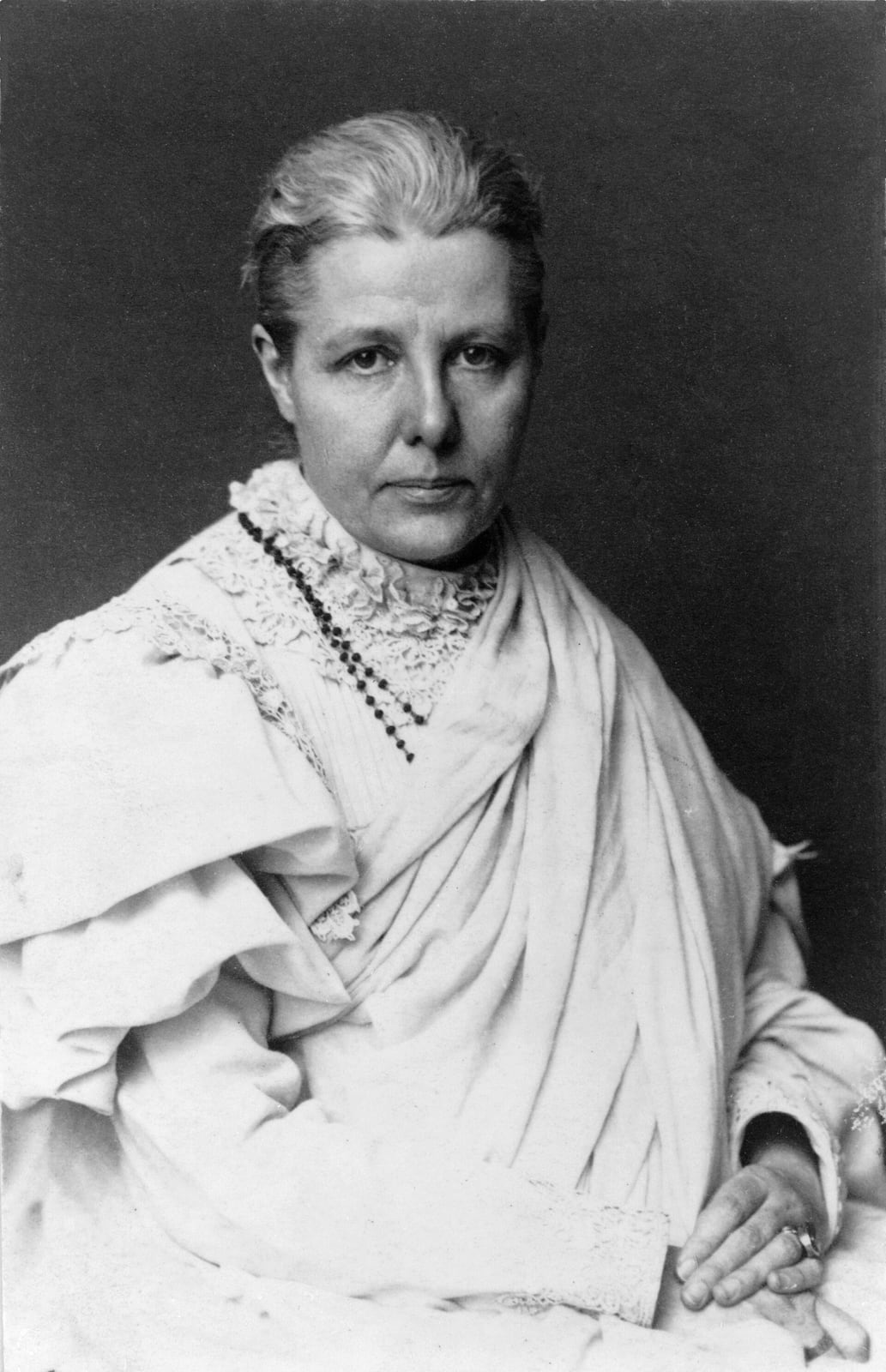
Annie Besant
Übereinstimmung bei: Was ist das Absolute? Gibt es Gott? · Ist die Welt wirklich? · Wer bin ich? Gibt es ein wahres Selbst?
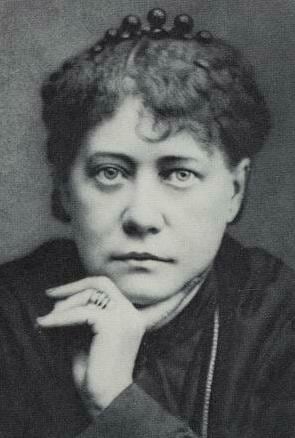
Helena Blavatsky
Übereinstimmung bei: Ist die Welt wirklich? · Wer bin ich? Gibt es ein wahres Selbst? · Warum leiden wir?
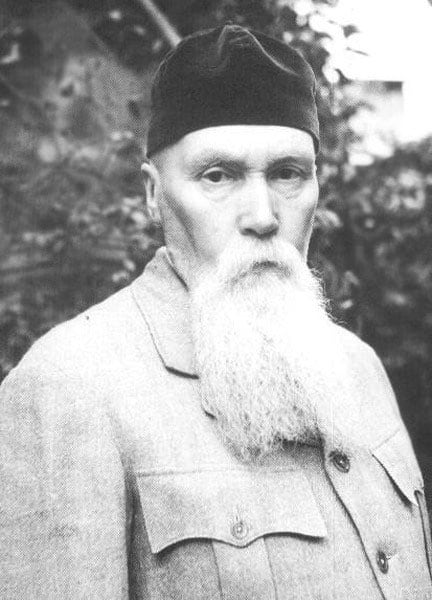
Nicholas Roerich
Übereinstimmung bei: Braucht es einen Lehrer? · Ist die Welt wirklich? · Kann die Vernunft das Letzte erkennen?
Paramahansa Yogananda
Übereinstimmung bei: Was ist das Absolute? Gibt es Gott? · Wer bin ich? Gibt es ein wahres Selbst? · Warum leiden wir?
Denkt anders als
Alan Watts
Widerspruch bei: Wie erlangt man Befreiung oder Erlösung? · Braucht es einen Lehrer?

Jiddu Krishnamurti
Widerspruch bei: Wie erlangt man Befreiung oder Erlösung? · Braucht es einen Lehrer?

Rabia al-Adawiyya
Widerspruch bei: Was geschieht nach dem Tod?
Maimonides
Widerspruch bei: Was geschieht nach dem Tod?
Übereinstimmung bei
Alice A. Bailey · Helena Blavatsky
Seven planes and a nameless Principle: Theosophical cosmology and its second generation
Warum: The affinity is one of direct inheritance: Bailey was formed in the Theosophical Society, where she worked in California until her break with its leadership around 1920, and she presented her work as a continuation of the line opened by The Secret Doctrine. She attributes most of her books to a Tibetan master, Djwhal Khul, a claim of hers that cannot be verified, just as the existence of Blavatsky's Mahatmas could not be verified. The differences are of emphasis and period: Blavatsky polemicises against the dogma and materialism of the nineteenth century; Bailey writes in the interwar years, with a strong emphasis on service, goodwill and the preparation of a new age.
Anekdoten und Erzählungen
Anekdoten und Erzählungen
Zeugnis1895
The man in the turban at Castramont
Herkunft der Erzählung: Sole source: The Unfinished Autobiography, ch. I, written fifty years later. There are no other witnesses.
Zeugnis1918
The portrait in the Krotona shrine room
Herkunft der Erzählung: The Unfinished Autobiography, ch. IV. Bailey's own account; the person who answered her is not named.
Zeugnis1919
'I'm not a darned psychic'
Herkunft der Erzählung: The Unfinished Autobiography, ch. IV. Bailey says she did not even tell Foster Bailey about the first episode at the time.
Zeugnis1915
The engineer's granddaughter in the cannery
Herkunft der Erzählung: The Unfinished Autobiography, chs. I and III. Autobiographical account, consistent with the known chronology but without independent documentation.
Nicht überprüfbardécada de 1930–1940
The parcels from India
Herkunft der Erzählung: The Unfinished Autobiography, ch. IV. Jung's opinion is hearsay ('I have been told'); it has not been located in his published work.
Lehren
Lehren
Die Begriffe, die das Denken gliedern, in ihrem Zusammenhang erklärt.
The Tibetan (Djwhal Khul) and telepathic impressionel-tibetano-djwhal-khul
It extends the Theosophical figure of the Masters of Wisdom and the practice of receiving teachings from them, which with Blavatsky took the form of letters.
The seven rayssiete-rayos
It reworks Theosophical notions and the image of the 'seven spirits before the throne' found in several traditions.
Quelle: Campbell, Bruce F. Ancient Wisdom Revived: A History of the Theosophical Movement. Berkeley: University of California Press, 1980.
The Great Invocationgran-invocacion
It belongs to the public, service-oriented side of Bailey's work, alongside World Goodwill and Triangles.
Trianglestriangulos
It is one of the Lucis Trust's services alongside the Arcane School and World Goodwill.
The New Group of World Serversnuevo-grupo-de-servidores-del-mundo
It translates into social and political language the Theosophical idea of universal brotherhood.
The reappearance of the Christreaparicion-de-cristo
It inherits the Theosophical expectation of a world teacher that Besant and Leadbeater had projected onto Krishnamurti.
Retreats
Retreats und Zentren
Orte und Begegnungen, die mit dieser Lehre verbunden sind. Wir stellen den Kontakt zu den Veranstaltern her.
Por correspondencia y en línea (sede en Asheville, Carolina del Norte) · Estados Unidos
School for Esoteric Studies
School for Esoteric Studies
The School for Esoteric Studies offers what it calls training in purposeful living based on the Ageless Wisdom, a distance school of meditation and study that works with the teachings transmitted through Alice Bailey alongside other sources of the esoteric tradition. The work is done by correspondence and online, in English, Spanish and Italian, with a quarterly newsletter and video materials. Together with the Arcane School, it is one of the two best-known organised routes for studying Bailey's books under guidance, and it is particularly accessible to Spanish-speaking students.
Por correspondencia (oficinas en Nueva York, Londres y Ginebra) · Internacional
The Arcane School (Lucis Trust)
Lucis Trust – Arcane School
The Arcane School began in 1923, when Alice Bailey, helped by her husband Foster Bailey, started answering by correspondence the questions of readers of her books. It is part of the Lucis Trust, the organisation the couple created, and offers training in meditation and study based on the teachings set out in Bailey's work, with personal written work and guidance at a distance. The Lucis Trust also keeps up activities such as full-moon meditation meetings. Its official website sometimes rejects automated requests, but it is the organisation's known website.
Videos
Videos
Aufnahmen, Gespräche und Dokumentarfilme. Die Videos werden von YouTube wiedergegeben; sie werden nicht hier gespeichert.
Life of Alice Bailey Part 1 of 3
Dokumentarfilm· EN· 10 min
Lucis TrustOffizieller Kanal
The Life of Alice Bailey Part 2 of 3
Dokumentarfilm· EN· 10 min
Lucis TrustOffizieller Kanal
Life of Alice Bailey Part 3 of 3
Dokumentarfilm· EN· 10 min
Lucis TrustOffizieller Kanal
The Great Invocation - A World Prayer
Originalaufnahme· EN· 2 min
Lucis TrustOffizieller Kanal
Great Invocation Video
Originalaufnahme· EN· 5 min
Lucis TrustOffizieller Kanal
Triangles Meditation Group Webinar - Alice Bailey's first recitation of The Great Invocation in 1945
Vortrag· EN· 64 min
Lucis TrustOffizieller Kanal
The Great Invocation in Greek
Originalaufnahme· EL· 3 min
Lucis TrustOffizieller Kanal
La Gran Invocación (voces)
Originalaufnahme· ES· 4 min
Fundación LucisOffizieller Kanal
La Gran Invocación – 01. Introducción
Vortrag· ES· 9 min
Fundación LucisOffizieller Kanal
Galerie
Galerie
Bilder mit geprüfter Lizenz. Jedes bewahrt seine Urheberschaft und seinen Herkunftsnachweis.
Beziehungen
Beziehungen
Einflüsse, Schülerschaften und Verwandtschaften. Die belegte Beziehung wird von der durch Analyse ermittelten Ähnlichkeit unterschieden.
Beeinflusst von
Bailey discovered Theosophy through The Secret Doctrine, dedicated A Treatise on Cosmic Fire to Blavatsky and presented herself as continuing her teaching.
Belegte Beziehung
Widersprach
The Baileys clashed with the leadership of Besant and the Esoteric Section in 1920; according to Hammer and Campbell, Besant distrusted the Tibetan communications.
Belegte Beziehung
Zeitgenosse von
Bailey cites Besant's pronouncements about Krishnamurti as one of the factors dividing the Theosophical Society when she left it.
Belegte Beziehung
Beeinflusst von
The Light of the Soul (1927) is an annotated paraphrase of the Yoga Sutras.
Belegte Beziehung
Beeinflusst von
From Bethlehem to Calvary interprets Jesus' life as five initiations; her esoteric Christology distinguishes Jesus from the Christ.
Belegte Beziehung
Verwandte Gedanken mit
Both left the Adyar Theosophical Society and built their own systems with an esoteric Christology; no direct relationship between them is recorded.
Durch Analyse ermittelte Ähnlichkeit
Quellen
Quellen
Für diesen Eintrag herangezogene Bibliografie und Kataloge.
- Bailey, Alice A. The Unfinished Autobiography. Nueva York: Lucis Publishing Company, 1951 (© 1951, renovado 1979, Lucis Trust).
- Wikidata, «Alice Bailey» (Q260575): fechas y lugares de nacimiento y muerte.
- Lucis Trust. Catálogo de libros de Alice A. Bailey y biblioteca en línea.
- Open Library, autora OL2328289A (Alice A. Bailey): obras y ediciones con ISBN.
- Campbell, Bruce F. Ancient Wisdom Revived: A History of the Theosophical Movement. Berkeley: University of California Press, 1980.
- Hammer, Olav. Claiming Knowledge: Strategies of Epistemology from Theosophy to the New Age. Leiden: Brill, 2001.
- Sutcliffe, Steven J. Children of the New Age: A History of Spiritual Practices. Londres: Routledge, 2003.
- Bailey, Alice A. The Reappearance of the Christ. Nueva York: Lucis Publishing Company, 1948 (texto de la Gran Invocación en las páginas preliminares).
- Bailey, Alice A. Glamour: A World Problem. Nueva York: Lucis Publishing Company, 1950 (incluye «Extract from a Statement by the Tibetan», agosto de 1934).
- Bailey, Alice A. A Treatise on White Magic, or The Way of the Disciple. Nueva York: Lucis Publishing Company, 1934.
- Wikipedia (en), «Alice Bailey» (bibliografía, recepción y críticas, con referencias a Gershom, Newman, Shnirelman y Lubelsky).
- Blackthorn, Isobel. Alice A. Bailey: Life and Legacy. Edición independiente, 2020.
- Newman, Hannah. «Invocation, The Great», en Richard S. Levy (ed.), Antisemitism: A Historical Encyclopedia of Prejudice and Persecution. Santa Bárbara: ABC-CLIO, 2005, pp. 351–352.
- Gershom, Yonassan. «Antisemitic Stereotypes in Alice Bailey's Writings», 1997 (revisado en 2005); copia de archivo de 2007.
- Shnirelman, Victor A. Russian Neo-pagan Myths and Antisemitism. Acta, n.º 13: Analysis of Current Trends in Antisemitism. Jerusalén: Vidal Sassoon International Center for the Study of Antisemitism, Universidad Hebrea, 1998.
- Rechteinhaber
- Lucis Trust (Nueva York, Londres, Ginebra). Bailey murió en 1949: sus obras son de dominio público en los países con plazo de 70 años post mortem, pero los libros publicados en Estados Unidos después de 1930 y las recopilaciones póstumas siguen protegidos allí.
- Offizielle Website
- www.lucistrust.org
Bestätigung ausstehend
Was dieser Eintrag noch nicht klären konnte. Wir sagen es lieber, als es aufzufüllen.
- Ediciones españolas con ISBN de Cartas sobre meditación ocultista, Tratado sobre fuego cósmico, La luz del alma, El alma y su mecanismo, Del intelecto a la intuición, De Belén al Calvario, Psicología esotérica II, Curación esotérica, La exteriorización de la Jerarquía, El discipulado II y la Autobiografía inconclusa (Fundación Lucis las publica, pero no se han visto en catálogo).
- Años de las ediciones españolas de Fundación Lucis, Sirio y Cárcamo (el catálogo de Open Library no los consigna).
- Folletos no registrados como obra: The Next Three Years (1934), The Present World Crisis, Today (1940), The Coming World Order, The Immediate Plans, The Interlude between War and Peace y otros mensajes de guerra, absorbidos después en La exteriorización de la Jerarquía (fuente: Open Library OL2328289A).
- Fecha original de The Labours of Hercules (1974 en libro; Wikipedia cita 1957).
- Fecha exacta y lugar del matrimonio con Walter Evans (hacia 1907) y año exacto de la muerte del padre.
- Comprobar el estatus de dominio público de la fotografía de Clara E. Sipprell (fallecida en 1975) declarada PD en Commons.
- No se ha encontrado grabación sonora ni filmada verificada de Alice Bailey; confirmar si el webinario de Lucis Trust sobre 1945 contiene audio de archivo.
- Programa de afiliación: no localizado para Lucis Trust ni Editorial Sirio.
- Sala de lectura (2026-10-25): también son de dominio público en EE. UU. y en la UE (no en España hasta 2030) A Treatise on Cosmic Fire (1925), The Light of the Soul (1927) y The Soul and Its Mechanism (1930, libre en EE. UU. desde el 1 de enero de 2026), pero no se ha localizado texto completo limpio: el ejemplar de 1925 en archive.org (treatiseoncosmic0001alic) no tiene OCR y la biblioteca en línea de Lucis Trust está tras un control de Cloudflare que impide la descarga automática. Las obras publicadas desde 1931 pueden conservar derechos en EE. UU. si se renovaron (consta la renovación de la autobiografía, 1979); comprobar renovación por título.
- Sala de lectura: los tres textos registrados llevan «caution»: entran en la sala el 1 de enero de 2030, cuando expiren los derechos en España.
- Comprobar en la Autobiografía inconclusa la participación del padre en «las obras del puente Victoria» de Montreal hacia 1880: el puente se construyó en 1854–1859 y se reconstruyó en 1897–1898 (señalado al traducir, 2026-10-25).
Recherchiert am 2026-10-25