Christentum · Christliche Mystik · Orthodoxes Christentum
Ignatius Brianchaninov
Игнатий (Брянчанинов) · Дмитрий Александрович Брянчанинов
1807 – 1867Historisch belegte Person
Russischer Bischof und asketischer Schriftsteller (1807–1867). Als Militäringenieur, der die von Familie und Nikolaus I. für ihn vorgesehene Laufbahn ausschlug, war er fünfundzwanzig Jahre Archimandrit der Sergius-Einsiedelei bei Sankt Petersburg, dann Bischof des Kaukasus und, im Ruhestand in Babajewo, Verfasser der „Asketischen Versuche“, der „Gabe an das zeitgenössische Mönchtum“, des „Wortes über den Tod“ und der Schriften über das Jesusgebet und die geistliche Verblendung (Prelest), die ihn zum großen Lehrer der Nüchternheit der modernen Orthodoxie machten. 1988 heiliggesprochen.
- Werke
- 52Werke
- Ausgaben
- 52Ausgaben
- Zitate
- 9Zitate
- Videos
- 13Videos
- Bilder
- 7Bilder

Retrato de Ignati Brianchanínov · Public domain
In eigenen Worten
«Delusion is the damaging of human nature by falsehood. Delusion is the state of all human beings without exception, produced by the fall of our forefathers. We are all in delusion. Knowing this is the greatest protection against delusion. The greatest delusion is to consider oneself free from delusion.»«О молитве Иисусовой», Отдел II, «О прелести» (Аскетические опыты, t. I, cap. 27).

Der zentrale Gedanke
Prelest, or spiritual delusion: Prelest (from lest, deceit, seduction) is for Ignatius the damaging of human nature by falsehood: a state in which we have all been since the Fall and from which only the truth, which is Christ, frees us.
Im Zusammenhang sehen
Biografie
5 Min. Lesezeit
Unterstützte Übersetzung aus dem spanischen Original, Durchsicht durch einen muttersprachlichen Übersetzer ausstehend.
Ein junger Mann aus dem Adel von Wologda
Dmitri Alexandrowitsch Brjantschaninow wurde am 5. Februar 1807 nach dem julianischen Kalender (17. Februar nach dem gregorianischen) in Pokrowskoje geboren, dem Familiengut im Kreis Grjasowez im Gouvernement Wologda. Die Brjantschaninows waren eine alte Adelsfamilie, die sich auf Michail Brenko zurückführte, den Knappen des Großfürsten Dmitri Donskoi. Er war das älteste der überlebenden Kinder und wurde streng erzogen: Die überlieferte Biographie erzählt, er habe sich schwer erkältet, mit lebenslangen Folgen, weil er nicht gewagt habe, vor seinem Vater aus dem eisigen Fluss zu steigen. Er lernte Latein und Griechisch, zeichnete, sang und spielte Geige; er las Heiligenleben und betete lange. Als er seinem Vater anvertraute, er wolle Mönch werden, nahm dieser ihn nicht ernst: Er hatte ihn für die militärische Laufbahn und den Hof bestimmt.
Der Ingenieur, der keiner sein wollte
1822 trat er mit der besten Aufnahmeprüfung seines Jahrgangs in die Hauptingenieurschule in Sankt Petersburg ein, wo er die Aufmerksamkeit des Großfürsten Nikolaus erregte, des Inspekteurs der Truppengattung und künftigen Kaisers. Er verkehrte in aristokratischen und literarischen Salons; die Biographie seiner Gemeinschaft nennt Krylow, Schukowski, Puschkin, Batjuschkow und Glinka unter seinen Bekannten. Doch er suchte bei den Kirchenvätern die Antworten, die ihm weder die Wissenschaft noch die Philosophie gaben. Mit seinem Freund Michail Tschichatschow empfing er jede Woche die Kommunion, was damals unerhört war, und 1826 lernte er in der Alexander-Newski-Lawra den Hieromönch Leonid (Nagolkin) kennen, den späteren Starez von Optina, der ihn in seiner Berufung bestärkte. Nach dem Studium bat er um seinen Abschied; Nikolaus I. lehnte ab, schickte ihm seine Ärzte, als er an Tuberkulose erkrankte, und bot ihm ein Regiment im milden Klima des Südens an. Dmitri wollte nur den Abschied. Man versetzte ihn in die Festung Dünaburg, und im November 1827 erhielt er ihn endlich aus Krankheitsgründen.
Jahre des Noviziats
Er folgte Leonid als Novize in das Alexander-Swirski-Kloster und danach in die Einsiedelei von Ploschtschansk. Er war Bäcker, Fischer und Kutscher, begann aber auch, an manchen Methoden seines Lehrers zu zweifeln. 1829 hielt er auf dem Weg nach Optina mit Tschichatschow in der Einsiedelei von Belobereschje bei dem Hieroschemamönch Athanasius an, einem Schüler Paissi Welitschkowskis und Übenden des Herzensgebets. Krank kehrte er eine Zeit lang ins Elternhaus zurück und schrieb 1830–1831 in der Einsiedelei von Semigorodnaja die „Klage des Mönchs“, die ein Zeitgenosse bei einem kaum volljährigen jungen Mann für unglaublich hielt. Am 28. Juni 1831 gab ihm der Bischof von Wologda das Mönchsgewand mit dem Namen Ignati, zu Ehren des Ignatius von Antiochien; im Juli wurde er zum Diakon und Priester geweiht.
Die Sergius-Einsiedelei
Nachdem er das verfallene Kloster von Pelschma wiederhergestellt hatte, dessen Igumen er 1833 wurde, rief ihn Nikolaus I. zu sich. Der Kaiser sagte ihm, so die biographische Überlieferung, er schulde ihm die empfangene Ausbildung, und da er einen anderen Weg gewählt habe, solle er seine Schuld auf diesem abtragen: Er vertraute ihm die Dreifaltigkeits-Sergius-Einsiedelei an der Peterhofer Straße an, damit er sie vor den Augen der Hauptstadt zu einem Musterkloster mache. Ignati, seit 1834 Archimandrit und seit 1838 Dekan der Klöster der Eparchie, leitete sie fast fünfundzwanzig Jahre lang: Er füllte die Gemeinschaft, ordnete den Gottesdienst, zog Glinka als Ratgeber für den Chor heran und genoss die Freundschaft des Malers Karl Brjullow. Er erlitt aber auch Verleumdungen und demütigende Strafen. Beim Metropoliten Filaret setzte er sich für Leonid ein, der von seinem Bischof gemaßregelt worden war, und 1847 bat er krank um seinen Rückzug; man gewährte ihm nur elf Monate Urlaub, die er im Nikolaus-Kloster von Babajewo an der Wolga verbrachte.
Bischof im Kaukasus
Am 27. Oktober 1857 wurde er zum Bischof des Kaukasus und des Schwarzen Meeres mit Sitz in Stawropol geweiht, einer Diözese ohne Bischofshaus und ohne Mittel, deren zur Hälfte kosakische Bevölkerung nicht seiner Jurisdiktion unterstand und in der es zahlreiche feindselige Altgläubige gab. In vier Jahren ordnete er mithilfe seines Bruders Pjotr, des Vizegouverneurs, den Gottesdienst, verbesserte die Besoldung des Klerus und baute ein neues Seminar. Dort schrieb er die „Gabe an das zeitgenössische Mönchtum“ sowie Abhandlungen über das Heil und die christliche Vollkommenheit, über das Schauen der Geister und über die orthodoxe Lehre von der Gottesmutter, verfasst in Auseinandersetzung mit dem katholischen Dogma der Unbefleckten Empfängnis. 1861 erhielt er, erschöpft, seinen Ruhestand.
Babajewo
Am 13. Oktober 1861 ließ er sich in Babajewo nieder. Dort schrieb oder vollendete er das „Wort über den Tod“ (1862), in dem er vertrat, Seelen und Engel hätten einen feinen, ätherischen Leib — eine These, die Theophan der Klausner bestritt —, und überarbeitete und vereinheitlichte, ermutigt vom Verleger Iwan Glasunow, alle seine Schriften. Die ersten beiden Bände seiner Werke, die „Asketischen Versuche“, erschienen 1865. Seine letzte Liturgie feierte er am Ostersonntag, dem 16. April 1867; am 21. erhielt er druckfrisch den dritten und vierten Band, und er starb am 30. April (12. Mai nach dem gregorianischen Kalender). In der Tasche seiner Soutane fand man ein paar Kopeken.
Ein Lehrer der Nüchternheit
Der Kern seines Werkes ist eine Warnung. Ignati verteidigte das Jesusgebet und die Lektüre der Väter, bestand aber darauf, dass das geistliche Leben ohne Demut und ohne Führung in Prelest entartet, die geistliche Verblendung, die die Erregung der Sinne und der Einbildungskraft mit der Gnade verwechselt. Daher sein Misstrauen gegenüber der westlichen Mystik — die Nachfolge Christi nannte er „bezaubernd“, und für Franz von Assisi und Teresa von Ávila fand er sehr harte Worte — und sein Rat, in einer Zeit ohne erfahrene Starzen „nach Rat“ zu leben und sich an der Schrift und den Vätern zu orientieren. Seine klare Prosa und seine Kenntnis der modernen Seele machten seine unablässig neu aufgelegten Werke zu einer der verbreitetsten asketischen Lektüren der russischen Kirche. Nikolai Leskow machte ihn zu einer Figur in „Uneigennützige Ingenieure“ (1887), und Pawel Florenski zitierte ihn als die Autorität für die geistliche Verblendung.
Das Konzil der Russischen Kirche sprach ihn am 6. Juni 1988 zusammen mit Theophan dem Klausner heilig; seine Reliquien werden im Tolga-Kloster bei Jaroslawl verehrt.
Quellen: Ignati (Brianchanínov). Аскетические опыты, t. I. San Petersburgo: I. I. Glazunov, 1865; texto según Полное собрание творений и писем, 2.ª ed., Moscú: Palómnik, 2014, t. 1 (ISBN 978-5-88060-031-1). Texto en Azbuka very. · Ignati (Brianchanínov). Приношение современному монашеству. San Petersburgo, 1867; texto según Полное собрание творений и писем, Moscú: Palómnik, 2014, t. 4. Texto en Azbuka very. · Semiónova, T. N., y Redkina, Yu. R. (eds.). Полное жизнеописание святителя Игнатия Кавказского. Moscú–San Petersburgo: Izd-vo im. Sv. Ignatia Stavropolskogo / Biblioteca Nacional de Rusia, 2002. ISBN 5-88904-028-8. · Florenski, Pável. Столп и утверждение истины. Moscú: Put', 1914 (cita a Ignati en las cartas quinta, sexta, novena y décima: prelest, «Imitación de Cristo», monacato). Texto en Azbuka very. · Leskov, Nikolái S. Инженеры-бессребреники (1887). Texto en Wikisource.
Zeitleiste
Das Leben, Jahr für Jahr
Jeder Punkt ist ein belegtes Ereignis. Klicken Sie, um es mit Quelle und Grad der Gewissheit zu lesen.
17. Februar 18070 JahrePokróvskoie (prov. de Vólogda)
Birth
Dmitry Brianchaninov is born on the family estate (5 February, Julian).
Belegt«Игнатий (Брянчанинов)», Wikipedia en ruso (biografía, teología —prelest, angelología, apologética—, Briulov, Leskov, bibliografía). Consultada el 25-10-2026.
Nach dem Tod
- 1870Posthumous Paterikon
- 6. Juni 1988Canonisation
17. Februar 1807 · 0 Jahre
Birth
Dmitry Brianchaninov is born on the family estate (5 February, Julian).
Belegt
1822 · 15 Jahre
Main Engineering School
He enters directly into the second year after the best examination of his intake.
Belegt
1826 · 19 Jahre
Meeting with Leonid (Nagolkin)
He meets the future Optina elder at the Alexander Nevsky Lavra; Nicholas I refuses his request to resign.
Belegt
6. November 1827 · 20 Jahre
Discharge from the army
With the rank of engineer lieutenant, he obtains his discharge on grounds of illness against his parents' wishes and enters the Alexander-Svirsky monastery as a novice.
Belegt
April 1829 · 22 Jahre
With Paisius's disciple
With Mikhail Chikhachev he visits the hieroschemamonk Athanasius, a disciple of Paisius Velichkovsky, and passes through Optina.
Belegt
28. Juni 1831 · 24 Jahre
Monastic tonsure: Ignatius
He is tonsured with the name Ignatius; in July he is ordained deacon (5th) and priest (20th).
Belegt
November 1833 · 26 Jahre
Superior of the St Sergius hermitage
Nicholas I entrusts him with the Trinity-St Sergius hermitage; archimandrite on 1 January 1834.
Belegt
1838 · 31 Jahre
Dean of the monasteries
Appointed dean (blagochinny) of the monasteries of the St Petersburg diocese.
Belegt
1847 · 40 Jahre
Leave and first publications
He spends eleven months at Babayevo monastery; his first articles appear in Biblioteka dlya chteniya.
Belegt
27. Oktober 1857 · 50 Jahre
Bishop of the Caucasus and the Black Sea
Consecrated in the Kazan Cathedral; he arrives in Stavropol on 4 January 1858.
Belegt
13. Oktober 1861 · 54 Jahre
Retirement to Babayevo
Retired through illness, he settles at Babayevo monastery in Kostroma province.
Belegt
1862 · 55 Jahre
Word on Death
He publishes the Word on Death and The Cup of Christ; in 1863–1864 follow the Word on Salvation, the one on the vision of spirits and the Supplement.
Belegt
1865 · 58 Jahre
Ascetic Experiences
The publisher Ivan Glazunov issues the first two volumes of his works.
Belegt
12. Mai 1867 · 60 Jahre
Death
He dies on 30 April (Julian), the Sunday of the Myrrhbearers, days after receiving volumes III and IV of his works.
Belegt
1870
Posthumous Paterikon
His annotated collection of sayings of the Desert Fathers, the Otechnik, is published.
Belegt
6. Juni 1988
Canonisation
Proclaimed a saint; on 26 May his relics had been translated to the Tolga monastery (Yaroslavl).
Belegt
Werke
Grundlegende Werke
Die Werke, ohne die sich das Vermächtnis nicht verstehen lässt.
Schriftliches Werk · 1865
Ascetic Experiences, vol. I
Аскетические опыты. Том I
The first volume of his works, gathered at Babayevo with the publisher Ivan Glazunov: fifty-seven pieces written over thirty years, from the prose poems of his youth ('The Garden in Winter', 'The Tree in Winter before the Cell Window', 'Thought on the Seashore') to the treatises on reading the Gospel and the Fathers, avoiding heterodox books, love of God and neighbour, fasting, prayer, the eight passions and their opposite virtues, tears, humility, patience, monasticism and the Gospel commandments. It includes the three sections 'On the Jesus Prayer' (with the one on spiritual delusion), the 'Rule of Attention to Oneself for Those Living in the World', 'The Cup of Christ' and 'My Lament'. It is the book through which most Russian readers have come to know Ignatius.
4 Ausgaben · amazon.com
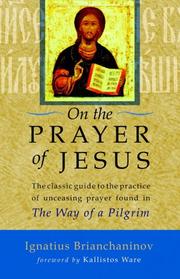
Schriftliches Werk · 1867
On the Prayer of Jesus (a conversation between an elder and his disciple)
О молитве Иисусовой. Беседа между старцем и учеником
A treatise in dialogue form, in three parts—the Jesus Prayer in general, spiritual delusion and the practice of the prayer—which belongs to the first volume of the Experiences and was also published separately in 1867. Ignatius maintains that the Jesus Prayer is the duty of every monk and the good of every Christian, recalls that at Sarov it was taught to every novice and that Seraphim recommended it, but insists on practising it with attention and humility, enclosing the mind in the words, without seeking sensations or resorting to the bodily techniques of the ancient hesychasts, which he considers dangerous without an experienced guide. He distinguishes oral prayer, mental prayer and prayer of the heart, which is God's gift and not the fruit of method. It is his most translated text.
6 Ausgaben · amazon.com

Schriftliches Werk · 1867
An Offering to Contemporary Monasticism (The Arena)
Приношение современному монашеству
His 'spiritual testament' for monks, written largely at Stavropol and published as the last volume of his works. It opens with the 'Rules of Outward Conduct for Novice Monks', continues with fifty chapters of 'Counsels on the Inner Work of the Monk'—study and keeping of the Gospel commandments, reading the Fathers, the dangers of the hermit life, obedience to an elder and life 'by counsel' in an age without experienced guides, prayer and the Jesus Prayer, remembrance of death, sobriety, fasting, almsgiving, fallen angels, dreams—and ends with the 'Lament of a Monk'. It holds that the monasticism of his day must rest on Scripture and the Fathers rather than on charismatic directors, now almost non-existent. Translated into English as The Arena.
4 Ausgaben · amazon.com
Das gesamte Werk (52)

Ascetic Experiences, vol. II
1865
Ignatius Brianchaninov
On Spiritual Delusion (prelest)
The Conscious LibraryOn Spiritual Delusion (prelest)
1865
Ignatius Brianchaninov
A Word on Death
The Conscious LibraryA Word on Death
1862
Ignatius Brianchaninov
Supplement to the Word on Death
The Conscious LibrarySupplement to the Word on Death
1864
Ignatius Brianchaninov
A Word on the Sensory and Spiritual Vision of Spirits
The Conscious LibraryA Word on the Sensory and Spiritual Vision of Spirits
1863
Ignatius Brianchaninov
A Word on Man
The Conscious LibraryA Word on Man
1862
Ignatius Brianchaninov
A Word on Angels
The Conscious LibraryA Word on Angels
Ignatius Brianchaninov
Letter to a Clergyman on Why He Called the Human Soul 'Ethereal'
The Conscious LibraryLetter to a Clergyman on Why He Called the Human Soul 'Ethereal'
Ignatius Brianchaninov
A Word on Salvation and Christian Perfection
The Conscious LibraryA Word on Salvation and Christian Perfection
1863
Ignatius Brianchaninov
On the Various States of Human Nature in Relation to Good and Evil
The Conscious LibraryOn the Various States of Human Nature in Relation to Good and Evil
Ignatius Brianchaninov
Exposition of the Teaching of the Orthodox Church on the Mother of God
The Conscious LibraryExposition of the Teaching of the Orthodox Church on the Mother of God

Ascetic Sermons
1867
Ignatius Brianchaninov
The Paterikon (Selected Sayings of the Holy Monks)
The Conscious LibraryThe Paterikon (Selected Sayings of the Holy Monks)
1870
Ignatius Brianchaninov
The Lament of a Monk for His Brother Who Has Fallen into Sinful Temptation
The Conscious LibraryThe Lament of a Monk for His Brother Who Has Fallen into Sinful Temptation
1831
Ignatius Brianchaninov
My Lament
The Conscious LibraryMy Lament
Ignatius Brianchaninov
The Cup of Christ
The Conscious LibraryThe Cup of Christ
1862
Ignatius Brianchaninov
The Garden in Winter
The Conscious LibraryThe Garden in Winter
Ignatius Brianchaninov
The Tree in Winter before the Cell Window
The Conscious LibraryThe Tree in Winter before the Cell Window
Ignatius Brianchaninov
A Rule of Attention to Oneself for Those Living in the World
The Conscious LibraryA Rule of Attention to Oneself for Those Living in the World
Ignatius Brianchaninov
The Judgements of God
The Conscious LibraryThe Judgements of God
1867
Ignatius Brianchaninov
On Monasticism (a dialogue between a layman and a monk)
The Conscious LibraryOn Monasticism (a dialogue between a layman and a monk)
1869
Ignatius Brianchaninov
On Miracles and Signs
The Conscious LibraryOn Miracles and Signs
1870
Ignatius Brianchaninov
On the End of the World (three teachings)
The Conscious LibraryOn the End of the World (three teachings)
1870
Ignatius Brianchaninov
Rules of Outward Conduct for Novice Monks
The Conscious LibraryRules of Outward Conduct for Novice Monks
Zitate
Zitate, die in einem bestimmten Werk nachgewiesen sind. Jedes trägt seine Herkunft und seinen Grad an Verlässlichkeit.
Delusion is the damaging of human nature by falsehood. Delusion is the state of all human beings without exception, produced by the fall of our forefathers. We are all in delusion. Knowing this is the greatest protection against delusion. The greatest delusion is to consider oneself free from delusion.Прелесть есть повреждение естества человеческого ложью. Прелесть есть состояние всех человеков, без исключения, произведенное падением праотцов наших. Все мы – в прелести. Знание этого есть величайшее предохранение от прелести. Величайшая прелесть – признавать себя свободным от прелести.
Geprüft«О молитве Иисусовой», Отдел II, «О прелести» (Аскетические опыты, t. I, cap. 27).
Apokryphe Zitate oder Zitate umstrittener Zuschreibung (2)
«"He who is careless about prayer is careless about his salvation; he who quits prayer renounces his salvation."»
It circulates in English under his name (the English Wikipedia quotes it) without reference to a specific work; it has not been located in the chapters on prayer of the Ascetic Experiences consulted. It is consistent with his teaching, but the exact wording remains to be verified.
«Prophecies about Russia's destiny and the Antichrist attributed to him in devotional compilations.»
They have an authentic core—letter 29 to Muravyov-Karsky on Russia's 'enormous significance' and his teachings on the end of the world—but popular anthologies expand and rearrange them without citing the source.
Letzte Worte
Es gibt keine überprüfbaren Aufzeichnungen der letzten Worte.
The sources consulted (Russian Wikipedia, Azbuka very biography) record his last liturgy on Easter Sunday 1867, the arrival of volumes III and IV of his works on 21 April and his death on 30 April, the Sunday of the Myrrhbearers, but give no final words. The full biographies (2002, 2010) have not been consulted directly.
Quelle: Azbuka very, «святитель Игнатий (Брянчанинов)»: biografía (familia, Escuela de Ingenieros, noviciado, ermita de San Sergio, episcopado, muerte), legado y catálogo de obras y cartas.
Fragen
Was das Werk beantwortet
Zwölf große Fragen der Menschheit und was sich aus den Texten darauf antworten lässt, mit Belegen. Wir legen niemandem Worte in den Mund.
Was ist das Absolute? Gibt es Gott?
God is known through humility and prayer, not through speculation
Ein persönlicher GottAusdrücklich gesagt
Ignatius Brianchaninov places God within the frame of Orthodox faith, Trinitarian and creator, and devotes his work not to proving him but to showing how one comes to him. In the Ascetic Essays the way to God is prayer, and its measure the states of prayer through which one who prays steadily advances. The precondition is to recognise oneself as fallen: what belongs to man impoverished by the fall is to pray, as what belongs to a beggar is to ask. He warns insistently against spiritual delusion, which consists in imagining God or feeling him according to one's own fancies; whoever believes himself free of delusion is in the greatest delusion of all. Ignatius's God is therefore personal, but hidden from pride and accessible only to humility, repentance and attentive reading of the Fathers.
Diese Frage mit anderen Meistern vergleichenWer bin ich? Gibt es ein wahres Selbst?
A created, immortal and fallen soul, incorporeal only in comparison with God
Eine geschaffene, unsterbliche SeeleAusdrücklich gesagt
Ignatius Brianchaninov starts from the Orthodox doctrine of the created, immortal soul, but stresses its fallen condition: in the Ascetic Essays and the Word on Man he insists that human nature has been damaged by falsehood since the fall, and that we all live in some degree of delusion about ourselves. In the Word on Death and in his letter on why he called the soul ethereal he held a disputed thesis: that souls and angels, compared with God, the only absolutely incorporeal spirit, possess a subtle corporeality, so that after death the soul keeps a form resembling that of the body. Theophan the Recluse replied to him. What matters to him is practical: to know oneself as fallen is the condition for the self to be healed by grace.
Diese Frage mit anderen Meistern vergleichenWarum leiden wir?
Fallen nature suffers; accepting sorrows is drinking the cup of Christ
Die Trennung von GottAusdrücklich gesagt
Ignatius Brianchaninov places the origin of suffering in the fall: human nature, damaged by falsehood, lives in a state of sickness that shows itself in the passions, death and delusion about oneself. In his essays he distinguishes several states of human nature with regard to good and evil, from the fallen natural state to the one renewed by grace. In the face of afflictions, his teaching is that of the Fathers he collected on patience in sorrows: they are not sought, but accepted as permitted by God, with thanksgiving and without murmuring, because they heal pride. In The Cup of Christ he presents sufferings as the cup the Lord drank first and offers to his disciples. He rejects every explanation that turns pain into energy or an impersonal law: it is a matter between the fallen creature and its God.
Diese Frage mit anderen Meistern vergleichenWas geschieht nach dem Tod?
The soul passes the aerial trials and awaits judgement: death is prepared for
Ewiges Leben und AuferstehungAusdrücklich gesagt
Ignatius Brianchaninov devoted a specific treatise to the question, the Word on Death of 1862, later enlarged with a supplement. There he sets out, relying on the Fathers and the lives of the saints, that after death the soul, separated from the body but keeping a subtle form, passes through the aerial trials, in which the fallen spirits accuse it of its sins, and receives a particular judgement that determines its state until the resurrection and the last judgement. His intention is not to feed the imagination but to awaken sobriety: the memory of death is for him one of the Christian's fundamental exercises, because it undoes the illusion of an endless earthly life. His teaching on the aerial trials provoked debate within Russian Orthodoxy itself.
Diese Frage mit anderen Meistern vergleichenWie erlangt man Befreiung oder Erlösung?
Christ saves us; man brings repentance, humility and keeping the commandments
Durch Gnade und LiebeAusdrücklich gesagt
In the Word on Salvation and Christian Perfection, Ignatius Brianchaninov holds that salvation is the work of Christ, received through faith and baptism and kept or recovered through repentance. What falls to man is not to earn it but to dispose himself: to recognise his fall, weep over his sins, keep the Gospel commandments and pray with attention. He warns sharply against the opposite path, that of one who seeks lofty spiritual states, visions or consolations before being purified: it is the way of delusion, which mistakes one's own imagination for grace. That is why he advises his contemporaries, who in his view lack true elders, to be guided by reading the Fathers and by prudent counsel. Perfection is God's gift to the humble.
Diese Frage mit anderen Meistern vergleichenBraucht es einen Lehrer?
True elders are lacking: one must live by counsel and be guided by the Fathers
Hilfreich, aber nicht unverzichtbarAusdrücklich gesagt
Ignatius Brianchaninov knew in his youth the elders of the tradition of Paisius Velichkovsky and corresponded with the elders Leonid and Macarius of Optina. Yet his diagnosis of his own age is sober: authentic elders, bearers of the Spirit, have almost entirely disappeared, and surrendering oneself unreservedly to an inexperienced director is dangerous, because it can lead both into spiritual delusion. He therefore proposes, in The Arena: An Offering to Contemporary Monasticism, life by counsel: to be guided by Scripture and the Fathers, whose reading he considers indispensable for making their thought one's own, and to consult experienced brethren prudently, without depending blindly on anyone. The human teacher helps, but the sure authority lies in the Gospel as interpreted by the saints.
Diese Frage mit anderen Meistern vergleichenIst die Welt wirklich?
The created world is good; the «world» to be rejected is that of the passions
Eine gute und wirkliche SchöpfungAus der Lehre abgeleitet
Ignatius Brianchaninov affirms the goodness of creation, but his attention centres on the distinction, classic in ascetic writing, between the world as God's work and the world as the sum of passions that draw away from him. A former military engineer, he knew the science of his time well, and in the Word on the Sensory and Spiritual Vision of Spirits he holds that reality is not exhausted by what the senses perceive: around the human being there are spirits, angels and demons, which fallen nature does not see and which rarely manifest themselves. He warns, however, against the desire to see such realities, which he regards as a gateway to delusion. The visible world is real and good, but it is only part of creation, and fallen man perceives it in a limited way.
Diese Frage mit anderen Meistern vergleichenWas ist Liebe?
True love is born from keeping the commandments, not from emotion
Liebe zu Gott und zum NächstenAusdrücklich gesagt
In the Ascetic Essays, Ignatius Brianchaninov devotes chapters to love of neighbour and love of God, and his teaching is characteristically sober. He distinguishes natural love, mixed with passion, preference and attachment, from the spiritual love taught by the Gospel, which sees in each person the image of God and loves it in God. This second love is born not from feeling or exaltation, but from keeping the commandments, from humility and from prayer; whoever seeks to feel an ardent love before being purified risks mistaking for love an emotion of fallen nature. Love of neighbour is the path to love of God, and both culminate in a gift God grants to the humble.
Diese Frage mit anderen Meistern vergleichenSind wir frei, oder ist alles vorherbestimmt?
Free but wounded by the fall, man must surrender his will to God
Echter freier WilleAusdrücklich gesagt
Ignatius Brianchaninov affirms human freedom with Orthodox tradition, but stresses how much the fall has damaged it: the will of natural man is inclined to evil and deceived by delusion, so that its freedom, without grace, tends to choose badly even while believing it chooses well. That is why his ascetic teaching insists on renouncing one's own will and surrendering to God's, by keeping the commandments. In The Judgements of God, written in his last years, he reflects on the providence that governs human events, painful ones included, and advises submitting to it humbly instead of judging it. That surrender, however, is a free act: no one can be saved without willing it, and personal responsibility never disappears.
Diese Frage mit anderen Meistern vergleichenWozu meditieren oder beten?
Prayer is what belongs to fallen man: asking with attention and humility
Freundschaft mit GottAusdrücklich gesagt
For Ignatius Brianchaninov the way to God is prayer, and the measure of the way travelled is the states of prayer into which one who prays steadily gradually enters. His starting point is the fallen condition: what belongs to the beggar is to ask, and what belongs to man impoverished by the fall is to pray. The soul of every exercise is attention, without which prayer is dead; that is why he teaches enclosing the mind in the words of the prayer, and recommends the Jesus Prayer said slowly and attentively. He warns strongly against seeking sensations, images or mystical warmth, in which he sees the gateway to spiritual delusion, and prefers humble, repentant prayer to any psychophysical method practised without guidance.
Diese Frage mit anderen Meistern vergleichenKann die Vernunft das Letzte erkennen?
Fallen reason deceives itself; it must be formed by the Gospel and the Fathers
Schrift und DenkenAusdrücklich gesagt
Ignatius Brianchaninov, trained as an engineer, does not despise natural reason, but considers it damaged by the fall: the human mind is exposed to delusion and tends to take its own constructions for truth. It therefore cannot be the judge of revelation. The remedy is to form it with the Gospel, to which he devotes chapters of the Ascetic Essays, and with the writings of the holy Fathers, whose thought and spirit he urges making one's own through assiduous reading. With equal firmness he advises keeping away from books on Christianity written by false teachers, and judges severely works such as the Imitation of Christ, which he regards as the fruit of delusion. Reason, healed by humility and guided by tradition, can understand revealed truth.
Diese Frage mit anderen Meistern vergleichenSich von der Welt zurückziehen oder sie verwandeln?
Monk means solitary: inner solitude is the condition of prayer
Sich zurückziehen, um zu findenAusdrücklich gesagt
Ignatius Brianchaninov chose monastic life against the will of his family and of Nicholas I himself, who had destined him for military engineering, and he lived for monasticism, to which he devoted The Arena: An Offering to Contemporary Monasticism. His ideal is solitude: monk means solitary, and whoever has not gathered himself within is not yet a monk, even if he lives in the remotest monastery. That solitude is above all inward, which is why he also wrote a rule of attention to oneself for one living in the world, showing lay people how to guard mind and heart amid their occupations. But he does not trust the world: he sees it as a place of distraction and delusion, and considers withdrawal, outward when possible and inward always, the condition of the encounter with God.
Diese Frage mit anderen Meistern vergleichen
Affinitäten und Spannungen
Affinitäten und Spannungen
Frage für Frage aus den Positionen berechnet. Den Grund jeder Übereinstimmung und jedes Widerspruchs zeigt ein Klick.
Denkt ähnlich wie
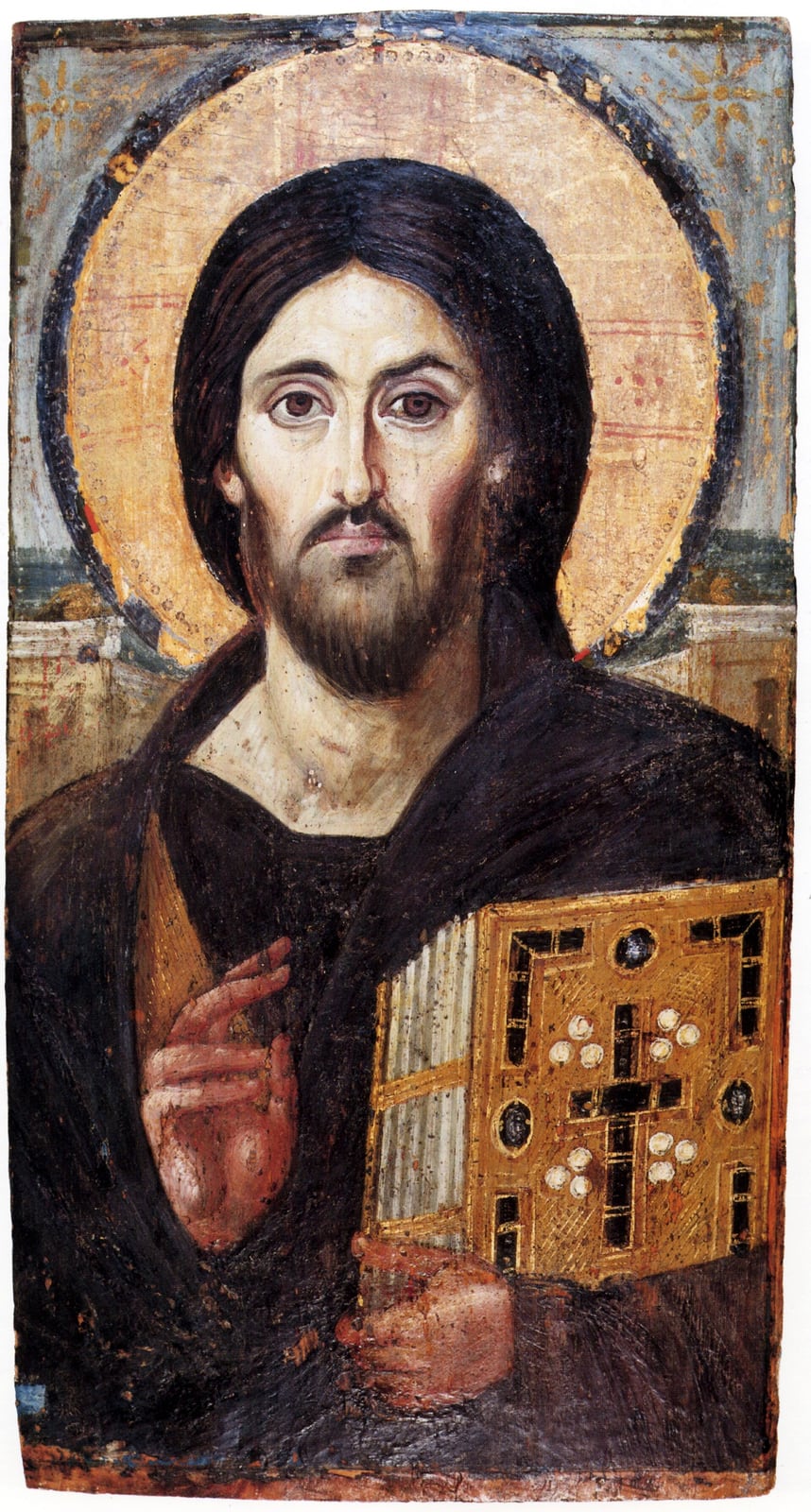
Jesus of Nazareth
Übereinstimmung bei: Was ist das Absolute? Gibt es Gott? · Ist die Welt wirklich? · Wer bin ich? Gibt es ein wahres Selbst?

Teresa of Ávila
Übereinstimmung bei: Was ist das Absolute? Gibt es Gott? · Wer bin ich? Gibt es ein wahres Selbst? · Warum leiden wir?
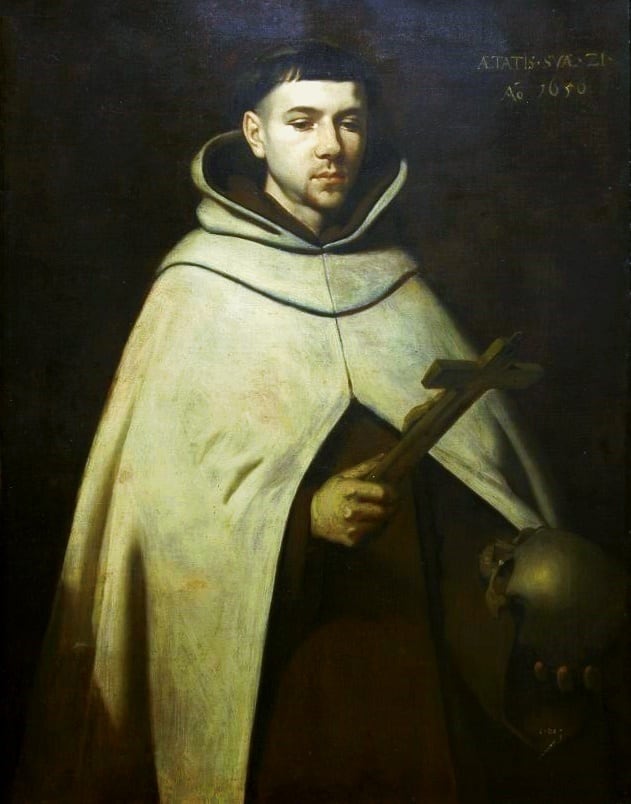
John of the Cross
Übereinstimmung bei: Was ist das Absolute? Gibt es Gott? · Wer bin ich? Gibt es ein wahres Selbst? · Warum leiden wir?
Seraphim of Sarov
Übereinstimmung bei: Was ist das Absolute? Gibt es Gott? · Wer bin ich? Gibt es ein wahres Selbst? · Warum leiden wir?
Denkt anders als

Nāgārjuna
Widerspruch bei: Was ist das Absolute? Gibt es Gott? · Wer bin ich? Gibt es ein wahres Selbst? · Was geschieht nach dem Tod?

Śāntideva
Widerspruch bei: Was ist das Absolute? Gibt es Gott? · Wer bin ich? Gibt es ein wahres Selbst? · Was geschieht nach dem Tod?
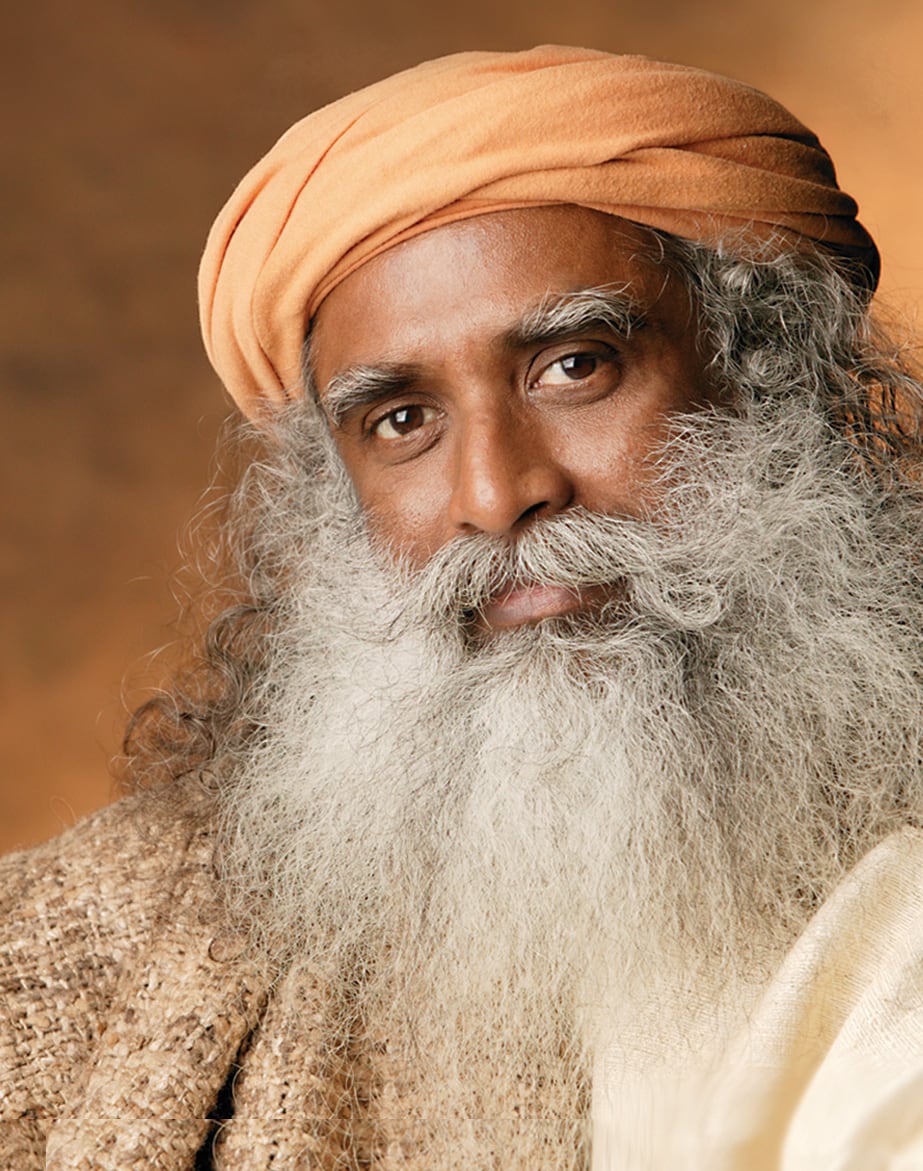
Sadhguru
Widerspruch bei: Wer bin ich? Gibt es ein wahres Selbst? · Was geschieht nach dem Tod? · Ist die Welt wirklich?

Patañjali
Widerspruch bei: Was ist das Absolute? Gibt es Gott? · Wer bin ich? Gibt es ein wahres Selbst? · Was geschieht nach dem Tod?
Anekdoten und Erzählungen
Anekdoten und Erzählungen
Zeugnis1833
The debt to the Emperor
Herkunft der Erzählung: The Emperor's words come from the saint's traditional biography, based on the recollections of his circle (Chikhachev and the St Sergius community); the facts—the refused resignation, the offer of the regiment, the appointment in 1833—are documented.
Zeugnisdécada de 1830
The schemamonk Porphyry and the Ladoga ice
Herkunft der Erzählung: Ignatius's own account, who says he knew Porphyry, in 'On Delusion' (Ascetic Experiences, vol. I, ch. 27); there is no other independent source.
Zeugnis1822–1826
Communion every week
Herkunft der Erzählung: Azbuka very biography, based on Chikhachev's memoirs and the biography published by his disciples.
Belegt1830–1831
A novice's 'Lament of a Monk'
Herkunft der Erzählung: The date and place are given by the Russian Wikipedia together with the contemporary's remark; the text appears in the Offering (1867).
Umstritten1845–1846
Bryullov and the painting from eternity
Herkunft der Erzählung: Ignatius's letter to Bryullov survives (Azbuka very); the link between it and Christ in the Tomb is an interpretation by Grigory Goldovsky reported in the Russian Wikipedia.
Belegtfinales de la década de 1830
In defence of the elder Leonid
Herkunft der Erzählung: Azbuka very biography; the correspondence with Leonid and Macarius survives among his letters.
Zeugnisabril de 1867
A few kopecks
Herkunft der Erzählung: The facts of the last weeks are recorded by the Russian Wikipedia and the Azbuka very biography; the detail of the kopecks comes from the traditional biography, based on the testimony of those around him.
Lehren
Lehren
Die Begriffe, die das Denken gliedern, in ihrem Zusammenhang erklärt.
Prelest, or spiritual delusionprelest
It systematises the teaching of Gregory of Sinai, Symeon the New Theologian and John Climacus; Florensky cited it as the most detailed treatment of this 'spiritual disease'.
Living by counselvida-por-consejo
It contrasts with the revival of eldership at Optina, from which he himself came; developed in An Offering to Contemporary Monasticism, chs. 12–13.
Prayer with attentionoracion-con-atencion
It follows John Climacus ('enclose the mind in the words of the prayer'); it distances itself from a literal reading of the psychophysical methods of Nicephorus the Solitary and Gregory of Sinai.
Reading the Fatherslectura-de-los-padres
It partly replaces, for an age without elders, the living guidance of the starets; it gave his works their characteristic density of patristic quotation.
Souls and angels: spirits with an ethereal bodyalmas-y-angeles
In the Supplement he answers Western critics (among them the Abbé Bergier); the thesis also ties in with his response to the spiritualism fashionable in the 1860s.
Videos
Videos
Aufnahmen, Gespräche und Dokumentarfilme. Die Videos werden von YouTube wiedergegeben; sie werden nicht hier gespeichert.
Игнатий Брянчанинов. «Плач инока» / Библейский сюжет / Телеканал Культура
Auf YouTube ansehen
Dieses Video lässt sich nicht einbetten; es wird auf YouTube geöffnet.
Игнатий Брянчанинов. «Плач инока» / Библейский сюжет / Телеканал Культура
Dokumentarfilm· RU· 2019· 26 min
Телеканал КультураOffizieller Kanal
Учитель покаяния. Святитель Игнатий (Брянчанинов)
Dokumentarfilm· RU· 2020· 88 min
Свято-Елисаветинский монастырьOffizieller Kanal
Film about St. Ignatius Brianchaninov (with participation of A. Osipov)
Dokumentarfilm· RU· 2021· 97 min
Алексей Ильич ОсиповOffizieller Kanal
Святитель Игнатий Брянчанинов — наставник духовной жизни
Vortrag· RU· 2019· 145 min
Алексей Ильич ОсиповOffizieller Kanal
Святитель Игнатий Брянчанинов — духовное сокровище Церкви
Vortrag· RU· 2021· 45 min
Алексей Ильич ОсиповOffizieller Kanal
150 лет преставления свт. Игнатия Брянчанинова — Осипов А. И.
Vortrag· RU· 2017· 59 min
Алексей Ильич ОсиповOffizieller Kanal
Конференция «Святитель Игнатий Брянчанинов. 150 лет со дня преставления»
Vortrag· RU· 2017· 215 min
Алексей Ильич ОсиповOffizieller Kanal
Конференция по наследию святителя Игнатия Брянчанинова. Ч. 1 (Абрамцево, 15.05.2012)
Vortrag· RU· 2012· 41 min
Алексей Ильич ОсиповOffizieller Kanal
А. И. Осипов. Святитель Игнатий Брянчанинов
Vortrag· RU· 2017· 53 min
tvsoyuzOffizieller Kanal
Святитель Игнатий (Брянчанинов). Священник Валерий Духанин
Vortrag· RU· 2023· 87 min
БИБЛИЯ и толкования — Экзегет.руOffizieller Kanal
Святитель Игнатий (Брянчанинов) о прелести 1
Vortrag· RU· 2020· 102 min
ФИЛЬМИКИ © им. А. Осипова.
Book trailer: Harbor for Our Hope: St Ignatius (Brianchaninov) On Acquiring Peace Amidst Suffering
Aufnahme Dritter· EN· 2020· 5 min
Holy Trinity PublicationsOffizieller Kanal
Saint Ignatius Brianchaninov — The Field: Cultivating Salvation (Part 1)
Aufnahme Dritter· EN· 2023· 41 min
Orthodox Spiritual Heritage
Galerie
Galerie
Bilder mit geprüfter Lizenz. Jedes bewahrt seine Urheberschaft und seinen Herkunftsnachweis.
Beziehungen
Beziehungen
Einflüsse, Schülerschaften und Verwandtschaften. Die belegte Beziehung wird von der durch Analyse ermittelten Ähnlichkeit unterschieden.
Schüler von
Leonid (Nagolkin) de Óptina
His first teacher: he met him in 1826 and followed him as a novice to Svir and Ploshchansk; later he doubted some of his methods but defended him before Metropolitan Philaret at the end of the 1830s.
Belegte Beziehung
Beeinflusst von
Paisi Velichkovski
He was formed in the Paisian tradition through Leonid and the hieroschemamonk Athanasius of Beloberezhsk, Paisius's direct disciple, whom he visited in 1829.
Belegte Beziehung
Beeinflusst von
In On the Jesus Prayer he quotes, on the word of old monks, 'the blessed elder Seraphim's' advice to unite outward and inward prayer, and recalls that at Sarov the Jesus Prayer was taught to every novice.
Belegte Beziehung
Stand im Briefwechsel mit
They corresponded; in May 1865 Theophan confided to him his wish to follow him into retirement. They were canonised together in 1988.
Belegte Beziehung
Widersprach
Theophan refuted his teaching on the ethereal body of souls and angels in The Soul and the Angel Are Not Body but Spirit; even so he valued his works and recommended them.
Belegte Beziehung
Beeinflusste
Florensky cites him in The Pillar and Ground of the Truth (1914) for his definition of prelest, his judgement on The Imitation of Christ, 'The Garden in Winter' and his view of monasticism.
Belegte Beziehung
Widersprach
In On Delusion he judges The Imitation of Christ to be written 'out of opinion', that is, from the delusion of one's own holiness, and considers it dangerous for the Orthodox reader.
Belegte Beziehung
Widersprach
He cited him, together with Teresa of Ávila, as an example of the spiritual delusion of Western mysticism, in very harsh terms.
Belegte Beziehung
Widersprach
He regarded her, with Francis of Assisi, as an example of the spiritual delusion of Western mysticism.
Belegte Beziehung
Beeinflusste
Nikolái Leskov
Leskov made him a character in his story The Unmercenary Engineers (1887), about his fellow students at the Engineering School.
Belegte Beziehung
Begegnete
Karl Briulov
Acquaintance at the St Sergius hermitage in 1845–1846 and Ignatius's letter to the painter about 'a painting from eternity'.
Belegte Beziehung
Beeinflusst von
Padres del desierto
He gathered and commented on their sayings in the Paterikon and quotes them constantly; he warns, however, against imitating them literally.
Belegte Beziehung
Zeitgenosse von
Contemporaries; no documented relationship has been found.
Durch Analyse ermittelte Ähnlichkeit
Quellen
Quellen
Für diesen Eintrag herangezogene Bibliografie und Kataloge.
- Wikidata, «Ignatius Bryanchaninov» (Q984143): P31=Q5, nacimiento 5-2-1807 (juliano), muerte 30-4-1867, 24 enlaces entre wikis.
- «Игнатий (Брянчанинов)», Wikipedia en ruso (biografía, teología —prelest, angelología, apologética—, Briulov, Leskov, bibliografía). Consultada el 25-10-2026.
- «Ignatius Brianchaninov», Wikipedia en inglés (reliquias en Tolga, traducciones inglesas). Consultada el 25-10-2026.
- Azbuka very, «святитель Игнатий (Брянчанинов)»: biografía (familia, Escuela de Ingenieros, noviciado, ermita de San Sergio, episcopado, muerte), legado y catálogo de obras y cartas.
- Ignati (Brianchanínov). Аскетические опыты, t. I. San Petersburgo: I. I. Glazunov, 1865; texto según Полное собрание творений и писем, 2.ª ed., Moscú: Palómnik, 2014, t. 1 (ISBN 978-5-88060-031-1). Texto en Azbuka very.
- Ignati (Brianchanínov). Приношение современному монашеству. San Petersburgo, 1867; texto según Полное собрание творений и писем, Moscú: Palómnik, 2014, t. 4. Texto en Azbuka very.
- Wikimedia Commons, «Category:Works of Ignatius Brianchaninov» (facsímiles de las Сочинения, 1886 y 1905, del Отечник de 1891 y de las cartas de 1913).
- Semiónova, T. N., y Redkina, Yu. R. (eds.). Полное жизнеописание святителя Игнатия Кавказского. Moscú–San Petersburgo: Izd-vo im. Sv. Ignatia Stavropolskogo / Biblioteca Nacional de Rusia, 2002. ISBN 5-88904-028-8.
- Jondzinski, P. V., Bezhanidze, G. V., Sújova, N. Yu., Yákovlev, A. I., y Bolshakova, S. E. «Игнатий (Брянчанинов)», en Православная энциклопедия, t. XXI. Moscú, 2009, pp. 74–89.
- Florenski, Pável. Столп и утверждение истины. Moscú: Put', 1914 (cita a Ignati en las cartas quinta, sexta, novena y décima: prelest, «Imitación de Cristo», monacato). Texto en Azbuka very.
- Leskov, Nikolái S. Инженеры-бессребреники (1887). Texto en Wikisource.
- Holy Trinity Publications, «Collected Works of St Ignatius (Brianchaninov)» (The Field, The Refuge, The Threshold, The Arena; trad. de Nicholas Kotar y del archimandrita Lazarus Moore).
- Open Library, registros de «On the Prayer of Jesus», «The Arena», «The Field», «The Refuge», «The Threshold» y «Harbor for Our Hope».
- Ignati (Brianchanínov). «О молитве Иисусовой» (Отделы I–III: «О молитве Иисусовой вообще», «О прелести», «Об упражнении молитвою Иисусовою»), en Аскетические опыты, t. I, caps. 26–28. Texto en Azbuka very.
- Teófano el Recluso. «Душа и ангел — не тело, а дух» y presentación de la polémica en Azbuka very («Творческое наследие» de Teófano).
- Rechteinhaber
- Dominio público: Ignati murió en 1867. Las traducciones y ediciones modernas pertenecen a sus traductores y editoriales.
Bestätigung ausstehend
Was dieser Eintrag noch nicht klären konnte. Wir sagen es lieber, als es aufzufüllen.
- Ediciones en español con ISBN: no se ha localizado ninguna traducción española de sus obras en Open Library ni en la búsqueda web (ni de «Sobre la oración de Jesús», ni de la «Ofrenda», ni de los «Ensayos»).
- Traducciones inglesas de dominio público: ninguna localizada (la de Father Lazarus, 1952, está protegida).
- Fuente primaria de los juicios sobre Francisco de Asís y Teresa de Ávila («западные сумасшедшие») y de la frase inglesa «He who is careless about prayer…»: se han tomado de la Wikipedia rusa e inglesa sin ver el pasaje.
- Fecha de redacción y primera edición de «Слово о человеке», «Слово об ангелах», «Лютеранизм», «Понятие о ереси и расколе» y «О необходимости Собора».
- Últimas palabras: consultar las biografías completas («Полное жизнеописание», 2002; «Ищите всюду Духа, а не буквы», 2010) y las memorias de su hermano Piotr y de Chijachov.
- Programa de afiliación de Holy Trinity Publications: no verificado.
- Relación con Lev Tolstói, Vladímir Soloviov y Dostoievski: no se ha encontrado ninguna documentada (Ignati murió en 1867); Dostoievski figura sólo como contemporáneo.
Recherchiert am 2026-10-25