Christliche Mystik · Neugeist · Zeitgenössische Nondualität · Bewusstseinsforschung
David R. Hawkins
1927 – 2012Historisch belegte Person
Amerikanischer Psychiater (1927–2012), der, nachdem er ein Vierteljahrhundert lang eine große Praxis auf Long Island geleitet und mit Linus Pauling ein Buch über orthomolekulare Psychiatrie herausgegeben hatte, als spiritueller Lehrer auftrat. Sein meistgelesenes Werk, Power vs. Force (1995), entwirft eine »Landkarte des Bewusstseins« mit Stufen von 1 bis 1000, die sich seiner Ansicht nach mit kinesiologischen Muskeltests messen lässt. Er begründete den Weg der »devotionalen Nichtdualität«. Die Wissenschaft hält die Methode für nicht validiert.
- Werke
- 36Werke
- Ausgaben
- 104Ausgaben
- Zitate
- 8Zitate
- Videos
- 15Videos
- Bilder
- 3Bilder

Formaciones de roca roja en Sedona (Arizona) · CC BY-SA 4.0
In eigenen Worten
«Force always moves against something, whereas power doesn't move against anything at all.»Power vs. Force (Hay House, 2002); localizada en el texto completo del ejemplar powervsforcehidd00hawk (Internet Archive)

Der zentrale Gedanke
Human consciousness could be ordered on a logarithmic scale from 1 to 1000; below 200 destructive attitudes prevail (shame, guilt, fear, anger, pride) and above it life-supporting ones (courage, acceptance, reason, love, peace). It is his central thesis and has not been independently validated.
Im Zusammenhang sehen
Biografie
5 Min. Lesezeit
Unterstützte Übersetzung aus dem spanischen Original, Durchsicht durch einen muttersprachlichen Übersetzer ausstehend.
Ein Junge im Schneesturm
David Ramon Hawkins wurde am 3. Juni 1927 in Milwaukee geboren und wuchs im ländlichen Wisconsin der Großen Depression auf, in einer Familie, über die kaum etwas bekannt ist außer dem, was er selbst erzählte. Fast alles, was man über seine Kindheit weiß, stammt aus einer kurzen autobiographischen Notiz, die seit 2001 mit leichten Abweichungen den Abschnitt »Über den Autor« seiner Bücher beschließt. Dort verortet er zwei Gründungsepisoden. Die erste mit drei Jahren: In einem kleinen Leiterwagen sitzend, sei er sich mit einem Schlag bewusst geworden, dass er existiere, und mit diesem Bewusstsein sei zugleich die Angst gekommen, nicht zu existieren. Die zweite in der Jugend, als er auf einer fast dreißig Kilometer langen Route mit dem Fahrrad Zeitungen austrug: Von einem Schneesturm bei zwanzig Grad unter null überrascht, stürzte er mit dem Rad auf dem Eis, und der Junge grub sich in eine hohe Schneewehe ein Loch, um sich vor dem Wind zu schützen; dort, sagt er, sei die Kälte einem Zustand des Friedens gewichen, den er erst Jahrzehnte später zu benennen wusste. Es sind Erzählungen mit einem einzigen Zeugen, ein halbes Jahrhundert später von einem Mann niedergeschrieben, der sich bereits als erleuchtet ausgab, und so sind sie zu lesen.
Der Psychiater von Long Island
In den letzten Monaten des Zweiten Weltkriegs diente er in der US-Marine an Bord eines Minensuchboots und schloss 1953 sein Medizinstudium am Medical College of Wisconsin ab, der früheren medizinischen Fakultät der Marquette University. Nach der Assistenzzeit erhielt er 1956 ein psychiatrisches Fellowship am Mount Sinai Hospital. Im selben Jahr übernahm er die ärztliche Leitung des North Nassau Mental Health Center in Manhasset, das er bis 1980 führte, und von 1968 bis 1979 war er Forschungsdirektor des Brunswick Hospital, ebenfalls auf Long Island. Seine offiziellen Biographien beschreiben diese Praxis als eine der größten des Landes, mit zweitausend ambulanten Patienten; die Zahl stammt von seinem eigenen Verlag.
Sein Name gelangte damals in den Kreis der sogenannten orthomolekularen Psychiatrie, die Schizophrenie mit hohen Dosen von Vitaminen und Nährstoffen behandeln wollte. 1973 gab er zusammen mit dem Chemiker Linus Pauling, dem zweifachen Nobelpreisträger, den Band Orthomolecular Psychiatry: Treatment of Schizophrenia (W. H. Freeman) heraus, war Gründungspräsident der Academy of Orthomolecular Psychiatry und gehörte dem Herausgebergremium ihrer Zeitschrift an. Die Richtung fand nie die Unterstützung der akademischen Psychiatrie, und die American Psychiatric Association stellte sie im selben Jahr in einem Arbeitsgruppenbericht in Frage; er jedoch blieb ihr bis zuletzt verbunden: 2006 wurde er in die Orthomolecular Medicine Hall of Fame aufgenommen. Als junger Arzt hatte er sich auch dem Buddhismus genähert und das First Zen Institute in New York besucht.
Die Nacht des Achtunddreißigjährigen
Im Zentrum seiner spirituellen Erzählung steht eine Krankheit. Nach derselben autobiographischen Notiz litt er um 1965 an einem fortschreitenden, potenziell tödlichen Leiden, das auf keine Behandlung ansprach; mit achtunddreißig Jahren wusste er sich dem Tod nahe und bat, aus einem Atheismus heraus, den er später als Ablehnung der »falschen Götter« der Menschen deutete, Gott um Hilfe. Was folgte, schreibt er, sei das völlige Verschwinden des persönlichen Ich gewesen und der Einbruch einer Gegenwart, die von da an sein Leben gelenkt habe. Er selbst betonte, mehr als drei Jahrzehnte lang öffentlich nicht darüber gesprochen zu haben. Es gibt kein unabhängiges Zeugnis dieser Erfahrung: Sie ist der autobiographische Kern, auf dem er seine Autorität als Lehrer errichtete.
Sedona und die Landkarte
1979 zog er nach Sedona (Arizona) und gab im folgenden Jahr die klinische Praxis auf. 1983 gründete er das Institute for Spiritual Research, eine gemeinnützige Einrichtung, die heute Veritas Publishing trägt, den Verlag, den er für seine Bücher gründete. Seit Mitte der siebziger Jahre experimentierte er nach eigenem Bericht mit der Angewandten Kinesiologie, einem von dem Chiropraktiker George Goodheart verbreiteten Muskeltestverfahren, überzeugt, dass der Arm eines Menschen bei Falschem schwach werde und bei Wahrem stark bleibe. Daraus entstand seine logarithmische Skala der Bewusstseinsebenen von 1 bis 1000 mit einer Schwelle bei 200 – dem Übergang von »force« zu »power« –, die mit dem Doktortitel in Human and Health Services einherging, den er 1995, mit achtundsechzig Jahren, von der Columbia Pacific University erhielt, einer nicht akkreditierten Fernhochschule, deren Schließung ein kalifornisches Gericht im Jahr 2000 anordnete.
Ein umstrittener Verlagserfolg
Im selben Jahr veröffentlichte er bei Veritas Power vs. Force (deutsch: Die Ebenen des Bewusstseins). Hay House brachte das Buch 2002 und erneut 2012 als »offizielle, vom Autor autorisierte Ausgabe« heraus, und das in mehr als fünfundzwanzig Sprachen übersetzte Werk wurde zu einem Klassiker des Genres. Es folgten The Eye of the I (2001) und I: Reality and Subjectivity (2003), die eine Trilogie über die Erleuchtung abschließen, sowie rund zehn weitere Titel: Truth vs. Falsehood (2005), Transcending the Levels of Consciousness und Discovery of the Presence of God (2006), Reality, Spirituality and Modern Man (2008), Healing and Recovery (2009) und, schon im letzten Lebensjahr, Letting Go, das praktischste von allen, einer Technik des Loslassens der Emotionen gewidmet.
Das Buch zog leidenschaftliche Anhänger ebenso an wie scharfe Kritik. Übersichtsarbeiten zur Angewandten Kinesiologie haben keinen Beleg für einen diagnostischen Wert gefunden; eine 2014 veröffentlichte Doppelblindstudie ergab Resultate auf Zufallsniveau, und die Untersuchungen, die eine gewisse Treffsicherheit bei der Unterscheidung von Wahrheit und Lüge verzeichnen, sind weit entfernt von der Unfehlbarkeit, die er der Methode zuschrieb. Skeptische Publizisten wie Robert Todd Carroll erklärten seine öffentlichen Vorführungen mit dem ideomotorischen Effekt. Sein Verlag entgegnete, die Technik funktioniere nur, wenn die Testenden über 200 »kalibrierten« – eine Bedingung, die die Theorie jeder Widerlegung entzieht.
Die devotionale Nichtdualität
In seinen letzten Jahren trat Hawkins weniger als Forscher denn als Lehrer auf. 2003 begründete er, was er den Weg der devotionalen Nichtdualität nannte, der den Verzicht auf das Ego aus der Advaita-Tradition mit der christlichen Hingabe an Gott verbindet, und hielt Vorträge vor großem Publikum in Arizona und Kalifornien sowie in Südkorea, wo er im Jahr 2000 einen Ehrentitel als Lehrer der Erleuchtung erhielt. Er gehörte der Episkopalkirche an. Sein letzter großer Vortrag, über die Liebe, versammelte im September 2011 rund siebzehnhundert Menschen.
Er starb am 19. September 2012 in seinem Haus in Sedona im Alter von fünfundachtzig Jahren. Ihn überlebte seine Frau Susan, die ihn zu allen Vorträgen begleitet hatte. Seither haben Veritas und Hay House weiterhin Mitschriften seiner Vorträge veröffentlicht, und Susan Hawkins legte 2025 seine autorisierte Biographie vor, The Man Who Mapped Consciousness. Sein Erbe ist zwiespältig und schwer zu entwirren: eine schlichte Sprache, um über Hingabe, Demut und Andacht zu sprechen, die viele Leser hilfreich finden, und der Anspruch, die Wahrheit mit dem Arm eines Menschen zu messen, den die Wissenschaft nicht bestätigen konnte.
Quellen: Hawkins, David R. The Eye of the I: From Which Nothing Is Hidden. Sedona: Veritas Publishing, 2001, «About the Author» (nota autobiográfica, reproducida también en Truth vs. Falsehood, 2005; Transcending the Levels of Consciousness, 2006; Healing and Recovery, 2009; Letting Go, 2012). Consultado mediante la búsqueda de texto completo de Internet Archive (ejemplar eyeofi0000hawk). · Hawkins, David R. Power vs. Force: The Hidden Determinants of Human Behavior. Sedona: Veritas Publishing, 1995; ed. revisada, Carlsbad: Hay House, 2002; «Author's Official Authoritative Edition», Hay House, 2012. · Hawkins, David R., y Linus Pauling (eds.). Orthomolecular Psychiatry: Treatment of Schizophrenia. San Francisco: W. H. Freeman, 1973. ISBN 0716708981. · Hawkins, Susan. The Man Who Mapped Consciousness: The Life and Legacy of Dr. David R. Hawkins, The Authorized Biography. Carlsbad: Hay House, 2025. ISBN 9781401979577. · American Psychiatric Association. Megavitamin and Orthomolecular Therapy in Psychiatry. Task Force Report 7. Washington, D. C.: APA, 1973.
Zeitleiste
Das Leben, Jahr für Jahr
Jeder Punkt ist ein belegtes Ereignis. Klicken Sie, um es mit Quelle und Grad der Gewissheit zu lesen.
3. Juni 19270 JahreMilwaukee, Wisconsin
Birth in Milwaukee
David Ramon Hawkins is born. He grows up in rural Wisconsin.
Belegt«In Memoriam: David R. Hawkins, 1927–2012». Journal of Orthomolecular Medicine 27 (4), 2012, pp. 187–188 (International Society for Orthomolecular Medicine).
Nach dem Tod
- 3. Juni 2025Authorised biography
3. Juni 1927 · 0 Jahre
Birth in Milwaukee
David Ramon Hawkins is born. He grows up in rural Wisconsin.
Belegt
um 1930 · 3 Jahre
The awareness of existing
According to his autobiographical note, at three, sitting in a little wagon, he suddenly becomes aware of his own existence and, with it, of the fear of nothingness.
Wahrscheinlich
1939 · 12 Jahre
The blizzard
Delivering newspapers by bicycle along a seventeen-mile route, he is caught at night in a twenty-below-zero blizzard; he shelters in a snow bank and recounts a state of deep peace from which his father rouses him. Date according to his autobiographical note.
Wahrscheinlich
um 1945 · 18 Jahre
Navy service
Serves on a US Navy minesweeper at the end of the Second World War.
Belegt
1953 · 26 Jahre
Medical degree
Graduates from the Medical College of Wisconsin (formerly Marquette University School of Medicine).
Belegt
1956 – 1980 · 29 Jahre
Director of the North Nassau Mental Health Center
After a psychiatric fellowship at Mount Sinai, he becomes medical director of the centre, a post he holds until 1980.
Belegt
um 1965 · 38 Jahre
The experience of the Presence
Gravely ill and convinced he was about to die, he recounts praying and experiencing the disappearance of the personal self and a Presence that would guide the rest of his life. A single-witness account he made public thirty years later.
Wahrscheinlich
1968 – 1979 · 41 Jahre
Director of research at Brunswick Hospital
Directs the hospital's research until 1979.
Belegt
1973 · 46 Jahre
Orthomolecular Psychiatry, with Linus Pauling
Co-edits with Pauling the volume Orthomolecular Psychiatry: Treatment of Schizophrenia (W. H. Freeman). That same year the American Psychiatric Association publishes a critical report on megavitamin therapies.
Belegt
1975 · 48 Jahre
First experiments with kinesiology
According to Power vs. Force, he begins investigating the kinesiological muscle response as an indicator of truth and falsehood.
Wahrscheinlich
1979 · 52 Jahre
Move to Sedona
He settles in Sedona; in 1980 he gives up psychiatric practice and becomes director emeritus of the North Nassau centre.
Belegt
1983 · 56 Jahre
Institute for Spiritual Research
Founds the Institute for Spiritual Research, Inc., a non-profit that supports Veritas Publishing.
Belegt
1995 · 68 Jahre
Power vs. Force and doctorate
Publishes Power vs. Force with Veritas and obtains a doctorate from Columbia Pacific University, an unaccredited school closed by court order in 2000.
Belegt
2000 · 73 Jahre
Honorary title in Korea
Receives in Seoul the title of “teacher of enlightenment” (Tae Ryoung Sun Kak Dosa).
Belegt
2001 · 74 Jahre
The Eye of the I
Second volume of the trilogy, in which he narrates his states of consciousness in the first person.
Belegt
2003 · 76 Jahre
I: Reality and Subjectivity and devotional nonduality
Completes the trilogy and founds the pathway of “devotional nonduality”.
Belegt
2006 · 79 Jahre
Orthomolecular Medicine Hall of Fame
Inducted into the Orthomolecular Medicine Hall of Fame and named a Distinguished Life Fellow of the American Psychiatric Association for fifty years of membership.
Belegt
September 2011 · 84 Jahre
Last major lecture, on love
Some 1,700 people attend his lecture on love, regarded by his publisher as the culmination of his work.
Belegt
19. September 2012 · 85 Jahre
Death in Sedona
Dies at home shortly after completing Letting Go: The Pathway of Surrender.
Belegt
3. Juni 2025
Authorised biography
Hay House publishes The Man Who Mapped Consciousness by his widow, Susan Hawkins.
Belegt
Werke
Grundlegende Werke
Die Werke, ohne die sich das Vermächtnis nicht verstehen lässt.
Schriftliches Werk · 1995
Power vs. Force
Power vs. Force: The Hidden Determinants of Human Behavior
His most widely read book and the foundation of all his later work. It sets out the 'map of consciousness', a logarithmic scale from 1 to 1000 on which every human attitude — from shame (20) through pride (175), courage (200) and love (500) to enlightenment (700–1000) — would have a 'calibratable' value, and argues that the muscle test of applied kinesiology can tell true from false. It distinguishes power, which arises from truth and need oppose nothing, from force, which imposes itself and breeds counter-force, and applies the distinction to politics, art, sport, business and health. These are the author's claims: controlled studies have not confirmed the validity of muscle testing as a truth detector, and the scale lacks independent verification. Translated into more than twenty-five languages, it is both a classic of its genre and one of its most disputed books.
16 Ausgaben · amazon.de

Schriftliches Werk · 2001
The Eye of the I
The Eye of the I: From Which Nothing Is Hidden
The second book of the trilogy and the most personal: Hawkins describes in the first person the states he says he lived through from 1965 — the dissolution of the self, the Presence, years of being unable to function — and answers readers and audiences in question-and-answer form. It contains the autobiographical note that thereafter closed his books. It is a self-report: no one else can corroborate those states, and the author presents them as evidence of his authority.
8 Ausgaben · amazon.de

Schriftliches Werk · 2006
Transcending the Levels of Consciousness
Transcending the Levels of Consciousness: The Stairway to Enlightenment
A systematic, level-by-level tour of the map of consciousness: for each stage — shame, guilt, apathy, fear, desire, anger, pride, courage, neutrality, acceptance, reason, love, joy, peace — it describes how it is lived, what sustains it and how to move beyond it. It is the most didactic of his books and the one most used as a practical manual. The figures for each level and their supposed kinesiological verification remain the author's claims, without external validation.
5 Ausgaben · amazon.de

Schriftliches Werk · 2012
Letting Go: The Pathway of Surrender
Completed shortly before his death and published in 2012, it is his most practical book and probably the most recommended today. It proposes a simple technique: notice an emotion or impulse, let it be without resisting, judging or acting on it, and allow it to run its course. It applies the method to guilt, fear, anger, pride, relationships, health and work, drawing on examples from his clinical practice. Though it mentions the levels of consciousness, it can be read without accepting calibration, which is why it is also cited by readers sceptical of the rest of his work.
10 Ausgaben · amazon.de
Das gesamte Werk (36)

Orthomolecular Psychiatry: Treatment of Schizophrenia
1973
David R. Hawkins
Qualitative and Quantitative Analysis and Calibration of the Level of Human Consciousness
The Conscious LibraryQualitative and Quantitative Analysis and Calibration of the Level of Human Consciousness
1995

Goodbye, Scorpion; Farewell, Black Widow Spider
1996

Dialogues on Consciousness and Spirituality
1998

I: Reality and Subjectivity
2003

Truth vs. Falsehood
2005

Discovery of the Presence of God
2006

Reality, Spirituality and Modern Man
2008

Healing and Recovery
2009

Along the Path to Enlightenment
2011

Dissolving the Ego, Realizing the Self
2011

Success Is for You
2016
David R. Hawkins
Book of Slides
The Conscious LibraryBook of Slides
2018

The Map of Consciousness Explained
2020
David R. Hawkins
The Ego Is Not the Real You
The Conscious LibraryThe Ego Is Not the Real You
2021

The Wisdom of Dr. David R. Hawkins
2022

Daily Reflections from Dr. David R. Hawkins
2022

The Letting Go Guided Journal
2022

In the World, But Not of It
2023

The Highest Level of Enlightenment
2024
David R. Hawkins
The Path to Spiritual Advancement
The Conscious LibraryThe Path to Spiritual Advancement
2024
David R. Hawkins
The Evolution of Consciousness
The Conscious LibraryThe Evolution of Consciousness
2024
David R. Hawkins
The Power vs. Force Deck
The Conscious LibraryThe Power vs. Force Deck
2024
David R. Hawkins
Beyond Illusion
The Conscious LibraryBeyond Illusion
2025
Zitate
Zitate, die in einem bestimmten Werk nachgewiesen sind. Jedes trägt seine Herkunft und seinen Grad an Verlässlichkeit.
Force always moves against something, whereas power doesn't move against anything at all.GeprüftPower vs. Force (Hay House, 2002); localizada en el texto completo del ejemplar powervsforcehidd00hawk (Internet Archive)
Wesentliche Gedanken (redaktionelle Zusammenfassung)
Aus Achtung vor dem Urheberrecht werden diese Gedanken mit eigenen Worten zusammengefasst und nicht als wörtliche Zitate dargestellt.
- Human consciousness could be ordered on a logarithmic scale from 1 to 1000; below 200 destructive attitudes prevail (shame, guilt, fear, anger, pride) and above it life-supporting ones (courage, acceptance, reason, love, peace). It is his central thesis and has not been independently validated.
- Authentic power derives from true principles and need not impose itself; force, by contrast, demands justification, provokes resistance and eventually exhausts itself.
- Emotions that are suppressed or expressed unconsciously accumulate; if they are observed and allowed to be without resistance, they discharge and lose their hold on the person.
- The ego is not an enemy to be defeated but a structure inherited from animal evolution that is transcended through humility, surrender and devotion.
- Personal transformation influences others more than any speech: what a person becomes has repercussions throughout their surroundings.
- Recovery from addiction and many illnesses depends, in his view, on a change of inner attitude; hence his esteem for the twelve-step programmes of Alcoholics Anonymous as an effective spiritual path.
- The most direct spiritual path would be devotion joined to nonduality: surrendering every thought, desire and position to God until the personal self no longer intervenes.
Letzte Worte
Es gibt keine überprüfbaren Aufzeichnungen der letzten Worte.
There is no reliable record of any last words. The obituary published by the International Society for Orthomolecular Medicine says only that he died “peacefully” at his home in Sedona on 19 September 2012, after completing a series of recorded dialogues and his book Letting Go. Neither Veritas Publishing nor the 2025 authorised biography (not consulted in full text) records, as far as verified, any attributed final words.
Quelle: «In Memoriam: David R. Hawkins, 1927–2012». Journal of Orthomolecular Medicine 27 (4), 2012, pp. 187–188 (International Society for Orthomolecular Medicine).
Fragen
Was das Werk beantwortet
Zwölf große Fragen der Menschheit und was sich aus den Texten darauf antworten lässt, mit Belegen. Wir legen niemandem Worte in den Mund.
Was ist das Absolute? Gibt es Gott?
Divinity is immanent as the Self and transcendent as the Unmanifest
Persönlich und unpersönlich zugleichAusdrücklich gesagt
David R. Hawkins, a psychiatrist who reports having passed through states of enlightenment, speaks openly of God and describes Him in two registers. In The Eye of the I (2001) and I: Reality and Subjectivity (2003) he presents Divinity as the Unmanifest, the formless source of all existence, and at the same time as the Presence experienced as one's own Self when identification with the ego ceases: God transcendent and God immanent are the same Reality. He distinguishes this Divinity from images of a wrathful or judging God, which he attributes to low levels of consciousness and ego projections. His work keeps the vocabulary of devotion — grace, surrender, love of God — so that the divine has a face to which one surrenders and a formless ground in which the self dissolves.
Diese Frage mit anderen Meistern vergleichenWer bin ich? Gibt es ein wahres Selbst?
The small self is the ego; the true Self is the divine Presence
Das Selbst ist das AbsoluteAusdrücklich gesagt
David R. Hawkins distinguishes typographically between the self, identified with the body, the mind and its positions, and the capitalised Self, which he describes as the Presence of Divinity within. In The Eye of the I (2001) he recounts how, in his experience, the personal self vanished and a boundless awareness remained that belonged to no one. The ego, for him, is a set of programmes, attachments and positionalities that feeds on its own gratifications; it is not to be fought but surrendered. On his map of levels of consciousness, enlightenment corresponds to the dissolution of identification with the small self and the recognition of the Self as identical with Divinity. Unlike Buddhist non-self, he holds that behind the ego there is a real Self, and he unhesitatingly calls it God immanent.
Diese Frage mit anderen Meistern vergleichenWarum leiden wir?
The ego clings to positions and emotions; releasing them reveals the Self's peace
Unwissenheit über das, was wir sindAusdrücklich gesagt
David R. Hawkins attributes suffering to identification with the ego and its contents. In Letting Go (2012) he describes how suppressed feelings accumulate — fear, guilt, anger, pride — which the ego holds on to and projects, and proposes a mechanism of surrender: allowing the feeling to be, without resisting or condemning it, until it is exhausted. In Power vs. Force (1995) he arranges emotions on a scale of levels of consciousness, from shame and guilt at the bottom to love, joy and peace at the top, and associates pain with levels dominated by contraction and positionality. The ego, he explains, even derives a secret gratification from its own suffering, which is why it clings to it. Release from pain coincides with the dissolution of that identification and the recognition of the Self.
Diese Frage mit anderen Meistern vergleichenWas geschieht nach dem Tod?
The Self does not die; only identification with the body dies
Was ich bin, wird nie geboren und stirbt nieAusdrücklich gesagt
David R. Hawkins recounts in his books several near-death experiences and a state of enlightenment in which, he says, the fear of dying vanished because it became clear that life cannot be extinguished. He holds that what fears death is the ego, which identifies with the body and its linear continuity; the Presence or Self has neither beginning nor end and is not affected by the disappearance of the body. In The Eye of the I and in I: Reality and Subjectivity he describes physical death as the leaving of a vehicle and the fear of it as one of the last attachments the seeker must surrender. At the same time, Hawkins accepts the continuity of the spirit and of karma: the level of consciousness reached in a life determines, in his view, the soul's destiny after death.
Diese Frage mit anderen Meistern vergleichenWie erlangt man Befreiung oder Erlösung?
Surrender the ego to God by letting go; the final step comes by grace
Durch Hingabe und ErgebungAusdrücklich gesagt
David R. Hawkins describes enlightenment as the top of a scale of levels of consciousness he presented in Power vs. Force. Ascending it does not consist in accumulating knowledge but in letting go: surrendering, one after another, the ego's positions, desires and judgements. In Letting Go he sets out that mechanism of surrender as applied to emotions, and in his later works he speaks of a «devotional nonduality», in which humility, surrender to God and prayer are the driving force of progress. Hawkins holds that the final step, the dissolution of the sense of a separate self, is not carried out by the ego, which cannot abolish itself, and comes as grace when surrender is complete.
Diese Frage mit anderen Meistern vergleichenBraucht es einen Lehrer?
The teacher helps through presence and teaching; one must discern his truth
Hilfreich, aber nicht unverzichtbarAus der Lehre abgeleitet
David R. Hawkins attributed to realised teachers a real effect on those who approach them: in his scheme, the field of consciousness of a high-level teacher favours the raising of others. That is why he considered valuable the teaching of history's great masters and of anyone who has walked the path. At the same time, he warned against false teachers and proposed discerning their degree of truth, using his calibration method, before following them. His later works, such as The Eye of the I, present his own experience as teaching, but insist that truth is only realised inwardly, through surrendering one's own ego, something no one can do for another.
Diese Frage mit anderen Meistern vergleichenIst die Welt wirklich?
The perceived world is the ego's projection; in its essence all is perfect
Erscheinung über der einen WirklichkeitAus der Lehre abgeleitet
David R. Hawkins distinguishes between the world as the egoic mind perceives it and what it is in its essence. The perceived world, with its conflicts, causes and evaluations, would largely be a projection of the ego's positionality: by labelling and judging, the mind builds a scene it takes for reality. When that positionality dissolves, as he describes in The Eye of the I on the basis of his own experience, the world is revealed as an expression of Divinity, in which everything is perfect as it is and nothing happens by linear causality. Ultimate reality is consciousness itself, and the world is its apparent content.
Diese Frage mit anderen Meistern vergleichenWas ist Liebe?
Love is a level of consciousness that arises when the ego is released
Was erscheint, wenn das Ich aufhörtAusdrücklich gesagt
In the map of consciousness he proposes in Power vs. Force, David R. Hawkins places love at a high level of his scale, above reason, and unconditional love somewhat higher, as the antechamber of joy and peace. He distinguishes this love from the romantic or dependent feeling that the culture calls love and which, in his view, belongs to lower levels, mixed with desire, pride or fear of loss. True love does not centre on an object: it is a way of being in the world that perceives what is essential and valuable in everything, forgives easily and does not judge. Hawkins holds that it is not reached by effort but by surrendering the ego's positions, judgements and attachments; what remains when they are released is love, which at higher levels is recognised as the very nature of Divinity.
Diese Frage mit anderen Meistern vergleichenSind wir frei, oder ist alles vorherbestimmt?
Nothing causes anything: everything arises spontaneously and the deciding self is an assumption
Es gibt keinen HandelndenAusdrücklich gesagt
In his mature works, *The Eye of the I* (2001) and *I: Reality and Subjectivity* (2003), Hawkins holds that linear causality is a construct of the mind and that, from enlightened consciousness, everything happens spontaneously as an expression of the whole. The personal self that believes it decides is an assumption of the ego, which claims authorship of what in fact emerges of itself. At the same time, in *Power vs. Force* (1995) he speaks of choosing between attractor fields of higher or lower consciousness, and encourages that choice as a path of growth. In his scheme both statements belong to different levels: choice holds for those who identify with the self; for the awakened, there is no one who chooses.
Diese Frage mit anderen Meistern vergleichenWozu meditieren oder beten?
Surrendering every feeling and thought until the Presence is revealed
Gegenwärtig seinAusdrücklich gesagt
Hawkins proposes a path he called «devotional nonduality», set out in *Discovery of the Presence of God* (2006). Rather than a concentration technique, he recommends a contemplative attitude sustained throughout the day: observing the arising of each thought and feeling at the very edge of the present instant and surrendering it, neither resisting nor pursuing it. In *Letting Go* (2012) he systematises that mechanism of surrendering emotions as a practical method. When the mind stops clinging to its contents, he holds, the Presence is revealed, which is not something attained but what has always been there. Prayer, understood as humble surrender to God, is part of the same movement.
Diese Frage mit anderen Meistern vergleichenKann die Vernunft das Letzte erkennen?
Reason calibrates at 400: necessary, but a ceiling below love
Das Letzte liegt jenseits des VerstandesAusdrücklich gesagt
In his *Map of Consciousness*, set out in *Power vs. Force* (1995), Hawkins places reason at level 400, above pride, fear or acceptance, and credits it with the great achievements of science, philosophy and medicine. But he also presents it as a limitation: reason works with concepts, linear causes and data, and cannot step beyond its own domain. The leap to love (500) and beyond, to peace and enlightenment (600 and upwards), requires giving up the primacy of the intellect. In *The Eye of the I* he adds that ultimate reality is subjective and cannot be proven, only known by being it. Thought points; realisation is a shift of context, not a conclusion.
Diese Frage mit anderen Meistern vergleichenSich von der Welt zurückziehen oder sie verwandeln?
Raising one's own consciousness changes the world more than force does
Die Revolution ist innerlichAusdrücklich gesagt
David R. Hawkins holds that social and political problems are poorly solved from the level of consciousness that produced them. In Power vs. Force he distinguishes power, which springs from true principles and sustains itself, from force, which must impose itself and generates a counterforce; movements that fight something out of hatred or pride, even when pursuing just ends, reproduce the conflict. That is why the most effective service to the world is to raise one's own consciousness: according to his model, each person who moves towards love and truth counterbalances the weight of many others at lower levels, and humanity advances as a whole. Hawkins does not propose withdrawal: he values work, family and ordinary commitments as a field of surrender. But he distrusts militant activism and places inner transformation before any institutional change.
Diese Frage mit anderen Meistern vergleichen
Affinitäten und Spannungen
Affinitäten und Spannungen
Frage für Frage aus den Positionen berechnet. Den Grund jeder Übereinstimmung und jedes Widerspruchs zeigt ein Klick.
Denkt ähnlich wie
Nisargadatta Maharaj
Übereinstimmung bei: Wer bin ich? Gibt es ein wahres Selbst? · Warum leiden wir? · Was geschieht nach dem Tod?
Ashtavakra
Übereinstimmung bei: Wer bin ich? Gibt es ein wahres Selbst? · Warum leiden wir? · Was geschieht nach dem Tod?
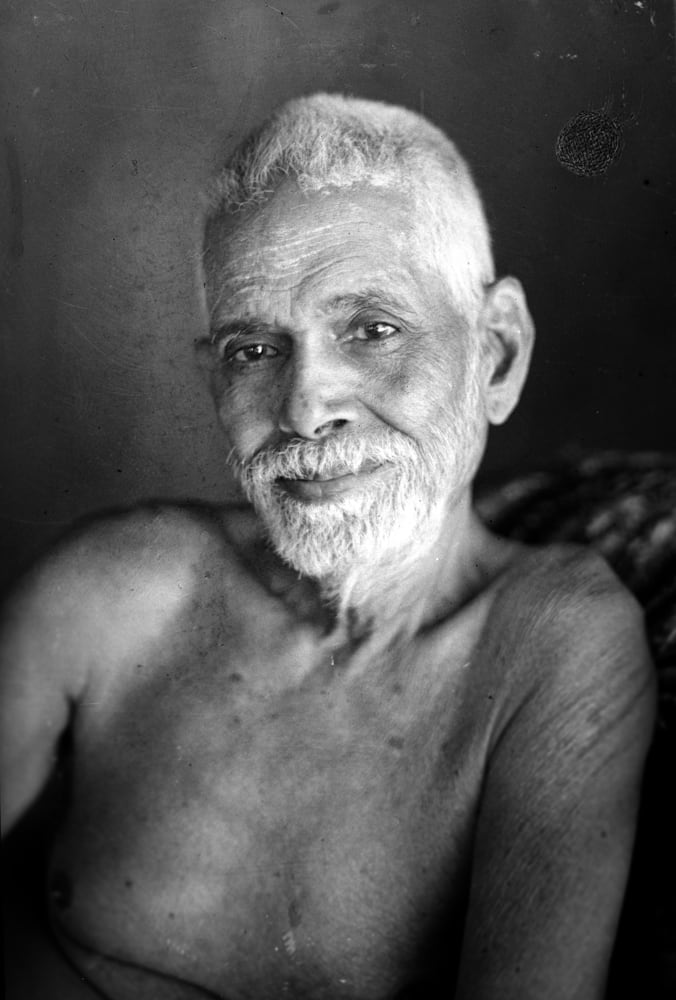
Ramana Maharshi
Übereinstimmung bei: Ist die Welt wirklich? · Wer bin ich? Gibt es ein wahres Selbst? · Warum leiden wir?
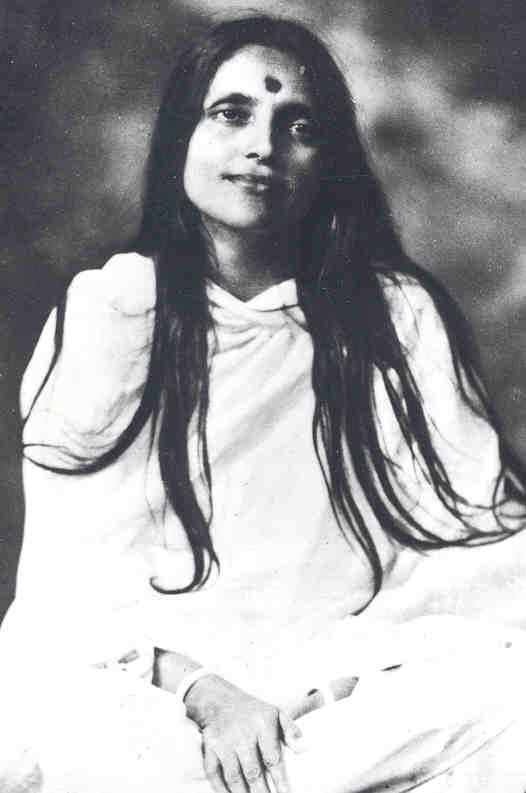
Anandamayi Ma
Übereinstimmung bei: Was ist das Absolute? Gibt es Gott? · Wer bin ich? Gibt es ein wahres Selbst? · Warum leiden wir?
Denkt anders als

Francis of Assisi
Widerspruch bei: Wer bin ich? Gibt es ein wahres Selbst? · Ist die Welt wirklich?

Julian of Norwich
Widerspruch bei: Wer bin ich? Gibt es ein wahres Selbst? · Ist die Welt wirklich?
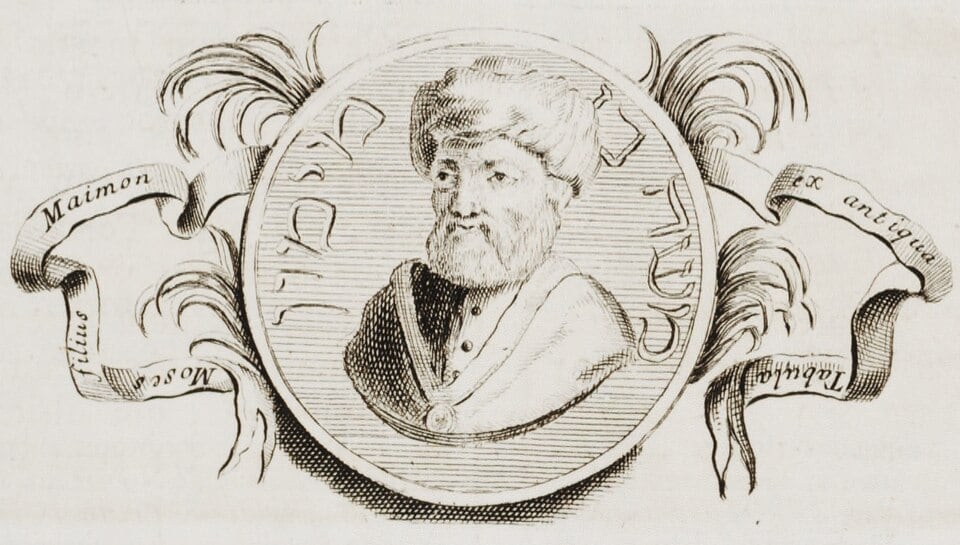
Maimonides
Widerspruch bei: Wer bin ich? Gibt es ein wahres Selbst? · Ist die Welt wirklich?

Theophan the Recluse
Widerspruch bei: Wer bin ich? Gibt es ein wahres Selbst? · Ist die Welt wirklich?
Widerspruch beiGrundsätzliche Meinungsverschiedenheit
David R. Hawkins · The 14th Dalai Lama (Tenzin Gyatso)
Calibrating truth or letting science refute: two attitudes towards evidence
Warum: The contradiction is real and concerns method. The Dalai Lama speaks from the university tradition of Nalanda, with its developed logic and epistemology, and from decades of dialogue with scientists: he distinguishes what Buddhism says about the mind, which can be tested, from what it affirms about the path. Hawkins, a psychiatrist by training, presents kinesiology as a bridge between science and spirituality, but his procedure lacks independent experimental validation, and the library presents it as doctrine, not as a result. Both agree on the place of reason, necessary but not ultimate; they clash over whether a claim about truth can rest on a measurement no one else can replicate.
Widerspruch beiGrundsätzliche Meinungsverschiedenheit
David R. Hawkins · Jiddu Krishnamurti
A ladder of levels versus a pathless land
Warum: The contradiction is real, though it starts from a shared diagnosis. Hawkins, trained as a psychiatrist and a reader of devotional traditions, offers his readers a map that lets them locate themselves and orient inner work, and his way is surrender. Krishnamurti, raised in the Theosophical Society, with its doctrine of initiations and grades, rejected precisely every spiritual hierarchy: a map of levels would seem to him the subtlest form of ambition. One sees the scale as an aid to letting go; the other, as a trap that turns letting go into another achievement. They agree that no one can do the work for another and that thought is not the goal.
Übereinstimmung bei
David R. Hawkins · Nisargadatta Maharaj
Everything happens and no one does it: the doer as an assumption
Warum: The affinity comes from a common matrix, non-duality of Vedantic origin, which Nisargadatta received from his lineage and Hawkins adopted in his mature works. No relationship between them is recorded in this library. They differ in register and audience: Nisargadatta speaks in direct conversations, translated from Marathi, with a negative method that discards everything perceived; Hawkins writes books combining his experience, clinical language and a map of levels of consciousness whose calibration basis lacks scientific validation. Hawkins also stresses devotional surrender to God; Nisargadatta stays with pure enquiry into the I am.
Anekdoten und Erzählungen
Anekdoten und Erzählungen
Zeugnis1939
The blizzard
Herkunft der Erzählung: It comes solely from Hawkins himself: the 'About the Author' note in The Eye of the I (2001) and later books. There is no independent testimony and no precise date.
Zeugnisc. 1965
The atheist's prayer
Herkunft der Erzählung: Autobiographical note in his books from 2001 (The Eye of the I onwards). No medical records or witnesses are known that would allow the illness or the experience to be checked.
Belegt2000s
Scepticism 'calibrates' at 160
Herkunft der Erzählung: Documented on Veritas Publishing's 'FAQs' page ('Critics' and 'Kinesiology' sections) and in the 'Applied kinesiology' entry of The Skeptic's Dictionary (s20).
Nicht überprüfbar1990s–2000s
Mother Teresa's praise
Herkunft der Erzählung: It appears in promotional texts (e.g. the El Grano de Mostaza page for La sabiduría del Dr. David R. Hawkins). Neither the letter nor its provenance has been found; it remains pending.
Belegt2010s–2025
The biography the publisher disowned
Herkunft der Erzählung: Statement by Veritas Publishing on its 'FAQs' page (consulted 2026-10-25). Not checked against Scott Jeffrey's version; title and date of his book pending.
Lehren
Lehren
Die Begriffe, die das Denken gliedern, in ihrem Zusammenhang erklärt.
Map of Consciousnessmap-of-consciousness
It combines the hierarchy of needs of humanistic psychology, the emotional scales of self-help movements and the traditional idea of degrees of spiritual realisation.
Calibration by muscle testingcalibration-muscle-testing
The author's claim; the scientific assessment is summarised with sources s8, s9, s10, s11 and s20.
Power and forcepower-and-force
Set out in Power vs. Force (1995) and taken up again in Success Is for You (2016).
Letting go (surrender)letting-go-surrender
The practical core of his late work; it connects with surrender to God in the devotional path.
Devotional nondualitydevotional-nonduality
Set out in I: Reality and Subjectivity (2003) and Discovery of the Presence of God (2006).
Retreats
Retreats und Zentren
Orte und Begegnungen, die mit dieser Lehre verbunden sind. Wir stellen den Kontakt zu den Veranstaltern her.
Grupos locales en varios países y por Zoom · Internacional
David R. Hawkins study groups
Veritas Publishing (directorio)
Veritas Publishing, the Sedona publisher of David R. Hawkins's work, maintains a directory of study groups devoted to his books and his Map of Consciousness. Groups are listed by their own organisers, can be searched by country or postcode and include online options by video call; the same website explains how to start a new one. These are not retreats led by the organisation but gatherings of readers. Veritas also offers a streaming video library with the lecture series, dialogues and satsangs Hawkins gave between 2002 and 2011, the most direct record of his teaching.
Videos
Videos
Aufnahmen, Gespräche und Dokumentarfilme. Die Videos werden von YouTube wiedergegeben; sie werden nicht hier gespeichert.
Dr. David R. Hawkins: No Mind is the Ultimate Context
Vortrag· EN· 7 min
veritaspubOffizieller Kanal
Dr. David R. Hawkins: The Direct Way to God
Auf YouTube ansehen
Dieses Video lässt sich nicht einbetten; es wird auf YouTube geöffnet.
Dr. David R. Hawkins: The Direct Way to God
Vortrag· EN· 3 min
Veritas Publishing – Dr. David R. HawkinsOffizieller Kanal
Dr. David R. Hawkins: How to Become the Witness
Auf YouTube ansehen
Dieses Video lässt sich nicht einbetten; es wird auf YouTube geöffnet.
Dr. David R. Hawkins: How to Become the Witness
Vortrag· EN· 3 min
Veritas Publishing – Dr. David R. HawkinsOffizieller Kanal
How Do You Let Go?
Auf YouTube ansehen
Dieses Video lässt sich nicht einbetten; es wird auf YouTube geöffnet.
How Do You Let Go?
Vortrag· EN· 4 min
Veritas Publishing – Dr. David R. HawkinsOffizieller Kanal
“How far up the scale is it possible to go in one lifetime?”
Auf YouTube ansehen
Dieses Video lässt sich nicht einbetten; es wird auf YouTube geöffnet.
“How far up the scale is it possible to go in one lifetime?”
Vortrag· EN· 4 min
Veritas Publishing – Dr. David R. HawkinsOffizieller Kanal
Forgiveness
Auf YouTube ansehen
Dieses Video lässt sich nicht einbetten; es wird auf YouTube geöffnet.
Forgiveness
Vortrag· EN· 5 min
Veritas Publishing – Dr. David R. HawkinsOffizieller Kanal
Dr. David Hawkins: Why Your Mind Won’t Stop Thinking
Vortrag· EN· 24 min
Hay HouseOffizieller Kanal
El legado del Doc David Hawkins, mapa de la conciencia, dejar ir | Entrevista Miguel Iribarren
Gespräch· ES· 85 min
Imanol Correa
TODO sobre EL MAPA DE LOS NIVELES DE CONSCIENCIA del Dr David Hawkins
Analyse· ES· 24 min
Sebas Klinkert
Dr. David R. Hawkins: Vol I: Power vs. Force – Muscle Testing Video
Originalaufnahme· EN· 2 min
Veritas Publishing – Dr. David R. HawkinsOffizieller Kanal
Who You Are Brings You What You Need - April 2004
Vortrag· EN· 2004· 10 min
Veritas Publishing – Dr. David R. HawkinsOffizieller Kanal
Altered States of Consciousness (August 2005)
Vortrag· EN· 2005· 3 min
Veritas Publishing – Dr. David R. HawkinsOffizieller Kanal
Dr. David R. Hawkins: Grace and Karma
Vortrag· EN· 2 min
Veritas Publishing (veritaspub)Offizieller Kanal
Mesa redonda - David Hawkins - El poder frente a la fuerza
Analyse· ES· 2026· 55 min
El Grano de MostazaOffizieller Kanal
Mesa redonda - David Hawkins - Dejar ir
Analyse· ES· 2026· 58 min
El Grano de MostazaOffizieller Kanal
Galerie
Galerie
Bilder mit geprüfter Lizenz. Jedes bewahrt seine Urheberschaft und seinen Herkunftsnachweis.
Beziehungen
Beziehungen
Einflüsse, Schülerschaften und Verwandtschaften. Die belegte Beziehung wird von der durch Analyse ermittelten Ähnlichkeit unterschieden.
Begegnete
Linus Pauling
They co-edited Orthomolecular Psychiatry: Treatment of Schizophrenia (W. H. Freeman, 1973).
Belegte Beziehung
Beeinflusst von
George J. Goodheart
Hawkins took from Goodheart's applied kinesiology (and its populariser John Diamond) the muscle test on which he based calibration.
Belegte Beziehung
Familie von
Susan Hawkins
His wife; she presides over the Institute for Spiritual Research and wrote the authorised biography (2025).
Belegte Beziehung
Verwandte Gedanken mit
Both locate realisation in the recognition of the Self and the disappearance of the personal self; Hawkins adds a Christian devotional component.
Durch Analyse ermittelte Ähnlichkeit
Verwandte Gedanken mit
Affinity in the thesis that the personal 'I am' is a transient identification to be transcended.
Durch Analyse ermittelte Ähnlichkeit
Zeitgenosse von
Contemporaries read by the same public; both narrate a sudden dissolution of the self at a moment of crisis and propose letting go of identification with the mind.
Durch Analyse ermittelte Ähnlichkeit
Quellen
Quellen
Für diesen Eintrag herangezogene Bibliografie und Kataloge.
- Boulder Book Store, ficha de «The Final Doorway to Enlightenment: Prayer, Transcendence, and Realization of the Self» (Hay House LLC, 2026, 176 pp., ISBN 9781401977160).
- Wikidata, «David R. Hawkins», QID Q1176226 (VIAF 29784455; LCCN no96037139; ISNI 0000000110496765).
- Veritas Publishing. «Dr. David R. Hawkins» (biografía oficial, educación, premios y fundaciones). veritaspub.com.
- «In Memoriam: David R. Hawkins, 1927–2012». Journal of Orthomolecular Medicine 27 (4), 2012, pp. 187–188 (International Society for Orthomolecular Medicine).
- Hawkins, David R. The Eye of the I: From Which Nothing Is Hidden. Sedona: Veritas Publishing, 2001, «About the Author» (nota autobiográfica, reproducida también en Truth vs. Falsehood, 2005; Transcending the Levels of Consciousness, 2006; Healing and Recovery, 2009; Letting Go, 2012). Consultado mediante la búsqueda de texto completo de Internet Archive (ejemplar eyeofi0000hawk).
- Hawkins, David R. Power vs. Force: The Hidden Determinants of Human Behavior. Sedona: Veritas Publishing, 1995; ed. revisada, Carlsbad: Hay House, 2002; «Author's Official Authoritative Edition», Hay House, 2012.
- Hawkins, David R., y Linus Pauling (eds.). Orthomolecular Psychiatry: Treatment of Schizophrenia. San Francisco: W. H. Freeman, 1973. ISBN 0716708981.
- Veritas Publishing. «FAQs» (incluye «Critics: Clarification of Consciousness Research», normas sobre grupos de estudio, derechos del Map of Consciousness® y el Institute for Spiritual Research, Inc.).
- Hall, S.; Lewith, G.; Brien, S.; Little, P. «A review of the literature in applied and specialised kinesiology». Forschende Komplementärmedizin 15 (1), 2008, pp. 40–46. doi:10.1159/000112820. PMID 18334813.
- Schwartz, S. A.; Utts, J.; Spottiswoode, S. J. et al. «A double-blind, randomized study to assess the validity of applied kinesiology (AK) as a diagnostic tool and as a nonlocal proximity effect». Explore 10 (2), 2014, pp. 99–108. doi:10.1016/j.explore.2013.12.002. PMID 24607076.
- Jensen, A. M.; Stevens, R. J.; Burls, A. J. «Estimating the accuracy of muscle response testing: two randomised-order blinded studies». BMC Complementary and Alternative Medicine 16, 2016, art. 492. doi:10.1186/s12906-016-1416-2. PMID 27903263.
- Kenney, J. J.; Clemens, R.; Forsythe, K. D. «Applied kinesiology unreliable for assessing nutrient status». Journal of the American Dietetic Association 88 (6), 1988, pp. 698–704. PMID 3372923.
- Wikipedia (en). «Columbia Pacific University» (centro a distancia no acreditado, fundado en 1978 y cerrado por orden judicial en California en 2000).
- Wikipedia (de). «David R. Hawkins». Consultado como índice de fechas y obras, contrastado con s2 y s3.
- Hay House. «David R. Hawkins, M.D., Ph.D.» (ficha de autor y catálogo).
- Hay House. «Hay House Partner Program» — aviso de cierre del programa de afiliación (octubre de 2021).
- Hawkins, Susan. The Man Who Mapped Consciousness: The Life and Legacy of Dr. David R. Hawkins, The Authorized Biography. Carlsbad: Hay House, 2025. ISBN 9781401979577.
- Deutsche Nationalbibliothek, catálogo (SRU), registros de «Hawkins, David R.» (14 registros).
- Bibliothèque nationale de France, catálogo general (SRU), registros de David R. Hawkins.
- Open Library, registros de obra y edición de David R. Hawkins (OL6212873W, OL19764617W, OL20655237W, etc.).
- Carroll, Robert Todd. «Applied kinesiology». The Skeptic's Dictionary (skepdic.com), con sección dedicada a David Hawkins.
- Hyman, Ray. «The Mischief-Making of Ideomotor Action». The Scientific Review of Alternative Medicine 3 (2), 1999 (citado por s20 a propósito de las demostraciones de kinesiología aplicada).
- American Psychiatric Association. Megavitamin and Orthomolecular Therapy in Psychiatry. Task Force Report 7. Washington, D. C.: APA, 1973.
- Chitai-gorod (Читай-город), fichas de catálogo de las ediciones rusas de David R. Hawkins (Весь, Ганга, АСТ, Эксмо).
- Macrolibrarsi / Macro Edizioni, ficha de «Il potere dei condizionamenti» (EAN 9788828538264).
- Veritas Publishing. Catálogo de libros (books).
- Veritas Publishing. Canal oficial de YouTube «Veritas Publishing – Dr. David R. Hawkins».
- Goodreads, listas de ediciones por obra de David R. Hawkins (autor 11784), con ISBN, editorial, fecha y lengua de cada edición; consultadas obra por obra (p. ej. work/editions/20996, 21908238, 24296–24304).
- Ediciones El Grano de Mostaza (Barcelona), catálogo de libros de David R. Hawkins en español (fichas con ISBN como SKU).
- Internet Archive, búsqueda de texto completo (servicio FTS) sobre ejemplares digitalizados de bibliotecas: powervsforcehidd00hawk (Hay House, 2002), eyeofi0000hawk (Veritas, 2001), i00hawk (Veritas, 2003), lettinggopathway0000hawk (Veritas, 2012), alongpathtoenlig0000hawk (Hay House, 2011).
- Penguin Random House, ficha de «My Journey of Light with Dr. David R. Hawkins», de Susan Hawkins (Hay House, 2026).
- Rechteinhaber
- Herederos de David R. Hawkins (copyright a nombre del autor) a través de Veritas Publishing, editorial propia sostenida por el Institute for Spiritual Research, Inc. (Sedona, Arizona), que custodia además las marcas Map of Consciousness® y prohíbe reproducir sus tablas; Hay House publica bajo licencia la mayor parte de las ediciones en inglés desde 2002.
- Offizielle Website
- veritaspub.com
Bestätigung ausstehend
Was dieser Eintrag noch nicht klären konnte. Wir sagen es lieber, als es aufzufüllen.
- Retrato: no hay ninguna fotografía de David R. Hawkins con licencia libre en Wikimedia Commons (búsqueda del 2026-10-25; Wikidata Q1176226 sin P18). Las tres imágenes son de lugares y de Linus Pauling; ninguna se marca como principal. Pedir a Veritas Publishing / Institute for Spiritual Research una imagen con licencia o permiso.
- Tesis doctoral de 1995 (Qualitative and Quantitative Analysis and Calibration of the Level of Human Consciousness): localizar el registro bibliográfico (Columbia Pacific University / posible edición de Veritas) y su ISBN, si lo tiene.
- Localizar ISBN de las ediciones en ruso de Power vs. Force («Сила против силы», editoriales Весь y АСТ) y de Eye of the I / Transcending; solo se ha verificado «Отпускание» (Ганга, 2018). Fuente de partida: Chitai-gorod (s23).
- Localizar ediciones italianas distintas de Il potere dei condizionamenti (Macro Edizioni), p. ej. de Letting Go, y ediciones hindi y árabes de las obras principales (solo se han verificado dos árabes: Letting Go y I).
- Ediciones españolas sin ISBN localizado: The Ego Is Not the Real You, In the World But Not of It, The Highest Level of Enlightenment («El nivel más alto de iluminación» figura en Goodreads sin ISBN), Along the Path to Enlightenment. Año de publicación de «La explicación del mapa de la conciencia», «La evolución de la conciencia» y «El hombre que creó el mapa de la conciencia» (El Grano de Mostaza).
- Edición española de Realidad, espiritualidad y el hombre moderno: el catálogo de la editorial da 9788412295696 y Goodreads 9788412312430; confirmar si son dos ediciones (papel y digital).
- Fecha exacta de salida de The Final Doorway to Enlightenment (Hay House, 2026): los catálogos dan 13 de enero y 4 de agosto de 2026. ISBN de My Journey of Light de Susan Hawkins (9798318604577 o 9781837826681 según el vendedor).
- Grabaciones de audio y vídeo: Veritas vende decenas de conferencias en CD/DVD y streaming (series mensuales 2002–2011, «Office Visit Series», «The Highest Level of Enlightenment» en audio, etc.); solo se han registrado como obras tres títulos de audio. Inventario completo en https://veritaspub.com/.
- Carta o elogio de la Madre Teresa a Power vs. Force: localizar texto, fecha y procedencia; hoy solo consta en textos promocionales (anécdota marcada como unverifiable).
- Título y fecha de la biografía autopublicada por Scott Jeffrey que Veritas desautoriza en sus FAQ.
- Confirmar autoría de «Dialogues on Consciousness and Spirituality» (Veritas, 1998) y su contenido, que no se ha podido consultar.
- Leer la biografía autorizada de Susan Hawkins (2025) para contrastar fechas (enfermedad de c. 1965, traslado a Sedona, título coreano) y posibles últimas palabras.
- Buscar vídeos oficiales insertables: casi todos los del canal Veritas Publishing tienen la inserción desactivada (oEmbed 401); hay una conferencia en coreano de 2000 mencionada en The Eye of the I sin localizar.
- Sala de lectura (2026-10-25): ninguna obra de Hawkins (m. 2012) es de dominio público; derechos de Veritas Publishing / Institute for Spiritual Research y Hay House hasta 2083 (UE, 70 años) y más allá en EE. UU. para las obras posteriores a 1977. Sin reading_texts.
- Vídeos (2026-10-25): añadidos 6 (4 de Veritas insertables, 2 mesas redondas de El Grano de Mostaza); la mayoría de los vídeos del canal Veritas siguen con la inserción desactivada. La entrevista con Oprah Winfrey que circula en YouTube está en un canal de aficionado y no se incluye.
- Obras (2026-10-25): cotejo con Open Library sin obras nuevas. Registros atribuidos por error a este autor en Open Library y descartados: Biotransformations (1992–1993, otro David R. Hawkins, químico), The Little Book of Letting Go (2000, de Hugh Prather), Journey Together (Harvest House, 2021) y Side by Side (2009), de homónimos; Ultimate Dr. David Hawkins Library (2022) es un lote de libros, no una obra.
Recherchiert am 2026-10-25