Buddhismus · Mahayana
Shinran
親鸞 · 愚禿釋親鸞 · 範宴 · 藤井善信 · 見真大師
1173 – 1263Historisch belegte Person
Japanischer Mönch (1173–1263), Schüler Hōnens und posthumer Begründer der Jōdo Shinshū, der »wahren Schule des Reinen Landes«. Nach zwanzig Jahren auf dem Berg Hiei wandte er sich der Anrufung des Namens Amidas zu, wurde 1207 verbannt und lebte fortan »weder Mönch noch Laie«, verheiratet und Vater mehrerer Kinder. Er lehrte, dass die Geburt im Reinen Land nicht von der eigenen Anstrengung abhängt, sondern von dem durch Amidas Gelübde geschenkten Vertrauen (shinjin). Sein Hauptwerk ist das Kyōgyōshinshō; seine meistgelesenen Worte sind die des Tannishō.
- Werke
- 30Werke
- Ausgaben
- 37Ausgaben
- Zitate
- 9Zitate
- Videos
- 11Videos
- Bilder
- 6Bilder
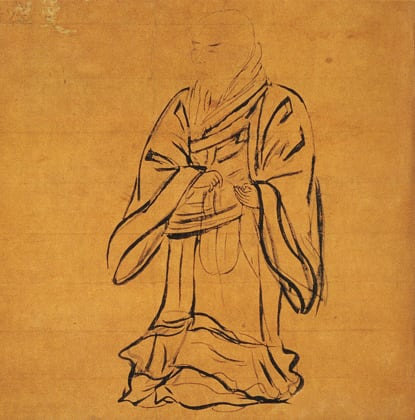
Retrato de Shinran «del espejo» (Kagami no goei) · Public domain
In eigenen Worten
«I, Shaku Shinran, the foolish bald-headed one, in the year of the metal rooster of the Kennin era [1201], abandoned the sundry practices and took refuge in the Primal Vow.»Kyōgyōshinshō, epílogo del capítulo sobre los budas y tierras transformados. Traducción propia.
Shinran
Kyōgyōshinshō (The True Teaching, Practice and Realization of the Pure Land Way)
Zum Einstieg ein Werk
Kyōgyōshinshō (The True Teaching, Practice and Realization of the Pure Land Way)Der zentrale Gedanke
Other Power (tariki): A term taken from Tanluan's commentary that Shinran makes the key to his whole teaching.
Im Zusammenhang sehen
Biografie
4 Min. Lesezeit
Unterstützte Übersetzung aus dem spanischen Original, Durchsicht durch einen muttersprachlichen Übersetzer ausstehend.
Ein niederer Adliger auf dem Berg
Shinran wurde 1173 in Hino südöstlich von Kyōto geboren, in einem bescheidenen Zweig des Fujiwara-Klans; sein Vater, Hino Arinori, war Hofbeamter. Über das Kind weiß man kaum etwas mit Sicherheit. Die Biographie, die sein Urenkel Kakunyo 1295 verfasste, berichtet, er sei mit neun Jahren von Jien ordiniert worden, dem Abt des Shōren-in und späteren Patriarchen des Tendai, und habe die folgenden zwei Jahrzehnte auf dem Berg Hiei verbracht. Die Briefe seiner Frau Eshinni präzisieren, dass er dort als »Hallenmönch« (dōsō) in einer der Hallen diente, die der unablässigen Anrufung des Buddha Amida gewidmet waren.
Der Traum im Rokkakudō und die Begegnung mit Hōnen
1201, mit neunundzwanzig Jahren, verließ er den Berg. Nach dem Bericht Eshinnis zog er sich hundert Tage lang in den Rokkakudō in Kyōto zurück, den dem Prinzen Shōtoku geweihten Tempel, und empfing in der Morgendämmerung des fünfundneunzigsten Tages im Traum eine Offenbarung des Prinzen. Daraufhin suchte er Hōnen auf, der in Yoshimizu lehrte, die Anrufung des Namens Amidas (Nembutsu) genüge, um in dessen Reinem Land geboren zu werden, und hörte ihm weitere hundert Tage zu. Shinran fasste dies Jahre später in einem berühmten Satz zusammen: In jenem Jahr »gab ich die vielfältigen Übungen auf und nahm Zuflucht zum Urgelübde«.
Er war ein enger Schüler. 1205 erlaubte ihm Hōnen, sein Hauptwerk, das Senchakushū, sowie sein Bildnis zu kopieren, und schrieb eigenhändig den neuen Namen des Schülers nieder. Shinran hielt dies im Nachwort des Kyōgyōshinshō bewegt fest, denn nur wenigen wurde dieses Vorrecht zuteil.
Weder Mönch noch Laie
1207 verbot der Hof die Nembutsu-Bewegung nach einem Skandal, in den Hofdamen verwickelt waren; vier Schüler wurden hingerichtet, Hōnen in die Provinz Tosa verbannt und Shinran nach Echigo an der Küste des Japanischen Meeres, in den Laienstand zurückversetzt unter dem Namen Fujii Yoshizane. Er antwortete mit einer neuen Identität: Er war nicht mehr Mönch, aber auch nicht Laie, und unterzeichnete fortan als Gutoku, »der törichte Kahlkopf«. Irgendwann in diesen Jahren heiratete er Eshinni – der Überlieferung nach Tochter des Miyoshi Tamenori, eines Beamten mit Interessen in Echigo –, mit der er mehrere Kinder hatte.
1211 begnadigt, kehrte er nicht nach Kyōto zurück; Hōnen starb im folgenden Jahr. 1214 zog er mit seiner Familie in die Kantō-Region im Osten des Landes. Eshinni erinnerte sich später an eine Episode dieser Reise: Shinran begann, die drei Sūtras des Reinen Landes zum Wohl der Wesen tausendmal zu rezitieren, brach jedoch nach einigen Tagen ab, als er erkannte, dass er auf seine eigene Anstrengung vertraute statt auf den Namen Amidas.
Zwanzig Jahre im Kantō
Rund zwei Jahrzehnte lebte Shinran in der Provinz Hitachi und ihrer Umgebung und lehrte Bauern, Krieger und Händler, die sich in kleinen Übungsräumen (dōjō) versammelten, nicht in Tempeln. Aus dieser Zeit stammt der erste Entwurf des Kyōgyōshinshō, den die Schule aufgrund eines textinternen Hinweises auf 1224 datiert; seine eigenhändige Handschrift, das sogenannte Bandō-Exemplar mit Korrekturen aus seinem ganzen Leben, wird im Higashi Honganji aufbewahrt und ist Nationalschatz.
Kyōto: das Schreiben im Alter
Um 1235, bereits über sechzig, kehrte er nach Kyōto zurück, wo er bis zu seinem Tod in geliehenen Häusern lebte, getragen von den Spenden seiner Anhänger im Kantō. Es war die fruchtbarste Zeit seines Schreibens: Er vollendete das Kyōgyōshinshō, das er 1247 bereits abschreiben ließ; er verfasste auf Japanisch Hunderte von Hymnen (wasan), die die Lehre auch jenen zugänglich machten, die kein Chinesisch lasen; er schrieb Kommentare zu Texten anderer Meister und führte einen umfangreichen Briefwechsel mit den Gemeinden im Osten.
Dieser Briefwechsel offenbart auch das Drama seiner letzten Jahre. Die Gemeinden im Kantō spalteten sich in jene, die meinten, sie dürften, von Amida errettet, unbekümmert Böses tun, und jene, die moralische Anstrengungen und zusätzliche Übungen forderten. Shinran sandte seinen Sohn Zenran, um Ordnung zu schaffen, doch dieser verbreitete eigene Lehren und behauptete, von seinem Vater eine geheime Lehre empfangen zu haben. 1256, mit dreiundachtzig Jahren, verstieß Shinran ihn brieflich.
Ein empfangener Glaube
Im Zentrum seines Denkens steht eine Radikalisierung der Lehre Hōnens. Für Shinran vermag keine menschliche Handlung, nicht einmal die Rezitation des Namens, die Geburt im Reinen Land zu bewirken: Alles geht aus der »Kraft des Anderen« (tariki) hervor, dem Gelübde, mit dem Amida sich verpflichtet hat, alle Wesen zu erretten. Entscheidend ist das aufrichtige Vertrauen (shinjin), das keine Errungenschaft des Gläubigen ist, sondern eine Gabe, die Amida ihm schenkt; von dem Augenblick an, in dem es aufkommt, steht die künftige Geburt schon in diesem Leben fest. Die Anrufung des Namens hört auf, eine verdienstvolle Übung zu sein, und wird zum Ausdruck der Dankbarkeit.
Der Tod und die Schule
Er starb in Kyōto im elften Monat des Jahres 1262 nach japanischem Kalender, nach unserer Zählung bereits im Januar 1263, im Alter von neunundachtzig Jahren im Haus seines jüngeren Bruders. Seine Tochter Kakushinni, die ihm beigestanden hatte, schrieb ihrer Mutter nach Echigo; Eshinnis erhaltene Antwort tröstet die Tochter mit der Gewissheit, dass Shinrans Geburt im Reinen Land gesichert sei, wie immer er auch gestorben sein mochte. Kakushinni errichtete 1272 in Ōtani ein Mausoleum, aus dem der Honganji hervorgehen sollte, und Kakunyo, ihr Enkel, baute von dort aus die Schule der Jōdo Shinshū auf.
Um 1290 stellte ein Schüler, Yuien, im Tannishō Worte des Meisters zusammen, die er aus dessen Mund gehört hatte, um die Abweichungen zu berichtigen, die er in seiner Gemeinde beobachtete; mit seinem Paradox vom »bösen Menschen« als eigentlichem Gegenstand des Gelübdes wurde es seit dem späten 19. Jahrhundert zu Shinrans meistgelesenem Text. Zu Beginn des 20. Jahrhunderts bezweifelten manche Historiker sogar seine geschichtliche Existenz, da fast alles, was man über ihn wusste, aus seiner eigenen Schule stammte; der Fund der Briefe Eshinnis in den Archiven des Nishi Honganji im Jahr 1921 entschied die Frage. Heute bilden die beiden Hauptzweige der Jōdo Shinshū die größte buddhistische Familie Japans.
Quellen: Dobbins, James C. Jōdo Shinshū: Shin Buddhism in Medieval Japan. Bloomington: Indiana University Press, 1989 (reimpr. Honolulu: University of Hawai'i Press, 2002, ISBN 9780824826208). · Dobbins, James C. Letters of the Nun Eshinni: Images of Pure Land Buddhism in Medieval Japan. Honolulu: University of Hawai'i Press, 2004. ISBN 9780824826673. · Hirota, Dennis (dir.) et al. (trads.). The Collected Works of Shinran. 2 vols. Kioto: Jōdo Shinshū Hongwanji-ha, 1997. Edición en línea del Hongwanji. · Bloom, Alfred. Shinran's Gospel of Pure Grace. Tucson: University of Arizona Press, 1965. ISBN 9780816504053. · Ueda, Yoshifumi; Hirota, Dennis. Shinran: An Introduction to His Thought. Kioto: Hongwanji International Center, 1989.
Zeitleiste
Das Leben, Jahr für Jahr
Jeder Punkt ist ein belegtes Ereignis. Klicken Sie, um es mit Quelle und Grad der Gewissheit zu lesen.
14. Mai 11730 JahreHino (Kioto)
Birth
Born on the 1st day of the 4th month of Jōan 3 (14 May 1173 Julian; 21 May proleptic Gregorian, the date celebrated by the school), son of Hino Arinori.
BelegtWikidata, entidad Q512934 «Shinran» (P31=Q5; 28 enlaces entre wikis; nacimiento 1173, muerte 1263 en Kioto; firma 愚禿釋親鸞).
Nach dem Tod
- 1272Ōtani mausoleum
- 1295Kakunyo's illustrated biography
- 1876Title of Kenshin Daishi
- 1921Discovery of Eshinni's letters
14. Mai 1173 · 0 Jahre
Birth
Born on the 1st day of the 4th month of Jōan 3 (14 May 1173 Julian; 21 May proleptic Gregorian, the date celebrated by the school), son of Hino Arinori.
Belegt
1181 · 8 Jahre
Ordination
According to Kakunyo's biography, he receives the tonsure at nine from Jien under the name Han'en.
Überlieferung
1201 · 28 Jahre
Rokkakudō retreat and joining Hōnen
Leaves Mount Hiei after twenty years, receives a revelatory dream at the Rokkakudō and becomes Hōnen's disciple: "I abandoned the sundry practices and took refuge in the Primal Vow".
Belegt
1205 · 32 Jahre
Copy of the Senchakushū
Hōnen allows him to copy the Senchakushū and his portrait and gives him a new name, according to the postscript of the Kyōgyōshinshō.
Belegt
1207 · 34 Jahre
Exile to Echigo
The Jōgen persecution: Hōnen is exiled to Tosa and Shinran to Echigo under a lay name. From then on he declares himself "neither monk nor layman" and signs as Gutoku.
Belegt
1211 · 38 Jahre
Pardon
Receives a pardon but remains in Echigo; Hōnen dies in Kyoto the following year.
Belegt
1214 · 41 Jahre
Move to Kantō
Settles with his family in the Kantō region, where he will teach for some twenty years.
Belegt
1224 · 51 Jahre
First draft of the Kyōgyōshinshō
The date the school assigns to the composition of the Kyōgyōshinshō, on the basis of an internal reference to the year Gennin 1, and regards as its founding.
Wahrscheinlich
um 1235 · 62 Jahre
Return to Kyoto
Returns to Kyoto at about sixty-two; he will live there on the donations of his followers.
Wahrscheinlich
1248 · 75 Jahre
Hymns of the Pure Land and of the Masters
Composes the Jōdo wasan and the Kōsō wasan, aged seventy-five.
Belegt
1256 · 83 Jahre
Disowning of Zenran
On the 29th day of the 5th month he signs the letter breaking with his son Zenran over his teachings.
Belegt
1258 · 85 Jahre
Hymns of the Dharma-Ages
Completes the Shōzōmatsu wasan; the same year his disciple Kenchi records his words on jinen hōni.
Belegt
9. Januar 1263 · 89 Jahre
Death
Dies on the 28th day of the 11th month of Kōchō 2 (9 January 1263 Julian; 16 January proleptic Gregorian) at his brother Jin'u's house, aged eighty-nine.
Belegt
1272
Ōtani mausoleum
His daughter Kakushinni builds a mausoleum that will be the origin of the Honganji.
Belegt
1295
Kakunyo's illustrated biography
Kakunyo composes the Godenshō, the basis of the traditional image of Shinran.
Belegt
1876
Title of Kenshin Daishi
Emperor Meiji grants him the posthumous title Kenshin Daishi.
Belegt
1921
Discovery of Eshinni's letters
His wife's letters are discovered in the Nishi Honganji archives, confirming the essential facts of his life.
Belegt
Werke
Grundlegende Werke
Die Werke, ohne die sich das Vermächtnis nicht verstehen lässt.
Shinran
Kyōgyōshinshō (The True Teaching, Practice and Realization of the Pure Land Way)
Schriftliches Werk · um 1247
Kyōgyōshinshō (The True Teaching, Practice and Realization of the Pure Land Way)
顕浄土真実教行証文類
Shinran's major doctrinal work and the founding text of Jōdo Shinshū. In six chapters —Teaching, Practice, Shinjin, Realization, True Buddha and Land, Transformed Buddhas and Lands— it gathers and comments on hundreds of passages from sutras and the seven Pure Land patriarchs to show that everything, from practice to entrusting, is transferred by Amida. It includes the "Hymn of True Shinjin and the Nembutsu" (Shōshinge) and an autobiographical postscript.
4 Ausgaben
Shinran
Shōshinge (Hymn of True Shinjin and the Nembutsu)
Schriftliches Werk · um 1247
Shōshinge (Hymn of True Shinjin and the Nembutsu)
正信念仏偈
Sixty seven-character verses (120 lines) summarising Jōdo Shinshū doctrine: they praise Amida and his Vow and celebrate the teaching of the seven patriarchs of India, China and Japan. Since Rennyo in the 15th century it has been the text recited daily by the school's followers.
1 Ausgabe
Shinran
Sanjō wasan (The Three Collections of Hymns)
Spätere Zusammenstellung · um 1258
Sanjō wasan (The Three Collections of Hymns)
三帖和讃
Some three hundred and fifty four-line Japanese hymns that spread the doctrine among followers who could not read Chinese and form, with the Shōshinge, the core of the school's liturgy. They celebrate Amida and his land, the seven patriarchs and the situation of beings in the final Dharma age, culminating in Gutoku's hymns of lament and reflection.
2 Ausgaben

Spätere Zusammenstellung · um 1288
Tannishō (A Record in Lament of Divergences)
歎異抄
A short book of eighteen chapters with preface and epilogue, the most read text of the tradition. It contains the most famous sayings attributed to Shinran: "if even a good person attains birth, how much more the evil person!", that he has not a single disciple, that he never recited the nembutsu for his parents, or that the Vow, properly considered, was "for me, Shinran, alone". Popularised from the Meiji era, it influenced 20th-century Japanese philosophers and writers.
7 Ausgaben
Das gesamte Werk (30)
Shinran
Kyōgyōshinshō, ch. 1: Chapter on Teaching
The Conscious LibraryKyōgyōshinshō, ch. 1: Chapter on Teaching
1247
Shinran
Kyōgyōshinshō, ch. 2: Chapter on Practice
The Conscious LibraryKyōgyōshinshō, ch. 2: Chapter on Practice
1247
Shinran
Kyōgyōshinshō, ch. 3: Chapter on Shinjin
The Conscious LibraryKyōgyōshinshō, ch. 3: Chapter on Shinjin
1247
Shinran
Kyōgyōshinshō, ch. 4: Chapter on Realization
The Conscious LibraryKyōgyōshinshō, ch. 4: Chapter on Realization
1247
Shinran
Kyōgyōshinshō, ch. 5: Chapter on the True Buddha and Land
The Conscious LibraryKyōgyōshinshō, ch. 5: Chapter on the True Buddha and Land
1247
Shinran
Kyōgyōshinshō, ch. 6: Chapter on Transformed Buddha-Bodies and Lands
The Conscious LibraryKyōgyōshinshō, ch. 6: Chapter on Transformed Buddha-Bodies and Lands
1247
Shinran
Jōdo monrui jushō (Passages on the Pure Land Way)
The Conscious LibraryJōdo monrui jushō (Passages on the Pure Land Way)
1251
Shinran
Gutokushō (Gutoku's Notes)
The Conscious LibraryGutokushō (Gutoku's Notes)
1255
Shinran
Nyūshutsu nimon geju (Hymn of the Two Gateways of Entrance and Emergence)
The Conscious LibraryNyūshutsu nimon geju (Hymn of the Two Gateways of Entrance and Emergence)
1256
Shinran
Jōdo sangyō ōjō monrui (Passages on the Types of Birth in the Three Pure Land Sutras)
The Conscious LibraryJōdo sangyō ōjō monrui (Passages on the Types of Birth in the Three Pure Land Sutras)
1255
Shinran
Songō shinzō meimon (Notes on the Inscriptions on Sacred Scrolls)
The Conscious LibrarySongō shinzō meimon (Notes on the Inscriptions on Sacred Scrolls)
1255
Shinran
Ichinen tanen mon'i (Notes on Once-calling and Many-calling)
The Conscious LibraryIchinen tanen mon'i (Notes on Once-calling and Many-calling)
1257
Shinran
Yuishinshō mon'i (Notes on Essentials of Faith Alone)
The Conscious LibraryYuishinshō mon'i (Notes on Essentials of Faith Alone)
1250
Shinran
Nyorai nishu ekō mon (Passages on the Two Aspects of the Tathāgata's Directing of Virtue)
The Conscious LibraryNyorai nishu ekō mon (Passages on the Two Aspects of the Tathāgata's Directing of Virtue)
1256
Shinran
Mida nyorai myōgō toku (The Virtue of the Name of Amida Tathāgata)
The Conscious LibraryMida nyorai myōgō toku (The Virtue of the Name of Amida Tathāgata)
1260
Shinran
Jōdo wasan (Hymns of the Pure Land)
The Conscious LibraryJōdo wasan (Hymns of the Pure Land)
1248
Shinran
Kōsō wasan (Hymns of the Pure Land Masters)
The Conscious LibraryKōsō wasan (Hymns of the Pure Land Masters)
1248
Shinran
Shōzōmatsu wasan (Hymns of the Dharma-Ages)
The Conscious LibraryShōzōmatsu wasan (Hymns of the Dharma-Ages)
1258
Shinran
Kōtaishi Shōtoku hōsan (Hymns in Praise of Prince Shōtoku)
The Conscious LibraryKōtaishi Shōtoku hōsan (Hymns in Praise of Prince Shōtoku)
1255
Shinran
Dai Nihonkoku zokusan-ō Shōtoku taishi hōsan (Hymns to Prince Shōtoku, Ruler of Great Japan)
The Conscious LibraryDai Nihonkoku zokusan-ō Shōtoku taishi hōsan (Hymns to Prince Shōtoku, Ruler of Great Japan)
1257
Shinran
Jinen hōni shō (On Jinen Hōni)
The Conscious LibraryJinen hōni shō (On Jinen Hōni)
1258
Shinran
Mattōshō (Lamp for the Latter Ages)
The Conscious LibraryMattōshō (Lamp for the Latter Ages)
1333
Shinran
Goshōsoku shū (A Collection of Letters)
The Conscious LibraryGoshōsoku shū (A Collection of Letters)
1260
Shinran
Letter Disowning Zenran
The Conscious LibraryLetter Disowning Zenran
1256
Zitate
Zitate, die in einem bestimmten Werk nachgewiesen sind. Jedes trägt seine Herkunft und seinen Grad an Verlässlichkeit.
I, Shaku Shinran, the foolish bald-headed one, in the year of the metal rooster of the Kennin era [1201], abandoned the sundry practices and took refuge in the Primal Vow.然愚禿釋鸞、建仁辛酉暦、棄雜行兮歸本願。
GeprüftKyōgyōshinshō, epílogo del capítulo sobre los budas y tierras transformados. Traducción propia.
Apokryphe Zitate oder Zitate umstrittener Zuschreibung (1)
«"Though my life come to its end and I return to the Pure Land, I shall come back again and again like the waves of Waka bay. When you are alone and rejoice, think that there are two; when you are two and rejoice, think that there are three: that other one is Shinran."»
This is the so-called Gorinmatsu no gosho ("Deathbed Writing"), dated the 11th month of 1262 and signed "Gutoku Shinran, fully ninety years old". Widespread in popular piety, scholarship regards it as apocryphal: it appears neither in the early collections of his writings nor in Kakunyo's biography. It was transmitted in later compilations, such as Shimaji Daitō's Seiten (1928).
Letzte Worte
Traditionelle Zuschreibung
«"He did not mingle worldly matters in his words; he spoke only of the depth of the Buddha's benevolence. His voice uttered nothing else: the invocation of the name never ceased."»口に世事をまじへず、ただ仏恩のふかきことをのぶ。声に余言をあらはさず、もつぱら称名たゆることなし。
No last words of Shinran survive. This passage from Kakunyo's biography (Godenshō, 1295), written thirty-two years later, describes his last days: from the end of the 11th month he was ill, spoke only of gratitude to the Buddha and recited Amida's name unceasingly, until he died lying on his right side, head to the north and face to the west. Eshinni's letter to her daughter Kakushinni, written after receiving the news, transmits no words of his and simply affirms that his birth in the Pure Land was certain. The "Deathbed Writing" circulating under his name is apocryphal.
Quelle: Kakunyo. Honganji Shōnin Shinran den'e (Godenshō, «Biografía ilustrada de Shinran»), 1295. Trad. inglesa en The Life of Shinran Shonin: The Journey to Self-Acceptance, de Alfred Bloom (Leiden: Brill, 1968).
Fragen
Was das Werk beantwortet
Zwölf große Fragen der Menschheit und was sich aus den Texten darauf antworten lässt, mit Belegen. Wir legen niemandem Worte in den Mund.
Was ist das Absolute? Gibt es Gott?
Amida is compassion that calls, and also the form of the formless
Persönlich und unpersönlich zugleichAusdrücklich gesagt
For Shinran, the ultimate manifests as Amida, the Buddha of Immeasurable Light and Immeasurable Life, whose Vow seeks out and embraces beings: a face that knows and calls. But Amida is not a creator god, and Shinran does not stop at the face. Following Tanluan, in his Notes on «Essentials of Faith Alone» he distinguishes a dharma-body as suchness, without colour or form, and a dharma-body as compassionate means, from which the bodhisattva Dharmākara and his Vow arise. In the brief On Jinen Hōni he says it more plainly: the supreme Buddha is formless, and Amida is the means by which we come to know that reality which works of itself (jinen). The personal face is true, but it is the form the formless takes to reach beings.
Diese Frage mit anderen Meistern vergleichenWer bin ich? Gibt es ein wahres Selbst?
No speculation on the self: he knows himself a fool full of passions
Nicht geäußert
Shinran does not pronounce on the ontology of the self; he takes the Buddhist framework for granted and does not discuss it. What he says of himself is of another order: existential and moral. He calls himself Gutoku, the foolish bald one; in the Hymns of the Dharma Ages he confesses that, though he has taken refuge in the true teaching, he is false and insincere and there is no trace of a pure heart in him. In the chapter on shinjin of the Kyōgyōshinshō he takes from Shandao the two sides of deep faith: recognising oneself as an ordinary being, bound by karma from time without beginning, with no way out by one's own powers, and trusting at the same time that Amida's Vow embraces one. Who am I, for Shinran, is answered in the light of the Vow, not by introspection.
Diese Frage mit anderen Meistern vergleichenWarum leiden wir?
We are beings bound by blind passions, unable to escape by our own power
Begehren und AnhaftenAusdrücklich gesagt
Shinran locates the root of suffering in the blind passions (bonnō) that fill the ordinary being until the last moment of life, and in the karma carried from a beginningless past. What is specific to his diagnosis is what he adds: in the final age of the Dharma, lamented in his Hymns of the Dharma Ages, no one can cut off those passions by their own effort. The Tannishō, compiled by his disciple Yuien, attributes to him the idea that the good and evil we do depend on past karma more than on our will. Hence the remedy is not a discipline but Amida's Vow, which embraces beings as they are, without requiring them first to stop suffering or desiring.
Diese Frage mit anderen Meistern vergleichenWas geschieht nach dem Tod?
With shinjin, birth is already settled: at death one attains nirvana
Ewiges Leben und AuferstehungAusdrücklich gesagt
For Shinran, whoever has received shinjin is already, in this life, among those whose birth in the Pure Land is assured. That is why, in the first of the letters collected in Lamp for the Latter Ages, he holds that one need not wait for the hour of death nor rely on Amida's coming at the deathbed, as other schools taught: birth is settled at the moment shinjin arises. At death the ordinary being is born in the Pure Land, which for Shinran is not a paradise of enjoyment but the immediate realisation of great nirvana, as the chapter on realisation of the Kyōgyōshinshō sets out. And from there one returns to this world to guide others.
Diese Frage mit anderen Meistern vergleichenWie erlangt man Befreiung oder Erlösung?
Not even faith is one's own merit: all is the work of Amida's Vow
Durch Gnade und LiebeAusdrücklich gesagt
Shinran takes the doctrine of other-power (tariki) further than anyone in his tradition. Birth in the Pure Land depends not on practices, merits or virtues but on Amida's Vow; and shinjin itself is not an act of the practitioner but Amida's mind given to him, as the third chapter of the Kyōgyōshinshō argues. Even the nembutsu is the activity of the name, not an effort. Hence the sentence the Tannishō attributes to him: if even the good person attains birth, how much more the evil one, because whoever relies on good works still leans on their own power. The human being neither prepares nor cooperates: he receives, and responds with gratitude.
Diese Frage mit anderen Meistern vergleichenBraucht es einen Lehrer?
He has no disciples: all are companions receiving the same Vow
Gemeinschaft und TraditionAusdrücklich gesagt
Shinran acknowledges an immense debt to his teacher Hōnen: according to the Tannishō, he said that even if Hōnen had deceived him and he fell into hell for saying the nembutsu, he would have no regrets. And he devoted the Hymns of the Pure Land Masters to the seven patriarchs who transmitted the teaching from India onwards. But he refuses to occupy the place of teacher himself: the same text attributes to him the sentence «I, Shinran, do not have a single disciple», because shinjin is given by no human being but by Amida. Those who listen with him are companions on the way (dōbō), and the teaching lives in that community of equals and in the texts that transmit it, not in a personal authority.
Diese Frage mit anderen Meistern vergleichenIst die Welt wirklich?
This world is a burning house; only the nembutsu is true
Erscheinung über der einen WirklichkeitAusdrücklich gesagt
Shinran does not develop a metaphysics of the world, but he judges it harshly. In the epilogue of the Tannishō, his disciple Yuien records a sentence he attributes to him: for an ordinary being full of passions, in this impermanent world, which is like a burning house, all things are empty and false, with nothing true; only the nembutsu is true. The Hymns of the Dharma Ages also describe the period as the final age, in which the teaching declines and practices no longer bear fruit. The world is real as a place of suffering and karma, but lacks ultimate truth; the only true thing is what comes from Amida's Vow, and the Pure Land is a realm of light beyond any conceivable form.
Diese Frage mit anderen Meistern vergleichenWas ist Liebe?
Our compassion falls short; only Amida's saves all
Grenzenloses MitgefühlAusdrücklich gesagt
Shinran is clear-sighted about the limits of human love. The fourth chapter of the Tannishō attributes to him a distinction between two compassions: that of the path of sages, which consists in pitying, loving and caring for beings, but rarely manages to save them completely; and that of the Pure Land, which consists in saying the nembutsu, swiftly attaining buddhahood and, with great compassion, freely benefiting beings. However much one loves and pities in this life, that love does not persevere. True compassion is Amida's, whose Vow, according to a sentence the same text's epilogue attributes to him, was for him, Shinran, alone. The human response is gratitude and return to the world after birth.
Diese Frage mit anderen Meistern vergleichenSind wir frei, oder ist alles vorherbestimmt?
Nothing rests on one's calculation: evil comes from karma, salvation from the Vow
Es gibt keinen HandelndenAusdrücklich gesagt
Shinran radically distrusts self-will where salvation is concerned. In On Jinen Hōni he explains that birth in the Pure Land comes about of itself (jinen), without the practitioner's calculation (hakarai), because it is the working of the Vow; shinjin itself is given, not chosen. The Tannishō, compiled by Yuien, further attributes to him the idea that the good and evil we do depend on the conditions of past karma: if conditions led to it, one might kill a thousand people. But Shinran does not draw a licence from this: in his letters he rebukes those who justify evil by the Vow, like someone who takes poison because an antidote exists.
Diese Frage mit anderen Meistern vergleichenWozu meditieren oder beten?
The nembutsu is neither practice nor merit: it is gratitude to one who embraces
Freundschaft mit GottAusdrücklich gesagt
Shinran does not teach meditation: he regards meditative practices and good works as efforts of self-power, insufficient in the final age. What remains is the nembutsu, saying the name of Amida. But its meaning changes completely: according to the Tannishō, for the one who says it, it is neither a practice nor a good act, because it is not done by one's own calculation and produces no merit. In the chapter on practice of the Kyōgyōshinshō he presents it as the working of the name itself, transferred by the Vow. Saying it is, at bottom, a response of gratitude to a compassion that has already embraced the person, as the opening lines of the Shōshinge express: I take refuge in the Tathāgata of Immeasurable Life.
Diese Frage mit anderen Meistern vergleichenKann die Vernunft das Letzte erkennen?
The sutras and the masters, not one's own judgement, show the way
Schrift und DenkenAusdrücklich gesagt
Shinran's major work, the Kyōgyōshinshō, is largely an anthology: it gathers passages from the sutras and from the masters of India, China and Japan, and orders and comments on them to show the true teaching. His method is scriptural: authority lies in the Larger Sutra of Immeasurable Life, which reveals the Vow, and in the chain of the seven patriarchs. Shinran interprets with great freedom, sometimes reading the Chinese in unusual ways to draw out a new sense, but he does not appeal to autonomous reason; he distrusts one's own calculation (hakarai), which he treats as a way of leaning on self-power. The ultimate, nirvana or what is naturally so, lies beyond what the mind can conceive.
Diese Frage mit anderen Meistern vergleichenSich von der Welt zurückziehen oder sie verwandeln?
Neither monk nor layman: ordinary family life is the place of the Vow
Kontemplation im HandelnAusdrücklich gesagt
Shinran broke with the monastic model in which he had trained for twenty years on Mount Hiei. After the exile of 1207 he declared himself, in the epilogue of the Kyōgyōshinshō, neither monk nor layman, and took as his surname the character for «bald». He married, had children and lived among peasants and ordinary people in the Kantō region, where the first communities formed. Since Amida's Vow embraces beings as they are, there is no need to abandon ordinary life to receive it: the home, the trade and the family are the place where shinjin is lived and answered with gratitude. He preached no organised social action, but no withdrawal either.
Diese Frage mit anderen Meistern vergleichen
Affinitäten und Spannungen
Affinitäten und Spannungen
Frage für Frage aus den Positionen berechnet. Den Grund jeder Übereinstimmung und jedes Widerspruchs zeigt ein Klick.
Denkt ähnlich wie
Vyasa
Übereinstimmung bei: Was ist das Absolute? Gibt es Gott? · Warum leiden wir? · Sind wir frei, oder ist alles vorherbestimmt?
Ibn Arabi
Übereinstimmung bei: Was ist das Absolute? Gibt es Gott? · Was geschieht nach dem Tod? · Sind wir frei, oder ist alles vorherbestimmt?
Vladimir Solovyov
Übereinstimmung bei: Was ist das Absolute? Gibt es Gott? · Was geschieht nach dem Tod? · Wie erlangt man Befreiung oder Erlösung?

Theophan the Recluse
Übereinstimmung bei: Was geschieht nach dem Tod? · Wie erlangt man Befreiung oder Erlösung? · Braucht es einen Lehrer?
Denkt anders als
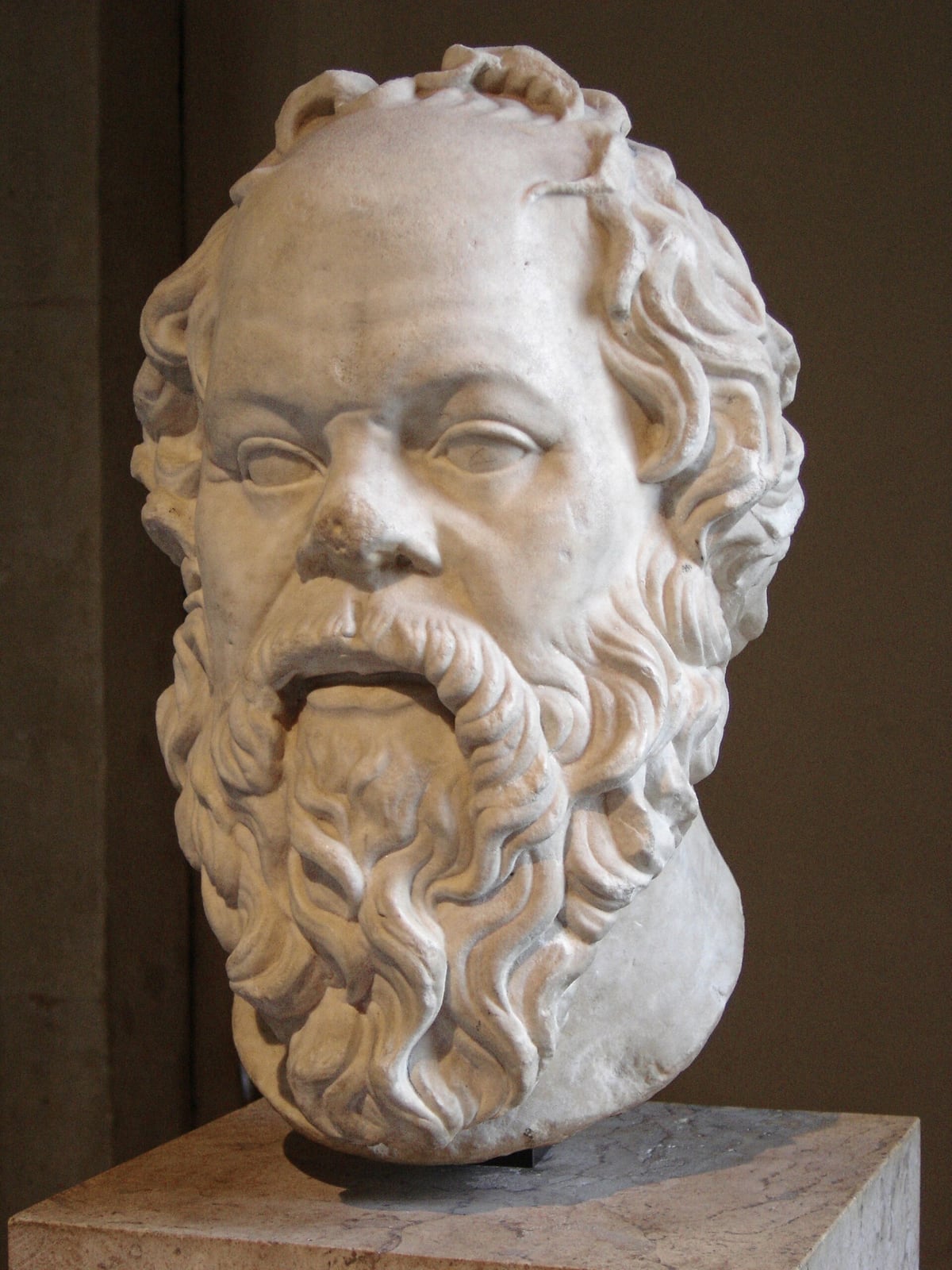
Socrates
Widerspruch bei: Ist die Welt wirklich?
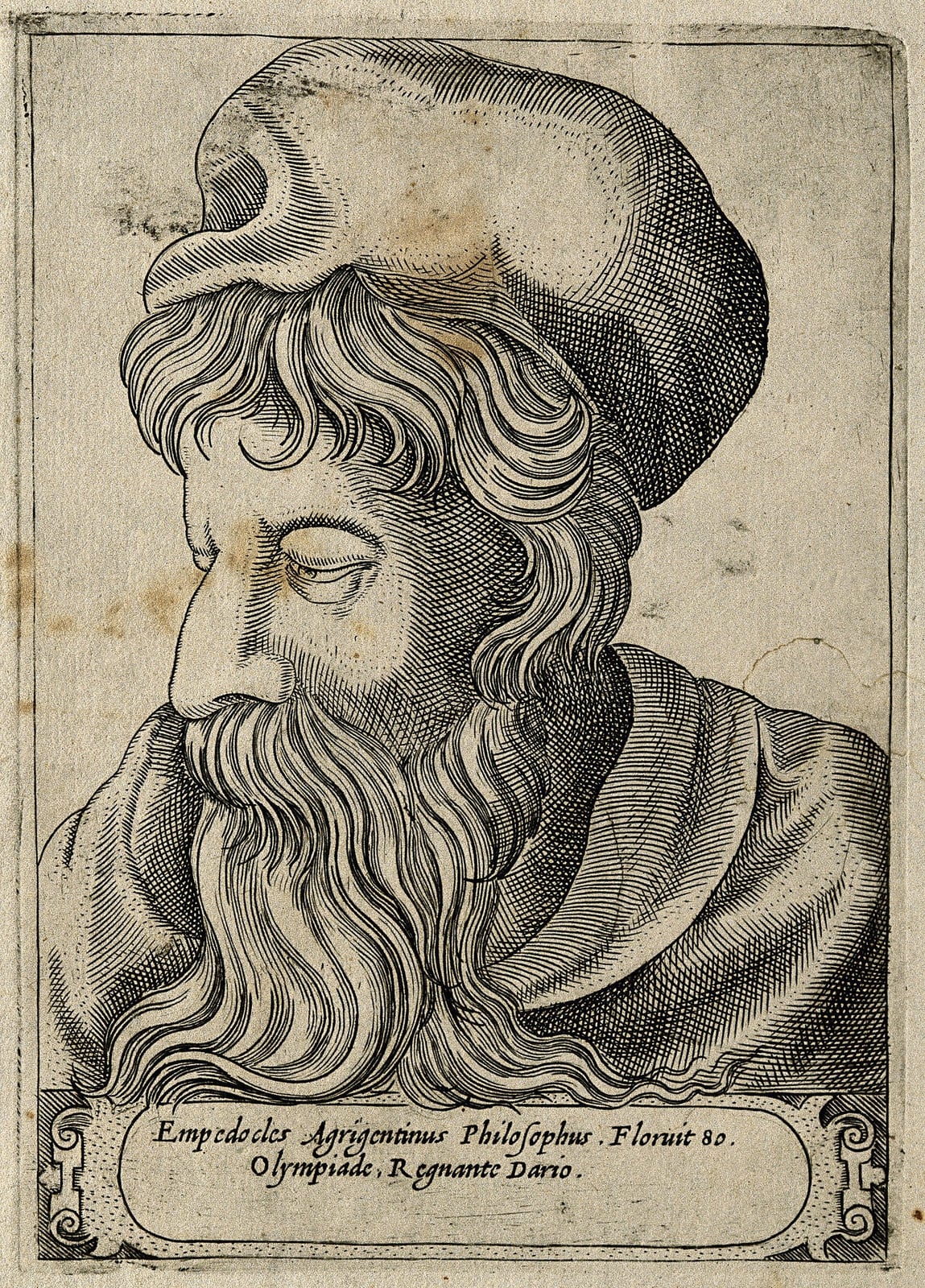
Empedocles
Widerspruch bei: Was geschieht nach dem Tod?
Uddalaka Aruni
Widerspruch bei: Was ist das Absolute? Gibt es Gott? · Was geschieht nach dem Tod? · Wie erlangt man Befreiung oder Erlösung?
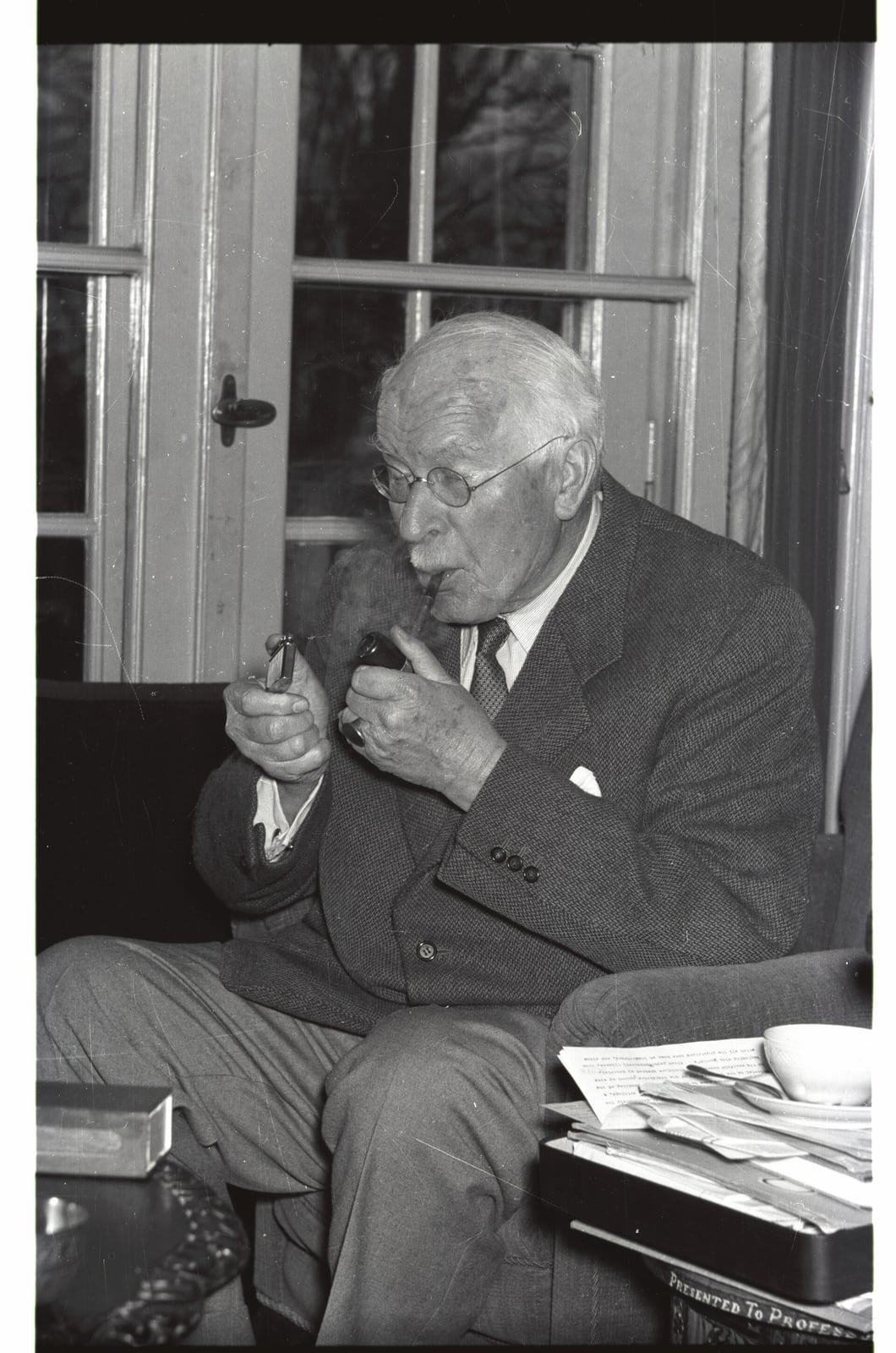
Carl Gustav Jung
Widerspruch bei: Was ist das Absolute? Gibt es Gott? · Warum leiden wir? · Was geschieht nach dem Tod?
Anekdoten und Erzählungen
Anekdoten und Erzählungen
Zeugnis1201
The dream of the ninety-fifth day
Herkunft der Erzählung: Eshinni's letter to her daughter Kakushinni (1263), discovered in 1921 at Nishi Honganji: testimony of his wife, who heard it from him. The Kannon verse comes from the so-called Shinran muki and Kakunyo's biography.
Quelle: Dobbins, James C. Letters of the Nun Eshinni: Images of Pure Land Buddhism in Medieval Japan. Honolulu: University of Hawai'i Press, 2004. ISBN 9780824826673.
Zeugnis1214 y 1231
The interrupted thousand readings
Herkunft der Erzählung: Eshinni's letters (1263), written half a century later but by a direct witness.
Quelle: Dobbins, James C. Letters of the Nun Eshinni: Images of Pure Land Buddhism in Medieval Japan. Honolulu: University of Hawai'i Press, 2004. ISBN 9780824826673.
Belegt1207
"Neither monk nor layman"
Herkunft der Erzählung: Postscript of the Kyōgyōshinshō, in Shinran's own words; the list of those executed and exiled appears in the appendix to the Tannishō.
Belegt1256
The disowning of Zenran
Herkunft der Erzählung: Letter of disownment (Kenchi's copy, Senju-ji) and letter to Shōshin of the same date, in the collections of Shinran's letters.
Belegt1263
Eshinni's letter to her daughter
Herkunft der Erzählung: Eshinni's autograph letters (Nishi Honganji), discovered in 1921 and published by Washio Kyōdō.
Quelle: Dobbins, James C. Letters of the Nun Eshinni: Images of Pure Land Buddhism in Medieval Japan. Honolulu: University of Hawai'i Press, 2004. ISBN 9780824826673.
Lehren
Lehren
Die Begriffe, die das Denken gliedern, in ihrem Zusammenhang erklärt.
Other Power (tariki)tariki
Kyōgyōshinshō, Yuishinshō mon'i, letters and Tannishō.
Quelle: Ueda, Yoshifumi; Hirota, Dennis. Shinran: An Introduction to His Thought. Kioto: Hongwanji International Center, 1989.
True entrusting (shinjin)shinjin
Kyōgyōshinshō, third chapter (Shinjin).
The evil person as the true object of the Vow (akunin shōki)akunin-shoki
Tannishō, ch. 3; letters of the Mattōshō.
Quelle: Unno, Taitetsu (trad.). Tannisho: A Shin Buddhist Classic. Honolulu: Buddhist Study Center Press, 1984 (ed. rev. 1996). ISBN 9780938474043.
Naturalness (jinen hōni)jinen-honi
Jinen hōni shō (1258), recorded by Kenchi; Yuishinshō mon'i.
Neither monk nor layman (hisō hizoku)hiso-hizoku
Postscript of the Kyōgyōshinshō.
Quelle: Dobbins, James C. Jōdo Shinshū: Shin Buddhism in Medieval Japan. Bloomington: Indiana University Press, 1989 (reimpr. Honolulu: University of Hawai'i Press, 2002, ISBN 9780824826208).
The two aspects of transference: going and returning (ōsō ekō, gensō ekō)oso-genso-eko
Kyōgyōshinshō (chs. 1 and 4); Nyorai nishu ekō mon.
The truly settled (shōjōju)shojoju
Kyōgyōshinshō (chs. 3 and 4); Mattōshō, letter 1.
Videos
Videos
Aufnahmen, Gespräche und Dokumentarfilme. Die Videos werden von YouTube wiedergegeben; sie werden nicht hier gespeichert.
親鸞聖人の生涯~ご誕生から入滅まで~
Dokumentarfilm· JA· 2024· 5 min
真宗大谷派東本願寺【公式】Offizieller Kanal
立教開宗の書 教行信証《坂東本》の世界
Dokumentarfilm· JA· 2023· 36 min
真宗大谷派東本願寺【公式】Offizieller Kanal
本廟創立と東本願寺の歴史―親鸞聖人の示寂と大谷廟堂の創建―
Dokumentarfilm· JA· 2021· 4 min
真宗大谷派東本願寺【公式】Offizieller Kanal
「初めて学ぶ〈親鸞聖人のご生涯〉講座」第1回(比叡山時代の親鸞聖人)
Vortrag· JA· 2025· 63 min
浄土真宗本願寺派Offizieller Kanal
2021 Annual Symposium: The Radical Other Power of Shinran (1173-1263)
Vortrag· EN· 2022· 107 min
UBC Asian StudiesOffizieller Kanal
Mark Blum, "Critically Reading the Tannisho", February 10, 2017
Vortrag· EN· 2017· 77 min
Smith College Buddhist StudiesOffizieller Kanal
Mark Unno - Shin Buddhism in Interreligious Dialogue: A World of Teaching and Learning
Vortrag· EN· 2010· 46 min
The University of British ColumbiaOffizieller Kanal
Introduction to Buddhism-Shinran ①
Vortrag· EN· 2021· 22 min
American Buddhist Study Center
Shinran's Understanding of Pure Land Buddhism by Reverend Professor Kemmyo Taira Sato
Auf YouTube ansehen
Dieses Video lässt sich nicht einbetten; es wird auf YouTube geöffnet.
Shinran's Understanding of Pure Land Buddhism by Reverend Professor Kemmyo Taira Sato
Vortrag· EN· 2025· 89 min
The Buddhist SocietyOffizieller Kanal
El Buda Amida y Su Tierra Pura y La Fe y el Nembutsu no son creados por nuestras mentes
Aufnahme Dritter· ES· 2020· 14 min
Templo Internacional Amidaji de Hispanoamérica
Shinran et le bouddhisme de la Terre Pure - Sagesses bouddhistes - France 2
Dokumentarfilm· FR· 2022· 15 min
Inspiration- Zen
Galerie
Galerie
Bilder mit geprüfter Lizenz. Jedes bewahrt seine Urheberschaft und seinen Herkunftsnachweis.
Handschriften
Handschriften
Handschriftliche Zeugen und alte Texte, mit ihrer verwahrenden Einrichtung und ihren Einsichtsbedingungen.
ZH · Kanji con anotaciones en katakana · Redacción iniciada hacia 1224 y corregida hasta la década de 1250
顕浄土真実教行証文類 (坂東本)
- Erhaltener Textzeuge
- Seis volúmenes con numerosas correcciones, tachaduras y hojas añadidas por el autor
- Verwahrende Einrichtung
- Shinshū Ōtani-ha, Higashi Honganji (Kioto)
- Digitalisierung
- commons.wikimedia.org/wiki/File:Kyogyoshinsho.jp…
JA · s. XIII
紙本墨画親鸞聖人像 (鏡御影)
- Erhaltener Textzeuge
- Rollo colgante, tinta sobre papel, 35,2 × 33 cm
- Verwahrende Einrichtung
- Jōdo Shinshū Hongwanji-ha, Nishi Honganji (Kioto)
- Digitalisierung
- commons.wikimedia.org/wiki/File:Shinran_Shonin.j…
JA · Kana y kanji · 1256–1268
恵信尼消息
- Erhaltener Textzeuge
- Diez cartas de Eshinni a su hija Kakushinni
- Verwahrende Einrichtung
- Nishi Honganji (Kioto)
JA · Kanji y kana · Copia del siglo XV
歎異抄 (蓮如書写本)
- Erhaltener Textzeuge
- Manuscrito más antiguo conservado del Tannishō, con la nota de Rennyo que restringe su lectura
- Verwahrende Einrichtung
- Nishi Honganji (Kioto)
Beziehungen
Beziehungen
Einflüsse, Schülerschaften und Verwandtschaften. Die belegte Beziehung wird von der durch Analyse ermittelten Ähnlichkeit unterschieden.
Schüler von
Hōnen
Shinran's teacher from 1201; Shinran regards him as the true master who revealed to him the nembutsu path and includes him among the seven patriarchs.
Belegte Beziehung
Familie von
Eshinni
His wife; her letters to their daughter Kakushinni (1256–1268) are the main independent source on his life.
Belegte Beziehung
Familie von
Kakushinni
His youngest daughter, who cared for him at the end of his life and founded the Ōtani mausoleum, origin of the Honganji.
Belegte Beziehung
Familie von
Zenran
His eldest son, whom he disowned in 1256 for spreading teachings he attributed to a secret transmission from his father.
Belegte Beziehung
Lehrer von
Yuien
A Kantō disciple, compiler of the Tannishō around 1288.
Belegte Beziehung
Beeinflusste
Kakunyo
Shinran's great-grandson and third custodian of the mausoleum, author of the illustrated biography (1295) and organiser of the Honganji as a school.
Belegte Beziehung
Beeinflusst von
First of the seven Pure Land patriarchs in the Shōshinge and the Kōsō wasan, for his presentation of the "easy path".
Belegte Beziehung
Zeitgenosse von
Contemporaries in Kamakura-period Kyoto and founders of the two most numerous Japanese schools, with opposite paths: trust in Amida's power and seated practice. There is no record that they met.
Belegte Beziehung
Verwandte Gedanken mit
A distant contemporary: poverty, preaching to simple people and a movement that overflowed the religious institutions of its time. A typological comparison, without contact.
Durch Analyse ermittelte Ähnlichkeit
Von anderen Einträgen aus verknüpft
Quellen
Quellen
Für diesen Eintrag herangezogene Bibliografie und Kataloge.
- Wikidata, entidad Q512934 «Shinran» (P31=Q5; 28 enlaces entre wikis; nacimiento 1173, muerte 1263 en Kioto; firma 愚禿釋親鸞).
- Dobbins, James C. Jōdo Shinshū: Shin Buddhism in Medieval Japan. Bloomington: Indiana University Press, 1989 (reimpr. Honolulu: University of Hawai'i Press, 2002, ISBN 9780824826208).
- Dobbins, James C. Letters of the Nun Eshinni: Images of Pure Land Buddhism in Medieval Japan. Honolulu: University of Hawai'i Press, 2004. ISBN 9780824826673.
- Hirota, Dennis (dir.) et al. (trads.). The Collected Works of Shinran. 2 vols. Kioto: Jōdo Shinshū Hongwanji-ha, 1997. Edición en línea del Hongwanji.
- Bloom, Alfred. Shinran's Gospel of Pure Grace. Tucson: University of Arizona Press, 1965. ISBN 9780816504053.
- Ueda, Yoshifumi; Hirota, Dennis. Shinran: An Introduction to His Thought. Kioto: Hongwanji International Center, 1989.
- Kakunyo. Honganji Shōnin Shinran den'e (Godenshō, «Biografía ilustrada de Shinran»), 1295. Trad. inglesa en The Life of Shinran Shonin: The Journey to Self-Acceptance, de Alfred Bloom (Leiden: Brill, 1968).
- Akamatsu Toshihide. Shinran. Tokio: Yoshikawa Kōbunkan (Jinbutsu sōsho), 1961.
- «正信念仏偈», texto original de Shinran (final del capítulo de la Práctica del Kyōgyōshinshō), en Wikisource japonés, con nota sobre la variante del manuscrito autógrafo de Bandō.
- «善鸞義絶状» (carta de repudio de Zenran, 1256), texto según la copia de Kenchi conservada en el Senju-ji, en Wikisource japonés.
- Imadate, Tosui (trad.). The Tannisho (Tract on Deploring the Heterodoxies). Kioto: The Eastern Buddhist Society, 1928. Ejemplar digitalizado en Internet Archive.
- Yamabe, S.; Beck, L. Adams (trads.). Buddhist Psalms Translated from the Japanese of Shinran Shōnin. Londres: John Murray (Wisdom of the East), 1921. Project Gutenberg n.º 7015.
- Shinshū Ōtani-ha (Higashi Honganji). «親鸞聖人の生涯» (La vida de Shinran), sitio oficial.
- Unno, Taitetsu (trad.). Tannisho: A Shin Buddhist Classic. Honolulu: Buddhist Study Center Press, 1984 (ed. rev. 1996). ISBN 9780938474043.
- Suzuki, Daisetz Teitaro (trad.). The Kyōgyōshinshō. Kioto: Shinshū Ōtaniha, 1973; reed. como Shinran's Kyogyoshinsho, Nueva York: Oxford University Press, 2012. ISBN 9780199863105.
- Inagaki, Hisao (trad.). Kyōgyōshinshō: On Teaching, Practice, Faith, and Enlightenment. Berkeley: Numata Center for Buddhist Translation and Research (BDK English Tripiṭaka 105-I), 2003. ISBN 9781886439160.
- Ducor, Jérôme (trad.). Le Tannishô. Paris: Cerf (Patrimoines – Orient), 2011. ISBN 9782204093781.
- Wikipedia en japonés, «親鸞» (cronología, obras y títulos póstumos). Consultada el 25-10-2026 y contrastada con s2, s3 y s13.
- «歎異抄 (意訳聖典)», versión en japonés moderno publicada por el Honganji en Iyaku seiten (Naigai shuppan, 1923), en Wikisource japonés.
- Bandō, Shōjun; Stewart, Harold (trads.). Tannishō: Passages Deploring Deviations of Faith. Berkeley: Numata Center for Buddhist Translation and Research, 1996. ISBN 9781886439030.
- Rechteinhaber
- Obra en dominio público. Las traducciones modernas pertenecen a sus traductores o editoriales; la traducción inglesa completa (The Collected Works of Shinran, 1997) es del Jōdo Shinshū Hongwanji-ha, que la ofrece gratuitamente en línea.
- Offizielle Website
- www.higashihonganji.or.jp/about/shinran/
Bestätigung ausstehend
Was dieser Eintrag noch nicht klären konnte. Wir sagen es lieber, als es aufzufüllen.
- Ediciones en español: no se ha localizado en catálogos (Open Library, búsquedas generales) ninguna traducción española publicada con ISBN del Kyōgyōshinshō ni del Tannishō; existen versiones de comunidades jōdo shinshū hispanohablantes sin datos editoriales comprobados y una traducción española de «Las canciones de Shinran Shōnin» de Beatrice Lane Suzuki en Internet Archive sin traductor identificado (no incluida en la sala de lectura). Buscar en la BNE y en el Hongwanji International Center.
- Fechas en calendario juliano (14-05-1173 y 09-01-1263, como Wikidata); la escuela celebra el 21 de mayo y el 16 de enero, equivalentes en gregoriano proléptico.
- Datación de obras menores aproximada (Jōdo monrui jushō, Nyūshutsu nimon geju, Nyorai nishu ekō mon, Mida nyorai myōgō toku, notas a los sutras); confirmar con la cronología de la edición Teihon Shinran Shōnin zenshū.
- Sala de lectura: no hay en línea un texto original completo del Kyōgyōshinshō ni del Tannishō en una fuente libre de derechos editoriales comprobada (WikiArc reproduce la edición anotada del Hongwanji). Se registran el Shōshinge, la carta a Zenran, la versión de 1923 del Tannishō, la traducción inglesa de Imadate (1928) y Buddhist Psalms (1921).
- Confirmar la condición de Bien Cultural Importante de las cartas de Eshinni y la autoría tradicional del «retrato del espejo» (Sen'amidabutsu).
- Relaciones con slugs no presentes en el catálogo del Atlas (honen, eshinni, kakushinni, zenran, yuien, kakunyo): revisar si se crean fichas.
- Vídeos: la conferencia de Kemmyo Taira Sato (The Buddhist Society) no es insertable (oEmbed 401); la emisión de France 2 procede de un canal de terceros.
Recherchiert am 2026-10-25