सुकराती दर्शन
Socrates
Σωκράτης
लगभग 469 ई.पू. – 399 ई.पू.ऐतिहासिक रूप से प्रमाणित व्यक्ति
एथेंस के दार्शनिक (लगभग 469–399 ई.पू.), जिन्होंने कुछ नहीं लिखा, फिर भी यह प्रश्न कि मनुष्य को कैसे जीना चाहिए, दर्शन का केंद्रीय विषय बनाकर उसकी दिशा बदल दी। वे अगोरा में संवाद करते और बिना शुल्क लिए हर उस व्यक्ति की परीक्षा करते जो स्वयं को ज्ञानी समझता था। अधार्मिकता और युवाओं को भ्रष्ट करने के आरोप में उन्हें मृत्युदंड मिला और उन्होंने हेमलॉक विष पिया। हम उन्हें प्लेटो, ज़ेनोफ़ोन, अरिस्टोफ़ेनीज़ और अरस्तू के माध्यम से जानते हैं, जिनके चित्रण मेल नहीं खाते: यही «सुकराती समस्या» है।
- कृतियाँ
- 31कृतियाँ
- संस्करण
- 104संस्करण
- उद्धरण
- 9उद्धरण
- वीडियो
- 13वीडियो
- चित्र
- 9चित्र
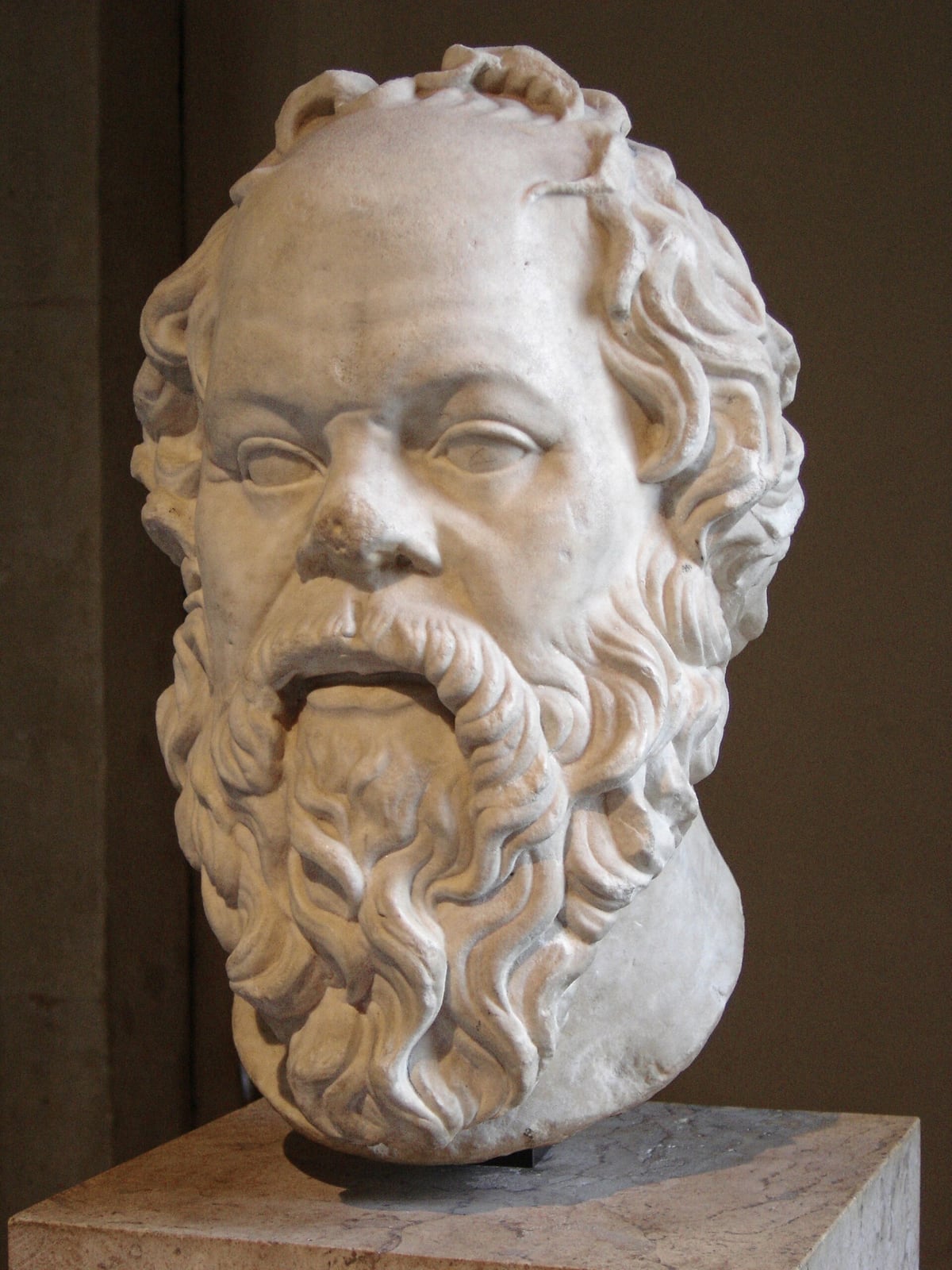
Busto de Sócrates (Louvre) · Public domain
उनके अपने शब्दों में
«The unexamined life is not worth living.»Platón, Apología 38a. Griego: ed. Burnet (OCT); inglés: Benjamin Jowett (1892); español: traducción propia. Son palabras que Platón atribuye a Sócrates.

मूल विचार
Elenchus (Socratic refutation): The *elenchus*—"test", "refutation"—is the procedure Plato's early dialogues attribute to Socrates.
संदर्भ में देखें
जीवनी
7 मिनट का पाठ
स्पैनिश मूल से सहायता-प्राप्त अनुवाद, मातृभाषी अनुवादक द्वारा समीक्षा लंबित।
वह व्यक्ति जिसने कुछ नहीं लिखा
सुकरात ने एक भी लिखित पंक्ति नहीं छोड़ी। उनके विषय में हम जो कुछ जानते हैं, वह दूसरों से आता है: उनके शिष्य प्लेटो के संवादों से, ज़ेनोफ़ोन की सुकराती रचनाओं से, अरिस्टोफ़ेनीज़ के उस प्रहसन से जिसने उनके जीवनकाल में ही उनका उपहास किया, उन सूचनाओं से जिन्हें अरस्तू ने — जो उनकी मृत्यु के पंद्रह वर्ष बाद जन्मे थे — अकादमी में संकलित किया, और ईसवी सन् की तीसरी शताब्दी के डायोजिनीज़ लार्शियस के परवर्ती संकलन से। ये साक्ष्य आपस में मेल नहीं खाते। अरिस्टोफ़ेनीज़ के सुकरात एक ढोंगी हैं जो बादलों पर अटकलें लगाते हैं और अन्यायपूर्ण मुक़दमे जीतना सिखाते हैं; ज़ेनोफ़ोन के सुकरात एक विवेकी नीतिवादी हैं जो मित्रों को अच्छी सलाह देते हैं; प्लेटो के सुकरात अतुलनीय गहराई वाले चिंतक हैं, जो परवर्ती संवादों में ऐसे सिद्धांतों के प्रवक्ता बन जाते हैं जिनका उन्होंने संभवतः कभी समर्थन नहीं किया।
स्रोतों के बीच की इस दूरी को «सुकराती समस्या» कहा जाता है। इसे फ़्रीडरिख़ श्लायरमाखर ने 1818 में यह प्रश्न उठाते हुए सूत्रबद्ध किया कि सुकरात आख़िर क्या रहे होंगे कि प्लेटो और ज़ेनोफ़ोन ने उन्हें वैसा चित्रित किया जैसा किया। तब से कुछ विद्वानों ने ज़ेनोफ़ोन की प्रत्यक्ष संयतता के कारण उन पर भरोसा किया है; अन्य, जैसे ग्रेगरी व्लास्टोस, ने प्लेटो के आरंभिक संवादों के आधार पर एक ऐतिहासिक सुकरात का पुनर्निर्माण किया है; और कुछ अन्य, जैसे ओलोफ़ गिगोन या चार्ल्स कान, ने रेखांकित किया है कि «सुकराती संवाद» एक साहित्यिक विधा थी जिसे कई शिष्यों ने अपनाया, और उनमें से किसी का उद्देश्य कार्यवाही का विवरण दर्ज करना नहीं था। आगे का विवरण यथासंभव उस अंश को, जो सभी स्रोतों में साझा है, उससे अलग करता है जो प्रत्येक स्रोत अपनी ओर से जोड़ता है।
अलोपेके
उनका जन्म लगभग 469 ई.पू. में एथेंस में हुआ — डायोजिनीज़ लार्शियस, अपोलोडोरस के कालक्रम का अनुसरण करते हुए, उनका जन्म 77वें ओलंपियाड के चौथे वर्ष में रखते हैं — आन्तियोखिस जनजाति के अलोपेके डीम में। उनके पिता सोफ़्रोनिस्कस संगतराश या मूर्तिकार थे; उनकी माता फ़ेनारेते दाई थीं, और यही पेशा स्वयं सुकरात ने थीएटेटस में अपनी पद्धति का रूपक बना दिया। उन्होंने देर से ज़ैन्थिप्पे से विवाह किया, जिनसे उनके तीन पुत्र हुए — लैम्प्रोक्लीज़, सोफ़्रोनिस्कस और मेनेक्सेनस; डायोजिनीज़ द्वारा उद्धृत अरस्तू उनकी एक दूसरी पत्नी, मिर्तो, का भी उल्लेख करते हैं, जिस सूचना को विद्वान संदिग्ध मानते हैं।
वे पेरिक्लीज़ के एथेंस में पले-बढ़े, उस पीढ़ी में जिसने पार्थेनन को खड़ा होते और त्रासदी, सोफ़िस्ट चिंतन तथा प्रकृति-अन्वेषण को फलते-फूलते देखा। प्लेटो उन्हें युवावस्था में पार्मेनिडीज़ और ज़ीनो से संवाद करते हुए दिखाते हैं — यह भेंट संभवतः साहित्यिक है — और उन्हें यौवन में अनक्सागोरस के भौतिकशास्त्र में रुचि लेते हुए प्रस्तुत करते हैं, जिसे उन्होंने इसलिए त्याग दिया कि उसमें शुभ के प्रश्न का उत्तर नहीं मिला।
सैनिक और नागरिक
उन्होंने हॉपलाइट, अर्थात् भारी कवचधारी पैदल सैनिक, के रूप में सेवा की, जिससे संकेत मिलता है कि युवावस्था में उनकी आर्थिक स्थिति कुछ हद तक सुदृढ़ थी। वे पोटिडिया (432–430 ई.पू.) में लड़े, जहाँ प्लेटो द्वारा सिम्पोज़ियम में अल्सिबियाडीज़ के मुख से कहलवाए गए वृत्तांत के अनुसार उन्होंने अल्सिबियाडीज़ की जान बचाई और नंगे पाँव जाड़ा सहा; डेलियम से पीछे हटते समय (424 ई.पू.), जहाँ उनकी स्थिरचित्तता ने सेनापतियों को प्रभावित किया; और एम्फ़िपोलिस (422 ई.पू.) में। अपोलॉजी इन तीन अभियानों को इस बात का प्रमाण बताती है कि उन्होंने अपने सौंपे गए मोर्चे को कभी नहीं छोड़ा।
उन्होंने केवल एक सार्वजनिक पद संभाला, और वह भी लॉटरी से। 406 ई.पू. में, अपनी जनजाति की प्राइटेनी के दौरान परिषद के सदस्य के रूप में, उन्होंने आर्गिनुसाई के विजयी सेनापतियों पर — जिन पर डूबते नाविकों को न बचाने का आरोप था — क़ानून के विरुद्ध सामूहिक मुक़दमा चलाने का विरोध किया। दो वर्ष बाद, तीस तानाशाहों के अल्पतंत्र के अधीन, उन्हें चार अन्य लोगों के साथ सलामिस के लियोन को मृत्युदंड हेतु गिरफ़्तार करने का आदेश मिला, और वे चुपचाप अपने घर चले गए। प्लेटो और ज़ेनोफ़ोन दोनों प्रसंगों पर एकमत हैं।
प्रश्न ही पेशा
उनका पेशा था संवाद करना। वे यह अगोरा में, व्यायामशालाओं में और मित्रों के घरों में करते थे, बिना शुल्क लिए — सोफ़िस्टों के विपरीत, जिनसे बहुत लोग उन्हें भ्रमवश जोड़ देते थे — और ऐसी निर्धनता में, जिसे अपोलॉजी चरम बताती है। उनकी कुरूपता प्रसिद्ध थी: चपटी नाक, उभरी आँखें, साइलेनस जैसी आकृति। अपोलॉजी के अनुसार उनके मित्र कैरेफ़ॉन ने डेल्फ़ी में पूछा कि क्या कोई उनसे अधिक बुद्धिमान है, और पीथिया ने उत्तर दिया कि नहीं; उलझन में पड़े सुकरात ने राजनेताओं, कवियों और शिल्पियों को परखा और इस निष्कर्ष पर पहुँचे कि उनकी एकमात्र विशेषता यह है कि जो वे नहीं जानते, उसे जानने का भ्रम नहीं पालते। तब से उन्होंने दूसरों की परीक्षा को देवता की सेवा के रूप में समझा।
वह परीक्षा — एलेंखोस — साहस, धर्मपरायणता या न्याय की परिभाषा माँगने, वार्ताकार से अन्य प्रतिज्ञप्तियों पर सहमति प्राप्त करने और फिर उसे यह दिखाने में निहित थी कि आरंभिक परिभाषा उनसे असंगत है। अरस्तू उन्हें दो योगदानों का श्रेय देते हैं: आगमनात्मक तर्क और सार्वभौम परिभाषाओं की खोज, जिन्हें नैतिक प्रश्नों पर लागू किया गया, पर उन सार्वभौमों को वस्तुओं से अलग किए बिना, जैसा प्लेटो ने अपने प्रत्ययों के साथ किया। सुकरात एक दैवी संकेत की भी बात करते थे, अपने डायमोनियन की — एक ऐसी वाणी जो बचपन से उन्हें कुछ कर्मों से रोकती थी और उन्हें कभी किसी काम के लिए प्रेरित नहीं करती थी।
बादल
423 ई.पू. में अरिस्टोफ़ेनीज़ ने द क्लाउड्स (बादल) का मंचन किया, जिसमें एक टोकरी में लटके सुकरात एक «विचारशाला» चलाते हैं, जहाँ आकाशीय घटनाओं का अध्ययन होता है, ज़्यूस के स्थान पर भँवरों को बिठाया जाता है और अन्यायपूर्ण तर्क सिखाया जाता है। प्रहसन तीसरे स्थान पर रहा, पर व्यंग्य-चित्र बचा रह गया: अपोलॉजी में सुकरात उस छवि को फैलाने वालों को अपने «पहले अभियोक्ताओं» में गिनते हैं और उस प्रहसनकार का नाम स्पष्ट रूप से लेते हैं। एथेंस से विश्वासघात करने वाले अल्सिबियाडीज़ और तीसों में सबसे उग्र क्रिटियास से सुकरात का संबंध भी उनके विरुद्ध गया।
मुक़दमा
399 ई.पू. के वसंत में मेलेटस ने, एनिटस और लाइकॉन के समर्थन से, उन पर आरोप लगाया कि वे नगर के देवताओं को नहीं मानते, नए देवताओं का प्रवेश कराते हैं और युवाओं को भ्रष्ट करते हैं; उसने मृत्युदंड की माँग की। चूँकि 403 की आम क्षमादान घोषणा पिछले राजनीतिक अपराधों पर अभियोग चलाने से रोकती थी, इसलिए आरोप धार्मिक शब्दावली में गढ़ा गया। लगभग पाँच सौ नागरिकों की जूरी के सामने सुकरात ने बिना गिड़गिड़ाए और बिना आँसू बहाए अपना बचाव किया। प्लेटो की अपोलॉजी से जो निष्कर्ष निकलता है, उसके अनुसार उन्हें लगभग साठ मतों के अंतर से दोषी ठहराया गया; वैकल्पिक दंड सुझाने को कहे जाने पर उन्होंने पहले यह प्रस्ताव रखा कि प्राइटेनियम में राज्य के ख़र्च पर उनका भरण-पोषण हो, और फिर तीस मीना का अर्थदंड, जिसकी ज़मानत प्लेटो, क्रिटो, क्रिटोबुलस और अपोलोडोरस ने ली। जूरी ने मृत्युदंड के पक्ष में मत दिया।
मृत्युदंड लगभग तीस दिनों के लिए टल गया, क्योंकि डेलोस भेजा गया पवित्र जहाज़ लौटा नहीं था और उसकी अनुपस्थिति में नगर किसी को मृत्युदंड नहीं दे सकता था। क्रिटो ने उन्हें भाग निकलने का प्रस्ताव दिया, और सुकरात ने उसे ठुकरा दिया: क्रिटो के नाम वाले संवाद में एथेंस के क़ानून उन्हें स्मरण कराते हैं कि वे सत्तर वर्ष उनके संरक्षण में जिए हैं और अन्याय का उत्तर अन्याय से नहीं दे सकते।
मृत्यु
फ़ीडो अंतिम दिन का वर्णन करता है। प्लेटो वहाँ उपस्थित नहीं थे — «प्लेटो, मेरे विचार से, बीमार थे», कथावाचक कहता है — और आत्मा की अमरता के प्रमाणों पर केंद्रित यह संवाद किसी कार्यवाही-विवरण से अधिक कला और सिद्धांत की कृति है। साँझ ढलते सुकरात ने स्नान किया, अपनी पत्नी और पुत्रों से विदा ली, विष पिया — पारंपरिक पहचान के अनुसार हेमलॉक — और तब तक टहलते रहे जब तक उन्हें अपने पैर भारी नहीं लगने लगे। जब ठंडक उनके हृदय की ओर चढ़ने लगी, तो उन्होंने अपना मुख उघाड़ा और क्रिटो से कहा कि उन पर एस्क्लेपियस का एक मुर्ग़ा उधार है, और वे उसे चुकाना न भूलें। फ़ीडो के अनुसार ये उनके अंतिम शब्द थे।
जो शेष रहा
उनके मंडल से परस्पर विरोधी संप्रदाय जन्मे: प्लेटो की अकादमी, एंटिस्थनीज़ को अपना मूल मानने वाले सिनिक, अरिस्टिपस के साइरेनाइक, यूक्लिड के मेगारियन। स्टोइकों ने उन्हें ज्ञानी का आदर्श माना, और एपिक्टेटस बार-बार उन्हें उद्धृत करते हैं। आधुनिक युग में कीर्केगार्ड ने अपना शोध-प्रबंध सुकराती व्यंग्योक्ति को समर्पित किया (1841), नीत्शे ने उन्हें एक पतन का लक्षण बताया (1889), और ज़ाक-लुई दाविद ने 1787 में उनकी शांत मृत्यु की छवि को अमर कर दिया। पश्चिमी परंपरा के लिए वे आज भी उस दार्शनिक की प्रतिमूर्ति हैं जिसने जीवन की परीक्षा करना छोड़ने के बजाय मृत्यु को चुना।
स्रोत: Platón. Platonis Opera, ed. John Burnet, 5 vols. Oxford University Press (Oxford Classical Texts), 1900–1907; tomo I (Eutifrón, Apología, Critón, Fedón) consultado en la edición digital del Perseus Digital Library (Tufts University). · Plato. The Dialogues of Plato, trad. Benjamin Jowett, 3.ª ed., 5 vols. Clarendon Press, Oxford, 1892 (Project Gutenberg, n.º 1656 Apology, 1657 Crito, 1658 Phaedo y otros). · Platón. Obras completas, trad. Patricio de Azcárate, 11 vols. Medina y Navarro, Madrid, 1871–1872 (edición digital en Filosofía en español). · Jenofonte. Memorables (Recuerdos de Sócrates), Apología de Sócrates, Banquete y Económico. Texto griego: Xenophontis opera omnia, ed. E. C. Marchant, vol. 2, 2.ª ed., Clarendon Press, Oxford, 1921 (Perseus); trad. inglesa de H. G. Dakyns, The Works of Xenophon, Macmillan, Londres, 1890–1897 (Project Gutenberg). · Aristófanes. Las nubes (Νεφέλαι), representada en 423 a. C.; trad. inglesa de W. J. Hickie, The Comedies of Aristophanes, Bohn's Classical Library, Londres, 1853 (Project Gutenberg n.º 2562).
कालक्रम
जीवन, वर्ष-दर-वर्ष
प्रत्येक बिंदु एक प्रमाणित घटना है। उसे स्रोत और निश्चितता के स्तर सहित पढ़ने के लिए क्लिक करें।
लगभग 469 ई.पू.0 वर्षAlopece (Atenas)
Birth
Born in the deme of Alopece, son of the stonemason Sophroniscus and the midwife Phaenarete. Diogenes Laertius (II 44), following Apollodorus, gives the fourth year of the 77th Olympiad (469/468 BCE); Wikidata records 470. Years BCE are expressed as negative numbers.
संभावितDiógenes Laercio. Vidas y opiniones de los filósofos ilustres, libro II, 18–47 (Sócrates), s. III d. C. Trad. inglesa de C. D. Yonge, Bohn, Londres, 1853 (Project Gutenberg n.º 57342); trad. española de José Ortiz y Sanz, Madrid, 1792 (Wikisource).
उनके निधन के बाद
- लगभग 395 ई.पू.The "Socratic discourses"
- लगभग 387 ई.पू.Founding of the Academy
- 1787David's Death of Socrates
- 1818Schleiermacher poses the "Socratic problem"
- 1841Kierkegaard on irony
लगभग 469 ई.पू. · 0 वर्ष
Birth
Born in the deme of Alopece, son of the stonemason Sophroniscus and the midwife Phaenarete. Diogenes Laertius (II 44), following Apollodorus, gives the fourth year of the 77th Olympiad (469/468 BCE); Wikidata records 470. Years BCE are expressed as negative numbers.
संभावित
लगभग 432 ई.पू. · 37 वर्ष
The Potidaea campaign
Serves as a hoplite at the siege of Potidaea (432–430 BCE). In the Symposium (219e–220e) Alcibiades says Socrates saved his life and endured the winter barefoot.
संभावित
424 ई.पू. · 45 वर्ष
The retreat from Delium
Takes part in the Athenian defeat at Delium; the Laches (181b) and the Symposium (221a–b) praise his composure during the retreat.
संभावित
423 ई.पू. · 46 वर्ष
Aristophanes' Clouds
Aristophanes stages the Clouds at the City Dionysia, caricaturing Socrates as a teacher of speculative physics and unscrupulous rhetoric. It comes third; the surviving text is a later revision that was never staged.
प्रमाणित
422 ई.पू. · 47 वर्ष
Amphipolis
Last military campaign attributed to him in the Apology (28e).
संभावित
406 ई.पू. · 63 वर्ष
The Arginusae trial
As a member of the Council, during the prytany of the tribe Antiochis, he opposes trying the generals of Arginusae en bloc, against the law (Apology 32b; Xenophon, Hellenica I 7.15).
प्रमाणित
404 ई.पू. · 65 वर्ष
Leon of Salamis
Under the Thirty Tyrants he refuses the order to arrest Leon of Salamis for execution (Apology 32c–d; Xenophon, Memorabilia IV 4.3).
प्रमाणित
403 ई.पू. · 66 वर्ष
Democratic restoration and amnesty
Fall of the Thirty. The amnesty forbids prosecution for earlier political offences, which partly explains the religious framing of the 399 charge.
प्रमाणित
399 ई.पू. · 70 वर्ष
Trial
Meletus, Anytus and Lycon accuse him of impiety and of corrupting the youth. He is convicted by about sixty votes before a jury of some five hundred citizens and sentenced to death.
प्रमाणित
399 ई.पू. · 70 वर्ष
Death
After some thirty days' wait for the return of the Delian ship, he drinks the poison in prison, surrounded by his friends (Phaedo 116a–118a; Xenophon, Memorabilia IV 8.2).
प्रमाणित
लगभग 395 ई.पू.
The "Socratic discourses"
Plato, Xenophon, Aeschines of Sphettus, Antisthenes, Phaedo and others write dialogues with Socrates as protagonist; Aristotle (Poetics 1447b) treats them as a genre of their own. Except for Plato's and Xenophon's, almost all survive only in fragments.
प्रमाणित
लगभग 387 ई.पू.
Founding of the Academy
Plato founds his school in the grove of Academus; the dialogues read there will fix the image of Socrates for posterity.
संभावित
1787
David's Death of Socrates
Jacques-Louis David shows at the Salon the painting that fixes the modern image of Socrates' death, now in the Metropolitan Museum, New York.
प्रमाणित
1818
Schleiermacher poses the "Socratic problem"
In "Über den Werth des Sokrates als Philosophen" Schleiermacher asks how to reconcile Plato's and Xenophon's portraits: the critical question of the historical Socrates is born.
प्रमाणित
1841
Kierkegaard on irony
Søren Kierkegaard defends his dissertation On the Concept of Irony with Continual Reference to Socrates.
प्रमाणित
कृतियाँ
आवश्यक कृतियाँ
वे कृतियाँ जिनके बिना उनकी विरासत को समझा नहीं जा सकता।
संकलित मौखिक शिक्षा · लगभग 395 ई.पू.
Apology of Socrates
Ἀπολογία Σωκράτους
Socrates' defence speech before the Athenian court in 399 BCE, in three parts: the defence against the "first accusers" and against Meletus; the counter-proposal of a penalty after the verdict; and closing words to the jurors. It contains the account of the Delphic oracle, the image of the gadfly that rouses the city, the statement that he will obey the god rather than the Athenians and the dictum that the unexamined life is not worth living. It is the main source for reconstructing the trial and Socrates' understanding of himself.
6 संस्करण
संकलित मौखिक शिक्षा · लगभग 395 ई.पू.
Crito
Κρίτων
In prison, at dawn, his old friend Crito tells Socrates that the ship from Delos is about to arrive and offers him an escape, already arranged and paid for. Socrates examines whether it is just to flee: one must not answer an injustice with another, and the personified Laws of Athens remind him that for seventy years he has accepted living under them. It is the classic text on the obligation to obey the law and one of the first arguments about the compact between citizen and city.
6 संस्करण

संकलित मौखिक शिक्षा · लगभग 385 ई.पू.
Phaedo
Φαίδων
Account of Socrates' last day, told by Phaedo of Elis to Echecrates at Phlius. Socrates talks with the Thebans Simmias and Cebes, who had frequented Pythagoreans, about why the philosopher does not fear death, and sets out four arguments for the immortality of the soul and a myth about the fate of souls. The dialogue closes with the death scene: the bath, the farewell to his family, the cup of poison and the last words to Crito about the cock owed to Asclepius (118a).
6 संस्करण

परवर्ती संकलन · लगभग 371 ई.पू.
Memorabilia (Memoirs of Socrates)
Ἀπομνημονεύματα
Four books that begin by refuting one by one the charges of impiety and corruption of the young, and go on to dozens of short conversations: Socrates advises his son Lamprocles to be patient with Xanthippe, talks with the sophist Antiphon about poverty, with Aristippus about self-mastery, with craftsmen and generals about their trades. It is the portrait of a practical and pious teacher and the second great source on Socrates alongside Plato.
4 संस्करण
संपूर्ण कृतित्व (31)
Euthyphro
395
Symposium
380
Socrates
Laches
The Conscious LibraryLaches
390
Socrates
Charmides
The Conscious LibraryCharmides
390
Socrates
Lysis
The Conscious LibraryLysis
390

Protagoras
385

Gorgias
385

Meno
385
Socrates
Ion
The Conscious LibraryIon
395
Socrates
Lesser Hippias
The Conscious LibraryLesser Hippias
395
Socrates
Euthydemus
The Conscious LibraryEuthydemus
385

Theaetetus
369
Phaedrus
370

Republic
375
Socrates
Greater Hippias
The Conscious LibraryGreater Hippias
390
Socrates
First Alcibiades
The Conscious LibraryFirst Alcibiades
360
Socrates
Parmenides
The Conscious LibraryParmenides
365
Socrates
Other dialogues of the Platonic corpus featuring Socrates
The Conscious LibraryOther dialogues of the Platonic corpus featuring Socrates
360
Apology of Socrates (Xenophon)
380
Symposium (Xenophon)
380
Oeconomicus (The Estate Manager)
362

The Clouds (Aristophanes)
423
Socrates
Aristotle's testimonies on Socrates
The Conscious LibraryAristotle's testimonies on Socrates
340

Life of Socrates (Diogenes Laertius, Lives II 18–47)
230
वचन
किसी निश्चित कृति में स्थित वचन। प्रत्येक के साथ उसका स्रोत और विश्वसनीयता का स्तर है।
The unexamined life is not worth living.ὁ δὲ ἀνεξέταστος βίος οὐ βιωτὸς ἀνθρώπῳ
सत्यापितPlatón, Apología 38a. Griego: ed. Burnet (OCT); inglés: Benjamin Jowett (1892); español: traducción propia. Son palabras que Platón atribuye a Sócrates.
अप्रामाणिक या विवादित आरोपण वाले उद्धरण (5)
«I know that I know nothing.»
The formula appears in no ancient text about Socrates. It is a later simplification of Apology 21d, where Socrates says something more precise: that he does not think he knows what he does not know. In Plato Socrates claims to know some things (for instance, that doing wrong is bad, Apology 29b).
«Know thyself.»
It is one of the maxims inscribed at the temple of Apollo at Delphi, older than Socrates and ascribed in antiquity to several of the Seven Sages. Socrates quotes and discusses it (Phaedrus 229e, Charmides 164d), but it is not his.
«There is only one good, knowledge, and one evil, ignorance.»
Only Diogenes Laertius (II 31) transmits it, more than six centuries later and without naming a source. It sums up Socratic intellectualism as a slogan, but it is not found in Plato or Xenophon.
«Education is the kindling of a flame, not the filling of a vessel.»
Attributed to Socrates online, it comes from Plutarch, On Listening (Moralia 48c), who says the mind is not a vessel to be filled but kindling to be set alight. Plutarch lived five centuries later.
«The "triple filter test": before you tell me something, is it true, is it good, is it useful?»
A moralising anecdote circulating in self-help books and chain emails since the late twentieth century. It has no ancient source.
अंतिम शब्द
साक्षियों का परवर्ती वृत्तांत
«"Crito, we owe a cock to Asclepius. Pay it and do not neglect it."»ὦ Κρίτων, ἔφη, τῷ Ἀσκληπιῷ ὀφείλομεν ἀλεκτρυόνα· ἀλλὰ ἀπόδοτε καὶ μὴ ἀμελήσητε.
Plato, Phaedo 118a. According to the narrator, Phaedo of Elis, he spoke them when the chill of the poison had reached his abdomen: he uncovered his face and said these words, "which were his last". Crito answered that it would be done and asked whether he had anything else to say; Socrates no longer replied. The testimony is literary and second-hand—Plato states in the same dialogue (59b) that he was ill and absent—hence its classification as a witness account transmitted by another. The Greek verb is plural, "we owe": Jowett translates "I owe", Azcárate "debemos un gallo a Esculapio". Asclepius was the god of healing, to whom a cock was offered after recovery. The sentence has been interpreted in many ways: Nietzsche saw in it the confession that life is a disease; Georges Dumézil (1984), thanks for the cure of a false opinion; others, an outstanding vow for Plato's illness or a simple act of piety. Xenophon transmits no last words.
स्रोत: Platón. Platonis Opera, ed. John Burnet, 5 vols. Oxford University Press (Oxford Classical Texts), 1900–1907; tomo I (Eutifrón, Apología, Critón, Fedón) consultado en la edición digital del Perseus Digital Library (Tufts University).
पूछें
उनकी कृतियाँ क्या उत्तर देती हैं
मानवता के बारह महान प्रश्न और उनके ग्रंथ उनका जो उत्तर देने देते हैं, संदर्भों सहित। हम कभी उनके मुख में अपने शब्द नहीं रखते।
परम सत्य क्या है? क्या ईश्वर है?
A god who entrusts him with a mission and warns him by a sign
साकार, व्यक्तिगत ईश्वरस्पष्ट रूप से कहा है
Socrates wrote nothing; his relation to the divine is known through Plato and Xenophon, who agree on the essentials. In Plato's Apology he speaks of “the god” of Delphi as someone who has assigned him a post in the city and whom he will obey rather than the Athenians, and he describes a divine sign, a voice that since childhood turns him away from what he should not do. Xenophon, in the Memorabilia, attributes to him an argument from design: eyes, eyelids or affection for offspring show the work of a wise craftsman who loves living beings, and the gods care for humans and see everything. It is a personal dealing with the divine, though Socrates avoids speculating about its nature.
इस प्रश्न की अन्य गुरुओं से तुलना करेंमैं कौन हूँ? क्या कोई सच्चा आत्म है?
What we are is the soul, and caring for it matters above all
सृजित, अमर आत्माउनके सिद्धांत से निष्कर्षित
In Plato's Apology Socrates sums up his life in an exhortation: not to care for the body or for wealth before the soul, so that it may become as good as possible. The Alcibiades I, of disputed authenticity, draws the conclusion that the human being is his soul, and the Delphic command to know oneself becomes a lifelong task. On immortality, the Socrates of the Apology is cautious and leaves two possibilities open; the arguments of the Phaedo are already Plato's elaboration. Xenophon, for his part, attributes to him the idea that the soul is what in the human shares in the divine. The core attributable to Socrates is that the true self is the soul.
इस प्रश्न की अन्य गुरुओं से तुलना करेंहम दुःख क्यों भोगते हैं?
Nobody does wrong knowingly: evil is ignorance and harms the soul
हम क्या हैं, इसका अज्ञानउनके सिद्धांत से निष्कर्षित
Plato's dialogues attribute to Socrates two theses that together answer the question. First: no one errs willingly; whoever does wrong does so because he takes for good what is not, so that evil is a form of ignorance. Second: the greatest harm is not to suffer injustice but to commit it, because it spoils the only thing that matters, the soul; hence he would rather suffer it than commit it. Thus his reproach to the Athenians in the Apology: they care for wealth, fame and honours and not for the soul or for truth. The suffering that truly counts arises from not knowing oneself and confusing the goods of the body with one's own good.
इस प्रश्न की अन्य गुरुओं से तुलना करेंमृत्यु के बाद क्या होता है?
Either a dreamless sleep or a journey: in either case, not an evil
मौन या संयमस्पष्ट रूप से कहा है
In Plato's Apology, already condemned, Socrates reasons that fearing death is thinking one knows what one does not know. He proposes two possibilities: either death is being nothing and feeling nothing, like a dreamless sleep, which would be a gain; or it is a migration of the soul to another place, where he could converse with poets and heroes of the past, which would be an immense good. To the good man, he concludes, no evil befalls in life or after death. His last words to the court leave the question open: who goes to the better lot, nobody knows but the god. The proofs of immortality in the Phaedo are already Plato's.
इस प्रश्न की अन्य गुरुओं से तुलना करेंमुक्ति या उद्धार कैसे प्राप्त होता है?
Examining oneself and others: an unexamined life is not worth living
प्रत्यक्ष ज्ञान सेस्पष्ट रूप से कहा है
Socrates promises no salvation, but his whole life is a method for making the soul better. In Plato's Apology he says that the greatest good for a man is to converse every day about virtue and to examine himself and others, and that an unexamined life is not worth living. The instrument is refutation: questioning until the interlocutor discovers that he does not know what he thought he knew, the first step to truly seeking it. If virtue is knowledge, as Aristotle attributes to him, knowing oneself — in the Delphic sense — is the way to become good. His own death, accepted without committing injustice, appears in the dialogues as proof of that freedom.
इस प्रश्न की अन्य गुरुओं से तुलना करेंक्या गुरु आवश्यक है?
He does not teach: like a midwife, he delivers what the other carries
गुरु भीतर हैस्पष्ट रूप से कहा है
Plato's Socrates rejects the title of teacher: in the Apology he states that he has never been anyone's teacher nor charged for conversation. In the Theaetetus he describes himself as a midwife: barren of wisdom himself, he helps others give birth to what they carried within and to tell whether it is true or false offspring; what they find they learn not from him but from themselves. His own guidance was inner: a divine sign that turned him away from certain actions. The Meno adds the Platonic theory of recollection, by which seeking and learning are remembering. The outer teacher only asks; truth lies in the soul of the seeker.
इस प्रश्न की अन्य गुरुओं से तुलना करेंक्या संसार वास्तविक है?
A world arranged by provident gods, though physics does not occupy him
शुभ और वास्तविक सृष्टिउनके सिद्धांत से निष्कर्षित
The sources agree that Socrates turned away from the investigation of nature. Aristotle states that he dealt with moral questions and not with nature as a whole; Xenophon says he did not discuss how the cosmos came about and considered those who did so foolish. In Plato's Apology he denies knowing anything of what lies beneath the earth or in the sky. But when he speaks of the world he does so in terms of providence: in the Memorabilia he argues that the arrangement of the organs and the beauty of the universe reveal a wise craftsman who cares for living beings, and that the gods have ordered the cosmos for the benefit of humans.
इस प्रश्न की अन्य गुरुओं से तुलना करेंप्रेम क्या है?
He claims to know only love: the desire that improves the beloved
विरह और मिलनउनके सिद्धांत से निष्कर्षित
The man who claimed to know nothing declared himself expert in one thing alone: love. So Plato has him say in the Symposium and the Lysis. In the Symposium Socrates sets out what, he says, Diotima taught him: Eros is the desire to possess the good for ever and to beget in beauty, and it leads by degrees from beautiful bodies to Beauty itself. The Alcibiades of Aeschines of Sphettus, another Socratic, presents his love for the young man as a force that, by divine gift, could make him better without teaching him anything. Xenophon adds conversations on friendship. Socratic love is longing for the good that raises both lover and beloved.
इस प्रश्न की अन्य गुरुओं से तुलना करेंक्या हम स्वतंत्र हैं, या सब कुछ पूर्वनिर्धारित है?
The god assigned him a post, and he answers for how he holds it
नियति और उत्तरदायित्वउनके सिद्धांत से निष्कर्षित
Socrates does not discuss the theoretical problem of freedom, but his life, as Plato and Xenophon tell it, is ordered by a charge. In the Apology he interprets the Delphic oracle as a mission: the god has set him beside the city like a gadfly, and abandoning that post for fear of death would be like deserting in battle. The divine sign turns him away from certain actions and, significantly, did not stop him on the day of the trial. At the same time, responsibility is fully his: in the Crito he chooses not to flee because committing injustice is never permitted. The thesis that nobody errs willingly, however, complicates any reading in terms of free will.
इस प्रश्न की अन्य गुरुओं से तुलना करेंध्यान या प्रार्थना क्यों करें?
Asking the gods for the good, unspecified, and to be beautiful within
अनुष्ठान और आत्म-संस्कारस्पष्ट रूप से कहा है
The sources show a Socrates pious in the ways of his city. Xenophon relates that he sacrificed at home and at the public altars, consulted divination and asked the gods simply for good things, since they know best what is fitting; modest sacrifices from someone with little please them no less than great ones. In Plato's Phaedrus, at the end of the conversation, he prays to Pan and the gods of the place to grant him to be beautiful within and that what is outside be in friendship with what is within. Plato also relates that at Potidaea he stood absorbed in thought from dawn to the following dawn.
इस प्रश्न की अन्य गुरुओं से तुलना करेंक्या बुद्धि परम को जान सकती है?
He knows he does not know: he tests the god's word by reason
श्रद्धा और तर्क एक-दूसरे के सहायकस्पष्ट रूप से कहा है
Plato's Apology relates how Socrates received the reply of the Delphic oracle — no one was wiser than he — and, instead of simply accepting it, set out to examine it by questioning politicians, poets and craftsmen. He concluded that his wisdom lay in not thinking he knew what he did not know, and that human wisdom is worth little or nothing: the truly wise one is the god. Reason, exercised in dialogue, does not reach a final science of the ultimate, but it purges false opinions and guides life; divine signs and dreams complete that limited knowledge. Aristotle credits him with the search for universal definitions and inductive arguments.
इस प्रश्न की अन्य गुरुओं से तुलना करेंसंसार से हटें या उसे बदलें?
True politics is making the citizens' souls better
क्रांति भीतर हैस्पष्ट रूप से कहा है
Socrates did not withdraw from Athens: he spent his life in the agora, served as a hoplite and fulfilled his public offices, opposing the majority and the Thirty when justice required it. But, according to Plato's Apology, he abstained from active politics because his divine sign prevented him and because whoever truly fights for justice does not survive long in it. His task was another: to urge each citizen, in private, to care for the soul before wealth. In the Gorgias he claims to be one of the few Athenians practising the true political art, because he seeks his fellow citizens' good and not their pleasure. Changing the city begins with changing souls.
इस प्रश्न की अन्य गुरुओं से तुलना करें
निकटता और तनाव
निकटता और तनाव
उनके मतों के आधार पर प्रश्न-दर-प्रश्न आकलित। प्रत्येक सहमति या टकराव का कारण क्लिक करने पर।
इनसे मिलता-जुलता सोचते हैं
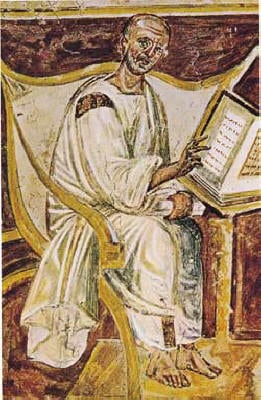
Augustine of Hippo
इन पर सहमत: परम सत्य क्या है? क्या ईश्वर है? · मैं कौन हूँ? क्या कोई सच्चा आत्म है? · क्या गुरु आवश्यक है?
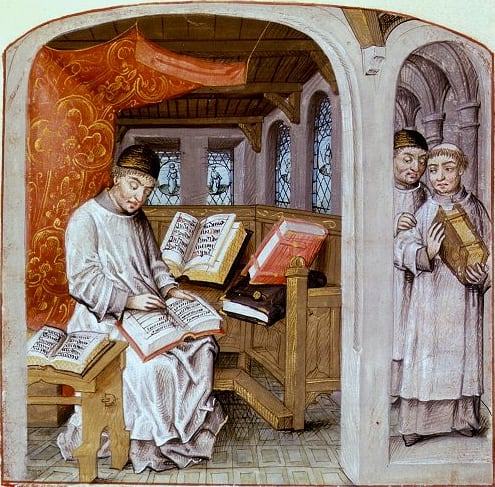
Thomas à Kempis
इन पर सहमत: परम सत्य क्या है? क्या ईश्वर है? · मैं कौन हूँ? क्या कोई सच्चा आत्म है? · क्या गुरु आवश्यक है?
Carl Gustav Jung
इन पर सहमत: हम दुःख क्यों भोगते हैं? · मृत्यु के बाद क्या होता है? · क्या गुरु आवश्यक है?
Al-Ghazali
इन पर सहमत: परम सत्य क्या है? क्या ईश्वर है? · मैं कौन हूँ? क्या कोई सच्चा आत्म है? · क्या संसार वास्तविक है?
इनसे भिन्न सोचते हैं

Dōgen
इन पर टकराव: परम सत्य क्या है? क्या ईश्वर है? · मैं कौन हूँ? क्या कोई सच्चा आत्म है?

Siddhartha Gautama, the Buddha
इन पर टकराव: परम सत्य क्या है? क्या ईश्वर है? · मैं कौन हूँ? क्या कोई सच्चा आत्म है?
Tsongkhapa
इन पर टकराव: परम सत्य क्या है? क्या ईश्वर है? · मैं कौन हूँ? क्या कोई सच्चा आत्म है?
Śāntideva
इन पर टकराव: परम सत्य क्या है? क्या ईश्वर है? · मैं कौन हूँ? क्या कोई सच्चा आत्म है?
प्रसंग और वृत्तांत
प्रसंग और वृत्तांत
साक्ष्यantes del 431 a. C. (incierto)
The Delphic oracle
वृत्तांत का स्रोत: Plato, Apology 20e–23b, where Socrates calls Chaerephon's brother as witness, Chaerephon being dead. Xenophon (Apology 14) gives a different version: the oracle supposedly said no one was more free, just or sensible than Socrates. Some scholars doubt the consultation took place; others accept it because it appears in a speech delivered before hundreds of Athenians.
साक्ष्य432–424 a. C.
Potidaea and Delium
वृत्तांत का स्रोत: Plato, Symposium 219e–221c; the Laches (181b) confirms the conduct at Delium through the general Laches. It is a literary testimony in a character's mouth, but it agrees with the Apology (28e) on the three campaigns. The Aristophanes quotation comes from the Clouds (362).
प्रमाणित406–404 a. C.
The Arginusae generals and Leon of Salamis
वृत्तांत का स्रोत: Plato, Apology 32b–e; Xenophon, Hellenica I 7.14–15 and Memorabilia I 1.18 and IV 4.2–3. It is one of the few episodes in Socrates' life attested by two independent authors and by a historian narrating the events apart from Socrates.
विवादित423 a. C.
Socrates stands up in the theatre
वृत्तांत का स्रोत: Aelian, Varia Historia II 13 (2nd–3rd century CE). There is no contemporary testimony. Plutarch (On the Education of Children 14) attributes a similar reaction to Socrates when mocked by comedy. The story of a bribe to Aristophanes is incompatible with the chronology.
स्रोत: Eliano, Claudio. Historias curiosas (Varia historia) II 13, s. II–III d. C. Trad. esp. de Juan Manuel Cortés Copete, Gredos, Madrid, 2006.
सत्यापन-योग्य नहींs. V a. C. (tradicional)
Xanthippe and the water
वृत्तांत का स्रोत: Diogenes Laertius II 36–37 (3rd century CE); the image of the difficult wife is already in Xenophon, Symposium 2.10, where Antisthenes calls her "the most intolerable of women", and Memorabilia II 2. The bucket scene appears only in late sources and belongs to a repertoire of jokes about philosophers; it inspired many Baroque paintings.
साक्ष्य401 a. C.
Xenophon asks for advice
वृत्तांत का स्रोत: Xenophon, Anabasis III 1.4–7, in which the author himself narrates the episode. It is the only surviving autobiographical testimony of a private conversation with Socrates.
शिक्षाएँ
शिक्षाएँ
वे अवधारणाएँ जो उनके चिंतन को रूप देती हैं, उनके संदर्भ में समझाई गई।
Elenchus (Socratic refutation)elenchos
The method of Plato's "aporetic" dialogues (Euthyphro, Laches, Charmides, Lysis); Aristotle links it to the search for universal definitions.
स्रोत: Vlastos, Gregory. Socrates, Ironist and Moral Philosopher. Cambridge University Press / Cornell University Press, Cambridge e Ithaca, 1991.
Socratic ironyironia-socratica
A character trait attributed to Socrates by Plato, Xenophon and Aristotle; a central category of later rhetoric and philosophy.
स्रोत: Vlastos, Gregory. Socrates, Ironist and Moral Philosopher. Cambridge University Press / Cornell University Press, Cambridge e Ithaca, 1991.
The daimonion (the divine sign)daimonion
The religious element in Socrates' figure, central to the impiety charge of 399 BCE.
No one does wrong willingly (moral intellectualism)nadie-obra-mal-voluntariamente
The core of Socratic ethics in the Protagoras, the Gorgias and the Meno.
Care of the soulcuidado-del-alma
The ethical programme of the Apology and the First Alcibiades; the basis of the ancient idea of philosophy as spiritual exercise.
Maieuticsmayeutica
An image from the Theaetetus, associated with the Meno and Platonic recollection.
वीडियो
वीडियो
रिकॉर्डिंग, साक्षात्कार और वृत्तचित्र। वीडियो YouTube से चलते हैं; वे यहाँ संग्रहीत नहीं हैं।
2. Socratic Citizenship: Plato's Apology
व्याख्यान· EN· 2008· 46 min
YaleCoursesआधिकारिक चैनल
3. Socratic Citizenship: Plato's Crito
व्याख्यान· EN· 2008· 47 min
YaleCoursesआधिकारिक चैनल
Ancient Philosophies as a Way of Life: Socrates
व्याख्यान· EN· 2012· 61 min
Stanfordआधिकारिक चैनल
Bettany Hughes | Socrates and his Athens
व्याख्यान· EN· 2021· 61 min
The Ramsay Centre for Western Civilisationआधिकारिक चैनल
PBS Broadcast - The Trial of Socrates
वृत्तचित्र· EN· 2025· 58 min
National Hellenic Museumआधिकारिक चैनल
Paul Woodruff, "In Socrates' Footsteps: A Better Model for Virtue Ethics."
व्याख्यान· EN· 2020· 85 min
International Society for Socratic Studiesआधिकारिक चैनल
Socrates & Plato's Philosophy - Myles Burnyeat & Bryan Magee (1987)
साक्षात्कार· EN· 1987· 44 min
Philosophy Overdose
Conferencia de Francesc Casadesús: 'Sócrates y sus enemigos'
व्याख्यान· ES· 2022· 63 min
Fundación BBVAआधिकारिक चैनल
Carlos Fernández Liria "Sócrates y el problema de la democracia"
व्याख्यान· ES· 2021· 55 min
G.I. UCM: Metafísica, Crítica y Políticaआधिकारिक चैनल
«Apología de Sócrates» | Notas a Platón (3/27)
विश्लेषण· ES· 2020· 107 min
Ernesto Castroआधिकारिक चैनल
El juicio a Sócrates: ¿Por qué Atenas mató a su hombre más sabio? - H. Grecia #48
व्याख्यान· ES· 2024· 40 min
Darío Sánchez Vendraminiआधिकारिक चैनल
Portrait de Socrate | Cours méthodiques et populaires de philosophie
व्याख्यान· FR· 2014· 98 min
Bibliothèque nationale de France BnFआधिकारिक चैनल
Geschichte der Philosophie (2): Von Sokrates zu Platon, Prof. Dr. Torsten Wilholt
व्याख्यान· DE· 2013· 88 min
InstPhilआधिकारिक चैनल
चित्रशाला
चित्रशाला
सत्यापित लाइसेंस वाले चित्र। प्रत्येक में उसके रचयिता और श्रेय का उल्लेख सुरक्षित है।
पांडुलिपियाँ
पांडुलिपियाँ
पांडुलिपि-साक्ष्य और प्राचीन पाठ, उनके संरक्षक और अध्ययन की शर्तों सहित।
GRC · Minúscula griega · Diálogos compuestos c. 399–347 a. C.; copia de 895
Codex Oxoniensis Clarkianus 39 («Clarke Plato», B)
- संरक्षित पाठ-साक्ष्य
- Códice de pergamino de 418 folios, copiado por Juan el Calígrafo para Aretas de Patras
- संरक्षक
- Bodleian Library, Oxford · MS. E. D. Clarke 39
- डिजिटलीकरण
- medieval.bodleian.ox.ac.uk/catalog/manuscript_40…
संबंध
संबंध
प्रभाव, शिष्यत्व और वैचारिक निकटता। प्रमाणित संबंध को विश्लेषण से पहचानी गई समानता से अलग दर्शाया गया है।
इनके गुरु
Plato frequented Socrates in his youth, attended the trial (Apology 34a, 38b) and made him the protagonist of almost all his dialogues.
प्रमाणित संबंध
इनके गुरु
Jenofonte
A pupil in his youth; he wrote the Memorabilia, the Apology, the Symposium and the Oeconomicus, and recounts in the Anabasis how he asked him for advice.
प्रमाणित संबंध
इनके गुरु
Antístenes
A follower of Socrates present at his death (Phaedo 59b); founder of the tradition that would lead to Cynicism.
प्रमाणित संबंध
इनके समकालीन
Aristófanes
He caricatured him in the Clouds (423 BCE); Plato seats them together in the Symposium.
प्रमाणित संबंध
इन्हें प्रभावित किया
He never knew him, but in the Metaphysics credits him with induction and universal definition and discusses his moral intellectualism in the Nicomachean Ethics.
प्रमाणित संबंध
इन्हें प्रभावित किया
A pupil of Antisthenes according to Diogenes Laertius (VI 21); Plato allegedly called him "a Socrates gone mad" (VI 54).
प्रमाणित संबंध
इन्हें प्रभावित किया
According to Diogenes Laertius (VII 2–3), he became a philosopher after reading the second book of Xenophon's Memorabilia in Athens.
प्रमाणित संबंध
इन्हें प्रभावित किया
The Discourses recorded by Arrian hold up Socrates as the constant model of the philosophical life.
प्रमाणित संबंध
इनसे भेंट
Plato narrates a meeting between a very young Socrates and the aged Parmenides in the dialogue Parmenides; it is almost certainly a literary fiction.
विश्लेषण से पहचानी गई समानता
इनसे मिलते-जुलते विचार
The speakers of the Phaedo, Simmias and Cebes, had frequented the Pythagorean Philolaus; the immortality of the soul and the philosophical life as purification bring Plato's Socrates close to the Pythagorean tradition.
विश्लेषण से पहचानी गई समानता
इनसे मिलते-जुलते विचार
Oral teachers known through their disciples, centred on virtue and self-examination; Karl Jaspers grouped them among the "paradigmatic individuals".
विश्लेषण से पहचानी गई समानता
इनसे मिलते-जुलते विचार
Neither wrote anything, both were executed by the authority of their city and their figure reaches us through disciples who disagree; the comparison has been a commonplace since the Christian apologists.
विश्लेषण से पहचानी गई समानता
अन्य प्रविष्टियों से जुड़ा
- Aristotle · इनसे प्रभावित
- Heraclitus · इन्हें प्रभावित किया
- Marcus Aurelius · इनसे प्रभावित
- Parmenides · इनसे भेंट
- Zeno of Citium · इनसे प्रभावित
- Epicurus · इनसे मतभेद
- Diogenes of Sinope · इनसे प्रभावित
- Epictetus · इनसे प्रभावित
- Pythagoras · इनसे मिलते-जुलते विचार
- Plotinus · इनसे प्रभावित
- Augustine of Hippo · इनसे मिलते-जुलते विचार
- Plato · इनके शिष्य
स्रोत
स्रोत
इस प्रविष्टि के लिए देखे गए ग्रंथ-सूची और सूचीपत्र।
- Wikidata, entidad Q913 «Socrates» (276 enlaces entre wikis; P31=Q5). Registra nacimiento en 470 a. C. (precisión: año) y muerte en 399 a. C. (15 de febrero o mayo, fechas sin base antigua); lugar de nacimiento Alopece y Atenas.
- Platón. Platonis Opera, ed. John Burnet, 5 vols. Oxford University Press (Oxford Classical Texts), 1900–1907; tomo I (Eutifrón, Apología, Critón, Fedón) consultado en la edición digital del Perseus Digital Library (Tufts University).
- Plato. The Dialogues of Plato, trad. Benjamin Jowett, 3.ª ed., 5 vols. Clarendon Press, Oxford, 1892 (Project Gutenberg, n.º 1656 Apology, 1657 Crito, 1658 Phaedo y otros).
- Platón. Obras completas, trad. Patricio de Azcárate, 11 vols. Medina y Navarro, Madrid, 1871–1872 (edición digital en Filosofía en español).
- Jenofonte. Memorables (Recuerdos de Sócrates), Apología de Sócrates, Banquete y Económico. Texto griego: Xenophontis opera omnia, ed. E. C. Marchant, vol. 2, 2.ª ed., Clarendon Press, Oxford, 1921 (Perseus); trad. inglesa de H. G. Dakyns, The Works of Xenophon, Macmillan, Londres, 1890–1897 (Project Gutenberg).
- Aristófanes. Las nubes (Νεφέλαι), representada en 423 a. C.; trad. inglesa de W. J. Hickie, The Comedies of Aristophanes, Bohn's Classical Library, Londres, 1853 (Project Gutenberg n.º 2562).
- Aristóteles. Metafísica A 6, 987b1–4, y M 4, 1078b17–32; Poética 1, 1447b11. Trad. inglesa de W. D. Ross (Oxford, 1908; Internet Classics Archive, MIT); trad. española de Patricio de Azcárate, Obras de Aristóteles, vol. 10, Madrid, 1875.
- Diógenes Laercio. Vidas y opiniones de los filósofos ilustres, libro II, 18–47 (Sócrates), s. III d. C. Trad. inglesa de C. D. Yonge, Bohn, Londres, 1853 (Project Gutenberg n.º 57342); trad. española de José Ortiz y Sanz, Madrid, 1792 (Wikisource).
- Guthrie, W. K. C. A History of Greek Philosophy, vol. III: The Fifth-Century Enlightenment, parte 2: Socrates. Cambridge University Press, Cambridge, 1969 (publicado aparte como Socrates, 1971; trad. esp. Historia de la filosofía griega, vol. III, Gredos).
- Vlastos, Gregory. Socrates, Ironist and Moral Philosopher. Cambridge University Press / Cornell University Press, Cambridge e Ithaca, 1991.
- Nails, Debra y Monoson, S. Sara. «Socrates». The Stanford Encyclopedia of Philosophy, ed. Edward N. Zalta; primera publicación 2005, revisión sustancial del 26 de mayo de 2022.
- Kahn, Charles H. Plato and the Socratic Dialogue: The Philosophical Use of a Literary Form. Cambridge University Press, Cambridge, 1996.
- Brickhouse, Thomas C. y Smith, Nicholas D. (eds.). The Trial and Execution of Socrates: Sources and Controversies. Oxford University Press, Nueva York, 2002.
- Waterfield, Robin. Why Socrates Died: Dispelling the Myths. Faber and Faber / W. W. Norton, Londres y Nueva York, 2009.
- «Socrates», Wikipedia en inglés, y «Sócrates», Wikipedia en español (consultadas para contrastar datos y bibliografía; texto propio).
- Giannantoni, Gabriele (ed.). Socratis et Socraticorum Reliquiae, 4 vols. Bibliopolis, Nápoles, 1990 (fragmentos de Esquines de Esfeto, Antístenes y demás socráticos).
- Eliano, Claudio. Historias curiosas (Varia historia) II 13, s. II–III d. C. Trad. esp. de Juan Manuel Cortés Copete, Gredos, Madrid, 2006.
- The Metropolitan Museum of Art. Jacques-Louis David, «The Death of Socrates» (1787), n.º de inventario 31.45.
- Bodleian Libraries, Universidad de Oxford. MS. E. D. Clarke 39 («Clarke Plato»), códice de las tetralogías I–VI de Platón copiado en 895 por Juan el Calígrafo para Aretas. A Catalogue of Western Manuscripts at the Bodleian Libraries.
- Open Library (Internet Archive): ediciones de Platón, Jenofonte, Aristófanes y Diógenes Laercio verificadas por ISBN.
- अधिकार-धारक
- Textos antiguos en dominio público; cada traducción y edición crítica pertenece a su traductor o editorial
पुष्टि की प्रतीक्षा में
जो यह प्रविष्टि अभी तक निश्चित नहीं कर सकी है। हम उसे भर देने के बजाय कह देना बेहतर समझते हैं।
- Fecha de nacimiento: se adopta 469 a. C. (Apolodoro en Diógenes Laercio II 44; Nails y Monoson); Wikidata da 470. Las fechas de muerte de Wikidata (15 de febrero o 1 de mayo de 399) no tienen base antigua: solo se sabe que fue en primavera, unos treinta días después del juicio.
- Ediciones españolas con ISBN verificado de Gorgias, Menón, Eutidemo, Teeteto, Parménides y Alcibíades I (Gredos, Diálogos II y V; Alianza): no localizadas en Open Library en esta sesión.
- «Las nubes» en español: solo se ha verificado la edición de Ediciones Clásicas (1999) sin traductor identificado; falta la de Gredos (Comedias I) con ISBN y contenido comprobados.
- Traducción española de dominio público de las Memorables y el Banquete de Jenofonte (p. ej., Diego Gracián, s. XVI): no localizada en línea con URL estable.
- Programas de afiliación: ninguno verificado (Gredos, Alianza, Penguin, Hackett). Lista vacía.
- Año de los vídeos: es el de la grabación cuando la descripción lo indica y, si no, el de publicación en YouTube.
2026-10-25 को शोधित