बौद्ध धर्म · महायान · ज़ेन / चान
Dōgen
道元 · 希玄 · 承陽大師 · 永平道元
1200 – 1253ऐतिहासिक रूप से प्रमाणित व्यक्ति
कामाकुरा काल के जापानी भिक्षु (1200–1253), जापान में ज़ेन की सोतो शाखा और एहेई-जी मठ के संस्थापक। तेंदाई परंपरा में दीक्षित होकर वे सोंग वंश के चीन गए और रुजिंग से त्साओदोंग संप्रदाय का संचरण प्राप्त किया। उन्होंने “केवल बैठना” (शिकांताज़ा) को साधन नहीं, स्वयं बोध की अभिव्यक्ति के रूप में सिखाया, और जापानी में लिखे शोबोगेनज़ो के रूप में बौद्ध दर्शन का एक शिखर-ग्रंथ छोड़ा। अपने संप्रदाय के बाहर सदियों तक विस्मृत उनकी कृति बीसवीं शताब्दी में पुनः खोजी गई।
- कृतियाँ
- 115कृतियाँ
- संस्करण
- 203संस्करण
- उद्धरण
- 9उद्धरण
- वीडियो
- 11वीडियो
- चित्र
- 4चित्र
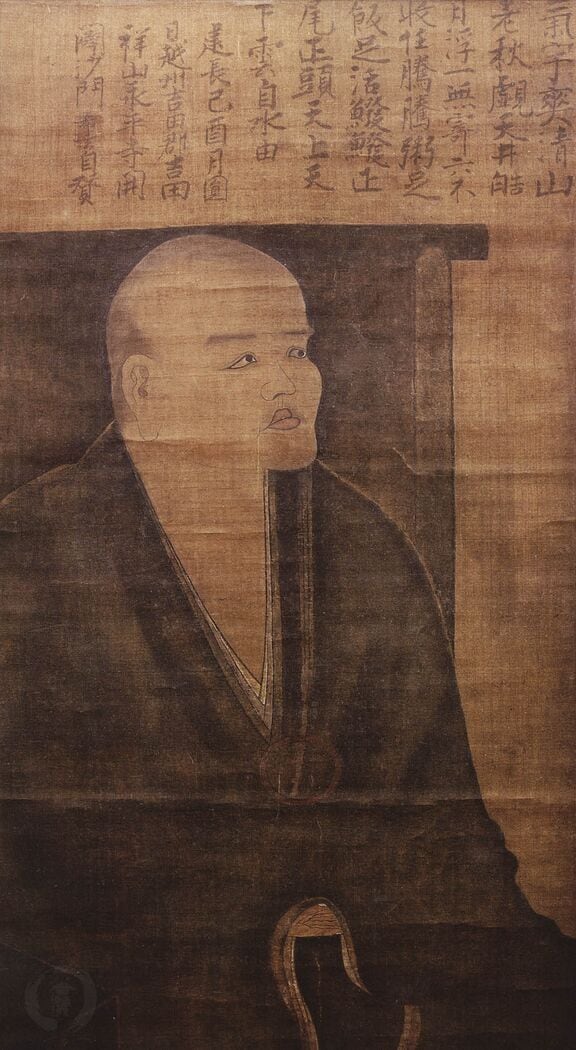
Dōgen contemplando la luna (Tsukimi no zō) · Public domain
उनके अपने शब्दों में
«To study the Buddha way is to study the self. To study the self is to forget the self. To forget the self is to be verified by the myriad things. To be verified by the myriad things is to let the body and mind of oneself and the body and mind of others drop away.»Shōbōgenzō, «Genjōkōan» (1233). Traducción propia del japonés.

मूल विचार
Just sitting (shikantaza): An expression Dōgen attributes to his teacher Rujing: "just sitting" (shikan, "only, solely"; taza, "sitting").
संदर्भ में देखें
जीवनी
5 मिनट का पाठ
स्पैनिश मूल से सहायता-प्राप्त अनुवाद, मातृभाषी अनुवादक द्वारा समीक्षा लंबित।
हिएई पर्वत पर एक अनाथ अभिजात
दोगेन का जन्म सन् 1200 के आरंभ में क्योतो में, दरबार के उच्च अभिजात वर्ग में हुआ। उनके माता-पिता की पहचान निश्चित नहीं है: परंपरा, जो अठारहवीं शताब्दी में संशोधित केन्ज़ेई के इतिवृत्त (1452) पर आधारित है, उन्हें मंत्री कोगा (मिनामोतो) मिचिचिका और राजप्रतिनिधि मात्सुदोनो मोतोफ़ुसा की एक पुत्री की संतान बताती है, जबकि कुछ अन्य इतिहासकार होरिकावा मिचितोमो को उनका पिता मानते हैं। यही स्रोत बताते हैं कि दो वर्ष की आयु में उनके पिता और सात वर्ष की आयु में माता का देहांत हो गया, और माता की अंत्येष्टि में उठते धूप के धुएँ ने उन पर अनित्यता का रहस्य खोल दिया; यह एक उपदेशात्मक कथा है, जिसकी पुष्टि संभव नहीं।
लगभग 1213 में उन्होंने तेंदाई संप्रदाय के महान केंद्र हिएई पर्वत पर प्रव्रज्या ग्रहण की। उनकी पारंपरिक जीवनी के अनुसार वहाँ एक प्रश्न उन्हें बेचैन करता रहा: यदि सभी प्राणियों में बुद्ध-स्वभाव स्वतः विद्यमान है, जैसा कि मूल बोधि का सिद्धांत सिखाता था, तो सभी कालों के बुद्धों ने साधना के लिए इतना श्रम क्यों किया? 1217 में वे क्योतो के केन्निन-जी में प्रविष्ट हुए, जो एइसाई द्वारा स्थापित मठ था — वही एइसाई जिन्होंने जापान में रिंज़ाई संप्रदाय का प्रवेश कराया था — और उनके उत्तराधिकारी म्योज़ेन के शिष्य बने।
चीन: रसोइया और गुरु
1223 में दोगेन और म्योज़ेन सोंग वंश के चीन के लिए जहाज़ पर सवार हुए। रसोइये के लिए निर्देश में दर्ज उनके अपने वृत्तांत में दो निर्णायक भेंटों का उल्लेख है: एक वृद्ध मठ-रसोइया, जो मशरूम ख़रीदने के लिए मीलों पैदल चलकर आया था और बातचीत के लिए रुकने से इनकार कर गया, क्योंकि उसका काम ही उसकी साधना था; और दूसरा, जो दोपहर की धूप में मशरूम सुखा रहा था और जिसने उत्तर दिया कि “दूसरे मैं नहीं हैं”। दोनों ने उन्हें सिखाया कि मार्ग रोज़मर्रा के कामों से अलग नहीं है।
कई मठों की यात्रा के बाद 1225 में तियानतोंग पर्वत पर उनकी भेंट त्साओदोंग संप्रदाय के गुरु रुजिंग से हुई, जो अपने भिक्षुओं से बैठकर ध्यान की कठोर, अविराम साधना की अपेक्षा रखते थे। उनके मार्गदर्शन में दोगेन ने वह अनुभव किया जिसे वे आगे चलकर “देह और मन का छूट जाना” (शिनजिन दात्सुराकु) कहेंगे, और उन्हें परंपरा का संचरण प्राप्त हुआ। उसी वर्ष म्योज़ेन का उसी मठ में देहांत हो गया; दोगेन ने उनके अवशेष सँभाले और इसका लिखित उल्लेख छोड़ा। रुजिंग के साथ उनके संवादों के नोट्स, होक्योकी, उनकी मृत्यु के बाद उनके शिष्य एजो को मिले।
ख़ाली हाथ वापसी
1227 में वे जापान लौटे। वर्षों बाद उन्होंने अपनी यात्रा को एक प्रसिद्ध वाक्य में समेटा: उन्होंने यह सीखा था कि आँखें आड़ी होती हैं और नाक खड़ी, और वे “ख़ाली हाथ” लौटे थे, बौद्ध धर्म का एक बाल भी साथ लाए बिना। माना जाता है कि उसी वर्ष उन्होंने फ़ुकान ज़ाज़ेंगी, अर्थात् ज़ाज़ेन की साधना के लिए सार्वभौमिक उद्बोधन, की रचना की, जिसकी 1233 की स्वहस्तलिखित प्रति एहेई-जी में सुरक्षित है। केन्निन-जी में कुछ समय बिताने के बाद वे क्योतो के दक्षिण में फ़ुकाकुसा चले गए, जहाँ उन्होंने 1231 में बेंदोवा लिखा और 1233 में कोशो-जी मठ की स्थापना की।
कोशो-जी में पहला संघ बना: 1234 में कोउन एजो आए, जो आगे चलकर उनके उत्तराधिकारी बने, और 1241 में दारुमा संप्रदाय के भिक्षुओं का एक दल उनसे आ मिला, जिनमें गिकाई और गिएन भी थे। वहीं उन्होंने तेन्ज़ो क्योकुन (1237) और शोबोगेनज़ो के अधिकांश अध्याय लिखे — चीनी में नहीं, जैसा उनके समय के आचार्यों में चलन था, बल्कि जापानी में। इनमें “गेंजोकोआन” (1233), “उजि” और “सानसुइक्यो” (1240) तथा “बुश्शो” (1241) शामिल हैं।
एचिज़ेन और एहेई-जी
1243 में, उन कारणों से जिन पर आज भी बहस होती है — हिएई पर्वत के भिक्षुओं का दबाव, राजधानी में अन्य ज़ेन आचार्यों की प्रतिस्पर्धा, या अधिक कठोर मठ-जीवन की आकांक्षा — दोगेन ने अपने संरक्षक, योद्धा हातानो योशिशिगे का निमंत्रण स्वीकार किया और जापान सागर के तट पर स्थित एचिज़ेन प्रांत चले गए। पहली सर्दी में उन्होंने पर्वतीय मंदिरों में असाधारण तीव्रता से प्रवचन दिए: कुछ ही महीनों में दर्जनों अध्याय प्रस्तुत किए। 1244 में उन्होंने दाइबुत्सु-जी की स्थापना की, जिसका नाम 1246 में बदलकर एहेई-जी, “शाश्वत शांति का मंदिर”, रखा।
एहेई-जी में दोगेन ने स्वयं को मठ-जीवन और एक छोटे, कठोर अनुशासन वाले संघ के निर्माण में लगा दिया। चीनी में दिए गए उनके औपचारिक प्रवचन एहेई कोरोकु में संकलित हुए, और उनके नियम — रसोई, भोजन, वरिष्ठ भिक्षुओं के प्रति आचरण या मठ के पदों के विषय में — आगे चलकर एहेई के शुद्ध नियम के रूप में संगृहीत हुए। 1247–1248 में वे राजप्रतिनिधि होजो तोकियोरी के निमंत्रण पर कामाकुरा गए, किंतु कुछ महीनों बाद लौट आए और वहाँ मंदिर स्थापित करना स्वीकार नहीं किया।
अंतिम वर्ष
अपने अंतिम वर्षों में उन्होंने शोबोगेनज़ो का गहन संशोधन किया और बारह अध्यायों की एक नई शृंखला आरंभ की, जो कर्म के कार्य-कारण में श्रद्धा, शीलों और मठ-जीवन पर अधिक केंद्रित थी; उनका इरादा सौ अध्याय पूरे करने का था। रोगग्रस्त अवस्था में उन्होंने 1253 के आरंभ में अंतिम अध्याय, “महापुरुष के आठ बोध”, लिखा। गर्मियों में उन्होंने मठाधीश का पद एजो को सौंप दिया और उपचार के लिए क्योतो चले गए। वहीं 1253 के आठवें महीने की अट्ठाईसवीं तिथि को, तिरपन वर्ष की आयु में, उनका देहांत हुआ। परंपरा उनकी एक विदाई-कविता और यह वृत्तांत सँजोए हुए है कि उन्होंने एक स्तंभ पर सद्धर्मपुंडरीक सूत्र का एक अंश लिखा था।
एक पुनराविष्कृत कृति
सदियों तक शोबोगेनज़ो सोतो मठों में सँजोया गया एक ख़ज़ाना रहा, जिसे पढ़ा कम और पूजा अधिक गया। सत्रहवीं और अठारहवीं शताब्दी में परंपरा के अनुशासन को लेकर हुए विवादों ने इसके अध्ययन को प्रेरित किया, और 1796 से 1815 के बीच छपे एहेई-जी संस्करण ने इसे भिक्षुओं की पहुँच में ला दिया। 1926 में दार्शनिक वात्सुजी तेत्सुरो ने इसे शिक्षित पाठकों के सामने एक चिंतन-ग्रंथ के रूप में प्रस्तुत किया, और तब से दोगेन को हाइडेगर और परिघटनाविज्ञान के साथ पढ़ा जाता है। आज वे सबसे अधिक अनूदित जापानी चिंतकों में हैं, और उनका सोतो संप्रदाय जापानी बौद्ध धर्म के सबसे बड़े संप्रदायों में से एक है।
स्रोत: Kim, Hee-Jin. Eihei Dōgen: Mystical Realist. Boston: Wisdom Publications, 2004 (1.ª ed. Dōgen Kigen—Mystical Realist, Tucson: University of Arizona Press, 1975). ISBN 9780861713769. · Bodiford, William M. Sōtō Zen in Medieval Japan. Honolulu: University of Hawai'i Press, 1993. ISBN 9780824814823. · Bodiford, William M. «Textual Genealogies of Dōgen». En Steven Heine (ed.), Dōgen: Textual and Historical Studies. Nueva York: Oxford University Press, 2012, pp. 15–41. ISBN 9780199754472. · Tanahashi, Kazuaki (ed.). Treasury of the True Dharma Eye: Zen Master Dogen's Shobo Genzo. Boston: Shambhala, 2010. ISBN 9781590304747. · Leighton, Taigen Dan; Okumura, Shohaku (trads.). Dōgen's Extensive Record: A Translation of the Eihei Kōroku. Boston: Wisdom Publications, 2004 (ed. rev. 2010, ISBN 9780861716708).
कालक्रम
जीवन, वर्ष-दर-वर्ष
प्रत्येक बिंदु एक प्रमाणित घटना है। उसे स्रोत और निश्चितता के स्तर सहित पढ़ने के लिए क्लिक करें।
19 जनवरी 12000 वर्षKioto
Birth
Born on the 2nd day of the 1st month of Shōji 2 (19 January 1200 in the Julian calendar; 26 January in the proleptic Gregorian), into a family of the high nobility. His exact parentage is disputed.
प्रमाणितWikidata, entidad Q318064 «Dōgen» (P31=Q5; 54 enlaces entre wikis; nombre nativo 道元; nacimiento 1200, muerte 1253 en Kioto).
उनके निधन के बाद
- 1815Eiheiji printed edition
- 1879Title of Jōyō Daishi
- 1926Watsuji Tetsurō and the rediscovery
19 जनवरी 1200 · 0 वर्ष
Birth
Born on the 2nd day of the 1st month of Shōji 2 (19 January 1200 in the Julian calendar; 26 January in the proleptic Gregorian), into a family of the high nobility. His exact parentage is disputed.
प्रमाणित
1207 · 7 वर्ष
Death of his mother
According to Kenzei's chronicle, his mother dies when he is seven; tradition links his vocation to this bereavement.
परंपरा
1213 · 13 वर्ष
Tendai ordination
Receives the tonsure on Mount Hiei under the name Buppōbō Dōgen.
संभावित
1217 · 17 वर्ष
Disciple of Myōzen
Enters Kennin-ji, founded by Eisai, and studies with his successor Myōzen, of the Rinzai Zen school.
प्रमाणित
1223 · 23 वर्ष
Journey to Song China
Sails to China with Myōzen. At the port he meets the old cook of Mount Ayuwang, an episode he relates in the Tenzo kyōkun.
प्रमाणित
1225 · 25 वर्ष
Rujing and "dropping off body and mind"
Studies with Tiantong Rujing of the Caodong school, receives his transmission and, according to his school, attains realisation. Myōzen dies at Tiantong the same year.
प्रमाणित
1227 · 27 वर्ष
Return to Japan
Returns to Japan with Myōzen's relics. The first draft of the Fukanzazengi is attributed to this year.
प्रमाणित
1231 · 31 वर्ष
Bendōwa
Writes the Bendōwa, an exposition of zazen practice in question-and-answer form (colophon: "Kangi, year of the hare, mid-autumn").
प्रमाणित
1233 · 33 वर्ष
Founding of Kōshō-ji and "Genjōkōan"
Founds Kannon-dōri-in (Kōshō-ji). Writes "Genjōkōan" for a lay disciple from Kyūshū and copies the Fukanzazengi in his own hand (Tenpuku version).
प्रमाणित
1234 · 34 वर्ष
Koun Ejō arrives
Ejō, formerly of the Daruma school, becomes his disciple; he will be his successor and the compiler of many of his works.
प्रमाणित
1243 · 43 वर्ष
Move to Echizen
Invited by Hatano Yoshishige, he leaves Kyoto and settles in the mountains of Echizen, where in a few months he preaches dozens of fascicles.
प्रमाणित
1246 · 46 वर्ष
Daibutsu-ji renamed Eihei-ji
The monastery founded in 1244 is given the name Eihei-ji, "Temple of Eternal Peace".
प्रमाणित
1247 · 47 वर्ष
Journey to Kamakura
Invited by the regent Hōjō Tokiyori, he teaches in Kamakura for some months and returns to Eiheiji in 1248.
प्रमाणित
1253 · 53 वर्ष
Last fascicle
On the 6th day of the 1st month he writes "Hachi dainingaku" (The Eight Awarenesses of the Great Being), the last of the twelve-fascicle series.
प्रमाणित
22 सितंबर 1253 · 53 वर्ष
Death
Dies in Kyoto on the 28th day of the 8th month of Kenchō 5 (22 September 1253 Julian; 29 September proleptic Gregorian), at the house of his disciple Kakunen.
प्रमाणित
1815
Eiheiji printed edition
Woodblock printing of the Shōbōgenzō begins in the Eiheiji edition (Honzan-ban), the basis of modern 95-fascicle editions.
प्रमाणित
1879
Title of Jōyō Daishi
Emperor Meiji grants him the posthumous title Jōyō Daishi; in 1854 Emperor Kōmei had bestowed that of Busshō Dentō Kokushi.
प्रमाणित
1926
Watsuji Tetsurō and the rediscovery
The philosopher Watsuji publishes "Shamon Dōgen", presenting Dōgen as a thinker to the Japanese educated public.
प्रमाणित
कृतियाँ
आवश्यक कृतियाँ
वे कृतियाँ जिनके बिना उनकी विरासत को समझा नहीं जा सकता।
लिखित कृति · लगभग 1253
Shōbōgenzō (Treasury of the True Dharma Eye)
正法眼蔵
Dōgen's major work and one of the summits of Buddhist thought. Its fascicles, preached or written over twenty-two years, comment on kōans, sutras and sayings of Chinese masters in a deliberately twisted Japanese that breaks Chinese syntax to make the texts say what, in his view, they really say. It treats the oneness of practice and realisation, buddha-nature as impermanence, being-time, Dharma transmission, zazen and monastic life down to its most concrete details. It was little read outside his school until the 20th century.
10 संस्करण
Dōgen
Fukanzazengi (Universal Recommendation for Zazen)
लिखित कृति · लगभग 1227
Fukanzazengi (Universal Recommendation for Zazen)
普勧坐禅儀
A short manifesto in Chinese parallel prose presenting zazen as the universal practice, open to all. It describes the place, posture, breathing and mental attitude —"thinking not-thinking"— and asserts that zazen is not a method for attaining awakening but "the Dharma gate of ease and joy". It is the text Sōtō monasteries recite each evening.
2 संस्करण
Dōgen
Eihei kōroku (Dōgen's Extensive Record)
परवर्ती संकलन · लगभग 1253
Eihei kōroku (Dōgen's Extensive Record)
永平広録
It gathers 531 formal Dharma-hall sermons (jōdō), informal sermons, kōan commentaries, eulogies and Chinese poems, from Kōshō-ji to Eihei-ji. It is the main source for the teaching of his last years, and it contains the phrase about his return from China "with empty hands".
1 संस्करण
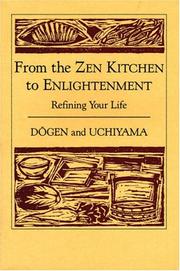
लिखित कृति · 1237
Tenzo kyōkun (Instructions for the Cook)
典座教訓
Instructions for the monk in charge of the kitchen, an office Dōgen considered among the highest in the monastery. It explains how to plan, wash rice or handle ingredients with the same care as one's eyes, and includes the account of his encounters in China with two old cooks. It ends with the "three minds": joyful, nurturing and magnanimous.
2 संस्करण
संपूर्ण कृतित्व (115)
Dōgen
Gakudō yōjinshū (Points to Watch in Studying the Way)
The Conscious LibraryGakudō yōjinshū (Points to Watch in Studying the Way)
1234
Dōgen
Bendōhō (Model for Engaging the Way)
The Conscious LibraryBendōhō (Model for Engaging the Way)
1246
Dōgen
Fushukuhanpō (The Dharma for Taking Food)
The Conscious LibraryFushukuhanpō (The Dharma for Taking Food)
1246
Dōgen
Shuryō shingi (Pure Standards for the Study Hall)
The Conscious LibraryShuryō shingi (Pure Standards for the Study Hall)
1249
Dōgen
Taitaiko gogejarihō (Dharma for Honouring Seniors)
The Conscious LibraryTaitaiko gogejarihō (Dharma for Honouring Seniors)
1244
Dōgen
Chiji shingi (Pure Standards for the Temple Administrators)
The Conscious LibraryChiji shingi (Pure Standards for the Temple Administrators)
1246
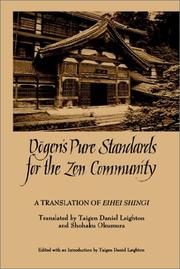
Eihei shingi (Pure Standards of Eihei)
1667
Dōgen
Hōkyōki (Record of the Baoqing Era)
The Conscious LibraryHōkyōki (Record of the Baoqing Era)
1227
Dōgen
Shinji Shōbōgenzō (Mana Shōbōgenzō)
The Conscious LibraryShinji Shōbōgenzō (Mana Shōbōgenzō)
1235
Dōgen
Shōbōgenzō zuimonki (Record of Things Heard)
The Conscious LibraryShōbōgenzō zuimonki (Record of Things Heard)
1238
Dōgen
Eihei goroku (Abbreviated Record of Eihei)
The Conscious LibraryEihei goroku (Abbreviated Record of Eihei)
1264
Dōgen
Sanshō dōei (Songs of the Way from Sanshō Peak)
The Conscious LibrarySanshō dōei (Songs of the Way from Sanshō Peak)
1253
Dōgen
Shari sōdenki (Record of Transmitting the Relics)
The Conscious LibraryShari sōdenki (Record of Transmitting the Relics)
1227
Dōgen
Kyōjukaimon (Instructions on the Precepts)
The Conscious LibraryKyōjukaimon (Instructions on the Precepts)
1253
Dōgen
Busso shōden bosatsukai sahō (Ritual of the Bodhisattva Precepts Transmitted by the Buddhas and Ancestors)
The Conscious LibraryBusso shōden bosatsukai sahō (Ritual of the Bodhisattva Precepts Transmitted by the Buddhas and Ancestors)
1253
Dōgen
Gokoku shōbōgi (The True Dharma for Protecting the Nation) [lost]
The Conscious LibraryGokoku shōbōgi (The True Dharma for Protecting the Nation) [lost]
1243
Dōgen
Shōbōgenzō (75 fascicles), no. 1: "Genjōkōan" (Actualizing the Fundamental Point)
The Conscious LibraryShōbōgenzō (75 fascicles), no. 1: "Genjōkōan" (Actualizing the Fundamental Point)
1233
Dōgen
Shōbōgenzō (75 fascicles), no. 2: "Maka hannya haramitsu" (The Perfection of Great Wisdom)
The Conscious LibraryShōbōgenzō (75 fascicles), no. 2: "Maka hannya haramitsu" (The Perfection of Great Wisdom)
1233
Dōgen
Shōbōgenzō (75 fascicles), no. 3: "Busshō" (Buddha-Nature)
The Conscious LibraryShōbōgenzō (75 fascicles), no. 3: "Busshō" (Buddha-Nature)
1241
Dōgen
Shōbōgenzō (75 fascicles), no. 4: "Shinjin gakudō" (Studying the Way with Body and Mind)
The Conscious LibraryShōbōgenzō (75 fascicles), no. 4: "Shinjin gakudō" (Studying the Way with Body and Mind)
1242
Dōgen
Shōbōgenzō (75 fascicles), no. 5: "Sokushin zebutsu" (This Very Mind Is Buddha)
The Conscious LibraryShōbōgenzō (75 fascicles), no. 5: "Sokushin zebutsu" (This Very Mind Is Buddha)
1239
Dōgen
Shōbōgenzō (75 fascicles), no. 6: "Gyōbutsu iigi" (The Awesome Presence of Active Buddhas)
The Conscious LibraryShōbōgenzō (75 fascicles), no. 6: "Gyōbutsu iigi" (The Awesome Presence of Active Buddhas)
1241
Dōgen
Shōbōgenzō (75 fascicles), no. 7: "Ikka myōju" (One Bright Pearl)
The Conscious LibraryShōbōgenzō (75 fascicles), no. 7: "Ikka myōju" (One Bright Pearl)
1238
Dōgen
Shōbōgenzō (75 fascicles), no. 8: "Shin fukatoku" (The Mind Cannot Be Grasped)
The Conscious LibraryShōbōgenzō (75 fascicles), no. 8: "Shin fukatoku" (The Mind Cannot Be Grasped)
1241
वचन
किसी निश्चित कृति में स्थित वचन। प्रत्येक के साथ उसका स्रोत और विश्वसनीयता का स्तर है।
To study the Buddha way is to study the self. To study the self is to forget the self. To forget the self is to be verified by the myriad things. To be verified by the myriad things is to let the body and mind of oneself and the body and mind of others drop away.佛道をならふといふは、自己をならふ也。自己をならふといふは、自己をわするるなり。自己をわするるといふは、萬法に證せらるるなり。萬法に證せらるるといふは、自己の身心および他己の身心をして脱落せしむるなり。
सत्यापितShōbōgenzō, «Genjōkōan» (1233). Traducción propia del japonés.
अप्रामाणिक या विवादित आरोपण वाले उद्धरण (1)
«"If you cannot find the truth right where you are, where else do you expect to find it?"»
Widely circulated online as a quotation from Dōgen. It has not been located in that form in the Shōbōgenzō or the Eihei kōroku; it seems a free paraphrase of ideas from "Genjōkōan" or the Fukanzazengi ("why leave your own seat to wander in the dusty lands of other countries?").
अंतिम शब्द
पारंपरिक आरोपण
«"Fifty-four years lighting up the highest heaven. With a leap I shatter the billion worlds. Ah! The whole body seeks nothing: alive, I plunge into the Yellow Springs."»五十四年 照第一天 打箇𨁝跳 觸破大千 咦 渾身無覓 活陷黄泉
A farewell poem (yuige) transmitted by Kenzei's chronicle (1452), two centuries after his death, and reproduced by the Sōtō tradition. It closely follows the death poem of his teacher Rujing, which may be homage or reconstruction. The same chronicle relates that, days before dying in Kyoto, Dōgen walked around his room reciting the Lotus Sutra passage declaring that any place where practice occurs is a place of awakening, wrote it on a pillar and named the house "Lotus Sutra Hermitage". The "fifty-four years" follow the traditional reckoning of age.
स्रोत: Kenzei. Eihei kaisan Dōgen oshō gyōjō Kenzeiki (Crónica de Kenzei), 1452; ed. de Kawamura Kōdō, Shohon taikō Eihei kaisan Dōgen zenji gyōjō Kenzeiki, Tokio: Taishūkan shoten, 1975.
पूछें
उनकी कृतियाँ क्या उत्तर देती हैं
मानवता के बारह महान प्रश्न और उनके ग्रंथ उनका जो उत्तर देने देते हैं, संदर्भों सहित। हम कभी उनके मुख में अपने शब्द नहीं रखते।
परम सत्य क्या है? क्या ईश्वर है?
No creator and no eternal mind: the whole of existence is buddha-nature
कोई सृष्टिकर्ता ईश्वर नहींस्पष्ट रूप से कहा है
Dōgen does not raise the question of a creator God: his framework is Mahāyāna Buddhism, in which liberation depends on no supreme being. What takes the place of the ultimate is buddha-nature, and in «Busshō» he rereads it radically: the Nirvana Sutra's statement that all beings have buddha-nature comes to mean that the whole of existence is buddha-nature. At the same time he refuses to read it as a soul or eternal mind hidden behind phenomena; in «Sokushin zebutsu» and in the «Bendōwa» he calls that idea the heresy of Śreṇika. The ultimate is not behind things: according to «Shohō jissō», the true form of reality is phenomena themselves, mountains, rivers and the earth.
इस प्रश्न की अन्य गुरुओं से तुलना करेंमैं कौन हूँ? क्या कोई सच्चा आत्म है?
To study the self is to forget the self
कोई स्थायी आत्म नहींस्पष्ट रूप से कहा है
Dōgen's answer lies in the most quoted passage of the «Genjōkōan»: to study the Buddha way is to study the self; to study the self is to forget the self; to forget the self is to be verified by the ten thousand things, and that is to drop off one's own body and mind and those of others. There is no true self to be discovered behind body and mind: in the «Bendōwa» and in «Sokushin zebutsu» Dōgen expressly rejects the idea of an eternal mind-nature that would survive the dissolution of the body. What is called self is realised in letting go, in the «dropping off of body and mind» he heard from his teacher Rujing and identifies with zazen.
इस प्रश्न की अन्य गुरुओं से तुलना करेंहम दुःख क्यों भोगते हैं?
Flowers fall though we love them: suffering is resisting impermanence
तृष्णा और आसक्तिउनके सिद्धांत से निष्कर्षित
Dōgen does not build a theory of suffering distinct from the classical Buddhist one, but he gives it his own accent. In the «Genjōkōan», after describing how buddhas awaken within delusion, he observes that, even so, flowers fall though we love them and weeds grow though we dislike them: attachment and aversion stop nothing. The talks recorded by Ejō in the Shōbōgenzō zuimonki return again and again to impermanence, to the brevity of life and to the desire for fame and gain as what turns one from the way. The remedy is not to flee change but to practise without seeking gain, as the Gakudō yōjinshū asks, and to drop the self that clings.
इस प्रश्न की अन्य गुरुओं से तुलना करेंमृत्यु के बाद क्या होता है?
Life and death are the Buddha's life; karma also ripens in future lives
कर्म के अनुसार पुनर्जन्मस्पष्ट रूप से कहा है
Dōgen treats death in two registers. In the «Genjōkōan» firewood does not become ash: firewood occupies its position in time, and ash its own; likewise life does not become death, just as winter does not become spring. In «Zenki» life is the manifestation of the total function and so is death, and the brief «Shōji» states that this birth and death is the very life of the Buddha. None of these texts promises the survival of a soul: the «Bendōwa» expressly rejects the idea of a mind that survives the body. Yet in the late fascicles, such as «Sanjigō», Dōgen insists that karma ripens in this life, in the next or in later ones.
इस प्रश्न की अन्य गुरुओं से तुलना करेंमुक्ति या उद्धार कैसे प्राप्त होता है?
Practice and realisation are one: sitting is already awakening
अनुशासित साधना सेस्पष्ट रूप से कहा है
For Dōgen, the way is zazen, and his central thesis is in the «Bendōwa»: to think that practice and realisation are not one is the view of those outside the way; in the Buddha Dharma they are one and the same. One does not meditate in order to attain awakening later: sitting in the right posture, seeking nothing, is already its realisation, and so practice never ends. The same text records the watchword of his lineage: from the first meeting with the teacher, do not resort to incense, prostrations, invocations, repentance or sutra reading, but simply sit and drop off body and mind. The Universal Recommendation for Zazen presents it as a gate open to all.
इस प्रश्न की अन्य गुरुओं से तुलना करेंक्या गुरु आवश्यक है?
The way is transmitted face to face; without a true teacher, no way
अनिवार्यस्पष्ट रूप से कहा है
Dōgen is one of the firmest defenders of the teacher in the history of Zen. His own life illustrates it: he travelled to China because he found no one in Japan to answer him, and only with Rujing did he understand, as he says in the Eihei kōroku, that the eyes are horizontal and the nose vertical. In Points to Watch in Studying the Way he asks the beginner to seek a true teacher, for without one it is better not to study. In «Menju» he insists that the way is transmitted from person to person, face to face, and in «Shisho» he describes the certificate of succession that attests it. In «Jishō zanmai» he criticises those who claim to verify their awakening by themselves, without teacher or scriptures.
इस प्रश्न की अन्य गुरुओं से तुलना करेंक्या संसार वास्तविक है?
The mountains and waters of the present are the expression of the ancient buddhas
दिव्य की अभिव्यक्तिस्पष्ट रूप से कहा है
Dōgen is perhaps the Buddhist thinker who most emphatically affirms the reality of phenomena. The «Sansuikyō» begins by saying that the mountains and waters of right now are the realisation of the expression of the ancient buddhas, and comments on the saying that the blue mountains are constantly walking. In «Shohō jissō» the true form of reality is not behind things but is things themselves. In «Kūge» he inverts the classic image of illusion, the flowers in the sky seen by the diseased eye, and holds that they too are the flowering of reality. And in «Uji» he joins being and time: each thing is a time, complete in its moment, and the whole world is that unfolding.
इस प्रश्न की अन्य गुरुओं से तुलना करेंप्रेम क्या है?
Generosity, kind speech, beneficial action and identity with others
असीम करुणास्पष्ट रूप से कहा है
Dōgen does not treat love as a feeling but as the conduct of the bodhisattva. His most direct exposition is «Bodaisatta shishōbō», on the four methods by which the bodhisattva draws beings: generosity, which asks nothing in return; kind speech, born of a compassionate mind and able, he says, to change the course of things; action that benefits others without distinguishing between them and oneself; and identity with others, not separating oneself from them. In «Hotsu bodaishin» he defines the mind of awakening as the vow to free others before oneself. And in the Instructions for the Cook he shows the same attitude in the care with which food is prepared for the community.
इस प्रश्न की अन्य गुरुओं से तुलना करेंक्या हम स्वतंत्र हैं, या सब कुछ पूर्वनिर्धारित है?
No one escapes causality, not even the awakened
कर्म और चुनावस्पष्ट रूप से कहा है
Dōgen returns twice to the kōan of Baizhang's wild fox: a former master was reborn five hundred times as a fox for answering that one who has awakened does not fall into the law of cause and effect, and was freed on hearing that he does not ignore it. In «Dai shugyō» he treats it with the ambiguity of the kōan; in «Jinshin inga», from his late series, he strongly affirms that no one, not even the awakened, escapes the causality of karma, and that denying it is the worst of wrong views. «Sanjigō» explains how acts ripen in this life or later ones. But karma does not cancel practice: «Shoaku makusa» recalls that not doing evil and practising good is something chosen and carried out.
इस प्रश्न की अन्य गुरुओं से तुलना करेंध्यान या प्रार्थना क्यों करें?
Zazen is not learning meditation: it is the gate of repose and joy
ध्यान कोई तकनीक नहींस्पष्ट रूप से कहा है
Dōgen devoted whole texts to zazen, from the Universal Recommendation for Zazen to «Zazengi» and «Zazenshin». In them he describes precisely the place, the cushion, the posture, the breathing and the attitude: sitting immobile like a mountain, think not-thinking; and how does one think not-thinking, by non-thinking. But he warns that the zazen he speaks of is not learning meditation, not a gradual technique for reaching a state: it is the gate of repose and joy, the Dharma itself. In «Zazenshin» he criticises quietist readings that make meditation an emptying of the mind. One sits, then, not to obtain something, but because sitting in this way is already the realisation of the way.
इस प्रश्न की अन्य गुरुओं से तुलना करेंक्या बुद्धि परम को जान सकती है?
The way is not intelligence, yet words too realise it
परम मन से परे हैस्पष्ट रूप से कहा है
Dōgen occupies a singular place in Zen. On the one hand, he warns in Points to Watch in Studying the Way that the way must not be confused with intelligence or learning, and his instruction for zazen is to think not-thinking: an activity that is neither thinking nor ceasing to think. On the other, he rejects the Zen contempt for words. In «Gabyō» he holds, against the proverb, that without painted rice cakes there is no way to satisfy hunger; in «Dōtoku», that the buddhas always express the way and that saying something true is realisation itself; in «Bukkyō», that there is no special transmission outside the scriptures. Language is not a finger pointing at the moon: rightly used, it is the moon.
इस प्रश्न की अन्य गुरुओं से तुलना करेंसंसार से हटें या उसे बदलें?
Leaving home is the way of all buddhas, far from court and fame
पाने के लिए हटनास्पष्ट रूप से कहा है
Dōgen's views evolved on this point. In the 1231 «Bendōwa» he answered that lay people too can practise zazen and realise the way. But over the years he increasingly affirmed the superiority of monastic life: in «Shukke», preached in 1246 at the newly founded Eihei-ji, he holds that all buddhas attained the way after leaving home, and «Shukke kudoku», from his late series, sets out with sutra quotations the merits of ordination over lay life. His own life reflects it: in 1243 he left Kyoto for the mountains of Echizen, far from the court, and the Pure Standards of Eihei regulate every gesture of a secluded community. Service to the world is done from monastic practice.
इस प्रश्न की अन्य गुरुओं से तुलना करें
निकटता और तनाव
निकटता और तनाव
उनके मतों के आधार पर प्रश्न-दर-प्रश्न आकलित। प्रत्येक सहमति या टकराव का कारण क्लिक करने पर।
इनसे मिलता-जुलता सोचते हैं
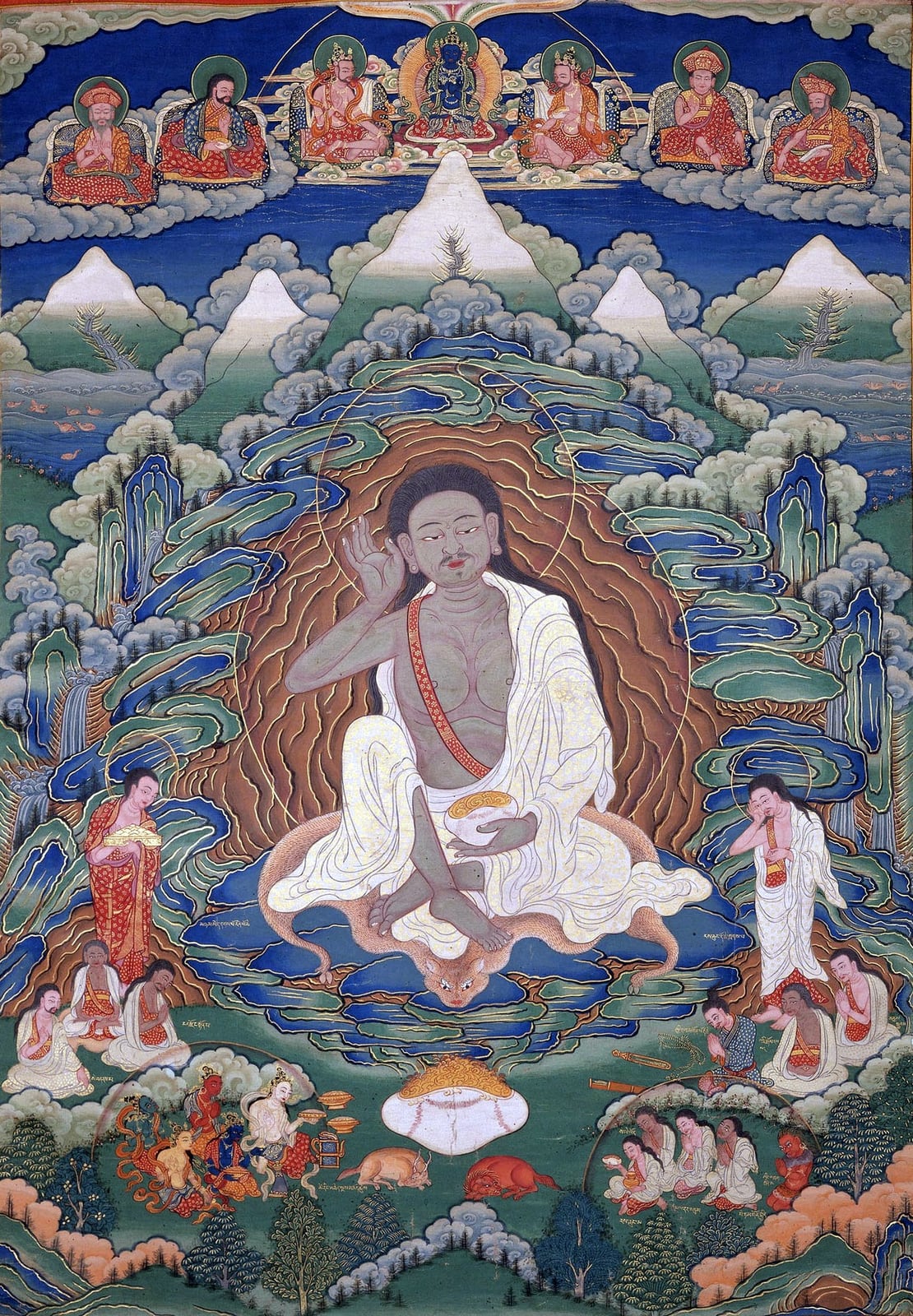
Milarepa
इन पर सहमत: क्या हम स्वतंत्र हैं, या सब कुछ पूर्वनिर्धारित है? · परम सत्य क्या है? क्या ईश्वर है? · मैं कौन हूँ? क्या कोई सच्चा आत्म है?
Śāntideva
इन पर सहमत: मुक्ति या उद्धार कैसे प्राप्त होता है? · परम सत्य क्या है? क्या ईश्वर है? · मैं कौन हूँ? क्या कोई सच्चा आत्म है?
Tsongkhapa
इन पर सहमत: मुक्ति या उद्धार कैसे प्राप्त होता है? · परम सत्य क्या है? क्या ईश्वर है? · मैं कौन हूँ? क्या कोई सच्चा आत्म है?
Siddhartha Gautama, the Buddha
इन पर सहमत: परम सत्य क्या है? क्या ईश्वर है? · मैं कौन हूँ? क्या कोई सच्चा आत्म है? · हम दुःख क्यों भोगते हैं?
इनसे भिन्न सोचते हैं
Francis of Assisi
इन पर टकराव: परम सत्य क्या है? क्या ईश्वर है? · मैं कौन हूँ? क्या कोई सच्चा आत्म है? · मृत्यु के बाद क्या होता है?
Emanuel Swedenborg
इन पर टकराव: परम सत्य क्या है? क्या ईश्वर है? · मैं कौन हूँ? क्या कोई सच्चा आत्म है? · मृत्यु के बाद क्या होता है?
Catherine of Siena
इन पर टकराव: परम सत्य क्या है? क्या ईश्वर है? · मैं कौन हूँ? क्या कोई सच्चा आत्म है? · मृत्यु के बाद क्या होता है?
Augustine of Hippo
इन पर टकराव: परम सत्य क्या है? क्या ईश्वर है? · मैं कौन हूँ? क्या कोई सच्चा आत्म है? · मृत्यु के बाद क्या होता है?
प्रसंग और वृत्तांत
प्रसंग और वृत्तांत
साक्ष्य1223
The two cooks
वृत्तांत का स्रोत: Dōgen's own first-person account in the Tenzo kyōkun (1237), written fourteen years later.
स्रोत: Uchiyama, Kōshō; Wright, Thomas (trad.). Refining Your Life: From the Zen Kitchen to Enlightenment (incluye la traducción del Tenzo kyōkun). Nueva York / Tokio: Weatherhill, 1983. ISBN 9780834801790.
संत-चरित वृत्तांत1225
"Drop off body and mind!"
वृत्तांत का स्रोत: The dialogue appears in Sōtō biographies of the 14th and 15th centuries, particularly Kenzei's chronicle (1452). Scholars (Kim, Heine) treat it as a hagiographic reconstruction of an experience Dōgen mentions without narrating.
स्रोत: Kenzei. Eihei kaisan Dōgen oshō gyōjō Kenzeiki (Crónica de Kenzei), 1452; ed. de Kawamura Kōdō, Shohon taikō Eihei kaisan Dōgen zenji gyōjō Kenzeiki, Tokio: Taishūkan shoten, 1975.
प्रमाणितc. 1236
Coming home with empty hands
वृत्तांत का स्रोत: Eihei kōroku, vol. 1, formal sermon no. 48, in his disciples' compilation; words attributed to Dōgen in a contemporary record.
स्रोत: Leighton, Taigen Dan; Okumura, Shohaku (trads.). Dōgen's Extensive Record: A Translation of the Eihei Kōroku. Boston: Wisdom Publications, 2004 (ed. rev. 2010, ISBN 9780861716708).
संत-चरित वृत्तांतc. 1213–1217
The great doubt of Mount Hiei
वृत्तांत का स्रोत: Kenzei's chronicle (1452) and later Sōtō biographies. Kim and Bodiford read it as a doctrinal reconstruction rather than a biographical memory.
स्रोत: Kenzei. Eihei kaisan Dōgen oshō gyōjō Kenzeiki (Crónica de Kenzei), 1452; ed. de Kawamura Kōdō, Shohon taikō Eihei kaisan Dōgen zenji gyōjō Kenzeiki, Tokio: Taishūkan shoten, 1975.
प्रमाणित1247–1248
Return from Kamakura
वृत्तांत का स्रोत: Eihei kōroku, vol. 3, formal sermon no. 251, delivered on his return; the length of the journey is inferred from the dates of the sermons.
स्रोत: Leighton, Taigen Dan; Okumura, Shohaku (trads.). Dōgen's Extensive Record: A Translation of the Eihei Kōroku. Boston: Wisdom Publications, 2004 (ed. rev. 2010, ISBN 9780861716708).
संत-चरित वृत्तांत1248
The expulsion of Genmyō
वृत्तांत का स्रोत: Kenzei's chronicle (1452), two centuries later. No confirmation in contemporary sources.
स्रोत: Kenzei. Eihei kaisan Dōgen oshō gyōjō Kenzeiki (Crónica de Kenzei), 1452; ed. de Kawamura Kōdō, Shohon taikō Eihei kaisan Dōgen zenji gyōjō Kenzeiki, Tokio: Taishūkan shoten, 1975.
शिक्षाएँ
शिक्षाएँ
वे अवधारणाएँ जो उनके चिंतन को रूप देती हैं, उनके संदर्भ में समझाई गई।
Just sitting (shikantaza)shikantaza
Bendōwa, Fukanzazengi, "Zazengi", "Zanmai ō zanmai", Hōkyōki.
स्रोत: Bielefeldt, Carl. Dōgen's Manuals of Zen Meditation. Berkeley: University of California Press, 1988.
Dropping off body and mind (shinjin datsuraku)shinjin-datsuraku
Hōkyōki, Bendōwa, "Genjōkōan", Eihei kōroku.
स्रोत: Kim, Hee-Jin. Eihei Dōgen: Mystical Realist. Boston: Wisdom Publications, 2004 (1.ª ed. Dōgen Kigen—Mystical Realist, Tucson: University of Arizona Press, 1975). ISBN 9780861713769.
Oneness of practice and realisation (shushō ittō)shusho-itto
Bendōwa (1231); basis of his critique of the Tendai doctrine of original enlightenment.
Actualising the fundamental point (genjōkōan)genjokoan
"Genjōkōan" (1233, revised in 1252).
स्रोत: Tanahashi, Kazuaki (ed.). Treasury of the True Dharma Eye: Zen Master Dogen's Shobo Genzo. Boston: Shambhala, 2010. ISBN 9781590304747.
Being-time (uji)uji
"Uji" (1240); related to "Genjōkōan" and "Busshō".
Thinking not-thinking (hishiryō)hishiryo
Fukanzazengi, "Zazengi" and "Zazenshin".
स्रोत: Bielefeldt, Carl. Dōgen's Manuals of Zen Meditation. Berkeley: University of California Press, 1988.
All existence is buddha-nature (shitsuu busshō)shitsuu-bussho
"Busshō" (1241); critical dialogue with the Tendai doctrine of original enlightenment.
स्रोत: Kim, Hee-Jin. Eihei Dōgen: Mystical Realist. Boston: Wisdom Publications, 2004 (1.ª ed. Dōgen Kigen—Mystical Realist, Tucson: University of Arizona Press, 1975). ISBN 9780861713769.
वीडियो
वीडियो
रिकॉर्डिंग, साक्षात्कार और वृत्तचित्र। वीडियो YouTube से चलते हैं; वे यहाँ संग्रहीत नहीं हैं।
第四章「証」~道元禅師の生涯~
वृत्तचित्र· JA· 2025· 19 min
【公式】大本山永平寺आधिकारिक चैनल
第三章「道」~道元禅師の教え~
वृत्तचित्र· JA· 2025· 5 min
【公式】大本山永平寺आधिकारिक चैनल
【禅のこころ-曹洞宗-】正法眼蔵(法話)
व्याख्यान· JA· 2022· 4 min
【公式】禅のこころ-曹洞宗-आधिकारिक चैनल
[EN] Soto Zen Buddhism, Daihonzan Eiheiji
वृत्तचित्र· EN· 2014· 11 min
SOTOZENNETआधिकारिक चैनल
[ES] Budismo Soto Zen, Daihonzan Eiheiji
वृत्तचित्र· ES· 2013· 11 min
SOTOZENNETआधिकारिक चैनल
[FR] Le Bouddhisme Soto Zen, le Sanctuaire Eiheiji
वृत्तचित्र· FR· 2013· 11 min
SOTOZENNETआधिकारिक चैनल
Philosophy and Philology in Edo Commentaries on Dōgen's Shōbōgenzō
व्याख्यान· EN· 2017· 87 min
SOAS University of Londonआधिकारिक चैनल
Professor T. Griffith Foulk, "Dogen's Genjo Koan" workshop, June 20, 2020
व्याख्यान· EN· 2020· 157 min
Village Zendo
The Life and Times of Dogen: Intro to Dogen 1 of 6
व्याख्यान· EN· 2022· 86 min
Sanshin Zen Community
Le Zen entre deux langues : Le cas de Dôgen (1200-1253) (1) - Jean-Noël Robert (2017-2018)
व्याख्यान· FR· 2022· 63 min
Lettres, langage, philosophie - Collège de Franceआधिकारिक चैनल
Conversación con Dokusho Villalba, maestro zen, traductor de Shobogenzo, de Eihei Dogen
साक्षात्कार· ES· 2023· 30 min
Editorial Kairósआधिकारिक चैनल
चित्रशाला
चित्रशाला
सत्यापित लाइसेंस वाले चित्र। प्रत्येक में उसके रचयिता और श्रेय का उल्लेख सुरक्षित है।
पांडुलिपियाँ
पांडुलिपियाँ
पांडुलिपि-साक्ष्य और प्राचीन पाठ, उनके संरक्षक और अध्ययन की शर्तों सहित।
ZH · Kanji (escritura regular) · 1233 (Tenpuku 1)
普勧坐禅儀 (天福本)
- संरक्षित पाठ-साक्ष्य
- Rollo de 28,8 × 318,7 cm, de mano de Dōgen
- संरक्षक
- Daihonzan Eihei-ji (Eiheiji, Fukui)
- डिजिटलीकरण
- commons.wikimedia.org/wiki/File:Fukan-Zazengi-In…
JA · Kanji y kana · 1241
正法眼蔵 嗣書
- संरक्षित पाठ-साक्ष्य
- Fascículo «Shisho» del Shōbōgenzō
- संरक्षक
- Museo de Historia de la Cultura Zen de la Universidad Komazawa (Tokio)
JA · Kanji y kana · 1240
正法眼蔵 山水経
- संरक्षित पाठ-साक्ष्य
- Fascículo «Sansuikyō» del Shōbōgenzō
- संरक्षक
- Zenkyū-in (Toyohashi)
JA · Kanji y kana · Copia de 1446 a partir de otra de 1420
十二巻本正法眼蔵 (永光寺本)
- संरक्षित पाठ-साक्ष्य
- Único testimonio completo de la serie de doce fascículos y único de «Ippyakuhachi hōmyōmon»
- संरक्षक
- Yōkō-ji (Hakui, Ishikawa)
संबंध
संबंध
प्रभाव, शिष्यत्व और वैचारिक निकटता। प्रमाणित संबंध को विश्लेषण से पहचानी गई समानता से अलग दर्शाया गया है।
इनके शिष्य
Tiantong Rujing
Chinese Caodong master on Mount Tiantong (1225–1227), from whom he received transmission. Dōgen calls him "my late teacher, the old buddha".
प्रमाणित संबंध
इनके शिष्य
Myōzen
Eisai's successor at Kennin-ji; Dōgen's teacher from 1217 and travelling companion to China, where he died in 1225.
प्रमाणित संबंध
इनसे प्रभावित
Myōan Eisai
Founder of Kennin-ji, where Dōgen trained in Rinzai Zen. Whether they actually met is disputed: Eisai died in 1215 and Dōgen's references are indirect.
विश्लेषण से पहचानी गई समानता
इनके गुरु
Koun Ejō
Disciple from 1234, copyist of most Shōbōgenzō fascicles, author of the Shōbōgenzō zuimonki and successor as abbot of Eihei-ji (1253).
प्रमाणित संबंध
इन्हें प्रभावित किया
Keizan Jōkin
Third successor in his lineage (through Ejō and Gikai), founder of Sōji-ji and great propagator of the Sōtō school; the school venerates Dōgen and Keizan as its two founders.
प्रमाणित संबंध
इनसे प्रभावित
Dōgen calls the Sixth Patriarch "Daikan Kōso" and comments on his sayings in several fascicles (for example "Busshō" and "Hokke ten hokke").
प्रमाणित संबंध
इनसे प्रभावित
Founding patriarch of Chan in tradition; Dōgen comments on his transmission of "skin, flesh, bones and marrow" in "Kattō" and his coming from the west in "Soshi seirai i".
प्रमाणित संबंध
इनसे प्रभावित
Dōgen counts him among the Indian patriarchs of his lineage and comments on his figure in "Busshō".
प्रमाणित संबंध
इनके समकालीन
Contemporaries in early Kamakura-period Kyoto and founders of two of the great Japanese schools, with opposite approaches: seated practice versus trust in Amida's power. There is no record that they met.
प्रमाणित संबंध
इनसे मिलते-जुलते विचार
Both think of reality as transformation and distrust fixed categories; an affinity noted by modern interpreters.
विश्लेषण से पहचानी गई समानता
स्रोत
स्रोत
इस प्रविष्टि के लिए देखे गए ग्रंथ-सूची और सूचीपत्र।
- Wikidata, entidad Q318064 «Dōgen» (P31=Q5; 54 enlaces entre wikis; nombre nativo 道元; nacimiento 1200, muerte 1253 en Kioto).
- Kim, Hee-Jin. Eihei Dōgen: Mystical Realist. Boston: Wisdom Publications, 2004 (1.ª ed. Dōgen Kigen—Mystical Realist, Tucson: University of Arizona Press, 1975). ISBN 9780861713769.
- Bodiford, William M. Sōtō Zen in Medieval Japan. Honolulu: University of Hawai'i Press, 1993. ISBN 9780824814823.
- Bodiford, William M. «Textual Genealogies of Dōgen». En Steven Heine (ed.), Dōgen: Textual and Historical Studies. Nueva York: Oxford University Press, 2012, pp. 15–41. ISBN 9780199754472.
- Tanahashi, Kazuaki (ed.). Treasury of the True Dharma Eye: Zen Master Dogen's Shobo Genzo. Boston: Shambhala, 2010. ISBN 9781590304747.
- Leighton, Taigen Dan; Okumura, Shohaku (trads.). Dōgen's Extensive Record: A Translation of the Eihei Kōroku. Boston: Wisdom Publications, 2004 (ed. rev. 2010, ISBN 9780861716708).
- Leighton, Taigen Dan; Okumura, Shohaku (trads.). Dōgen's Pure Standards for the Zen Community: A Translation of Eihei Shingi. Albany: State University of New York Press, 1996. ISBN 9780791427101.
- Bielefeldt, Carl. Dōgen's Manuals of Zen Meditation. Berkeley: University of California Press, 1988.
- Heine, Steven. Did Dōgen Go to China? What He Wrote and When He Wrote It. Nueva York: Oxford University Press, 2006.
- 正法眼藏 (Bendōwa, 75 fascículos y 12 fascículos), texto japonés con colofones de fecha y lugar de cada fascículo. Edición en línea del templo Shōmon-ji (松門寺).
- Wikisource en japonés: «普勸坐禪儀» y «學道用心集», según Eiheiji (ed.), Shōyō daishi shōgyō zenshū, vols. 1 y 3, 1909 (Biblioteca Nacional de la Dieta, NDLJP 823139 y 823141).
- Kenzei. Eihei kaisan Dōgen oshō gyōjō Kenzeiki (Crónica de Kenzei), 1452; ed. de Kawamura Kōdō, Shohon taikō Eihei kaisan Dōgen zenji gyōjō Kenzeiki, Tokio: Taishūkan shoten, 1975.
- Nagatomo, Shigenori. «Japanese Zen Buddhist Philosophy». En Edward N. Zalta (ed.), The Stanford Encyclopedia of Philosophy. Publicado el 28-06-2006; revisión sustancial del 07-03-2024.
- Dumoulin, Heinrich. Zen Buddhism: A History. Vol. 2: Japan. Bloomington: World Wisdom, 2005 (1.ª ed. inglesa 1990). ISBN 9780941532907.
- Wikipedia en inglés, «Shōbōgenzō» (listas de las versiones de 60, 75, 12 y 28 fascículos, basadas en Bodiford 2012), y en japonés, «正法眼蔵» y «道元». Consultadas el 25-10-2026 y contrastadas con s4 y s10.
- Uchiyama, Kōshō; Wright, Thomas (trad.). Refining Your Life: From the Zen Kitchen to Enlightenment (incluye la traducción del Tenzo kyōkun). Nueva York / Tokio: Weatherhill, 1983. ISBN 9780834801790.
- Tanahashi, Kazuaki (ed.). Moon in a Dewdrop: Writings of Zen Master Dōgen. San Francisco: North Point Press, 1985. ISBN 9780865471863.
- Masunaga, Reihō (trad.). A Primer of Sōtō Zen: A Translation of Dōgen's Shōbōgenzō Zuimonki. Honolulu: East-West Center Press, 1971. ISBN 9780824800949.
- Editorial Kairós. Ficha de «Shōbōgenzō. Volumen I», de Eihei Dōgen, trad. de Dokushō Villalba, ISBN 9788499884653 (e-book 9788499885018).
- Daihonzan Eiheiji, sitio oficial del monasterio fundado por Dōgen.
- Sōtōshū Shūmuchō, SOTOZEN-NET, sitio oficial de la escuela Sōtō.
- Watsuji Tetsurō. «Shamon Dōgen» (El monje Dōgen). En Nihon seishinshi kenkyū (Estudios de historia espiritual de Japón). Tokio: Iwanami Shoten, 1926.
- अधिकार-धारक
- Obra en dominio público; cada traducción moderna pertenece a su traductor o editorial. Eihei-ji y la Sōtōshū custodian los manuscritos autógrafos.
- आधिकारिक वेबसाइट
- daihonzan-eiheiji.com/
पुष्टि की प्रतीक्षा में
जो यह प्रविष्टि अभी तक निश्चित नहीं कर सकी है। हम उसे भर देने के बजाय कह देना बेहतर समझते हैं।
- Filiación de Dōgen (Koga Michichika o Horikawa Michitomo como padre) discutida; la ficha sigue la versión tradicional con reservas.
- Fechas: se dan en calendario juliano (19-01-1200 y 22-09-1253); Wikidata registra 1253-09-29, que corresponde al gregoriano proléptico. Revisar la entrada de Wikidata.
- Fascículos sin colofón (serie de 12, «Shōji», «Yuibutsu yobutsu», «Dōshin») registrados con año aproximado (década de 1250); fechas de «Bodaisatta shishōbō» (1243) y «Hokke ten hokke» (1241) tomadas de la tradición, sin ver el colofón.
- Sala de lectura: el Shōbōgenzō solo está en línea en una página única (Shōmon-ji) que reúne todos los fascículos; el importador no puede separarlos. Buscar una edición por fascículos (Wikisource no la tiene aún). No hay traducciones inglesas o españolas en dominio público.
- Sala de lectura: confirmar si la transcripción del Shōmon-ji se basa en una edición crítica moderna con derechos editoriales propios en la UE (se ha registrado sin «caution» por ser texto del siglo XIII).
- ISBN no verificados: Bielefeldt (1988), Heine (2006), Nishijima-Cross (Windbell), Iwanami bunko (Mizuno), traducción italiana de Aldo Tollini; ediciones en ruso, árabe e hindi no localizadas.
- Confirmar la condición de Bien Cultural Importante del autógrafo de «Sansuikyō» (Zenkyū-in) y la signatura del autógrafo de «Shisho» (Universidad Komazawa).
- La autenticidad de «Shōji» y de parte de los poemas del Sanshō dōei es discutida; se mantienen como atribuidos.
- Vídeos: los documentales de France 2 («Sagesses bouddhistes») y la emisión de France Culture «Une vie, une œuvre» (1998) solo están en canales de terceros; no se han incluido.
2026-10-25 को शोधित