बौद्ध धर्म · महायान
Nāgārjuna
नागार्जुन · Nāgārjuna · ཀླུ་སྒྲུབ་ · 龍樹
लगभग 150 – लगभग 250ऐतिहासिकता विवादित
भारतीय बौद्ध दार्शनिक, मध्यमक अर्थात् “मध्यम मार्ग” संप्रदाय के संस्थापक। वे संभवतः 150 और 250 ई. के बीच दक्षिण भारत में रहे, शायद सातवाहन दरबार से संबद्ध होकर। उनकी मूलमध्यमककारिका का प्रतिपादन है कि किसी भी वस्तु का अपना स्वभाव नहीं है, क्योंकि सब कुछ प्रतीत्यसमुत्पन्न है, और यही शून्यता बुद्ध द्वारा उपदिष्ट मध्यम मार्ग है। उनका जीवन केवल संत-चरितों से ज्ञात है, और उनके नाम के अंतर्गत कई परवर्ती लेखकों — तांत्रिकों और रसायनशास्त्रियों — की रचनाएँ एकत्र कर दी गईं।
- कृतियाँ
- 27कृतियाँ
- संस्करण
- 32संस्करण
- उद्धरण
- 9उद्धरण
- वीडियो
- 12वीडियो
- चित्र
- 6चित्र

Nāgārjuna, de la serie de los patriarcas shingon de Tōji · Public domain
उनके अपने शब्दों में
«I bow to the perfect Buddha, the best of speakers, who taught dependent origination —without cessation or arising, without annihilation or permanence, without unity or plurality, without coming or going—, the pacification of conceptual proliferation, the auspicious.»Mūlamadhyamakakārikā, estrofas de dedicatoria; texto sánscrito de la ed. de La Vallée Poussin (1903–1913); traducciones española e inglesa del investigador

शुरुआत के लिए एक रचना
Fundamental Verses on the Middle Wayमूल विचार
Emptiness (śūnyatā): For Nāgārjuna, to say that something is empty means that it lacks intrinsic nature (svabhāva), not that it does not exist.
संदर्भ में देखें
जीवनी
5 मिनट का पाठ
स्पैनिश मूल से सहायता-प्राप्त अनुवाद, मातृभाषी अनुवादक द्वारा समीक्षा लंबित।
“द्वितीय बुद्ध”
स्वयं बुद्ध के बाद किसी भी बौद्ध चिंतक को नागार्जुन जितनी व्यापक प्रामाणिकता प्राप्त नहीं हुई। तिब्बत, चीन, कोरिया और जापान की परंपराएँ उन्हें मध्यमक — “मध्यम मार्ग के संप्रदाय” — के संस्थापक के रूप में पूजती हैं और प्रायः द्वितीय बुद्ध कहती हैं; ज़ेन उन्हें अपने भारतीय कुलगुरुओं में गिनता है और जापान का गुह्य बौद्ध धर्म अपने कुलगुरुओं में। उनकी प्रमुख कृति मूलमध्यमककारिका एशिया के उन दार्शनिक ग्रंथों में है जिन पर सबसे अधिक टीकाएँ लिखी गईं। फिर भी उनके जीवन के बारे में निश्चित रूप से लगभग कुछ भी ज्ञात नहीं है: यान वेस्टरहॉफ़ विद्वानों की सहमति को इस प्रकार समेटते हैं कि वे लगभग 150–250 ई. में, संभवतः दक्षिण भारत में, रहे, और शेष सब कुछ जानने के लिए जासूसी जैसी खोजबीन करनी पड़ती है।
जो जाना जा सकता है
सबसे ठोस सूत्र उनकी अपनी रचनाओं से मिलते हैं। आलोचना जिन कृतियों को सबसे अधिक विश्वास के साथ उनकी मानती है, उनमें से दो — रत्नावली और सुहृल्लेख (“मित्र को पत्र”) — एक राजा को संबोधित हैं, और परंपरा इस शासक की पहचान सातवाहन वंश के उस नरेश से करती है जिसके वंश ने पहली से तीसरी शताब्दी तक दक्कन और आंध्र के तट पर राज्य किया। जोसेफ़ वाल्सर ने इस परिकल्पना को और स्पष्ट किया है: वह राजा संभवतः दूसरी शताब्दी के अंत के यज्ञश्री सातकर्णि थे, और नागार्जुन एक रूढ़िवादी संघ के भिक्षु थे, जो अभी तक शत्रुतापूर्ण वातावरण में महायान के नए सूत्रों की वैधता का पक्ष रख रहे थे। इयन मैबेट ने ध्यान दिलाया कि यह पुनर्रचना विवादास्पद पहचानों पर टिकी है, और तिथि अब भी एक अनुमानित अवधि है, कोई निश्चित तथ्य नहीं। आंध्र का नागार्जुनकोंडा स्थल एक परवर्ती परंपरा के कारण उनके नाम से जुड़ा है; इसका कोई पुरातात्त्विक प्रमाण नहीं कि वे वहाँ रहे।
किंवदंतियों में जीवन
सबसे प्राचीन जीवनी, जिसे कुमारजीव ने लगभग 405 ई. में चीन में अनूदित या रचित किया, स्वयं एक संत-चरित है। वह बताती है कि नागार्जुन दक्षिण के एक ब्राह्मण परिवार में जन्मे, बचपन में ही वेदों और विद्याओं में पारंगत हो गए, और तीन मित्रों के साथ राजमहल में घुसने के लिए अदृश्य होने का एक मंत्र सीखा; मित्र तलवार से मारे गए और वे स्वयं बाल-बाल बचे, तब उन्होंने जाना कि तृष्णा ही दुःख का मूल है और वे भिक्षु बन गए। फिर उन्होंने भारत के सारे सूत्र पढ़ डाले, और जलतल के नीचे के लोक के सर्पों, नागों, का एक राजा उन्हें अपने महल में ले गया ताकि वहाँ सुरक्षित रखे गए महायान सूत्र उन्हें सिखाए। अंत में, यह जानकर कि एक प्रतिद्वंद्वी आचार्य नहीं चाहता कि वे और जिएँ, उन्होंने स्वयं को एक कोठरी में बंद कर लिया और “जैसे सिकाडा अपनी केंचुल उतार देता है, वैसे ही देह छोड़ दी”। यह कथा उनके नाम की व्याख्या भी करती है: वे एक अर्जुन वृक्ष के नीचे जन्मे और नागों की कृपा से अपने मार्ग तक पहुँचे।
दो शताब्दियों बाद, तीर्थयात्री ह्वेनसांग ने कोसल राज्य में एक दूसरा रूप सुना: नागार्जुन ने सातवाहन राजा को एक ऐसा रसायन दिया था जिसने दोनों के जीवन को परस्पर बाँध दिया, और राज्य पाने को अधीर युवराज ने उनसे उनका सिर माँग लिया; आचार्य ने सूखी घास के एक तिनके से अपना सिर काट दिया। बु-स्तोन द्वारा 1322 में व्यवस्थित तिब्बती परंपरा उन्हें छह सौ वर्ष की आयु, नालंदा विश्वविद्यालय का आचार्यत्व और रसायन-विद्या पर अधिकार प्रदान करती है। ये कथाएँ नागार्जुन की प्रतिष्ठा के बारे में बहुत कुछ कहती हैं, पर उनके जीवन के बारे में कुछ भी निश्चित नहीं।
अनेक नागार्जुन
इनमें से कुछ किंवदंतियाँ एक पुराने भ्रम से उपजी हैं। नागार्जुन नाम से अलग-अलग शताब्दियों में कई लोगों ने लिखा: सातवीं या आठवीं शताब्दी के एक तांत्रिक आचार्य, जिन्होंने गुह्यसमाज पर टीकाएँ लिखीं और जिनकी गणना चौरासी महासिद्धों में होती है; एक रसायनशास्त्री, जिन्हें रसरत्नाकर का रचयिता माना जाता है; और एक वैद्य, जिनके नाम योगशतक है। परंपरा ने इन सबको मिलाकर एक दीर्घायु और चमत्कारी व्यक्तित्व बना दिया। क्रिश्चियन लिंडटनर और डेविड सेफ़र्ट रुएग ने दार्शनिक के ग्रंथ-संग्रह को सीमांकित करने के लिए सैद्धांतिक और शैलीगत कसौटियाँ सुझाई हैं, और वेस्टरहॉफ़ सावधान करते हैं कि प्रतिष्ठित नाम नई रचनाओं को चुंबक की तरह अपनी ओर खींचते थे।
रचनाएँ
निर्विवाद केंद्र पद्य में लिखे तर्कप्रधान ग्रंथों का एक समूह है, जिसे तिब्बती परंपरा “युक्ति-संग्रह” कहती है: सत्ताईस अध्यायों वाली मूलमध्यमककारिका; शून्यतासप्तति; युक्तिषष्टिका; अपनी स्वोपज्ञ टीका सहित विग्रहव्यावर्तनी (“आपत्तियों का निराकरण”); न्याय दर्शन की पदार्थ-व्यवस्था के विरुद्ध वैदल्यप्रकरण; और रत्नावली। इनके अतिरिक्त उन्हें स्तोत्र (स्तव), सुहृल्लेख, सूत्रों का एक संकलन और कई लघु ग्रंथ भी समर्पित किए जाते हैं। चीनी परंपरा ने जिस विशाल विश्वकोश को उनके नाम से जोड़ा — कुमारजीव द्वारा अनूदित महाप्रज्ञापारमिताशास्त्र — वह लगभग निश्चित रूप से किसी अन्य लेखक की रचना है: उसके अनुवादक एटिएन लामोत ने उसे सर्वास्तिवाद संप्रदाय में दीक्षित उत्तर-पश्चिम भारत के एक भिक्षु की कृति माना।
चिंतन
नागार्जुन कोई नया सिद्धांत प्रस्तुत नहीं करते: वे बुद्ध की एक पुरानी अंतर्दृष्टि, प्रतीत्यसमुत्पाद, को उसकी चरम परिणति तक ले जाते हैं। यदि जो कुछ भी है, वह कारणों, अवयवों और प्रज्ञप्तियों पर निर्भर होकर उत्पन्न होता है, तो किसी भी वस्तु का ऐसा स्वभाव नहीं है जो अपने-आप में विद्यमान हो। इस अभाव को वे शून्यता कहते हैं, और अपनी कृति की सबसे अधिक उद्धृत कारिका में घोषित करते हैं कि जो प्रतीत्यसमुत्पाद है, वही शून्यता है; वही उपादाय-प्रज्ञप्ति है और वही मध्यमा प्रतिपत् है। शून्यता अभाव-मात्र नहीं है: वही परिवर्तन, कार्य-कारण, दुःख और मुक्ति को संभव बनाती है, जो वस्तुओं के अपरिवर्तनीय सार होने पर असंभव होते। यह दिखाने के लिए कारिका कार्य-कारण, गति, काल, आत्मा, कर्म और यहाँ तक कि बुद्ध और निर्वाण की भी परीक्षा करती है, और उन्हें स्थिर करने का दावा करने वाले प्रत्येक सिद्धांत को प्रसंग द्वारा असंगति तक पहुँचा देती है।
यह पद्धति दो सत्यों के भेद पर टिकी है: एक संवृति-सत्य, जो लोक और भाषा का सत्य है और जिसके बिना परमार्थ की शिक्षा नहीं दी जा सकती; और दूसरा परमार्थ-सत्य, जो हर स्वभाव की शून्यता है। इसी से उनका यह कथन निकलता है कि संसार और निर्वाण में रत्ती भर भी भेद नहीं है, और उनकी यह प्रसिद्ध चेतावनी कि जो शून्यता को ही एक और दृष्टि बना लेता है, वह असाध्य है। विग्रहव्यावर्तनी में वे घोषित करते हैं कि उनकी कोई प्रतिज्ञा नहीं है, और इसीलिए उनका खंडन नहीं किया जा सकता; व्याख्याकार आज भी बहस करते हैं कि यह संशयवाद है, भाषा की आलोचना है या आधारहीन सत्तामीमांसा।
विरासत
उनके शिष्य आर्यदेव ने उनके कार्य को आगे बढ़ाया, और भारत में बुद्धपालित, भावविवेक और चंद्रकीर्ति की व्याख्याओं से वे शाखाएँ निकलीं जिन्हें तिब्बती आगे चलकर प्रासंगिक और स्वातंत्रिक कहने वाले थे। कुमारजीव ने कारिका का एक टीका सहित चीनी में अनुवाद किया और इस प्रकार त्रिशास्त्र संप्रदाय की नींव रखी; ज़ेन उन्हें अपना चौदहवाँ कुलगुरु मानता है, और दोगेन ने शोबोगेंज़ो में उन पर पृष्ठ लिखे। तिब्बत में चोंखापा ने कारिका पर अपनी टीका को गेलुग संप्रदाय का आधार बनाया, और वर्तमान दलाई लामा नियमित रूप से उसकी शिक्षा देते हैं। बीसवीं शताब्दी के अंत से जे गारफ़ील्ड और स्वयं वेस्टरहॉफ़ जैसे विश्लेषणात्मक दार्शनिक उन्हें समकालीन तत्त्वमीमांसा के एक संवादी के रूप में पढ़ते हैं।
स्रोत: Westerhoff, Jan. Nāgārjuna's Madhyamaka: A Philosophical Introduction. Nueva York: Oxford University Press, 2009. ISBN 9780195375213. · Walser, Joseph. Nāgārjuna in Context: Mahāyāna Buddhism and Early Indian Culture. Nueva York: Columbia University Press, 2005. ISBN 9780231131643. · Lindtner, Christian. Nagarjuniana: Studies in the Writings and Philosophy of Nāgārjuna. Copenhague: Akademisk Forlag, 1982 (Indiske Studier 4); reimpr. Delhi: Motilal Banarsidass, 1987. ISBN 9788750023852. · Ruegg, David Seyfort. The Literature of the Madhyamaka School of Philosophy in India. Wiesbaden: Otto Harrassowitz, 1981 (A History of Indian Literature VII, 1). · Beal, Samuel (trad.). Si-Yu-Ki: Buddhist Records of the Western World, translated from the Chinese of Hiuen Tsiang (A.D. 629). 2 vols. Londres: Trübner, 1884; vol. II, libro X (reino de Kiao-sa-lo / Kosala).
कालक्रम
जीवन, वर्ष-दर-वर्ष
प्रत्येक बिंदु एक प्रमाणित घटना है। उसे स्रोत और निश्चितता के स्तर सहित पढ़ने के लिए क्लिक करें।
लगभग 150Sur de la India
Birth (approximate date)
The usual scholarly range (150–250). Kumārajīva has him born into a brahmin family of southern India, under an arjuna tree.
विवादितWesterhoff, Jan. «Nāgārjuna». En Edward N. Zalta y Uri Nodelman (eds.), The Stanford Encyclopedia of Philosophy, primera publicación 10 de febrero de 2010; revisión sustancial 31 de mayo de 2026.
उनके निधन के बाद
- लगभग 405 – 409Kumārajīva: the biography and the translations
- लगभग 431The Letter to a Friend in Chinese
- लगभग 541The Vigrahavyāvartanī in Chinese
- लगभग 600 – 650Candrakīrti and the Prasannapadā
- लगभग 640Xuanzang records the Kosala legend
- 821The Tōji portrait
- 1241Dōgen and "Buddha-nature"
- 1322Bu ston's history
- 1407Tsongkhapa's Ocean of Reasoning
- 1903 – 1913La Vallée Poussin's edition
- 1944 – 1980Lamotte translates the Great Treatise
- 1982Lindtner's Nagarjuniana
लगभग 150
Birth (approximate date)
The usual scholarly range (150–250). Kumārajīva has him born into a brahmin family of southern India, under an arjuna tree.
विवादित
लगभग 175 – 200
The Precious Garland to a Sātavāhana king
He composes verse advice for a king whom Walser probably identifies with Yajña Śrī Sātakarṇi (late 2nd c.); the identification is disputed (Mabbett).
संभावित
लगभग 190
The Fundamental Verses on the Middle Way
Composition of the Mūlamadhyamakakārikā, core of the corpus of reasoning and foundation of the Madhyamaka school. Date only approximate.
संभावित
लगभग 250
Death (approximate date)
Kumārajīva says he shut himself in a cell and left his body; Xuanzang, that he cut off his own head with a blade of grass at a prince's request. No reliable data.
विवादित
लगभग 405 – 409
Kumārajīva: the biography and the translations
In Chang'an, Kumārajīva translates the Treatise on the Great Perfection of Wisdom (402–406), the Middle Treatise with Piṅgala's commentary (409), the Twelve Gate Treatise and the Biography of Nāgārjuna, which found the Chinese Three Treatise school.
प्रमाणित
लगभग 431
The Letter to a Friend in Chinese
Guṇavarman translates the Suhṛllekha into Chinese (T1672); another version by Saṅghavarman follows in 434 (T1673).
प्रमाणित
लगभग 541
The Vigrahavyāvartanī in Chinese
Vimokṣaprajñā and Gautama Prajñāruci translate The Dispeller of Disputes (T1631).
प्रमाणित
लगभग 600 – 650
Candrakīrti and the Prasannapadā
Candrakīrti comments on the Verses in the Prasannapadā, the only commentary surviving in Sanskrit, and defends the reading the Tibetans will call Prāsaṅgika.
संभावित
लगभग 640
Xuanzang records the Kosala legend
In his travel account Xuanzang narrates Nāgārjuna's friendship with King Sātavāhana, the elixir and his death at the prince's request.
प्रमाणित
821
The Tōji portrait
Kūkai brings to Japan and has completed the series of portraits of the Shingon patriarchs, Nāgārjuna among them, preserved at the Tōji temple in Kyoto.
प्रमाणित
1241
Dōgen and "Buddha-nature"
In the Busshō fascicle of the Shōbōgenzō, Dōgen comments on the Chan story in which Nāgārjuna manifests as the disc of the full moon.
प्रमाणित
1322
Bu ston's history
Bu ston Rin chen grub fixes the Tibetan life of Nāgārjuna: six hundred years, Nālandā, the nāgas and alchemy.
प्रमाणित
1407
Tsongkhapa's Ocean of Reasoning
Tsongkhapa composes his great commentary on the Verses, the basis of the Gelug reading of Madhyamaka.
संभावित
1903 – 1913
La Vallée Poussin's edition
Louis de La Vallée Poussin publishes in Saint Petersburg the Sanskrit text of the Verses with the Prasannapadā (1903–1913), the basis of modern studies.
प्रमाणित
1944 – 1980
Lamotte translates the Great Treatise
Étienne Lamotte begins the French translation of the Treatise on the Great Perfection of Wisdom (5 vols., 1944–1980) and questions its attribution to Nāgārjuna.
प्रमाणित
1982
Lindtner's Nagarjuniana
Christian Lindtner publishes his study of the authenticity of the corpus, which with Ruegg (1981) delimits the philosopher's works.
प्रमाणित
कृतियाँ
आवश्यक कृतियाँ
वे कृतियाँ जिनके बिना उनकी विरासत को समझा नहीं जा सकता।
लिखित कृति · लगभग 190
Fundamental Verses on the Middle Way
मूलमध्यमककारिका (Mūlamadhyamakakārikā); tib. Dbu ma rtsa ba'i tshig le'ur byas pa shes rab; chin. 中論 Zhōnglùn
Some 450 verses in twenty-seven chapters examining one by one the fundamental concepts of Buddhist philosophy and of its rivals —conditions, motion, the senses, aggregates, elements, action, agent, time, the Tathāgata, the four noble truths, nirvāṇa— to show that none withstands analysis if it is assumed to have intrinsic nature. Chapter 24 identifies emptiness with dependent origination and the middle way, and chapter 25 denies any difference between saṃsāra and nirvāṇa. Commented on in India by Buddhapālita, Bhāviveka and Candrakīrti, in China by Piṅgala (via Kumārajīva) and in Tibet by Tsongkhapa, it is the base text of all Madhyamaka.
7 संस्करण

लिखित कृति
The Dispeller of Disputes (Vigrahavyāvartanī)
विग्रहव्यावर्तनी (Vigrahavyāvartanī); tib. Rtsod pa bzlog pa; chin. 迴諍論 Huízhèng lùn
Seventy verses with a prose auto-commentary, preserved in Sanskrit, Tibetan and Chinese. Nāgārjuna sets out twenty objections from a Buddhist realist and a Nyāya logician —if everything is empty, so is your argument, which therefore proves nothing— and answers them: an empty statement can do its work as one magically created man stops another, and he defends no thesis that could be refuted. It also contains a critique of the means of valid knowledge of Indian epistemology.
3 संस्करण

लिखित कृति
Precious Garland (Ratnāvalī)
रत्नावली (Ratnāvalī, Rājaparikathā-ratnamālā); tib. Rgyal po la gtam bya ba rin po che'i phreng ba; chin. 寶行王正論
Some five hundred verses in five chapters addressed to a king, probably a Sātavāhana. It combines the exposition of emptiness and of the bodhisattva path with concrete advice on government: generosity to the poor, hospitals and rest-houses, clemency towards prisoners, protection of the monastic community. It defends the authenticity of the Great Vehicle sūtras. Walser uses it as the main document for placing Nāgārjuna in his historical context.
2 संस्करण

पत्राचार
Letter to a Friend (Suhṛllekha)
सुहृल्लेख (Suhṛllekha); tib. Bshes pa'i spring yig; chin. 龍樹菩薩為禪陀迦王說法要偈 / 勸發諸王要偈
A letter in some 123 verses to a royal friend, identified by tradition as a Sātavāhana (the Chinese title transcribes his name as 禪陀迦). It sums up Buddhist ethics for a layman —the six perfections, the precepts, guarding the senses—, describes the sufferings of the cycle of existences and the hells, and exhorts to the practice of the path. It is one of the most widely read texts of Tibetan Buddhism.
3 संस्करण
संपूर्ण कृतित्व (27)

Seventy Verses on Emptiness
Nāgārjuna
Sixty Verses on Reasoning
The Conscious LibrarySixty Verses on Reasoning

Crushing the Categories (Vaidalyaprakaraṇa)
Nāgārjuna
Proof of Convention (lost)
The Conscious LibraryProof of Convention (lost)

The Four Hymns (Catuḥstava)

Verses on the Heart of Dependent Origination
Nāgārjuna
Compendium of Sūtras
The Conscious LibraryCompendium of Sūtras
Nāgārjuna
Treatise on the Requisites of Awakening
The Conscious LibraryTreatise on the Requisites of Awakening
Nāgārjuna
Commentary on the Awakening Mind
The Conscious LibraryCommentary on the Awakening Mind
Nāgārjuna
Treatise on the Great Perfection of Wisdom
The Conscious LibraryTreatise on the Great Perfection of Wisdom
Nāgārjuna
Commentary on the Ten Stages
The Conscious LibraryCommentary on the Ten Stages
Nāgārjuna
Twelve Gate Treatise
The Conscious LibraryTwelve Gate Treatise
Nāgārjuna
Akutobhayā ("Fearless" commentary on the Verses)
The Conscious LibraryAkutobhayā ("Fearless" commentary on the Verses)
Twenty Verses on the Great Vehicle
Nāgārjuna
Treatise of One Verse
The Conscious LibraryTreatise of One Verse
Nāgārjuna
Heart of Means Treatise
The Conscious LibraryHeart of Means Treatise
Nāgārjuna
Hymn to the Dharmadhātu
The Conscious LibraryHymn to the Dharmadhātu
Nāgārjuna
Treatise on Transition between Existences
The Conscious LibraryTreatise on Transition between Existences
Nāgārjuna
The Staff of Wisdom (maxims)
The Conscious LibraryThe Staff of Wisdom (maxims)
Nāgārjuna
Compendium of Doctrinal Terms
The Conscious LibraryCompendium of Doctrinal Terms
Nāgārjuna
The Five Stages (Pañcakrama)
The Conscious LibraryThe Five Stages (Pañcakrama)
Nāgārjuna
Rasaratnākara (alchemical treatise)
The Conscious LibraryRasaratnākara (alchemical treatise)
Nāgārjuna
Yogaśataka (a hundred medical formulas)
The Conscious LibraryYogaśataka (a hundred medical formulas)
वचन
किसी निश्चित कृति में स्थित वचन। प्रत्येक के साथ उसका स्रोत और विश्वसनीयता का स्तर है।
I bow to the perfect Buddha, the best of speakers, who taught dependent origination —without cessation or arising, without annihilation or permanence, without unity or plurality, without coming or going—, the pacification of conceptual proliferation, the auspicious.anirodham anutpādam anucchedam aśāśvatam / anekārtham anānārtham anāgamam anirgamam // yaḥ pratītyasamutpādaṃ prapañcopaśamaṃ śivam / deśayām āsa saṃbuddhas taṃ vande vadatāṃ varam //
सत्यापितMūlamadhyamakakārikā, estrofas de dedicatoria; texto sánscrito de la ed. de La Vallée Poussin (1903–1913); traducciones española e inglesa del investigador
अप्रामाणिक या विवादित आरोपण वाले उद्धरण (2)
«Everything is empty; therefore nothing exists.»
A nihilist summary circulating under his name which he expressly rejects: for Nāgārjuna emptiness is dependent origination, not non-existence (MMK 24.18), and the Verses fault both "it exists" and "it does not exist" (15.7–15.10). His opponents already ascribed this nihilism to him, and the Vigrahavyāvartanī answers it.
«Things derive their being and nature by mutual dependence and are nothing in themselves.»
A sentence widely spread on English quotation sites under his name and without reference. It is a modern paraphrase of the doctrine, not a translation of any verse that can be located in the corpus.
अंतिम शब्द
परस्पर विरोधी संस्करण
«"Would it please you that I remain long in the world?"»汝樂我久住世不
There is no historical record of his last words, only incompatible hagiographic versions. In the Biography translated by Kumārajīva (c. 405, T2047), Nāgārjuna addresses this question to a Lesser Vehicle master who envied him; on his answer ("truly not"), he withdraws to a cell, and his disciples, forcing the door, find only the abandoned body "like a cicada's skin". Xuanzang (7th c.) relates instead that the crown prince of King Sātavāhana asked him for his head and that he cut it off with a blade of dry grass. The Tibetan tradition (Bu ston) records variants of this second version.
स्रोत: Kumārajīva (trad.). Longshu pusa zhuan 龍樹菩薩傳 (Biografía del bodhisattva Nāgārjuna), c. 405. Taishō Shinshū Daizōkyō, vol. 50, n.º 2047; texto en Wikisource en chino.
पूछें
उनकी कृतियाँ क्या उत्तर देती हैं
मानवता के बारह महान प्रश्न और उनके ग्रंथ उनका जो उत्तर देने देते हैं, संदर्भों सहित। हम कभी उनके मुख में अपने शब्द नहीं रखते।
परम सत्य क्या है? क्या ईश्वर है?
Neither creator nor Absolute: all is empty because it arises dependently
कोई सृष्टिकर्ता ईश्वर नहींउनके सिद्धांत से निष्कर्षित
Nāgārjuna does not discuss the existence of God in the Fundamental Verses on the Middle Way, but his analysis leaves no room for a creator. The first verse of chapter 1 denies that anything arises from itself, from another, from both or without a cause: a god who produced the world would be an «other» cause endowed with its own nature, which is precisely what the treatise refutes. Nor does he replace God with an impersonal Absolute. Emptiness is not a background reality but the name of dependent origination (24.18), and of whoever turns it into a view he says that they are incurable (13.8). The ultimate, according to the dedication, is the stilling of conceptual proliferation. His work allows one to answer that liberation depends on no supreme being, but on understanding how things arise.
इस प्रश्न की अन्य गुरुओं से तुलना करेंमैं कौन हूँ? क्या कोई सच्चा आत्म है?
Neither the self nor its negation has its own existence
कोई स्थायी आत्म नहींस्पष्ट रूप से कहा है
Chapter 18 of the Fundamental Verses on the Middle Way examines the self (ātman). If the self were identical with the aggregates, it would arise and cease with them; if it were different, it would lack the characteristics of the aggregates and could not be known. It is found neither way, and when the «I» and the «mine» cease, clinging ceases. But Nāgārjuna does not turn the absence of self into a metaphysical thesis: in 18.6 he recalls that the buddhas sometimes taught the self, sometimes non-self, and sometimes that there is neither self nor non-self, according to what each listener needed. The self exists only as a conventional designation dependent on the aggregates. In the Precious Garland he applies the same analysis to the person made of the six elements: apart from them, it is not found.
इस प्रश्न की अन्य गुरुओं से तुलना करेंहम दुःख क्यों भोगते हैं?
Karma and afflictions arise from conceptual construction; they cease in emptiness
तृष्णा और आसक्तिस्पष्ट रूप से कहा है
Nāgārjuna gives a precise genealogy of suffering in verse 18.5 of the Fundamental Verses: liberation comes with the end of karma and afflictions; karma and afflictions proceed from conceptual constructions; these from proliferation, and proliferation ceases in emptiness. Chapter 26 runs through the twelve links of dependent origination, where ignorance sets the formations in motion and clinging feeds rebirth. Chapter 12 adds that suffering is not made by oneself, nor by another, nor by both, nor without cause: it too lacks its own existence. We suffer because we cling to things as though they existed by themselves; clinging is the visible symptom of that underlying ignorance, and it disappears when one sees that nothing has such existence.
इस प्रश्न की अन्य गुरुओं से तुलना करेंमृत्यु के बाद क्या होता है?
One is reborn through karma, though no one with own-existence transmigrates
कर्म के अनुसार पुनर्जन्मस्पष्ट रूप से कहा है
Nāgārjuna assumes the Buddhist framework of rebirth and defends it at the conventional level. In the Letter to a Friend he describes to the king the destinies of the hells, hungry ghosts and animals to urge him to right conduct, and in the Precious Garland he links the actions of this life to future births. But in the Fundamental Verses he subjects the same process to analysis: chapter 16 shows that, if there were a self or formations with their own existence, they could not transmigrate, and chapter 27 rejects both that the future self is identical to the present one and that it is different. Rebirth is a continuity of causes and effects without a traveller passing from one life to another. Liberation consists in that continuity ceasing to be fed.
इस प्रश्न की अन्य गुरुओं से तुलना करेंमुक्ति या उद्धार कैसे प्राप्त होता है?
Liberation comes when conceptual proliferation ceases in emptiness
प्रत्यक्ष ज्ञान सेस्पष्ट रूप से कहा है
For Nāgārjuna, what liberates is understanding. Verse 18.5 of the Fundamental Verses formulates it as a chain: with the end of karma and afflictions comes liberation; these are born of conceptual constructions, which are born of proliferation, and proliferation ceases in emptiness. The instrument is analysis: examining causes, motion, self, time or nirvāṇa until one sees that nothing stands by itself. This knowledge is not one more thesis; emptiness is the relinquishing of all views (13.8). The Precious Garland and the Letter to a Friend, addressed to a king, complete the picture: generosity, ethics and patience prepare the ground, and wisdom cuts the root. Without the conventional the ultimate is not taught, and without the ultimate nirvāṇa is not attained (24.10).
इस प्रश्न की अन्य गुरुओं से तुलना करेंक्या गुरु आवश्यक है?
He venerates the Buddha as teacher but develops no doctrine of the spiritual guide
इस पर कुछ नहीं कहा
Nāgārjuna's securely attributed works do not deal with the relationship between master and disciple. What they do is place all teaching under the Buddha's authority. The Fundamental Verses open with a reverence to «the best of speakers», who taught dependent origination, and close with another to Gautama, who taught the good Dharma for abandoning all views. Chapter 24 explains that the buddhas' teaching rests on two truths and that without the conventional, that is, without words, teachers and texts, the ultimate is not taught. The Precious Garland and the Letter to a Friend also show his own practice as adviser to a king. From this one can infer that transmission matters, but not a theory of the master.
इस प्रश्न की अन्य गुरुओं से तुलना करेंक्या संसार वास्तविक है?
Dependent origination we call emptiness: that is the middle way
बिना सार के कारणों का जालस्पष्ट रूप से कहा है
Nāgārjuna's answer is the classic formulation of this stance. The Fundamental Verses begin by denying that anything arises from itself, from another, from both or without a cause (1.1), and culminate in 24.18: dependent origination we call emptiness, which is a dependent designation and is the middle way. The world is not unreal: it functions, produces effects, and karma and practice act within it. What it lacks is its own existence (svabhāva). Hence Nāgārjuna rejects both «it exists» and «it does not exist», as did the Buddha in the instruction to Kātyāyana (15.7). Conventional truth describes the world as it operates; ultimate truth shows that nothing in it stands alone. And nothing distinguishes saṃsāra from nirvāṇa (25.19): there is no other world behind this one.
इस प्रश्न की अन्य गुरुओं से तुलना करेंप्रेम क्या है?
Compassion and emptiness together: giving, caring and aspiring to the good of all
असीम करुणास्पष्ट रूप से कहा है
The Fundamental Verses do not speak of love; the works addressed to a king do. The Precious Garland presents the bodhisattva path as a union of wisdom and compassion, and asks the sovereign for generosity towards the poor, the sick, travellers and prisoners, care for animals and a justice tempered by mercy. In its last chapter it proposes aspirations in which the practitioner wishes to be, for all beings, as useful as earth, water or air. Compassion does not contradict emptiness: precisely because beings suffer without knowing that nothing has its own existence, they deserve help, and the Letter to a Friend recommends cultivating love, compassion, joy and equanimity without limit. To love is to wish actively that all be freed from suffering.
इस प्रश्न की अन्य गुरुओं से तुलना करेंक्या हम स्वतंत्र हैं, या सब कुछ पूर्वनिर्धारित है?
Agent and action depend on each other; neither exists by itself
कोई कर्ता नहींस्पष्ट रूप से कहा है
Chapter 8 of the Fundamental Verses examines agent and action and concludes that the agent depends on the action and the action on the agent; there is no other way to establish them (8.12). A doer with its own existence, prior to its acts and able to choose them from outside the web of conditions, does not hold up. This does not abolish responsibility. Chapter 17 defends the continuity of karma against those who think it incompatible with emptiness, and chapter 24 warns that it is whoever denies emptiness, not whoever affirms it, who destroys causality and practice. On the conventional level one acts and reaps fruits; on the ultimate, agents, acts and fruits are like a city of gandharvas, a mirage or a dream (17.33).
इस प्रश्न की अन्य गुरुओं से तुलना करेंध्यान या प्रार्थना क्यों करें?
Meditating is analysing until conceptual proliferation is stilled
यथार्थ को जैसा है वैसा देखनाउनके सिद्धांत से निष्कर्षित
Nāgārjuna wrote no meditation manuals, but his major work is itself a contemplative exercise. The Fundamental Verses examine causality, motion, the senses, the self, time and nirvāṇa itself, and in each chapter lead one to see that nothing stands by itself. This analysis does not seek to build a thesis but to still conceptual proliferation, which is how the dedication defines the auspicious. The Letter to a Friend, addressed to a king, also recommends the common practices: mindfulness of the body, meditation on impermanence and the four boundless abodes. Meditation serves, in short, to see things as they are, empty and dependent, and to stop clinging to them. Prayer hardly appears, except in the hymns of devotion to the Buddha.
इस प्रश्न की अन्य गुरुओं से तुलना करेंक्या बुद्धि परम को जान सकती है?
Reason undoes all views, its own included: I have no thesis
परम मन से परे हैस्पष्ट रूप से कहा है
Nāgārjuna is one of the most rigorous dialecticians in the history of philosophy, and he uses reason to show its own limits. The Fundamental Verses examine each concept, cause, motion, time, until it falls into contradiction, often through the tetralemma: neither is, nor is not, nor both, nor neither. In the Refutation of Objections he declares that he holds no thesis and that, therefore, no fault can be laid against him (29). Emptiness is the relinquishing of all views, and whoever makes it a view is incurable (13.8). But reason is not despised: without relying on the conventional the ultimate is not taught (24.10). It leads to the threshold; the ultimate is the stilling of conceptual proliferation, which no argument contains.
इस प्रश्न की अन्य गुरुओं से तुलना करेंसंसार से हटें या उसे बदलें?
He advises a king: rule with compassion, care for the poor, the sick and prisoners
समाज को व्यवस्थित करनास्पष्ट रूप से कहा है
Nāgārjuna was a monk and his philosophical work does not deal with politics, but two texts of accepted attribution are addressed to a sovereign, probably of the Sātavāhana dynasty. The Precious Garland devotes much of its fourth chapter to good government: it asks the king to found hospices, rest houses and wells along the roads, to attend to the blind, the sick, the poor and the destitute, to care for animals, to treat prisoners with clemency and to appoint upright and wise ministers. It warns him that a kingdom ruled against the Dharma is lost. The Letter to a Friend joins moral and spiritual counsel for a powerful layman. For Nāgārjuna, the wisdom of emptiness does not require abandoning the world: it is also realised in a just order.
इस प्रश्न की अन्य गुरुओं से तुलना करें
निकटता और तनाव
निकटता और तनाव
उनके मतों के आधार पर प्रश्न-दर-प्रश्न आकलित। प्रत्येक सहमति या टकराव का कारण क्लिक करने पर।
इनसे मिलता-जुलता सोचते हैं

Śāntideva
इन पर सहमत: परम सत्य क्या है? क्या ईश्वर है? · मैं कौन हूँ? क्या कोई सच्चा आत्म है? · हम दुःख क्यों भोगते हैं?

Siddhartha Gautama, the Buddha
इन पर सहमत: परम सत्य क्या है? क्या ईश्वर है? · मैं कौन हूँ? क्या कोई सच्चा आत्म है? · हम दुःख क्यों भोगते हैं?

Pema Chödrön
इन पर सहमत: परम सत्य क्या है? क्या ईश्वर है? · मैं कौन हूँ? क्या कोई सच्चा आत्म है? · हम दुःख क्यों भोगते हैं?
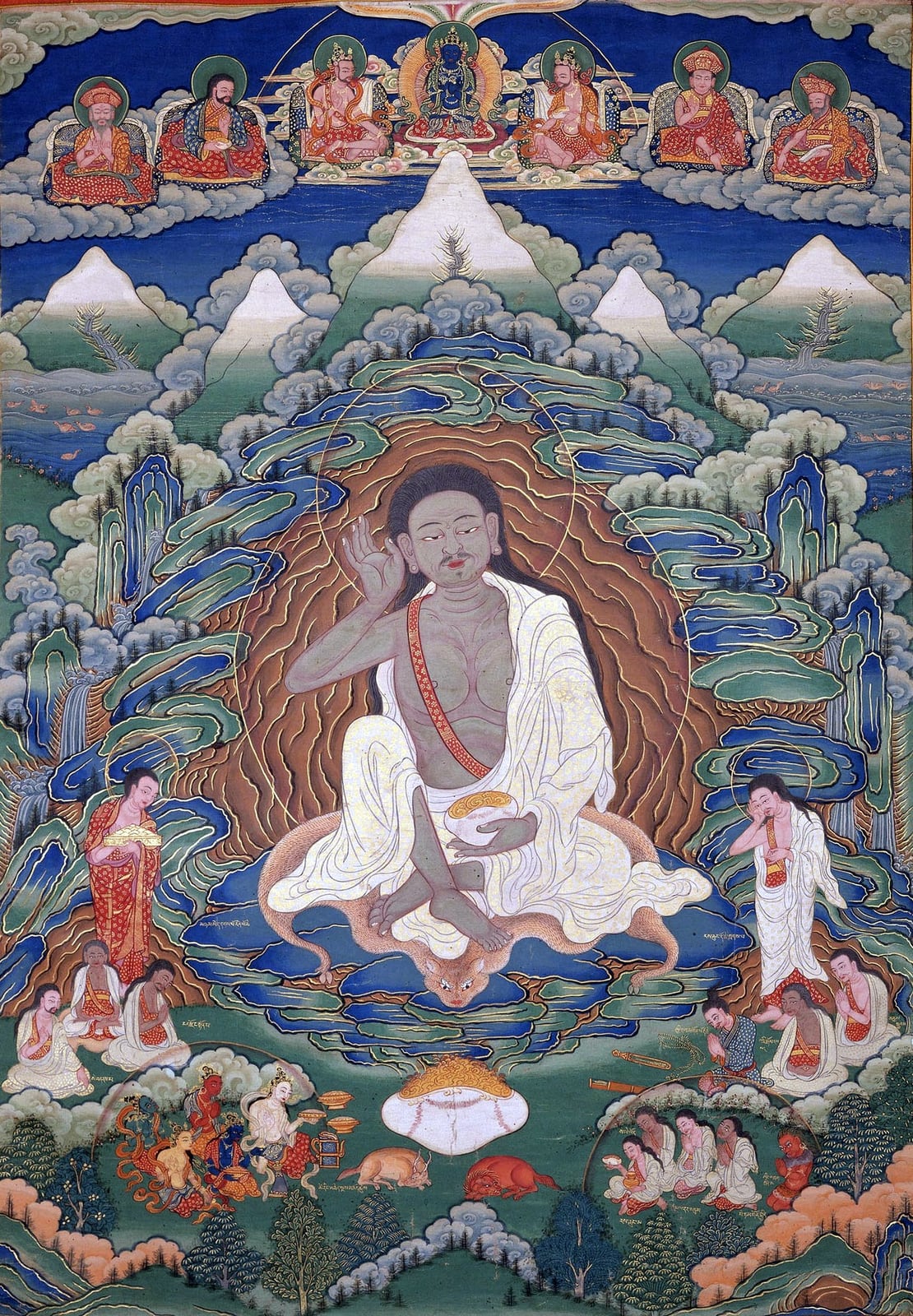
Milarepa
इन पर सहमत: परम सत्य क्या है? क्या ईश्वर है? · मैं कौन हूँ? क्या कोई सच्चा आत्म है? · मृत्यु के बाद क्या होता है?
इनसे भिन्न सोचते हैं

Francis of Assisi
इन पर टकराव: परम सत्य क्या है? क्या ईश्वर है? · मैं कौन हूँ? क्या कोई सच्चा आत्म है? · मृत्यु के बाद क्या होता है?
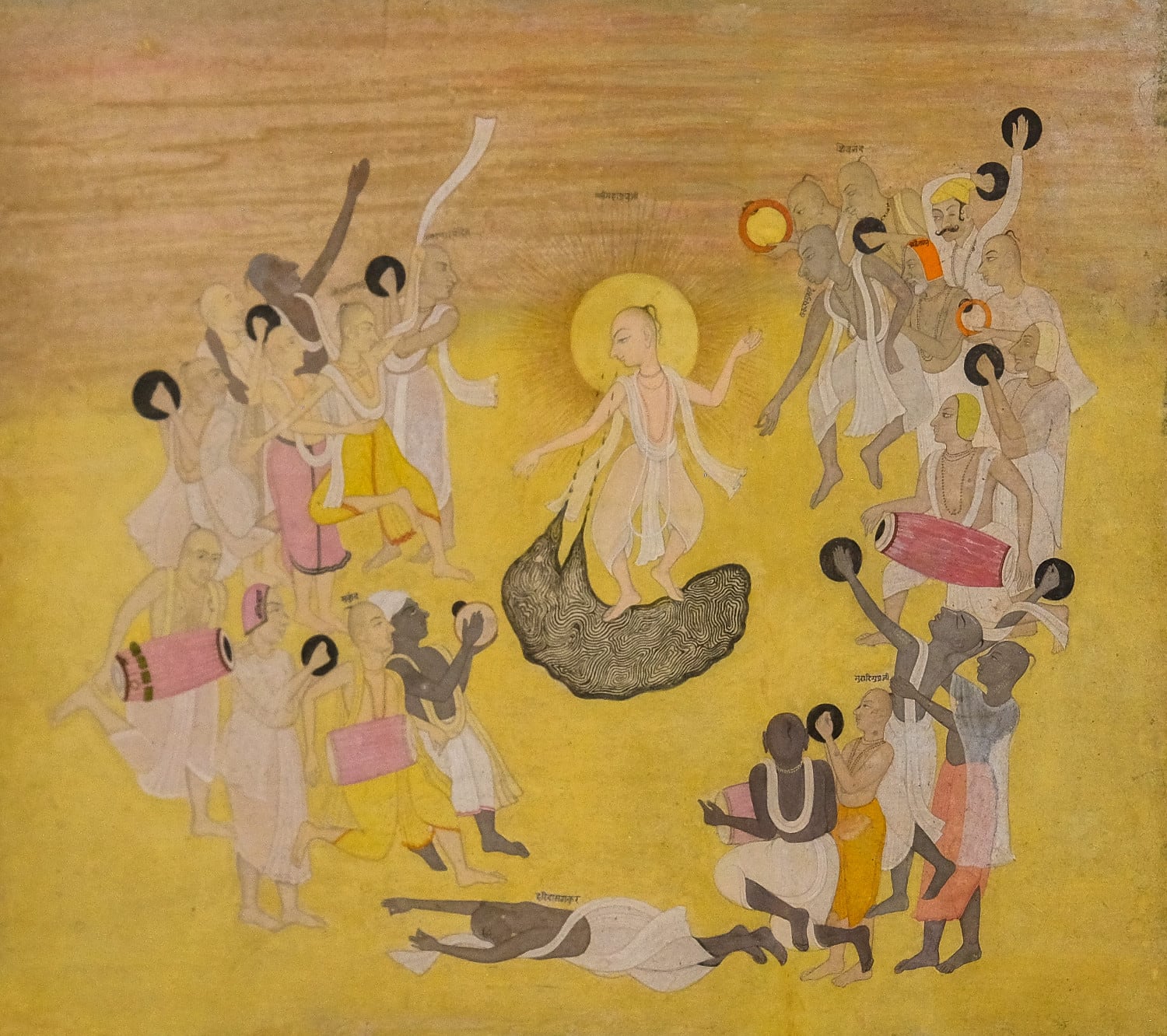
Chaitanya Mahaprabhu
इन पर टकराव: परम सत्य क्या है? क्या ईश्वर है? · मैं कौन हूँ? क्या कोई सच्चा आत्म है? · मृत्यु के बाद क्या होता है?

Julian of Norwich
इन पर टकराव: परम सत्य क्या है? क्या ईश्वर है? · मैं कौन हूँ? क्या कोई सच्चा आत्म है? · मृत्यु के बाद क्या होता है?

Rabia al-Adawiyya
इन पर टकराव: परम सत्य क्या है? क्या ईश्वर है? · मृत्यु के बाद क्या होता है?
प्रसंग और वृत्तांत
प्रसंग और वृत्तांत
संत-चरित वृत्तांतjuventud (sin fecha)
The four invisible friends
वृत्तांत का स्रोत: Biography of the bodhisattva Nāgārjuna translated by Kumārajīva (c. 405, T2047), the first of the surviving lives. An edifying conversion story without independent confirmation.
संत-चरित वृत्तांतsin fecha
The palace of the nāgas
वृत्तांत का स्रोत: Kumārajīva's Biography (T2047) and, with the detail about the Prajñāpāramitā, Bu ston's history (1322). Walser reads the story as a legitimation of the new Mahāyāna sūtras, which critics accused of not being the Buddha's word.
संत-चरित वृत्तांतsin fecha
The red banner before the king
वृत्तांत का स्रोत: Kumārajīva's Biography (T2047). It answers to a recurrent motif of Indian hagiographies: the king's conversion as a guarantee that a teaching has taken root. The relation with a king reflected in the Ratnāvalī and the Letter to a Friend is, by contrast, historically plausible (Walser).
संत-चरित वृत्तांतrelato recogido c. 640
A blade of grass
वृत्तांत का स्रोत: Xuanzang's Da Tang Xiyu ji (646), book X, trans. Beal (1884). The Tibetan tradition records variants. No independent source confirms the death.
स्रोत: Beal, Samuel (trad.). Si-Yu-Ki: Buddhist Records of the Western World, translated from the Chinese of Hiuen Tsiang (A.D. 629). 2 vols. Londres: Trübner, 1884; vol. II, libro X (reino de Kiao-sa-lo / Kosala).
संत-चरित वृत्तांतrelato chan; comentario de 1241
The disc of the full moon
वृत्तांत का स्रोत: A story from the Chan genealogies of the patriarchs, recorded in the Jingde Transmission of the Lamp (1004) and commented on by Dōgen in the Shōbōgenzō. A lineage legend without historical basis.
स्रोत: Dōgen. Shōbōgenzō, fascículo «Busshō» (La naturaleza de Buda), 1241. En Kazuaki Tanahashi (ed.), Treasury of the True Dharma Eye: Zen Master Dogen's Shobo Genzo. Boston: Shambhala, 2010.
प्रमाणितfinales del s. II (probable)
Advice to a king
वृत्तांत का स्रोत: Content of the Ratnāvalī (chs. 3–4) and of the Suhṛllekha; identification of the addressee according to Walser (2005), disputed by Mabbett (1998).
स्रोत: Walser, Joseph. Nāgārjuna in Context: Mahāyāna Buddhism and Early Indian Culture. Nueva York: Columbia University Press, 2005. ISBN 9780231131643.
शिक्षाएँ
शिक्षाएँ
वे अवधारणाएँ जो उनके चिंतन को रूप देती हैं, उनके संदर्भ में समझाई गई।
Emptiness (śūnyatā)sunyata
Mūlamadhyamakakārikā 13, 24; continues the Perfection of Wisdom literature.
स्रोत: Westerhoff, Jan. Nāgārjuna's Madhyamaka: A Philosophical Introduction. Nueva York: Oxford University Press, 2009. ISBN 9780195375213.
Dependent origination (pratītyasamutpāda)pratityasamutpada
Dedication and chapters 1 and 26 of the Verses.
स्रोत: Garfield, Jay L. (trad.). The Fundamental Wisdom of the Middle Way: Nāgārjuna's Mūlamadhyamakakārikā. Nueva York: Oxford University Press, 1995. ISBN 9780195093360.
Intrinsic nature (svabhāva) and its absencesvabhava
Mūlamadhyamakakārikā 15; polemic with Sarvāstivāda Abhidharma.
स्रोत: Westerhoff, Jan. Nāgārjuna's Madhyamaka: A Philosophical Introduction. Nueva York: Oxford University Press, 2009. ISBN 9780195375213.
The two truths (satyadvaya)dos-verdades
Mūlamadhyamakakārikā 24.8–24.10; developed by Candrakīrti, Bhāviveka and Tsongkhapa.
स्रोत: Siderits, Mark, y Shōryū Katsura (trads.). Nāgārjuna's Middle Way: Mūlamadhyamakakārikā. Boston: Wisdom Publications, 2013. ISBN 9781614290506.
The tetralemma (catuṣkoṭi)catuskoti
Mūlamadhyamakakārikā 1.1, 18.8, 22.11, 25.17–18.
स्रोत: Garfield, Jay L. (trad.). The Fundamental Wisdom of the Middle Way: Nāgārjuna's Mūlamadhyamakakārikā. Nueva York: Oxford University Press, 1995. ISBN 9780195093360.
Holding no thesis (apratijñā)sin-tesis
Vigrahavyāvartanī 21–29, 59–64.
स्रोत: Westerhoff, Jan (trad.). The Dispeller of Disputes: Nāgārjuna's Vigrahavyāvartanī. Nueva York: Oxford University Press, 2010. ISBN 9780199732692.
Nirvāṇa and saṃsāranirvana-samsara
Mūlamadhyamakakārikā 25.
स्रोत: Siderits, Mark, y Shōryū Katsura (trads.). Nāgārjuna's Middle Way: Mūlamadhyamakakārikā. Boston: Wisdom Publications, 2013. ISBN 9781614290506.
वीडियो
वीडियो
रिकॉर्डिंग, साक्षात्कार और वृत्तचित्र। वीडियो YouTube से चलते हैं; वे यहाँ संग्रहीत नहीं हैं।
HPI 47 - Jan Westerhoff on Nagarjuna
साक्षात्कार· EN· 37 min
history of philosophy without any gapsआधिकारिक चैनल
Madhyamaka & Methodology Symposium: Panel 2 (Jan Westerhoff, University of Durham)
व्याख्यान· EN· 2010· 11 min
Smith College Buddhist Studiesआधिकारिक चैनल
A Conversation on Madhyamaka | Dr. David Higgins & Prof. Jan Westerhoff
व्याख्यान· EN· 2026· 98 min
Rangjung Yeshe Instituteआधिकारिक चैनल
Episode 8, Jay Garfield On Nāgārjuna and Emptiness
साक्षात्कार· EN· 98 min
Thoughtology
Are all things empty? - Nagarjuna & The Buddhist Middle Way
विश्लेषण· EN· 24 min
Let's Talk Religion
Nagarjuna's "Fundamental Wisdom" - Day 1
व्याख्यान· EN· 2015· 196 min
Dalai Lama Archiveआधिकारिक चैनल
Carlo Rovelli and Barry Kerzin: What is real? Nagarjuna's Middle Way.
व्याख्यान· EN· 137 min
WithOut SpaceTime / QISS
Nagarjunakonda
वृत्तचित्र· EN· 16 min
Films Divisionआधिकारिक चैनल
THE SCULPTURE OF INDIA EPI 05 PROFUSION OF LIFE AMARAVATI AND NAGARJUNAKONDA
वृत्तचित्र· EN· 23 min
Prasar Bharati Archivesआधिकारिक चैनल
CONFERENCIA JUAN ARNAU. LA CONCIENCIA VACÍA. 13/03/2023.
व्याख्यान· ES· 2023· 65 min
ADÍA
Vacuidad y despertar en la filosofía de Nagarjuna
व्याख्यान· ES· 2025· 56 min
Filosofía en la Red
Modernité de Nagarjuna
व्याख्यान· FR· 2023· 133 min
Paris Zen
चित्रशाला
चित्रशाला
सत्यापित लाइसेंस वाले चित्र। प्रत्येक में उसके रचयिता और श्रेय का उल्लेख सुरक्षित है।
संबंध
संबंध
प्रभाव, शिष्यत्व और वैचारिक निकटता। प्रमाणित संबंध को विश्लेषण से पहचानी गई समानता से अलग दर्शाया गया है।
इन्हें प्रभावित किया
Candrakīrti
Author of the Prasannapadā and the Madhyamakāvatāra, whose Prāsaṅgika reading prevailed in Tibet.
प्रमाणित संबंध
इनसे प्रभावित
Siddhartha Gautama, the Buddha
The Verses open with homage to the Buddha as teacher of dependent origination, and in 15.7 cite his instruction to Kātyāyana (Kaccānagotta Sutta) against "it exists" and "it does not exist".
प्रमाणित संबंध
इनके गुरु
Āryadeva
His principal disciple, author of the Four Hundred Verses (Catuḥśataka); the Chinese and Tibetan traditions present him as his direct successor.
प्रमाणित संबंध
इन्हें प्रभावित किया
Kumārajīva
He translated into Chinese the Verses, the Twelve Gate Treatise, the Great Treatise and his biography, and founded the Three Treatise school.
प्रमाणित संबंध
इन्हें प्रभावित किया
Bhāviveka
He commented on the Verses in the Prajñāpradīpa and brought the formal arguments of Dignāga's logic into Madhyamaka.
प्रमाणित संबंध
इन्हें प्रभावित किया
In the Bodhicaryāvatāra (5.106) he recommends studying the Sūtrasamuccaya "composed by the noble Nāgārjuna"; his ninth chapter is a Madhyamaka exposition.
प्रमाणित संबंध
इन्हें प्रभावित किया
His Ocean of Reasoning (1407) is the great Tibetan commentary on the Verses and the basis of the Gelug school.
प्रमाणित संबंध
इन्हें प्रभावित किया
In the "Busshō" fascicle of the Shōbōgenzō he comments on the story of Nāgārjuna manifested as a moon disc and reveres him as a patriarch of the lineage.
प्रमाणित संबंध
इन्हें प्रभावित किया
The 14th Dalai Lama (Tenzin Gyatso)
He regularly teaches the Fundamental Verses; for example, in New Delhi in March 2015 (official video in this entry).
प्रमाणित संबंध
इनसे मिलते-जुलते विचार
The Advaita distinction between practical and ultimate reality recalls the two truths of Madhyamaka; theistic critics accused Advaita of being "crypto-Buddhism". Śaṅkara, however, argued against Buddhism and asserted an absolute that Nāgārjuna does not admit.
विश्लेषण से पहचानी गई समानता
इनके समकालीन
If Nāgārjuna lived around 150–250 and the Pātañjalayogaśāstra was composed around 325–425 (Maas), Patañjali is later; Woods (1914) noted that Nāgārjuna knew a school of yoga but does not mention Patañjali.
विश्लेषण से पहचानी गई समानता
इनसे मिलते-जुलते विचार
The Jain doctrine of the plurality of standpoints (anekāntavāda) and Nāgārjuna's four-cornered analysis (catuṣkoṭi) are often compared as Indian answers to the problem of absolute assertions; they rest, however, on opposite assumptions.
विश्लेषण से पहचानी गई समानता
अन्य प्रविष्टियों से जुड़ा
- Siddhartha Gautama, the Buddha · इन्हें प्रभावित किया
- Shinran · इनसे प्रभावित
- The 14th Dalai Lama (Tenzin Gyatso) · इनसे प्रभावित
- Bodhidharma · इनसे प्रभावित
- Adi Shankara · इनसे मिलते-जुलते विचार
- Huineng · इनसे प्रभावित
- Mahāvīra · इनसे मिलते-जुलते विचार
- Patañjali · इनके समकालीन
- Śāntideva · इनसे प्रभावित
- Tsongkhapa · इनसे प्रभावित
- Dōgen · इनसे प्रभावित
स्रोत
स्रोत
इस प्रविष्टि के लिए देखे गए ग्रंथ-सूची और सूचीपत्र।
- Wikidata, «Nagarjuna», QID Q171195 (filósofo budista indio del siglo III); el homónimo Q3347300 corresponde a un Nāgārjuna del siglo X.
- Westerhoff, Jan. «Nāgārjuna». En Edward N. Zalta y Uri Nodelman (eds.), The Stanford Encyclopedia of Philosophy, primera publicación 10 de febrero de 2010; revisión sustancial 31 de mayo de 2026.
- Westerhoff, Jan. Nāgārjuna's Madhyamaka: A Philosophical Introduction. Nueva York: Oxford University Press, 2009. ISBN 9780195375213.
- Walser, Joseph. Nāgārjuna in Context: Mahāyāna Buddhism and Early Indian Culture. Nueva York: Columbia University Press, 2005. ISBN 9780231131643.
- Lindtner, Christian. Nagarjuniana: Studies in the Writings and Philosophy of Nāgārjuna. Copenhague: Akademisk Forlag, 1982 (Indiske Studier 4); reimpr. Delhi: Motilal Banarsidass, 1987. ISBN 9788750023852.
- Ruegg, David Seyfort. The Literature of the Madhyamaka School of Philosophy in India. Wiesbaden: Otto Harrassowitz, 1981 (A History of Indian Literature VII, 1).
- Mabbett, Ian. «The Problem of the Historical Nagarjuna Revisited». Journal of the American Oriental Society 118, n.º 3 (1998): 332–346.
- Kumārajīva (trad.). Longshu pusa zhuan 龍樹菩薩傳 (Biografía del bodhisattva Nāgārjuna), c. 405. Taishō Shinshū Daizōkyō, vol. 50, n.º 2047; texto en Wikisource en chino.
- Beal, Samuel (trad.). Si-Yu-Ki: Buddhist Records of the Western World, translated from the Chinese of Hiuen Tsiang (A.D. 629). 2 vols. Londres: Trübner, 1884; vol. II, libro X (reino de Kiao-sa-lo / Kosala).
- Obermiller, Eugène (trad.). History of Buddhism (Chos-ḥbyung) by Bu-ston. 2 partes. Heidelberg: Otto Harrassowitz, 1931–1932 (Materialien zur Kunde des Buddhismus 18–19).
- Garfield, Jay L. (trad.). The Fundamental Wisdom of the Middle Way: Nāgārjuna's Mūlamadhyamakakārikā. Nueva York: Oxford University Press, 1995. ISBN 9780195093360.
- Siderits, Mark, y Shōryū Katsura (trads.). Nāgārjuna's Middle Way: Mūlamadhyamakakārikā. Boston: Wisdom Publications, 2013. ISBN 9781614290506.
- La Vallée Poussin, Louis de (ed.). Mūlamadhyamakakārikās (Mādhyamikasūtras) de Nāgārjuna avec la Prasannapadā commentaire de Candrakīrti. San Petersburgo: Académie impériale des sciences, 1903–1913 (Bibliotheca Buddhica IV).
- Lamotte, Étienne (trad.). Le Traité de la grande vertu de sagesse de Nāgārjuna (Mahāprajñāpāramitāśāstra). 5 vols. Lovaina: Bureaux du Muséon / Institut orientaliste, 1944–1980.
- Westerhoff, Jan (trad.). The Dispeller of Disputes: Nāgārjuna's Vigrahavyāvartanī. Nueva York: Oxford University Press, 2010. ISBN 9780199732692.
- Arnau, Juan (trad.). Nāgārjuna. Fundamentos de la vía media. Madrid: Siruela, 2004. ISBN 9788478447626 (reed. Alianza Editorial, 2018, ISBN 9788491813071).
- Vélez de Cea, Abraham (trad.). Nāgārjuna. Versos sobre los fundamentos del camino medio (Mūlamadhyamakakārikā). Barcelona: Kairós, 2003. ISBN 9788472455450.
- Tsongkhapa. Ocean of Reasoning: A Great Commentary on Nāgārjuna's Mūlamadhyamakakārikā. Trad. Geshe Ngawang Samten y Jay L. Garfield. Nueva York: Oxford University Press, 2006. ISBN 9780195147339.
- Dōgen. Shōbōgenzō, fascículo «Busshō» (La naturaleza de Buda), 1241. En Kazuaki Tanahashi (ed.), Treasury of the True Dharma Eye: Zen Master Dogen's Shobo Genzo. Boston: Shambhala, 2010.
- Śāntideva. Bodhicaryāvatāra 5.105–106. Trad. Kate Crosby y Andrew Skilton, The Bodhicaryāvatāra. Oxford: Oxford University Press, 1995 (Oxford World's Classics).
- Hopkins, Jeffrey (trad.). Nāgārjuna's Precious Garland: Buddhist Advice for Living and Liberation. Ithaca: Snow Lion, 2007. ISBN 9781559392747.
- Wikimedia Commons, ficheros de imagen citados en images[] (licencias comprobadas por la API imageinfo el 2026-10-25).
- Open Library (openlibrary.org), fichas por ISBN y búsquedas por autor y título consultadas el 2026-10-25.
- Tola, Fernando, y Carmen Dragonetti (eds. y trads.). Nāgārjuna's Refutation of Logic (Nyāya): Vaidalyaprakaraṇa. Delhi: Motilal Banarsidass, 1995. ISBN 9788120809208.
- Westerhoff, Jan (trad.). Crushing the Categories (Vaidalyaprakaraṇa). Somerville: Wisdom Publications, 2018 (Treasury of the Buddhist Sciences). ISBN 9781949163001.
- Komito, David Ross. Nāgārjuna's «Seventy Stanzas»: A Buddhist Psychology of Emptiness. Ithaca: Snow Lion, 1987. ISBN 9780937938393.
- Lindtner, Christian (ed. y trad.). Master of Wisdom: Writings of the Buddhist Master Nāgārjuna. Berkeley: Dharma Publishing, 1986. ISBN 9780898001396.
- Kalupahana, David J. (ed. y trad.). Nāgārjuna: The Philosophy of the Middle Way. Albany: State University of New York Press, 1986. ISBN 9780887061493.
- Kangyur Rinpoche (comentario) y Padmakara Translation Group (trad.). Nagarjuna's Letter to a Friend, with Commentary by Kangyur Rinpoche. Ithaca: Snow Lion, 2005. ISBN 9781559392273.
- Taishō Shinshū Daizōkyō (ed. Takakusu Junjirō y Watanabe Kaigyoku, Tokio, 1924–1934), vols. 25–32 y 50; textos consultados en Wikisource en chino (zh.wikisource.org).
- Dalai Lama Archive. «Nagarjuna's "Fundamental Wisdom" - Day 1». Enseñanza en Nueva Delhi, 20 de marzo de 2015, organizada por la Foundation for Universal Responsibility.
- अधिकार-धारक
- Textos originales en dominio público (siglos II–III y traducciones antiguas al chino y al tibetano). Las traducciones modernas tienen derechos propios: Siruela y Alianza Editorial (Juan Arnau), Kairós (Abraham Vélez de Cea), Oxford University Press (Garfield; Westerhoff; Tsongkhapa), Wisdom Publications (Siderits y Katsura; Westerhoff), Snow Lion / Shambhala (Hopkins; Padmakara; Komito), Dharma Publishing (Lindtner), SUNY Press (Kalupahana), Motilal Banarsidass (Tola y Dragonetti). La edición de La Vallée Poussin (1903–1913) es de dominio público.
पुष्टि की प्रतीक्षा में
जो यह प्रविष्टि अभी तक निश्चित नहीं कर सकी है। हम उसे भर देने के बजाय कह देना बेहतर समझते हैं।
- Sala de lectura: no se ha encontrado ninguna traducción inglesa ni española de dominio público con texto limpio (la de Wenzel del Suhṛllekha, 1886, y la de Beal, 1892, no se localizaron en escaneo con OCR). La edición sánscrita de La Vallée Poussin (1903–1913) está en devanagari y no se ha comprobado su OCR. La segunda versión china del Suhṛllekha (勸發諸王要偈, Saṅghavarman) está en zh.wikisource pero no puede registrarse como texto separado de la misma obra sin duplicar la entrada.
- Ediciones: buscar ISBN de traducciones al español de la Ratnāvalī, la Carta a un amigo, la Śūnyatāsaptati y la Yuktiṣaṣṭikā (no localizadas en Open Library), y ediciones con ISBN en francés, alemán, italiano, ruso e hindi de las Estrofas. Google Books devolvió 429 (sin cuota).
- Comprobar en Beal (1884), vol. II, la paginación exacta del relato de Xuanzang sobre Nāgārjuna y el rey Sātavāhana.
- Confirmar las fechas de traducción china propuestas para el 壹輸盧迦論 y el 菩提資糧論 (se dan como aproximadas).
- La biografía de Kumārajīva (龍樹菩薩傳, T2047) no es obra de Nāgārjuna y no se registra en works[]; su texto está en zh.wikisource (fuente n8).
- Manuscritos: localizar en Commons imágenes con licencia libre de los manuscritos sánscritos de la Mūlamadhyamakakārikā (Ye Shaoyong 2011) o de la Ratnāvalī.
2026-10-25 को शोधित