बौद्ध धर्म · महायान · तिब्बती बौद्ध धर्म
Śāntideva
शान्तिदेव · ཞི་བ་ལྷ། · zhi ba lha · 寂天
लगभग 685 – लगभग 763ऐतिहासिक रूप से प्रमाणित व्यक्ति
आठवीं शताब्दी के भारतीय भिक्षु और कवि, जिनका सम्बन्ध नालन्दा महाविहार और माध्यमक सम्प्रदाय से है। वे बोधिचर्यावतार के रचयिता हैं, जो बोधिसत्त्व-मार्ग पर तिब्बती बौद्ध धर्म में सबसे अधिक पढ़ा जाने वाला काव्य है, और शिक्षासमुच्चय के भी, जो महायान सूत्रों का एक संकलन है। उनका जीवन केवल परवर्ती सन्त-चरितों से ज्ञात है; आधुनिक शोध ने दुनहुआंग में उनके काव्य का एक छोटा और अधिक प्राचीन पाठ खोज निकाला है।
- कृतियाँ
- 11कृतियाँ
- संस्करण
- 33संस्करण
- उद्धरण
- 7उद्धरण
- वीडियो
- 14वीडियो
- चित्र
- 3चित्र
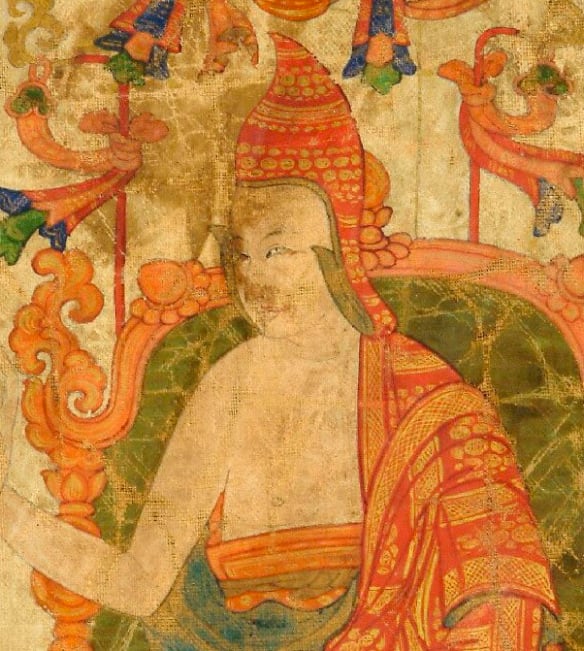
Śāntideva, pintura del siglo XIX · Public domain
उनके अपने शब्दों में
«For as long as space endures and as long as the world endures, may I too endure, to destroy the sufferings of beings.»Bodhicaryāvatāra 10.55. Es la estrofa con que el Dalái Lama cerró su conferencia del Nobel (1989). Traducción propia del sánscrito, cotejada con Crosby y Skilton (1996) y Wallace (1997).

मूल विचार
The mind of awakening (bodhicitta) is the centre of all practice: whoever generates it, though still bound to the world, becomes a child of the buddhas; its worth depends not on what is done but on the intention to free all beings.
संदर्भ में देखें
जीवनी
6 मिनट का पाठ
स्पैनिश मूल से सहायता-प्राप्त अनुवाद, मातृभाषी अनुवादक द्वारा समीक्षा लंबित।
एक नाम, दो ग्रन्थ और एक किंवदन्ती
शान्तिदेव — वह कवि जिसे तिब्बती बौद्ध धर्म ऐसे पढ़ता है जैसे कोई प्रार्थना का पाठ करता हो — के विषय में इतिहास ने बहुत कम सहेजा है: एक नाम, जिसका अर्थ है «शान्ति का देवता»; एक विहार — नालन्दा, बिहार का महान बौद्ध विश्वविद्यालय; और दो कृतियाँ, जिनके कर्तृत्व पर कोई विवाद नहीं: बोधिचर्यावतार और शिक्षासमुच्चय। शेष सब कुछ उन जीवनियों से आता है जो पाँच या नौ शताब्दियों बाद लिखी गईं। बार-बार दोहराई जाने वाली तिथियाँ, 685–763, एक परवर्ती पुनर्रचना हैं; विद्वान उन्हें, बिना अधिक सटीकता के, आठवीं शताब्दी के पूर्वार्ध में रखना पसन्द करते हैं, उसी शताब्दी के अन्त में उनके पद्यों के तिब्बती में अनूदित होने से पहले। कठोर अर्थ में, उनके बारे में जो महत्त्वपूर्ण है वह कोई जीवन नहीं, बल्कि एक काव्य और एक संकलन है।
वह राजकुमार जिसने मञ्जुश्री का स्वप्न देखा
किंवदन्ती-रूप जीवन तीन स्रोतों में मिलता है: बुतोन का बौद्ध धर्म का इतिहास (1322), तारानाथ का इतिहास (1608), और चौदहवीं शताब्दी की एक नेपाली पाण्डुलिपि में सुरक्षित एक संक्षिप्त संस्कृत जीवनी, जिसका अध्ययन जे. डब्ल्यू. डी योंग ने 1975 में किया। मूल बातों में ये सहमत हैं। कहा जाता है कि शान्तिदेव पश्चिमी भारत के एक राज्य में — अधिकांश वृत्तान्तों में सौराष्ट्र में — राजकुमार के रूप में जन्मे, और राज्याभिषेक की पूर्व-संध्या पर उन्होंने स्वप्न देखा कि सिंहासन पर पहले से ही प्रज्ञा के बोधिसत्त्व मञ्जुश्री विराजमान हैं, जो उनसे कह रहे हैं: «यह मेरा आसन है।» वे महल से भाग निकले, वन में गुरुओं से शिक्षा ली, और तारानाथ तथा बुतोन के अनुसार कुछ समय तक पूर्वी भारत के एक राजा के मन्त्री रहे; उनके पास लकड़ी की एक तलवार थी, जिसे म्यान से निकाला गया तो उसे देखने वाले की आँखों की ज्योति चली गई। ये एक जाने-पहचाने साँचे के प्रसंग हैं: सिंहासन का त्याग, बोधिसत्त्व का संरक्षण, चमत्कार।
नालन्दा का आलसी
नालन्दा में आचार्य जयदेव ने उन्हें प्रव्रज्या दी और वह नाम दिया जिससे वे जाने जाते हैं। किंवदन्ती कहती है कि वहाँ भिक्षु उनका तिरस्कार करते थे, क्योंकि वे केवल तीन काम करते प्रतीत होते थे: खाना, सोना और शौचालय की ओर जाना — संस्कृत में भुञ्जान, सुप्त, कुटिं गतः — और इसी से उनका उपनाम भुसुकु पड़ा। उन्हें अपमानित करने के लिए उनसे कहा गया कि वे ऊँचे आसन पर बैठकर पूरे संघ के सामने किसी ग्रन्थ का पाठ करें। शान्तिदेव ने पूछा कि वे कुछ परिचित सुनना चाहते हैं या कुछ नया, और बोधिचर्यावतार का पाठ आरम्भ कर दिया। जब वे नवें परिच्छेद के उस श्लोक पर पहुँचे जो कहता है कि जब मन के सामने न भाव रहता है न अभाव, तब वह निरालम्ब होकर शान्त हो जाता है, तो वे आकाश में उठते-उठते अदृश्य हो गए, और केवल काव्य को पूरा करती उनकी वाणी सुनाई देती रही। बाद में पता चला कि वे अपनी कुटी में दो और ग्रन्थ छोड़ गए थे: शिक्षासमुच्चय और एक सूत्रसमुच्चय। यह कथा अपने ढंग से एक साहित्यिक तथ्य की व्याख्या करती है: कि यह काव्य भिन्न-भिन्न पाठों में प्रचलित था।
बोधिसत्त्व की चर्या में प्रवेश
बोधिचर्यावतार, अर्थात् «बोधि की चर्या में प्रवेश», दस परिच्छेदों में लगभग नौ सौ श्लोकों का एक संस्कृत काव्य है। यह बोधिचित्त की प्रशंसा से आरम्भ होता है — वह चित्त जो सब प्राणियों के कल्याण के लिए बोधि की आकांक्षा करता है — फिर पाप-देशना और व्रत-ग्रहण की ओर बढ़ता है, और उसके बाद बोधिसत्त्व की पारमिताओं से होकर गुज़रता है: स्मृति और सम्प्रजन्य; क्षान्ति — छठा परिच्छेद, क्रोध का निर्मम विश्लेषण; हर्षपूर्ण वीर्य; ध्यान, जहाँ लेखक सिखाते हैं कि स्वयं को दूसरों के समान कैसे माना जाए और स्वयं को दूसरों से कैसे बदला जाए (परात्मसमता और परात्मपरिवर्तन); और प्रज्ञा, माध्यमक दर्शन का एक सघन ग्रन्थ, जो यथार्थवादी बौद्धों, योगाचारियों और सांख्य से शास्त्रार्थ करता है। इसका समापन एक लम्बे परिणामना-अंश से होता है, जो महायान बौद्ध धर्म की सर्वाधिक पढ़ी जाने वाली प्रार्थनाओं में से एक बन गया है। इस ग्रन्थ की असाधारणता उसके स्वर में है: यह उत्तम पुरुष में बोलता है, स्वयं को धिक्कारता है, संशय करता है, स्वयं को प्रेरित करता है; यह एक साथ नियम-पुस्तिका, आत्म-स्वीकृति और काव्य है।
एक में दो काव्य
आधुनिक शोध की सबसे महत्त्वपूर्ण खोज दुनहुआंग की गुफाओं से आती है। लगभग सन् 1000 में वहाँ बन्द कर दी गई तिब्बती पाण्डुलिपियों के बीच अकिरा साइतो ने 1990 के दशक में इस काव्य का एक छोटा पाठ पहचाना: नौ परिच्छेदों में लगभग 700 श्लोक, क्योंकि प्रामाणिक पाठ के दूसरे और तीसरे परिच्छेद इसमें एक ही हैं, और ध्यान तथा प्रज्ञा के परिच्छेदों में सामग्री कहीं कम है। एक पुष्पिका इसे अक्षयमति की रचना बताती है, जिन्हें परम्परा लेखक का ही दूसरा नाम मानती थी; नौवीं शताब्दी के आरम्भ की तिब्बती राजकीय सूची इस ग्रन्थ को ऐसे विस्तार के साथ दर्ज करती है जो इसी छोटे पाठ से मेल खाता है। अतः लगभग 913 श्लोकों वाला लम्बा पाठ बाद का विस्तार है, और यही वह पाठ है जिसका तिब्बती अनुवाद ग्यारहवीं शताब्दी में रिनचेन ज़ांगपो और उनके सहयोगियों ने किया और जिसे बाद में लोदेन शेरब ने संशोधित किया। तारानाथ को पहले से ही तीन पाठ-परम्पराओं के अस्तित्व का ज्ञान था, और पाठ करते-करते अदृश्य हो जाने वाले भिक्षु की किंवदन्ती सम्भवतः वह ढंग है जिससे परम्परा ने इन भिन्नताओं की व्याख्या की। एकमात्र चीनी अनुवाद, जो दसवीं शताब्दी के अन्त का है, अब भी इस ग्रन्थ को नागार्जुन की रचना बताता है।
संकलन
शिक्षासमुच्चय, अर्थात् «शिक्षा का संग्रह», बिल्कुल अलग प्रकार का ग्रन्थ है: स्मरण के लिए सत्ताईस कारिकाएँ, जिनका विस्तार उन्नीस गद्य परिच्छेदों में हुआ है, और ये परिच्छेद मुख्यतः सौ से अधिक महायान सूत्रों के उद्धरण हैं, जिनमें से अनेक संस्कृत में लुप्त हो चुके हैं और केवल इसी के माध्यम से ज्ञात हैं। यह संस्कृत की एकमात्र पाण्डुलिपि में सुरक्षित है, जिसे सेसिल बेंडल ने 1897 से 1902 के बीच सम्पादित किया और 1922 में डब्ल्यू. एच. डी. राउस के साथ अंग्रेज़ी में अनूदित किया; चार्ल्स गुडमैन ने 2016 में इसका पहला सम्पूर्ण आधुनिक अनुवाद प्रकाशित किया। स्वयं काव्य बोधिसत्त्व के नियम जानने के इच्छुक पाठक को इस संकलन और एक सूत्रसमुच्चय की ओर संकेत करता है; यह दूसरा ग्रन्थ सुरक्षित नहीं रहा, और इसे नागार्जुन के नाम से प्रसिद्ध इसी नाम के संग्रह से भ्रमित नहीं करना चाहिए।
तिब्बत से संसार तक
भारत में इस काव्य पर टीकाएँ लिखी गईं, जिनमें सबसे विस्तृत प्रज्ञाकरमति की है, लगभग सन् 1000 की। किन्तु केन्द्रीय ग्रन्थ यह तिब्बत में बना: इस पर त्सोंगखापा के शिष्य ग्यालत्साब जे, थोगमे ज़ांगपो और मिफाम ने टीकाएँ लिखीं — मिफाम की नवें परिच्छेद पर टीका ने दशकों तक चलने वाला विवाद छेड़ दिया — और उन्नीसवीं शताब्दी में घुमक्कड़ पत्रुल रिनपोछे ने बिना थके इसका उपदेश दिया। चौदहवें दलाई लामा दशकों से इसकी शिक्षा देते आए हैं और उन्होंने सम्पूर्ण ग्रन्थ पर, क्षान्ति के परिच्छेद पर और प्रज्ञा के परिच्छेद पर टीकाएँ प्रकाशित की हैं; 1989 के अपने नोबेल व्याख्यान का समापन उन्होंने उस श्लोक से किया जो संसार की पीड़ा दूर करने के लिए «जब तक आकाश रहे» तब तक बने रहने की प्रार्थना करता है। फ़्रांसीसी में 1907 में लुई द ला वाले पूसें और 1920 में लुई फ़ीनो द्वारा, अंग्रेज़ी में 1909 में लायनल बार्नेट द्वारा और उसके बाद अनेक बार अनूदित इस काव्य को नीतिशास्त्र के दार्शनिकों के बीच भी पाठक मिले, जिन्होंने अहंकार के विरुद्ध इसके तर्कों में सर्वजन-हित की एक ऐसी नैतिकता देखी जो उपयोगितावादियों से हज़ार वर्ष पहले प्रतिपादित हुई थी। इसका लेखक जो भी रहा हो, कृति अपने नाम से अधिक जीवित रही है।
स्रोत: Pezzali, Amalia. Śāntideva, mystique bouddhiste des VIIe et VIIIe siècles. Florencia: Vallecchi, 1968. · Śāntideva. The Bodhicaryāvatāra. Trad., introd. y notas de Kate Crosby y Andrew Skilton; introducción general de Paul Williams. Oxford: Oxford University Press (Oxford World's Classics), 1996. ISBN 0192829793. · Śāntideva. A Guide to the Bodhisattva Way of Life (Bodhicaryāvatāra). Trad. del sánscrito y del tibetano de Vesna A. Wallace y B. Alan Wallace. Ithaca (NY): Snow Lion, 1997. ISBN 1559390611. · Saito, Akira. A Study of Akṣayamati (= Śāntideva)'s Bodhisattvacaryāvatāra as Found in the Tibetan Manuscripts from Tun-huang. Mie (Japón): Mie University, 1993 (informe de investigación). · Goodman, Charles (trad.). The Training Anthology of Śāntideva: A Translation of the Śikṣā-samuccaya. Nueva York: Oxford University Press, 2016. ISBN 9780199391356.
कालक्रम
जीवन, वर्ष-दर-वर्ष
प्रत्येक बिंदु एक प्रमाणित घटना है। उसे स्रोत और निश्चितता के स्तर सहित पढ़ने के लिए क्लिक करें।
लगभग 6850 वर्षSaurāṣṭra (Guyarat), según la leyenda
Birth, according to traditional chronology
The dates 685–763 come from late chronologies; hagiography has him born a prince in Saurāṣṭra (western India). Scholarship only affirms that he lived in the first half of the eighth century.
परंपराWikidata, «Shantideva», QID Q445460 (VIAF 23444930; LCCN n80102717).
उनके निधन के बाद
- लगभग 790First Tibetan translation (short version)
- लगभग 812The Ldan dkar ma catalogue records the poem
- लगभग 985Chinese translation attributed to Nāgārjuna
- लगभग 1000Prajñākaramati's commentary
- लगभग 1020Tibetan revision of the long version
- 1322Biography in Butön's History
- 1608Biography in Tāranātha's History
- 1897 – 1902Bendall edits the Śikṣāsamuccaya
- 1907First European translations
- 11 दिसंबर 1989The Dalai Lama closes his Nobel lecture with Śāntideva
- 1993Saito identifies the Dunhuang version
लगभग 685 · 0 वर्ष
Birth, according to traditional chronology
The dates 685–763 come from late chronologies; hagiography has him born a prince in Saurāṣṭra (western India). Scholarship only affirms that he lived in the first half of the eighth century.
परंपरा
लगभग 705
Renunciation of the throne
On the eve of his coronation he dreams that Mañjuśrī occupies his throne and flees to the forest. Hagiographic episode.
परंपरा
लगभग 720 – 750
Monk at Nālandā: the Bodhicaryāvatāra and the Śikṣāsamuccaya
Ordained by abbot Jayadeva, he composes his two surviving works. The recitation before the assembly and the vanishing belong to legend.
संभावित
लगभग 790
First Tibetan translation (short version)
Sarvajñādeva and Paltseg translate into Tibetan a recension of some 700 stanzas in nine chapters, the one preserved in the Dunhuang manuscripts.
संभावित
लगभग 812
The Ldan dkar ma catalogue records the poem
The early ninth-century Tibetan imperial catalogue records the text at a length that fits the short version.
संभावित
लगभग 985
Chinese translation attributed to Nāgārjuna
Tianxizai translates the poem into Chinese as Putixing jing (Taishō 1662), in eight chapters and under Nāgārjuna's name.
संभावित
लगभग 1000
Prajñākaramati's commentary
Around 1000 the Bodhicaryāvatārapañjikā, the longest surviving Indian commentary, is written.
संभावित
लगभग 1020
Tibetan revision of the long version
Dharmaśrībhadra, Rinchen Zangpo and Śākya Lodrö translate the ten-chapter version; Sumatikīrti and Loden Sherab later revise it: this is the canonical text.
संभावित
1322
Biography in Butön's History
Butön Rinchen Drub includes Śāntideva's legendary life in his history of Buddhism.
प्रमाणित
1608
Biography in Tāranātha's History
Tāranātha expands the legend and records the existence of three versions of the poem.
प्रमाणित
1897 – 1902
Bendall edits the Śikṣāsamuccaya
Cecil Bendall publishes in St Petersburg, in instalments until 1902, the edition of the only Sanskrit manuscript; with W. H. D. Rouse he will translate it into English in 1922.
प्रमाणित
1907
First European translations
Louis de La Vallée Poussin translates the poem into French (1907); Barnett follows in English (1909) and Finot in French (1920).
प्रमाणित
11 दिसंबर 1989
The Dalai Lama closes his Nobel lecture with Śāntideva
In Oslo, on 11 December 1989, the Fourteenth Dalai Lama ends his lecture with stanza 10.55 of the Bodhicaryāvatāra.
प्रमाणित
1993
Saito identifies the Dunhuang version
Akira Saito publishes his study of the Tibetan Dunhuang manuscripts, which preserve an earlier and shorter recension attributed to Akṣayamati.
प्रमाणित
कृतियाँ
आवश्यक कृतियाँ
वे कृतियाँ जिनके बिना उनकी विरासत को समझा नहीं जा सकता।
लिखित कृति · लगभग 720
Entering the Way of the Bodhisattva (Bodhicaryāvatāra)
बोधिचर्यावतार (Bodhicaryāvatāra; también Bodhisattvacaryāvatāra) · tib. བྱང་ཆུབ་སེམས་དཔའི་སྤྱོད་པ་ལ་འཇུག་པ། (byang chub sems dpa'i spyod pa la 'jug pa) · chino 入菩薩行論 / 菩提行經
A Sanskrit poem in ten chapters tracing the bodhisattva's path: praise of the mind of awakening (bodhicitta), confession, taking the vow, mindfulness and vigilance, patience, effort, meditation—with the practice of equalising and exchanging self and others—, wisdom (a Madhyamaka exposition arguing with realists, Yogācāra and Sāṃkhya) and dedication. Written in the first person, it blends exhortation, confession and argument; it is the most studied Mahāyāna text in Tibetan Buddhism and one of the most translated into Western languages.
18 संस्करण

लिखित कृति · लगभग 720
The Training Anthology (Śikṣāsamuccaya)
शिक्षासमुच्चय (Śikṣāsamuccaya) · tib. བསླབ་པ་ཀུན་ལས་བཏུས་པ། (bslab pa kun las btus pa) · chino 大乘集菩薩學論
Twenty-seven mnemonic stanzas (kārikā) commented on in nineteen prose chapters that consist mostly of quotations from more than a hundred Mahāyāna sūtras, many lost in Sanskrit. It organises the bodhisattva's ethics around protecting, purifying and increasing one's body, possessions and merit in order to give them to beings. It is a first-rate source for lost Mahāyāna literature and the doctrinal complement to the Bodhicaryāvatāra.
4 संस्करण
संपूर्ण कृतित्व (11)
Śāntideva
The short Dunhuang recension of the Bodhicaryāvatāra
The Conscious LibraryThe short Dunhuang recension of the Bodhicaryāvatāra
790
Śāntideva
Verses of the Training Anthology
The Conscious LibraryVerses of the Training Anthology
720
Śāntideva
Compendium of Sūtras (lost)
The Conscious LibraryCompendium of Sūtras (lost)
Śāntideva
Caryāpada songs signed by Bhusuku
The Conscious LibraryCaryāpada songs signed by Bhusuku
Śāntideva
Prajñākaramati's commentary on the Bodhicaryāvatāra
The Conscious LibraryPrajñākaramati's commentary on the Bodhicaryāvatāra
1000

A Flash of Lightning in the Dark of Night (Dalai Lama)
1994

The Nectar of Manjushri's Speech (Kunzang Pelden)
2007

No Time to Lose (Pema Chödrön)
2005
Śāntideva
Altruism and Reality (Paul Williams)
The Conscious LibraryAltruism and Reality (Paul Williams)
1998
वचन
किसी निश्चित कृति में स्थित वचन। प्रत्येक के साथ उसका स्रोत और विश्वसनीयता का स्तर है।
For as long as space endures and as long as the world endures, may I too endure, to destroy the sufferings of beings.ākāśasya sthitir yāvad yāvac ca jagataḥ sthitiḥ | tāvan mama sthitir bhūyāj jagadduḥkhāni nighnataḥ ||
सत्यापितBodhicaryāvatāra 10.55. Es la estrofa con que el Dalái Lama cerró su conferencia del Nobel (1989). Traducción propia del sánscrito, cotejada con Crosby y Skilton (1996) y Wallace (1997).
मूल विचार (संपादकीय सार)
कॉपीराइट के सम्मान में, ये विचार हमारे अपने शब्दों में संक्षेपित हैं और इन्हें शब्दशः उद्धरण के रूप में प्रस्तुत नहीं किया गया है।
- The mind of awakening (bodhicitta) is the centre of all practice: whoever generates it, though still bound to the world, becomes a child of the buddhas; its worth depends not on what is done but on the intention to free all beings.
- Pain has no owner: if there is no substantial self who suffers, there is no reason to prefer relieving one's own pain over another's. The argument against selfishness is metaphysical before it is moral.
- Anger is the inner enemy that destroys in an instant the merit of aeons; the adversary who harms us is in fact the occasion to practise patience, and so deserves gratitude.
- One cannot cover the world so that it does not wound, but one can guard one's own mind: mindfulness (smṛti) and vigilance (saṃprajanya) are the true discipline.
- The wisdom of emptiness is not a theoretical add-on to compassion but its foundation: all the preceding perfections exist for its sake.
अप्रामाणिक या विवादित आरोपण वाले उद्धरण (1)
«If a problem can be solved, why worry? If it cannot be solved, worrying will do no good.»
It is authentic Śāntideva (Bodhicaryāvatāra 6.10), but circulates massively attributed to the Dalai Lama or the Buddha by quotation sites; it is recorded here to correct the attribution, not the quotation.
अंतिम शब्द
उनके अंतिम शब्दों का कोई सत्यापन-योग्य अभिलेख उपलब्ध नहीं है।
There is no record of his death. Hagiography (Butön, Tāranātha, the Sanskrit biography) narrates not an end but a disappearance: the monk rises into the air while reciting stanza 9.34 and is seen no more; later versions have him reappear in south India. The dates 685–763 are a late reconstruction.
स्रोत: de Jong, J. W. «La légende de Śāntideva». Indo-Iranian Journal 16 (1975): 161–182.
पूछें
उनकी कृतियाँ क्या उत्तर देती हैं
मानवता के बारह महान प्रश्न और उनके ग्रंथ उनका जो उत्तर देने देते हैं, संदर्भों सहित। हम कभी उनके मुख में अपने शब्द नहीं रखते।
परम सत्य क्या है? क्या ईश्वर है?
He refutes the creator god; buddhas do not create the world, they teach the path
कोई सृष्टिकर्ता ईश्वर नहींस्पष्ट रूप से कहा है
In chapter 9 of the Bodhicaryāvatāra, devoted to wisdom, Śāntideva expressly discusses the thesis of a creator god (Īśvara) and rejects it: if it were an eternal and independent cause, it could not produce effects that arise and cease; if it depended on other conditions, it would no longer be the origin of everything. In the same section he refutes the primordial matter of the Sāṃkhya school. What he upholds instead is the Madhyamaka analysis: nothing has its own existence, and when neither being nor non-being remains before the mind, it comes to rest without support (9.34). This does not make his work a cold text: chapters 2 and 3 are of veneration and offering to the buddhas and bodhisattvas. But those awakened beings neither create nor govern the world; they teach the path.
इस प्रश्न की अन्य गुरुओं से तुलना करेंमैं कौन हूँ? क्या कोई सच्चा आत्म है?
The self is like a row or an army: an aggregate without an owner
कोई स्थायी आत्म नहींस्पष्ट रूप से कहा है
Śāntideva approaches the self by two complementary paths in the Bodhicaryāvatāra. In chapter 9 he searches for it in body and mind, part by part, and finds it in none: neither the teeth, nor the hair, nor the sensations, nor consciousness are the self, and there is no self apart from them either. In chapter 8 he draws an ethical consequence from this. The continuum and the collection are unreal like a row or an army, so there is no owner of suffering who would justify protecting oneself alone; therefore one must meditate on the equality of self and others, who feel pain and joy equally (8.90). The absence of self is not, for him, a philosophical curiosity: it is the rational foundation of compassion.
इस प्रश्न की अन्य गुरुओं से तुलना करेंहम दुःख क्यों भोगते हैं?
All who suffer suffer from desiring their own happiness
तृष्णा और आसक्तिस्पष्ट रूप से कहा है
Śāntideva's answer is at once psychological and moral. In the Bodhicaryāvatāra he states that all who suffer in the world suffer from desiring their own happiness, and all who are happy are so from desiring that of others (8.129). Attachment to oneself, the exclusive care for one's own well-being, is the source of pain; hatred is its most destructive form, and therefore there is no evil like it (6.2). Chapter 5 adds an image: one cannot cover the whole earth with leather, but the leather of one's sandals suffices; one cannot subdue the outer world, but one can subdue one's own mind. Behind all this lies the ignorance that believes in a self with its own existence, examined in chapter 9.
इस प्रश्न की अन्य गुरुओं से तुलना करेंमृत्यु के बाद क्या होता है?
Death comes without warning, and only our deeds follow us
कर्म के अनुसार पुनर्जन्मस्पष्ट रूप से कहा है
Śāntideva writes within the Indian framework of rebirth and uses it as a spur. In chapter 2 of the Bodhicaryāvatāra he depicts himself facing death: one must depart leaving everything, friends and enemies fade like a dream, and only the evil deeds committed on their account weigh. Chapter 4 recalls how hard it is to obtain a human birth with freedom to practise, like the blind turtle that finds the yoke in the ocean, and chapter 7 describes the hells to combat laziness. Death is not an end but a passage to another birth conditioned by conduct. The ultimate horizon is broader: the bodhisattva does not aspire to leave the cycle for himself, but to remain as long as there are beings who suffer (10.55).
इस प्रश्न की अन्य गुरुओं से तुलना करेंमुक्ति या उद्धार कैसे प्राप्त होता है?
Awaken the mind of awakening and practise the perfections, up to wisdom
अनुशासित साधना सेस्पष्ट रूप से कहा है
The Bodhicaryāvatāra is, from beginning to end, a programme of practice. It starts by awakening the mind of awakening (bodhicitta), the aspiration to be liberated in order to liberate all, and sustains it with the confession and vow of chapters 2 and 3. Then come heedfulness, mindfulness and introspection (chapters 4 and 5), patience (6), effort (7), meditation (8) and wisdom (9). Each perfection corrects a specific obstacle: hatred, laziness, distraction. Śāntideva declares at the beginning of chapter 9 that the Buddha taught all the preceding for the sake of wisdom, which is what cuts the root. But without the prior discipline wisdom does not hold, and without compassion it is not the bodhisattva's.
इस प्रश्न की अन्य गुरुओं से तुलना करेंक्या गुरु आवश्यक है?
Never abandon the spiritual friend, even at the cost of one's life
अनिवार्यस्पष्ट रूप से कहा है
Śāntideva gives the spiritual friend (kalyāṇamitra) a central place. In chapter 5 of the Bodhicaryāvatāra he asks that one never abandon, not even to save one's life, the spiritual friend who knows the meaning of the Great Vehicle and keeps the bodhisattva vows, and immediately refers to the sūtras, to the Compendium of Training and to Nāgārjuna's Compendium of Sūtras as guides to conduct. The Compendium of Training indeed gathers passages from the sūtras on how to serve and listen to the master. The spiritual friend is indispensable because he transmits discipline and view; yet the whole work is an exhortation to oneself, written, the author says at the outset, to familiarise his own mind with the teaching.
इस प्रश्न की अन्य गुरुओं से तुलना करेंक्या संसार वास्तविक है?
Things are like illusions: they lack own-being, yet they function
बिना सार के कारणों का जालस्पष्ट रूप से कहा है
Chapter 9 of the Bodhicaryāvatāra sets out the Madhyamaka view of the world against other Buddhist and non-Buddhist schools. Śāntideva distinguishes two truths, conventional and ultimate, and warns that what is real in the ultimate sense is beyond the reach of the intellect, which is itself conventional. Things arise from causes and conditions and, on examination, show no nature of their own; they are like a magical illusion, which appears and produces effects without being what it seems. He answers the objection that, if all is illusory, compassion would be meaningless: the illusion keeps operating on its own level, and the suffering of beings, though empty, is undergone. The world is not denied; it is seen without the solidity we attribute to it.
इस प्रश्न की अन्य गुरुओं से तुलना करेंप्रेम क्या है?
As long as space endures, may I endure to end suffering
असीम करुणास्पष्ट रूप से कहा है
Few works have given compassion as accomplished a form as the Bodhicaryāvatāra. Its engine is the mind of awakening: the aspiration to attain buddhahood for the good of all. Chapter 8 grounds it in reasoning: one must meditate on the equality of self and others, since all feel pain and joy equally (8.90), and then on exchange, placing others where one used to place oneself. All who suffer do so from desiring their own happiness, and the happy are so from desiring that of others (8.129). Chapter 10 culminates in the vow the Dalai Lama read on receiving the Nobel Prize: for as long as space endures and the world endures, may I too endure to destroy the sufferings of beings.
इस प्रश्न की अन्य गुरुओं से तुलना करेंक्या हम स्वतंत्र हैं, या सब कुछ पूर्वनिर्धारित है?
No one acts by their will alone, and yet one must strive
कर्म और चुनावस्पष्ट रूप से कहा है
Śāntideva holds two claims at once. In chapter 6 of the Bodhicaryāvatāra, on patience, he argues that whoever harms us does so moved by conditions they do not control, just as bile causes illness without wishing to; nothing arises by itself, and so anger at a person has no proper object. But chapter 4, on heedfulness, and chapter 7, on effort, urge insistently that the human birth not be wasted: today's actions determine future births and one's own path depends on diligence. Freedom does not consist in an independent self that chooses, but in the real possibility of changing causes: cultivating mindfulness, patience and the mind of awakening alters what is to come.
इस प्रश्न की अन्य गुरुओं से तुलना करेंध्यान या प्रार्थना क्यों करें?
Mindfulness, introspection and meditation in the service of wisdom
यथार्थ को जैसा है वैसा देखनास्पष्ट रूप से कहा है
The Bodhicaryāvatāra integrates prayer and meditation into a single path. Chapters 2 and 3 are liturgy: offering, confession, rejoicing in others' good, supplication to the buddhas and taking the bodhisattva vow. Chapter 5 teaches how to guard the mind with mindfulness and introspection, like someone watching over a wild elephant. Chapter 8, devoted to meditation, recommends the solitude of the forest and develops the equality and exchange of self and others. But all of this, he says on opening chapter 9, the Buddha taught for the sake of wisdom, which sees that nothing has its own existence. Meditation is ultimately seeing reality as it is, and that seeing is what frees the mind from its support (9.34).
इस प्रश्न की अन्य गुरुओं से तुलना करेंक्या बुद्धि परम को जान सकती है?
The ultimately real is beyond the reach of the intellect
परम मन से परे हैस्पष्ट रूप से कहा है
At the beginning of chapter 9 of the Bodhicaryāvatāra, Śāntideva concisely formulates his answer: there are two truths, conventional and ultimate, and the ultimately real is not the domain of the intellect, because the intellect itself is conventional (9.2). This does not prevent him from arguing throughout the chapter against other schools, Buddhist and non-Buddhist, with meticulous dialectic: reason serves to dismantle false ideas, such as the permanent self or the creator god. But its function is negative. When neither being nor non-being remains before the mind, there being no other option, it comes to rest without support (9.34). Realisation is not the conclusion of an argument but what remains when all the arguments have done their work.
इस प्रश्न की अन्य गुरुओं से तुलना करेंसंसार से हटें या उसे बदलें?
Be for beings whatever they need: medicine, food, path, boat
संसार में जुड़नास्पष्ट रूप से कहा है
The Bodhicaryāvatāra has two movements. Chapter 8 recommends withdrawing to the forest, far from the company of fools and the craving for gain, as a condition for meditation. But the horizon of the whole poem is service. In chapter 3, on taking the vow, the author wishes to be medicine and physician for the sick, food in times of famine, protector of the destitute, guide for travellers, boat and bridge for those who wish to cross. Chapter 10 ends with the vow to remain as long as the world lasts to end its sufferings. Retreat is a means; the end is to abandon no being. That is why the text has become a reference for contemporary engaged Buddhism.
इस प्रश्न की अन्य गुरुओं से तुलना करें
निकटता और तनाव
निकटता और तनाव
उनके मतों के आधार पर प्रश्न-दर-प्रश्न आकलित। प्रत्येक सहमति या टकराव का कारण क्लिक करने पर।
इनसे मिलता-जुलता सोचते हैं
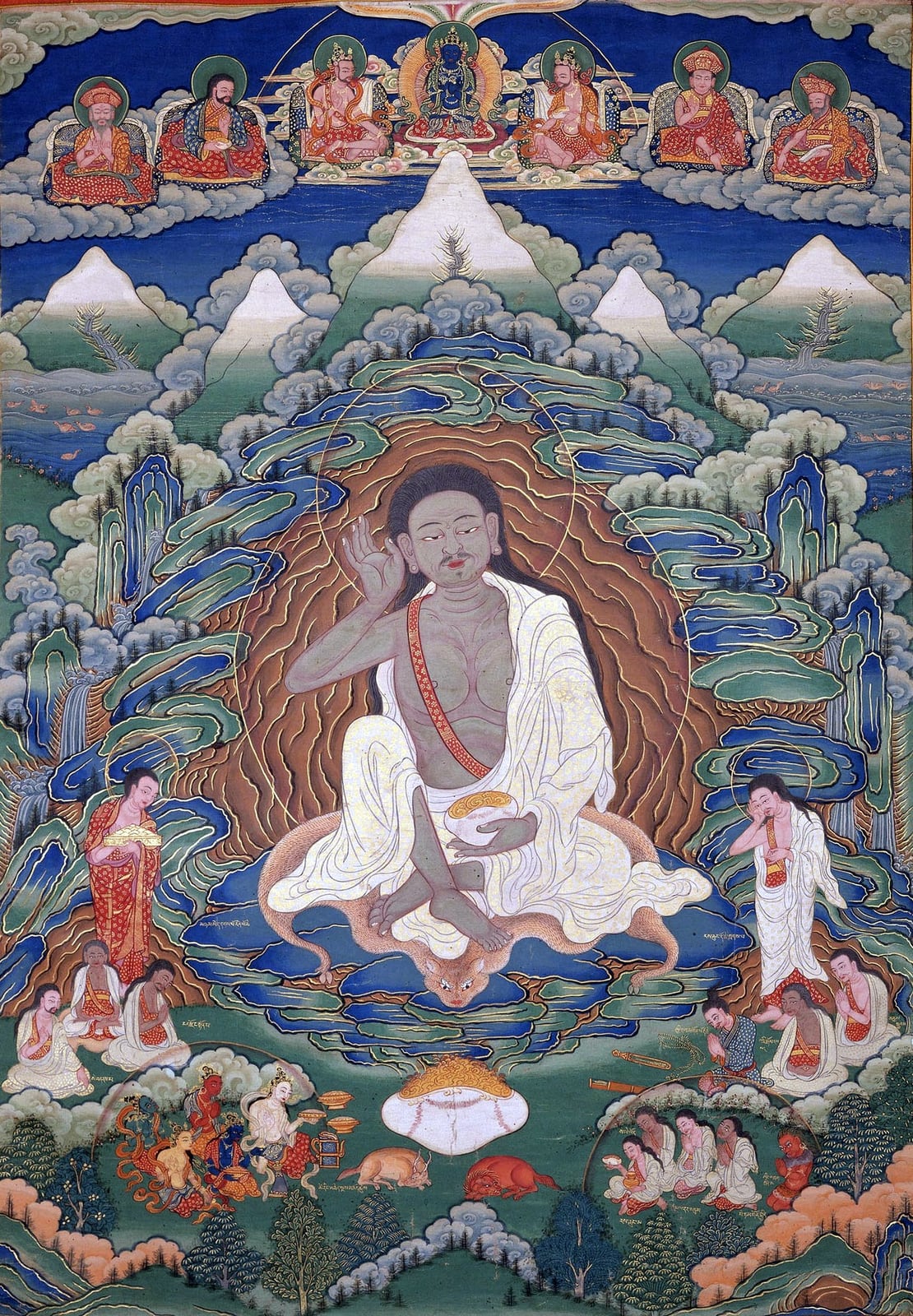
Milarepa
इन पर सहमत: क्या हम स्वतंत्र हैं, या सब कुछ पूर्वनिर्धारित है? · परम सत्य क्या है? क्या ईश्वर है? · मैं कौन हूँ? क्या कोई सच्चा आत्म है?
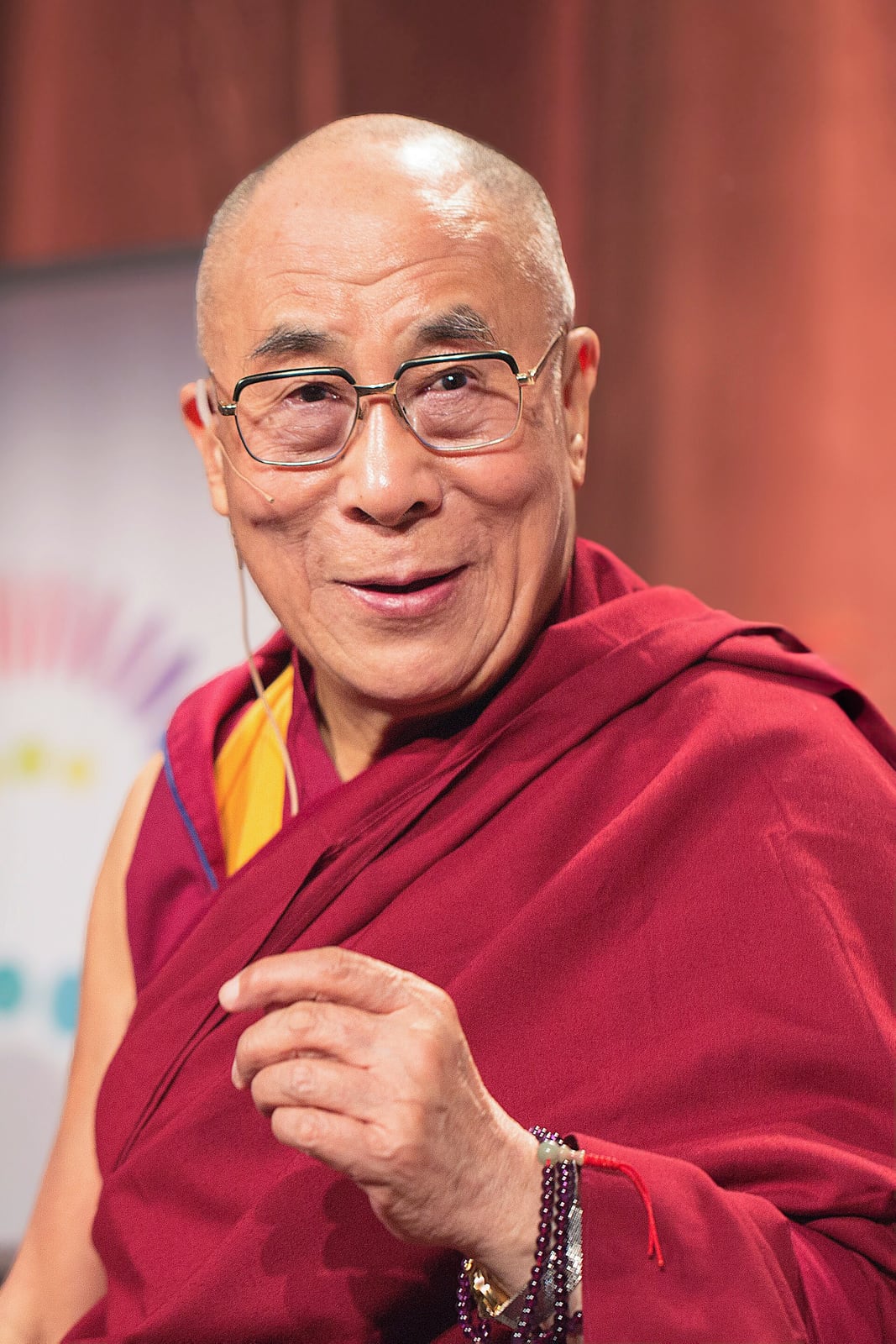
The 14th Dalai Lama (Tenzin Gyatso)
इन पर सहमत: मुक्ति या उद्धार कैसे प्राप्त होता है? · परम सत्य क्या है? क्या ईश्वर है? · मैं कौन हूँ? क्या कोई सच्चा आत्म है?

Tsongkhapa
इन पर सहमत: मुक्ति या उद्धार कैसे प्राप्त होता है? · परम सत्य क्या है? क्या ईश्वर है? · मैं कौन हूँ? क्या कोई सच्चा आत्म है?
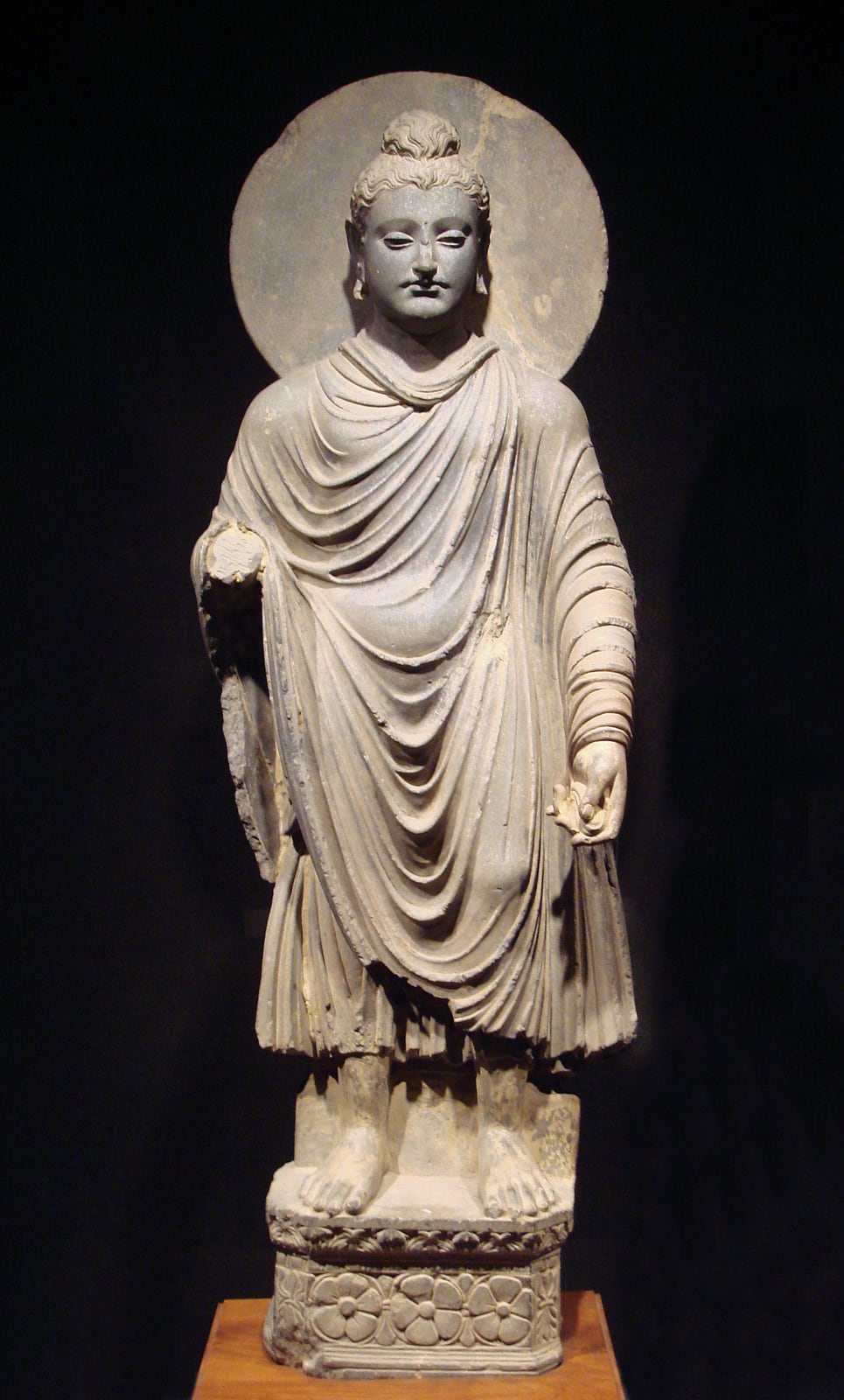
Siddhartha Gautama, the Buddha
इन पर सहमत: परम सत्य क्या है? क्या ईश्वर है? · मैं कौन हूँ? क्या कोई सच्चा आत्म है? · हम दुःख क्यों भोगते हैं?
इनसे भिन्न सोचते हैं

Francis of Assisi
इन पर टकराव: परम सत्य क्या है? क्या ईश्वर है? · मैं कौन हूँ? क्या कोई सच्चा आत्म है? · मृत्यु के बाद क्या होता है?

Rabia al-Adawiyya
इन पर टकराव: परम सत्य क्या है? क्या ईश्वर है? · मृत्यु के बाद क्या होता है?

Julian of Norwich
इन पर टकराव: परम सत्य क्या है? क्या ईश्वर है? · मैं कौन हूँ? क्या कोई सच्चा आत्म है? · मृत्यु के बाद क्या होता है?
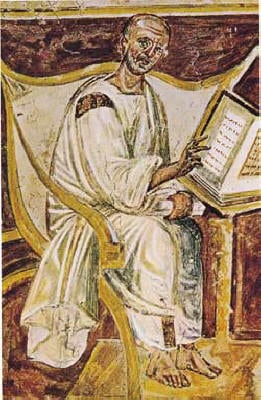
Augustine of Hippo
इन पर टकराव: परम सत्य क्या है? क्या ईश्वर है? · मैं कौन हूँ? क्या कोई सच्चा आत्म है? · मृत्यु के बाद क्या होता है?
प्रसंग और वृत्तांत
प्रसंग और वृत्तांत
संत-चरित वृत्तांतsiglo VIII (según la leyenda)
The occupied throne
वृत्तांत का स्रोत: Butön, History of Buddhism (1322), Tāranātha, History of Buddhism in India (1608), and the Sanskrit biography in a fourteenth-century Nepalese manuscript studied by de Jong (1975). None is less than five centuries later than the life it narrates.
स्रोत: Tāranātha. Tāranātha's History of Buddhism in India. Trad. Lama Chimpa y Alaka Chattopadhyaya. Simla: Indian Institute of Advanced Study, 1970.
संत-चरित वृत्तांतsiglo VIII (según la leyenda)
The wooden sword
वृत्तांत का स्रोत: Butön, History of Buddhism (1322), Tāranātha, History of Buddhism in India (1608), and the Sanskrit biography in a fourteenth-century Nepalese manuscript studied by de Jong (1975). None is less than five centuries later than the life it narrates.
स्रोत: Bu-ston (Butön Rinchen Drub). History of Buddhism (Chos-ḥbyung). Trad. E. Obermiller. Heidelberg: Harrassowitz, 1931–1932, 2 vols.
संत-चरित वृत्तांतsiglo VIII (según la leyenda)
The one who ate, slept and went to the latrine
वृत्तांत का स्रोत: Butön, History of Buddhism (1322), Tāranātha, History of Buddhism in India (1608), and the Sanskrit biography in a fourteenth-century Nepalese manuscript studied by de Jong (1975). None is less than five centuries later than the life it narrates.
स्रोत: de Jong, J. W. «La légende de Śāntideva». Indo-Iranian Journal 16 (1975): 161–182.
संत-चरित वृत्तांतsiglo VIII (según la leyenda)
The vanishing at stanza 9.34 and the three versions
वृत्तांत का स्रोत: Butön and Tāranātha (as summarised by van Schaik, 2014); the connection with the Dunhuang recension is Akira Saito's (1993).
संत-चरित वृत्तांतsiglo VIII (según la leyenda)
The bowl that fed five hundred
वृत्तांत का स्रोत: Butön, History of Buddhism (1322), Tāranātha, History of Buddhism in India (1608), and the Sanskrit biography in a fourteenth-century Nepalese manuscript studied by de Jong (1975). None is less than five centuries later than the life it narrates.
स्रोत: Bu-ston (Butön Rinchen Drub). History of Buddhism (Chos-ḥbyung). Trad. E. Obermiller. Heidelberg: Harrassowitz, 1931–1932, 2 vols.
साक्ष्य1960s–1989
The Dalai Lama and the master from Kinnaur
वृत्तांत का स्रोत: The Dalai Lama's own account in his public teachings and in the introduction to A Flash of Lightning in the Dark of Night (1994); the Nobel lecture, at nobelprize.org.
स्रोत: Dalái Lama XIV (Tenzin Gyatso). A Flash of Lightning in the Dark of Night: A Guide to the Bodhisattva's Way of Life. Trad. Padmakara Translation Group. Boston: Shambhala, 1994. ISBN 0877739714.
शिक्षाएँ
शिक्षाएँ
वे अवधारणाएँ जो उनके चिंतन को रूप देती हैं, उनके संदर्भ में समझाई गई।
Mind of awakening (bodhicitta)bodhicitta
Indian Mahāyāna; the tradition of “generating the mind” (cittotpāda) in the sūtras.
स्रोत: Śāntideva. The Bodhicaryāvatāra. Trad., introd. y notas de Kate Crosby y Andrew Skilton; introducción general de Paul Williams. Oxford: Oxford University Press (Oxford World's Classics), 1996. ISBN 0192829793.
Equalising and exchanging self and othersparatmaparivartana
Chapter 8 (meditation) of the Bodhicaryāvatāra; reception in Tibetan lojong.
स्रोत: Williams, Paul. Altruism and Reality: Studies in the Philosophy of the Bodhicaryāvatāra. Richmond (Surrey): Curzon, 1998.
Patience (kṣānti)ksanti
Third of the six perfections (pāramitā).
स्रोत: Śāntideva. The Bodhicaryāvatāra. Trad., introd. y notas de Kate Crosby y Andrew Skilton; introducción general de Paul Williams. Oxford: Oxford University Press (Oxford World's Classics), 1996. ISBN 0192829793.
Mindfulness and vigilance (smṛti and saṃprajanya)smrti-samprajanya
Discipline (śīla) in Mahāyāna ethics.
स्रोत: Śāntideva. The Bodhicaryāvatāra. Trad., introd. y notas de Kate Crosby y Andrew Skilton; introducción general de Paul Williams. Oxford: Oxford University Press (Oxford World's Classics), 1996. ISBN 0192829793.
The Madhyamaka wisdom of the ninth chaptermadhyamaka-bca9
Indian Madhyamaka; Tibetan reception (Gyaltsab Je, Mipham).
स्रोत: Williams, Paul. Altruism and Reality: Studies in the Philosophy of the Bodhicaryāvatāra. Richmond (Surrey): Curzon, 1998.
Dedication of merit (pariṇāmanā)parinamana
Mahāyāna liturgy; prayer recited in Tibetan Buddhism.
वीडियो
वीडियो
रिकॉर्डिंग, साक्षात्कार और वृत्तचित्र। वीडियो YouTube से चलते हैं; वे यहाँ संग्रहीत नहीं हैं।
Shantideva's "Guide to the Bodhisattva's Way of Life" - Day 1
व्याख्यान· EN· 2010
Dalai Lamaआधिकारिक चैनल
Guide to the Bodhisattva's Way of Life - Day 1
व्याख्यान· EN· 2018
Dalai Lamaआधिकारिक चैनल
Day 1 - "Shantideva's A Guide to the Bodhisattva's Way of Life" - Chapter 1
व्याख्यान· EN· 2022
Dalai Lamaआधिकारिक चैनल
Día 1 - Guía del Modo de Vida de los Bodisatvas de Shantideva - Capítulo 9
व्याख्यान· ES· 2022
El Dalái Lamaआधिकारिक चैनल
Stephen Batchelor on Shantideva
व्याख्यान· EN
Belfast Buddhist
[#1: Jul 13, 2026] How to be Caring: Shantideva's Bodhicaryāvatāra - Jay Garfield
व्याख्यान· EN· 2026
Shantideva Center, FPMT
Pema Chodron – On Shantideva
साक्षात्कार· EN
Pema Chodron Foundationआधिकारिक चैनल
The Story of Shantideva with Yongey Mingyur Rinpoche
व्याख्यान· EN
Yongey Mingyur Rinpocheआधिकारिक चैनल
The Way of the Bodhisattva with Yongey Mingyur Rinpoche
व्याख्यान· EN
Yongey Mingyur Rinpocheआधिकारिक चैनल
Chapter 6: Patience (Intro) - Shantideva's Guide to the Bodhisattva's Way of Life with Ven. Jamyang
व्याख्यान· EN
Tushita Mahayana Meditation Centre Delhiआधिकारिक चैनल
Shantideva's Bodhicharyavatara | Swami Yogatmananda
व्याख्यान· EN
Vedanta Society of New York
Bodhicharyavatara de Shantideva, clase 1
व्याख्यान· ES
Carlo R. Carranza
Enseñanzas de Shantideva - Capítulo de la dedicación del Bodhicharyavatara
व्याख्यान· ES
Druk Manjushri
Full Audio-Book: The Path of Light: The Bodhicaryavatara by ShantiDeva
तृतीय पक्ष की रिकॉर्डिंग· EN
Global Well-Being
चित्रशाला
चित्रशाला
सत्यापित लाइसेंस वाले चित्र। प्रत्येक में उसके रचयिता और श्रेय का उल्लेख सुरक्षित है।
पांडुलिपियाँ
पांडुलिपियाँ
पांडुलिपि-साक्ष्य और प्राचीन पाठ, उनके संरक्षक और अध्ययन की शर्तों सहित।
BO · Tibetano (dbu can) · Siglo VIII (traducción tibetana de finales del VIII)
byang chub sems dpa'i spyod pa la 'jug pa (recensión breve)
- संरक्षित पाठ-साक्ष्य
- Copia completa repartida entre IOL Tib J 628 y Pelliot tibétain 794; copia parcial (c. 60 %) IOL Tib J 629; copia del capítulo de la dedicatoria IOL Tib J 630
- संरक्षक
- British Library (Londres) y Bibliothèque nationale de France (París) · IOL Tib J 628, 629, 630; Pelliot tibétain 794
- डिजिटलीकरण
- idp.bl.uk/…
SA · Escritura nepalesa (bhujimol/newari) · Siglo VIII
Śikṣāsamuccaya
- संरक्षित पाठ-साक्ष्य
- Único manuscrito sánscrito completo conocido, base de la edición de Bendall (1897–1902)
- संरक्षक
- Cambridge University Library (colección Wright)
संबंध
संबंध
प्रभाव, शिष्यत्व और वैचारिक निकटता। प्रमाणित संबंध को विश्लेषण से पहचानी गई समानता से अलग दर्शाया गया है।
इनसे प्रभावित
The ninth chapter expounds Nāgārjuna's middle way, and the poem itself (5.106) refers to a compendium attributed to him.
प्रमाणित संबंध
इनसे प्रभावित
Siddhartha Gautama, the Buddha
The Śikṣāsamuccaya is an anthology of more than a hundred sūtras attributed to the Buddha.
प्रमाणित संबंध
इन्हें प्रभावित किया
Tsongkhapa and his disciple Gyaltsab Je read the ninth chapter as a Prāsaṅgika text and commented on it; Paul Williams studies that reading.
प्रमाणित संबंध
इन्हें प्रभावित किया
The 14th Dalai Lama (Tenzin Gyatso)
The poem is the axis of his public teaching: he has commented on it in full and by chapters, and closed his Nobel lecture with it (1989).
प्रमाणित संबंध
इन्हें प्रभावित किया
Author of a commentary on the poem, No Time to Lose (2005).
प्रमाणित संबंध
इनसे मिलते-जुलते विचार
The Kagyu tradition joins the yogi's renunciation to the bodhisattva ethics Gampopa took from the Kadam school, where the Bodhicaryāvatāra was a central text.
विश्लेषण से पहचानी गई समानता
इनसे मिलते-जुलते विचार
Both ground practice in the interdependence of one's own and others' suffering; Thich Nhat Hanh called it “interbeing”.
विश्लेषण से पहचानी गई समानता
इनके समकालीन
Rough contemporaries at the two ends of Asia: while the poem was being composed at Nālandā, the legend of the sixth Chan patriarch was taking shape in south China.
विश्लेषण से पहचानी गई समानता
इनसे मिलते-जुलते विचार
Hakuin insisted that awakening without the vow to save beings is incomplete (“post-satori practice”), an idea close to the primacy of bodhicitta.
विश्लेषण से पहचानी गई समानता
इनसे मिलते-जुलते विचार
Both treat practice as an everyday attitude rather than an achievement; a thematic coincidence, with no documented influence.
विश्लेषण से पहचानी गई समानता
स्रोत
स्रोत
इस प्रविष्टि के लिए देखे गए ग्रंथ-सूची और सूचीपत्र।
- Lele, Amod. «Śāntideva». Internet Encyclopedia of Philosophy, 2009.
- Pezzali, Amalia. Śāntideva, mystique bouddhiste des VIIe et VIIIe siècles. Florencia: Vallecchi, 1968.
- NTI Reader. «菩提行經 (Putixing jing), Taishō n.º 1662», trad. china atribuida a Nāgārjuna, traducida por Tianxizai (天息災), dinastía Song del Norte.
- Wikidata, «Shantideva», QID Q445460 (VIAF 23444930; LCCN n80102717).
- Śāntideva. The Bodhicaryāvatāra. Trad., introd. y notas de Kate Crosby y Andrew Skilton; introducción general de Paul Williams. Oxford: Oxford University Press (Oxford World's Classics), 1996. ISBN 0192829793.
- Śāntideva. A Guide to the Bodhisattva Way of Life (Bodhicaryāvatāra). Trad. del sánscrito y del tibetano de Vesna A. Wallace y B. Alan Wallace. Ithaca (NY): Snow Lion, 1997. ISBN 1559390611.
- de Jong, J. W. «La légende de Śāntideva». Indo-Iranian Journal 16 (1975): 161–182.
- Saito, Akira. A Study of Akṣayamati (= Śāntideva)'s Bodhisattvacaryāvatāra as Found in the Tibetan Manuscripts from Tun-huang. Mie (Japón): Mie University, 1993 (informe de investigación).
- van Schaik, Sam. «The original Bodhicaryāvatāra». early Tibet (blog), 4 de febrero de 2014; revisado el 21 de julio de 2021.
- Goodman, Charles (trad.). The Training Anthology of Śāntideva: A Translation of the Śikṣā-samuccaya. Nueva York: Oxford University Press, 2016. ISBN 9780199391356.
- Bendall, Cecil y W. H. D. Rouse (trads.). Śikshā-samuccaya: A Compendium of Buddhist Doctrine, compiled by Śāntideva chiefly from earlier Mahāyāna Sūtras. Londres: John Murray (Indian Texts Series), 1922.
- Bendall, Cecil (ed.). Çikshāsamuccaya: A Compendium of Buddhistic Teaching compiled by Çāntideva chiefly from earlier Mahāyāna-sūtras. San Petersburgo: Academia Imperial de Ciencias (Bibliotheca Buddhica I), 1897–1902.
- Bu-ston (Butön Rinchen Drub). History of Buddhism (Chos-ḥbyung). Trad. E. Obermiller. Heidelberg: Harrassowitz, 1931–1932, 2 vols.
- Tāranātha. Tāranātha's History of Buddhism in India. Trad. Lama Chimpa y Alaka Chattopadhyaya. Simla: Indian Institute of Advanced Study, 1970.
- Dalái Lama XIV (Tenzin Gyatso). A Flash of Lightning in the Dark of Night: A Guide to the Bodhisattva's Way of Life. Trad. Padmakara Translation Group. Boston: Shambhala, 1994. ISBN 0877739714.
- Williams, Paul. Altruism and Reality: Studies in the Philosophy of the Bodhicaryāvatāra. Richmond (Surrey): Curzon, 1998.
- Finot, Louis (trad.). La Marche à la lumière (Bodhicaryāvatāra), poème sanskrit de Çāntideva. París: Bossard (Les Classiques de l'Orient), 1920. Texto validado en Wikisource.
- La Vallée Poussin, Louis de (trad.). Bodhicaryāvatāra. Introduction à la pratique des futurs Bouddhas, poème de Çāntideva. París: Bloud, 1907.
- Barnett, Lionel D. (trad.). The Path of Light, rendered for the first time into English from the Bodhi-charyāvatāra of Śānti-Deva: A Manual of Mahā-yāna Buddhism. Londres: John Murray (Wisdom of the East), 1909.
- Kværne, Per. An Anthology of Buddhist Tantric Songs: A Study of the Caryāgīti. Oslo: Universitetsforlaget, 1977.
- The Nobel Prize. «The 14th Dalai Lama — Nobel Lecture», Oslo, 11 de diciembre de 1989; la conclusión con la estrofa de Śāntideva se reproduce en CBS News, «Almanac: The Dalai Lama».
- Chödrön, Pema. No Time to Lose: A Timely Guide to the Way of the Bodhisattva. Boston: Shambhala, 2005. ISBN 1590301358.
- Prajñākaramati. Bodhicaryāvatārapañjikā. Ed. Louis de La Vallée Poussin. Calcuta: Asiatic Society of Bengal (Bibliotheca Indica), 1901–1914.
- अधिकार-धारक
- Obra original en dominio público (siglo VIII). Las traducciones modernas tienen derechos propios: Oxford University Press (Crosby y Skilton; Goodman), Shambhala Publications (Padmakara; Karma Choephel; comentarios del Dalái Lama, Kunzang Pelden y Pema Chödrön), Snow Lion (Wallace), Wisdom Publications, Tharpa Publications, Ediciones Dharma, Miraguano.
पुष्टि की प्रतीक्षा में
जो यह प्रविष्टि अभी तक निश्चित नहीं कर सकी है। हम उसे भर देने के बजाय कह देना बेहतर समझते हैं।
- Fechas: 685–763 es la cronología tradicional que recoge Wikidata; la erudición solo afirma «primera mitad del siglo VIII». Se han mantenido como aproximadas y marcadas «traditional».
- Signatura del manuscrito sánscrito único del Śikṣāsamuccaya en la Cambridge University Library (colección Wright): no se ha podido confirmar en un catálogo accesible.
- Traductores de las ediciones españolas de Ediciones Dharma (2008) y Miraguano (2015): no constan en Open Library; comprobar en el colofón.
- Obras tántricas atribuidas a un «Śāntideva» en el Tengyur (rituales del ciclo Guhyasamāja): no se han podido verificar los números Tōhoku; si se confirman, añadir como «attributed» con nota de homonimia probable.
- No hay texto sánscrito del Bodhicaryāvatāra en Wikisource; las ediciones de Vaidya (1960) y Bhattacharya (1960) están en Internet Archive solo como escaneo.
- Barnett (1909) y Bendall-Rouse (1922) registrados con caution: true (derechos en la UE/España hasta 2031/2041).
- Duraciones y años de varios vídeos: oEmbed no los devuelve; se han dejado en null salvo los del canal oficial del Dalái Lama.
2026-10-25 को शोधित