ईसाई धर्म · ईसाई रहस्यवाद · कैथोलिक धर्म
Julian of Norwich
लगभग 1342 – लगभग 1416ऐतिहासिक रूप से प्रमाणित व्यक्ति
अंग्रेज़ एकांतवासिनी और लेखिका (लगभग 1342 – 1416 के बाद)। मई 1373 में, गंभीर रूप से बीमार, उसे मसीह के दुःखभोग और ईश्वर के प्रेम के सोलह दर्शन मिले, जिनका वर्णन उसने दो रूपों में किया: एक लघु पाठ और, दशकों के मनन के बाद, एक दीर्घ पाठ — दिव्य प्रेम के प्रकटीकरण — जो किसी स्त्री द्वारा अंग्रेज़ी में लिखी गई सबसे पुरानी उपलब्ध पुस्तक है। वह नॉरिच के संत जूलियन गिरजाघर की कोठरी में आजीवन बंद रही। भरोसे के उसके धर्मशास्त्र — "सब कुछ ठीक होगा" —, क्रोधरहित ईश्वर और मसीह के मातृत्व ने उसे क्लासिक लेखिका बनाया।
- कृतियाँ
- 3कृतियाँ
- संस्करण
- 14संस्करण
- उद्धरण
- 8उद्धरण
- वीडियो
- 13वीडियो
- चित्र
- 5चित्र
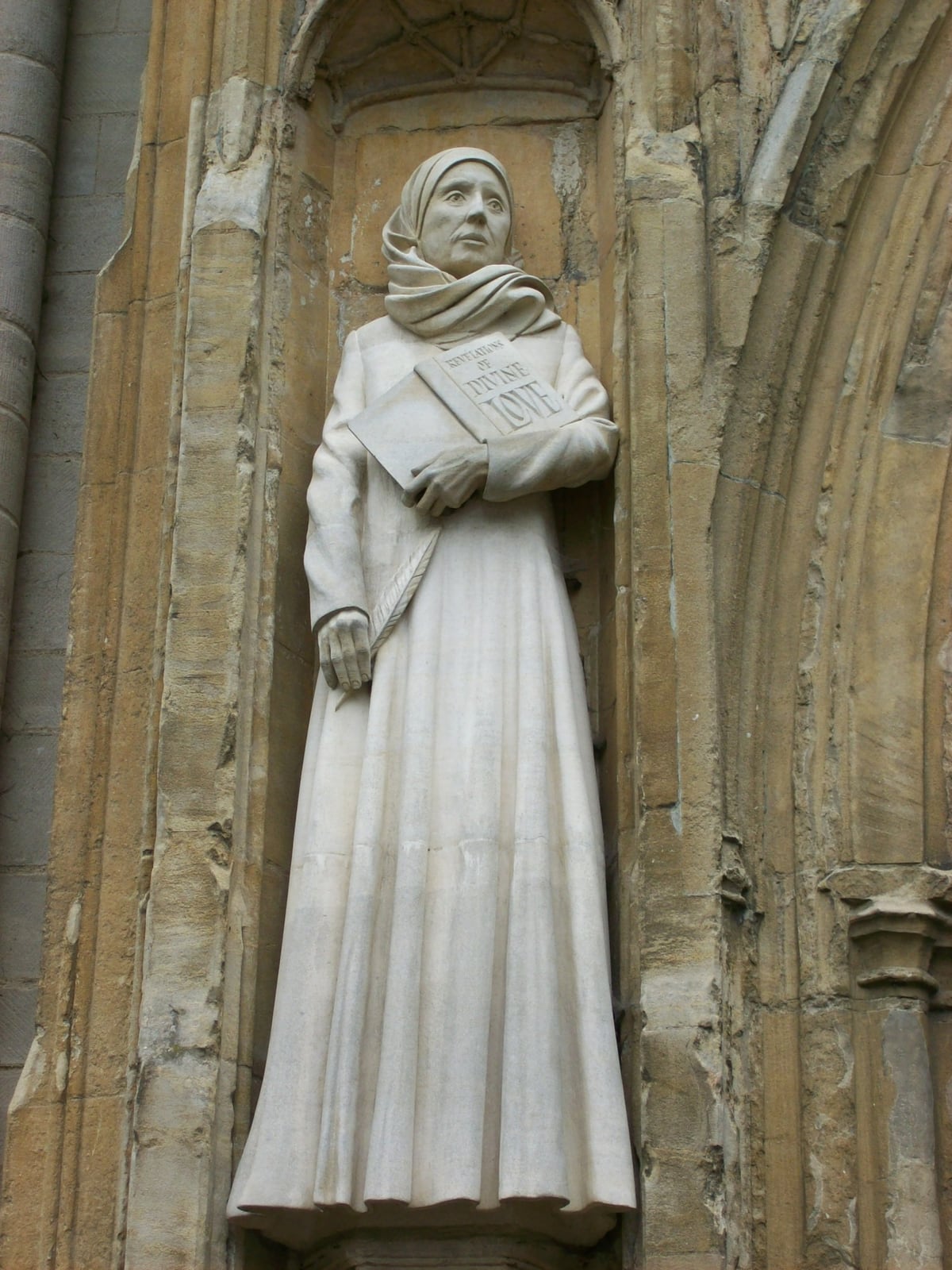
Estatua de Juliana en la fachada oeste de la catedral de Norwich (David Holgate) · CC0
उनके अपने शब्दों में
«It behoved that there should be sin; but all shall be well, and all shall be well, and all manner of thing shall be well.»Texto largo según la versión modernizada del Sloane 2499 de Grace Warrack (1901), cap. 27 (decimotercera mostración)
मूल विचार
'All shall be well': behovely sin: In the thirteenth showing Julian asks why God in his wisdom did not prevent sin, which, she thinks, would have left everything well.
संदर्भ में देखें
जीवनी
6 मिनट का पाठ
स्पैनिश मूल से सहायता-प्राप्त अनुवाद, मातृभाषी अनुवादक द्वारा समीक्षा लंबित।
अपने नाम से वंचित एक स्त्री
किसी स्त्री द्वारा अंग्रेज़ी में लिखी गई जो सबसे पुरानी पुस्तक हम तक पहुँची है, उसकी लेखिका का न हमें बपतिस्मा-नाम ज्ञात है, न उसके माता-पिता के नाम, न उसके जन्म का ठीक स्थान। हम उसे जूलियन कहते हैं, क्योंकि वसीयतें और प्रतिलिपिकार उसे इसी नाम से पुकारते हैं, और क्योंकि वह नॉरिच के कोनिसफ़र्ड में संत जूलियन के गिरजाघर से सटी एक कोठरी में दीवारों के भीतर बंद होकर रहती थी; संभव है कि उसने, अन्य एकांतवासियों की तरह, गिरजाघर के संरक्षक संत का नाम अपना लिया हो। जो कुछ निश्चित रूप से ज्ञात है, वह वह स्वयं बताती है: मई 1373 में, जब वह "साढ़े तीस जाड़ों" की थी, एक ऐसी बीमारी के दौरान जो उसे मृत्यु के द्वार तक ले गई, उसे दर्शनों की एक शृंखला प्राप्त हुई। इससे अनुमान लगता है कि उसका जन्म 1342 के अंत के आसपास हुआ।
नॉरिच उस समय इंग्लैंड के सबसे घनी आबादी वाले नगरों में था — ऊन के व्यापार का केंद्र, जिसमें दर्जनों पल्ली-गिरजाघर, चारों भिक्षाजीवी धर्मसंघों के मठ और एक बेनेडिक्टाइन कैथेड्रल-प्रायरी थी। जूलियन का यौवन ब्लैक डेथ (काली मौत) के साथ बीता, जिसने 1349 में नगर पर आघात किया और आगे के दशकों में बार-बार लौटी; सौ वर्षीय युद्ध के साथ; और 1381 में किसान विद्रोह के साथ, जिसे नॉरफ़ॉक में बिशप हेनरी डिस्पेंसर ने कठोरता से कुचल दिया। इनमें से कुछ भी उसकी पुस्तक में स्पष्ट रूप से नहीं आता, किंतु अनेक पाठकों ने उसके इस आग्रह में कि "सब कुछ ठीक होगा", एक घायल संसार को दिया गया उत्तर सुना है।
तीन वरदान और बीमारी
जूलियन बताती है कि युवावस्था में उसने ईश्वर से तीन अनुग्रह माँगे थे: मसीह के दुःखभोग की जीवंत स्मृति, मानो वह मरियम मगदलीनी के साथ क्रूस के चरणों में खड़ी रही हो; तीस वर्ष की आयु में एक गंभीर शारीरिक रोग; और तीन "घाव" — सच्चा पश्चात्ताप, करुणा और ईश्वर की उत्कट चाह। पहली दो प्रार्थनाएँ वह भूल गई; तीसरी उसने सदा सँजोए रखी। साढ़े तीस वर्ष की आयु में वह बीमार पड़ी। तीन दिन और तीन रात उसकी दशा बिगड़ती गई, उसे मृत्युशय्या के संस्कार दिए गए, और अन्य लोगों के साथ उसकी माँ उसके पास जागती रही। पल्ली-पुरोहित ने उसके सामने एक क्रूसमूर्ति रखी और कहा कि वह अपने सृष्टिकर्ता और उद्धारकर्ता की प्रतिमा को देखे और उससे सांत्वना ले। उसकी दृष्टि धुँधला गई, केवल क्रूस के आसपास प्रकाश बना रहा।
सोलह प्रकटीकरण
तब, 8 या 13 मई 1373 को — पांडुलिपियों में मतभेद है — उसने काँटों के मुकुट से रक्त बहते देखा, और इसी दर्शन से सोलह "प्रकटीकरणों" (shewings) की शृंखला आरंभ हुई: पंद्रह भोर के चार बजे से तीसरे पहर तक, और अंतिम अगली रात। इनमें दुःखभोग के असाधारण शारीरिक यथार्थ वाले दृश्य हैं — छज्जे से वर्षा की बूँदों की तरह टपकता रक्त, सूखता और रंग बदलता मुख —, भीतरी वचन हैं, और बिना छवि के "आत्मिक दर्शन" हैं। उनमें से एक में वह अपनी हथेली पर हेज़लनट के आकार की कोई वस्तु देखती है: "यह वह सब है जो रचा गया है", और वह इसलिए बनी रहती है कि ईश्वर उससे प्रेम करता है। स्वस्थ होने पर उसने एक धर्मसंघी से कहा कि वह "प्रलाप" कर रही थी, और तुरंत पछताई कि उसने जो देखा था उसे नकार दिया; उसी रात उस पर एक शैतानी दर्शन का आक्रमण हुआ और उसे अंतिम प्रकटीकरण मिला, जिसने पहले वालों की पुष्टि की।
दो पुस्तकें
कुछ ही समय बाद उसने पहला वृत्तांत लिखा, जिसे आज लघु पाठ कहा जाता है, और जिसमें वह दर्शनों और उनके सबसे तात्कालिक अर्थ का वर्णन करती है। दशकों तक वह उन पर मनन करती रही। वह बताती है कि "पंद्रह वर्ष बाद और उससे भी अधिक" उसे सबके अर्थ के बारे में अपने प्रश्न का उत्तर मिला: "प्रेम ही उसका अभिप्राय था।" दर्शनों के तीन महीने कम बीस वर्ष बाद उसने स्वामी और सेवक का दृष्टांत समझा, जिसे उसने पहले वृत्तांत में छोड़ दिया था। इसका परिणाम है दीर्घ पाठ — छियासी अध्याय, जो अनुभव को धर्मशास्त्र में बदल देते हैं: पाप, जो "अनिवार्य" है और फिर भी जिसका कोई सत्त्व नहीं; एक ईश्वर, जिसमें उसे कोई क्रोध नहीं दिखता; मसीह का मातृत्व; और वह प्रार्थना जो "आत्मा को ईश्वर से जोड़ती है"। निकोलस वॉटसन ने प्रस्ताव किया है कि लघु पाठ का लेखन 1380 के दशक तक खिसकाया जाए और दीर्घ पाठ का लेखन पंद्रहवीं शताब्दी में काफ़ी आगे तक बढ़ाया जाए।
संत जूलियन की एकांतवासिनी
हम नहीं जानते कि वह कब संत जूलियन के गिरजाघर से सटी उस कोठरी में बंद हुई, जो कैरो की बेनेडिक्टाइन मठवासिनियों की प्रायरी के अधीन थी। पहला दस्तावेज़ी उल्लेख 1394 का है: सेंट माइकल कोस्लानी के रेक्टर रॉजर रीड की वसीयत उसके लिए दो शिलिंग छोड़ती है। इसके बाद 1404, 1415 और 1416 में अन्य दान मिलते हैं, अंतिम सफ़क की काउंटेस इज़ाबेल अफ़र्ड से। एकांतवासिनी जीवन भर एक या दो कमरों में रहती थी — एक खिड़की गिरजाघर की ओर, जिससे वह मिस्सा में सम्मिलित हो सके, और दूसरी सड़क की ओर, जिससे वह आने वालों को परामर्श दे सके; एक या दो सेविकाएँ उसके भरण-पोषण की देखभाल करती थीं। अनुमान लगाया गया है कि वह पहले कैरो में मठवासिनी रही होगी, या फिर विधवा और माँ — क्योंकि वह बच्चों के पालन-पोषण की बात बड़ी सूक्ष्मता से करती है; दोनों ही अटकलें हैं।
खिड़की पर मार्जरी केम्प
लगभग 1413 में किंग्स लिन की उद्वेलित रहस्यवादिनी मार्जरी केम्प उससे यह पूछने आई कि उसके आँसू और प्रकटीकरण ईश्वर की ओर से हैं या नहीं। लगभग बीस वर्ष बाद लिखवाई गई द बुक ऑफ़ मार्जरी केम्प स्मरण करती है कि "दाम जूलियन" ने कई दिनों तक उसकी बात सुनी और उसे सलाह दी कि वह ईश्वर की आज्ञा माने, उसकी भलाई पर भरोसा रखे और दूसरों के अविश्वास से व्याकुल न हो, क्योंकि जो सदा संदेह करता है वह समुद्र की लहर के समान है। जूलियन का यही एकमात्र चित्र है जो उसे जानने वाले किसी व्यक्ति ने खींचा। उसी वर्ष 1413 में, लघु पाठ की पांडुलिपि के शीर्ष-लेख के अनुसार, उसकी लेखिका जीवित थी; उसकी मृत्यु, जो 1416 के बाद हुई, का कोई दस्तावेज़ी चिह्न नहीं बचा।
एक नाज़ुक परंपरा
लघु पाठ केवल एक पांडुलिपि में बचा है, जिसकी प्रतिलिपि पंद्रहवीं शताब्दी के मध्य में बनी — तथाकथित एमहर्स्ट पांडुलिपि (ब्रिटिश लाइब्रेरी, Add. MS 37790)। दीर्घ पाठ हम तक उन अंग्रेज़ बेनेडिक्टाइन मठवासिनियों के कारण पहुँचा जो सत्रहवीं शताब्दी में कांब्रे और पेरिस में निर्वासित थीं, और जिन्होंने उसकी प्रतिलिपि बनाई और उसे सँभाला: इसी परिवेश से पेरिस पांडुलिपि (बिब्लियोतेक नास्योनाल द फ़्रांस, Fonds anglais 40) और ब्रिटिश लाइब्रेरी की स्लोन 2499 और 3705 पांडुलिपियाँ आती हैं। बेनेडिक्टाइन सेरेनस क्रेसी ने 1670 में उसे छापा। 1901 में ग्रेस वॉरैक के संस्करण ने उसे पाठकों तक फिर पहुँचाया, और एडमंड कॉलेज तथा जेम्स वॉल्श के आलोचनात्मक संस्करण (1978) ने दोनों रूपों का पाठ स्थिर किया।
भरोसे की धर्मशास्त्री
बीसवीं शताब्दी ने उसे एक क्लासिक लेखिका बना दिया। टी. एस. एलियट ने अपने फ़ोर क्वार्टेट्स की अंतिम कविता "लिटिल गिडिंग" का समापन "अनिवार्य" पाप और सब कुछ ठीक होने के बारे में उसी के शब्दों से किया; चर्च ऑफ़ इंग्लैंड 8 मई को उसका स्मरण करता है, और पोप बेनेडिक्ट सोलहवें ने 2010 में उस पर एक सामान्य दर्शन-सभा समर्पित की। संत जूलियन का गिरजाघर, जो 1942 की जर्मन बमबारी में नष्ट हो गया था, एक कोठरी सहित फिर बनाया गया, जो आज तीर्थयात्रियों का स्वागत करती है। उस पर चिपकाए गए लेबलों — नारीवादी, सार्वभौमिक मुक्तिवादी, पारिस्थितिक — से परे एक स्वर बचता है, जिसने स्वयं को "एक सरल, अनपढ़ प्राणी" कहा और अपनी सदी में दुर्लभ धर्मशास्त्रीय सूक्ष्मता से लिखा, कलीसिया की शिक्षा और ईश्वर के ऐसे दर्शन को एक साथ थामे हुए, जिसमें उसे कोई क्रोध नहीं मिला।
स्रोत: Colledge, Edmund, y James Walsh (eds.). A Book of Showings to the Anchoress Julian of Norwich. 2 vols. Studies and Texts 35. Toronto: Pontifical Institute of Mediaeval Studies, 1978. · Watson, Nicholas, y Jacqueline Jenkins (eds.). The Writings of Julian of Norwich: A Vision Showed to a Devout Woman and A Revelation of Love. University Park: Pennsylvania State University Press / Turnhout: Brepols, 2006. · Warrack, Grace (ed.). Revelations of Divine Love Recorded by Julian, Anchoress at Norwich, Anno Domini 1373. Londres: Methuen, 1901 (Project Gutenberg n.º 52958). · Windeatt, Barry (trad. e intr.). Julian of Norwich: Revelations of Divine Love. Oxford World's Classics. Oxford: Oxford University Press, 2015. · The Book of Margery Kempe. Ed. Sanford Brown Meech y Hope Emily Allen. Early English Text Society, o.s. 212. Londres: Oxford University Press, 1940, cap. 18.
कालक्रम
जीवन, वर्ष-दर-वर्ष
प्रत्येक बिंदु एक प्रमाणित घटना है। उसे स्रोत और निश्चितता के स्तर सहित पढ़ने के लिए क्लिक करें।
लगभग 13420 वर्षProbablemente Norwich o Norfolk
Birth
Date inferred from her own statement that she was 'thirty winters and a half' old in May 1373 (Long Text, ch. 3). Her baptismal name and family are unknown.
संभावितColledge, Edmund, y James Walsh (eds.). A Book of Showings to the Anchoress Julian of Norwich. 2 vols. Studies and Texts 35. Toronto: Pontifical Institute of Mediaeval Studies, 1978.
उनके निधन के बाद
- लगभग 1450The Amherst manuscript is copied
- 1670First printed edition
- 1901Grace Warrack's edition
- जून 1942St Julian's church destroyed
- 1978Critical edition
- 1 दिसंबर 2010Benedict XVI's audience
लगभग 1342 · 0 वर्ष
Birth
Date inferred from her own statement that she was 'thirty winters and a half' old in May 1373 (Long Text, ch. 3). Her baptismal name and family are unknown.
संभावित
1349 · 7 वर्ष
The Black Death in Norwich
The epidemic decimates the city; new waves in 1361–1362 and 1369. The context of her childhood.
प्रमाणित
मई 1373 · 30 वर्ष
The sixteen showings
Gravely ill, she receives fifteen visions between early morning and afternoon and the sixteenth the following night. The manuscripts give 8 or 13 May.
प्रमाणित
लगभग 1380 – 1388 · 38 वर्ष
The Short Text
Writing of the first account of the visions; the traditional date (soon after 1373) was challenged by Nicholas Watson, who places it in the 1380s.
विवादित
लगभग 1388 · 45 वर्ष
'Love was his meaning'
'Fifteen years after and more' she receives the understanding that closes the book: love is the meaning of all the showings (Long Text, ch. 86).
प्रमाणित
लगभग 1393 · 50 वर्ष
The example of the lord and the servant
'Twenty years after the time of the showing, save three months' she understands the parable of the lord and the servant (Long Text, ch. 51), the core of the Long Text.
प्रमाणित
मार्च 1394 · 51 वर्ष
First mention as an anchoress
The will of Roger Reed, rector of St Michael Coslany, leaves two shillings to 'Julian anakorite'.
प्रमाणित
1404 · 61 वर्ष
Bequest of Thomas Emund
A chantry priest of Aylsham leaves a bequest to the anchoress of St Julian's and to her servant Sara.
प्रमाणित
लगभग 1413 · 70 वर्ष
Margery Kempe's visit
Margery Kempe consults her over several days about her experiences (Book of Margery Kempe, ch. 18). The rubric of the Amherst manuscript states she was alive in 1413.
प्रमाणित
1416 · 73 वर्ष
Last mention: the will of Isabel Ufford
The Countess of Suffolk leaves twenty shillings to 'Julian recluse a Norwich'. It is the last document mentioning her alive; the date of her death is unknown.
प्रमाणित
लगभग 1450
The Amherst manuscript is copied
A scribe copies the Short Text into an anthology of contemplative texts (British Library, Add. MS 37790), the only witness to that version.
संभावित
1670
First printed edition
The Benedictine Serenus Cressy publishes XVI Revelations of Divine Love from a Long Text manuscript related to the Paris one.
प्रमाणित
1901
Grace Warrack's edition
Methuen publishes Grace Warrack's modernised version of Sloane 2499, which popularises the work.
प्रमाणित
जून 1942
St Julian's church destroyed
German bombing destroys the church; it is rebuilt in 1953 with a chapel on the site of the cell.
प्रमाणित
1978
Critical edition
Edmund Colledge and James Walsh publish the critical edition of both versions (Pontifical Institute of Mediaeval Studies).
प्रमाणित
1 दिसंबर 2010
Benedict XVI's audience
Benedict XVI devotes his general audience catechesis to Julian.
प्रमाणित
कृतियाँ
आवश्यक कृतियाँ
वे कृतियाँ जिनके बिना उनकी विरासत को समझा नहीं जा सकता।
पांडुलिपि · लगभग 1385
The Short Text: A Vision Showed to a Devout Woman
A Vision Showed to a Devout Woman
The first version of the account of the visions of May 1373, in twenty-five chapters. It narrates the three gifts requested, the illness, the crucifix and the sixteen showings in a more personal and immediate tone than the long version: Julian presents herself as a woman and apologises for teaching ('Should I believe, because I am a woman, that I ought not to tell you of the goodness of God?'). It does not yet contain the example of the lord and the servant or the theology of Christ's motherhood. It is the earliest surviving English text known to be by a woman.
5 संस्करण · amazon.com

पांडुलिपि · लगभग 1393
The Long Text: Revelations of Divine Love
A Revelation of Love (Revelations of Divine Love)
A reworking of the same visions in eighty-six chapters, the fruit of twenty years or more of meditation. Besides expanding each showing, it adds theological chapters: the example of the lord and the servant (ch. 51), in which Adam and Christ are both the servant who falls in serving; the teaching that there is no wrath in God and that sin is 'behovely' but has no substance; the 'substance' and 'sensuality' of the soul; and the motherhood of Christ and of the Trinity (chs. 58–63). It closes with the answer received 'fifteen years after and more': 'Love was his meaning'. It is the major work of medieval English mysticism.
9 संस्करण · amazon.com
वचन
किसी निश्चित कृति में स्थित वचन। प्रत्येक के साथ उसका स्रोत और विश्वसनीयता का स्तर है।
It behoved that there should be sin; but all shall be well, and all shall be well, and all manner of thing shall be well.सत्यापितTexto largo según la versión modernizada del Sloane 2499 de Grace Warrack (1901), cap. 27 (decimotercera mostración)
अप्रामाणिक या विवादित आरोपण वाले उद्धरण (1)
«Be a gardener. Dig a ditch, toil and sweat, and turn the earth upside down…»
It circulates online and on devotional cards as a quotation from Julian. It does not appear in that form in either version: it is a free reworking of the image of the servant labouring as a gardener in the example of the lord and the servant (Long Text, ch. 51).
अंतिम शब्द
उनके अंतिम शब्दों का कोई सत्यापन-योग्य अभिलेख उपलब्ध नहीं है।
Neither the date nor the circumstances of her death are known. The last document mentioning her alive is the will of Isabel Ufford, Countess of Suffolk (1416); no source transmits final words.
स्रोत: Tanner, Norman P. The Church in Late Medieval Norwich, 1370–1532. Studies and Texts 66. Toronto: Pontifical Institute of Mediaeval Studies, 1984 (testamentos de Norwich con legados a anacoretas).
पूछें
उनकी कृतियाँ क्या उत्तर देती हैं
मानवता के बारह महान प्रश्न और उनके ग्रंथ उनका जो उत्तर देने देते हैं, संदर्भों सहित। हम कभी उनके मुख में अपने शब्द नहीं रखते।
परम सत्य क्या है? क्या ईश्वर है?
God is Trinitarian love, Father and also Mother
साकार, व्यक्तिगत ईश्वरस्पष्ट रूप से कहा है
Julian of Norwich does not argue for God's existence: she describes what was «shown» to her in sixteen revelations during an illness in 1373. In them God is Trinity and is love: in the final chapter of the Long Text she sums up that the meaning of everything shown was love. This God is courteous, homely, rejoices in creatures and holds them in being, like the hazelnut that lasts because God loves it. Her most original contribution is to call God Mother with the same truth with which he is called Father, and to ascribe that motherhood especially to Christ, the second Person. The Absolute is for her a Thou who loves without wrath, whose love precedes creation and never lessens.
इस प्रश्न की अन्य गुरुओं से तुलना करेंमैं कौन हूँ? क्या कोई सच्चा आत्म है?
Our substance is in God; our sensuality awaits union with it
सृजित, अमर आत्मास्पष्ट रूप से कहा है
Julian of Norwich distinguishes in the human being the «substance», the highest part, which was never separated from God, and the «sensuality», the embodied, temporal life where sin and pain occur. In chapter 54 of the Long Text she states that she saw no difference between God and our substance, as if it were all God, and yet understood that our substance is a creature in God. In the parable of the lord and the servant (ch. 51), the soul's fall arises not from malice but from haste to serve. The true self is a created soul, loved forever and kept in God, which is reconciled with itself when substance and sensuality are united through Christ.
इस प्रश्न की अन्य गुरुओं से तुलना करेंहम दुःख क्यों भोगते हैं?
Sin was behovely, but all shall be well
ईश्वर से वियोगस्पष्ट रूप से कहा है
Julian of Norwich asked why, if God is love, he did not prevent sin, which is the cause of all pain. The answer shown to her is one of the most famous sentences of English mysticism: sin was behovely, but all shall be well, and all manner of thing shall be well. She did not see sin, because she believes it has no substance, and knew it only by the pain it causes. In the parable of the lord and the servant, the fall appears as the stumbling of a servant running to do his lord's will. Suffering arises from separation, but God does not look on it with wrath, and every pain will be turned to honour.
इस प्रश्न की अन्य गुरुओं से तुलना करेंमृत्यु के बाद क्या होता है?
A great deed at the end will make all things well
अनंत जीवन और पुनरुत्थानस्पष्ट रूप से कहा है
Julian of Norwich's revelations were born at the edge of death: she was thirty and a half, received the last rites, and the priest held a crucifix before her, before which the visions began. Her hope is the Church's: eternal life in God, joy and bliss. But she adds something of her own: in chapter 32 she is shown that there is a great deed that the Trinity will do on the last day, hidden from every creature, by which all shall be well. Julian acknowledges the tension with the Church's teaching on damnation and does not resolve it: she holds it in faith and in the promise that what is impossible for her is not so for God.
इस प्रश्न की अन्य गुरुओं से तुलना करेंमुक्ति या उद्धार कैसे प्राप्त होता है?
God is the ground of our beseeching
कृपा और प्रेम सेस्पष्ट रूप से कहा है
Julian of Norwich sees salvation as the work of God's love that precedes everything: in chapter 41 of the Long Text she is shown that God is the ground of our beseeching, that it is he who makes us desire and ask for what he wishes to give us. The human role is real but humble: to pray, to trust, not to despair of one's own sin, and to remain in the faith of the Church. In chapter 68 she receives the promise that the soul will not be overcome, though it be tossed and afflicted. Liberation consists in Christ, our Mother, restoring us to the union of substance and sensuality, and keeping us in a love that never withdraws.
इस प्रश्न की अन्य गुरुओं से तुलना करेंक्या गुरु आवश्यक है?
What was shown is received within the Church's common faith
संघ और परंपराउनके सिद्धांत से निष्कर्षित
Julian of Norwich does not raise the question of the spiritual teacher; she received her revelations directly and spent some twenty years meditating on them. But she refuses to make them a separate authority. In chapter 9 of the Long Text she declares that she is not good because of the visions, but only if she loves God more, and that what she saw she believes according to the teaching of Holy Church. In chapter 80 she sums up the three things by which a human being stands in this life: the use of natural reason, the common teaching of the Church and the inward working of the Holy Spirit. Her text, moreover, is addressed to all her «fellow Christians», not to disciples.
इस प्रश्न की अन्य गुरुओं से तुलना करेंक्या संसार वास्तविक है?
All creation fits in a hazelnut and lasts because God loves it
शुभ और वास्तविक सृष्टिस्पष्ट रूप से कहा है
Julian of Norwich's best-known image answers this question. In the first revelation, God shows her in the palm of her hand a little thing, the size of a hazelnut, round as a ball, and she is told that it is all that is made. Julian marvels that it can last, for it seems that, in its littleness, it might suddenly fall into nothing; and she is answered that it lasts and ever shall because God loves it. In that vision she understands three things: that God made it, that God loves it and that God keeps it. The world is real, fragile and small before its Creator, and good because it is loved.
इस प्रश्न की अन्य गुरुओं से तुलना करेंप्रेम क्या है?
Love was the meaning of everything shown
ईश्वर और पड़ोसी से प्रेमस्पष्ट रूप से कहा है
Julian of Norwich's Long Text ends with the answer to the question she had asked herself for fifteen years: what the Lord's meaning was in what he showed her. She was answered that it was love: who showed it to her, love; what he showed her, love; why he showed it, for love. Julian adds that she saw with certainty that God loved us before he made us and that this love has never diminished nor ever shall. Love is God's essence, and from it proceeds the love creatures have for one another: her text is addressed to all her fellow Christians, because what was shown was for all, and in loving them she sees the concrete form of loving God.
इस प्रश्न की अन्य गुरुओं से तुलना करेंक्या हम स्वतंत्र हैं, या सब कुछ पूर्वनिर्धारित है?
God does all that is done; the how remains a secret
इस पर कुछ नहीं कहा
Julian of Norwich does not treat human freedom as a problem. What is shown to her points elsewhere: in the third revelation she sees God in a point and understands that he is in all things and does all that is done; nothing happens by chance, but by God's foreseeing wisdom. That raises for her the question of sin, which is no deed, and she resolves it by trusting that all that is done is well done. She neither denies human responsibility —she speaks of repentance, prayer and the fall— nor theorises about predestination: she leaves the how in God's secret, who in his time will make all things well.
इस प्रश्न की अन्य गुरुओं से तुलना करेंध्यान या प्रार्थना क्यों करें?
Prayer unites the soul to God, who is its ground
ईश्वर से मैत्रीस्पष्ट रूप से कहा है
Julian of Norwich devotes several chapters of the Long Text to prayer. There she is told that God is the ground of beseeching: it is he who makes us desire what he wants to give, and so prayer is never in vain, even when it seems dry or fruitless. Prayer unites the soul to God: although the soul is always like God in nature, it is often unlike him through sin, and prayer makes it like him in will. She distinguishes beseeching, which asks, from contemplation, in which the soul can no longer ask but only behold and give thanks. The tone is one of homely trust: God is courteous and wants to be spoken to with the simplicity of a child with its mother.
इस प्रश्न की अन्य गुरुओं से तुलना करेंक्या बुद्धि परम को जान सकती है?
Natural reason, the Church's teaching and the Spirit's work
श्रद्धा और तर्क एक-दूसरे के सहायकस्पष्ट रूप से कहा है
Julian of Norwich presents herself as an «unlettered creature», but her work shows great theological intelligence, and she gives reason an explicit place. In chapter 80 of the Long Text she lists the three things by which the human being stands in this life and by which God is honoured: the use of natural reason, the common teaching of Holy Church and the inward gracious working of the Holy Spirit, and adds that all three come from one God. The revelations do not replace reason: Julian spent twenty years meditating on them in order to understand them, and the Long Text is the fruit of that reflection. Reason helps; faith and grace complete.
इस प्रश्न की अन्य गुरुओं से तुलना करेंसंसार से हटें या उसे बदलें?
An anchoress who writes for all her fellow Christians
पाने के लिए हटनाउनके सिद्धांत से निष्कर्षित
Julian of Norwich lived as an anchoress, enclosed in a cell attached to the church of Saint Julian in Norwich, from which she probably takes her name; wills of the period mention her as an anchorite in the early fifteenth century. Her form of life was thus the strictest withdrawal known to the medieval Church. But her work does not argue for enclosure or despise those who live in the world: she declares that what was shown is not only for her but for all her fellow Christians, and her theology of God's love addresses ordinary life, the falling and falling again of anyone. From the cell, the window opened onto the street.
इस प्रश्न की अन्य गुरुओं से तुलना करें
निकटता और तनाव
निकटता और तनाव
उनके मतों के आधार पर प्रश्न-दर-प्रश्न आकलित। प्रत्येक सहमति या टकराव का कारण क्लिक करने पर।
इनसे मिलता-जुलता सोचते हैं
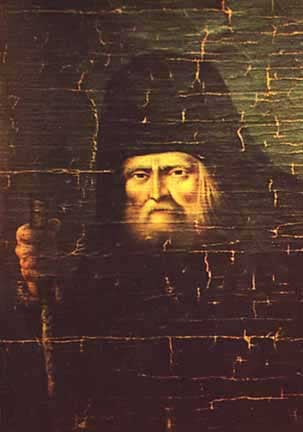
Seraphim of Sarov
इन पर सहमत: परम सत्य क्या है? क्या ईश्वर है? · मैं कौन हूँ? क्या कोई सच्चा आत्म है? · हम दुःख क्यों भोगते हैं?

Francis of Assisi
इन पर सहमत: परम सत्य क्या है? क्या ईश्वर है? · मैं कौन हूँ? क्या कोई सच्चा आत्म है? · हम दुःख क्यों भोगते हैं?
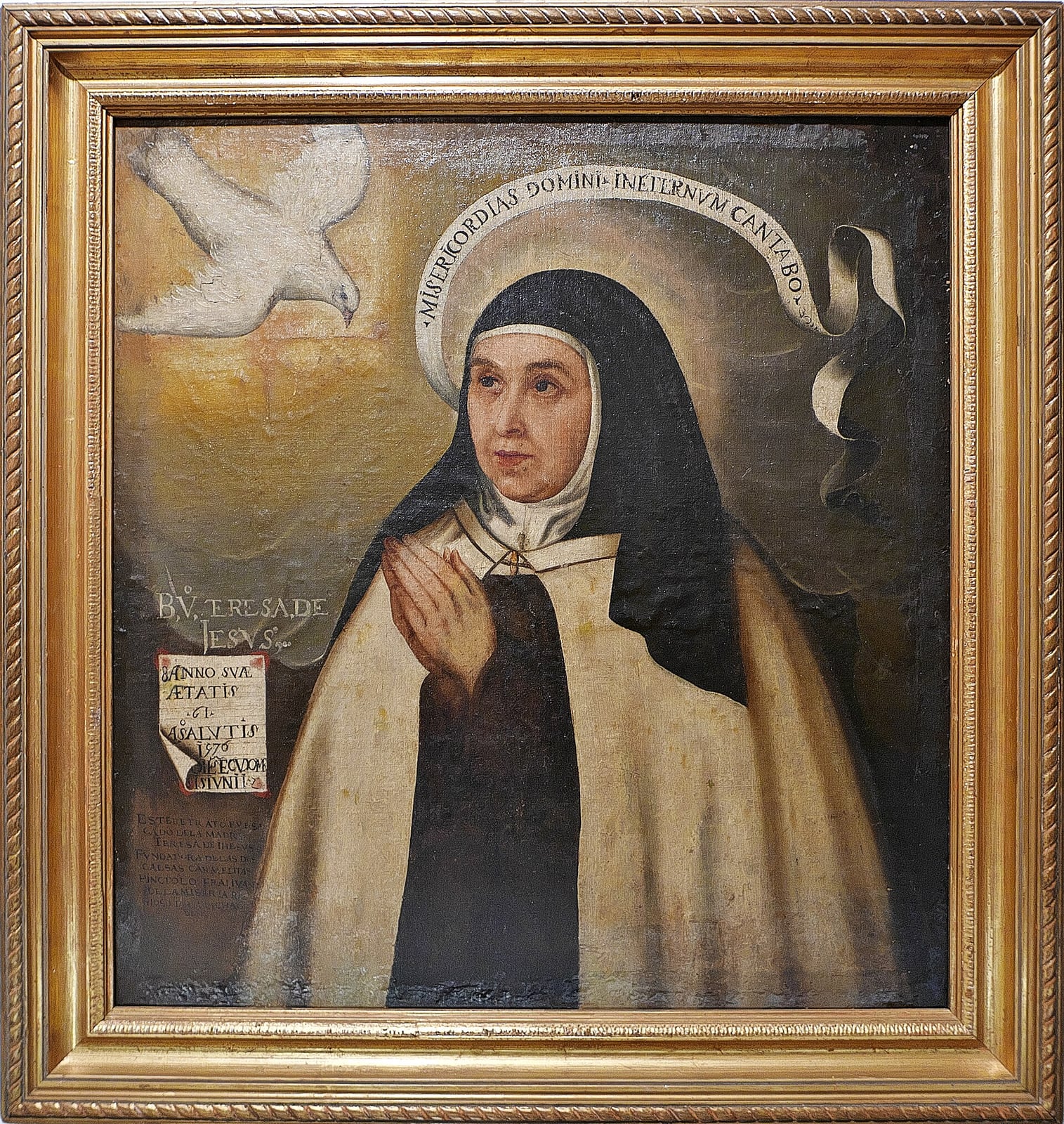
Teresa of Ávila
इन पर सहमत: परम सत्य क्या है? क्या ईश्वर है? · मैं कौन हूँ? क्या कोई सच्चा आत्म है? · हम दुःख क्यों भोगते हैं?
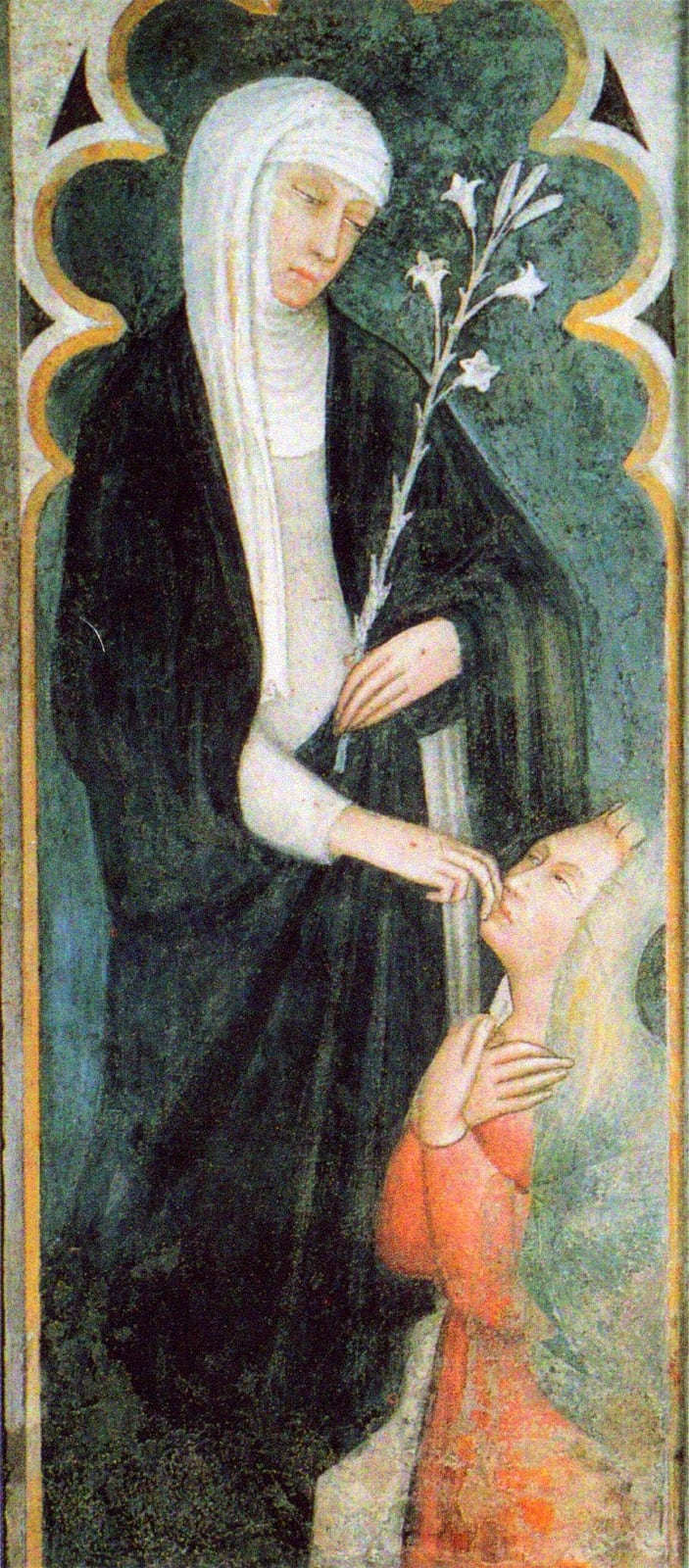
Catherine of Siena
इन पर सहमत: परम सत्य क्या है? क्या ईश्वर है? · मैं कौन हूँ? क्या कोई सच्चा आत्म है? · हम दुःख क्यों भोगते हैं?
इनसे भिन्न सोचते हैं

Pema Chödrön
इन पर टकराव: परम सत्य क्या है? क्या ईश्वर है? · मैं कौन हूँ? क्या कोई सच्चा आत्म है? · मृत्यु के बाद क्या होता है?

Nāgārjuna
इन पर टकराव: परम सत्य क्या है? क्या ईश्वर है? · मैं कौन हूँ? क्या कोई सच्चा आत्म है? · मृत्यु के बाद क्या होता है?
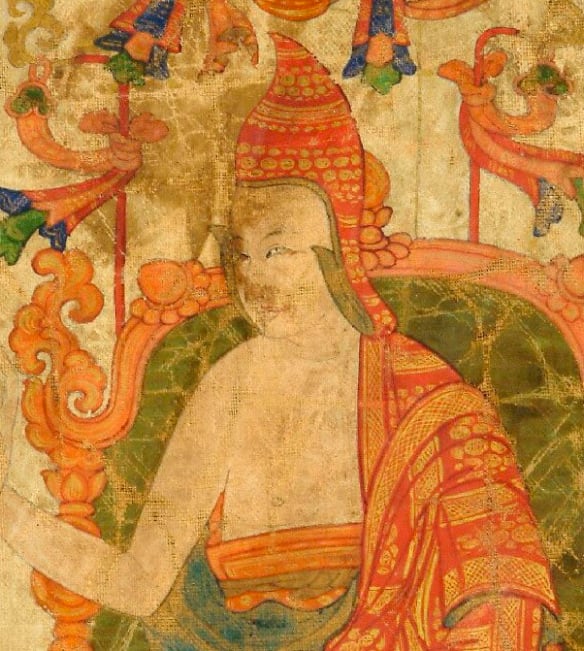
Śāntideva
इन पर टकराव: परम सत्य क्या है? क्या ईश्वर है? · मैं कौन हूँ? क्या कोई सच्चा आत्म है? · मृत्यु के बाद क्या होता है?

Sadhguru
इन पर टकराव: मैं कौन हूँ? क्या कोई सच्चा आत्म है? · मृत्यु के बाद क्या होता है? · क्या संसार वास्तविक है?
प्रसंग और वृत्तांत
प्रसंग और वृत्तांत
साक्ष्यmayo de 1373
The parish priest's crucifix
वृत्तांत का स्रोत: Julian's own account in the Short Text (chs. 2–3) and the Long Text (chs. 3–4).
साक्ष्यmayo de 1373
'I said I had raved'
वृत्तांत का स्रोत: Long Text, chs. 66–67; the episode also appears in the Short Text (chs. 21–22).
प्रमाणितc. 1413
Margery Kempe at the cell window
वृत्तांत का स्रोत: The Book of Margery Kempe, book I, ch. 18, dictated c. 1436–1438. The meeting is known only from this account.
स्रोत: The Book of Margery Kempe. Ed. Sanford Brown Meech y Hope Emily Allen. Early English Text Society, o.s. 212. Londres: Oxford University Press, 1940, cap. 18.
सत्यापन-योग्य नहींs. XX (tradición)
The anchoress's cat
वृत्तांत का स्रोत: The rule comes from the Ancrene Wisse (part VIII). The attribution of a cat to Julian has no medieval source and spread with modern iconography.
स्रोत: Jantzen, Grace M. Julian of Norwich: Mystic and Theologian. Londres: SPCK, 1987 (nueva ed. 2000).
प्रमाणितs. XVII
The nuns of Cambrai
वृत्तांत का स्रोत: Watson and Jenkins (2006) and Colledge and Walsh (1978) study the provenance of the Long Text manuscripts in the milieu of the Cambrai and Paris communities.
स्रोत: Watson, Nicholas, y Jacqueline Jenkins (eds.). The Writings of Julian of Norwich: A Vision Showed to a Devout Woman and A Revelation of Love. University Park: Pennsylvania State University Press / Turnhout: Brepols, 2006.
शिक्षाएँ
शिक्षाएँ
वे अवधारणाएँ जो उनके चिंतन को रूप देती हैं, उनके संदर्भ में समझाई गई।
'All shall be well': behovely sintodo-ira-bien
Late medieval debate on predestination and salvation, in the England of Wyclif and Langland.
स्रोत: Colledge, Edmund, y James Walsh (eds.). A Book of Showings to the Anchoress Julian of Norwich. 2 vols. Studies and Texts 35. Toronto: Pontifical Institute of Mediaeval Studies, 1978.
A God without wrathdios-sin-ira
Contrast with fourteenth-century penitential preaching and with the image of judgement in scholastic theology.
स्रोत: Jantzen, Grace M. Julian of Norwich: Mystic and Theologian. Londres: SPCK, 1987 (nueva ed. 2000).
The example of the lord and the servantsenor-y-siervo
Medieval multi-layered exegesis and the tradition of parable as a form of theological teaching.
स्रोत: Watson, Nicholas, y Jacqueline Jenkins (eds.). The Writings of Julian of Norwich: A Vision Showed to a Devout Woman and A Revelation of Love. University Park: Pennsylvania State University Press / Turnhout: Brepols, 2006.
The motherhood of Christ and of Godmaternidad-de-cristo
Medieval tradition of Jesus as mother (Anselm, Bernard of Clairvaux, William of Saint-Thierry).
स्रोत: Jantzen, Grace M. Julian of Norwich: Mystic and Theologian. Londres: SPCK, 1987 (nueva ed. 2000).
Substance and sensualitysustancia-y-sensualidad
Augustinian anthropology of the image and the English contemplative tradition (Hilton, The Cloud of Unknowing).
स्रोत: Watson, Nicholas, y Jacqueline Jenkins (eds.). The Writings of Julian of Norwich: A Vision Showed to a Devout Woman and A Revelation of Love. University Park: Pennsylvania State University Press / Turnhout: Brepols, 2006.
The courtesy and homeliness of Godcortesia-de-dios
The courtly language of fourteenth-century England applied to theology.
स्रोत: Windeatt, Barry (trad. e intr.). Julian of Norwich: Revelations of Divine Love. Oxford World's Classics. Oxford: Oxford University Press, 2015.
वीडियो
वीडियो
रिकॉर्डिंग, साक्षात्कार और वृत्तचित्र। वीडियो YouTube से चलते हैं; वे यहाँ संग्रहीत नहीं हैं।
2024 Julian Festival Lecture, Julian and the Trinity, Archbishop Rowan Williams
व्याख्यान· EN· 2024· 89 min
Julian of Norwichआधिकारिक चैनल
Julian of Norwich: mother, mystic, radical
व्याख्यान· EN· 2023· 81 min
Jesus College, Cambridgeआधिकारिक चैनल
Julian of Norwich: Revelations of Divine Love - Robert Fruehwirth
व्याख्यान· EN· 2016· 61 min
St Paul's Cathedralआधिकारिक चैनल
Prayer in the Teachings of Julian of Norwich: A Journey of Desire | Philip Sheldrake
व्याख्यान· EN· 2019· 84 min
Oblate School of Theologyआधिकारिक चैनल
How to Read Julian of Norwich / Ryan McAnnally-Linz
व्याख्यान· EN· 2024· 54 min
Yale Center for Faith & Cultureआधिकारिक चैनल
Julian of Norwich and the English Mystics: A Lecture by Fr. Groeschel
व्याख्यान· EN· 2019· 73 min
International Institute for Culture
Cecilia Twinch: Julian of Norwich: All manner of things shall be well
व्याख्यान· EN· 2023· 42 min
Ibn 'Arabi Societyआधिकारिक चैनल
Revelations of Divine Love by Julian of NORWICH read by David Barnes | Full Audio Book
तृतीय पक्ष की रिकॉर्डिंग· EN· 2018· 441 min
LibriVox Audiobooks
3º clase - Javier Melloni sj expone sobre Juliana de Norwich, teóloga de su propia experiencia
व्याख्यान· ES· 2022· 113 min
Fraternidad del Santo Nombre
Juliana de Norwich, Mística de la cortesía de Dios - El primer documental español
वृत्तचित्र· ES· 2026· 15 min
Radio Monastero Interiore
El Papa dedica la audiencia general a Juliana de Norwich, mística inglesa
तृतीय पक्ष की रिकॉर्डिंग· ES· 2010· 3 min
ROME REPORTS en Españolआधिकारिक चैनल
Juliana de Norwich
व्याख्यान· ES· 2026· 104 min
Cruzando Fronteras con Fernando Cordero sscc
Giuliana di Norwich, Mistica della cortesia di Dio - il primo documentario italiano
वृत्तचित्र· IT· 2025· 16 min
Radio Monastero Interiore
चित्रशाला
चित्रशाला
सत्यापित लाइसेंस वाले चित्र। प्रत्येक में उसके रचयिता और श्रेय का उल्लेख सुरक्षित है।
पांडुलिपियाँ
पांडुलिपियाँ
पांडुलिपि-साक्ष्य और प्राचीन पाठ, उनके संरक्षक और अध्ययन की शर्तों सहित।
ENM · Gótica cursiva inglesa (tipo no verificado) · Texto: c. 1373–1390; copia: c. 1435–1450
A Vision Showed to a Devout Woman (Texto breve), en antología contemplativa
- संरक्षित पाठ-साक्ष्य
- Único testimonio del Texto breve, dentro de una antología de textos contemplativos (Rolle, Ruusbroec, Suso, entre otros). La rúbrica afirma que la autora seguía viva en 1413.
- संरक्षक
- British Library, Londres · Add. MS 37790 (manuscrito Amherst)
ENM · Cursiva (tipo no verificado) · Copia de finales del s. XVI
Revelations of Divine Love (Texto largo), copia de París
- संरक्षित पाठ-साक्ष्य
- Texto largo completo con el explicit «Explicit liber revelationum Julyane anatorite Norwyche»; texto próximo al de la edición de Cressy (1670).
- संरक्षक
- Bibliothèque nationale de France, París · Fonds anglais 40
ENM · Cursiva del s. XVII · Mediados del s. XVII
Revelations of Divine Love (Texto largo), Sloane 2499
- संरक्षित पाठ-साक्ष्य
- Texto largo completo con ortografía arcaizante; base de las ediciones de Warrack (1901), Glasscoe (1976) y Crampton (1993).
- संरक्षक
- British Library, Londres · Sloane MS 2499
ENM · Cursiva del s. XVIII · S. XVIII
Revelations of Divine Love (Texto largo), Sloane 3705
- संरक्षित पाठ-साक्ष्य
- Copia tardía del Texto largo, con ortografía modernizada.
- संरक्षक
- British Library, Londres · Sloane MS 3705
ENM · Gótica cursiva inglesa (tipo no verificado) · c. 1500
Extractos del Texto largo (manuscrito de Westminster)
- संरक्षित पाठ-साक्ष्य
- Antología de pasajes del Texto largo junto a comentarios a los salmos; el testimonio más antiguo de esa versión.
- संरक्षक
- Westminster Cathedral Treasury, Londres · MS 4
संबंध
संबंध
प्रभाव, शिष्यत्व और वैचारिक निकटता। प्रमाणित संबंध को विश्लेषण से पहचानी गई समानता से अलग दर्शाया गया है।
इनसे प्रभावित
The sixteen showings centre on Christ's passion, which Julian had asked to behold 'as if she had been there', and her whole theology is built around him as servant, mother and saviour.
प्रमाणित संबंध
इनसे मिलते-जुलते विचार
Julian works within the Augustinian horizon (fall, original sin, grace, God's image in the soul), but her vision of a God who does not blame departs from the rigour of the late Augustine. No direct reading is documented.
विश्लेषण से पहचानी गई समानता
इनके समकालीन
Exact contemporaries (Catherine was born in 1347 and Julian had her visions in 1373), both laywomen without Latin learning who dictated or wrote theology in the vernacular. There was no contact.
विश्लेषण से पहचानी गई समानता
इनसे मिलते-जुलते विचार
Two women who wrote of their experience of God in domestic language and with a theological sharpness that exceeded their 'unlettered' status. Teresa did not know Julian's work.
विश्लेषण से पहचानी गई समानता
इनसे मिलते-जुलते विचार
Both visionaries received visions in sickness and interpreted them over years; but Hildegard was an abbess, prophetic and cosmological, and Julian a recluse and introspective. No documented relation.
विश्लेषण से पहचानी गई समानता
इनसे मिलते-जुलते विचार
Affective devotion to the suffering humanity of Christ, spread in fourteenth-century England by Franciscan spirituality, forms the background of her visions of the passion. No direct relation.
विश्लेषण से पहचानी गई समानता
इनसे मिलते-जुलते विचार
Julian's 'substance' of the soul ever united to God recalls Eckhart's 'ground' of the soul, but her language is narrative and concrete, not speculative. There is no sign that she knew Rhineland mysticism.
विश्लेषण से पहचानी गई समानता
अन्य प्रविष्टियों से जुड़ा
स्रोत
स्रोत
इस प्रविष्टि के लिए देखे गए ग्रंथ-सूची और सूचीपत्र।
- Wikidata, Q236699 «Juliana de Norwich / Julian of Norwich» (P31=Q5; 45 enlaces entre wikis).
- Colledge, Edmund, y James Walsh (eds.). A Book of Showings to the Anchoress Julian of Norwich. 2 vols. Studies and Texts 35. Toronto: Pontifical Institute of Mediaeval Studies, 1978.
- Watson, Nicholas, y Jacqueline Jenkins (eds.). The Writings of Julian of Norwich: A Vision Showed to a Devout Woman and A Revelation of Love. University Park: Pennsylvania State University Press / Turnhout: Brepols, 2006.
- Warrack, Grace (ed.). Revelations of Divine Love Recorded by Julian, Anchoress at Norwich, Anno Domini 1373. Londres: Methuen, 1901 (Project Gutenberg n.º 52958).
- Windeatt, Barry (trad. e intr.). Julian of Norwich: Revelations of Divine Love. Oxford World's Classics. Oxford: Oxford University Press, 2015.
- The Book of Margery Kempe. Ed. Sanford Brown Meech y Hope Emily Allen. Early English Text Society, o.s. 212. Londres: Oxford University Press, 1940, cap. 18.
- Jantzen, Grace M. Julian of Norwich: Mystic and Theologian. Londres: SPCK, 1987 (nueva ed. 2000).
- Benedicto XVI. Audiencia general del 1 de diciembre de 2010: Juliana de Norwich. Libreria Editrice Vaticana.
- Spearing, Elizabeth (trad.), y A. C. Spearing (intr. y notas). Julian of Norwich: Revelations of Divine Love (Short Text and Long Text). Londres: Penguin Books, 1998.
- Watson, Nicholas. «The Composition of Julian of Norwich's Revelation of Love». Speculum 68, n.º 3 (1993), pp. 637–683.
- Ward, Benedicta. «Julian the Solitary». En Kenneth Leech y Benedicta Ward, Julian Reconsidered. Oxford: SLG Press, 1988.
- Glasscoe, Marion (ed.). Julian of Norwich: A Revelation of Love. Exeter Medieval English Texts. Exeter: University of Exeter, 1976 (ed. del Sloane 2499).
- Beer, Frances (ed.). Julian of Norwich's Revelations of Divine Love: The Shorter Version Ed. from B. L. Add. MS 37790. Heidelberg: Carl Winter, 1978.
- Open Library (Internet Archive), registros de edición consultados por ISBN para las ediciones listadas.
- Eliot, T. S. «Little Gidding» (1942), en Four Quartets. Londres: Faber & Faber, 1944, sección V.
- Tanner, Norman P. The Church in Late Medieval Norwich, 1370–1532. Studies and Texts 66. Toronto: Pontifical Institute of Mediaeval Studies, 1984 (testamentos de Norwich con legados a anacoretas).
- The Julian Shrine, St Julian's Church, Norwich: historia de la iglesia y de la celda reconstruida.
- Friends of Julian of Norwich (asociación que mantiene el Julian Centre y promueve su lectura).
- Holloway, Julia Bolton, Anna Maria Reynolds et al. (eds.). Julian of Norwich, Showing of Love: Extant Texts and Translation. Florencia: SISMEL – Edizioni del Galluzzo, 2001.
- Wikisource en inglés: Revelations of Divine Love (Grace Warrack, ed. de 1907), transcripción con subpáginas por capítulo.
- अधिकार-धारक
- Dominio público (obra del siglo XIV). Las ediciones críticas, traducciones y modernizaciones posteriores a 1955 (PIMS, Penn State, Penguin, Oxford, Paulist Press, Trotta…) están sujetas a los derechos de sus editores.
- आधिकारिक वेबसाइट
- www.julianshrine.org/
पुष्टि की प्रतीक्षा में
जो यह प्रविष्टि अभी तक निश्चित नहीं कर सकी है। हम उसे भर देने के बजाय कह देना बेहतर समझते हैं।
- Confirmar la fecha de muerte de Dundas Harford (n. 1858) para liberar su edición del Texto breve (1911) en la sala de lectura; hasta entonces queda con caution.
- Comprobar la calidad del OCR de la reimpresión de 1843 de la edición de Cressy en Internet Archive.
- Localizar el traductor de la edición española de Trotta (Libro de visiones y revelaciones, 2002; ISBN 9788481645590), que Open Library no registra, y buscar otras ediciones españolas con ISBN (Revelaciones del amor divino).
- Localizar ISBN de ediciones francesa, alemana e italiana: Open Library no devuelve registros fiables.
- Verificar si el manuscrito de París (BnF, Fonds anglais 40) y los Sloane 2499 y 3705 están digitalizados (Gallica; British Library Digitised Manuscripts, afectado por la caída del servicio de la BL desde 2023).
- Fijar con Colledge–Walsh y con Tanner (1984) las cuantías y fechas exactas de cada legado testamentario (Reed 1394, Emund 1404, Plumpton 1415, Ufford 1416).
- No hay traducción española de dominio público conocida; la sala de lectura queda solo en inglés.
- Programas de afiliación: ninguno verificado.
2026-10-25 को शोधित