बौद्ध धर्म · महायान · ज़ेन / चान
Hakuin Ekaku
白隠慧鶴 · はくいん えかく
1686 – 1769ऐतिहासिक रूप से प्रमाणित व्यक्ति
एदो काल के जापानी ज़ेन भिक्षु, जिन्हें रिंज़ाई सम्प्रदाय का पुनरुद्धारक माना जाता है: उसकी सभी वर्तमान परम्पराएँ उन्हीं तक पहुँचती हैं। उन्होंने कोआन-साधना को व्यवस्थित किया, «एक हाथ की ताली की ध्वनि» का कोआन रचा, बोध के बाद की साधना और दूसरों के लिए कार्य करने के व्रत पर बल दिया, भिक्षुओं के लिए चीनी में और किसानों के लिए सरल जापानी में लिखा, और हज़ारों चित्र तथा सुलेख छोड़े, जो उन्हें अपने युग के महान कलाकारों में स्थान देते हैं।
- कृतियाँ
- 31कृतियाँ
- संस्करण
- 45संस्करण
- उद्धरण
- 5उद्धरण
- वीडियो
- 11वीडियो
- चित्र
- 5चित्र
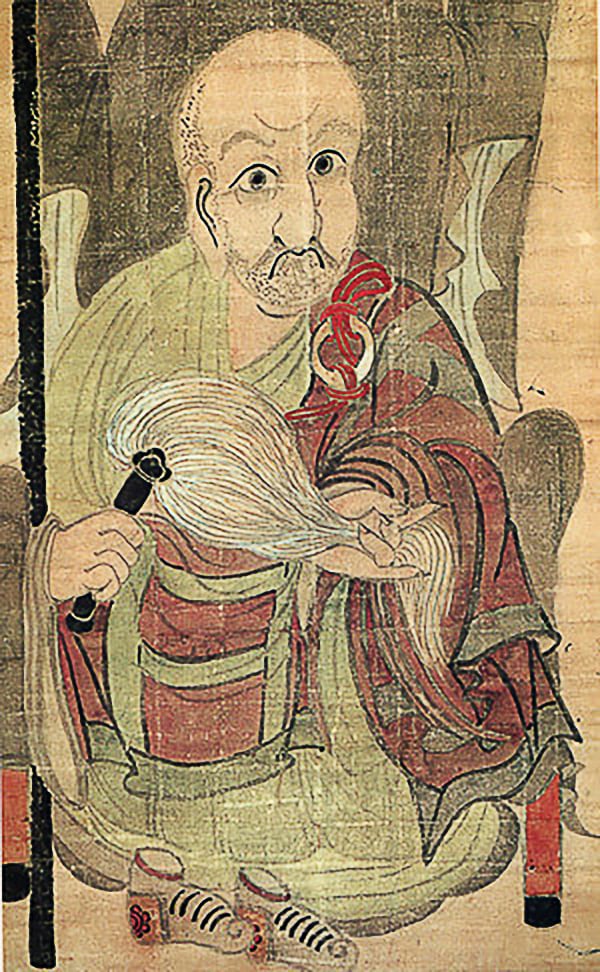
Autorretrato de Hakuin (1767) · Public domain
उनके अपने शब्दों में
«Beings are buddha from the beginning, like water and ice: without water there is no ice, and outside beings there is no buddha.»Zazen wasan, versos iniciales. Traducción propia del japonés.
Hakuin Ekaku
The Embossed Tea Kettle (Orategama)
शुरुआत के लिए एक रचना
The Embossed Tea Kettle (Orategama)मूल विचार
Initial awakening (kenshō) is not the end but the beginning: what is decisive is the practice that follows, which consists in working for the good of others with the bodhisattva's four great vows.
संदर्भ में देखें
जीवनी
5 मिनट का पाठ
स्पैनिश मूल से सहायता-प्राप्त अनुवाद, मातृभाषी अनुवादक द्वारा समीक्षा लंबित।
हारा का भिक्षु
«सुरुगा के पास दो चीज़ें हैं जो उसकी हैसियत से बड़ी हैं: फ़ूजी पर्वत और हारा का हाकुइन।» यह कहावत, जो जापान में आज भी दोहराई जाती है, हाकुइन एकाकु के विरोधाभास को समेट लेती है: रिंज़ाई ज़ेन के सुधारक, वह व्यक्ति जिन तक आज इस सम्प्रदाय की सभी परम्पराएँ पहुँचती हैं, ने लगभग पूरा जीवन तोकाइदो मार्ग पर बसे एक डाक-पड़ाव गाँव के एक निर्धन मन्दिर में, फ़ूजी की तलहटी में बिताया। शान्तिदेव या हुईनेंग के विपरीत, उनके बारे में हम बहुत कुछ जानते हैं, और उसका बड़ा भाग स्वयं उन्हीं से: उन्होंने अथक लिखा, विशेषकर अपने अन्तिम पन्द्रह वर्षों में, और इत्सुमादेगुसा नाम की एक आत्मकथा छोड़ी, जिसे उनके शिष्य तोरेई ने एक कालक्रम जोड़कर पूरा किया। किन्तु उन्होंने भी अपना जीवन एक पाठ की तरह सुनाया, और आलोचना ने उसे उसी सावधानी से पढ़ना सीखा है जिससे सन्त-चरित पढ़े जाते हैं।
नरक का भय
उनका जन्म 19 जनवरी 1686 को सुरुगा प्रान्त के हारा में हुआ; वे डाक-पड़ाव के व्यापारी परिवार नागासावा के तीसरे पुत्र थे, और बचपन में उनका नाम इवाजिरो था। उनकी माँ निचिरेन सम्प्रदाय की श्रद्धालु अनुयायी थीं, और स्वयं हाकुइन बताते थे कि बचपन में धधकते नरकों पर एक प्रवचन ने उनमें ऐसा आतंक भर दिया जो फिर कभी नहीं छूटा: गरम स्नान उन्हें लपटों की याद दिलाता था। पन्द्रह वर्ष की आयु में माता-पिता ने उन्हें गाँव के ज़ेन मन्दिर शोइन-जी में भिक्षु बनने की अनुमति दी, जहाँ मठाधीश तानरेई ने उन्हें एकाकु नाम दिया। सद्धर्मपुण्डरीक सूत्र (कमल सूत्र), जिसे उनके निचिरेन गुरु पूजते थे, पढ़कर उन्हें निराशा हुई: वह उन्हें कार्य-कारण पर दृष्टान्तों का संग्रह भर लगा।
भ्रमण के वर्ष
अगले वर्ष संकट और यात्राओं के थे। ज़ेनसो-जी में, उन्नीस वर्ष की आयु में, उन्होंने पढ़ा कि महान चीनी आचार्य यानतोउ डाकुओं के हाथों चीखते हुए मरे थे, और उनका यह विश्वास टूट गया कि ज़ेन उन्हें नरक से बचा सकता है; तब वे कविता और सुलेख में लग गए। साधना की ओर उन्हें एक पुस्तक लौटा लाई, जो उन्होंने आँगन में धूप दिखाने के लिए रखे ग्रन्थों के ढेर से यों ही खींच ली थी: मिंग काल का एक चीनी संकलन, प्राचीन आचार्यों के पुरुषार्थ के विषय में, जिसमें एक भिक्षु नींद से बचने के लिए अपनी जाँघ में सुआ चुभो लेता था। 1708 में एचिगो के ताकादा स्थित एइगान-जी में, चाओझोउ के मु कोआन पर कई दिनों तक साधना करने के बाद, दूर से आती घण्टे की ध्वनि ने उनमें इतना तीव्र बोध जगाया कि उन्हें लगा, तीन सौ वर्षों में किसी को ऐसा बोध नहीं हुआ। उनका अहंकार अधिक दिन नहीं टिका: एकान्तवासी दोक्यो एतान, «शोजू के वृद्ध», ने उन्हें «बिल में दुबका ज़ेन भिक्षु» कहा, इइयामा की अपनी कुटिया के बरामदे से नीचे धकेल दिया और कठिन कोआन दिए। हाकुइन उनके पास केवल आठ महीने रहे, पर अन्ततः उन्हें ही अपना सच्चा गुरु मानने लगे।
ज़ेन का रोग
अति परिश्रम ने उन्हें रोगी बना दिया। 1757 में प्रकाशित यासेनकान्ना में उन्होंने एक «ज़ेन रोग» का वर्णन किया — सिर में जलन, पैरों में ठण्डक, व्याकुलता, अनिद्रा — जिससे, उनके अनुसार, क्योतो की पहाड़ियों के एक ताओवादी साधु हाकुयू ने उन्हें दो विधियों से मुक्त किया: अन्तर्दर्शन (नाइकान), जो प्राण-ऊर्जा को निचले उदर में ले जाता है, और मक्खन के एक गोले की कल्पना, जो सिर के शिखर से पिघलता हुआ नीचे उतरता है। इस पुस्तक को गृहस्थों के बीच अपार सफलता मिली और यह आज तक छपती आ रही है। तथापि विद्वान इसे एक साहित्यिक रचना के रूप में पढ़ते हैं, जिसमें हाकुइन ने अपने युग के चिकित्सा-ज्ञान और ध्यान-पद्धतियों को एक पर्वतीय ऋषि के रूप में एकत्र किया।
मन्दिर और झींगुर
1716 में वे शोइन-जी लौटे, जो लगभग खण्डहर हो चुका मन्दिर था, और 1718 में म्योशिन-जी के «प्रथम भिक्षु» की न्यूनतम पदवी के साथ उसके मठाधीश के रूप में दर्ज हुए; इसी समय उन्होंने हाकुइन नाम अपनाया, अर्थात् «श्वेत में छिपा»। इसके बाद उन्होंने उसे कभी नहीं छोड़ा। जिस बोध को उन्होंने निर्णायक माना, वह 1726 में, जापानी गणना के अनुसार उनके बयालीसवें वर्ष में, आया: रात में सद्धर्मपुण्डरीक सूत्र का दृष्टान्तों वाला अध्याय पढ़ते हुए — वही ग्रन्थ जिसे उन्होंने युवावस्था में तुच्छ समझा था — उन्होंने एक झींगुर की आवाज़ सुनी और एक ही क्षण में समझ गए कि शोजू उनसे क्या कहना चाहते थे। व्यक्तिगत बोध पर्याप्त नहीं: महत्त्व है «सातोरी के बाद की साधना» का, अर्थात् उस बोधिचित्त का जो दूसरों के कल्याण के लिए कार्य करता है। तब से बोधिसत्त्व का व्रत उनकी शिक्षा का केन्द्र बन गया।
भिक्षुओं और किसानों के गुरु
शोइन-जी में पूरे जापान से भिक्षु आने लगे, जो आसपास के घरों और मन्दिरों में ठहरते थे। 1740 में चीनी आचार्य शूतांग के वचनों पर उनके व्याख्यानों में कई सौ श्रोता जुटे, और उनसे सोक्कोरोकु काइएन-फ़ुसेत्सु का जन्म हुआ। हाकुइन ने «कुछ न करने वाले ज़ेन» का — उस रिक्त निश्चलता का जिसका आरोप वे अपने समय के अनेक आचार्यों पर लगाते थे — विरोध किया और कोआन-साधना को व्यवस्थित रूप दिया; अपने अन्तिम वर्षों में उन्होंने अपना कोआन रचा: «एक हाथ की ताली की ध्वनि सुनो», जिसे वे महासंशय जगाने में मु से अधिक प्रभावी मानते थे। साथ ही उन्होंने सरल जापानी में सामान्य जन को सम्बोधित किया: सामन्तों को सुशासन पर पत्र, जैसे हेबिइचिगो; स्त्रियों और किसानों के लिए प्रवचन; चक्की के गीत और लोरियाँ; और ज़ाज़ेन वासान, बैठकर किए जाने वाले ध्यान का वह स्तोत्र जिसका पाठ रिंज़ाई मन्दिरों में आज भी प्रतिदिन होता है।
साठ वर्ष का चित्रकार
लगभग साठ वर्ष की आयु में उन्होंने गम्भीरता से चित्र बनाना आरम्भ किया, और ऐसी स्वतन्त्रता के साथ जिसका ज़ेन चित्रकला में कोई पूर्व उदाहरण नहीं। उनके नाम हज़ारों कृतियाँ हैं: उभरी आँखों वाले बोधिधर्म के चित्र, थैला लिए होतेई की आकृतियाँ, कान्नोन, लोक-जीवन के दृश्य, स्वयं के व्यंग्य-चित्र, और «मृत्यु» या «सद्गुण» जैसे बड़े सुलेखित अक्षर। ये संग्रह की वस्तुएँ नहीं थीं, बल्कि दृश्य प्रवचन थे, जिन्हें वे अपने अधिकांशतः निरक्षर आगन्तुकों को भेंट कर देते थे। उनकी जान-बूझकर अनगढ़ रेखा, जिसका अध्ययन योशिज़ावा कात्सुहिरो ने किया और जिसके अभिलेखों को एक-एक करके पढ़ा, ने बाद के विलक्षण चित्रकारों को प्रभावित किया और इक्कीसवीं शताब्दी के संग्रहालयों की दृष्टि में हाकुइन को एदो काल के महान कलाकारों में स्थान दिलाया।
विरासत
उनका देहान्त शोइन-जी में मेइवा युग के पाँचवें वर्ष के बारहवें मास के ग्यारहवें दिन, अर्थात् 18 जनवरी 1769 को, जापानी गणना के अनुसार चौरासी वर्ष की आयु में हुआ। सम्राट ने उसी वर्ष उन्हें शिनकी दोकुम्यो ज़ेनजी की उपाधि दी और 1884 में शोशू कोकुशी की। उन्हें कभी धर्म का औपचारिक संचरण प्राप्त नहीं हुआ, जो परम्पराओं के प्रति इतने सजग सम्प्रदाय में लगभग पाखण्ड के समान है; किन्तु उनके शिष्यों ने — विशेषकर तोरेई एनजी ने, और उनके माध्यम से गासान जितो तथा उनके उत्तराधिकारियों इनज़ान और ताकुजू ने — वह कोआन-पाठ्यक्रम व्यवस्थित किया जिसका आज रिंज़ाई की सभी शाखाएँ अनुसरण करती हैं। डी. टी. सुज़ुकी और यासुतानी हाकुउन के माध्यम से केन्शो पर उनका आग्रह बीसवीं शताब्दी के पश्चिमी ज़ेन तक पहुँचा।
स्रोत: Hakuin Ekaku. Wild Ivy: The Spiritual Autobiography of Zen Master Hakuin (Itsumadegusa). Trad. Norman Waddell. Boston: Shambhala, 1999. ISBN 1570624356. · Yampolsky, Philip B. (trad.). The Zen Master Hakuin: Selected Writings. Nueva York: Columbia University Press, 1971. ISBN 0231034636. · Waddell, Norman (trad.). The Essential Teachings of Zen Master Hakuin: A Translation of the Sokkō-roku Kaien-fusetsu. Boston: Shambhala, 1994. ISBN 0877739722. · Seo, Audrey Yoshiko y Stephen Addiss. The Sound of One Hand: Paintings and Calligraphy by Zen Master Hakuin. Boston: Shambhala, 2010. ISBN 1590305787. · Yoshizawa Katsuhiro. The Religious Art of Zen Master Hakuin. Ed. y trad. Norman Waddell. Berkeley: Counterpoint, 2009. ISBN 9781582434544.
कालक्रम
जीवन, वर्ष-दर-वर्ष
प्रत्येक बिंदु एक प्रमाणित घटना है। उसे स्रोत और निश्चितता के स्तर सहित पढ़ने के लिए क्लिक करें।
19 जनवरी 16860 वर्षHara (Numazu, Shizuoka)
Birth at Hara
Born on 19 January (25th day of the 12th month of Jōkyō 2) at Hara, Suruga province, into the Nagasawa family; his childhood name is Iwajirō.
प्रमाणितKotobank, «白隠» (artículos de Nihon daihyakka zensho, Sekai daihyakka jiten y Britannica Kokusai daihyakka jiten).
उनके निधन के बाद
- 1884Title Shōshū Kokushi
- 2010 – 2011“The Sound of One Hand” exhibition
19 जनवरी 1686 · 0 वर्ष
Birth at Hara
Born on 19 January (25th day of the 12th month of Jōkyō 2) at Hara, Suruga province, into the Nagasawa family; his childhood name is Iwajirō.
प्रमाणित
1700 · 14 वर्ष
Ordination at the Shōin-ji
At fifteen (Japanese count) he becomes a monk under abbot Tanrei Soden, who gives him the name Ekaku.
प्रमाणित
लगभग 1704
Crisis at the Zensō-ji and return to practice
The story of Yantou's violent death makes him lose faith; reading a Ming anthology on the masters' efforts brings him back to practice.
प्रमाणित
1708
Awakening at the Eigan-ji and meeting with Shōju
The sound of a bell brings his first great awakening with the kōan mu; he then spends eight months with Dōkyō Etan at Iiyama.
प्रमाणित
1710
Hakuyū and the Zen sickness
According to Yasenkanna, he visits the hermit Hakuyū at Shirakawa (Kyoto) to be cured; the account is partly literary.
विवादित
1716
Return to the Shōin-ji
He returns to his village temple, almost in ruins, from which he will never again part.
प्रमाणित
1718
Abbot and new name: Hakuin
He registers as abbot with the rank of “first monk” of the Myōshin-ji and adopts the name Hakuin, “hidden in white”.
प्रमाणित
1726
The cricket and the Lotus Sūtra
Definitive awakening reading the third chapter of the Lotus Sūtra: post-satori practice and bodhicitta move to the centre of his teaching.
प्रमाणित
1740
Lectures on Xutang's record
Several hundred monks attend his talks at the Shōin-ji, published as Sokkōroku kaien-fusetsu.
प्रमाणित
1749
Orategama
He publishes the letters of Orategama; his most prolific period as a writer in Japanese for lay people begins.
प्रमाणित
लगभग 1753
The sound of one hand
He presents his own kōan in writing, which he prefers to mu for beginners.
संभावित
1757
Publication of Yasenkanna
Yasenkanna, his most widely circulated book, appears in Kyoto.
प्रमाणित
लगभग 1758
Founding of the Ryūtaku-ji
He restores as founder the Ryūtaku-ji temple near Mishima, to be headed by Tōrei; sources give 1758 or 1763.
विवादित
1766
Itsumadegusa
At eighty he writes his spiritual autobiography.
प्रमाणित
18 जनवरी 1769 · 83 वर्ष
Death at the Shōin-ji
He dies on 18 January (11th day of the 12th month of Meiwa 5) aged eighty-four (Japanese count). That year he receives the posthumous title Shinki Dokumyō Zenji.
प्रमाणित
1884
Title Shōshū Kokushi
Emperor Meiji grants him the title Shōshū Kokushi, “national master of the true school”.
प्रमाणित
2010 – 2011
“The Sound of One Hand” exhibition
The Japan Society in New York (2010) and LACMA (2011) present the first major Western show of his painting and calligraphy.
प्रमाणित
कृतियाँ
आवश्यक कृतियाँ
वे कृतियाँ जिनके बिना उनकी विरासत को समझा नहीं जा सकता।
Hakuin Ekaku
The Embossed Tea Kettle (Orategama)
पत्राचार · 1749
The Embossed Tea Kettle (Orategama)
遠羅天釜 (Orategama) y 遠羅天釜続集 (Orategama zokushū)
Letter-treatises on practice in the midst of activity, meditation on the kōan, the naikan remedy for Zen sickness and the relation between Zen and invoking Amida's name. The title, “embossed tea kettle”, alludes to a rough, useful object. It is the classic gateway to his teaching for lay people.
4 संस्करण
Hakuin Ekaku
Idle Talk on a Night Boat (Yasenkanna)
लिखित कृति · 1757
Idle Talk on a Night Boat (Yasenkanna)
夜船閑話 (Yasenkanna)
An account of the young Hakuin's “Zen sickness” and its cure through inner contemplation (naikan), which brings the vital energy down to the lower belly, and the butter-egg method. It blends Chinese medicine, Daoism and Zen; it was his most widely read book among lay people and still circulates as a health manual.
4 संस्करण

लिखित कृति · 1766
Wild Ivy (Itsumadegusa)
壁生草 (Itsumadegusa)
A first-person account of his childhood fear of hell, the Zensō-ji crisis, the awakening of 1708, the months with Shōju, the Zen sickness and the definitive awakening. It is the main source for his biography and at the same time a teaching piece: every episode is chosen to exhort the reader.
3 संस्करण
Hakuin Ekaku
Song in Praise of Zazen (Zazen wasan)
लिखित कृति
Song in Praise of Zazen (Zazen wasan)
白隠禅師坐禅和讃 (Hakuin Zenji zazen wasan)
It begins “all beings are buddha from the beginning, like water and ice” and ends “this very place is the lotus land, this very body is the buddha”. It sums up Hakuin's doctrine in some forty lines and is the text recited daily in Rinzai temples in Japan and in many Western Zen centres.
2 संस्करण

परवर्ती संकलन · लगभग 1719
Painting and calligraphy
白隠禅画墨蹟 (Hakuin zenga bokuseki)
Portraits of Bodhidharma, Hotei, Kannon and ancient masters, self-portraits, popular scenes and caricatures, and large characters—“death”, “virtue”, “the sound of one hand”—with inscriptions that are themselves sermons. Given to visitors and patrons, they are now kept in temples (Ryūtaku-ji, Shōin-ji, Eisei Bunko) and in museums worldwide.
4 संस्करण
संपूर्ण कृतित्व (31)
Hakuin Ekaku
The Sound of One Hand (Sekishu onjō)
The Conscious LibraryThe Sound of One Hand (Sekishu onjō)
1753

Introductory Talks on the Record of Sokkō (Sokkōroku kaien-fusetsu)
1743
Hakuin Ekaku
Poison Blossoms from a Thicket of Thorn (Keisō dokuzui)
The Conscious LibraryPoison Blossoms from a Thicket of Thorn (Keisō dokuzui)
1758
Hakuin Ekaku
Words from the Land of Kaian (Kaiankokugo)
The Conscious LibraryWords from the Land of Kaian (Kaiankokugo)
1750

Poison Words on the Heart Sūtra (Dokugo shingyō)
Hakuin Ekaku
An Icchantika's Notes on the Poems of Hanshan
The Conscious LibraryAn Icchantika's Notes on the Poems of Hanshan
1746
Hakuin Ekaku
Treasure Left to the Cold Forest (Kanrin ihō)
The Conscious LibraryTreasure Left to the Cold Forest (Kanrin ihō)
Hakuin Ekaku
Reflections Left by the Precious Mirror (Hōkan ishō)
The Conscious LibraryReflections Left by the Precious Mirror (Hōkan ishō)
Hakuin Ekaku
Spear Flower (Yabukōji)
The Conscious LibrarySpear Flower (Yabukōji)
1753
Hakuin Ekaku
Snake Strawberries (Hebiichigo)
The Conscious LibrarySnake Strawberries (Hebiichigo)
1754
Hakuin Ekaku
Thistle (Oniazami)
The Conscious LibraryThistle (Oniazami)
1751
Hakuin Ekaku
Goosegrass (Yaemugura)
The Conscious LibraryGoosegrass (Yaemugura)
1759
Hakuin Ekaku
Sashimogusa
The Conscious LibrarySashimogusa
Hakuin Ekaku
Miraculous Tales of the Ten-Phrase Kannon Sūtra
The Conscious LibraryMiraculous Tales of the Ten-Phrase Kannon Sūtra
Hakuin Ekaku
Kana Sermons on Causes and Conditions
The Conscious LibraryKana Sermons on Causes and Conditions
Hakuin Ekaku
Kana Goosegrass (Kanamugura)
The Conscious LibraryKana Goosegrass (Kanamugura)
Hakuin Ekaku
Tales of Spurring On for Beginners
The Conscious LibraryTales of Spurring On for Beginners
Hakuin Ekaku
Record of the Filial Piety of Takatsuka's Fourth Daughter
The Conscious LibraryRecord of the Filial Piety of Takatsuka's Fourth Daughter
Hakuin Ekaku
The Tale of Heishirō of Ihara and Other Tales
The Conscious LibraryThe Tale of Heishirō of Ihara and Other Tales

Record of the Precious Mirror Cave
Hakuin Ekaku
Grinding songs, lullabies, weeding songs and riddles
The Conscious LibraryGrinding songs, lullabies, weeding songs and riddles
Hakuin Ekaku
Letters
The Conscious LibraryLetters
Hakuin Ekaku
Rōhatsu Exhortations
The Conscious LibraryRōhatsu Exhortations
Hakuin Ekaku
Secret Notes on the Blue Cliff Record
The Conscious LibrarySecret Notes on the Blue Cliff Record
1916
वचन
किसी निश्चित कृति में स्थित वचन। प्रत्येक के साथ उसका स्रोत और विश्वसनीयता का स्तर है।
Beings are buddha from the beginning, like water and ice: without water there is no ice, and outside beings there is no buddha.衆生本来仏なり 水と氷の如くにて 水を離れて氷なく 衆生の外に仏なし
सत्यापितZazen wasan, versos iniciales. Traducción propia del japonés.
मूल विचार (संपादकीय सार)
कॉपीराइट के सम्मान में, ये विचार हमारे अपने शब्दों में संक्षेपित हैं और इन्हें शब्दशः उद्धरण के रूप में प्रस्तुत नहीं किया गया है।
- Initial awakening (kenshō) is not the end but the beginning: what is decisive is the practice that follows, which consists in working for the good of others with the bodhisattva's four great vows.
- The great doubt is the engine of Zen: the kōan serves to accumulate it until it bursts; the greater the doubt, the greater the awakening.
- Empty quietude is not Zen: sitting without doing anything, without doubt or effort, is dozing; true practice is sustained in the midst of activity.
- Body and mind are not separate: whoever forces meditation falls ill, and the vital energy must settle in the lower belly for practice to be sustainable.
- All beings are buddha from the beginning: the problem is not arriving but ceasing to seek far away what is near.
अप्रामाणिक या विवादित आरोपण वाले उद्धरण (1)
«“Is that so?” (the story of the pregnant girl and the child)»
The reply “Is that so?” Hakuin supposedly gave when falsely accused of fathering a child is his best-known saying in the West, but it comes from 101 Zen Stories (Senzaki and Reps, 1939) and has not been found in his writings or in Tōrei's chronology.
अंतिम शब्द
उनके अंतिम शब्दों का कोई सत्यापन-योग्य अभिलेख उपलब्ध नहीं है।
No reliable record of his last words was found in the sources consulted. He died at the Shōin-ji on the eleventh day of the twelfth month of Meiwa 5 (18 January 1769). A large calligraphy of the character 死 (“death”) with an inscription circulates as his “death poem”, but it is a teaching work whose connection with his deathbed is undocumented; a New Year verse from his last months, thanking the sound-of-one-hand kōan for his longevity, is also quoted.
स्रोत: Kotobank, «白隠» (artículos de Nihon daihyakka zensho, Sekai daihyakka jiten y Britannica Kokusai daihyakka jiten).
पूछें
उनकी कृतियाँ क्या उत्तर देती हैं
मानवता के बारह महान प्रश्न और उनके ग्रंथ उनका जो उत्तर देने देते हैं, संदर्भों सहित। हम कभी उनके मुख में अपने शब्द नहीं रखते।
परम सत्य क्या है? क्या ईश्वर है?
Beings are buddha from the beginning; there is nothing to seek outside
कोई सृष्टिकर्ता ईश्वर नहींस्पष्ट रूप से कहा है
Hakuin does not speculate about a creator. His hymn in praise of seated meditation, the Zazen wasan, opens with the formula that sums up his position: beings are buddha from the beginning, like water and ice, and apart from beings there is no buddha. The ultimate is not a separate being to be addressed, but one's own nature, which is to be seen (kenshō); the hymn compares whoever seeks it far away to someone standing in water and crying out with thirst. Hakuin also preached to lay devotees of Kannon and Amida and did not despise those devotions, but in the letters gathered in Orategama he places them within the same path: invocation is worthwhile if it leads to seeing one's own nature.
इस प्रश्न की अन्य गुरुओं से तुलना करेंमैं कौन हूँ? क्या कोई सच्चा आत्म है?
To see one's own nature is to see that this nature is no nature
कोई स्थायी आत्म नहींस्पष्ट रूप से कहा है
Hakuin speaks constantly of seeing one's own nature (kenshō) and of the original face, which might suggest a hidden true self. But his Zazen wasan specifies that when one turns inwards and bears witness to one's own nature, that nature turns out to be no nature at all: the gate then opens in which cause and effect are one. What is found is not a substantial subject but the identity of beings with the buddha, like water and ice. In the Yasenkanna he gives that expression a bodily sense: the lower belly, the waist, the legs and the soles of the feet are the original face. The self to be broken through is the one that clings; what remains is not another self.
इस प्रश्न की अन्य गुरुओं से तुलना करेंहम दुःख क्यों भोगते हैं?
We wander through the six realms through the darkness of our own ignorance
हम क्या हैं, इसका अज्ञानस्पष्ट रूप से कहा है
Hakuin's Zazen wasan puts it in an image: beings, not knowing that the buddha is near, seek it far away, like someone in water crying out with thirst, or like the son of a rich man lost among the poor. The cause of circling through the six realms of rebirth is the darkness of one's own ignorance, and from darkness into darkness the path goes on. We suffer, then, because we do not see what we already are. Hakuin also knew another suffering, which he recounts in the Yasenkanna and in Itsumadegusa: the «Zen sickness», physical and nervous exhaustion caused by forced practice, which he cured with the inward contemplation that brought energy down to the lower belly.
इस प्रश्न की अन्य गुरुओं से तुलना करेंमृत्यु के बाद क्या होता है?
One must die the great death on the cushion to stop fearing the other
हर दिन ज्ञात के प्रति मरनाउनके सिद्धांत से निष्कर्षित
Death shaped Hakuin's vocation. In Itsumadegusa he tells how as a child, on hearing a sermon about the hells, he was terrified and sought in religious life a way to escape them. His mature answer is not a description of the hereafter but kōan practice, which leads to great doubt until the practitioner, as the traditional formula he makes his own says, finds under great doubt the great awakening. The Zen tradition calls that breakthrough the «great death»: the end of the clinging self, here and now. Hakuin, who painted and brushed the character «death», presented the urgency of death as the driving force of practice, without abandoning the framework of the six realms that the Zazen wasan takes for granted.
इस प्रश्न की अन्य गुरुओं से तुलना करेंमुक्ति या उद्धार कैसे प्राप्त होता है?
Under great doubt lies great awakening, and practice continues after it
अनुशासित साधना सेस्पष्ट रूप से कहा है
Hakuin teaches a path of intense effort centred on the kōan. The practitioner must concentrate on a case, Zhaozhou's mu or the one he himself devised, the sound of one hand, until great doubt forms, a mass of perplexity that absorbs the whole mind; under great doubt lies great awakening, he repeats, with a formula he makes his own. In Sekishu onjō he explains why he prefers his kōan for arousing that doubt in beginners. But kenshō is not the end: Hakuin insists on the practice that follows awakening, which deepens understanding and turns it into compassion, and he fiercely attacks the Zen of quietude that settles for a state of calm.
इस प्रश्न की अन्य गुरुओं से तुलना करेंक्या गुरु आवश्यक है?
He thought he had awakened until his teacher showed him otherwise
अनिवार्यस्पष्ट रूप से कहा है
Hakuin learned the need for a teacher at first hand. In Itsumadegusa he tells how after his first awakening, in 1708, he thought himself the greatest practitioner in three hundred years, until old Shōju, with whom he spent a few months, dismantled his pride with mockery, blows and kōans he could not resolve. From then on he considered it indispensable for awakening to be tested by an authentic teacher, and criticised those who considered themselves realised without that verification. In Kaiankokugo he champions the line of transmission of Daiō, Daitō and Kanzan as authentic Japanese Zen, to which he tied his own teaching. He trained many disciples, and his kōan system, transmitted from teacher to disciple, is still in use in Rinzai.
इस प्रश्न की अन्य गुरुओं से तुलना करेंक्या संसार वास्तविक है?
This very place is the lotus land; this very body is the buddha
दिव्य की अभिव्यक्तिस्पष्ट रूप से कहा है
Hakuin does not deny the world in order to seek another. His Zazen wasan ends with the formula that condenses his vision: this very place is the lotus land and this very body is the buddha. The Pure Land is not elsewhere, and the world of confusion, seen from awakening, turns out to be the same one in which the way is realised. The hymn prepares this by affirming that when one bears witness to one's own nature, which is no-nature, the gate opens in which cause and effect are one, and the form of no-form is taken as form. Hakuin made that affirmation of the everyday world part of his teaching to lay people, with popular songs, paintings and stories that carry the doctrine into daily life.
इस प्रश्न की अन्य गुरुओं से तुलना करेंप्रेम क्या है?
Awakening is proved in compassion: practice continues to save others
असीम करुणाउनके सिद्धांत से निष्कर्षित
For Hakuin, kenshō that stays within oneself is incomplete. He insists on post-awakening practice, whose meaning is the bodhisattva mind: working tirelessly for the good of all beings. His own life shows it. He devoted his last decades to teaching monks and lay people with means within anyone's reach: paintings, calligraphy, songs for grinding grain and lullabies. In Hebiichigo he addresses rulers to warn them about greed, luxury and the suffering of peasants, and in Yabukōji he defends meditation for those who govern. Compassion is for him not a feeling but the necessary consequence of having seen one's own nature.
इस प्रश्न की अन्य गुरुओं से तुलना करेंक्या हम स्वतंत्र हैं, या सब कुछ पूर्वनिर्धारित है?
Karma is real, but awakening opens the gate where cause and effect are one
कर्म और चुनावउनके सिद्धांत से निष्कर्षित
Hakuin wrote no treatise on freedom, but his teaching takes the framework of karma for granted and uses it for moral ends. His childhood terror of hell, which he recounts in Itsumadegusa, arose from a sermon on the consequences of actions, and in his stories for lay people, such as that of the filial piety of the Takatsuka daughter, he extols virtue and warns against evil. At the same time, the Zazen wasan presents awakening as the moment when the gate opens in which cause and effect are one, and the path of karma ceases to bind. Freedom does not consist in escaping causality but in realising it awake; and getting there requires the determined effort of practice.
इस प्रश्न की अन्य गुरुओं से तुलना करेंध्यान या प्रार्थना क्यों करें?
Concentrate on the kōan until great doubt bursts open
'मैं' के स्रोत पर लौटनास्पष्ट रूप से कहा है
For Hakuin, meditation is not stillness but intense inquiry. The practitioner takes a kōan, Zhaozhou's mu or the sound of one hand, and holds it at the centre of attention, seated or in the midst of any activity, until great doubt forms: a total perplexity in which the questioner and the question fuse. When that mass breaks apart, one sees one's own nature. Hakuin fiercely attacked the Zen of quietude that is content with a state of calm, and in Orategama he holds that practice in the midst of activity is worth far more than practice in repose. For the practitioner's health he also prescribed naikan, a contemplation that brings energy down to the lower belly.
इस प्रश्न की अन्य गुरुओं से तुलना करेंक्या बुद्धि परम को जान सकती है?
Intellect does not reach it: it must be broken in great doubt
परम मन से परे हैस्पष्ट रूप से कहा है
Hakuin knew the texts well: he read and commented on the Chinese masters, wrote in classical Chinese and glossed the Heart Sutra and the Blue Cliff Record. But his method starts from the premise that discursive understanding does not reach one's own nature. The kōan, especially the sound of one hand, is built so that reason cannot solve it: the practitioner must exhaust his resources until great doubt forms and, when it breaks, a direct knowing appears. In Dokugo shingyō he comments on the Heart Sutra with biting remarks that do not explain but shake the reader. Study has its place, but subordinate to the experience of awakening and to its testing by the teacher.
इस प्रश्न की अन्य गुरुओं से तुलना करेंसंसार से हटें या उसे बदलें?
Practice amid activity far surpasses practice in repose
कर्म में ध्यानस्पष्ट रूप से कहा है
Hakuin, who spent most of his life in a small rural temple at Hara, did not preach flight from the world. In Orategama, written as letters to a feudal lord, to a sick monk and to other correspondents, he holds that practice in the midst of activity is worth far more than practice done in repose, and that the kōan must be sustained while working, governing or looking after the household. He addressed rulers in Hebiichigo to warn them about the suffering of peasants, and ordinary people with work songs and paintings. He trained monks rigorously, but his ideal was not the closed monastery, but awakening lived out in any occupation.
इस प्रश्न की अन्य गुरुओं से तुलना करें
निकटता और तनाव
निकटता और तनाव
उनके मतों के आधार पर प्रश्न-दर-प्रश्न आकलित। प्रत्येक सहमति या टकराव का कारण क्लिक करने पर।
इनसे मिलता-जुलता सोचते हैं

Dōgen
इन पर सहमत: परम सत्य क्या है? क्या ईश्वर है? · मैं कौन हूँ? क्या कोई सच्चा आत्म है? · मुक्ति या उद्धार कैसे प्राप्त होता है?
Milarepa
इन पर सहमत: क्या हम स्वतंत्र हैं, या सब कुछ पूर्वनिर्धारित है? · परम सत्य क्या है? क्या ईश्वर है? · मैं कौन हूँ? क्या कोई सच्चा आत्म है?

Śāntideva
इन पर सहमत: मुक्ति या उद्धार कैसे प्राप्त होता है? · परम सत्य क्या है? क्या ईश्वर है? · मैं कौन हूँ? क्या कोई सच्चा आत्म है?
Padmasambhava
इन पर सहमत: मैं कौन हूँ? क्या कोई सच्चा आत्म है? · हम दुःख क्यों भोगते हैं? · क्या गुरु आवश्यक है?
इनसे भिन्न सोचते हैं

Emanuel Swedenborg
इन पर टकराव: परम सत्य क्या है? क्या ईश्वर है? · मैं कौन हूँ? क्या कोई सच्चा आत्म है?

Julian of Norwich
इन पर टकराव: परम सत्य क्या है? क्या ईश्वर है? · मैं कौन हूँ? क्या कोई सच्चा आत्म है?
Catherine of Siena
इन पर टकराव: परम सत्य क्या है? क्या ईश्वर है? · मैं कौन हूँ? क्या कोई सच्चा आत्म है?

Ignatius Brianchaninov
इन पर टकराव: परम सत्य क्या है? क्या ईश्वर है? · मैं कौन हूँ? क्या कोई सच्चा आत्म है?
प्रसंग और वृत्तांत
प्रसंग और वृत्तांत
साक्ष्यdécada de 1690
The boy who feared hell
वृत्तांत का स्रोत: Autobiographical account in Itsumadegusa (1766), written by Hakuin at eighty with exemplary intent; also recorded in Tōrei's chronology.
स्रोत: Hakuin Ekaku. Wild Ivy: The Spiritual Autobiography of Zen Master Hakuin (Itsumadegusa). Trad. Norman Waddell. Boston: Shambhala, 1999. ISBN 1570624356.
साक्ष्य1708
The bell of Eigan-ji and the old man of Shōju
वृत्तांत का स्रोत: Autobiographical account in Itsumadegusa (1766), written by Hakuin at eighty with exemplary intent; also recorded in Tōrei's chronology.
स्रोत: Hakuin Ekaku. Wild Ivy: The Spiritual Autobiography of Zen Master Hakuin (Itsumadegusa). Trad. Norman Waddell. Boston: Shambhala, 1999. ISBN 1570624356.
साक्ष्य1708
The old woman's broom
वृत्तांत का स्रोत: Autobiographical account in Itsumadegusa (1766), written by Hakuin at eighty with exemplary intent; also recorded in Tōrei's chronology.
स्रोत: Hakuin Ekaku. Wild Ivy: The Spiritual Autobiography of Zen Master Hakuin (Itsumadegusa). Trad. Norman Waddell. Boston: Shambhala, 1999. ISBN 1570624356.
विवादित1710
The hermit Hakuyū and the butter egg
वृत्तांत का स्रोत: Yasenkanna (preface dated 1757), with the date of the visit (Hōei 7, 1710) in the text itself; critical assessment by Katō Shōshun as cited by Waddell.
स्रोत: Waddell, Norman (trad.). «Hakuin's Yasenkanna». The Eastern Buddhist, nueva serie, 34, n.º 1 (2002).
साक्ष्य1726
The cricket and the Lotus Sūtra
वृत्तांत का स्रोत: Autobiographical account in Itsumadegusa (1766), written by Hakuin at eighty with exemplary intent; also recorded in Tōrei's chronology.
स्रोत: Hakuin Ekaku. Wild Ivy: The Spiritual Autobiography of Zen Master Hakuin (Itsumadegusa). Trad. Norman Waddell. Boston: Shambhala, 1999. ISBN 1570624356.
सत्यापन-योग्य नहींsiglo XVIII (sin fecha)
“Is that so?”
वृत्तांत का स्रोत: 101 Zen Stories (Senzaki and Reps, 1939), included in Zen Flesh, Zen Bones (1957). Not found in Itsumadegusa or in Tōrei's chronology.
स्रोत: Senzaki, Nyogen y Paul Reps (comps.). 101 Zen Stories. Filadelfia: David McKay, 1939; incluido en Reps, Zen Flesh, Zen Bones, 1957.
शिक्षाएँ
शिक्षाएँ
वे अवधारणाएँ जो उनके चिंतन को रूप देती हैं, उनके संदर्भ में समझाई गई।
The sound of one hand (sekishu onjō)sekishu-onjo
Rinzai kōan system (Hakuin school).
स्रोत: Yoshizawa Katsuhiro 芳澤勝弘 (ed. y anot.). Hakuin Zenji hōgo zenshū 白隠禅師法語全集. Kioto: Zen Bunka Kenkyūsho, 1999–2003, 14 vols. e índice. ISBN del primer volumen 4881821318.
The great doubt (daigi)daigi
Kōan practice (kanna Zen).
स्रोत: Waddell, Norman (trad.). The Essential Teachings of Zen Master Hakuin: A Translation of the Sokkō-roku Kaien-fusetsu. Boston: Shambhala, 1994. ISBN 0877739722.
Post-satori practice (gogo no shugyō)gogo-no-shugyo
Bodhisattva ethics in Rinzai Zen.
स्रोत: Hakuin Ekaku. Wild Ivy: The Spiritual Autobiography of Zen Master Hakuin (Itsumadegusa). Trad. Norman Waddell. Boston: Shambhala, 1999. ISBN 1570624356.
Inner contemplation and Zen sickness (naikan, zenbyō)naikan
Chinese medicine and inner alchemy in Edo-period Zen.
स्रोत: Waddell, Norman (trad.). «Hakuin's Yasenkanna». The Eastern Buddhist, nueva serie, 34, n.º 1 (2002).
Seeing one's nature (kenshō)kensho
Doctrine of buddha-nature; Rinzai kōan curriculum.
स्रोत: Yampolsky, Philip B. (trad.). The Zen Master Hakuin: Selected Writings. Nueva York: Columbia University Press, 1971. ISBN 0231034636.
Painting as sermon (zenga)zenga
Edo-period Zen painting.
स्रोत: Yoshizawa Katsuhiro. The Religious Art of Zen Master Hakuin. Ed. y trad. Norman Waddell. Berkeley: Counterpoint, 2009. ISBN 9781582434544.
वीडियो
वीडियो
रिकॉर्डिंग, साक्षात्कार और वृत्तचित्र। वीडियो YouTube से चलते हैं; वे यहाँ संग्रहीत नहीं हैं।
Lecture by Masaki Matsubara: Revisiting Japanese Zen Master Hakuin
व्याख्यान· EN· 2017
Brown Universityआधिकारिक चैनल
The Sound of One Hand: Paintings and Calligraphy by Zen Master Hakuin
वृत्तचित्र· EN· 2010
JapanSocietyNYCआधिकारिक चैनल
The Sound of One Hand: Paintings and Calligraphy by Zen Master Hakuin
वृत्तचित्र· EN· 2011
Los Angeles County Museum of Artआधिकारिक चैनल
Zenga: A New History
व्याख्यान· EN· 2024
JapanSocietyNYCआधिकारिक चैनल
白隠禅画「観音三幅対」 解説:芳澤勝弘
विश्लेषण· JA
臨済宗 建仁寺派 神勝禅寺आधिकारिक चैनल
Bunkamura「白隠展 HAKUIN 禅画に込めたメッセージ」紹介 ロングver
वृत्तचित्र· JA· 2013
Bunkamurachannelआधिकारिक चैनल
正宗国師白隠禅師坐禅和讃
मूल रिकॉर्डिंग· JA
建長寺आधिकारिक चैनल
Zen Master Hakuin #1
व्याख्यान· EN
Rochester Zen Centerआधिकारिक चैनल
Hakuin Ekaku - Zen's Japanese Ancestors
व्याख्यान· EN
Great Mountain Zen Centerआधिकारिक चैनल
Hakuin's Sound of One Hand
व्याख्यान· EN
Great Mountain Zen Centerआधिकारिक चैनल
Zazen Wasan de Hakuin Zenji
तृतीय पक्ष की रिकॉर्डिंग· ES· 2007
semillas de bambu
चित्रशाला
चित्रशाला
सत्यापित लाइसेंस वाले चित्र। प्रत्येक में उसके रचयिता और श्रेय का उल्लेख सुरक्षित है।
पांडुलिपियाँ
पांडुलिपियाँ
पांडुलिपि-साक्ष्य और प्राचीन पाठ, उनके संरक्षक और अध्ययन की शर्तों सहित।
JA · Japonés (inscripción en chino) · 1767
白隠自画像 (autorretrato)
- संरक्षित पाठ-साक्ष्य
- Pintura con tinta y color sobre papel, 133,3 × 57 cm
- संरक्षक
- Ryūtaku-ji (Mishima, Shizuoka)
- डिजिटलीकरण
- commons.wikimedia.org/wiki/File:Zen-Master-Hakui…
JA · Japonés · 1751
達磨図 (Daruma-zu), Shōshū-ji
- संरक्षित पाठ-साक्ष्य
- Gran retrato de Daruma de más de 220 cm de altura
- संरक्षक
- Shōshū-ji, Toyohashi (Aichi)
संबंध
संबंध
प्रभाव, शिष्यत्व और वैचारिक निकटता। प्रमाणित संबंध को विश्लेषण से पहचानी गई समानता से अलग दर्शाया गया है।
इनके गुरु
Tōrei Enji (1721–1792)
His closest disciple, author of his chronology and first abbot of the Ryūtaku-ji.
प्रमाणित संबंध
इनसे प्रभावित
A central figure of his painting: he painted Daruma hundreds of times as an emblem of Zen determination.
प्रमाणित संबंध
इनके शिष्य
Dōkyō Etan (Shōju Rōjin, 1642–1721)
Eight months of training in 1708; Hakuin regarded him as his true teacher, though he received no formal transmission from him.
प्रमाणित संबंध
इनसे प्रभावित
His Rinzai lineage goes back to the sixth patriarch through Linji, and the kenshō he demands is the Platform Sūtra's “seeing the nature”.
विश्लेषण से पहचानी गई समानता
इनसे मिलते-जुलते विचार
They represent the two poles of Japanese Zen: the kōan and sudden awakening versus Dōgen's practice-realisation of zazen; Hakuin belongs to the Rinzai school and Dōgen to the Sōtō.
विश्लेषण से पहचानी गई समानता
इनसे मतभेद
Bankei Yōtaku (1622–1693)
Hakuin criticised “do-nothing Zen” and the Zen of the Unborn associated with Bankei's followers.
विश्लेषण से पहचानी गई समानता
इनसे मिलते-जुलते विचार
Both place bodhicitta—the vow to work for all beings—above any personal attainment.
विश्लेषण से पहचानी गई समानता
इनसे मिलते-जुलते विचार
His Sōtō “beginner's mind” contrasts with Hakuin's great doubt, but both place everyday practice above extraordinary experiences.
विश्लेषण से पहचानी गई समानता
इनसे मिलते-जुलते विचार
Both heirs of the Linji lineage, they share the idea that awakening is proven in service to others.
विश्लेषण से पहचानी गई समानता
इन्हें प्रभावित किया
D. T. Suzuki
His writings spread Hakuin's idea of kenshō and the kōan in the West.
विश्लेषण से पहचानी गई समानता
अन्य प्रविष्टियों से जुड़ा
स्रोत
स्रोत
इस प्रविष्टि के लिए देखे गए ग्रंथ-सूची और सूचीपत्र।
- Wikidata, «Hakuin Ekaku», QID Q177059 (VIAF 32794627; LCCN n80037860).
- Hakuin Ekaku. Wild Ivy: The Spiritual Autobiography of Zen Master Hakuin (Itsumadegusa). Trad. Norman Waddell. Boston: Shambhala, 1999. ISBN 1570624356.
- Yampolsky, Philip B. (trad.). The Zen Master Hakuin: Selected Writings. Nueva York: Columbia University Press, 1971. ISBN 0231034636.
- Waddell, Norman (trad.). The Essential Teachings of Zen Master Hakuin: A Translation of the Sokkō-roku Kaien-fusetsu. Boston: Shambhala, 1994. ISBN 0877739722.
- Seo, Audrey Yoshiko y Stephen Addiss. The Sound of One Hand: Paintings and Calligraphy by Zen Master Hakuin. Boston: Shambhala, 2010. ISBN 1590305787.
- Yoshizawa Katsuhiro. The Religious Art of Zen Master Hakuin. Ed. y trad. Norman Waddell. Berkeley: Counterpoint, 2009. ISBN 9781582434544.
- Katō Shōshun 加藤正俊. Hakuin Oshō nenpu 白隠和尚年譜 (edición anotada de la cronología de Tōrei Enji). Kioto, 1985.
- Yoshizawa Katsuhiro 芳澤勝弘 (ed. y anot.). Hakuin Zenji hōgo zenshū 白隠禅師法語全集. Kioto: Zen Bunka Kenkyūsho, 1999–2003, 14 vols. e índice. ISBN del primer volumen 4881821318.
- Gotō Kōson 後藤光村 (ed.). Hakuin Oshō zenshū 白隠和尚全集. Tokio: Ryūginsha, 1934–1935, 8 vols.
- Hakuin Ekaku. Poison Blossoms from a Thicket of Thorn (Keisō dokuzui). Trad. Norman Waddell. Berkeley: Counterpoint, 2014. ISBN 1619023121.
- Waddell, Norman (trad.). Hakuin's Precious Mirror Cave: A Zen Miscellany. Berkeley: Counterpoint, 2009. ISBN 9781582434759.
- Waddell, Norman (trad.). Beating the Cloth Drum: Letters of Zen Master Hakuin. Boston: Shambhala, 2012. ISBN 1590309480.
- Waddell, Norman (trad.). Zen Words for the Heart: Hakuin's Commentary on the Heart Sutra (Dokugo shingyō). Boston: Shambhala, 1996. ISBN 1570621659.
- Shaw, R. D. M. (trad.). The Embossed Tea Kettle: Orate Gama and Other Works of Hakuin Zenji. Londres: George Allen & Unwin, 1963.
- Senzaki, Nyogen y Paul Reps (comps.). 101 Zen Stories. Filadelfia: David McKay, 1939; incluido en Reps, Zen Flesh, Zen Bones, 1957.
- Kotobank, «白隠» (artículos de Nihon daihyakka zensho, Sekai daihyakka jiten y Britannica Kokusai daihyakka jiten).
- Waddell, Norman (trad.). «Hakuin's Yasenkanna». The Eastern Buddhist, nueva serie, 34, n.º 1 (2002).
- Tanahashi, Kazuaki. Penetrating Laughter: Hakuin's Zen and Art. Woodstock (NY): Overlook Press, 1984. ISBN 0879519525.
- Wikisource en japonés: 夜船閑話 (texto de Hakuin según Shaku Dokutan, Hakuin Zenji hōgoroku, Ōshima Seishindō, 1916).
- Wikipedia en japonés, «白隠慧鶴» (consultada para la lista de obras, los discípulos y las obras pictóricas fechadas).
- Shaw, R. D. M. y Wilhelm Schiffer (trads.). «Yasen Kanna: A Chat on a Boat in the Evening». Monumenta Nipponica 13 (1956).
- अधिकार-धारक
- Textos originales de Hakuin (m. 1769) en dominio público. Traducciones y ediciones modernas con derechos: Shambhala (Waddell; Seo y Addiss; Low), Counterpoint (Waddell; Yoshizawa), Columbia University Press (Yampolsky), Zen Bunka Kenkyūsho (Yoshizawa). Las pinturas son propiedad de templos, museos y coleccionistas.
पुष्टि की प्रतीक्षा में
जो यह प्रविष्टि अभी तक निश्चित नहीं कर सकी है। हम उसे भर देने के बजाय कह देना बेहतर समझते हैं।
- No se ha encontrado ninguna edición española de las obras de Hakuin con ISBN verificable (ni Orategama, ni Yasenkanna, ni Itsumadegusa, ni el Zazen wasan); buscar en el ISBN de España y en editoriales como Kairós, Siruela, Olañeta o Miraguano.
- Fechas de varias obras (Dokugo shingyō, Zazen wasan, Kanrin ihō, Hōkan ishō, Sashimogusa, Kana innen hōgo, Kanamugura, Enmei jikku Kannon-gyō reigenki) no verificadas; las demás son aproximadas según la bibliografía secundaria. Cotejar con la cronología de Katō Shōshun (1985) y con Yoshizawa.
- Contenido de Kanrin ihō, Hōkan ishō, Sashimogusa, Oniazami y Yaemugura: no se ha podido consultar; las descripciones son deliberadamente neutras.
- Fundación del Ryūtaku-ji: 1758 (Kotobank, MyPedia) o 1763 (Wikipedia en japonés).
- Sala de lectura: solo Yasenkanna está transcrito en Wikisource. Las traducciones inglesas (Shaw 1963, Yampolsky 1971, Waddell) tienen derechos; la versión de D. T. Suzuki del Zazen wasan (Manual of Zen Buddhism, 1935) está protegida en la UE hasta 2037. El texto japonés de las demás obras existe en la Biblioteca Nacional de la Dieta (escaneos), que el importador no lee.
- Texto exacto de la caligrafía «死» que circula como poema de despedida y del verso de Año Nuevo de 1769: no localizados en una fuente primaria verificable.
- Relaciones con dokyo-etan, torei-enji, bankei y dt-suzuki: no son slugs del catálogo; se han usado como identificadores provisionales.
2026-10-25 को शोधित