तन्त्र · बौद्ध धर्म · महायान · तिब्बती बौद्ध धर्म
Padmasambhava
पद्मसम्भव · པདྨ་འབྱུང་གནས། · padma 'byung gnas · གུ་རུ་རིན་པོ་ཆེ། · 蓮花生
VIIवीं सदी – ?ऐतिहासिकता विवादित
आठवीं शताब्दी के भारतीय तांत्रिक आचार्य, जिन्हें तिब्बत गुरु रिनपोछे, “द्वितीय बुद्ध” और ञिङमा संप्रदाय के संस्थापक के रूप में पूजता है। प्राचीन स्रोत उन्हें एक भूत-निवारक के रूप में प्रस्तुत करते हैं, जिन्हें राजा ठिसोंग देचेन ने साम्ये की स्थापना में बाधा डालने वाली आत्माओं को वश में करने के लिए आमंत्रित किया था; बाद की परंपरा ने उन्हें कमल से जन्म, तिब्बत की आध्यात्मिक विजय और छिपाई गई “निधियों” (तेरमा) का नायक बना दिया, जिनमें बार्दो थोडोल भी है।
- कृतियाँ
- 14कृतियाँ
- संस्करण
- 22संस्करण
- उद्धरण
- 0उद्धरण
- वीडियो
- 11वीडियो
- चित्र
- 8चित्र
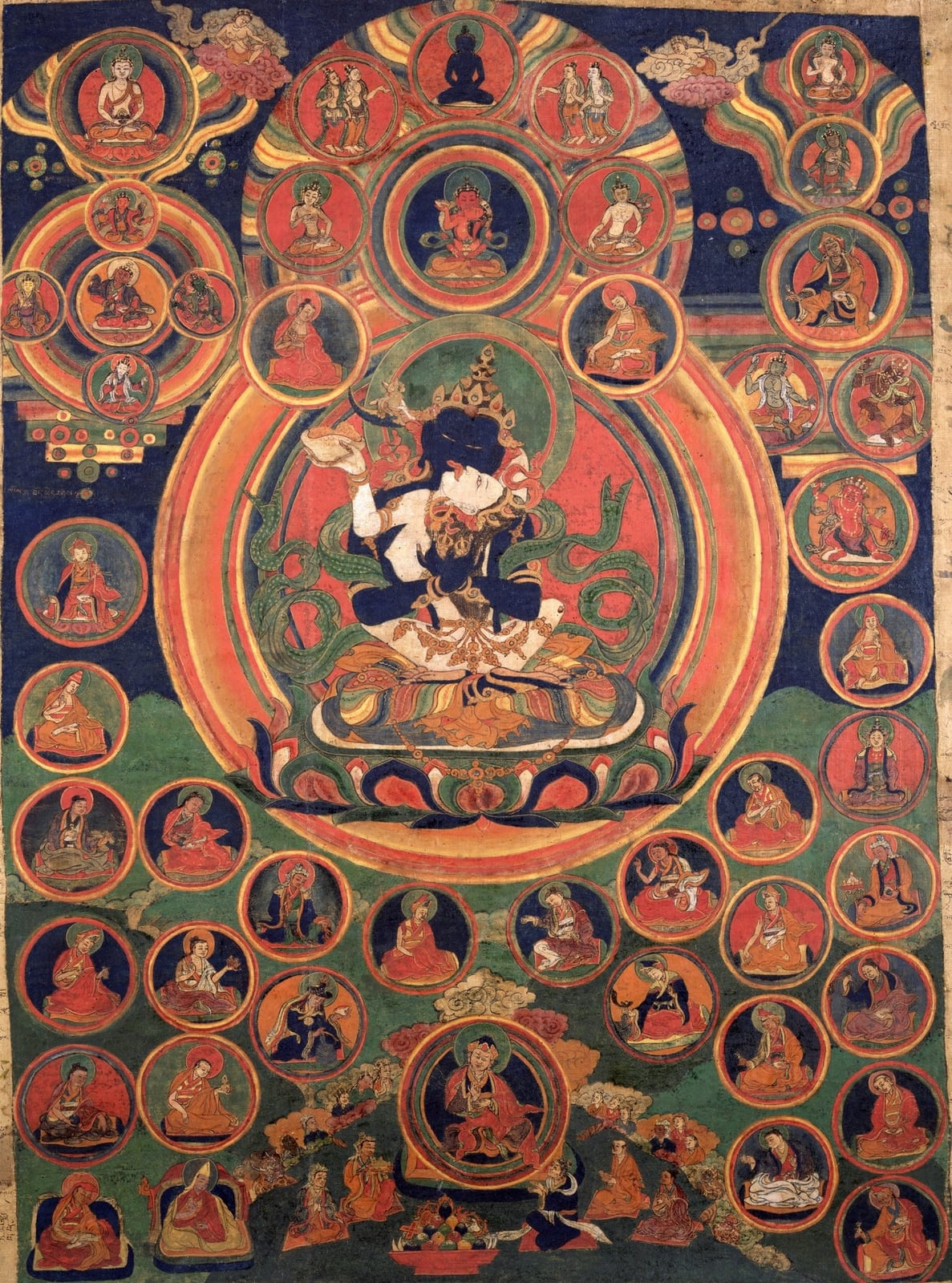
Padmasambhava (Orgyen Dorje Chang) con Yeshe Tsogyal, tangka tibetano del siglo XVII · Public domain

मूल विचार
Treasures (gter ma): A terma is a text or object that, according to tradition, Padmasambhava or one of his contemporaries hid in the eighth century to be discovered later by a predestined revealer (gter ston).
संदर्भ में देखें
जीवनी
5 मिनट का पाठ
स्पैनिश मूल से सहायता-प्राप्त अनुवाद, मातृभाषी अनुवादक द्वारा समीक्षा लंबित।
एक नाम, दो व्यक्तित्व
पद्मसंभव दो हैं। एक आठवीं शताब्दी के भारतीय तांत्रिक आचार्य हैं, जिनके विषय में प्राचीन स्रोतों में बस कुछ ही पंक्तियाँ बची हैं; दूसरे हैं गुरु रिनपोछे, “बहुमूल्य गुरु”, जो कमल से जन्मे, तिब्बत के आध्यात्मिक विजेता बने और उन निधियों के रचयिता माने गए जिन्हें उनके भक्त नौ सौ वर्षों से खोजते आ रहे हैं। बीसवीं शताब्दी के बड़े भाग में पश्चिमी विद्वत्ता को संदेह रहा कि पहले का अस्तित्व था भी या नहीं। आज, जैसा कि लुइस डोनी सार रूप में कहते हैं, उनकी ऐतिहासिकता सावधानी के साथ स्वीकार की जाती है: एक पद्मसंभव थे, किंतु उनके बारे में जो कुछ कहा जाता है, उसका लगभग सब दूसरे से संबंधित है।
प्राचीन स्रोत क्या कहते हैं
सबसे प्राचीन आख्यानात्मक साक्ष्य बा का वसीयतनामा (Dba' bzhed) है, तिब्बत में बौद्ध धर्म के प्रवेश का एक इतिवृत्त, जिसका रचनाकाल नौवीं से बारहवीं शताब्दी के बीच माना जाता है। इस ग्रंथ के अनुसार, राजा ठिसोंग देचेन (जिन्होंने 755 से आठवीं शताब्दी के अंत तक शासन किया) ने महान भारतीय विद्वान शांतरक्षित को आमंत्रित किया था, परंतु बाढ़, वज्रपात और महामारियों को स्थानीय देवताओं के कोप का परिणाम माना गया, और उस ज्ञानी ने सलाह दी कि उन्हें वश में करने में समर्थ किसी विशेषज्ञ को बुलाया जाए: उड्डियान से आए पद्मसंभव को। आचार्य ने आत्माओं को वश में किया, मरुस्थलों तक पानी पहुँचाने के लिए निर्माण-कार्य प्रस्तावित किए और दरबार में ऐसी आशंकाएँ जगा दीं कि राजा ने, अपनी सत्ता को लेकर चिंतित होकर, थोड़े ही समय के प्रवास के बाद उनसे चले जाने का अनुरोध किया।
यह चित्र — एक प्रभावी पर असुविधाजनक तांत्रिक भूत-निवारक का — दुनहुआंग की पांडुलिपियों के चित्र से मेल खाता है। दसवीं शताब्दी के अंत के आसपास प्रतिलिपि की गई पांडुलिपि Pelliot tibétain 44 बताती है कि पद्मसंभव नालंदा से वज्रकील के ग्रंथ लाए, ताकि काठमांडू घाटी में यांगलेशो में अपनी साधना में बाधा डालने वाली विघ्नकारी शक्तियों पर विजय पा सकें। जैकब डाल्टन द्वारा अध्ययन की गई दो अन्य पांडुलिपियाँ उन्हें पहले से ही तिब्बत की शत्रु आत्माओं के दमनकर्ता के रूप में दिखाती हैं। इनमें से कोई भी स्रोत किसी चमत्कारी जन्म की बात नहीं करता; सभी उन्हें तिब्बती बौद्ध धर्म की स्थापना की सेवा में लगे एक कर्मकांड-विशेषज्ञ के रूप में प्रस्तुत करते हैं, जिसके पहले विहार, साम्ये, का प्रतिष्ठापन लगभग 779 में हुआ।
कमल से जन्मे
तिब्बती जिस जीवनी को जानते हैं, वह बहुत बाद में, बारहवीं शताब्दी से आगे के प्रकट ग्रंथों में स्थिर हुई। उसके अनुसार, बुद्ध के परिनिर्वाण के आठ वर्ष बाद, जैसी उन्होंने भविष्यवाणी की थी, उड्डियान की धनकोश झील में एक आठ वर्ष का बालक कमल पर बैठा प्रकट हुआ — उड्डियान, जिसे अधिकांश विद्वान स्वात घाटी से पहचानते हैं। निःसंतान राजा इंद्रभूति ने उसे गोद लिया और राजकुमार बनाया; किंतु युवक ने एक मंत्री की हत्या कर दी, देश-निकाला पाया और भारत के श्मशानों में योगी के रूप में रहा, जहाँ उसने डाकिनियों और महान तांत्रिक आचार्यों से शिक्षाएँ पाईं।
इसके बाद वे प्रसंग आते हैं जिन्हें प्रतिमा-परंपरा बार-बार दोहराती है: ज़होर की राजकुमारी मंदारवा, जिसे उसके पिता राजा ने उसके गुरु के साथ एक चिता पर जलाना चाहा, और वह चिता झील में बदल गई; मारतिका की गुफा का एकांतवास, जहाँ दोनों ने जीवन पर अधिकार प्राप्त किया; यांगलेशो में यांगदक और वज्रकील की साधनाओं द्वारा सिद्धि। प्रत्येक चरण उनके आठ रूपों में से एक से जुड़ा है (राजकुमार पद्म ग्यलपो, योगी न्यिमा ओज़ेर, विद्वान लोदेन छोकसे, क्रोधरूप दोर्जे द्रोलो…), जो जीवनी के प्रसंग कम और वे रूप अधिक हैं जिनमें गुरु स्वयं को भक्ति के लिए अर्पित करते हैं।
तिब्बत की विजय
पारंपरिक रूप में तिब्बत की यात्रा एक सैन्य अभियान है। पद्मसंभव हर पर्वत और हर झील के देवताओं को वश में करते हैं, उनसे बौद्ध धर्म की रक्षा की शपथ दिलवाते हैं, और उनके वश में आते ही साम्ये खड़ा होता है। वे राजा और पच्चीस प्रमुख शिष्यों को दीक्षा देते हैं, येशे छोग्याल को अपनी सहधर्मिणी बनाते हैं, जो उनकी शिक्षाओं को लिपिबद्ध करेंगी, और उन गुफाओं में ध्यान करते हैं जो आज तीर्थस्थल हैं — साम्ये के निकट छिम्फू से लेकर भूटान के ताकत्सांग, “बाघ के घोंसले”, तक, जहाँ वे एक बाघिन पर उड़ते हुए पहुँचे। विदा होने से पहले वे पूरे तिब्बत में ग्रंथ और वस्तुएँ छिपा देते हैं, ताकि उनके पुनर्जन्म लेने वाले शिष्य उचित समय पर उन्हें खोज सकें। फिर वे गुंगथांग दर्रे से दक्षिण-पश्चिम की ओर, राक्षसों की भूमि में, देश छोड़ देते हैं, और देह-त्याग नहीं करते: वे ताम्रवर्ण पर्वत पर निवास करते हैं।
निधियाँ
यही अंतिम कृत्य इस व्यक्तित्व की कुंजी है। ग्यारहवीं शताब्दी से तिब्बत में “निधि-उद्घाटक” (gter ston, तेर्तोन) प्रकट हुए, जो गुफाओं में, स्तंभों में या अपने ही चित्त में पाए गए ग्रंथों को चार शताब्दी पहले छिपाई गई पद्मसंभव की शिक्षाओं के रूप में प्रस्तुत करते थे। न्यांगराल न्यिमा ओज़ेर (1124–1192) ने पहली पूर्ण जीवनी ज़ांगलिंगमा प्रकट की; ओर्ग्येन लिंगपा ने 1352 में पद्म-इतिवृत्त, जिसने किंवदंती को स्थिर कर दिया; और कर्म लिंगपा ने चौदहवीं शताब्दी में वह चक्र, जिसका अंग बार्दो थोडोल है। जैसा कि जैनेट ग्यात्सो ने दिखाया है, निधि के सिद्धांत ने प्राचीन संप्रदाय, ञिङमा, को अतीत से नाता तोड़े बिना अपने ग्रंथ-संग्रह को नवीकृत करने की सुविधा दी: प्रत्येक प्रकटीकरण उड्डियान के गुरु के प्रामाण्य की ओर इंगित करता था।
परिणाम एक विशाल कृतित्व है, जिसे उन्होंने लिखा ही नहीं। उन्नीसवीं शताब्दी का है बहुमूल्य तेरमा का महाकोश, जामगोन कोंगत्रुल का साठ से अधिक खंडों का संकलन; बीसवीं शताब्दी की है बार्दो थोडोल की विश्वव्यापी ख्याति, जिसे इवांस-वेंट्ज़ के संस्करण (1927) ने — “तिब्बती मृतक-ग्रंथ” (द तिबेटन बुक ऑफ़ द डेड) जैसे गढ़े हुए शीर्षक और कार्ल गुस्ताव युंग की मनोवैज्ञानिक टीका के साथ — पश्चिमी आध्यात्मिकता का एक क्लासिक बना दिया। उनके नाम से जुड़ी रचनाओं में केवल दृष्टियों की माला, नौ यानों पर एक संक्षिप्त ग्रंथ जो धर्मग्रंथ-संग्रह में सम्मिलित है, साम्राज्य-काल तक पहुँचती प्रतीत होती है।
क्या कहा जा सकता है
संक्षेप में: आठवीं शताब्दी के तिब्बत में भारतीय मूल के एक तांत्रिक आचार्य थे, वशीकरण-अनुष्ठानों के विशेषज्ञ, जो साम्ये की स्थापना और वज्रकील परंपरा से जुड़े थे, और जिनका प्रवास संभवतः संक्षिप्त और विवादग्रस्त रहा। शेष सब — कमल, श्मशान, सहधर्मिणियाँ, बाघिन पर उड़ान, निधियाँ — सदियों की धार्मिक स्मृति की रचना है, और इस कारण ऐतिहासिक तथ्य के रूप में कम वास्तविक नहीं: गुरु रिनपोछे तिब्बती बौद्ध धर्म की सबसे पूजित विभूति हैं, वे “द्वितीय बुद्ध” जिन्हें भूटान और हिमालय में चांद्र मास की दशमी के उत्सव समर्पित हैं, और ञिङमा संप्रदाय की पहचान का केंद्र।
स्रोत: Pasang Wangdu y Hildegard Diemberger (trad. y ed.). dBa' bzhed: The Royal Narrative concerning the Bringing of the Buddha's Doctrine to Tibet. Viena: Verlag der Österreichischen Akademie der Wissenschaften, 2000. ISBN 9783700129561. · Doney, Lewis. The Zangs gling ma: The First Padma bKa' thang Revelation. Andiast: International Institute for Tibetan and Buddhist Studies, 2014. · Hirshberg, Daniel A. Remembering the Lotus-Born: Padmasambhava in the History of Tibet's Golden Age. Somerville (MA): Wisdom Publications, 2016. · Cantwell, Cathy, y Robert Mayer. Early Tibetan Documents on Phur pa from Dunhuang. Viena: Verlag der Österreichischen Akademie der Wissenschaften, 2008 (cap. «Pelliot tibétain 44», pp. 41–56). · Kapstein, Matthew T. The Tibetan Assimilation of Buddhism: Conversion, Contestation, and Memory. Nueva York: Oxford University Press, 2000.
कालक्रम
जीवन, वर्ष-दर-वर्ष
प्रत्येक बिंदु एक प्रमाणित घटना है। उसे स्रोत और निश्चितता के स्तर सहित पढ़ने के लिए क्लिक करें।
VIIवीं सदीOḍḍiyāna (valle de Swat)
Birth (traditional)
Tradition has him born from a lotus in Lake Dhanakośa in Oḍḍiyāna; the early sources only say he came from that land. The date is conventional: eighth century.
परंपराYeshe Tsogyal (atrib.); Nyangral Nyima Özer (revelador). The Lotus-Born: The Life Story of Padmasambhava. Trad. Erik Pema Kunsang. Boston: Shambhala, 1993. ISBN 9780877738695.
VIIवीं सदी
Birth (traditional)
Tradition has him born from a lotus in Lake Dhanakośa in Oḍḍiyāna; the early sources only say he came from that land. The date is conventional: eighth century.
परंपरा
755
Trisong Detsen accedes to the throne
The reign begins of the emperor who, according to the chronicles, invited Śāntarakṣita and Padmasambhava.
प्रमाणित
770 का दशक
Invitation to Tibet
On Śāntarakṣita's advice the king invites him to subdue the spirits obstructing the founding of Samye; according to the Testament of Ba his stay was brief and ended with his departure at the king's request.
संभावित
लगभग 779
Consecration of Samye
Samye, Tibet's first Buddhist monastery, is consecrated; the sources place Padmasambhava at its founding.
संभावित
लगभग 1000
Earliest written witnesses
Dunhuang manuscripts (Pelliot tibétain 44 and 307, IOL Tib J 644), from the late tenth century, present him as a Vajrakīla master and tamer of spirits.
प्रमाणित
लगभग 1150
First revealed biography
Nyangral Nyima Özer (1124–1192) reveals the Zangs gling ma, the first complete life of Padmasambhava.
प्रमाणित
1352
The Chronicle of Padma
Orgyen Lingpa reveals the Padma bka' thang, which fixes the canonical form of the legend.
प्रमाणित
लगभग 1360
Karma Lingpa and the Bardo Thödol
Karma Lingpa (1326–1386) reveals the cycle of the peaceful and wrathful deities, to which the Bardo Thödol belongs.
प्रमाणित
1692
Founding of Taktsang
The 'Tiger's Nest' monastery is built beside the cave tradition associates with Padmasambhava.
प्रमाणित
लगभग 1880
The Great Treasury of Termas
Jamgön Kongtrul gathers in more than sixty volumes the treasure cycles attributed to Padmasambhava (Rinchen Terdzö).
प्रमाणित
1927
The 'Tibetan Book of the Dead'
W. Y. Evans-Wentz publishes Kazi Dawa-Samdup's version of the Bardo Thödol, which will make a text attributed to Padmasambhava famous in the West.
प्रमाणित
कृतियाँ
आवश्यक कृतियाँ
वे कृतियाँ जिनके बिना उनकी विरासत को समझा नहीं जा सकता।
पारंपरिक आरोपण · लगभग 1350
The Great Liberation by Hearing in the Intermediate State (Bardo Thödol, 'Tibetan Book of the Dead')
ཟབ་ཆོས་ཞི་ཁྲོ་དགོངས་པ་རང་གྲོལ་ལས་བར་དོ་ཐོས་གྲོལ་ཆེན་མོ། (zab chos zhi khro dgongs pa rang grol las bar do thos grol chen mo)
A set of ritual texts read aloud beside the dying and the dead to guide them through the intermediate states (bar do) between death and rebirth: the clear light at the moment of dying, the visions of the peaceful and wrathful deities and the search for a new birth. It belongs to the cycle 'The Self-Liberation of the Intention of the Peaceful and Wrathful Deities', revealed in the fourteenth century by Karma Lingpa. Since the 1927 English version it has been the most widely read Tibetan text in the West.
9 संस्करण

पारंपरिक आरोपण · 1352
The Chronicle of Padma (Padma Kathang)
པདམ་བཀའི་ཐང་ཡིག། (padma bka'i thang yig)
A verse biography of Padmasambhava's whole life: birth from a lotus in Lake Dhanakośa, youth as prince of Oḍḍiyāna, exile, years as a yogi in the charnel grounds, the stay in Tibet and the departure for the land of the rākṣasas. It fixed the 'eleven deeds' and the canonical form of the legend, and was for centuries the most widely circulated book about him. It presents itself as dictated by the master himself to Yeshe Tsogyal.
2 संस्करण

पारंपरिक आरोपण · लगभग 1150
The Copper Island (Zangling ma): Life of Padmasambhava
པདམ་བཀའ་ཐང་ཟངས་གླིང་མ། (padma bka' thang zangs gling ma)
The first complete biography of Padmasambhava, in prose, narrating his birth from a lotus, arrival in Tibet, the founding of Samye, the initiation of the twenty-five disciples and his departure. It is the source of nearly all later versions of the legend and evidence of how the figure was constructed in the twelfth century. Its colophons attribute the writing to Yeshe Tsogyal.
2 संस्करण
Padmasambhava
Garland of Views: An Essential Instruction
पारंपरिक आरोपण · VIIIवीं सदी
Garland of Views: An Essential Instruction
མན་ངག་ལྟ་བའི་ཕྲེང་བ། (man ngag lta ba'i phreng ba)
A short treatise that arranges all Buddhist and non-Buddhist paths in a hierarchy of views culminating in atiyoga or the Great Perfection; it presents itself as a commentary on chapter XIII of the Guhyagarbhatantra. It is the only work ascribed to Padmasambhava included in the Tengyur, the canon of treatises, and the one scholarship considers closest to a plausible attribution or at least to the imperial period; Nubchen Sangye Yeshe already cites it.
1 संस्करण
संपूर्ण कृतित्व (14)

The Self-Liberation of the Intention of the Peaceful and Wrathful Deities (Karma Lingpa's cycle)
1350
Padmasambhava
Self-Liberation through Seeing with Naked Awareness
The Conscious LibrarySelf-Liberation through Seeing with Naked Awareness
1350

Dakini Teachings: Padmasambhava's Advice to Yeshe Tsogyal
1150

Advice from the Lotus-Born (Zhal gdams)
Padmasambhava
The Gradual Path of the Wisdom Essence (Lamrim Yeshe Nyingpo)
The Conscious LibraryThe Gradual Path of the Wisdom Essence (Lamrim Yeshe Nyingpo)
1856
Padmasambhava
The Prayer in Seven Chapters (Le'u Dünma)
The Conscious LibraryThe Prayer in Seven Chapters (Le'u Dünma)
1350
Padmasambhava
The Seven-Line Prayer
The Conscious LibraryThe Seven-Line Prayer
Padmasambhava
The Fivefold Chronicles (Kathang Denga)
The Conscious LibraryThe Fivefold Chronicles (Kathang Denga)
1350
Padmasambhava
Gathering of the Sugatas of the Eight Commands (Kagye Deshek Düpa)
The Conscious LibraryGathering of the Sugatas of the Eight Commands (Kagye Deshek Düpa)
1150
Padmasambhava
The Great Treasury of Precious Termas (Rinchen Terdzö)
The Conscious LibraryThe Great Treasury of Precious Termas (Rinchen Terdzö)
1880
अंतिम शब्द
उनके अंतिम शब्दों का कोई सत्यापन-योग्य अभिलेख उपलब्ध नहीं है।
Tradition ascribes to him not death but departure: the revealed biographies have him leave Tibet by the Gungthang pass towards the south-west, giving farewell advice to the king and Yeshe Tsogyal, to dwell on the Copper-Coloured Mountain. These farewells are hagiographic compositions of the twelfth to fourteenth centuries; there is no historical record of his death or of last words.
स्रोत: Yeshe Tsogyal (atrib.); Orgyen Lingpa (revelador). The Life and Liberation of Padmasambhava (Padma bKa'i Thang). Trad. Kenneth Douglas y Gwendolyn Bays a partir de la versión francesa de Gustave-Charles Toussaint (Le Dict de Padma, París: Leroux, 1933). 2 vols. Emeryville (CA): Dharma Publishing, 1978. ISBN 9780913546192.
पूछें
उनकी कृतियाँ क्या उत्तर देती हैं
मानवता के बारह महान प्रश्न और उनके ग्रंथ उनका जो उत्तर देने देते हैं, संदर्भों सहित। हम कभी उनके मुख में अपने शब्द नहीं रखते।
परम सत्य क्या है? क्या ईश्वर है?
The ultimate is the luminous nature of mind; the deities are its display
निराकार परम सत्ताउनके सिद्धांत से निष्कर्षित
Almost everything read under Padmasambhava's name consists of «treasure» texts (terma) revealed centuries after his life. The best known, the so-called Tibetan Book of the Dead, brought to light by Karma Lingpa in the fourteenth century, describes how at the moment of death the clear light of the dharmakāya appears and asks that it be recognised as the very nature of one's mind. The peaceful and wrathful deities that arise afterwards are not external gods but projections of that same mind. The ultimate is thus an empty and luminous awareness, without creator and without face, of which the divine figures are expressions. The Introduction to Pure Awareness, from the same cycle, insists that one should not look outside for what is one's own awakened presence.
इस प्रश्न की अन्य गुरुओं से तुलना करेंमैं कौन हूँ? क्या कोई सच्चा आत्म है?
Sought for, the mind is not found: empty and yet aware
कोई स्थायी आत्म नहींउनके सिद्धांत से निष्कर्षित
The texts the Nyingma tradition attributes to Padmasambhava are mostly terma revealed between the twelfth and nineteenth centuries. In the Introduction to Pure Awareness, from Karma Lingpa's cycle, the enquiry is directed at the mind itself: examined, it has no shape, colour or location, and is found neither inside nor outside. What follows is not nothingness but a naked presence, empty and clear at once, which the Great Perfection calls rigpa. The self that defends itself and clings is what does not withstand this examination; what remains is not a subject but the capacity to know. The Tibetan Book of the Dead applies the same teaching: whoever recognises the visions as their own mind is freed; whoever identifies with a fleeing self goes on wandering.
इस प्रश्न की अन्य गुरुओं से तुलना करेंहम दुःख क्यों भोगते हैं?
One wanders through not recognising as one's own the light that appears
हम क्या हैं, इसका अज्ञानउनके सिद्धांत से निष्कर्षित
In the Tibetan Book of the Dead, a terma revealed by Karma Lingpa in the fourteenth century and attributed to Padmasambhava's teaching, suffering has one recurring cause: not recognising. At each stage of the intermediate state the clear light appears, and then the deities and the coloured lights; whoever recognises them as manifestations of their own mind is liberated, and whoever fears or desires them, through failing to recognise them, is dragged by karma towards a new birth. The five passions (ignorance, attachment, aversion, pride and envy) are presented as confused versions of the five wisdoms. We suffer, then, because we take ourselves for what we are not and fail to know the empty, luminous nature of mind; not because of a punishment or an external fate.
इस प्रश्न की अन्य गुरुओं से तुलना करेंमृत्यु के बाद क्या होता है?
After death, an intermediate state: recognition liberates, non-recognition brings rebirth
कर्म के अनुसार पुनर्जन्मस्पष्ट रूप से कहा है
The answer associated with Padmasambhava is the most detailed in all Buddhist literature, but it comes from a terma: the so-called Tibetan Book of the Dead, which Karma Lingpa brought to light in the fourteenth century and which the tradition ascribes to a teaching of the master. The text is read beside the dying and the deceased for forty-nine days. At the instant of death the clear light appears; whoever recognises it as their own nature is liberated. If not, the visions of the peaceful and wrathful deities follow and, lastly, the intermediate state of becoming, where karma pushes towards one of the six destinies. Even then, hearing can guide the choice of a favourable birth. Death is an opportunity for liberation, not merely a transit.
इस प्रश्न की अन्य गुरुओं से तुलना करेंमुक्ति या उद्धार कैसे प्राप्त होता है?
Liberation through recognition: seeing one's own mind naked as it is
प्रत्यक्ष ज्ञान सेउनके सिद्धांत से निष्कर्षित
The treasure texts attributed to Padmasambhava propose many paths, arranged in nine vehicles culminating in the Great Perfection, but their core is recognition. The Introduction to Pure Awareness, from Karma Lingpa's cycle, presents itself as an instruction for liberation by seeing one's own mind naked: nothing is built, what is already present is recognised. The Tibetan Book of the Dead carries the same principle to the moment of death: whoever recognises the clear light as their own nature is liberated in that instant, and the titles say so, liberation through hearing, self-liberation through seeing. Preliminary practices, deities, mantras and devotion to the master prepare and sustain that recognition, but do not replace it.
इस प्रश्न की अन्य गुरुओं से तुलना करेंक्या गुरु आवश्यक है?
The master introduces the nature of mind; without him there is no recognition
अनिवार्यउनके सिद्धांत से निष्कर्षित
In the tradition centred on Padmasambhava, the master is not an adviser but the door. The Great Perfection is transmitted through «direct introduction»: the master points out to the disciple their own pure awareness, and the text of Karma Lingpa's cycle bearing that name presents itself as such a pointing-out. Padmasambhava himself is the master par excellence, Guru Rinpoche, and many of the texts associated with him are supplications addressed to him, such as the Seven-Line Prayer or the Supplication in Seven Chapters. The Teachings to the Ḍākinīs, advice tradition says he gave Yeshe Tsogyal, insist on examining the master before following him and on not separating from him afterwards. Without transmission there is no initiation, and without initiation there is no tantric path.
इस प्रश्न की अन्य गुरुओं से तुलना करेंक्या संसार वास्तविक है?
All that appears is the display of one's own mind, empty and luminous
दिव्य की अभिव्यक्तिउनके सिद्धांत से निष्कर्षित
In the terma associated with Padmasambhava, the world is neither a creation nor a deception to be rejected: it is the spontaneous manifestation of the nature of mind. The Tibetan Book of the Dead teaches this dramatically: the lights, sounds and deities of the intermediate state are the very radiance of the deceased's mind, and recognising them is enough for them to dissolve into it. The Introduction to Pure Awareness applies the same to ordinary life: all that appears arises from the mind and is liberated in it, like waves in water. The Great Perfection speaks of primordial purity and spontaneous presence: the ground is empty from the beginning and, at the same time, unfolds ceaselessly into appearances.
इस प्रश्न की अन्य गुरुओं से तुलना करेंप्रेम क्या है?
The mind of awakening, inseparable from emptiness, for the good of all beings
असीम करुणाउनके सिद्धांत से निष्कर्षित
The texts attributed to Padmasambhava devote no treatise to love, but they integrate it into the framework of the Great Vehicle: every practice begins by taking refuge and awakening the mind of awakening for the good of all beings, and ends by dedicating the merit to them. The Essence of Wisdom of the Stages of the Path, a terma revealed in the nineteenth century by Chokgyur Lingpa, develops this compassion as part of the gradual path towards the Great Perfection. In the hagiographies, the figure of Padmasambhava embodies a compassion that takes wrathful forms: taming Tibet's hostile spirits is, in that logic, an act of care. True compassion is described as inseparable from emptiness, free of the idea of someone who helps and someone who receives.
इस प्रश्न की अन्य गुरुओं से तुलना करेंक्या हम स्वतंत्र हैं, या सब कुछ पूर्वनिर्धारित है?
Karma drives, yet in every instant one can recognise and choose
कर्म और चुनावउनके सिद्धांत से निष्कर्षित
The Tibetan Book of the Dead, a fourteenth-century terma associated with Padmasambhava's teaching, describes a process dominated by karma: in the intermediate state of becoming, the deceased is swept along by karmic winds, sees visions according to past deeds and feels drawn towards a destiny. Yet the text is read aloud precisely because at every stage a possibility of liberation remains or, at least, of choosing: recognising the clear light, not being carried off by fear, closing the door of an unfavourable womb, turning towards a propitious human birth. The past conditions strongly, but it does not close everything off: present attention, sustained by the master's instruction, can divert the course.
इस प्रश्न की अन्य गुरुओं से तुलना करेंध्यान या प्रार्थना क्यों करें?
Look into one's own mind until its naked nature is recognised
'मैं' के स्रोत पर लौटनाउनके सिद्धांत से निष्कर्षित
In the tradition that claims Padmasambhava as its source, two registers coexist. One is ritual and devotional: supplications such as the Seven-Line Prayer or the Supplication in Seven Chapters, the Vajra Guru mantra and the deity cycles revealed as treasures. The other, which the tradition regards as the summit, is the Great Perfection. The Introduction to Pure Awareness, from Karma Lingpa's cycle, describes this second register as an enquiry directed at the mind itself: searching for it, asking where it is, what colour or shape it has, until discovering that it is not found as a thing and that what searches is one's own empty, awake awareness. No state is manufactured: what is already there is recognised and rested in. Prayer prepares and sustains that recognition.
इस प्रश्न की अन्य गुरुओं से तुलना करेंक्या बुद्धि परम को जान सकती है?
A wisdom hidden as treasure and recognised in one's own experience
गूढ़ ज्ञानउनके सिद्धांत से निष्कर्षित
The tradition associated with Padmasambhava answers this question through its mode of transmission. According to the doctrine of treasures (terma), the master and his disciples hid teachings in the eighth century that predestined revealers would discover centuries later, when they were needed. Ultimate knowledge is therefore not reached by reasoning but by transmission and initiation, and it is verified in the practitioner's experience. The Garland of Views, the most plausible attribution, arranges doctrines in a hierarchy culminating in the Great Perfection, above paths that rely on analysis. The Introduction to Pure Awareness insists that the nature of mind is not an object of thought: it is recognised directly when the master points it out.
इस प्रश्न की अन्य गुरुओं से तुलना करेंसंसार से हटें या उसे बदलें?
Retreat caves and hidden valleys; but also taming a country
पाने के लिए हटनाउनके सिद्धांत से निष्कर्षित
The hagiographies revealed as treasures, such as The Copper Island (twelfth century) and the Chronicle of Padma (fourteenth century), present Padmasambhava practising in caves and charnel grounds in India, Nepal and Tibet, and the sacred geography of the Himalaya is full of grottoes associated with him. The advice tradition says he gave Yeshe Tsogyal insists on abandoning worldly concerns and practising in solitude. Treasure literature also developed the idea of hidden valleys, refuges for times of crisis. But the same chronicles show him acting in the world: invited by King Trisong Detsen, he subdues the hostile spirits so that the monastery of Samye can be founded. Retreat is the condition of attainment; action, its fruit.
इस प्रश्न की अन्य गुरुओं से तुलना करें
निकटता और तनाव
निकटता और तनाव
उनके मतों के आधार पर प्रश्न-दर-प्रश्न आकलित। प्रत्येक सहमति या टकराव का कारण क्लिक करने पर।
इनसे मिलता-जुलता सोचते हैं
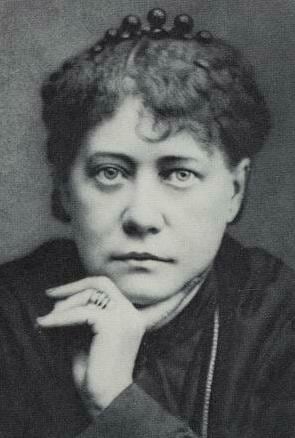
Helena Blavatsky
इन पर सहमत: क्या हम स्वतंत्र हैं, या सब कुछ पूर्वनिर्धारित है? · परम सत्य क्या है? क्या ईश्वर है? · मृत्यु के बाद क्या होता है?

Dōgen
इन पर सहमत: मैं कौन हूँ? क्या कोई सच्चा आत्म है? · मृत्यु के बाद क्या होता है? · क्या गुरु आवश्यक है?
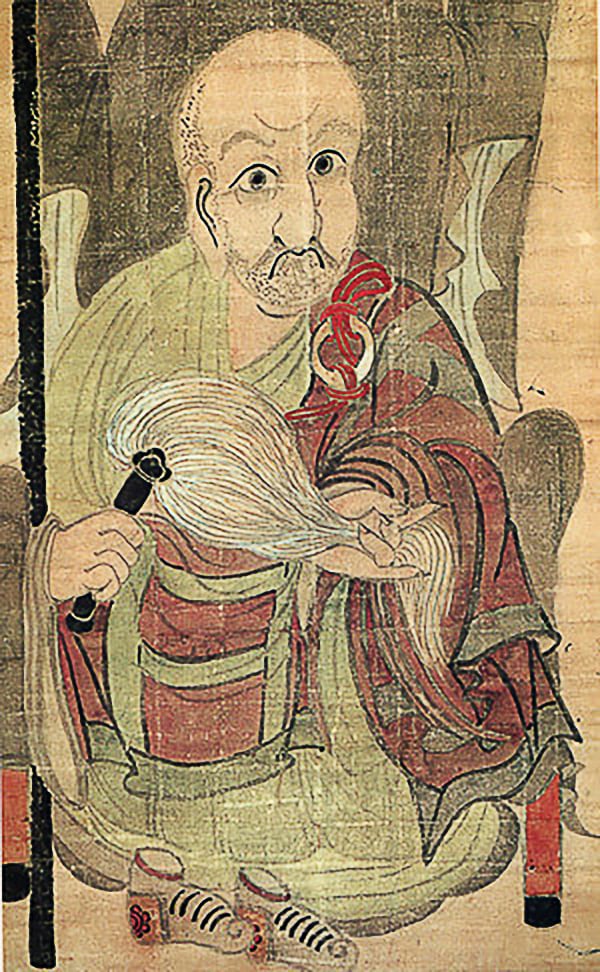
Hakuin Ekaku
इन पर सहमत: मैं कौन हूँ? क्या कोई सच्चा आत्म है? · हम दुःख क्यों भोगते हैं? · क्या गुरु आवश्यक है?
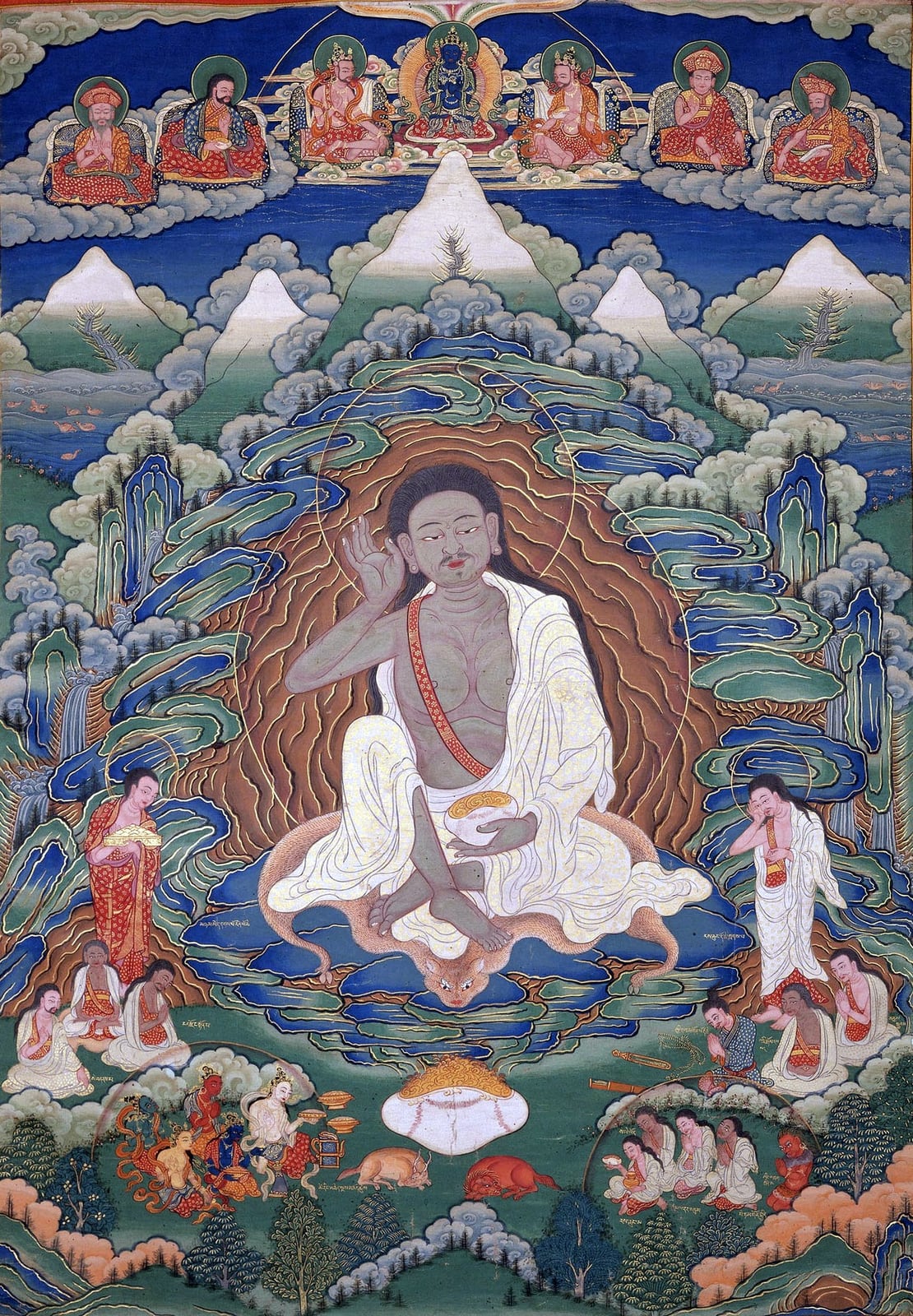
Milarepa
इन पर सहमत: क्या हम स्वतंत्र हैं, या सब कुछ पूर्वनिर्धारित है? · मैं कौन हूँ? क्या कोई सच्चा आत्म है? · मृत्यु के बाद क्या होता है?
इनसे भिन्न सोचते हैं

Nikolai Berdyaev
इन पर टकराव: मैं कौन हूँ? क्या कोई सच्चा आत्म है? · मृत्यु के बाद क्या होता है? · क्या गुरु आवश्यक है?

Francis of Assisi
इन पर टकराव: मैं कौन हूँ? क्या कोई सच्चा आत्म है? · मृत्यु के बाद क्या होता है?

Al-Hallaj
इन पर टकराव: मैं कौन हूँ? क्या कोई सच्चा आत्म है? · मृत्यु के बाद क्या होता है?

Emanuel Swedenborg
इन पर टकराव: मैं कौन हूँ? क्या कोई सच्चा आत्म है? · मृत्यु के बाद क्या होता है?
प्रसंग और वृत्तांत
प्रसंग और वृत्तांत
विवादितsegunda mitad del s. VIII
The dismissed exorcist
वृत्तांत का स्रोत: Dba' bzhed (Testament of Ba), ed. and trans. Pasang Wangdu and Hildegard Diemberger (2000), and related versions of the Sba bzhed. The text's date of composition is disputed (ninth to twelfth centuries); the details of the assassins vary between recensions.
स्रोत: Pasang Wangdu y Hildegard Diemberger (trad. y ed.). dBa' bzhed: The Royal Narrative concerning the Bringing of the Buddha's Doctrine to Tibet. Viena: Verlag der Österreichischen Akademie der Wissenschaften, 2000. ISBN 9783700129561.
संत-चरित वृत्तांतs. VIII (narrado c. 1000)
The dagger of Yanglesho
वृत्तांत का स्रोत: Pelliot tibétain 44 (Bibliothèque nationale de France), studied by Bischoff and Hartman (1971) and by Cantwell and Mayer (2008); Takeuchi dates it between 978 and 1010 according to the reference recorded in the BDRC dictionary. The episode is later expanded in the Zangs gling ma and the Chronicle of Padma.
स्रोत: Bischoff, F. A., y Charles Hartman. «Padmasambhava's Invention of the Phur-bu: Ms. Pelliot tibétain 44». En Études tibétaines dédiées à la mémoire de Marcelle Lalou. París: Adrien Maisonneuve, 1971, 11–28.
संत-चरित वृत्तांतs. VIII (narrado desde el s. XII)
The child of the lake
वृत्तांत का स्रोत: Zangs gling ma (Nyangral Nyima Özer, twelfth century), chapter on the birth; Padma bka' thang (Orgyen Lingpa, 1352). Some versions prefer a birth from a queen's womb; Wikipedia records both.
स्रोत: Yeshe Tsogyal (atrib.); Nyangral Nyima Özer (revelador). The Lotus-Born: The Life Story of Padmasambhava. Trad. Erik Pema Kunsang. Boston: Shambhala, 1993. ISBN 9780877738695.
संत-चरित वृत्तांतs. VIII (narrado desde el s. XII)
Mandāravā and the lake of fire
वृत्तांत का स्रोत: Padma bka' thang and Zangs gling ma; biography of Mandāravā revealed by Samten Lingpa (nineteenth century). The identification with Rewalsar is traditional.
स्रोत: Yeshe Tsogyal (atrib.); Orgyen Lingpa (revelador). The Life and Liberation of Padmasambhava (Padma bKa'i Thang). Trad. Kenneth Douglas y Gwendolyn Bays a partir de la versión francesa de Gustave-Charles Toussaint (Le Dict de Padma, París: Leroux, 1933). 2 vols. Emeryville (CA): Dharma Publishing, 1978. ISBN 9780913546192.
संत-चरित वृत्तांतs. VIII (tradicional); monasterio de 1692
The flight to Taktsang
वृत्तांत का स्रोत: Bhutanese oral tradition and revealed biographies; monastery data (1692, 1998 fire) according to Wikipedia. The length of the retreat is a ritual formula applied to many masters.
मौखिक परंपराs. VIII (tradicional); teoría desarrollada desde el s. XI
The hidden treasures
वृत्तांत का स्रोत: The gter ma theory set out in the revealed biographies and in Nyingma treatises (e.g. Jigme Lingpa; Tulku Thondup, The Hidden Teachings of Tibet, 1986); academic analysis in Gyatso (1986) and Doney (2014).
स्रोत: Gyatso, Janet. «Signs, Memory and History: A Tantric Buddhist Theory of Scriptural Transmission». Journal of the International Association of Buddhist Studies 9.2 (1986): 7–35.
शिक्षाएँ
शिक्षाएँ
वे अवधारणाएँ जो उनके चिंतन को रूप देती हैं, उनके संदर्भ में समझाई गई।
Treasures (gter ma)terma
The Nyingma school; also in Bön and, to a lesser extent, in the Kagyu schools.
स्रोत: Gyatso, Janet. «Signs, Memory and History: A Tantric Buddhist Theory of Scriptural Transmission». Journal of the International Association of Buddhist Studies 9.2 (1986): 7–35.
Intermediate state (bardo)bardo
Karma Lingpa's cycle (fourteenth century); antecedents in the Abhidharma and the Guhyagarbha tantras.
स्रोत: The Tibetan Book of the Dead: First Complete Translation. Trad. Gyurme Dorje; ed. Graham Coleman y Thupten Jinpa; introd. del XIV Dalái Lama. Londres: Penguin Classics, 2006. ISBN 9780140455298.
The nine vehicles and the Great Perfectionnueve-vehiculos
Nyingma doxography; the Guhyagarbhatantra.
स्रोत: Padmasambhava (atrib.) y Jamgön Mipham. A Garland of Views: A Guide to View, Meditation, and Result in the Nine Vehicles. Trad. Padmakara Translation Group. Boulder: Shambhala, 2016. ISBN 9781611802962.
The taming of spirits ('dul ba)sometimiento
Tantric ritual (Vajrakīla); history of the conversion of Tibet.
स्रोत: Dalton, Jacob P. The Taming of the Demons: Violence and Liberation in Tibetan Buddhism. New Haven: Yale University Press, 2011. ISBN 9780300153927.
The Vajra Guru mantra and the eight manifestationsvajra-guru
Nyingma and popular devotional practice.
वीडियो
वीडियो
रिकॉर्डिंग, साक्षात्कार और वृत्तचित्र। वीडियो YouTube से चलते हैं; वे यहाँ संग्रहीत नहीं हैं।
Session 1: Padmasambhava and History
व्याख्यान· EN· 55 min
Rubin Museum of Himalayan Artआधिकारिक चैनल
Session 3: Padmasambhava and the Treasure Tradition
व्याख्यान· EN· 69 min
Rubin Museum of Himalayan Artआधिकारिक चैनल
Padmasambhava and His Eight Manifestations
विश्लेषण· EN· 6 min
Smarthistoryआधिकारिक चैनल
Light of Kailash 29: On the Image of Padmasambhava in Zanglingma | Dr. Lucian Maidanuc
व्याख्यान· EN· 64 min
Shang Shung Institute UKआधिकारिक चैनल
Prof. Jacob Dalton - "An Early Presentation of the Great Perfection"
व्याख्यान· EN· 107 min
Rangjung Yeshe Instituteआधिकारिक चैनल
What is the Tibetan Book of the Dead?
विश्लेषण· EN· 17 min
ReligionForBreakfast
Francesca Freemantle on the Tibetan Book of the Dead
साक्षात्कार· EN· 71 min
Shambhala Publicationsआधिकारिक चैनल
Art of Dying & Living: Tibetan Book of the Dead with Bob Thurman
व्याख्यान· EN· 68 min
Tibet House US NYC | Menla Resort Onlineआधिकारिक चैनल
The Death of Death: Bringing The Tibetan Book of the Dead to Life | Dr. Andrew Holecek
व्याख्यान· EN· 72 min
Theosophical Society
El Bardo Todol, La Gran Liberación - Libro tibetano de la vida y la muerte, subtitulado al español
वृत्तचित्र· ES· 45 min
culturapractica
Nacido de un Loto - Padmasambhava - Guru Rinpoche - Introducción a su Biografía Milagrosa - Namthar
तृतीय पक्ष की रिकॉर्डिंग· ES· 27 min
Daniel Rajunov
चित्रशाला
चित्रशाला
सत्यापित लाइसेंस वाले चित्र। प्रत्येक में उसके रचयिता और श्रेय का उल्लेख सुरक्षित है।
पांडुलिपियाँ
पांडुलिपियाँ
पांडुलिपि-साक्ष्य और प्राचीन पाठ, उनके संरक्षक और अध्ययन की शर्तों सहित।
BO · Tibetano (dbu can) · Finales del siglo X (Takeuchi: 978–1010)
Pelliot tibétain 44 (texto sobre Vajrakīla / phur pa)
- संरक्षित पाठ-साक्ष्य
- Manuscrito de Dunhuang
- संरक्षक
- Bibliothèque nationale de France, París · Pelliot tibétain 44
BO · Tibetano · Siglo X
Pelliot tibétain 307
- संरक्षित पाठ-साक्ष्य
- Manuscrito de Dunhuang
- संरक्षक
- Bibliothèque nationale de France, París · Pelliot tibétain 307
BO · Tibetano · Siglo X
IOL Tib J 644
- संरक्षित पाठ-साक्ष्य
- Manuscrito de Dunhuang
- संरक्षक
- British Library, Londres · IOL Tib J 644
संबंध
संबंध
प्रभाव, शिष्यत्व और वैचारिक निकटता। प्रमाणित संबंध को विश्लेषण से पहचानी गई समानता से अलग दर्शाया गया है।
इनसे प्रभावित
Siddhartha Gautama, the Buddha
A Buddhist tantric master; the revealed biographies present him as the 'second Buddha' prophesied by Śākyamuni himself.
प्रमाणित संबंध
इन्हें प्रभावित किया
The 14th Dalai Lama (Tenzin Gyatso)
The 14th Dalai Lama, though Geluk, has taught the Great Perfection of the Nyingma tradition that claims descent from Padmasambhava (Dzogchen: The Heart Essence of the Great Perfection, 2000) and introduced the complete translation of the Bardo Thödol (Penguin, 2006).
प्रमाणित संबंध
इनसे मिलते-जुलते विचार
A parallel identified by the researcher: the two great yogis of the Himalayan caves whose image was fixed by much later hagiographies (the Chronicle of Padma, 1352; Tsangnyön Heruka's Namthar, 1488), and whose retreat places organise Tibetan sacred geography. There is no historical relationship.
विश्लेषण से पहचानी गई समानता
इनसे मिलते-जुलते विचार
A parallel identified by the researcher: two Indian masters who founded foreign traditions (Nyingma and Chan) and whose biography is mostly later legend. In imperial Tibet both currents coexisted: the Dunhuang manuscripts and the ministers' chronicle of the Bka' thang sde lnga preserve Chan texts alongside Great Perfection ones.
विश्लेषण से पहचानी गई समानता
इनसे भेंट
Trisong Detsen (r. 755–c. 797)
Emperor of Tibet who, according to the Testament of Ba, invited him to court and later asked him to leave.
प्रमाणित संबंध
इनके समकालीन
Śāntarakṣita (725–788)
Indian scholar who, according to the Testament of Ba, advised inviting him to subdue the spirits; together with the king they are regarded as the three founders of Tibetan Buddhism.
प्रमाणित संबंध
इनके गुरु
Yeshe Tsogyal
His consort and chief disciple according to tradition; the revealed biographies present themselves as transcribed by her.
प्रमाणित संबंध
इन्हें प्रभावित किया
Karma Lingpa (1326–1386)
Discoverer of the cycle of the peaceful and wrathful deities, which includes the Bardo Thödol attributed to Padmasambhava.
प्रमाणित संबंध
इन्हें प्रभावित किया
Nyangral Nyima Özer (1124–1192)
Revealer of the Zangs gling ma, the first complete biography, and one of the principal architects of his image.
प्रमाणित संबंध
स्रोत
स्रोत
इस प्रविष्टि के लिए देखे गए ग्रंथ-सूची और सूचीपत्र।
- Wikidata, «Padmasambhava», QID Q231582 (VIAF 5724290; LCCN n82039306; BDRC bdr:P4956; Treasury of Lives 7442).
- Dalton, Jacob P. «The Early Development of the Padmasambhava Legend in Tibet: A Study of IOL Tib J 644 and Pelliot tibétain 307». Journal of the American Oriental Society 124.4 (2004): 759–772.
- Pasang Wangdu y Hildegard Diemberger (trad. y ed.). dBa' bzhed: The Royal Narrative concerning the Bringing of the Buddha's Doctrine to Tibet. Viena: Verlag der Österreichischen Akademie der Wissenschaften, 2000. ISBN 9783700129561.
- Doney, Lewis. The Zangs gling ma: The First Padma bKa' thang Revelation. Andiast: International Institute for Tibetan and Buddhist Studies, 2014.
- Hirshberg, Daniel A. Remembering the Lotus-Born: Padmasambhava in the History of Tibet's Golden Age. Somerville (MA): Wisdom Publications, 2016.
- Cantwell, Cathy, y Robert Mayer. Early Tibetan Documents on Phur pa from Dunhuang. Viena: Verlag der Österreichischen Akademie der Wissenschaften, 2008 (cap. «Pelliot tibétain 44», pp. 41–56).
- Bischoff, F. A., y Charles Hartman. «Padmasambhava's Invention of the Phur-bu: Ms. Pelliot tibétain 44». En Études tibétaines dédiées à la mémoire de Marcelle Lalou. París: Adrien Maisonneuve, 1971, 11–28.
- Kapstein, Matthew T. The Tibetan Assimilation of Buddhism: Conversion, Contestation, and Memory. Nueva York: Oxford University Press, 2000.
- Yeshe Tsogyal (atrib.); Nyangral Nyima Özer (revelador). The Lotus-Born: The Life Story of Padmasambhava. Trad. Erik Pema Kunsang. Boston: Shambhala, 1993. ISBN 9780877738695.
- Yeshe Tsogyal (atrib.); Orgyen Lingpa (revelador). The Life and Liberation of Padmasambhava (Padma bKa'i Thang). Trad. Kenneth Douglas y Gwendolyn Bays a partir de la versión francesa de Gustave-Charles Toussaint (Le Dict de Padma, París: Leroux, 1933). 2 vols. Emeryville (CA): Dharma Publishing, 1978. ISBN 9780913546192.
- The Tibetan Book of the Dead: First Complete Translation. Trad. Gyurme Dorje; ed. Graham Coleman y Thupten Jinpa; introd. del XIV Dalái Lama. Londres: Penguin Classics, 2006. ISBN 9780140455298.
- Padmasambhava (atrib.) y Jamgön Mipham. A Garland of Views: A Guide to View, Meditation, and Result in the Nine Vehicles. Trad. Padmakara Translation Group. Boulder: Shambhala, 2016. ISBN 9781611802962.
- Wikipedia (en). «Padmasambhava». Usada como índice de fuentes y bibliografía secundaria (Doney 2014, 2015; Dalton 2004; Hirshberg 2016); contrastada con p2–p5.
- Dalton, Jacob P. The Taming of the Demons: Violence and Liberation in Tibetan Buddhism. New Haven: Yale University Press, 2011. ISBN 9780300153927.
- Cuevas, Bryan J. The Hidden History of the Tibetan Book of the Dead. Nueva York: Oxford University Press, 2003.
- Lopez, Donald S., Jr. The Tibetan Book of the Dead: A Biography. Princeton: Princeton University Press, 2011.
- Gyatso, Janet. «Signs, Memory and History: A Tantric Buddhist Theory of Scriptural Transmission». Journal of the International Association of Buddhist Studies 9.2 (1986): 7–35.
- The Treasury of Lives. «Padmasambhava» (biografía académica en línea, P4956). No se pudo leer directamente (403 a clientes automáticos); citada como referencia.
- Wikimedia Commons, API imageinfo (licencia, autor, fecha y descripción de cada fichero de images[]).
- Open Library (Internet Archive). Registros de ISBN de cada edición citada en works[].
- YouTube: conferencias y documentales verificados por oEmbed el 2026-10-25 (detalle en videos[]).
- Dalai Lama (Tenzin Gyatso). Dzogchen: The Heart Essence of the Great Perfection. Ed. Patrick Gaffney; trad. Thupten Jinpa y Richard Barron. Ithaca (NY): Snow Lion, 2000.
- Laufer, Berthold. Der Roman einer tibetischen Königin (bTsun-mo bka'-thang). Leipzig: Otto Harrassowitz, 1911.
- अधिकार-धारक
- Los textos atribuidos y revelados (siglos XII–XIX) son de dominio público en su lengua original. Las traducciones tienen derechos propios: Penguin Random House (Dorje/Coleman/Jinpa 2006), Shambhala Publications (Fremantle y Trungpa; The Lotus-Born; Garland of Views; Dakini Teachings), Bantam/Random House (Thurman), Rangjung Yeshe Publications, Dharma Publishing, Wisdom Publications, Oxford University Press (Evans-Wentz), Kairós, Olañeta, Kier, Edaf.
पुष्टि की प्रतीक्षा में
जो यह प्रविष्टि अभी तक निश्चित नहीं कर सकी है। हम उसे भर देने के बजाय कह देना बेहतर समझते हैं।
- Sala de lectura: no se ha encontrado ningún texto de la tradición de Padmasambhava que sea de dominio público en EE. UU., la UE y España con texto completo. Candidatos por comprobar: Berthold Laufer, «Der Roman einer tibetischen Königin» (Leipzig, 1911; Laufer m. 1934), libre en los tres territorios si existe un escaneo con OCR limpio; Emil Schlagintweit, «Die Lebensbeschreibung von Padma Sambhava» (Abhandlungen der k. bayerischen Akademie, 1899–1903; m. 1904). G.-C. Toussaint, «Le Dict de Padma» (1933): libre en la UE y España, pero protegido en EE. UU. hasta 2029; no localizado en línea.
- «Consejos de Zhang zhung»: el encargo menciona esta obra, pero no se ha identificado ningún texto atribuido a Padmasambhava con ese título. Zhang zhung designa el antiguo reino del Tíbet occidental y da nombre a la principal tradición oral del bön (Zhang zhung snyan rgyud), que no se atribuye a Padmasambhava. Se ha registrado en su lugar el género de los consejos (zhal gdams). Confirmar qué obra se buscaba.
- Citas: no se registran citas literales. Los textos atribuidos son tesoros revelados siglos después y no se ha podido cotejar en el original tibetano ningún pasaje con la exactitud exigida; el dicho más famoso se recoge en apocryphal_quotes.
- Wikidata da para Padmasambhava 717–762 como fechas de nacimiento y muerte; no tienen fundamento en las fuentes consultadas y no se usan.
- Manuscritos: las URL de digitalización de Pelliot tibétain 44 y 307 (Gallica/IDP) e IOL Tib J 644 (IDP) no se han podido obtener (Gallica bloquea las consultas automáticas).
- Treasury of Lives (P4956) devolvió 403; su contenido no se ha usado directamente.
- Ediciones españolas: solo se han verificado en catálogo las del Bardo Thödol (Kairós, Olañeta, Kier, Edaf) y la antología de Kairós (2006). No se ha localizado con ISBN una versión española del Zangs gling ma, de la Crónica de Padma ni de la Guirnalda de visiones.
- Vídeos: hay pocos materiales académicos en español; el documental de la NFB (1994) solo está en subidas no oficiales y se incluye una con subtítulos en español, marcada como no oficial.
2026-10-25 को शोधित