इस्लाम · सूफ़ीवाद
Al-Hallaj
الحسين بن منصور الحلاج · أبو المغيث الحسين بن منصور الحلاج البيضاوي · منصور حلاج
लगभग 858 – 922ऐतिहासिक रूप से प्रमाणित व्यक्ति
फ़ारस में जन्मे (लगभग 858) और 922 में बग़दाद में मृत्युदंड पाए रहस्यवादी और उपदेशक, अपनी पीढ़ी के सबसे विवादास्पद सूफ़ी। सहल अत-तुस्तरी और जुनैद के अनुयायियों के शिष्य रहे, पर ईश्वर के अनुभव का खुला उपदेश देने के कारण उनसे अलग हो गए। उनके वाक्य "अनल-हक़" — "मैं सत्य हूँ" — और नौ वर्ष की क़ैद के बाद विधर्म के मुक़दमे ने उन्हें फ़ारसी परंपरा में प्रेम का शहीद बना दिया। वे किताब अत-तवासीन, एक छोटा दीवान और अख़बार अल-हल्लाज में संकलित वचन छोड़ गए, जिन्हें लुई मासिन्यों ने संपादित किया।
- कृतियाँ
- 6कृतियाँ
- संस्करण
- 14संस्करण
- उद्धरण
- 5उद्धरण
- वीडियो
- 13वीडियो
- चित्र
- 3चित्र
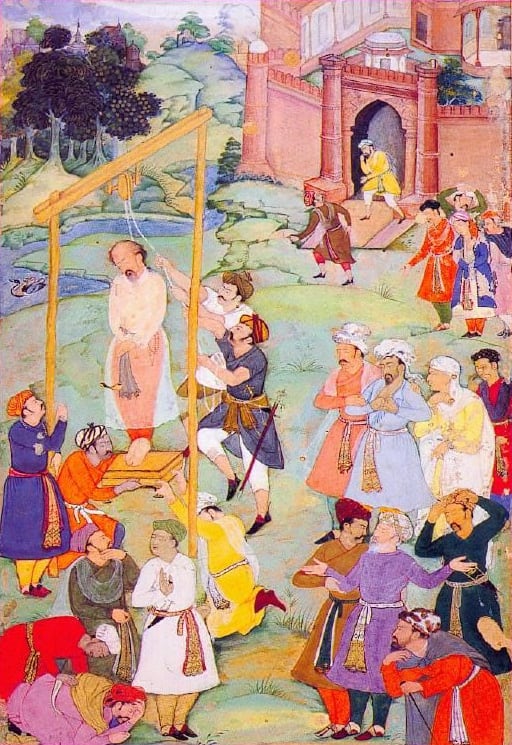
La ejecución de al-Hallaj (1602) · Public domain
उनके अपने शब्दों में
«I am the Truth (that is, I am God).»Šaṭḥ transmitido en relatos sobre él: la versión más antigua lo sitúa en el círculo de al-Shibli; otras, ante al-Junayd. No figura en ningún manuscrito fiable de sus obras (Mojaddedi, Encyclopædia Iranica, siguiendo a Massignon).

शुरुआत के लिए एक रचना
The Book of the Tawasinमूल विचार
"I am the Truth" and ecstatic utterance (shath): *Ana l-Haqq* is the most famous of the *shathiyyat*, the ecstatic utterances in which a mystic seems to speak in God's name.
संदर्भ में देखें
जीवनी
6 मिनट का पाठ
स्पैनिश मूल से सहायता-प्राप्त अनुवाद, मातृभाषी अनुवादक द्वारा समीक्षा लंबित।
अरब धरती पर ज़रथुश्त्रियों का एक पोता
अबुल-मुग़ीस अल-हुसैन इब्न मंसूर का जन्म लगभग हिजरी सन 244 (857–858 ई.) में फ़ारस प्रांत में अल-बैज़ा के निकट अत-तूर में हुआ। परंपरा के अनुसार उनके दादा ज़रथुश्त्री (मजूसी) थे। बचपन में ही परिवार दजला (टिग्रिस) के किनारे बसे वासित नगर में आ बसा, क्योंकि उनके पिता, जो रुई धुनने वाले थे — हल्लाज, वही पेशा जिससे उन्हें नाम मिला —, इराक़ के कपड़ा-केंद्रों के निकट रहना चाहते थे। वहीं उन्होंने बारह वर्ष की आयु में क़ुरआन कंठस्थ किया और अरबी को अपने लेखन की एकमात्र भाषा बनाया। उनके जीवन के बारे में हम जो जानते हैं, वह लगभग 360 हि. (971 ई.) में अख़बार अल-हल्लाज में संकलित वृत्तांतों, बग़दाद के इतिहासकारों और सबसे बढ़कर लुई मासिन्यों के पुनर्निर्माण से आता है, जिन्होंने अपना जीवन उनके अध्ययन को समर्पित कर दिया; एनसाइक्लोपीडिया ईरानिका सचेत करती है कि यह विराट कृति आंशिक रूप से व्याख्यात्मक है।
तीन गुरुओं के शिष्य
लगभग सोलह वर्ष की आयु में वे सूफ़ी सहल अत-तुस्तरी के मुरीद बने; चार वर्ष बाद बसरा में उन्होंने अम्र इब्न उस्मान अल-मक्की के हाथों सूफ़ी ख़िरक़ा पहना और अबू याक़ूब अल-अक़्ता की बेटी से विवाह किया, जिससे उनके तीन पुत्र हुए। ये दोनों ही बग़दाद के महान शैख़ जुनैद के अनुयायी थे, जिनसे हल्लाज के मिलने की बात कही जाती है, और बाद के क़िस्से जुनैद की "सचेत" (सह्व) राह को हल्लाज की "मस्ती" (सुक्र) के विरुद्ध रखते हैं। बसरा में उनका निवास ज़ंज दासों के विद्रोह के समय पड़ा, जिससे उनका साला जुड़ा था; शायद इसी से यह आरंभिक संदेह पैदा हुआ कि वे कोई शिया आंदोलनकारी हैं।
उपदेश और यात्राएँ
ज़ंज की पराजय के बाद उन्होंने मक्का की हज-यात्रा की और काबा के प्रांगण में मौन और रोज़े में एक वर्ष बिताया। लौटकर वे अपने अनुभव के बारे में खुलकर बोलने लगे; उनके ससुर ने उनसे नाता तोड़ लिया और उनके गुरु अल-मक्की ने लिखकर उन पर प्रहार किया। तब उन्होंने तुस्तर में, बिना सूफ़ी वेश के, जनसाधारण को उपदेश दिया और अपने ही हृदय में ईश्वर को खोजने का आह्वान किया — लोग उन्हें "रहस्यों का धुनिया" (हल्लाज-उल-असरार) कहने लगे —, और फिर पाँच वर्ष ख़ुरासान और मावराउन्नहर में। वे सैकड़ों शिष्यों के साथ मक्का लौटे, उन पर जादू-टोने का आरोप लगा, और उन्होंने भारत तथा तुर्किस्तान की लंबी यात्रा की। लगभग 290 हि. (903 ई.) में उन्होंने तीसरा हज किया: अरफ़ात में उन्होंने ईश्वर से माँगा कि उन्हें किसी काफ़िर की तरह तिरस्कृत किया जाए। बग़दाद लौटकर उन्होंने अपने घर में काबा का एक प्रतिरूप बनाया और गलियों में घूम-घूमकर अपने प्रेम और उम्मत के लिए मरने की अपनी आकांक्षा की घोषणा करते रहे।
"अनल-हक़" — "मैं सत्य हूँ"
सबसे पुराने वृत्तांत के अनुसार, सूफ़ी अश-शिबली की मंडली में उन्होंने वह वाक्य कहा जो उन्हें प्रसिद्ध करने वाला था: अनल-हक़, "मैं सत्य हूँ", अर्थात "मैं ईश्वर हूँ", क्योंकि अल-हक़ ईश्वर के नामों में से एक है। बाद के संस्करण यह दृश्य जुनैद के सामने रखते हैं। यह वाक्य उनकी रचनाओं की किसी भी विश्वसनीय पांडुलिपि में नहीं मिलता, और इसकी ऐतिहासिक परिस्थितियाँ अनिश्चित हैं; पर इसका अर्थ उनके लेखन से मेल खाता है, जिसमें वे स्वयं की तुलना उस जलती झाड़ी से करते हैं जो मूसा से बोली थी। बाद के सूफ़ियों ने इसे तीन तरह से पढ़ा: एक ऐसे रहस्य के रूप में जिसे प्रकट नहीं किया जाना चाहिए था, प्रेम में मस्त एक व्यक्ति के वचन के रूप में, या ईश्वर की उस आवाज़ के रूप में जो उसमें फ़ना हो चुके मनुष्य के माध्यम से बोलती है। बाद में अश-शिबली कहेंगे: "हुसैन और मैं एक ही थे, बस उसने प्रकट कर दिया और मैंने छिपा लिया।"
मुक़दमा
बग़दाद संकट के वर्षों से गुज़र रहा था: 296 हि. (908 ई.) में वह तख़्तापलट विफल हुआ जिसने एक दिन के लिए इब्न अल-मुअतज़्ज़ को सिंहासन पर बिठाया था, और अगले वर्ष एक और सुन्नी विद्रोह हुआ जिसमें हल्लाज ने भाग लिया। वे अहवाज़ भाग गए; 301 हि. (913 ई.) में उन्हें सूस में पकड़ा गया, बग़दाद लाया गया और क़रामिता के एजेंट के रूप में खंभे से बाँधकर सरेआम अपमानित किया गया। उन्होंने लगभग नौ वर्ष क़ैद में बिताए, अधिकतर ख़लीफ़ा के दरबार में, जहाँ उनके संरक्षक थे, और वहीं अपनी रचनाओं का बड़ा भाग लिखा। वज़ीर हामिद इब्न अल-अब्बास ने मुक़दमा फिर खोला और मृत्युदंड का फ़ैसला हासिल किया; एक बहुप्रचलित संस्करण के अनुसार बहाना वह लेख बना जिसमें उन्होंने मक्का गए बिना हज पूरा करने का प्रस्ताव रखा था। मासिन्यों के अनुसार मंगलवार, 24 ज़िलक़ादा 309 हि. — 26 मार्च 922 ई. — को उन्हें एक हज़ार कोड़े मारे गए, उनके हाथ-पाँव काट दिए गए, उन्हें सूली पर टाँगकर प्रदर्शित किया गया और अगले दिन उनका सिर काट दिया गया; उनका शरीर जला दिया गया और राख दजला में बहा दी गई। इब्न कसीर कुछ भिन्न तिथि देते हैं।
प्रेम का एक सिद्धांत
विवाद केवल एक वाक्य से नहीं, एक पूरी शिक्षा से उठा। हल्लाज ईश्वर में दिव्यता (लाहूत) और मानवता (नासूत) का भेद करते हैं, और एक ऐसी दिव्य आत्मा का गान करते हैं जो प्रेमी की आत्मा में "जैसे शराब निर्मल जल में" घुल जाती है; मासिन्यों ने इसमें आत्मा के द्वारा संत के देवत्व-प्राप्ति का सिद्धांत देखा, और निकोल्सन ने इसकी तुलना राइनलैंड के उन रहस्यवादियों से की जो आत्मा में ईश्वर के जन्म की बात करते हैं। उनके विरोधियों ने इसे हुलूल, यानी अवतरण, कहा। अपने गुरुओं के विपरीत, जो इस अनुभव को दीक्षितों की एक मंडली तक सीमित रखते थे, हल्लाज ने इसका उपदेश सड़कों पर और सबकी समझ में आने वाली भाषा में दिया, और यही भंगिमा — स्वयं सिद्धांत से अधिक — बग़दाद के सूफ़ियों के एक बड़े हिस्से की शत्रुता का कारण है।
संक्षिप्त कृतित्व
इब्न अन-नदीम की फ़िहरिस्त (987 ई.) उनके नाम जो छियालीस ग्रंथ गिनाती है, उनमें से केवल कुछ ही बचे हैं। उनकी मुख्य कृति, किताब अत-तवासीन, तुकांत गद्य में ग्यारह छोटे प्रबंधों का संग्रह है, जिनमें आरेख और चिह्न हैं और जिनके विषय पैग़ंबर, ईश्वर की एकता (तौहीद) और रहस्यानुभव हैं; इसमें पहली बार अरबी में उस परवाने का बिंब आता है जो शमा के चारों ओर तब तक मँडराता है जब तक जलकर भस्म न हो जाए, और इब्लीस की वह प्रशंसा भी, जिसमें उसे सबसे सच्चा एकेश्वरवादी कहा गया है, जिसने ईश्वर के सिवा किसी और को सजदा करने के बजाय शाप स्वीकार किया। मासिन्यों ने तवासीन 1913 में, कविताओं का दीवान 1931 में और अख़बार पॉल क्राउस के साथ 1936 में प्रकाशित किए।
प्रेम का शहीद
डेढ़ शताब्दी तक सूफ़ियों ने उनके प्रति सावधानी बरती: अस-सुलमी स्वीकार करते हैं कि अधिकांश शैख़ उन्हें अस्वीकार करते थे, और अल-क़ुशैरी उनके वचन उद्धृत करते हुए भी उन्हें अपनी जीवनियों की वीथि से बाहर रखते हैं। अल-ग़ज़ाली ने उन्हें प्रेम में मस्त प्रेमी मानकर क्षमा किया। हुजवीरी ने उनका पुनर्वास आरंभ किया और अत्तार ने उन्हें अपनी तज़किरात-उल-औलिया का शिखर बना दिया, एक ऐसी आनंदमय मृत्यु के साथ जिसे फ़ारसी काव्य बार-बार दोहराता रहा। रूमी मंसूर के "अनल-हक़" को, जो प्रकाश था, फ़िरऔन के "मैं ईश्वर हूँ" से अलग करते हैं, और हाफ़िज़ ने लिखा कि उनका एकमात्र अपराध रहस्यों को प्रकट करना था। बीसवीं शताब्दी में मासिन्यों ने उन्हें इस्लाम के रहस्यवादी शहीद के रूप में प्रस्तुत किया, और मिस्री कवि सलाह अब्द अस-सबूर उनकी त्रासदी को मंच पर ले आए (1965)। अन्य लोग उन्हें अब भी उपद्रवी या विधर्मी मानते हैं: उनका व्यक्तित्व आज भी लोगों को बाँटता है।
स्रोत: Massignon, Louis. La Passion de Husayn Ibn Mansûr Hallâj, martyr mystique de l'Islam, exécuté à Bagdad le 26 mars 922. 2.ª ed., 4 vols., París: Gallimard, 1975 (1.ª ed., Geuthner, 1922); trad. Herbert Mason, The Passion of al-Hallaj, Princeton University Press, 1982. · Nicholson, Reynold A. The Mystics of Islam. Londres: G. Bell & Sons, 1914, cap. VI (Project Gutenberg 67388); y al-Ghazali, Mishkat al-anwar, trad. W. H. T. Gairdner, 1924, pp. 106–107. · Ernst, Carl W. Words of Ecstasy in Sufism. Albany: State University of New York Press, 1985; y Hallaj: Poems of a Sufi Martyr, Evanston: Northwestern University Press, 2018. · Ibn Kathir. al-Bidaya wa-l-nihaya, vol. XI, año 309 H, noticia sobre al-Husayn ibn Mansur al-Hallaj (texto árabe en Wikisource). · Ibn al-Nadim. Kitab al-Fihrist (987), maqala V, noticia «al-Hallaj» y lista de sus libros (texto árabe en Wikisource).
कालक्रम
जीवन, वर्ष-दर-वर्ष
प्रत्येक बिंदु एक प्रमाणित घटना है। उसे स्रोत और निश्चितता के स्तर सहित पढ़ने के लिए क्लिक करें।
लगभग 8580 वर्षal-Tur, Fars
Birth in Fars
Born around 244 AH (857–858) at al-Tur near al-Bayda (Fars), grandson of a Zoroastrian according to tradition.
संभावितMojaddedi, Jawid. «Ḥallāj, Abu'l-Moḡiṯ Ḥosayn». Encyclopædia Iranica, vol. XI, fasc. 6, pp. 589–592, 2003 (ed. en línea, act. 2016).
उनके निधन के बाद
- लगभग 971The Akhbar al-Hallaj
- लगभग 1072Hujwiri begins the rehabilitation
- लगभग 1221Attar makes him a martyr of love
- 1913Massignon edits the Kitab al-Tawasin
- 1965The Tragedy of al-Hallaj
लगभग 858 · 0 वर्ष
Birth in Fars
Born around 244 AH (857–858) at al-Tur near al-Bayda (Fars), grandson of a Zoroastrian according to tradition.
संभावित
लगभग 865
Childhood in Wasit
The family moves to Wasit; he learns the Qur'an by heart by about twelve.
परंपरा
लगभग 874
Disciple of Sahl al-Tustari
At about sixteen he follows the Sufi master Sahl al-Tustari.
परंपरा
लगभग 878
Sufi robe and marriage in Basra
Receives the robe (*khirqa*) from Amr al-Makki and marries the daughter of Abu Ya'qub al-Aqta, a disciple of al-Junayd.
परंपरा
लगभग 884
A year of silence by the Kaaba
After the defeat of the Zanj (883), he goes to Mecca and stays a year in the sanctuary in silence and fasting.
संभावित
लगभग 890
Preaching in Tustar, Khorasan and India
Preaches to popular audiences in Tustar and for five years in Khorasan and Transoxiana; after the second pilgrimage he travels to India and Turkestan.
संभावित
लगभग 903
Third pilgrimage and the prayer at Arafat
Around 290 AH at Arafat he asks to be despised like an infidel; he settles in Baghdad.
संभावित
908
The coup of Ibn al-Mu'tazz
The Hanbali coup fails in 296 AH; the following year al-Hallaj takes part in another uprising and flees to Ahvaz.
संभावित
913
Arrest in Sus and pillory in Baghdad
In 301 AH he is arrested in Sus, paraded on a camel through Baghdad and exposed as "a missionary of the Qarmatians"; nine years of imprisonment begin.
प्रमाणित
26 मार्च 922 · 64 वर्ष
Execution in Baghdad
Condemned in the trial promoted by the vizier Hamid ibn al-Abbas; flogged, mutilated, exposed on the gibbet, beheaded and burned (24 Dhu l-Qa'da 309 / 26 March 922 according to Massignon).
प्रमाणित
लगभग 971
The Akhbar al-Hallaj
Around 360 AH the reports and prayers that form the Akhbar al-Hallaj are gathered in the circle of al-Nasrabadhi.
संभावित
लगभग 1072
Hujwiri begins the rehabilitation
The Kashf al-mahjub devotes a long defence to al-Hallaj.
प्रमाणित
लगभग 1221
Attar makes him a martyr of love
His biography closes the Tadhkirat al-awliya with a joyful death that Persian poetry would repeat.
प्रमाणित
1913
Massignon edits the Kitab al-Tawasin
First edition of the Arabic text with French translation; in 1922 he publishes La Passion d'al-Hallaj.
प्रमाणित
1965
The Tragedy of al-Hallaj
The Egyptian poet Salah Abd al-Sabur publishes the verse drama Ma'sat al-Hallaj.
प्रमाणित
कृतियाँ
आवश्यक कृतियाँ
वे कृतियाँ जिनके बिना उनकी विरासत को समझा नहीं जा सकता।
लिखित कृति · लगभग 915
The Book of the Tawasin
كتاب الطواسين (Kitab al-Tawasin)
Al-Hallaj's main work: eleven meditations in rhymed prose, sometimes with diagrams of circles and dots, on the Prophet's pre-existent light, God's unity and the impossibility of expressing it. The chapter on "understanding" introduces the moth approaching the lamp: it sees its light, feels its heat and truly knows it only by burning in it. The longest, on pre-eternity, defends Iblis as the absolute monotheist who refused to bow before Adam out of fidelity to God, and compares his case with Pharaoh's and the author's own. It is a difficult, allusive and intensely charged text that influenced Ahmad al-Ghazali, Ayn al-Qudat and Ruzbihan.
3 संस्करण

लिखित कृति · लगभग 922
Diwan
ديوان الحلاج (Diwan al-Hallaj)
Some seventy short poems, often of only a few lines, in which love of God is spoken in the language of union: "I am He whom I love, and He whom I love is I", "Your spirit is mingled with mine as wine with pure water". The famous "Kill me, my trusted friends, for in my killing is my life" turns execution into a passage to true life. They are verses of great economy, with paradoxes and plays on pronouns that show the dissolution of the self, and they formed the core of al-Hallaj's image as a martyr of love.
6 संस्करण
Al-Hallaj
Reports of al-Hallaj
परवर्ती संकलन · लगभग 971
Reports of al-Hallaj
أخبار الحلاج (Akhbar al-Hallaj)
About fifty pieces: prayers spoken in public, short sermons, dialogues with disciples and the account of his last days, with the prayer in which he asks God to forgive those about to kill him "out of zeal for Your religion". It is the main source for his preaching and the basis of later hagiographical versions of his death.
2 संस्करण
संपूर्ण कृतित्व (6)

वचन
किसी निश्चित कृति में स्थित वचन। प्रत्येक के साथ उसका स्रोत और विश्वसनीयता का स्तर है।
I am the Truth (that is, I am God).أنا الحق
विवादितŠaṭḥ transmitido en relatos sobre él: la versión más antigua lo sitúa en el círculo de al-Shibli; otras, ante al-Junayd. No figura en ningún manuscrito fiable de sus obras (Mojaddedi, Encyclopædia Iranica, siguiendo a Massignon).
अंतिम शब्द
परस्पर विरोधी संस्करण
«For the ecstatic it is enough that the One should make him one [with Him].»حسب الواجد إفراد الواحد له
The sources preserve several versions. According to al-Sulami, cited by Ibn Khallikan, his last words were "It is enough for the ecstatic that the One should single him out" (with the variant "for the one", *al-wahid*, instead of "for the ecstatic", *al-wajid*). The *Akhbar al-Hallaj* also record a prayer spoken before the gibbet in which he asks God to forgive those about to kill him out of zeal for His religion, and words addressed to al-Shibli. Attar adds a hagiographical scene in which he smears his face with his blood. There is no single reliable testimony.
स्रोत: Tarajm.com, ficha «al-Hallaj» con el texto de Ibn Khallikan, Wafayat al-a'yan, que cita a al-Sulami sobre sus últimas palabras.
पूछें
उनकी कृतियाँ क्या उत्तर देती हैं
मानवता के बारह महान प्रश्न और उनके ग्रंथ उनका जो उत्तर देने देते हैं, संदर्भों सहित। हम कभी उनके मुख में अपने शब्द नहीं रखते।
परम सत्य क्या है? क्या ईश्वर है?
The transcendent Beloved who speaks through the lover's mouth
साकार, व्यक्तिगत ईश्वरस्पष्ट रूप से कहा है
Al-Hallaj speaks of God as the Beloved with whom the lover comes to be merged, but his starting point is absolute transcendence. In the Book of the Tawasin he devotes a meditation to tanzih, divine incomparability: God cannot be reached by the concepts, places or times of creatures. That distance is what gives its scandal to the cry «I am the Truth»: al-Haqq, the Truth, is one of the names of God, and whoever utters it does not claim a divinity of his own but lets the Other speak in him. The verses of the Diwan express union as wine mingling with water or as two spirits dwelling in one body: it is the language of love between two, not dissolution into an impersonal principle.
इस प्रश्न की अन्य गुरुओं से तुलना करेंमैं कौन हूँ? क्या कोई सच्चा आत्म है?
«I am the Truth»: when the lover is effaced, God speaks
आत्मन् ही ब्रह्म हैस्पष्ट रूप से कहा है
Al-Hallaj is the Sufi who pushed the question of the self furthest. His formula «I am the Truth» is not spoken by the ordinary self but by the one annihilated in the Beloved, so that the one who says «I» is God. The verses of the Diwan say it plainly: he is the One he loves, and the One he loves is he; they are two spirits dwelling in one body, and whoever sees one sees the other. In the Book of the Tawasin, the moth circling the lamp truly knows the flame only when it throws itself into it and burns: the self that knows disappears into what is known. For al-Hallaj the separate self is a veil; the true self is the one God makes one with Himself, and that union may be paid for with one's life.
इस प्रश्न की अन्य गुरुओं से तुलना करेंहम दुःख क्यों भोगते हैं?
The pain of separation is consummated in the lover's death
ईश्वर से वियोगस्पष्ट रूप से कहा है
For al-Hallaj, suffering is born of the separation between lover and Beloved, and it is not evaded: it is passed through to the end. His verses ask his faithful friends to kill him, because in his death lies his life; the execution of 922 was read by the tradition as the fulfilment of that wish. In the Book of the Tawasin, the figure of Iblis embodies the pain of one who loves and has been set apart: cursed for not bowing to Adam, he remains faithful to his Lord in separation itself. Al-Hallaj does not see pain as a punishment to be avoided but as the form love takes while union has not been consummated. The remedy is not to stop suffering but to stop being the one who suffers.
इस प्रश्न की अन्य गुरुओं से तुलना करेंमृत्यु के बाद क्या होता है?
In my death is my life: martyrdom as the consummation of love
अनंत जीवन और पुनरुत्थानस्पष्ट रूप से कहा है
Al-Hallaj thought about his own death before it came. In famous verses he asks his faithful friends to kill him, for in his death is his life and in his life his death: to die is to pass from separate existence to life in the Beloved. Executed in Baghdad in 922 after a long trial, the tradition recorded in the Akhbar al-Hallaj attributes to him on the scaffold a prayer asking God to forgive his executioners, who kill him out of zeal for their religion. His last words are transmitted in several versions; the best known says that for the ecstatic it is enough that the One should make him one with Him. Within the Islamic faith in resurrection, al-Hallaj lives death as union, not as an end.
इस प्रश्न की अन्य गुरुओं से तुलना करेंमुक्ति या उद्धार कैसे प्राप्त होता है?
Love that surrenders unto death: the pilgrimage is inward
भक्ति और समर्पण सेस्पष्ट रूप से कहा है
For al-Hallaj, liberation is the union of love with God, and it is reached through a surrender that holds nothing back. The lover must let the Beloved take his place, like the moth that throws itself into the flame; his verses express that union with images of mingling and fusion. This surrender is not confined to the circle of initiates: al-Hallaj preached in the markets of Baghdad and spoke to everyone of the love of God, for which his Sufi masters reproached him. The records of his trial attribute to him the idea that a pilgrim who cannot go to Mecca may perform the pilgrimage in his own house, with an inner rite; his judges took it as an attack on the law. His death was read as the consummation of that love.
इस प्रश्न की अन्य गुरुओं से तुलना करेंक्या गुरु आवश्यक है?
He had masters and broke with them; his guide is the Prophet's lamp
इस पर कुछ नहीं कहा
Al-Hallaj left no doctrine on the need for a master, and his biography is ambivalent. He was trained by Sahl al-Tustari, by Amr ibn Uthman al-Makki and in al-Junayd's circle in Baghdad, and he broke with all of them: they reproached him for divulging in public what should be kept among initiates, and he chose to preach in the markets to anyone who would listen. The nearest thing to an answer is in the Book of the Tawasin, which opens with a meditation on the Prophet as a lamp sprung from the light of the unseen: the only guide who never fails is Muhammad. His life suggests that the human master helps one begin, but that the Beloved's call may require going beyond what the master approves.
इस प्रश्न की अन्य गुरुओं से तुलना करेंक्या संसार वास्तविक है?
No doctrine of the world: God is incomparable with what is created
इस पर कुछ नहीं कहा
Al-Hallaj left no cosmology and no doctrine on the reality of the world. What can be reconstructed from his writings concerns the relation between God and creature, not the status of things. He insists on transcendence: the eternal does not mingle with the temporal, and the concepts of creatures do not reach God. At the same time, his language of divinity (lahut) manifesting in humanity (nasut), based on the tradition that God created Adam in His image, makes the human being, rather than the cosmos, the place where the divine lets itself be seen. His judges read incarnation into it; his defenders, a theology of the image. About the world as such he is silent.
इस प्रश्न की अन्य गुरुओं से तुलना करेंप्रेम क्या है?
Love unites until lover and Beloved are a single body
विरह और मिलनस्पष्ट रूप से कहा है
Love is the centre of al-Hallaj's experience and of his language. His verses describe it as a mingling: the Beloved's spirit has mingled with his own as wine with pure water, so that what touches one touches the other; they are two spirits dwelling in a single body. In the Book of the Tawasin the moth circling the lamp is not content with its light or its warmth: it knows the flame only by throwing itself into it. Massignon credits al-Hallaj with the boldness of presenting passionate love (ishq) as a reality rooted in the very essence of God. Love is not a feeling towards God but the movement by which God unites with the one who loves.
इस प्रश्न की अन्य गुरुओं से तुलना करेंक्या हम स्वतंत्र हैं, या सब कुछ पूर्वनिर्धारित है?
Iblis between command and decree: no one escapes what God wills
कोई कर्ता नहींउनके सिद्धांत से निष्कर्षित
Al-Hallaj wrote no treatise on freedom, but the Book of the Tawasin devotes a meditation on pre-eternity and ambiguity to Iblis, the angel who refused to bow before Adam, in dialogue with Moses and with God. Al-Hallaj turns him into an extreme monotheist: Iblis received the command to bow, but God's eternal decree was otherwise, and he obeyed what God willed rather than what He ordered, accepting the curse for it. The scene lays bare the abyss between the divine will and the law, and the creature's powerlessness before the decree. In his experience of union, moreover, the lover no longer acts by himself: what he does and says, Another does and says in him.
इस प्रश्न की अन्य गुरुओं से तुलना करेंध्यान या प्रार्थना क्यों करें?
Speaking to God in public and in private as one speaks to the Beloved
ईश्वर से मैत्रीउनके सिद्धांत से निष्कर्षित
Al-Hallaj was a man of prayer and rigorous asceticism, and the Akhbar al-Hallaj preserve several of his prayers, some spoken in public, in the market or the mosque, others in prison and before the scaffold. Their tone is that of intimate dialogue with the Beloved: he addresses Him as thou, reproaches Him, thanks Him, offers Him his life. That intimacy culminates in the experience of union, in which the distance between the one who prays and the One prayed to seems to vanish. Unlike other Sufis of his time, he did not reserve that conversation for initiates: he wanted everyone to know that God can be spoken to in this way. It was precisely this prayer aloud, with its ecstatic formulas, that caused scandal.
इस प्रश्न की अन्य गुरुओं से तुलना करेंक्या बुद्धि परम को जान सकती है?
The moth knows the flame not by its light but by burning in it
परम मन से परे हैस्पष्ट रूप से कहा है
The meditation in the Book of the Tawasin devoted to understanding offers al-Hallaj's central image of knowledge. The moth flutters around the lamp until dawn and returns to the others to tell them what it has seen; then it approaches the warmth; finally it throws itself into the flame and burns. Only then does it truly know, and it can no longer come back to tell it. The light is knowledge by hearsay, the warmth knowledge by experience, the flame reality itself. Al-Hallaj, who was trained in the religious sciences and wrote with rigour, holds that reason and concepts remain at the edge: God is known only by losing oneself in Him, and what is reached in this way does not fit into discourse.
इस प्रश्न की अन्य गुरुओं से तुलना करेंसंसार से हटें या उसे बदलें?
He took the secret to the markets and paid with his life
संसार में जुड़नाउनके सिद्धांत से निष्कर्षित
Al-Hallaj broke with the discretion of the Baghdad Sufis, who reserved their teaching for small circles. He travelled through Khurasan, India and Turkestan, preached in markets and mosques, spoke of the love of God to ordinary people and attracted followers from every class. That public life had political consequences: he was accused of ties with seditious movements and of claims that threatened the caliphal order, and his trial, which lasted years, mixed theology and politics. Massignon saw in him a mystic who sought to bring his experience to the whole community and accepted death for it. He chose not retreat but the public square, and his death became a public event that tradition never forgot.
इस प्रश्न की अन्य गुरुओं से तुलना करें
निकटता और तनाव
निकटता और तनाव
उनके मतों के आधार पर प्रश्न-दर-प्रश्न आकलित। प्रत्येक सहमति या टकराव का कारण क्लिक करने पर।
इनसे मिलता-जुलता सोचते हैं

Rabia al-Adawiyya
इन पर सहमत: हम दुःख क्यों भोगते हैं? · परम सत्य क्या है? क्या ईश्वर है? · मृत्यु के बाद क्या होता है?

Mirabai
इन पर सहमत: परम सत्य क्या है? क्या ईश्वर है? · हम दुःख क्यों भोगते हैं? · मुक्ति या उद्धार कैसे प्राप्त होता है?
Ibn Arabi
इन पर सहमत: मैं कौन हूँ? क्या कोई सच्चा आत्म है? · हम दुःख क्यों भोगते हैं? · मृत्यु के बाद क्या होता है?
Attar
इन पर सहमत: मैं कौन हूँ? क्या कोई सच्चा आत्म है? · हम दुःख क्यों भोगते हैं? · मृत्यु के बाद क्या होता है?
इनसे भिन्न सोचते हैं

Pema Chödrön
इन पर टकराव: परम सत्य क्या है? क्या ईश्वर है? · मैं कौन हूँ? क्या कोई सच्चा आत्म है? · मृत्यु के बाद क्या होता है?

Epicurus
इन पर टकराव: परम सत्य क्या है? क्या ईश्वर है? · मैं कौन हूँ? क्या कोई सच्चा आत्म है? · मृत्यु के बाद क्या होता है?
Tsongkhapa
इन पर टकराव: परम सत्य क्या है? क्या ईश्वर है? · मैं कौन हूँ? क्या कोई सच्चा आत्म है? · मृत्यु के बाद क्या होता है?

Dōgen
इन पर टकराव: परम सत्य क्या है? क्या ईश्वर है? · मैं कौन हूँ? क्या कोई सच्चा आत्म है? · मृत्यु के बाद क्या होता है?
प्रसंग और वृत्तांत
प्रसंग और वृत्तांत
विवादितc. 900–913
"I am the Truth" in al-Shibli's circle
वृत्तांत का स्रोत: Massignon, La Passion, I, pp. 168–172 (tr. Mason, I, pp. 126–129), summarised by Mojaddedi in the Encyclopædia Iranica. The al-Junayd version appears in Hujwiri and Attar.
साक्ष्यc. 903
The prayer at Arafat
वृत्तांत का स्रोत: Akhbar al-Hallaj; Massignon, La Passion, I, pp. 67 and 265–267 (tr. Mason, I, pp. 26–27 and 219–223).
मौखिक परंपराc. 884
A year motionless by the Kaaba
वृत्तांत का स्रोत: Akhbar al-Hallaj and later Sufi biographies; summary in the Encyclopædia Iranica.
विवादित922
The Kaaba at home and the pretext for the sentence
वृत्तांत का स्रोत: Massignon, La Passion, I, pp. 592–594 (tr. Mason, I, pp. 546–547); Ernst, Words of Ecstasy in Sufism (1985), pp. 106–110; summary in the Encyclopædia Iranica.
संत-चरित वृत्तांत922
The execution: chronicle and legend
वृत्तांत का स्रोत: Chronicle: Ibn Kathir, al-Bidaya wa-l-nihaya, year 309 AH (Arabic Wikisource). Legend: Attar, Tadhkirat al-awliya and Mantiq al-tayr (vv. 2287–2298), according to the Encyclopædia Iranica.
शिक्षाएँ
शिक्षाएँ
वे अवधारणाएँ जो उनके चिंतन को रूप देती हैं, उनके संदर्भ में समझाई गई।
"I am the Truth" and ecstatic utterance (shath)ana-l-haqq
Shath of Abu Yazid al-Bistami ("Glory be to me!"); al-Ghazali's commentary in the Mishkat; Ruzbihan Baqli, Sharh-i shathiyyat.
Lahut and nasut: the charge of incarnation (hulul)hulul
Sunni polemic against the Hululis (Abu Nu'aym, Ibn Taymiyya); interpretation by Massignon and Nicholson.
The moth and the lampfarash-y-lampara
Degrees of certainty (*'ilm*, *'ayn*, *haqq al-yaqin*); fortune of the motif in Persian poetry.
Iblis, the faithful monotheistiblis-monoteista
Qur'an 2:34, 7:11–18; P. J. Awn, Satan's Tragedy and Redemption (1983).
The inner pilgrimagehajj-interior
Legal debate on the substitution of rites; Massignon and Ernst on the trial.
वीडियो
वीडियो
रिकॉर्डिंग, साक्षात्कार और वृत्तचित्र। वीडियो YouTube से चलते हैं; वे यहाँ संग्रहीत नहीं हैं।
al-Hallaj: Mystic Martyr of Sufism
विश्लेषण· EN· 59 min
Let's Talk Religion
Dr. Carl Ernst On Mansur Al-Hallaj
व्याख्यान· EN· 87 min
Hast o Neest
#ZeeJLF2018 | Sufi Martyrs of Love
व्याख्यान· EN· 61 min
Jaipur Literature Festivalआधिकारिक चैनल
Episode 2: al-Hallaj | Logic of the Birds Podcast
विश्लेषण· EN· 44 min
Logic of the Birds
Mansur al-Hallaj - Louis Massignon - Des Idées et des Hommes
व्याख्यान· FR· 49 min
Traits d'Union
Ma rencontre avec al-Hallâj, par Louis Massignon
साक्षात्कार· FR· 22 min
Conscience Soufie
La poésie d'al-Hallâj, par Louis Massignon
व्याख्यान· FR· 27 min
Conscience Soufie
Mansûr al-Hallâj par Joël-Claude Meffre
व्याख्यान· FR· 86 min
Conscience Soufie
Mansur Al HALLAJ – Une Vie, une Œuvre : le christ de l'Islam (France Culture, 1988)
वृत्तचित्र· FR· 1988· 84 min
ÉCLAIR BRUT
Dolors Bramon - Los sufíes Al-Khallaj y la ex esclava Rabia Al-Adawiyya
व्याख्यान· ES· 49 min
Espacio Ronda Barcelona
MANSUR HALLAJ ➤ ¿EL MÍSTICO QUE VIVIÓ COMO JESÚS? | con HALIL BÁRCENA
साक्षात्कार· ES· 47 min
Psicología y Espiritualidad
يوسف زيدان يتحدث عن الصوفي الحلاج al-Hallaj
व्याख्यान· AR· 21 min
gruenten
Hallac-ı Mansur Kimdir? Enel Hakk Ne Demek?
विश्लेषण· TR· 37 min
Mustafa B. Bozkurt [Lex Historiae]
चित्रशाला
चित्रशाला
सत्यापित लाइसेंस वाले चित्र। प्रत्येक में उसके रचयिता और श्रेय का उल्लेख सुरक्षित है।
संबंध
संबंध
प्रभाव, शिष्यत्व और वैचारिक निकटता। प्रमाणित संबंध को विश्लेषण से पहचानी गई समानता से अलग दर्शाया गया है।
इन्हें प्रभावित किया
Attar placed al-Hallaj's biography as the climax of the Tadhkirat al-awliya and evokes him in the Mantiq al-tayr and the Ilahinama.
प्रमाणित संबंध
इन्हें प्रभावित किया
A ghazal by Hafez alludes to him: "That friend for whom the gallows was raised: his crime was revealing the secrets."
प्रमाणित संबंध
इन्हें प्रभावित किया
Al-Ghazali quotes in the Mishkat al-anwar his "I am the Truth" and the verse "I am He whom I love", explaining them as the words of a drunken lover that should have been concealed.
प्रमाणित संबंध
इनसे मिलते-जुलते विचार
Ibn Arabi's school reread "I am the Truth" in terms of the oneness of being; no specific passage of Ibn Arabi is cited here.
विश्लेषण से पहचानी गई समानता
इनसे मिलते-जुलते विचार
Both embody love mysticism in the tradition and appear together in anthologies and studies; there was no contact.
विश्लेषण से पहचानी गई समानता
इनसे मिलते-जुलते विचार
Massignon called him "the Christ of Islam" and Nicholson compared his doctrine of deification with Christology; al-Hallaj mentions Jesus in his verses. An interpretive parallel, not documented influence.
विश्लेषण से पहचानी गई समानता
इनसे मिलते-जुलते विचार
Nicholson compares al-Hallaj's doctrine with the Rhineland mystics' birth of God in the soul. No contact.
विश्लेषण से पहचानी गई समानता
इन्हें प्रभावित किया
The Masnavi mentions al-Hallaj many times; Rumi distinguishes his "I am the Truth", which was light, from Pharaoh's "I am God" (Masnavi II, v. 307).
प्रमाणित संबंध
अन्य प्रविष्टियों से जुड़ा
स्रोत
स्रोत
इस प्रविष्टि के लिए देखे गए ग्रंथ-सूची और सूचीपत्र।
- Wikidata, Q172862 «Mansur Al-Hallaj» (P31=Q5; 64 enlaces entre wikis; P569 858; P570 922-03-26).
- Mojaddedi, Jawid. «Ḥallāj, Abu'l-Moḡiṯ Ḥosayn». Encyclopædia Iranica, vol. XI, fasc. 6, pp. 589–592, 2003 (ed. en línea, act. 2016).
- Massignon, Louis. La Passion de Husayn Ibn Mansûr Hallâj, martyr mystique de l'Islam, exécuté à Bagdad le 26 mars 922. 2.ª ed., 4 vols., París: Gallimard, 1975 (1.ª ed., Geuthner, 1922); trad. Herbert Mason, The Passion of al-Hallaj, Princeton University Press, 1982.
- Nicholson, Reynold A. The Mystics of Islam. Londres: G. Bell & Sons, 1914, cap. VI (Project Gutenberg 67388); y al-Ghazali, Mishkat al-anwar, trad. W. H. T. Gairdner, 1924, pp. 106–107.
- Ernst, Carl W. Words of Ecstasy in Sufism. Albany: State University of New York Press, 1985; y Hallaj: Poems of a Sufi Martyr, Evanston: Northwestern University Press, 2018.
- Ibn Kathir. al-Bidaya wa-l-nihaya, vol. XI, año 309 H, noticia sobre al-Husayn ibn Mansur al-Hallaj (texto árabe en Wikisource).
- Ibn al-Nadim. Kitab al-Fihrist (987), maqala V, noticia «al-Hallaj» y lista de sus libros (texto árabe en Wikisource).
- Wikisource árabe, categoría «al-Hallaj»: poemas del Diwan (Uqtuluni ya thiqati y sesenta y nueve «Mukhtarat»).
- Tarajm.com, ficha «al-Hallaj» con el texto de Ibn Khallikan, Wafayat al-a'yan, que cita a al-Sulami sobre sus últimas palabras.
- Open Library, registros de ediciones de al-Hallaj y de Massignon (Tawasin 1913, Diwan, Akhbar, Passion, Ernst, Sami-Ali).
- अधिकार-धारक
- Dominio público (obra del siglo X). Las ediciones y traducciones modernas (Massignon/Gallimard, Princeton University Press, Northwestern University Press, Albin Michel, Ediciones del Oriente y del Mediterráneo…) están sujetas a los derechos de sus editores; los trabajos de Massignon (m. 1962) no son de dominio público en la UE ni en España.
पुष्टि की प्रतीक्षा में
जो यह प्रविष्टि अभी तक निश्चित नहीं कर सकी है। हम उसे भर देने के बजाय कह देना बेहतर समझते हैं।
- Fechas: nacimiento c. 244 H (857–858, Iranica). Muerte el martes 24 de dhu l-qada de 309 = 26-3-922 según Massignon (coincide el día de la semana); Ibn Kathir dice «nueve días antes del fin de dhu l-qada», que daría el 21 o el 22. Conservado el dato de Massignon.
- Obra: registrados los Tawasin (con sus once capítulos), el Diwan, los Akhbar, los fragmentos de tafsir conservados por al-Sulami y los 46 títulos perdidos del Fihrist en una sola entrada. Faltan las «Riwayat» (dichos en forma de hadiz editados por Massignon) y la verificación de los fragmentos en la edición de los Haqa'iq al-tafsir.
- Ediciones: confirmar el traductor del Diván en castellano (Ediciones del Oriente y del Mediterráneo, 2002, ISBN 9788487198847) y localizar una traducción castellana de los Tawasin con ISBN; la de Aisha Abd ar-Rahman (Diwan Press, 1974) no tiene ISBN en el catálogo.
- Última palabra: verificar en la edición de los Akhbar (Massignon y Kraus, 1957) el texto árabe de la oración por sus verdugos y la forma exacta (al-wajid / al-wahid) del dicho final.
- Citas: no se ha podido cotejar con una edición árabe impresa el pasaje de la mariposa de los Tawasin ni la plegaria de Arafat; se describen sin cita literal.
- Imágenes: la ficha de File:Hallaj.jpg no indica el manuscrito de procedencia; buscar en la Walters la miniatura del Diwan de Amir Khusraw (W.650) citada por la Iranica.
2026-10-25 को शोधित