इस्लाम · सूफ़ीवाद
Ibn Arabi
محيي الدين ابن عربي · أبو عبد الله محمد بن علي بن محمد ابن العربي الحاتمي الطائي · الشيخ الأكبر
1165 – 1240ऐतिहासिक रूप से प्रमाणित व्यक्ति
अंदलुस के सूफ़ी, कवि और चिंतक (मुर्सिया, 1165 – दमिश्क़, 1240), जिन्हें "शैख़-ए-अकबर" कहा गया। मुवह्हिदों के सेविया में शिक्षित होकर उन्होंने 1201 में अंदलुस छोड़ा और इस्लामी पूरब की यात्रा करते हुए दमिश्क़ में बस गए। उनकी प्रमुख कृतियों — हज़ारों पृष्ठों के दिव्यदर्शी विश्वकोश अल-फ़ुतूहात अल-मक्किया, और हर पैग़ंबर की हिकमत पर फ़ुसूस-उल-हिकम — ने चिंतनशील सूफ़ीवाद के सबसे प्रभावशाली मत की नींव रखी; तर्जुमान-उल-अश्वाक़ उनकी प्रेम-कविता का संग्रह है। बाद में उनके चिंतन को, हमेशा सटीकता से नहीं, "वहदत-उल-वुजूद" के रूप में संक्षिप्त किया गया।
- कृतियाँ
- 30कृतियाँ
- संस्करण
- 68संस्करण
- उद्धरण
- 5उद्धरण
- वीडियो
- 11वीडियो
- चित्र
- 7चित्र
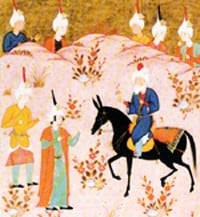
Ibn Arabi a caballo con dos discípulos (miniatura safaví) · Public domain
उनके अपने शब्दों में
«My heart has become capable of every form: it is a pasture for gazelles and a convent for Christian monks, And a temple for idols and the pilgrim's Ka'ba and the tables of the Tora and the book of the Koran. I follow the religion of Love: whatever way Love's camels take, that is my religion and my faith.»Tarjuman al-ashwaq, oda XI, vv. 13–15 (trad. Nicholson, 1911, pp. 66–67). En el comentario, el autor precisa que esa religión del amor es prerrogativa de los musulmanes, por ser Muhammad el amado de Dios.

मूल विचार
Oneness of being (wahdat al-wujud): The formula *wahdat al-wujud* does not appear as such in Ibn Arabi; it was coined by his interpreters and above all by his critics, among them Ibn Taymiyya, to designate his doctrine.
संदर्भ में देखें
जीवनी
5 मिनट का पाठ
स्पैनिश मूल से सहायता-प्राप्त अनुवाद, मातृभाषी अनुवादक द्वारा समीक्षा लंबित।
मुवह्हिदों के सेविया में मुर्सिया का एक युवक
अबू अब्दुल्लाह मुहम्मद इब्न अली इब्न मुहम्मद इब्न अल-अरबी अल-हातिमी अत-ताई का जन्म मुर्सिया में हिजरी 560 के रमज़ान की 17 तारीख़ को, अर्थात 28 जुलाई 1165 को हुआ। उनका परिवार, जिसकी अरब वंशावली तय्य क़बीले और दानशीलता के प्रतीक, पौराणिक हातिम ताई तक जाती थी, राजा इब्न मर्दनीश की सेवा में था — वह "भेड़िया राजा" जो अंदलुस के पूर्वी तट पर मुवह्हिदों (अल्मोहदों) का प्रतिरोध कर रहा था। 1172 में जब मुर्सिया का पतन हुआ, तो पिता विजेताओं की सेवा में चले गए और परिवार सेविया में बस गया। वहीं बालक बड़ा हुआ, एक राज-कर्मचारी के बेटे की तरह शिक्षित: क़ुरआन, हदीस, व्याकरण, काव्य, और — जैसा वे स्वयं याद करेंगे — शिकार और यार-दोस्तों से भरी एक दुनियादार जवानी, जिसका वे बिना ब्योरे के संकेत भर करते हैं।
लगभग 1184 में, क़रीब बीस वर्ष की आयु में, उन्होंने आध्यात्मिक मार्ग (सुलूक) में प्रवेश किया। फ़ुतूहात में वे अपने हृदय-परिवर्तन को एक ऐसे दर्शन से जोड़ते हैं जिसमें उन्हें ईसा, मूसा और मुहम्मद दिखाई दिए, और ईसा को अपना पहला शैख़ कहते हैं। उन वर्षों में वे अंदलुस के उन सूफ़ियों से मिले जिनके चित्र वे मक्का में लिखी दो पुस्तकों, रूह-उल-क़ुद्स और अद-दुर्रा अल-फ़ाख़िरा, में छोड़ने वाले थे: तपस्वी, नानबाई, मोची, और सेविया की एक वृद्धा, फ़ातिमा बिंत अल-मुसन्ना, जो ख़ुशी से दफ़ बजाती थीं क्योंकि ईश्वर ने यह मुरीद उन्हें बेटे के रूप में दिया था। इसी काल की वह भेंट भी है, जिसे उन्होंने स्वयं सुनाया है, कोर्दोबा में इब्न रुश्द (एवरोज़) से: महान दार्शनिक उस किशोर से मिलना चाहते थे जिसके बारे में कहा जाता था कि उसने कश्फ़ और इल्हाम से वह पा लिया है जिसे दूसरे तर्क से खोजते हैं, और "हाँ" और "नहीं" से बनी उस बातचीत ने उन्हें पीला और विचारमग्न छोड़ दिया।
मग़रिब में यात्रा के वर्ष
1193 और 1200 के बीच वे अंदलुस में ठहरने और मग़रिब की यात्राओं के बीच आते-जाते रहे: तूनिस, फ़ास, मराकेश। 1199 में अल्मेरिया में उन्होंने ग्यारह दिनों में मवाक़ि-उन-नुजूम लिखी, जो आंतरिक सुलूक के मक़ामों पर एक ग्रंथ है। कोर्दोबा में उन्होंने इब्न रुश्द के पार्थिव शरीर की वापसी देखी, जिनका 1198 में मराकेश में देहांत हुआ था, और एक ऐसा दृश्य दर्ज किया जो प्रसिद्ध हो गया: ख़च्चर के एक ओर ताबूत लदा था और दूसरी ओर, वज़न बराबर करने के लिए, दार्शनिक की किताबें। 1200 में मराकेश में एक दर्शन ने उन्हें पूरब की ओर प्रस्थान करने का आदेश दिया। 1201 में वे तूनिस के लिए निकल पड़े और फिर कभी इबेरियाई प्रायद्वीप नहीं लौटे।
मक्का और एक विराट कृति का आरंभ
तूनिस, क़ाहिरा, हेब्रोन (अल-ख़लील) और यरूशलम होते हुए वे 1202 में मक्का पहुँचे। वहीं उन्होंने अल-फ़ुतूहात अल-मक्किया — "मक्का के उद्घाटन" — आरंभ की, जो उनके अपने कथन के अनुसार उन्हें काबा के पास मिले एक रहस्यमय युवक से प्रेरणा में मिली। वहीं उनकी भेंट फ़ारसी विद्वान ज़ाहिर इब्न रुस्तम और उनकी बेटी निज़ाम से हुई — "सूर्य और आभा की आँख" — अत्यंत सुंदर, विदुषी और धर्मपरायण युवती, जिसका गुणगान वे तर्जुमान-उल-अश्वाक़ — "आकांक्षाओं का दुभाषिया" — की ग़ज़लों में करने वाले थे। जब वर्षों बाद हलब (अलेप्पो) के एक फ़क़ीह ने संकेत किया कि ये प्रेम-कविताएँ महज़ रसिकता हैं, तो इब्न अरबी ने पंक्ति-दर-पंक्ति एक टीका लिखी, यह दिखाने के लिए कि हर हिरनी, रेगिस्तान का हर खंडहर और चलता हुआ हर ऊँट दिव्य सत्यों की बात कर रहा था।
सल्जूक़ और अय्यूबी पूरब का यात्री
1204 से उनका जीवन एक अनवरत यात्रा बन गया: मोसुल, जहाँ उन्होंने ख़िज़्र के एक मुरीद के हाथों दीक्षा का ख़िरक़ा पहना; सल्जूक़ दरबार वाले कोन्या, मलात्या और सिवास, जहाँ उनकी मित्रता मजदुद्दीन इसहाक़ से हुई, जिनके बेटे सद्रुद्दीन क़ूनवी उनके महान शिष्य और व्याख्याता बनने वाले थे; क़ाहिरा, जहाँ फ़क़ीहों ने उन पर कुफ़्र का आरोप लगाया; बग़दाद, हलब, फिर से मक्का। परंपरा कहती है कि उन्होंने मजदुद्दीन की विधवा से विवाह किया और सद्रुद्दीन को बेटे की तरह पाला; उनकी पत्नियों और संतानों के बारे में इससे अधिक कुछ ज्ञात नहीं, सिवाय उनके बेटे साद-उद्दीन के नाम के, जो मलात्या में जन्मे एक कवि थे। वे निरंतर लिखते रहे: 1234 की उनकी अपनी सूची में लगभग दो सौ नब्बे रचनाएँ गिनाई गई हैं, और उस्मान यह्या की आधुनिक सूची उनसे जोड़े गए 846 शीर्षक दर्ज करती है, जिनमें से बहुत-से प्रक्षिप्त या दोहराव हैं।
दमिश्क़: "फ़ुसूस" और अंत
लगभग 1223 में वे क़ाज़ियों के एक परिवार, बनू ज़की, और अय्यूबी दरबारियों के संरक्षण में दमिश्क़ में बस गए। वहीं, हिजरी 627 के मुहर्रम की अंतिम दस रातों में (दिसंबर 1229), उन्होंने स्वप्न में पैग़ंबर को देखा, जो उन्हें एक किताब थमा रहे थे और उसे लोगों तक पहुँचाने का आदेश दे रहे थे: इसी रूप में वे स्वयं फ़ुसूस-उल-हिकम — "हिकमतों के नगीने" — की उत्पत्ति प्रस्तुत करते हैं, सत्ताईस अध्याय जो आदम से मुहम्मद तक हर पैग़ंबर की विशिष्ट हिकमत पर हैं, और जो सूफ़ीवाद का सबसे अधिक व्याख्यायित और सबसे अधिक विवादित ग्रंथ बनने वाले थे। 1231 में उन्होंने फ़ुतूहात का पहला संस्करण पूरा किया और 1238 में दूसरा, जिसकी सैंतीस खंडों वाली स्वहस्तलिखित प्रति इस्तांबुल में सुरक्षित है। 16 नवंबर 1240 (रबी-उल-आख़िर 638 हिजरी) को, मुरीदों से घिरे हुए, दमिश्क़ में उनका देहांत हुआ और उन्हें क़ासियून पर्वत की तलहटी में सालिहिया मोहल्ले में दफ़नाया गया। उनके अंतिम शब्द सुरक्षित नहीं हैं।
एक कृति जिस पर बहस कभी थमती नहीं
उन्हें अश-शैख़ अल-अकबर — "सबसे महान शैख़" — और मुहीउद्दीन — "दीन को जीवन देने वाले" — कहा गया। उनके शिष्यों ने, क़ूनवी से आरंभ करके, उनके चिंतन को दर्शन की भाषा में व्यवस्थित किया, और वहदत-उल-वुजूद — "अस्तित्व की एकता" — की संज्ञा, जिसका उन्होंने स्वयं कभी इस रूप में प्रयोग नहीं किया, अंततः मित्रों और विरोधियों दोनों के लिए उनका सार बन गई। इब्न तैमिया ने कड़ाई से उनका विरोध किया; उस्मानियों ने उनकी वंदना की, और सुल्तान सलीम प्रथम ने 1517 में वह मस्जिद और मक़बरा बनवाया जो आज भी उनकी क़ब्र को ढके हुए है। उनका प्रभाव सात शताब्दियों तक फ़ारसी, तुर्की और भारतीय सूफ़ीवाद में व्याप्त रहा। यूरोप में उन्हें मिगेल आसीन पालासियोस ने खोजा, जिन्होंने एल इस्लाम क्रिस्तियानिज़ादो ("ईसाईकृत इस्लाम", 1931) में उन्हें ईसाई रहस्यवाद के साथ पढ़ा; हेनरी कॉर्बिन ने उन्हें सर्जनात्मक कल्पना का दार्शनिक बनाया, और मिशेल शोदकिएविच, क्लोद अद्दास और विलियम चिटिक ने उन्हें उनके इस्लामी और क़ुरआनी संदर्भ में लौटाया। मुर्सिया आज उन्हें अपनी सबसे सार्वभौमिक संतान के रूप में याद करता है।
प्रलेखित और परंपरा से प्राप्त
कई रहस्यवादियों के विपरीत, इब्न अरबी ने अपने बारे में बहुत कुछ कहा: उनके जीवन के बारे में जो कुछ ज्ञात है, वह लगभग सब उनकी अपनी पुस्तकों से आता है, विशेषकर फ़ुतूहात, रूह-उल-क़ुद्स और उनकी रचनाओं की भूमिकाओं से। इस समृद्धि की एक क़ीमत है: घटनाएँ उनके दिव्यदर्शी अनुभव के भीतर से सुनाई गई हैं और उनका हमेशा मिलान नहीं किया जा सकता। बाद की अरबी जीवनियाँ, जैसे सत्रहवीं शताब्दी में अल-मक़्क़री की, ऐसे चमत्कार और मरणोपरांत भविष्यवाणियाँ जोड़ती हैं जो किंवदंती के दायरे में आती हैं।
स्रोत: Ibn al-Arabi. The Tarjumán al-Ashwáq: A Collection of Mystical Odes. Ed. y trad. de Reynold A. Nicholson. Oriental Translation Fund, New Series XX. Londres: Royal Asiatic Society, 1911. · Addas, Claude. Ibn ʿArabī ou la quête du Soufre Rouge. París: Gallimard, 1989. Trad. inglesa: Quest for the Red Sulphur: The Life of Ibn ʿArabī. Cambridge: Islamic Texts Society, 1993. · Chittick, William C. The Sufi Path of Knowledge: Ibn al-ʿArabi's Metaphysics of Imagination. Albany: State University of New York Press, 1989. · Corbin, Henry. L'imagination créatrice dans le soufisme d'Ibn ʿArabî. París: Flammarion, 1958 (trad. inglesa: Creative Imagination in the Sufism of Ibn ʿArabī, Princeton University Press, 1969); incluye la traducción del relato del encuentro con Averroes (Futuhat, ed. Bulaq, I, 153–154). · Nicholson, Reynold A. «Introduction» y prefacios traducidos, en The Tarjumán al-Ashwáq (1911), pp. 1–14.
कालक्रम
जीवन, वर्ष-दर-वर्ष
प्रत्येक बिंदु एक प्रमाणित घटना है। उसे स्रोत और निश्चितता के स्तर सहित पढ़ने के लिए क्लिक करें।
28 जुलाई 11650 वर्षMurcia
Birth
Born on 17 Ramadan 560 in the Murcia of Ibn Mardanish, into a family of officials of Arab lineage.
प्रमाणितAddas, Claude. Ibn ʿArabī ou la quête du Soufre Rouge. París: Gallimard, 1989. Trad. inglesa: Quest for the Red Sulphur: The Life of Ibn ʿArabī. Cambridge: Islamic Texts Society, 1993.
उनके निधन के बाद
- 1517Ottoman mausoleum
- 1931El islam cristianizado
28 जुलाई 1165 · 0 वर्ष
Birth
Born on 17 Ramadan 560 in the Murcia of Ibn Mardanish, into a family of officials of Arab lineage.
प्रमाणित
1172 · 7 वर्ष
Move to Seville
After the Almohad conquest of Murcia, the family settles in Seville, where the father serves the new rulers.
प्रमाणित
लगभग 1180 · 15 वर्ष
Meeting with Averroes
While still an adolescent, he converses with Ibn Rushd in Córdoba; he recounts it himself in the *Futuhat*.
प्रमाणित
लगभग 1184 · 19 वर्ष
Entry into the Sufi path
Around 580 AH he abandons worldly life; he attributes his conversion to a vision of Jesus, Moses and Muhammad.
प्रमाणित
लगभग 1193 · 28 वर्ष
Journeys in the Maghreb
First stays in Tunis and Fez; he frequents the disciples of Abu Madyan.
प्रमाणित
1199 · 34 वर्ष
Mawaqi al-nujum
In Almería he composes in eleven days *Mawaqi al-nujum*, a treatise on the stages of the spiritual path.
प्रमाणित
1201 · 36 वर्ष
Final departure from al-Andalus
After a vision in Marrakesh (1200) ordering him to set out for the East, he leaves the peninsula for ever.
प्रमाणित
1202 · 37 वर्ष
Arrival in Mecca; the Futuhat begins
He arrives in 598 AH; he meets Zahir ibn Rustam and his daughter Nizam and begins *al-Futuhat al-Makkiyya*.
प्रमाणित
1203 · 38 वर्ष
Ruh al-quds
He writes the *Ruh al-quds*, an epistle with portraits of his Andalusi masters.
प्रमाणित
लगभग 1204 · 39 वर्ष
Travels in Iraq and Anatolia
In Mosul he receives the mantle of al-Khidr; in Anatolia he befriends Majd al-Din Ishaq, father of Sadr al-Din al-Qunawi.
संभावित
जनवरी 1215 · 49 वर्ष
Tarjuman al-ashwaq and its commentary
He finishes the odes of the *Tarjuman* in Ramadan 611 (January 1215) and, in response to an Aleppan jurist's criticism, writes his commentary (*Dhakhair al-alaq*).
प्रमाणित
लगभग 1223 · 58 वर्ष
Settlement in Damascus
He settles in Damascus under the protection of the Banu Zaki judges.
संभावित
दिसंबर 1229 · 64 वर्ष
The vision of the Fusus al-hikam
In the last ten nights of Muharram 627 he dreams that the Prophet hands him the *Fusus al-hikam*.
प्रमाणित
1234 · 69 वर्ष
Licence to Sultan al-Muzaffar
He grants an *ijaza* to the Ayyubid prince al-Malik al-Muzaffar listing some 290 of his works.
प्रमाणित
1238 · 73 वर्ष
Second redaction of the Futuhat
He completes the second version of *al-Futuhat al-Makkiyya*, whose autograph in 37 volumes survives.
प्रमाणित
16 नवंबर 1240 · 75 वर्ष
Death
He dies on 22 Rabi al-Thani 638 and is buried in Salihiyya, at the foot of Mount Qasiyun.
प्रमाणित
1517
Ottoman mausoleum
After conquering Damascus, Selim I builds the mosque and mausoleum over his tomb.
प्रमाणित
1931
El islam cristianizado
Miguel Asín Palacios publishes his study of Ibn Arabi, a starting point of Akbarian studies in the West.
प्रमाणित
कृतियाँ
आवश्यक कृतियाँ
वे कृतियाँ जिनके बिना उनकी विरासत को समझा नहीं जा सकता।
लिखित कृति · 1238
The Meccan Openings (al-Futuhat al-Makkiyya)
الفتوحات المكية (al-Futuhat al-Makkiyya)
A monumental work of 560 chapters in six sections, gathering all of Ibn Arabi's knowledge: the metaphysics of the divine names, cosmology, the esoteric interpretation of worship (purification, prayer, fasting, pilgrimage), the stations and abodes of the spiritual path, the hierarchy of saints and eschatology, together with many autobiographical episodes and visions. The author states that he did not compose it by reflection but through "openings" or illuminations received. It is the main source for his biography and the reference work of the whole Akbarian school; only part has been translated into European languages.
7 संस्करण · amazon.com

लिखित कृति · लगभग 1229
The Bezels of Wisdom (Fusus al-hikam)
فصوص الحكم (Fusus al-hikam)
Twenty-seven chapters, each devoted to the "wisdom" of a prophet (from Adam to Muhammad, by way of Noah, Abraham, Moses, Jesus or Solomon), understood as a bezel in which a precious stone is set: an aspect of divine knowledge. It is his densest work and the one that concentrates his boldest theses on the relationship between God and the world, imagination, beliefs and the perfect human being. It was commented on more than a hundred times (al-Qunawi, al-Jandi, al-Qashani, al-Qaysari, Jami) and attacked with equal intensity, by Ibn Taymiyya among others.
9 संस्करण · amazon.com

लिखित कृति · 1215
The Interpreter of Desires (Tarjuman al-ashwaq)
ترجمان الأشواق (Tarjuman al-ashwaq)
A collection of love poetry in the tradition of the Arabic qasida: abandoned encampments, departing camels, gazelles and gardens, and a beloved inspired by Nizam, daughter of the Persian scholar with whom he studied in Mecca. Its famous ode XI proclaims a heart "capable of every form" and a "religion of love". The author's own commentary reads every image as a symbol of divine realities and is one of the keys to the Sufi hermeneutics of erotic language.
5 संस्करण · amazon.com
संपूर्ण कृतित्व (30)
Ibn Arabi
The Treasures of Lovers (commentary on the Tarjuman)
The Conscious LibraryThe Treasures of Lovers (commentary on the Tarjuman)
1215

The Spirit of Holiness (portraits of Andalusi masters)
1203
Ibn Arabi
The Setting-Places of the Stars
The Conscious LibraryThe Setting-Places of the Stars
1199

The Contemplations of the Holy Mysteries
1194

The Book of Theophanies
1205

Treatise on Unity (attributed)
Ibn Arabi
The Production of the Circles
The Conscious LibraryThe Production of the Circles

Divine Governance of the Human Kingdom

The Book of Majesty and Beauty
What the Seeker Needs

The Adornment of the Spiritually Transformed
1203

Journey to the Lord of Power
1205
Ibn Arabi
The Book of the Night Journey
The Conscious LibraryThe Book of the Night Journey
1198

The Precious Pearl

The Fabulous Gryphon
1199

The Niche of Lights (Divine Sayings)
1203

The Universal Tree and the Four Birds

The Seven Days of the Heart

The Unveiling of the Effects of the Journey

The Secret of the Names of God
Ibn Arabi
The Brilliant Star: The Virtues of Dhu l-Nun the Egyptian
The Conscious LibraryThe Brilliant Star: The Virtues of Dhu l-Nun the Egyptian

The Tree of Being
Ibn Arabi
The Book of Mim, Waw and Nun
The Conscious LibraryThe Book of Mim, Waw and Nun
Ibn Arabi
The Great Diwan (mystical poetry)
The Conscious LibraryThe Great Diwan (mystical poetry)
वचन
किसी निश्चित कृति में स्थित वचन। प्रत्येक के साथ उसका स्रोत और विश्वसनीयता का स्तर है।
My heart has become capable of every form: it is a pasture for gazelles and a convent for Christian monks, And a temple for idols and the pilgrim's Ka'ba and the tables of the Tora and the book of the Koran. I follow the religion of Love: whatever way Love's camels take, that is my religion and my faith.لقد صار قلبي قابلاً كل صورةٍ / فمرعى لغزلانٍ وديرٌ لرهبانِ // وبيتٌ لأوثانٍ وكعبةُ طائفٍ / وألواحُ توراةٍ ومصحفُ قرآنِ // أدينُ بدينِ الحبِّ أنّى توجّهتْ / ركائبُه فالحبُّ ديني وإيماني
सत्यापितTarjuman al-ashwaq, oda XI, vv. 13–15 (trad. Nicholson, 1911, pp. 66–67). En el comentario, el autor precisa que esa religión del amor es prerrogativa de los musulmanes, por ser Muhammad el amado de Dios.
अप्रामाणिक या विवादित आरोपण वाले उद्धरण (2)
«"When the sin enters the shin, the tomb of Muhyi al-Din will appear."»
A coded prophecy that Ottoman tradition ascribes to Ibn Arabi, read as announcing that Selim (with *sin*) would enter Damascus (*Sham*, with *shin*) and restore his tomb, as he did in 1517. It comes from *al-Shajara al-numaniyya*, an apocalyptic work attributed to him without foundation; it appears in none of his authentic writings.
«"Whoever knows himself knows his Lord", presented as the central teaching of Ibn Arabi's *Treatise on Unity*.»
The saying is a hadith of earlier Sufi circulation, which Ibn Arabi comments on in other works; but the *Treatise on Unity* (*Risalat al-ahadiyya*), where it is developed in radical terms, is by Awhad al-Din Balyani, as Michel Chodkiewicz demonstrated.
अंतिम शब्द
उनके अंतिम शब्दों का कोई सत्यापन-योग्य अभिलेख उपलब्ध नहीं है।
No reliably attributed final sentence survives. The biographical sources fix the date (22 Rabi al-Thani 638) and place of his death, in the house of the judge Muhyi al-Din ibn al-Zaki in Damascus, and his burial in Salihiyya, but transmit no last words.
स्रोत: Addas, Claude. Ibn ʿArabī ou la quête du Soufre Rouge. París: Gallimard, 1989. Trad. inglesa: Quest for the Red Sulphur: The Life of Ibn ʿArabī. Cambridge: Islamic Texts Society, 1993.
पूछें
उनकी कृतियाँ क्या उत्तर देती हैं
मानवता के बारह महान प्रश्न और उनके ग्रंथ उनका जो उत्तर देने देते हैं, संदर्भों सहित। हम कभी उनके मुख में अपने शब्द नहीं रखते।
परम सत्य क्या है? क्या ईश्वर है?
The Essence is unknowable; God makes Himself known through His Names
साकार भी, निराकार भीस्पष्ट रूप से कहा है
Ibn Arabi distinguishes rigorously between the divine Essence (al-dhat) and the Divinity that relates to the world. Of the Essence nothing can be said or known: it is free of all relation and all attribute. Yet that same Reality manifests as Lord through His Names — the Merciful, the Wise, the Living — which need beings in order to become visible; in the chapter on Adam of the Fusus al-hikam, the human being is the mirror in which God contemplates His Names. This God loves, wishes to be known and turns to each according to their capacity, to the point that every believer worships the God their belief has shaped. The Absolute is both inaccessible ground and a face turned towards the creature; to confuse the two planes, or to separate one entirely from the other, is for him an error.
इस प्रश्न की अन्य गुरुओं से तुलना करेंमैं कौन हूँ? क्या कोई सच्चा आत्म है?
Whoever knows himself knows his Lord: He and not He
आत्मन् ही ब्रह्म हैस्पष्ट रूप से कहा है
Ibn Arabi makes the traditional saying «whoever knows himself knows his Lord» an axis of his work. For him, the human being has no existence of its own: what exists in it is God's existence, manifested according to the predisposition of each creature, its immutable entity (ayn thabita) eternally present in divine knowledge. In the Fusus al-hikam, the chapter on Adam presents the complete human being (al-insan al-kamil) as the mirror in which Reality contemplates all its Names. To know oneself is to discover that the self, in itself, is nothing, and that its reality is that of the Real. Yet Ibn Arabi rejects fusion (ittihad) and incarnation (hulul): the servant remains servant. His formula is paradoxical: the creature is He and is not He.
इस प्रश्न की अन्य गुरुओं से तुलना करेंहम दुःख क्यों भोगते हैं?
We suffer behind the veil; divine mercy precedes wrath
ईश्वर से वियोगउनके सिद्धांत से निष्कर्षित
Ibn Arabi does not treat suffering as a separate theme, but his work allows an answer to be reconstructed. The human being suffers because it is veiled: it perceives the multiplicity of things and not the single Reality manifest in them, and believes itself separate from God when its very existence is that of the Real. At the same time, Ibn Arabi gives central place to the divine saying that God's mercy precedes His wrath, and to the Qur'anic verse stating that His mercy embraces all things. Hence his thesis, controversial among theologians, that even the punishment of hell will eventually become sweet for those who dwell there, playing on the closeness in Arabic between punishment (adhab) and sweetness (adhb). Pain is real but provisional; the ultimate is mercy.
इस प्रश्न की अन्य गुरुओं से तुलना करेंमृत्यु के बाद क्या होता है?
From the barzakh to the resurrection: and mercy finally reaches everyone
अनंत जीवन और पुनरुत्थानस्पष्ट रूप से कहा है
Ibn Arabi fully accepts Qur'anic eschatology — death, the intermediate state, bodily resurrection, judgement, paradise and hell — and interprets it through his metaphysics of imagination. After death the soul enters the barzakh, an intermediate world of images where deeds and beliefs take form; at the resurrection it receives a new body suited to the next life. His boldest feature is the primacy of mercy: relying on the verse according to which God's mercy embraces all things, he holds in the Futuhat and the Fusus that the punishment of the fire is not eternal in its pain. The damned will remain in their abode, but the torment (ʿadhāb) will eventually turn sweet (ʿadhb) for them. Death does not destroy the being's relationship with God; it reveals it, because every creature has always been a manifestation of His names.
इस प्रश्न की अन्य गुरुओं से तुलना करेंमुक्ति या उद्धार कैसे प्राप्त होता है?
Realising who one is means knowing one's Lord: knowledge by unveiling, not by reasoning
प्रत्यक्ष ज्ञान सेस्पष्ट रूप से कहा है
Ibn Arabi organises the path around the saying, transmitted in Sufi circles, that whoever knows himself knows his Lord. The goal is realisation (tahqiq): understanding by experience that every being is a manifestation of the divine Names and that the complete human being reflects the totality of those Names. That knowledge does not come from philosophical reasoning, to which he grants limited scope, but from unveiling (kashf), which God grants to whoever prepares through observance of the law, invocation, retreat and purification. Alongside this, Ibn Arabi holds that divine mercy embraces everything, which leads him to qualify the eternity of punishment in the hereafter.
इस प्रश्न की अन्य गुरुओं से तुलना करेंक्या गुरु आवश्यक है?
The ordinary path passes through masters, but God can teach directly
सहायक, पर अनिवार्य नहींउनके सिद्धांत से निष्कर्षित
Ibn Arabi had numerous teachers in al-Andalus and the Maghreb, to whom he devoted portraits in The Spirit of Holiness, and in The Meccan Revelations he deals in detail with the rules of courtesy (adab) governing the relationship between disciple and master. For most people, the path runs through a shaykh who knows the states and dangers of the way. Yet Ibn Arabi admits and claims another mode of transmission: that of someone instructed directly by God or by spiritual figures such as Khidr, from whom he claimed to have received investiture. The human teacher is therefore the usual and valuable channel, but not the exclusive one, because the true teacher of all knowledge is God.
इस प्रश्न की अन्य गुरुओं से तुलना करेंक्या संसार वास्तविक है?
The cosmos is the mirror in which God contemplates His Names
दिव्य की अभिव्यक्तिस्पष्ट रूप से कहा है
Ibn Arabi conceives of the world as God's self-disclosure (tajalli). The first chapter of The Bezels of Wisdom, devoted to Adam, explains that God wished to see His Names in a being that would reflect them all: He created the cosmos like an unpolished mirror, and the human being was the polishing of that mirror. Everything that exists is thus a locus of manifestation of some divine Name. The world is neither God in His essence, which remains unknowable, nor an independent reality: it is «He and not He», and is renewed at every instant. Ibn Arabi therefore gives the world an intermediate status, comparable to imagination, real as reflection, without consistency of its own.
इस प्रश्न की अन्य गुरुओं से तुलना करेंप्रेम क्या है?
God loved to be known: love is the origin of the world and its return
विरह और मिलनस्पष्ट रूप से कहा है
Ibn Arabi makes love the very principle of creation. Relying on a saying attributed to God in the Sufi tradition — I was a hidden treasure and loved to be known — he explains that the world is born of divine love for self-manifestation, and that all created love is, at bottom, God's love for himself through creatures. No one loves anything but God, even when believing they love a particular person, because all beauty is his manifestation. In the chapter on love in the Futuhat he distinguishes divine, spiritual and natural love and describes their states. In the Tarjuman al-ashwaq, a collection of love poems inspired by the young Nizam, he declares that his heart has become capable of every form and that he follows the religion of love, wherever its caravans turn.
इस प्रश्न की अन्य गुरुओं से तुलना करेंक्या हम स्वतंत्र हैं, या सब कुछ पूर्वनिर्धारित है?
God gives only what each essence asks for: the secret of destiny
कोई कर्ता नहींस्पष्ट रूप से कहा है
Ibn Arabi addresses the question in the chapter of the *Fusus al-hikam* devoted to the prophet Uzayr, under the name «secret of destiny» (*sirr al-qadar*). His thesis is that the divine decree follows God's knowledge, and that this knowledge follows the known: the immutable essences (*aʿyān thābita*) of each thing, which by their own preparedness ask for what they will receive. No one is compelled except by what he himself is in God's knowledge. At the same time, the only real agent is God, acting through the forms of creatures. The consequence is not moral fatalism, since the revealed law still binds, but that the self who believes it decides on its own is a partial perspective on a single divine activity.
इस प्रश्न की अन्य गुरुओं से तुलना करेंध्यान या प्रार्थना क्यों करें?
Prayer is intimate conversation between God and his servant
ईश्वर से मैत्रीस्पष्ट रूप से कहा है
In the last chapter of the *Fusus al-hikam*, devoted to the Prophet Muhammad, Ibn Arabi interprets ritual prayer (*ṣalāt*) as *munājāt*, intimate conversation: drawing on the hadith that God has divided the prayer between Himself and His servant, he holds that in it God speaks and listens at once, and that the one who prays sees the One with whom he converses. Hence he calls it, following another hadith, the coolness of the Prophet's eyes. Alongside prescribed prayer he valued remembrance of God (*dhikr*) and retreat (*khalwa*), which he describes in the *Epistle of Lights*. The aim is not to leave the relationship but to worship God as if seeing Him, what tradition calls *iḥsān*, until recognising Him in every form.
इस प्रश्न की अन्य गुरुओं से तुलना करेंक्या बुद्धि परम को जान सकती है?
Reason binds; divine unveiling grants the knowledge of secrets
परम मन से परे हैस्पष्ट रूप से कहा है
In the introduction to *The Meccan Openings* (*al-Futuhat al-makkiyya*), Ibn Arabi distinguishes three kinds of knowledge: that of the intellect, obtained by demonstration; that of states, reached only by tasting or experience; and that of secrets, which lies above the intellect and is granted by God to prophets and saints. He plays on the etymology of *ʿaql* (intellect), related to the hobble placed on a camel: reason binds and delimits, and so cannot encompass a God who is both transcendent and present in every form. In his letter to the theologian Fakhr al-Din al-Razi he advises him to leave speculation and seek the knowledge that comes from God through retreat and remembrance.
इस प्रश्न की अन्य गुरुओं से तुलना करेंसंसार से हटें या उसे बदलें?
The highest is outwardly indistinguishable: he returns to live among creatures
कर्म में ध्यानउनके सिद्धांत से निष्कर्षित
Ibn Arabi practised retreats (khalwa) and describes in the Futuhat the illuminations he received in them, but he does not make retreat the goal. In his spiritual hierarchy the highest rank belongs to the malamiyya, the «people of blame», who after attaining realisation return to ordinary life, without distinctive dress or visible wonders, and blend in with common people while their inner being remains with God. The spiritual journey, for him, has a return: the one who has ascended to God descends again towards creatures to serve and guide them. His own life was that of a traveller between al-Andalus, the Maghreb, Mecca, Anatolia and Damascus, in contact with masters, disciples and rulers, to whom he occasionally wrote advising them on how to govern. Contemplation and presence in the world are not opposed: the world is God's manifestation.
इस प्रश्न की अन्य गुरुओं से तुलना करें
निकटता और तनाव
निकटता और तनाव
उनके मतों के आधार पर प्रश्न-दर-प्रश्न आकलित। प्रत्येक सहमति या टकराव का कारण क्लिक करने पर।
इनसे मिलता-जुलता सोचते हैं
Attar
इन पर सहमत: परम सत्य क्या है? क्या ईश्वर है? · मैं कौन हूँ? क्या कोई सच्चा आत्म है? · हम दुःख क्यों भोगते हैं?

Al-Hallaj
इन पर सहमत: हम दुःख क्यों भोगते हैं? · मैं कौन हूँ? क्या कोई सच्चा आत्म है? · मृत्यु के बाद क्या होता है?
Anandamayi Ma
इन पर सहमत: ध्यान या प्रार्थना क्यों करें? · परम सत्य क्या है? क्या ईश्वर है? · मैं कौन हूँ? क्या कोई सच्चा आत्म है?
Ramakrishna
इन पर सहमत: परम सत्य क्या है? क्या ईश्वर है? · मैं कौन हूँ? क्या कोई सच्चा आत्म है? · हम दुःख क्यों भोगते हैं?
इनसे भिन्न सोचते हैं

Epicurus
इन पर टकराव: मैं कौन हूँ? क्या कोई सच्चा आत्म है? · मृत्यु के बाद क्या होता है?

Tsongkhapa
इन पर टकराव: मैं कौन हूँ? क्या कोई सच्चा आत्म है? · मृत्यु के बाद क्या होता है?

Pema Chödrön
इन पर टकराव: मैं कौन हूँ? क्या कोई सच्चा आत्म है? · मृत्यु के बाद क्या होता है?
Pythagoras
इन पर टकराव: मृत्यु के बाद क्या होता है?
इन पर सहमत
Ibn Arabi · Adi Shankara
Two metaphysics of unity, in Murcia and in Kerala
क्यों: The affinity comes from the same question pushed to its limit: how can there be multiplicity if the Absolute is one. Both answer with a doctrine of levels, empirical and ultimate truth in one, Essence and Names in the other, which allows them to keep worship and law without giving up unity. There is no historical relation between them, and the differences are serious: for Ibn Arabi the world is a self-revelation willed by a God who loves to be known, and the servant remains a servant; for Shankara the world is a superimposition due to ignorance, and the liberated one retains no distinction. One thinks a theophany; the other, an error that dissolves. They agree in structure, not in feeling.
इन पर टकरावआभासी विरोधाभास
Ibn Arabi · Teresa of Ávila
Always a creature, or He and not He: two languages for a union without confusion
क्यों: The tension is apparent because they use different categories for a similar experience. Teresa writes under the scrutiny of the Inquisition and of her learned confessors, within a theology that distinguishes creator and creature at the level of being, and so she stresses the distinction every time she describes union. Ibn Arabi works with a metaphysics of the single existence and of the mirror, in which saying that the creature has no being of its own does not mean it is God in his Essence, which remains unknowable. She speaks of what the soul lives; he, of what being is. They agree in practice: knowing oneself and knowing God go together, and the goal is intimacy without confusion.
इन पर सहमत
Ibn Arabi · Rumi
Love as the origin and return of the world: two summits of Sufism in the same century
क्यों: They share an era, a religious language and sources: the Qur'an, the sayings attributed to the Prophet and the Sufi tradition that made love the principal way. There was also an indirect link: Sadr al-Din al-Qunawi, Ibn Arabi's stepson and chief disciple, taught in Konya in the same years as Rumi, and the Mevlevi hagiographies present them on cordial terms; there is no evidence that Rumi read Ibn Arabi or that they met. The difference is one of register. Ibn Arabi elaborates a technical metaphysics of the divine Names and of manifestation; Rumi writes narrative and lyrical poetry, without a system, where love is an experience of separation and longing before it is doctrine.
इन पर सहमत
Ibn Arabi · Hildegard of Bingen
The human being as mirror of the cosmos and of the divine
क्यों: There was no contact between the German abbess and the Andalusian mystic, contemporaries for only a few years. The affinity stems from a common inheritance: the ancient idea of the human being as microcosm, Greek and Neoplatonic in origin, which circulated both in Latin Europe and in the Islamic world, and a reading of creation as the language of God. The differences are substantive. Hildegard sharply maintains the distinction between Creator and creature and thinks of the harmony lost through sin and restored in Christ; Ibn Arabi says the world is He and not He, within a metaphysics of the single existence. She contemplates visions; he builds a theory of the Names.
प्रसंग और वृत्तांत
प्रसंग और वृत्तांत
साक्ष्यc. 1180
"Yes" and "No": the meeting with Averroes
वृत्तांत का स्रोत: Autobiographical account in *al-Futuhat al-Makkiyya* (Bulaq ed., I, 153–154), translated by Corbin (1958). It is the only testimony of the meeting; Averroes does not mention it.
स्रोत: Corbin, Henry. L'imagination créatrice dans le soufisme d'Ibn ʿArabî. París: Flammarion, 1958 (trad. inglesa: Creative Imagination in the Sufism of Ibn ʿArabī, Princeton University Press, 1969); incluye la traducción del relato del encuentro con Averroes (Futuhat, ed. Bulaq, I, 153–154).
साक्ष्य1198–1199
The coffin and the books
वृत्तांत का स्रोत: *Al-Futuhat al-Makkiyya*, I, 154 (Bulaq ed.), following the account of the first meeting; translation in Corbin 1958.
स्रोत: Corbin, Henry. L'imagination créatrice dans le soufisme d'Ibn ʿArabî. París: Flammarion, 1958 (trad. inglesa: Creative Imagination in the Sufism of Ibn ʿArabī, Princeton University Press, 1969); incluye la traducción del relato del encuentro con Averroes (Futuhat, ed. Bulaq, I, 153–154).
साक्ष्यc. 1185–1190
Fatima of Seville, the old woman with the tambourine
वृत्तांत का स्रोत: *Ruh al-quds* and *al-Durra al-fakhira*, trans. Austin, Sufis of Andalusia (1971); Asín Palacios, Vidas de santones andaluces (1933).
स्रोत: Ibn al-Arabi. Sufis of Andalusia: The Ruh al-quds and al-Durrat al-fakhirah. Trad. de R. W. J. Austin. Londres: Allen & Unwin, 1971; y Asín Palacios, Miguel. Vidas de santones andaluces. Madrid, 1933 (reed. Hiperión, 1981).
प्रमाणित1202–1215
Nizam and the jurist of Aleppo
वृत्तांत का स्रोत: Prefaces to the first and third recensions of the *Tarjuman*, translated by Nicholson (1911, pp. 3–5).
साक्ष्य1202
The youth beside the Kaaba
वृत्तांत का स्रोत: *Al-Futuhat al-Makkiyya*, ch. 1 (the author's visionary account); analysis in Addas 1989 and Corbin 1958.
स्रोत: Addas, Claude. Ibn ʿArabī ou la quête du Soufre Rouge. París: Gallimard, 1989. Trad. inglesa: Quest for the Red Sulphur: The Life of Ibn ʿArabī. Cambridge: Islamic Texts Society, 1993.
साक्ष्य1229
The vision of the Bezels
वृत्तांत का स्रोत: Preface to the *Fusus al-hikam* (Afifi ed., 1946; Austin trans., 1980).
स्रोत: Ibn al-Arabi. Fusus al-hikam. Ed. Abu al-Ala Afifi. El Cairo, 1946. Trad. inglesa: R. W. J. Austin, The Bezels of Wisdom (Classics of Western Spirituality). Nueva York: Paulist Press, 1980.
सत्यापन-योग्य नहीं1516–1517
Selim I and the hidden tomb
वृत्तांत का स्रोत: Ottoman tradition based on the apocryphal *al-Shajara al-numaniyya*; Addas and Chodkiewicz record it as legend.
स्रोत: Addas, Claude. Ibn ʿArabī ou la quête du Soufre Rouge. París: Gallimard, 1989. Trad. inglesa: Quest for the Red Sulphur: The Life of Ibn ʿArabī. Cambridge: Islamic Texts Society, 1993.
शिक्षाएँ
शिक्षाएँ
वे अवधारणाएँ जो उनके चिंतन को रूप देती हैं, उनके संदर्भ में समझाई गई।
Oneness of being (wahdat al-wujud)wahdat-al-wujud
Doctrine systematised by al-Qunawi and debated for centuries (as against Ahmad Sirhindi's *wahdat al-shuhud*).
स्रोत: Chittick, William C. The Sufi Path of Knowledge: Ibn al-ʿArabi's Metaphysics of Imagination. Albany: State University of New York Press, 1989.
The perfect human being (al-insan al-kamil)insan-kamil
Qur'anic anthropology and the hadith of the image; extended by Abd al-Karim al-Jili (d. c. 1408).
स्रोत: Ibn al-Arabi. Fusus al-hikam. Ed. Abu al-Ala Afifi. El Cairo, 1946. Trad. inglesa: R. W. J. Austin, The Bezels of Wisdom (Classics of Western Spirituality). Nueva York: Paulist Press, 1980.
Imagination and isthmus (khayal, barzakh)khayal
A reworking of philosophical psychology (Avicenna) and of the Qur'anic eschatology of the *barzakh* (Qur'an 23:100).
स्रोत: Corbin, Henry. L'imagination créatrice dans le soufisme d'Ibn ʿArabî. París: Flammarion, 1958 (trad. inglesa: Creative Imagination in the Sufism of Ibn ʿArabī, Princeton University Press, 1969); incluye la traducción del relato del encuentro con Averroes (Futuhat, ed. Bulaq, I, 153–154).
Theophany or divine self-disclosure (tajalli)tajalli
It develops the Qur'anic notion of God's signs in the world and in souls (Qur'an 41:53).
स्रोत: Chittick, William C. The Sufi Path of Knowledge: Ibn al-ʿArabi's Metaphysics of Imagination. Albany: State University of New York Press, 1989.
Immutable entities (ayan thabita)ayan-thabita
It takes up and transforms debates of *Mutazili* theology on the "thingness" of the non-existent.
स्रोत: Chittick, William C. The Sufi Path of Knowledge: Ibn al-ʿArabi's Metaphysics of Imagination. Albany: State University of New York Press, 1989.
The seal of the saints (khatm al-awliya)khatm-al-awliya
It develops ideas of al-Hakim al-Tirmidhi (9th c.) on the seal of sainthood.
स्रोत: Chodkiewicz, Michel. Le Sceau des saints: prophétie et sainteté dans la doctrine d'Ibn ʿArabî. París: Gallimard, 1986. Trad. inglesa: The Seal of the Saints. Cambridge: Islamic Texts Society, 1993.
साधना-शिविर
साधना-शिविर और केंद्र
उनकी शिक्षा से जुड़े स्थान और समागम। हम आपको उनके आयोजकों से जोड़ते हैं।
Oxford (Reino Unido) y Berkeley (EE. UU.), y en línea · Reino Unido / Estados Unidos
Muhyiddin Ibn Arabi Society: symposia and courses
Muhyiddin Ibn Arabi Society
The Muhyiddin Ibn Arabi Society was founded in 1977 to promote understanding of the work of Ibn Arabi and his followers, and is represented by non-profit organisations in Oxford and Berkeley. Since 1982 it has published a peer-reviewed journal, since 1984 it has held conferences in the UK and the USA, with more than a hundred talks available as podcasts and videos, and it runs an education programme with courses. Since 2002 it has also been collecting copies of the historic manuscripts of his works. It is the reference institution for the rigorous study of the Shaykh al-Akbar.
Chisholme House (Escocia), Sutton Courtenay (Oxfordshire), Londres y en línea · Reino Unido
Beshara: Foundation course and Masnavi study
The Beshara Trust
Beshara is the educational offering of the Beshara Trust, a British charity founded in 1971. Its foundation course takes the metaphysics of Ibn Arabi as its starting point to explore what it means to know oneself and the world in the light of the Unity of Existence, combining an introductory weekend, fortnightly online sessions and an optional residential at Chisholme House in the Scottish Borders. It also runs study groups on Rumi's Masnavi and other texts of the Sufi tradition. It is funded by philanthropic donations and voluntary work, and bookings are made by contacting the trust.
वीडियो
वीडियो
रिकॉर्डिंग, साक्षात्कार और वृत्तचित्र। वीडियो YouTube से चलते हैं; वे यहाँ संग्रहीत नहीं हैं।
Translation, Ibn al-ʿArabi, and the Islamic Past: William C. Chittick Keynote (2023 Conference)
व्याख्यान· EN· 2023· 91 min
Columbia University Department of Historyआधिकारिक चैनल
Eric Geoffroy: Some Aspects of "Supra-reason" in Ibn 'Arabi's Epistomology
व्याख्यान· EN· 61 min
Ibn 'Arabi Societyआधिकारिक चैनल
Pablo Beneito: Keys to Decipher Ibn ʻArabī's Manzil al-manāzil
व्याख्यान· EN· 55 min
Ibn 'Arabi Societyआधिकारिक चैनल
Ibn 'Arabi & The Unity of Being
विश्लेषण· EN· 72 min
Let's Talk Religion
The Bezels of Wisdom - Ibn 'Arabi's Controversial Masterpiece
विश्लेषण· EN· 94 min
Let's Talk Religion
La morada de la no-morada: el legado vivo de Ibn Arabi en su 850 aniversario
व्याख्यान· ES· 2015· 62 min
Casa Árabeआधिकारिक चैनल
La Visión De Ibn Arabi | Pablo Beneito
साक्षात्कार· ES· 66 min
Psicología y Espiritualidad
Ibn 'Arabî: un saint, un penseur et un poète par Claude Addas
व्याख्यान· FR· 27 min
Conscience Soufie
Ibn ‘Arabî et sainteté en islam par Michel Chodkiewicz
व्याख्यान· FR· 26 min
Conscience Soufie
İbnü'l Arabi ve "Vahdet-i Vücud" | Düşüncenin Seyir Defteri | 16. Bölüm
वृत्तचित्र· TR· 51 min
TRT 2आधिकारिक चैनल
بالهجري: ابن عربي
वृत्तचित्र· AR· 3 min
AlJazeera Arabic قناة الجزيرةआधिकारिक चैनल
चित्रशाला
चित्रशाला
सत्यापित लाइसेंस वाले चित्र। प्रत्येक में उसके रचयिता और श्रेय का उल्लेख सुरक्षित है।
पांडुलिपियाँ
पांडुलिपियाँ
पांडुलिपि-साक्ष्य और प्राचीन पाठ, उनके संरक्षक और अध्ययन की शर्तों सहित।
AR · Nasj · 1231–1238 (segunda redacción)
الفتوحات المكية (al-Futuhat al-Makkiyya), autógrafo de la segunda redacción
- संरक्षित पाठ-साक्ष्य
- 37 volúmenes autógrafos, con certificados de lectura
- संरक्षक
- Museo de Arte Turco e Islámico (Türk ve İslam Eserleri Müzesi), Estambul · Evkaf Müzesi 1845–1881
AR · Nasj · 1229 (texto); c. 1232 (copia)
فصوص الحكم (Fusus al-hikam), copia de Sadr al-Din al-Qunawi
- संरक्षित पाठ-साक्ष्य
- Códice con certificado de audición en presencia del autor
- संरक्षक
- Museo de Arte Turco e Islámico, Estambul · Evkaf Müzesi 1933
संबंध
संबंध
प्रभाव, शिष्यत्व और वैचारिक निकटता। प्रमाणित संबंध को विश्लेषण से पहचानी गई समानता से अलग दर्शाया गया है।
इनके समकालीन
Contemporaries with no documented meeting. The link is Sadr al-Din al-Qunawi, Ibn Arabi's stepson and chief disciple, who lived in Konya, knew Rumi and, according to Aflaki, was to lead his funeral prayer. The anecdote that Ibn Arabi saw the boy Rumi in Damascus is late.
प्रमाणित संबंध
इनसे प्रभावित
Ibn Arabi read and cites al-Ghazali, with whom he shares the critique of the limits of speculative reason, though he disagrees with him on points of metaphysics.
प्रमाणित संबंध
इनसे मिलते-जुलते विचार
Asín Palacios proposed parallels between Andalusi and Carmelite mysticism (dark night, love and erotic symbolism). The hypothesis of direct influence is unproven.
विश्लेषण से पहचानी गई समानता
इनसे मिलते-जुलते विचार
Convergences in the metaphysics of being and the relation between God and the soul, studied comparatively; no contact.
विश्लेषण से पहचानी गई समानता
इनसे मिलते-जुलते विचार
Toshihiko Izutsu systematically compared Ibn Arabi's key concepts with those of Laozi and Zhuangzi in *Sufism and Taoism* (1983). An academic comparison, not influence.
विश्लेषण से पहचानी गई समानता
अन्य प्रविष्टियों से जुड़ा
स्रोत
स्रोत
इस प्रविष्टि के लिए देखे गए ग्रंथ-सूची और सूचीपत्र।
- Wikidata, Q46420 «Ibn Arabi» (P31=Q5; 89 enlaces entre wikis; P569 1165-07-28; P570 1240-11-16).
- Ibn al-Arabi. The Tarjumán al-Ashwáq: A Collection of Mystical Odes. Ed. y trad. de Reynold A. Nicholson. Oriental Translation Fund, New Series XX. Londres: Royal Asiatic Society, 1911.
- Addas, Claude. Ibn ʿArabī ou la quête du Soufre Rouge. París: Gallimard, 1989. Trad. inglesa: Quest for the Red Sulphur: The Life of Ibn ʿArabī. Cambridge: Islamic Texts Society, 1993.
- Chittick, William C. The Sufi Path of Knowledge: Ibn al-ʿArabi's Metaphysics of Imagination. Albany: State University of New York Press, 1989.
- Corbin, Henry. L'imagination créatrice dans le soufisme d'Ibn ʿArabî. París: Flammarion, 1958 (trad. inglesa: Creative Imagination in the Sufism of Ibn ʿArabī, Princeton University Press, 1969); incluye la traducción del relato del encuentro con Averroes (Futuhat, ed. Bulaq, I, 153–154).
- Nicholson, Reynold A. «Introduction» y prefacios traducidos, en The Tarjumán al-Ashwáq (1911), pp. 1–14.
- Ibn al-Arabi. Fusus al-hikam. Ed. Abu al-Ala Afifi. El Cairo, 1946. Trad. inglesa: R. W. J. Austin, The Bezels of Wisdom (Classics of Western Spirituality). Nueva York: Paulist Press, 1980.
- Asín Palacios, Miguel. El islam cristianizado: estudio del sufismo a través de las obras de Abenarabi de Murcia. Madrid: Plutarco, 1931 (reed. Hiperión, 1981).
- Chodkiewicz, Michel. Le Sceau des saints: prophétie et sainteté dans la doctrine d'Ibn ʿArabî. París: Gallimard, 1986. Trad. inglesa: The Seal of the Saints. Cambridge: Islamic Texts Society, 1993.
- Nicholson, Reynold A. The Mystics of Islam. Londres: G. Bell and Sons, 1914.
- Yahia, Osman. Histoire et classification de l'œuvre d'Ibn ʿArabî: étude critique. 2 vols. Damasco: Institut Français de Damas, 1964.
- Ibn al-Arabi. Sufis of Andalusia: The Ruh al-quds and al-Durrat al-fakhirah. Trad. de R. W. J. Austin. Londres: Allen & Unwin, 1971; y Asín Palacios, Miguel. Vidas de santones andaluces. Madrid, 1933 (reed. Hiperión, 1981).
- Muhyiddin Ibn ʿArabi Society (Oxford), recursos y catálogo de manuscritos (Ibn ʿArabi Digital Archive).
- Open Library, registros de ediciones de las obras de Ibn Arabi (Futuhat, Fusus, Tarjuman, Ruh al-quds, Mashahid al-asrar).
- Open Library, registros de ediciones y traducciones de los tratados menores de Ibn Arabi (Nyberg 1919; Anqa Publishing; Fons Vitae; Threshold; Éditions de l'Éclat; Éditions de l'Œuvre; Editora Regional de Murcia; Sirio), consultados el 2026-10-25.
- Chittick, William C. «Ibn ʿArabī». En Edward N. Zalta (ed.), The Stanford Encyclopedia of Philosophy. Primera publicación: 5 de agosto de 2008; revisión sustancial: 5 de diciembre de 2025.
- अधिकार-धारक
- Dominio público (obra del siglo XIII). Las ediciones críticas (Osman Yahia, Afifi) y las traducciones modernas (Siruela, Hiperión, Editora Regional de Murcia, Paulist Press, Pir Press, Albin Michel, Al-Bouraq, C. H. Beck…) están sujetas a los derechos de sus editores.
- आधिकारिक वेबसाइट
- www.ibnarabisociety.org/
पुष्टि की प्रतीक्षा में
जो यह प्रविष्टि अभी तक निश्चित नहीं कर सकी है। हम उसे भर देने के बजाय कह देना बेहतर समझते हैं।
- Localizar ISBN de «El intérprete de los deseos» (trad. Carlos Varona, Editora Regional de Murcia, 2002) en el catálogo de la BNE o de la editorial.
- Comprobar el ISBN de «Contemplation of the Holy Mysteries» (Anqa, 2001) y de las ediciones árabes críticas (Osman Yahia; al-Mansub, Saná 2010).
- Verificar en el catálogo del Museo de Arte Turco e Islámico las signaturas Evkaf 1845–1881 (Futuhat) y Evkaf 1933 (Fusus).
- Identificar la obra de procedencia de la cita «Gnostics cannot impart their feelings…» (Nicholson, 1914) y el capítulo exacto de los Fusus de la cita sobre los credos.
- Cotejar el texto árabe del prefacio de los Fusus con la edición de Afifi (se ha transcrito sin verificación directa).
- Añadir ediciones en ruso (A. V. Smirnov), hindi y persa de los Fusus con ISBN verificado.
- Precisar la fecha y el lugar de redacción de *Mashahid al-asrar* y *Kitab al-tajalliyat*.
- Obra completa (2026-10-25): Osman Yahia (fuente i10) catalogó 846 títulos atribuidos, de los que unos 550 se conservan y buena parte son opúsculos o atribuciones dudosas. Se registran los tratados principales con edición o traducción real; quedan fuera, entre otros, Kitab al-fana' fi l-mushahada (trad. francesa de Michel Vâlsan, sin edición verificada en catálogo), Muhadarat al-abrar (atribución discutida), al-Diwan al-akbar, Naqsh al-fusus, Kitab al-'abadila, Kitab al-qurba, Kitab al-ahadiyya y las selecciones de capítulos de las Futuhat publicadas como libro (Traité de l'amour, L'alchimie du bonheur parfait, La profession de foi, Textos sobre la caballería espiritual). Catálogo completo: Yahia 1964 y el Ibn Arabi Digital Archive (MIAS, i12).
- Confirmar el traductor de The Four Pillars of Spiritual Transformation (Anqa, 2009) y de Divine Sayings (Anqa, 2005): Open Library no lo indica.
- Precisar la fecha de redacción de Insha' al-dawa'ir, al-Tadbirat al-ilahiyya, Kitab al-jalal wa-l-jamal y al-Ittihad al-kawni (Yahia 1964).
- Sala de lectura (2026-10-25): no se registran otras traducciones. «Wisdom of the Prophets» (Fusus, trad. sinóptica de Khaja Khan, Madrás 1928; archive.org in.ernet.dli.2015.217778) es libre en EE. UU., pero se desconoce la fecha de muerte del traductor, lleva prólogo de Louis Massignon (m. 1962) y el OCR es defectuoso. «Vidas de santones andaluces» (Asín Palacios, 1933) y las traducciones de «El islam cristianizado» (1931) son libres en España y la UE (Asín murió en 1944), pero no en EE. UU. hasta 2029 y 2027. Los textos árabes de la Futuhat y los Fusus no están en Wikisource árabe (solo refutaciones de Ibn Taymiyya).
- Obras (2026-10-25): añadidos al-Diwan al-akbar, Muhadarat al-abrar (atribuida), Tadhkirat al-khawass y la colección Rasaʾil Ibn al-ʿArabi; siguen fuera como obras propias Kitab al-ʿabadila, Kitab al-qurba (incluido en la colección Rasaʾil), Naqsh al-fusus y las antologías temáticas de la Futuhat (p. ej. «Textos sobre la caballería espiritual», Edaf 2006, ISBN 8441417431, sin traductor en catálogo).
- Vídeos: año de emisión de la cápsula de Al Jazeera («Bil-hijri: Ibn Arabi») no indicado; queda en null.
2026-10-23 को शोधित