ईसाई धर्म · ईसाई रहस्यवाद · कैथोलिक धर्म
John of the Cross
1542 – 1591ऐतिहासिक रूप से प्रमाणित व्यक्ति
कास्तील के कार्मेलाइट संन्यासी (1542–1591), जिन्होंने आविला की तेरेसा के साथ पादुकाविहीन कार्मेलाइट धर्मसंघ की सह-स्थापना की और जो स्पेनी भाषा के महानतम कवियों में गिने जाते हैं। विधवा बुनकर माँ के इस पुत्र ने निर्धनता देखी, तोलेदो में अपने ही धर्मसंघ का कारागार भोगा और जीवन के अंत में उपेक्षा सही। उनकी कविताएँ — "आत्मिक गीत", "आत्मा की अँधेरी रात", "प्रेम की जीवंत ज्वाला" — और उनके गद्य-भाष्य "शून्य" और रात्रि के माध्यम से ईश्वर से मिलन की ओर आत्मा की यात्रा का वर्णन करते हैं। 1726 में वे संत घोषित हुए और 1926 में कलीसिया के आचार्य।
- कृतियाँ
- 29कृतियाँ
- संस्करण
- 125संस्करण
- उद्धरण
- 9उद्धरण
- वीडियो
- 14वीडियो
- चित्र
- 5चित्र
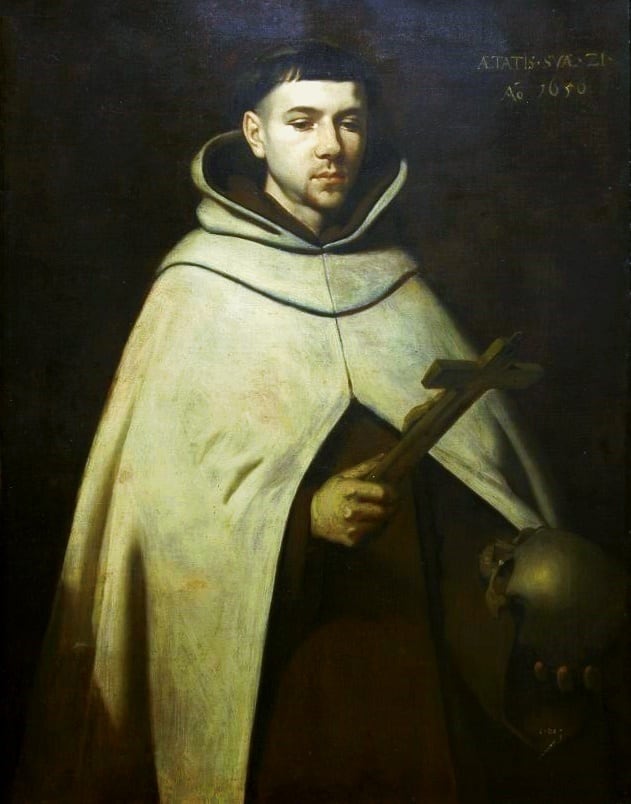
Retrato de san Juan de la Cruz (atribuido a Zurbarán) · Public domain
उनके अपने शब्दों में
«One dark night, fired with love's urgent longings, ah, the sheer grace!, I went out unseen, my house being now all stilled.»Noche oscura, estrofa 1

मूल विचार
The dark night: The 'night' is John's name for the whole process of purification by which the soul passes from attachment to creatures to union with God.
संदर्भ में देखें
जीवनी
6 मिनट का पाठ
स्पैनिश मूल से सहायता-प्राप्त अनुवाद, मातृभाषी अनुवादक द्वारा समीक्षा लंबित।
कास्तील का एक निर्धन बालक
ख़ुआन दे येपेस आल्वारेस का जन्म 1542 में फ़ोंतिवेरोस में हुआ, जो आविला प्रांत के मोरान्या क्षेत्र में बुनकरों की एक बस्ती थी; 24 जून की तिथि परंपरागत है। उनके पिता गोंसालो दे येपेस तोलेदो के एक संपन्न परिवार से थे, जिसने उन्हें इसलिए उत्तराधिकार से वंचित कर दिया कि उन्होंने एक निर्धन बुनकर स्त्री, कातालीना आल्वारेस, से विवाह किया था। गोंसालो की मृत्यु लगभग 1545 में हुई, और तीन बेटों वाली विधवा ने तोलेदो और तोरीख़ोस के धनी संबंधियों से व्यर्थ ही सहायता माँगी। दूसरा बेटा लुइस भूख या बीमारी से चल बसा। परिवार पहले आरेवालो गया और फिर लगभग 1551 में कास्तील के मेलों के महानगर मेदीना देल कांपो।
मेदीना में ख़ुआन "कोलेख़ियो दे ला दोक्त्रीना" में पढ़े — निर्धन बच्चों का एक आश्रम, जहाँ पढ़ना-लिखना और कोई हुनर सिखाया जाता था; उन्होंने बढ़ई, दर्ज़ी, काष्ठ-शिल्पी और चित्रकार बनने का प्रयास किया, पर सफल न हुए। इसके बाद वे उपदंश (सिफ़लिस) के रोगियों के लिए समर्पित "कोंसेप्सियोन" अस्पताल में परिचारक के रूप में काम करने लगे, जिसके प्रबंधक ने उन्हें 1559 से 1563 तक जेसुइटों के पास मानविकी पढ़ने की अनुमति दी। वहीं उन्होंने लातीनी और वह आलंकारिक प्रशिक्षण पाया जिसकी झलक उनके गद्य में मिलती है।
संन्यासी और सुधारक
1563 में उन्होंने मेदीना के कार्मेल मठ में "फ़्राय ख़ुआन दे सांतो मातिया" नाम से धर्मसंघी वस्त्र धारण किया और 1564 से 1568 तक सालामांका विश्वविद्यालय में कला और धर्मशास्त्र पढ़ा, जहाँ वे सान आंद्रेस के कार्मेलाइट महाविद्यालय में रहते थे। 1567 में पुरोहित-दीक्षा पाने के बाद वे कार्थूसियन संघ में जाने की सोच रहे थे, तभी उसी शरद ऋतु में येसु की तेरेसा ने, जो उस समय मेदीना में एक नया मठ स्थापित कर रही थीं, उन्हें अपने साथ पुरुष संन्यासियों का सुधार आरंभ करने के लिए मना लिया। तेरेसा ने एक पत्र में उनका वर्णन किया कि वे क़द में छोटे हैं, पर "ईश्वर की दृष्टि में महान"।
28 नवंबर 1568 को उन्होंने आंतोनियो दे एरेदिया के साथ दुरुएलो के एक खेतिहर घर में पादुकाविहीन कार्मेलाइटों का पहला मठ आरंभ किया और "ख़ुआन दे ला क्रूस" — क्रूस के योहन — नाम अपनाया। वे मान्सेरा और पास्त्राना में नौसिखियों के गुरु, आल्काला के महाविद्यालय के अध्यक्ष और 1572 से आविला के देहधारण मठ के पापस्वीकार-गुरु रहे, जिसकी अधिष्ठात्री तेरेसा थीं। वहीं, परंपरा के अनुसार एक दिव्य दर्शन के बाद, उन्होंने ऊपर से देखे गए क्रूसित मसीह का वह छोटा-सा चित्र बनाया, जिसने 1951 में दाली को प्रेरित किया।
तोलेदो का कारागार
सुधार ने पादुकाविहीन और पादुकाधारी कार्मेलाइटों को पोप के राजदूत, धर्मसंघ के महाध्यक्ष और राजा के बीच अधिकार-क्षेत्र के एक विवाद में आमने-सामने ला खड़ा किया। 2 से 3 दिसंबर 1577 की रात पादुकाधारियों ने ख़ुआन को आविला में पकड़ लिया और तोलेदो के कार्मेल मठ में ले गए। लगभग नौ महीने वे एक ऐसी कोठरी में रहे जहाँ मुश्किल से रोशनी आती थी; भोजनशाला में सबके सामने उन्हें कोड़े लगाए गए और सुधार छोड़ देने के लिए उन पर दबाव डाला गया। उसी कोठरी में उन्होंने स्मृति के सहारे "आत्मिक गीत" का अधिकांश भाग, योहन के सुसमाचार की प्रस्तावना पर एक गाथा-गीत और "Qué bien sé yo la fonte" ("मैं उस झरने को भली-भाँति जानता हूँ") नामक गीत रचा, जिन्हें उन्होंने बाद में एक नए जेलर द्वारा दी गई कॉपी में लिख लिया।
अगस्त 1578 के मध्य में वे रात को अपने कंबलों की पट्टियों के सहारे एक खिड़की से नीचे उतरकर भाग निकले और तोलेदो की पादुकाविहीन कार्मेलाइट धर्मबहनों के मठ में शरण ली, जहाँ उन्होंने कारागार में रचे पद सुनाए। संत-घोषणा की प्रक्रियाओं के साक्षियों ने इस वृत्तांत में चमत्कारी प्रकाश और कुँवारी मरियम के चमत्कारी संरक्षण जोड़ दिए; भाग निकलने का तथ्य और उसकी भौतिक परिस्थितियाँ भली-भाँति प्रमाणित हैं।
आंदालूसिया और महान ग्रंथ
अगले वर्ष उन्होंने आंदालूसिया में बिताए: हाएन की पर्वत-शृंखला में एल काल्वारियो मठ के अधिष्ठाता, बेआस की पादुकाविहीन धर्मबहनों के पापस्वीकार-गुरु, बाएसा के महाविद्यालय के अध्यक्ष और 1582 से ग्रानादा के "शहीदों" के मठ के अधिष्ठाता। संन्यासियों और धर्मबहनों के प्रश्नों के उत्तर देने के लिए उन्होंने अपनी कविताओं पर गद्य में टीका लिखनी आरंभ की: इस प्रकार "कार्मेल पर्वत का आरोहण" और "आत्मा की अँधेरी रात" जन्मे — दोनों अधूरे — फिर "आत्मिक गीत" की व्याख्या, जो 1584 में आना दे ख़ेसूस के लिए पूरी हुई, और "प्रेम की जीवंत ज्वाला", जो विधवा आना दे पेन्यालोसा के लिए लिखी गई। बाद में उन्होंने "गीत" और "ज्वाला" को फिर से लिखा; बीसवीं सदी में इन दूसरे पाठों की प्रामाणिकता पर विवाद रहा, जब तक कि अधिकांश आलोचकों ने उसे स्वीकार नहीं कर लिया।
महान ग्रंथों के साथ-साथ उन्होंने आध्यात्मिक मार्गदर्शन के लिए छोटी रचनाएँ भी लिखीं: "प्रकाश और प्रेम के वचन" — सूक्तियाँ, जिन्हें वे अलग-अलग पर्चियों पर देते थे और जिनकी एक हस्तलिखित प्रति आंदूख़ार में सुरक्षित है; "सावधानियाँ" और "एक संन्यासी को परामर्श"; एक धर्मबहन की आत्मिक स्थिति पर एक समीक्षा; और कुछ दर्जन पत्र, जिनमें से अनेक बेआस, ग्रानादा और सेगोविया की पादुकाविहीन धर्मबहनों को लिखे गए। बेआस की धर्मबहनों के लिए उन्होंने "पूर्णता का छोटा पर्वत" भी बनाया — कार्मेल पर्वत का एक रेखाचित्र, जिसकी बीच वाली पगडंडी पर लिखा है "कुछ नहीं, कुछ नहीं, कुछ नहीं" और जिसके शिखर पर पढ़ा जा सकता है कि "यहाँ अब कोई मार्ग नहीं"। उनके पत्राचार का बड़ा हिस्सा 1591 के उत्पीड़न के वर्षों में खो गया या नष्ट कर दिया गया।
उनकी शिक्षा को एक विरोधाभास में समेटा जा सकता है: सब कुछ पाने तक पहुँचने के लिए कुछ भी पाने की इच्छा नहीं करनी चाहिए। आत्मा इंद्रियों और आत्मा की एक सक्रिय और निष्क्रिय "रात" से गुज़रती है, जिसमें विश्वास, आशा और प्रेम बुद्धि, स्मृति और संकल्प को ईश्वर के अतिरिक्त हर आधार से रिक्त कर देते हैं, यहाँ तक कि रूपांतरकारी मिलन घटित होता है, जिसकी तुलना वे अग्नि से भेदी गई लकड़ी से करते हैं।
कवि के रूप में ख़ुआन ने गार्सिलासो के इतालवी ढंग के "लीरा" छंद, "ईश्वरोन्मुख" कर दी गई लोकगीत-परंपरा और "श्रेष्ठगीत" (सॉन्ग ऑफ़ सॉन्ग्स) को अभूतपूर्व सघनता वाली भाषा में एक कर दिया। दामासो आलोंसो ने इस संश्लेषण का अध्ययन किया, और लूसे लोपेस-बाराल्त ने सूफ़ी रहस्यवाद के साथ उन समानताओं की ओर संकेत किया है जिन पर आज भी बहस जारी है।
अंतिम वर्ष
वे आंदालूसिया के प्रांतीय विकार रहे और 1588 में सेगोविया के अधिष्ठाता तथा निकोलास दोरिया के अधीन धर्मसंघ के केंद्रीय प्रशासन में परामर्शदाता बने; ख़ेरोनिमो ग्रासियान और धर्मबहनों के साथ किए गए व्यवहार को लेकर दोरिया से उनका टकराव हुआ। जून 1591 में मद्रिद की महासभा में उनसे सारे पद छिन गए; ला पेन्युएला भेजे जाने पर वे ज्वर और एक पैर के घावों से बीमार पड़ गए और उन्हें उबेदा ले जाया गया, जहाँ अधिष्ठाता ने उनका रूखा स्वागत किया, जबकि एक निरीक्षक उनके विरुद्ध गवाहियाँ जुटा रहा था। 13 और 14 दिसंबर 1591 के बीच की आधी रात को उनका देहांत हुआ।
1593 में उनका पार्थिव शरीर गुप्त रूप से सेगोविया ले जाया गया। उनकी गद्य रचनाएँ 1618 में आल्काला में छपीं, पर "आत्मिक गीत" के बिना, जो 1622 में फ़्रांसीसी अनुवाद में और 1627 में ब्रसेल्स में कास्तीली भाषा में प्रकाशित हुआ। 1675 में उन्हें धन्य घोषित किया गया, 1726 में संत घोषित किया गया और 1926 में पोप पियुस ग्यारहवें ने उन्हें कलीसिया का आचार्य (डॉक्टर) घोषित किया; 1952 में वे स्पेनी कवियों के संरक्षक संत घोषित हुए।
बीसवीं सदी में उनकी रचनाएँ आध्यात्मिकता से निकलकर साहित्य और दर्शन के क्षेत्र में पहुँचीं: ज़ाँ बारूज़ी ने रहस्यवादी अनुभव की समस्या के रूप में उनका अध्ययन किया, एडिथ श्टाइन ने उन पर अपनी कृति "क्रूस का विज्ञान" समर्पित की, टी. एस. एलियट ने "ईस्ट कोकर" में "आरोहण" का भावानुवाद किया, और ख़ोर्खे गिय्येन या क्लाउदियो रोद्रीगेस जैसे कवियों ने उन्हें अपना गुरु माना।
स्रोत: San Juan de la Cruz. Obras completas. Ed. José Vicente Rodríguez; introducciones y notas doctrinales de Federico Ruiz Salvador. Madrid: Editorial de Espiritualidad, 1980 (ed. revisada 2008, ISBN 9788470683459). · Ruiz Salvador, Federico (dir.). Dios habla en la noche: vida, palabra, ambiente de San Juan de la Cruz. Madrid: Editorial de Espiritualidad, 1990. · Crisógono de Jesús Sacramentado, O.C.D. Vida de San Juan de la Cruz. Madrid: BAC, 1946; ed. revisada por Matías del Niño Jesús en San Juan de la Cruz, Vida y obras (BAC 15), 1964. · John of the Cross. The Collected Works of St. John of the Cross. Trad. Kieran Kavanaugh y Otilio Rodriguez. Ed. revisada. Washington, D.C.: ICS Publications, 1991 (ISBN 9780935216936). · Alonso, Dámaso. La poesía de San Juan de la Cruz (desde esta ladera). Madrid: CSIC, 1942.
कालक्रम
जीवन, वर्ष-दर-वर्ष
प्रत्येक बिंदु एक प्रमाणित घटना है। उसे स्रोत और निश्चितता के स्तर सहित पढ़ने के लिए क्लिक करें।
15420 वर्षFontiveros (Ávila)
Birth
Juan de Yepes Álvarez is born to Gonzalo de Yepes and the weaver Catalina Álvarez. The date of 24 June is traditional.
प्रमाणितCrisógono de Jesús Sacramentado, O.C.D. Vida de San Juan de la Cruz. Madrid: BAC, 1946; ed. revisada por Matías del Niño Jesús en San Juan de la Cruz, Vida y obras (BAC 15), 1964.
उनके निधन के बाद
- 1618First edition of his works
- 27 दिसंबर 1726Canonisation
- 24 अगस्त 1926Doctor of the Church
- 1952Patron of Spanish poets
1542 · 0 वर्ष
Birth
Juan de Yepes Álvarez is born to Gonzalo de Yepes and the weaver Catalina Álvarez. The date of 24 June is traditional.
प्रमाणित
लगभग 1545 · 3 वर्ष
Death of his father
Gonzalo de Yepes dies; the family's destitution begins.
संभावित
लगभग 1551 · 9 वर्ष
Move to Medina del Campo
After a stay in Arévalo, the family settles in Medina; Juan enters the Colegio de la Doctrina.
संभावित
1559 · 17 वर्ष
Studies with the Jesuits
A nurse at the hospital of the Conception, he studies humanities at the Jesuit college (1559–1563).
प्रमाणित
1563 · 21 वर्ष
Takes the Carmelite habit
He enters the Carmel of Medina as Fray Juan de Santo Matía.
प्रमाणित
1564 · 22 वर्ष
Studies at Salamanca
He studies arts and theology at the University of Salamanca (1564–1568).
प्रमाणित
1567 · 25 वर्ष
Meeting with Teresa of Jesus
Newly ordained, he is won over by Teresa to the reform of the friars.
प्रमाणित
28 नवंबर 1568 · 26 वर्ष
First Discalced friary
With Antonio de Heredia he inaugurates the friary at Duruelo and takes the name John of the Cross.
प्रमाणित
1572 · 30 वर्ष
Confessor at the Incarnation
Confessor at the monastery of the Incarnation, where Teresa is prioress (1572–1577).
प्रमाणित
2 दिसंबर 1577 · 35 वर्ष
Imprisonment in Toledo
Seized by the Calced Carmelites on the night of 2–3 December and imprisoned in their Toledo convent; there he composes much of the Canticle.
प्रमाणित
अगस्त 1578 · 36 वर्ष
Escape
He escapes at night through a window and takes refuge with the Discalced nuns of Toledo.
प्रमाणित
1579 · 37 वर्ष
Rector of the college at Baeza
He founds and directs the Discalced college beside the University of Baeza (1579–1582).
प्रमाणित
1582 · 40 वर्ष
Prior of Los Mártires
Prior in Granada (1582–1588); he writes most of his treatises.
प्रमाणित
1584 · 42 वर्ष
Spiritual Canticle in prose
He completes the commentary on the Canticle dedicated to Ana de Jesús (first redaction).
प्रमाणित
1588 · 46 वर्ष
Prior of Segovia
Prior of Segovia and councillor of the Consulta governing the order under Nicolás Doria.
प्रमाणित
जून 1591 · 49 वर्ष
Loss of office
The general chapter leaves him without office; he is sent to La Peñuela.
प्रमाणित
14 दिसंबर 1591 · 49 वर्ष
Death
He dies at midnight in the convent of San Miguel, Úbeda.
प्रमाणित
1618
First edition of his works
The prose works are printed, without the Spiritual Canticle.
प्रमाणित
27 दिसंबर 1726
Canonisation
Benedict XIII canonises him.
प्रमाणित
24 अगस्त 1926
Doctor of the Church
Pius XI declares him a Doctor of the universal Church.
प्रमाणित
1952
Patron of Spanish poets
He is proclaimed patron of Spanish-language poets.
प्रमाणित
कृतियाँ
आवश्यक कृतियाँ
वे कृतियाँ जिनके बिना उनकी विरासत को समझा नहीं जा सकता।
लिखित कृति · लगभग 1585
The Ascent of Mount Carmel
Subida del Monte Carmelo
A commentary, soon abandoning the poem, on the 'Dark Night' as an active night: what the soul can do to empty the senses of appetites (book I) and the intellect, memory and will through faith, hope and charity (books II–III). It contains the verses 'to come to enjoy everything', the critique of visions and revelations and the claim that in Christ God has said everything.
9 संस्करण · amazon.com
लिखित कृति · लगभग 1585
The Dark Night
Noche oscura (declaración de las canciones)
A treatise on the passive night, what God does in the soul: the night of sense, with the signs for leaving discursive meditation and passing to contemplation, and the night of the spirit, a painful purification by infused contemplation, a 'ray of darkness'. Its description of dryness and abandonment has given it relevance beyond Christian spirituality.
9 संस्करण · amazon.com

लिखित कृति · 1584
Spiritual Canticle (redaction A)
Declaración de las canciones que tratan del ejercicio de amor entre el alma y el Esposo Cristo (Cántico A)
A stanza-by-stanza commentary on the poem, reading the Bride's itinerary as the passage from the purgative to the illuminative and unitive ways, with long meditations on the beauty of creatures as the Beloved's trace. It is the most lyrical of his treatises.
4 संस्करण · amazon.es

लिखित कृति · लगभग 1586
The Living Flame of Love (commentary)
Declaración de las canciones que tratan de la muy íntima y calificada unión y transformación del alma en Dios (Llama de amor viva)
A commentary on the poem's four stanzas describing transforming union from within: the soul as a log already turned to fire, the action of the Holy Spirit, the 'lamps of fire' of the divine attributes and God's awakening in the soul. It includes a stern warning against bad spiritual directors.
6 संस्करण · amazon.com
संपूर्ण कृतित्व (29)

Spiritual Canticle (poem)
1578
Dark Night (poem)
1579
Living Flame of Love (poem)
1585
Song of the Soul that Rejoices in Knowing God through Faith ('How well I know the fount')
1578
Romances on the Gospel 'In principio erat Verbum'
1578
Romance on the Psalm 'Super flumina Babylonis'
1578
Stanzas Concerning an Ecstasy Experienced in High Contemplation ('I entered into unknowing')
1580
Stanzas of the Soul that Suffers with Longing to See God ('I live, but not in myself')
1580
'Upon a quest of love' (stanzas a lo divino)
1580
'A lone young shepherd lived in pain'
1584
Gloss 'Without support and with support'
1580
Gloss 'Not for all of beauty'
1580
'With the divine Word' (Christmas song)
1585
Summary of Perfection ('Forgetfulness of creation')
1585
John of the Cross
'My soul is detached' (attributed stanzas)
The Conscious Library'My soul is detached' (attributed stanzas)
1600

Spiritual Canticle (redaction B)
1586

Sayings of Light and Love
1585
The Precautions
1580
Counsels to a Religious on How to Reach Perfection
1585
Censure and Opinion on the Spirit of a Nun
1588
The Mount of Perfection (drawing of Mount Carmel)
1579
Letters
1591
Points of Love Gathered at Beas
1580
John of the Cross
Spiritual Maxims and Sentences (later collections)
The Conscious LibrarySpiritual Maxims and Sentences (later collections)
1700
वचन
किसी निश्चित कृति में स्थित वचन। प्रत्येक के साथ उसका स्रोत और विश्वसनीयता का स्तर है।
One dark night, fired with love's urgent longings, ah, the sheer grace!, I went out unseen, my house being now all stilled.En una noche oscura, / con ansias, en amores inflamada, / ¡oh dichosa ventura!, / salí sin ser notada, / estando ya mi casa sosegada.
सत्यापितNoche oscura, estrofa 1
अप्रामाणिक या विवादित आरोपण वाले उद्धरण (2)
«In the evening of life we shall be judged on love.»
A widespread modern paraphrase of the authentic saying 'In the evening you will be examined in love' (Sayings of Light and Love). It is not false in meaning, but it is not his wording.
«To reach a point you do not know, you must take a road you do not know.»
A free version of Ascent I,13,11 ('To come to what you know not, you must go by a way you know not'), circulating without reference and with its meaning shifted towards self-help.
अंतिम शब्द
साक्षियों का परवर्ती वृत्तांत
«Into your hands, Lord, I commend my spirit.»In manus tuas, Domine, commendo spiritum meum.
He died in Úbeda at midnight on 13–14 December 1591, surrounded by friars of the convent. According to the testimonies gathered at the beatification processes, shortly before he asked that the commendation of the soul not be read to him but the Song of Songs, remarking 'What precious pearls!'; on hearing the bell for matins he said he was going to say them in heaven, and he died uttering the words of Psalm 30 that Jesus repeated on the cross. The witnesses agree on the essentials and vary in the details.
स्रोत: Procesos de beatificación y canonización de San Juan de la Cruz. Ed. Silverio de Santa Teresa, O.C.D. Biblioteca Mística Carmelitana, vol. 14. Burgos: El Monte Carmelo, 1931 (vol. 5 de las Obras).
पूछें
उनकी कृतियाँ क्या उत्तर देती हैं
मानवता के बारह महान प्रश्न और उनके ग्रंथ उनका जो उत्तर देने देते हैं, संदर्भों सहित। हम कभी उनके मुख में अपने शब्द नहीं रखते।
परम सत्य क्या है? क्या ईश्वर है?
God is the Beloved who hides and gives himself in dark faith
साकार, व्यक्तिगत ईश्वरस्पष्ट रूप से कहा है
For John of the Cross, God is the Beloved: someone who wounds, hides, calls and finally unites himself to the soul. The Spiritual Canticle opens with the question «Where have you hidden, Beloved?», and the Living Flame of Love describes the soul's transformation in the Holy Spirit, who works in it as a flame. The Trinity lies at the centre of union: in the commentary on the Flame, the soul shares in the life of the Father, the Son and the Spirit. At the same time, no concept or image reaches this God: the Ascent of Mount Carmel teaches that the only means proportionate to union with him is faith, which is dark to the intellect. The Absolute is thus personal and loving, but known in darkness, through love rather than representation.
इस प्रश्न की अन्य गुरुओं से तुलना करेंमैं कौन हूँ? क्या कोई सच्चा आत्म है?
The soul is a creature that can become God by participation
सृजित, अमर आत्मास्पष्ट रूप से कहा है
John of the Cross thinks of the self as a created soul, with its faculties —intellect, memory and will— and a «centre» that is God himself. The Ascent of Mount Carmel offers the decisive image: a clean window, struck by a ray of sunlight, looks like the ray itself without ceasing to be a window; so the soul, once purified, «seems more God than soul, and is even God by participation», though its natural being remains distinct from God's. The path requires emptying the faculties of every appetite and every possession, including that of spiritual experiences. The self is not dissolved: it is transformed by love without losing its creaturely condition.
इस प्रश्न की अन्य गुरुओं से तुलना करेंहम दुःख क्यों भोगते हैं?
The dark night hurts because it purifies for union
ईश्वर से वियोगस्पष्ट रूप से कहा है
John of the Cross distinguishes two kinds of suffering. The first comes from the appetites: in the Ascent of Mount Carmel he describes how they weary, torment, darken, defile and weaken the soul, because they bind it to what is not God. The second is that of the dark night, which God himself works: infused contemplation, entering a still impure soul, is darkness and torment to it, as excessive light blinds a diseased eye. That pain —feeling abandoned, dry, undone— is not punishment but purification. Suffering arises from the distance between the soul and God and is also the path by which that distance is cancelled.
इस प्रश्न की अन्य गुरुओं से तुलना करेंमृत्यु के बाद क्या होता है?
I die because I do not die: death is meeting the Beloved
अनंत जीवन और पुनरुत्थानस्पष्ट रूप से कहा है
John of the Cross awaits eternal life as the consummation of the union of love. In the stanzas «I live without living in myself» the present life is exile and the soul dies because it does not die, longing to see God. The first stanza of the Living Flame of Love asks God to tear the veil of this sweet encounter, that is, the mortal life that separates the soul from vision; and its commentary states that the death of those who have reached this state, though natural, is far sweeter and gentler than their life, for they die in impulses and encounters of love. Death is not an end: it is the passage to seeing God face to face.
इस प्रश्न की अन्य गुरुओं से तुलना करेंमुक्ति या उद्धार कैसे प्राप्त होता है?
The soul disposes itself in the night; God works the union
कृपा और प्रेम सेस्पष्ट रूप से कहा है
John of the Cross describes liberation as union with God through love, and distinguishes two movements. In the active night, treated in the Ascent of Mount Carmel, the soul does what it can: it denies its appetites, empties its faculties and walks by faith, hope and charity, with the watchword of desiring to taste nothing in order to come to taste everything. But the decisive purification is passive: the Dark Night shows that it is God who, through infused contemplation, purges what the soul cannot reach. In the Living Flame of Love he insists that the principal agent and guide is the Holy Spirit. Effort prepares; union is a gift.
इस प्रश्न की अन्य गुरुओं से तुलना करेंक्या गुरु आवश्यक है?
A good director helps; the principal guide is the Holy Spirit
सहायक, पर अनिवार्य नहींस्पष्ट रूप से कहा है
John of the Cross attaches great importance to spiritual direction and, at the same time, criticises it harshly. In the Sayings of Light and Love he compares the soul that is alone and without a master, even if virtuous, to a burning coal left alone, which cools rather than kindles. But in the Living Flame of Love he devotes severe pages to spiritual masters who, not understanding the ways of contemplation, force the soul to go on meditating when God is already leading it by another path, and compares them to blacksmiths who only know how to hammer. He recalls that the principal agent and guide of souls is the Holy Spirit; the human director must serve him, not hinder him.
इस प्रश्न की अन्य गुरुओं से तुलना करेंक्या संसार वास्तविक है?
God passed through the groves and left them clothed in beauty
शुभ और वास्तविक सृष्टिस्पष्ट रूप से कहा है
John of the Cross holds at once the beauty of the world and its nothingness before God. In the Ascent of Mount Carmel, compared with God's infinite being, all creatures are nothing, and the soul that binds itself to them becomes like what it loves; hence one must pass through the night of sense. But the Spiritual Canticle sings of creatures as traces of the Beloved: pouring out a thousand graces, he passed through these groves in haste and, looking at them, left them clothed in beauty by his gaze alone. In consummated union, the soul knows creatures from God and finds them more beautiful. The world is good; what hinders is possession.
इस प्रश्न की अन्य गुरुओं से तुलना करेंप्रेम क्या है?
Living flame of love: the longing that wounds and unites
विरह और मिलनस्पष्ट रूप से कहा है
John of the Cross is, in the Spanish language, the great poet of love as longing for union. In the Spiritual Canticle the soul is the wounded bride who goes out after the Beloved, seeks him over mountains and riverbanks and rests only in union; the Dark Night recounts the beloved's going forth, «inflamed with love», until she lies with her face reclined upon the Beloved. The Living Flame of Love describes consummated love as the fire of the Holy Spirit wounding tenderly in the soul's deepest centre. That love is also a criterion of life: in the evening, says one of his sayings, you will be examined on love. And in a letter he advises putting love where there is none in order to draw love out.
इस प्रश्न की अन्य गुरुओं से तुलना करेंक्या हम स्वतंत्र हैं, या सब कुछ पूर्वनिर्धारित है?
Union is the conformity of two free wills
वास्तविक स्वतंत्र इच्छाउनके सिद्धांत से निष्कर्षित
John of the Cross does not treat the problem of determinism, but his whole doctrine presupposes a free will. In the Ascent of Mount Carmel he defines the union he seeks not as substantial union but as union of likeness, which occurs when two wills, the soul's and God's, are conformed in one, with nothing in the one repugnant to the other. To reach it, the soul must freely deny its voluntary appetites: not the natural ones, which do not depend on it, but those it consents to. In the passive night, God works where the soul cannot reach, but the will goes on cooperating through its consent and its love.
इस प्रश्न की अन्य गुरुओं से तुलना करेंध्यान या प्रार्थना क्यों करें?
From meditation to loving attentiveness in God
ईश्वर से मैत्रीस्पष्ट रूप से कहा है
John of the Cross distinguishes two moments of prayer. At the beginning, discursive meditation is fitting, using images and reasoning to fall in love with God. But a time comes when that meditation dries up, and the Ascent of Mount Carmel gives three signs to recognise it: one can no longer reason, one has no desire to fix the imagination on other things, and the soul delights in remaining alone with loving attentiveness to God, without particular considerations. Then reasoning must be set aside and one should remain in that loving, quiet and passive knowledge. Prayer culminates in a communication of love between the soul and the Beloved, which the Spiritual Canticle describes as the intimacy of spouses.
इस प्रश्न की अन्य गुरुओं से तुलना करेंक्या बुद्धि परम को जान सकती है?
Transcending all knowledge: God is reached by dark faith
परम मन से परे हैस्पष्ट रूप से कहा है
John of the Cross, trained at the University of Salamanca, does not despise theology, but denies that the intellect can reach God by its own powers. In the Ascent of Mount Carmel he maintains that nothing the imagination and intellect can conceive is a proximate means to union, because God falls under no distinct form or knowledge; the only proportionate means is faith, which is dark night for the soul. His stanzas «I entered where I did not know» sing it: whoever truly arrives there faints from himself, and remains unknowing, transcending all knowledge. Reason serves to discern and to avoid deception; union takes place beyond it.
इस प्रश्न की अन्य गुरुओं से तुलना करेंसंसार से हटें या उसे बदलें?
Forgetting the created, remembering the Creator
पाने के लिए हटनास्पष्ट रूप से कहा है
John of the Cross is the master of solitude and nakedness. His brief Summary of Perfection condenses it into four lines: forgetfulness of the created, remembrance of the Creator, attention to what is within, and remaining in love with the Beloved. The Precautions advise the religious to guard against the world, the devil and the flesh, and not to meddle in what is not his concern. The Spiritual Canticle sings of solitude: in solitude the dove lived, and in solitude her beloved guides her alone. Yet John did not live in a cave: he was a reformer, prior, confessor, tireless traveller and prisoner. The withdrawal he asks for is above all inward: detachment from everything, so that nothing takes God's place.
इस प्रश्न की अन्य गुरुओं से तुलना करें
निकटता और तनाव
निकटता और तनाव
उनके मतों के आधार पर प्रश्न-दर-प्रश्न आकलित। प्रत्येक सहमति या टकराव का कारण क्लिक करने पर।
इनसे मिलता-जुलता सोचते हैं

Rabia al-Adawiyya
इन पर सहमत: परम सत्य क्या है? क्या ईश्वर है? · हम दुःख क्यों भोगते हैं? · मृत्यु के बाद क्या होता है?
Seraphim of Sarov
इन पर सहमत: परम सत्य क्या है? क्या ईश्वर है? · मैं कौन हूँ? क्या कोई सच्चा आत्म है? · हम दुःख क्यों भोगते हैं?
Ignatius Brianchaninov
इन पर सहमत: परम सत्य क्या है? क्या ईश्वर है? · मैं कौन हूँ? क्या कोई सच्चा आत्म है? · हम दुःख क्यों भोगते हैं?

Teresa of Ávila
इन पर सहमत: परम सत्य क्या है? क्या ईश्वर है? · मैं कौन हूँ? क्या कोई सच्चा आत्म है? · हम दुःख क्यों भोगते हैं?
इनसे भिन्न सोचते हैं

Pema Chödrön
इन पर टकराव: परम सत्य क्या है? क्या ईश्वर है? · मैं कौन हूँ? क्या कोई सच्चा आत्म है? · मृत्यु के बाद क्या होता है?

Nāgārjuna
इन पर टकराव: परम सत्य क्या है? क्या ईश्वर है? · मैं कौन हूँ? क्या कोई सच्चा आत्म है? · मृत्यु के बाद क्या होता है?
Tsongkhapa
इन पर टकराव: परम सत्य क्या है? क्या ईश्वर है? · मैं कौन हूँ? क्या कोई सच्चा आत्म है? · मृत्यु के बाद क्या होता है?
Śāntideva
इन पर टकराव: परम सत्य क्या है? क्या ईश्वर है? · मैं कौन हूँ? क्या कोई सच्चा आत्म है? · मृत्यु के बाद क्या होता है?
प्रसंग और वृत्तांत
प्रसंग और वृत्तांत
मौखिक परंपरा1567–1568
'A friar and a half'
वृत्तांत का स्रोत: Teresa of Jesus, Foundations 3 and 13–14 and letter to Francisco de Salcedo (September 1568). The phrase 'a friar and a half' comes from later Carmelite tradition.
स्रोत: Teresa de Jesús. Libro de las fundaciones, caps. 3 y 13–14, y carta a Francisco de Salcedo (Valladolid, septiembre de 1568), en Obras completas, ed. Efrén de la Madre de Dios y Otger Steggink. Madrid: BAC, 1962.
साक्ष्यagosto de 1578
The escape from Toledo
वृत्तांत का स्रोत: Statements at the beatification processes (BMC 14) and accounts by Inocencio de San Andrés and Magdalena del Espíritu Santo; critical synthesis in Crisógono de Jesús (1946).
संत-चरित वृत्तांतc. 1572–1577
The Christ drawn at the Incarnation
वृत्तांत का स्रोत: The drawing is kept in the monastery of the Incarnation in Ávila; the vision comes from testimony at the processes. The connection with Dalí is documented by the painter himself and by Father Bruno.
स्रोत: Ruiz Salvador, Federico (dir.). Dios habla en la noche: vida, palabra, ambiente de San Juan de la Cruz. Madrid: Editorial de Espiritualidad, 1990.
साक्ष्यc. 1589
'To suffer and be despised for you'
वृत्तांत का स्रोत: Statement by Francisco de Yepes at the beatification processes (BMC 14). It is second-hand testimony of an inner experience.
साक्ष्यseptiembre–diciembre de 1591
The last days in Úbeda
वृत्तांत का स्रोत: Beatification processes (BMC 14); Crisógono de Jesús (1946).
शिक्षाएँ
शिक्षाएँ
वे अवधारणाएँ जो उनके चिंतन को रूप देती हैं, उनके संदर्भ में समझाई गई।
The dark nightnoche-oscura
Scholastic mystical theology and the Dionysian tradition of divine darkness.
स्रोत: San Juan de la Cruz. Obras completas. Ed. José Vicente Rodríguez; introducciones y notas doctrinales de Federico Ruiz Salvador. Madrid: Editorial de Espiritualidad, 1980 (ed. revisada 2008, ISBN 9788470683459).
All and nothingnada
Christian ascetic renunciation and negative theology; a possible echo of Rhineland mysticism through Tauler.
स्रोत: San Juan de la Cruz. Obras completas. Ed. José Vicente Rodríguez; introducciones y notas doctrinales de Federico Ruiz Salvador. Madrid: Editorial de Espiritualidad, 1980 (ed. revisada 2008, ISBN 9788470683459).
Transforming unionunion-de-amor
Nuptial mysticism (Bernard of Clairvaux), Trinitarian theology and the Thomist doctrine of grace as participation.
स्रोत: San Juan de la Cruz. Obras completas. Ed. José Vicente Rodríguez; introducciones y notas doctrinales de Federico Ruiz Salvador. Madrid: Editorial de Espiritualidad, 1980 (ed. revisada 2008, ISBN 9788470683459).
Infused contemplation and the three signscontemplacion-infusa
Sixteenth-century debate on mental prayer and Illuminism; the tradition of medieval mystical theology.
स्रोत: San Juan de la Cruz. Obras completas. Ed. José Vicente Rodríguez; introducciones y notas doctrinales de Federico Ruiz Salvador. Madrid: Editorial de Espiritualidad, 1980 (ed. revisada 2008, ISBN 9788470683459).
The theological virtues as night of the facultiesfe-esperanza-caridad
The Augustinian psychology of the three faculties and Salamancan scholastic theology.
स्रोत: San Juan de la Cruz. Obras completas. Ed. José Vicente Rodríguez; introducciones y notas doctrinales de Federico Ruiz Salvador. Madrid: Editorial de Espiritualidad, 1980 (ed. revisada 2008, ISBN 9788470683459).
वीडियो
वीडियो
रिकॉर्डिंग, साक्षात्कार और वृत्तचित्र। वीडियो YouTube से चलते हैं; वे यहाँ संग्रहीत नहीं हैं।
Paisaje con figuras: Juan de la Cruz
वृत्तचित्र· ES· 1984· 44 min
RTVE Archivoआधिकारिक चैनल
«Y véante mis ojos». El cielo de San Juan de la Cruz. Aula Pedro Fabro
व्याख्यान· ES· 2024· 52 min
Universidad Pontificia Comillasआधिकारिक चैनल
Isabel Ordaz, «La poesía de San Juan de la Cruz. El nombre que multiplica los nombres»
व्याख्यान· ES· 2026· 49 min
Carmelitas Descalzos Úbedaआधिकारिक चैनल
Silvia Bara Bancel: «San Juan de la Cruz, lector del Maestro Eckhart»
व्याख्यान· ES· 2026· 109 min
Centro de Estudios de Hermenéuticaआधिकारिक चैनल
Poesía «Noche oscura» de San Juan de la Cruz
मूल रिकॉर्डिंग· ES· 2015· 2 min
Carmelitas Descalzosआधिकारिक चैनल
Adónde te escondiste
तृतीय पक्ष की रिकॉर्डिंग· ES· 2016· 3 min
Amancio Pradaआधिकारिक चैनल
José María Rodero lee a San Juan de la Cruz
तृतीय पक्ष की रिकॉर्डिंग· ES· 2014· 5 min
SCM1974spain
John of the Cross: A Mystic's Poetry with Keith Egan
व्याख्यान· EN· 2014· 70 min
Lumen Christi Instituteआधिकारिक चैनल
Carmelite Authors 101: St. John of the Cross
व्याख्यान· EN· 2018· 68 min
Boston College Clough School of Theology and Ministryआधिकारिक चैनल
The Dark Night of the Soul
विश्लेषण· EN· 2021· 41 min
Bishop Robert Barronआधिकारिक चैनल
Gottes Gegenwart erfahren: Die Mystik des Johannes vom Kreuz
व्याख्यान· DE· 2023· 55 min
CTS Hochschule Münsterआधिकारिक चैनल
Licht – geboren aus der Nacht. Die „Dunkle Nacht“ des Johannes vom Kreuz – Sr. Veronika E. Schmitt
व्याख्यान· DE· 2025· 58 min
CTS Hochschule Münsterआधिकारिक चैनल
Iain Matthew ocd – Giovanni della Croce per i giovani?
व्याख्यान· IT· 2018· 51 min
Pontificia Facoltà Teologica Teresianum – Romaआधिकारिक चैनल
La Chiesa ricorda San Giovanni della Croce
वृत्तचित्र· IT· 2018· 14 min
Tv2000itआधिकारिक चैनल
चित्रशाला
चित्रशाला
सत्यापित लाइसेंस वाले चित्र। प्रत्येक में उसके रचयिता और श्रेय का उल्लेख सुरक्षित है।
पांडुलिपियाँ
पांडुलिपियाँ
पांडुलिपि-साक्ष्य और प्राचीन पाठ, उनके संरक्षक और अध्ययन की शर्तों सहित।
ES · Latina (cursiva castellana del s. XVI) · c. 1585–1587
Dichos de luz y amor (autógrafo)
- संरक्षित पाठ-साक्ष्य
- Autógrafo parcial (códice de Andújar)
- संरक्षक
- Carmelitas descalzas de Andújar (Jaén)
ES · Latina · 1584
Cántico espiritual (manuscrito de Sanlúcar de Barrameda)
- संरक्षित पाठ-साक्ष्य
- Redacción A con anotaciones del autor
- संरक्षक
- Carmelitas descalzas de Sanlúcar de Barrameda (Cádiz)
ES · Latina · c. 1586–1591 (copia)
Cántico espiritual y poesías (manuscrito de Jaén)
- संरक्षित पाठ-साक्ष्य
- Testigo principal de la redacción B
- संरक्षक
- Carmelitas descalzas de Jaén
ES · — · c. 1572–1577
Cristo crucificado (dibujo)
- संरक्षित पाठ-साक्ष्य
- Dibujo original a pluma
- संरक्षक
- Monasterio de la Encarnación, Ávila
संबंध
संबंध
प्रभाव, शिष्यत्व और वैचारिक निकटता। प्रमाणित संबंध को विश्लेषण से पहचानी गई समानता से अलग दर्शाया गया है।
इनसे भेंट
They met at Medina del Campo in 1567; Teresa won him over to the reform, recounted the foundation of Duruelo in her Foundations and had him as confessor at the Incarnation (1572–1577).
प्रमाणित संबंध
इनसे प्रभावित
From Teresa he received the project of the male reform and the Discalced way of life; his teaching systematises in another register the experience of prayer she describes.
प्रमाणित संबंध
इनसे प्रभावित
His work is Christocentric: in Ascent II,22 he states that in Christ God has said everything, and his drawing of the crucified and the poem of the young shepherd express his meditation on the Passion.
प्रमाणित संबंध
इनसे प्रभावित
Rhineland mysticism reached sixteenth-century Spain through works attributed to Tauler, Eckhart's disciple. John has been studied as an indirect reader of Eckhart in the doctrine of nothingness and the ground of the soul; the exact route of transmission is unproven.
विश्लेषण से पहचानी गई समानता
इनसे मिलते-जुलते विचार
John's 'nada' and the Franciscan 'without anything of one's own' share the idea of total dispossession, material and spiritual, as the condition of love.
विश्लेषण से पहचानी गई समानता
इनसे मिलते-जुलते विचार
Both are at once mystics and first-rank poets or musicians, but their paths are opposite: Hildegard's symbolic, prophetic vision versus John's distrust of visions and his way of dark faith.
विश्लेषण से पहचानी गई समानता
इनसे मिलते-जुलते विचार
Luce López-Baralt has pointed to parallels of symbols and vocabulary between John's poetry and Andalusian Sufi mysticism (night, fount, wine, the solitary bird); the hypothesis of a Morisco transmission remains debated.
विश्लेषण से पहचानी गई समानता
इन्हें प्रभावित किया
Merton studied and commented on John of the Cross as a master of contemplation; it is a relation of reception.
विश्लेषण से पहचानी गई समानता
अन्य प्रविष्टियों से जुड़ा
- Francis of Assisi · इनसे मिलते-जुलते विचार
- Simone Weil · इनसे प्रभावित
- Chaitanya Mahaprabhu · इनसे मिलते-जुलते विचार
- Milarepa · इनसे मिलते-जुलते विचार
- Ignatius of Loyola · इनसे मिलते-जुलते विचार
- Thomas Merton · इनसे प्रभावित
- Ibn Arabi · इनसे मिलते-जुलते विचार
- Meister Eckhart · इन्हें प्रभावित किया
- Teresa of Ávila · इनसे भेंट
- Teresa of Ávila · इन्हें प्रभावित किया
स्रोत
स्रोत
इस प्रविष्टि के लिए देखे गए ग्रंथ-सूची और सूचीपत्र।
- Wikidata, Q190388 «John of the Cross» (P31=Q5; 82 enlaces entre wikis; P569 1542-06-24, P570 1591-12-14).
- San Juan de la Cruz. Obras completas. Ed. José Vicente Rodríguez; introducciones y notas doctrinales de Federico Ruiz Salvador. Madrid: Editorial de Espiritualidad, 1980 (ed. revisada 2008, ISBN 9788470683459).
- Ruiz Salvador, Federico (dir.). Dios habla en la noche: vida, palabra, ambiente de San Juan de la Cruz. Madrid: Editorial de Espiritualidad, 1990.
- Crisógono de Jesús Sacramentado, O.C.D. Vida de San Juan de la Cruz. Madrid: BAC, 1946; ed. revisada por Matías del Niño Jesús en San Juan de la Cruz, Vida y obras (BAC 15), 1964.
- Procesos de beatificación y canonización de San Juan de la Cruz. Ed. Silverio de Santa Teresa, O.C.D. Biblioteca Mística Carmelitana, vol. 14. Burgos: El Monte Carmelo, 1931 (vol. 5 de las Obras).
- John of the Cross. The Collected Works of St. John of the Cross. Trad. Kieran Kavanaugh y Otilio Rodriguez. Ed. revisada. Washington, D.C.: ICS Publications, 1991 (ISBN 9780935216936).
- Alonso, Dámaso. La poesía de San Juan de la Cruz (desde esta ladera). Madrid: CSIC, 1942.
- Baruzi, Jean. Saint Jean de la Croix et le problème de l'expérience mystique. París: Alcan, 1924 (trad. esp.: Valladolid, Junta de Castilla y León, 1991).
- López-Baralt, Luce. San Juan de la Cruz y el Islam. México: El Colegio de México, 1985 (reed. Madrid: Hiperión, 1990).
- Thompson, Colin P. St John of the Cross: Songs in the Night. Londres: SPCK, 2002.
- Wikisource en español, página «Autor:Juan de la Cruz» (poemas mayores, glosas, cantares y romances).
- Open Library, registros de edición de las obras de Juan de la Cruz (consultados por ISBN y por obra).
- Obras de San Juan de la Cruz, Doctor de la Iglesia. Ed. Silverio de Santa Teresa, O.C.D. 5 vols. Burgos: El Monte Carmelo, 1929–1931 (Biblioteca Mística Carmelitana 10–14).
- The Complete Works of Saint John of the Cross, of the Order of Our Lady of Mount Carmel. Trad. David Lewis; prefacio del cardenal Wiseman. 2 vols. Londres: Longman, 1864.
- Bara Bancel, Silvia. «San Juan de la Cruz, lector del Maestro Eckhart». Conferencia, Centro de Estudios de Hermenéutica, 2026.
- Stein, Edith. Kreuzeswissenschaft. Studie über Johannes a Cruce (1942). Lovaina / Friburgo: Nauwelaerts / Herder, 1950 (Edith Steins Werke I).
- Teresa de Jesús. Libro de las fundaciones, caps. 3 y 13–14, y carta a Francisco de Salcedo (Valladolid, septiembre de 1568), en Obras completas, ed. Efrén de la Madre de Dios y Otger Steggink. Madrid: BAC, 1962.
- अधिकार-धारक
- Dominio público (obra del siglo XVI). Las ediciones críticas, traducciones y aparatos modernos están sujetos a los derechos de sus editores (Editorial de Espiritualidad, Monte Carmelo, Alianza, BAC, ICS Publications, Herder…).
- आधिकारिक वेबसाइट
- www.carmelitaniscalzi.com/es/
पुष्टि की प्रतीक्षा में
जो यह प्रविष्टि अभी तक निश्चित नहीं कर सकी है। हम उसे भर देने के बजाय कह देना बेहतर समझते हैं।
- Localizar en una fuente apta (Wikisource o equivalente con capítulos) el texto en prosa de la Subida, la Noche, el Cántico, la Llama, los Dichos y las Cartas: Wikisource en español solo tiene los poemas; se han registrado los volúmenes de Silverio (1929) y Gerardo (1912) en Internet Archive, cuyo OCR hay que revisar.
- Identificar al traductor de The Dark Night of the Soul (J. M. Watkins, 1905) para retirar la marca de precaución.
- Fijar con la edición crítica la numeración del dicho «A la tarde te examinarán en el amor» (59, 60 o 64 según las ediciones) y la redacción exacta de la carta a María de la Encarnación de 6 de julio de 1591.
- Añadir ISBN de la edición de la BAC (Vida y obras / Obras completas, Lucinio Ruano) y de una edición francesa de conjunto (Cerf): no localizadas en Open Library.
- Confirmar signaturas y digitalizaciones de los manuscritos de Sanlúcar, Jaén y Andújar.
- Las fechas de los vídeos se han deducido de la fecha relativa que muestra YouTube; el programa de RTVE «Paisaje con figuras» se fecha de forma aproximada.
- Programas de afiliación: ninguno verificado.
2026-10-25 को शोधित