ईसाई धर्म · ईसाई रहस्यवाद · कैथोलिक धर्म
Ignatius of Loyola
1491 – 1556ऐतिहासिक रूप से प्रमाणित व्यक्ति
गिपुस्कोआ (स्पेन के बास्क प्रदेश) के एक कुलीन (1491–1556), जो 1521 में पाम्प्लोना में घायल हुए, स्वास्थ्य-लाभ के दौरान हृदय-परिवर्तन से गुज़रे और फिर तीर्थयात्री बने, अल्काला, सालामांका और पेरिस में विद्यार्थी रहे, और अपने साथियों के साथ येसु समाज (1540) के संस्थापक तथा उसके पहले सुपीरियर जनरल हुए। मनरेसा के अनुभव से जन्मी उनकी आध्यात्मिक साधनाएँ प्रार्थना और विवेक-परख की एक पद्धति है, जिसने पाँच शताब्दियों से संन्यासियों और गृहस्थों को गढ़ा है। उन्होंने संघ के संविधान, एक आध्यात्मिक डायरी, लिखवाया गया आत्मकथात्मक वृत्तांत और लगभग सात हज़ार पत्र भी छोड़े।
- कृतियाँ
- 16कृतियाँ
- संस्करण
- 42संस्करण
- उद्धरण
- 9उद्धरण
- वीडियो
- 15वीडियो
- चित्र
- 7चित्र
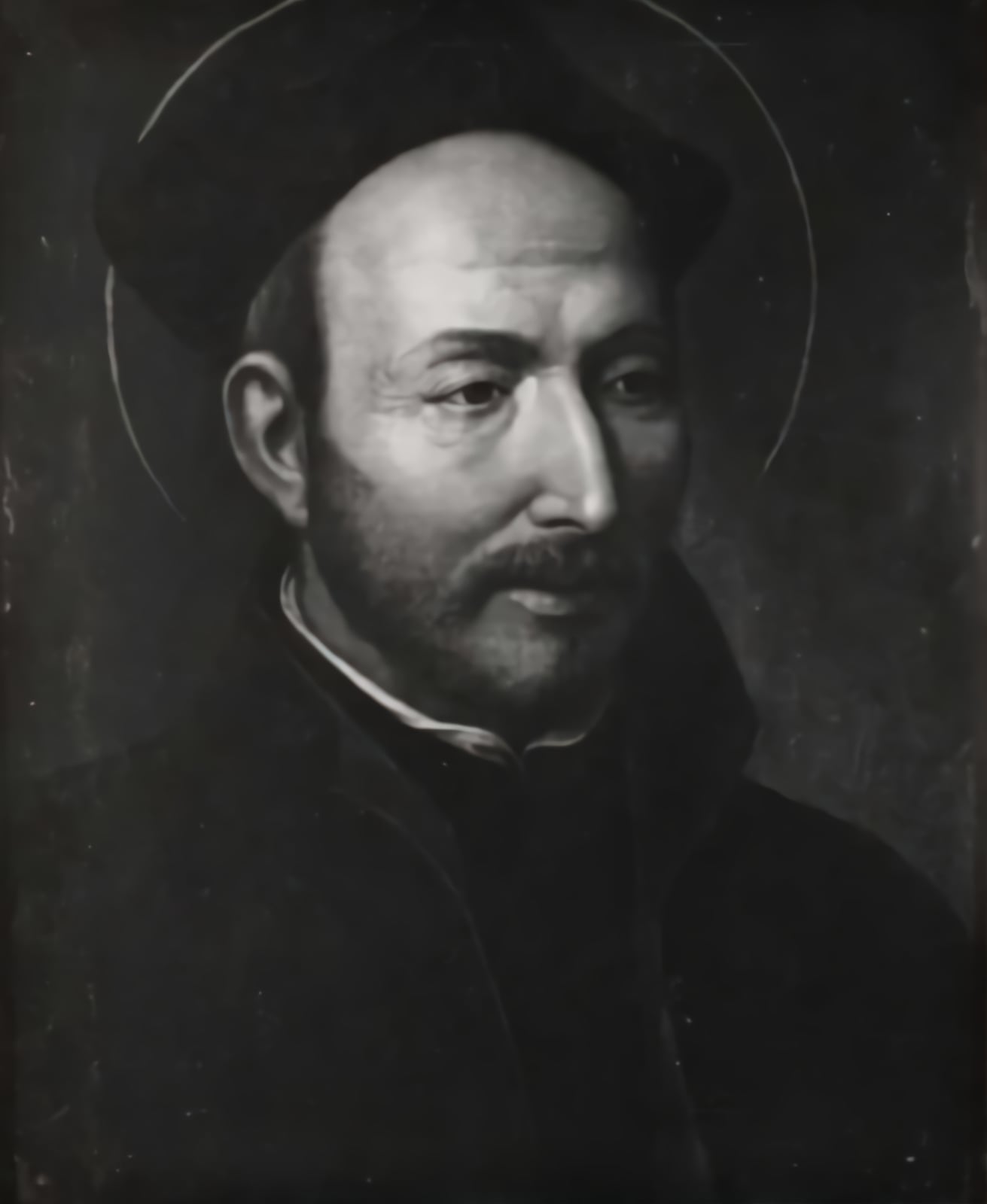
Retrato de Ignacio de Loyola · Public domain
उनके अपने शब्दों में
«Man is created to praise, reverence, and serve God our Lord, and by this means to save his soul.»Ejercicios espirituales, [23] Principio y fundamento (trad. inglesa de Elder Mullan, 1914)

शुरुआत के लिए एक रचना
Spiritual Exercisesमूल विचार
Principle and Foundation and indifference: The Principle and Foundation ([23]) opens the first week of the Exercises: human beings are created to praise, reverence and serve God, and all other things are created to help them toward that end; it follows that they should use them 'as much as' they help and rid themselves of them 'as much as' they hinder.
संदर्भ में देखें
जीवनी
6 मिनट का पाठ
स्पैनिश मूल से सहायता-प्राप्त अनुवाद, मातृभाषी अनुवादक द्वारा समीक्षा लंबित।
लोयोला का सबसे छोटा बेटा
इन्यिगो लोपेज़ दे लोयोला का जन्म 1491 में गिपुस्कोआ प्रांत में अस्पेइतिया के पास लोयोला के बुर्जनुमा पुश्तैनी घर में हुआ। वे बेल्त्रान यान्येज़ दे ओन्यास इ लोयोला और मरीना सांचेज़ दे लिकोना की तेरह संतानों में सबसे छोटे थे। जन्म का वर्ष उस येसु समाजी परंपरा से आता है जिसे उनके पहले जीवनीकारों ने स्थिर किया; दिन ज्ञात नहीं है, और स्वयं वे अपने संस्मरण लिखवाते समय अपनी आयु के बारे में परस्पर-विरोधी बातें कहते हैं। बचपन में उनका मुंडन-संस्कार (टॉन्सर) हुआ, पर परिवार ने उन्हें राजदरबार के लिए तैयार किया: लगभग 1506 में वे अरेवालो में कास्तील के प्रधान कोषाधिकारी ख़ुआन वेलास्केस दे कुएयार के घराने में किशोर सेवक बनकर गए, जहाँ उन्होंने दरबारी शिष्टाचार, शस्त्रों का शौक़ और शौर्य-गाथाएँ पढ़ने की रुचि पाई। 1515 में अस्पेइतिया में कार्निवल की रात अपने भाई पेरो लोपेज़ के साथ किए गए अपराधों पर चला एक मुक़दमा याद दिलाता है कि वह यौवन कोई आदर्श नहीं था, और बाद में उन्होंने स्वयं बिना किसी रियायत के उसे यों समेटा: “संसार की व्यर्थताओं में डूबा हुआ मनुष्य”।
पाम्प्लोना और स्वास्थ्य-लाभ
वेलास्केस के कृपा से गिरने और 1517 में उनकी मृत्यु के बाद इन्यिगो नवार के वाइसराय, नाख़ेरा के ड्यूक की सेवा में चले गए। 20 मई 1521 को, पाम्प्लोना की फ़्रांसीसी घेराबंदी के दौरान, जब सब हथियार डालना चाहते थे, उन्होंने दुर्गपाल को डटे रहने के लिए मना लिया; तोप का एक गोला उनकी टाँगों के बीच से निकला और एक टाँग तोड़ गया। फ़्रांसीसियों ने उन्हें डोली में लोयोला लौटा दिया, जहाँ शल्यचिकित्सकों ने ग़लत ढंग से जुड़ी हड्डी को फिर से तोड़ा और उनके कहने पर घुटने के नीचे उभरी हड्डी को आरी से काट दिया, क्योंकि वह टाँग को भद्दा बनाती थी और वे “संसार के पीछे चलने का निश्चय किए हुए थे”। स्वास्थ्य-लाभ के दिनों में उन्होंने शौर्य-गाथाएँ माँगीं; घर में केवल सैक्सनी के लुडोल्फ़ की वीटा क्रिस्टी (ख्रीस्त का जीवन) और कास्तीली भाषा में संतों की कथाओं का एक संग्रह फ़्लोस सैंक्टोरम था। पढ़ते-पढ़ते वे सोचने लगे कि क्या हो यदि वे भी वही करें जो संत फ़्रांसिस और संत डोमिनिक ने किया था, और उन्होंने देखा कि कुछ विचार उन्हें सूखा छोड़ जाते हैं और कुछ आनंदित: इसी तरह वे स्वयं आत्माओं की अपनी पहली विवेक-परख का वर्णन करते हैं।
मोंसेरात, मनरेसा और येरूशलम
फ़रवरी 1522 में उन्होंने लोयोला छोड़ा। मोंसेरात में उन्होंने तीन दिन तक सम्पूर्ण जीवन का पाप-स्वीकार किया, अपनी तलवार और कटार कुँवारी मरियम के सामने टाँग दी, अपने वस्त्र एक निर्धन को दे दिए और अमादीस की रीति से 24 से 25 मार्च की रात शस्त्रों पर जागरण किया। फिर लगभग एक वर्ष वे मनरेसा में रुके, भिक्षा माँगते, अस्पताल में सेवा करते और कार्दोनेर नदी के किनारे एक गुफा में घंटों प्रार्थना करते हुए। वहाँ वे ऐसी आत्म-शंकाओं से गुज़रे जिन्होंने उन्हें आत्महत्या तक के विचार दिए, और उसके बाद प्रकाशों की एक शृंखला से; उनमें सबसे महत्त्वपूर्ण, नदी के किनारे, ने उन्हें “मानो कोई दूसरा मनुष्य” बना दिया। उन्हीं महीनों में उन्होंने वे टिप्पणियाँ लिखीं जो आगे चलकर आध्यात्मिक साधनाएँ बनीं। 1523 में वे रोम और वेनिस होते हुए येरूशलम की तीर्थयात्रा पर गए; पवित्र स्थलों के संरक्षक फ़्रांसिस्कन संन्यासियों ने उन्हें लौटने को विवश किया, और 1524 में वे यह सोचते हुए बार्सेलोना लौटे कि अब क्या करें।
संदेह के घेरे में एक विद्यार्थी
उन्होंने “आत्माओं की सहायता के लिए” पढ़ने का निश्चय किया। बार्सेलोना में बच्चों के बीच बैठकर लातिन सीखी, 1526 में अल्काला और 1527 में सालामांका गए। दोनों नगरों में वे बिना किसी उपाधि के उपदेश देते और टाट के वस्त्र पहने अनुयायियों को इकट्ठा करते, और इतना ही काफ़ी था कि इंक्विज़िशन और डोमिनिकन संन्यासी उन्हें संभावित अलुम्ब्रादो (“प्रबुद्ध” कहलाने वाले संदिग्ध पंथ का अनुयायी) मानकर उनकी जाँच करें: अल्काला में वे बयालीस दिन और सालामांका में बाईस दिन बंदी रहे, जहाँ उन पर तरस खाने वाले एक व्यक्ति को उन्होंने उत्तर दिया कि इस नगर में इतनी बेड़ियाँ और ज़ंजीरें नहीं हैं कि वे ईश्वर के प्रेम के लिए उनसे अधिक की कामना न करें। दोषमुक्त तो हुए, पर इस प्रतिबंध के साथ कि अध्ययन पूरा किए बिना वे घातक और क्षम्य पाप के बारे में शिक्षा न दें; तब वे 1528 के आरंभ में “अकेले और पैदल” पेरिस चल पड़े।
पेरिस के साथी
मोंतेगू कॉलेज में और फिर सैंत-बार्ब में उन्होंने सावोय के पियेर फ़ाव्र और नवार के फ़्रांसिस्को दे ख़ासो, यानी फ़्रांसिस ज़ेवियर, के साथ कमरा बाँटा। उन्होंने उन्हें एक-एक करके साधनाएँ करवाईं, और उनके साथ दिएगो लाइनेज़, आल्फ़ोंसो सालमेरोन, निकोलास दे बोबादिया और सिमाओ रोद्रिगेस भी आ जुड़े। 15 अगस्त 1534 को मोंमार्त्र के एक छोटे गिरजे में इन सातों ने निर्धनता का और येरूशलम जाने का व्रत लिया, या, यदि एक वर्ष में जहाज़ न मिले, तो स्वयं को पोप के हाथों में सौंप देने का। 1535 में कला-विषयों के मास्टर बने इन्यिगो स्वास्थ्य सुधारने के लिए अस्पेइतिया लौटे और भिक्षा माँगकर तथा मग्दलीना अस्पताल में धर्म-शिक्षा देकर अपने भाई को क्षुब्ध कर दिया।
रोम और येसु समाज
1537 में वेनिस में एकत्र होकर उन्होंने अस्पतालों में सेवा की और 24 जून को पुरोहित-दीक्षा पाई। तुर्कों के साथ युद्ध ने पवित्र भूमि का रास्ता बंद कर दिया। रोम जाते हुए, नवंबर 1537 में ला स्तोर्ता के छोटे गिरजे में, इग्नेशियस ने — यह नाम वे तब अपनाने लगे थे — अनुभव किया कि पिता परमेश्वर उन्हें अपने पुत्र के साथ रख रहे हैं; लाइनेज़ ने ये शब्द आगे पहुँचाए: “Ego vobis Romae propitius ero” (रोम में मैं तुम पर कृपालु रहूँगा)। 1539 के वसंत में साथियों ने विचार-विमर्श किया कि क्या उन्हें आज्ञापालन के व्रत में एक होना चाहिए, और 27 सितंबर 1540 को पोप पॉल तृतीय ने रेजिमिनी मिलितांतिस एक्लेसिए नामक बुल्ला द्वारा येसु समाज को मान्यता दी। अप्रैल 1541 में इग्नेशियस अपने स्वयं के मत को छोड़कर सर्वसम्मति से सुपीरियर जनरल चुने गए और 22 तारीख़ को रोम के ‘दीवारों के बाहर संत पॉल’ महागिरजाघर में उन्होंने अपने व्रत लिए।
एक कमरे में पंद्रह वर्ष
इसके बाद वे रोम से लगभग बाहर नहीं निकले। सांता मारिया देल्ला स्त्रादा के पास के छोटे कमरों से उन्होंने पत्रों के माध्यम से एक ऐसे संघ का संचालन किया जिसमें उनकी मृत्यु तक लगभग एक हज़ार सदस्य और कोई चालीस कॉलेज थे। पॉल तृतीय ने 1548 में आध्यात्मिक साधनाओं को स्वीकृति दी; इग्नेशियस ने अपने सचिव ख़ुआन आल्फ़ोंसो दे पोलांको के साथ संविधान रचे, रोमन कॉलेज (1551) और जर्मन कॉलेज (1552) की स्थापना की, वेश्यावृत्ति छोड़ने वाली स्त्रियों के लिए संत मार्था आश्रय खोला और लगभग सात हज़ार पत्र छोड़े। 1544–1545 की उनकी आध्यात्मिक डायरी एक प्रशासक के गद्य के नीचे त्रित्व पर केंद्रित आँसुओं की रहस्यानुभूति प्रकट करती है। 1553 से 1555 के बीच उन्होंने लुईस गोंसाल्वेस दा कामारा को अपने जीवन का वृत्तांत लिखवाया, जिसमें वे स्वयं को “तीर्थयात्री” कहते हैं।
मृत्यु और विरासत
31 जुलाई 1556 की भोर में उनका देहांत हुआ, और उनके समुदाय को उनकी हालत की गंभीरता का लगभग पता ही नहीं चला: एक दिन पहले उन्होंने पोलांको से कहा था कि वे पोप पॉल चतुर्थ से, जो उनके प्रति अनुकूल नहीं थे, आशीर्वाद माँग लाएँ, और पोलांको ने इसे अगली सुबह पर टाल दिया था। 1609 में उन्हें धन्य घोषित किया गया और 12 मार्च 1622 को फ़्रांसिस ज़ेवियर, आविला की तेरेसा, फ़िलिप नेरी और किसान इसिदोर के साथ संत घोषित किया गया। उनकी विरासत कोई सिद्धांत नहीं, एक पद्धति है: भीतर की हलचलों को पहचानना सीखना, स्वतंत्रता से चुनना और “सब वस्तुओं में ईश्वर को खोजना और पाना”। पाँच शताब्दियों से साधनाओं ने विभिन्न संप्रदायों के संन्यासियों और गृहस्थों को गढ़ा है, और येसु समाज कलीसिया का सबसे बड़ा शैक्षिक जाल बन गया। ऐतिहासिक व्यक्ति, “धर्मांतरित सैनिक” की छवि से कम पौराणिक, एक नाटे, लँगड़ाते और धैर्यवान मनुष्य का है, जिसने सुनकर शासन करना सीखा।
स्रोत: Ignacio de Loyola. Obras. Transcripción, introducciones y notas de Ignacio Iparraguirre, Cándido de Dalmases y Manuel Ruiz Jurado. Madrid: Biblioteca de Autores Cristianos, 1991 (5.ª ed.). ISBN 9788479140342. · Ignacio de Loyola. Autobiografía (Acta Patris Ignatii), recogida por Luís Gonçalves da Câmara, 1553–1555. Texto castellano en Wikisource. · Ignatius of Loyola. The Spiritual Exercises of St. Ignatius of Loyola. Translated from the Autograph by Elder Mullan, S.J. New York: P. J. Kenedy & Sons, 1914. Texto en Christian Classics Ethereal Library. · García-Villoslada, Ricardo. San Ignacio de Loyola: nueva biografía. Madrid: Biblioteca de Autores Cristianos (BAC Maior), 1986. · Tellechea Idígoras, José Ignacio. Ignacio de Loyola, solo y a pie. Madrid: Cristiandad, 1986.
कालक्रम
जीवन, वर्ष-दर-वर्ष
प्रत्येक बिंदु एक प्रमाणित घटना है। उसे स्रोत और निश्चितता के स्तर सहित पढ़ने के लिए क्लिक करें।
14910 वर्षLoyola, Azpeitia
Birth
Íñigo is born, the youngest of thirteen children, in the tower house of the Oñaz and Loyola. The year is fixed by Jesuit tradition; the day is unknown.
संभावितPollen, John Hungerford. «St. Ignatius Loyola». The Catholic Encyclopedia, vol. 7. New York: Robert Appleton, 1910 (texto en Wikisource).
उनके निधन के बाद
- 12 मार्च 1622Canonisation
1491 · 0 वर्ष
Birth
Íñigo is born, the youngest of thirteen children, in the tower house of the Oñaz and Loyola. The year is fixed by Jesuit tradition; the day is unknown.
संभावित
लगभग 1506
Page at Arévalo
He enters the household of Juan Velázquez de Cuéllar, chief treasurer of Castile, where he is trained as a courtier until 1517.
संभावित
1515
Lawsuit at Azpeitia
He is prosecuted together with his brother Pero López for offences committed at night during carnival; the records survive.
प्रमाणित
20 मई 1521 · 29 वर्ष
Wounded at Pamplona
A cannonball shatters one of his legs during the French siege of the fortress. Convalescence at Loyola and reading of the Vita Christi and the Flos sanctorum.
प्रमाणित
25 मार्च 1522
Vigil of arms at Montserrat
After a three-day general confession he leaves his sword and dagger before the Virgin, gives his clothes to a beggar and keeps vigil on the night of the Annunciation.
प्रमाणित
1522
Manresa and the Cardoner
Almost a year of prayer, penance and scruples; the 'great illumination' beside the river Cardoner and the first notes of the Exercises.
प्रमाणित
4 सितंबर 1523
Pilgrim in Jerusalem
He reaches Jerusalem; the Franciscan custodians order him to leave and he returns to Barcelona in 1524.
प्रमाणित
1527
Trials and prison
Investigated as a possible alumbrado, he spends 42 days in prison at Alcalá and 22 at Salamanca; he is forbidden to define mortal and venial sin.
प्रमाणित
फ़रवरी 1528
Arrival in Paris
He arrives 'alone and on foot'; studies at Montaigu and at Sainte-Barbe, where he lives with Pierre Favre and Francis Xavier.
प्रमाणित
15 अगस्त 1534
Vows of Montmartre
With Favre, Xavier, Laínez, Salmerón, Bobadilla and Rodrigues he vows poverty and a pilgrimage to Jerusalem, or else to place himself at the pope's disposal.
प्रमाणित
24 जून 1537
Ordination to the priesthood
He is ordained priest in Venice with several companions; he postpones his first Mass until Christmas 1538.
प्रमाणित
नवंबर 1537
Vision at La Storta
On the road to Rome he feels that the Father places him with his Son; Laínez hands down the words 'Ego vobis Romae propitius ero'.
प्रमाणित
27 सितंबर 1540
Approval of the Society of Jesus
Paul III approves the Formula of the Institute with the bull Regimini militantis Ecclesiae.
प्रमाणित
22 अप्रैल 1541
First superior general
Elected general by his companions, he makes his profession with them at Saint Paul Outside the Walls.
प्रमाणित
2 फ़रवरी 1544
The Spiritual Diary begins
Until February 1545 he records his movements, tears and visions while discerning the poverty of the Society's churches.
प्रमाणित
31 जुलाई 1548
Approval of the Exercises
Brief Pastoralis officii of Paul III; the Latin version is printed in Rome that year.
प्रमाणित
फ़रवरी 1551
Roman College
He founds the Roman College, origin of the Pontifical Gregorian University; the following year, the German College.
प्रमाणित
4 अगस्त 1553
He dictates his account
He begins to tell his life to Luís Gonçalves da Câmara; the sessions continue in 1555.
प्रमाणित
31 जुलाई 1556 · 64 वर्ष
Death
He dies at dawn in the professed house; Polanco had gone to ask for Paul IV's blessing.
प्रमाणित
12 मार्च 1622
Canonisation
Gregory XV canonises him with Francis Xavier, Teresa of Jesus, Philip Neri and Isidore the Farmer; he had been beatified in 1609.
प्रमाणित
कृतियाँ
आवश्यक कृतियाँ
वे कृतियाँ जिनके बिना उनकी विरासत को समझा नहीं जा सकता।
लिखित कृति · 1548
Spiritual Exercises
Ejercicios espirituales
It is not a book to be read but a manual for the person who gives the exercises to another. It is organised in four 'weeks' of flexible length: sin and mercy; the life of Christ and the choice of a state of life; the passion; the resurrection and the 'contemplation to attain love', which culminates in the prayer 'Take, Lord, and receive'. It is framed by the Principle and Foundation, the annotations, methods of examination and prayer, the rules for the discernment of spirits, for distributing alms, on scruples and 'for thinking with the Church'. Its novelty lies in a pedagogy of inner freedom: learning to recognise consolation and desolation in order to choose without disordered attachments.
12 संस्करण

संकलित मौखिक शिक्षा · 1555
Autobiography (A Pilgrim's Testament)
Acta Patris Ignatii (Relato del peregrino)
It covers the years from Pamplona (1521) to his arrival in Rome (1538), with a short appendix on the writing of the Exercises and the Constitutions. It is a spiritual autobiography rather than a chronicle: Ignatius selects the episodes in which he learned to read 'the diversity of spirits' —the convalescence at Loyola, the scruples and the illumination at the Cardoner in Manresa, the journey to Jerusalem, the trials at Alcalá and Salamanca, the studies in Paris— and tells them with sobriety, irony and no hagiography. It is the main primary source for his conversion.
8 संस्करण

लिखित कृति · लगभग 1556
Constitutions of the Society of Jesus
Constituciones de la Compañía de Jesús
Ten parts that follow a Jesuit's path: admission, dismissal, formation of novices, studies and colleges (Part IV, the basis of Jesuit pedagogy), final incorporation, the life of the professed, missions, union of those dispersed, the general's government and the preservation of the body. They combine legal norms with spiritual criteria: obedience 'like a dead body' that lets itself be carried, apostolic mobility, poverty, and the principle of adapting everything 'to persons, times and places'. Ignatius deliberately left them open to revision.
4 संस्करण
पांडुलिपि · 1544
Spiritual Diary
Diario espiritual
A near-daily record of the movements, tears, visions and 'loquela' that accompanied Ignatius as he discerned whether the Society's churches should have fixed revenues. Written with abbreviations, signs and crossings-out, it shows both the method of election of the Exercises applied by their author and an intense Trinitarian and Eucharistic mysticism tied to the celebration of Mass. It is the most intimate document of his to survive.
4 संस्करण
संपूर्ण कृतित्व (16)
Letters and Instructions
1556

Letter to Teresa Rejadell
1536
Letter on Perfection (to the students at Coimbra)
1547
Letter on Obedience
1553
Ignatius of Loyola
Formula of the Institute
The Conscious LibraryFormula of the Institute
1539
Ignatius of Loyola
Deliberation of the First Fathers
The Conscious LibraryDeliberation of the First Fathers
1539
Deliberation on Poverty
1544
Ignatius of Loyola
Autograph Directory and dictated directories
The Conscious LibraryAutograph Directory and dictated directories
1555
Instruction for those going to Trent
1546
Ignatius of Loyola
Rules of the Society (common rules and rules of modesty)
The Conscious LibraryRules of the Society (common rules and rules of modesty)
1555
Ignatius of Loyola
'Anima Christi' (misattribution)
The Conscious Library'Anima Christi' (misattribution)
1350

Ignatian Sparks (Scintillae Ignatianae)
1705
वचन
किसी निश्चित कृति में स्थित वचन। प्रत्येक के साथ उसका स्रोत और विश्वसनीयता का स्तर है।
Man is created to praise, reverence, and serve God our Lord, and by this means to save his soul.El hombre es criado para alabar, hacer reverencia y servir a Dios nuestro Señor, y mediante esto salvar su ánima.
सत्यापितEjercicios espirituales, [23] Principio y fundamento (trad. inglesa de Elder Mullan, 1914)
अप्रामाणिक या विवादित आरोपण वाले उद्धरण (3)
«'Trust in God as if all success depended on you and nothing on God; yet put all your effort into it as if you did nothing and God did everything.'»
A maxim from Gabriel Hevenesi's Scintillae Ignatianae (Vienna, 1705), with no literal counterpart in Ignatius's writings. It circulates in an inverted, simplified version ('Pray as if everything depended on God and work as if everything depended on you') that loses the paradox of the Latin original. It may sum up his spirit, but it is not his quotation.
«'Give me the child until he is seven and I will show you the man.'»
It is attributed to the Jesuits generally, sometimes to Ignatius or Francis Xavier, with no source in their writings or in the sixteenth-century narrative sources. It is a modern attribution, often used polemically against Jesuit education.
«'Go and set the world on fire' (Ite, inflammate omnia).»
A phrase widely spread in Jesuit tradition as Ignatius's farewell to his envoys, above all Francis Xavier. It does not appear in his letters or in the Autobiography; it is a formula of later piety.
अंतिम शब्द
साक्षियों का परवर्ती वृत्तांत
«Ah, God!»¡Ay, Dios!
There was no solemn farewell: Ignatius died at dawn on 31 July 1556 with very few witnesses, while Polanco was on his way to the Vatican to ask for Paul IV's blessing. All that survives is the exclamation that the infirmarian brother Cannizaro believed he heard during the night, handed down in Polanco's letter of 6 August 1556 (Fontes narrativi I). José Ignacio Tellechea quotes it as 'Ay, Dios, Jesús'; other versions give only 'Ay, Dios!'. The short form, common to all, is recorded here.
स्रोत: Tellechea Idígoras, José Ignacio. «Semblanza de Ignacio de Loyola». Conferencia en Forum Deusto, 24 de enero de 2006. Bilbao: Universidad de Deusto. ISBN 978-84-9830-696-5.
पूछें
उनकी कृतियाँ क्या उत्तर देती हैं
मानवता के बारह महान प्रश्न और उनके ग्रंथ उनका जो उत्तर देने देते हैं, संदर्भों सहित। हम कभी उनके मुख में अपने शब्द नहीं रखते।
परम सत्य क्या है? क्या ईश्वर है?
God is Creator and Lord, who deals directly with the creature
साकार, व्यक्तिगत ईश्वरस्पष्ट रूप से कहा है
Ignatius of Loyola begins, in the Principle and Foundation of the Spiritual Exercises, with a creator God to whom the human being is ordered: created to praise, reverence and serve him. This God is not distant: annotation 15 asks the one giving the exercises to let the Creator deal «immediately» with the creature. In the Contemplation to Attain Love, God dwells in creatures, labours for the human being in them, and descends like the rays of the sun. The Spiritual Diary of 1544 also shows an intense devotion to the three Persons of the Trinity, with tears and visions. The Absolute is for Ignatius a personal Lord who communicates his will and awaits a response.
इस प्रश्न की अन्य गुरुओं से तुलना करेंमैं कौन हूँ? क्या कोई सच्चा आत्म है?
I am a creature made to praise and serve, and so save my soul
सृजित, अमर आत्मास्पष्ट रूप से कहा है
Ignatius of Loyola defines the human being by its end: the Principle and Foundation of the Spiritual Exercises states that it was created to praise, reverence and serve God, and by this means save its soul. The self is not a fixed datum, but a freedom traversed by movements: the Exercises teach one to distinguish within oneself one's own thoughts and those that come from outside, from the good and the evil spirit, and to order disordered affections. To know oneself is to learn to read consolations and desolations. The true self is the one that, indifferent toward created things, chooses what most leads to the end for which it was created.
इस प्रश्न की अन्य गुरुओं से तुलना करेंहम दुःख क्यों भोगते हैं?
Desolation has causes, and in it one makes no change
ईश्वर से वियोगस्पष्ट रूप से कहा है
Ignatius of Loyola does not build a theodicy; he offers discernment. In the Spiritual Exercises he calls desolation the darkness, disturbance, restlessness and lack of faith, hope and love in which the soul feels as if separated from its Creator. He assigns it three causes: one's own tepidity and negligence, the testing of one's worth without consolation, and the lesson that consolation is God's gift and not one's own merit. In time of desolation one should never change decisions already made. The first week also meditates on sin and its consequences. Spiritual suffering arises from estrangement and can become a school.
इस प्रश्न की अन्य गुरुओं से तुलना करेंमृत्यु के बाद क्या होता है?
Decide as if one were at the point of death
अनंत जीवन और पुनरुत्थानस्पष्ट रूप से कहा है
Ignatius of Loyola takes for granted the Christian faith in eternal life, judgement and the possibility of damnation, and puts it at the service of decision-making. The Principle and Foundation directs all of life toward saving the soul; the first week of the Exercises includes the meditation on hell with the five senses. More original is his use of death as a criterion for discernment: in the second way of making an election, he proposes considering what form and measure one would wish to have followed in the present choice if one were at the point of death, and how one will stand on the day of judgement. Death is not speculated upon: it is used to live truthfully.
इस प्रश्न की अन्य गुरुओं से तुलना करेंमुक्ति या उद्धार कैसे प्राप्त होता है?
Exercise oneself to remove disordered affections and seek God's will
अनुशासित साधना सेस्पष्ट रूप से कहा है
Ignatius of Loyola is, among Christian masters, the great author of a method. The first annotation of the Spiritual Exercises defines them as every way of examining one's conscience, meditating, contemplating and praying, and compares them to bodily exercise: just as walking and running are exercises of the body, these are of the soul, to remove all disordered affections and, once they are removed, to seek and find the divine will. Four weeks, with timetables, additions, examens and rules for discernment, lead to the election. But the method does not produce salvation: in each exercise it asks for the grace desired and lets the Creator act directly with the creature.
इस प्रश्न की अन्य गुरुओं से तुलना करेंक्या गुरु आवश्यक है?
The giver of the exercises lets the Creator deal with the creature
सहायक, पर अनिवार्य नहींस्पष्ट रूप से कहा है
Ignatius of Loyola defines precisely the role of the companion. The Spiritual Exercises are designed for someone to give them to another, and their annotations offer detailed advice: adapt the exercises to the person, do not give more than they can bear, help them discern the movements. But annotation 15 marks the limit: the one giving the exercises must not incline the one receiving them toward one choice or another, but stand in the middle like the pointer of a balance and let the Creator act directly with the creature. The teacher is useful and almost necessary to avoid self-deception, but does not take God's place.
इस प्रश्न की अन्य गुरुओं से तुलना करेंक्या संसार वास्तविक है?
Things are created to help the human being toward its end
शुभ और वास्तविक सृष्टिस्पष्ट रूप से कहा है
Ignatius of Loyola looks at the world in terms of its purpose. The Principle and Foundation of the Spiritual Exercises states that the other things on the face of the earth are created for the human being, to help him attain the end for which he was created; hence they should be used insofar as they help and set aside insofar as they hinder, becoming indifferent. But the Contemplation to Attain Love adds a deeper gaze: God dwells in the elements, in plants, in animals and in the human being, labours for him in all things, and all goods descend from above like the rays of the sun. The world is good creation and a place where God is found.
इस प्रश्न की अन्य गुरुओं से तुलना करेंप्रेम क्या है?
Love is shown more in deeds than in words
ईश्वर और पड़ोसी से प्रेमस्पष्ट रूप से कहा है
The Contemplation to Attain Love, which closes the Spiritual Exercises, opens with two notes that define love for Ignatius of Loyola. The first: love ought to be put more into deeds than into words. The second: love consists in mutual communication, in which the lover gives and shares with the beloved what he has and can, and the beloved with the lover. Contemplating how much God has given leads to the offering of self: take, Lord, and receive all my liberty. That love is expressed in service, and the Constitutions extend it to the help of souls and to dealings with one's neighbour, whom the presupposition of the Exercises asks always to interpret in the best sense.
इस प्रश्न की अन्य गुरुओं से तुलना करेंक्या हम स्वतंत्र हैं, या सब कुछ पूर्वनिर्धारित है?
Never speak of grace so as to take away freedom
वास्तविक स्वतंत्र इच्छास्पष्ट रूप से कहा है
Ignatius of Loyola builds the Spiritual Exercises around a free choice: the whole method seeks that the person, free of disordered affections, choose what most leads to the end for which they were created. The offering that crowns them begins precisely with freedom: take, Lord, and receive all my liberty. And in the rules for thinking with the Church, written in the midst of the controversy with the Reformation, he warns that one should not speak so much of predestination or insist so much on grace as to give rise to the idea that works and free will are of no use. Freedom is a real gift that is exercised and, in the end, surrendered.
इस प्रश्न की अन्य गुरुओं से तुलना करेंध्यान या प्रार्थना क्यों करें?
Speak with God as one friend speaks to another
ईश्वर से मैत्रीस्पष्ट रूप से कहा है
The Spiritual Exercises are a repertoire of ways of praying: examination of conscience, meditation with the three faculties, contemplation of Gospel scenes by composition of place, application of the senses, three methods of praying with words. But all lead into the colloquy, which Ignatius of Loyola defines in the first week as speaking exactly as one friend speaks to another, or a servant to his master. The second annotation gives the criterion: it is not much knowledge that fills and satisfies the soul, but feeling and relishing things interiorly. To pray is to deal with someone, and the fruit is an inner knowledge of the Lord, the better to love and follow him.
इस प्रश्न की अन्य गुरुओं से तुलना करेंक्या बुद्धि परम को जान सकती है?
Not much knowing, but relishing; and still, study
श्रद्धा और तर्क एक-दूसरे के सहायकस्पष्ट रूप से कहा है
Ignatius of Loyola holds two things that complete each other. On the one hand, the second annotation of the Spiritual Exercises warns that it is not much knowledge that fills and satisfies the soul, but feeling and relishing things interiorly; and the Autobiography recounts that by the river Cardoner the eyes of his understanding were opened with such great enlightenment that everything seemed new to him. On the other, in his thirties he sat among children to learn Latin and studied at Alcalá, Salamanca and Paris, and the rules for thinking with the Church command praise of positive and scholastic theology. For him, trained reason serves faith and the help of souls.
इस प्रश्न की अन्य गुरुओं से तुलना करेंसंसार से हटें या उसे बदलें?
Seek and find God in all things
कर्म में ध्यानस्पष्ट रूप से कहा है
Ignatius of Loyola began as a hermit at Manresa, but founded an order of active life: the Society of Jesus has no choir and no enclosure, and its members must be available to go to any part of the world where greater service of God is hoped for. The Constitutions ask Jesuits to seek God in all things, removing as far as possible their love from creatures to place it in the Creator. The Contemplation to Attain Love teaches to see God present and labouring in everything. His secretary Jerónimo Nadal coined the formula that sums it up: contemplative in action. Prayer is not opposed to apostolic work: it directs and sustains it.
इस प्रश्न की अन्य गुरुओं से तुलना करें
निकटता और तनाव
निकटता और तनाव
उनके मतों के आधार पर प्रश्न-दर-प्रश्न आकलित। प्रत्येक सहमति या टकराव का कारण क्लिक करने पर।
इनसे मिलता-जुलता सोचते हैं

Teresa of Ávila
इन पर सहमत: परम सत्य क्या है? क्या ईश्वर है? · मैं कौन हूँ? क्या कोई सच्चा आत्म है? · हम दुःख क्यों भोगते हैं?

Francis of Assisi
इन पर सहमत: परम सत्य क्या है? क्या ईश्वर है? · मैं कौन हूँ? क्या कोई सच्चा आत्म है? · हम दुःख क्यों भोगते हैं?
Theophan the Recluse
इन पर सहमत: हम दुःख क्यों भोगते हैं? · परम सत्य क्या है? क्या ईश्वर है? · मैं कौन हूँ? क्या कोई सच्चा आत्म है?
Ignatius Brianchaninov
इन पर सहमत: हम दुःख क्यों भोगते हैं? · परम सत्य क्या है? क्या ईश्वर है? · मैं कौन हूँ? क्या कोई सच्चा आत्म है?
इनसे भिन्न सोचते हैं

Nāgārjuna
इन पर टकराव: परम सत्य क्या है? क्या ईश्वर है? · मैं कौन हूँ? क्या कोई सच्चा आत्म है? · मृत्यु के बाद क्या होता है?

Patañjali
इन पर टकराव: परम सत्य क्या है? क्या ईश्वर है? · मैं कौन हूँ? क्या कोई सच्चा आत्म है? · मृत्यु के बाद क्या होता है?

Dōgen
इन पर टकराव: परम सत्य क्या है? क्या ईश्वर है? · मैं कौन हूँ? क्या कोई सच्चा आत्म है? · मृत्यु के बाद क्या होता है?

Nisargadatta Maharaj
इन पर टकराव: मैं कौन हूँ? क्या कोई सच्चा आत्म है? · क्या संसार वास्तविक है?
प्रसंग और वृत्तांत
प्रसंग और वृत्तांत
साक्ष्य1521
The sawn leg
वृत्तांत का स्रोत: Autobiography, nos. 2–5, dictated by Ignatius to Gonçalves da Câmara in 1553: his own testimony, thirty years later.
साक्ष्य1522
The Moor and the mule
वृत्तांत का स्रोत: Autobiography, nos. 15–16. It is the only testimony to the episode.
साक्ष्य1522
The vigil of arms at Montserrat
वृत्तांत का स्रोत: Autobiography, nos. 17–18. The confessor's name, Jean Chanon, comes from the Montserrat tradition and the biographers, not from the Autobiography.
साक्ष्य1522
Beside the Cardoner
वृत्तांत का स्रोत: Autobiography, no. 30; the term 'eximia ilustración' comes from later Jesuit tradition (Nadal, Laínez).
साक्ष्य1527
The fetters of Salamanca
वृत्तांत का स्रोत: Autobiography, nos. 64–70; the Salamanca sentence and the Alcalá proceedings survive in the Monumenta (Scripta de S. Ignatio).
साक्ष्य1540–1552
'Here I am': Xavier leaves for India
वृत्तांत का स्रोत: The dialogue comes from Ribadeneira's Life (book II) and is quoted by Tellechea in his 'Semblanza'; Xavier's written vote (15 March 1540) and his letters from Asia survive in the Monumenta Xaveriana.
साक्ष्य1555
A quarter of an hour of prayer
वृत्तांत का स्रोत: The confidence appears in the narrative sources of the first companions (Gonçalves da Câmara's Memorial and Ribadeneira, in Fontes narrativi); the exact passage has not been checked here. The reaction to Carafa's election is told by Tellechea (s7).
स्रोत: Monumenta Historica Societatis Iesu. Fontes narrativi de S. Ignatio de Loyola et de Societatis Iesu initiis, ed. Dionisio Fernández Zapico, Cándido de Dalmases et al., 4 vols. Roma: MHSI, 1943–1965 (incluye el Memorial de Gonçalves da Câmara y la carta de Polanco sobre la muerte de Ignacio, 6 de agosto de 1556).
शिक्षाएँ
शिक्षाएँ
वे अवधारणाएँ जो उनके चिंतन को रूप देती हैं, उनके संदर्भ में समझाई गई।
Principle and Foundation and indifferenceprincipio-y-fundamento
Programmatic text of the first week; its scholastic language comes from the Paris studies.
Discernment of spiritsdiscernimiento-de-espiritus
It reworks a patristic and monastic tradition (Cassian, Gerson) in a practical language of its own.
Consolation and desolationconsolacion-y-desolacion
Core of the rules for the first week; illustrated in his own life by the Spiritual Diary.
The election and its three timeseleccion
It is the practical aim of the Exercises according to the first annotation: 'to seek and find the divine will'.
The examenexamen
A daily practice that extends the Exercises into ordinary life.
Imaginative contemplation and composition of placecontemplacion-imaginativa
The method proper to the second, third and fourth weeks.
Magis and 'in all things to love and serve'magis
The phrase 'contemplativus in actione' is Nadal's, not Ignatius's.
स्रोत: O'Malley, John W. The First Jesuits. Cambridge (Mass.): Harvard University Press, 1993.
वीडियो
वीडियो
रिकॉर्डिंग, साक्षात्कार और वृत्तचित्र। वीडियो YouTube से चलते हैं; वे यहाँ संग्रहीत नहीं हैं।
JESUITS ON...Ignatius of Loyola
वृत्तचित्र· EN· 21 min
Loyola Productions, Inc.आधिकारिक चैनल
John O'Malley Sacred Lecture Fall 2018: The New Spirituality of St. Ignatius
व्याख्यान· EN· 39 min
Georgetown University Campus Ministryआधिकारिक चैनल
On Magnanimity and the Magis: What St. Ignatius Loyola Really Said about Finding God's Will
व्याख्यान· EN· 47 min
Georgetown University Campus Ministryआधिकारिक चैनल
Saint Ignatius of Loyola
वृत्तचित्र· EN· 9 min
SaintLouisUniversityआधिकारिक चैनल
Ignatius of Loyola – Finding God In All Things
वृत्तचित्र· EN· 10 min
Jesuits in Britainआधिकारिक चैनल
What are the Spiritual Exercises of St Ignatius?
विश्लेषण· EN· 4 min
Jesuits in Britainआधिकारिक चैनल
Ignacio - el buscador de Dios - premiado Documental de animación
वृत्तचित्र· ES· 62 min
Loyola Productions Munich – Visualizing Mindsआधिकारिक चैनल
La Cueva de San Ignacio de Loyola
वृत्तचित्र· ES· 11 min
Jesuïtes Catalunyaआधिकारिक चैनल
El Camino Ignaciano
वृत्तचित्र· ES· 12 min
JesuitasESPआधिकारिक चैनल
Manresa: cortometraje sobre Ignacio de Loyola
वृत्तचित्र· ES· 14 min
Jesuitas del Perúआधिकारिक चैनल
Saint Ignace de Loyola
वृत्तचित्र· FR· 53 min
KTO TV
Saint Ignace dans l'Histoire de l'Eglise
व्याख्यान· FR· 53 min
KTO TV
Ignatius of Loyola – Gott in allen Dingen finden
वृत्तचित्र· DE· 10 min
Jesuitenआधिकारिक चैनल
Ignatius von Loyola kurz erklärt. Heiligenportraits.
विश्लेषण· DE· 3 min
katholisch.de
Divini Devoti - 5 ep I GESUITI Chiesa Ss Nome di Gesù e Chiesa Sant'Ignazio
वृत्तचित्र· IT· 40 min
Dialogues, raccontare l'Arte
चित्रशाला
चित्रशाला
सत्यापित लाइसेंस वाले चित्र। प्रत्येक में उसके रचयिता और श्रेय का उल्लेख सुरक्षित है।
पांडुलिपियाँ
पांडुलिपियाँ
पांडुलिपि-साक्ष्य और प्राचीन पाठ, उनके संरक्षक और अध्ययन की शर्तों सहित।
ES · Latin · 2 de febrero de 1544 – 27 de febrero de 1545
Diario espiritual
- संरक्षित पाठ-साक्ष्य
- Dos cuadernillos autógrafos
- संरक्षक
- Archivum Romanum Societatis Iesu (Roma)
ES · Latin · 1553–1555
Acta Patris Ignatii (Autobiografía)
- संरक्षित पाठ-साक्ष्य
- Copias manuscritas del siglo XVI
- संरक्षक
- Archivum Romanum Societatis Iesu (Roma)
ES · Latin · c. 1541–1548
Ejercicios espirituales («Autógrafo»)
- संरक्षित पाठ-साक्ष्य
- Manuscrito único conocido como Autógrafo
- संरक्षक
- Archivum Romanum Societatis Iesu (Roma)
संबंध
संबंध
प्रभाव, शिष्यत्व और वैचारिक निकटता। प्रमाणित संबंध को विश्लेषण से पहचानी गई समानता से अलग दर्शाया गया है।
इनसे प्रभावित
During his convalescence in 1521 he read Francis's life in the Flos sanctorum and resolved to imitate him ('what if I were to do what Saint Francis did…?', Autobiography no. 7).
प्रमाणित संबंध
इनसे प्रभावित
He came to know the Imitation of Christ (then circulating as Gerson's work, the 'Gersoncito') at Manresa and, according to Gonçalves da Câmara's Memorial, read it daily and recommended it.
प्रमाणित संबंध
इन्हें प्रभावित किया
Teilhard entered the Society of Jesus in 1899 and was formed by the Exercises; his search for God 'in all things' of matter and evolution has been read as an extension of Ignatian spirituality.
प्रमाणित संबंध
इन्हें प्रभावित किया
Jung devoted his 1939–1940 seminar at the ETH Zurich to a psychological commentary on the Spiritual Exercises.
प्रमाणित संबंध
इनके समकालीन
A Spanish contemporary; she had several Jesuit confessors and was canonised on the same day in 1622. There is no record that they met.
विश्लेषण से पहचानी गई समानता
इनसे मिलते-जुलते विचार
Both describe the purification of attachments as a condition of union with God; Ignatian 'indifference' and John's 'nothing' have often been compared, with different emphases (apostolic choice versus contemplative path).
विश्लेषण से पहचानी गई समानता
इनसे मिलते-जुलते विचार
Merton practised and discussed the Ignatian meditation tradition in his early years, though his path was the Cistercian monastic one.
विश्लेषण से पहचानी गई समानता
स्रोत
स्रोत
इस प्रविष्टि के लिए देखे गए ग्रंथ-सूची और सूचीपत्र।
- Wikidata, «Ignatius of Loyola» (Q44281).
- Ignacio de Loyola. Obras. Transcripción, introducciones y notas de Ignacio Iparraguirre, Cándido de Dalmases y Manuel Ruiz Jurado. Madrid: Biblioteca de Autores Cristianos, 1991 (5.ª ed.). ISBN 9788479140342.
- Ignacio de Loyola. Autobiografía (Acta Patris Ignatii), recogida por Luís Gonçalves da Câmara, 1553–1555. Texto castellano en Wikisource.
- Ignatius of Loyola. The Spiritual Exercises of St. Ignatius of Loyola. Translated from the Autograph by Elder Mullan, S.J. New York: P. J. Kenedy & Sons, 1914. Texto en Christian Classics Ethereal Library.
- García-Villoslada, Ricardo. San Ignacio de Loyola: nueva biografía. Madrid: Biblioteca de Autores Cristianos (BAC Maior), 1986.
- Tellechea Idígoras, José Ignacio. Ignacio de Loyola, solo y a pie. Madrid: Cristiandad, 1986.
- Tellechea Idígoras, José Ignacio. «Semblanza de Ignacio de Loyola». Conferencia en Forum Deusto, 24 de enero de 2006. Bilbao: Universidad de Deusto. ISBN 978-84-9830-696-5.
- O'Malley, John W. The First Jesuits. Cambridge (Mass.): Harvard University Press, 1993.
- Monumenta Historica Societatis Iesu. Fontes narrativi de S. Ignatio de Loyola et de Societatis Iesu initiis, ed. Dionisio Fernández Zapico, Cándido de Dalmases et al., 4 vols. Roma: MHSI, 1943–1965 (incluye el Memorial de Gonçalves da Câmara y la carta de Polanco sobre la muerte de Ignacio, 6 de agosto de 1556).
- Ribadeneira, Pedro de. Vida del P. Ignacio de Loyola, fundador de la religión de la Compañía de Jesús. Madrid, 1583 (versión latina, Nápoles, 1572). Reimpresión de 1880 en Internet Archive.
- Pollen, John Hungerford. «St. Ignatius Loyola». The Catholic Encyclopedia, vol. 7. New York: Robert Appleton, 1910 (texto en Wikisource).
- Ignatius of Loyola. The Autobiography of St. Ignatius. Ed. J. F. X. O'Conor, S.J. New York: Benziger Brothers, 1900 (Project Gutenberg n.º 24534).
- Ignatius of Loyola. Personal Writings: Reminiscences, Spiritual Diary, Select Letters, including the text of The Spiritual Exercises. Trad. Joseph A. Munitiz y Philip Endean. London: Penguin Books, 1996. ISBN 9780140433852.
- Hevenesi, Gabriel. Scintillae Ignatianae, sive S. P. Ignatii de Loyola sententiae et effata sacra. Viena, 1705.
- Rahner, Hugo. Saint Ignatius Loyola: Letters to Women. Freiburg / New York: Herder, 1960.
- Open Library, registros de edición consultados por ISBN (obras de Ignacio de Loyola).
- The Online Books Page, «Online Books by Saint Ignatius of Loyola», ed. John Mark Ockerbloom (University of Pennsylvania).
- Dalmases, Cándido de. El Padre Maestro Ignacio: breve biografía ignaciana. Madrid: BAC, 1979.
- Wikidata, «Pierre Teilhard de Chardin» (Q189564): miembro de la Compañía de Jesús (P611 = Q36380).
- Jung, Carl Gustav. Jung on Ignatius of Loyola's Spiritual Exercises: Lectures Delivered at ETH Zurich, vol. 7, 1939–1940. Ed. Martin Liebscher. Princeton: Princeton University Press, 2023. ISBN 9780691244167.
- Frisbee, S. H. «Anima Christi». The Catholic Encyclopedia, vol. 1. New York: Robert Appleton, 1907 (texto en Wikisource).
- अधिकार-धारक
- Los textos de Ignacio son de dominio público; las traducciones y ediciones críticas modernas pertenecen a sus editoriales (BAC, Sal Terrae–Mensajero, Loyola Press, Institute of Jesuit Sources, Penguin, etc.).
- आधिकारिक वेबसाइट
- www.jesuits.global/
पुष्टि की प्रतीक्षा में
जो यह प्रविष्टि अभी तक निश्चित नहीं कर सकी है। हम उसे भर देने के बजाय कह देना बेहतर समझते हैं।
- Localizar una transcripción de dominio público y con OCR limpio del texto castellano de los Ejercicios espirituales (Wikisource en español no lo tiene; el facsímil de 1908 es solo imagen).
- Cotejar en Fontes narrativi (MHSI) la carta de Polanco del 6 de agosto de 1556 para fijar la forma exacta de la exclamación final («¡Ay, Dios!» / «Ay, Dios, Jesús»).
- Verificar el número exacto del Memorial de Gonçalves da Câmara donde figura la confidencia del «cuarto de hora de oración».
- Signaturas (shelfmark) del Autógrafo de los Ejercicios, del Diario espiritual y de los códices de la Autobiografía en el Archivum Romanum Societatis Iesu; buscar digitalización oficial.
- Completar ISBN de ediciones en italiano, ruso y árabe de los Ejercicios y de la Autobiografía (no localizados en Open Library), y de una edición castellana actual de las Constituciones con sus Normas complementarias.
- Fechas de muerte de Juan José de la Torre y Antonio Cabré, editores de las Cartas (1874), para cerrar la nota de derechos.
- Programas de afiliación: ninguno verificado para las editoriales listadas.
2026-10-25 को शोधित