हिन्दू धर्म · समकालीन अद्वैत · अद्वैत वेदान्त
Nisargadatta Maharaj
निसर्गदत्त महाराज
लगभग 1897 – 1981ऐतिहासिक रूप से प्रमाणित व्यक्ति
अद्वैत के भारतीय गुरु, जिनका जन्म-नाम मारुति शिवरामपंत कांबळी था; उन्होंने दशकों तक बंबई में बीड़ियाँ बेचीं और खेतवाड़ी की एक छोटी-सी दुछत्ती से उपदेश दिया। इंचगिरी की नवनाथ परंपरा के सिद्धरामेश्वर महाराज के शिष्य के रूप में उन्होंने पूरे मार्ग को ‘मैं हूँ’ के बोध पर ध्यान टिकाने और अंततः उसके पार जाने में समेट दिया। मॉरिस फ़्रिडमैन द्वारा I Am That (1973) में अनूदित उनके मराठी वार्तालापों ने उन्हें विश्वख्याति दिलाई; अंतिम वर्षों के खंडों ने शिक्षा को चेतना से पूर्व परम की ओर और भी आमूल रूप से मोड़ दिया।
- कृतियाँ
- 21कृतियाँ
- संस्करण
- 48संस्करण
- उद्धरण
- 6उद्धरण
- वीडियो
- 10वीडियो
- चित्र
- 3चित्र
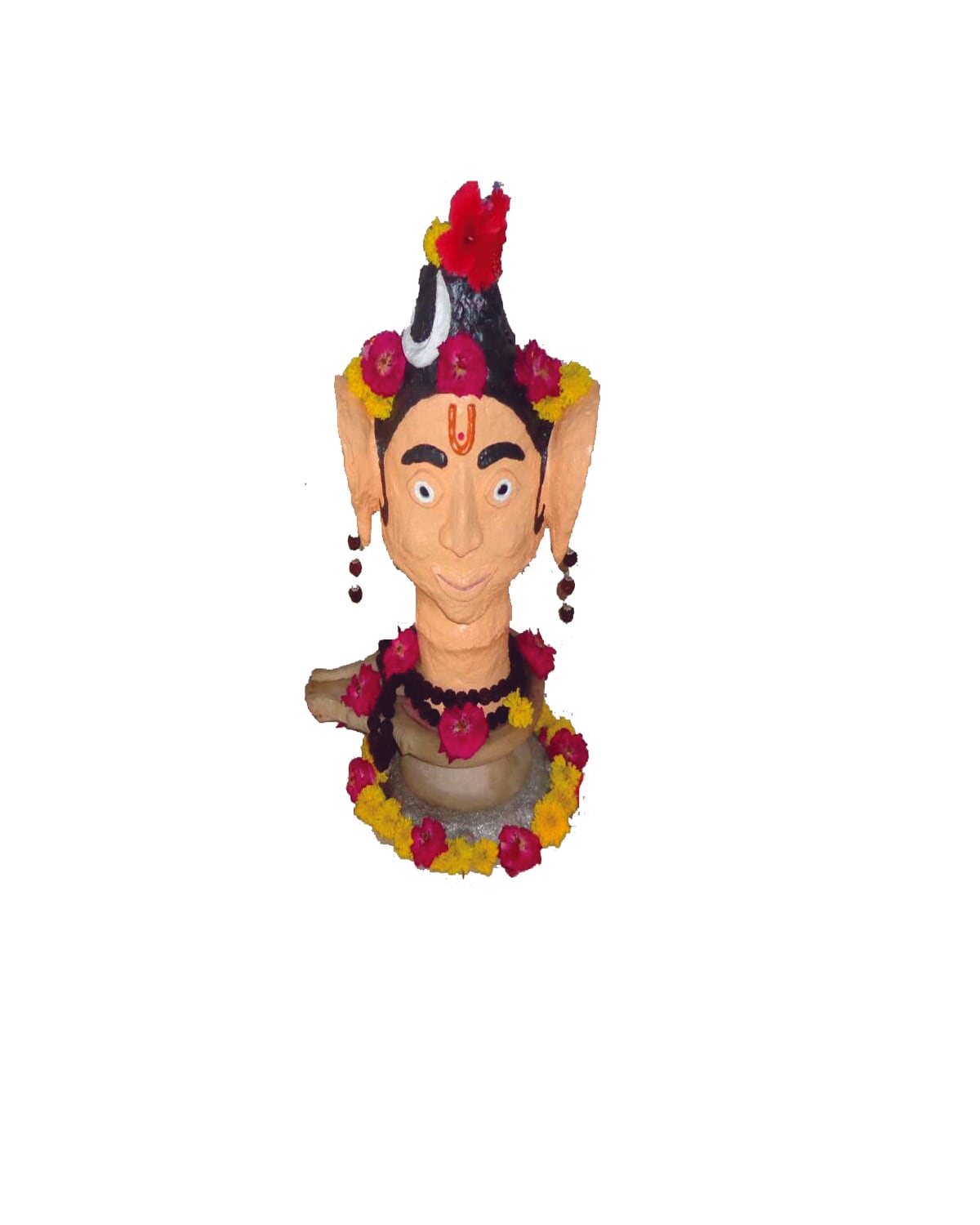
Imagen devocional de Nisargadatta Maharaj · CC BY-SA 4.0
उनके अपने शब्दों में
«Establish yourself firmly in the awareness of 'I am'. This is the beginning and also the end of all endeavour.»I Am That, cap. 16, «Desirelessness, the Highest Bliss»

मूल विचार
The starting point is neither a belief nor a technique but the most immediate fact of experience: the feeling of existing, prior to any idea of who one is. Abiding in it, separating it from everything added to it—body, name, history—is for Nisargadatta the whole practice.
संदर्भ में देखें
जीवनी
5 मिनट का पाठ
स्पैनिश मूल से सहायता-प्राप्त अनुवाद, मातृभाषी अनुवादक द्वारा समीक्षा लंबित।
बिना पाठशाला का एक बालक
मारुति शिवरामपंत कांबळी के जीवन में ऐसा कुछ नहीं था जिससे लगे कि वे बीसवीं शताब्दी के सबसे अधिक पढ़े जाने वाले अद्वैत-गुरुओं में से एक बनेंगे। उनकी जन्म-तिथि तक निश्चित नहीं है: परंपरा उसे 1897 में हनुमान जयंती की पूर्णिमा पर रखती है — इसी से उनका नाम मारुति पड़ा, जो हनुमान का ही एक नाम है —, जिसे सामान्यतः 17 अप्रैल माना जाता है, यद्यपि I Am That के जीवनी-परिचय में दर्ज है कि उनके संबंधी मार्च महीने की बात करते थे। स्वयं उनसे यह पूछे जाने पर वे उत्तर देते थे कि उनका कभी जन्म ही नहीं हुआ। उनके पिता शिवरामपंत ने बंबई में नौकर का काम किया था और बाद में महाराष्ट्र के तट पर, रत्नागिरी ज़िले (आज सिंधुदुर्ग) के भीतरी भाग में स्थित कांदळगाव में एक छोटी-सी खेती सँभाली। मारुति मुश्किल से ही पाठशाला गए: वे मवेशी चराते, बैल हाँकते और छोटे-मोटे काम निपटाते। परिवार विठोबा की उपासना करने वाली वारकरी भक्ति-परंपरा से जुड़ा था, और एक ब्राह्मण पड़ोसी, विष्णु हरिभाऊ गोरे, ने उनसे धर्म के विषय में ऐसी गंभीरता से बात की जिसे बालक कभी नहीं भूला।
बंबई और बीड़ी की दुकान
लगभग 1915 में पिता की मृत्यु के बाद वे अपने बड़े भाई के पीछे-पीछे बंबई चले आए। कुछ महीने उन्होंने मुंशी का काम किया और फिर छोड़ दिया; इसके बाद उन्होंने एक छोटी-सी दुकान खोली, जिसमें बच्चों के कपड़े, तंबाकू और बीड़ियाँ — हाथ से लपेटी जाने वाली भारतीय सिगरेट — बिकती थीं। व्यापार फला-फूला और कई दुकानों तक फैल गया। 1924 में उनका विवाह सुमतीबाई से हुआ, जिनसे उन्हें एक पुत्र और तीन पुत्रियाँ हुईं। उनके संपादक सुधाकर एस. दीक्षित के शब्दों में, यह एक साधारण मनुष्य का साधारण जीवन था।
“‘मैं हूँ’ के बोध पर ध्यान दो”
1933 में एक मित्र, यशवंतराव बागकर, उन्हें अपने गुरु सिद्धरामेश्वर महाराज के पास ले गए, जो इंचगिरी परंपरा के थे — नवनाथ संप्रदाय की वह शाखा जिसकी स्थापना भाऊसाहेब महाराज ने की थी। सिद्धरामेश्वर ने उन्हें एक मंत्र दिया और एक उपदेश, जिसे वे बहुत वर्षों बाद निहत्था कर देने वाली सरलता से यों कहते: तुम वह नहीं हो जो तुम स्वयं को मानते हो; ‘मैं हूँ’ के बोध पर दृष्टि रखो और किसी और चीज़ पर ध्यान मत दो। मारुति हर खाली क्षण में, मौन बैठकर, इस आदेश का पालन करते रहे। उनकी अपनी गवाही के अनुसार, अपने वास्तविक स्वरूप को जानने के लिए उन्हें तीन वर्ष पर्याप्त हुए। सिद्धरामेश्वर का देहावसान 9 नवंबर 1936 को हुआ। समय के साथ वे निसर्गदत्त नाम से जाने गए, जिसका अर्थ “जिसने स्वयं को सहज को अर्पित कर दिया” या “जो सहज अवस्था में स्थित है” समझा जा सकता है; उन्होंने यह नाम कब और कैसे अपनाया, इस पर स्रोत एकमत नहीं हैं।
अधूरी तीर्थयात्रा
1937 में उन्होंने परिवार और दुकान छोड़ दी और नंगे पाँव हिमालय की ओर चल पड़े, इस इरादे से कि शेष जीवन वहीं बिताएँगे। यह यात्रा लगभग आठ महीने चली। वे बताते थे कि रास्ते में उन्हें समझ आया कि जो पहले से अपने पास है उसे खोजना व्यर्थ है, और वे बंबई लौट आए। एक गुरुभाई के उन्हें गृहस्थ-जीवन में लौटने के लिए राज़ी करने की कथा उनके मंडल की मौखिक परंपरा से आती है। वे दुकान पर लौट आए, किंतु दीक्षित कहते हैं कि तब से वे लाभ की चिंता करने वाले व्यापारी नहीं रहे। आगे के वर्ष कठिन थे: 1942 में उनकी पत्नी का और 1948 में एक पुत्री का निधन हुआ।
खेतवाड़ी की दुछत्ती
1951 से, जिसे उन्होंने अपने गुरु का आंतरिक संकेत बताया, उसके बाद वे दूसरों को दीक्षा देने लगे। वे मध्य बंबई के खेतवाड़ी की एक साधारण गली में एक सादे-से घर में रहते थे, और आगंतुकों से मिलने के लिए उन्होंने एक छोटी-सी दुछत्ती बनवाई — एक नीची कोठरी, जिसमें कुछ दर्जन लोग फ़र्श पर बैठ सकते थे। 1966 में उन्होंने व्यापार से अवकाश ले लिया। वहीं वे दिन में दो बार मराठी में प्रश्नों के उत्तर देते; दो बैठकों के बीच परंपरा के भजन गाए जाते। उन्होंने न कोई ग्रंथ लिखा, न कोई संस्था स्थापित की। वे रूखेपन से बोलते, बीच में टोकते, बीड़ी पीते और जो कोई सांत्वना, अनुभव या कोई नई विश्वास-प्रणाली खोजने आता, उसे बिना किसी लिहाज़ के लौटा देते।
मॉरिस फ़्रिडमैन और I Am That
भारत के बाहर उनकी प्रसिद्धि का एक नाम है: मॉरिस फ़्रिडमैन, एक पोलिश यहूदी इंजीनियर, जो 1930 के दशक में भारत आए थे, गांधी से प्रेरित औंध के ग्राम-स्वराज के प्रयोग में भाग ले चुके थे और रमण महर्षि तथा कृष्णमूर्ति के सान्निध्य में रह चुके थे। फ़्रिडमैन मराठी जानते थे और 1965 में उनके शिष्य बने। उन्होंने वार्तालापों का अनुवाद किया — जिनमें से कुछ टेप पर रिकॉर्ड थे और अक्सर कई भाषाओं के मिश्रण में होते थे — और उन्हें एक सौ एक खंडों में व्यवस्थित किया। 1973 में बंबई से चेतना प्रकाशन द्वारा, दो खंडों में और दीक्षित के संपादन में प्रकाशित I Am That (“मैं वही हूँ”) एक क्लासिक बन गई: दुनिया भर के पाठक खेतवाड़ी की उस गली को खोजने लगे। फ़्रिडमैन का निधन 1976 में हुआ; एक खंड वाले संशोधित संस्करण में उनका निबंध “निसर्ग योग” उपसंहार के रूप में जोड़ा गया।
‘मैं हूँ’ से परे
अंतिम वर्षों में शिक्षा का स्वर बदल गया। 1979 से 1981 के बीच रिकॉर्ड किए गए और सौमित्र मुल्लरपट्टन या रमेश बालसेकर जैसे दुभाषियों द्वारा अनूदित वार्तालाप — जिन्हें बाद में जीन डन और रॉबर्ट पॉवेल ने संपादित किया — इस बात पर बल देते हैं कि चेतना, स्वयं ‘मैं हूँ’, अन्नमय देह की एक क्षणभंगुर उपज है, एक प्रकार का रोग जो प्रकट होता है और विलीन हो जाता है; सत्य तो परम है, जो चेतना से भी पूर्व है। अपने अंतिम दो वर्षों में वे गले के कैंसर से पीड़ित रहे। जब तक बोल सके, वे आगंतुकों से मिलते रहे। 8 सितंबर 1981 को बंबई में अपने घर पर उनका देहावसान हुआ।
संस्था-रहित विरासत
निसर्गदत्त ने अन्य भारतीय गुरुओं की संस्थाओं जैसी कोई संस्था नहीं छोड़ी; उन्होंने पुस्तकें छोड़ीं। उनमें से कोई भी उनके हाथ की लिखी नहीं है: सभी दूसरों द्वारा किए गए प्रतिलेखन, अनुवाद और चयन हैं, और I Am That के अपेक्षाकृत व्यापक स्वर तथा अंतिम खंडों की आमूल-चूल कठोरता के बीच का अंतर जितना उनके अपने विकास को दर्शाता है, उतना ही उनके अनुवादकों के विकास को भी। तथाकथित समकालीन अद्वैत-चिंतन पर उनका प्रभाव अपार है: रमेश बालसेकर, जीन डन, स्टीफ़न वोलिन्स्की और बाद के अनेक पश्चिमी गुरुओं ने उनकी शिक्षा में स्वयं को पहचाना।
स्रोत: Nisargadatta Maharaj. I Am That: Talks with Sri Nisargadatta Maharaj. Trad. Maurice Frydman; ed. Sudhakar S. Dikshit. Bombay: Chetana, 1973 (2 vols.); 2.ª ed. revisada en un volumen, 1976. Incluye la nota biográfica de Dikshit y el epílogo «Nisarga Yoga» de Frydman. · Nisargadatta Maharaj. Prior to Consciousness: Talks with Sri Nisargadatta Maharaj. Ed. Jean Dunn. Durham (Carolina del Norte): The Acorn Press, 1985; y Seeds of Consciousness, ed. Jean Dunn, Nueva York: Grove Press, 1982. · Nisargadatta Maharaj. The Ultimate Medicine, ed. Robert Powell (San Diego: Blue Dove Press, 1994); The Experience of Nothingness (1996) y The Nectar of the Lord's Feet / The Nectar of Immortality (Element, 1987; Blue Dove, 1996).
कालक्रम
जीवन, वर्ष-दर-वर्ष
प्रत्येक बिंदु एक प्रमाणित घटना है। उसे स्रोत और निश्चितता के स्तर सहित पढ़ने के लिए क्लिक करें।
लगभग 18970 वर्षBombay / Kandalgaon
Birth of Maruti Kambli
Born on Hanuman Jayanti according to family tradition; the exact date is undocumented (the note in I Am That speaks of March).
संभावितWikidata, «Nisargadatta Maharaj» (Q175532): nacimiento 17-04-1897 y muerte 08-09-1981 en Bombay; 30 enlaces entre wikis.
लगभग 1897 · 0 वर्ष
Birth of Maruti Kambli
Born on Hanuman Jayanti according to family tradition; the exact date is undocumented (the note in I Am That speaks of March).
संभावित
लगभग 1915 · 18 वर्ष
Arrival in Bombay
After his father's death he follows his elder brother to Bombay; works as a clerk and opens a shop selling clothes, tobacco and bidis.
प्रमाणित
1924 · 27 वर्ष
Marriage to Sumatibai
Marries Sumatibai; they will have a son and three daughters.
प्रमाणित
1933 · 36 वर्ष
Meeting Siddharameshwar Maharaj
His friend Yashwantrao Baagkar takes him to Siddharameshwar Maharaj, who gives him a mantra and the instruction to attend to the sense "I am".
प्रमाणित
9 नवंबर 1936 · 39 वर्ष
Death of Siddharameshwar
His teacher dies. Nisargadatta would say three years of practice were enough for him to understand his true nature.
प्रमाणित
1937 · 40 वर्ष
The interrupted pilgrimage
Leaves family and shop and sets out barefoot for the Himalayas; returns some eight months later convinced of the futility of seeking what he already had.
संभावित
1942 · 45 वर्ष
Death of his wife
Sumatibai dies; in 1948 one of his daughters will also die.
प्रमाणित
1951 · 54 वर्ष
First initiations
Begins initiating disciples in the Inchegiri lineage, after what he described as an inner prompting from his teacher.
प्रमाणित
1963 · 66 वर्ष
Self Knowledge and Self Realisation
His first booklet in English is published in Bombay.
प्रमाणित
1965 · 68 वर्ष
Maurice Frydman becomes a disciple
The Polish engineer, who spoke Marathi, becomes a disciple and begins translating and recording the conversations.
प्रमाणित
1966 · 69 वर्ष
Retirement from trade
Gives up the shop and devotes himself to receiving visitors in his Khetwadi flat, with two sessions a day.
प्रमाणित
1973 · 76 वर्ष
Publication of I Am That
Chetana publishes in two volumes the conversations translated by Frydman and edited by Sudhakar S. Dikshit; foreign visitors begin to arrive.
प्रमाणित
1976 · 79 वर्ष
Second edition and Frydman's death
The revised one-volume edition appears, with the epilogue "Nisarga Yoga"; Frydman dies that year.
प्रमाणित
1979 · 82 वर्ष
The final conversations
Between 1979 and 1981 the talks later edited by Jean Dunn and Robert Powell are recorded, centred on the absolute prior to consciousness.
प्रमाणित
8 सितंबर 1981 · 84 वर्ष
Death
Dies at his Khetwadi home from throat cancer.
प्रमाणित
कृतियाँ
आवश्यक कृतियाँ
वे कृतियाँ जिनके बिना उनकी विरासत को समझा नहीं जा सकता।
संकलित मौखिक शिक्षा · 1973
I Am That
I Am That: Talks with Sri Nisargadatta Maharaj
A hundred and one conversations with Indian and foreign visitors, held mostly in the late 1960s and early 1970s in his Khetwadi flat. Through concrete questions—suffering, death, desire, the guru, practice—Nisargadatta leads again and again to the same point: the sense "I am" as the entrance and the understanding that one is nothing one perceives. The tone is direct, sometimes abrupt, and the clarity of Frydman's translation explains why it has become one of the reference texts of contemporary Advaita, read across all traditions.
7 संस्करण · amazon.com

संकलित मौखिक शिक्षा · 1985
Prior to Consciousness
Prior to Consciousness: Talks with Sri Nisargadatta Maharaj
The conversations of the last eighteen months, when the cancer was already advanced. The master shifts the emphasis from the "I am" to what precedes it: consciousness is a passing product of food and body, and the absolute does not know that it is. Many answers are dry and polemical; the book also shows how he received visitors and how he rejected practices turned into routine. Alongside I Am That, it is the most read book for knowing his mature teaching.
4 संस्करण · amazon.com

संकलित मौखिक शिक्षा · 1994
The Ultimate Medicine
The Ultimate Medicine: As Prescribed by Sri Nisargadatta Maharaj
Dialogues of the last two years centred on the "medicine" that cures identification with the body: understanding that the sense of being is a passing state and remaining its witness until it dissolves. It includes exchanges with Western visitors and direct references to his illness, which he treated with detachment. It is one of the most quoted titles of his final period.
6 संस्करण · amazon.com
संपूर्ण कृतित्व (21)

Self Knowledge and Self Realisation
1963

Pointers from Nisargadatta Maharaj
1982

Seeds of Consciousness
1982
Nisargadatta Maharaj
The Blissful Life
The Conscious LibraryThe Blissful Life
1984

The Nectar of the Lord's Feet
1987

Consciousness and the Absolute
1994

The Experience of Nothingness
1996
Nisargadatta Maharaj
Atmasparsha (Marathi talks)
The Conscious LibraryAtmasparsha (Marathi talks)
1992

The Wisdom-Teachings of Nisargadatta Maharaj: A Visual Journey
2003
Nisargadatta Maharaj
Gleanings from Nisargadatta
The Conscious LibraryGleanings from Nisargadatta
2006
Nisargadatta Maharaj
Beyond Freedom
The Conscious LibraryBeyond Freedom
2007
Nisargadatta Maharaj
I Am Unborn
The Conscious LibraryI Am Unborn
2007
Nisargadatta Maharaj
The Nisargadatta Gita
The Conscious LibraryThe Nisargadatta Gita
2008
Nisargadatta Maharaj
Meditations with Sri Nisargadatta Maharaj
The Conscious LibraryMeditations with Sri Nisargadatta Maharaj
2014

Nothing is Everything
2014
Nisargadatta Maharaj
Self-Love: The Original Dream
The Conscious LibrarySelf-Love: The Original Dream
2017
Nisargadatta Maharaj
The Earliest Discourses
The Conscious LibraryThe Earliest Discourses
2020
Nisargadatta Maharaj
Amrutvarsha (Shower of Grace: Meditations with Shri Nisargadatta Maharaj)
The Conscious LibraryAmrutvarsha (Shower of Grace: Meditations with Shri Nisargadatta Maharaj)
वचन
किसी निश्चित कृति में स्थित वचन। प्रत्येक के साथ उसका स्रोत और विश्वसनीयता का स्तर है।
Establish yourself firmly in the awareness of 'I am'. This is the beginning and also the end of all endeavour.सत्यापितI Am That, cap. 16, «Desirelessness, the Highest Bliss»
मूल विचार (संपादकीय सार)
कॉपीराइट के सम्मान में, ये विचार हमारे अपने शब्दों में संक्षेपित हैं और इन्हें शब्दशः उद्धरण के रूप में प्रस्तुत नहीं किया गया है।
- The starting point is neither a belief nor a technique but the most immediate fact of experience: the feeling of existing, prior to any idea of who one is. Abiding in it, separating it from everything added to it—body, name, history—is for Nisargadatta the whole practice.
- Everything that can be perceived, including one's own body and mind, cannot be what one is. The decisive question is not what I am but what I am not: patient negation of the perceived leaves the perceiver free.
- In the final period, consciousness itself appears as a passing phenomenon dependent on the body nourished by food; it is born and goes out with it. The real precedes that consciousness and does not know that it exists.
- The true teacher gives no experiences and promises no states; he points to what the disciple already is. Trust in the guru's word, like his own in Siddharameshwar's, is enough if followed seriously.
- The spiritual search turned into an accumulation of practices, pilgrimages and teachers is another form of desire. Nisargadatta dismissed the professional seeker sharply and sent him back to the only question that mattered.
अंतिम शब्द
उनके अंतिम शब्दों का कोई सत्यापन-योग्य अभिलेख उपलब्ध नहीं है।
The volumes edited by Jean Dunn and Robert Powell record conversations up to a few weeks before his death, when his voice was already much weakened by cancer, but none of the published sources consulted transcribes words spoken at the moment of death. Sentences presented online as "his last words" circulate without reference to any witness or recording; they are not included here.
स्रोत: Nisargadatta Maharaj. Prior to Consciousness: Talks with Sri Nisargadatta Maharaj. Ed. Jean Dunn. Durham (Carolina del Norte): The Acorn Press, 1985; y Seeds of Consciousness, ed. Jean Dunn, Nueva York: Grove Press, 1982.
पूछें
उनकी कृतियाँ क्या उत्तर देती हैं
मानवता के बारह महान प्रश्न और उनके ग्रंथ उनका जो उत्तर देने देते हैं, संदर्भों सहित। हम कभी उनके मुख में अपने शब्द नहीं रखते।
परम सत्य क्या है? क्या ईश्वर है?
The Absolute is prior even to consciousness and admits no description
अनिर्वचनीयस्पष्ट रूप से कहा है
Nisargadatta Maharaj, a teacher of the Navnath lineage in Bombay, starts from the awareness of existing, the «I am», which he regards as the gateway. But in the conversations collected in I Am That (1973) and, more sharply, in those of his last years gathered in Prior to Consciousness, he insists that the Absolute (Parabrahman) is prior even to that consciousness: it does not know, is not known and cannot be the object of any statement. God, in his language, is often consciousness itself in manifestation, the «I am» that makes the world appear, and therefore something transient; the Absolute is neither personal nor impersonal in any thinkable sense. Whatever is said of it is concept, and his teaching consists in negating all one believes oneself to be until nothing remains to be said.
इस प्रश्न की अन्य गुरुओं से तुलना करेंमैं कौन हूँ? क्या कोई सच्चा आत्म है?
Staying with «I am»: one is not body or mind, but what perceives
आत्मन् ही ब्रह्म हैस्पष्ट रूप से कहा है
Nisargadatta Maharaj recounts that his teacher, Siddharameshwar Maharaj, told him to stay with the sense «I am», and that this was enough. In the conversations of I Am That (1973) he teaches discarding everything that can be perceived — body, thoughts, memories, one's own story — because what is perceived cannot be the perceiver. Neither body nor mind is what one is; nor is the person society names. Holding attention on the pure sense of existing reveals its own source. In his last years he radicalises the teaching: even «I am», consciousness, is a transient state tied to the body, and what one really is is the Absolute, prior to it, of which nothing can be affirmed. The true self, then, is not a self.
इस प्रश्न की अन्य गुरुओं से तुलना करेंहम दुःख क्यों भोगते हैं?
Pain belongs to the body; suffering, to identifying with it
हम क्या हैं, इसका अज्ञानस्पष्ट रूप से कहा है
Nisargadatta Maharaj distinguishes in his conversations between pain and suffering. Pain is physical, a sensation the body registers; suffering is mental, and appears when one takes oneself to be body and mind and believes something is happening to oneself. In I Am That he holds that all unhappiness comes from this mistaken identification with what one is not, and from the attachment to desire and fear that accompanies it. Whoever knows themselves as witness of the states, and not the states themselves, can pass through pain without suffering from it. Nisargadatta lived this teaching in his last years, ill with throat cancer, and went on receiving visitors and speaking. He does not promise the disappearance of pain, but the end of suffering once one sees clearly what one is not.
इस प्रश्न की अन्य गुरुओं से तुलना करेंमृत्यु के बाद क्या होता है?
The death of the body does not happen to what one is
जो मैं हूँ, वह न जन्मता है न मरता हैस्पष्ट रूप से कहा है
Nisargadatta Maharaj holds that death is an event for the body and for the «I am» sense that depends on it, not for what one really is. In the conversations of I Am That he distinguishes three levels: the body, made of food; the consciousness of being, which appears with the body and disappears with it; and the Absolute, prior to both, which was never born and cannot die. Whoever takes himself for the body fears death; whoever has seen that he is neither body nor mind regards it as a change of scene. To questions about reincarnation he replies that only what believes itself born is reborn: desires and memories may seek another form, but that does not concern the Self. In the talks of his last years, collected in Prior to Consciousness, he speaks calmly of his own cancer and of the body's imminent disappearance.
इस प्रश्न की अन्य गुरुओं से तुलना करेंमुक्ति या उद्धार कैसे प्राप्त होता है?
Abide in the «I am» until seeing one is nothing that is perceived
प्रत्यक्ष ज्ञान सेस्पष्ट रूप से कहा है
According to the dialogues gathered in I Am That, Nisargadatta Maharaj holds that the person already is what they seek and only needs to discover it. His central instruction, received from his teacher Siddharameshwar, is to hold on to the sense «I am», the bare feeling of existing, setting everything else aside, and to abide in it. One thus sees that everything one believed oneself to be, body, mind, history, is perceived and therefore is not oneself. That discernment leads beyond the «I am» itself, to the Absolute prior to consciousness. Nisargadatta insists that no complicated effort is needed, only earnestness and trust in the teacher's word.
इस प्रश्न की अन्य गुरुओं से तुलना करेंक्या गुरु आवश्यक है?
He trusted his guru's word, but the real guru is one's own being
गुरु भीतर हैस्पष्ट रूप से कहा है
Nisargadatta Maharaj used to say that everything he realised was due to believing without reservation what his teacher, Siddharameshwar Maharaj, told him: that he was not what he believed himself to be but the supreme reality, and that he should attend to the sense «I am». That trust in the outer teacher was therefore decisive in his life. Yet in the dialogues of I Am That he distinguishes the outer guru, who gives instruction and confidence, from the inner guru, who is one's own being and who works the transformation. The outer teacher is a timely help; the inner one, permanent. Nisargadatta also insisted on not depending on him: what the teacher says must be verified in one's own experience.
इस प्रश्न की अन्य गुरुओं से तुलना करेंक्या संसार वास्तविक है?
The world appears in consciousness like a dream; the Absolute is prior
एक सत्य पर आभासस्पष्ट रूप से कहा है
In the dialogues of I Am That, Nisargadatta Maharaj holds that the world does not exist independently of the consciousness that perceives it: it appears with the sense «I am» and disappears with it, as in deep sleep. He often compares it to a dream: real while it lasts, but without substance of its own. Consciousness itself, with its content, is for him a temporary appearance bound to the body, and the Absolute is prior to it and untouched by it. He does not therefore propose disengaging from life: he accepted that one acts in the world and attends to it, but without identifying with it. In his last period the emphasis on the illusory character of all manifestation becomes even more radical.
इस प्रश्न की अन्य गुरुओं से तुलना करेंप्रेम क्या है?
Wisdom says I am nothing; love says I am everything
जो अहं के मिटने पर प्रकट होता हैस्पष्ट रूप से कहा है
Nisargadatta Maharaj unites love and wisdom as two sides of the same understanding. In the conversations of I Am That he holds that wisdom consists in seeing that one is nothing of what is perceived — neither body nor mind — while love is the experience of being everything; life flows between the two. That love is not a feeling towards someone or a desire, but the absence of separation that appears when identification with a limited person falls away: where there is no self defending itself, the other ceases to be other. That is why he distrusts love that seeks something for itself, which he calls desire under another name, and states that true love neither chooses nor excludes. In practice, his only advice is to abide in the sense «I am» until seeing what is prior to it.
इस प्रश्न की अन्य गुरुओं से तुलना करेंक्या हम स्वतंत्र हैं, या सब कुछ पूर्वनिर्धारित है?
Everything happens, nobody does it: personal will is one more idea
कोई कर्ता नहींस्पष्ट रूप से कहा है
In the conversations collected in *I Am That* (1973), Nisargadatta answers questions about free will by dismantling the questioner. The person who believes he chooses is a combination of body, memories and the sense «I am», and what he does is determined by countless causes; claiming authorship is part of the dream. The consciousness in which everything appears neither chooses nor refrains from choosing: it witnesses. So to whoever asks for a method to change his destiny, he returns the prior question of who he is. When one stops identifying with the person, one does not gain a freer will but loses interest in the question, discovering that one was never a separate individual with anything to decide.
इस प्रश्न की अन्य गुरुओं से तुलना करेंध्यान या प्रार्थना क्यों करें?
Abiding in the sense «I am» until going beyond it
'मैं' के स्रोत पर लौटनास्पष्ट रूप से कहा है
The practice Nisargadatta received from his teacher Siddharameshwar, and passes on in *I Am That*, is simple: keep attention on the sense «I am», the pure feeling of existing, before adding anything to it (I am this, I am that). He recounts that he followed it for about three years and that it was enough. By abiding in that «I am» without identifying it with body or mind, one discovers that this feeling too appears and disappears, and that what one is comes before it. He attaches no importance to techniques, postures or mantra repetition —he himself sang *bhajans* at home—, because what is decisive is the earnestness and interest of the seeker.
इस प्रश्न की अन्य गुरुओं से तुलना करेंक्या बुद्धि परम को जान सकती है?
Whatever the mind can conceive is not what one is
परम मन से परे हैस्पष्ट रूप से कहा है
In *I Am That*, Nisargadatta repeats that the real cannot be an object of knowledge, since it is the ultimate subject in which all knowledge appears. Everything that can be perceived or conceived —body, mind, world, even God as an idea— is not what one is; hence his method is negative: discarding, one by one, the objects with which consciousness identifies. He valued the sharp intelligence of his visitors, but warned them that verbal understanding is not enough and that bookish knowledge can become another obstacle. He himself, who had little formal schooling, insisted that what matters is not knowing more but seeing clearly what is false until it falls away of itself.
इस प्रश्न की अन्य गुरुओं से तुलना करेंसंसार से हटें या उसे बदलें?
Set yourself right and the world will be right
क्रांति भीतर हैस्पष्ट रूप से कहा है
Nisargadatta Maharaj lived his whole life in the world: he had a wife and children and ran a small shop selling Indian cigarettes (bidis) in Bombay while teaching in a loft room of his home. He never advised abandoning ordinary life. But to those who asked him how to help the world or change society he replied, in the conversations of I Am That, that they should first find out who they were: the world is as one takes it to be, and one who acts out of confusion only adds confusion. When one is free of identification with body and mind, the right action happens of itself, without a self claiming credit or seeking results. He does not deny the value of relieving suffering, but holds that the root of the problems lies in the illusion of being a separate person, and that this can only be corrected from within.
इस प्रश्न की अन्य गुरुओं से तुलना करें
निकटता और तनाव
निकटता और तनाव
उनके मतों के आधार पर प्रश्न-दर-प्रश्न आकलित। प्रत्येक सहमति या टकराव का कारण क्लिक करने पर।
इनसे मिलता-जुलता सोचते हैं
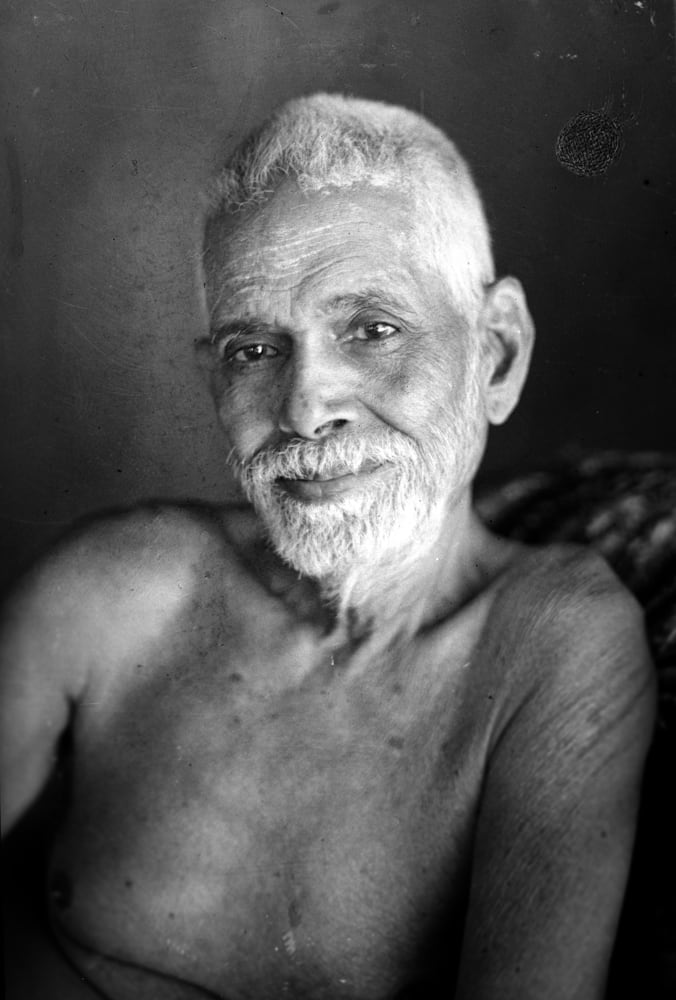
Ramana Maharshi
इन पर सहमत: मैं कौन हूँ? क्या कोई सच्चा आत्म है? · हम दुःख क्यों भोगते हैं? · मृत्यु के बाद क्या होता है?
David R. Hawkins
इन पर सहमत: मैं कौन हूँ? क्या कोई सच्चा आत्म है? · हम दुःख क्यों भोगते हैं? · मृत्यु के बाद क्या होता है?
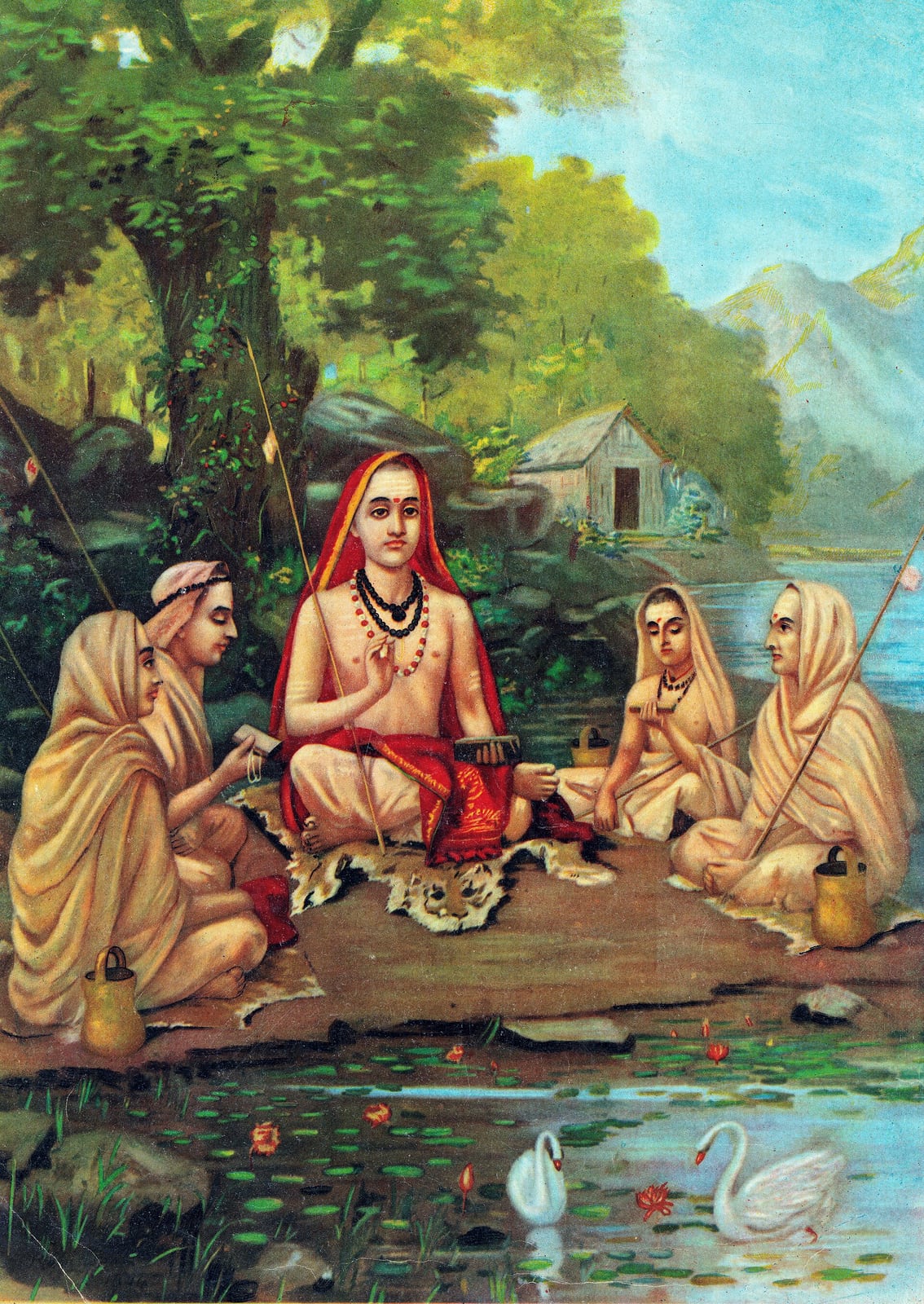
Adi Shankara
इन पर सहमत: मैं कौन हूँ? क्या कोई सच्चा आत्म है? · हम दुःख क्यों भोगते हैं? · मृत्यु के बाद क्या होता है?
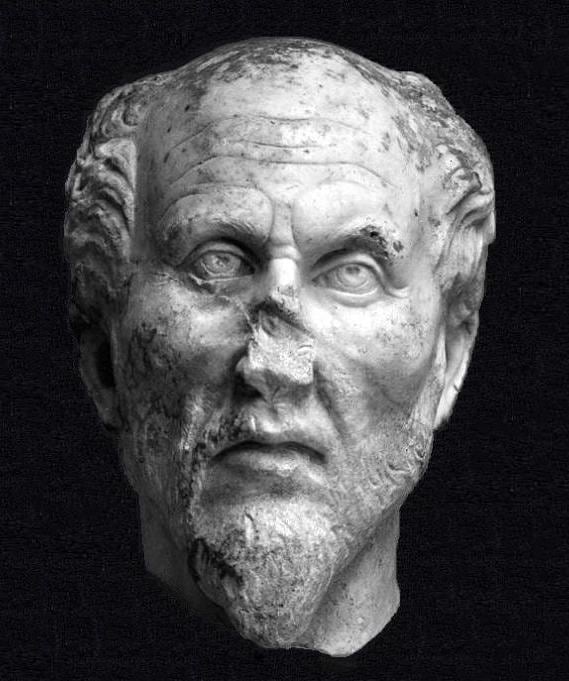
Plotinus
इन पर सहमत: परम सत्य क्या है? क्या ईश्वर है? · मैं कौन हूँ? क्या कोई सच्चा आत्म है? · मृत्यु के बाद क्या होता है?
इनसे भिन्न सोचते हैं

Francis of Assisi
इन पर टकराव: मैं कौन हूँ? क्या कोई सच्चा आत्म है? · क्या संसार वास्तविक है?
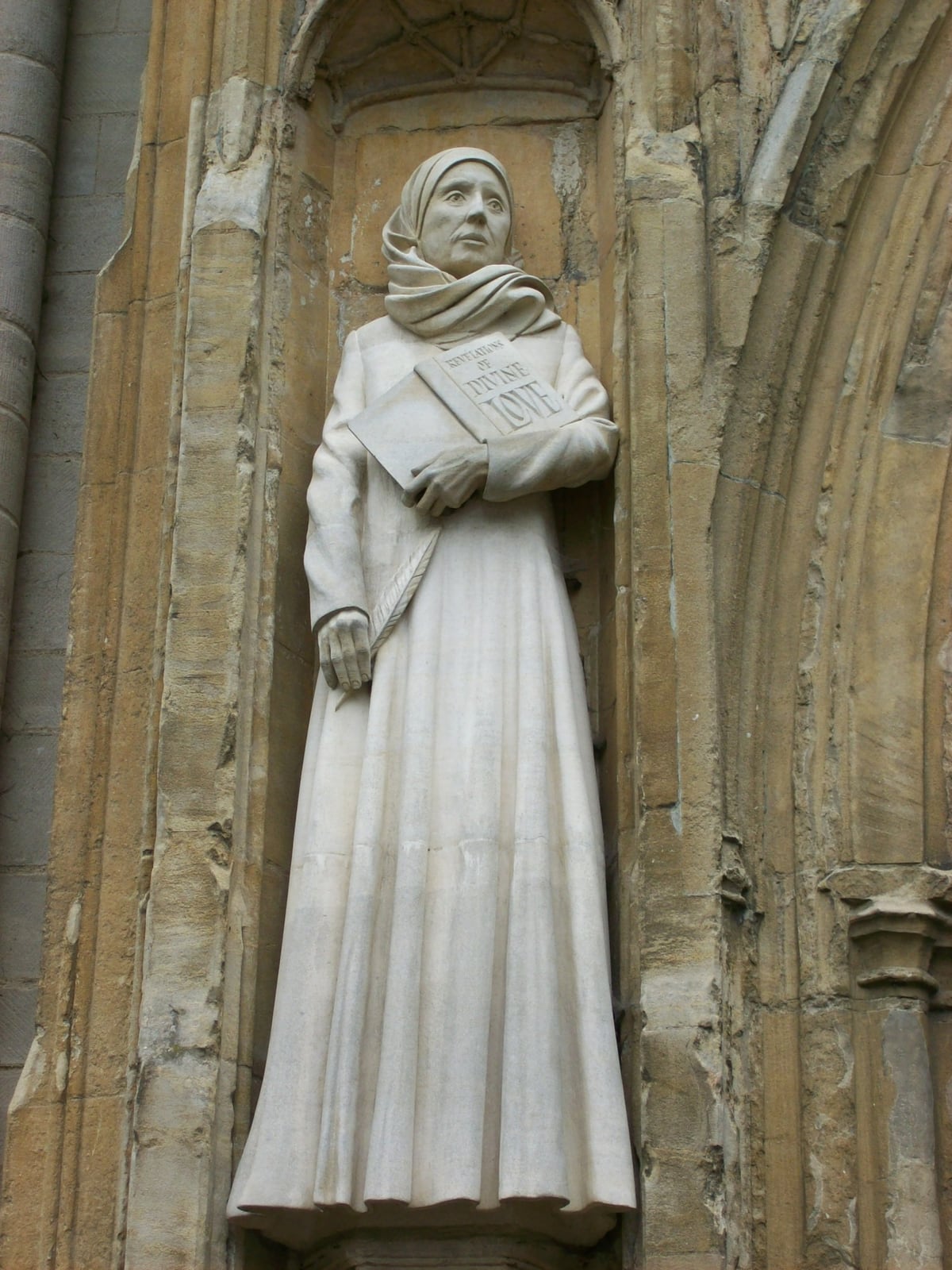
Julian of Norwich
इन पर टकराव: मैं कौन हूँ? क्या कोई सच्चा आत्म है? · क्या संसार वास्तविक है?
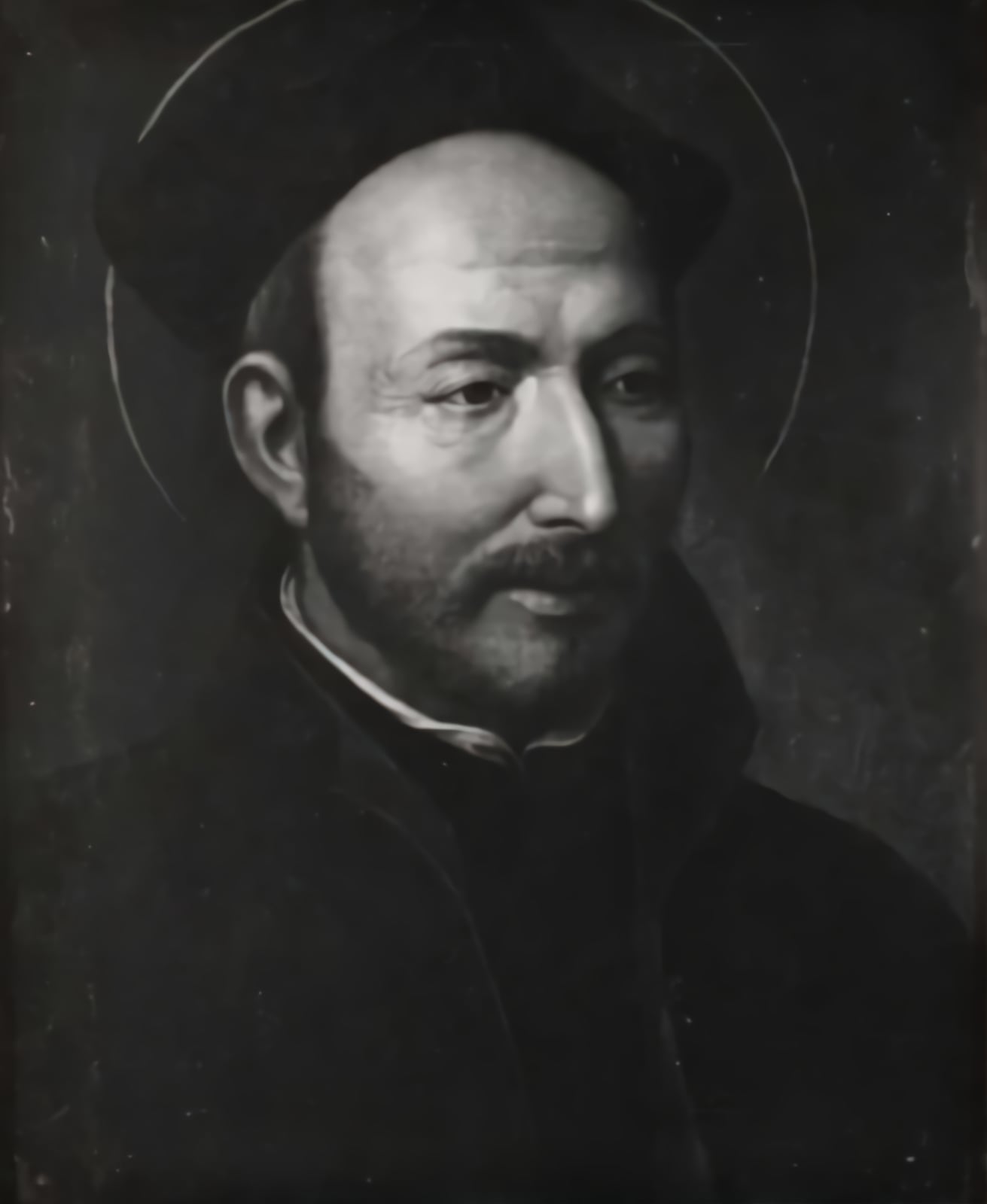
Ignatius of Loyola
इन पर टकराव: मैं कौन हूँ? क्या कोई सच्चा आत्म है? · क्या संसार वास्तविक है?
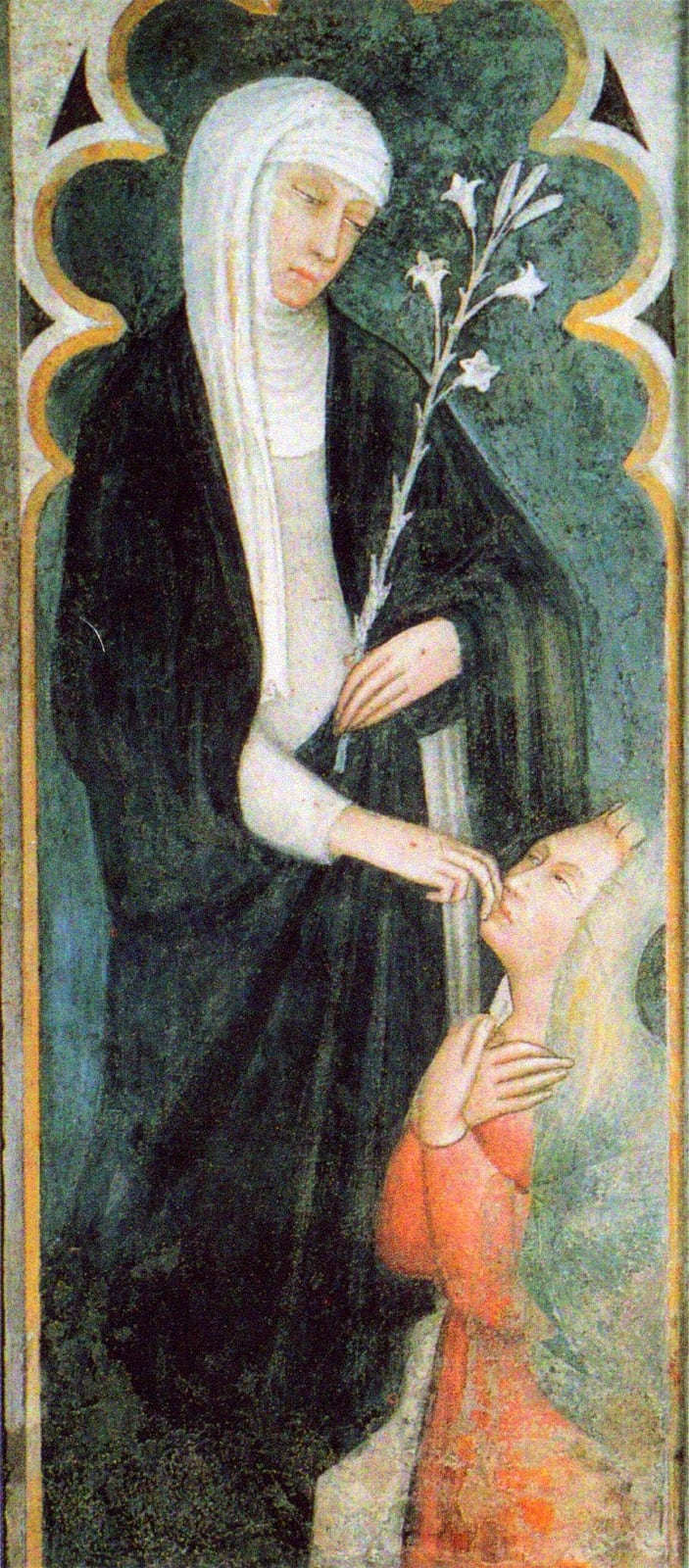
Catherine of Siena
इन पर टकराव: मैं कौन हूँ? क्या कोई सच्चा आत्म है? · क्या संसार वास्तविक है?
इन पर टकरावआभासी विरोधाभास
Nisargadatta Maharaj · Paramahansa Yogananda
The lineage that transmits and the guru within: two grateful disciples
क्यों: The contradiction is apparent because both describe the same relationship from opposite ends. Both had a decisive guru and both belonged to a lineage with initiation; they differ in where they place the emphasis. Yogananda writes for Western readers to whom he wants to present a living tradition and an organisation, Self-Realization Fellowship, that guarantees transmission; hence he stresses lineage. Nisargadatta speaks to seekers who came to his home in Bombay with years of accumulated practices, and he urges them not to depend on anyone, himself included. The Hindu tradition knows this double face well: the outer master points to the inner one, which is the Self.
इन पर टकरावमूलभूत असहमति
Nisargadatta Maharaj · Adi Shankara
Scripture as the only means of knowing Brahman, or a cigarette seller without books
क्यों: The contradiction is real at the level of method, even if the goal is the same. Shankara is a Brahmin commentator debating rival schools and needs to establish what counts as valid knowledge: for him, without the word of scripture there is no way of knowing that the Self is Brahman. Nisargadatta belongs to a devotional lineage from Maharashtra that transmitted the teaching in the vernacular and through the master's direct instruction, and he speaks to modern seekers, often saturated with reading. Neither trusts free-standing reasoning, and both rely on a master; they differ over whether ultimate authority lies in the revealed word or in the evidence of one's own existing.
इन पर सहमत
Nisargadatta Maharaj · David R. Hawkins
Everything happens and no one does it: the doer as an assumption
क्यों: The affinity comes from a common matrix, non-duality of Vedantic origin, which Nisargadatta received from his lineage and Hawkins adopted in his mature works. No relationship between them is recorded in this library. They differ in register and audience: Nisargadatta speaks in direct conversations, translated from Marathi, with a negative method that discards everything perceived; Hawkins writes books combining his experience, clinical language and a map of levels of consciousness whose calibration basis lacks scientific validation. Hawkins also stresses devotional surrender to God; Nisargadatta stays with pure enquiry into the I am.
प्रसंग और वृत्तांत
प्रसंग और वृत्तांत
साक्ष्य1933–1936
An evening with Siddharameshwar
वृत्तांत का स्रोत: Nisargadatta's own testimony in I Am That, chs. 48 and 64, and Sudhakar S. Dikshit's biographical note in the same work, which names Baagkar.
साक्ष्य1937–1938
Barefoot towards the Himalayas
वृत्तांत का स्रोत: Dikshit's biographical note in I Am That (which does not date the journey) and the Wikipedia chronology ("Nisargadatta Maharaj"), which places it in 1937–38. The role of the fellow disciple comes from the circle's oral tradition.
प्रमाणित1966–1981
The man who sold cigarettes
वृत्तांत का स्रोत: The remark about his trade as a cigarette-maker is in I Am That, ch. 35, "Greatest Guru is Your Inner Self". The description of the mezzanine and his smoking habit comes from visitors' testimonies and Dikshit's note.
प्रमाणित1965–1976
Frydman's tape recorder
वृत्तांत का स्रोत: The translator's note in I Am That and the Wikipedia article "I Am That", which records the rejection by major publishers and the choice of Chetana.
साक्ष्य1980–1981
Teaching with cancer
वृत्तांत का स्रोत: Introductions and conversations in Prior to Consciousness (ed. Jean Dunn, 1985), The Ultimate Medicine (ed. Robert Powell, 1994) and Consciousness and the Absolute (1994).
स्रोत: Nisargadatta Maharaj. Prior to Consciousness: Talks with Sri Nisargadatta Maharaj. Ed. Jean Dunn. Durham (Carolina del Norte): The Acorn Press, 1985; y Seeds of Consciousness, ed. Jean Dunn, Nueva York: Grove Press, 1982.
शिक्षाएँ
शिक्षाएँ
वे अवधारणाएँ जो उनके चिंतन को रूप देती हैं, उनके संदर्भ में समझाई गई।
The sense 'I am'i-am
Instruction received from Siddharameshwar; I Am That, chs. 1, 16, 18, 48, 64.
Nisarga yoganisarga-yoga
I Am That, chs. 26 and 38, and Appendix I, "Nisarga Yoga", by Maurice Frydman (added in the second edition).
The absolute, prior to consciousnessthe-absolute
Seeds of Consciousness, Prior to Consciousness, The Ultimate Medicine, Consciousness and the Absolute.
स्रोत: Nisargadatta Maharaj. Prior to Consciousness: Talks with Sri Nisargadatta Maharaj. Ed. Jean Dunn. Durham (Carolina del Norte): The Acorn Press, 1985; y Seeds of Consciousness, ed. Jean Dunn, Nueva York: Grove Press, 1982.
The witnesswitness
I Am That, chs. 10, 50, 62 and 79.
The Inchegiri lineage (Navnath Sampradaya)inchegiri-lineage
I Am That, Appendix II, "Navnath Sampradaya", and Dikshit's biographical note.
वीडियो
वीडियो
रिकॉर्डिंग, साक्षात्कार और वृत्तचित्र। वीडियो YouTube से चलते हैं; वे यहाँ संग्रहीत नहीं हैं।
Rays of the Absolute (the Legacy of Sri Nisargadatta Maharaj)
वृत्तचित्र· EN· 2015· 85 min
Science and Nonduality
Rayos del Absoluto, El Legado de Sri Nisargadatta Maharaj (2015) SUBTITULADO
वृत्तचित्र· ES· 2015· 85 min
Raul Campos
TATVAMASI - YOU ARE THAT. English Documentary Film on Sri Nisargadatta Maharaj
वृत्तचित्र· EN· 88 min
Nitin Ram Official
The Lost Satsang: Sri Nisargadatta Maharaj Archival Film 1979
मूल रिकॉर्डिंग· EN· 1979· 93 min
Sabine NowHere
I am only the Self - Nisargadatta Maharaj
मूल रिकॉर्डिंग· EN· 21 min
Felix Wolf
Sri Nisargadatta Maharaj – Archive of Audio Recordings - 8th June 1980
मूल रिकॉर्डिंग· MR· 1980· 94 min
Sri Nisargadatta Maharaj
NISARGADATTA MAHARAJ - documental (subtitulado en español)
वृत्तचित्र· ES· 53 min
CanalGanges
NISARGADATTA - Satsang 1 (subtitulado en español)
मूल रिकॉर्डिंग· ES· 15 min
CanalGanges
Shree Nisargadatta Maharaj Pravachan part - 1 (Hanuman Jayanti Utsav 2026)
YouTube पर देखें
यह वीडियो एम्बेड करने की अनुमति नहीं देता; यह YouTube पर खुलेगा।
Shree Nisargadatta Maharaj Pravachan part - 1 (Hanuman Jayanti Utsav 2026)
मूल रिकॉर्डिंग· MR· 27 min
Shree Nisargadatta Adhyatma Kendra Official Channelआधिकारिक चैनल
Shree Nisargadatta Maharaj Pravachan part 2 (Hanuman Jayanti Utsav 2026)
YouTube पर देखें
यह वीडियो एम्बेड करने की अनुमति नहीं देता; यह YouTube पर खुलेगा।
Shree Nisargadatta Maharaj Pravachan part 2 (Hanuman Jayanti Utsav 2026)
मूल रिकॉर्डिंग· MR· 9 min
Shree Nisargadatta Adhyatma Kendra Official Channelआधिकारिक चैनल
चित्रशाला
चित्रशाला
सत्यापित लाइसेंस वाले चित्र। प्रत्येक में उसके रचयिता और श्रेय का उल्लेख सुरक्षित है।
संबंध
संबंध
प्रभाव, शिष्यत्व और वैचारिक निकटता। प्रमाणित संबंध को विश्लेषण से पहचानी गई समानता से अलग दर्शाया गया है।
इनके शिष्य
Siddharameshwar Maharaj
His guru from 1933 until his death in 1936; gave him the mantra and the instruction to attend to the "I am".
प्रमाणित संबंध
इनके गुरु
Maurice Frydman
Disciple from 1965 and translator of I Am That.
प्रमाणित संबंध
इनके गुरु
Ramesh S. Balsekar
Interpreter in the last years and author of Pointers from Nisargadatta Maharaj (1982); later taught in his own right.
प्रमाणित संबंध
इनके गुरु
Jean Dunn
American disciple who recorded and edited Seeds of Consciousness, Prior to Consciousness and Consciousness and the Absolute.
प्रमाणित संबंध
इनसे मिलते-जुलते विचार
Asked about Ramana, he answered that both were "in the same ancient state"; no personal meeting is recorded (I Am That, ch. 70).
प्रमाणित संबंध
इनसे मिलते-जुलते विचार
In I Am That he comments on Krishnamurti's view that a guru is unnecessary and remarks that, in a way, Krishnamurti is acting as one (ch. 64).
प्रमाणित संबंध
इनसे मिलते-जुलते विचार
His distinction between the perceived and the perceiver and his notion of the absolute continue the classical Advaita tradition, although Nisargadatta did not present himself as a commentator on Shankara.
विश्लेषण से पहचानी गई समानता
इन्हें प्रभावित किया
Tolle has recommended I Am That among his fundamental readings, according to the reception recorded on Wikipedia ("I Am That").
विश्लेषण से पहचानी गई समानता
इनके समकालीन
Indian contemporaries with very different approaches: Yogananda taught a technique and founded an institution in the West; Nisargadatta founded none and distrusted techniques.
विश्लेषण से पहचानी गई समानता
स्रोत
स्रोत
इस प्रविष्टि के लिए देखे गए ग्रंथ-सूची और सूचीपत्र।
- Wikidata, «Nisargadatta Maharaj» (Q175532): nacimiento 17-04-1897 y muerte 08-09-1981 en Bombay; 30 enlaces entre wikis.
- Nisargadatta Maharaj. I Am That: Talks with Sri Nisargadatta Maharaj. Trad. Maurice Frydman; ed. Sudhakar S. Dikshit. Bombay: Chetana, 1973 (2 vols.); 2.ª ed. revisada en un volumen, 1976. Incluye la nota biográfica de Dikshit y el epílogo «Nisarga Yoga» de Frydman.
- Wikipedia (en), «Nisargadatta Maharaj» (biografía, cronología y bibliografía), consultada el 2026-10-25.
- Wikipedia (en), «I Am That» (historia editorial, Maurice Frydman, recepción), consultada el 2026-10-25.
- Nisargadatta Maharaj. Prior to Consciousness: Talks with Sri Nisargadatta Maharaj. Ed. Jean Dunn. Durham (Carolina del Norte): The Acorn Press, 1985; y Seeds of Consciousness, ed. Jean Dunn, Nueva York: Grove Press, 1982.
- Open Library, obras y ediciones de Nisargadatta Maharaj (consultadas por clave de obra e ISBN).
- Nisargadatta Maharaj. The Ultimate Medicine, ed. Robert Powell (San Diego: Blue Dove Press, 1994); The Experience of Nothingness (1996) y The Nectar of the Lord's Feet / The Nectar of Immortality (Element, 1987; Blue Dove, 1996).
- Wikimedia Commons, metadatos de licencia de las imágenes relacionadas con Nisargadatta Maharaj (API imageinfo).
- Shri Nisargadatta Adhyatma Kendra / Nisargadatta Maharaj Official Center (sitio del centro en Bombay; fuente indicada en Commons para la fotografía de 1973).
- Conway, Timothy. «Sri Nisargadatta Maharaj (1897–1981): Life & Teachings of Bombay's Fiery Sage of Liberating Wisdom». Enlightened-Spirituality.org, © 1981/2007 (biografía detallada con cronología: 1915, 1924, 1933, 1936–1938, 1942, 1948, 1951, 1966; Khetwadi; intérpretes de los últimos años).
- Lucas, Phillip Charles. «Non-Traditional Modern Advaita Gurus in the West and Their Traditional Modern Advaita Critics». Nova Religio 17, n.º 3 (2014): 6–37. doi:10.1525/nr.2014.17.3.6.
- Shree Nisargadatta Adhyatma Kendra (Bombay). Catálogo de la tienda oficial de libros (API de la tienda): Sukhsanwad – I AM THAT (Marathi Version), Atmadnyan aani Parmarthayog, Gurubodhananda (Shree Nisargadatta Maharaj Charitra), Swaroopaanubhav y otros títulos en marathi.
- Exotic India (librería). Ficha de Shower of Grace: Meditations with Shri Nisargadatta Maharaj, de Jayashri Gaitonde. Mumbai: Zen Publications, 2020, 282 pp., ISBN 9789387242746 (traducción inglesa de Amrutvarsha); Bagchee (librería) da el mismo ISBN.
- अधिकार-धारक
- Derechos vigentes (fallecido en 1981). Las traducciones y ediciones pertenecen a sus editores y traductores: Chetana Pvt. Ltd. (Bombay) para I Am That y Pointers, con The Acorn Press (Durham, Carolina del Norte) como editorial norteamericana; los herederos de Jean Dunn y The Acorn Press para sus volúmenes; Robert Powell / Blue Dove Press (distribución actual de North Atlantic Books) para los suyos; Zen Publications y Yogi Impressions para las recopilaciones recientes. No se ha identificado un titular único.
पुष्टि की प्रतीक्षा में
जो यह प्रविष्टि अभी तक निश्चित नहीं कर सकी है। हम उसे भर देने के बजाय कह देना बेहतर समझते हैं।
- Retrato principal: la fotografía de 1973 de Commons («File:Nisargadatta Maharaj.jpg», Shree Nisargadatta Adhyatma Kendra) usa la plantilla «Attribution», que no figura entre las licencias admitidas (PD, CC0, CC BY, CC BY-SA); no se incluye hasta confirmar su equivalencia.
- Fecha de nacimiento: 17 de abril de 1897 (Wikidata, Wikipedia) frente a «marzo de 1897, luna llena de Hanuman Jayanti» (nota de Dikshit en I Am That); lugar exacto (Bombay o Kandalgaon) no documentado.
- Primera editorial de Seeds of Consciousness (Grove Press según Open Library, Acorn Press según Wikipedia) y de Prior to Consciousness (al revés): cotejar con las portadillas.
- ISBN de Beyond Freedom (2007), I Am Unborn (2007), The Nisargadatta Gita (2008), Meditations with Sri Nisargadatta Maharaj (2014), Self-Love (2017), The Earliest Discourses (2020) y Gleanings from Nisargadatta (2006): Google Books no respondió y Open Library no los registra.
- Origen y fecha del nombre «Nisargadatta» y posible obra poética devocional en marathi: no documentados en las fuentes consultadas.
- Traducciones españolas sin original identificado: «Ser» (Sirio, 2001, ISBN 9788478083732), «Balance cero» y «Yo no sabía» (CreateSpace, 2016-2017) y «Enseñanzas sobre la no-dualidad» (Kairós, 2022, ISBN 9788499889115).
- Volumen conmemorativo «Sri Nisargadatta Maharaj presentation volume» (Sri Nisargadatta Adhyatma Kendra, 1980): no examinado.
- Cronología interna de I Am That (años exactos de las conversaciones) y fecha del diagnóstico del cáncer.
- Sala de lectura (2026-10-25): ninguna obra en dominio público. Nisargadatta murió en 1981 (libre en la India en 2042 y en los países de 70 años p. m. en 2052); todas sus obras son transcripciones o traducciones de terceros con derechos vigentes.
- Obras (2026-10-25): el catálogo oficial del Shree Nisargadatta Adhyatma Kendra vende además en marathi Swanandamrut (con versión inglesa «A Nectar of Self-Joy»), Nisarg Bhagvat, Swaroopaanubhav («Narrations»), Shree Nisargadatta Bodhsudha, Swabodh Sanjeevani, Bhakti Dnyan Pradeep, Ishwardnyan Swaroop aani Sat Swaroopdnyan, Vivek Ki Nirupan y Sadgurubodh (partes 1 y 2), sin autor ni fecha en la ficha; algunos pueden ser de Siddharameshwar Maharaj (Dnyan Vidnyan Yogeshwar es su biografía y Gurubodhananda la de Nisargadatta). Determinar autoría antes de registrarlos.
- Fecha de la edición marathi de Amrutvarsha y nombre del traductor de Shower of Grace (2020).
2026-10-25 को शोधित