प्लेटोवाद · नवप्लेटोवाद
Plotinus
Πλωτῖνος
लगभग 205 – 270ऐतिहासिक रूप से प्रमाणित व्यक्ति
मिस्र में जन्मे यूनानी दार्शनिक (लगभग 205–270 ई.), जिन्हें नव-प्लेटोवाद का संस्थापक माना जाता है। अलेक्ज़ान्द्रिया में अम्मोनियस सक्कास के शिष्य रहे, 244 ई. से रोम में पढ़ाया और पचास वर्ष की आयु में लिखना आरंभ किया। उनके चौवन ग्रंथ, जिन्हें शिष्य पोरफ़िरी ने नौ-नौ के छह समूहों — एनियाड्स — में व्यवस्थित किया, एक ऐसे विश्व का निरूपण करते हैं जो «एक» से बुद्धि और आत्मा के माध्यम से उद्भूत होता है और जिसकी ओर आत्मा ध्यान द्वारा लौट सकती है। मूर्तिपूजक, ईसाई और इस्लामी रहस्यवाद पर उनका प्रभाव विराट रहा।
- कृतियाँ
- 59कृतियाँ
- संस्करण
- 184संस्करण
- उद्धरण
- 9उद्धरण
- वीडियो
- 11वीडियो
- चित्र
- 8चित्र
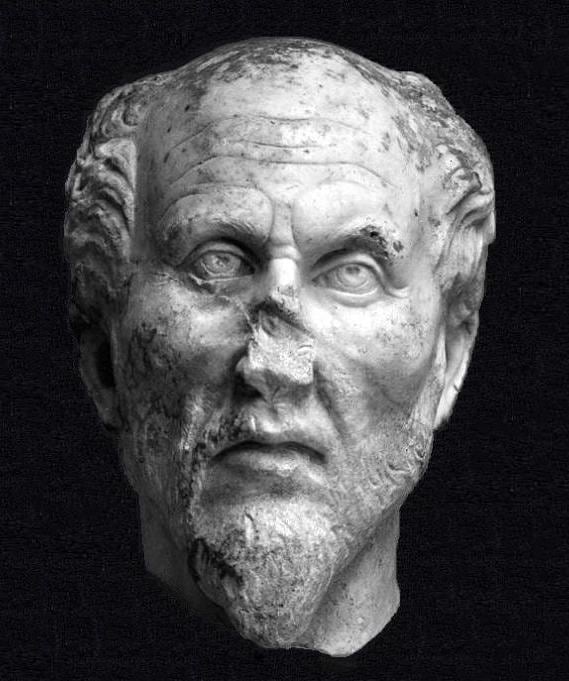
Cabeza de mármol identificada con Plotino (Ostia, inv. 436) · Public domain
उनके अपने शब्दों में
«Let us flee then to the beloved Fatherland.»Enéadas I 6 [1], 8 (citando la Ilíada). Griego: Wikisource; inglés: Stephen MacKenna; español: traducción propia.

मूल विचार
The One (the Good): Plotinus' first principle is the One, which he also calls the Good.
संदर्भ में देखें
जीवनी
6 मिनट का पाठ
स्पैनिश मूल से सहायता-प्राप्त अनुवाद, मातृभाषी अनुवादक द्वारा समीक्षा लंबित।
शरीर होने पर लज्जित एक दार्शनिक
«प्लोटिनस, हमारे समय के दार्शनिक, शरीर में होने पर लज्जित-से प्रतीत होते थे।» इसी वाक्य से पोरफ़िरी प्लोटिनस का जीवन आरंभ करते हैं, जिसे उन्होंने अपने गुरु की मृत्यु के तीस वर्ष बाद उनकी रचनाओं के संस्करण की भूमिका के रूप में लिखा। उस मनुष्य के बारे में हम जो कुछ जानते हैं, उसका लगभग सब इसी से आता है: पोरफ़िरी छह वर्ष रोम में उनके सान्निध्य में रहे और उन्होंने अपनी स्मृतियों को दूसरे शिष्यों — विशेषकर चिकित्सक यूस्टोकियस — की स्मृतियों से पूरा किया। यह एक श्रद्धापूर्ण, कहीं-कहीं संत-चरित जैसा चित्र है, पर सटीक तथ्यों से भरा हुआ, और इसलिए और भी मूल्यवान कि प्लोटिनस कभी अपने परिवार, अपनी जन्मभूमि या अपनी जन्म-तिथि की बात नहीं करते थे। उन्होंने किसी चित्रकार के सामने बैठना स्वीकार नहीं किया: «क्या इतना काफ़ी नहीं कि प्रकृति ने हमें जो प्रतिमा ओढ़ा दी है, उसे ढोते फिरें; अब क्या मैं प्रतिमा की भी एक प्रतिमा छोड़ जाने को राज़ी हो जाऊँ?»
अलेक्ज़ान्द्रिया
पोरफ़िरी गणना करते हैं कि उनका जन्म लगभग 205 ई. में हुआ, क्योंकि 270 में छियासठ वर्ष की आयु में उनकी मृत्यु हुई; एक शताब्दी बाद इतिहासकार यूनापियस कहते हैं कि वे ऊपरी मिस्र के लाइकोपोलिस में जन्मे थे, जिसकी पुष्टि संभव नहीं। उनकी भाषा और उनकी शिक्षा-दीक्षा यूनानी थी। अट्ठाईस वर्ष की आयु में वे अलेक्ज़ान्द्रिया में दर्शन की ओर मुड़े, पर सबसे प्रसिद्ध आचार्यों की कक्षाओं से उदास और हताश लौटते थे, जब तक कि एक मित्र उन्हें अम्मोनियस सक्कास को सुनने नहीं ले गया — एक प्लेटोवादी चिंतक, जिन्होंने कुछ नहीं लिखा। बाहर निकलते हुए उन्होंने कहा: «यही हैं जिन्हें मैं खोज रहा था।» वे ग्यारह वर्ष उनके साथ रहे।
फ़ारसियों और भारतीयों के दर्शन को जानने की इच्छा से प्रेरित होकर वे 242 में सम्राट गॉर्डियन तृतीय के फ़ारस-अभियान में शामिल हो गए। 244 में मेसोपोटामिया में गॉर्डियन की मृत्यु हो गई और प्लोटिनस किसी तरह बचकर अंताकिया पहुँचे। उसी वर्ष, सम्राट फ़िलिप अरब के शासनकाल में, चालीस वर्ष की आयु में, वे रोम में बस गए, जहाँ उन्होंने शेष जीवन बिताया।
रोम की पाठशाला
दस वर्षों तक उन्होंने केवल मौखिक शिक्षा दी, अम्मोनियस के दो अन्य शिष्यों — हेरेनियस और ऑरिजेन — के साथ किए उस वचन के प्रति निष्ठावान रहते हुए कि वे गुरु के सिद्धांतों को प्रकट नहीं करेंगे; जब दूसरों ने वह वचन तोड़ दिया, तो उन्होंने भी स्वयं को मुक्त माना। उनकी कक्षाएँ खुले संवाद होती थीं: प्लेटोवादियों और अरस्तूवादियों — सेवेरस, क्रोनियस, नूमेनियस, अफ़्रोदीसियस के अलेक्ज़ेंडर — के भाष्य पढ़े जाते और प्लोटिनस अपने चिंतन को विकसित करने के लिए बोलते, प्रश्नों को इस हद तक आने देते कि अव्यवस्था हो जाती। उन्हें सुनने रोगेशियनस जैसे सीनेटर आते, जिन्होंने प्रेटर-पद और अपनी संपत्ति त्याग दी; यूस्टोकियस जैसे चिकित्सक; जेमिना जैसी स्त्रियाँ, जिनके घर में वे रहते थे, और उनकी पुत्री। बहुत-से परिवार अपने अनाथ बच्चों का संरक्षण उन्हें सौंप देते थे, और वे उनके हिसाब-किताब की बड़ी सावधानी से जाँच करते थे। सम्राट गैलिएनस और उनकी पत्नी सलोनिना ने उनका सम्मान किया, और प्लोटिनस ने उनसे अनुरोध किया कि कैम्पेनिया के एक उजड़े नगर का पुनर्निर्माण कराया जाए, ताकि वहाँ प्लेटो के विधानों से शासित प्लेटोनोपोलिस बसाया जा सके; दरबारी षड्यंत्रों ने यह योजना विफल कर दी।
चौवन ग्रंथ
उन्होंने लगभग 253 ई. में, पचास वर्ष की आयु में, गैलिएनस के शासन के पहले वर्ष में लिखना आरंभ किया। जब 263 में पोरफ़िरी रोम पहुँचे, तब तक वे इक्कीस ग्रंथ लिख चुके थे; अगले छह वर्षों में, पोरफ़िरी और अमेलियस के प्रश्नों से प्रेरित होकर, उन्होंने चौबीस और लिखे, जिनमें ज्ञानवादियों (नॉस्टिक्स) के विरुद्ध महान ग्रंथ-शृंखला भी है; और उसके बाद, जब वे बीमार थे और पोरफ़िरी सिसिली में थे, अंतिम नौ। वे एक ही प्रवाह में लिखते थे, मानो किसी पुस्तक से वह उतार रहे हों जो पहले ही सोच चुके हैं; दुर्बल दृष्टि के कारण दोबारा पढ़े बिना और वर्तनी की परवाह किए बिना; इसीलिए उन्होंने संशोधन का दायित्व पोरफ़िरी को सौंपा। लगभग 301 ई. में पोरफ़िरी ने चौवन ग्रंथों को तिथि-क्रम से नहीं, विषय-क्रम से, नौ-नौ के छह समूहों में — एनियाड्स (नवक) के रूप में — नीतिशास्त्र से लेकर «एक» तक व्यवस्थित करके प्रकाशित किया; साथ ही उन्होंने जीवन में कालक्रमानुसार सूची भी सुरक्षित रखी, जिसके कारण प्लोटिनस के चिंतन के विकास का अनुसरण किया जा सकता है।
«एक» से उद्भूत विश्व
प्लोटिनस स्वयं को प्लेटो का व्याख्याता मानते थे, पर उनके पाठ से कुछ नया जन्मा। यथार्थ के शिखर पर वे «एक» या «शुभ» को रखते हैं — पूर्णतः सरल, सत्ता और चिंतन से परे, जिसके विषय में यथार्थतः कुछ भी कहा नहीं जा सकता। उसकी परिपूर्णता से, «एक» के कुछ खोए बिना और बिना उसकी इच्छा के, बुद्धि (नूस) उद्भूत होती है, जिसमें सारे रूप (प्रत्यय) समाए हैं और जो स्वयं का चिंतन करती है; बुद्धि से आत्मा उद्भूत होती है, जो इंद्रियगोचर जगत को जीवन और व्यवस्था देती है। सबसे निचले छोर पर पदार्थ शुद्ध अनिर्धारण है, और प्लोटिनस उसे अशुभ से अभिन्न मानते हैं। प्रत्येक यथार्थ अपने मूल से उद्भूत होता है और उसका ध्यान करते हुए उसी में लौटने की ओर उन्मुख रहता है: मानवीय आत्मा के लिए यह प्रत्यावर्तन संभव है, क्योंकि प्लोटिनस के अनुसार उसका एक अंश कभी पूरी तरह नीचे नहीं उतरा और बुद्धिगम्य लोक में ही स्थित रहता है।
एकत्व का अनुभव
आत्मा के अवतरण पर लिखा ग्रंथ यूनानी दर्शन में एक असाधारण स्वीकारोक्ति से आरंभ होता है: «अनेक बार, शरीर से बाहर अपने आप में जागते हुए…» — लेखक कहता है कि उसने एक अद्भुत सौंदर्य देखा और दिव्य के साथ एकाकार हो गया। पोरफ़िरी का कथन है कि जिन छह वर्षों में वे उनके साथ रहे, उनमें प्लोटिनस ने चार बार उस ईश्वर के साथ एकत्व प्राप्त किया जो बुद्धि से भी ऊपर है। पियर आदो ने इसी अनुभव को उनकी कृति का केंद्र माना: दर्शन दृष्टि के रूपांतरण के रूप में, एक आंतरिक सरलीकरण, जिसकी परिणति «अकेले की अकेले की ओर उड़ान» में होती है, जिससे शुभ या एक के विषय में ग्रंथ समाप्त होता है।
कैम्पेनिया में मृत्यु
अंतिम वर्षों में वे एक गंभीर रोग से पीड़ित रहे, जिसने उनका स्वर भारी कर दिया, दृष्टि धुँधली कर दी और हाथों-पैरों को फोड़ों से भर दिया; पोरफ़िरी उसका विस्तार से वर्णन करते हैं, और स्टीफ़न मैकेना ने उसके नाम का अनुवाद «घातक डिफ़्थीरिया» किया। मित्रों ने उनसे मिलना छोड़ दिया और वे कैम्पेनिया में अपने दिवंगत मित्र ज़ेथस की जागीर में चले गए। प्यूटियोली से देर से पहुँचे यूस्टोकियस ने पोरफ़िरी को बताया कि प्लोटिनस ने उनसे कहा कि वे अब तक उनकी प्रतीक्षा कर रहे थे और प्रयास कर रहे थे कि हमारे भीतर जो दिव्य है, उसे समष्टि में व्याप्त दिव्य तक ले जाएँ; उसी क्षण एक साँप पलंग के नीचे सरका और दीवार के एक छेद में ओझल हो गया, और प्लोटिनस ने प्राण त्याग दिए। वह वर्ष 270 था।
परवर्ती प्रभाव
उनके शिष्यों और शिष्यों के शिष्यों — पोरफ़िरी, इआम्ब्लिकस, प्रोक्लस, डैमैस्कियस — ने नव-प्लेटोवाद को अंतिम महान मूर्तिपूजक दार्शनिक संप्रदाय बना दिया। हिप्पो के ऑगस्टीन ने मिलान में मारियस विक्टोरिनस द्वारा लैटिन में अनूदित «प्लेटोवादियों की पुस्तकें» पढ़ीं, जिन्हें उन्होंने अपने धर्म-परिवर्तन में निर्णायक माना, और जो पूरी संभावना से प्लोटिनस और पोरफ़िरी के ग्रंथ थीं। एनियाड्स के चौथे से छठे भाग की एक अरबी व्याख्या-रूपांतरण, जो धर्मशास्त्र (उथूलूजिया) शीर्षक से अरस्तू के नाम से प्रचलित हुई, उनके चिंतन को इस्लामी दर्शन तक ले गई। 1492 में मार्सिलियो फ़िचीनो ने फ़्लोरेंस से संपूर्ण लैटिन अनुवाद प्रकाशित किया, जिसने आधुनिक यूरोप के लिए उनके अध्ययन का द्वार खोल दिया।
स्रोत: Porfirio. Vida de Plotino y orden de sus libros (Περὶ τοῦ Πλωτίνου βίου καὶ τῆς τάξεως τῶν βιβλίων αὐτοῦ). Texto griego en la ed. de R. Volkmann (Teubner, 1883), en Wikisource en griego; trad. inglesa de Stephen MacKenna (1917), en Wikisource en inglés. · Plotino. Enéadas. Texto griego en Wikisource en griego; trad. inglesa de Stephen MacKenna (vols. 1–4, 1917–1926) y de MacKenna y B. S. Page (vol. 5, 1930), en Wikisource en inglés. · Hadot, Pierre. Plotin ou la simplicité du regard. París: Plon, 1963. Trad. inglesa: Plotinus or the Simplicity of Vision, University of Chicago Press, 1993. · Igal, Jesús. «Introducción general», en Porfirio, Vida de Plotino; Plotino, Enéadas I–II. Biblioteca Clásica Gredos, 57. Madrid: Gredos, 1982. · Gerson, Lloyd P. (ed.). The Cambridge Companion to Plotinus. Cambridge: Cambridge University Press, 1996.
कालक्रम
जीवन, वर्ष-दर-वर्ष
प्रत्येक बिंदु एक प्रमाणित घटना है। उसे स्रोत और निश्चितता के स्तर सहित पढ़ने के लिए क्लिक करें।
लगभग 2050 वर्ष¿Licópolis (Egipto)?
Birth
Porphyry infers the year (the thirteenth of Septimius Severus) from his age at death; Plotinus never revealed the day or month. Eunapius gives Lycopolis as his homeland.
संभावितPorfirio. Vida de Plotino y orden de sus libros (Περὶ τοῦ Πλωτίνου βίου καὶ τῆς τάξεως τῶν βιβλίων αὐτοῦ). Texto griego en la ed. de R. Volkmann (Teubner, 1883), en Wikisource en griego; trad. inglesa de Stephen MacKenna (1917), en Wikisource en inglés.
उनके निधन के बाद
- लगभग 301Porphyry publishes the Enneads
- 386Augustine reads the Platonists
- लगभग 840The "Theology of Aristotle"
- 1492Ficino's Latin translation
- 1580Greek editio princeps
- 1917 – 1930First complete English translation
लगभग 205 · 0 वर्ष
Birth
Porphyry infers the year (the thirteenth of Septimius Severus) from his age at death; Plotinus never revealed the day or month. Eunapius gives Lycopolis as his homeland.
संभावित
लगभग 232 · 28 वर्ष
Meeting Ammonius Saccas
At twenty-eight, dissatisfied with the teachers of Alexandria, he hears Ammonius and exclaims: "This is the man I was looking for." He studies with him for eleven years.
प्रमाणित
लगभग 242 – 244 · 38 वर्ष
Gordian III's expedition
He joins Gordian III's army against Persia to learn the philosophy of the Persians and Indians. After the emperor's death (244) he flees to Antioch.
प्रमाणित
लगभग 244 · 40 वर्ष
Arrival in Rome
Under Philip the Arab he settles in Rome, where he teaches orally for ten years without writing, because of a pact with Herennius and Origen.
प्रमाणित
लगभग 246 · 42 वर्ष
Amelius arrives
Amelius Gentilianus joins the school, where he will remain for twenty-four years; he compiles nearly a hundred books of notes from the lectures.
प्रमाणित
लगभग 253 · 49 वर्ष
He begins writing
In the first year of Gallienus' reign he begins writing treatises; the first, according to Porphyry, is "On Beauty" (I.6).
प्रमाणित
263 – 268 · 59 वर्ष
Porphyry arrives
Porphyry of Tyre joins the school in the tenth year of Gallienus, when Plotinus has written twenty-one treatises. In the following six years he will write twenty-four more (22–45), including the cycle against the Gnostics (30–33).
प्रमाणित
लगभग 265 · 61 वर्ष
The Platonopolis project
He asks Gallienus and Salonina to restore a ruined city in Campania to found Platonopolis, governed by Plato's Laws. Opposition at court prevents it.
प्रमाणित
लगभग 268 · 64 वर्ष
Porphyry to Sicily
Plotinus notices that Porphyry is tempted by suicide and advises him to travel; Porphyry leaves for Sicily. Plotinus sends him there the last nine treatises (46–54).
प्रमाणित
270 · 66 वर्ष
Death
Dies on Zethus' estate in Campania at the end of the second year of Claudius II, attended by Eustochius.
प्रमाणित
लगभग 301
Porphyry publishes the Enneads
Porphyry edits the fifty-four treatises in six Enneads, prefaced by the Life of Plotinus and the chronological list.
संभावित
386
Augustine reads the Platonists
Augustine reads in Milan the "books of the Platonists" translated by Marius Victorinus, decisive for his conversion (Confessions VII.9).
संभावित
लगभग 840
The "Theology of Aristotle"
In al-Kindi's circle an Arabic paraphrase of Enneads IV–VI attributed to Aristotle is produced, transmitting Neoplatonism to Islamic philosophy.
संभावित
1492
Ficino's Latin translation
Marsilio Ficino publishes the complete Latin translation of the Enneads, dedicated to Lorenzo de' Medici.
प्रमाणित
1580
Greek editio princeps
Pietro Perna prints in Basel the first Greek text of the Enneads, together with Ficino's version.
प्रमाणित
1917 – 1930
First complete English translation
Stephen MacKenna publishes the first volume of his translation, completed in 1930 with the collaboration of B. S. Page.
प्रमाणित
कृतियाँ
आवश्यक कृतियाँ
वे कृतियाँ जिनके बिना उनकी विरासत को समझा नहीं जा सकता।
परवर्ती संकलन · लगभग 301
Enneads
Ἐννεάδες
The complete works of Plotinus. Porphyry arranged them from the simplest subject to the most exalted: Ennead I deals with ethics and man; II with the physical world; III with providence, fate, time and love; IV with the soul; V with Intellect; VI with the kinds of being and the One. Each treatise carries in brackets its number in the chronological order that Porphyry himself preserved in the Life (4–6), which allows three periods to be distinguished: treatises 1–21 (up to 263), 22–45 (263–268) and 46–54 (268–270). It is the source of ancient Neoplatonism and one of the foundational texts of Western mysticism.
16 संस्करण
शैक्षणिक अध्ययन · लगभग 301
Life of Plotinus (by Porphyry)
Περὶ τοῦ Πλωτίνου βίου καὶ τῆς τάξεως τῶν βιβλίων αὐτοῦ
"On the life of Plotinus and the arrangement of his books", written around 301, when Porphyry was sixty-eight. It narrates the Alexandrian youth, the Persian expedition, the school in Rome, the circle of pupils, the Platonopolis project, the mystical unions and the death in Campania; it transcribes Apollo's oracle on Plotinus' soul and gives the chronological list of the treatises with their distribution into enneads. It is one of the richest biographies of philosophers from antiquity.
5 संस्करण
लिखित कृति · लगभग 253
Ennead I.6 [1]: On beauty
Περὶ τοῦ καλοῦ
The first treatise he wrote and one of the most widely read. It refutes the view that beauty consists in symmetry: the beautiful is the presence of form in matter. It rises from beautiful bodies to beautiful pursuits, to the beauty of the soul and to intelligible Beauty, and invites the reader to "chisel his own statue", since no eye ever saw the sun without becoming sunlike. It contains the exhortation "let us flee to the beloved fatherland".
3 संस्करण

लिखित कृति · लगभग 253
Ennead IV.8 [6]: On the descent of the soul into bodies
Περὶ τῆς εἰς τὰ σώματα καθόδου τῆς ψυχῆς
It opens with the famous autobiographical confession: "Many times, waking up to myself out of the body…". It reconciles Plato's apparently contradictory texts on the soul's descent—a fault in the Phaedo and the Phaedrus, a cosmic mission in the Timaeus—and argues that a part of our soul does not descend but remains in the intelligible.
3 संस्करण

लिखित कृति · लगभग 253
Ennead V.1 [10]: On the three primary hypostases
Περὶ τῶν τριῶν ἀρχικῶν ὑποστάσεων
A programmatic exposition of his system. It opens with the question why souls have forgotten their father, God, and answers with their audacity (tolma) and their desire to belong to themselves. It invites the reader to recall the soul's dignity and presents the One, Intellect and Soul, relying on Plato's Parmenides and Second Letter and on earlier philosophers.
3 संस्करण
लिखित कृति · लगभग 253
Ennead VI.9 [9]: On the Good or the One
Περὶ τἀγαθοῦ ἢ τοῦ ἑνός
Every being is what it is by being one. After ascending through soul and Intellect, Plotinus shows that the One is none of the things and is reached only by a presence superior to knowledge, when the soul strips itself of all form. He describes union as the meeting of centre with centre and ends with the formula that sums up Plotinian mysticism: the flight of the alone to the Alone. Porphyry placed it at the end of the Enneads.
3 संस्करण
संपूर्ण कृतित्व (59)
Ennead I.1 [53]: What is the living being, and what is man?
268
Ennead I.2 [19]: On virtues
253
Ennead I.3 [20]: On dialectic
253
Ennead I.4 [46]: On happiness (well-being)
268
Ennead I.5 [36]: Whether happiness increases with time
263
Ennead I.7 [54]: On the primal good and the other goods
268
Ennead I.8 [51]: On what are and whence come evils
268
Ennead I.9 [16]: On going out of the body
253
Ennead II.1 [40]: On the cosmos (or on heaven)
263
Ennead II.2 [14]: On the movement of heaven
253
Ennead II.3 [52]: Whether the stars are causes
268
Ennead II.4 [12]: On matter (or on the two matters)
253
Ennead II.5 [25]: On what exists potentially and what actually
263
Ennead II.6 [17]: On quality and form (or on substance and quality)
253
Ennead II.7 [37]: On complete transfusion
263
Ennead II.8 [35]: On sight, or how distant objects appear small
263
Ennead II.9 [33]: Against the Gnostics
263
Ennead III.1 [3]: On fate
253
Ennead III.2 [47]: On providence, I
268
Ennead III.3 [48]: On providence, II
268
Ennead III.4 [15]: On our allotted guardian spirit
253
Ennead III.5 [50]: On love
268
Ennead III.6 [26]: On the impassibility of the bodiless
263
Ennead III.7 [45]: On eternity and time
263
वचन
किसी निश्चित कृति में स्थित वचन। प्रत्येक के साथ उसका स्रोत और विश्वसनीयता का स्तर है।
Let us flee then to the beloved Fatherland.Φεύγωμεν δὴ φίλην ἐς πατρίδα.
सत्यापितEnéadas I 6 [1], 8 (citando la Ilíada). Griego: Wikisource; inglés: Stephen MacKenna; español: traducción propia.
अप्रामाणिक या विवादित आरोपण वाले उद्धरण (1)
«Beauty is the light that plays over the symmetry of things, rather than the symmetry itself.»
A free and widely circulated paraphrase of Enneads VI.7 [38].22, where Plotinus says that beauty is rather what shines upon the symmetry than the symmetry itself. It circulates as a literal quotation, but it is not one; the original passage should be quoted.
अंतिम शब्द
साक्षियों का परवर्ती वृत्तांत
«"I have still been waiting for you." And he said he was striving to bring back the divine in us to the divine in the All.»σὲ ἔτι περιμένω […] πειρᾶσθαι τὸ ἐν ἡμῖν θεῖον ἀνάγειν πρὸς τὸ ἐν τῷ παντὶ θεῖον.
Porphyry, Life of Plotinus 2. Porphyry was not present—he was at Lilybaeum in Sicily—; he tells it from the account of the physician Eustochius, who arrived late from Puteoli and was the only pupil present at the death. The second sentence is in indirect speech, so it is not certain that it reproduces literal words. Some editors read "the divine in you" (hymin) instead of "in us" (hēmin), in which case the sentence would be an exhortation to the disciples; MacKenna's translation reads "the Divine in myself". Porphyry adds that at that moment a snake passed under the bed and hid in a hole in the wall, and Plotinus breathed his last.
स्रोत: Porfirio. Vida de Plotino y orden de sus libros (Περὶ τοῦ Πλωτίνου βίου καὶ τῆς τάξεως τῶν βιβλίων αὐτοῦ). Texto griego en la ed. de R. Volkmann (Teubner, 1883), en Wikisource en griego; trad. inglesa de Stephen MacKenna (1917), en Wikisource en inglés.
पूछें
उनकी कृतियाँ क्या उत्तर देती हैं
मानवता के बारह महान प्रश्न और उनके ग्रंथ उनका जो उत्तर देने देते हैं, संदर्भों सहित। हम कभी उनके मुख में अपने शब्द नहीं रखते।
परम सत्य क्या है? क्या ईश्वर है?
The One, beyond being and thought, can only be spoken of by negation
अनिर्वचनीयस्पष्ट रूप से कहा है
For Plotinus the principle of all is the One, or the Good, from which Intellect and Soul proceed without it being diminished. Precisely because it is the principle of all things it is none of them: it is beyond being, form and thought, and does not even think itself. Hence the name “One” describes nothing: it is a negation of multiplicity, and Plotinus warns that we do not say what it is but what it is not. We speak of it from what comes after it, and only union, when the soul is alone with it, reaches it. The last sentence of treatise V 3 sums up the method: take away everything.
इस प्रश्न की अन्य गुरुओं से तुलना करेंमैं कौन हूँ? क्या कोई सच्चा आत्म है?
A part of the soul never descended: we remain above, in Intellect
आत्मन् ही ब्रह्म हैस्पष्ट रूप से कहा है
For Plotinus what we call “we” is stretched between two levels. The compound of body and lower soul feels, suffers and desires; but the true human being is the reasoning soul and, higher, the Intellect in which it shares. In the treatise on the soul's descent he holds, against the common Platonist view, that not all of our soul has come down: a part always remains in the intelligible. He himself recounts that he often woke to himself out of the body and saw a marvellous beauty. To know oneself is to climb back from the scattered self to that undescended part and, from there, to union with the One.
इस प्रश्न की अन्य गुरुओं से तुलना करेंहम दुःख क्यों भोगते हैं?
Souls forgot their father through the audacity of wanting to belong to themselves
ईश्वर से वियोगस्पष्ट रूप से कहा है
Treatise V 1 opens by asking what has made souls forget their father, God, and be ignorant of themselves and of him. The answer is audacity: the wish to belong to themselves, the pleasure in moving on their own account, which took them so far from their origin that they ended up admiring things here and despising themselves. Elsewhere Plotinus places the origin of evil in matter, the absolute privation of good, towards which the soul inclines in descending. Suffering is thus distance: that of a soul that has turned outward and forgotten itself. The remedy is return, and the image summing it up is Odysseus going back to his beloved homeland.
इस प्रश्न की अन्य गुरुओं से तुलना करेंमृत्यु के बाद क्या होता है?
The soul is immortal, and what we truly are never left the intelligible
जो मैं हूँ, वह न जन्मता है न मरता हैस्पष्ट रूप से कहा है
One of Plotinus' earliest treatises argues against Stoics and Epicureans that the soul is neither a body nor the harmony of a body, and therefore cannot perish: it belongs to the nature of the divine and eternal. What dies is the compound, the living being that feels and suffers. Since a part of the soul has never descended, death does not affect what we truly are. Plotinus also admits, following Plato, that souls that have identified with the lower are reborn in human or animal bodies according to their life. Porphyry relates that his last words were an effort to raise the divine in us to the divine in the all.
इस प्रश्न की अन्य गुरुओं से तुलना करेंमुक्ति या उद्धार कैसे प्राप्त होता है?
Return to oneself, be purified and ascend to union with the One
प्रत्यक्ष ज्ञान सेस्पष्ट रूप से कहा है
Plotinus describes an ascent in several stages. The civic virtues order life; the purificatory virtues separate the soul from the body's passions; dialectic raises it to Intellect, where it knows itself as part of the intelligible. In the treatise on beauty, the watchword is to turn inward and carve one's own statue until the radiance of virtue shines, because the eye does not see the sun without becoming like it. But the final step exceeds knowledge: union with the One is not seeing an object but coinciding with it, and Plotinus compares it to two centres touching. Porphyry states that he attained it four times while Porphyry was with him.
इस प्रश्न की अन्य गुरुओं से तुलना करेंक्या गुरु आवश्यक है?
Teaching only shows the road; the vision belongs to whoever wants to see
गुरु भीतर हैस्पष्ट रूप से कहा है
Porphyry relates that Plotinus, at twenty-eight, searched in vain among the schools of Alexandria until, on hearing Ammonius Saccas, he exclaimed that this was the man he was looking for, and stayed with him eleven years. The teacher was thus decisive in his life. But in the Enneads teaching has a precise limit: we speak and write to point towards the One and to wake from reasonings to vision, like someone showing the road to one who wishes to travel; the contemplation itself is the task of whoever wishes to see. What is sought is not outside: the One is present to all, and whoever turns inward finds it. The teacher points; the true guide is the divine in the soul.
इस प्रश्न की अन्य गुरुओं से तुलना करेंक्या संसार वास्तविक है?
The visible world is the last level of a procession from the One
अस्तित्व के लोकस्पष्ट रूप से कहा है
Plotinus conceives reality as a hierarchy. From the One proceeds Intellect, where the intelligible forms are; from Intellect, Soul, which animates the cosmos; and at the extreme, matter, which in itself is nothing and receives forms like a mirror. The sensible world is real as image and work of Soul: in the treatise against the Gnostics he defends its beauty and order against those who despise it, and calls it the best possible image of the intelligible. But authentic being lies above, and each lower level is a weaker contemplation of the higher. The visible is one plane of a graded reality, upheld in its entirety by the One.
इस प्रश्न की अन्य गुरुओं से तुलना करेंप्रेम क्या है?
The soul loves the Good as a lover; in union, two become one
विरह और मिलनस्पष्ट रूप से कहा है
For Plotinus everything that proceeds from the One keeps the desire to return to it, and in the soul that desire is love. The treatise on love interprets Plato's Eros as the activity of the soul tending towards the good. In the treatise on the Good or the One he compares the soul to a maiden who, separated from her father by earthly marriages, returns to him and knows true love; when she reaches him, nothing stands between them, and they are no longer two but one. Treatise VI 7 describes the soul receiving an outflow from the Good and seized by burning love. Love is the movement of return to the origin.
इस प्रश्न की अन्य गुरुओं से तुलना करेंक्या हम स्वतंत्र हैं, या सब कुछ पूर्वनिर्धारित है?
We are free when we act from intellect, not from passions
वास्तविक स्वतंत्र इच्छास्पष्ट रूप से कहा है
Plotinus rejects astrological and Stoic determinism in his treatise on fate: if everything were fixed by external causes, it would not be we who act. But his notion of freedom is demanding. In treatise VI 8 he asks what depends on us and answers that it is not enough to do what we want: whoever acts carried away by passions or ignorance is not free. Only the soul acting from intellect and towards the good is, because it then acts according to its own nature. And freedom in the full sense belongs to the One, which is what it wills to be. In the treatises on providence he also admits a justice fulfilled across several lives.
इस प्रश्न की अन्य गुरुओं से तुलना करेंध्यान या प्रार्थना क्यों करें?
Return to yourself and look: prayer is reaching out alone to the Alone
'मैं' के स्रोत पर लौटनास्पष्ट रूप से कहा है
For Plotinus the way to the divine is a return inward. In the treatise on beauty the watchword is to return to oneself and look, and to keep carving one's own statue until it shines. In V 1 he explains that the soul must gather itself, turn its gaze from the external and listen to the voices from above, like someone awaiting a beloved voice. Before speaking of the supreme principle he invokes God, not with spoken words, but stretching the soul in prayer towards him, alone to the Alone. The goal is to find the source: the centre of the soul coincides with the centre of all, and whoever sees himself in his purity meets the One.
इस प्रश्न की अन्य गुरुओं से तुलना करेंक्या बुद्धि परम को जान सकती है?
The One is beyond thought: it is reached by presence, not by science
परम मन से परे हैस्पष्ट रूप से कहा है
Plotinus grants reason enormous reach: Intellect knows all that is intelligible, and the reasoning soul can rise to it. But the supreme principle lies beyond: the One is not an object of thought, because all thinking implies a duality between the thinker and the thought. Hence, he says in VI 9, the apprehension of the One comes not through science or intellection, like that of other intelligibles, but through a presence superior to science. We speak of it to orient, but we do not state it; dialectic and virtue prepare, and the last step is to leave even thought behind. The watchword closing V 3 sums it up: take away everything.
इस प्रश्न की अन्य गुरुओं से तुलना करेंसंसार से हटें या उसे बदलें?
Present at once to himself and to others, without slackening contemplation
कर्म में ध्यानस्पष्ट रूप से कहा है
Plotinus' doctrine places contemplation above everything: action is a weakened contemplation, a detour for those unable to contemplate directly. But his life, as Porphyry tells it, was that of a man in the world. He taught in Rome, acted as arbiter in disputes, was guardian to orphans whose property he managed scrupulously, and even asked the emperor Gallienus for a city in Campania to govern by Plato's laws. Porphyry stresses that, while attending to others, he never interrupted his inner attention: he was present at once to himself and to others. The heart turned to the essential does not exclude service.
इस प्रश्न की अन्य गुरुओं से तुलना करें
निकटता और तनाव
निकटता और तनाव
उनके मतों के आधार पर प्रश्न-दर-प्रश्न आकलित। प्रत्येक सहमति या टकराव का कारण क्लिक करने पर।
इनसे मिलता-जुलता सोचते हैं
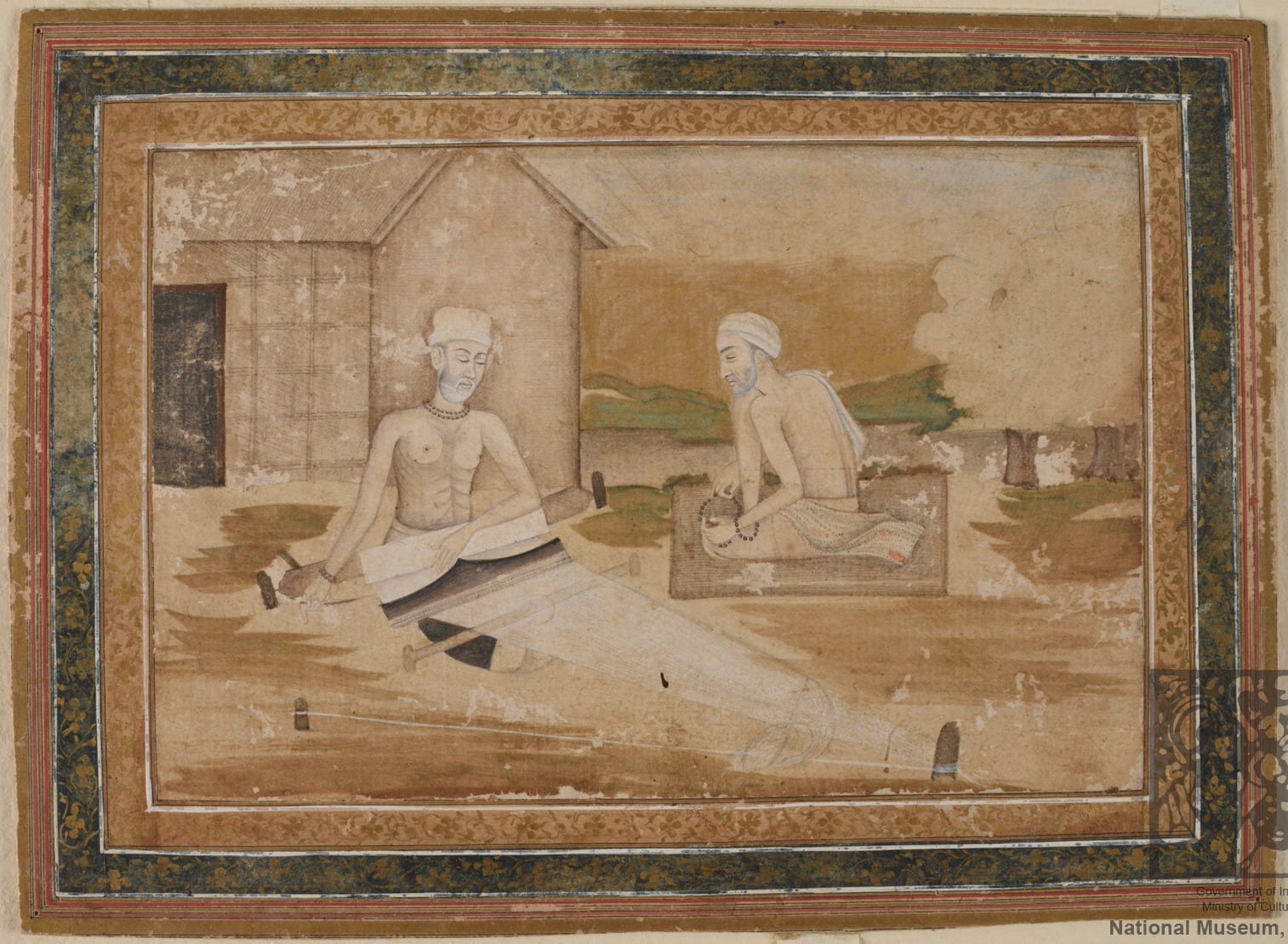
Kabir
इन पर सहमत: ध्यान या प्रार्थना क्यों करें? · परम सत्य क्या है? क्या ईश्वर है? · मैं कौन हूँ? क्या कोई सच्चा आत्म है?
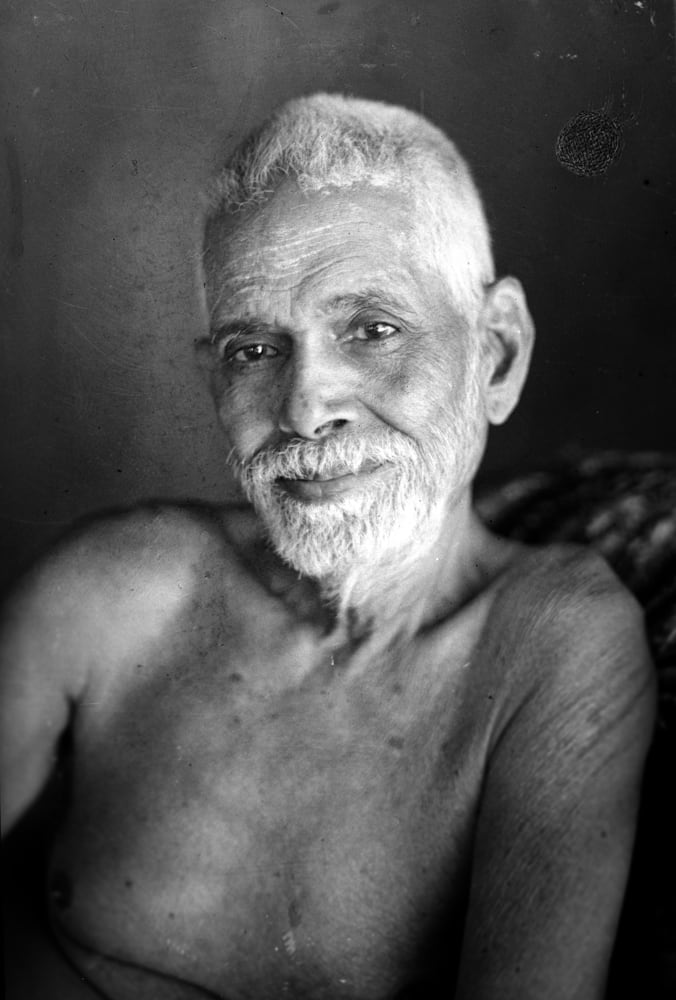
Ramana Maharshi
इन पर सहमत: मैं कौन हूँ? क्या कोई सच्चा आत्म है? · मृत्यु के बाद क्या होता है? · मुक्ति या उद्धार कैसे प्राप्त होता है?

Nisargadatta Maharaj
इन पर सहमत: परम सत्य क्या है? क्या ईश्वर है? · मैं कौन हूँ? क्या कोई सच्चा आत्म है? · मृत्यु के बाद क्या होता है?
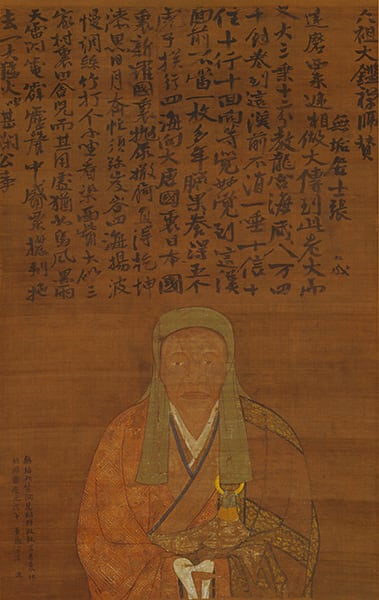
Huineng
इन पर सहमत: मैं कौन हूँ? क्या कोई सच्चा आत्म है? · मृत्यु के बाद क्या होता है? · मुक्ति या उद्धार कैसे प्राप्त होता है?




प्रसंग और वृत्तांत
प्रसंग और वृत्तांत
साक्ष्यc. 232
"This is the man I was looking for"
वृत्तांत का स्रोत: Porphyry, Life of Plotinus 3, who says he heard it from Plotinus himself in conversation.
साक्ष्यc. 250–265
The image of the image
वृत्तांत का स्रोत: Porphyry, Life of Plotinus 1. The heads from Ostia sometimes identified as Plotinus have no proven connection with this portrait.
साक्ष्यc. 260–268
Platonopolis
वृत्तांत का स्रोत: Porphyry, Life of Plotinus 12. There is no other source; the ruined "city of philosophers" has not been identified.
संत-चरित वृत्तांतc. 255–268
The god in the Iseum
वृत्तांत का स्रोत: Porphyry, Life of Plotinus 10, in the same section in which he tells how the spells of Olympius of Alexandria rebounded on their caster. It is a marvellous tale that Porphyry transmits as proof of his master's superiority.
साक्ष्यc. 268
The advice to Porphyry
वृत्तांत का स्रोत: Porphyry, Life of Plotinus 11, in the first person.
साक्ष्य263–268
Union four times
वृत्तांत का स्रोत: Porphyry, Life of Plotinus 22–23. It is the direct testimony of a pupil, but about an experience that by definition only Plotinus himself knew.
शिक्षाएँ
शिक्षाएँ
वे अवधारणाएँ जो उनके चिंतन को रूप देती हैं, उनके संदर्भ में समझाई गई।
The One (the Good)el-uno
It unites the Good of the Republic, beyond essence, with the One of the first hypothesis of the Parmenides. It is the root of the negative theology of Pseudo-Dionysius and of medieval mysticism.
स्रोत: Kalligas, Paul. «Plotinus». Stanford Encyclopedia of Philosophy, ed. Edward N. Zalta (2024).
The three hypostasestres-hipostasis
The term "hypostasis" for the three principles comes from the title Porphyry gave to V.1; the doctrine influenced Greek Trinitarian theology, though with essential differences (in Plotinus there is hierarchy).
स्रोत: Kalligas, Paul. «Plotinus». Stanford Encyclopedia of Philosophy, ed. Edward N. Zalta (2024).
Procession and reversionprocesion-y-conversion
The scheme of remaining, procession and reversion was systematised by Proclus and transmitted to the Middle Ages by Pseudo-Dionysius and the Book of Causes.
स्रोत: Kalligas, Paul. «Plotinus». Stanford Encyclopedia of Philosophy, ed. Edward N. Zalta (2024).
All things are contemplationcontemplacion
It opens the great treatise against the Gnostics (III.8, V.8, V.5, II.9): against the idea of an evil demiurge, Plotinus presents a cosmos produced by contemplation.
The undescended soulalma-no-descendida
It contrasts with the Phaedo and the Phaedrus, which speak of a fall, and reconciles those texts with the Timaeus; it is central in IV.8 and IV.3–4.
स्रोत: Kalligas, Paul. «Plotinus». Stanford Encyclopedia of Philosophy, ed. Edward N. Zalta (2024).
Beautybelleza
It develops the ladder of Plato's Symposium; through Ficino, I.6 and V.8 decisively influenced Renaissance art theory.
Union with the Oneunion-mistica
Pierre Hadot considered it the centre of his thought; it shaped Christian (Pseudo-Dionysius, Eckhart) and Sufi mysticism, although in Plotinus no grace or revelation intervenes.
स्रोत: Hadot, Pierre. Plotin ou la simplicité du regard. París: Plon, 1963. Trad. inglesa: Plotinus or the Simplicity of Vision, University of Chicago Press, 1993.
वीडियो
वीडियो
रिकॉर्डिंग, साक्षात्कार और वृत्तचित्र। वीडियो YouTube से चलते हैं; वे यहाँ संग्रहीत नहीं हैं।
La filosofía helenística (IV): El neoplatonismo · La March
व्याख्यान· ES· 2022· 59 min
Fundación Juan Marchआधिकारिक चैनल
9. Plotino y el Neoplatonismo
व्याख्यान· ES· 2022· 203 min
Fundación Universitaria Españolaआधिकारिक चैनल
John Cooper: Platonist Philosophy as a Way of Life: Plotinus
व्याख्यान· EN· 2013· 61 min
McCoy Family Center for Ethics in Societyआधिकारिक चैनल
Ep. 18 - Awakening from the Meaning Crisis - Plotinus and Neoplatonism
व्याख्यान· EN· 2019· 54 min
John Vervaeke’s Lectern
What is Neoplatonism?
विश्लेषण· EN· 2022· 56 min
Let's Talk Religion
Antonio Gargano - Plotino
व्याख्यान· IT· 2020· 83 min
IISF • Istituto Italiano per gli Studi Filosoficiआधिकारिक चैनल
Giovanni Reale | Enneadi di Plotino | festivalfilosofia 2011
व्याख्यान· IT· 2011· 50 min
Festivalfilosofiaआधिकारिक चैनल
Fuga dal mondo ed estasi nel pensiero di Plotino - Franco Ferrari
व्याख्यान· IT· 2023· 58 min
Fondazione Collegio San Carloआधिकारिक चैनल
Relire Plotin avec Michel Cazenave, Luc Brisson et Jean-François Pradeau
साक्षात्कार· FR· 2013· 60 min
Résonance[s]
Plotin - Begründer des Neoplatinismus
व्याख्यान· DE· 2023· 48 min
Akademisches Forum Albertus Magnusआधिकारिक चैनल
Fabian Völker - Einführung in den Neuplatonismus - Plotin - I/II
व्याख्यान· DE· 2022· 90 min
Fabian Völker
चित्रशाला
चित्रशाला
सत्यापित लाइसेंस वाले चित्र। प्रत्येक में उसके रचयिता और श्रेय का उल्लेख सुरक्षित है।
पांडुलिपियाँ
पांडुलिपियाँ
पांडुलिपि-साक्ष्य और प्राचीन पाठ, उनके संरक्षक और अध्ययन की शर्तों सहित।
GRC · Minúscula griega · Tratados de 253–270; copia de c. 1460
Πλωτίνου Ἐννεάδες
- संरक्षित पाठ-साक्ष्य
- Ejemplar de trabajo de Marsilio Ficino para su traducción latina, con sus anotaciones marginales
- संरक्षक
- Bibliothèque nationale de France · Grec 1816
LA · Humanística · Traducción terminada en 1486; copia de finales del s. XV
Plotini Enneades, interprete Marsilio Ficino
- संरक्षित पाठ-साक्ष्य
- Manuscrito iluminado por Attavante degli Attavanti para Lorenzo de Médici
- संरक्षक
- Biblioteca Medicea Laurenziana, Florencia · Plut. 82.10
संबंध
संबंध
प्रभाव, शिष्यत्व और वैचारिक निकटता। प्रमाणित संबंध को विश्लेषण से पहचानी गई समानता से अलग दर्शाया गया है।
इनसे प्रभावित
He regarded himself as an interpreter of Plato, whom he calls "the divine Plato" (IV.8.1); nearly all his treatises start from a Platonic passage (Republic, Parmenides, Timaeus, Symposium, Phaedrus). He celebrated Plato's traditional birthday with a sacrifice (Life 2).
प्रमाणित संबंध
इनसे प्रभावित
Porphyry says Aristotle's Metaphysics is condensed in his writings and that the Peripatetic commentators were read in class (Life 14). Plotinus adopts the Aristotelian noetics of the intellect thinking itself and criticises his categories (VI.1–3).
प्रमाणित संबंध
इनसे प्रभावित
He celebrated Socrates' traditional birthday, like Plato's, with a sacrifice and a banquet (Life 2).
प्रमाणित संबंध
इनसे प्रभावित
In V.1.8 he presents Parmenides as a forerunner for identifying being and thinking, and reads the first hypothesis of Plato's Parmenides as a doctrine of the One.
प्रमाणित संबंध
इनसे मतभेद
He criticises the theses of the school Zeno founded: the corporeal soul (IV.7), total blending (II.7) and the Stoic categories (VI.1). Porphyry notes, however, that his writings are full of latent Stoic doctrines (Life 14).
प्रमाणित संबंध
इनसे मतभेद
He rejects atomism and the denial of providence: in II.9.15 he reproaches Epicurus for abolishing providence and the Gnostics for being even worse.
प्रमाणित संबंध
इन्हें प्रभावित किया
Augustine read in Milan "books of the Platonists" in Marius Victorinus' translation (Confessions VII.9; VIII.2) and expressly quotes Plotinus in The City of God (IX.17; X.14).
प्रमाणित संबंध
इनसे मिलते-जुलते विचार
He does not mention him. Both conceive philosophy as an exercise of inner conversion: Marcus' "retire into yourself" and Plotinus' "withdraw into yourself and look" (I.6.9).
विश्लेषण से पहचानी गई समानता
इनसे मिलते-जुलते विचार
He does not mention him. They agree in locating freedom in what is up to us, a theme Plotinus carries up to the One in VI.8; Simplicius, a Neoplatonist, later commented on Epictetus' Handbook.
विश्लेषण से पहचानी गई समानता
अन्य प्रविष्टियों से जुड़ा
- Aristotle · इन्हें प्रभावित किया
- Marcus Aurelius · इनसे मिलते-जुलते विचार
- Parmenides · इन्हें प्रभावित किया
- Emanuel Swedenborg · इनसे मिलते-जुलते विचार
- Epictetus · इनसे मिलते-जुलते विचार
- Pythagoras · इन्हें प्रभावित किया
- Meister Eckhart · इनसे प्रभावित
- Augustine of Hippo · इनसे प्रभावित
- Plato · इन्हें प्रभावित किया
स्रोत
स्रोत
इस प्रविष्टि के लिए देखे गए ग्रंथ-सूची और सूचीपत्र।
- Wikidata, entidad Q134189 «Plotinus» (103 enlaces entre wikis; P31=Q5). Registra nacimiento hacia el 205 (Licópolis o Asiut) y muerte en el 270 en Campania.
- Porfirio. Vida de Plotino y orden de sus libros (Περὶ τοῦ Πλωτίνου βίου καὶ τῆς τάξεως τῶν βιβλίων αὐτοῦ). Texto griego en la ed. de R. Volkmann (Teubner, 1883), en Wikisource en griego; trad. inglesa de Stephen MacKenna (1917), en Wikisource en inglés.
- Plotino. Enéadas. Texto griego en Wikisource en griego; trad. inglesa de Stephen MacKenna (vols. 1–4, 1917–1926) y de MacKenna y B. S. Page (vol. 5, 1930), en Wikisource en inglés.
- Kalligas, Paul. «Plotinus». Stanford Encyclopedia of Philosophy, ed. Edward N. Zalta (2024).
- Hadot, Pierre. Plotin ou la simplicité du regard. París: Plon, 1963. Trad. inglesa: Plotinus or the Simplicity of Vision, University of Chicago Press, 1993.
- Igal, Jesús. «Introducción general», en Porfirio, Vida de Plotino; Plotino, Enéadas I–II. Biblioteca Clásica Gredos, 57. Madrid: Gredos, 1982.
- Gerson, Lloyd P. (ed.). The Cambridge Companion to Plotinus. Cambridge: Cambridge University Press, 1996.
- Armstrong, A. H. (trad.). Plotinus, 7 vols. Loeb Classical Library 440–445 y 468. Cambridge (Mass.): Harvard University Press, 1966–1988.
- Eunapio. Vidas de los filósofos y sofistas, «Plotino». Trad. inglesa de W. C. Wright, Loeb Classical Library 134. Londres: Heinemann, 1921.
- «Plotinus» y «Enneads», Wikipedia en inglés; «Plotino», Wikipedia en español (consultadas para hechos verificables, la tabla cronológica y bibliografía; texto propio).
- Edwards, Mark (trad.). Neoplatonic Saints: The Lives of Plotinus and Proclus by their Students. Liverpool: Liverpool University Press, 2000.
- Agustín de Hipona. Confesiones, VII 9 y VIII 2; La ciudad de Dios, IX–X. Trad. inglesa de J. G. Pilkington y Marcus Dods, Nicene and Post-Nicene Fathers, serie I, vols. I–II, 1886–1887.
- Adamson, Peter. The Arabic Plotinus: A Philosophical Study of the «Theology of Aristotle». Londres: Duckworth, 2002.
- Ficino, Marsilio (trad.). Plotini Platonicorum facile coryphaei Opera. Florencia: Antonio Miscomini, 1492.
- Moore, Edward. «Plotinus (204/5–270 C.E.)». Internet Encyclopedia of Philosophy.
- Henry, Paul, y Hans-Rudolf Schwyzer (eds.). Plotini Opera, 3 vols. Oxford Classical Texts. Oxford: Clarendon Press, 1964–1982.
- Guthrie, Kenneth Sylvan (trad.). Plotinos: Complete Works, in Chronological Order, Grouped in Four Periods, 4 vols. Alpine (Nueva Jersey): Platonist Press, 1918 (texto en Project Gutenberg).
- Bibliothèque nationale de France, ms. Grec 1816 (Enéadas, copiado en Florencia hacia 1460 por Juan Escutariotes, con notas de Marsilio Ficino); reproducción en Wikimedia Commons.
- Biblioteca Medicea Laurenziana, Plut. 82.10 (traducción latina de Ficino, ejemplar de dedicatoria a Lorenzo de Médici, iluminado por Attavante); reproducción en Wikimedia Commons.
- अधिकार-धारक
- Textos antiguos en dominio público; cada traducción y edición moderna pertenece a su traductor o editorial
पुष्टि की प्रतीक्षा में
जो यह प्रविष्टि अभी तक निश्चित नहीं कर सकी है। हम उसे भर देने के बजाय कह देना बेहतर समझते हैं।
- MacKenna, vol. 5 (Enéada VI, 1930, con B. S. Page, m. 1993): dominio público solo en EE. UU.; para la UE se ofrece Guthrie (1918). Antes de publicar el texto de la Enéada VI en la sala de lectura, decidir según la jurisdicción de la plataforma.
- Títulos griegos de los tratados: se siguen las cabeceras de Wikisource (edición transcrita); los títulos varían entre la lista de Porfirio y los manuscritos. Cotejar con Henry–Schwyzer.
- Loeb vol. IV (ISBN 9780674994881): Open Library no indica el número de volumen; confirmar LCL 443. Años de primera edición de los vols. Loeb tomados de la bibliografía general.
- Losada, «Enéadas» (2006, ISBN 9789500393911): falta el nombre del traductor.
- Edwards, «Neoplatonic Saints» (2000) y Adamson, «The Arabic Plotinus» (2002): ISBN no verificados.
- Manuscritos: falta registrar los principales testimonios griegos (familias de los códices Laurentianus 87, 3, Parisinus gr. 1976, Marcianus gr. 209, etc.) y verificar las digitalizaciones de BnF Grec 1816 (Gallica) y Laurenziana Plut. 82.10.
- Ediciones en alemán (Harder, Meiner) e italiano (Faggin, Bompiani; Reale) con ISBN no registradas.
- Últimas palabras: confirmar en Henry–Schwyzer la lectura ἡμῖν/ὑμῖν de Vida 2, 26.
- Sin programa de afiliación verificado ni titular de derechos: autor antiguo; las editoriales citadas no se han comprobado como programas de afiliados.
2026-10-25 को शोधित