समकालीन अद्वैत · धर्मनिरपेक्ष चिंतन
Eckhart Tolle
1948 –जीवितऐतिहासिक रूप से प्रमाणित व्यक्ति
1948 में जर्मनी में जन्मे और वैंकूवर में बसे आध्यात्मिक गुरु और लेखक। 1977 में अवसाद के जिस संकट को उन्होंने जागरण के रूप में जिया, उसके बाद शिक्षा देने से पहले उन्होंने लंदन में मौन में वर्षों बिताए। ओप्रा विनफ़्रे के समर्थन से «वर्तमान की शक्ति» (1997) और «एक नई पृथ्वी» (2005) ने उन्हें अपने समय का सर्वाधिक पढ़ा जाने वाला आध्यात्मिक लेखक बना दिया। वे किसी धर्म से जुड़े बिना वर्तमान क्षण में उपस्थिति और विचार से तादात्म्य-मुक्ति की शिक्षा देते हैं।
- कृतियाँ
- 39कृतियाँ
- संस्करण
- 52संस्करण
- उद्धरण
- 3उद्धरण
- वीडियो
- 14वीडियो
- चित्र
- 2चित्र
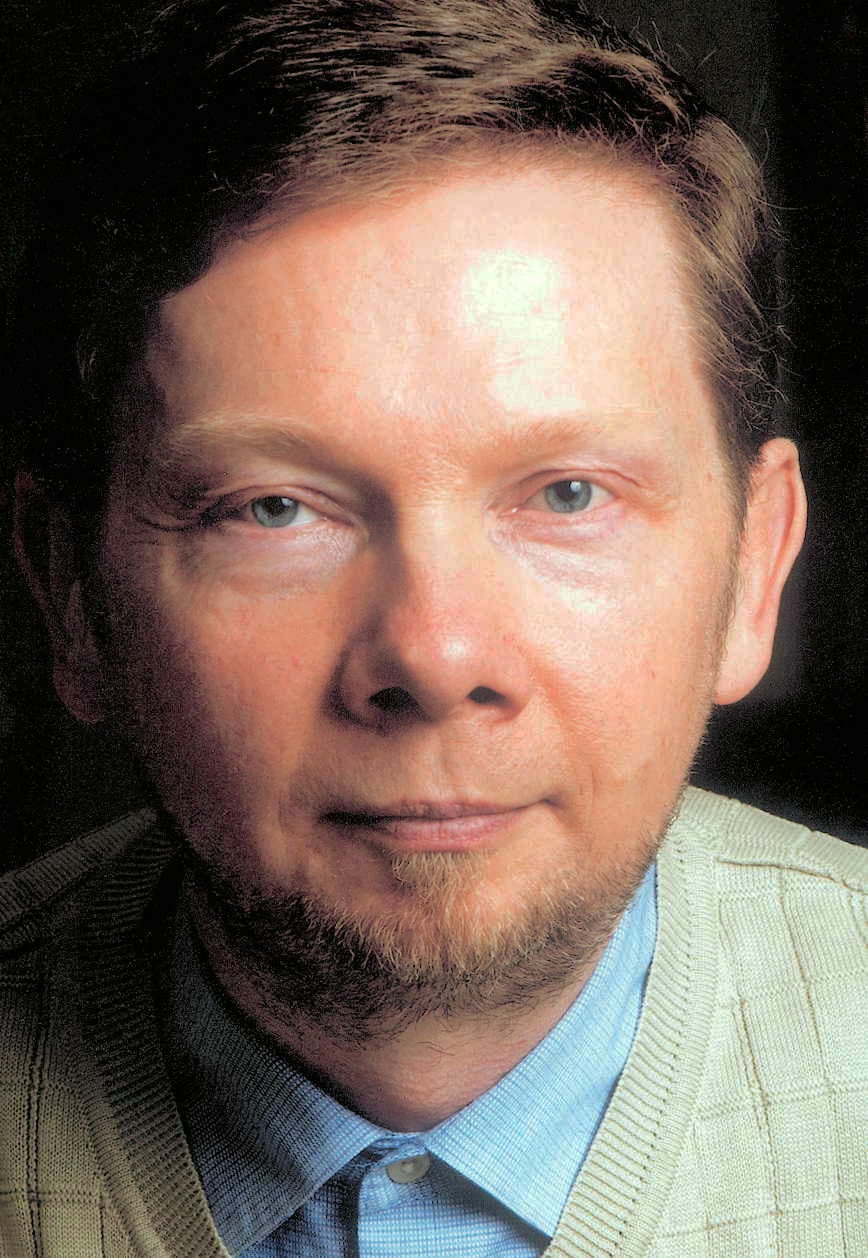
Eckhart Tolle · CC BY-SA 3.0
उनके अपने शब्दों में
«You are not your mind.»The Power of Now (1997), título del capítulo 1

मूल विचार
Psychological suffering comes from identifying with thought: the inner voice that comments, judges and anticipates is not who one is, and simply watching it begins the release.
संदर्भ में देखें
जीवनी
6 मिनट का पाठ
स्पैनिश मूल से सहायता-प्राप्त अनुवाद, मातृभाषी अनुवादक द्वारा समीक्षा लंबित।
रूर का एक बालक जिसने स्कूल से इनकार किया
उलरिख़ लियोनार्ड टॉले का जन्म 16 फ़रवरी 1948 को ल्यूनेन में हुआ, जो डॉर्टमुंड के उत्तर में स्थित एक छोटा औद्योगिक नगर है और युद्धोत्तर जर्मनी के ब्रिटिश क्षेत्र में पड़ता था। वे युद्ध के उन खंडहरों के बीच बड़े हुए जो तब भी आँखों के सामने थे, और एक ऐसे घर में जिसे उन्होंने स्वयं कठिन बताया है: माता-पिता में अक्सर झगड़े होते थे और अंततः वे अलग हो गए। तेरह वर्ष की आयु में वे अपने पिता के पास स्पेन चले गए, जहाँ उन्होंने अपनी किशोरावस्था का शेष भाग बिताया। वहीं उन्होंने एक असामान्य निर्णय लिया: तेरह से बाईस वर्ष की आयु तक उन्होंने औपचारिक स्कूली शिक्षा से इनकार किया और कुछ निजी पाठों की सहायता से भाषाएँ, साहित्य और खगोलशास्त्र स्वयं सीखे।
आध्यात्मिकता से उनका पहला परिचय लगभग पंद्रह वर्ष की आयु में हुआ, जब किसी ने उन्हें जर्मन रहस्यवादी योज़ेफ़ आंटोन श्नाइडरफ़्रांकेन की पुस्तकें भेंट कीं, जो बो यिन रा के नाम से प्रसिद्ध थे। उन्होंने स्वयं स्वीकार किया है कि उन पन्नों ने उन पर गहरी छाप छोड़ी, यद्यपि तब वे समझ नहीं पाए कि उनका क्या करें।
लंदन, अवसाद और 1977 की वह रात
उन्नीस वर्ष की आयु में वे इंग्लैंड चले गए। तीन वर्ष तक उन्होंने लंदन के एक भाषा-विद्यालय में जर्मन और स्पेनिश पढ़ाई, फिर लंदन विश्वविद्यालय में अध्ययन किया और 1977 में कैंब्रिज विश्वविद्यालय में स्नातकोत्तर शोध आरंभ किया। किंतु भीतर से वे एक ऐसी व्यथा में जी रहे थे जो थमती ही नहीं थी: चिंता के लंबे दौर और एक ऐसा अवसाद जिसे वे लगभग असहनीय बताते हैं।
1977 की एक रात, उनतीस वर्ष के होने के कुछ ही समय बाद, वे पहले से कहीं अधिक तीव्र निराशा के भाव के साथ जाग उठे। उनके अपने वृत्तांत के अनुसार, जिससे उनकी पहली पुस्तक आरंभ होती है, एक वाक्य उन पर हावी हो गया — वे अब अपने साथ और नहीं जी सकते — और उसके साथ एक प्रश्न उठा: यह «मैं» कौन है जो «स्वयं» को सहन नहीं कर पाता? वे बताते हैं कि उन्हें लगा मानो वे किसी शून्य में खिंचे चले जा रहे हों, और अगली सुबह जागने पर सब कुछ शांति में डूबा था। वे लंदन में टहलने निकले और उन्हें सब कुछ चमत्कारिक लगा, यहाँ तक कि सड़क का यातायात भी। बाद में उन्होंने उस रात की व्याख्या मन द्वारा गढ़े गए उस अहं के ढह जाने के रूप में की, जो एक असंतोषजनक अतीत और एक भयावह भविष्य के बीच बंदी बना रहता है।
इसके बाद कोई करियर नहीं, बल्कि एक लंबा अंतराल आया। उन्होंने डॉक्टरेट छोड़ दी और लगभग दो वर्ष मध्य लंदन के रसेल स्क्वेयर की बेंचों पर बैठे-बैठे बिताए, उस अवस्था में जिसे वे गहन आनंद की अवस्था कहते हैं, संसार को अपने सामने से गुज़रते देखते हुए। वे मित्रों के यहाँ रहे, कुछ समय एक बौद्ध मठ में ठहरे और कभी-कभी हैम्पस्टेड हीथ में खुले आसमान के नीचे सोए। उनके परिवार ने उन्हें ग़ैर-ज़िम्मेदार, बल्कि विक्षिप्त तक माना।
एक मौन परामर्शदाता से विश्वविख्यात लेखक तक
कैंब्रिज के पुराने साथी उनसे प्रश्न पूछने आने लगे। बिना किसी प्रयोजन के वे परामर्शदाता बन गए और धीरे-धीरे छोटे समूहों के आध्यात्मिक गुरु। इन्हीं वर्षों में उन्होंने अपना नाम बदलकर एकहार्ट रख लिया। इस विषय में वृत्तांत भिन्न हैं: कुछ इसे राइनलैंड के रहस्यवादी माइस्टर एकहार्ट के प्रति श्रद्धांजलि मानते हैं; स्वयं उन्होंने 2012 में बताया कि उन्होंने स्वप्न में यह नाम एक ऐसी पुस्तक के आवरण पर देखा था जिसे वे जानते थे कि उन्हीं की है, और कुछ ही समय बाद एक मित्र ने बिना किसी प्रकट कारण के उन्हें इसी नाम से पुकारा।
वैकल्पिक जीवन-शैली के छोटे-से अंग्रेज़ी केंद्र ग्लास्टनबरी में कुछ समय बिताने और उत्तरी अमेरिका के पश्चिमी तट की कई यात्राओं के बाद, 1995 में वे कनाडा के वैंकूवर में बस गए, जहाँ उनकी भेंट किम एंग से हुई, जो तब से उनकी जीवनसंगिनी और शिक्षण में सहयोगी हैं।
1997 में वैंकूवर के एक अत्यंत छोटे प्रकाशन-गृह, नमस्ते पब्लिशिंग, ने The Power of Now (वर्तमान की शक्ति) की लगभग तीन हज़ार प्रतियाँ छापीं। प्रश्नोत्तर की एक शृंखला के रूप में लिखी गई यह पुस्तक हाथों-हाथ फैलती रही, जब तक कि 1999 में न्यू वर्ल्ड लाइब्रेरी ने इसे बड़े पैमाने पर पुनर्प्रकाशित नहीं किया। 2000 में ओप्रा विनफ़्रे ने अपनी पत्रिका में इसकी अनुशंसा की; उसी गर्मी में यह द न्यूयॉर्क टाइम्स की सर्वाधिक बिकने वाली पुस्तकों की सूची में आई और दो वर्ष बाद शीर्ष पर पहुँच गई। 2008 तक इसका तीस से अधिक भाषाओं में अनुवाद हो चुका था।
इसके बाद आईं Stillness Speaks (मौन बोलता है, 2003), जो उनकी शिक्षा का लगभग सूक्ति-रूप सार है, और A New Earth (एक नई पृथ्वी, 2005), जो दृष्टि को व्यक्ति से मानवता तक विस्तृत करती है: अहंकार एक सामूहिक विकृति के रूप में, और चेतना का जागरण उससे निकलने के मार्ग के रूप में। जब जनवरी 2008 में विनफ़्रे ने इस दूसरी पुस्तक को अपने पुस्तक-क्लब के लिए चुना, तो चार सप्ताह में इसकी 35 लाख प्रतियाँ वितरित हुईं। दोनों ने अध्याय-दर-अध्याय जो ऑनलाइन संगोष्ठियाँ रिकॉर्ड कीं, वे करोड़ों बार देखी गईं, और द न्यूयॉर्क टाइम्स ने तब उन्हें संयुक्त राज्य अमेरिका का सबसे लोकप्रिय आध्यात्मिक लेखक कहा।
उनकी शिक्षा
टॉल की शिक्षा जान-बूझकर सरल रखी गई है और किसी धर्म से संबद्ध नहीं है। उनका मत है कि मनोवैज्ञानिक दुःख विचार के साथ तादात्म्य से जन्म लेता है — उस अनवरत स्वर से जो टिप्पणी करता है, तुलना करता है और भयभीत होता है; कि एकमात्र वास्तविक क्षण वर्तमान है; और कि मन में बह जाने के बजाय उसका साक्षी बनना निःस्तब्धता का एक ऐसा अवकाश खोलता है जिसे वे उपस्थिति कहते हैं। उन्होंने «पीड़ा-देह» (pain-body) शब्द गढ़ा, उस संचित भावनात्मक अवशेष के लिए जो पुनः सक्रिय होकर संघर्ष में अपना आहार खोजता है। वे ज़ेन बौद्ध धर्म, वेदान्त, सूफ़ी परंपरा और ईसाई रहस्यवादियों से उन्मुक्त भाव से ग्रहण करते हैं और प्रायः सुसमाचारों को उद्धृत करते हैं।
स्वीकृति और विरासत
उनकी सफलता ने आलोचकों को बाँट दिया है। कुछ लोग इस बात की सराहना करते हैं कि वे सरल भाषा में वह कह देते हैं जो ध्यान-परंपराओं ने सांकेतिक भाषा में कहा था; फ़्रांसिस्कन धर्मशास्त्री रिचर्ड रोर उन्हें इस बात का श्रेय देते हैं कि उन्होंने अनेक ईसाइयों को उनके अपने रहस्यवाद की ओर लौटाया। अन्य लोग उन पर मौलिकता के अभाव, छद्म-विज्ञान और पराई परंपराओं के मिश्रण का, या इवैंजेलिकल धर्मशास्त्र की दृष्टि से, ईश्वर और मनुष्य के बीच ईसाई भेद से असंगत दृष्टिकोण का आरोप लगाते हैं। इस अंतर की ओर भी ध्यान दिलाया गया है कि एक ओर वे «भारी-भरकम व्यावसायिक ढाँचा» खड़ा न करने की घोषणा करते हैं, और दूसरी ओर उनकी वेबसाइट पर उत्पादों की एक विस्तृत सूची बिकती है।
2009 में वैंकूवर शांति शिखर सम्मेलन में उन्होंने दलाई लामा के साथ मंच साझा किया। उन्होंने चित्रित पुस्तकें प्रकाशित की हैं — पैट्रिक मैकडॉनेल के साथ Guardians of Being — और बच्चों की एक कहानी, Milton's Secret, जिस पर 2016 में फ़िल्म बनी। 2022 में रैपर केंड्रिक लामार ने Mr. Morale & the Big Steppers एल्बम में उन्हें अपने मार्गदर्शक के रूप में प्रस्तुत किया, जिसके कई ट्रैकों में उनकी आवाज़ सुनाई देती है। जनवरी 2025 में ओप्रा विनफ़्रे ने एक नई पृथ्वी को फिर से अपने क्लब के लिए चुना — यह एकमात्र अवसर है जब किसी पुस्तक को दो बार चुना गया। वे ब्रिटिश कोलंबिया से रिट्रीटों, ऑनलाइन सभाओं और अपने फ़ाउंडेशन के माध्यम से शिक्षा देना जारी रखे हुए हैं।
स्रोत: Tolle, Eckhart. The Power of Now: A Guide to Spiritual Enlightenment. Vancouver: Namaste Publishing, 1997 (introducción autobiográfica).
कालक्रम
जीवन, वर्ष-दर-वर्ष
प्रत्येक बिंदु एक प्रमाणित घटना है। उसे स्रोत और निश्चितता के स्तर सहित पढ़ने के लिए क्लिक करें।
16 फ़रवरी 19480 वर्षLünen (Alemania)
Birth
Ulrich Leonard Tölle is born in Lünen, north of Dortmund, in the British occupation zone.
प्रमाणित«Eckhart Tolle», Wikipedia en inglés (consultada para hechos verificables; texto propio).
16 फ़रवरी 1948 · 0 वर्ष
Birth
Ulrich Leonard Tölle is born in Lünen, north of Dortmund, in the British occupation zone.
प्रमाणित
1961 · 13 वर्ष
To Spain with his father
After his parents separate he moves to Spain with his father and refuses formal schooling until twenty-two.
प्रमाणित
1963 · 15 वर्ष
The books of Bô Yin Râ
He is given the books of the German mystic Joseph Anton Schneiderfranken, which he says influenced him deeply.
संभावित
1967 · 19 वर्ष
Language teacher in London
He moves to England and teaches German and Spanish for three years at a language school, then studies at the University of London.
संभावित
1977 · 29 वर्ष
The night of transformation
He begins postgraduate study at Cambridge. One night, in deep depression, he experiences what he describes as the collapse of the mental self; he abandons his studies.
प्रमाणित
1978 · 30 वर्ष
The benches of Russell Square
He spends about two years on the benches of Russell Square in deep peace, sleeping at friends', in a Buddhist monastery or rough on Hampstead Heath.
प्रमाणित
1982 · 34 वर्ष
Counsellor and teacher
Former acquaintances consult him; he begins working as a counsellor and teacher of small groups and takes the name Eckhart. He later lives in Glastonbury.
संभावित
1995 · 47 वर्ष
Settles in Vancouver
He settles in British Columbia, where he meets Kim Eng, his partner and collaborator.
प्रमाणित
1997 · 49 वर्ष
The Power of Now
Namaste Publishing brings out his first book in a small run; New World Library reissues it widely in 1999.
प्रमाणित
2000 · 52 वर्ष
Oprah's recommendation
Oprah Winfrey recommends The Power of Now in her magazine; in August it enters The New York Times bestseller list, which it tops in 2002.
प्रमाणित
2003 · 55 वर्ष
Stillness Speaks
He publishes his second book, a brief distillation of his teaching.
प्रमाणित
2005 · 57 वर्ष
A New Earth
Dutton publishes A New Earth, on the collective ego and the awakening of consciousness.
प्रमाणित
जनवरी 2008 · 60 वर्ष
The book club and the webinars with Oprah
Oprah picks A New Earth for her club; 3.5 million copies in four weeks and a webinar series accessed tens of millions of times.
प्रमाणित
सितंबर 2009 · 61 वर्ष
Peace Summit with the Dalai Lama
He shares the stage with the Dalai Lama at the Vancouver Peace Summit. Publishes Guardians of Being with Patrick McDonnell.
प्रमाणित
2011 · 63 वर्ष
First on the Watkins list
Watkins magazine ranks him first in its inaugural list of the 100 most spiritually influential living people.
प्रमाणित
2016 · 68 वर्ष
Milton's Secret on film
His children's story is filmed with Donald Sutherland and Michelle Rodriguez.
प्रमाणित
2022 · 74 वर्ष
Kendrick Lamar
The album Mr. Morale & the Big Steppers presents him as the rapper's spiritual guide, with his voice on several tracks.
प्रमाणित
जनवरी 2025 · 76 वर्ष
Back in Oprah's club
Oprah chooses A New Earth again, the only book ever selected twice in the club's history.
प्रमाणित
कृतियाँ
आवश्यक कृतियाँ
वे कृतियाँ जिनके बिना उनकी विरासत को समझा नहीं जा सकता।
लिखित कृति · 1997
The Power of Now
The Power of Now: A Guide to Spiritual Enlightenment
His first and most read book: a guide in question-and-answer form for stepping out of identification with the mind and living in the present moment. It explains the pain-body, acceptance of the now and presence, and since 1999 has been translated into over thirty languages.
7 संस्करण · amazon.com

लिखित कृति · 2003
Stillness Speaks
Tolle's second book, made of short texts, almost aphorisms, grouped in ten chapters on inner silence, thought, the body, nature, relationships and death. It seeks to transmit stillness rather than explain it, and is read slowly, like a meditation book.
2 संस्करण · amazon.com

लिखित कृति · 2005
A New Earth
A New Earth: Awakening to Your Life's Purpose
Widens his teaching from the individual to humanity: it describes the ego as a collective dysfunction expressed in violence and greed, and presents the awakening of consciousness as the species' next step. Chosen twice by Oprah Winfrey's book club (2008 and 2025).
5 संस्करण · amazon.com
संपूर्ण कृतित्व (39)

Practicing the Power of Now
2001

Oneness with All Life
2008

Milton's Secret
2008

Guardians of Being
2009

Findhorn Retreat
2006

Peace in the Present Moment
2010

The Power of Now Journal
2019

Living the Liberated Life and Dealing with the Pain-Body
2001

The Realization of Being
2001

Even the Sun Will Die
2002

Realizing the Power of Now
2003

Entering the Now
2003

Gateways to Now
2003

The Flowering of Human Consciousness
2004

Through the Open Door to the Vastness of Your True Being
2005

In the Presence of a Great Mystery
2006

Touching the Eternal: India Retreat
2007

The Art of Presence
2007

Finding Your Life's Purpose
2015
Eckhart Tolle
Breitenbush 01: The "Rains" Retreat — The Journey Home
The Conscious LibraryBreitenbush 01: The "Rains" Retreat — The Journey Home
2001

Know That "I Am"
2002

May the Mind Be the Servant of Awareness
2002
Eckhart Tolle
The Journey into Yourself
The Conscious LibraryThe Journey into Yourself
2003

Practicing Presence: A Guide for the Spiritual Teacher and Health Practitioner
2004
वचन
किसी निश्चित कृति में स्थित वचन। प्रत्येक के साथ उसका स्रोत और विश्वसनीयता का स्तर है।
You are not your mind.सत्यापितThe Power of Now (1997), título del capítulo 1
मूल विचार (संपादकीय सार)
कॉपीराइट के सम्मान में, ये विचार हमारे अपने शब्दों में संक्षेपित हैं और इन्हें शब्दशः उद्धरण के रूप में प्रस्तुत नहीं किया गया है।
- Psychological suffering comes from identifying with thought: the inner voice that comments, judges and anticipates is not who one is, and simply watching it begins the release.
- The present is the only real moment; past and future exist only as thought. Fully accepting the now is not resignation but ceasing inner resistance to it.
- The pain-body is the accumulation of old painful emotion that reawakens and feeds on conflict; seeing it arise with attention removes its power.
- The ego is not only a personal problem: it is a collective dysfunction of humanity, expressed in violence, greed and the destruction of the planet.
- Inner stillness is not achieved but discovered by allowing space between thoughts; in that space is presence, which is consciousness itself.
- A life's primary purpose is inner — being awake in what one does; the outer purpose, what one does, is secondary and changes.
पूछें
उनकी कृतियाँ क्या उत्तर देती हैं
मानवता के बारह महान प्रश्न और उनके ग्रंथ उनका जो उत्तर देने देते हैं, संदर्भों सहित। हम कभी उनके मुख में अपने शब्द नहीं रखते।
परम सत्य क्या है? क्या ईश्वर है?
He prefers to speak of Being: the one formless life beyond forms
निराकार परम सत्तास्पष्ट रूप से कहा है
Eckhart Tolle does not deny God, but he distrusts the word. In the first chapter of The Power of Now he explains that the term God has been emptied by centuries of misuse, associated with a separate, often male, entity placed outside; he proposes instead to speak of Being, the one eternal life underlying the countless forms subject to birth and death. That Being is not an object of knowledge or belief: it is felt as one's own presence when the mind grows quiet. In A New Earth he keeps the same approach: the divine is not someone judging from outside but formless consciousness recognising itself in the human being. His language is therefore that of an impersonal absolute, though immediate and inward.
इस प्रश्न की अन्य गुरुओं से तुलना करेंमैं कौन हूँ? क्या कोई सच्चा आत्म है?
You are not your thoughts: the ego is identification with mind
अहं विचार की रचना हैस्पष्ट रूप से कहा है
Eckhart Tolle defines the ego as identification with the mind: with thoughts, emotions, personal history and the forms by which the self reinforces itself, such as possessions, opinions or the victim role. In A New Earth (2005) he devotes whole chapters to describing its structure and its need to compare, be right and feel separate. The key of his teaching is that simply observing thought is enough to stop identifying with it: the one who observes is not what is observed. Unlike Krishnamurti, Tolle does affirm a deeper identity, formless presence or awareness, which he calls Being and which is recognised when the mind falls silent. His practical emphasis, however, is on unmasking the ego as a mental construction, and on the claim that seeing it is already the beginning of liberation.
इस प्रश्न की अन्य गुरुओं से तुलना करेंहम दुःख क्यों भोगते हैं?
Suffering needs time: it cannot survive in the now
विचार और मनोवैज्ञानिक समयस्पष्ट रूप से कहा है
Eckhart Tolle locates the origin of suffering in the mind living in psychological time: the past, from which it draws identity and grievances, and the future, onto which it projects its salvation or its fear. In the opening chapters of The Power of Now he holds that almost all human pain is unnecessary, created by mental resistance to what is, and that suffering cannot survive in full presence to the moment. He adds the notion of the pain-body: a field of accumulated emotional energy, personal and collective, which reactivates periodically and feeds on thoughts and conflict; in A New Earth he devotes a whole chapter to it. The remedy is not to analyse the story of pain but to observe it without identifying with it and to accept the present moment, which, he says, cuts off the supply that keeps it alive.
इस प्रश्न की अन्य गुरुओं से तुलना करेंमृत्यु के बाद क्या होता है?
The opposite of death is birth; life has no opposite
जो मैं हूँ, वह न जन्मता है न मरता हैस्पष्ट रूप से कहा है
Eckhart Tolle distinguishes between form, which is born and dies, and the life or consciousness expressed in it, which has no opposite. What dissolves at death is form and the mental identity built upon it; what one essentially is, conscious presence, neither begins nor ends. That is why, he holds, the death of a loved one or the nearness of one's own can open a door: when one stops resisting the loss of form, a space of peace appears that does not depend on it. In Stillness Speaks he devotes a chapter to death and the eternal, and in The Power of Now he presents surrender to what is as a way of dying before dying. Tolle avoids describing states after death; what he affirms is the timelessness of what we are, accessible now.
इस प्रश्न की अन्य गुरुओं से तुलना करेंमुक्ति या उद्धार कैसे प्राप्त होता है?
Awakening is not in time: it is presence, ceasing to identify with the mind
बिना विधि: संपूर्ण अवधानस्पष्ट रूप से कहा है
Eckhart Tolle holds in The Power of Now that suffering arises from identification with the mind and with psychological time, that is, with the continuous projection into past and future. Liberation is not a future state conquered through progressive effort, because seeking it in time reinforces the very mechanism that prevents it: it can only happen now. It consists in being aware of thoughts without identifying with them, in «watching the thinker», and in accepting what is in the present moment. In A New Earth he extends this idea to a collective scale: the ego is a structure of identification with form, and awakening is the emergence of a consciousness that recognises itself beyond that form.
इस प्रश्न की अन्य गुरुओं से तुलना करेंक्या गुरु आवश्यक है?
The teacher's words are signposts; what matters is presence within oneself
गुरु भीतर हैउनके सिद्धांत से निष्कर्षित
In the introduction to The Power of Now, Eckhart Tolle recounts that his inner transformation happened without a teacher, after a personal crisis, and that he later recognised in various traditions what had happened to him. Consistently, he presents his own books and talks as pointers: words are signposts pointing to something that is not a word, and readers should attend to what the words awaken in them rather than to their conceptual content. The true teacher would be presence itself, the state of consciousness that recognises itself. He does not deny that the company of someone present helps, but avoids presenting himself as a guru and demands neither membership nor devotion.
इस प्रश्न की अन्य गुरुओं से तुलना करेंक्या संसार वास्तविक है?
The unmanifested expresses itself in form; the universe awakens to itself
दिव्य की अभिव्यक्तिउनके सिद्धांत से निष्कर्षित
Eckhart Tolle does not consider the world an illusion. In The Power of Now he distinguishes between the manifested, the world of forms, and the unmanifested, the formless source from which they arise, accessed through portals such as silence, space or attention to the inner body. What is illusory is not form but identification with it: the ego, which takes itself to be one form among forms. In A New Earth he holds that the purpose of the universe is for consciousness to awaken in form, and that each thing, a flower or a stone, can be recognised as an expression of that consciousness. The world is thus the realm in which the formless recognises itself.
इस प्रश्न की अन्य गुरुओं से तुलना करेंप्रेम क्या है?
To love is to recognise oneself in the other beyond form and ego
जो अहं के मिटने पर प्रकट होता हैस्पष्ट रूप से कहा है
Eckhart Tolle separates true love from the relationships the ego calls love. In the chapter on relationships in The Power of Now he describes the love-hate relationship: need, attachment and the search in the other for what is lacking in oneself, which turn love into addiction and soon alternate with resentment and conflict. Real love, he holds, is not an emotion or something obtained from another person: it is the recognition of oneself in the other, of the same presence or consciousness beyond form. It appears when one is present and does not project the mind's past and expectations onto the other. In A New Earth he adds that this recognition extends to all beings and to nature, and that a relationship can become a spiritual practice if it is used to become conscious of the ego.
इस प्रश्न की अन्य गुरुओं से तुलना करेंक्या हम स्वतंत्र हैं, या सब कुछ पूर्वनिर्धारित है?
While the mind runs on automatic there is no choice; presence makes it possible
जागने तक हम यंत्र हैंउनके सिद्धांत से निष्कर्षित
Tolle describes the ordinary human being as identified with a mind that thinks compulsively and with a «pain-body» that reacts through inherited patterns. In that state, he holds in *The Power of Now*, what look like decisions are conditioned reactions: the unconscious person does not choose but repeats. Hence his advice towards someone who harms us is to understand that they could not have acted otherwise from their level of consciousness. True choice appears with presence, when one becomes the observer of the mind and stops being dragged along by it. In *A New Earth* he extends this to humanity: collective consciousness runs in a dysfunctional egoic mode from which only an awakening can free it.
इस प्रश्न की अन्य गुरुओं से तुलना करेंध्यान या प्रार्थना क्यों करें?
Stepping out of compulsive thinking into the now, where stillness arises
उपस्थित रहनास्पष्ट रूप से कहा है
Tolle is the reference for this key. In *The Power of Now* (1997) he holds that most human suffering comes from identification with a mind that thinks ceaselessly and lives in the past or the future. Practice does not consist in a formal method, although he offers exercises —watching the thinker, feeling the inner body, attending to the gaps between thoughts—, but in returning again and again to the present moment, the only thing that exists. When attention leaves thought, a conscious stillness arises that he identifies with one's own being. In *A New Earth* (2005) he adds that this presence also transforms everyday action, which stops serving the ego.
इस प्रश्न की अन्य गुरुओं से तुलना करेंक्या बुद्धि परम को जान सकती है?
You are not your mind: being is known in stillness, not in thought
परम मन से परे हैस्पष्ट रूप से कहा है
The first chapter of *The Power of Now* is titled «You Are Not Your Mind», and it sums up his stance: thought is a useful instrument, but identification with it is the great human dysfunction, and through it one does not reach what Tolle calls Being. Words and concepts, he insists, are signposts pointing to reality, not reality itself, and most religious disputes arise from confusing the one with the other. True knowledge arises when the mind falls quiet and a space of awareness appears in which thought is observed. In *A New Earth* he puts it as the shift from a consciousness centred on thought to one centred on presence, not as a new doctrine.
इस प्रश्न की अन्य गुरुओं से तुलना करेंसंसार से हटें या उसे बदलें?
A new world is born of a new consciousness, not of new ideologies
क्रांति भीतर हैस्पष्ट रूप से कहा है
Eckhart Tolle holds in A New Earth that humanity faces a choice: either it transforms its consciousness or it destroys itself. Wars, exploitation and the ecological crisis are, for him, collective manifestations of the ego, identification with a mind that feels separate and threatened; that is why solutions that do not touch this root — new ideologies, systems or struggles against an enemy — end up reproducing the same pattern. The change that matters is the flowering of consciousness in individuals. He does not advise abandoning the world: in the last chapter he describes «awakened doing», action springing from presence, in three modalities — acceptance, enjoyment and enthusiasm — and speaks of people whose role is to hold a frequency of consciousness amid ordinary life. Outward action is valid if it flows from presence and not from the ego.
इस प्रश्न की अन्य गुरुओं से तुलना करें
निकटता और तनाव
निकटता और तनाव
उनके मतों के आधार पर प्रश्न-दर-प्रश्न आकलित। प्रत्येक सहमति या टकराव का कारण क्लिक करने पर।
इनसे मिलता-जुलता सोचते हैं
Osho
इन पर सहमत: परम सत्य क्या है? क्या ईश्वर है? · मैं कौन हूँ? क्या कोई सच्चा आत्म है? · हम दुःख क्यों भोगते हैं?
Alan Watts
इन पर सहमत: परम सत्य क्या है? क्या ईश्वर है? · हम दुःख क्यों भोगते हैं? · मृत्यु के बाद क्या होता है?
- BKByron Katie
Byron Katie
इन पर सहमत: परम सत्य क्या है? क्या ईश्वर है? · मैं कौन हूँ? क्या कोई सच्चा आत्म है? · हम दुःख क्यों भोगते हैं?
Huineng
इन पर सहमत: परम सत्य क्या है? क्या ईश्वर है? · मृत्यु के बाद क्या होता है? · क्या गुरु आवश्यक है?



इन पर सहमत
Eckhart Tolle · Ramana Maharshi
You are not what you think: the shift of the subject on the hill and in the now
क्यों: The affinity has a contextual explanation: Tolle writes in a contemporary Western milieu that had received Advaita, among other sources, through Ramana and his popularisers, and he adopts a vocabulary without scriptures or gods. The differences are of register and audience. Ramana speaks from the Vedantic tradition, with an explicit metaphysical horizon, since the Self is identical with the Absolute, and with a very precise question-method; Tolle addresses readers without religious training, stresses the now and the inner body, and extends the diagnosis to a collective scale. One asks who; the other asks one to be present. Both point to the same shift of the subject.
इन पर सहमत
Eckhart Tolle · P. D. Ouspensky
Waking from automatic pilot: self-remembering and the power of now
क्यों: There is no documented relationship between them, although the vocabulary of awakening and automatic pilot found in contemporary spirituality owes much to the Fourth Way. The affinity has clear limits. Self-remembering demands effort, a deliberate division of attention and a system of group work, and its goal is to form a permanent self that does not yet exist; Tolle's presence is presented as something not manufactured or reached in time but recognised as one's own being. Ouspensky writes for a school with discipline and hierarchy; Tolle, for individual readers without a tradition. They agree on the first step, not on the path or the goal.
इन पर सहमत
Eckhart Tolle · Jiddu Krishnamurti
Suffering needs time: thought projecting past and future
क्यों: No relationship between them is documented in this library, although Tolle writes in a milieu that knew Krishnamurti's work well, published and circulated for decades. The differences are real. Krishnamurti rejects any metaphysics of a true Being, which he considers another projection of thought, and any exercise, which he considers a method; Tolle affirms a presence or formless consciousness he calls Being, proposes concrete exercises such as feeling the inner body and adds the notion of the pain-body. Krishnamurti speaks harshly of conditioning and revolution; Tolle, in a tone of accompaniment. They agree on the diagnosis of psychological time, not on what they find on the other side.
इन पर टकरावआभासी विरोधाभास
Eckhart Tolle · Adi Shankara
Is the world an illusion? Superimposition on Brahman or form in which consciousness awakens
क्यों: The contradiction is largely apparent: both distinguish two levels, a formless source and a world dependent on it, and both locate the error in the subject who confuses the levels, ignorance in Shankara, identification in Tolle. Vocabulary separates them more than structure: maya sounds like negation to a modern reader, although in Shankara it does not amount to a subjective dream. A real difference of evaluation remains. For Shankara multiplicity has no purpose and vanishes for one who knows; for Tolle, along a line closer to manifestation than to illusion, form is the place where consciousness recognises itself, and the universe has an evolutionary meaning.
प्रसंग और वृत्तांत
प्रसंग और वृत्तांत
साक्ष्य1977
The night he could not live with himself
वृत्तांत का स्रोत: Autobiographical account in the introduction to The Power of Now (1997) and later interviews.
स्रोत: Tolle, Eckhart. The Power of Now: A Guide to Spiritual Enlightenment. Vancouver: Namaste Publishing, 1997 (introducción autobiográfica).
साक्ष्य1977–1979
Two years on a bench in Russell Square
वृत्तांत का स्रोत: Tolle's own testimony from interviews, summarised in the Wikipedia biography; no independent sources.
स्रोत: «Eckhart Tolle», Wikipedia en inglés (consultada para hechos verificables; texto propio).
विवादित1980s
A name seen in a dream
वृत्तांत का स्रोत: Two versions: the homage (attributed by others) and the dream (2012 interview cited by Wikipedia).
स्रोत: «Eckhart Tolle», Wikipedia en inglés (consultada para hechos verificables; texto propio).
प्रमाणित2008
Eleven million people in one class
वृत्तांत का स्रोत: Figures published in the press and collected by Wikipedia.
स्रोत: «Eckhart Tolle», Wikipedia en inglés (consultada para hechos verificables; texto propio).
शिक्षाएँ
शिक्षाएँ
वे अवधारणाएँ जो उनके चिंतन को रूप देती हैं, उनके संदर्भ में समझाई गई।
Pain-bodycuerpo-del-dolor
Developed in The Power of Now (ch. 2) and expanded in A New Earth (chs. 5 and 6).
स्रोत: Tolle, Eckhart. The Power of Now: A Guide to Spiritual Enlightenment. Vancouver: Namaste Publishing, 1997 (introducción autobiográfica).
Presencepresencia
Central concept of The Power of Now and Stillness Speaks.
स्रोत: Tolle, Eckhart. The Power of Now: A Guide to Spiritual Enlightenment. Vancouver: Namaste Publishing, 1997 (introducción autobiográfica).
साधना-शिविर
साधना-शिविर और केंद्र
उनकी शिक्षा से जुड़े स्थान और समागम। हम आपको उनके आयोजकों से जोड़ते हैं।
En línea · Internacional
Eckhart Tolle: membership community and online courses
Eckhart Teachings
Besides his public gatherings, Eckhart Tolle runs a private online membership community which, according to his website, includes quarterly live teachings, monthly video practices and access to more than four hundred hours of recorded teachings, with a free seven-day trial. His shop also offers online courses. It is the most continuous way to follow his teaching from home, with a regular rhythm of practice rather than a one-off event. As in his books, the emphasis is on attention to the present moment and on observing the mind without identifying with it.
Sede variable (retiros recientes en Whistler, Canadá) y en línea · Internacional
Eckhart Tolle: retreats, events and livestreams
Eckhart Teachings
Eckhart Tolle, author of The Power of Now, teaches mainly through public gatherings: multi-day in-person retreats, weekend intensives and evening talks in different cities. His official website publishes the calendar, and many of these events can also be followed live online, so those who cannot get a seat in the hall can take part remotely. The content centres on presence, observing thought and accepting the present moment, without affiliation to any religion. In-person places tend to sell out, so it is worth checking well in advance.
वीडियो
वीडियो
रिकॉर्डिंग, साक्षात्कार और वृत्तचित्र। वीडियो YouTube से चलते हैं; वे यहाँ संग्रहीत नहीं हैं।
Eckhart Tolle: “A New Earth” | Oprah’s Book Club
साक्षात्कार· EN· 2025· 53 min
Oprahआधिकारिक चैनल
Eckhart Tolle: Author of 'A New Earth' | Super Soul Sunday S8E9 | Full Episode
साक्षात्कार· EN· 42 min
OWNआधिकारिक चैनल
Understanding the Pain-Body | A Special 3 Part Compilation from Eckhart Tolle
व्याख्यान· EN· 40 min
Eckhart Tolleआधिकारिक चैनल
Why You Don’t Need to Fear Death | Eckhart Tolle Foundation
व्याख्यान· EN· 2026· 11 min
Eckhart Tolleआधिकारिक चैनल
What being awake actually means
व्याख्यान· EN· 2026· 10 min
Eckhart Tolleआधिकारिक चैनल
Eckhart Tolle Reveals the Secret to Fulfillment Through Stillness and Action
व्याख्यान· EN· 95 min
Eckhart Tolleआधिकारिक चैनल
Eckhart Tolle interview with host Nina Rhodes 1998
साक्षात्कार· EN· 1998· 27 min
Craig Delahunt
Eckhart Tolle at the Omega Institute 2001, Session 2
व्याख्यान· EN· 2001· 73 min
Namaste Publishingआधिकारिक चैनल
Eckhart Tolle — Reality Is Beyond Thought
व्याख्यान· EN· 87 min
Namaste Publishingआधिकारिक चैनल
Eckhart Tolle on The Hour with George Stroumboulopoulos
साक्षात्कार· EN· 2009· 13 min
Strombo
Eckhart Tolle and Tami Simon | Conscious Manifestation and The Present Moment
साक्षात्कार· EN· 2019· 27 min
Sounds Trueआधिकारिक चैनल
Eckhart Tolle on Finding Your Identity, Meaning & Purpose in Life
साक्षात्कार· EN· 2024· 90 min
Tony Robbins
Eckhart Tolle: Spirituelles Erwachen, das wahre Selbst und die Überwindung des Egos
साक्षात्कार· DE· 2024· 81 min
Laura Malina Seiler
Eckhart Tolle: El 99 % de las Personas MANIFIESTA de Forma Incorrecta (Así Puedes Solucionarlo)
साक्षात्कार· ES· 2026· 95 min
Lewis Howes Español
चित्रशाला
चित्रशाला
सत्यापित लाइसेंस वाले चित्र। प्रत्येक में उसके रचयिता और श्रेय का उल्लेख सुरक्षित है।
संबंध
संबंध
प्रभाव, शिष्यत्व और वैचारिक निकटता। प्रमाणित संबंध को विश्लेषण से पहचानी गई समानता से अलग दर्शाया गया है।
इनसे भेंट
The 14th Dalai Lama (Tenzin Gyatso)
They shared the stage at the Vancouver Peace Summit (September 2009).
प्रमाणित संबंध
इनसे मिलते-जुलते विचार
Choiceless observation of thought and the rejection of spiritual authority bring the two teachings close; Tolle names him among his references.
विश्लेषण से पहचानी गई समानता
इनसे मिलते-जुलते विचार
The question 'who is this I?' of his 1977 night matches Ramana's self-enquiry.
विश्लेषण से पहचानी गई समानता
अन्य प्रविष्टियों से जुड़ा
स्रोत
स्रोत
इस प्रविष्टि के लिए देखे गए ग्रंथ-सूची और सूचीपत्र।
- «Eckhart Tolle», Wikipedia en inglés (consultada para hechos verificables; texto propio).
- Eckhart Tolle — web oficial (biografía, libros y enseñanzas).
- Open Library: obras y ediciones de Eckhart Tolle.
- Tolle, Eckhart. The Power of Now: A Guide to Spiritual Enlightenment. Vancouver: Namaste Publishing, 1997 (introducción autobiográfica).
- Goodreads: ediciones por idioma de las obras de Eckhart Tolle.
- Wikidata Q60137 (Eckhart Tolle).
- Sounds True, fichas de producto de los programas de audio de Eckhart Tolle (At the Source of Being, The Illusion of Time, The Secret of Happiness, Entering the Now, Discovering the Essential Self, Journeys into Stillness, Eckhart Tolle Learning Intensive, Beyond the Thinking Mind).
- अधिकार-धारक
- Eckhart Tolle / Eckhart Teachings Inc.
- आधिकारिक वेबसाइट
- eckharttolle.com
पुष्टि की प्रतीक्षा में
जो यह प्रविष्टि अभी तक निश्चित नहीं कर सकी है। हम उसे भर देने के बजाय कह देना बेहतर समझते हैं।
- Localizar capítulo y página de las citas marcadas como «probable» en una edición impresa de The Power of Now.
- Ediciones en español de «Milton's Secret», «Oneness with All Life» y de las enseñanzas en audio: no verificadas en catálogo.
- Fecha exacta del cambio de nombre a Eckhart y del traslado a Glastonbury.
- Obra (2026-10-25): cotejada con Wikipedia (en) y Open Library; todos los libros están registrados. Se añadieron 16 programas de audio/vídeo con ISBN y la recopilación alemana Lebendige Beziehungen JETZT! (2013). Quedan fuera, sin ISBN confirmado o por no ser obras: Companion to the Power of Now (casete de Namaste, 2001, contenido sin confirmar), Meditations on the Now: 365 Inspirational Selections from The Power of Now (Hodder & Stoughton, ISBN 9780340919682, año no fiable en el catálogo), The Eckhart Tolle Audio Collection (Sounds True, 2002, reúne programas ya registrados), barajas de cartas (Power of Now Meditation Deck, 2003; Stillness Speaks Inspiration Deck, 2004) y calendarios. El catálogo de audio de Sounds True y Eckhart Teachings es más amplio: Discovering the Essential Self, Journeys into Stillness, Eckhart Tolle Learning Intensive, Beyond the Thinking Mind, Intelligence Beyond the Mind y otros retiros grabados están por registrar con su ISBN. Los prólogos a libros ajenos (Steve Taylor, Peter Russell, Michael Brown, Kim Eng) no son obras suyas.
- Vídeos (2026-10-25): no existe en YouTube ninguna charla o entrevista oficial de Tolle en español; el único vídeo en castellano registrado es un doblaje del canal en español de Lewis Howes.
2026-10-25 को शोधित