ईसाई धर्म · ईसाई रहस्यवाद · रूढ़िवादी ईसाई धर्म
Theophan the Recluse
Феофан Затворник · Георгий Васильевич Говоров
1815 – 1894ऐतिहासिक रूप से प्रमाणित व्यक्ति
रूसी बिशप, धर्मशास्त्री और आध्यात्मिक लेखक (1815–1894)। सेंट पीटर्सबर्ग अकादमी के प्राध्यापक और रेक्टर, यरूशलम के रूसी मिशन के सदस्य और ताम्बोव तथा व्लादिमीर के बिशप रहे; 1866 में पद त्यागकर उन्होंने बाईस वर्ष वीशा मठ में एकांतवास में बिताए, जहाँ से उन्होंने संत पौलुस के समस्त पत्रों पर भाष्य, «मुक्ति का मार्ग», आध्यात्मिक मार्गदर्शन के हज़ारों पत्र और पाँच खंडों में फ़िलोकालिया का रूसी रूपांतर लिखा। हृदय की प्रार्थना के आचार्य, वे 1988 में संत घोषित हुए।
- कृतियाँ
- 80कृतियाँ
- संस्करण
- 65संस्करण
- उद्धरण
- 10उद्धरण
- वीडियो
- 14वीडियो
- चित्र
- 8चित्र
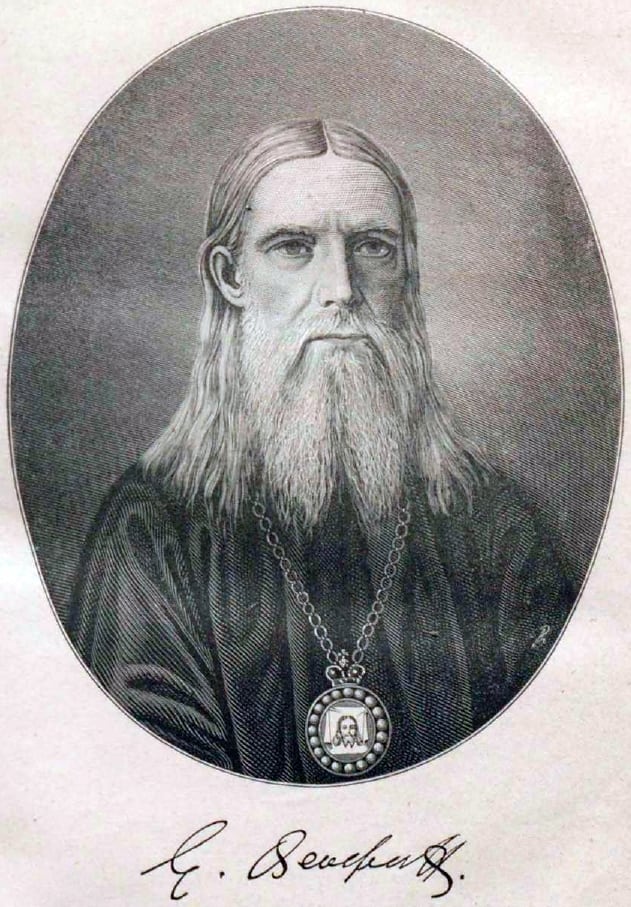
Teófano el Recluso en 1891 · Public domain
उनके अपने शब्दों में
«The Christian life is zeal and strength to abide in active communion with God, through faith in our Lord Jesus Christ, with the help of God's grace, by fulfilling His holy will, to the glory of His most holy name.»«Путь ко спасению», sección I, «Как начинается в нас христианская жизнь?».
Theophan the Recluse
The Philokalia (Dobrotolubie) in Russian translation, enlarged, 5 vols
शुरुआत के लिए एक रचना
The Philokalia (Dobrotolubie) in Russian translation, enlarged, 5 volsमूल विचार
The mind in the heart: The centre of Theophan's teaching is a hesychast formula he repeats in a thousand ways: one must 'descend with the mind into the heart' and 'stand there before the Lord'.
संदर्भ में देखें
जीवनी
6 मिनट का पाठ
स्पैनिश मूल से सहायता-प्राप्त अनुवाद, मातृभाषी अनुवादक द्वारा समीक्षा लंबित।
चेर्नावा के पुरोहित का पुत्र
गेओर्गी वासिलयेविच गोवोरोव का जन्म जूलियन कैलेंडर के अनुसार 10 जनवरी 1815 (ग्रेगोरियन के अनुसार 22 जनवरी) को ओर्योल प्रांत के येलेत्स ज़िले के गाँव चेर्नावा में हुआ। वे ग्रामीण पुरोहित वासिली तिमोफ़ेयेविच और तात्याना इवानोव्ना के पुत्र थे, जो स्वयं भी पुरोहित-वर्ग के परिवार से थीं। उन्होंने रूसी पादरी-वर्ग के पुत्रों का सामान्य मार्ग अपनाया: 1823 से लिवनी का चर्च-विद्यालय, 1829 से ओर्योल की धर्म-पाठशाला — जहाँ की रिपोर्टें उन्हें «एकांतप्रिय», «विनम्र और मौन» बताती हैं — और 1837 में, अपने बैच के सर्वश्रेष्ठ छात्र के रूप में, कीव की धर्मशास्त्रीय अकादमी। वहीं, अकादमिक विद्या और कीव की गुफ़ा-लाव्रा के जीवन के बीच, तथा 1838 में माता और 1839 में पिता की मृत्यु के बाद, उन्होंने भिक्षु बनने का निश्चय किया।
प्राध्यापक, यात्री, रेक्टर
15 फ़रवरी 1841 को उन्होंने स्वीकारकर्ता थियोफ़ानेस के सम्मान में थियोफ़ान नाम के साथ मठवासी वेश धारण किया; उसी वर्ष वे डीकन और पुरोहित अभिषिक्त हुए और मूसाई विधान के धर्म पर एक अध्ययन के लिए मैजिस्टर की उपाधि पाई, जिसकी मॉस्को के मेट्रोपॉलिटन फ़िलारेत ने प्रशंसा की। इसके बाद अध्यापन के वर्ष आए: कीव के संत सोफ़िया विद्यालय के रेक्टर, नोवगोरोद की धर्म-पाठशाला के निरीक्षक और 1844 से सेंट पीटर्सबर्ग अकादमी में नैतिक धर्मशास्त्र के प्राध्यापक। यह दायित्व उन पर भारी पड़ता था; उन्होंने अपने आध्यात्मिक पिता को लिखा कि अकादमिक कार्य उनके लिए असहनीय होता जा रहा है और वे किसी गिरजाघर में बैठ जाना अधिक पसंद करेंगे। 1847 में उन्हें यरूशलम स्थित रूसी चर्च-मिशन में नियुक्ति मिल गई, जहाँ उन्होंने प्रतिमा-चित्रण (आइकन-लेखन) सीखा, यूनानी और फ़्रांसीसी में निपुणता बढ़ाई, हिब्रू और अरबी पढ़ी और पूर्व के मठों में वे तपश्चर्या-संबंधी पांडुलिपियाँ खोजीं जिनका अनुवाद वे जीवन भर करते रहे। क्रीमिया के युद्ध के कारण 1854 में मिशन को वापस बुलाना पड़ा; यूरोप होकर लौटते समय पोप पायस नवम से भेंट भी हुई।
रूस में वे ओलोनेत्स की धर्म-पाठशाला के रेक्टर रहे, कॉन्स्टेंटिनोपल में दूतावास के गिरजे के पुरोहित — यूनानी-बल्गारियाई विभाजन पर रिपोर्ट देने के दायित्व के साथ — और 1857 से सेंट पीटर्सबर्ग की धर्मशास्त्रीय अकादमी के रेक्टर, जहाँ उन्होंने बाइबिल के रूसी अनुवाद की समिति की अध्यक्षता भी की।
उपदेशक बिशप
1 जून 1859 को उन्हें ताम्बोव का बिशप अभिषिक्त किया गया — एक विशाल धर्मप्रांत, जिसमें एक हज़ार से अधिक पुरोहित थे और बहुत-से पंथ और पुरातनपंथी। थियोफ़ान ने प्रवचन को अपनी सेवा का केंद्र बनाया: लगभग हर उपासना के साथ वे प्रवचन देते, उन्होंने उपदेश रचने की विधि पर एक छोटा ग्रंथ प्रकाशित किया और समझाते थे कि उनके अपने उपदेश पहले से लिखे नहीं जाते, वे «लिखित तात्कालिक रचनाएँ» हैं। वहीं «ईसाई जीवन पर पत्र» (1860) भी प्रकाशित हुए। 1863 में वे व्लादिमीर के धर्मासन पर गए, जहाँ उन्होंने एक ऑर्थोडॉक्स बंधु-संघ और लड़कियों के लिए एक धर्मप्रांतीय विद्यालय खोला। पर मई 1865 में ही वे इग्नाती ब्र्यांचानिनोव से, जो 1861 से सेवानिवृत्त थे, कह रहे थे कि उन्हें प्रायः उनका मार्ग अपनाने का प्रलोभन होता है। मार्च 1866 में उन्होंने धर्मसभा से सेवानिवृत्ति माँगी। आश्चर्यचकित सेंट पीटर्सबर्ग के मेट्रोपॉलिटन को उन्होंने समझाया कि वे शौक़िया कामों के लिए विश्राम नहीं चाहते, बल्कि चर्च के लिए उपयोगी कार्य के लिए: «मेरे मन में परमेश्वर के चर्च की सेवा करने का विचार है, बस किसी दूसरे ढंग से।»
वीशा
जून 1866 में वे ताम्बोव प्रांत के छोटे-से वीशा मठ में चले गए; तीन महीने बाद उन्होंने उसका संचालन भी त्याग दिया। छह वर्ष वे अलग-थलग रहे, पर बंद नहीं; 1872 में तो उन्हें मॉस्को का धर्मप्रांत भी प्रस्तावित किया गया। उसी वर्ष वे लकड़ी के एक दोमंज़िला भवन में स्थायी रूप से बंद हो गए, जिसमें उन्होंने प्रभु-प्रकटन (एपिफ़नी) को समर्पित एक छोटा गिरजा बनाया; वहाँ वे पहले रविवारों और पर्वों पर, और अंतिम ग्यारह वर्षों में प्रतिदिन, दिव्य आराधना संपन्न करते थे। वे स्वयं इस क़दम से हर प्रकार की भव्यता हटा देते थे: «मेरे एकांत को उन्होंने एकांतवास बना दिया है। इसमें एकांतवासी जैसा कुछ नहीं। मैंने स्वयं को इसलिए बंद किया कि कोई मुझे बाधा न दे […], ताकि निर्विघ्न होकर पुस्तकों में लगा रहूँ।» कोठरी में वे प्रतिमाएँ चित्रित करते, लकड़ी पर नक़्क़ाशी करते, अपने कपड़े सिलते, आकाश का अवलोकन करते और लिखते।
गृहस्थों के लिए एक पुस्तकालय
वीशा में उन्होंने अपनी लगभग पूरी कृतियाँ लिखीं: संत पौलुस के सभी पत्रों पर भाष्य, जो मुख्यतः योहन क्रिसोस्तोम पर आधारित हैं; «मुक्ति का मार्ग» (1868–1869), जिसे वे अपनी प्रमुख पुस्तक मानते थे; «आध्यात्मिक जीवन क्या है और उसके लिए स्वयं को कैसे तैयार करें» (1878), जो एक युवती को लिखे पत्रों से जन्मी, जिसे मॉस्को के एक नृत्य-समारोह ने जीवन के अर्थ के प्रश्न में डाल दिया था; चारों सुसमाचारों का समन्वय, भजनों पर भाष्य और «वर्ष के प्रत्येक दिन के लिए विचार»। वे प्रतिदिन बीस से चालीस पत्रों का उत्तर देते थे, और उनका पत्राचार — जो उनकी मृत्यु के बाद आठ खंडों में प्रकाशित हुआ — उन्हें ऐसे हज़ारों लोगों का आध्यात्मिक मार्गदर्शक बना गया जिन्होंने उन्हें कभी देखा नहीं था।
उनका सबसे बड़ा उपक्रम रूसी «फ़िलोकालिया» थी — पाँच मोटे खंडों वाली दोब्रोतोल्यूबिये, जिसका पहला खंड 1877 में निकला। यह शब्दशः अनुवाद नहीं है: थियोफ़ान ने स्वयं स्वीकार किया था कि आथोस के निकोदेमस की «अदृश्य संग्राम» में उन्होंने अनुवाद नहीं किया, बल्कि «जोड़ते, घटाते और बदलते हुए» स्वतंत्र रूप से पुनर्रचना की, और फ़िलोकालिया के साथ भी उन्होंने यही किया — उसे संक्षिप्त भी किया और साथ ही उसमें ऐसे लेखक भी जोड़े जो यूनानी मूल में नहीं थे। बाद के चर्च-पिता-विशेषज्ञों ने, 1922 में बिशप वेनियामिन (मिलोव) से लेकर अलेक्सेई सिदोरोव तक, यह रेखांकित किया है कि यह आलोचनात्मक संस्करण से अधिक एक पादरीय पुनर्कथन है, और साथ ही इसके अपार मूल्य पर भी बल दिया है। उन्होंने प्राचीन मठवासी नियमों, नए धर्मशास्त्री शिमोन के प्रवचनों, एक फ़िलिस्तीनी पातेरिकोन और सीरियाई एफ़्रेम के एक संकलन का भी अनुवाद किया।
दृढ़ सिद्धांतों का व्यक्ति
थियोफ़ान की शिक्षा हृदय की शिक्षा-पद्धति है। प्रार्थना सूत्रों का पाठ नहीं, बल्कि «हृदय में परमेश्वर के प्रति श्रद्धापूर्ण भावनाओं का उदय» है; मार्ग यह है कि मन को हृदय में उतारा जाए और वहाँ प्रभु के सम्मुख स्थिर रहा जाए; आध्यात्मिक जीवन अनुग्रह द्वारा होने वाले एक «जागरण» से जन्म लेता है, जिसे मनुष्य की स्वतंत्रता को उत्साह से ग्रहण करना होता है। यह आंतरिकता कठोर धारणाओं के साथ-साथ चलती थी: उन्होंने हिब्रू पाठ पर आधारित धर्मसभाई अनुवाद के विरुद्ध सेप्टुआजिंट का पक्ष लिया, रैडस्टॉक और पाश्कोव के अनुयायी इवैंजेलिकलों का विरोध किया, लेव तोल्स्तोय को «बाशी-बज़ूक» कहा जिसने «ढेर सारी बकवास कर डाली है», और 1881 के एक पत्र में, फ़्रांसीसी जैसी किसी क्रांति के भय से, प्रेस का मुँह बंद करने और अविश्वास को राज्य-अपराध के रूप में दंडित करने की माँग की। आत्माओं और देवदूतों की प्रकृति को लेकर उन्होंने इग्नाती ब्र्यांचानिनोव से भी विवाद किया, यद्यपि वे उनके लेखन का आदर करते थे। बेर्द्याएव ने उन्हें विचारक के रूप में कम मौलिक माना और उनके नैतिक-सामाजिक विचारों को «क्षोभजनक» कहा; फ़्लोरोव्स्की ने «रूसी धर्मशास्त्र के मार्ग» (1937) में क्रोनश्टाट के योहन के साथ उनका अध्ययन किया।
6 जनवरी 1894 (ग्रेगोरियन कैलेंडर के अनुसार 18 जनवरी) को, प्रभु-प्रकटन के पर्व पर — वही रहस्य जिसके नाम पर उनका छोटा गिरजा था — वे अपनी कोठरी में अकेले चल बसे। उन्हें वीशा के कज़ान कैथेड्रल में दफ़नाया गया। रूसी चर्च की 1988 की परिषद ने — जो रूस के बपतिस्मा की सहस्राब्दी की परिषद थी — उन्हें संत घोषित किया और कहा कि उनके लेखन को चर्च-पिताओं की शिक्षा के विकास के रूप में पढ़ा जा सकता है। 2002 में उनके अवशेष वीशा लौटे, जो फिर से मठ बन चुका था। मठाधीश ख़ारितोन के संकलन «प्रार्थना की कला» (1936) के माध्यम से, जिसका अंग्रेज़ी अनुवाद 1966 में हुआ, वे पश्चिम के विशाल पाठक-वर्ग तक पहुँचे।
स्रोत: Teófano el Recluso. Что есть духовная жизнь и как на нее настроиться. 1.ª ed. 1878; ed. Moscú: Otchi dom, 2012 (ISBN 5-87301-120-6). Ochenta cartas a E. A. Arnoldi. Texto en Azbuka very. · Teófano el Recluso. Путь ко спасению. Краткий очерк аскетики. 1868–1869 (5 ediciones en vida). Texto en Azbuka very; facsímil de la ed. de 1899 en Wikimedia Commons. · Teófano el Recluso. Четыре слова о молитве. 1872. Texto en Azbuka very. · Teófano el Recluso. Избранные письма о сектах и ересях (selección del Собрание писем, con las cartas sobre Tolstói, Radstock y Páshkov, n.º 1171 y otras). Texto en Azbuka very. · Gueorgui (Tertýshnikov), archimandrita. Святитель Феофан Затворник и его учение о спасении. Moscú: Pravilo very, 1999. ISBN 9785753300782.
कालक्रम
जीवन, वर्ष-दर-वर्ष
प्रत्येक बिंदु एक प्रमाणित घटना है। उसे स्रोत और निश्चितता के स्तर सहित पढ़ने के लिए क्लिक करें।
22 जनवरी 18150 वर्षChernava (prov. de Oriol)
Birth
Georgy Govorov is born, son of the priest Vasily Timofeyevich (10 January, Julian calendar).
प्रमाणित«Феофан Затворник», Wikipedia en ruso (biografía, carta a Ignati Brianchanínov de mayo de 1865, carta al metropolita Isidoro de 30-5-1866, reclusión, carta de 3-5-1881, canonización, juicio de Berdiáev, obras y bibliografía). Consultada el 25-10-2026.
उनके निधन के बाद
- जून 1988Canonisation
- 29 जून 2002Translation of the relics
22 जनवरी 1815 · 0 वर्ष
Birth
Georgy Govorov is born, son of the priest Vasily Timofeyevich (10 January, Julian calendar).
प्रमाणित
1829 · 14 वर्ष
Oryol seminary
After six years at the Livny church school he enters the Oryol seminary.
प्रमाणित
1837 · 22 वर्ष
Kiev Theological Academy
He enters as the best pupil of his year; his mother (1838) and father (1839) die.
प्रमाणित
27 फ़रवरी 1841 · 26 वर्ष
Monastic tonsure: Theophan
He is tonsured with the name Theophan (15 February, Julian); in April and July he is ordained deacon and priest; he takes his master's degree.
प्रमाणित
अक्टूबर 1844 · 29 वर्ष
Lecturer at the St Petersburg Academy
He teaches moral and pastoral theology; his lectures are the basis of The Path to Salvation.
प्रमाणित
अगस्त 1847 – 1854 · 32 वर्ष
Ecclesiastical mission in Jerusalem
A member of the mission led by Porphyry Uspensky; he learns icon painting and languages and begins translating ascetic texts.
प्रमाणित
1854 · 39 वर्ष
Audience with Pius IX
With the mission recalled because of the Crimean War, he returns through Europe and is received with Porphyry by the Pope.
प्रमाणित
मई 1857 · 42 वर्ष
Rector of the St Petersburg Academy
After Olonets and Constantinople he heads the Academy and chairs the committee for translating the Bible into Russian (1858).
प्रमाणित
1 जून 1859 · 44 वर्ष
Bishop of Tambov
Consecrated in the Trinity Cathedral of the Alexander Nevsky Lavra; he takes up the see on 5 July.
प्रमाणित
1860 · 45 वर्ष
Letters on the Christian Life
He publishes the four parts of Letters on the Christian Life.
प्रमाणित
22 जुलाई 1863 · 48 वर्ष
Bishop of Vladimir
Transferred to the see of Vladimir, where he publishes his instruction for preaching (1864).
प्रमाणित
17 जून 1866 · 51 वर्ष
Resignation and retirement to Vysha
The Synod accepts his retirement; in September he also gives up the direction of the monastery.
प्रमाणित
1868 – 1869 · 53 वर्ष
The Path to Salvation
He publishes his synthesis of the spiritual life, which will go through five editions in his lifetime.
प्रमाणित
1872 · 57 वर्ष
Seclusion
He shuts himself in his wing with a chapel of the Theophany; he begins the commentaries on St Paul (1872–1882).
प्रमाणित
1877 · 62 वर्ष
First volume of the Russian Philokalia
The first volume of the Dobrotolubie appears, published by the Russian monastery of St Panteleimon on Athos.
प्रमाणित
1878 · 63 वर्ष
What Is the Spiritual Life
He publishes the eighty letters to E. A. Arnoldi.
प्रमाणित
1888 · 73 वर्ष
Blind in one eye
Cataracts leave him blind in the right eye; he also suffers from rheumatism, neuralgia and arrhythmia.
प्रमाणित
18 जनवरी 1894 · 79 वर्ष
Death
He dies alone in his cell on the feast of the Theophany (6 January, Julian); funeral on 11 January.
प्रमाणित
जून 1988
Canonisation
The council of the millennium of the baptism of Rus proclaims him a saint.
प्रमाणित
29 जून 2002
Translation of the relics
The relics, kept at Emmanuilovka since 1988, return to Vysha monastery.
प्रमाणित
कृतियाँ
आवश्यक कृतियाँ
वे कृतियाँ जिनके बिना उनकी विरासत को समझा नहीं जा सकता।
Theophan the Recluse
The Philokalia (Dobrotolubie) in Russian translation, enlarged, 5 vols
परवर्ती संकलन · 1877
The Philokalia (Dobrotolubie) in Russian translation, enlarged, 5 vols
Добротолюбие в русском переводе, дополненное
A Russian version, in five volumes (some 3,143 pages), of the great anthology of ascetic and mystical texts by Fathers of the fourth to fifteenth centuries on watchfulness, pure prayer and the Jesus Prayer, compiled by Nicodemus the Hagiorite and Macarius of Corinth (Venice, 1782) and put into Slavonic by Paisius Velichkovsky (1793). Theophan does not simply translate: he abridges many texts and adds others absent from the original—such as the teachings of Dorotheus of Gaza, in volume II—to give the Russian reader, monk or layperson, a complete manual of inner warfare. The first volume appeared in 1877, published by the Russian monastery of St Panteleimon on Athos; the work went through several editions and was for a century the Russians' Philokalia.
2 संस्करण

लिखित कृति · 1868
The Path to Salvation: A Brief Outline of Ascetics
Путь ко спасению. Краткий очерк аскетики
Theophan regarded it as his main book. Born of his lectures in moral theology at St Petersburg and conceived as the third part of his Outline of Christian Moral Teaching, it describes in three sections how the Christian life begins—through baptism and through repentance—how the sinner is awakened by grace from his 'sleep' and comes to the decision to give himself to God, and how the new life then matures through zeal, the discipline of the faculties of soul and body, and prayer. Its opening definition, 'the Christian life is zeal and strength to abide in communion with God', sums up his whole method: a systematic asceticism meant for laypeople as much as for monks.
4 संस्करण

पत्राचार · 1878
What Is the Spiritual Life and How to Be Attuned to It
Что есть духовная жизнь и как на нее настроиться
Eighty letters to a young woman, E. A. Arnoldi, daughter of an estate manager from Tula, who after a ball began to wonder about the meaning of life. Theophan first sets out the three dimensions of the human being—body, soul and spirit, the last shown in the fear of God, conscience and thirst for God—explains the Fall and the grace of baptism, and then guides his correspondent step by step: preparing for confession and communion, unceasing remembrance of God, prayer with the mind in the heart, the struggle with the passions, reading, household tasks, music and amusements. It is the author's most widely read book and a classic of spiritual direction for laypeople.
3 संस्करण

पत्राचार · 1898
Collected Letters (8 parts)
Собрание писем святителя Феофана (вып. 1–8)
The letters of spiritual direction Theophan wrote from Vysha—twenty to forty a day in his last years—to monks, nuns, priests, laypeople of every station, families and the sick. They deal with prayer and the Jesus Prayer, confession and communion, marriage and education, sickness and death, the sects and atheism of his day, with a characteristic mixture of tenderness, practical sense and doctrinal severity. Published after his death in eight parts (1898–1901), with over 1,400 pieces, they remain the main route by which he is read in Russia.
3 संस्करण
संपूर्ण कृतित्व (80)
Theophan the Recluse
Letters on the Christian Life
The Conscious LibraryLetters on the Christian Life
1860
Theophan the Recluse
Letters on the Spiritual Life
The Conscious LibraryLetters on the Spiritual Life
1870
Theophan the Recluse
Letters to Various Persons on Various Matters of Faith and Life
The Conscious LibraryLetters to Various Persons on Various Matters of Faith and Life
1880
Theophan the Recluse
On the Jesus Prayer, in Letters to Schema-Igumen Herman and Schemamonk Agapius
The Conscious LibraryOn the Jesus Prayer, in Letters to Schema-Igumen Herman and Schemamonk Agapius
1880
Theophan the Recluse
Selected Letters on Sects and Heresies
The Conscious LibrarySelected Letters on Sects and Heresies
Theophan the Recluse
Last Counsels and Correspondence of the Last Year
The Conscious LibraryLast Counsels and Correspondence of the Last Year
1894
Theophan the Recluse
Letters to Tatiana Vladimirovna Netsvetaeva
The Conscious LibraryLetters to Tatiana Vladimirovna Netsvetaeva
1887
Theophan the Recluse
Letters to Archpriest Mikhail Kheraskov
The Conscious LibraryLetters to Archpriest Mikhail Kheraskov
1892
Theophan the Recluse
Unpublished letters (to I. D. Andreyev, to 'S. V.' and others)
The Conscious LibraryUnpublished letters (to I. D. Andreyev, to 'S. V.' and others)
Theophan the Recluse
Four Homilies on Prayer
The Conscious LibraryFour Homilies on Prayer
1872
Theophan the Recluse
Outline of Christian Moral Teaching
The Conscious LibraryOutline of Christian Moral Teaching
1891
Theophan the Recluse
Survey of the Religion under the Law
The Conscious LibrarySurvey of the Religion under the Law
1841
Theophan the Recluse
Sermons of the Rector of the St Petersburg Academy
The Conscious LibrarySermons of the Rector of the St Petersburg Academy
1859
Theophan the Recluse
Sermons to the Flock of Tambov
The Conscious LibrarySermons to the Flock of Tambov
1861
Theophan the Recluse
Nine Homilies on the Fires in Tambov
The Conscious LibraryNine Homilies on the Fires in Tambov
1860
Theophan the Recluse
Sermons to the Flock of Vladimir
The Conscious LibrarySermons to the Flock of Vladimir
1863
Theophan the Recluse
The Inner Life (collected sermons)
The Conscious LibraryThe Inner Life (collected sermons)
1859
Theophan the Recluse
The Heavenly Protection over Us
The Conscious LibraryThe Heavenly Protection over Us
1865
Theophan the Recluse
On Orthodoxy, with Warnings against Errors
The Conscious LibraryOn Orthodoxy, with Warnings against Errors
1863
Theophan the Recluse
Reminder to Nuns of What Monasticism Requires of Them
The Conscious LibraryReminder to Nuns of What Monasticism Requires of Them
1892
Theophan the Recluse
On Complete Conversion to God from the Seductions of the World and Sin
The Conscious LibraryOn Complete Conversion to God from the Seductions of the World and Sin
1867
Theophan the Recluse
On Repentance, Communion and Amendment of Life
The Conscious LibraryOn Repentance, Communion and Amendment of Life
1869
Theophan the Recluse
Resolving Perplexities on the Parable of the Unjust Steward
The Conscious LibraryResolving Perplexities on the Parable of the Unjust Steward
1869
Theophan the Recluse
Lessons from the Deeds and Words of the Lord
The Conscious LibraryLessons from the Deeds and Words of the Lord
1870
वचन
किसी निश्चित कृति में स्थित वचन। प्रत्येक के साथ उसका स्रोत और विश्वसनीयता का स्तर है।
The Christian life is zeal and strength to abide in active communion with God, through faith in our Lord Jesus Christ, with the help of God's grace, by fulfilling His holy will, to the glory of His most holy name.Христианская жизнь есть ревность и сила пребывать в общении с Богом, деятельном, по вере в Господа нашего Иисуса Христа, при помощи благодати Божией, исполнением святой воли Его, во славу пресвятого имени Его.
सत्यापित«Путь ко спасению», sección I, «Как начинается в нас христианская жизнь?».
अप्रामाणिक या विवादित आरोपण वाले उद्धरण (2)
«"To pray is to descend with the mind into the heart, and there to stand before the face of the Lord, ever-present, all-seeing, within you."»
Widely circulated in English, it comes from the anthology The Art of Prayer (1936; English translation 1966), which assembles and sometimes condenses fragments of his letters. The idea is his and appears in letters 45 and 58 of What Is the Spiritual Life; the exact Russian wording has not been located.
«Prophecies about the Russian revolution and the Antichrist attributed to him in devotional compilations.»
There is an authentic letter of 3 May 1881 in which, comparing Russia with pre-revolutionary France, he concludes that 'we too are on the road to revolution'; the 'prophecies' circulating under his name expand and dramatise passages like this, and many cannot be found in his writings.
अंतिम शब्द
उनके अंतिम शब्दों का कोई सत्यापन-योग्य अभिलेख उपलब्ध नहीं है।
He died alone in his cell at Vysha on 6 January 1894 (Julian), the feast of the Theophany, and no one witnessed his death, so no last words are recorded. The pious biographies (Khitrov, 1905) describe how he was found but ascribe no words to him.
स्रोत: «Феофан Затворник», Wikipedia en ruso (biografía, carta a Ignati Brianchanínov de mayo de 1865, carta al metropolita Isidoro de 30-5-1866, reclusión, carta de 3-5-1881, canonización, juicio de Berdiáev, obras y bibliografía). Consultada el 25-10-2026.
पूछें
उनकी कृतियाँ क्या उत्तर देती हैं
मानवता के बारह महान प्रश्न और उनके ग्रंथ उनका जो उत्तर देने देते हैं, संदर्भों सहित। हम कभी उनके मुख में अपने शब्द नहीं रखते।
परम सत्य क्या है? क्या ईश्वर है?
God is the Trinitarian Lord with whom the Christian lives in active communion
साकार, व्यक्तिगत ईश्वरस्पष्ट रूप से कहा है
Theophan the Recluse writes not as a philosopher but as a bishop and spiritual director. In the Outline of Christian Moral Teaching he starts from the God of Orthodox faith, one in three persons, creator and provident, and derives all of moral life from him. In The Path to Salvation he defines Christian life as zeal and strength to remain in active communion with God through faith in Jesus Christ, with the help of grace and by fulfilling his will. God is for him someone who listens: in one of his letters he affirms that there is no interval between prayer and its hearing, provided the prayer comes from the heart. The question of God's existence barely concerns him; what matters is how he is found, and his answer is the prayer of the heart, attention and the sacraments of the Church.
इस प्रश्न की अन्य गुरुओं से तुलना करेंमैं कौन हूँ? क्या कोई सच्चा आत्म है?
Body, soul and spirit: the spirit is the power that seeks God
सृजित, अमर आत्मास्पष्ट रूप से कहा है
Theophan the Recluse develops a tripartite anthropology that fills the first letters of What Is Spiritual Life and returns in the Outline of Christian Moral Teaching. The human being has a body, a soul with its faculties of thinking, willing and feeling, and a spirit, the power God breathed into him, which shows itself as fear of God, conscience and thirst for God. When the spirit governs, soul and body live in order; when the psychic or the carnal dominates, the person is scattered. In his controversy with Ignatius Brianchaninov, set out in The Soul and the Angel Are Not Body but Spirit, he maintained that the soul is purely spiritual, without any subtle matter. The true self is a created, immortal soul that is realised by turning to God from the heart.
इस प्रश्न की अन्य गुरुओं से तुलना करेंहम दुःख क्यों भोगते हैं?
Passions arise from turning away from God; sorrows are medicine for the soul
ईश्वर से वियोगस्पष्ट रूप से कहा है
Theophan the Recluse explains suffering within Orthodox ascetic anthropology. In The Path to Salvation he describes the man who lives without God as one ruled by passions, which arise from egoism and branch out into the pursuit of pleasure, greed and vainglory; that state is in itself restlessness and pain, even if the one inside it does not perceive it. Conversion begins when grace awakens the sinner and makes him see his state. As for outward afflictions, his letters of spiritual direction treat them as medicine and as a cross: God permits them to heal, humble or purify, and bearing them patiently unites the Christian with Christ. In his homilies on the cross he distinguishes the cross of sorrows, that of the struggle against the passions and that of obedience to the divine will.
इस प्रश्न की अन्य गुरुओं से तुलना करेंमृत्यु के बाद क्या होता है?
Death opens the particular judgement; one must live preparing for it
अनंत जीवन और पुनरुत्थानस्पष्ट रूप से कहा है
Theophan the Recluse teaches Orthodox eschatology without altering it: after death the soul appears at a particular judgement and awaits, in a state of anticipated joy or of pain, the resurrection of bodies and the last judgement, after which comes eternal life. In his commentary on Psalm 118 he also records the tradition of the trials the soul passes through on leaving the body. His main interest is pastoral: in his letters of direction he recommends keeping death in mind, not as terror but as a reminder that orders life and stirs vigilance, and he consoles the bereaved by recalling that prayer for the departed reaches them. In his last letters, secluded at Vysha, he speaks of his own end with serenity and asks for prayers.
इस प्रश्न की अन्य गुरुओं से तुलना करेंमुक्ति या उद्धार कैसे प्राप्त होता है?
Grace awakens the sinner; yet without his effort there is no salvation
कृपा और प्रेम सेस्पष्ट रूप से कहा है
The Path to Salvation, Theophan's most widely read book, describes the whole itinerary in three moments: conversion, purification and perfection. Everything begins with grace, which awakens the sinner asleep in his passions and makes him see his state; but grace does not act without the person's free decision, who must repent, confess, receive communion and take up the struggle against the passions. Hence the title of one of his writings, Without Effort You Will Not Be Saved. Christian life is defined as active communion with God through faith in Christ, with the help of grace and by fulfilling his will, and its centre is the prayer of the heart. This is the Orthodox doctrine of synergy: salvation is a gift, but a gift welcomed through constant labour.
इस प्रश्न की अन्य गुरुओं से तुलना करेंक्या गुरु आवश्यक है?
A spiritual father, the sacraments and the Fathers: guidance lies in the Church
संघ और परंपरास्पष्ट रूप से कहा है
Theophan the Recluse was, during twenty-two years of seclusion, spiritual director by letter to hundreds of people, and his whole work is an exercise in guidance. He recommends having a spiritual father, confessing and receiving communion regularly and submitting one's inner movements to his judgement, especially in prayer, where lack of direction exposes one to errors. But he knows experienced guides are scarce, and that is why he translated and enlarged the Philokalia in five volumes and edited Unseen Warfare: so that the Fathers may guide whoever has no elder at hand. The authority is not that of a charismatic master, but that of the Church's tradition, to which he himself submits and in whose name he counsels, adapting his advice to each correspondent's situation.
इस प्रश्न की अन्य गुरुओं से तुलना करेंक्या संसार वास्तविक है?
God's good creation, which the Christian uses without clinging to it
शुभ और वास्तविक सृष्टिउनके सिद्धांत से निष्कर्षित
Theophan the Recluse teaches the Orthodox doctrine of creation without speculative elaboration: the world is God's free work, good, sustained by his providence, and the human being holds a central place in it as a creature endowed with spirit. In his Outline of Christian Moral Teaching created things appear as means the Christian must use with gratitude and measure, not as ends; the danger lies not in the world but in the attachment that turns it into an idol. When his letters speak of the world as something to turn away from, they mean the passions and customs estranged from God, not material creation. In his commentaries on Saint Paul he also takes up the hope that the whole of creation, which groans, will be set free with the children of God.
इस प्रश्न की अन्य गुरुओं से तुलना करेंप्रेम क्या है?
Love of God and neighbour, born together from a heart warmed by grace
ईश्वर और पड़ोसी से प्रेमस्पष्ट रूप से कहा है
Theophan the Recluse places love at the centre of the Christian morality he sets out in his Outline: the double commandment of love of God and neighbour sums up the whole law, and the other virtues are its forms. But, as a master of the prayer of the heart, he insists that such love is not manufactured by will: it is born when grace warms the heart, and that is why attentive prayer is its root. In his letters he is very concrete: love of neighbour is exercised in patience with one's household, in not judging, in almsgiving and in humble service, and whoever claims to love God without loving those close by deceives himself. His four homilies on prayer describe prayer itself as the rising in the heart of feelings of humility, gratitude and self-surrender, which are already forms of love.
इस प्रश्न की अन्य गुरुओं से तुलना करेंक्या हम स्वतंत्र हैं, या सब कुछ पूर्वनिर्धारित है?
Grace awakens, but the decision to turn to God belongs to the person
वास्तविक स्वतंत्र इच्छास्पष्ट रूप से कहा है
Theophan the Recluse sets out in The Path to Salvation a psychology of conversion in which freedom holds a decisive place. The sinner lives asleep in his passions and would not wake by himself; grace shakes him, shows him his state and offers him the possibility of change. But at that moment everything depends on the person's decision: he can accept the awakening and set out, or fall asleep again. Once the decision is made, the struggle continues daily, and freedom must be exercised against the inclinations that keep pulling backwards; hence the title of his writing Without Effort You Will Not Be Saved. In the Outline of Christian Moral Teaching he defends freedom as the condition of all morality: without it there would be neither merit nor guilt.
इस प्रश्न की अन्य गुरुओं से तुलना करेंध्यान या प्रार्थना क्यों करें?
To stand before the Lord with the mind in the heart, conversing with him
ईश्वर से मैत्रीस्पष्ट रूप से कहा है
Prayer is the centre of Theophan the Recluse's work. In his Four Homilies on Prayer he calls it the first task of Christian life and the breath of the spirit: where there is prayer, the spirit lives; where there is none, there is no life in it. He defines it as the rising in the heart of reverent feelings towards God, humility, self-surrender, gratitude, praise, contrition. His most famous formula, repeated in the letters of What Is Spiritual Life, is to stand always before the Lord with the mind in the heart, to bring back thoughts when they wander and make them stay in the cell of the heart conversing with the sweetest Lord. Through his translation of the Philokalia he became the great Russian popularizer of the Jesus Prayer and hesychasm for monks and lay people alike.
इस प्रश्न की अन्य गुरुओं से तुलना करेंक्या बुद्धि परम को जान सकती है?
Scripture, read with the Fathers, guides a reason that must descend into the heart
शास्त्र और तर्कस्पष्ट रूप से कहा है
Theophan the Recluse was professor and rector of the St Petersburg Theological Academy, and devoted his years of seclusion to commenting on all of Saint Paul's epistles and translating the Fathers: his work is that of an interpreter of Scripture within the Church's tradition. Reason has a legitimate role in it, that of understanding and ordering what is revealed, and he himself wrote a systematic Outline of Christian Moral Teaching. But he distinguishes between rational knowledge about God, which can remain in the head, and living knowledge, which is given when the mind descends into the heart and unites with it in prayer. His letters warn against the rationalism that submits revelation to reason's judgement and against sects that interpret Scripture outside the Church.
इस प्रश्न की अन्य गुरुओं से तुलना करेंसंसार से हटें या उसे बदलें?
One can live in the world with the mind in the heart, before God
कर्म में ध्यानस्पष्ट रूप से कहा है
Theophan the Recluse spent his last twenty-two years secluded in the monastery of Vysha, but explained that he did not shut himself away for extreme ascesis, but to devote himself to books without hindrance and serve the Church in another way. From his cell he directed hundreds of lay people by letter, and much of his work is written for them. What Is Spiritual Life and How to Attune Oneself to It consists of letters to a young woman living in society who wishes to lead a Christian life without becoming a nun, and his answer is that it is possible: it is enough to keep the mind in the heart before the Lord amid one's occupations, to fulfil faithfully the duties of one's state and to order the day around prayer. What must be abandoned is not the world, but its passions.
इस प्रश्न की अन्य गुरुओं से तुलना करें
निकटता और तनाव
निकटता और तनाव
उनके मतों के आधार पर प्रश्न-दर-प्रश्न आकलित। प्रत्येक सहमति या टकराव का कारण क्लिक करने पर।
इनसे मिलता-जुलता सोचते हैं

Francis of Assisi
इन पर सहमत: परम सत्य क्या है? क्या ईश्वर है? · मैं कौन हूँ? क्या कोई सच्चा आत्म है? · हम दुःख क्यों भोगते हैं?
Fyodor Dostoevsky
इन पर सहमत: परम सत्य क्या है? क्या ईश्वर है? · मैं कौन हूँ? क्या कोई सच्चा आत्म है? · हम दुःख क्यों भोगते हैं?
Jesus of Nazareth
इन पर सहमत: परम सत्य क्या है? क्या ईश्वर है? · क्या संसार वास्तविक है? · मैं कौन हूँ? क्या कोई सच्चा आत्म है?

Teresa of Ávila
इन पर सहमत: परम सत्य क्या है? क्या ईश्वर है? · मैं कौन हूँ? क्या कोई सच्चा आत्म है? · हम दुःख क्यों भोगते हैं?
इनसे भिन्न सोचते हैं

Patañjali
इन पर टकराव: परम सत्य क्या है? क्या ईश्वर है? · मैं कौन हूँ? क्या कोई सच्चा आत्म है? · मृत्यु के बाद क्या होता है?

Pema Chödrön
इन पर टकराव: परम सत्य क्या है? क्या ईश्वर है? · मैं कौन हूँ? क्या कोई सच्चा आत्म है? · मृत्यु के बाद क्या होता है?

Nāgārjuna
इन पर टकराव: परम सत्य क्या है? क्या ईश्वर है? · मैं कौन हूँ? क्या कोई सच्चा आत्म है? · मृत्यु के बाद क्या होता है?

Dōgen
इन पर टकराव: परम सत्य क्या है? क्या ईश्वर है? · मैं कौन हूँ? क्या कोई सच्चा आत्म है? · मृत्यु के बाद क्या होता है?
प्रसंग और वृत्तांत
प्रसंग और वृत्तांत
साक्ष्यdécada de 1870
The girl from the ball
वृत्तांत का स्रोत: The addressee's identity and the quotation come from a letter of Theophan reproduced in Azbuka very's presentation of the work; the ball episode is handed down by the publishing tradition (the St Herman Brotherhood's preface to the English edition).
प्रमाणित1865–1866
Serving in another way
वृत्तांत का स्रोत: Theophan's letters to Ignatius (May 1865), to N. V. Elagin (11 March 1866) and to Metropolitan Isidore (30 May 1866), cited in the biographical literature and gathered in the Russian Wikipedia.
साक्ष्य1872–1894
Locked in for the books
वृत्तांत का स्रोत: The sayings come from his letters as cited by biographers; the manual crafts, from the monastery's biography and Azbuka very.
प्रमाणित1872–1894
Forty letters a day
वृत्तांत का स्रोत: The daily number of letters is given by the Azbuka very biography and the Russian Wikipedia; the posthumous publication, by the catalogues of the 1898–1901 editions (Open Library, Wikimedia Commons).
प्रमाणितdécada de 1880
'That bashi-bazouk Leo Tolstoy'
वृत्तांत का स्रोत: Collected Letters, nos. 1171, 1172, 1175, 1359 and 1413, and letters 281–285 of the 1899 collection cited in Selected Letters on Sects and Heresies.
प्रमाणितdécada de 1860
Two bishops and the nature of angels
वृत्तांत का स्रोत: The controversy is documented by Azbuka very and the studies of D. Predein (Feofanovskie chteniya, 2011) and D. Rogozhin; the dream, letter 239 cited in Selected Letters on Sects and Heresies.
प्रमाणित1854
An audience with Pius IX
वृत्तांत का स्रोत: The audience is recorded in the biographies (Russian and English Wikipedia); the detail about his library, in the posthumous presentation of letter 228 on Tolstoy.
शिक्षाएँ
शिक्षाएँ
वे अवधारणाएँ जो उनके चिंतन को रूप देती हैं, उनके संदर्भ में समझाई गई।
The mind in the heartmente-en-el-corazon
It gathers the tradition of the Philokalia (Symeon the New Theologian, Gregory of Sinai, Nicephorus the Solitary) that he himself translated, and spread it among laypeople through his letters and Chariton's anthology.
Prayer as reverent feelingoracion-como-sentimiento
A pedagogy designed for the nineteenth-century Orthodox layperson, who knew the Church's prayers but often recited them without attention.
स्रोत: Teófano el Recluso. Четыре слова о молитве. 1872. Texto en Azbuka very.
Body, soul and spiritcuerpo-alma-espiritu
Formulated from St Paul and the Alexandrian tradition and developed at the Kiev Academy; P. Khondzinsky has related it to the Kiev school of Pamfil Yurkevich.
The awakening of grace and zealdespertar-de-la-gracia
An original systematisation of patristic asceticism in an anthropological scheme; later criticism (Florovsky) placed it in the context of the Russian academic moral theology of his century.
Translating as reworkingtraducir-como-reelaborar
It continues the practice of Paisius Velichkovsky and Nicodemus, who also adapted their sources; it contrasts with the modern critical edition of ascetic texts.
वीडियो
वीडियो
रिकॉर्डिंग, साक्षात्कार और वृत्तचित्र। वीडियो YouTube से चलते हैं; वे यहाँ संग्रहीत नहीं हैं।
Феофан Затворник / Острова / Телеканал Культура
YouTube पर देखें
यह वीडियो एम्बेड करने की अनुमति नहीं देता; यह YouTube पर खुलेगा।
Феофан Затворник / Острова / Телеканал Культура
वृत्तचित्र· RU· 2020· 39 min
Телеканал Культураआधिकारिक चैनल
Русский мир. Святитель Феофан (1994)
वृत्तचित्र· RU· 1994· 26 min
History Lab
Святитель Феофан Затворник
वृत्तचित्र· RU· 2015· 30 min
Феофан Затворник. Свято-Успенский Вышенский монастырьआधिकारिक चैनल
Вышенская обитель
वृत्तचित्र· RU· 2015· 4 min
Феофан Затворник. Свято-Успенский Вышенский монастырьआधिकारिक चैनल
Празднование 200-летия Феофана, Затворника Вышенского
वृत्तचित्र· RU· 2015· 4 min
Феофан Затворник. Свято-Успенский Вышенский монастырьआधिकारिक चैनल
Святитель Феофан, затворник Вышенский. Эфир от 24 апреля 2014 г.
वृत्तचित्र· RU· 2014· 56 min
tvsoyuzआधिकारिक चैनल
Лекции в Сретенской духовной семинарии. Святитель Феофан Затворник. Часть 1
व्याख्यान· RU· 2019· 43 min
tvsoyuzआधिकारिक चैनल
Лекция 1. Введение в предмет. Свт. Феофан Затворник и его антропологическая модель
व्याख्यान· RU· 2020· 62 min
Елена Никулина. ПСТГУ. Нравственное богословиеआधिकारिक चैनल
Святитель Феофан Затворник и антропология Киевской духовной школы
व्याख्यान· RU· 2019· 19 min
Научный центр истории богословия и богословского образованияआधिकारिक चैनल
Русская патрология. 14. Святитель Феофан Затворник Вышенский
व्याख्यान· RU· 2026· 27 min
Школа Православия София
Почему свт. Феофан Затворник запрещал читать «Откровенные рассказы странника»? — Осипов А. И.
व्याख्यान· RU· 2017· 18 min
Алексей Ильич Осиповआधिकारिक चैनल
The Life of St. Theophan the Recluse
तृतीय पक्ष की रिकॉर्डिंग· EN· 2022· 32 min
Orthodox Hagiography
The Path of Prayer by Saint Theophan the Recluse
व्याख्यान· EN· 2014· 42 min
Fr Deacon Charles Joiner
San Teófano el recluso (Parte I)
व्याख्यान· ES· 2020· 16 min
Catedral Ortodoxa San Jorgeआधिकारिक चैनल
चित्रशाला
चित्रशाला
सत्यापित लाइसेंस वाले चित्र। प्रत्येक में उसके रचयिता और श्रेय का उल्लेख सुरक्षित है।
पांडुलिपियाँ
पांडुलिपियाँ
पांडुलिपि-साक्ष्य और प्राचीन पाठ, उनके संरक्षक और अध्ययन की शर्तों सहित।
RU · Cyrillic · Siglos XIX y anteriores
Книги из келейной библиотеки Феофана Затворника
- संरक्षित पाठ-साक्ष्य
- Colección dispersa
- संरक्षक
- Biblioteca Estatal de Rusia (RGB), Departamento de Manuscritos (parcialmente)
संबंध
संबंध
प्रभाव, शिष्यत्व और वैचारिक निकटता। प्रमाणित संबंध को विश्लेषण से पहचानी गई समानता से अलग दर्शाया गया है।
इनसे पत्राचार
They corresponded; in May 1865 Theophan confided to him that he thought of following his road and retiring. Theophan valued his works and recalled him later in his letters.
प्रमाणित संबंध
इनसे मतभेद
He argued against Ignatius's thesis (Word on Death) that souls and angels have an ethereal body, in The Soul and the Angel Are Not Body but Spirit.
प्रमाणित संबंध
इनसे मतभेद
In many letters of the 1880s he fought Tolstoy's religious teachings, calling him a 'bashi-bazouk' who 'has blurted out a heap of nonsense', and encouraged their refutation.
प्रमाणित संबंध
इन्हें प्रभावित किया
Florensky cites him in The Pillar and Ground of the Truth (1914) as a witness to the experience of Christ as centre, as translator of the Philokalia, for his letters on spiritual delusion and for his commentary on 1 Corinthians.
प्रमाणित संबंध
इनसे प्रभावित
Paisi Velichkovski
His Russian Philokalia continues and enlarges Paisius's Slavonic translation (1793), the basis of the Russian hesychast revival.
प्रमाणित संबंध
इनसे प्रभावित
Nicodemo el Hagiorita
He translated and reworked two works by Nicodemus: the Greek Philokalia (1782) and Unseen Warfare (1796).
प्रमाणित संबंध
इनसे प्रभावित
Padres del desierto
He translated the ancient paterikon and the rules of Pachomius, Basil and Cassian; his teaching constantly draws on the apophthegms.
प्रमाणित संबंध
इनसे प्रभावित
Simeón el Nuevo Teólogo
He translated his discourses into Russian; Theophan cites his teaching on the conscious experience of grace.
प्रमाणित संबंध
इनसे प्रभावित
Juan Crisóstomo
The main source of his commentaries on the epistles of St Paul.
प्रमाणित संबंध
इनसे मिलते-जुलते विचार
Both brought the hesychast teaching on the prayer of the heart and the acquisition of grace to laypeople; in 1861 Theophan was for a few months in charge of the Diveyevo convent founded by Seraphim, to settle its disorders.
विश्लेषण से पहचानी गई समानता
इनसे मतभेद
Berdyaev judged him 'unoriginal as a thinker', untouched by problems and the author of 'outrageous' moral and social views.
प्रमाणित संबंध
इनके समकालीन
Contemporaries; no documented mutual mention has been found.
विश्लेषण से पहचानी गई समानता
स्रोत
स्रोत
इस प्रविष्टि के लिए देखे गए ग्रंथ-सूची और सूचीपत्र।
- Wikidata, «Theophan the Recluse» (Q980914): P31=Q5, nacimiento 10/22-1-1815, muerte 6/18-1-1894, 21 enlaces entre wikis.
- «Феофан Затворник», Wikipedia en ruso (biografía, carta a Ignati Brianchanínov de mayo de 1865, carta al metropolita Isidoro de 30-5-1866, reclusión, carta de 3-5-1881, canonización, juicio de Berdiáev, obras y bibliografía). Consultada el 25-10-2026.
- «Theophan the Recluse», Wikipedia en inglés (biografía, traducciones inglesas). Consultada el 25-10-2026.
- Azbuka very, «святитель Феофан Затворник»: biografía, «Творческое наследие» (traducciones, juicio de Veniamín (Milov) y A. I. Sídorov, polémica con Ignati, Septuaginta) y catálogo de obras con sus fechas.
- Teófano el Recluso. Что есть духовная жизнь и как на нее настроиться. 1.ª ed. 1878; ed. Moscú: Otchi dom, 2012 (ISBN 5-87301-120-6). Ochenta cartas a E. A. Arnoldi. Texto en Azbuka very.
- Teófano el Recluso. Путь ко спасению. Краткий очерк аскетики. 1868–1869 (5 ediciones en vida). Texto en Azbuka very; facsímil de la ed. de 1899 en Wikimedia Commons.
- Teófano el Recluso. Четыре слова о молитве. 1872. Texto en Azbuka very.
- Teófano el Recluso. Избранные письма о сектах и ересях (selección del Собрание писем, con las cartas sobre Tolstói, Radstock y Páshkov, n.º 1171 y otras). Texto en Azbuka very.
- Gueorgui (Tertýshnikov), archimandrita. Святитель Феофан Затворник и его учение о спасении. Moscú: Pravilo very, 1999. ISBN 9785753300782.
- Florovski, Gueorgui. Пути русского богословия. París: YMCA-Press, 1937 (cap. «Влияние философского кризиса 60-х гг. на богословие: Феофан Затворник и Иоанн Кронштадтский»).
- Florenski, Pável. Столп и утверждение истины. Moscú: Put', 1914 (cita a Teófano en las cartas primera, cuarta, novena, décima y undécima). Texto en Azbuka very.
- Jítrov, Mijaíl, arcipreste. Житие святителя Феофана, Затворника Вышенского. Moscú: Tipo-litografía I. Efímov, 1905.
- Wikimedia Commons, «Category:Literary works by St. Theophan the Recluse» (facsímiles de ediciones de 1890–1901).
- Open Library, registros de autor «Saint Ḟeofan, Bishop of Tambov and Shatsk» (ediciones rusas de 1860–1901 y traducciones inglesas con ISBN).
- Chariton de Valaam, higúmeno (comp.). The Art of Prayer: An Orthodox Anthology. Trad. E. Kadloubovsky y E. M. Palmer; ed. e introd. Timothy Ware. Londres: Faber & Faber, 1966 (ISBN 9780571068999). Original: Умное делание. О молитве Иисусовой, Sortavala, 1936.
- अधिकार-धारक
- Dominio público: Teófano murió en 1894. Las traducciones y ediciones modernas pertenecen a sus traductores y editoriales.
पुष्टि की प्रतीक्षा में
जो यह प्रविष्टि अभी तक निश्चित नहीं कर सकी है। हम उसे भर देने के बजाय कह देना बेहतर समझते हैं।
- Ediciones españolas con ISBN de «El camino de la salvación», «Qué es la vida espiritual», las cartas y «El combate invisible»: no localizadas en Open Library ni en la búsqueda web; sólo se ha verificado «El arte de la oración» (Lumen, 2006).
- Años exactos de los tomos II–V de la Filocalía rusa (el I es de 1877) y de la primera edición de «El combate invisible», los «Discursos» de Simeón el Nuevo Teólogo, el «Miterikon» y los comentarios paulinos (se han dejado sin año salvo Romanos, 1890, y Hebreos, 1896).
- Fecha y destinatario de la carta «Из моего запора сделали затвор…» y su número en el Собрание писем.
- Año de redacción de «Душа и ангел — не тело, а дух» (Azbuka very indica 1891, probablemente fecha de edición).
- Las fechas que Azbuka very asigna a varias obras pueden ser de edición y no de redacción; no se han contrastado una por una con la «Летопись жизни и творений святителя Феофана» (2016–).
- Traducciones inglesas de dominio público: ninguna localizada (las de Kadloubovsky y Palmer, Seraphim Rose y otras están protegidas).
- Relación con Fiódor Dostoievski y Vladímir Soloviov: no se ha encontrado ninguna mención documentada; Dostoievski figura sólo como contemporáneo.
- ISBN de «Psalm 118: A Commentary» (St. John of Kronstadt Press, 2014) y de «Now is the Accepted Time» (Holy Trinity Publications) citados en Wikipedia: no confirmados en Open Library, no registrados.
- Atribución del «Слово перед отпеванием архим. Иннокентия» (1847), que Azbuka very da a Teófano pese a que entonces no era archimandrita: comprobar si es de Teófano (Alexándrov).
2026-10-25 को शोधित