ईसाई धर्म · ईसाई रहस्यवाद · रूढ़िवादी ईसाई धर्म
Pavel Florensky
Павел Александрович Флоренский
1882 – 1937ऐतिहासिक रूप से प्रमाणित व्यक्ति
रूसी ऑर्थोडॉक्स पुरोहित, धर्मशास्त्री, दार्शनिक, गणितज्ञ और इंजीनियर (1882–1937), जिन्हें प्रायः «रूसी लियोनार्दो» कहा जाता है। उनकी कृति «सत्य का स्तंभ और आधार» (1914) ने सोफ़िया-विद्या और विरोधाभास (एंटिनॉमी) के सिद्धांत से ऑर्थोडॉक्स धर्मशास्त्र को नया रूप दिया; «आइकोनोस्टेसिस» और «उलटा परिप्रेक्ष्य» ने आइकन के एक दर्शन की नींव रखी। उन्होंने पुरोहित का चोगा पहने हुए सोवियत विद्युतीकरण में काम किया, 1933 में गुलाग भेजे गए, सोलोव्की से अपने बच्चों को पत्र लिखे और 8 दिसंबर 1937 को एनकेवीडी ने उन्हें गोली मार दी।
- कृतियाँ
- 43कृतियाँ
- संस्करण
- 69संस्करण
- उद्धरण
- 6उद्धरण
- वीडियो
- 13वीडियो
- चित्र
- 7चित्र
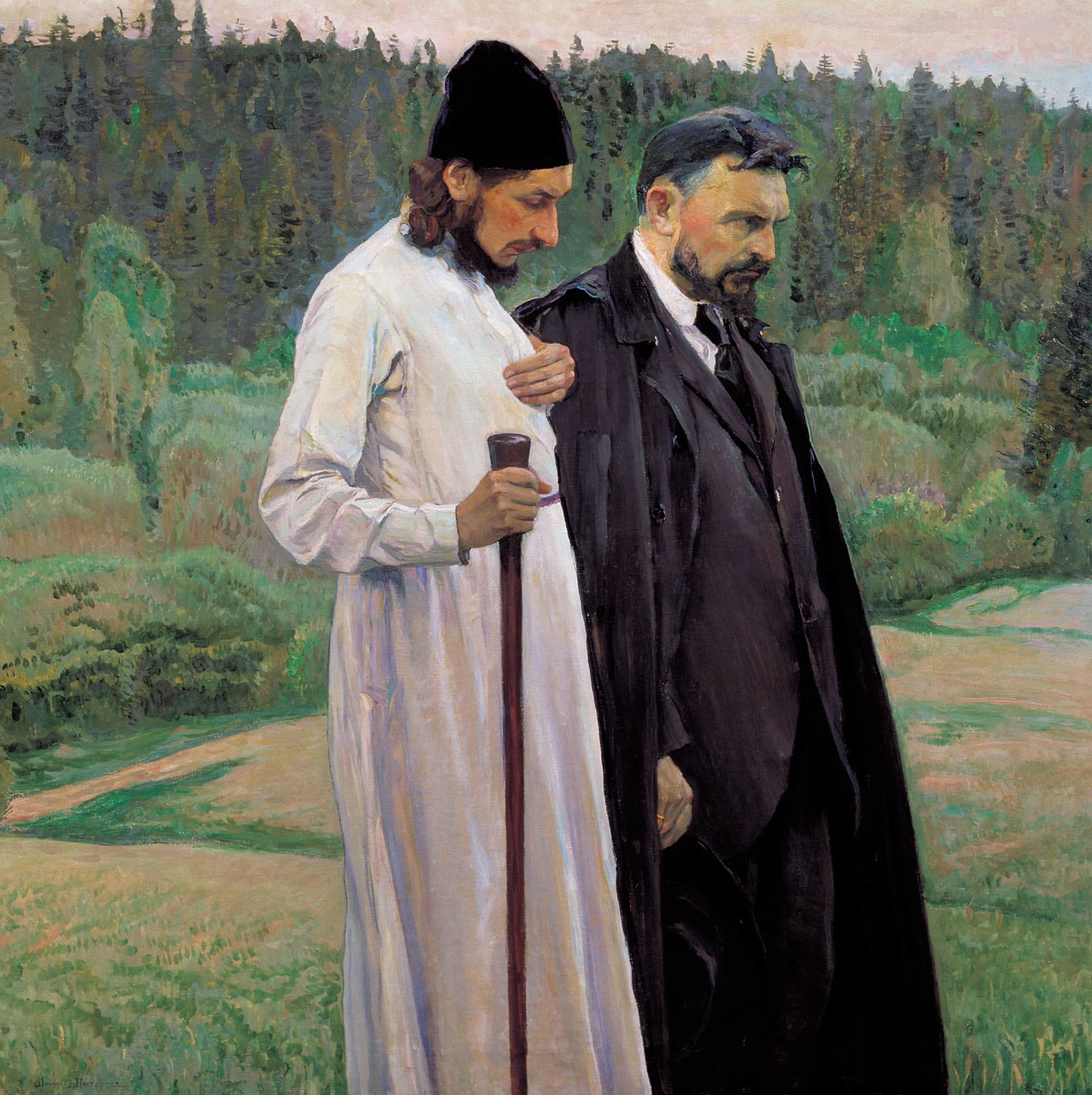
«Filósofos»: Florenski y Bulgákov, por Mijaíl Nésterov · Public domain
उनके अपने शब्दों में
«Living religious experience as the sole legitimate way of knowing dogmas.»«Столп и утверждение истины» (1914), «К читателю», primera frase: así resume el autor la intención de todo el libro.

शुरुआत के लिए एक रचना
The Pillar and Ground of the Truth: An Essay in Orthodox Theodicy in Twelve Lettersमूल विचार
Antinomy: For Florensky religious truth is antinomic: it can be stated only through pairs of contradictory propositions, equally true, which discursive reason cannot reconcile.
संदर्भ में देखें
जीवनी
5 मिनट का पाठ
स्पैनिश मूल से सहायता-प्राप्त अनुवाद, मातृभाषी अनुवादक द्वारा समीक्षा लंबित।
कॉकेशस का एक बालक
पावेल अलेक्सांद्रोविच फ़्लोरेंस्की का जन्म 21 जनवरी 1882 (जूलियन पंचांग के अनुसार 9 जनवरी) को वर्तमान अज़रबैजान के येव्लाख़ में हुआ, जहाँ उनके पिता, अलेक्सांद्र इवानोविच — पुरोहितों के परिवार से आए किंतु कलीसिया से दूर रहने वाले एक इंजीनियर — ट्रांसकॉकेशियाई रेलमार्ग के निर्माण में कार्यरत थे। उनकी माता, ओल्गा (सालोमे) पाव्लोव्ना सापारोवा, क़राबाख़ के एक प्राचीन आर्मेनियाई परिवार से थीं। सात भाई-बहनों में सबसे बड़े, वे तिफ़्लिस और बातूमी के बीच एक सुसंस्कृत किंतु धर्म के प्रति उदासीन घर में पले-बढ़े। उन्होंने स्वयं «मेरी संतानों के लिए» में बताया कि बचपन में वे प्राकृतिक घटनाओं के एक «अदन» में रहते थे — समुद्र, पत्थर, पौधे — और किसी भी दार्शनिक से पहले गेटे उनका बौद्धिक आहार बने।
मॉस्को में गणितज्ञ
1900 में उन्होंने तिफ़्लिस के द्वितीय जिम्नेज़ियम से माध्यमिक शिक्षा पूरी की और मॉस्को विश्वविद्यालय के भौतिकी-गणित संकाय में प्रवेश लिया। वहाँ उन्होंने निकोलाई बुगायेव से शिक्षा पाई, आंद्रेई बेली से मित्रता की और उनके माध्यम से ब्र्यूसोव, बाल्मोंत, मेरेज़्कोव्स्की दंपती और ब्लोक से, तथा «नोवी पुत» और «वेसी» में «अनंत के प्रतीकों पर» (1904) जैसे निबंध प्रकाशित किए, जो कैंटर के समुच्चय-सिद्धांत को समर्पित था। उन वर्षों में वे व्लादिमीर सोलोव्योव और आर्किमांड्राइट सेरापियोन (माश्किन) की ओर आकृष्ट हुए। 1904 में उन्होंने प्रथम श्रेणी के डिप्लोमा के साथ स्नातक उपाधि पाई, किंतु वैज्ञानिक जीवन अपनाने के बजाय बिशप अंतोनी (फ़्लोरेंसोव) के आशीर्वाद से सेर्गियेव पोसाद स्थित मॉस्को धर्मशास्त्रीय अकादमी में प्रवेश लिया।
धर्मशास्त्रीय अकादमी
मार्च 1906 में, विद्यार्थी रहते हुए ही, उन्होंने अकादमी के गिरजाघर में मृत्युदंड के विरुद्ध एक प्रवचन दिया — «रक्त की पुकार» — जो सेंसर से गुज़रे बिना छप गया; उन्हें गिरफ़्तार किया गया और कुछ समय उन्होंने जेल में बिताया। 1908 में उन्होंने अध्ययन पूरा किया और अकादमी में ही दर्शन के इतिहास के अध्यापक के रूप में रह गए। 1910 में उन्होंने आन्ना मिख़ाइलोव्ना ग्यात्सिंतोवा से विवाह किया, जिनसे उनकी पाँच संतानें हुईं — वसीली, किरील, ओल्गा, मिख़ाइल और मारिया —, और 1911 में उनका पुरोहित-अभिषेक हुआ। 1912 से 1917 तक उन्होंने अकादमी की पत्रिका «बोगोस्लोव्स्की वेस्त्निक» का संपादन किया और सेर्गियेव पोसाद में रेड क्रॉस आश्रम के गिरजाघर में पुरोहित के रूप में सेवा की।
सत्य का स्तंभ और आधार
1914 में उन्होंने विद्यार्थी-काल में आरंभ की गई अपनी कृति को विस्तारित रूप में प्रकाशित किया: «सत्य का स्तंभ और आधार: बारह पत्रों में ऑर्थोडॉक्स ईश्वर-न्याय (थियोडिसी) का एक प्रयास»। एक मित्र के साथ पत्राचार के रूप में लिखी गई यह पुस्तक धर्मशास्त्र, गणित, भाषाशास्त्र, कला-इतिहास और रहस्यानुभूति को एक साथ गूँथती है। इसका प्रतिपादन है कि सत्य सिद्ध नहीं किया जाता, बल्कि कलीसिया में जिया जाता है; कि धर्मसिद्धांत विरोधाभासी (एंटिनॉमिक) है — उसे केवल ऐसे परस्पर-विरोधी कथनों में कहा जा सकता है जिनका बुद्धि समन्वय नहीं कर पाती —; और कि दिव्य प्रज्ञा, सोफ़िया, सृष्टि का मूल है। अकादमी द्वारा पुरस्कृत इस पुस्तक ने कुछ को मंत्रमुग्ध किया और कुछ को क्षुब्ध: बर्द्यायेव ने इसे «शैलीबद्ध ऑर्थोडॉक्सी» कहा।
एक छाया: बेइलिस मामला
उन्हीं वर्षों में फ़्लोरेंस्की ने ऐसे लेख भी लिखे जिन्हें उनके प्रशंसक भूल जाना पसंद करते हैं। 1913 में मेनाखेम बेइलिस — कीव के एक यहूदी, जिन पर झूठा अनुष्ठानिक हत्या का आरोप लगाया गया था — के मुक़दमे के दौरान उन्होंने वसीली रोज़ानोव को दो गुमनाम लेख भेजे, जिनमें आरोप को सच मान लिया गया था; रोज़ानोव ने उन्हें यहूदियों और रक्त के संबंध पर अपनी पुस्तक के परिशिष्ट के रूप में प्रकाशित किया। आलोचकों ने इनमें ईसाई यहूदी-विरोध से नस्ली ढंग के यहूदी-विद्वेष की ओर संक्रमण देखा है।
क्रांति, प्रतिमाएँ और परिप्रेक्ष्य
उन्होंने क्रांति को प्रलय के रूप में ग्रहण किया और एक धर्मतांत्रिक राजतंत्र की ओर झुके, किंतु देश नहीं छोड़ा। 1918 से 1920 तक वे त्रिएक संत सेर्गी लाव्रा (मठ) के स्मारकों की संरक्षण समिति के वैज्ञानिक सचिव रहे, उसकी प्रतिमाओं (आइकनों) की सूची बनाई और इस बात के लिए संघर्ष किया कि मठ एक «मृत संग्रहालय» न बन जाए। तभी उन्होंने उपासना और कला पर अपने लेख लिखे: «उलटा परिप्रेक्ष्य» (1919), जिसमें वे आइकन के परिप्रेक्ष्य को आध्यात्मिक देश (स्पेस) के चित्रण की एक भिन्न पद्धति के रूप में समझाते हैं, और «आइकोनोस्टेसिस» (1922), जिसके अनुसार आइकन एक खिड़की है और आइकोनोस्टेसिस दृश्य और अदृश्य जगत के बीच की सीमा।
पुरोहित-इंजीनियर
1919 से वे सोवियत राज्य की सेवा में एक वैज्ञानिक के रूप में काम करते रहे, किंतु पुरोहित का चोगा कभी नहीं उतारा: कार्बोलित प्लास्टिक कारख़ाने में, ग्लावएनेर्गो के पदार्थ-विज्ञान विभाग में और विद्युतीकरण योजना गोएलरो में। उन्होंने परावैद्युत पदार्थों (डाइइलेक्ट्रिक्स) पर एक मोनोग्राफ़ (1924) लिखा, आविष्कारों के पेटेंट कराए, 1921 से 1927 तक व्ख़ुतेमास कला-कार्यशालाओं में पढ़ाया और «तकनीकी विश्वकोश» के संपादकों में रहे, जिसके लिए उन्होंने लगभग डेढ़ सौ लेख लिखे। 1922 में उन्होंने «ज्यामिति में काल्पनिक राशियाँ» प्रकाशित की, जिसमें दांते और सापेक्षता-सिद्धांत का सहारा लेकर एक भूकेंद्रिक ब्रह्मांड-विज्ञान का समर्थन किया गया था, और इसके लिए उन पर प्रतिगामी और अंधविश्वास-पोषक होने के आरोपों के साथ प्रहार हुए।
साइबेरिया और सोलोव्की
1928 में उन्हें निज़्नी नोवगोरोद निर्वासित किया गया; येकातेरीना पेश्कोवा की सहायता से वे लौट सके और उन्हें प्राग जाकर बसने का प्रस्ताव मिला, किंतु उन्होंने यहीं रहना चुना। 26 फ़रवरी 1933 को एक कथित प्रति-क्रांतिकारी संगठन के विरुद्ध गढ़े गए मामले में उन्हें गिरफ़्तार किया गया और 26 जुलाई को श्रम-शिविर में दस वर्ष की सज़ा सुनाई गई। वे सुदूर पूर्व के स्वोबोदनी शिविर और स्कोवोरोदिनो के स्थायी तुषार-भूमि (पर्माफ़्रॉस्ट) प्रायोगिक केंद्र से गुज़रे, और 1934 की शरद ऋतु में सोलोव्की द्वीपों पर भेज दिए गए, जहाँ उन्होंने शैवाल से आयोडीन और अगर-अगर निकालने पर शोध किया। वहाँ से उन्होंने अपनी पत्नी, माँ और बच्चों को सौ से अधिक पत्र लिखे, जो विज्ञान, कविता और कोमलता से भरे हैं।
8 दिसंबर 1937
25 नवंबर 1937 को, महान आतंक के दौरान, लेनिनग्राद क्षेत्र की एनकेवीडी «त्रोइका» ने उन्हें मृत्युदंड दिया। 8 दिसंबर को सोलोव्की से लाए गए अन्य क़ैदियों के साथ उन्हें गोली मार दी गई; वध-स्थल और सामूहिक क़ब्र का पता नहीं चल सका है, और लेवाशोवो तथा लेनिनग्राद के बाहरी इलाक़ों के अन्य गोलीबारी-स्थलों के नाम लिए जाते हैं। परिवार को वर्षों तक मृत्यु की एक झूठी तिथि, 15 दिसंबर 1943, बताई जाती रही। सुरक्षा-तंत्र के अभिलेखागारों में सुरक्षित और पेरेस्त्रोइका के बाद खोले गए मामले के दस्तावेज़ों ने सज़ा और वध की तिथि निश्चित की। 1958 और 1959 में उन्हें दोषमुक्त (पुनर्वासित) किया गया।
विरासत
1960 और 1970 के दशकों में फ़्लोरेंस्की की पुनः खोज हुई, जब मॉस्को पितृसत्ता की पत्रिका ने उनके अप्रकाशित लेख छापने आरंभ किए, और 1994 से रूस में उनकी समग्र रचनावली प्रकाशित हुई। उलटे परिप्रेक्ष्य के उनके सिद्धांत और आइकन-दर्शन ने कला-इतिहास और संकेतविज्ञान को प्रभावित किया, और विज्ञान तथा आस्था के उनके समन्वय ने उन्हें सोवियत शासन द्वारा नष्ट किए गए धार्मिक बुद्धिजीवी वर्ग का प्रतीक बना दिया। उनके पौत्र, मठाधीश अंद्रोनिक (त्रुबाचोव), ने उनकी रचनाओं का संपादन किया और सेर्गियेव पोसाद में उनके नाम पर संग्रहालय की स्थापना की।
स्रोत: Florenski, P. A. Иконостас [El iconostasio] (1922). Богословские труды, n.º 9 (1972), pp. 83–148. Texto en Azbuka. · Pyman, Avril. Pavel Florensky: A Quiet Genius. The Tragic and Extraordinary Life of Russia's Unknown da Vinci. Nueva York y Londres: Continuum, 2010. · Florenski, P. A. Столп и утверждение истины. Опыт православной феодицеи в двенадцати письмах [La columna y el fundamento de la verdad]. Moscú: Put, 1914. Texto en Azbuka. · Florenski, P. A. Письма с Соловков [Cartas desde las Solovkí], en Сочинения в 4 томах, t. 4: Письма с Дальнего Востока и Соловков, ed. igumeno Andronik (Trubachov) et al. Moscú: Mysl, 1998, pp. 139–781. Texto en Azbuka. · Florenski, P. A. Детям моим. Воспоминания прошлых дней [A mis hijos. Recuerdos de días pasados] (1916–1926). Moscú: Moskovski rabochi, 1992. Texto en Azbuka.
कालक्रम
जीवन, वर्ष-दर-वर्ष
प्रत्येक बिंदु एक प्रमाणित घटना है। उसे स्रोत और निश्चितता के स्तर सहित पढ़ने के लिए क्लिक करें।
21 जनवरी 18820 वर्षYevlaj
Birth
Born (9 January Old Style), the first of seven children of the railway engineer Alexander Florensky and Olga Saparova.
प्रमाणितWikidata, Q336769: Pavel Florensky (1882–1937). P31=Q5; 47 enlaces entre wikis.
उनके निधन के बाद
- 5 मई 1958Rehabilitation
- 1972Iconostasis published
21 जनवरी 1882 · 0 वर्ष
Birth
Born (9 January Old Style), the first of seven children of the railway engineer Alexander Florensky and Olga Saparova.
प्रमाणित
1900 · 18 वर्ष
Moscow University
Finishes at the Second Tiflis Gymnasium and enters Physics and Mathematics at Moscow University.
प्रमाणित
1904 · 22 वर्ष
From mathematics to theology
Graduates with a first-class diploma and, with Bishop Antony (Florensov)'s blessing, enters the Moscow Theological Academy. Publishes 'On the Symbols of Infinity'.
प्रमाणित
मार्च 1906 · 24 वर्ष
'The Cry of Blood'
His sermon against the death penalty, printed without censorship, leads to his arrest and a short spell in prison.
संभावित
1908 · 26 वर्ष
Academy lecturer
Completes his studies and begins teaching the history of philosophy at the Theological Academy.
प्रमाणित
1910 · 28 वर्ष
Marriage
Marries Anna Mikhailovna Giatsintova (1889–1973); they will have five children.
प्रमाणित
1911 · 29 वर्ष
Ordination
He is ordained priest; from 1912 to 1917 he edits Bogoslovsky vestnik.
प्रमाणित
1913 · 31 वर्ष
The Beilis articles
Sends Rozanov two anonymous articles that treat as true the ritual-murder accusation against Menahem Beilis.
प्रमाणित
1914 · 32 वर्ष
The Pillar and Ground of the Truth
The Put publishing house issues his major work, an enlargement of his master's thesis.
प्रमाणित
1918 – 1920 · 36 वर्ष
The Lavra Commission
Scientific secretary of the Commission for the Protection of the Monuments of the Trinity–St Sergius Lavra (1918–1920).
प्रमाणित
1919 · 37 वर्ष
Reverse Perspective and scientific work
Writes 'Reverse Perspective' and begins working as a scientist at the Karbolit plant and then at Glavenergo.
प्रमाणित
1921 – 1927 · 39 वर्ष
Professor at VKhUTEMAS
At Vladimir Favorsky's recommendation he teaches at the VKhUTEMAS art workshops until 1927.
प्रमाणित
1922 · 40 वर्ष
Iconostasis and Imaginaries in Geometry
Writes Iconostasis (published 1972) and publishes Imaginaries in Geometry at his own expense.
प्रमाणित
1924 · 42 वर्ष
Dielectrics
Publishes Dielectrics and Their Technical Application.
प्रमाणित
1927 · 45 वर्ष
Technical Encyclopedia
Joins the editorial board of the Technical Encyclopedia, for which he writes some 150 articles.
प्रमाणित
1928 · 46 वर्ष
Exile and refusal to emigrate
Exiled to Nizhny Novgorod; thanks to Ekaterina Peshkova he returns and is offered emigration to Prague, but decides to stay.
प्रमाणित
26 फ़रवरी 1933 · 51 वर्ष
Arrest
Arrested by the OGPU; on 26 July he is sentenced to ten years in a labour camp.
प्रमाणित
1 दिसंबर 1933 · 51 वर्ष
Svobodny camp
Arrives at the BAMLAG camp at Svobodny; in February 1934 he moves to the experimental permafrost station at Skovorodino.
प्रमाणित
15 नवंबर 1934 · 52 वर्ष
Solovki
Begins work at the iodine factory of the Solovki camp, to which he had been moved in the autumn.
प्रमाणित
18 जून 1937 · 55 वर्ष
Last surviving letter
Date of letter no. 103 to his wife, the last of those published in his Letters from Solovki.
संभावित
25 नवंबर 1937 · 55 वर्ष
Death sentence
A special NKVD troika of the Leningrad region sentences him to death.
प्रमाणित
8 दिसंबर 1937 · 55 वर्ष
Execution
Shot by the NKVD; the site of the grave remains unestablished. The family was given a false date (15 December 1943).
प्रमाणित
5 मई 1958
Rehabilitation
Rehabilitated for the 1933 conviction; on 5 March 1959, for that of 1937.
प्रमाणित
1972
Iconostasis published
Bogoslovskie trudy, a journal of the Moscow Patriarchate, publishes Iconostasis, fifty years after it was written.
प्रमाणित
कृतियाँ
आवश्यक कृतियाँ
वे कृतियाँ जिनके बिना उनकी विरासत को समझा नहीं जा सकता।
लिखित कृति · 1914
The Pillar and Ground of the Truth: An Essay in Orthodox Theodicy in Twelve Letters
Столп и утверждение истины. Опыт православной феодицеи в двенадцати письмах
His capital work, published by Put in 1914. Twelve letters to a friend — doubt, the Trinity, the light of truth, the Comforter, contradiction, sin, Gehenna, the creature, Sophia, friendship and jealousy — with extensive mathematical, philological and iconographic appendices. It holds that truth is reached by living religious experience rather than deduction; that dogma is antinomic; that the Trinity is the foundation of all truth; that Sophia is the root of creation; and that friendship, the 'we' of two, is the cell of the Church. It influenced Bulgakov and Losev and was criticised by Berdyaev and Florovsky.
8 संस्करण

मरणोपरांत कृति · 1922
Iconostasis
Иконостас
Written in 1922 and published in 1972 in Bogoslovskie trudy. Starting from the experience of dreams, which separate and join two worlds, it defines the icon as a window onto the invisible and the iconostasis as the boundary between the visible and invisible worlds, formed by the saints themselves. It defends the technique of the icon — egg tempera, gold, construction in layers of light — as the expression of an ontology of light, against the oil painting and perspective of Western art.
5 संस्करण
Pavel Florensky
Imaginaries in Geometry
लिखित कृति · 1922
Imaginaries in Geometry
Мнимости в геометрии. Расширение области двухмерных образов геометрии (Опыт нового истолкования мнимостей)
A short treatise published at the author's expense in 1922. It proposes interpreting imaginary numbers as the reverse side of a surface, and applies this to relativity: beyond the speed of light an 'imaginary' space, the invisible world, would begin. Drawing on Dante's Paradiso, it defends a geocentric cosmology and places the boundary between Earth and Heaven between the orbits of Uranus and Neptune. Its cover was designed by Vladimir Favorsky.
3 संस्करण

पत्राचार · 1998
Letters from the Far East and Solovki
Письма с Дальнего Востока и Соловков
Letters written between 1933 and 1937 from the camps of Svobodny, Skovorodino and Solovki to his wife, his mother and his five children, to whom he gave lessons in physics, chemistry, botany, poetry and music. Published in part from the 1980s and complete in 1998 (vol. 4 of his Works). They are one of the great spiritual testimonies of the Gulag.
6 संस्करण
संपूर्ण कृतित्व (43)
Pavel Florensky
The Idea of Discontinuity as an Element of a Worldview
The Conscious LibraryThe Idea of Discontinuity as an Element of a Worldview
1904
Pavel Florensky
On the Symbols of Infinity (An Essay on the Ideas of G. Cantor)
The Conscious LibraryOn the Symbols of Infinity (An Essay on the Ideas of G. Cantor)
1904
Pavel Florensky
On One Premise of a Worldview
The Conscious LibraryOn One Premise of a Worldview
1904
Pavel Florensky
Spiritualism as Anti-Christianity
The Conscious LibrarySpiritualism as Anti-Christianity
1904
Pavel Florensky
The Cry of Blood
The Conscious LibraryThe Cry of Blood
1906

Salt of the Earth: A Narrative on the Life of the Elder of Gethsemane Skete, Hieromonk Abba Isidore
1909
Pavel Florensky
Anthony of the Novel and Anthony of Tradition
The Conscious LibraryAnthony of the Novel and Anthony of Tradition
1907
Pavel Florensky
The Author of Life
The Conscious LibraryThe Author of Life
1907
Pavel Florensky
Joy Forever
The Conscious LibraryJoy Forever
1907
Pavel Florensky
In the Eternal Azure
The Conscious LibraryIn the Eternal Azure
1907
Pavel Florensky
The Cosmological Antinomies of Immanuel Kant
The Conscious LibraryThe Cosmological Antinomies of Immanuel Kant
1909
Pavel Florensky
The Universal Human Roots of Idealism
The Conscious LibraryThe Universal Human Roots of Idealism
1909
Pavel Florensky
On Spiritual Truth: An Essay in Orthodox Theodicy
The Conscious LibraryOn Spiritual Truth: An Essay in Orthodox Theodicy
1912
Pavel Florensky
The Meaning of Idealism
The Conscious LibraryThe Meaning of Idealism
1914
Pavel Florensky
Reason and Dialectic
The Conscious LibraryReason and Dialectic
1914
Pavel Florensky
Articles on the Beilis Case
The Conscious LibraryArticles on the Beilis Case
1913
Pavel Florensky
Did Not Count It Robbery (Towards a Judgement on Mysticism)
The Conscious LibraryDid Not Count It Robbery (Towards a Judgement on Mysticism)
1916
Pavel Florensky
Around Khomyakov: Critical Notes
The Conscious LibraryAround Khomyakov: Critical Notes
1916
Pavel Florensky
The Reduction of Numbers
The Conscious LibraryThe Reduction of Numbers
1916
Pavel Florensky
To My Children: Memories of Days Past
The Conscious LibraryTo My Children: Memories of Days Past
1992
Pavel Florensky
The Philosophy of Cult
The Conscious LibraryThe Philosophy of Cult
1977
Pavel Florensky
The Trinity–St Sergius Lavra and Russia
The Conscious LibraryThe Trinity–St Sergius Lavra and Russia
1919

Reverse Perspective
1919
Pavel Florensky
Celestial Signs (On the Symbolism of Colours)
The Conscious LibraryCelestial Signs (On the Symbolism of Colours)
1919
वचन
किसी निश्चित कृति में स्थित वचन। प्रत्येक के साथ उसका स्रोत और विश्वसनीयता का स्तर है।
Living religious experience as the sole legitimate way of knowing dogmas.Живой религиозный опыт, как единственный законный способ познания догматов.
सत्यापित«Столп и утверждение истины» (1914), «К читателю», primera frase: así resume el autor la intención de todo el libro.
अंतिम शब्द
उनके अंतिम शब्दों का कोई सत्यापन-योग्य अभिलेख उपलब्ध नहीं है।
His last words are not known. He was shot by the NKVD on 8 December 1937, together with other prisoners transferred from Solovki, at an unestablished place outside Leningrad; there were no witnesses who left an account. His last known letter to his family, no. 103 in the 1998 edition, is dated 18 June 1937: it speaks of the lack of work in the Solovki Kremlin, of his corner with a view of the sea in the monastery museum and of how much he would regret leaving the sea.
स्रोत: Florenski, P. A. Письма с Соловков [Cartas desde las Solovkí], en Сочинения в 4 томах, t. 4: Письма с Дальнего Востока и Соловков, ed. igumeno Andronik (Trubachov) et al. Moscú: Mysl, 1998, pp. 139–781. Texto en Azbuka.
पूछें
उनकी कृतियाँ क्या उत्तर देती हैं
मानवता के बारह महान प्रश्न और उनके ग्रंथ उनका जो उत्तर देने देते हैं, संदर्भों सहित। हम कभी उनके मुख में अपने शब्द नहीं रखते।
परम सत्य क्या है? क्या ईश्वर है?
The truth that proves itself is the Trinity, and the icon bears witness to it
साकार, व्यक्तिगत ईश्वरस्पष्ट रूप से कहा है
Florensky starts, in The Pillar and Ground of the Truth, from living religious experience as the only legitimate way of knowing dogmas. In the letter on doubt he follows scepticism to its end and concludes that only a truth that is at once subject and relation, an I that gives itself to a Thou and recognises itself in a He, can stand: the Trinity. His God is personal and tri-personal, and his inner life is self-giving love. To this speculative path he adds an aesthetic one: in Iconostasis he asserts that, since Rublev's Trinity exists, God exists, and presents this as the most convincing proof, one the textbooks never mention. For him the icon does not illustrate an idea: it is a window through which the invisible lets itself be seen.
इस प्रश्न की अन्य गुरुओं से तुलना करेंमैं कौन हूँ? क्या कोई सच्चा आत्म है?
The self finds itself only in love and in friendship
संबंधों में विकसित होता आत्मस्पष्ट रूप से कहा है
Florensky criticises the identity of the self conceived as the logical law A is A. In The Pillar and Ground of the Truth, such closed self-affirmation is the very form of sin and death: a self that only repeats itself becomes empty. True personal identity is reached by going out of oneself, when the self gives itself to another and receives itself from him; its model is Trinitarian life, in which each person is what it is through its relation to the others. That is why he devotes an entire letter to friendship, which he understands from the tradition of spiritual brotherhood in the early Church, as the experience in which two persons become consubstantial without being confused. The self is real and immortal, but it is found only in communion.
इस प्रश्न की अन्य गुरुओं से तुलना करेंहम दुःख क्यों भोगते हैं?
Sin is self-assertion that disintegrates; the true gift is paid for in pain
ईश्वर से वियोगस्पष्ट रूप से कहा है
In The Pillar and Ground of the Truth, Florensky defines sin as the self-assertion of an I that shuts itself into its empty identity and breaks communion; its consequence is inner disintegration, the loss of the person's integrity, and its end is gehenna, the loneliness of one who can no longer go out of himself. Suffering is the fruit of that separation, but love also includes it: in the letter on Sophia he writes that love eternally takes away in order eternally to give, and puts to death in order to bring to life. His own life confirmed it: from Solovki, shortly before he was shot, he wrote to his wife that the more selfless the gift, the harsher the persecution and the more severe the suffering, and called this the law of life.
इस प्रश्न की अन्य गुरुओं से तुलना करेंमृत्यु के बाद क्या होता है?
Before gehenna, an antinomy: salvation of all and eternal damnation at once
अनंत जीवन और पुनरुत्थानस्पष्ट रूप से कहा है
Florensky addresses what happens after death in the letter on gehenna in The Pillar and Ground of the Truth, and he does so with his method of antinomy. On one hand, God's love demands that all be saved; on the other, the creature's freedom makes eternal damnation possible. Neither thesis can be eliminated without betraying faith, and reason must accept holding them together. His solution points to a distinction within the person: what in it is the image of God is saved, while what sin has built, its caricature, burns and is separated. Beyond speculation, his faith in the resurrection is that of the Orthodox Church, which he lived until his execution in 1937, as his letters from Solovki show.
इस प्रश्न की अन्य गुरुओं से तुलना करेंमुक्ति या उद्धार कैसे प्राप्त होता है?
Salvation is lived in the Church: ascesis, sacrament and transfiguring love
कृपा और प्रेम सेस्पष्ट रूप से कहा है
Florensky presents salvation as incorporation into the life of truth, reached not by reasoning but by experience: the living religious experience he defines at the start of The Pillar and Ground of the Truth as the only legitimate path to the dogmas. That experience is given in the Church, through ascesis, which restores the integrity of the person broken up by sin, through the sacraments and through brotherly love. Its fruit is transfiguration: in the letter on the light of truth he reproduces the passage where Motovilov sees Seraphim illumined, as an example of what grace does in the flesh. In The Philosophy of Cult he adds that liturgical worship is the place where the human and the divine meet and where the whole of reality is sanctified.
इस प्रश्न की अन्य गुरुओं से तुलना करेंक्या गुरु आवश्यक है?
Truth is received in the Church and in the spiritual fatherhood of an elder
संघ और परंपरास्पष्ट रूप से कहा है
Florensky came to faith as an adult, from science, and his path was marked by concrete figures: Bishop Antony Florensov, whom he regarded as his spiritual father, and the elder Isidore of Gethsemane, to whom he devoted The Salt of the Earth, a portrait of an elder's simple holiness. His theology holds that truth is not passed on as information, but by incorporation into the living experience of the Church, its sacraments, its worship and its saints. In The Pillar and Ground of the Truth, written as letters to a friend, the genre itself expresses this conviction: truth is sought in dialogue and friendship, not in self-sufficient solitude. The teacher is necessary, but within a community of faith that precedes and sustains him.
इस प्रश्न की अन्य गुरुओं से तुलना करेंक्या संसार वास्तविक है?
The creature is rooted in God through Sophia; the visible borders the invisible
शुभ और वास्तविक सृष्टिस्पष्ट रूप से कहा है
Florensky, theologian and scientist at once, does not doubt the reality of the created world, but thinks of it as open from above. In The Pillar and Ground of the Truth he devotes one letter to the creature and another to Sophia, which he defines as the great root of all creation, through which the creature enters Trinitarian life and receives eternal life. The world is good because it is rooted in God. In Iconostasis he describes the boundary between the visible and the invisible world, which dreams, art and liturgy allow one to cross, and the icon as its witness. In Imaginaries in Geometry he went so far as to propose, on the basis of relativity, a model of the cosmos in which the visible world borders a space of another nature.
इस प्रश्न की अन्य गुरुओं से तुलना करेंप्रेम क्या है?
Love is consubstantiality: it takes in order to give and makes two one unconfused
ईश्वर और पड़ोसी से प्रेमस्पष्ट रूप से कहा है
In The Pillar and Ground of the Truth, love is the key to Trinitarian life and therefore to truth itself: God is love because each divine person gives itself to the others. Florensky describes it with paradoxical formulas: love eternally takes away in order eternally to give, eternally puts to death in order eternally to give life. In the letter on friendship and the letter on jealousy he studies it in its most concrete human form, friendship between two persons, which the early Church blessed with a rite of brother-making of its own, and which makes two one without confusing them, in the image of the Trinity's consubstantiality. Jealousy, in this sense, can be the face of love defending its unique object. Love of neighbour in general is first learned in love for one concrete friend.
इस प्रश्न की अन्य गुरुओं से तुलना करेंक्या हम स्वतंत्र हैं, या सब कुछ पूर्वनिर्धारित है?
Freedom and grace form an antinomy that reason does not solve but accepts
वास्तविक स्वतंत्र इच्छाउनके सिद्धांत से निष्कर्षित
Florensky does not treat freedom as an isolated problem, but as one of the cases of antinomy he considers proper to all religious truth. In the letter on contradiction in The Pillar and Ground of the Truth he holds that truth, seen from finite reason, appears as a pair of opposed affirmations that must be held together: providence that disposes all things and freedom that responds, grace that saves and human effort. In the letter on gehenna he applies the same scheme: God's love wills the salvation of all, but the creature's freedom can refuse it, and both theses are true. Human freedom is therefore real, and the human being answers for his acts, though his relation to providence cannot be reduced to a formula.
इस प्रश्न की अन्य गुरुओं से तुलना करेंध्यान या प्रार्थना क्यों करें?
Worship is the root of culture and the place where reality is sanctified
अनुष्ठान और आत्म-संस्कारस्पष्ट रूप से कहा है
Florensky, a priest as well as a scientist, thought of prayer above all from liturgical worship. In the lectures gathered as The Philosophy of Cult he maintains that worship is the centre from which all culture springs, as the word itself indicates, and that in it material reality, water, bread, oil, word and gesture, is sanctified and opened to the divine. In Church Ritual as a Synthesis of the Arts and in Iconostasis he describes the liturgy as a total work of art involving architecture, candlelight, incense smoke, chant and the icon, and the icon as a window onto the invisible world. His interest in the divine name, in the context of the name-glorifying controversy, shows that personal prayer is not separated from rite.
इस प्रश्न की अन्य गुरुओं से तुलना करेंक्या बुद्धि परम को जान सकती है?
Religious truth is antinomic: reason touches it only as contradiction
परम मन से परे हैस्पष्ट रूप से कहा है
Florensky was a mathematician by training and never despised reason: he studied Cantor's set theory, wrote on the infinite and worked as an engineer. Precisely for that reason he knew its limits. In The Pillar and Ground of the Truth he holds that reason, governed by the law of identity, cannot by itself find a truth that proves itself: it leads to scepticism. And when it approaches the mysteries of faith, it meets them as antinomies, pairs of contradictory affirmations equally true, such as God's unity and trinity or freedom and grace. The letter on contradiction makes antinomy the seal of religious truth. Knowledge of the ultimate is possible only through living religious experience, in which reason is transfigured without being abolished.
इस प्रश्न की अन्य गुरुओं से तुलना करेंसंसार से हटें या उसे बदलें?
A priest in a cassock at the technical office: serving through science without leaving faith
कर्म में ध्यानउनके सिद्धांत से निष्कर्षित
Florensky embodied a singular way of living in the world. After the revolution, when the Theological Academy closed, he neither emigrated nor withdrew: he worked on the commission for the protection of the monuments of the Lavra of Saint Sergius and later on the country's electrification plan, where he attended meetings in cassock and pectoral cross. He published studies on dielectrics and wrote articles for the technical encyclopaedia. Deported to Solovki, he researched the extraction of iodine and agar from seaweed. In his letters to his children from the camp he teaches them to observe nature attentively and to work well, as a form of service. Science, art and liturgy were for him expressions of one and the same vision of the world, and none required renouncing the others.
इस प्रश्न की अन्य गुरुओं से तुलना करें
निकटता और तनाव
निकटता और तनाव
उनके मतों के आधार पर प्रश्न-दर-प्रश्न आकलित। प्रत्येक सहमति या टकराव का कारण क्लिक करने पर।
इनसे मिलता-जुलता सोचते हैं

Fyodor Dostoevsky
इन पर सहमत: परम सत्य क्या है? क्या ईश्वर है? · हम दुःख क्यों भोगते हैं? · मृत्यु के बाद क्या होता है?

Francis of Assisi
इन पर सहमत: परम सत्य क्या है? क्या ईश्वर है? · हम दुःख क्यों भोगते हैं? · मृत्यु के बाद क्या होता है?

Theophan the Recluse
इन पर सहमत: हम दुःख क्यों भोगते हैं? · परम सत्य क्या है? क्या ईश्वर है? · मृत्यु के बाद क्या होता है?
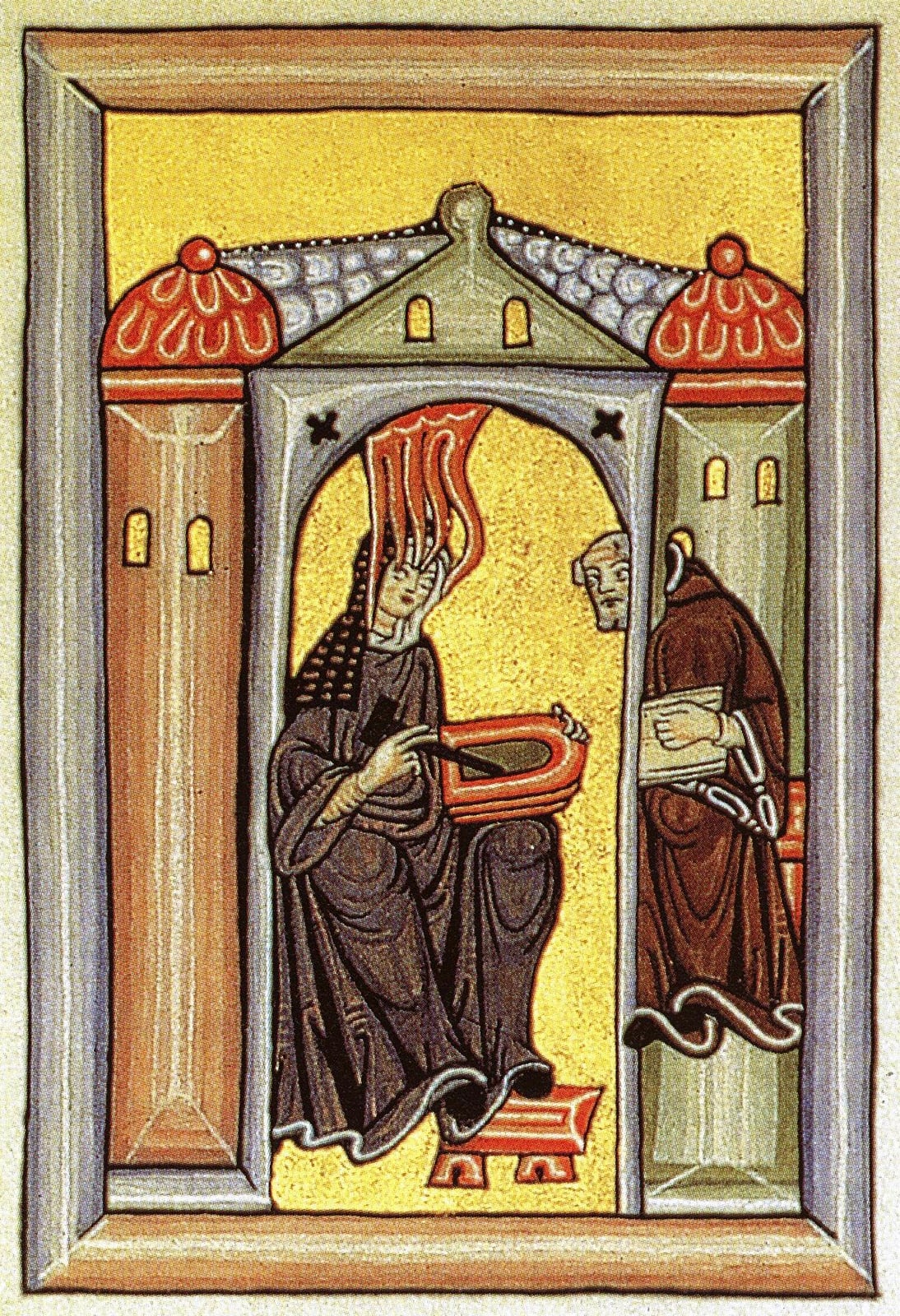
Hildegard of Bingen
इन पर सहमत: क्या हम स्वतंत्र हैं, या सब कुछ पूर्वनिर्धारित है? · परम सत्य क्या है? क्या ईश्वर है? · मृत्यु के बाद क्या होता है?
इनसे भिन्न सोचते हैं

Parmenides
इन पर टकराव: क्या संसार वास्तविक है?

Pema Chödrön
इन पर टकराव: परम सत्य क्या है? क्या ईश्वर है? · मृत्यु के बाद क्या होता है?

Tsongkhapa
इन पर टकराव: परम सत्य क्या है? क्या ईश्वर है? · मृत्यु के बाद क्या होता है?

The 14th Dalai Lama (Tenzin Gyatso)
इन पर टकराव: परम सत्य क्या है? क्या ईश्वर है? · मृत्यु के बाद क्या होता है?
प्रसंग और वृत्तांत
प्रसंग और वृत्तांत
प्रमाणितmarzo de 1906
The cry of blood
वृत्तांत का स्रोत: The sermon and the prosecution are recorded in his biographies; the detail of the sentence imposed and its remission comes from the Ekzeget.ru biography. That the sermon responded specifically to the execution of Lieutenant Pyotr Schmidt (March 1906) is held by several biographers but has not been verified here.
मौखिक परंपरा1919–1946
The head of St Sergius
वृत्तांत का स्रोत: It comes from late memories transmitted in the Florensky family and by Ekaterina Vasilchikova, Olsufyev's niece, and by Archbishop Sergei (Golubtsov); it was published in the 1990s. The opening of the relics on 11 April 1919 is documented; the substitution of the head has no independent documentary confirmation. A later legend even attributes Florensky's death sentence to his refusal to reveal the hiding place, without any evidence.
प्रमाणित1928
Staying
वृत्तांत का स्रोत: Recorded in the Russian Wikipedia biography and in A. Pyman's biography, on the basis of the Political Red Cross and family documentation.
प्रमाणित1934–1937
Chemistry lessons from Solovki
वृत्तांत का स्रोत: The letters themselves, published in full in vol. 4 of his Works (Mysl, 1998).
प्रमाणित1937–1989
An invented date of death
वृत्तांत का स्रोत: The sentence, the date of execution and the falsity of the date given to the family are recorded in the case-file documents published after perestroika; the research on the burial site is that of Anatoly Razumov (Leningradsky martirolog).
शिक्षाएँ
शिक्षाएँ
वे अवधारणाएँ जो उनके चिंतन को रूप देती हैं, उनके संदर्भ में समझाई गई।
Antinomyantinomia
Sixth letter ('Contradiction') of The Pillar and Ground of the Truth; antecedents in The Cosmological Antinomies of Kant (1909).
Sophia and sophiologysofia
Heir to Solovyov; in critical dialogue with Böhme's sophiology, which Berdyaev compared with the Russian one in 1930.
Reverse perspectiveperspectiva-invertida
Later developed in the VKhUTEMAS course on spatiality (1924–1925).
The icon and the iconostasisicono
Written in 1922, at the height of the Soviet campaign against the Church; published in 1972.
Imaginaries and the space beyondimaginarios
It joins his mathematical training with his theology of the icon and of the boundary between worlds.
The name and the magic of the wordnombre
Part of his 'concrete metaphysics' of the 1920s.
वीडियो
वीडियो
रिकॉर्डिंग, साक्षात्कार और वृत्तचित्र। वीडियो YouTube से चलते हैं; वे यहाँ संग्रहीत नहीं हैं।
«Почаще смотрите на звёзды»
वृत्तचित्र· RU
ТК ТОНУС
Жизнь замечательных семей. Флоренский
वृत्तचित्र· RU
Радость мояआधिकारिक चैनल
о. Павел Флоренский
वृत्तचित्र· RU
Игорь Штернбергआधिकारिक चैनल
Павел Флоренский. От геометрии мнимостей к топологии духа (часть 1)
व्याख्यान· RU· 2018
Калининградская областная научная библиотекаआधिकारिक चैनल
Обратная перспектива в эстетике и космологии отца Павла Флоренского. Лекция Оксаны Седых
व्याख्यान· RU· 2020
nffedorov
Reverse Perspective, the Politics of Space, and Contemporary Art Practice
व्याख्यान· EN
IWMVienna (Institut für die Wissenschaften vom Menschen)आधिकारिक चैनल
Philosophy of Love in the Context of Russian Philosophy. V. Solovyov and P. Florensky
व्याख्यान· EN
Studium Europy Wschodniej (Universidad de Varsovia)आधिकारिक चैनल
Ciclo de Charlas — Pavel Florenski: filósofo, historiador del arte, matemático y sacerdote ruso
व्याख्यान· ES
cursosoficialesderusoआधिकारिक चैनल
Vita e pensiero di Pavel Florenskij — Prof.ssa A. Marcuccini
व्याख्यान· IT
Filippo Tassi
Nulla va perduto. L'esperienza di Pavel Florenskij
व्याख्यान· IT· 2013
Filosofia Tor Vergataआधिकारिक चैनल
Il respiro della vita. Pavel A. Florenskij testimone della verità (con Massimo Cacciari)
व्याख्यान· IT
icaroplay
La testimonianza di Pavel Florenskij
वृत्तचित्र· IT
12Porteआधिकारिक चैनल
Benedetto XVI cita Florenskij: «Quando avrete un peso nell'animo, guardate le stelle…»
तृतीय पक्ष की रिकॉर्डिंग· IT
raffaellablogpapa1
चित्रशाला
चित्रशाला
सत्यापित लाइसेंस वाले चित्र। प्रत्येक में उसके रचयिता और श्रेय का उल्लेख सुरक्षित है।
संबंध
संबंध
प्रभाव, शिष्यत्व और वैचारिक निकटता। प्रमाणित संबंध को विश्लेषण से पहचानी गई समानता से अलग दर्शाया गया है।
इनसे प्रभावित
In his university years he was drawn to Solovyov's teaching, and his sophiology, in the tenth letter of The Pillar and Ground of the Truth, starts from Solovyov's, which he corrects with Russian liturgy and iconography. He belongs to the generation that made Solovyov its starting point.
प्रमाणित संबंध
इनसे मतभेद
Berdyaev reviewed The Pillar and Ground of the Truth harshly in 'Stylised Orthodoxy' (1914) and argued against 'Around Khomyakov' (1916); in Self-Knowledge he would call him 'alien and hostile', a 'refined reactionary' indifferent to ethics. For him Florensky represented the aesthetic and magical Orthodoxy that freedom had to overcome.
प्रमाणित संबंध
इनसे प्रभावित
In The Pillar and Ground of the Truth he quotes, in the fourth letter, 'The Light of Truth', Seraphim's conversation with Motovilov on the acquisition of the Holy Spirit, and in the tenth, 'Sophia', he recalls that the saint called the icon of Tenderness, the only one in his cell, 'Joy of all joys'.
प्रमाणित संबंध
इनसे प्रभावित
He devoted to Plato his lectures 'The Universal Human Roots of Idealism' (1909) and 'The Meaning of Idealism' (1914), in which he interprets the doctrine of ideas as the philosophical elaboration of a universal religious and magical experience. In To My Children he describes his youthful search for Goethe's 'primal phenomenon' in an ontological density 'after Plato'.
प्रमाणित संबंध
इनके समकालीन
In To My Children he recalls that as an adolescent he read Tolstoy's philosophical writings and found them 'mostly tedious', though he was interested in Carpenter's article on science translated by Tolstoy; Merezhkovsky's study of Tolstoy and Dostoevsky marked him more.
प्रमाणित संबंध
इनसे मिलते-जुलते विचार
No detailed influence is recorded, but Florensky draws on Dostoevsky in Iconostasis — Stavrogin's 'mask' as a face petrified by passion — and shares with him the vision of the elder and of Russian holiness as the centre of spiritual life.
विश्लेषण से पहचानी गई समानता
इनसे मिलते-जुलते विचार
Berdyaev, in 'The Doctrine of Sophia and the Androgyne in J. Böhme and the Russian Sophiological Currents' (1930), compared Böhme's Sophia with that of Russian sophiology, from Solovyov to Florensky and Bulgakov, and noted their differences: in Böhme Sophia is virginity and freedom; in the Russians, a more cosmic and Platonic idea.
प्रमाणित संबंध
स्रोत
स्रोत
इस प्रविष्टि के लिए देखे गए ग्रंथ-सूची और सूचीपत्र।
- Florenski, P. A. Иконостас [El iconostasio] (1922). Богословские труды, n.º 9 (1972), pp. 83–148. Texto en Azbuka.
- Wikidata, Q336769: Pavel Florensky (1882–1937). P31=Q5; 47 enlaces entre wikis.
- «Флоренский, Павел Александрович». Wikipedia en ruso (biografía, «Столп», caso Beilis, arresto y fusilamiento, publicaciones).
- Pyman, Avril. Pavel Florensky: A Quiet Genius. The Tragic and Extraordinary Life of Russia's Unknown da Vinci. Nueva York y Londres: Continuum, 2010.
- Florenski, P. A. Столп и утверждение истины. Опыт православной феодицеи в двенадцати письмах [La columna y el fundamento de la verdad]. Moscú: Put, 1914. Texto en Azbuka.
- Florenski, P. A. Письма с Соловков [Cartas desde las Solovkí], en Сочинения в 4 томах, t. 4: Письма с Дальнего Востока и Соловков, ed. igumeno Andronik (Trubachov) et al. Moscú: Mysl, 1998, pp. 139–781. Texto en Azbuka.
- Florenski, P. A. Детям моим. Воспоминания прошлых дней [A mis hijos. Recuerdos de días pasados] (1916–1926). Moscú: Moskovski rabochi, 1992. Texto en Azbuka.
- Open Library, autor OL54367A: Pavel Florensky (1882–1937), obras y ediciones.
- Berdiáyev, N. A. «Стилизованное православие (о. Павел Флоренский)». Русская мысль, 1914, n.º 1. Texto en la Biblioteca «Vejí».
- Razumov, Anatoli Ya. (entrevista). «Соловецкие этапы. Где расстрелян священник Павел Флоренский?». Radio Grad Petrov, 2017 (archivada en Internet Archive). Razumov es el compilador del «Ленинградский мартиролог» de la Biblioteca Nacional de Rusia.
- «Павел Флоренский, священник». Ekzeget.ru (biografía: el sermón de 1906, la detención de 1933, las Solovkí).
- Berdiáyev, N. A. «Из этюдов о Я. Беме. Этюд II: Учение о Софии и андрогине Я. Беме и русские софиологические течения». Путь, 1930, n.º 21, pp. 34–62.
- «Pavel Florensky». Wikipedia en inglés (traslado desde las Solovkí y ejecución, con referencias a A. Maccioni, eSamizdat, 2007).
- अधिकार-धारक
- Florenski murió en 1937: sus obras publicadas en vida son de dominio público en EE. UU. (anteriores a 1930), en la UE (desde 2008) y en España (desde 2018). Las obras póstumas publicadas desde 1967 pueden estar protegidas en EE. UU.; en Rusia, por su rehabilitación póstuma, el plazo se cuenta desde 1958. Las traducciones pertenecen a sus traductores y editoriales.
पुष्टि की प्रतीक्षा में
जो यह प्रविष्टि अभी तक निश्चित नहीं कर सकी है। हम उसे भर देने के बजाय कह देना बेहतर समझते हैं।
- Edición española de «Los imaginarios en geometría» y de «Los nombres»: no localizadas.
- Confirmar la vinculación del sermón «El clamor de la sangre» (marzo de 1906) con la ejecución del teniente Piotr Schmidt, y la pena exacta impuesta.
- Confirmar fechas y revistas de «El sentido del idealismo» (1914), «Razón y dialéctica» (1914), «Signos celestes» y «La acción del templo» (en «Makovets», 1922).
- Registrar uno por uno sus artículos de la «Enciclopedia técnica» (unos 150), sus escritos teológicos publicados en «Bogoslovskie trudy» (1972–2007) y sus poemas; hoy figuran agrupados o sólo los principales.
- Lugar de la ejecución y de la fosa: no establecido (Levashovo, polígono de Rzhevka/Koirangakangas o una fosa del campo de Lodéinoye Pole, según las hipótesis de A. Razumov y A. Maccioni).
- Contenido exacto de «Early Religious Writings, 1903–1909» (Eerdmans, 2017): no se ha asignado a obras concretas.
- Verificar en el texto de su «Testamento» la frase sobre mirar las estrellas que citó Benedicto XVI (no se ha podido cotejar).
- Duración y año de la mayoría de los vídeos: oEmbed no los proporciona.
2026-10-25 को शोधित