ईसाई धर्म · ईसाई रहस्यवाद · रूढ़िवादी ईसाई धर्म
Vladimir Solovyov
Владимир Сергеевич Соловьёв
1853 – 1900ऐतिहासिक रूप से प्रमाणित व्यक्ति
रूसी दार्शनिक, गृहस्थ धर्मशास्त्री और कवि (1853–1900), रूस के पहले व्यवस्थित चिंतक। उन्होंने «सर्वैक्य» और «ईश्वर-मानवता» की अवधारणाएँ तथा दिव्य प्रज्ञा, सोफ़िया, का एक रहस्यवाद प्रतिपादित किया, जिसके तीन बार दर्शन होने की बात वे कहते थे। दोस्तोयेव्स्की के मित्र, उन्होंने 1881 में ज़ार के हत्यारों के लिए क्षमादान माँगा और अपना पद खो दिया; पूर्व और पश्चिम की कलीसियाओं के पुनर्मिलन का स्वप्न देखा और अपने जीवन का समापन «ख्रीस्त-विरोधी की संक्षिप्त कथा» से किया। बर्द्यायेव, बुल्गाकोव, फ़्लोरेंस्की और प्रतीकवादी कविता उन्हीं से आरंभ होते हैं।
- कृतियाँ
- 79कृतियाँ
- संस्करण
- 89संस्करण
- उद्धरण
- 7उद्धरण
- वीडियो
- 13वीडियो
- चित्र
- 9चित्र
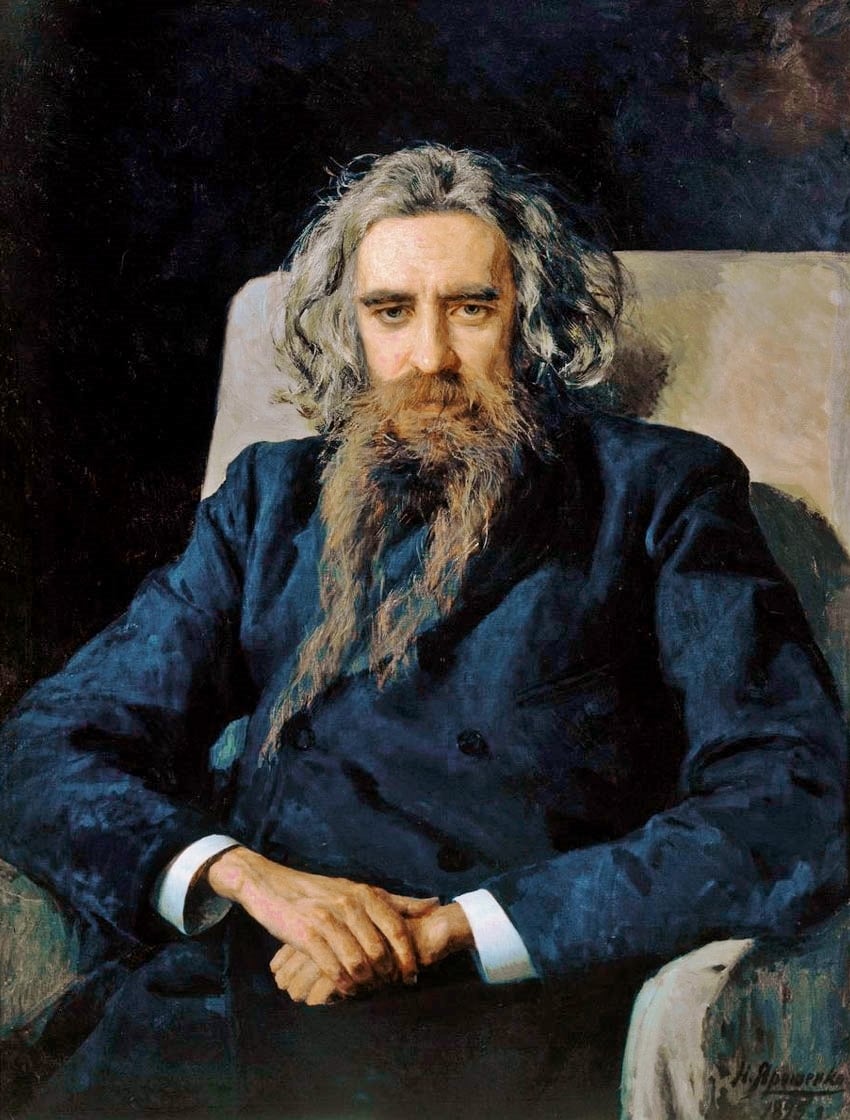
Retrato de Vladímir Soloviov, por Nikolái Yaroshenko · Public domain
उनके अपने शब्दों में
«The meaning and worth of love as a feeling lies in this: it really forces us, with all our being, to acknowledge in another the absolute central significance which, owing to egoism, we feel only in ourselves.»«Смысл любви» [El sentido del amor], artículo tercero, I (1892–1894).

मूल विचार
All-unity (vseedinstvo): All-unity is the central category of Solovyov's philosophy: true reality is neither the abstract unity that absorbs the parts (as in pantheism or in Eastern mysticism as he understood it) nor the multiplicity of isolated individuals of atomism and Western individualism, but a unity that positively contains all things, each with its own place and value.
संदर्भ में देखें
जीवनी
6 मिनट का पाठ
स्पैनिश मूल से सहायता-प्राप्त अनुवाद, मातृभाषी अनुवादक द्वारा समीक्षा लंबित।
एक इतिहासकार का पुत्र
व्लादिमीर सेर्गेयेविच सोलोव्योव का जन्म 28 जनवरी 1853 (जूलियन पंचांग के अनुसार 16 जनवरी) को मॉस्को में हुआ। वे सेर्गेई मिख़ाइलोविच सोलोव्योव के पुत्र थे — वह इतिहासकार जिसने विशाल ग्रंथ «प्राचीनतम काल से रूस का इतिहास» लिखा और जो मॉस्को विश्वविद्यालय के रेक्टर पद तक पहुँचे। माता पोलिक्सेना व्लादिमीरोव्ना रोमानोवा पोलिश और कज़ाक जड़ों वाले एक ऐसे परिवार से थीं जिसके पूर्वजों में घुमंतू दार्शनिक ग्रिगोरी स्कोवोरोदा की गिनती होती थी। उनका लालन-पालन ऐसे घर में हुआ जहाँ अनुशासित परिश्रम था और बिना आडंबर की शांत ऑर्थोडॉक्स भक्ति; उनके भाई व्सेवोलोद आगे चलकर उपन्यासकार बने और बहन पोलिक्सेना कवयित्री।
किशोरावस्था में वे उस संकट से गुज़रे जिससे उनकी पूरी पीढ़ी गुज़री थी: उन्होंने ब्यूख़नर, फ़ॉयरबाख़ और भौतिकवादियों को पढ़ा, स्वयं को नास्तिक घोषित किया और 1869 में मॉस्को विश्वविद्यालय में प्रवेश लेने के बाद इतिहास और भाषाशास्त्र छोड़कर प्राकृतिक विज्ञान की ओर मुड़ गए। 1871–1872 के आसपास प्रत्यक्षवाद उन्हें अपर्याप्त लगने लगा: स्पिनोज़ा, शोपेनहावर और सबसे बढ़कर उत्तरकालीन शेलिंग ने उनके भीतर तत्वमीमांसीय प्रश्न को फिर से जगा दिया। उन्होंने विज्ञान छोड़ दिया, 1873 में स्वाध्यायी परीक्षार्थी के रूप में इतिहास और भाषाशास्त्र की कैंडिडेट परीक्षाएँ उत्तीर्ण कीं और अगला शैक्षणिक वर्ष सेर्गियेव पोसाद की धर्मशास्त्रीय अकादमी में श्रोता के रूप में बिताया — जो उनके परिवेश के किसी विश्वविद्यालयी युवक के लिए अभूतपूर्व बात थी।
पाश्चात्य दर्शन का संकट
24 नवंबर 1874 को, इक्कीस वर्ष की आयु में, उन्होंने सेंट पीटर्सबर्ग में अपना मास्टर्स शोध-प्रबंध «पाश्चात्य दर्शन का संकट: प्रत्यक्षवादियों के विरुद्ध» प्रस्तुत किया। उनका तर्क था कि यूरोपीय चिंतन बुद्धिवाद और अनुभववाद को निःशेष कर देने के बाद अपने ही तर्क से एक ऐसे धार्मिक ज्ञान की माँग पर आ पहुँचता है जो विज्ञान, दर्शन और आस्था को एक कर दे। यह मौखिकी एक सार्वजनिक घटना बन गई और इसके फलस्वरूप उन्हें मॉस्को में अध्यापक का पद मिला।
तीन साक्षात्कार
जून 1875 में वे ब्रिटिश म्यूज़ियम के वाचनालय में भारतीय दर्शन, ज्ञानवाद (ग्नॉस्टिसिज़्म) और मध्ययुगीन रहस्यवाद का अध्ययन करने लंदन गए; वहाँ उन्होंने कब्बाला, ब्योमे और स्वीडनबोर्ग को पढ़ा। वहीं, जैसा उन्होंने बाद में बताया, उन्हें एक ज्योतिर्मय स्त्री-आकृति का दूसरा दर्शन हुआ, जिसे उन्होंने पहली बार नौ वर्ष की आयु में मॉस्को के विश्वविद्यालय-गिरजाघर में एक प्रार्थना-सभा के दौरान देखा था। एक अंतर्वाणी ने उन्हें मिस्र जाने का आदेश दिया; वे शरद ऋतु में चल पड़े और 1875 के अंत की एक रात, क़ाहिरा के निकट मरुस्थल में, उन्होंने उसे पूर्णता में देखा। सोलोव्योव ने बीस वर्ष से अधिक समय तक इन अनुभवों पर मौन रखा और केवल 1898 में, एक साथ विनोदपूर्ण और गंभीर कविता «तीन साक्षात्कार» में, उनका वर्णन किया। उनके लिए वह उपस्थिति दिव्य प्रज्ञा, सोफ़िया, थी और उसी के इर्द-गिर्द उन्होंने अपने समस्त कृतित्व की रचना की।
ईश्वर-मानवता
1877 में प्राध्यापक-परिषद में हुए एक विवाद के कारण उन्होंने मॉस्को विश्वविद्यालय छोड़ दिया और लोक-शिक्षा मंत्रालय की वैज्ञानिक समिति के सदस्य के रूप में सेंट पीटर्सबर्ग में बस गए। वहाँ उनकी मैत्री दोस्तोयेव्स्की से और प्रगाढ़ हुई, जो उनसे तीस वर्ष बड़े थे और जिन्हें वे 1873 से जानते थे। 1878 के वसंत में उन्होंने सोल्यानोई गोरोदोक के सभागार में अपने «ईश्वर-मानवता पर व्याख्यान» दिए, जिनमें राजधानी के श्रेष्ठतम लोग उपस्थित होते थे: दोस्तोयेव्स्की, पोबेदोनोस्तसेव और मार्च की एक संध्या को स्वयं तॉल्स्तॉय भी, जिनकी «अपराध और दंड» के लेखक से भेंट नहीं हो सकी, यद्यपि दोनों उसी सभागार में थे। जून में, नन्हे अलेक्सेई दोस्तोयेव्स्की की मृत्यु के बाद, दार्शनिक उपन्यासकार के साथ ओप्तिना मठ गए, जहाँ दोनों ने स्तारेत्स (आध्यात्मिक गुरु) अम्व्रोसी से वार्तालाप किया।
6 अप्रैल 1880 को उन्होंने «अमूर्त सिद्धांतों की आलोचना» पर डॉक्टरेट प्राप्त की। उनकी प्रणाली की रूपरेखा अब स्पष्ट हो चुकी थी: समूची वास्तविकता एक «सर्वैक्य» है जो ईश्वर से उद्भूत होती है और उसी में लौटती है; मनुष्य वह स्थान है जहाँ भौतिक जगत दिव्य से पुनः मिल सकता है, और मनुष्य बने ईश्वर, ख्रीस्त, इस प्रक्रिया की कुंजी हैं, जिसे मानवता को इतिहास में तब तक आगे बढ़ाना है जब तक वह स्वयं ईश्वर-मानवता न बन जाए।
28 मार्च का भाषण
1 मार्च 1881 को नरोदनाया वोल्या के आतंकवादियों ने ज़ार अलेक्सांद्र द्वितीय की हत्या कर दी। चार सप्ताह बाद, 28 मार्च को, सोलोव्योव ने एक सार्वजनिक व्याख्यान का समापन नए ज़ार से यह आग्रह करते हुए किया कि वह ईसाई क्षमा के नाम पर राजहंताओं को फाँसी न दे। सभागार तालियों और विरोध में बँट गया, बात सम्राट तक पहुँची और उन पर कुछ समय के लिए सार्वजनिक व्याख्यान देने पर रोक लगा दी गई। दंडितों को 3 अप्रैल को फाँसी दे दी गई। अगले वर्ष उन्होंने विश्वविद्यालयी अध्यापन छोड़ दिया और फिर कभी कोई स्थायी पद नहीं सँभाला: वे अपनी लेखनी के सहारे, मित्रों के घरों और होटलों में, बिना संपत्ति और बिना परिवार के जिए।
सार्वभौम कलीसिया का स्वप्न
1880 का दशक उन्होंने एक ऐसे विचार को समर्पित किया जिसने उन्हें लगभग सबसे अलग कर दिया: एक «स्वतंत्र धर्मतंत्र» में ऑर्थोडॉक्सी और कैथोलिक धर्म का पुनर्मिलन, जिसमें पोप आध्यात्मिक सत्ता का, ज़ार लौकिक शक्ति का और पैग़ंबर स्वतंत्रता का प्रतिनिधित्व करें। उन्होंने क्रोएशियाई बिशप योसिप यूराई श्त्रोसमायर से मैत्री की, ज़ाग्रेब से «धर्मतंत्र का इतिहास और भविष्य» (1887) प्रकाशित किया और रूसी सेंसर के कारण फ़्रांसीसी में «रूसी विचार» (1888) तथा «रूस और सार्वभौम कलीसिया» (पेरिस, 1889) प्रकाशित किए। इसके साथ ही उन्होंने राष्ट्रवाद, यहूदी-विरोध और पुराने आस्थावानों (स्तारोवेर) के उत्पीड़न की निंदा की। फ़रवरी 1896 में, एक विवादित वृत्तांत के अनुसार, उन्होंने एक यूनानी-कैथोलिक पुरोहित, निकोलाई तॉल्स्तॉय, के हाथों परमप्रसाद ग्रहण किया; स्वयं वे अपने को एक ही कलीसिया का सदस्य मानते रहे, जिसे विभाजन ने उसकी जड़ में नहीं तोड़ा था।
प्रेम, शुभ और सौंदर्य
1890 के दशक में, धर्मतंत्र से मोहभंग होने पर, वे दर्शन की ओर लौटे। उन्होंने ब्रोकहाउज़-एफ़्रोन विश्वकोशीय शब्दकोश के दर्शन-खंड का संपादन किया, 1891–1892 के अकाल में राहत-कार्य में सक्रिय हुए और अपने व्याख्यान «मध्ययुगीन विश्वदृष्टि के पतन पर» से मॉस्को को स्तब्ध कर दिया, जिसमें उन्होंने कहा कि न्याय के लिए काम करने वाले अविश्वासी अनेक ईसाइयों से बेहतर ढंग से ख्रीस्त की सेवा करते हैं। उन्होंने «प्रेम का अर्थ» (1892–1894) प्रकाशित की, जिसमें काम (एरोस) वह शक्ति है जो अहंकार को पराजित करती है और अमरता का पूर्वाभास देती है, तथा «शुभ का औचित्य» (1897), उनका महान नीतिशास्त्र। उन्होंने ऐसी कोमल कविताएँ लिखीं जिनकी फ़ेत और प्रतीकवादियों ने प्रशंसा की, और अपने भाई मिख़ाइल के साथ प्लेटो का अनुवाद आरंभ किया।
ख्रीस्त-विरोधी
उनके अंतिम वर्षों पर एक प्रलय-संबंधी पूर्वाभास की छाया थी। 1899–1900 में उन्होंने «युद्ध, प्रगति और विश्व-इतिहास के अंत पर तीन संवाद» लिखे, जिनका चरम बिंदु है «ख्रीस्त-विरोधी की संक्षिप्त कथा»: एक परोपकारी अतिमानव, मानवता का उपकारक, जो संसार को एक कर देता है और ईसाइयों से केवल इतना माँगता है कि वे उसे स्वीकार करें; तीनों कलीसियाओं के साक्षी — स्तारेत्स योआन, पोप पीटर और प्रोफ़ेसर पाउली — उसका मुखौटा उतारते हैं और काल के अंत में एक हो जाते हैं। जुलाई 1900 में, रुग्णावस्था में, वे अपने को त्रुबेत्स्कोई परिवार की जागीर उज़्कोये ले जाने को कहकर वहाँ पहुँचे; उन्होंने एक ऑर्थोडॉक्स पुरोहित के समक्ष पापस्वीकार किया और परमप्रसाद लिया, यहूदी लोगों के लिए हिब्रू में प्रार्थना की और 13 अगस्त (जूलियन पंचांग के अनुसार 31 जुलाई) 1900 की रात उनका देहांत हो गया। उन्हें नोवोदेविची मठ के क़ब्रिस्तान में उनके पिता के पास दफ़नाया गया।
विरासत
किसी अन्य रूसी चिंतक ने अगली अर्धशती को इतना प्रभावित नहीं किया। उनकी सोफ़िया-विद्या और ईश्वर-मानवता के विचार से सेर्गेई बुल्गाकोव और पावेल फ़्लोरेंस्की की यात्रा आरंभ होती है; बर्द्यायेव, फ़्रांक और त्रुबेत्स्कोई बंधु जीवन भर उनसे संवाद-विवाद करते रहे; ब्लोक, बेली और व्याचेस्लाव इवानोव ने उनकी सोफ़िया को प्रतीकवाद की प्रेरणा-देवी बना दिया। बीसवीं शताब्दी में कैथोलिक और ऑर्थोडॉक्स धर्मशास्त्रियों ने परोपकारी ख्रीस्त-विरोधी की उनकी आलोचना को नए सिरे से पढ़ा, और 2020 में क्रिस्टी पुयू ने «तीन संवाद» को फ़िल्म «माल्मक्रोग» के रूप में परदे पर उतारा।
स्रोत: Mochulski, Konstantín. Владимир Соловьев: жизнь и учение [Vladímir Soloviov: vida y doctrina]. París: YMCA-Press, 1936 (2.ª ed., 1951). · Lósev, Alekséi F. Владимир Соловьев и его время [Vladímir Soloviov y su tiempo]. Moscú: Progress, 1990. · Soloviov, V. S. «Три свидания» [Tres encuentros] (1898), en Стихотворения и шуточные пьесы, ed. Z. G. Mints. Leningrado: Sovetski pisatel (Biblioteka poeta), 1974, pp. 125–132. Texto en Wikisource ruso. · Kornblatt, Judith Deutsch (ed. y trad.). Divine Sophia: The Wisdom Writings of Vladimir Solovyov. Ithaca: Cornell University Press, 2009. · Dostoiévskaya, Anna Grigórievna. Воспоминания [Memorias]. Moscú: Judózhestvennaya literatura, 1971 (primera edición, 1925). Texto en Wikisource ruso.
कालक्रम
जीवन, वर्ष-दर-वर्ष
प्रत्येक बिंदु एक प्रमाणित घटना है। उसे स्रोत और निश्चितता के स्तर सहित पढ़ने के लिए क्लिक करें।
28 जनवरी 18530 वर्षMoscú
Birth
Born in Moscow (16 January Old Style), fourth child of the historian Sergei Mikhailovich Solovyov and Poliksena Vladimirovna Romanova.
प्रमाणितWikidata, Q282280: Vladimir Solovyov, filósofo ruso (1853–1900). P31=Q5; 64 enlaces entre wikis.
उनके निधन के बाद
- 1911The volume On Vladimir Solovyov
28 जनवरी 1853 · 0 वर्ष
Birth
Born in Moscow (16 January Old Style), fourth child of the historian Sergei Mikhailovich Solovyov and Poliksena Vladimirovna Romanova.
प्रमाणित
1862 · 9 वर्ष
First vision
During an Ascension Day liturgy in the Moscow University church he sees, by his own 1898 account, a luminous female figure: the first of his 'three meetings'.
परंपरा
1869 · 16 वर्ष
Moscow University
Finishes secondary school with a gold medal and enters Moscow University; after a spell in History and Philology he enrols in natural sciences.
प्रमाणित
सितंबर 1873 · 20 वर्ष
Auditor at the Theological Academy
Having graduated in History and Philology, he spends a year auditing courses at the Moscow Theological Academy in Sergiev Posad.
प्रमाणित
24 नवंबर 1874 · 21 वर्ष
The Crisis of Western Philosophy
Defends his master's thesis against the positivists at St Petersburg University and obtains a lectureship in Moscow.
प्रमाणित
जून 1875 · 22 वर्ष
The British Museum
Travels to London to study Indian philosophy, Gnosticism and medieval mysticism; in the Reading Room he has the second vision of Sophia.
परंपरा
लगभग 1875 · 22 वर्ष
The third meeting
An inner voice sends him to Egypt; in the desert east of Cairo he sees Sophia 'whole' for the third time. He stays in Egypt until March 1876.
परंपरा
मार्च 1877 · 24 वर्ष
Move to St Petersburg
Having resigned in Moscow over a faculty dispute, he joins the Scholarly Committee of the Ministry of Public Education and grows close to Dostoevsky.
प्रमाणित
10 मार्च 1878 · 25 वर्ष
The Lectures on Godmanhood
Gives his series of public lectures at the Solyanoy Gorodok. Tolstoy, Strakhov and Dostoevsky attend the one on 10 March: the two novelists never meet.
प्रमाणित
जून 1878 · 25 वर्ष
Journey to Optina with Dostoevsky
Accompanies Dostoevsky, stricken by the death of his son Alexei, to Optina monastery, where they talk with the elder Ambrose.
प्रमाणित
6 अप्रैल 1880 · 27 वर्ष
Doctorate
Defends his doctoral thesis, The Critique of Abstract Principles; he is not given a chair.
प्रमाणित
28 मार्च 1881 · 28 वर्ष
Plea for clemency for the regicides
At the end of a public lecture he asks the new Tsar not to execute Alexander II's assassins. He is temporarily barred from lecturing; in 1882 he leaves the university.
प्रमाणित
लगभग 1886 · 33 वर्ष
With Bishop Strossmayer
Visits Bishop Josip Juraj Strossmayer in Croatia, an ally in his project for the reunion of the Churches; The History and Future of Theocracy appears in Zagreb in 1887.
संभावित
1889 · 36 वर्ष
Russia and the Universal Church
Publishes in French, in Paris, his great ecumenical book, which ecclesiastical censorship made impossible to publish in Russia.
प्रमाणित
19 अक्टूबर 1891 · 38 वर्ष
On the Decline of the Medieval Worldview
His lecture at the Moscow Psychological Society, in the midst of the famine, causes a public scandal and attacks in the conservative press.
संभावित
1892 – 1894 · 39 वर्ष
The Meaning of Love
Begins publishing in Questions of Philosophy and Psychology the five articles of The Meaning of Love (1892–1894).
प्रमाणित
फ़रवरी 1896 · 43 वर्ष
Communion with a Greek Catholic priest
According to a disputed account, he receives communion from the Greek Catholic priest Nikolai Tolstoy He left no written record of the episode himself, which we know from the priest.
विवादित
1897 · 44 वर्ष
The Justification of the Good
His system of moral philosophy appears; revised and enlarged edition in 1899.
प्रमाणित
1898 · 45 वर्ष
Three Meetings
Returns to Egypt and writes the autobiographical poem in which he tells for the first time his three visions of Sophia.
प्रमाणित
जनवरी 1900 · 47 वर्ष
Honorary academician
He is elected honorary academician of the Imperial Academy of Sciences in the belles-lettres category. Publishes Three Conversations.
संभावित
30 जुलाई 1900 · 47 वर्ष
Confession and last days
He arrives ill at Uzkoye on 27 July (15 July OS); on the 30th (18 July OS) he confesses and receives communion from the Orthodox priest Belyaev, of the Uzkoye parish.
प्रमाणित
13 अगस्त 1900 · 47 वर्ष
Death
Dies at half past nine in the evening (31 July Old Style) in Prince Pyotr Trubetskoy's study. He is buried on 16 August (3 August OS) in the Novodevichy Convent cemetery.
प्रमाणित
1911
The volume On Vladimir Solovyov
The Put publishing house issues the tribute volume 'First Collection: On Vladimir Solovyov' for the tenth anniversary of his death; the second edition of his collected works begins (1911–1914).
संभावित
कृतियाँ
आवश्यक कृतियाँ
वे कृतियाँ जिनके बिना उनकी विरासत को समझा नहीं जा सकता।
लिखित कृति · 1874
The Crisis of Western Philosophy (Against the Positivists)
Кризис западной философии (против позитивистов)
Master's thesis defended in St Petersburg on 24 November 1874. It surveys modern philosophy from Descartes to Hegel, Schopenhauer and Hartmann and argues that, rationalism and empiricism having been exhausted, Western thought leads to the need for an integral knowledge reconciling reason with faith and mystical experience. Positivism appears not as a way beyond but as a symptom of that crisis. It was the young Solovyov's public debut and the programme of all his later work.
2 संस्करण

प्रकाशित व्याख्यान · 1878
Lectures on Godmanhood
Чтения о Богочеловечестве
Twelve public lectures given in St Petersburg in 1878 before an audience that included Dostoevsky and, one evening, Tolstoy; published 1878–1881. Solovyov presents Christianity as the culmination of religious history: God is all-unity; Sophia, the divine idea of the world; man, the place where creation can freely unite with God; Christ, the God-man, inaugurates the process by which all humanity must become Godmanhood. It is the text that founded modern Russian religious philosophy.
5 संस्करण

लिखित कृति · 1889
Russia and the Universal Church
La Russie et l'Église universelle
His great ecumenical book, written in French and published in Paris in 1889 because Russian censorship would have banned it. In three parts — the Russian ecclesiastical question, the ecclesiastical monarchy founded by Christ, and the Trinity and its manifestation in the world — it defends the primacy of the Bishop of Rome as centre of unity of a universal Church, recognises the full orthodoxy of the Russian people's faith and culminates in a sophiology. It was his most contested work in Russia.
7 संस्करण

लिखित कृति · 1894
The Meaning of Love
Смысл любви
Five articles published in Questions of Philosophy and Psychology between 1892 and 1894. It denies that sexual love serves only the species: its meaning is to overcome egoism by recognising in another the absolute value each attributes to himself, and so restore the image of God in the human being. The union of man and woman foreshadows 'syzygy', the reunion of all creation with God, and the victory over death. It is his most read text outside Russia.
5 संस्करण

लिखित कृति · 1897
The Justification of the Good: An Essay on Moral Philosophy
Оправдание добра. Нравственная философия
His great treatise on ethics, published in 1897 and reissued in enlarged form in 1899. It starts from three primary data of moral consciousness — shame, pity and reverence, which govern the relation to what is lower, to equals and to what is higher — and builds from them an ethics autonomous with respect to positive religion that nevertheless leads to the absolute good. The second part applies the principle to the person, the nation, law, economics, war and capital punishment.
8 संस्करण

लिखित कृति · 1900
Three Conversations on War, Progress and the End of World History, Including a Short Tale of the Antichrist
Три разговора о войне, прогрессе и конце всемирной истории, со включением краткой повести об антихристе
His last work (1899–1900): three dialogues in a villa on the Riviera between a general, a politician, a lady, a Tolstoyan prince and Mr Z, on war, progress and evil. The book closes with the 'Short Tale of the Antichrist', attributed to a dead monk: in the twenty-first century a philanthropic superman unifies the world, offers each Church what it most desires and meets resistance only from the elder John, Pope Peter and Professor Pauli, who recognise that what is most precious in Christianity is Christ himself. It is Solovyov's most read work in the twentieth century.
7 संस्करण
संपूर्ण कृतित्व (79)
Vladimir Solovyov
The Mythological Process in Ancient Paganism
The Conscious LibraryThe Mythological Process in Ancient Paganism
1873
Vladimir Solovyov
Auguste Comte's Theory of the Three Phases in the Intellectual Development of Mankind
The Conscious LibraryAuguste Comte's Theory of the Three Phases in the Intellectual Development of Mankind
1874
Vladimir Solovyov
On the Philosophical Works of P. D. Yurkevich
The Conscious LibraryOn the Philosophical Works of P. D. Yurkevich
1874
Vladimir Solovyov
A Strange Misunderstanding (Reply to Mr Lesevich)
The Conscious LibraryA Strange Misunderstanding (Reply to Mr Lesevich)
1874
Vladimir Solovyov
Metaphysics and Positive Science
The Conscious LibraryMetaphysics and Positive Science
1875
Vladimir Solovyov
On the Reality of the External World and the Foundation of Metaphysical Knowledge (Reply to Kavelin)
The Conscious LibraryOn the Reality of the External World and the Foundation of Metaphysical Knowledge (Reply to Kavelin)
1875

La Sophia
1876
Vladimir Solovyov
The Three Forces
The Conscious LibraryThe Three Forces
1877
Vladimir Solovyov
The Philosophical Principles of Integral Knowledge
The Conscious LibraryThe Philosophical Principles of Integral Knowledge
1877
Vladimir Solovyov
Critique of Abstract Principles
The Conscious LibraryCritique of Abstract Principles
1880
Vladimir Solovyov
The Historical Deeds of Philosophy
The Conscious LibraryThe Historical Deeds of Philosophy
1880
Vladimir Solovyov
Three Speeches in Memory of Dostoevsky
The Conscious LibraryThree Speeches in Memory of Dostoevsky
1883
Vladimir Solovyov
A Note in Defence of Dostoevsky against the Charge of a 'New' Christianity
The Conscious LibraryA Note in Defence of Dostoevsky against the Charge of a 'New' Christianity
1883
Vladimir Solovyov
On Spiritual Authority in Russia
The Conscious LibraryOn Spiritual Authority in Russia
1881
Vladimir Solovyov
On the Schism in the Russian People and Society
The Conscious LibraryOn the Schism in the Russian People and Society
1882

The Spiritual Foundations of Life
1884
Vladimir Solovyov
The Great Controversy and Christian Politics
The Conscious LibraryThe Great Controversy and Christian Politics
1883

Jewry and the Christian Question
1884
Vladimir Solovyov
Love for the People and the Russian National Ideal (Open Letter to I. S. Aksakov)
The Conscious LibraryLove for the People and the Russian National Ideal (Open Letter to I. S. Aksakov)
1884
Vladimir Solovyov
Russia and Europe. Reply to N. Ya. Danilevsky
The Conscious LibraryRussia and Europe. Reply to N. Ya. Danilevsky
1888
Vladimir Solovyov
How to Awaken Our Church Forces? (Open Letter to S. A. Rachinsky)
The Conscious LibraryHow to Awaken Our Church Forces? (Open Letter to S. A. Rachinsky)
1885
Vladimir Solovyov
The Israel of the New Testament
The Conscious LibraryThe Israel of the New Testament
1885
Vladimir Solovyov
The Teaching of the Twelve Apostles (Introduction to the Russian Edition of the Didache)
The Conscious LibraryThe Teaching of the Twelve Apostles (Introduction to the Russian Edition of the Didache)
1886

The Dogmatic Development of the Church in Connection with the Question of Church Reunion
1886
वचन
किसी निश्चित कृति में स्थित वचन। प्रत्येक के साथ उसका स्रोत और विश्वसनीयता का स्तर है।
The meaning and worth of love as a feeling lies in this: it really forces us, with all our being, to acknowledge in another the absolute central significance which, owing to egoism, we feel only in ourselves.Смысл и достоинство любви как чувства состоит в том, что она заставляет нас действительно всем нашим существом признать за другим то безусловное центральное значение, которое, в силу эгоизма, мы ощущаем только в самих себе.
सत्यापित«Смысл любви» [El sentido del amor], artículo tercero, I (1892–1894).
अंतिम शब्द
साक्षियों का परवर्ती वृत्तांत
«"Hard is the work of the Lord."»Трудна работа Господня.
Told by his friend Sergei Trubetskoy, in whose house at Uzkoye he died, in the article 'The Death of V. S. Solovyov' published weeks later in Vestnik Evropy (1900): "'Hard is the work of the Lord', he said on his deathbed." Trubetskoy also records other words from those days: after confessing and receiving communion, Solovyov asked his host's wife, "Keep me from falling asleep, make me pray for the Jewish people, I must pray for them", and began to recite a psalm aloud in Hebrew. Neither sentence is presented as the last he spoke: Trubetskoy says that in his last days he was at times delirious and died quietly at half past nine on the evening of 31 July (13 August) 1900. The account of the priest who confessed him, published in 1910, adds that on the day of his confession he lost consciousness and never regained it, which does not fully agree with Trubetskoy's, according to whom he recognised his mother and sisters on 24 July.
स्रोत: Trubetskói, Serguéi Nikoláievich. «Смерть В. С. Соловьева» [La muerte de V. S. Soloviov]. Вестник Европы, 1900, n.º 9. Texto en Wikisource ruso (procedente de az.lib.ru).
पूछें
उनकी कृतियाँ क्या उत्तर देती हैं
मानवता के बारह महान प्रश्न और उनके ग्रंथ उनका जो उत्तर देने देते हैं, संदर्भों सहित। हम कभी उनके मुख में अपने शब्द नहीं रखते।
परम सत्य क्या है? क्या ईश्वर है?
The Absolute is all-unity: a superessential ground and a Trinitarian God at once
साकार भी, निराकार भीस्पष्ट रूप से कहा है
Soloviev builds the first systematic Russian metaphysics around all-unity. In the Lectures on Godmanhood, the Absolute is at once what stands above every determination, free of all particular content, and what positively contains everything; hence it can be described both as nothing and as all. This Absolute is no cold principle: it is expressed in the Christian Trinity, and its content, the ideal world in its unity, is Sophia, which he calls the body of God. In the Critique of Abstract Principles and the Philosophical Principles of Integral Knowledge he argues that reason, experience and mysticism must be united to think it. His God is personal and Trinitarian, but the way in passes through an ontology of totality reminiscent of Plotinus, Schelling and the Kabbalah, sources he himself studied.
इस प्रश्न की अन्य गुरुओं से तुलना करेंमैं कौन हूँ? क्या कोई सच्चा आत्म है?
The person is absolute in form and is called to Godmanhood
सृजित, अमर आत्मास्पष्ट रूप से कहा है
For Soloviev the human being occupies the hinge between God and nature. In the Lectures on Godmanhood he describes it as a being which, by its form, has unconditional value, since it can embrace in its consciousness the idea of the whole, although by its real content it is limited and dependent on the world. Its destiny is to fill that form with divine content, to unite freely with God without being lost in him: that is Godmanhood, fulfilled in Christ and promised to all humanity. In The Meaning of Love he adds that individuality is not saved by closing in on itself, but through the sacrifice of egoism, recognising in another the absolute value that egoism feels only in oneself. The true self is thus an immortal person realised in union.
इस प्रश्न की अन्य गुरुओं से तुलना करेंहम दुःख क्यों भोगते हैं?
Evil is the disintegration of a world that broke away from all-unity
ईश्वर से वियोगस्पष्ट रूप से कहा है
For Soloviev suffering has a cosmic root. In the Lectures on Godmanhood, the world soul, which was to keep creation united in God, sought to assert itself and fell from all-unity; hence the scattering of nature into mutually exclusive elements, strife, death and egoism, which in the human being is the assertion of oneself against all. History is the process by which that disintegrated world is reintegrated, culminating in Christ and to be extended to society. In The Justification of the Good he studies shame, pity and reverence as moral roots that resist this disintegration. In Three Conversations, his last book, he confronts evil as a reality and not a mere lack, and embodies it in the figure of the Antichrist.
इस प्रश्न की अन्य गुरुओं से तुलना करेंमृत्यु के बाद क्या होता है?
Christ's resurrection is the centre: true love aspires to conquer death
अनंत जीवन और पुनरुत्थानस्पष्ट रूप से कहा है
Soloviev understands death as the ultimate form of the disintegration egoism introduces into the world, and resurrection as its real, not merely symbolic, overcoming. In The Meaning of Love he argues that love between two persons, if taken seriously, cannot accept the death of the beloved: its meaning is immortality, the restoration of the complete image of the human being. In Three Conversations, his last book, Christ's resurrection is the criterion that separates true Christianity from its imitation, and the Antichrist of the tale is a benefactor of humanity who cannot bear it. His eschatology is not individualistic: victory over death reaches all of humanity and the cosmos, which are to be transfigured in the process of Godmanhood.
इस प्रश्न की अन्य गुरुओं से तुलना करेंमुक्ति या उद्धार कैसे प्राप्त होता है?
Salvation is Godmanhood: the free union of God and man, social as well
कृपा और प्रेम सेस्पष्ट रूप से कहा है
For Soloviev salvation is not the individual flight of a soul, but the reintegration of the world into God, which he calls the divine-human process. It began in Christ, in whom divine and human nature were united without confusion, and must be extended in humanity through man's free cooperation with grace. In The Spiritual Foundations of Life he describes the acts that open the individual to that cooperation: prayer, which unites him with God; fasting, which masters material nature; and almsgiving, which unites him with his neighbour. But he insists that salvation must also reach social and political life: hence his programme of a free theocracy and his defence, in The Justification of the Good, of a social order conforming to the moral good.
इस प्रश्न की अन्य गुरुओं से तुलना करेंक्या गुरु आवश्यक है?
Spiritual authority lives in the universal Church, which must be reunited
संघ और परंपरास्पष्ट रूप से कहा है
Soloviev was no disciple of any guru, nor did he present himself as a master of initiates, although he recounted his visions of Sophia in the poem Three Meetings. For him spiritual authority resides in the Church as the body of Christ, bearer of tradition and sacraments, and his great concern was that Church's division. In Russia and the Universal Church, written in French in 1889, he argues for the reunion of East and West and grants the bishop of Rome a primacy of unity, which earned him censorship in Russia. The master-disciple relationship, in his work, shifts to the figure of the prophet, who speaks freely in the name of truth, alongside the priest and the king of his free theocracy. In Three Conversations the elder John, Pope Peter and Professor Pauli represent the three traditions reunited at the end of time.
इस प्रश्न की अन्य गुरुओं से तुलना करेंक्या संसार वास्तविक है?
The world is the world soul on its way to God; beauty embodies the idea
दिव्य की अभिव्यक्तिस्पष्ट रूप से कहा है
For Soloviev the world is neither illusion nor a mere artefact external to God. In the Lectures on Godmanhood he conceives it as God's other: ideal all-unity, Sophia, eternal in God, exists in the world in a state of dispersion, because the world soul separated from divine unity. Natural and human history is the process by which that soul is reunited with God, first in nature, then in human consciousness and finally in Christ and in deified humanity. In Beauty in Nature he defines beauty as the incarnation of the idea in matter: every beautiful form already announces the transfiguration of the world. He also defended, against subjective idealism, the reality of the external world.
इस प्रश्न की अन्य गुरुओं से तुलना करेंप्रेम क्या है?
Love overcomes egoism by recognising absolute value in another
विरह और मिलनस्पष्ट रूप से कहा है
The Meaning of Love, published between 1892 and 1894, is one of the most original philosophical meditations on eros. Soloviev holds that the meaning and dignity of love lie in its compelling us to recognise truly, with our whole being, in another the central and unconditional value that egoism feels only in oneself. Love between man and woman does not have procreation as its end, which perpetuates the succession of mortal generations, but the creation of a complete human being, the union of two persons in a fullness that anticipates immortality and the reunion of the world with God. The meaning of human love is the justification and salvation of individuality through the sacrifice of egoism. Behind this vision lies his experience of Sophia, to whom he devoted the poem Three Meetings.
इस प्रश्न की अन्य गुरुओं से तुलना करेंक्या हम स्वतंत्र हैं, या सब कुछ पूर्वनिर्धारित है?
Union with God must be free; moral freedom is self-determination by the good
वास्तविक स्वतंत्र इच्छास्पष्ट रूप से कहा है
All of Soloviev's philosophy depends on the union between God and the world being free: in the Lectures on Godmanhood, the human being is not absorbed by the divine, but must unite with it by his own decision, which is why history is a drama and not a mechanism. His political programme of a free theocracy carries the same demand into the social sphere: no unity imposed by force has religious value. In The Justification of the Good he refines the philosophical question: he rejects free will understood as choice without motive and maintains that moral freedom consists in the will being determined by the good recognised by reason, not by the passions. The person is responsible precisely because he can know the good and adhere to it.
इस प्रश्न की अन्य गुरुओं से तुलना करेंध्यान या प्रार्थना क्यों करें?
To pray is to surrender to God; with fasting and alms it founds spiritual life
ईश्वर से मैत्रीस्पष्ट रूप से कहा है
In The Spiritual Foundations of Life, written between 1882 and 1884, Soloviev describes three acts that ground the individual's religious life, corresponding to his three fundamental relations: prayer, which unites him with God above him; fasting, which gives him mastery over material nature below him; and almsgiving, which unites him with other human beings beside him. Prayer consists in setting aside one's own will in order to open oneself to the divine will, and its model is the Lord's Prayer, which he comments on petition by petition. It is not an exercise in concentration, but a personal relation to the Father, to be extended in the life of the Church and its sacraments. His mystical experience of Sophia, narrated in Three Meetings, shows that he also knew visionary contemplation.
इस प्रश्न की अन्य गुरुओं से तुलना करेंक्या बुद्धि परम को जान सकती है?
An integral knowledge uniting experience, reason and mysticism
श्रद्धा और तर्क एक-दूसरे के सहायकस्पष्ट रूप से कहा है
Soloviev is the great Russian systematiser of the relation between faith and reason. In The Crisis of Western Philosophy, his thesis of 1874, he argues that both empiricism and rationalism have reached their limit, and that Western philosophy ends in the need for a synthesis with the religious wisdom of the East. In The Philosophical Principles of Integral Knowledge and the Critique of Abstract Principles he develops that synthesis: sense experience, rational thought and mystical intuition are three sources of knowledge which, separated, become abstract and false, and only united in an integral knowledge reach the truth. Revelation does not cancel reason, but gives it its ultimate content, and reason allows faith to be understood and articulated.
इस प्रश्न की अन्य गुरुओं से तुलना करेंसंसार से हटें या उसे बदलें?
Christianising society: a free theocracy and law in the service of the good
समाज को व्यवस्थित करनास्पष्ट रूप से कहा है
Soloviev rejected a spirituality that abandons social life to its fate. His project of a free theocracy, set out in The History and Future of Theocracy and Russia and the Universal Church, proposes that Church, State and society cooperate, each in its own function, in transforming collective life according to the Gospel, without coercion in matters of faith. In Law and Morality he defines law as the minimum of morality society can demand, and in The Justification of the Good he defends every person's right to a dignified existence, the abolition of the death penalty and the critique of nationalism. He acted accordingly: in 1881 he publicly asked for clemency for the assassins of Alexander II, which cost him his chair. Holiness is measured also in social justice.
इस प्रश्न की अन्य गुरुओं से तुलना करें
निकटता और तनाव
निकटता और तनाव
उनके मतों के आधार पर प्रश्न-दर-प्रश्न आकलित। प्रत्येक सहमति या टकराव का कारण क्लिक करने पर।
इनसे मिलता-जुलता सोचते हैं

Julian of Norwich
इन पर सहमत: मैं कौन हूँ? क्या कोई सच्चा आत्म है? · हम दुःख क्यों भोगते हैं? · मृत्यु के बाद क्या होता है?

Francis of Assisi
इन पर सहमत: मैं कौन हूँ? क्या कोई सच्चा आत्म है? · हम दुःख क्यों भोगते हैं? · मृत्यु के बाद क्या होता है?

Teresa of Ávila
इन पर सहमत: मैं कौन हूँ? क्या कोई सच्चा आत्म है? · हम दुःख क्यों भोगते हैं? · मृत्यु के बाद क्या होता है?
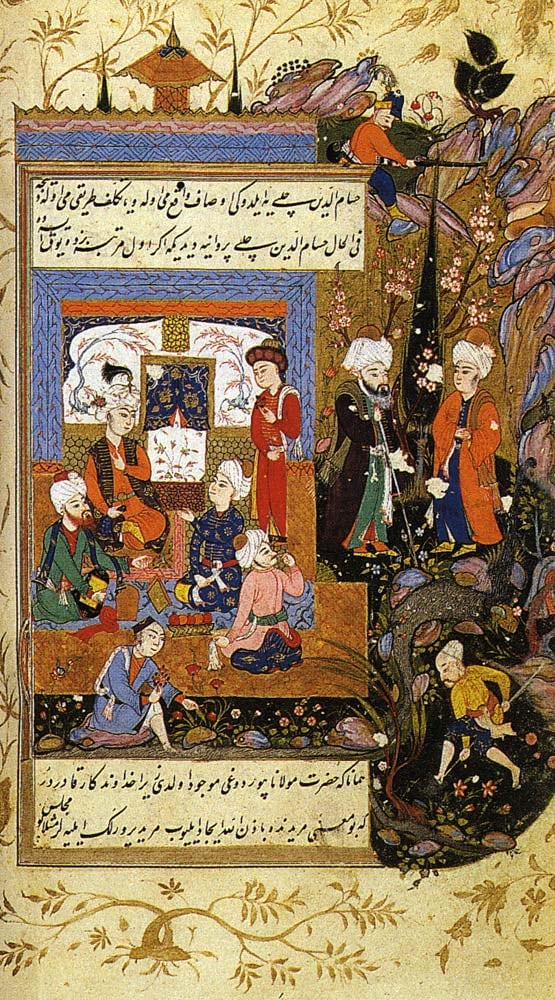
Rumi
इन पर सहमत: मैं कौन हूँ? क्या कोई सच्चा आत्म है? · हम दुःख क्यों भोगते हैं? · मृत्यु के बाद क्या होता है?
इनसे भिन्न सोचते हैं

Patañjali
इन पर टकराव: मैं कौन हूँ? क्या कोई सच्चा आत्म है? · मृत्यु के बाद क्या होता है?

Pema Chödrön
इन पर टकराव: मैं कौन हूँ? क्या कोई सच्चा आत्म है? · मृत्यु के बाद क्या होता है?
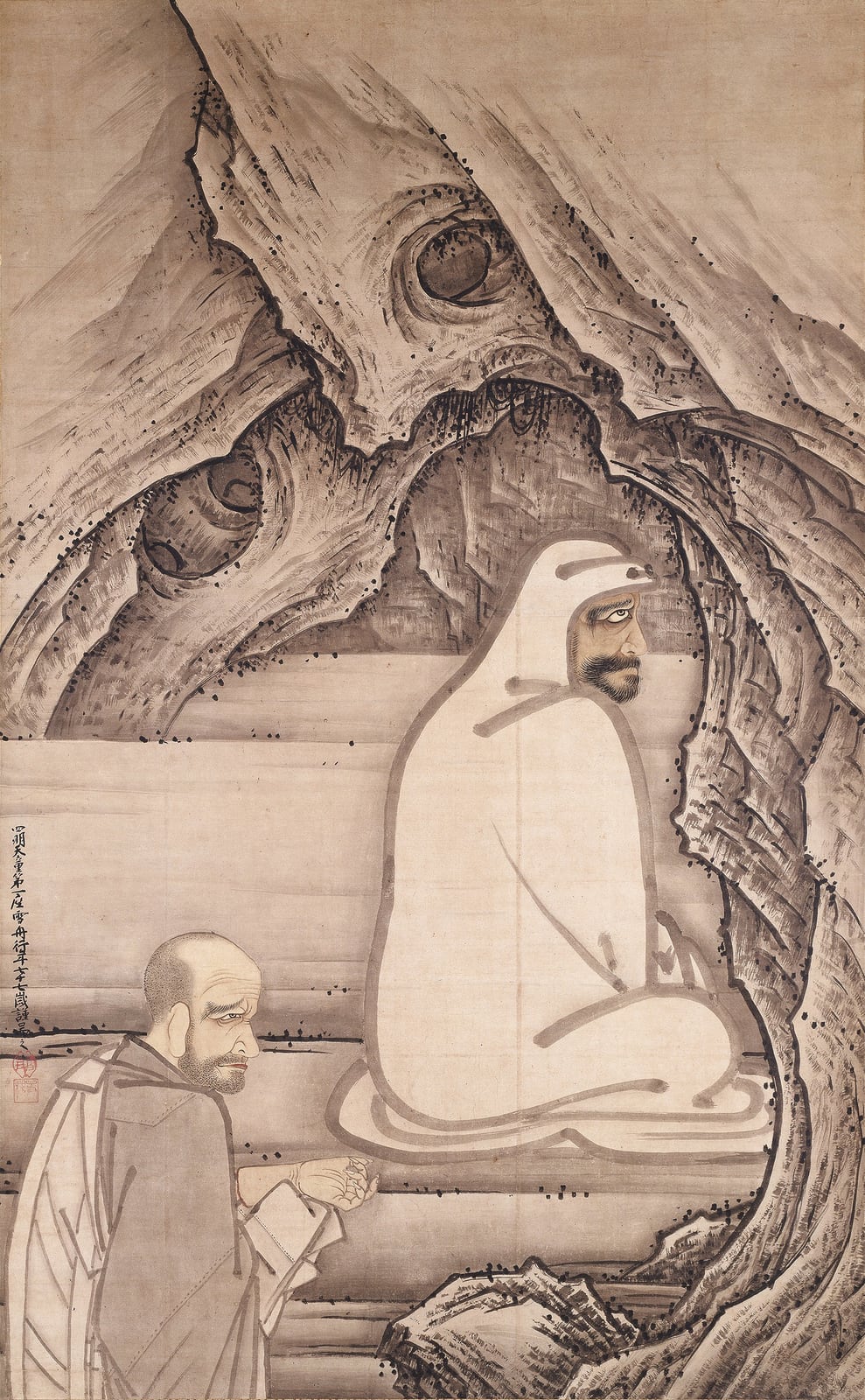
Bodhidharma
इन पर टकराव: मैं कौन हूँ? क्या कोई सच्चा आत्म है? · मृत्यु के बाद क्या होता है?

Tsongkhapa
इन पर टकराव: मैं कौन हूँ? क्या कोई सच्चा आत्म है? · मृत्यु के बाद क्या होता है?
प्रसंग और वृत्तांत
प्रसंग और वृत्तांत
साक्ष्य1862; 1875–1876
Three meetings with Sophia
वृत्तांत का स्रोत: The only testimony is Solovyov's own, in the poem Three Meetings (1898), written in a deliberately humorous tone and with the author's footnotes; the general is Rostislav Fadeyev, whom he names. His letters of 1875–1876 from London and Cairo speak of the journey but not of the visions.
प्रमाणित10 de marzo de 1878
Two novelists in the same hall
वृत्तांत का स्रोत: The presence of the three at the 10 March lecture is recorded in the Tolstoy–Strakhov correspondence and in Anna Dostoevskaya's memoirs; the reconstruction and the quotation from Tolstoy's letter of 5 February 1881 come from Pavel Basinsky's article in Rossiyskaya Gazeta (2011).
प्रमाणितjunio de 1878
With Dostoevsky at Optina
वृत्तांत का स्रोत: Told by Anna Grigoryevna Dostoevskaya in her Reminiscences (chapter on 1878). The identification of Solovyov with Alyosha or Ivan is a critical interpretation, not Dostoevsky's own statement.
प्रमाणित28 de marzo de 1881
'Let him not execute them'
वृत्तांत का स्रोत: The episode is recorded in official documents (Solovyov's written explanations) and by biographers (Mochulsky, Losev). The full text of the lecture does not survive; the exact words addressed to the Tsar are known from summaries and witnesses, which do not agree in every detail.
स्रोत: Mochulski, Konstantín. Владимир Соловьев: жизнь и учение [Vladímir Soloviov: vida y doctrina]. París: YMCA-Press, 1936 (2.ª ed., 1951).
विवादित1896; 1900
A disputed communion
वृत्तांत का स्रोत: The 1896 communion is known from the testimony of the priest Nikolai Tolstoy, spread by Catholic authors after the philosopher's death; Solovyov mentions it in no writing, and its scope — conversion or ecumenical gesture? — is still debated (Besschetnova, 2021). The 1900 confession was related by the Uzkoye priest in Moskovskie Vedomosti (1910). E. Trubetskoy's interpretation comes from The Worldview of Vl. S. Solovyov (1913).
साक्ष्यjulio de 1900
Praying for the Jewish people
वृत्तांत का स्रोत: Direct testimony of Sergei Trubetskoy, published in Vestnik Evropy in 1900, a few weeks after the death.
शिक्षाएँ
शिक्षाएँ
वे अवधारणाएँ जो उनके चिंतन को रूप देती हैं, उनके संदर्भ में समझाई गई।
All-unity (vseedinstvo)unitotalidad
It takes up the Neoplatonic One-All, Schelling's philosophy of identity and the 'integral knowledge' of the Slavophiles Kireyevsky and Khomyakov; it became the axis of the Russian 'philosophy of all-unity' (Frank, Karsavin, Losev).
स्रोत: Nemeth, Thomas. «Solovyov, Vladimir». Internet Encyclopedia of Philosophy.
Godmanhood (bogochelovechestvo)divinohumanidad
Set out in the Lectures on Godmanhood (1878); it was the concept that named the Russian religious philosophy of the Silver Age and was developed by Bulgakov and Berdyaev.
Sophia, divine Wisdomsofia
First formulated in La Sophia (1875–1876); set out in the Lectures (lectures VII–VIII) and in book III of Russia and the Universal Church; poetic testimony in Three Meetings.
Free theocracy and the universal Churchteocracia-libre
In dialogue with the Catholic ecclesiology of Vatican I, with Bishop Strossmayer and with the Slavophile critique of Rome (Khomyakov).
स्रोत: Nemeth, Thomas. «Solovyov, Vladimir». Internet Encyclopedia of Philosophy.
The meaning of love and syzygysentido-del-amor
Set out in The Meaning of Love (1892–1894); it influenced Berdyaev, Russian Symbolism and twentieth-century theology of the body.
The philanthropic Antichristel-anticristo
The culmination of Three Conversations (1900); its reading by Cardinal Giacomo Biffi and other theologians gave it wide circulation in late twentieth-century Catholicism.
वीडियो
वीडियो
रिकॉर्डिंग, साक्षात्कार और वृत्तचित्र। वीडियो YouTube से चलते हैं; वे यहाँ संग्रहीत नहीं हैं।
История Западной философии. Лекция №41. «Владимир Соловьев — отец русской христианской мысли»
व्याख्यान· RU
Лекции А.Б. Зубоваआधिकारिक चैनल
Лекция Сидорина В. В. «Владимир Соловьев — поэт, философ, гражданин»
व्याख्यान· RU· 2022
Институт философии РАНआधिकारिक चैनल
Владимир Сергеевич Соловьев: поэт, философ, гражданин
व्याख्यान· RU
РГБМ • Библиотека для молодёжиआधिकारिक चैनल
«Неподвижно лишь солнце любви»: к 170-летию со дня рождения Владимира Соловьёва
व्याख्यान· RU· 2023
Новосибирская областная научная библиотекаआधिकारिक चैनल
О русском философе Владимире Соловьеве
व्याख्यान· RU
Алексей Ильич Осиповआधिकारिक चैनल
Владимир Соловьёв — Смысл любви (лекция)
व्याख्यान· RU
Мастерская Валерия Бондаренко
Владимир Соловьев. Смысл любви. Аудиокнига
तृतीय पक्ष की रिकॉर्डिंग· RU
Библиотека горсовета
Philosophy of Love in the Context of Russian Philosophy. V. Solovyov and P. Florensky
व्याख्यान· EN
Studium Europy Wschodniej (Universidad de Varsovia)आधिकारिक चैनल
Religion and the State in Russian Philosophy (Vladimir Soloviev and Nikolai Berdiaev)
व्याख्यान· EN· 2021
REES Queens (Queen's University)आधिकारिक चैनल
War, Progress, and the End of History — Vladimir Solovyov | Full Audiobook
तृतीय पक्ष की रिकॉर्डिंग· EN
Allellu
Breve relato del Anticristo, por Vladimir Soloviev
तृतीय पक्ष की रिकॉर्डिंग· ES
Roberto Langella
Análisis de «Breve relato del Anticristo», de V. Soloviev
विश्लेषण· ES
Roberto Langella
Vladimir Solov'ëv: il ritratto dell'anticristo — Elena Bianchini Braglia
विश्लेषण· IT
Cronache di Cielo e Terra
चित्रशाला
चित्रशाला
सत्यापित लाइसेंस वाले चित्र। प्रत्येक में उसके रचयिता और श्रेय का उल्लेख सुरक्षित है।
संबंध
संबंध
प्रभाव, शिष्यत्व और वैचारिक निकटता। प्रमाणित संबंध को विश्लेषण से पहचानी गई समानता से अलग दर्शाया गया है।
इनसे भेंट
Friends from 1873 despite a thirty-year age gap. In 1878 Dostoevsky followed his Lectures on Godmanhood and in June they travelled together to Optina monastery. Solovyov devoted Three Speeches in Memory of Dostoevsky (1881–1883) to him, and critics have seen traits of his in Alyosha and Ivan Karamazov.
प्रमाणित संबंध
इनसे प्रभावित
In his Three Speeches Solovyov read Dostoevsky as a prophet of the universal Church and of Godmanhood; the theme of the 'man-god' against the God-man, central to both, grew out of their conversations.
प्रमाणित संबंध
इनसे मतभेद
He shared Tolstoy's critique of capital punishment and nationalism but rejected his non-resistance to evil and his Christianity without resurrection. In Three Conversations (1900) he portrayed him in the Prince, a Tolstoyan whose morality without metaphysics cannot answer evil, and his Antichrist is a pacifist philanthropist. Tolstoy attended one of his 1878 lectures.
प्रमाणित संबंध
इन्हें प्रभावित किया
Berdyaev, who never met him, considered him the founder of Russian religious philosophy and argued with him all his life: he devoted 'The Problem of East and West in the Religious Consciousness of Vl. Solovyov' (1911) to him and inherited from him the idea of Godmanhood, though he reproached him for an over-rational system and a theocratic optimism.
प्रमाणित संबंध
इन्हें प्रभावित किया
Florensky's sophiology in The Pillar and Ground of the Truth (1914) starts from Solovyov's, which it corrects with patristic tradition and the Russian iconography of Holy Wisdom.
प्रमाणित संबंध
इनसे मतभेद
Solovyov criticised Theosophy in a review of The Key to Theosophy (1890) and in 'A Note on H. P. Blavatsky' (1892), written amid the controversy over the revelations of his brother Vsevolod, who had known the founder in Paris and denounced her in A Modern Priestess of Isis.
प्रमाणित संबंध
इनसे प्रभावित
In his formative years, and particularly in London in 1875, Solovyov read Böhme along with the Gnostics, the Kabbalah and Swedenborg; Böhme's Sophia, eternal virgin and mirror of the Godhead, is one of the acknowledged sources of his sophiology.
प्रमाणित संबंध
इनसे प्रभावित
For Solovyov Plato was the first philosopher of all-unity and of eros as a path to the divine. In his last years he translated him with his brother Mikhail and devoted The Life Drama of Plato (1898) to him, presenting him as the idealist who discovered the world of ideas without managing to embody it.
प्रमाणित संबंध
इनसे मिलते-जुलते विचार
No direct relation is recorded. Solovyov's idea of Godmanhood and of the transfiguration of matter shares with Seraphim's teaching on the acquisition of the Holy Spirit the Orthodox inheritance of deification (theosis); Seraphim was canonised in 1903, three years after Solovyov's death.
विश्लेषण से पहचानी गई समानता
अन्य प्रविष्टियों से जुड़ा
- Leo Tolstoy · इनसे मतभेद
- Nikolai Berdyaev · इनसे प्रभावित
- Pierre Teilhard de Chardin · इनसे मिलते-जुलते विचार
- Emanuel Swedenborg · इन्हें प्रभावित किया
- Rudolf Steiner · इनसे मिलते-जुलते विचार
- Jakob Böhme · इन्हें प्रभावित किया
- Pavel Florensky · इनसे प्रभावित
- Fyodor Dostoevsky · इनसे भेंट
- Fyodor Dostoevsky · इन्हें प्रभावित किया
स्रोत
स्रोत
इस प्रविष्टि के लिए देखे गए ग्रंथ-सूची और सूचीपत्र।
- Wikidata, Q282280: Vladimir Solovyov, filósofo ruso (1853–1900). P31=Q5; 64 enlaces entre wikis.
- Trubetskói, Serguéi Nikoláievich. «Смерть В. С. Соловьева» [La muerte de V. S. Soloviov]. Вестник Европы, 1900, n.º 9. Texto en Wikisource ruso (procedente de az.lib.ru).
- Mochulski, Konstantín. Владимир Соловьев: жизнь и учение [Vladímir Soloviov: vida y doctrina]. París: YMCA-Press, 1936 (2.ª ed., 1951).
- Lósev, Alekséi F. Владимир Соловьев и его время [Vladímir Soloviov y su tiempo]. Moscú: Progress, 1990.
- Nemeth, Thomas. «Solovyov, Vladimir». Internet Encyclopedia of Philosophy.
- Soloviov, V. S. «Три свидания» [Tres encuentros] (1898), en Стихотворения и шуточные пьесы, ed. Z. G. Mints. Leningrado: Sovetski pisatel (Biblioteka poeta), 1974, pp. 125–132. Texto en Wikisource ruso.
- Wikisource ruso: «Автор:Владимир Сергеевич Соловьёв» (índice de obras y poemas con fechas).
- Kornblatt, Judith Deutsch (ed. y trad.). Divine Sophia: The Wisdom Writings of Vladimir Solovyov. Ithaca: Cornell University Press, 2009.
- Dostoiévskaya, Anna Grigórievna. Воспоминания [Memorias]. Moscú: Judózhestvennaya literatura, 1971 (primera edición, 1925). Texto en Wikisource ruso.
- Open Library, autor OL83077A: Vladimir Sergeyevich Solovyov (1853–1900), obras y ediciones.
- Soloviov, Serguéi Mijáilovich (sobrino). Владимир Соловьев: жизнь и творческая эволюция [Vladímir Soloviov: vida y evolución creadora]. Moscú: Respublika, 1997 (escrito en 1923; primera ed., Bruselas: Zhizn s Bogom, 1977).
- Kólosov, N. (sacerdote), con el testimonio del sacerdote Beliáiev, que lo confesó. «Об исповедании В. С. Соловьева» [Sobre la confesión de V. S. Soloviov], carta al editor. Московские ведомости, n.º 253, 3 (16) de noviembre de 1910; reimpr. en Письма Владимира Сергеевича Соловьева, t. 3, San Petersburgo, 1911, pp. 214–217.
- Soloviov, V. S. Собрание сочинений [Obras reunidas], 2.ª ed., ed. S. M. Soloviov y E. L. Rádlov, 10 vols. San Petersburgo: Prosveshchenie, 1911–1914.
- «Соловьёв, Владимир Сергеевич». Wikipedia en ruso (biografía, relación de obras con enlaces a las ediciones digitales).
- Basinski, Pável. «130 лет назад ушел из жизни Федор Михайлович Достоевский». Российская газета, 9 de febrero de 2011 (la conferencia de Soloviov del 10 de marzo de 1878 y la carta de Tolstói a Strájov de febrero de 1881).
- Soloviov, V. S. «Смысл любви» [El sentido del amor]. Вопросы философии и психологии, 1892–1894. Texto en Wikisource ruso (procedente de az.lib.ru).
- Soloviev, Vladimir. L'Idée russe. París: Perrin et Cie, 1888. Texto validado en Wikisource francés.
- Soloviov, V. S. «Три разговора о войне, прогрессе и конце всемирной истории, со включением краткой повести об антихристе» [Tres conversaciones…]. San Petersburgo, 1900. Texto en Wikisource ruso (según la ed. «Смысл любви. Избранные произведения», Moscú: Sovremennik, 1991).
- Soloviov, V. S. «Чтения о Богочеловечестве» [Lecciones sobre la divinohumanidad]. 1878–1881. Texto en Wikisource ruso (procedente de az.lib.ru).
- Besschétnova, E. V. «Стал ли Вл. С. Соловьев католиком (историко-философский анализ)» [¿Se hizo católico Vl. S. Soloviov?]. История философии, 2021, vol. 26, n.º 1, pp. 76–86.
- अधिकार-धारक
- Dominio público (Soloviov murió en 1900). Las traducciones modernas pertenecen a sus traductores y editoriales.
पुष्टि की प्रतीक्षा में
जो यह प्रविष्टि अभी तक निश्चित नहीं कर सकी है। हम उसे भर देने के बजाय कह देना बेहतर समझते हैं।
- Ediciones españolas con ISBN de «La crisis de la filosofía occidental», «Crítica de los principios abstractos», «Tres discursos en memoria de Dostoievski» (salvo ediciones independientes) y «El sentido del amor» fuera de Monte Carmelo: no localizadas en los catálogos consultados (Google Books sin cuota durante la investigación).
- Confirmar qué textos contiene «Introducción a los principios del conocimiento y otros escritos» (Sígueme, ISBN 9788430122073) y el traductor de «Teohumanidad» (Sígueme, 2006) y de «Los tres diálogos y el relato del Anticristo» (El Buey Mudo).
- Registrar uno por uno los cerca de doscientos poemas (índice completo en Wikisource ruso) y las piezas humorísticas; hoy figuran la colección «Poesías» y ocho poemas principales.
- Registrar individualmente los artículos menores de 1890–1900 y los artículos del diccionario Brokgauz-Efrón (sólo agrupados).
- Confirmar la primera publicación (revista y año) de «La teoría de Auguste Comte…», «Teoría filosófica» y la traducción de «El puchero de oro» de Hoffmann.
- Fecha exacta (día) y testigos de la comunión de febrero de 1896 con Nikolái Tolstói: no cotejados con el relato original del sacerdote.
- Traducciones inglesas de dominio público en Internet Archive (Bakshy, 1915) no incluidas en la sala de lectura: falta verificar la fecha de muerte de Alexander Bakshy.
- Duración y año de publicación de los vídeos: oEmbed no los proporciona; se han dejado null salvo los fechados en su título o descripción.
2026-10-25 को शोधित