ईसाई धर्म · ईसाई रहस्यवाद · प्रोटेस्टेंट धर्म · हर्मेटिकवाद
Jakob Böhme
Jacob Böhme
1575 – 1624ऐतिहासिक रूप से प्रमाणित व्यक्ति
ग्यौर्लित्स का मोची (1575–1624) और पश्चिम के महान चिंतनशील रहस्यवादियों में से एक। बिना औपचारिक शिक्षा और लैटिन के, लगभग 1600 में हुए एक आत्मप्रकाश के बाद उसने «औरोरा, या उदीयमान उषा» (1612) लिखी, जिसके कारण उसके लिखने पर रोक लगी, और 1618 से 1624 के बीच एक विराट रचना-संसार खड़ा किया: «तीन सिद्धांत», «त्रिविध जीवन», «आत्मा पर चालीस प्रश्न», De signatura rerum, Mysterium Magnum और «मसीह का मार्ग», जो उसके जीवनकाल में छपी एकमात्र पुस्तक थी। निराधार, सोफ़िया और बुराई की उत्पत्ति पर उसके थियोसॉफ़िकल चिंतन ने पवित्रतावाद, जर्मन आदर्शवाद, स्वच्छंदतावाद और रूसी धार्मिक दर्शन पर छाप छोड़ी।
- कृतियाँ
- 32कृतियाँ
- संस्करण
- 63संस्करण
- उद्धरण
- 5उद्धरण
- वीडियो
- 15वीडियो
- चित्र
- 9चित्र
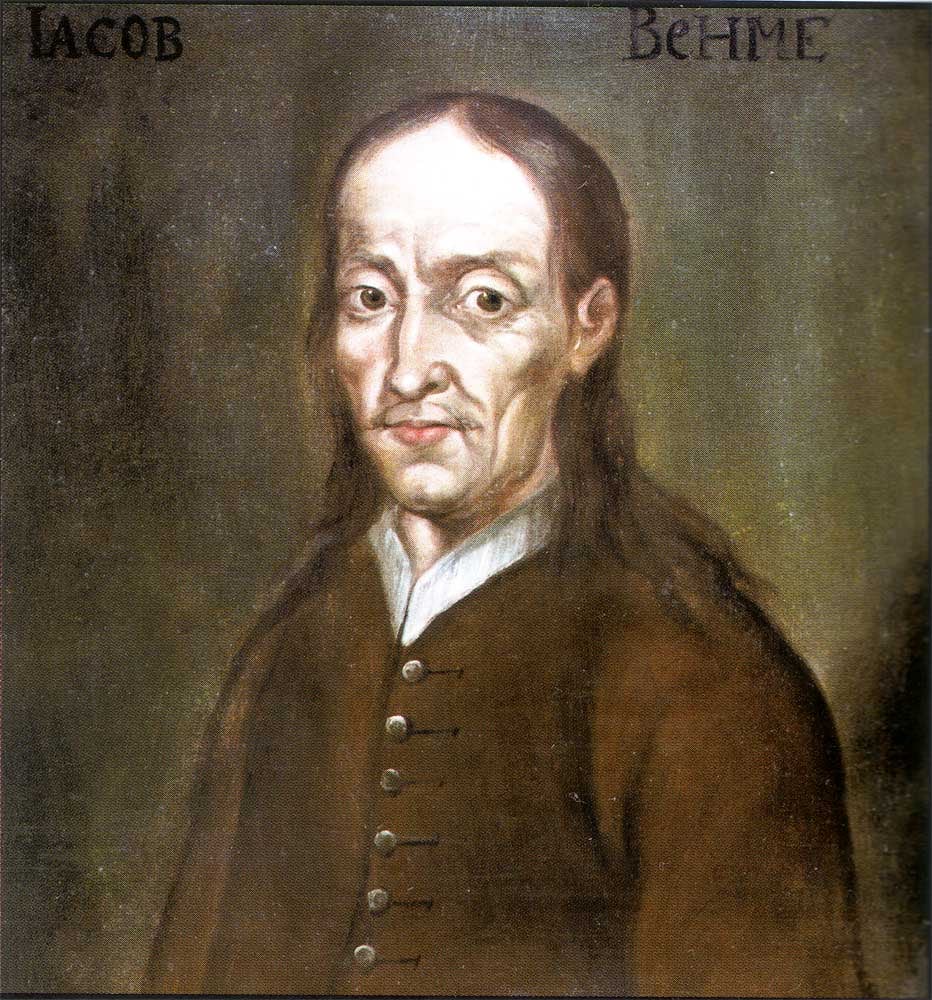
Retrato póstumo de Jakob Böhme · Public domain
उनके अपने शब्दों में
«But when in my resolved zeal I stormed so hard against God and all the gates of hell, as if I had more strength still in reserve, ready to stake my life on it (which would not have been in my power without the help of God's Spirit), suddenly, after some hard storms, my spirit broke through the gates of hell into the innermost birth of the Godhead, and there was embraced with love, as a bridegroom embraces his dear bride.»Morgenröte im Aufgang (Aurora), cap. 19, § 11 (texto de la ed. de Friburgo, 1977, en Zeno.org)

शुरुआत के लिए एक रचना
Aurora, or the Day-Spring (Morning Redness in the Rising)मूल विचार
Ungrund (the groundless): Ungrund is the word with which Böhme names what lies 'before' God as revealed God: a bottomless abyss, without nature or determination, which is neither good nor evil, neither light nor darkness, but pure will that does not yet will anything.
संदर्भ में देखें
जीवनी
6 मिनट का पाठ
स्पैनिश मूल से सहायता-प्राप्त अनुवाद, मातृभाषी अनुवादक द्वारा समीक्षा लंबित।
आल्ट ज़ाइडनबर्ग का चरवाहा
याकोब बोहमे का जन्म 1575 में आल्ट ज़ाइडनबर्ग में हुआ, जो ऊपरी लुसातिया का एक गाँव है और ग्यौर्लित्स से कुछ ही किलोमीटर दूर, बोहेमिया के राजमुकुट के अधीन प्रदेशों में स्थित था; कुछ संदर्भ-ग्रंथ 24 अप्रैल की जो तिथि दोहराते हैं, उसका कोई ठोस दस्तावेज़ी आधार नहीं है। वह एक खाते-पीते लूथरवादी किसान परिवार की चौथी संतान था; उसके पिता गिरजाघर के न्यासी होने के साथ स्थानीय न्यायालय में पंच भी थे। खेती-बाड़ी के श्रम के लिए बहुत दुर्बल होने के कारण उसने बचपन में मवेशी चराए और लगभग चौदह वर्ष की आयु में एक मोची के यहाँ शागिर्द बन गया। उन वर्षों के बारे में जो थोड़ा-बहुत ज्ञात है, वह उस जीवनी से आता है जिसे उसके शिष्य आब्राहम फ़ॉन फ़्रांकेनबर्ग ने 1651 में लिखा था, और जो इतिवृत्त की अपेक्षा धर्मोपदेशक कथा के अधिक निकट है: लांडेसक्रोने पहाड़ी की एक दरार में झलका ख़ज़ाना, और वह अजनबी जिसने भविष्यवाणी की कि यह बालक महान बनेगा।
घुमंतू कारीगर के रूप में बिताए वर्षों के बाद वह ग्यौर्लित्स में बस गया। 24 अप्रैल 1599 को उसे नगर के नागरिक और उस्ताद मोची के रूप में दर्ज किया गया; उसने उंटरमार्क्ट में जूतों की एक दुकान ख़रीदी और उसी वर्ष नगर के एक क़साई की बेटी कातारीना कुंत्श्मान से विवाह किया; इस विवाह से कम-से-कम चार पुत्र हुए। बोहमे उस धर्मनिष्ठ मंडली में आता-जाता था जो भूतपूर्व प्रधान पादरी मार्टिन मोलर के इर्द-गिर्द बनी थी — लूथरवाद के भीतर रहस्यवादी रंग वाली एक आध्यात्मिकता — और वह बाइबिल को ऐसी तल्लीनता से पढ़ता था जिससे उसके युग का पाठशालाई धर्मविज्ञान लगभग अनजान था।
पंद्रह मिनट
लगभग 1600 में उसे वह अनुभव हुआ जिसने उसके पूरे जीवन को दिशा दी। फ़्रांकेनबर्ग इसे टिन के एक बर्तन पर पड़ती धूप की चमक से जोड़ता है, जिसमें बोहमे ने अचानक सब वस्तुओं का मूल आधार देख लिया था। स्वयं उसने बीस वर्ष बाद, किसी बर्तन का उल्लेख किए बिना, बॉयटन के चुंगी-अधिकारी कास्पार लिंडनर को लिखे एक पत्र में इसका वर्णन किया: लंबी उदासी और ईश्वर से हठपूर्ण संघर्ष के बाद «द्वार खुल गया», और पंद्रह मिनट में उसने इतना देखा और जाना जितना किसी विश्वविद्यालय में बरसों रहकर भी न जान पाता: समस्त सत्ताओं की सत्ता, आधार और निराधार, त्रित्व का जन्म, इस जगत और समस्त प्राणियों की उत्पत्ति। बारह वर्ष तक उसने कुछ नहीं लिखा; परंपरा 1610 में उस प्रकाश के पुनः प्रकट होने की बात कहती है।
«औरोरा» और पादरी रिख़्टर
1612 में उसने केवल अपने लिए Morgenröte im Aufgang («उदीयमान उषा») लिखना शुरू किया, वह पुस्तक जिसे उसके मित्र औरोरा कहने लगे: ईश्वर, देवदूतों, लूसिफ़र के पतन और प्रकृति पर एक अधूरा ग्रंथ, जिसके उन्नीसवें अध्याय में वह बताता है कि कैसे उसकी आत्मा नरक के द्वारों को भेदकर दिव्यता के अंतरतम जन्म तक पहुँची और वहाँ उसे ऐसे गले लगाया गया «जैसे दूल्हा अपनी प्रिय दुल्हन को गले लगाता है»। अभिजात कार्ल फ़ॉन एंडर ने पांडुलिपि देखी और उसकी प्रतियाँ बनवाईं; एक प्रति ग्यौर्लित्स के प्रधान पादरी ग्रेगोर रिख़्टर के हाथ लगी, जिसने प्रवचन-मंच से उसकी निंदा की। जुलाई 1613 में नगर-परिषद ने बोहमे को थोड़े समय के लिए हिरासत में रखा, मूल पांडुलिपि ज़ब्त कर ली और उसके लिखने पर रोक लगा दी। उसने पाँच वर्ष से अधिक समय तक आज्ञा मानी; मोची की दुकान बेच दी और सूत तथा दस्तानों का व्यापार करने लगा, जो उसे अक्सर प्राग ले जाता था।
लेखन के छह वर्ष
1618 में मित्रों के प्रोत्साहन पर — जिनमें चिकित्सक, सिलेसिया के अभिजात और पारासेल्सस के पाठक थे — उसने फिर क़लम उठाई और छह वर्षों में हज़ारों पृष्ठों की रचना खड़ी कर दी। 1619 में उसने «दिव्य सत्ता के तीन सिद्धांत» पूरा किया; 1620 में «मनुष्य का त्रिविध जीवन», «आत्मा पर चालीस प्रश्न» — जो चिकित्सक बाल्टाज़ार वाल्टर के प्रश्नों के उत्तर थे, वह पूर्व के देशों का यात्री जिसने उसे कब्बाला और कीमिया की धारणाओं से परिचित कराया —, «यीशु मसीह का देहधारण», «छह थियोसॉफ़िकल बिंदु» और Mysterium pansophicum। इसके बाद उसके आलोचकों बाल्टाज़ार टिल्के और एज़ाइआस श्टीफ़ल को दिए गए उत्तर आए, De signatura rerum (1622), पश्चात्ताप, आत्मसमर्पण और अतींद्रिय जीवन पर छोटे-छोटे भक्तिपरक निबंधों की एक शृंखला, और 1623 में उत्पत्ति ग्रंथ पर उसकी महान टीका Mysterium Magnum, साथ में «अनुग्रह का चयन» और «मसीह के विधान»। यह सब हस्तलिखित प्रतियों में ही प्रसारित होता था; उसके पत्र, जिनमें से साठ से अधिक सुरक्षित हैं, आज भी उसके चिंतन में प्रवेश का सबसे अच्छा द्वार हैं।
बोहमे लैटिन नहीं जानता था और उसने कभी किसी विश्वविद्यालय में पाँव नहीं रखा था। वह लुसातिया की जर्मन में लिखता था, लूथर की बाइबिल की शब्दावली को पारासेल्सस और कीमिया की शब्दावली से मिलाते हुए, और जिसका कोई नाम न था उसके लिए शब्द गढ़ता था: Ungrund, «निराधार», जो हर निर्धारण से पहले है; Quellgeister, «स्रोत-आत्माएँ», जो शाश्वत प्रकृति को जन्म देती हैं; सोफ़िया, प्रज्ञा की कुमारी, जो ईश्वर का दर्पण है। उसका निरंतर प्रश्न बुराई की उत्पत्ति है: प्रेमस्वरूप ईश्वर अपनी शाश्वत प्रकृति में एक अंधकारमय अग्नि कैसे धारण करता है, और क्रोध तथा प्रेम के बीच खड़ा मनुष्य कैसे नया जन्म पा सकता है। हेगेल ने, जिसने उसे प्रशंसा के साथ और उसकी भाषा के प्रति अधीरता के साथ पढ़ा, उसे पहला जर्मन दार्शनिक कहा।
«मसीह का मार्ग» और अंत
1624 के आरंभ में कुछ मित्रों ने ग्यौर्लित्स में — जैसा उसने स्वयं परिषद के सामने कहा, उसकी अनुमति के बिना — उसके भक्तिपरक निबंधों का एक छोटा खंड छपवाया: Der Weg zu Christo («मसीह का मार्ग»), उसकी एकमात्र पुस्तक जिसे उसने छपा हुआ देखा। रिख़्टर ने एक निंदा-पत्र से उत्तर दिया, जिसमें उस पर विधर्म और मद्यपान का आरोप था, और बोहमे ने एक आत्मरक्षा-पत्र से जवाब दिया। 26 मार्च को परिषद ने उसे नगर छोड़ देने को कहा। मई में वह ड्रेसडेन गया, जहाँ वह राजदरबार के चिकित्सक के घर ठहरा और निर्वाचक राजकुमार के धर्मविज्ञानियों तथा सलाहकारों से संवाद किया; वह बिना दंड के लौटा और गर्मियाँ सिलेसिया में अभिजात मित्रों के यहाँ बिताईं, जहाँ उसने «एक सौ सतहत्तर थियोसॉफ़िकल प्रश्न» लिखना शुरू किया। अगस्त में रिख़्टर की मृत्यु हो गई। ज्वर और आँतों के रोग से पीड़ित बोहमे नवंबर के आरंभ में ग्यौर्लित्स लौटा; नए पादरियों ने उसे प्रभु-भोज देने से पहले उससे पूछताछ की। 17 नवंबर 1624 को उसकी मृत्यु हुई। उसका अंतिम संस्कार परिषद ने पादरी की इच्छा के विरुद्ध करवाया, और कुछ ही समय बाद उसकी क़ब्र को अपवित्र कर दिया गया।
बाद की विरासत
उसकी रचनाएँ उसके शिष्यों के कारण और सबसे बढ़कर नीदरलैंड्स के कारण बचीं: योहान गेओर्ग गिख़्टल ने 1682 में आम्स्टर्डम से पहला संपूर्ण संस्करण प्रकाशित किया, और 1730 में Theosophia revelata प्रकाशित हुआ। इंग्लैंड में जॉन स्पैरो, जॉन एलिस्टन और हम्फ़्री ब्लंडेन ने 1645 से 1662 के बीच उसका अनुवाद किया; «बेमेनवादियों» ने क्वेकरों और फ़िलाडेल्फ़ियनों को प्रभावित किया, और अठारहवीं शताब्दी में विलियम लॉ ने उसे अपना गुरु माना, यहाँ तक कि 1764–1781 का अंग्रेज़ी संस्करण उसी के नाम से जाना जाता है। ओटिंगर के माध्यम से वह स्वाबिया के पवित्रतावाद (पाइटिज़्म) और शेलिंग तक पहुँचा, सां-मार्तें के माध्यम से फ़्रांस तक, और नोवालिस के माध्यम से स्वच्छंदतावाद तक। बीसवीं शताब्दी में उसे बेर्द्यायेव ने पढ़ा, जिसने Ungrund में सत्ता से पूर्ववर्ती स्वतंत्रता की अंतर्दृष्टि देखी, और युंग ने भी, जिसने «आत्मा पर चालीस प्रश्न» के दार्शनिक गोले को मंडल के रूप में पुनः प्रस्तुत किया। 2020 से श्टुटगार्ट विश्वविद्यालय उसकी रचनाओं का पहला ऐतिहासिक-आलोचनात्मक संस्करण तैयार कर रहा है।
स्रोत: Franckenberg, Abraham von. Gründlich und wahrhafftiger Bericht von dem Leben und Abschied des in Gott selig-ruhenden Jacob Böhmens (1651). En: Des gottseeligen hocherleuchteten Jacob Böhmens Teutonici Philosophi Alle Theosophische Wercken, Ámsterdam, 1682, vol. [1]; reimpr. en Theosophia revelata, 1730. Trad. inglesa en The Works of Jacob Behmen, Londres, 1764, vol. I. · Weeks, Andrew. Boehme: An Intellectual Biography of the Seventeenth-Century Philosopher and Mystic. Albany: State University of New York Press, 1991. · Hessayon, Ariel, y Sarah Apetrei (eds.). An Introduction to Jacob Boehme: Four Centuries of Thought and Reception. Nueva York y Londres: Routledge, 2014. · Martensen, Hans Lassen. Jacob Boehme: His Life and Teaching. Trad. T. Rhys Evans. Londres: Hodder and Stoughton, 1885. · Böhme, Jacob. Concerning the Three Principles of the Divine Essence. Trad. John Sparrow (1648); reed. C. J. Barker, con introducción de Paul Deussen (incluye las actas del concejo de Görlitz de 1613 y 1624 y la cronología de los últimos meses). Londres: John M. Watkins, 1910.
कालक्रम
जीवन, वर्ष-दर-वर्ष
प्रत्येक बिंदु एक प्रमाणित घटना है। उसे स्रोत और निश्चितता के स्तर सहित पढ़ने के लिए क्लिक करें।
15750 वर्षAlt Seidenberg (Stary Zawidów)
Birth
Born at Alt Seidenberg, fourth child of a Lutheran peasant family. The year is secure; the day (24 April) given by some reference works is undocumented.
संभावितFranckenberg, Abraham von. Gründlich und wahrhafftiger Bericht von dem Leben und Abschied des in Gott selig-ruhenden Jacob Böhmens (1651). En: Des gottseeligen hocherleuchteten Jacob Böhmens Teutonici Philosophi Alle Theosophische Wercken, Ámsterdam, 1682, vol. [1]; reimpr. en Theosophia revelata, 1730. Trad. inglesa en The Works of Jacob Behmen, Londres, 1764, vol. I.
उनके निधन के बाद
- 1682First complete edition (Amsterdam)
- 1730Theosophia revelata
- 1764 – 1781The 'William Law' English edition
- 2020Historical-critical edition
1575 · 0 वर्ष
Birth
Born at Alt Seidenberg, fourth child of a Lutheran peasant family. The year is secure; the day (24 April) given by some reference works is undocumented.
संभावित
लगभग 1589 · 14 वर्ष
Shoemaker's apprentice
After herding cattle as a boy, and owing to his frail constitution, he is apprenticed to a shoemaker at Seidenberg at about fourteen.
संभावित
24 अप्रैल 1599 · 24 वर्ष
Citizen and master in Görlitz; marriage
On 24 April he is enrolled as a citizen of Görlitz, buys a shoe stall on the Untermarkt and that year marries Katharina Kuntzschmann.
प्रमाणित
लगभग 1600 · 25 वर्ष
The illumination
An experience he himself describes in his letter to Caspar Lindner: in a quarter of an hour he saw 'the Being of all beings'. Franckenberg ties it to sunlight reflected in a pewter vessel.
प्रमाणित
1610 · 35 वर्ष
Second illumination
The biographical tradition places a renewal of the vision and the awareness of a vocation in this year.
परंपरा
1612 · 37 वर्ष
Aurora
He writes Morgenröte im Aufgang for himself; it remains unfinished. The nobleman Karl von Ender has it copied and it circulates.
प्रमाणित
जुलाई 1613 · 38 वर्ष
Council condemnation and ban on writing
Denounced by the chief pastor Gregor Richter, the council briefly detains him, confiscates the manuscript and forbids him to write. He sells his stall and takes up the trade in yarn and gloves.
प्रमाणित
1618 · 43 वर्ष
He writes again
Encouraged by friends, he breaks his silence. He begins The Three Principles of the Divine Essence, completed in 1619.
प्रमाणित
1620 · 45 वर्ष
The year of the great treatises
He writes The Threefold Life of Man, the Forty Questions of the Soul (for Balthasar Walther), The Incarnation of Jesus Christ, the Six Theosophic Points, the Six Mystical Points and the Mysterium pansophicum.
प्रमाणित
1622 · 47 वर्ष
De signatura rerum and the devotional treatises
He composes De signatura rerum and the short treatises on repentance, resignation and the supersensual life that will form Der Weg zu Christo.
प्रमाणित
1623 · 48 वर्ष
Mysterium Magnum
He completes his commentary on Genesis, Mysterium Magnum, and writes The Election of Grace and Of Christ's Testaments.
प्रमाणित
जनवरी 1624 · 48 वर्ष
Der Weg zu Christo printed
At the beginning of the year his friends print Der Weg zu Christo in Görlitz, the only book of his published in his lifetime. Richter attacks it in a lampoon; Böhme answers with his Apology.
प्रमाणित
26 मार्च 1624 · 48 वर्ष
The council invites him to leave
Summoned on 26 March, he declares that a nobleman printed the book without his involvement; the council warns him to leave the town.
प्रमाणित
मई 1624 · 49 वर्ष
Stay in Dresden
From May he lives in Dresden at the house of the court physician; he converses with theologians and counsellors of the Elector of Saxony and returns uncondemned.
प्रमाणित
17 नवंबर 1624 · 49 वर्ष
Death
Ill since his stay in Silesia, he returns to Görlitz and dies on 17 November. The new clergy had examined him before giving him communion; the burial is imposed by the council.
प्रमाणित
1682
First complete edition (Amsterdam)
Johann Georg Gichtel publishes the complete works in Amsterdam in fifteen parts, with Franckenberg's biography.
प्रमाणित
1730
Theosophia revelata
Johann Wilhelm Ueberfeld's edition appears, the basis of most later editions and of Peuckert's facsimile.
प्रमाणित
1764 – 1781
The 'William Law' English edition
The Works of Jacob Behmen appear in London (1764–1781) in four volumes, based on the seventeenth-century translations and associated with the name of William Law.
प्रमाणित
2020
Historical-critical edition
The University of Stuttgart and Frommann-Holzboog begin the Historisch-kritische Gesamtausgabe, directed by Günther Bonheim.
प्रमाणित
कृतियाँ
आवश्यक कृतियाँ
वे कृतियाँ जिनके बिना उनकी विरासत को समझा नहीं जा सकता।
लिखित कृति · 1612
Aurora, or the Day-Spring (Morning Redness in the Rising)
Morgenröte im Aufgang (Aurora)
His first book, written for himself in 1612 and never finished. Subtitled 'the root or mother of philosophy, astrology and theology', it covers the Trinity, the creation of the angels, the fall of Lucifer and the seven 'source-spirits' of divine nature, and comments on the first days of creation. In chapter nineteen Böhme narrates his own illumination. Copied without his permission, it provoked Pastor Richter's denunciation and the 1613 ban on writing; the manuscript remained in the authorities' hands. It already contains his whole thought in germ, in a language still groping and impassioned.
6 संस्करण

लिखित कृति · 1622
De Signatura Rerum (The Signature of All Things)
De signatura rerum, oder Von der Geburt und Bezeichnung aller Wesen
His treatise on the 'signature': everything visible bears inscribed in its form, colour and sound the inner quality that generated it, and whoever can read those marks reads the being of all beings. Böhme combines the Paracelsian doctrine of signatures with an alchemical-type process (the seven properties, the death and resurrection of matter) which he applies at once to metals, plants and the rebirth of the soul. It was one of his most widely read books in England and among the German Romantics.
5 संस्करण

परवर्ती संकलन · 1624
The Way to Christ
Der Weg zu Christo (Christosophia)
The only book of Böhme's printed in his lifetime (Görlitz, early 1624), at his friends' initiative. It gathers the devotional treatises on repentance, resignation and the supersensual life; later editions expanded it to nine 'little books' with the new birth, prayer, the dialogue of the two souls and divine contemplation. It is the most accessible way into his spirituality and the immediate cause of Richter's last persecution.
5 संस्करण

लिखित कृति · 1623
Mysterium Magnum, or an Exposition of the First Book of Moses called Genesis
Mysterium Magnum, oder Erklärung über das erste Buch Mosis
His longest work: a chapter-by-chapter commentary on Genesis, from creation to the death of Joseph, read as the history of God's revelation in nature and in the soul. Creation, the fall, Cain and Abel, Noah, Babel, Abraham, Isaac, Jacob and Joseph become figures of inner processes and of the struggle between wrath and love. It contains his most mature exposition of the Ungrund, Sophia and the 'language of nature'. Berdyaev considered it his chief work.
6 संस्करण
संपूर्ण कृतित्व (32)

The Three Principles of the Divine Essence
1619

The Threefold Life of Man
1620

Forty Questions of the Soul
1620
Jakob Böhme
Of the Incarnation of Jesus Christ
The Conscious LibraryOf the Incarnation of Jesus Christ
1620

Six Theosophic Points
1620

Six Mystical Points
1620
Jakob Böhme
Mysterium Pansophicum (On the Earthly and Heavenly Mystery)
The Conscious LibraryMysterium Pansophicum (On the Earthly and Heavenly Mystery)
1620
Jakob Böhme
Of the Last Times (to Paul Kaym)
The Conscious LibraryOf the Last Times (to Paul Kaym)
1620
Jakob Böhme
The Four Complexions (A Consolatory Treatise)
The Conscious LibraryThe Four Complexions (A Consolatory Treatise)
1624
Jakob Böhme
Apologies against Balthasar Tilke
The Conscious LibraryApologies against Balthasar Tilke
1621
Jakob Böhme
Antistifelius (Considerations upon Esaias Stiefel's Book)
The Conscious LibraryAntistifelius (Considerations upon Esaias Stiefel's Book)
1621
Jakob Böhme
Of the Error of the Sects of Esaias Stiefel and Ezechiel Meth
The Conscious LibraryOf the Error of the Sects of Esaias Stiefel and Ezechiel Meth
1622

Of True Repentance
1622

Of True Resignation
1622

Of the Supersensual Life (Dialogue between a Master and a Disciple)
1622
Jakob Böhme
Of the New Birth (Regeneration)
The Conscious LibraryOf the New Birth (Regeneration)
1622
Jakob Böhme
Theoscopia, or Of Divine Contemplation
The Conscious LibraryTheoscopia, or Of Divine Contemplation
1622

Of the Election of Grace
1623
Jakob Böhme
Of Christ's Testaments (Baptism and the Supper)
The Conscious LibraryOf Christ's Testaments (Baptism and the Supper)
1623
Jakob Böhme
Of Holy Prayer
The Conscious LibraryOf Holy Prayer
1624
Jakob Böhme
Dialogue between an Enlightened and an Unenlightened Soul
The Conscious LibraryDialogue between an Enlightened and an Unenlightened Soul
1624
Jakob Böhme
Apology against Gregor Richter
The Conscious LibraryApology against Gregor Richter
1624
Jakob Böhme
Written Defence to the Council of Görlitz
The Conscious LibraryWritten Defence to the Council of Görlitz
1624
Theosophic Questions (177 Questions on Divine Revelation)
1624
वचन
किसी निश्चित कृति में स्थित वचन। प्रत्येक के साथ उसका स्रोत और विश्वसनीयता का स्तर है।
But when in my resolved zeal I stormed so hard against God and all the gates of hell, as if I had more strength still in reserve, ready to stake my life on it (which would not have been in my power without the help of God's Spirit), suddenly, after some hard storms, my spirit broke through the gates of hell into the innermost birth of the Godhead, and there was embraced with love, as a bridegroom embraces his dear bride.Als ich aber in meinem angesetzten Eifer also hart wider Gott und aller Höllen Porten stürmete, als wären meiner Kräften noch mehr vorhanden, in willens, das Leben daran zu setzen – welches freilich nicht mein Vermögen wäre gewesen ohne des Geistes Gottes Beistand – alsbald nach etlichen harten Stürmen ist mein Geist durch der Höllen Porten durchgebrochen bis in die innerste Geburt der Gottheit und allda mit Liebe umfangen worden, wie ein Bräutigam seine liebe Braut umfähet.
सत्यापितMorgenröte im Aufgang (Aurora), cap. 19, § 11 (texto de la ed. de Friburgo, 1977, en Zeno.org)
अप्रामाणिक या विवादित आरोपण वाले उद्धरण (1)
«He to whom time is as eternity and eternity as time is free from all strife.»
A verse circulating in German ('Wem Zeit wie Ewigkeit / und Ewigkeit wie Zeit, / der ist befreit / von allem Streit') as Böhme's motto. It is traditionally attributed to him as an album inscription, but has not been located in the 1682 or 1730 editions; it is recorded as a traditional attribution without a verified source.
अंतिम शब्द
साक्षियों का परवर्ती वृत्तांत
«Now I go hence into Paradise.»Nun fahre ich hin ins Paradeis.
Transmitted by Abraham von Franckenberg in his Bericht (1651), which relies on the account of those present, in particular the physician Tobias Kober, who attended Böhme in his last illness. According to that account, in the early hours of 17 November 1624 Böhme asked his son Tobias whether he did not hear a most sweet music and asked for the door to be opened so that it might be heard better; at about six in the morning he took leave of his wife and son, spoke these words and died. The sentence belongs to a devout narrative written by a disciple, not to an official record.
स्रोत: Franckenberg, Abraham von. Gründlich und wahrhafftiger Bericht von dem Leben und Abschied des in Gott selig-ruhenden Jacob Böhmens (1651). En: Des gottseeligen hocherleuchteten Jacob Böhmens Teutonici Philosophi Alle Theosophische Wercken, Ámsterdam, 1682, vol. [1]; reimpr. en Theosophia revelata, 1730. Trad. inglesa en The Works of Jacob Behmen, Londres, 1764, vol. I.
पूछें
उनकी कृतियाँ क्या उत्तर देती हैं
मानवता के बारह महान प्रश्न और उनके ग्रंथ उनका जो उत्तर देने देते हैं, संदर्भों सहित। हम कभी उनके मुख में अपने शब्द नहीं रखते।
परम सत्य क्या है? क्या ईश्वर है?
From the will-less Unground the self-revealing God is born
साकार भी, निराकार भीस्पष्ट रूप से कहा है
Jakob Böhme places at the origin the Ungrund, the Unground: an eternal nothing, free of all determination, neither good nor evil as yet. In that abyss arises a will that longs to know itself and, to do so, gives itself a ground: thus the Trinity is begotten and, from it, eternal nature with its dark and luminous forces. The God who reveals himself is fully personal —Father, Son and Spirit, love and light overcoming wrath— but proceeds from a ground prior to all form. Böhme claims to have seen in his illumination of 1600 the ground and the Unground and the birth of the Trinity. Both aspects are true: the hidden deity and the manifested God.
इस प्रश्न की अन्य गुरुओं से तुलना करेंमैं कौन हूँ? क्या कोई सच्चा आत्म है?
The soul is an eternal fire that must be reborn into light
सृजित, अमर आत्मास्पष्ट रूप से कहा है
Jakob Böhme devoted his Forty Questions on the Soul (1620) to the subject. The soul proceeds from God's eternal nature: it is a spark of fire, a centre of will with the same dark and luminous forces that exist at the origin, and is therefore an image of the whole. After the fall, the human being lives in three principles: the dark fire of wrath, the light of love and the outer world of the elements. The self-will, the will closed upon itself, is what burns in wrath; the true self is the soul that abandons its own will and is reborn in Christ, in the light. The soul does not die: it remains in the principle in which it has fixed itself.
इस प्रश्न की अन्य गुरुओं से तुलना करेंहम दुःख क्यों भोगते हैं?
The will that closes on itself suffers, burning in wrath
ईश्वर से वियोगस्पष्ट रूप से कहा है
Jakob Böhme looks for the origin of evil in eternal nature itself. In God there is a first dark principle, of fire and wrath, which in the deity is always overcome by the light of love. Lucifer, and later the human being, wanted to live in that fire by themselves, with a will of their own, and thus separated themselves from the light: hell is not an added place, but the wrath in which the will that turns from love locks itself. Suffering is the torment of that self-will. Hence the remedy is surrender (Gelassenheit): where self-love dies, God's will takes up the same space in the soul.
इस प्रश्न की अन्य गुरुओं से तुलना करेंमृत्यु के बाद क्या होता है?
At death the soul remains in the principle it has chosen
अनंत जीवन और पुनरुत्थानस्पष्ट रूप से कहा है
Jakob Böhme treats the soul's destiny in the Forty Questions on the Soul. When the outer body, made of the elements, dissolves, the soul remains in the principle in which it has fixed its will: if it has been reborn in Christ, in the light of love; if it has shut itself up in itself, in the dark fire of wrath, which is hell. This is not a place to which one is sent, but the manifestation of what the soul already was. Böhme keeps the Christian hope of resurrection and of the heavenly body, which the reborn person already begins to bear in this life as an inner spiritual substance.
इस प्रश्न की अन्य गुरुओं से तुलना करेंमुक्ति या उद्धार कैसे प्राप्त होता है?
Rebirth: die to self-will so that Christ is born within
कृपा और प्रेम सेस्पष्ट रूप से कहा है
For Jakob Böhme, salvation is an inner new birth. The Way to Christ, his only book printed in his lifetime (1624), gathers treatises on true repentance, surrender and the supersensual life. The process begins with the conversion of the will: the soul recognises that it lives in the wrath of its self-will and turns toward God's mercy. Then comes Gelassenheit, self-abandonment, in which the will ceases to will on its own account. Then Christ is born in the soul as light and renews it. Böhme criticises reliance on a merely outward justification: without this rebirth, faith remains history and titles.
इस प्रश्न की अन्य गुरुओं से तुलना करेंक्या गुरु आवश्यक है?
A quarter-hour of light teaches more than years at university
गुरु भीतर हैस्पष्ट रूप से कहा है
Jakob Böhme, a shoemaker of Görlitz without university studies, recounts that after an inner struggle the gate was opened to him and in a quarter of an hour he saw and knew more than if he had spent many years at a university. His authority comes from no teacher and no school, but from the Spirit who teaches within. Hence his constant criticism of professional theologians and the «stone church», who know the history of Christ without having seen him born in themselves. Yet his Theosophical Letters show that he ended up acting as a guide for a circle of readers and friends, whom he always referred to their own experience of inner rebirth.
इस प्रश्न की अन्य गुरुओं से तुलना करेंक्या संसार वास्तविक है?
Each thing bears the signature of what it is within
दिव्य की अभिव्यक्तिस्पष्ट रूप से कहा है
For Jakob Böhme, the visible world is the outward manifestation of the inner, eternal world. In De signatura rerum he maintains that every thing has a signature: its form, colour, taste and sound express the inner quality that formed it, as a person's face and voice reveal their mood. The outer world proceeds from the mingling of the two eternal principles, the dark and the luminous, and therefore good and evil are intertwined in it. It is real, but not ultimate: it is God's language, which the illuminated can read. The Mysterium magnum comments on Genesis as an account of that divine self-revelation.
इस प्रश्न की अन्य गुरुओं से तुलना करेंप्रेम क्या है?
Where self-love is banished, the love of God dwells
जो अहं के मिटने पर प्रकट होता हैस्पष्ट रूप से कहा है
In the dialogue Of the Supersensual Life, the master explains to the disciple that the love of God and self-love exclude one another: where self-love is banished, there the love of God dwells, and as much of the self-will as has died, so much space does the divine will, which is love, occupy in the soul. Böhme further describes love as something that, in a sense, is nothing: it appropriates nothing, and therefore it is above all things and contains them. Whoever finds it finds it in the nothingness of their own will. Love is not a virtue the self cultivates, but what appears when the self-will surrenders.
इस प्रश्न की अन्य गुरुओं से तुलना करेंक्या हम स्वतंत्र हैं, या सब कुछ पूर्वनिर्धारित है?
Freedom is rooted in the eternal Unground
वास्तविक स्वतंत्र इच्छास्पष्ट रूप से कहा है
Jakob Böhme gives freedom a metaphysical foundation. The Ungrund, the Unground from which everything proceeds, is pure freedom, will without determination; and the human soul, born from eternal nature, retains something of that original freedom: it can turn toward the light of love or shut itself up in the fire of wrath. That is why in On the Election of Grace (1623) he combats the Calvinist doctrine of a predestination that would condemn some before they choose: God wills no one's evil, and each soul decides for the principle in which it wishes to live. Freedom is real and terrible: on it depends which fire the soul opens to.
इस प्रश्न की अन्य गुरुओं से तुलना करेंध्यान या प्रार्थना क्यों करें?
Cease for a moment from thinking and willing to hear God
उपस्थित रहनास्पष्ट रूप से कहा है
In the dialogue Of the Supersensual Life, the disciple asks how to come to see God and hear him speak. The master answers that if he can cease for a moment from all his thinking and willing, he will hear the unspeakable words of God. The obstacle is one's own thinking and willing, which shuts the soul up in its self-image and in the noise of outward things; when that movement stops, even for an instant, the space opens where God speaks. Böhme also composed a prayer book, On Holy Prayer, for each day of the week, in which vocal prayer is a path toward that stillness of the will.
इस प्रश्न की अन्य गुरुओं से तुलना करेंक्या बुद्धि परम को जान सकती है?
The Spirit's light reveals the ground of all beings
गूढ़ ज्ञानस्पष्ट रूप से कहा है
Jakob Böhme claims a knowledge that comes not from books or school reason, but from illumination. In Aurora (1612) he recounts that, after assailing God with zeal, his spirit broke through the gates of hell to the innermost generation of the deity; in a letter of 1621 he adds that he saw and knew the being of all beings, the ground and the Unground, the birth of the Trinity and the origin of the world. That knowledge, which he calls theosophy, is expressed in a language of its own made of qualities, principles and signatures. Böhme insists that it is verifiable: whoever is reborn of the Spirit can see it for himself. Outer reason, without that rebirth, knows only the husk.
इस प्रश्न की अन्य गुरुओं से तुलना करेंसंसार से हटें या उसे बदलें?
The outer man works; the inner man remains in God
कर्म में ध्यानस्पष्ट रूप से कहा है
Jakob Böhme was neither monk nor cleric: he was a shoemaker, later a trader in gloves and wool, married and a family man in Görlitz, and wrote in the time his trade left him. His doctrine does not demand withdrawal from the world. In the dialogues of The Way to Christ, the master teaches the disciple that he may remain in his station and work with his hands and outer senses, while his will, surrendered to God, abides in the supersensual. What he rejects is outward religion of titles, disputes and the «stone church», and the confessional wars of his time. The change that matters is the inner new birth, lived in the midst of ordinary life.
इस प्रश्न की अन्य गुरुओं से तुलना करें
निकटता और तनाव
निकटता और तनाव
उनके मतों के आधार पर प्रश्न-दर-प्रश्न आकलित। प्रत्येक सहमति या टकराव का कारण क्लिक करने पर।
इनसे मिलता-जुलता सोचते हैं
Augustine of Hippo
इन पर सहमत: मुक्ति या उद्धार कैसे प्राप्त होता है? · मैं कौन हूँ? क्या कोई सच्चा आत्म है? · हम दुःख क्यों भोगते हैं?
Vladimir Solovyov
इन पर सहमत: परम सत्य क्या है? क्या ईश्वर है? · मैं कौन हूँ? क्या कोई सच्चा आत्म है? · हम दुःख क्यों भोगते हैं?
Hafez
इन पर सहमत: मैं कौन हूँ? क्या कोई सच्चा आत्म है? · हम दुःख क्यों भोगते हैं? · मृत्यु के बाद क्या होता है?
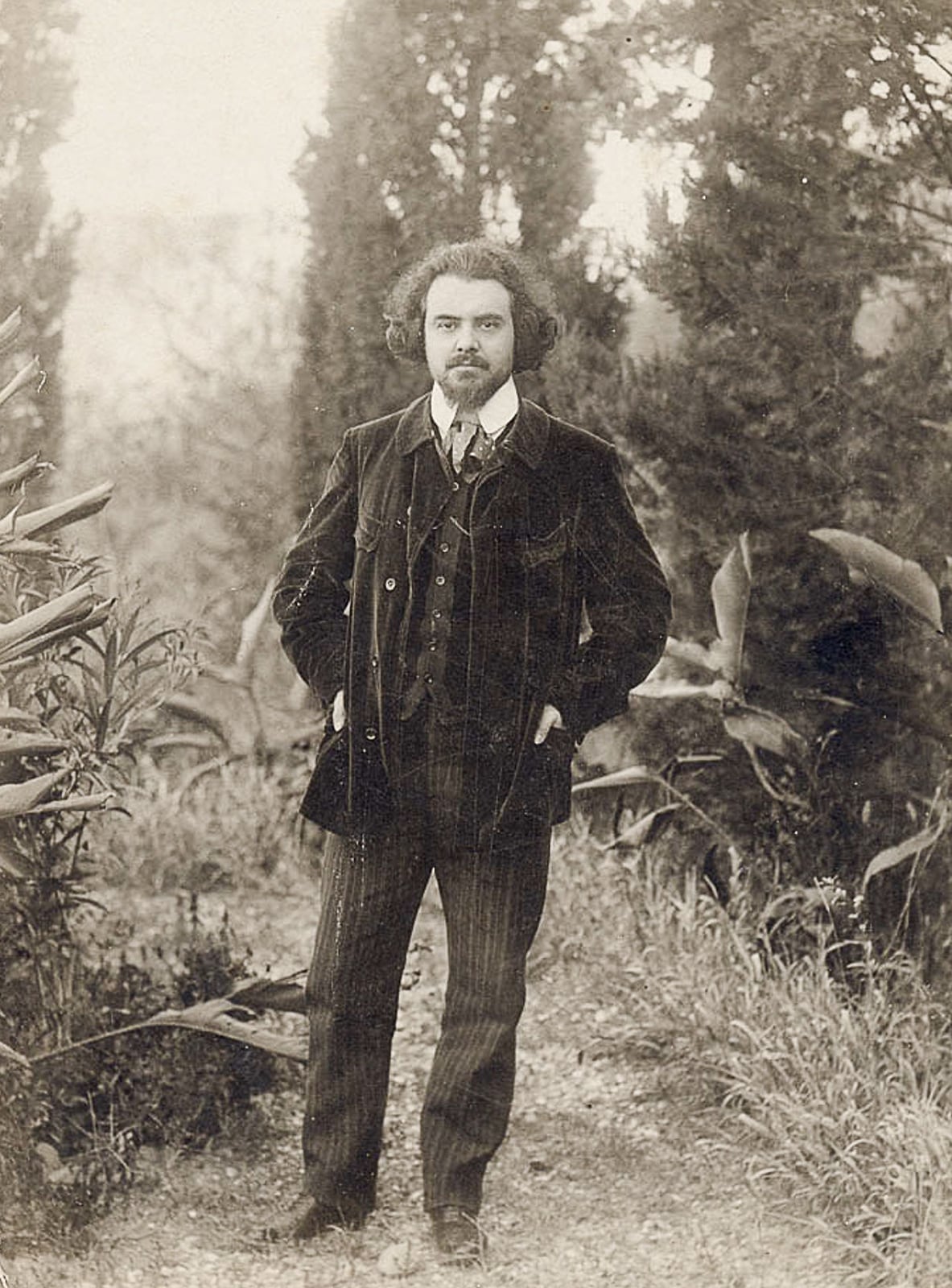
Nikolai Berdyaev
इन पर सहमत: परम सत्य क्या है? क्या ईश्वर है? · मैं कौन हूँ? क्या कोई सच्चा आत्म है? · हम दुःख क्यों भोगते हैं?
इनसे भिन्न सोचते हैं

Pema Chödrön
इन पर टकराव: मैं कौन हूँ? क्या कोई सच्चा आत्म है? · मृत्यु के बाद क्या होता है?
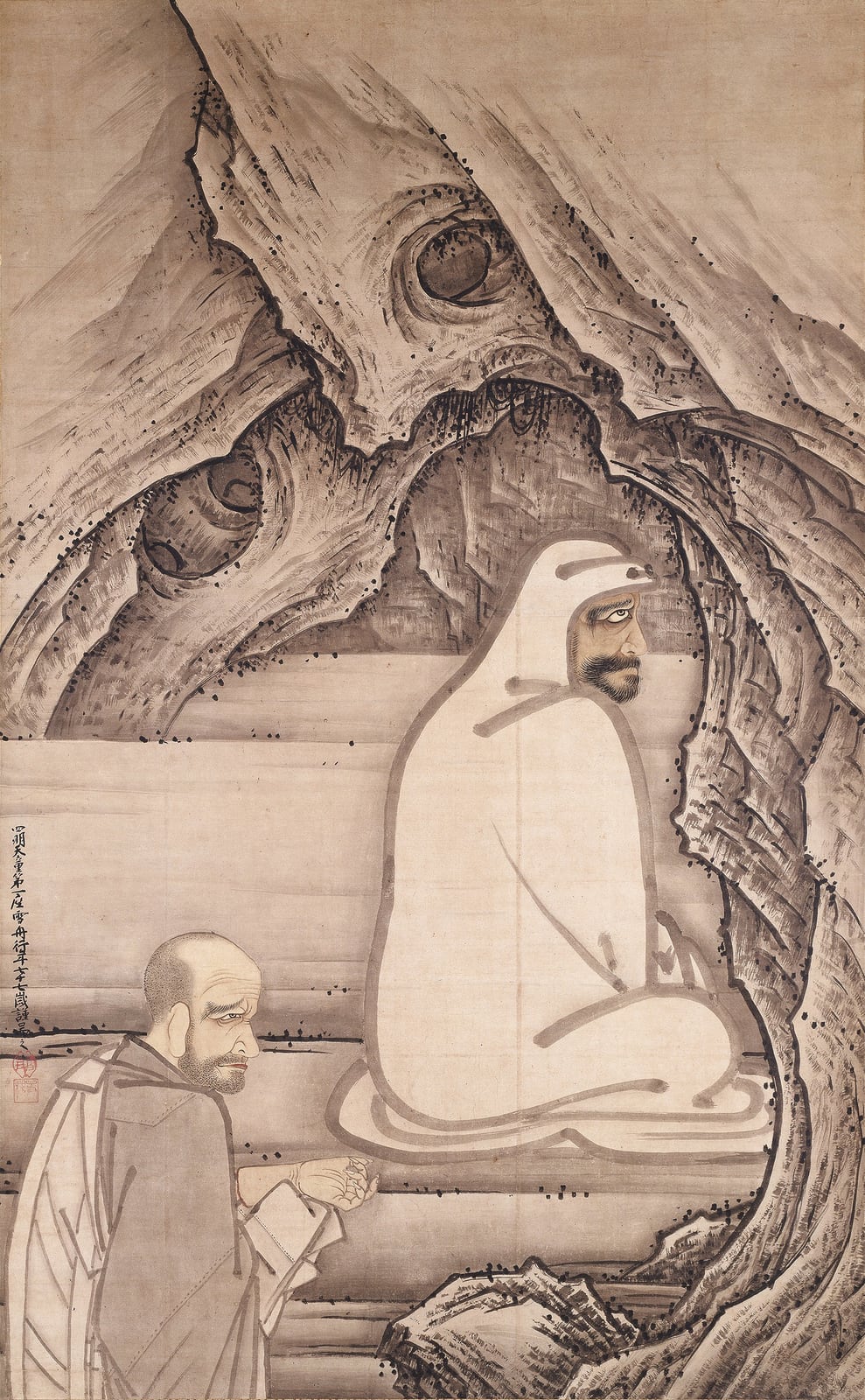
Bodhidharma
इन पर टकराव: मैं कौन हूँ? क्या कोई सच्चा आत्म है? · मृत्यु के बाद क्या होता है?

Patañjali
इन पर टकराव: मैं कौन हूँ? क्या कोई सच्चा आत्म है? · मृत्यु के बाद क्या होता है?

Nāgārjuna
इन पर टकराव: मैं कौन हूँ? क्या कोई सच्चा आत्म है? · मृत्यु के बाद क्या होता है?
प्रसंग और वृत्तांत
प्रसंग और वृत्तांत
संत-चरित वृत्तांतc. 1585
The treasure of the Landeskrone
वृत्तांत का स्रोत: Abraham von Franckenberg, Bericht von dem Leben und Abschied Jacob Böhmens (1651); repeated by all later biographies.
संत-चरित वृत्तांतc. 1590
The stranger at the workshop
वृत्तांत का स्रोत: Franckenberg, Bericht (1651). There is no independent testimony; the story belongs to the genre of the prophecy of vocation.
विवादितc. 1600
The pewter vessel
वृत्तांत का स्रोत: Franckenberg, Bericht (1651); compare Böhme's letter to Caspar Lindner (1621), §§ 6–8, which describes the experience without that detail.
मौखिक परंपरा1613–1624
Pastor Richter's slipper
वृत्तांत का स्रोत: Caption of the engraving in the 1686 series (Rijksmuseum RP-P-OB-2363; Van Eeghen 501-4, catalogue of the work of Jan and Casper Luyken; Wikipedia attributes it to Joseph Mulder) for the 1686 Amsterdam edition; Richter's hostility, in the 1613 and 1624 records published by Deussen (1910).
स्रोत: Hessayon, Ariel, y Sarah Apetrei (eds.). An Introduction to Jacob Boehme: Four Centuries of Thought and Reception. Nueva York y Londres: Routledge, 2014.
प्रमाणित1624
'It smells of shoemaker's pitch'
वृत्तांत का स्रोत: Richter's lampoon and Böhme's letter of 2 April 1624, quoted by Paul Deussen in the introduction to Concerning the Three Principles (1910), pp. xlviii–xlix, and by Martensen (1885), p. 13.
साक्ष्य1624
The music of the last night
वृत्तांत का स्रोत: Franckenberg, Bericht (1651), based on the testimony of the physician Tobias Kober; the doctrinal examination and the resistance to the burial are also recorded in the sources gathered by Deussen (1910).
शिक्षाएँ
शिक्षाएँ
वे अवधारणाएँ जो उनके चिंतन को रूप देती हैं, उनके संदर्भ में समझाई गई।
Ungrund (the groundless)ungrund
Mysterium pansophicum, Six Theosophic Points, Mysterium Magnum (ch. 1–3) and Clavis; reception in German Idealism and Russian religious philosophy.
स्रोत: O'Regan, Cyril. Gnostic Apocalypse: Jacob Boehme's Haunted Narrative. Albany: State University of New York Press, 2002.
The three principlesdrei-prinzipien
Systematic exposition in De tribus principiis (1619) and De triplici vita (1620); synoptic tables in the Tabulae principiorum (1624).
The seven source-spirits (Quellgeister)quellgeister
Aurora, ch. 8–11; Clavis; De signatura rerum.
Sophia, the virgin of wisdomsophia
Of the Incarnation of Jesus Christ, The Threefold Life, Mysterium Magnum; reception in English Behmenism and Russian sophiology.
स्रोत: Berdyaev, Nicolas. «Unground and Freedom», ensayo introductorio a Jacob Boehme, Six Theosophic Points and Other Writings, trad. John Rolleston Earle. Ann Arbor: University of Michigan Press, 1958. Y «Из этюдов о Я. Беме. Этюд I: Учение об Ungrund и свободе; Этюд II: Учение о Софии и андрогине Я. Беме и русские софиологические течения», Путь (Put'), París, 1930, n.os 20–21.
The signature of things and the language of naturesignatura-rerum
De signatura rerum (1622), Mysterium Magnum (ch. 35–36), Aurora; Paracelsian tradition.
स्रोत: Weeks, Andrew. Boehme: An Intellectual Biography of the Seventeenth-Century Philosopher and Mystic. Albany: State University of New York Press, 1991.
New birth and Gelassenheitwiedergeburt
Der Weg zu Christo and its treatises (repentance, resignation, supersensual life, new birth); continuity with Eckhart, Tauler and the Theologia Deutsch.
वीडियो
वीडियो
रिकॉर्डिंग, साक्षात्कार और वृत्तचित्र। वीडियो YouTube से चलते हैं; वे यहाँ संग्रहीत नहीं हैं।
How is Jacob Böhme relevant today? Lecture by Scott Brown
व्याख्यान· EN· 39 min
Embassy of the Free Mindआधिकारिक चैनल
7 Most Important Themes in Jacob Böhme's Philosophy | Curator's Guided Tour
वृत्तचित्र· EN· 20 min
Embassy of the Free Mindआधिकारिक चैनल
Infinite Fire Webinar VI - Prof. Dr. Wouter J. Hanegraaff on The Theosophical System of Jakob Böhme
व्याख्यान· DE· 61 min
Embassy of the Free Mindआधिकारिक चैनल
Jacob Böhme in Amsterdam | Curator's Guided Tour
वृत्तचित्र· EN· 25 min
Embassy of the Free Mindआधिकारिक चैनल
Sophia and Sophiology: From Boehme to Schelling
व्याख्यान· EN· 90 min
Harvard Divinity Schoolआधिकारिक चैनल
An Introduction to the Philosophical System of Jacob Boehme
व्याख्यान· EN· 77 min
Ephrata Cloisterआधिकारिक चैनल
ALLES IN ALLEM. Die Gedankenwelt des mystischen Philosophen Jacob Böhme
वृत्तचित्र· DE· 5 min
Staatliche Kunstsammlungen Dresdenआधिकारिक चैनल
"Men Who've Walked With God #12: Jacob Boehme" a sermon by Howard Thurman (July 12, 1953)
मूल रिकॉर्डिंग· EN· 1953· 34 min
American Museum of Paramusicology
How Theosophy Created Spiritual Alchemy - The Alchemy of Jakob Böhme
विश्लेषण· EN· 41 min
ESOTERICA
The Mysticism of Jacob Boehme with Aaron French
साक्षात्कार· EN· 68 min
Hermitix Podcast
Trailer for "The Life and Legacy of Jacob Boehme"
वृत्तचित्र· EN· 3 min
BoehmeFilm / meandriaआधिकारिक चैनल
Jakob Böhme Tagung, Görlitz 2014: Ralf Gleide
व्याख्यान· DE· 77 min
Oberlausitz Leben
Jakob Böhme: El místico que atravesó el Misterio | Entrevista a Paco Martínez Albarracín (Boehme)
साक्षात्कार· ES· 78 min
Psicología y Espiritualidad
Mysterium Magnum: Jakob Böhme y la dialéctica del Abismo, con Isidoro Reguera
साक्षात्कार· ES· 46 min
La Taberna de Rudolf Steiner
Francisco Martínez Albarracín: Sophia en la visión cosmoteándrica de Jacob Boehme.
व्याख्यान· ES· 67 min
MIAS Latina
चित्रशाला
चित्रशाला
सत्यापित लाइसेंस वाले चित्र। प्रत्येक में उसके रचयिता और श्रेय का उल्लेख सुरक्षित है।
संबंध
संबंध
प्रभाव, शिष्यत्व और वैचारिक निकटता। प्रमाणित संबंध को विश्लेषण से पहचानी गई समानता से अलग दर्शाया गया है।
इन्हें प्रभावित किया
Berdyaev made Böhme's Ungrund the basis of his philosophy of uncreated freedom; he devoted two studies to him in Put' (1930) and the essay 'Unground and Freedom' (1958).
प्रमाणित संबंध
इन्हें प्रभावित किया
Solovyov read Böhme in his formative years, particularly in London in 1875; Böhme's Sophia is one of the acknowledged sources of his sophiology.
प्रमाणित संबंध
इनसे मिलते-जुलते विचार
In 1930 Berdyaev compared Böhme's Sophia with that of Russian sophiology, from Solovyov to Florensky and Bulgakov, and noted their differences.
प्रमाणित संबंध
इनसे मिलते-जुलते विचार
Böhme's Ungrund and Eckhart's 'ground' (grunt), and the Gelassenheit of both, belong to the same family of German mysticism; there is no evidence that Böhme read Eckhart directly, though the tradition reached him through Tauler, the Theologia Deutsch and Weigel.
विश्लेषण से पहचानी गई समानता
इनसे मिलते-जुलते विचार
Near contemporaries without theological schooling, both wrote down under inner command an experience that their church authorities examined with suspicion. Teresa describes the soul's itinerary; Böhme, the genesis of God and the world. There was no contact.
विश्लेषण से पहचानी गई समानता
इन्हें प्रभावित किया
Blavatsky quoted him with admiration and gave him an entry in the Theosophical Glossary (1892), where she calls him 'a mystic and great philosopher', one of the most prominent theosophists; his terminology reached the Theosophical Society through Franz Hartmann.
प्रमाणित संबंध
इन्हें प्रभावित किया
Jung reproduced and discussed the philosophical sphere of the Forty Questions as a mandala in 'A Study in the Process of Individuation' and cited Böhme in his works on alchemy as a witness to the union of opposites.
प्रमाणित संबंध
इन्हें प्रभावित किया
Steiner devoted a chapter to him in Mystics of the Renaissance (1901), placing him among the forerunners of a modern consciousness of spirit.
प्रमाणित संबंध
इनसे मिलते-जुलते विचार
Two Protestant visionaries who described spiritual worlds and a correspondence between the visible and the invisible; Oetinger set them side by side in the eighteenth century. Swedenborg acknowledged no debt to Böhme and his method is very different.
विश्लेषण से पहचानी गई समानता
इनसे मिलते-जुलते विचार
The devotional treatises of The Way to Christ share with The Imitation of Christ the renunciation of self-will and the distrust of knowledge that does not transform; Böhme adds a cosmology the Imitation ignores.
विश्लेषण से पहचानी गई समानता
अन्य प्रविष्टियों से जुड़ा
स्रोत
स्रोत
इस प्रविष्टि के लिए देखे गए ग्रंथ-सूची और सूचीपत्र।
- Wikidata, Q77017 «Jakob Böhme» (P31=Q5; 59 enlaces entre wikis; P19 Alt Seidenberg; P20 Görlitz; P570 1624-11-17).
- Franckenberg, Abraham von. Gründlich und wahrhafftiger Bericht von dem Leben und Abschied des in Gott selig-ruhenden Jacob Böhmens (1651). En: Des gottseeligen hocherleuchteten Jacob Böhmens Teutonici Philosophi Alle Theosophische Wercken, Ámsterdam, 1682, vol. [1]; reimpr. en Theosophia revelata, 1730. Trad. inglesa en The Works of Jacob Behmen, Londres, 1764, vol. I.
- Weeks, Andrew. Boehme: An Intellectual Biography of the Seventeenth-Century Philosopher and Mystic. Albany: State University of New York Press, 1991.
- Hessayon, Ariel, y Sarah Apetrei (eds.). An Introduction to Jacob Boehme: Four Centuries of Thought and Reception. Nueva York y Londres: Routledge, 2014.
- Martensen, Hans Lassen. Jacob Boehme: His Life and Teaching. Trad. T. Rhys Evans. Londres: Hodder and Stoughton, 1885.
- Böhme, Jacob. Concerning the Three Principles of the Divine Essence. Trad. John Sparrow (1648); reed. C. J. Barker, con introducción de Paul Deussen (incluye las actas del concejo de Görlitz de 1613 y 1624 y la cronología de los últimos meses). Londres: John M. Watkins, 1910.
- Böhme, Jacob. The Epistles of Jacob Boehme. Trad. John Ellistone (1649). Reimpr. Glasgow, 1886. Carta segunda, a Caspar Lindner, aduanero de Beuthen (corresponde a la 12.ª de los Theosophische Sendbriefe, 1621).
- Böhme, Jakob. Aurora oder Morgenröte im Aufgang. Freiburg i. Br.: Aurum, 1977 (texto electrónico en Zeno.org, cap. 19, §§ 10–12).
- Böhme, Jacob. Dialogues on the Supersensual Life. Trad. William Law y otros; ed. Bernard Holland. Londres: Methuen, 1901 (Project Gutenberg n.º 33742).
- Böhme, Jacob. Sämtliche Schriften. Faksimile-Neudruck der Ausgabe von 1730. Ed. Will-Erich Peuckert. 11 vols. Stuttgart-Bad Cannstatt: Frommann-Holzboog, 1955–1989.
- Buddecke, Werner. Die Jakob Böhme-Ausgaben: Ein beschreibendes Verzeichnis. 2 vols. Gotinga, 1937–1957 (vol. 1: ediciones en alemán; vol. 2: traducciones).
- Hegel, G. W. F. Vorlesungen über die Geschichte der Philosophie, III, «Bacon und Böhme. B. Jakob Böhme». En Werke in zwanzig Bänden, vol. 20. Fráncfort: Suhrkamp, 1971.
- Berdyaev, Nicolas. «Unground and Freedom», ensayo introductorio a Jacob Boehme, Six Theosophic Points and Other Writings, trad. John Rolleston Earle. Ann Arbor: University of Michigan Press, 1958. Y «Из этюдов о Я. Беме. Этюд I: Учение об Ungrund и свободе; Этюд II: Учение о Софии и андрогине Я. Беме и русские софиологические течения», Путь (Put'), París, 1930, n.os 20–21.
- Jung, C. G. «A Study in the Process of Individuation» (1934, rev. 1950). En The Archetypes and the Collective Unconscious, Collected Works 9/I. Princeton: Princeton University Press, 1959 (reproduce y comenta la figura de las Cuarenta preguntas como mandala).
- Blavatsky, H. P. The Theosophical Glossary. Londres: Theosophical Publishing Society, 1892, s. v. «Boehme (Jacob)».
- Internationale Jacob-Böhme-Gesellschaft. «Lebens-Chronik» (cronología documentada de la vida de Böhme).
- Open Library (Internet Archive): registros consultados por autor, título e ISBN para las ediciones listadas.
- Wikimedia Commons: metadatos de licencia (extmetadata) de cada fichero, leídos por la API imageinfo el 2026-10-25.
- Marcial Pons Librero: fichas de Aurora (Siruela, 2012), Mysterium Magnum (Atalanta, 2024) y Sobre la vida espiritual (Olañeta, 2007), con ISBN, editorial y fecha.
- Steiner, Rudolf. Die Mystik im Aufgange des neuzeitlichen Geisteslebens und ihr Verhältnis zur modernen Weltanschauung. Berlín, 1901 (trad. inglesa Mystics of the Renaissance, Project Gutenberg n.º 75994).
- O'Regan, Cyril. Gnostic Apocalypse: Jacob Boehme's Haunted Narrative. Albany: State University of New York Press, 2002.
- Penman, Leigh T. I. «A Second Christian Rosencreuz? Jakob Böhme's Disciple Balthasar Walther (1558–c. 1630) and the Kabbalah». En Tore Ahlbäck (ed.), Western Esotericism (Scripta Instituti Donneriani Aboensis 20). Åbo, 2008, pp. 154–172.
- Brink, Claudia, y Lucinda Martin (eds.). Alles in Allem: Die Gedankenwelt des mystischen Philosophen Jacob Böhme. Catálogo de la exposición de las Staatliche Kunstsammlungen Dresden. Dresde: Sandstein, 2017.
- Koyré, Alexandre. La philosophie de Jacob Boehme. París: Vrin, 1929.
- Jacob-Böhme-Forschungsstelle, Stuttgart Research Center for Text Studies (Universität Stuttgart): Historisch-kritische Gesamtausgabe, ed. Günther Bonheim, Stuttgart-Bad Cannstatt: Frommann-Holzboog, 2020 ss.
- Embassy of the Free Mind (Bibliotheca Philosophica Hermetica, Ámsterdam): fondo y exposiciones sobre Böhme y su recepción neerlandesa.
- Kornblatt, Judith Deutsch (ed. y trad.). Divine Sophia: The Wisdom Writings of Vladimir Solovyov. Ithaca: Cornell University Press, 2009 (sobre las lecturas de Böhme y Swedenborg en Londres, 1875).
- Rijksmuseum, Ámsterdam: fichas de los grabados RP-P-OB-2353, RP-P-OB-2361, RP-P-OB-2362 y RP-P-OB-2363 (retrato y escenas de la vida de Böhme, 1686), dominio público (CC0).
- अधिकार-धारक
- Dominio público (Böhme murió en 1624). Las traducciones del siglo XVII (Sparrow, Ellistone, Blunden) y la edición inglesa de 1764–1781 son de dominio público; las ediciones modernas (Frommann-Holzboog, Deutscher Klassiker Verlag, Siruela, Atalanta, Olañeta, Paulist Press, James Clarke/Lutterworth) están sujetas a los derechos de sus editores y traductores.
- आधिकारिक वेबसाइट
- www.jacob-boehme.org/
पुष्टि की प्रतीक्षा में
जो यह प्रविष्टि अभी तक निश्चित नहीं कर सकी है। हम उसे भर देने के बजाय कह देना बेहतर समझते हैं।
- Localizar el texto alemán de la carta a Caspar Lindner (Theosophische Sendbriefe, 12) para dar las dos citas en su lengua original; hoy se citan en la traducción inglesa de Ellistone.
- Verificar la fecha de muerte de C. J. Barker, editor de las reediciones inglesas de 1909–1924 (Watkins), para confirmar el dominio público en la UE y España de esos volúmenes.
- Separar el texto de 1656/1654 de la introducción moderna en las ediciones electrónicas de D. S. Hehner (Aurora, Mysterium Magnum) o localizar escaneos limpios de las ediciones de Watkins de 1914 y 1924; hasta entonces van con caution.
- Sala de lectura: no se ha localizado texto limpio (OCR de calidad) de De signatura rerum (Ellistone, 1651), De la encarnación, Seis puntos teosóficos (trad. Earle, fecha de muerte del traductor no verificada) ni del alemán de 1730 (Fraktur con OCR deficiente). La transcripción EEBO-TCP de Signatura rerum (Oxford Text Archive, A28534) no respondió.
- Confirmar el traductor de la Aurora de Siruela (2012) y el contenido exacto de Sobre la vida espiritual (Olañeta, 2007), que se asigna por su título a Vom übersinnlichen Leben.
- Confirmar la autoría de la serie de grabados de la edición neerlandesa de 1686 (catálogo Van Eeghen de Jan y Casper Luyken frente a la atribución a Joseph Mulder).
- Fijar el lugar de custodia actual de los autógrafos (Die Urschriften, ed. Buddecke) para registrar manuscritos.
- Ediciones en español de De signatura rerum, El camino a Cristo, Los tres principios y De la triple vida: no localizadas en catálogo.
- Programas de afiliación: ninguno verificado; lista vacía.
2026-10-25 को शोधित