इस्लाम · सूफ़ीवाद
Hafez
خواجه شمسالدین محمد حافظ شیرازی · حافظ
लगभग 1315 – लगभग 1390ऐतिहासिक रूप से प्रमाणित व्यक्ति
चौदहवीं शताब्दी के फ़ारसी गीतिकवि (शीराज़, लगभग 1315–1390), जिन्हें ग़ज़ल का शिखर माना जाता है। वे इंजू और मुज़फ़्फ़री राजवंशों के शासनकाल में जिए, जिनके राजकुमारों को उन्होंने कविताएँ समर्पित कीं, और उनकी मृत्यु के बाद संकलित उनका दीवान लगभग पाँच सौ ग़ज़लें समेटे है (क़ज़वीनी और ग़नी के संस्करण में 495), जिनमें प्रेम, मदिरा और झूठी धर्मनिष्ठा पर व्यंग्य एक सोची-समझी अस्पष्टता में घुल-मिल जाते हैं। ईरान में शकुन के लिए उसे यूँ ही खोला जाता है। उनके नाम से प्रचलित डैनियल लैडिंस्की की कविताएँ उनकी रचनाओं के अनुवाद नहीं हैं।
- कृतियाँ
- 8कृतियाँ
- संस्करण
- 25संस्करण
- उद्धरण
- 9उद्धरण
- वीडियो
- 14वीडियो
- चित्र
- 9चित्र
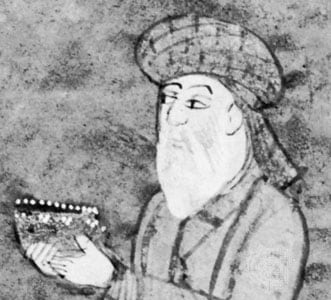
Hafez en una miniatura del siglo XVIII · Public domain
उनके अपने शब्दों में
«Arise, oh Cup-bearer, rise! and bring / To lips that are thirsting the bowl they praise, / For it seemed that love was an easy thing, / But my feet have fallen on difficult ways.»Diván, gazal 1, v. 1 (Qazvini-Ghani; texto persa según Ganjoor); trad. inglesa de Gertrude Bell (1897), poema I; trad. española propia. El primer hemistiquio es árabe.

मूल विचार
The rend (sincere libertine): In ordinary Persian a *rend* was a scoundrel, a brawler of ill repute.
संदर्भ में देखें
जीवनी
7 मिनट का पाठ
स्पैनिश मूल से सहायता-प्राप्त अनुवाद, मातृभाषी अनुवादक द्वारा समीक्षा लंबित।
जीवनी के बिना एक कवि
ख़्वाजा शम्सुद्दीन मुहम्मद, जिन्हें समूचा फ़ारसी-भाषी जगत उनके तख़ल्लुस "हाफ़िज़" से जानता है, ऐसे क्लासिक कवि का चरम उदाहरण हैं जिनका जीवन मुश्किल से ही दिखाई देता है। कवियों के जो जीवनी-संग्रह (तज़किरे) उनकी चर्चा करते हैं, वे बाद के हैं और, एनसाइक्लोपीडिया ईरानिका के शब्दों में, प्रायः अविश्वसनीय या पूरी तरह काल्पनिक हैं। सबसे पुराना दस्तावेज़ उनके दीवान की भूमिका है, जिसे एक समकालीन ने लिखा था, जिसका नाम शायद मुहम्मद गुलअंदाम था, और विशेषज्ञ उस पाठ पर भी एकमत नहीं हैं। स्रोत नाम पर और उपनाम के अर्थ पर सहमत हैं: हाफ़िज़ वह है जिसे क़ुरआन कंठस्थ हो, और वे स्वयं एक ग़ज़ल में गर्व से कहते हैं कि वे उसे "चौदह क़िराअतों में" पढ़ते हैं। लिसान-उल-ग़ैब, "अदृश्य की वाणी", की उपाधि पहले पुस्तक के लिए प्रयुक्त हुई और बाद में व्यक्ति के लिए।
उनका जन्म शीराज़ में 1315 और 1325 ई. के बीच हुआ: क़ासिम ग़नी ने हिजरी 717 (1317 ई.) का प्रस्ताव रखा और मुहम्मद मुईन ने 715 (1315 ई.) का। पिता के बारे में केवल बाद की और परस्पर-विरोधी सूचनाएँ हैं — इस्फ़हान के कोई बहाउद्दीन, तूयसरकान के कोई कमालुद्दीन —, और एक नानबाई की दुकान से रोटियाँ पहुँचाने वाले लड़के की छवि किंवदंती की है। कुछ शोकगीत, विशेषकर "आँखों के नूर" पर एक ग़ज़ल और एक समाधि-शिला पर लिखा एक क़िता, संकेत देते हैं कि उन्होंने एक पुत्र खोया था। उन्होंने अपने युग का पाठ्यक्रम पढ़ा — क़ुरआनी विद्याएँ और अरबी —, और एक कविता में उन पाँच प्रतिष्ठित व्यक्तियों का गुणगान किया जिनसे फ़ार्स प्रांत समृद्ध था, जिनमें 1355 ई. में दिवंगत धर्मशास्त्री अज़ुदुद्दीन ईजी भी थे।
राजवंशों के बीच शीराज़
हाफ़िज़ चंगेज़ ख़ान और तैमूर के बीच के उस अशांत अंतराल में जिए, जब छोटे-छोटे राजवंश दक्षिणी ईरान के लिए आपस में लड़ रहे थे। उनके पहले बड़े संरक्षक शीराज़ के शासक अबू इस्हाक़ इंजू थे — एक उदार कला-संरक्षक और दुस्साहसी शासक, जिन्हें 1357 ई. में मुज़फ़्फ़री मुबारिज़ुद्दीन मुहम्मद ने मृत्युदंड दिया। कवि ने उन्हें एक क़सीदा और एक शोक-ग़ज़ल समर्पित की, "याद है जब तेरी गली के छोर पर मेरा ठिकाना था", जिसे परंपरा उस अल्पकालीन शासन के विलाप के रूप में पढ़ती है। विजेता एक कट्टर धर्मनिष्ठ था, इतना कठोर कि उसके अपने बेटे ने उसे मुहतसिब, यानी सार्वजनिक आचरण का निरीक्षक, कहा, और हाफ़िज़ एक शेर में सलाह देते हैं कि छिपकर पियो, क्योंकि मुहतसिब के कान बड़े तेज़ हैं।
1358 ई. में शाह शुजा ने अपने पिता को गद्दी से उतारकर अंधा कर दिया, और हाफ़िज़ के काव्य-जीवन का अधिकांश उसी के शासनकाल में बीता। ग़नी ने गिना कि दीवान में शासकों के सत्तर संकेतों में से उनतालीस उसी से संबंधित हैं। वह एक सुसंस्कृत राजकुमार और स्वयं कवि था; हबीब-उस-सियर के अनुसार वही पहला आलोचक था जिसने हाफ़िज़ की ग़ज़लों में एकसूत्रता के अभाव पर आपत्ति की, जो मदिरा से तसव्वुफ़ पर और तसव्वुफ़ से महबूब पर छलाँग लगाती हैं। हाफ़िज़ ने वज़ीरों, शाह मंसूर और बग़दाद के जलायरियों की भी प्रशंसा की। बाद के स्रोत भारत से आए निमंत्रणों, यज़्द की एक निराशाजनक यात्रा और होर्मुज़ की एक यात्रा की बात करते हैं जो जहाज़ पर चढ़ने से पहले ही समाप्त हो गई; इनमें से लगभग किसी का भी दस्तावेज़ी प्रमाण नहीं है।
तैमूर, मृत्यु और मज़ार
तैमूर ने 1387 ई. में शीराज़ पर अधिकार कर लिया। वह प्रसिद्ध भेंट, जिसमें विजेता कवि को उलाहना देता है कि उसने एक तुर्क युवती के तिल पर समरक़ंद और बुख़ारा न्योछावर कर दिए, पहली बार शुजा शीराज़ी की अनीस-उन-नास (1426 ई.) में आती है और 1486 ई. में दौलतशाह समरक़ंदी ने उसे और सजाया: यह एक साहित्यिक क़िस्सा है, कोई तथ्य नहीं। मृत्यु की तिथि भी डोलती है। जामी और ख़्वाफ़ी हिजरी 792 (1390 ई.) बताते हैं, जिसका अनुसरण क़ज़वीनी और अधिकांश आधुनिक विद्वान करते हैं; मज़ार का शिलालेख, एक तारीख़ी शेर (अबजद-गणना) के माध्यम से, 791 (1389 ई.) देता है। उन्हें मुसल्ला के बाग़ में दफ़नाया गया, जिसका उन्होंने इतनी बार गुणगान किया था। पहला मक़बरा 1451–1452 ई. में बना; वर्तमान इमारत का नक़्शा आंद्रे गोदार ने 1930 के दशक में बनाया।
एक पुस्तक जिसे किसी ने स्थिर नहीं किया
ऐसा कोई प्रमाण नहीं कि हाफ़िज़ ने स्वयं अपनी रचनाएँ संकलित कीं। गुलअंदाम की भूमिका के अनुसार उनका संकलन मृत्यु के बाद हुआ, और पाठ सैकड़ों पांडुलिपियों में पहुँचा है जो कविताओं की संख्या, शेरों के क्रम और पाठभेदों में भिन्न हैं। सबसे पुराने साक्ष्य पंद्रहवीं शताब्दी के हैं, जैसे 803 हि. (1401 ई.) की तिथि वाली ताशकंद की एक प्रति, या 827 हि. (1424 ई.) की वह पांडुलिपि जिसे ख़लख़ाली ने 1927 ई. में संपादित किया। इसी पर और सत्रह अन्य प्रतियों पर आधारित वह संस्करण मुहम्मद क़ज़वीनी और क़ासिम ग़नी ने 1941 ई. में प्रकाशित किया जो आज भी सर्वमान्य संदर्भ है, जिसमें 495 ग़ज़लें हैं; परवेज़ नातिल ख़ानलरी का संस्करण (1959; संशोधित 1983), चौदह पुरानी पांडुलिपियों पर आधारित, 486 को स्वीकार करता है, और अन्य समालोचनात्मक संस्करण 450 से नीचे उतर जाते हैं। इस प्रकार प्रामाणिक मूल लगभग पाँच सौ ग़ज़लों का है; क़सीदे, क़िते, साक़ीनामा और एक छोटी मसनवी मिलकर एक साधारण आकार का दीवान पूरा करते हैं, जबकि उनके नाम की रुबाइयों की प्रामाणिकता कहीं अधिक संदिग्ध है।
रूप और व्यंग्य
हाफ़िज़ की ग़ज़ल में प्रायः सात से नौ शेर होते हैं, जो एक बह्र और एक क़ाफ़िये से, और कभी-कभी एक रदीफ़ से, जुड़े होते हैं। हर शेर अपने आप में पूर्ण है, और कवि ईहाम से खेलते हैं — वह शब्द जो एक साथ दो अर्थ देता है। उनके विषय फ़ारसी गीतिकाव्य के ही हैं — रूठा हुआ महबूब, साक़ी, बुलबुल और गुलाब, मयख़ाना —, पर इहसान यारशातिर एक ऐसे विषय को रेखांकित करते हैं जो गीतिकाव्य का नहीं है और जो उन्हें बेचैन रखता है: दिखावटी ज़ाहिद, वाइज़, मुफ़्ती, मुहतसिब और पैबंद लगी गुदड़ी वाले सूफ़ी का भी पाखंड। ख़ानलरी संस्करण की 486 ग़ज़लों में से लगभग 170 में यह व्यंग्य मिलता है, और इसके सामने वे जान-बूझकर उत्तेजक ढंग से रिंद — सच्चे मनमौजी — को और मयख़ाना चलाने वाले पीर-ए-मुग़ाँ को रखते हैं।
क्या हाफ़िज़ रहस्यवादी थे — यही प्रश्न उनके पाठकों को बाँटता है। विलियम जोन्स ने उन्हें फ़ारसी पेत्रार्क के रूप में पढ़ा; विल्बरफ़ोर्स क्लार्क ने ऐसे सूफ़ी के रूप में जिनकी मदिरा सदा रूपक है; यारशातिर का मत है कि वे किसी सूफ़ी सिलसिले के नहीं थे और अनेक शेर केवल लौकिक पाठ ही स्वीकार करते हैं; इसके विपरीत, लियोनार्ड लुइसन उन्हें फ़ारसी रहस्यवाद के "इश्क़ के मज़हब" में रखते हैं। चौदहवीं शताब्दी की काव्य-भाषा आध्यात्मिक शब्दावली से इतनी भरी हुई थी कि अस्पष्टता व्याख्या का दोष नहीं, बल्कि स्वयं कविता का उपादान है।
एक भविष्यवक्ता का मरणोत्तर जीवन
बहुत कम रचनाओं को ऐसा सामाजिक जीवन मिला है। दीवान का उपयोग शकुन देखने के लिए होता है — फ़ाल-ए-हाफ़िज़: उसे यूँ ही खोला जाता है और जो ग़ज़ल सामने आती है उसे उत्तर के रूप में पढ़ा जाता है। मुग़ल दरबार से होकर गुज़री एक पांडुलिपि में हुमायूँ और जहाँगीर की अपने शकुनों पर लिखी टिप्पणियाँ सुरक्षित हैं, और ईरानी घरों में यह रीति शब-ए-यल्दा और नौरोज़ पर आज भी जीवित है। परंपरा तो यहाँ तक कहती है कि जब यह विवाद उठा कि इतनी संदिग्ध ख्याति वाला कवि अंतिम संस्कार के सम्मान का पात्र है या नहीं, तो पुस्तक खोली गई और वह शेर निकला जो कहता है कि हाफ़िज़ के जनाज़े से क़दम न रोको, क्योंकि वह पापों में डूबा होकर भी जन्नत जा रहा है।
यूरोप ने उन्हें चरणों में खोजा: लगभग 1690 में थॉमस हाइड का लैटिन संस्करण, 1771 में विलियम जोन्स का "फ़ारसी गीत" और, सबसे बढ़कर, योज़ेफ़ फ़ॉन हैमर-पुर्गश्टाल का संपूर्ण जर्मन अनुवाद (1812–1813), जिसने गोएथे को पश्चिम-पूर्वी दीवान (1819) की प्रेरणा दी। अंग्रेज़ी में परवीन लोलोई गर्ट्रूड बेल के अनुवादों (1897) को तुकांत अनुवादों में सबसे स्पष्ट और संगीतमय मानती हैं, और क्लार्क के अनुवाद (1891) को संपूर्ण, पर एक हठधर्मी सूफ़ी पाठ से बोझिल।
वह हाफ़िज़ जिसे हाफ़िज़ ने नहीं लिखा
1996 से अमेरिकी डैनियल लैडिंस्की अत्यंत लोकप्रिय पुस्तकें प्रकाशित कर रहे हैं — I Heard God Laughing, The Subject Tonight Is Love, The Gift —, जिन्हें हाफ़िज़ के "रूपांतरों" के रूप में प्रस्तुत किया जाता है। लैडिंस्की फ़ारसी नहीं पढ़ते, उन्होंने क्लार्क के अनुवाद के आधार पर काम किया और स्वीकार किया है कि ये अनुवाद नहीं हैं; क्रिस्टोफ़र शैकल, आरिया फ़ानी और उमीद सफ़ी जैसे विशेषज्ञों ने दिखाया है कि ये कविताएँ किसी मूल से मेल नहीं खातीं। आज प्रचलित "हाफ़िज़ के उद्धरणों" में से अनेक, जैसे उस सूरज वाला जो धरती से कभी नहीं कहता "तू मेरी ऋणी है", स्वयं लैडिंस्की के हैं। यह प्रविष्टि उन्हें अलग से, अप्रामाणिक के रूप में, दर्ज करती है, ताकि पाठक शीराज़ के कवि को उसकी समकालीन प्रतिध्वनि से अलग पहचान सके।
स्रोत: Bell, Gertrude Lowthian (trad.). Poems from the Divan of Hafiz. Londres: William Heinemann, 1897 (introducción biográfica y notas). Project Gutenberg n.º 74883. · Clarke, H. Wilberforce (trad.). The Dīvān, written in the fourteenth century by Khwāja Shamsu-d-Dīn Muḥammad-i-Ḥāfiẓ-i-Shīrāzī. 2 vols. Calcuta: Government of India Central Printing Office, 1891. · Lewisohn, Leonard (ed.). Hafiz and the Religion of Love in Classical Persian Poetry. Londres: I. B. Tauris / Iran Heritage Foundation, 2010. ISBN 9781848853393.
कालक्रम
जीवन, वर्ष-दर-वर्ष
प्रत्येक बिंदु एक प्रमाणित घटना है। उसे स्रोत और निश्चितता के स्तर सहित पढ़ने के लिए क्लिक करें।
लगभग 1315 – 13260 वर्षShiraz
Birth in Shiraz
Shams al-Din Muhammad is born. Ghani proposed 717/1317 and Mo'in 715/1315; other estimates reach 1325–1326.
संभावितKhorramshahi, Baha al-Din y EIr. «HAFEZ ii. Hafez's Life and Times». Encyclopaedia Iranica, vol. XI, fasc. 5, pp. 465–469. Publicado el 15-12-2002, actualizado el 01-03-2012.
उनके निधन के बाद
- लगभग 1401First dated copy of the Divan
- लगभग 1451First mausoleum
- 1771First English translation
- 1791First printed edition
- 1812 – 1819Hammer-Purgstall's translation
- 1897Gertrude Bell's versions
- 1941Qazvini-Ghani edition
- 1983Khanlari's revised edition
- 1996Ladinsky's first 'renderings'
लगभग 1315 – 1326 · 0 वर्ष
Birth in Shiraz
Shams al-Din Muhammad is born. Ghani proposed 717/1317 and Mo'in 715/1315; other estimates reach 1325–1326.
संभावित
लगभग 1343 – 1353
Under the patronage of Abu Ishaq Inju
Abu Ishaq Inju rules Shiraz (c. 1343–1353) and becomes the poet's first great patron, celebrated in a qasida and several ghazals.
प्रमाणित
1355
Death of Adud al-Din Iji
Death of the theologian Adud al-Din Iji, one of the 'five notables' of Fars praised by Hafez in a qit'a.
प्रमाणित
1357
Execution of Abu Ishaq
The Muzaffarid Mubariz al-Din Muhammad executes Abu Ishaq. Hafez writes a chronogram of his death and an elegiac ghazal; the new ruler imposes a rigorist morality the poet satirises through the figure of the *muhtasib*.
प्रमाणित
1358 – 1384
Shah Shuja's reign begins
Shah Shuja deposes and blinds his father. Most of Hafez's poetic life is spent under his long reign (to 1384): 39 of his 70 allusions to rulers concern him.
प्रमाणित
1366
Shah Shuja's triumphant return
Having lost Shiraz to his brother, Shah Shuja returns to the city (767/1366); several ghazals celebrate the event.
संभावित
1387
Tamerlane takes Shiraz
Tamerlane occupies Shiraz. The meeting with Hafez about 'Samarkand and Bukhara' is an anecdote first attested in 1426.
प्रमाणित
लगभग 1390
Death in Shiraz
He dies in Shiraz: 792/1390 according to Jami and Khwafi (the date Qazvini preferred), 791/1389 according to the 'Khak-e Musalla' chronogram on his tomb. He is buried in the Musalla garden.
संभावित
लगभग 1401
First dated copy of the Divan
A Tashkent manuscript (Oriental Institute, no. 12770) dated by its colophon to 803/1401 contains some 407 ghazals; it is the oldest known copy, edited in Tehran in 2000.
संभावित
लगभग 1451
First mausoleum
After the Timurid Abu'l-Qasim Babur conquers Shiraz (855/1451), his minister Muhammad Mamai raises a monument over the tomb.
प्रमाणित
1771
First English translation
William Jones publishes the 'Persian Song', a version of the Shirazi Turk ghazal, in his *Grammar of the Persian Language*.
प्रमाणित
1791
First printed edition
Abu Taleb Khan prepares in Calcutta, from twelve manuscripts, the first movable-type edition of the *Divan* (1,200 copies).
प्रमाणित
1812 – 1819
Hammer-Purgstall's translation
Joseph von Hammer-Purgstall publishes the first complete German translation (1812–1813), which Goethe reads and which gives rise to the *West-östlicher Divan* (1819).
प्रमाणित
1897
Gertrude Bell's versions
Gertrude Bell publishes *Poems from the Divan of Hafiz* in London, regarded by Parvin Loloi as the most lucid of the English verse translations.
प्रमाणित
1941
Qazvini-Ghani edition
Mohammad Qazvini and Qasem Ghani publish in Tehran (1320 Š.) the edition of the *Divan* based on the 827/1424 manuscript and seventeen further copies: 495 ghazals. It remains the common reference.
प्रमाणित
1983
Khanlari's revised edition
Parviz Natel Khanlari publishes the second edition of his *Divan* (fourteen manuscripts of 807–836 AH), with 486 ghazals.
प्रमाणित
1996
Ladinsky's first 'renderings'
Daniel Ladinsky publishes *I Heard God Laughing*, the first of a series of original works presented as 'renderings' of Hafez; *The Gift* follows in 1999.
प्रमाणित
कृतियाँ
आवश्यक कृतियाँ
वे कृतियाँ जिनके बिना उनकी विरासत को समझा नहीं जा सकता।
लिखित कृति · लगभग 1390
Divan: ghazals
دیوان حافظ — غزلیات (Divan-e Hafez: gazaliyat)
The heart of Hafez's work and, by common consent, the summit of the Persian ghazal. Each poem, of seven to nine couplets on a single rhyme, links lines that stand on their own and play on double meaning (*iham*). The aloof beloved, the cupbearer, the tavern, the nightingale and the rose live alongside a constant satire of the hypocritical ascetic, the preacher and the morals inspector, and alongside lines of wisdom on transience and fate. The book opens with an Arabic line ascribed to the caliph Yazid ("O cupbearer, pass round the cup!") and its reading oscillates, never resolved, between human and divine love. It is the book of poetry most present in Iranian homes and the one consulted as an oracle.
19 संस्करण · amazon.com
संपूर्ण कृतित्व (8)
Hafez
Qasidas
The Conscious LibraryQasidas
Hafez
Qit'as (fragments)
The Conscious LibraryQit'as (fragments)
Hafez
Saqi-nama (Book of the Cupbearer)
The Conscious LibrarySaqi-nama (Book of the Cupbearer)
Hafez
Masnavi of the wild gazelle
The Conscious LibraryMasnavi of the wild gazelle
Hafez
Rubaiyat (attributed quatrains)
The Conscious LibraryRubaiyat (attributed quatrains)
Hafez
Attributed poems
The Conscious LibraryAttributed poems

Daniel Ladinsky's 'renderings' (The Gift and others)
1999
वचन
किसी निश्चित कृति में स्थित वचन। प्रत्येक के साथ उसका स्रोत और विश्वसनीयता का स्तर है।
Arise, oh Cup-bearer, rise! and bring / To lips that are thirsting the bowl they praise, / For it seemed that love was an easy thing, / But my feet have fallen on difficult ways.الا یا ایها الساقی ادر کأسا و ناولها / که عشق آسان نمود اول ولی افتاد مشکلها
सत्यापितDiván, gazal 1, v. 1 (Qazvini-Ghani; texto persa según Ganjoor); trad. inglesa de Gertrude Bell (1897), poema I; trad. española propia. El primer hemistiquio es árabe.
अप्रामाणिक या विवादित आरोपण वाले उद्धरण (4)
«Even after all this time the sun never says to the earth, "You owe me." Look what happens with a love like that. It lights the whole sky.»
A poem by Daniel Ladinsky in *The Gift* (1999), circulated as Hafez's. Omid Safi cites it as an example of 'fake Hafez': it corresponds to no Persian ghazal. Text under its author's copyright; quoted briefly for identification.
«Fear is the cheapest room in the house. I would like to see you living in better conditions.»
A line by Daniel Ladinsky that Omid Safi identifies among the 'Hafez' quotes with no Persian original.
«I wish I could show you, when you are lonely or in darkness, the astonishing light of your own being.»
By Daniel Ladinsky. Safi acknowledges its quality but stresses that Hafez said nothing of the kind.
«Your heart and my heart are very very old friends.»
By Daniel Ladinsky; cited by Safi among the examples of poems falsely attributed to Hafez.
अंतिम शब्द
उनके अंतिम शब्दों का कोई सत्यापन-योग्य अभिलेख उपलब्ध नहीं है।
No account of his last moments survives. What tradition associates with his death is an augury: according to the story transmitted by late biographers (recorded by Gertrude Bell in 1897), when it was debated whether he deserved funeral rites the *Divan* was opened at random and out came the line 'Do not withhold your step from Hafez's bier…' (ghazal 79 in Qazvini-Ghani). These are not deathbed words of his.
स्रोत: Bell, Gertrude Lowthian (trad.). Poems from the Divan of Hafiz. Londres: William Heinemann, 1897 (introducción biográfica y notas). Project Gutenberg n.º 74883.
पूछें
उनकी कृतियाँ क्या उत्तर देती हैं
मानवता के बारह महान प्रश्न और उनके ग्रंथ उनका जो उत्तर देने देते हैं, संदर्भों सहित। हम कभी उनके मुख में अपने शब्द नहीं रखते।
परम सत्य क्या है? क्या ईश्वर है?
A Friend of grace, glimpsed behind the ambiguity of the ghazal
साकार, व्यक्तिगत ईश्वरउनके सिद्धांत से निष्कर्षित
Hafez wrote no theology, and his Divan deliberately avoids definitions: the Friend or Beloved of his ghazals may be a prince, a youth of Shiraz or God, and is often all three at once. Even so, the God glimpsed in his verses is personal. He is the Lord of the pre-eternal covenant, the day of Alast when souls answered the Qur'anic question, whose memory runs through his poetry; He is a grace hoped for rather than earned, which is why the poet trusts he will reach paradise even though drowned in sin. Before this God there is no speculation about the essence, but dealings: complaint, entreaty, irony and gratitude addressed to Someone who listens. What Hafez rejects is not God but the ostentatious religion of those who preach in His name.
इस प्रश्न की अन्य गुरुओं से तुलना करेंमैं कौन हूँ? क्या कोई सच्चा आत्म है?
A bird of the heavenly garden fallen into the world's snare
सृजित, अमर आत्माउनके सिद्धांत से निष्कर्षित
Hafez does not reason about the self, but his ghazals reveal an image traditional in Persian poetry. The soul is a bird of the garden of holiness that has fallen into the snare of this world's events and does not know how to tell of its separation; it comes from above and longs to return. At the same time, the empirical self, with its vanity and calculations, is the main obstacle: in a famous verse the poet tells himself that between lover and beloved there is no veil at all, that he himself is his own veil and must step out of the way. This double view, a soul of heavenly origin and an ego that gets in the way, is that of the Sufism Shiraz breathed, expressed without system and almost always with irony.
इस प्रश्न की अन्य गुरुओं से तुलना करेंहम दुःख क्यों भोगते हैं?
Love seemed easy; then came the hardships of separation
ईश्वर से वियोगउनके सिद्धांत से निष्कर्षित
Hafez's Divan opens with a confession: love seemed easy at first, but then difficulties arose. The pain running through his ghazals is that of separation (firaq) from the Beloved, whether human or divine: the dark night, the fear of the waves, the wait for the messenger, the complaint before a beauty that does not answer. To this is added the pain of an unstable world, in which kingdoms pass and fortune turns, and of a society in which preachers do not practise what they preach. Hafez offers no doctrine of suffering, but an attitude: to accept grief as part of love, to seek consolation in wine, music and grace, and not to trust those who promise salvation through the appearance of piety.
इस प्रश्न की अन्य गुरुओं से तुलना करेंमृत्यु के बाद क्या होता है?
Seize the moment; grace will bring the sinner to paradise
अनंत जीवन और पुनरुत्थानउनके सिद्धांत से निष्कर्षित
Hafez does not speculate about the hereafter, but neither does he deny it. His ghazals insist on the brevity of life and the fragility of kingdoms: the world is an old bride of a thousand grooms who keeps faith with none, and one should not postpone the cup or love. That urgency is not nihilism: the horizon of his verses is Islam, with its paradise and its judgement, and his wager is on grace rather than merit. In one ghazal he asks that no one refuse to follow Hafez's funeral procession, for though drowned in sin he is going to paradise. Tradition tells that when it was debated whether he deserved funeral honours, the Divan was opened at random and that very verse came out. Irony, faith in mercy and distrust of the pious mingle in his view of death.
इस प्रश्न की अन्य गुरुओं से तुलना करेंमुक्ति या उद्धार कैसे प्राप्त होता है?
Only love and grace save, not piety put on display
कृपा और प्रेम सेस्पष्ट रूप से कहा है
Hafez distrusts salvation by merit. His favourite target is the ascetic (zahid) and the preacher who show off in the pulpit and, alone, do something else: piety turned into spectacle leads nowhere. Against it he sets love and grace. In a famous verse he states that love will come to the poet's aid even if he recites the Qur'an by heart in its fourteen readings, as if to say that not even that feat of piety saves on its own. And he trusts that he will reach paradise even though drowned in sin. Liberation, in his Divan, is a gift awaited with humility and without hypocrisy, from the condition of the rend, the sincere libertine, who claims no virtue and therefore remains open to mercy.
इस प्रश्न की अन्य गुरुओं से तुलना करेंक्या गुरु आवश्यक है?
If the tavern elder bids it, stain the prayer rug with wine
अनिवार्यउनके सिद्धांत से निष्कर्षित
In the first ghazal of the Divan, Hafez advises staining the prayer rug with wine if the pir-e moghan, the elder of the Magi or of the tavern, says so, for the wayfarer is not ignorant of the customs of the stages of the path. That figure, who returns again and again in his poems, is Hafez's master: not a shaykh of an order nor a preacher, but a sage of disorderly life in the eyes of the pious, who knows the way from experience. In another verse he warns not to travel this stage without the company of Khidr, the mysterious guide of Qur'anic tradition, for there is darkness and danger of going astray. Hafez needs a guide; what he rejects is the authority of the official clergy, whose piety he considers feigned.
इस प्रश्न की अन्य गुरुओं से तुलना करेंक्या संसार वास्तविक है?
The Friend's face is mirrored in the cup; the world, a faithless bride, passes
दिव्य की अभिव्यक्तिउनके सिद्धांत से निष्कर्षित
Hafez's world has two faces. On one side it is fleeting and faithless: an old bride who has had a thousand husbands and keeps faith with none. One should not cling to its kingdoms or honours. On the other side, that same world is where beauty is reflected: in a famous verse the poet says he has seen in the cup the reflection of the Friend's face, and the cup of Jamshid, which in Persian legend showed the whole universe, becomes in his ghazals an image of the heart that sees. Hafez does not deny the reality of things; he loves them because they let something shine through that does not pass away with them.
इस प्रश्न की अन्य गुरुओं से तुलना करेंप्रेम क्या है?
Love is the only path, even when it brings hardships
विरह और मिलनस्पष्ट रूप से कहा है
Love is the theme of almost all of Hafez's ghazals, and its ambiguity is deliberate: the Beloved has a face, a mole and curls, and at the same time points to the divine. The Divan opens by recalling that love seemed easy at first and that difficulties then arose; another famous poem offers Samarkand and Bukhara for the dark mole of a girl from Shiraz. In both cases love is excess, detachment and risk, the opposite of the ascetic's calculation. If one seeks the Beloved's presence, the poet advises, one must not be absent from Him; and when one finds Him, one must leave the world. For Hafez only love saves, and only love allows one to see through the hypocrisy of those who boast of piety.
इस प्रश्न की अन्य गुरुओं से तुलना करेंक्या हम स्वतंत्र हैं, या सब कुछ पूर्वनिर्धारित है?
My lot was settled in pre-eternity: if you dislike it, change destiny
नियति और उत्तरदायित्वउनके सिद्धांत से निष्कर्षित
Hafez often returns to the theme of the lot fixed in pre-eternity (azal): what each person is to drink was poured on the day of the primordial covenant, and no piety or calculation will change it. In a well-known verse he answers someone who reproaches him for his bad name that they did not let him pass through the street of good repute, and that if he dislikes it, he should change the divine decree. This fatalism is above all ironic: it serves to disarm the pride of the pious, who ascribe their virtue to their own merit, and to justify the sincere libertine who does not pretend. Hafez does not deny responsibility, but he places it before a grace and a destiny no one controls, and answers both with humility and humour.
इस प्रश्न की अन्य गुरुओं से तुलना करेंध्यान या प्रार्थना क्यों करें?
If you seek the presence, do not be absent from Him
उपस्थित रहनास्पष्ट रूप से कहा है
Hafez mocks prayer turned into display — the preachers who show off in the pulpit and do something else in private — and sets against it another way of praying. The first ghazal of the Divan ends with advice addressed to himself: if you seek the presence (hozur), do not be absent from Him; when you find the one you love, leave the world. Presence here is that of the heart before the Beloved, the undivided attention Sufism asks for in prayer. In his poems there appear the dawn supplication and the night vigil, often alongside the cup and the musician. What Hafez values is not the number of prayers or their outward form, but that the heart should be where it claims to be.
इस प्रश्न की अन्य गुरुओं से तुलना करेंक्या बुद्धि परम को जान सकती है?
No one has solved nor will solve the riddle of the world by wisdom
परम मन से परे हैस्पष्ट रूप से कहा है
In the same ghazal in which he offers Samarkand and Bukhara for the mole of a girl from Shiraz, Hafez advises speaking of the minstrel and the wine and seeking less the secret of time, for no one has solved nor will solve that riddle by wisdom. It is one of his most constant convictions: philosophy and speculative theology do not reach the mystery, and those who boast of knowing everything, the ascetic, the jurist, the preacher, are often the blindest. What reason does not open, love opens, or it is left open. This renunciation is not intellectual laziness: Hafez was a scholar who knew the Qur'an by heart and mastered the poetic tradition. It is the irony of one who knows learning and its limits.
इस प्रश्न की अन्य गुरुओं से तुलना करेंसंसार से हटें या उसे बदलें?
Neither convent nor pulpit: sincerity is lived in the tavern of the world
कर्म में ध्यानउनके सिद्धांत से निष्कर्षित
Hafez lived in Shiraz, in the world: a court poet under several princes, a teacher of the Qur'an according to his biographers, witness to wars and dynastic changes. His ghazals often set the dervish convent (khanqah) and the mosque of hypocrites against the tavern of the Magi (kharabat), where the rend, the sincere libertine, lives without pretence. He chooses neither the ascetic's retreat, which he mocks, nor political action, which he distrusts, but a third way: to be in the world with an awake heart, to enjoy what life gives without clinging, to unmask false piety and to keep faith with the Beloved. His poetry itself, recited everywhere, was his way of intervening.
इस प्रश्न की अन्य गुरुओं से तुलना करें
निकटता और तनाव
निकटता और तनाव
उनके मतों के आधार पर प्रश्न-दर-प्रश्न आकलित। प्रत्येक सहमति या टकराव का कारण क्लिक करने पर।
इनसे मिलता-जुलता सोचते हैं
Rumi
इन पर सहमत: परम सत्य क्या है? क्या ईश्वर है? · मैं कौन हूँ? क्या कोई सच्चा आत्म है? · हम दुःख क्यों भोगते हैं?
Chaitanya Mahaprabhu
इन पर सहमत: परम सत्य क्या है? क्या ईश्वर है? · मैं कौन हूँ? क्या कोई सच्चा आत्म है? · हम दुःख क्यों भोगते हैं?
Baal Shem Tov
इन पर सहमत: मैं कौन हूँ? क्या कोई सच्चा आत्म है? · हम दुःख क्यों भोगते हैं? · मृत्यु के बाद क्या होता है?

Francis of Assisi
इन पर सहमत: परम सत्य क्या है? क्या ईश्वर है? · मैं कौन हूँ? क्या कोई सच्चा आत्म है? · हम दुःख क्यों भोगते हैं?
इनसे भिन्न सोचते हैं

Pema Chödrön
इन पर टकराव: परम सत्य क्या है? क्या ईश्वर है? · मैं कौन हूँ? क्या कोई सच्चा आत्म है? · मृत्यु के बाद क्या होता है?

Epicurus
इन पर टकराव: परम सत्य क्या है? क्या ईश्वर है? · मैं कौन हूँ? क्या कोई सच्चा आत्म है? · मृत्यु के बाद क्या होता है?

The 14th Dalai Lama (Tenzin Gyatso)
इन पर टकराव: परम सत्य क्या है? क्या ईश्वर है? · मैं कौन हूँ? क्या कोई सच्चा आत्म है? · मृत्यु के बाद क्या होता है?

Patañjali
इन पर टकराव: परम सत्य क्या है? क्या ईश्वर है? · मैं कौन हूँ? क्या कोई सच्चा आत्म है? · मृत्यु के बाद क्या होता है?
प्रसंग और वृत्तांत
प्रसंग और वृत्तांत
सत्यापन-योग्य नहीं1387 (según el relato)
Samarkand and Bukhara for a mole
वृत्तांत का स्रोत: It first appears in Shuja Shirazi's *Anis al-nas* (1426), some thirty-five years after the poet's death, and was expanded by Dawlatshah Samarqandi in his *Tadhkirat al-shu'ara* (1486). The *Encyclopaedia Iranica* warns that anecdotes from these sources reflect the later image of the poet and cannot be used as facts.
मौखिक परंपराc. 1390
The augury at the funeral
वृत्तांत का स्रोत: A story transmitted by late biographers and recorded by Gertrude Bell in the introduction to *Poems from the Divan of Hafiz* (1897); it is not found in fourteenth-century sources.
विवादित1358–1384
The king who asked for unity
वृत्तांत का स्रोत: It comes from the *Habib al-siyar* of the historian Khwandamir (sixteenth century), more than a century later; it is recorded by Bell (1897) and the *Encyclopaedia Iranica* (Khorramshahi).
विवादितc. 1390
Persian sugar for the parrots of India
वृत्तांत का स्रोत: The correspondence with the sultan of Bengal is asserted in the Indo-Persian tradition and recorded by English Wikipedia; Bell (1897, note to poem XXI) ascribes the invitation to a 'Shah Mahmud Purabi' and tells of the interrupted journey. There is no contemporary documentation.
सत्यापन-योग्य नहींs. XIV (según la leyenda)
Shakh-e Nabat and the forty-day vigil
वृत्तांत का स्रोत: Modern oral tradition spread in Iran and in Western anthologies; English Wikipedia presents it as legend and the *Encyclopaedia Iranica* warns against reconstructing the poet's life from literal readings of his verse.
प्रमाणित1812–1819
Goethe finds his twin
वृत्तांत का स्रोत: Facts of literary history documented in the editions of Hammer-Purgstall and Goethe; see Hamid Tafazoli, 'Hafez xi. Translations of Hafez in German', *Encyclopaedia Iranica*.
स्रोत: Tafazoli, Hamid. «HAFEZ xi. Translations of Hafez in German». Encyclopaedia Iranica.
शिक्षाएँ
शिक्षाएँ
वे अवधारणाएँ जो उनके चिंतन को रूप देती हैं, उनके संदर्भ में समझाई गई।
The rend (sincere libertine)rendi
A figure inherited from the *qalandari* poetry of Sanai and Attar, which Hafez brings to its most elaborate form.
Riya: religious hypocrisyriya
Part of the rise of fourteenth-century Persian satire, alongside Obeyd Zakani.
Iham: amphibologyiham
A figure codified by classical Persian rhetoric; in Hafez it merges with the convergence of love lyric, panegyric and mysticism.
Wine and the cupbearermay-o-saqi
Bacchic symbolism inherited from Arabic and Persian poetry (Abu Nuwas, Khayyam, Sufi lyric), to which Hafez gives its canonical form.
स्रोत: Lewisohn, Leonard (ed.). Hafiz and the Religion of Love in Classical Persian Poetry. Londres: I. B. Tauris / Iran Heritage Foundation, 2010. ISBN 9781848853393.
Fal-e Hafez: the Divan as oraclefal-e-hafez
Bibliomancy comparable to the *sortes Vergilianae*; part of the Islamic tradition of *fal-namas*.
वीडियो
वीडियो
रिकॉर्डिंग, साक्षात्कार और वृत्तचित्र। वीडियो YouTube से चलते हैं; वे यहाँ संग्रहीत नहीं हैं।
Hafiz and the Religion of Love — Lecture by L. Lewisohn
व्याख्यान· EN· 115 min
Golha Project Videos
Leonard Lewisohn «One Day with Hafez», Leiden University, Sep. 2012
व्याख्यान· EN· 2012· 4 min
Persian Dutch Network
Scholar reflects bringing medieval Persian verse to the West
साक्षात्कार· EN· 2013· 6 min
PBS NewsHourआधिकारिक चैनल
Dick Davis reads 'I see no love in anyone'
तृतीय पक्ष की रिकॉर्डिंग· EN· 2013· 2 min
PBS NewsHourआधिकारिक चैनल
بزرگان ایرانزمین: حافظ (Grandes de Irán: Hafez)
वृत्तचित्र· FA· 2012· 24 min
BBC Persianआधिकारिक चैनल
Hafez and Persian Poetry in Song (Part One)
व्याख्यान· EN· 59 min
OxfordSongआधिकारिक चैनल
Hafez and Persian Poetry in Song (Part Two)
व्याख्यान· EN· 65 min
OxfordSongआधिकारिक चैनल
How to Love Like A Poet: Why Rumi, Hafez, and Saadi Shirazi Matter Today
व्याख्यान· EN· 2023· 80 min
Renovatio: The Journal of Zaytuna Collegeआधिकारिक चैनल
Hafez: inmortal y magistral poeta
व्याख्यान· ES· 2019· 63 min
Espacio Persa
La poesía como experiencia cotidiana en Irán
वृत्तचित्र· ES· 2020· 28 min
INAH TVआधिकारिक चैनल
Hafez Commemoration — Shajarian & Pirniakan (بزرگداشت حافظ)
तृतीय पक्ष की रिकॉर्डिंग· FA· 1988· 52 min
Khosousi
غزلیات حافظ با دکلمه شاملو و موسیقی فرهاد فخرالدینی
तृतीय पक्ष की रिकॉर्डिंग· FA· 64 min
EngineeringMath
Hafezieh | The Timeless Shrine of Hafez in Shiraz, Iran
वृत्तचित्र· EN· 3 min
Visit Iran - Official Travel Guide of Iranआधिकारिक चैनल
Poems from the Divan of Hafiz by Gertrude Bell — full audiobook
तृतीय पक्ष की रिकॉर्डिंग· EN· 88 min
Best Audiobooks
चित्रशाला
चित्रशाला
सत्यापित लाइसेंस वाले चित्र। प्रत्येक में उसके रचयिता और श्रेय का उल्लेख सुरक्षित है।
पांडुलिपियाँ
पांडुलिपियाँ
पांडुलिपि-साक्ष्य और प्राचीन पाठ, उनके संरक्षक और अध्ययन की शर्तों सहित।
FA · Perso-árabe · s. XIV
دیوان حافظ (Divan-e Hafez), copia de Taskent
- संरक्षित पाठ-साक्ष्य
- Copia que su colofón (fol. 140a) fecha en 803/1401, con unos 407 gazales; la más antigua conocida
- संरक्षक
- Instituto de Estudios Orientales, Taskent · n.º 12770
FA · Perso-árabe · s. XIV
Antología de Iskandar Sultán (con gazales de Hafez)
- संरक्षित पाठ-साक्ष्य
- Antología copiada en 813–814/1410–1411 para el príncipe timúrida Iskandar Sultán
- संरक्षक
- British Library, Londres · Add. MS 27261
FA · Perso-árabe · s. XIV
دیوان حافظ، نسخهٔ خلخالی (manuscrito de Jaljali)
- संरक्षित पाठ-साक्ष्य
- Copia fechada en 827/1424, unos treinta y cinco años después de la muerte del poeta
- संरक्षक
- Colección particular
FA · Nastaliq · s. XIV
دیوان حافظ، نسخهٔ شاهان مغولیه (copia real mogola)
- संरक्षित पाठ-साक्ष्य
- Manuscrito probablemente del s. XV con inscripción de Husayn Bayqara; anotaciones de augurios de Humayun (una de 962/1554–1555) y Yahangir
- संरक्षक
- Khuda Bakhsh Oriental Public Library, Patna
संबंध
संबंध
प्रभाव, शिष्यत्व और वैचारिक निकटता। प्रमाणित संबंध को विश्लेषण से पहचानी गई समानता से अलग दर्शाया गया है।
इनसे मिलते-जुलते विचार
The two summits of the Persian ghazal, a century apart. Legend says Hafez knew Rumi's work by heart, but his ghazal derives rather from the school of Saadi and Khwaju of Kerman; the affinity lies in the mysticism of love and the language of wine and the tavern.
विश्लेषण से पहचानी गई समानता
इनसे मिलते-जुलते विचार
The figure of the *rend* and the *qalandari* poetry that Hafez brings to its most refined form have precedents in Attar's ghazals. Farid al-Din Attar should not be confused with the shaykh Mahmud (or Zayn al-Din) Attar of Shiraz, whom tradition makes Hafez's master.
विश्लेषण से पहचानी गई समानता
इनसे मिलते-जुलते विचार
Some critics (Lewisohn and others) read the *Divan* in the light of the 'religion of love' and the metaphysics of Ibn Arabi's school as spread in Iran; no direct dependence is documented.
विश्लेषण से पहचानी गई समानता
इनसे मिलते-जुलते विचार
Both aim their sharpest verses at outward religion (the ascetic, the preacher, the pandit and the mullah) in the name of inner sincerity.
विश्लेषण से पहचानी गई समानता
स्रोत
स्रोत
इस प्रविष्टि के लिए देखे गए ग्रंथ-सूची और सूचीपत्र।
- Wikidata, Q6240 «Hafez» (P31=Q5; 163 enlaces entre wikis; P569 1325 y 1326; P570 1389; P1559 خواجه شمسالدین محمد حافظ شیرازی).
- Khorramshahi, Baha al-Din y EIr. «HAFEZ ii. Hafez's Life and Times». Encyclopaedia Iranica, vol. XI, fasc. 5, pp. 465–469. Publicado el 15-12-2002, actualizado el 01-03-2012.
- Yarshater, Ehsan. «HAFEZ i. An Overview». Encyclopaedia Iranica, vol. XI, fasc. 5. Publicado el 15-12-2002.
- Khorramshahi, Baha al-Din y EIr. «HAFEZ vi. Printed Editions of the Divān of Hafez». Encyclopaedia Iranica. Publicado el 15-12-2002.
- Loloi, Parvin. «HAFEZ x. Translations of Hafez in English». Encyclopaedia Iranica. Publicado el 15-12-2002.
- Tafazoli, Hamid. «HAFEZ xi. Translations of Hafez in German». Encyclopaedia Iranica.
- Bell, Gertrude Lowthian (trad.). Poems from the Divan of Hafiz. Londres: William Heinemann, 1897 (introducción biográfica y notas). Project Gutenberg n.º 74883.
- Hafez. Divan, texto según la edición de Mohammad Qazvini y Qasem Ghani (Teherán, 1320 Š./1941): 495 gazales, 3 casidas, 34 qit'as, 42 rubaiyat, Saqi-nama, masnaví «Ala ey ahu-ye vahshi», prefacio del compilador y 118 poemas atribuidos. Ganjoor (biblioteca digital de poesía persa).
- Clarke, H. Wilberforce (trad.). The Dīvān, written in the fourteenth century by Khwāja Shamsu-d-Dīn Muḥammad-i-Ḥāfiẓ-i-Shīrāzī. 2 vols. Calcuta: Government of India Central Printing Office, 1891.
- Safi, Omid. «Fake Hafez: How a supreme Persian poet of love was erased». Al Jazeera, 14-06-2020.
- Fani, Aria. «Rewriting Hafez: Re-theorizing Untranslatability in Persian Poetry». Ajam Media Collective, 08-07-2014.
- «Shirazi Turk». Wikipedia en inglés (origen de la anécdota de Tamerlán: Shuja Shirazi, Anis al-nas, 1426; Dawlatshah Samarqandi, Tadhkirat al-shu'ara, 1486).
- «Daniel Ladinsky». Wikipedia en inglés (obras, método de trabajo a partir de Clarke, críticas de Christopher Shackle, Aria Fani, Murat Nemet-Nejat y Omid Safi).
- Lewisohn, Leonard (ed.). Hafiz and the Religion of Love in Classical Persian Poetry. Londres: I. B. Tauris / Iran Heritage Foundation, 2010. ISBN 9781848853393.
- «Hafez». Wikipedia en inglés (mausoleo de André Godard, día de Hafez, fal-e Hafez, correspondencia con Ghiyath al-Din Azam Shah de Bengala, traducciones modernas).
- अधिकार-धारक
- Dominio público (obra del siglo XIV). Las ediciones críticas modernas y las traducciones (Archetype, Mage, Penguin, Verdier, Gallimard, Visor…) están sujetas a los derechos de sus editores y traductores. Los libros de Daniel Ladinsky (Penguin) son obra original suya con derechos vigentes, no traducciones de Hafez.
पुष्टि की प्रतीक्षा में
जो यह प्रविष्टि अभी तक निश्चित नहीं कर सकी है। हम उसे भर देने के बजाय कह देना बेहतर समझते हैं।
- Localizar un ISBN de una reimpresión moderna de la edición de Qazvini y Ghani y de la 2.ª edición de Janlari (Jarazmi, 1983); Open Library las registra sin ISBN.
- Confirmar en catálogo el traductor y la naturaleza de «El despertar del amor» (Sufí, 2003) y «La canción de Saki» (Alif): no se han incluido porque Open Library no da traductor ni permite saber si traducen a Hafez o a Ladinsky.
- No se ha encontrado una traducción española de Hafez de dominio público; tampoco una alemana de Hammer-Purgstall o Rosenzweig transcrita en Wikisource (solo escaneos).
- Vídeos: los recitados de Shajarian y Shamlu proceden de canales no oficiales; buscar ediciones oficiales (Delawaz, herederos de Shamlu) y algún documental en francés o alemán de televisión pública.
- Comprobar el enlace estable de la British Library para Add. MS 27261 (antología de Iskandar Sultán) cuando se restablezca su visor de manuscritos.
- Verificar con una fuente impresa (Limbert, *Shiraz in the Age of Hafez*, 2004) la datación de la correspondencia con Ghiyath al-Din Azam Shah de Bengala.
- Precisar la autoría del retrato de la British Library (File:Mohammad Shams al-Din Hafez.jpg): Commons no indica signatura ni pintor.
2026-10-25 को शोधित