यहूदी धर्म · कबाला
Baal Shem Tov
ישראל בן אליעזר · הבעל שם טוב (הבעש״ט) · דער בעל־שם־טובֿ
लगभग 1700 – 1760ऐतिहासिक रूप से प्रमाणित व्यक्ति
इस्राएल बेन एलिएज़र (लगभग 1700–1760), जिन्हें बाल शेम तोव या बेश्त कहा गया, पोडोलिया के एक चिकित्सक और रहस्यदर्शी थे, जिन्हें हसीदवाद अपना संस्थापक मानता है। उन्होंने कोई पुस्तक नहीं लिखी: एक पत्र को छोड़कर, हर कर्म में ईश्वर से जुड़ाव, आनंदमय प्रार्थना और समूची सृष्टि में दिव्य उपस्थिति पर उनकी शिक्षाएँ हम तक उनके शिष्यों के माध्यम से पहुँचती हैं। मेंजिबूज़ के कर-रजिस्टर उनके अस्तित्व की पुष्टि करते हैं; 1815 के संत-चरित ने उनकी किंवदंती रची।
- कृतियाँ
- 16कृतियाँ
- संस्करण
- 29संस्करण
- उद्धरण
- 8उद्धरण
- वीडियो
- 12वीडियो
- चित्र
- 8चित्र
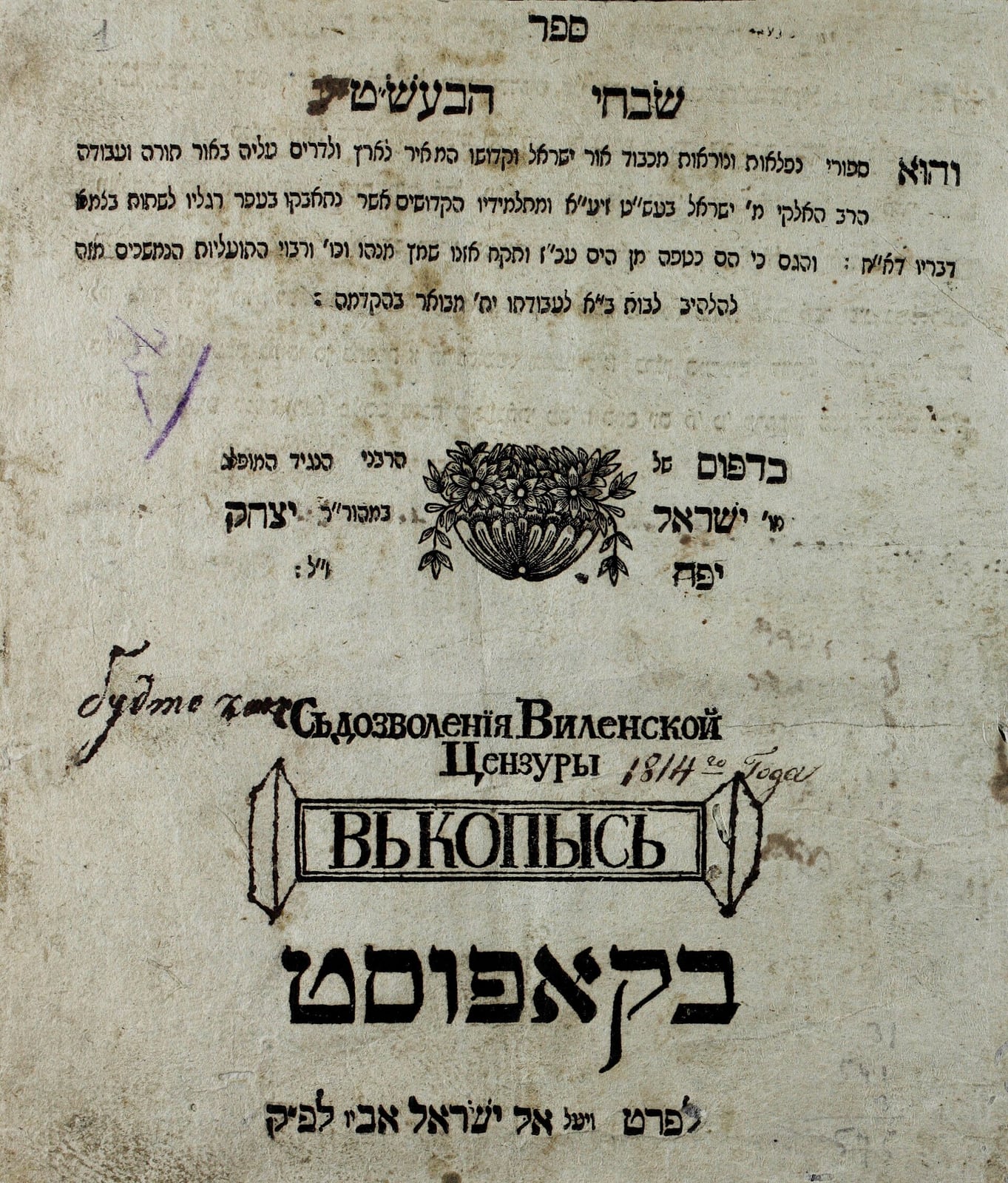
Portada de la primera edición de Shivhei ha-Besht (Kopys, 1814–1815) · Public domain
उनके अपने शब्दों में
«When your teaching is publicised and revealed in the world, and your springs overflow outward.»Igeret ha-Kodesh, respuesta del Mesías al Besht (Ben Porat Yosef, Korets, 1781)
Baal Shem Tov
Igeret ha-Kodesh (Letter to Abraham Gershon of Kuty)
शुरुआत के लिए एक रचना
Igeret ha-Kodesh (Letter to Abraham Gershon of Kuty)मूल विचार
Devekut (cleaving to God): *Devekut*, from the Hebrew root "to cleave", designates in the kabbalistic tradition the union of thought with God, which earlier authors reserved for a few and for exceptional moments.
संदर्भ में देखें
जीवनी
6 मिनट का पाठ
स्पैनिश मूल से सहायता-प्राप्त अनुवाद, मातृभाषी अनुवादक द्वारा समीक्षा लंबित।
बिना ग्रंथ का संस्थापक
बहुत कम व्यक्तित्व ऐसे हुए हैं जिन्होंने इतने कम लिखित चिह्न छोड़कर यहूदी धार्मिक जीवन को इतनी गहराई से बदल दिया हो। इस्राएल बेन एलिएज़र, जिन्हें उनके अनुयायियों ने बाल शेम तोव — «शुभ नाम के स्वामी» — या उनके नाम के आद्याक्षरों से «बेश्त» कहा, ने कोई ग्रंथ नहीं रचा। उनके बारे में हम जो कुछ जानते हैं, वह बहुत असमान मूल्य वाली तीन परतों से आता है: पोलैंड के मुट्ठी भर प्रशासनिक अभिलेख और उनके मंडल से बाहर के समकालीनों की गवाहियाँ; उनके अपने हाथ से लिखा एक पत्र, जो उनकी मृत्यु के दो दशक बाद छपा; और उपदेशों तथा कथाओं का वह विशाल भंडार, जिसे उनके शिष्यों और शिष्यों के शिष्यों ने 1780 से लिपिबद्ध करना शुरू किया। पिछले दशकों के शोध ने, विशेषकर मोशे रोसमान और इमैनुएल एत्केस के कार्य ने, इन परतों को अलग करना सीखा है: दस्तावेज़ों में दर्ज मनुष्य, शिष्यों की स्मृति में बसा गुरु, और किंवदंती का संत।
अँधेरे वर्ष
उनका जन्म लगभग 1700 में पोलिश-लिथुआनियाई राष्ट्रमंडल और मोल्दाविया के बीच की सीमा-पट्टी में हुआ। शिवहेई हा-बेश्त («बेश्त की स्तुतियाँ»), जो 1814–1815 में कोपीस में छपा एक संत-चरित संग्रह है, उनके पिता एलिएज़र को «वलाकिया के देश में, सीमा के पास» बताता है; बाद की हसीदी परंपरा, जो जन्म का वर्ष 1698 मानती है, पोडोलिया के गाँव ओकोपी को वरीयता देती है, जिसका कोई दस्तावेज़ी प्रमाण नहीं है। वही पुस्तक बताती है कि माता-पिता को वे बुढ़ापे में प्राप्त हुए, कि बचपन में ही वे अनाथ हो गए और समुदाय ने उन्हें पाला; कि वे शिक्षक के सहायक और सिनेगॉग के सेवक रहे, कि अपनी पत्नी हन्ना के साथ — जो विद्वान अब्राहम गेर्शोन ऑफ़ कूती की बहन थीं — कार्पेथियन पहाड़ों में मिट्टी खोदकर जीवन चलाया, और एक सराय भी चलाई।
इन ब्योरों की पुष्टि नहीं की जा सकती, और इनमें से कुछ एक पहचाने जाने योग्य संत-चरित ढाँचे का अनुसरण करते हैं: छिपा हुआ धर्मात्मा, जो प्रकट होने की घड़ी आने तक दीन-हीनों के बीच रहता है, या किसी रहस्यमय आदम बाल शेम के गुप्त लेख, जो उनके हाथ लग जाते हैं। फिर भी ये एक ऐसी विशेषता को रेखांकित करते हैं जिसकी पुष्टि दस्तावेज़ करते हैं: बेश्त बड़ी रब्बीनी अकादमियों से नहीं, बल्कि साधारण पेशों, घुमंतू उपदेशकों और पोडोलियाई सीमांत के लोक-चिकित्सकों की दुनिया से आए थे।
मेंजिबूज़ के बाल शेम
अठारहवीं सदी के पूर्वी यूरोप में बाल शेम एक मान्यता प्राप्त विशेषज्ञ होता था: वह ताबीज़ लिखता, झाड़-फूँक करता, औषधियाँ बताता और ईश्वरीय नामों के प्रयोग से प्रसूताओं और बच्चों की रक्षा करता था। इस्राएल ने यही पेशा अपनाया, और उनका उपनाम स्वयं यह घोषित करता है। सबसे पहले के विश्वसनीय उल्लेख उन्हें 1738 से पहले ही प्रसिद्ध दिखाते हैं: श्लोमो इत्ज़ाक हालपर्न को याद था कि उनके पिता, ज़्वानेत्स के रब्बी, «विख्यात इस्राएल बाल शेम» से परिचित थे। लगभग 1740 में वे मेंजिबूज़ (आज यूक्रेन का मेदज़िबिज़) में बस गए, जो चार्तोरिस्की सामंतों का निजी नगर था। रोसमान को इस परिवार के अभिलेखागार में जो कर-रजिस्टर मिले, वे उन्हें समुदाय के स्वामित्व वाले और कर-मुक्त एक घर में दर्ज करते हैं — पहले «कब्बालावादी» के रूप में और 1758 में «बाल शेम डॉक्टर» के रूप में। वे सामुदायिक सत्ता के विरुद्ध कोई विद्रोही नहीं थे; वे एक धार्मिक विशेषज्ञ थे, जिनका भरण-पोषण स्वयं समुदाय करता था।
आत्मा का आरोहण
एकमात्र पाठ जो लगभग निश्चित रूप से उनकी अपनी लेखनी से निकला है, वह उनके साले अब्राहम गेर्शोन ऑफ़ कूती को लिखा एक पत्र है, जो इस्राएल की धरती पर जा बसे थे। उसमें वे बताते हैं कि 1746 के यहूदी नववर्ष पर उन्होंने, «जैसा कि तुम जानते हो», आत्मा के आरोहण का एक मंत्र-अनुष्ठान किया, स्वर्गिक महलों को पार किया और मसीहा के महल तक पहुँचे, जिनसे उन्होंने पूछा कि वे कब आएँगे। उत्तर — जब तुम्हारी शिक्षा फैल जाएगी और संसार में प्रकट होगी और तुम्हारे स्रोत बाहर की ओर उमड़ पड़ेंगे — हसीदवाद का प्रचार-मंत्र बन गया। पत्र 1749 के नववर्ष पर एक और आरोहण, एक महामारी के समय की गई मध्यस्थता, ज़ास्लाव और अन्य समुदायों पर लगे अनुष्ठानिक हत्या के आरोपों का भी वर्णन करता है, और प्रार्थना के एक परामर्श के साथ समाप्त होता है: हर अक्षर में लोक, आत्माएँ और दिव्यता हैं, और प्रार्थना करने वाले को अपनी आत्मा उनसे जोड़नी चाहिए। फ़िलिस्तीन ले जाने के लिए पोलोन्ने के याकोव योसेफ़ को सौंपा गया यह पत्र कभी अपने गंतव्य तक नहीं पहुँचा, और 1781 में बेन पोरात योसेफ़ के अंत में छपा।
पवित्र मंडली
एत्केस ने दिखाया है कि बेश्त एक साथ जादूगर, रहस्यदर्शी और नेता थे। उनके चारों ओर विद्वानों की एक छोटी-सी «पवित्र मंडली» जुटी, जिसमें कुछ प्रतिष्ठित रब्बी और उपदेशक भी थे, जिन्होंने उनके करिश्माई अधिकार को स्वीकार किया: याकोव योसेफ़ हा-कोहेन, पहले शारगोरोद और फिर पोलोन्ने के रब्बी; दोव बेर, मेज़रिच के उपदेशक; कोरेत्स के पिन्हास; होरोदेंका के नहमान। उन्होंने कोई संगठन स्थापित नहीं किया: एक आंदोलन के रूप में हसीदवाद — अपने दरबारों, वंश-परंपराओं और अनुयायियों के जालों के साथ — उनकी मृत्यु के बाद, विशेषकर दोव बेर और उनके शिष्यों के समय में आकार ले सका। किंतु उन्हीं के व्यक्तित्व में यह विश्वास गढ़ा गया कि एक पवित्र पुरुष समुदाय के लिए मध्यस्थता कर सकता है, आत्माओं को ऊपर उठा सकता है और आशीर्वाद उतार सकता है — यही आगे चलकर त्ज़ादिक का सिद्धांत बना।
उनकी शिक्षा
उनकी शिक्षाएँ हम तक सदा उद्धरणों के रूप में ही पहुँचती हैं। याकोव योसेफ़ पहली छपी हसीदी पुस्तक तोलेदोत याकोव योसेफ़ (1780) में «मैंने अपने गुरु से सुना» सूत्र के साथ उनकी सैकड़ों शिक्षाएँ प्रस्तुत करते हैं, और त्सवात हा-रिवाश (1793) तथा केतेर शेम तोव (1794–1795) जैसे संकलनों ने उन्हें एकत्र करके मेज़रिच के उपदेशक की शिक्षाओं के साथ मिला दिया। इस छलनी के आर-पार एक सुसंगत केंद्र पहचाना जा सकता है। धार्मिक जीवन का लक्ष्य देवेकूत है — केवल प्रार्थना या अध्ययन में नहीं, बल्कि हर क्षण विचार का ईश्वर से जुड़े रहना; चूँकि «सारी पृथ्वी उसकी महिमा से भरी है», इसलिए भोजन, काम या बातचीत में भी ईश्वर की सेवा हो सकती है, और प्रार्थना करने वाले पर टूट पड़ने वाले पराए विचारों को भी उनके मूल तक उठाया जा सकता है। आनंद ईश्वर-सेवा की शर्त है और विषाद उसकी सबसे बड़ी बाधा; उपवासों और देह-दमन का तप, जो उनके समय के धर्मनिष्ठों में प्रचलित था, इन स्रोतों में एक ख़तरनाक मार्ग के रूप में सामने आता है। केतेर शेम तोव में दर्ज एक सूक्ति इस आध्यात्मिक मनोविज्ञान का सार प्रस्तुत करती है: मनुष्य जहाँ सोचता है, वहीं वह संपूर्ण रूप से होता है।
मृत्यु और विरासत
उनकी मृत्यु 1760 में शावुओत के पहले दिन, यहूदी पंचांग के अनुसार 5520 के सिवान मास की 6 तारीख़ (ग्रेगोरियन गणना से 21 मई) को मेंजिबूज़ में हुई। शिवहेई हा-बेश्त में उनके अंतिम घंटों का विस्तृत वृत्तांत है, जिसे उनके मंडल के साक्षियों का बताया जाता है। उनके शिष्य उनका नाम पोडोलिया, वोल्हिनिया और गैलिसिया तक ले गए; 1772 में विल्ना के रब्बीनी अधिकारियों ने हसीदीम को बहिष्कृत कर दिया, और हसीदीम तथा मितनगदीम के बीच का विवाद आधी सदी तक पूर्वी यूरोप के यहूदी जीवन पर छाया रहा। शिवहेई हा-बेश्त ने 1815 में चमत्कारी संत की छवि स्थिर कर दी; बीसवीं सदी में मार्टिन बूबर ने यूरोपीय पाठकों के लिए उनकी किंवदंतियाँ फिर से लिखीं, और गेर्शोम शोलेम ने यहूदी रहस्यवाद के इतिहास में उन्हें उसके «अंतिम चरण» के प्रवर्तक के रूप में स्थापित किया। आज मेदज़िबिज़ में उनकी समाधि तीर्थस्थल है, और ऐतिहासिक बेश्त पर बहस अब भी जारी है।
स्रोत: Rosman, Moshe. Founder of Hasidism: A Quest for the Historical Ba'al Shem Tov. Berkeley: University of California Press, 1996; 2.ª ed. Oxford/Portland: Littman Library of Jewish Civilization, 2013. · Etkes, Immanuel. The Besht: Magician, Mystic, and Leader. Trad. Saadya Sternberg. Waltham (Mass.): Brandeis University Press, 2005 (original hebreo: Ba'al ha-Shem, Jerusalén, Merkaz Zalman Shazar, 2000). · Ben-Amos, Dan, y Jerome R. Mintz (trads. y eds.). In Praise of the Baal Shem Tov [Shivhei ha-Besht]: The Earliest Collection of Legends about the Founder of Hasidism. Bloomington: Indiana University Press, 1970 (reed. Northvale: Jason Aronson, 1993). · Biale, David; Assaf, David; Brown, Benjamin; Gellman, Uriel; Heilman, Samuel C.; Rosman, Moshe; Sagiv, Gadi; Wodziński, Marcin. Hasidism: A New History. Princeton: Princeton University Press, 2018. · Scholem, Gershom. Major Trends in Jewish Mysticism. Jerusalén: Schocken, 1941 (reed. Nueva York: Schocken, 1946 y ss.), «Ninth Lecture: Hasidism, the Latest Phase». Trad. esp.: Las grandes tendencias de la mística judía, Madrid, Siruela.
कालक्रम
जीवन, वर्ष-दर-वर्ष
प्रत्येक बिंदु एक प्रमाणित घटना है। उसे स्रोत और निश्चितता के स्तर सहित पढ़ने के लिए क्लिक करें।
लगभग 17000 वर्षFrontera podolio-moldava
Birth
Israel, son of Eliezer, is born on the border between Poland and Moldavia. Hasidic tradition gives 18 Elul 5458 (1698) and the village of Okopy; neither is attested in documents.
परंपराRosman, Moshe. Founder of Hasidism: A Quest for the Historical Ba'al Shem Tov. Berkeley: University of California Press, 1996; 2.ª ed. Oxford/Portland: Littman Library of Jewish Civilization, 2013.
उनके निधन के बाद
- 1772First bans on the Hasidim
- 1780First Hasidic book
- 1793 – 1795Tsava'at ha-Rivash and Keter Shem Tov
- 1815Shivhei ha-Besht
- 1908The legend according to Buber
- 1996The historical Besht
लगभग 1700 · 0 वर्ष
Birth
Israel, son of Eliezer, is born on the border between Poland and Moldavia. Hasidic tradition gives 18 Elul 5458 (1698) and the village of Okopy; neither is attested in documents.
परंपरा
1730 का दशक · 30 वर्ष
Years of humble trades
According to Shivhei ha-Besht he works as a teacher's assistant, beadle, clay-digger with his wife Hannah and tavern-keeper, living as a hidden saint until his "revelation". Hagiographic account, unverifiable.
परंपरा
लगभग 1738 · 38 वर्ष
First outside testimony
Before 1738, the year of his death, Rabbi Jacob Halpern of Zhvanets has dealings with "the renowned Israel Baal Shem", as his son Solomon Isaac Halpern, no Hasid, would recall.
संभावित
लगभग 1740 · 40 वर्ष
Settles in Międzybóż
The records of this Czartoryski private town place him from 1740 in a tax-exempt community house, first described as a "kabbalist".
प्रमाणित
सितंबर 1746 · 46 वर्ष
The Rosh Hashanah ascent
On the New Year of 5507 he performs an "ascent of the soul" in which, according to his own letter, he reaches the palace of the Messiah and asks him when he will come.
प्रमाणित
लगभग 1747 · 47 वर्ष
His brother-in-law emigrates to Palestine
Abraham Gershon of Kuty, his wife's brother and a student of Kabbalah, settles in the Land of Israel; he will be the addressee of the Besht's letter.
संभावित
लगभग 1750 · 50 वर्ष
The letter to Gershon of Kuty
Having received a letter from his brother-in-law at the Luka fair of 5510, he replies with the account of his ascents of 1746 and 1749. He entrusts it to Jacob Joseph of Polonne, who never makes the journey.
प्रमाणित
1758 · 58 वर्ष
"Baal Shem doktor"
The Międzybóż tax inventory lists the "Baal Shem doktor" in a tax-exempt house.
प्रमाणित
21 मई 1760 · 60 वर्ष
Death on Shavuot
He dies on the first day of Shavuot 5520. Shivhei ha-Besht narrates his last hours according to witnesses from his circle.
प्रमाणित
1772
First bans on the Hasidim
The rabbinic authorities of Vilna and Brody excommunicate the Hasidim: the quarrel with the mitnagdim begins.
प्रमाणित
1780
First Hasidic book
Jacob Joseph of Polonne publishes Toledot Ya'akov Yosef, with hundreds of teachings introduced by "I heard from my master". In 1781, Ben Porat Yosef prints the Besht's letter.
प्रमाणित
1793 – 1795
Tsava'at ha-Rivash and Keter Shem Tov
The anthologies Tsava'at ha-Rivash (1793) and Keter Shem Tov (Zolkiew, 1794–1795) are printed, mixing teachings of the Besht and the Maggid of Mezeritch.
प्रमाणित
1815
Shivhei ha-Besht
Israel Jaffe prints in Kopys the tales collected by Dov Ber of Linits: the Besht's hagiography is born. Yiddish editions appear the same year.
प्रमाणित
1908
The legend according to Buber
Martin Buber publishes Die Legende des Baalschem, which introduces the Besht to a non-Jewish European readership.
प्रमाणित
1996
The historical Besht
Moshe Rosman publishes Founder of Hasidism, based on the Czartoryski archives: the Besht appears as a religious specialist integrated into the community.
प्रमाणित
कृतियाँ
आवश्यक कृतियाँ
वे कृतियाँ जिनके बिना उनकी विरासत को समझा नहीं जा सकता।
Baal Shem Tov
Igeret ha-Kodesh (Letter to Abraham Gershon of Kuty)
पत्राचार · लगभग 1750
Igeret ha-Kodesh (Letter to Abraham Gershon of Kuty)
אגרת הקודש (אגרת הבעש״ט לר׳ גרשון מקוטוב)
Letter to his brother-in-law, who had emigrated to the Land of Israel, written shortly after 1750. It recounts the ascent of the soul on the New Year of 1746, in which the Besht reaches the palace of the Messiah and asks him when he will come ("when your teaching is publicised and your springs overflow outward"), a second ascent in 1749, his intercession during an epidemic and against ritual-murder accusations in Zasław and two other communities, and closes with instruction on prayer through the letters. It is the key document for his self-understanding as mystic and intercessor, and the origin of Hasidism's missionary drive.
3 संस्करण

परवर्ती संकलन · 1793
Tsava'at ha-Rivash (The Testament of Rabbi Israel Baal Shem)
צוואת הריב״ש
Some hundred and forty short paragraphs on the inner life: equanimity before praise and contempt (*hishtavut*), constant cleaving to God (*devekut*), prayer in joy rather than in tears, the raising of stray thoughts, distrust of sadness and scruples, and moderate asceticism. It was one of the books the *mitnagdim* cited as proof of Hasidic heterodoxy, and at the same time one of the movement's most read manuals of piety. Jacob Immanuel Schochet's annotated edition (Kehot) traces the sources of each paragraph.
3 संस्करण

परवर्ती संकलन · 1794
Keter Shem Tov (Crown of the Good Name)
כתר שם טוב
It is the first anthology devoted explicitly to the Besht's teachings. In two parts, it gathers comments on biblical verses and sayings on prayer, humility, the divine presence in all things and the relation between the righteous man and the people. Some of the most quoted maxims come from here, such as that a man is wholly where his thought is. The Kehot edition (*Keter Shem Tov ha-Shalem*), prepared by J. I. Schochet, corrects the text and adds sources and commentary.
3 संस्करण

परवर्ती संकलन · 1815
Shivhei ha-Besht (In Praise of the Baal Shem Tov)
שבחי הבעש״ט
Some two hundred and fifty narratives that follow the Besht's life from the legend of his father, captive in a distant land, to his death on Shavuot 1760: the orphaned childhood, the years as a hidden saint, the revelation, the healings and exorcisms, the ascents of the soul, the encounters with disciples and opponents, the thwarted journey to the Land of Israel. Each tale usually states from whom the compiler heard it, which allows historians to reconstruct chains of transmission. The annotated English translation by Dan Ben-Amos and Jerome R. Mintz (1970) is the reference in that language.
5 संस्करण
संपूर्ण कृतित्व (16)
Baal Shem Tov
Toledot Ya'akov Yosef
The Conscious LibraryToledot Ya'akov Yosef
1780
Baal Shem Tov
Ben Porat Yosef
The Conscious LibraryBen Porat Yosef
1781
Baal Shem Tov
Tsafnat Pa'neah
The Conscious LibraryTsafnat Pa'neah
1782
Baal Shem Tov
Ketonet Passim
The Conscious LibraryKetonet Passim
1866
Baal Shem Tov
Likkutim Yekarim (Precious Gleanings)
The Conscious LibraryLikkutim Yekarim (Precious Gleanings)
1792
Baal Shem Tov
Degel Mahaneh Efrayim
The Conscious LibraryDegel Mahaneh Efrayim
1810
Baal Shem Tov
Sefer Baal Shem Tov (The Book of the Baal Shem Tov)
The Conscious LibrarySefer Baal Shem Tov (The Book of the Baal Shem Tov)
1938
Baal Shem Tov
Kabbalistic commentary on Psalm 107 (attributed)
The Conscious LibraryKabbalistic commentary on Psalm 107 (attributed)
1804
Baal Shem Tov
Letters of the "Kherson genizah" (spurious)
The Conscious LibraryLetters of the "Kherson genizah" (spurious)
1918

Founder of Hasidism (Moshe Rosman)
1996
Baal Shem Tov
The Besht: Magician, Mystic, and Leader (Immanuel Etkes)
The Conscious LibraryThe Besht: Magician, Mystic, and Leader (Immanuel Etkes)
2000

The Circle of the Baal Shem Tov (Abraham J. Heschel)
1985
वचन
किसी निश्चित कृति में स्थित वचन। प्रत्येक के साथ उसका स्रोत और विश्वसनीयता का स्तर है।
When your teaching is publicised and revealed in the world, and your springs overflow outward.בעת שיתפרסם למודך ויתגלה בעולם ויפוצו מעינותיך חוצה
सत्यापितIgeret ha-Kodesh, respuesta del Mesías al Besht (Ben Porat Yosef, Korets, 1781)
अंतिम शब्द
पारंपरिक आरोपण
«I know that the clock has stopped, and I do not worry about myself, for I know for certain that I shall go out by this door and at once enter by another.»ידעתי שעמד הזייגר ואין אני דואג על עצמי כי יודע אני בבירור שאצא מפתח זה ותיכף אכנס בפתח אחר
Shivhei ha-Besht (Kopys, 1815), in the account of his death on Shavuot 1760, which the compiler says he heard from Rabbi Jacob of Międzybóż. After these words he is said to have asked those present to recite the psalm "May the pleasantness of the Lord" (Ps 90:17), to have taught his disciples about the upper worlds and to have expired covered with a sheet. It is second-hand testimony written down half a century later, within a hagiographic work.
स्रोत: Dov Ber ben Shmuel de Linits, Shivhei ha-Besht, Kopys, 1814–1815; texto hebreo de la edición de Kopys en Sefaria (dominio público).
पूछें
उनकी कृतियाँ क्या उत्तर देती हैं
मानवता के बारह महान प्रश्न और उनके ग्रंथ उनका जो उत्तर देने देते हैं, संदर्भों सहित। हम कभी उनके मुख में अपने शब्द नहीं रखते।
परम सत्य क्या है? क्या ईश्वर है?
The King one serves fills everything: in every letter there is divinity
साकार भी, निराकार भीस्पष्ट रूप से कहा है
The Baal Shem Tov wrote no books: apart from one letter, his teachings come to us through the homilies of his disciples, above all Jacob Joseph of Polonne, and through later anthologies. In those sources the God of Israel to whom one prays and to whom one cleaves (devekut) is at the same time the presence that fills everything, so that no place is empty of Him. In his own letter to his brother-in-law, instructing him on prayer, he states that in every letter there are worlds, souls and divinity. From Lurianic Kabbalah he takes the idea of divine sparks scattered in things, which man raises when he eats, works or prays with intention. God is thus the King served with joy and the vitality hidden in each thing: concealment exists only for one who cannot see Him.
इस प्रश्न की अन्य गुरुओं से तुलना करेंमैं कौन हूँ? क्या कोई सच्चा आत्म है?
A soul that ascends, and a man is where his thought is
सृजित, अमर आत्माउनके सिद्धांत से निष्कर्षित
The Baal Shem Tov wrote no treatise on the soul; what we know of his view of the self comes through his letter and the sayings his disciples transmitted. In the letter to his brother-in-law he tells how his soul ascended, at the New Year of 1746, to the palace of the Messiah: the soul can leave the body and travel through the upper worlds. The anthologies record a maxim that shifts the centre of the person: wherever a man thinks with his thought, there he is entirely. The true self is the soul cleaving to God; the ego that compares itself and grows vain is a hindrance, which is why he warns that whoever serves with devotion must not think himself greater than his fellow, for he is a creature like the others, made to serve.
इस प्रश्न की अन्य गुरुओं से तुलना करेंहम दुःख क्यों भोगते हैं?
Sadness distances from God; behind every concealment He is there
ईश्वर से वियोगउनके सिद्धांत से निष्कर्षित
The teachings his disciples attribute to the Baal Shem Tov place the greatest evil not in outward misfortune but in the sadness that separates from God. Weeping, says the Testament of Rabbi Israel, is very bad, because the Creator is served with joy; only weeping for joy is good. Melancholy and scruples are traps that draw one away from cleaving to God (devekut). Suffering itself is not foreign to God: according to a teaching his disciples transmit, God hides behind the walls of misfortune like a king behind illusory walls, and whoever knows He is there dissolves the concealment. In his letter the Besht also appears as an intercessor in epidemics and persecutions: the community's pain calls for prayer, not resignation.
इस प्रश्न की अन्य गुरुओं से तुलना करेंमृत्यु के बाद क्या होता है?
To go out by one door and at once enter by another
अनंत जीवन और पुनरुत्थानउनके सिद्धांत से निष्कर्षित
The Baal Shem Tov left no written teaching on death; what is known comes through his letter and through tradition. In the letter to his brother-in-law he describes how, in his ascents of the soul, he saw souls of the living and the dead rising from world to world, and how he himself interceded for them: the life of the soul continues and can be helped. Hasidic tales, gathered in In Praise of the Baal Shem Tov, speak of souls returning in another body to repair what they left undone, according to the kabbalistic doctrine of transmigration. The same book narrates his death at Shavuot in 1760: he is said to have declared that he did not fear for himself, because he knew he would go out by one door and at once enter by another.
इस प्रश्न की अन्य गुरुओं से तुलना करेंमुक्ति या उद्धार कैसे प्राप्त होता है?
Cleaving to God with joy in every act, the bodily included
भक्ति और समर्पण सेस्पष्ट रूप से कहा है
The teachings his disciples attribute to the Baal Shem Tov place at the centre cleaving to God (devekut), not as a state reserved for ascetics but as a constant orientation of the heart. It is reached through prayer made with joy, which is more acceptable than prayer made with weeping, through equanimity before praise and contempt, and through serving God in bodily things: eating, working, conversing with the intention of raising the divine sparks present in everything. The Besht discouraged excessive fasting and mortification, common in the pious circles of his time. Personal and collective redemption are linked: in his letter, the Messiah answers him that he will come when his teaching is spread abroad and his springs overflow outward.
इस प्रश्न की अन्य गुरुओं से तुलना करेंक्या गुरु आवश्यक है?
The righteous man raises his generation; the people reach God through him
अनिवार्यउनके सिद्धांत से निष्कर्षित
The Baal Shem Tov was master of a circle of disciples who ascribed singular authority to him, and later Hasidism made the righteous man (tsaddik) the centre of religious life. The teachings transmitted by Jacob Joseph of Polonne describe the relationship between «men of form», the sages who cleave to God, and «men of matter», the simple people, who are raised through them; the righteous man is responsible for his generation. According to the tradition recorded in Hasidic tales, the Besht himself had a heavenly master, the prophet Ahijah the Shilonite. His letter shows him interceding for entire communities. For the simple people, the way to God passed through closeness to a righteous man.
इस प्रश्न की अन्य गुरुओं से तुलना करेंक्या संसार वास्तविक है?
No place is empty of God: divine sparks in all things
दिव्य की अभिव्यक्तिस्पष्ट रूप से कहा है
The teachings transmitted by the Baal Shem Tov's disciples make the world the stage of divine presence: the whole earth is full of His glory, and no place is empty of Him. From Lurianic Kabbalah they take the idea that at creation sparks of holiness were scattered in things, and that man raises them when he uses the world with intention: when eating, trading, working or conversing. Hence the service of God in bodily things that marked nascent Hasidism. In his letter the Besht himself states that in every letter there are worlds, souls and divinity. The world is neither illusion nor obstacle but a garment of the divine: what conceals is the same as what reveals, for one who knows how to look.
इस प्रश्न की अन्य गुरुओं से तुलना करेंप्रेम क्या है?
To love God with joy and one's fellow without thinking oneself above him
ईश्वर और पड़ोसी से प्रेमउनके सिद्धांत से निष्कर्षित
In the transmitted teachings of the Baal Shem Tov, love of God takes the form of joyful cleaving (devekut): serving Him with joy, in prayer and in every act. That love does not set the devout apart from others. The Testament of Rabbi Israel warns that whoever serves with devotion should not say in his heart that he is greater than his fellow, for he is one more creature, made for service. Hasidic tales present the Besht as someone who sought out the simple, the unlettered and sinners, and who valued the prayer of the unlearned man above learning without heart. Love for every Jew, which Hasidism made one of its marks, goes back in tradition to his figure.
इस प्रश्न की अन्य गुरुओं से तुलना करेंक्या हम स्वतंत्र हैं, या सब कुछ पूर्वनिर्धारित है?
Nothing happens by chance: what one encounters is a task for him
नियति और उत्तरदायित्वउनके सिद्धांत से निष्कर्षित
The teachings attributed to the Baal Shem Tov extend divine providence to everything: nothing a man sees or hears reaches him by chance, but so that he may learn something with which to serve God. That providence does not cancel choice: every encounter, every place one comes to and every object one touches contains sparks that only he can raise, and whether he does so depends on his intention. The Testament of Rabbi Israel teaches equanimity: to accept praise and contempt alike, because everything comes from God. Freedom does not consist in escaping destiny but in responding well to what it brings. Later tradition developed this idea as individual providence reaching even the leaf the wind stirs.
इस प्रश्न की अन्य गुरुओं से तुलना करेंध्यान या प्रार्थना क्यों करें?
Praying with joy, with the whole body, cleaving to every letter
ईश्वर से मैत्रीस्पष्ट रूप से कहा है
Prayer is at the centre of the teachings the disciples attribute to the Baal Shem Tov. It must be done with joy, which makes it more acceptable than prayer with weeping, and with the whole body and all one's strength, so that the one who prays cleaves to God in every word. The Testament of Rabbi Israel describes it with a bold image taken from Kabbalah: prayer is union with the divine Presence (Shekhinah). The strange thoughts that assail the one praying are not simply rejected but raised to their root. In his letter the Besht himself advises his brother-in-law to concentrate his intention on the letters of each word, because in every letter there are worlds, souls and divinity.
इस प्रश्न की अन्य गुरुओं से तुलना करेंक्या बुद्धि परम को जान सकती है?
The simple man's sincere prayer outweighs learning without fear of God
परम मन से परे हैउनके सिद्धांत से निष्कर्षित
The Baal Shem Tov was not a first-rank Talmudic scholar nor did he claim to be, and the teachings his disciples transmit shift the centre of religious life from study to cleaving to God. Jacob Joseph of Polonne, in the books where he quotes his master, harshly criticises scholars who study out of pride or profession, without fear of God, and Hasidic tales present the Besht valuing the prayer of the simple man above casuistry. Torah study keeps its value, but it must be done with devotion, attending to the light of the letters more than to sharpness of reasoning. What unites with God is not the intellect that argues but the soul that cleaves.
इस प्रश्न की अन्य गुरुओं से तुलना करेंसंसार से हटें या उसे बदलें?
Serving God in bodily things: eating, trading and speaking with intention
कर्म में ध्यानस्पष्ट रूप से कहा है
The Baal Shem Tov lived in the world: he was a healer, a writer of amulets and a religious specialist in the community of Międzybóż, and his life was spent among people, not in isolation. The teachings his disciples attribute to him make that presence a doctrine: God is served also in bodily things, in food, trade, conversation and work, because in everything there are divine sparks to raise. That is why he discouraged the excessive fasting and mortification common among the pious of his time. His letter also shows him occupied with his people's troubles, interceding in epidemics and against blood-libel accusations. Cleaving to God does not require leaving the world but inhabiting it with another intention.
इस प्रश्न की अन्य गुरुओं से तुलना करें
निकटता और तनाव
निकटता और तनाव
उनके मतों के आधार पर प्रश्न-दर-प्रश्न आकलित। प्रत्येक सहमति या टकराव का कारण क्लिक करने पर।
इनसे मिलता-जुलता सोचते हैं
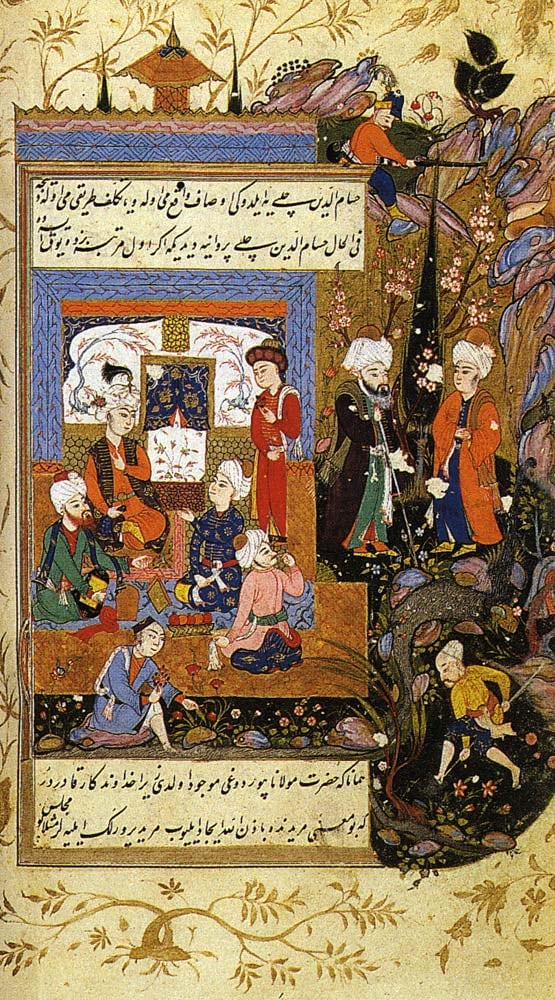
Rumi
इन पर सहमत: मैं कौन हूँ? क्या कोई सच्चा आत्म है? · हम दुःख क्यों भोगते हैं? · मृत्यु के बाद क्या होता है?

Chaitanya Mahaprabhu
इन पर सहमत: मैं कौन हूँ? क्या कोई सच्चा आत्म है? · हम दुःख क्यों भोगते हैं? · मृत्यु के बाद क्या होता है?
Hafez
इन पर सहमत: मैं कौन हूँ? क्या कोई सच्चा आत्म है? · हम दुःख क्यों भोगते हैं? · मृत्यु के बाद क्या होता है?
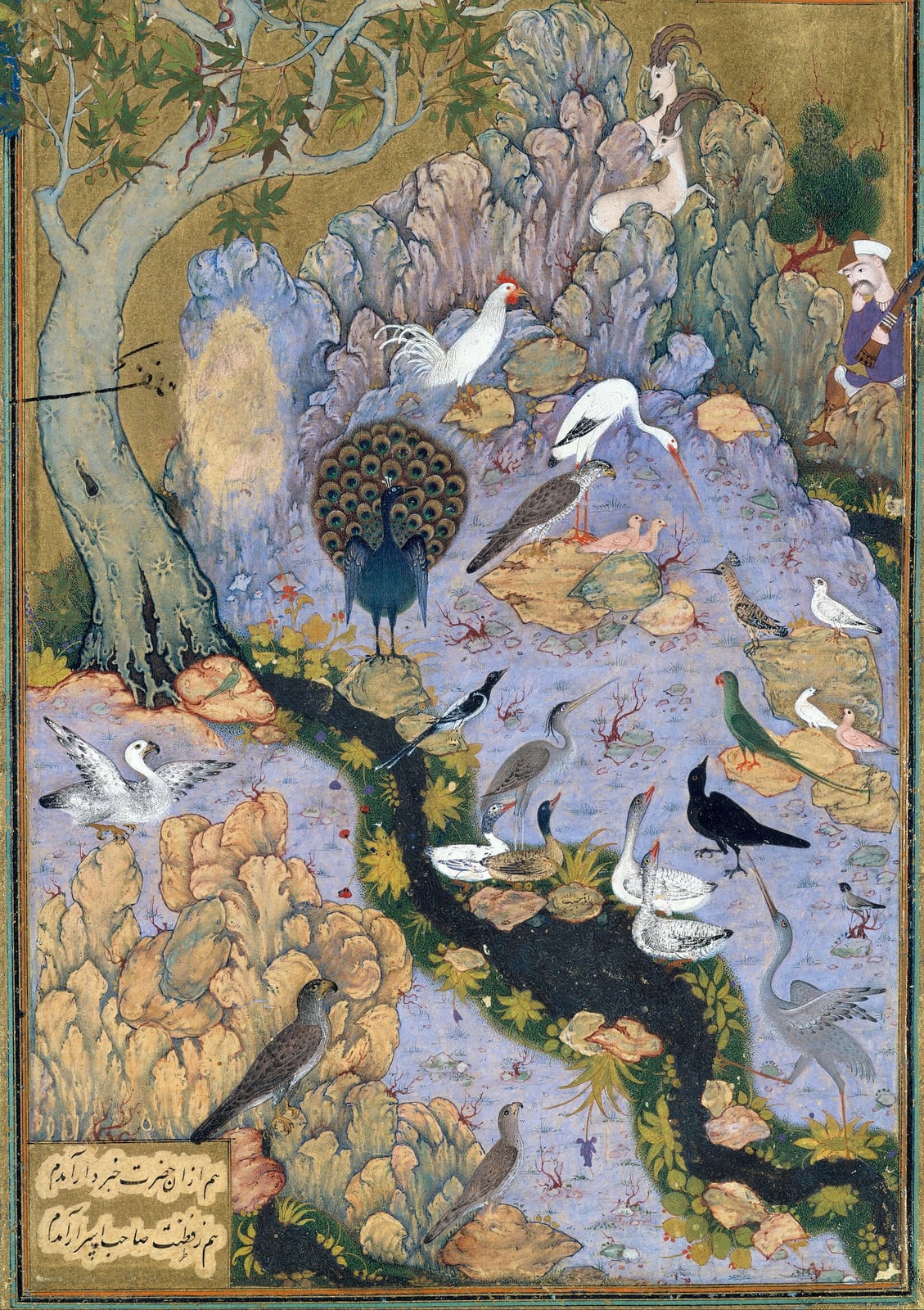
Attar
इन पर सहमत: परम सत्य क्या है? क्या ईश्वर है? · हम दुःख क्यों भोगते हैं? · मृत्यु के बाद क्या होता है?
इनसे भिन्न सोचते हैं

Pema Chödrön
इन पर टकराव: मैं कौन हूँ? क्या कोई सच्चा आत्म है? · मृत्यु के बाद क्या होता है?

Epicurus
इन पर टकराव: मैं कौन हूँ? क्या कोई सच्चा आत्म है? · मृत्यु के बाद क्या होता है?

The 14th Dalai Lama (Tenzin Gyatso)
इन पर टकराव: मैं कौन हूँ? क्या कोई सच्चा आत्म है? · मृत्यु के बाद क्या होता है?

Jiddu Krishnamurti
इन पर टकराव: मुक्ति या उद्धार कैसे प्राप्त होता है? · क्या गुरु आवश्यक है?
प्रसंग और वृत्तांत
प्रसंग और वृत्तांत
साक्ष्य1746
The question to the Messiah
वृत्तांत का स्रोत: First-person account by the Besht himself in his letter to Abraham Gershon of Kuty, printed in 1781 in Ben Porat Yosef. What is documented is that the Besht wrote that he had this experience, not the experience itself; Etkes and Rosman read it as evidence of his self-understanding as a mystical intercessor.
संत-चरित वृत्तांतdécada de 1740–1750
The pipe and the weeping
वृत्तांत का स्रोत: Shivhei ha-Besht (Kopys, 1815), a tale the compiler Dov Ber of Linits says he heard from Jacob Joseph of Polonne himself and from Rabbi Gedaliah. Jacob Joseph's forced departure from Shargorod is accepted by historians; the details of the conversion are tradition.
संत-चरित वृत्तांतc. 1750
The shoes of Simhat Torah
वृत्तांत का स्रोत: Shivhei ha-Besht (Kopys, 1815). The chain of transmission is not stated. Baruch of Międzybóż (1753–1811), the Besht's grandson, is a historical figure.
संत-चरित वृत्तांत1760
The last lesson
वृत्तांत का स्रोत: Shivhei ha-Besht (Kopys, 1815), section on his death; the compiler says he heard it from Rabbi Jacob of Międzybóż, who later died in the Land of Israel, and cites Leib Kessler as witness to the soul's departure.
प्रमाणित1740–1760
The "Baal Shem doktor" in the account books
वृत्तांत का स्रोत: Rosman, "Miedzyboz and Rabbi Israel Baal Shem Tov", Zion 52 (1987), and Founder of Hasidism (1996), based on the Czartoryski holdings in Kraków.
सत्यापन-योग्य नहींsin fecha
The boy's whistle on Yom Kippur
वृत्तांत का स्रोत: It does not appear in the Kopys edition of Shivhei ha-Besht nor in the eighteenth-century anthologies consulted. It circulates in twentieth-century collections of Hasidic tales and in popular teaching, with variants (flute, whistle, the recited alphabet); we have not been able to trace its first printed appearance.
स्रोत: Ben-Amos, Dan, y Jerome R. Mintz (trads. y eds.). In Praise of the Baal Shem Tov [Shivhei ha-Besht]: The Earliest Collection of Legends about the Founder of Hasidism. Bloomington: Indiana University Press, 1970 (reed. Northvale: Jason Aronson, 1993).
शिक्षाएँ
शिक्षाएँ
वे अवधारणाएँ जो उनके चिंतन को रूप देती हैं, उनके संदर्भ में समझाई गई।
Devekut (cleaving to God)devekut
It takes up kabbalistic mysticism (Nahmanides, the Zohar, Safed Kabbalah) and redirects it toward everyday life.
स्रोत: Scholem, Gershom. Major Trends in Jewish Mysticism. Jerusalén: Schocken, 1941 (reed. Nueva York: Schocken, 1946 y ss.), «Ninth Lecture: Hasidism, the Latest Phase». Trad. esp.: Las grandes tendencias de la mística judía, Madrid, Siruela.
Worship through corporeality (avodah be-gashmiyut)avodah-be-gashmiyut
It develops the Lurianic doctrine of raising the sparks in an ethical and everyday direction.
Hishtavut (equanimity)hishtavut
It has precedents in the ethics of Bahya ibn Paquda and in Safed Kabbalah; in Hasidism it becomes a central virtue.
Raising of stray thoughtshaalat-mahshavot-zarot
Application of the Lurianic doctrine of sparks to the psychology of prayer.
Ascent of the soul (aliyat ha-neshamah)aliyat-ha-neshamah
It goes back to the mysticism of the palaces (hekhalot) and to practical Kabbalah; in the Besht it joins the figure of the intercessor.
स्रोत: Etkes, Immanuel. The Besht: Magician, Mystic, and Leader. Trad. Saadya Sternberg. Waltham (Mass.): Brandeis University Press, 2005 (original hebreo: Ba'al ha-Shem, Jerusalén, Merkaz Zalman Shazar, 2000).
Joy (simhah)simha
A reaction against the penitential and ascetic piety widespread after the Sabbatean crisis; it has roots in the Talmud ("the Presence does not rest amid sadness").
वीडियो
वीडियो
रिकॉर्डिंग, साक्षात्कार और वृत्तचित्र। वीडियो YouTube से चलते हैं; वे यहाँ संग्रहीत नहीं हैं।
ר' ישראל בעל שם טוב (הבעש"ט) וראשית החסידות
व्याख्यान· HE· 73 min
Hebrew University of Jerusalem
Prof. Moshe Rosman on "Yisrael Ba'al Shem Tov and the Beginnings of Hasidism"
व्याख्यान· EN· 78 min
Brooklyn College Judaic Studies Department
The Baal Shem Tov | An Introduction to Hasidism | Rabbi Dr. Nehemia Polen
व्याख्यान· EN· 60 min
Beit Avi Chai
בעקבות הבעש"ט | שיעור 1 - דמותו המיתולוגית | פרופ' יונתן מאיר
व्याख्यान· HE· 40 min
בית אבי חי (Beit Avi Chai)
בעקבות הבעש"ט | שיעור 2 - היסטוריה ותיאולוגיה | פרופ' יונתן מאיר
व्याख्यान· HE· 44 min
בית אבי חי (Beit Avi Chai)
Who Was The Ba'al Shem Tov? Founder of Hasidism | Jewish History Lecture | Dr. Henry Abramson
व्याख्यान· EN· 60 min
Henry Abramson
Prof. Marcin Wodziński | Understanding Hasidism: Theology, Tales, Charisma | 2026 Buber Lecture
व्याख्यान· EN· 71 min
The Israel Academy of Sciences and Humanitiesआधिकारिक चैनल
Historical Atlas of Hasidism by Marcin Wodziński
व्याख्यान· EN· 73 min
YIVO Institute for Jewish Researchआधिकारिक चैनल
The Origins of Hasidic Judaism: The Ba'al Shem Tov | The Jewish Story | Unpacked
वृत्तचित्र· EN· 6 min
Unpacked
Fernando Carbonell - Baal Shem Tov, un precursor de nuestro tiempo
व्याख्यान· ES· 56 min
EspacioRonda
JaZ"L: Las Vidas de los Sabios Asquenazi; 14 El Baal Shem Tov y el Jasidismo
व्याख्यान· ES· 100 min
Rabino Rigoberto Manny Viñas
HEBRAICA - Cycle Histoire Juive - Roger Attali : Le Baal Shem Tov
YouTube पर देखें
यह वीडियो एम्बेड करने की अनुमति नहीं देता; यह YouTube पर खुलेगा।
HEBRAICA - Cycle Histoire Juive - Roger Attali : Le Baal Shem Tov
व्याख्यान· FR· 92 min
Association Hebraica
चित्रशाला
चित्रशाला
सत्यापित लाइसेंस वाले चित्र। प्रत्येक में उसके रचयिता और श्रेय का उल्लेख सुरक्षित है।
संबंध
संबंध
प्रभाव, शिष्यत्व और वैचारिक निकटता। प्रमाणित संबंध को विश्लेषण से पहचानी गई समानता से अलग दर्शाया गया है।
इन्हें प्रभावित किया
Buber retold the Besht's legends in German (*Die Legende des Baalschem*, 1908) and saw in Hasidism a model of dialogical religious life; his reading spread the figure of the Besht in Europe and was criticised by Scholem for its selectivity.
प्रमाणित संबंध
इनसे मिलते-जुलते विचार
Opposite poles of Jewish spirituality according to a frequent reading: the Aristotelian rationalism of the *Guide of the Perplexed* versus the Besht's affective mysticism. Both share, however, the pursuit of an intellectual or cleaving love of God as the end of religious life.
विश्लेषण से पहचानी गई समानता
इनसे मिलते-जुलते विचार
The *hishtavut* (equanimity) of *Tsava'at ha-Rivash* and Eckhartian detachment (*Abgeschiedenheit*) propose an evenness of mind founded on union with God; there is no historical connection.
विश्लेषण से पहचानी गई समानता
इनसे मिलते-जुलते विचार
Both embody a religiosity of joy, simplicity and closeness to the humble as opposed to learned or penitential piety, and both are known above all through collections of tales by their disciples.
विश्लेषण से पहचानी गई समानता
इनसे मिलते-जुलते विचार
Song, dance and joyful ecstasy as forms of prayer link nascent Hasidism and the Mevlevi tradition; no contact between them is documented.
विश्लेषण से पहचानी गई समानता
इनसे मिलते-जुलते विचार
Charismatic mystics without written works, known through the accounts of their circles, who valued the devotion of the heart above learning.
विश्लेषण से पहचानी गई समानता
इनसे मिलते-जुलते विचार
The claim that "there is no place empty of Him" has led to talk of Hasidic panentheism; the comparison with Spinozan immanence is frequent in historiography, though the premises are very different.
विश्लेषण से पहचानी गई समानता
अन्य प्रविष्टियों से जुड़ा
स्रोत
स्रोत
इस प्रविष्टि के लिए देखे गए ग्रंथ-सूची और सूचीपत्र।
- Rosman, Moshe. Founder of Hasidism: A Quest for the Historical Ba'al Shem Tov. Berkeley: University of California Press, 1996; 2.ª ed. Oxford/Portland: Littman Library of Jewish Civilization, 2013.
- Etkes, Immanuel. The Besht: Magician, Mystic, and Leader. Trad. Saadya Sternberg. Waltham (Mass.): Brandeis University Press, 2005 (original hebreo: Ba'al ha-Shem, Jerusalén, Merkaz Zalman Shazar, 2000).
- Ben-Amos, Dan, y Jerome R. Mintz (trads. y eds.). In Praise of the Baal Shem Tov [Shivhei ha-Besht]: The Earliest Collection of Legends about the Founder of Hasidism. Bloomington: Indiana University Press, 1970 (reed. Northvale: Jason Aronson, 1993).
- Biale, David; Assaf, David; Brown, Benjamin; Gellman, Uriel; Heilman, Samuel C.; Rosman, Moshe; Sagiv, Gadi; Wodziński, Marcin. Hasidism: A New History. Princeton: Princeton University Press, 2018.
- Scholem, Gershom. Major Trends in Jewish Mysticism. Jerusalén: Schocken, 1941 (reed. Nueva York: Schocken, 1946 y ss.), «Ninth Lecture: Hasidism, the Latest Phase». Trad. esp.: Las grandes tendencias de la mística judía, Madrid, Siruela.
- Wikidata, Q319062: «Baal Shem Tov» (Israel ben Eliezer), 47 enlaces entre wikis.
- Israel Baal Shem Tov, Igeret ha-Kodesh (carta a Abraham Gershon de Kuty), impresa en Jacob Joseph de Polonne, Ben Porat Yosef, Korets, 1781; texto hebreo en Sefaria (ed. Eichen, Jerusalén, 2011).
- Tsava'at ha-Rivash (primera impresión 1793); texto hebreo de la edición de Varsovia, 1913, en Sefaria (dominio público).
- Keter Shem Tov, compilado por Aharon ha-Kohen de Apta, Zolkiew, 1794–1795; texto hebreo en Sefaria.
- Dov Ber ben Shmuel de Linits, Shivhei ha-Besht, Kopys, 1814–1815; texto hebreo de la edición de Kopys en Sefaria (dominio público).
- Kohler, Kaufmann, y Louis Ginzberg. «Ba'al Shem-Ṭob, Israel b. Eliezer». The Jewish Encyclopedia, vol. 2. Nueva York: Funk & Wagnalls, 1902.
- Idel, Moshe. Hasidism: Between Ecstasy and Magic. Albany: State University of New York Press, 1995.
- Schochet, Jacob Immanuel (trad. y notas). Tzava'at Harivash: The Testament of Rabbi Israel Baal Shem Tov. Brooklyn: Kehot Publication Society, 1998.
- Wikimedia Commons, categoría «Baal Shem Tov» y subcategorías (licencias leídas por la API imageinfo).
- Jacob Joseph ha-Kohen de Polonne, Toledot Ya'akov Yosef, Korets, 1780; texto hebreo en Sefaria.
- Buber, Martin. Die Legende des Baalschem. Fráncfort del Meno: Rütten & Loening, 1908 (trad. ingl. de Maurice Friedman, The Legend of the Baal-Shem, Nueva York, Harper, 1955).
- Sefaria, «Ba'al Shem Tov» (Sefer Baal Shem Tov, antología de Shimon Menahem Mendel Wodnik de Gowarczów, Łódź, 1938).
- अधिकार-धारक
- Dominio público: la carta del Besht y las antologías de los siglos XVIII–XIX. Las traducciones y ediciones anotadas modernas (Kehot, Indiana University Press, Jason Aronson, BST Publishing) tienen derechos de sus editores y traductores.
पुष्टि की प्रतीक्षा में
जो यह प्रविष्टि अभी तक निश्चित नहीं कर सकी है। हम उसे भर देने के बजाय कह देना बेहतर समझते हैं।
- Localizar ediciones españolas con ISBN de Tsava'at ha-Rivash, Keter Shem Tov y Shivhei ha-Besht (Open Library no registra ninguna; consultar el catálogo de Kehot Lubavitch Sudamericana y de la Biblioteca Nacional de España).
- Identificar al conferenciante del vídeo de la Universidad Hebrea (2qMI8RKtHgs): el título no lo indica.
- Verificar en Etkes (2005, cap. 2) la fecha exacta de redacción de la carta (la recepción de la carta de Gershon en la feria de Luka de 5510 da un término post quem de 1750) y la procedencia de la versión larga.
- Confirmar en catálogo la primera edición de Tsava'at ha-Rivash (1793): lugar de impresión (Zolkiew u Ostroh, según fuentes).
- Rastrear la primera aparición impresa del relato del muchacho que silba en Yom Kipur.
- Comprobar si el importador de la sala de lectura admite Sefaria (formato «other»); si no, sustituir por Wikisource hebreo o por los escaneos de la Biblioteca Nacional de Israel.
- Buscar vídeos de televisiones públicas (Kan, Arte) o del Museo ANU sobre el Besht y el jasidismo.
2026-10-25 को शोधित