यहूदी धर्म
Baruch Spinoza
ברוך שפינוזה
1632 – 1677ऐतिहासिक रूप से प्रमाणित व्यक्ति
बारूक स्पिनोज़ा (1632-1677) पुर्तगाली यहूदी मूल के डच दार्शनिक थे, जिन्हें 1656 में एम्स्टर्डम के यहूदी समुदाय से निष्कासित कर दिया गया और जिन्होंने लेंस घिसकर जीवन-यापन किया। उनके 'धर्मशास्त्रीय-राजनीतिक प्रबंध' (1670) ने आधुनिक बाइबल-आलोचना की नींव रखी और विचार की स्वतंत्रता का पक्ष लिया; 1677 में मरणोपरांत प्रकाशित 'एथिका' ईश्वर को प्रकृति से अभिन्न मानती है और ज्ञान के माध्यम से मुक्ति का मार्ग सुझाती है। एक शताब्दी तक नास्तिक माने गए स्पिनोज़ा बुद्धिवाद और उग्र प्रबोधन की केंद्रीय विभूतियों में हैं।
- कृतियाँ
- 22कृतियाँ
- संस्करण
- 74संस्करण
- उद्धरण
- 12उद्धरण
- वीडियो
- 15वीडियो
- चित्र
- 10चित्र
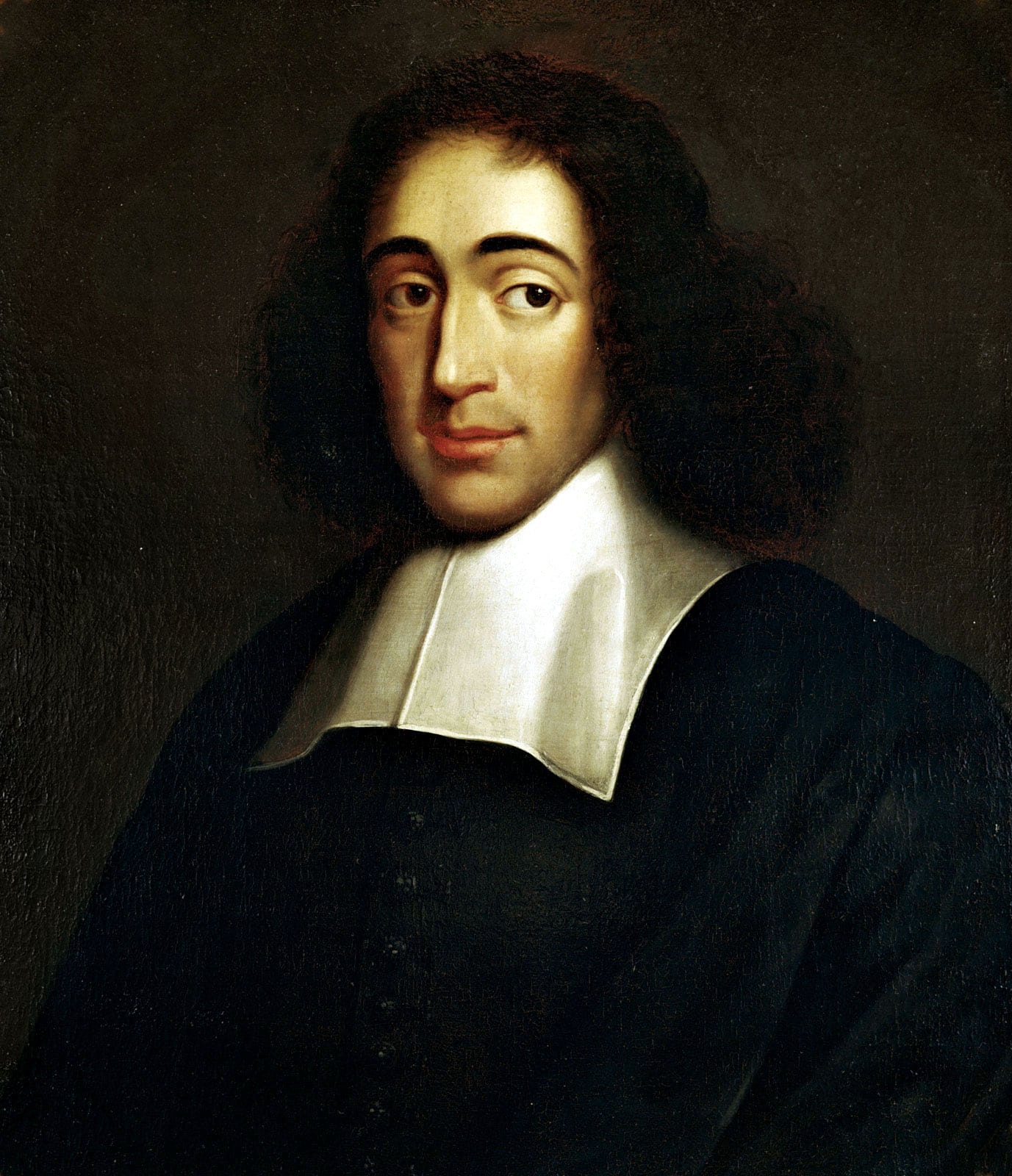
Retrato anónimo de Spinoza (Wolfenbüttel) · Public domain
उनके अपने शब्दों में
«By God, I mean a being absolutely infinite—that is, a substance consisting in infinite attributes, of which each expresses eternal and infinite essentiality.»Ética, I, definición 6 (trad. inglesa de Elwes)

मूल विचार
Deus sive Natura: God or Nature: The core of the Ethics is that there exists only one substance, absolutely infinite, which is cause of itself and of which everything else is a mode or affection: that substance is God, and it is also Nature.
संदर्भ में देखें
जीवनी
6 मिनट का पाठ
स्पैनिश मूल से सहायता-प्राप्त अनुवाद, मातृभाषी अनुवादक द्वारा समीक्षा लंबित।
एम्स्टर्डम का पुर्तगाली समुदाय
बारूक स्पिनोज़ा का जन्म 24 नवंबर 1632 को एम्स्टर्डम के पुर्तगाली यहूदी समुदाय में हुआ। यह समुदाय उन 'कोन्वेर्सो' (ईसाई बनाए गए यहूदियों) के वंशजों से बना था जो इबेरियाई इन्क्विज़िशन से बचकर भागे थे और जिन्हें डच गणराज्य में खुलकर यहूदी धर्म में लौटने की स्वतंत्रता मिली थी। उनके पिता मिगेल एक प्रतिष्ठित आयातक व्यापारी थे, जो आगे चलकर 'तलमुद तोरा' मंडली के प्रबंधकों में शामिल हुए; उनकी माँ हन्ना देबोरा का देहांत बालक के छह वर्ष पूरे होने से कुछ ही सप्ताह पहले हो गया। बारूक ने समुदाय की पाठशाला में शिक्षा पाई, जहाँ उन्होंने हिब्रू सीखी, टीकाओं सहित तोरा पढ़ी और स्पेनी तथा पुर्तगाली में—जो उनके घर की भाषाएँ थीं—शिक्षा ग्रहण की। लगभग सत्रह वर्ष की आयु में उन्होंने पढ़ाई छोड़कर परिवार के व्यापार में हाथ बँटाना शुरू किया, जिसे आंग्ल-डच युद्धों ने चौपट कर दिया। 1654 में पिता की मृत्यु के बाद उन्होंने अपने भाई गेब्रियल के साथ कारोबार की बागडोर सँभाली।
1656 का हेरेम
27 जुलाई 1656 को मंडली के मुखियाओं ने तेईस वर्षीय बारूक के विरुद्ध 'हेरेम' घोषित किया—बहिष्कार का ऐसा दंडादेश जिसकी कठोरता का समुदाय में कोई पूर्व उदाहरण नहीं था। इसमें उन्हें दिन-रात, सोते-जागते शापित ठहराया गया और सबको मना कर दिया गया कि कोई उनसे बात न करे, उनका लिखा न पढ़े और चार हाथ से अधिक उनके निकट न जाए। दस्तावेज़ यह स्पष्ट नहीं करता कि उन पर किन "घृणित पाखंडों" का आरोप था; बाद की गवाहियों से संकेत मिलता है कि वे तब तक आत्मा की अमरता, तोरा के मूसा-रचित होने और इस्राएल के चुने हुए होने की धारणाओं को नकारने लगे थे। उन्होंने कभी अपने विचार वापस नहीं लिए, और न ही वह दंडादेश कभी हटाया गया। उनके पहले जीवनीकार, लूथरन पादरी योहानेस कोलेरुस के अनुसार उन्होंने स्पेनी में एक आत्म-रक्षा लेख लिखकर उत्तर दिया था, जो अब उपलब्ध नहीं है। उन्होंने न ईसाई धर्म अपनाया, न किसी चर्च से जुड़े; उस समय से वे अपने नाम के लातिनी रूप 'बेनेदिक्तुस' से हस्ताक्षर करने लगे।
लातिनी, देकार्त और मित्र-मंडली
कट्टरपंथी विचारों वाले पूर्व जेसुइट फ़्रांसिस्कुस फ़ान देन एंदेन की पाठशाला में उन्होंने लातिनी सीखी और देकार्त के दर्शन से परिचित हुए, जो आगे चलकर उनका आरंभ-बिंदु भी बना और सबसे बड़ा प्रतिपक्ष भी। वे कॉलेजियंट और असहमत मेनोनाइट लोगों के संपर्क में आए—ऐसे ईसाई जो किसी चर्च से बँधे नहीं थे और पादरियों के बिना धर्मग्रंथ पर चर्चा करते थे—और उन्होंने मित्रों का एक समूह अपने चारों ओर जुटाया: यारिख़ येलेस, पीटर बालिंग, लोडेविक मेयर, सिमोन दे व्रीस, योहानेस बाउमेस्टर और प्रकाशक यान रीवेर्त्स। ये लोग अपनी बैठकों में उनके दर्शन के मसौदे पढ़ते थे। लगभग 1658 में उन्होंने लाइडन विश्वविद्यालय में व्याख्यान सुने।
राइन्सबर्ग और फ़ोरबर्ग: लेंस घिसने वाला दार्शनिक
1661 में वे लाइडन के निकट राइन्सबर्ग में जा बसे, जहाँ सूक्ष्मदर्शियों और दूरबीनों के लेंस घिसकर जीविका चलाने लगे; क्रिस्टियान हाइगेन्स ने उनके काम की उत्कृष्टता की प्रशंसा की थी। वहीं उन्होंने अधूरा रह गया 'बुद्धि के परिष्कार पर प्रबंध' और 'ईश्वर, मनुष्य और उसके कल्याण पर लघु प्रबंध' लिखा; दूसरा ग्रंथ केवल उन्नीसवीं शताब्दी में दो डच प्रतिलिपियों के माध्यम से प्रकाश में आया। 1663 में उन्होंने अपने नाम से 'देकार्त के दर्शन के सिद्धांत' प्रकाशित किया, जिसके परिशिष्ट में 'तत्त्वमीमांसीय विचार' जुड़े थे—यही एकमात्र कृति थी जिस पर उन्होंने जीवनकाल में अपना नाम दिया। उसी वर्ष वे हेग के निकट फ़ोरबर्ग चले गए, जहाँ उन्होंने 'एथिका' पर काम जारी रखा और रॉयल सोसाइटी के सचिव हेनरी ओल्डनबर्ग से पत्र-व्यवहार किया।
धर्मशास्त्रीय-राजनीतिक प्रबंध
1665 में उन्होंने 'एथिका' का काम रोककर एक संघर्षशील ग्रंथ लिखना शुरू किया। 'धर्मशास्त्रीय-राजनीतिक प्रबंध' (Tractatus theologico-politicus) 1670 में गुमनाम रूप से और एक झूठे मुद्रण-स्थान के साथ प्रकाशित हुआ, जो उसे हैम्बर्ग में छपा बताता था। इसमें प्रतिपादित किया गया कि बाइबल को किसी भी अन्य ऐतिहासिक ग्रंथ की तरह, उसकी भाषा और संदर्भ के आधार पर पढ़ा जाना चाहिए; कि मूसा ने पंचग्रंथ नहीं लिखा; कि चमत्कार, यदि उन्हें प्रकृति के नियमों का उल्लंघन माना जाए, असंभव हैं; और कि सच्चा धर्म न्याय और परोपकार में सिमट जाता है। इसका राजनीतिक निष्कर्ष यह था कि राज्य का लक्ष्य स्वतंत्रता है, और दार्शनिक चिंतन की स्वतंत्रता न केवल शांति और धर्मनिष्ठा को हानि पहुँचाए बिना दी जा सकती है, बल्कि उन्हें नष्ट किए बिना छीनी भी नहीं जा सकती। सभी संप्रदायों के धर्मशास्त्रियों ने इसे एक नास्तिक की रचना कहकर निंदा की, और 1674 में हॉलैंड के न्यायालय ने इस पर प्रतिबंध लगा दिया। उनके मित्र आद्रियान कूरबाख़ का अंजाम—जो डच भाषा में लिखे ऐसे ही विचारों के कारण 1669 में कारागार में मरे—लेखक की सावधानी को समझाता है; उन्होंने अनुरोध किया था कि इस ग्रंथ का अनुवाद न किया जाए।
हेग: एथिका और सावधानी
1670 से वे हेग में रहे—पहले एक आवास-गृह में, फिर पाविल्योन्सख़्राख़्त पर चित्रकार हेंड्रिक फ़ान देर स्पाइक के घर में। उनका जीवन अत्यंत सादा था: कोलेरुस के अनुसार उन्होंने अपने मित्र सिमोन दे व्रीस का उत्तराधिकारी बनने से इनकार कर दिया और उनके परिवार द्वारा दी जाने वाली वार्षिक वृत्ति को पाँच सौ से घटवाकर तीन सौ गिल्डर करवा दिया; 1673 में उन्होंने पैलेटिनेट के इलेक्टर द्वारा हाइडेलबर्ग में प्रस्तावित दर्शनशास्त्र की पीठ भी अस्वीकार कर दी, इस आशंका से कि स्थापित धर्म में बाधा न डालने की शर्त उनकी स्वतंत्रता को सीमित कर देगी। वे आगंतुकों से मिलते थे—नवंबर 1676 में लाइबनित्ज़ ने उनके साथ कई दिन बिताए—और अपने पत्रों पर एक अँगूठी से मुहर लगाते थे जिस पर Caute शब्द अंकित था, अर्थात् "सावधानी से"। लगभग 1675 में उन्होंने ज्यामितीय क्रम में सिद्ध की गई 'एथिका' पूरी की, किंतु यह अफ़वाह फैलने पर कि वे ईश्वर के अस्तित्व को नकारने वाली कोई पुस्तक तैयार कर रहे हैं, उसे प्रकाशित करने का विचार त्याग दिया। इसके बाद उन्होंने एक 'राजनीतिक प्रबंध' और हिब्रू व्याकरण पर काम किया, जो दोनों अधूरे रह गए।
मृत्यु और मरणोपरांत कृतियाँ
21 फ़रवरी 1677 को चौवालीस वर्ष की आयु में हेग में फेफड़ों के एक रोग से, संभवतः क्षय रोग से, उनका देहांत हुआ, जिसे काँच की धूल ने और बिगाड़ दिया होगा। कोलेरुस ने फ़ान देर स्पाइक की स्मृतियों के आधार पर उनके अंतिम दिन का जो चित्र खींचा है, उसके अनुसार उस सुबह वे नीचे आकर परिवार से बातें करते रहे और दोपहर लगभग तीन बजे चल बसे; उस समय उनके पास एम्स्टर्डम के एक चिकित्सक के अतिरिक्त कोई नहीं था। 25 फ़रवरी को उन्हें नीउवे केर्क में दफ़नाया गया। मित्रों ने उनकी पांडुलिपियाँ सुरक्षित कर लीं और उसी वर्ष के अंत में, लेखक और मुद्रक के नाम के बिना, लातिनी में Opera posthuma और उसका डच अनुवाद De nagelate schriften प्रकाशित किया, जिनमें 'एथिका', 'राजनीतिक प्रबंध', 'बुद्धि का परिष्कार', व्याकरण और चुने हुए पत्र शामिल थे। 1678 में हॉलैंड की प्रांतीय सभा ने इन पर प्रतिबंध लगा दिया। 2010 में वैटिकन पुस्तकालय में 'एथिका' की एकमात्र ज्ञात संपूर्ण हस्तलिखित प्रति की पहचान हुई, जो 1677 में 'होली ऑफ़िस' (धर्माधिकरण) को सौंपी गई थी।
उत्तरकालीन प्रभाव
पूरी एक शताब्दी तक उनका नाम नास्तिकता का पर्याय बना रहा। 1785 में जर्मनी में छिड़े सर्वेश्वरवाद-विवाद ने उन्हें लेसिंग, हर्डर, गेटे, शेलिंग और हेगेल के लिए एक केंद्रीय संदर्भ बना दिया; नोवालिस ने उन्हें "ईश्वर में मदमस्त मनुष्य" कहा, और आइंस्टाइन ने स्पिनोज़ा के ईश्वर में अपनी आस्था घोषित की। आज उन्हें एक साथ बुद्धिवाद के महान व्यवस्था-निर्माता, आधुनिक बाइबल-आलोचना के संस्थापक और लोकतंत्र तथा सहिष्णुता के आरंभिक सिद्धांतकारों में से एक के रूप में पढ़ा जाता है, और यह बहस अब भी जारी है कि उनका Deus sive Natura ("ईश्वर अर्थात् प्रकृति") सर्वेश्वरवाद है, प्रकृतिवाद है या नास्तिकता का ही एक रूप।
स्रोत: Nadler, Steven. Spinoza: A Life. Cambridge: Cambridge University Press, 1999 (2.ª ed. 2018). ISBN 9780521552103. · Colerus, Johannes. Korte, dog waaragtige levens-beschryving van Benedictus de Spinosa. Ámsterdam, 1705; trad. francesa «La Vie de B. de Spinosa» (1706), en Œuvres de Spinoza, trad. Émile Saisset, t. II, París, Charpentier, 1861 (Wikisource). · B. d. S. Opera posthuma. [Ámsterdam: Jan Rieuwertsz], 1677; y De nagelate schriften van B. d. S., trad. Jan Hendriksz Glazemaker, 1677. · Spinoza, Benedictus de. Ethica ordine geometrico demonstrata (texto latino en Wikisource, a partir de la ed. bilingüe de Appuhn, Garnier, 1913); The Ethics, trad. R. H. M. Elwes (Londres, 1883), Project Gutenberg #3800. · Spinoza, Benedictus de. Tractatus theologico-politicus. «Hamburgi» [Ámsterdam], 1670 (texto latino en Wikisource, ed. Gebhardt); A Theologico-Political Treatise, trad. R. H. M. Elwes (1883), Project Gutenberg #989-992.
कालक्रम
जीवन, वर्ष-दर-वर्ष
प्रत्येक बिंदु एक प्रमाणित घटना है। उसे स्रोत और निश्चितता के स्तर सहित पढ़ने के लिए क्लिक करें।
24 नवंबर 16320 वर्षÁmsterdam (Vlooienburg)
Birth of Baruch Espinosa
Born in the Jewish quarter of Vlooienburg, son of the merchant Michael de Espinosa and Hannah Deborah.
प्रमाणितWikipedia (en), «Baruch Spinoza»; y (es), «Baruch Spinoza».
उनके निधन के बाद
- जून 1678Ban of the posthumous works
- 1785The pantheism controversy
- 2010Discovery of the Vatican manuscript of the Ethics
24 नवंबर 1632 · 0 वर्ष
Birth of Baruch Espinosa
Born in the Jewish quarter of Vlooienburg, son of the merchant Michael de Espinosa and Hannah Deborah.
प्रमाणित
1638 · 5 वर्ष
Death of his mother
Hannah Deborah dies, a few days before the boy turns six.
प्रमाणित
1649 · 16 वर्ष
Leaves his studies for the family business
After the death of his brother Isaac he leaves the community school to work with his father.
प्रमाणित
मार्च 1654 · 21 वर्ष
Death of his father
He takes charge of the family firm, ruined by the Anglo-Dutch war, with his brother Gabriel.
प्रमाणित
27 जुलाई 1656 · 23 वर्ष
Herem of the Talmud Torah congregation
The leaders of the Portuguese community expel him with a sentence of exceptional harshness that was never lifted.
प्रमाणित
लगभग 1657 · 24 वर्ष
Latin with Van den Enden
Studies Latin and Cartesian philosophy at Franciscus van den Enden's school; frequents Collegiants and Mennonites.
संभावित
लगभग 1658 · 25 वर्ष
Classes at Leiden University
Attends courses in Cartesian philosophy.
संभावित
1661 · 28 वर्ष
Settles in Rijnsburg
Lives by grinding lenses; his surviving correspondence and the writing of the Short Treatise and the Ethics begin.
प्रमाणित
1663 · 30 वर्ष
Principles of Descartes' Philosophy; move to Voorburg
Publishes under his name the geometrical exposition of Descartes and the Metaphysical Thoughts, and moves to Voorburg.
प्रमाणित
1665 · 32 वर्ष
Begins the Theological-Political Treatise
Interrupts the Ethics to write a defence of the freedom to philosophise.
प्रमाणित
1670 · 37 वर्ष
Anonymous publication of the TTP; move to The Hague
The book appears with a false imprint and provokes condemnations from theologians of every confession.
प्रमाणित
20 अगस्त 1672 · 39 वर्ष
Murder of the De Witt brothers
According to Leibniz, Spinoza wished to post a placard with the words 'ultimi barbarorum' and his landlord prevented him by locking him in.
संभावित
30 मार्च 1673 · 40 वर्ष
Declines the Heidelberg chair
Replies to Johann Ludwig Fabritius declining the chair of philosophy offered by the Elector Palatine.
प्रमाणित
जुलाई 1673 · 40 वर्ष
Journey to the French camp at Utrecht
Visits the headquarters of the invading French army; on his return, according to Colerus, the family fears a riot and he replies 'I am a good republican'.
संभावित
जुलाई 1674 · 41 वर्ष
Ban of the Theological-Political Treatise
The Court of Holland bans the book together with Hobbes' Leviathan and other heterodox writings.
प्रमाणित
1675 · 42 वर्ष
Gives up publishing the Ethics
Finishes the work and abandons printing it amid rumours that he is preparing a book denying God.
प्रमाणित
नवंबर 1676 · 43 वर्ष
Leibniz's visit
Leibniz spends several days in conversation with him.
प्रमाणित
21 फ़रवरी 1677 · 44 वर्ष
Death
Dies at about three in the afternoon of a lung disease; buried on 25 February in the Nieuwe Kerk.
प्रमाणित
दिसंबर 1677
Opera posthuma
His friends publish the Ethics and the unpublished works in Latin and Dutch.
संभावित
जून 1678
Ban of the posthumous works
The States of Holland ban the Opera posthuma.
संभावित
1785
The pantheism controversy
The dispute between Jacobi and Mendelssohn over Lessing's alleged Spinozism revives his reading in German idealism.
प्रमाणित
2010
Discovery of the Vatican manuscript of the Ethics
Leen Spruit and Pina Totaro identify codex Vat. lat. 12838, handed to the Holy Office by Niels Stensen in 1677.
प्रमाणित
कृतियाँ
आवश्यक कृतियाँ
वे कृतियाँ जिनके बिना उनकी विरासत को समझा नहीं जा सकता।
मरणोपरांत कृति · 1677
Ethics, Demonstrated in Geometrical Order
Ethica ordine geometrico demonstrata
His major work, set out like Euclid's geometry, with definitions, axioms, propositions, demonstrations and scholia, in five parts: God; the nature and origin of the mind; the origin and nature of the affects; human bondage, or the strength of the affects; the power of the intellect, or human freedom. It starts from a single infinite substance, God or Nature, of which all things are modes; denies free will and final causes; analyses the passions as natural phenomena arising from the striving to persevere in being; and proposes an ethics of joy and knowledge culminating in the intellectual love of God and the experience of the eternity of the intellect.
17 संस्करण · amazon.com

लिखित कृति · 1670
Theological-Political Treatise
Tractatus theologico-politicus
A defence of the freedom to philosophise in twenty chapters. The first fifteen subject the Bible to historical and philological examination: prophecy as imagination, the election of the Hebrews as political prosperity, miracles as ignorance of causes, the authorship of the Pentateuch and the historical books, the method of interpreting Scripture by Scripture itself. The last five ground the state in natural right, identified with power, analyse the Hebrew theocracy and conclude that the end of the state is freedom and that everyone must be able to think what he wishes and say what he thinks. It is one of the founding works of modern biblical criticism and of liberal and democratic political thought.
9 संस्करण · amazon.com

मरणोपरांत कृति · 1677
Political Treatise
Tractatus politicus
A treatise of political theory which, unlike the Theological-Political Treatise, leaves biblical exegesis aside and studies how monarchy, aristocracy and democracy must be organised so that peace and freedom do not depend on the virtue of rulers. It starts from the idea that human actions are to be understood, not laughed at, lamented or detested, and that each one's right extends as far as his power. It remained unfinished just as it was to deal with democracy, the form of government he considered most absolute.
5 संस्करण · amazon.es
मरणोपरांत कृति · 1677
Treatise on the Emendation of the Intellect
Tractatus de intellectus emendatione
An essay on method that opens with one of the most famous autobiographical pages in philosophy: the experience that the goods men pursue—wealth, honour, pleasure—are vain, and the resolve to seek a true good that would give continuous and supreme joy. It distinguishes four modes of perception, analyses the true idea, fiction, falsity and doubt, and seeks the way to direct the intellect towards knowledge of nature. It is the most accessible way into his thought.
7 संस्करण · amazon.com
संपूर्ण कृतित्व (22)

Short Treatise on God, Man and His Well-Being
1660

Principles of Cartesian Philosophy
1663
Metaphysical Thoughts
1663

Compendium of Hebrew Grammar
1677

Letters
1677
Baruch Spinoza
Posthumous Works
The Conscious LibraryPosthumous Works
1677
Baruch Spinoza
Apology for leaving the synagogue (lost)
The Conscious LibraryApology for leaving the synagogue (lost)
1656
Baruch Spinoza
Treatise on the Rainbow (lost)
The Conscious LibraryTreatise on the Rainbow (lost)
1676
Baruch Spinoza
Dutch translation of the Old Testament (lost)
The Conscious LibraryDutch translation of the Old Testament (lost)
1677
Baruch Spinoza
Algebraic Calculation of the Rainbow (doubtful attribution)
The Conscious LibraryAlgebraic Calculation of the Rainbow (doubtful attribution)
1687
Baruch Spinoza
Calculation of Chances (doubtful attribution)
The Conscious LibraryCalculation of Chances (doubtful attribution)
1687
Baruch Spinoza
Treatise of the Three Impostors (spurious)
The Conscious LibraryTreatise of the Three Impostors (spurious)
1719
Baruch Spinoza
Johannes Colerus' Life of Spinoza
The Conscious LibraryJohannes Colerus' Life of Spinoza
1705
Spinoza: A Life (biography by Steven Nadler)
1999

The Collected Works of Spinoza (ed. Edwin Curley)
1985
Spinoza: Complete Works (trans. Samuel Shirley)
2002

Spinoza Opera (ed. Carl Gebhardt)
1925
Baruch Spinoza
Opere (ed. Filippo Mignini)
The Conscious LibraryOpere (ed. Filippo Mignini)
2007
वचन
किसी निश्चित कृति में स्थित वचन। प्रत्येक के साथ उसका स्रोत और विश्वसनीयता का स्तर है।
By God, I mean a being absolutely infinite—that is, a substance consisting in infinite attributes, of which each expresses eternal and infinite essentiality.Per Deum intelligo ens absolute infinitum, hoc est, substantiam constantem infinitis attributis, quorum unumquodque aeternam et infinitam essentiam exprimit.
सत्यापितÉtica, I, definición 6 (trad. inglesa de Elwes)
अप्रामाणिक या विवादित आरोपण वाले उद्धरण (2)
«'Even if I knew that tomorrow the world would end, I would still plant an apple tree today.'»
Attributed to Spinoza and, more often, to Luther; it appears in no work or letter of Spinoza's, and for Luther too there is no source before the twentieth century.
«'God would say: stop praying and beating your breast; what I want you to do is go out into the world and enjoy your life…' (the so-called 'God of Spinoza')»
A text spread on social media since the 2010s under the title 'If God Spoke' or 'The God of Spinoza'. It belongs to no work of Spinoza's: its style and personal theology (a God who speaks, loves and advises) contradict the Ethics, which denies that God has will or human affects. It is usually linked to Einstein's remark 'I believe in Spinoza's God'.
अंतिम शब्द
उनके अंतिम शब्दों का कोई सत्यापन-योग्य अभिलेख उपलब्ध नहीं है।
No reliable last words survive. Colerus, who questioned his landlords, relates that that morning he came down to talk with the family, took chicken broth at midday and died at about three in the afternoon, alone with a physician from Amsterdam whom he designates as 'L. M.' (later research usually identifies him with Georg Hermann Schuller). Colerus expressly denies that he said 'O God, have mercy on me, a miserable sinner' or asked for pastors to be kept away: no one in the house heard any such thing, and those repentance stories died out in the eighteenth century.
स्रोत: Colerus, Johannes. Korte, dog waaragtige levens-beschryving van Benedictus de Spinosa. Ámsterdam, 1705; trad. francesa «La Vie de B. de Spinosa» (1706), en Œuvres de Spinoza, trad. Émile Saisset, t. II, París, Charpentier, 1861 (Wikisource).
पूछें
उनकी कृतियाँ क्या उत्तर देती हैं
मानवता के बारह महान प्रश्न और उनके ग्रंथ उनका जो उत्तर देने देते हैं, संदर्भों सहित। हम कभी उनके मुख में अपने शब्द नहीं रखते।
परम सत्य क्या है? क्या ईश्वर है?
God, or Nature: an infinite substance without will or ends
निराकार परम सत्तास्पष्ट रूप से कहा है
Spinoza understands by God an absolutely infinite being, a substance consisting of infinite attributes, and demonstrates that apart from it no other can exist or be conceived: whatever is, is in God. This God is not a person. He does not act for ends or by a free decree of the will, but from the necessity of His nature, as its properties follow from the nature of a triangle. The appendix to the first part of the Ethics dismantles the image of a God who arranges the world for man and rewards or punishes, and the preface to the fourth states that the reason why God, or Nature, acts and exists is one and the same. The Absolute is the whole of reality understood in its necessity, accessible to the intellect and the object of an intellectual love that does not expect to be returned.
इस प्रश्न की अन्य गुरुओं से तुलना करेंमैं कौन हूँ? क्या कोई सच्चा आत्म है?
The mind is part of the infinite intellect of God
आत्मन् ही ब्रह्म हैउनके सिद्धांत से निष्कर्षित
Spinoza denies that the soul is a substance: the human mind is the idea of an actually existing body and, as such, a finite mode of God's thought. From this he draws a consequence he states plainly: the human mind is part of the infinite intellect of God. Its actual essence is the striving (conatus) to persevere in its being. While it knows itself confusedly, it takes itself for a dominion within a dominion, free and independent; when it knows itself adequately, it knows that it is in God and is conceived through God. The fifth part of the Ethics adds that something of the mind is eternal, and that the intellectual love with which the mind loves God is part of the love with which God loves Himself. The true self is the one that understands itself from the Absolute.
इस प्रश्न की अन्य गुरुओं से तुलना करेंहम दुःख क्यों भोगते हैं?
We suffer because we know the causes of our affects badly
हम क्या हैं, इसका अज्ञानस्पष्ट रूप से कहा है
Spinoza calls bondage human powerlessness to moderate and restrain the affects: a man subject to them is not his own master but at the mercy of fortune. Sadness is the passage to a lesser perfection, and the sad passions — hatred, fear, envy, anxious hope — arise from inadequate ideas, that is, from knowing in a mutilated and confused way what affects us and what we are. That is why the remedy is cognitive: an affect that is a passion ceases to be one as soon as we form a clear and distinct idea of it. Understanding that everything happens necessarily gives the mind greater power over the affects and makes it suffer less from them. His maxim of method sums up the attitude: not to laugh at human actions, nor weep over them, nor detest them, but to understand them.
इस प्रश्न की अन्य गुरुओं से तुलना करेंमृत्यु के बाद क्या होता है?
Something of the mind is eternal: not lasting afterwards, but outside time
जो मैं हूँ, वह न जन्मता है न मरता हैस्पष्ट रूप से कहा है
Spinoza denies personal immortality as it is usually understood: the mind can imagine or remember nothing except while the body endures, so no memory or personality survives. But he affirms that the mind cannot be entirely destroyed with the body: something of it remains that is eternal, the idea that expresses the essence of this body under the aspect of eternity. That eternity is not an endless duration that would begin after death, but a way of being outside time, and it is experienced even now: we feel and know by experience that we are eternal. The more the mind understands by the third kind of knowledge, the greater the part that does not perish and the less it fears death. That is why the free man thinks of nothing less than of death.
इस प्रश्न की अन्य गुरुओं से तुलना करेंमुक्ति या उद्धार कैसे प्राप्त होता है?
Freedom is born of understanding: happiness is virtue itself
प्रत्यक्ष ज्ञान सेस्पष्ट रूप से कहा है
Spinoza calls by the same name freedom, blessedness or salvation: the constant and eternal love of God that is born of knowledge. The fifth part of the Ethics traces the way. First, reason orders the affects and weakens them by understanding their causes; then the third kind of knowledge, intuitive science, sees each singular thing in God and produces the greatest contentment of mind. From it arises the intellectual love of God, which does not expect to be returned and in which salvation consists. Happiness is not the reward of virtue but virtue itself: we do not enjoy it because we restrain our passions; we restrain them because we enjoy it. The way is hard, he admits, but all things excellent are as difficult as they are rare.
इस प्रश्न की अन्य गुरुओं से तुलना करेंक्या गुरु आवश्यक है?
Neither prophets nor theologians: in speculative matters, reason alone judges
कोई आध्यात्मिक सत्ता नहींस्पष्ट रूप से कहा है
The Theological-Political Treatise is largely a plea against spiritual authority in matters of truth. Spinoza shows that the prophets excelled in imagination and moral uprightness, not in philosophical knowledge, and that their opinions about nature bind no one. Scripture teaches only obedience, justice and charity; its interpretation belongs to each person by the natural light, without need of a caste of interpreters. That is why philosophy must not be the handmaid of theology, nor theology of philosophy, and the State must guarantee freedom to philosophise. Spinoza had teachers and correspondents, but in the Ethics the only guide is the order of the demonstrations, which anyone can follow and check.
इस प्रश्न की अन्य गुरुओं से तुलना करेंक्या संसार वास्तविक है?
Everything follows necessarily from God: nothing is contingent, nothing is a miracle
परिवर्तनशील प्राकृतिक व्यवस्थास्पष्ट रूप से कहा है
For Spinoza the world is real and governed by a seamless necessity. In nature there is nothing contingent: everything is determined by the necessity of the divine nature to exist and to act in a certain way, and things could not have been produced in any other manner or order. He distinguishes natura naturans, God as free cause, from natura naturata, the totality of modes that follow from it. The Theological-Political Treatise draws the consequence: a miracle understood as a violation of natural laws is impossible, because those laws are eternal decrees of God; what we call a miracle is an event whose cause we do not know. The world is neither appearance nor a stage for man: it is the very order of the real.
इस प्रश्न की अन्य गुरुओं से तुलना करेंप्रेम क्या है?
Intellectual love of God and desire of the good for all men
ईश्वर और पड़ोसी से प्रेमस्पष्ट रूप से कहा है
Spinoza defines love as joy accompanied by the idea of an external cause, and from there builds an ethics of love without sentimentality. Whoever loves God cannot strive for God to love him in return: the intellectual love of God, born of the third kind of knowledge, expects nothing back, and is part of the love with which God loves Himself. That love does not isolate: the good that whoever follows virtue desires for himself he also desires for others, and all the more the greater his knowledge of God. Towards others, reason counsels answering hatred with love and generosity, because hatred conquered by love turns into love, and that love is greater than if hatred had not preceded it.
इस प्रश्न की अन्य गुरुओं से तुलना करेंक्या हम स्वतंत्र हैं, या सब कुछ पूर्वनिर्धारित है?
We think ourselves free because we ignore the causes; freedom is understanding
जागने तक हम यंत्र हैंस्पष्ट रूप से कहा है
Spinoza denies free will: in the mind there is no absolute will; it is determined to will this or that by a cause, which is determined by another, and so on to infinity. Men believe themselves free because they are conscious of their desires and ignorant of the causes that determine them; in a letter he illustrates this with a thrown stone that, if it could think, would believe it moved by its own will. While man lives under the passions he is driven by external causes like the sea by contrary winds. But there is a true freedom: to act from the necessity of one's own nature alone, guided by reason. One is free not by escaping necessity but by understanding it.
इस प्रश्न की अन्य गुरुओं से तुलना करेंध्यान या प्रार्थना क्यों करें?
Not praying to change the order of nature, but understanding it
यथार्थ को जैसा है वैसा देखनाउनके सिद्धांत से निष्कर्षित
Spinoza does not pray in the usual sense: if God does not act for ends or change His decrees, asking Him to alter the course of nature makes no sense, and the Theological-Political Treatise analyses superstition as the child of fear and hope. What takes the place of prayer is meditation on life, not on death, and the exercise of understanding. In the Treatise on the Emendation of the Intellect he tells how he resolved to seek a true good which, once found, would give continuous and supreme joy, and the Ethics identifies it with knowledge of the union of the mind with the whole of Nature. His practice is to see each thing in God, under the aspect of eternity, and in this he finds contentment.
इस प्रश्न की अन्य गुरुओं से तुलना करेंक्या बुद्धि परम को जान सकती है?
The human mind has adequate knowledge of the essence of God
अध्ययन और विद्यास्पष्ट रूप से कहा है
Spinoza is the most confident in this group in the power of reason. In the Ethics he demonstrates that the human mind has adequate knowledge of the eternal and infinite essence of God, and he distinguishes three kinds of knowledge: imagination, source of error; reason, which forms common notions; and intuitive science, which sees each singular thing in God. The ultimate is not beyond the mind: it is its supreme object. At the same time he separates philosophy from faith: in the Theological-Political Treatise he holds that Scripture teaches not speculative truths but obedience and charity, and that neither must theology be the handmaid of reason nor reason of theology. Knowing is a long road, requiring method and the emendation of the intellect.
इस प्रश्न की अन्य गुरुओं से तुलना करेंसंसार से हटें या उसे बदलें?
The end of the State is freedom: a political order that lets people think
समाज को व्यवस्थित करनास्पष्ट रूप से कहा है
Spinoza led a retired life: he ground lenses, declined a chair at Heidelberg to preserve his freedom and lived soberly in lodgings in Rijnsburg, Voorburg and The Hague. But his philosophy does not counsel flight from the world. The free man sketched in the Ethics is freer in the State, where he lives by common laws, than in solitude, and nothing is more useful to man than another man guided by reason. His two political treatises seek the conditions of a just and stable order: the Theological-Political Treatise concludes that the end of the State is in truth freedom, and defends tolerance and freedom of expression. For Spinoza the philosophical life needs a well-ordered society, and thinking about it is part of his task.
इस प्रश्न की अन्य गुरुओं से तुलना करें
निकटता और तनाव
निकटता और तनाव
उनके मतों के आधार पर प्रश्न-दर-प्रश्न आकलित। प्रत्येक सहमति या टकराव का कारण क्लिक करने पर।
इनसे मिलता-जुलता सोचते हैं
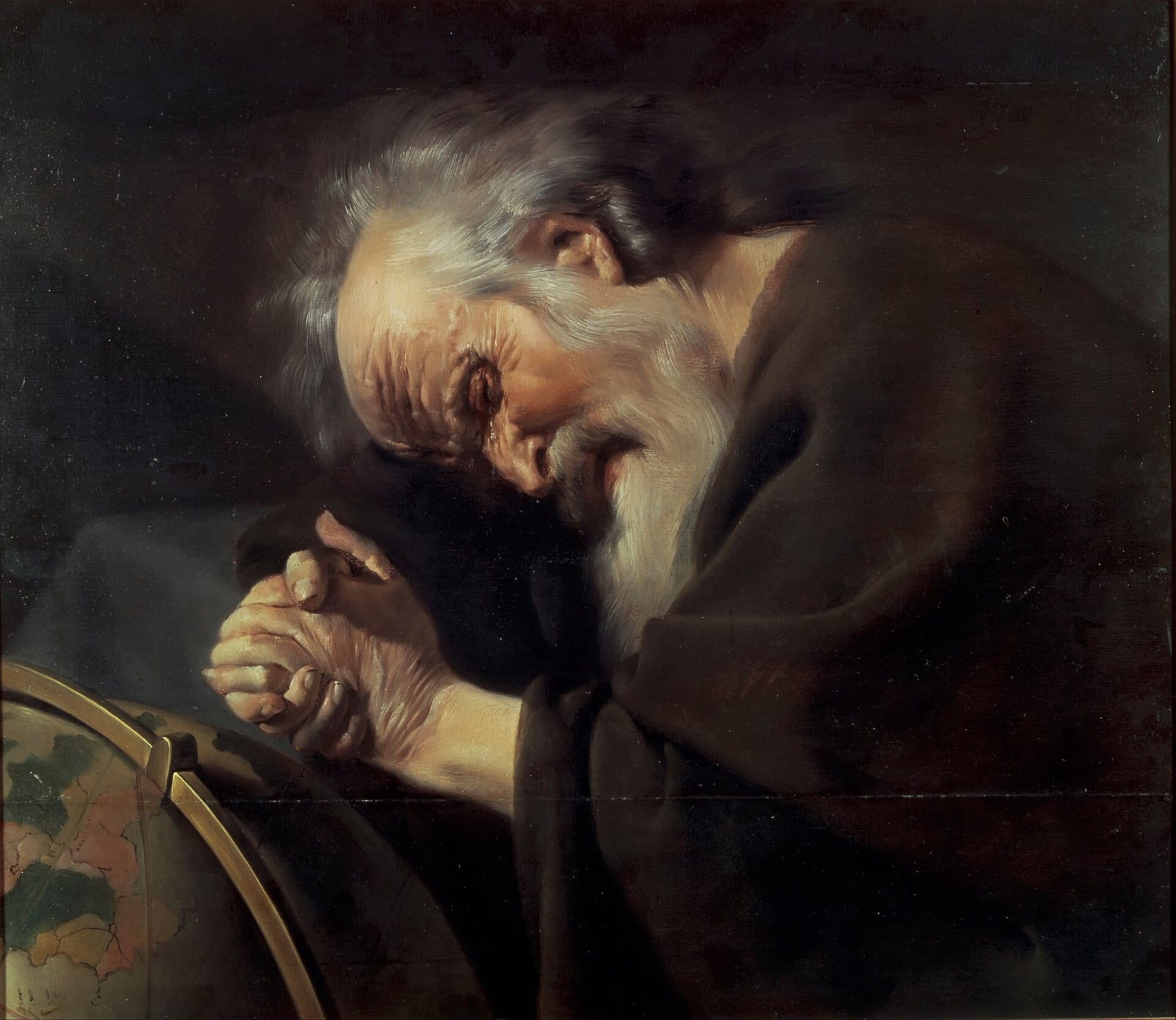
Heraclitus
इन पर सहमत: परम सत्य क्या है? क्या ईश्वर है? · मैं कौन हूँ? क्या कोई सच्चा आत्म है? · हम दुःख क्यों भोगते हैं?
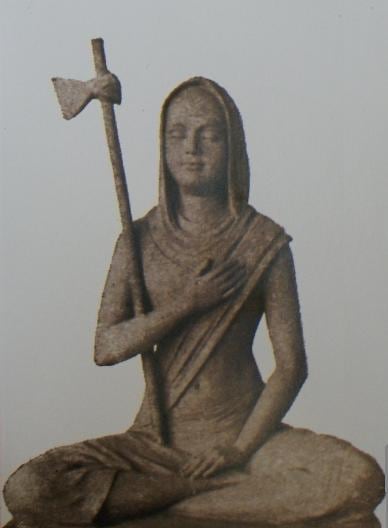
Gaudapada
इन पर सहमत: परम सत्य क्या है? क्या ईश्वर है? · मैं कौन हूँ? क्या कोई सच्चा आत्म है? · हम दुःख क्यों भोगते हैं?
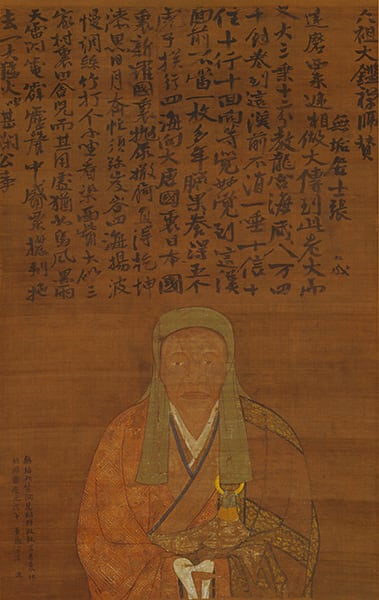
Huineng
इन पर सहमत: परम सत्य क्या है? क्या ईश्वर है? · मैं कौन हूँ? क्या कोई सच्चा आत्म है? · हम दुःख क्यों भोगते हैं?
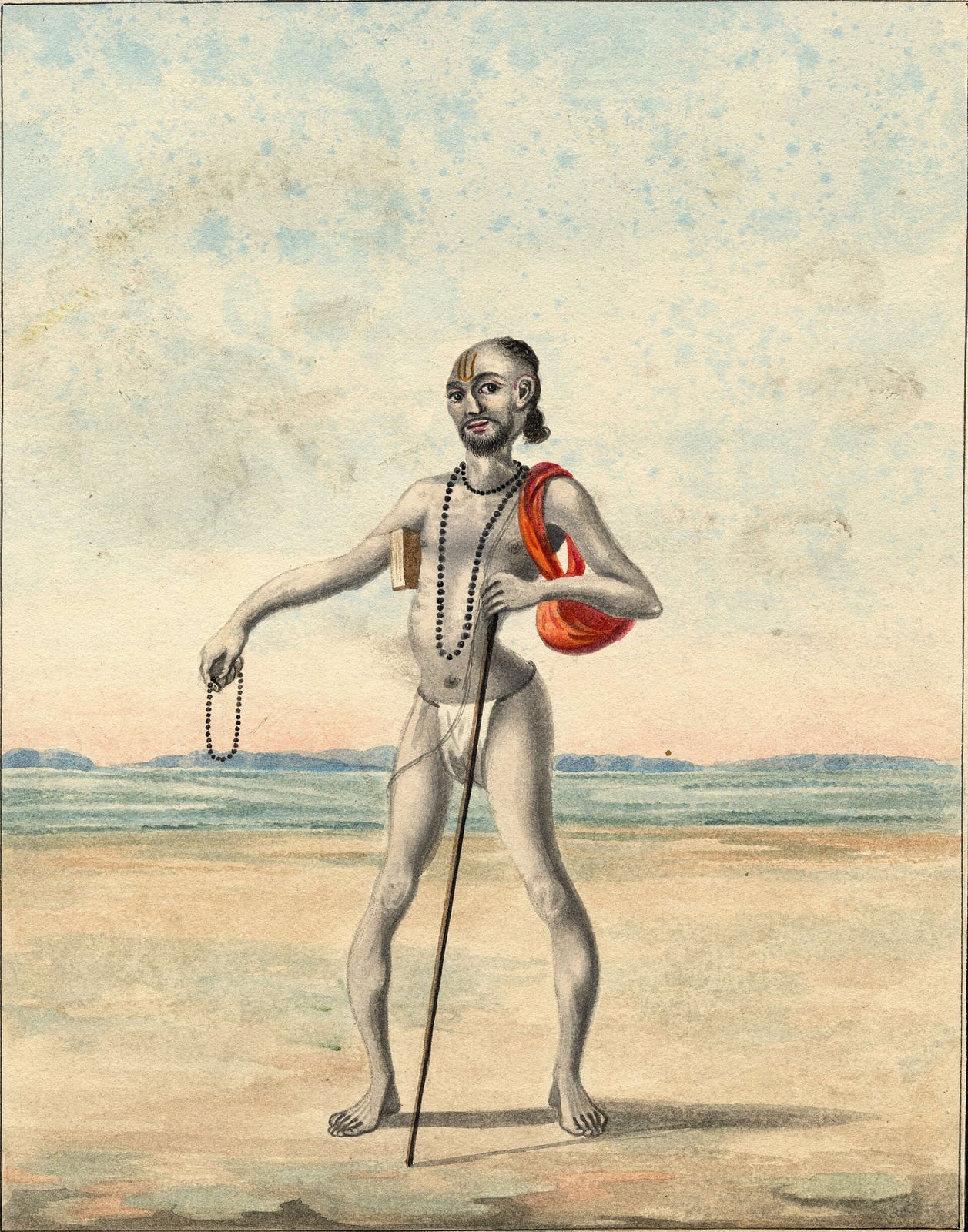
Ashtavakra
इन पर सहमत: परम सत्य क्या है? क्या ईश्वर है? · मैं कौन हूँ? क्या कोई सच्चा आत्म है? · हम दुःख क्यों भोगते हैं?
इनसे भिन्न सोचते हैं
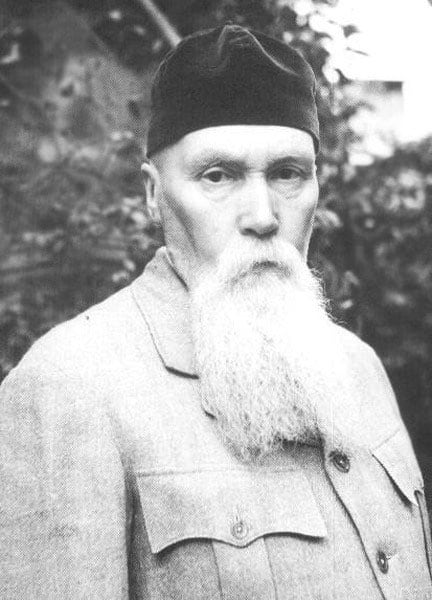
Nicholas Roerich
इन पर टकराव: क्या गुरु आवश्यक है?

Chaitanya Mahaprabhu
इन पर टकराव: मैं कौन हूँ? क्या कोई सच्चा आत्म है? · क्या गुरु आवश्यक है?
Hafez
इन पर टकराव: मैं कौन हूँ? क्या कोई सच्चा आत्म है? · क्या गुरु आवश्यक है?
Al-Ghazali
इन पर टकराव: मैं कौन हूँ? क्या कोई सच्चा आत्म है? · क्या गुरु आवश्यक है?
प्रसंग और वृत्तांत
प्रसंग और वृत्तांत
प्रमाणित1656
The herem
वृत्तांत का स्रोत: The text is preserved in the community's book of ordinances (Stadsarchief Amsterdam) and is edited and analysed by Nadler and Wikipedia; the reasons are a matter of conjecture.
स्रोत: Nadler, Steven. Spinoza: A Life. Cambridge: Cambridge University Press, 1999 (2.ª ed. 2018). ISBN 9780521552103.
विवादितc. 1656
The knife at the exit
वृत्तांत का स्रोत: Bayle, Dictionnaire historique et critique (1697), art. 'Spinoza'; Colerus, Life (1705), correcting Bayle from the Van der Spycks' testimony. The detail of the coat comes from later traditions.
साक्ष्य1672
Ultimi barbarorum
वृत्तांत का स्रोत: Leibniz records it in a note as something Spinoza himself told him during the 1676 visit; Nadler and the biographical tradition report it.
स्रोत: Nadler, Steven. Spinoza: A Life. Cambridge: Cambridge University Press, 1999 (2.ª ed. 2018). ISBN 9780521552103.
साक्ष्य1673
'I am a good republican'
वृत्तांत का स्रोत: Colerus, Life (1705), from Van der Spyck's testimony. Stouppe's role and Condé's absence are recorded in Colerus and Lucas.
प्रमाणित1673
The chair he did not want
वृत्तांत का स्रोत: Letters 47 (Fabritius, 16 February 1673) and 48 (Spinoza, 30 March 1673), published in the Opera posthuma.
साक्ष्य1671-1677
Spiders, a pipe and a single bed
वृत्तांत का स्रोत: Colerus, Life (1705); the detail of the inheritance and the bed also in Colerus. Indirect testimony of the landlords, gathered almost thirty years later.
प्रमाणित1676
Three days with Leibniz
वृत्तांत का स्रोत: Documented by Leibniz's notes and correspondence and by Leibniz's 1671 letter to Spinoza published in the Opera posthuma.
स्रोत: Wikipedia (en), «Baruch Spinoza»; y (es), «Baruch Spinoza».
शिक्षाएँ
शिक्षाएँ
वे अवधारणाएँ जो उनके चिंतन को रूप देती हैं, उनके संदर्भ में समझाई गई।
Deus sive Natura: God or Naturedeus-sive-natura
A radical reworking of the Cartesian notion of substance; it has disputed antecedents in Jewish mysticism and Giordano Bruno.
Substance, attributes and modesatributos-y-modos
Ethics, Parts I and II.
Conatus and the affectsconatus
Ethics, Part III; antecedents in Hobbes and the Stoics.
The three kinds of knowledgetres-generos-de-conocimiento
Ethics, II, proposition 40, scholium 2; antecedent in the four modes of perception of the Treatise on the Emendation of the Intellect.
Necessity, bondage and freedomlibertad-y-servidumbre
Ethics, Parts IV and V; Letter 58 to Schuller (the stone that believes itself free).
Intellectual love of God and eternity of the mindamor-intellectualis-dei
Ethics, V, propositions 21-42; the expression sub specie aeternitatis.
Freedom to philosophise and critique of Scripturelibertas-philosophandi
Theological-Political Treatise; antecedents in Hobbes, Ibn Ezra and Uriel da Costa.
वीडियो
वीडियो
रिकॉर्डिंग, साक्षात्कार और वृत्तचित्र। वीडियो YouTube से चलते हैं; वे यहाँ संग्रहीत नहीं हैं।
Steven Nadler on Spinoza and the Herem
व्याख्यान· EN· 68 min
Institute for Tolerance Studiesआधिकारिक चैनल
Spinoza on the Divinity of Scripture | Prof. Steven Nadler
व्याख्यान· EN· 73 min
The Van Leer Jerusalem Instituteआधिकारिक चैनल
Spinozarede 2025 Steven Nadler
व्याख्यान· EN· 2025· 58 min
Stichting Spinoza Den Haagआधिकारिक चैनल
Steven Nadler, Spinoza and Menasseh..., Spinoza's Ethics... - 20-21 maggio 2019
व्याख्यान· EN· 2019· 171 min
SNS Humanities (Scuola Normale Superiore)आधिकारिक चैनल
The Philosophy of Spinoza & Leibniz - Bryan Magee & Anthony Quinton (1987)
साक्षात्कार· EN· 1987· 44 min
Philosophy Overdose
Why Study Baruch Spinoza with Agata Bielik-Robson
व्याख्यान· EN· 12 min
University of Nottinghamआधिकारिक चैनल
Spinoza, religio, and the re-conceiving of religion, God and Nature w/ Clare Carlisle
साक्षात्कार· EN· 82 min
John Vervaeke's Lectern
Spinoza | Por Darío Sztajnszrajber
व्याख्यान· ES· 142 min
Facultad Libre
Spinoza materialista. Gabriel Albiac
व्याख्यान· ES· 61 min
Cima & Holzenthal
El papel del Tractatus Politicus en la estructura de la Ética de Spinoza. Gabriel Albiac
व्याख्यान· ES· 2024· 112 min
Sociedad Filosofía Alicante
Diego Tatián: Spinoza y la filosofía de la liberación
साक्षात्कार· ES· 39 min
Canal Abierto
Grandes documentales: Baruch Spinoza y Gottfried Leibniz
वृत्तचित्र· ES· 53 min
ABC TV Paraguay
Gilles Deleuze : cours sur Spinoza n°1/14 (remasterisé en 2023)
व्याख्यान· FR· 1980· 124 min
Louis Simon
Pourquoi il faut relire Spinoza aujourd'hui
साक्षात्कार· FR· 39 min
France Cultureआधिकारिक चैनल
Spinoza | The Apostle of Reason, 1994
YouTube पर देखें
यह वीडियो एम्बेड करने की अनुमति नहीं देता; यह YouTube पर खुलेगा।
Spinoza | The Apostle of Reason, 1994
वृत्तचित्र· EN· 1994· 51 min
STEFAN CLASSIC FILMS
चित्रशाला
चित्रशाला
सत्यापित लाइसेंस वाले चित्र। प्रत्येक में उसके रचयिता और श्रेय का उल्लेख सुरक्षित है।
पांडुलिपियाँ
पांडुलिपियाँ
पांडुलिपि-साक्ष्य और प्राचीन पाठ, उनके संरक्षक और अध्ययन की शर्तों सहित।
LA · Latin · c. 1675
Ethica ordine geometrico demonstrata
- संरक्षित पाठ-साक्ष्य
- Copia manuscrita completa anterior a la edición de 1677
- संरक्षक
- Biblioteca Apostolica Vaticana · Vat. lat. 12838
NL · Latin · c. 1660-1662
Korte verhandeling van God, de mensch en deszelvs welstand (códice A)
- संरक्षित पाठ-साक्ष्य
- Copia de finales del siglo XVII
- संरक्षक
- Koninklijke Bibliotheek, La Haya · 75 G 15
NL · Latin · c. 1660-1662
Korte verhandeling van God, de mensch en deszelvs welstand (códice B)
- संरक्षित पाठ-साक्ष्य
- Copia de mediados del siglo XVIII, revisión de A
- संरक्षक
- Koninklijke Bibliotheek, La Haya
संबंध
संबंध
प्रभाव, शिष्यत्व और वैचारिक निकटता। प्रमाणित संबंध को विश्लेषण से पहचानी गई समानता से अलग दर्शाया गया है।
इनसे प्रभावित
Thomas Hobbes
His theory of natural right as power and his biblical criticism engage with Leviathan.
प्रमाणित संबंध
इनसे मतभेद
The Theological-Political Treatise expressly criticises his method of accommodating Scripture to philosophy.
प्रमाणित संबंध
इनसे प्रभावित
René Descartes
His starting point: he expounded his Principles in 1663 and built his system in critical dialogue with him.
प्रमाणित संबंध
इनसे प्रभावित
Uriel da Costa
A relative on his mother's side; his heterodoxy and excommunication marked the community in which Spinoza grew up.
प्रमाणित संबंध
इनसे भेंट
Gottfried Wilhelm Leibniz
Correspondence from 1671 and a visit of several days in The Hague in November 1676.
प्रमाणित संबंध
इनसे पत्राचार
Henry Oldenburg
Secretary of the Royal Society; his most frequent correspondent (1661-1676).
प्रमाणित संबंध
इनसे भेंट
Christiaan Huygens
A neighbour at Voorburg; he praised his lenses and they discussed optics.
प्रमाणित संबंध
इनके शिष्य
Franciscus van den Enden
His teacher of Latin and modern philosophy in Amsterdam.
प्रमाणित संबंध
इनके समकालीन
Johan de Witt
Republican Grand Pensionary whose murder in 1672 outraged him; some biographers credit him with a pension from De Witt, which is unproven.
प्रमाणित संबंध
इनसे मिलते-जुलते विचार
Estoicos
An ethics of understanding necessity and of serenity before the passions.
विश्लेषण से पहचानी गई समानता
इनसे मिलते-जुलते विचार
Identification of God with the rational nature of the cosmos and life according to reason.
विश्लेषण से पहचानी गई समानता
इनसे मिलते-जुलते विचार
A mysticism of union with God through knowledge, in another theological frame.
विश्लेषण से पहचानी गई समानता
इन्हें प्रभावित किया
Critically discussed Spinoza's impersonal God from his philosophy of dialogue.
विश्लेषण से पहचानी गई समानता
इन्हें प्रभावित किया
Albert Einstein
Declared in 1929 that he believed in Spinoza's God, who reveals himself in the harmony of what exists.
प्रमाणित संबंध
इन्हें प्रभावित किया
G. W. F. Hegel
Declared that one is either a Spinozist or no philosopher at all; the pantheism controversy made Spinoza an interlocutor of German idealism.
प्रमाणित संबंध
अन्य प्रविष्टियों से जुड़ा
स्रोत
स्रोत
इस प्रविष्टि के लिए देखे गए ग्रंथ-सूची और सूचीपत्र।
- Nadler, Steven. Spinoza: A Life. Cambridge: Cambridge University Press, 1999 (2.ª ed. 2018). ISBN 9780521552103.
- Nadler, Steven. «Baruch Spinoza». The Stanford Encyclopedia of Philosophy, publicado el 29-6-2001, revisión sustantiva del 8-11-2023.
- Wikidata, «Benedictus de Spinoza» (Q35802).
- Wikipedia (en), «Baruch Spinoza»; y (es), «Baruch Spinoza».
- Colerus, Johannes. Korte, dog waaragtige levens-beschryving van Benedictus de Spinosa. Ámsterdam, 1705; trad. francesa «La Vie de B. de Spinosa» (1706), en Œuvres de Spinoza, trad. Émile Saisset, t. II, París, Charpentier, 1861 (Wikisource).
- B. d. S. Opera posthuma. [Ámsterdam: Jan Rieuwertsz], 1677; y De nagelate schriften van B. d. S., trad. Jan Hendriksz Glazemaker, 1677.
- Spinoza, Benedictus de. Ethica ordine geometrico demonstrata (texto latino en Wikisource, a partir de la ed. bilingüe de Appuhn, Garnier, 1913); The Ethics, trad. R. H. M. Elwes (Londres, 1883), Project Gutenberg #3800.
- Spinoza, Benedictus de. Tractatus theologico-politicus. «Hamburgi» [Ámsterdam], 1670 (texto latino en Wikisource, ed. Gebhardt); A Theologico-Political Treatise, trad. R. H. M. Elwes (1883), Project Gutenberg #989-992.
- Spinoza, Benedictus de. Tractatus politicus, en Opera posthuma, 1677 (texto latino en Wikisource).
- Wikipedia (en), «Epistolae (Spinoza)» y «List of Epistolae (Letters) of Spinoza» (88 cartas: 50 de Spinoza, 38 de sus corresponsales).
- Spruit, Leen, y Pina Totaro (eds.). The Vatican Manuscript of Spinoza's Ethica. Leiden: Brill, 2011. ISBN 9789004209268.
- Koninklijke Bibliotheek (La Haya), «Korte verhandeling van God, de mensch, en deszelvs welstand by Baruch Spinoza» (KB 75 G 15) y colección especial «Benedictus de Spinoza»; Cambridge Spinoza Lexicon, «Short Treatise on God, Man and His Wellbeing».
- Bayle, Pierre. Dictionnaire historique et critique, art. «Spinoza». Rotterdam: Reinier Leers, 1697.
- Lucas, Jean-Maximilien. La Vie de feu Monsieur de Spinosa (1719), en Œuvres de Spinoza, trad. Saisset, t. II, 1861 (Wikisource).
- Open Library, ediciones de Spinoza (Ethica, Tratado teológico-político, Tratado político, Correspondencia, Collected Works de Curley, Complete Works de Shirley, Opere de Mignini, etc.).
- Wikisource: «Scriptor:Benedictus de Spinoza» (la), «Auteur:Baruch Spinoza» (fr), «Author:Benedictus de Spinoza» (en) y «Autore:Baruch Spinoza» (it).
- अधिकार-धारक
- Dominio público (el autor murió en 1677). Las traducciones modernas pertenecen a sus traductores y editoriales.
पुष्टि की प्रतीक्षा में
जो यह प्रविष्टि अभी तक निश्चित नहीं कर सकी है। हम उसे भर देने के बजाय कह देना बेहतर समझते हैं।
- Sala de lectura en español: no se ha localizado ninguna traducción española en dominio público con texto en línea. La Ética de Manuel Machado (Garnier, 1913) quedará libre en España el 1-1-2028 (murió en 1947); conviene buscar un texto digitalizado limpio para entonces.
- Correspondencia completa en inglés (Elwes, 1883-1884) solo está en escaneos de Internet Archive y en sacred-texts.com, que bloqueó la consulta; verificar una fuente de texto limpio.
- Principios de la filosofía de Descartes, Pensamientos metafísicos y Compendio de gramática hebrea: las páginas latinas enlazadas desde Wikisource no existen aún; buscar texto latino limpio (p. ej., ed. Van Vloten-Land o Bruder en Internet Archive, OCR por revisar).
- Confirmar el año de muerte de R. H. M. Elwes (Project Gutenberg indica 1892) y la signatura del códice B del Tratado breve en la Koninklijke Bibliotheek.
- Precisar el editor de la Hebrew Grammar de M. J. Bloom (Londres, 1963) y añadir ediciones con ISBN en ruso, hebreo y árabe (p. ej., el Tratado teológico-político traducido por Hasan Hanafi).
- Relaciones con slugs fuera del catálogo (rene-descartes, thomas-hobbes, uriel-da-costa, gottfried-wilhelm-leibniz, henry-oldenburg, christiaan-huygens, franciscus-van-den-enden, johan-de-witt, estoicismo, albert-einstein, g-w-f-hegel).
- Vídeos: no hay grabaciones de universidades o televisiones públicas españolas sobre Spinoza localizadas por la búsqueda; los documentales en español son divulgativos.
2026-10-25 को शोधित