पूर्व-सुकराती दर्शन
Heraclitus
Ἡράκλειτος ὁ Ἐφέσιος
लगभग 535 ई.पू. – लगभग 475 ई.पू.ऐतिहासिक रूप से प्रमाणित व्यक्ति
एफ़ेसस के दार्शनिक (लगभग 535–475 ई.पू.), जिन्होंने केवल एक पुस्तक लिखी, जो लुप्त हो गई; उसके लगभग एक सौ तीस वाक्य अन्य लेखकों के उद्धरणों में बचे हैं। उन्होंने सिखाया कि एक सर्वनिष्ठ लोगोस सब वस्तुओं का शासन करता है, कि विरोधी तत्त्व तनावपूर्ण एकता बनाते हैं और कि संसार एक चिरजीवी अग्नि है, जो माप के अनुसार जलती और बुझती है। अपनी देववाणी-सरीखी शैली के कारण «रहस्यमय» कहलाए; उनकी प्राचीन जीवनी लगभग पूरी तरह उनके अपने खंडों से गढ़ी गई किंवदंती है।
- कृतियाँ
- 4कृतियाँ
- संस्करण
- 25संस्करण
- उद्धरण
- 17उद्धरण
- वीडियो
- 12वीडियो
- चित्र
- 7चित्र
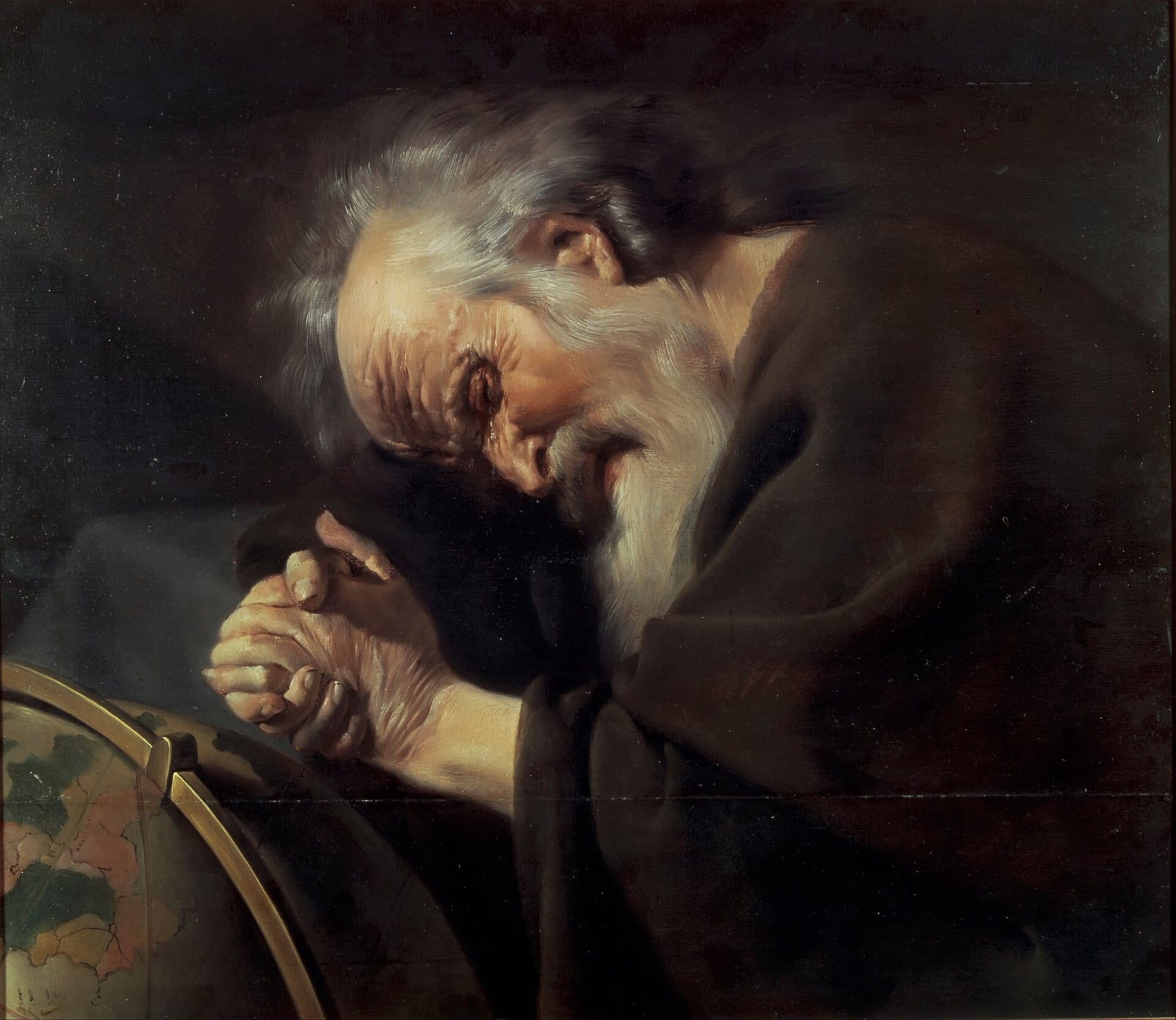
Heráclito, de Johannes Moreelse · Public domain
उनके अपने शब्दों में
«Though this Word is true evermore, yet men are as unable to understand it when they hear it for the first time as before they have heard it at all. For, though all things come to pass in accordance with this Word, men seem as if they had no experience of them, when they make trial of words and deeds such as I set forth, dividing each thing according to its nature and showing how it truly is. But other men know not what they are doing when awake, even as they forget what they do in sleep.»DK 22 B1, transmitido por Sexto Empírico, Contra los matemáticos VII 132; Aristóteles (Retórica III 5) lo cita como comienzo del libro. Griego: Diels-Kranz; inglés: John Burnet, Early Greek Philosophy (1908), fr. 2 de la numeración de Bywater; español: traducción propia.

मूल विचार
Logos: In sixth-century Greek, *logos* means word and discourse, but also account, reckoning and proportion.
संदर्भ में देखें
जीवनी
7 मिनट का पाठ
स्पैनिश मूल से सहायता-प्राप्त अनुवाद, मातृभाषी अनुवादक द्वारा समीक्षा लंबित।
एफ़ेसस का «रहस्यमय»
हेराक्लिटस की कोई भी पूर्ण कृति सुरक्षित नहीं है। उन्होंने आयोनियाई गद्य में केवल एक पुस्तक लिखी, जो हेलेनिस्टिक युग में भी प्रचलित थी और बाद में लुप्त हो गई; आज हम जो पढ़ते हैं, वे लगभग एक सौ तीस छोटे वाक्य हैं, जिन्हें अन्य लेखकों ने एक हज़ार वर्ष से भी अधिक समय तक कभी अक्षरशः और कभी स्मृति से उद्धृत किया: प्लेटो और अरस्तू, प्लूटार्क, सेक्स्टस एम्पिरिकस, मार्कस ऑरेलियस, अलेक्ज़ान्द्रिया के क्लेमेंट, रोम के हिप्पोलिटस, डायोजिनीज़ लेर्शियस, स्टोबियस। हर्मन डील्स के संस्करण (1903) के बाद से उन्हें एक संख्या से उद्धृत किया जाता है, जिसके पहले संकेताक्षर DK 22 B आता है। उनका रूप देववाणी और सूक्ति का है, और प्राचीन काल को भी वे कठिन लगते थे: फ़्लियस के टिमोन ने उन्हें «पहेलियों में बोलने वाला» कहा, और बाद की परंपरा ने उन्हें «रहस्यमय» की उपाधि दी।
500 ई.पू. के आसपास का एफ़ेसस
ईसवी तीसरी शताब्दी में अपोलोडोरस के कालक्रम का अनुसरण करते हुए लिखने वाले डायोजिनीज़ लेर्शियस उन्हें ब्लोसोन का पुत्र बताते हैं — कुछ अन्य के अनुसार हेराकोन का — और उनकी प्रौढ़ावस्था को 69वें ओलंपियाड (504–501 ई.पू.) में रखते हैं। यह तिथि प्राचीन कालक्रम-लेखकों की एक परिपाटी है, जो किसी लेखक के उत्कर्ष को लगभग चालीस वर्ष की आयु में रखते थे, और इससे उनके जन्म को लगभग 540–535 ई.पू. में रखा जा सकता है। उनका नगर एशिया माइनर के तट के बड़े आयोनियाई नगर-राज्यों में से एक था, छठी शताब्दी के मध्य से फ़ारस के अधीन, और आर्टेमिस के मंदिर के लिए प्रसिद्ध, जो यूनानी जगत के सबसे विशाल मंदिरों में से एक था। हेराक्लिटस का पाइथागोरस और ज़ेनोफ़ेनीज़ का भूतकाल में उल्लेख करना, और पार्मेनिडीज़ का मानो उन्हें उत्तर देना, छठी और पाँचवीं शताब्दी के संधिकाल वाले कालक्रम की पुष्टि करता है।
शेष लगभग सब कुछ संदिग्ध है। डायोजिनीज़ द्वारा उद्धृत रोड्स के एंटिस्थनीज़ बताते हैं कि वे एफ़ेसस के राजवंश से थे और उन्होंने बासिलेउस की उपाधि अपने भाई को सौंप दी थी, जो उनके समय में धार्मिक और सम्मानसूचक कार्य बनाए हुए थी। जॉन बर्नेट का मत था कि उनके जीवन के बारे में शायद यही एकमात्र जानकारी स्वीकार की जा सकती है; शेष, जैसा कि आगे दिखेगा, उनके अपने वाक्यों से गढ़ी गई कहानियाँ हैं।
मंदिर में रखी एक पुस्तक
डायोजिनीज़ के अनुसार उनकी पुस्तक «प्रकृति के विषय में» थी और तीन प्रवचनों में बँटी थी — विश्व पर, राजनीति पर और धर्मशास्त्र पर; उन्होंने उसे आर्टेमिस के मंदिर में रख दिया और जान-बूझकर दुर्बोध शैली में लिखा, ताकि केवल समर्थ लोग ही उसके निकट आएँ। न शीर्षक निश्चित है, न विभाजन: प्राचीन लेखक उसे «म्यूज़» या «जीवन-पथ के लिए अचूक पतवार» के नाम से भी उद्धृत करते थे, और तीन भागों का बँटवारा संभवतः उस व्यवस्था को दर्शाता है जो उसके टीकाकारों ने उसे दी। इसके विपरीत, खंड जो स्पष्ट दिखाते हैं, वह एक सोची-समझी शैली है — सममित वाक्य, शब्द-क्रीड़ा और विरोधाभास — डेल्फ़ी के देवता की छवि में, जो «न कहता है, न छिपाता है, बल्कि संकेत देता है» (B93)।
ज्ञानियों के और अपने नगर के विरुद्ध
हेराक्लिटस लगभग सबके बारे में तिरस्कार से बोलते हैं। बहुत-सी बातें जान लेना समझ रखना नहीं सिखाता, वे लिखते हैं: वरना वह हेसियड, पाइथागोरस, ज़ेनोफ़ेनीज़ और हेकाटियस को सिखा देता (B40)। होमर इस योग्य है कि उसे प्रतियोगिताओं से निकाल दिया जाए और कोड़े लगाए जाएँ, और आर्किलोकस को भी (B42); हेसियड, जो अधिकांश लोगों का गुरु है, यह नहीं जानता था कि दिन और रात एक ही हैं (B57)। वे अपने सह-नागरिकों को भी नहीं छोड़ते: एफ़ेसस के सभी वयस्क फाँसी लगा लें और नगर लड़कों के लिए छोड़ दें, तो अच्छा हो, क्योंकि उन्होंने अपने सर्वश्रेष्ठ व्यक्ति हर्मोडोरस को निर्वासित कर दिया (B121)। इस अभिजात स्वर के — जिसके लिए एक व्यक्ति, यदि वह सर्वश्रेष्ठ हो, दस हज़ार के बराबर है (B49) — अनुरूप एक कठोर नैतिकता है: जनता को विधि के लिए वैसे ही लड़ना चाहिए जैसे अपनी नगर-प्राचीर के लिए (B44)।
खंड क्या सिखाते हैं
उनके चिंतन का केंद्र लोगोस है, एक ऐसा शब्द जिसका यूनानी में एक साथ अर्थ है वाणी, गणना और अनुपात। जो खंड संभवतः पुस्तक का आरंभ था (B1), वह कहता है कि यह लोगोस सदा है, किंतु मनुष्य उसे न सुनने से पहले समझते हैं, न सुनने के बाद, और सोए हुओं की तरह जीते हैं। लेखक को नहीं, लोगोस को सुनकर, B50 कहता है, यह स्वीकार करना बुद्धिमानी है कि सब वस्तुएँ एक हैं। यह एकता निश्चलता नहीं, विरोधियों का तनाव है: जो असहमत है, वह स्वयं से सहमत है, जैसे धनुष और वीणा (B51); ऊपर और नीचे का मार्ग एक ही है (B60); युद्ध सब वस्तुओं का पिता है (B53) और न्याय कलह है (B80)। संसार को, जो सबके लिए एक ही है, न किसी देवता ने बनाया न किसी मनुष्य ने: वह सदा से था, है और रहेगा — एक चिरजीवी अग्नि, जो माप के अनुसार प्रज्वलित होती है और माप के अनुसार बुझती है (B30)।
नदी का बिंब यहीं से आता है। जो एक ही नदियों में उतरते हैं, उन पर सदा भिन्न जल बहकर आते हैं (B12): नदी बनी रहती है, क्योंकि जल बदलता है। प्लेटो ने इस सिद्धांत को इस सूत्र में समेटा कि «सब कुछ गतिमान है और कुछ भी स्थिर नहीं रहता» (क्रेटिलस 402a), और परंपरा ने इसे पांता रेई — «सब कुछ बहता है» — का आदर्श-वाक्य बना दिया, जो किसी भी खंड में नहीं मिलता। जी. एस. किर्क (1954) के बाद से अनेक विद्वान मानते हैं कि सार्वभौम प्रवाह एक प्लेटोनी व्याख्या है और हेराक्लिटस बल्कि उस स्थिरता पर ज़ोर देते थे जो मापित परिवर्तन से जन्म लेती है; अन्य, जैसे डैनियल डब्ल्यू. ग्राहम, यह पक्ष रखते हैं कि प्रवाह सचमुच उनके सिद्धांत का अंग था। आत्मा का अपना विशिष्ट स्थान है: हर मार्ग पर चलकर भी तुम उसकी सीमाएँ न पा सकोगे, इतना गहरा है उसका लोगोस (B45); शुष्क आत्मा सबसे बुद्धिमान है (B118); और स्वयं हेराक्लिटस लिखते हैं: «मैंने स्वयं को खोजा» (B101)।
किंवदंती
डायोजिनीज़ लेर्शियस एक उपन्यास-सरीखी जीवनी प्रस्तुत करते हैं। कहा जाता है कि हेराक्लिटस ने एफ़ेसस वालों के लिए विधान बनाने से इनकार कर दिया और आर्टेमिस के मंदिर में जाकर बच्चों के साथ गिट्टे खेलने लगे; मानव-द्वेषी होकर वे पहाड़ों में घास-पात खाकर रहे, जलोदर से ग्रस्त हुए, वैद्यों से पहेली में पूछा कि क्या वे वर्षा को सूखे में बदल सकते हैं, और जब वे उन्हें न समझ सके तो गर्मी से सूखने के लिए उन्होंने स्वयं को गोबर से ढँक लिया। साठ वर्ष की आयु में उनकी मृत्यु हुई; हर्मिपस के अनुसार उन्हें अगोरा में दफ़नाया गया, और कीज़िकस के नियेंथीज़ के अनुसार, गोबर के नीचे पहचान में न आने के कारण, कुत्ते उन्हें खा गए। बर्नेट ने, और अधिक विस्तार से आवा चिटवुड ने, दिखाया है कि ये कहानियाँ खंडों से ही गढ़ी गईं: जल बन जाने वाली आत्मा की मृत्यु (B36) से जलोदर निकला; उन शवों से, जिन्हें गोबर से भी पहले फेंक देना चाहिए (B96), गोबर; और खेलते बालक के रूप में काल (B52) से गिट्टे।
हेलेनिस्टिक मूल की एक अन्य परंपरा ने, जिसे सेनेका, जुवेनल और लूसियन ने फैलाया, उन्हें मानवीय मूर्खता पर रोने वाला दार्शनिक बना दिया, हँसने वाले डेमोक्रिटस के सामने; पुनर्जागरण और बारोक ने इस जोड़ी को चित्रकला का विषय बना दिया। उनके नाम से प्रचलित नौ पत्र भी परवर्ती हैं, जिनमें राजा दारा (डेरियस) को दिया गया वह उत्तर भी है जिसमें वे उसके दरबार में आने से विनम्रतापूर्वक इनकार करते हैं: वे ईसा-पूर्व पहली और ईसवी पहली शताब्दी के सिनिक परिवेश से आते हैं। अधिक विश्वसनीय वह दृश्य है जिसे अरस्तू सुनाते हैं: कुछ आगंतुक उन्हें भट्टी के पास आग तापते देखकर भीतर आने में हिचकिचा रहे थे, तो उन्होंने कहा कि भीतर आ जाओ, क्योंकि यहाँ भी देवता हैं।
विरासत
उनका प्रभाव तात्कालिक भी था और स्थायी भी। अरस्तू बताते हैं कि प्लेटो युवावस्था में कट्टर हेराक्लिटसवादी क्रेटिलस के संपर्क में रहे और उनसे यह धारणा ग्रहण की कि इंद्रियगोचर जगत सदा प्रवाहमान है; स्टोइकों ने अग्नि और लोगोस को अपनी भौतिकी का केंद्र बनाया, और क्लीन्थीज़ ने उनकी पुस्तक पर एक व्याख्या लिखी। ईसाई लेखकों ने उन्हें कभी प्रशंसा के लिए उद्धृत किया, कभी खंडन के लिए: रोम के हिप्पोलिटस के कारण, जिन्होंने उन्हें नोएटस के पाखंड का स्रोत बताया, हम कई प्रमुख खंड जानते हैं। आधुनिक युग में हेगेल ने कहा कि हेराक्लिटस का ऐसा कोई कथन नहीं जिसे उन्होंने अपने «तर्कशास्त्र» में न अपनाया हो; नीत्शे उनके प्रशंसक थे; हाइडेगर ने 1943 और 1944 के अपने व्याख्यान-पाठ्यक्रम और 1966–1967 में यूजेन फ़िंक के साथ एक संगोष्ठी उन्हें समर्पित की। वे आज भी सबसे अधिक पढ़े जाने वाले पूर्व-सुकराती दार्शनिक हैं, शायद इसलिए कि उनके वाक्य, बिखरे हुए और तराशे हुए, हर युग को उनमें स्वयं को पहचानने का निमंत्रण देते हैं।
स्रोत: Diógenes Laercio. Vidas y opiniones de los filósofos ilustres, libro IX, 1–17 (Heráclito), y II 22, VII 174, s. III d. C. Trad. inglesa de C. D. Yonge, Bohn, Londres, 1853 (Project Gutenberg n.º 57342); trad. inglesa de R. D. Hicks, Loeb Classical Library, 1925 (Wikisource). · Diels, Hermann y Kranz, Walther. Die Fragmente der Vorsokratiker, 6.ª ed., 3 vols. Weidmann, Berlín, 1951–1952; cap. 22 (Heraklit), A (testimonios) y B (fragmentos 1–126, más los dudosos y espurios). Texto griego de los fragmentos B consultado en la transcripción de Wikisource en griego. · Kirk, G. S., Raven, J. E. y Schofield, M. The Presocratic Philosophers: A Critical History with a Selection of Texts, 2.ª ed. Cambridge University Press, Cambridge, 1983, cap. VI (Heraclitus of Ephesus). Trad. esp. de Jesús García Fernández, Los filósofos presocráticos, Gredos, Madrid, 1987. · Kahn, Charles H. The Art and Thought of Heraclitus: An Edition of the Fragments with Translation and Commentary. Cambridge University Press, Cambridge, 1979. · Burnet, John. Early Greek Philosophy, 2.ª ed. Adam and Charles Black, Londres, 1908, cap. III (Herakleitos of Ephesos), §§ 63–80 (Project Gutenberg n.º 67097).
कालक्रम
जीवन, वर्ष-दर-वर्ष
प्रत्येक बिंदु एक प्रमाणित घटना है। उसे स्रोत और निश्चितता के स्तर सहित पढ़ने के लिए क्लिक करें।
लगभग 535 ई.पू.0 वर्षÉfeso (Jonia)
Birth
Born in Ephesus, son of Bloson (or of Heracon, according to others). The date is inferred from the floruit Apollodorus sets in the 69th Olympiad; Wikidata records 535 BCE. Years BCE are expressed as negative numbers.
संभावितDiógenes Laercio. Vidas y opiniones de los filósofos ilustres, libro IX, 1–17 (Heráclito), y II 22, VII 174, s. III d. C. Trad. inglesa de C. D. Yonge, Bohn, Londres, 1853 (Project Gutenberg n.º 57342); trad. inglesa de R. D. Hicks, Loeb Classical Library, 1925 (Wikisource).
उनके निधन के बाद
- लगभग 385 ई.पू.Plato's Cratylus
- लगभग 260 ई.पू.Cleanthes comments on his book
- लगभग 225 ई.पू.Hippolytus quotes his fragments
- 1877Bywater's edition
- 1903Diels fixes the numbering
- 1943Heidegger lectures on Heraclitus
- 1979The Art and Thought of Heraclitus
लगभग 535 ई.पू. · 0 वर्ष
Birth
Born in Ephesus, son of Bloson (or of Heracon, according to others). The date is inferred from the floruit Apollodorus sets in the 69th Olympiad; Wikidata records 535 BCE. Years BCE are expressed as negative numbers.
संभावित
लगभग 504 ई.पू. · 31 वर्ष
Floruit according to Apollodorus
Diogenes Laertius (IX 1), following Apollodorus' chronology, places his prime in the 69th Olympiad (504–501 BCE), in the reign of Darius I.
परंपरा
लगभग 500 ई.पू.
He cedes the royal title
According to Antisthenes of Rhodes (in Diogenes Laertius IX 6), he cedes to his brother the title of basileus, with religious functions. Date unknown; Burnet considers it the most plausible biographical fact.
परंपरा
499 ई.पू.
The Ionian Revolt
The Ionian cities revolt against Persia (499–494 BCE); Ephesus remains in the Persian orbit. It is the political setting of the civic tensions reflected in his fragments.
प्रमाणित
लगभग 490 ई.पू.
Banishment of Hermodorus
The Ephesians banish his friend Hermodorus, "the best man among them", and Heraclitus rebukes them (B121). The date is unknown: Zeller placed it after 478 BCE and Burnet thought it possible under Persian rule.
विवादित
लगभग 480 ई.पू.
The book deposited in the Artemision
According to Diogenes Laertius (IX 6), he deposits his book in the temple of Artemis. The report is late, though dedicating writings in sanctuaries was a known practice.
परंपरा
लगभग 475 ई.पू. · 60 वर्ष
Death
Dies at about sixty, according to Diogenes Laertius (IX 3). The circumstances (dropsy, dung, dogs) are legendary and derived from his fragments.
परंपरा
लगभग 385 ई.पू.
Plato's Cratylus
Plato ascribes to Heraclitus the view that "everything moves and nothing stays" and that one cannot step twice into the same river (402a); Aristotle reports that Plato knew the Heraclitean Cratylus in his youth.
संभावित
लगभग 260 ई.पू.
Cleanthes comments on his book
The Stoic Cleanthes writes Explanations of Heraclitus in four books (Diogenes Laertius VII 174); the Stoics adopt fire and logos.
प्रमाणित
लगभग 225 ई.पू.
Hippolytus quotes his fragments
In the Refutation of All Heresies (IX 9–10), Hippolytus of Rome transcribes a series of fragments (B1, B50–B67) to show that Noetus' heresy derives from Heraclitus.
प्रमाणित
1877
Bywater's edition
Ingram Bywater publishes Heracliti Ephesii reliquiae, the first standard modern critical edition.
प्रमाणित
1903
Diels fixes the numbering
Hermann Diels publishes Die Fragmente der Vorsokratiker; his numbering, revised by Walther Kranz (5th ed., 1934–1937; 6th, 1951–1952), is the one used today (DK 22 B).
प्रमाणित
1943
Heidegger lectures on Heraclitus
Martin Heidegger devotes his summer-semester courses of 1943 and 1944 to Heraclitus; in winter 1966–1967 he leads a seminar on the fragments with Eugen Fink.
प्रमाणित
1979
The Art and Thought of Heraclitus
Charles H. Kahn publishes an annotated edition that rearranges the fragments and argues for the book's literary unity and deliberate ambiguity.
प्रमाणित
कृतियाँ
आवश्यक कृतियाँ
वे कृतियाँ जिनके बिना उनकी विरासत को समझा नहीं जा सकता।
लिखित कृति · लगभग 500 ई.पू.
On Nature (lost book)
Περὶ φύσεως (título convencional)
A book in Ionic prose, written around 500 BCE and, by tradition, deposited in the temple of Artemis at Ephesus. It was read and commented on for centuries—Theophrastus, Cleanthes, Sphaerus and several grammarians explained it—and was lost in late antiquity. Its content is reconstructed from some hundred and thirty quotations: the doctrine of the common logos, the unity and tension of opposites, the ever-living fire kindling and going out in measures, the soul and its depth, the critique of Homer, Hesiod and Pythagoras, mystery religion and the political life of Ephesus. The original order of the sentences is unknown; each editor proposes his own.
15 संस्करण · amazon.com

समीक्षात्मक संस्करण · 1903
Fragments (Diels-Kranz 22 B 1–126)
Ἡρακλείτου ἀποσπάσματα (DK 22 B)
The corpus of verbatim quotations that modern philology ascribes to Heraclitus, some 125 sentences grouped as DK 22 B, together with the indirect testimonies (DK 22 A). They come from authors who quoted them for their own purposes: Hippolytus of Rome (who transmits B1 and the series B50–B67), Clement of Alexandria, Plutarch, Sextus Empiricus, Diogenes Laertius, Stobaeus, Marcus Aurelius, Porphyry, Origen and others. Each quotation raises problems of delimitation—where Heraclitus' sentence ends and paraphrase begins—and of dialect. Later editions (Marcovich 1967, Kahn 1979, Mouraviev 1999–2011, Laks and Most 2016) rearrange the material, but the DK reference remains universal.
7 संस्करण · amazon.com

वचन
किसी निश्चित कृति में स्थित वचन। प्रत्येक के साथ उसका स्रोत और विश्वसनीयता का स्तर है।
Though this Word is true evermore, yet men are as unable to understand it when they hear it for the first time as before they have heard it at all. For, though all things come to pass in accordance with this Word, men seem as if they had no experience of them, when they make trial of words and deeds such as I set forth, dividing each thing according to its nature and showing how it truly is. But other men know not what they are doing when awake, even as they forget what they do in sleep.τοῦ δὲ λόγου τοῦδ᾽ ἐόντος ἀεὶ ἀξύνετοι γίνονται ἄνθρωποι καὶ πρόσθεν ἢ ἀκοῦσαι καὶ ἀκούσαντες τὸ πρῶτον· γινομένων γὰρ πάντων κατὰ τὸν λόγον τόνδε ἀπείροισιν ἐοίκασι, πειρώμενοι καὶ ἐπέων καὶ ἔργων τοιούτων, ὁκοίων ἐγὼ διηγεῦμαι κατὰ φύσιν διαιρέων ἕκαστον καὶ φράζων ὅκως ἔχει· τοὺς δὲ ἄλλους ἀνθρώπους λανθάνει ὁκόσα ἐγερθέντες ποιοῦσιν, ὅκωσπερ ὁκόσα εὕδοντες ἐπιλανθάνονται.
सत्यापितDK 22 B1, transmitido por Sexto Empírico, Contra los matemáticos VII 132; Aristóteles (Retórica III 5) lo cita como comienzo del libro. Griego: Diels-Kranz; inglés: John Burnet, Early Greek Philosophy (1908), fr. 2 de la numeración de Bywater; español: traducción propia.
अप्रामाणिक या विवादित आरोपण वाले उद्धरण (5)
«Everything flows (panta rhei).»
The formula appears in no fragment. It sums up Plato's reading of Heraclitus ("everything moves and nothing stays", Cratylus 402a), and the literal expression πάντα ῥεῖ comes from late commentators such as Simplicius. Many scholars think Heraclitus stressed the stability resulting from measured change, not universal flux.
«No man ever steps in the same river twice, for it is not the same river and he is not the same man.»
A modern expansion combining B12, B91 and the disputed B49a ("we step and do not step into the same rivers, we are and are not"). The second half, about the man no longer being the same, is in no ancient source.
«The only constant is change.»
Widespread in business books and social media. It has no ancient source; it is a modern paraphrase of the flux commonplace.
«The soul becomes dyed with the colour of its thoughts.»
Frequently attributed to Heraclitus, it is by Marcus Aurelius, Meditations V 16, six centuries later.
«Out of every one hundred men, ten shouldn't even be there, eighty are just targets, nine are the real fighters… but one is a warrior.»
It circulates in military circles and online under Heraclitus' name. It appears in no collection of fragments and in no ancient author.
अंतिम शब्द
उनके अंतिम शब्दों का कोई सत्यापन-योग्य अभिलेख उपलब्ध नहीं है।
No record of his last words survives. Diogenes Laertius (IX 3) only transmits the riddle he supposedly put to the doctors—whether they could turn a downpour into drought—within an account of his death that scholars regard as derived from his own fragments (B36).
स्रोत: Diógenes Laercio. Vidas y opiniones de los filósofos ilustres, libro IX, 1–17 (Heráclito), y II 22, VII 174, s. III d. C. Trad. inglesa de C. D. Yonge, Bohn, Londres, 1853 (Project Gutenberg n.º 57342); trad. inglesa de R. D. Hicks, Loeb Classical Library, 1925 (Wikisource).
पूछें
उनकी कृतियाँ क्या उत्तर देती हैं
मानवता के बारह महान प्रश्न और उनके ग्रंथ उनका जो उत्तर देने देते हैं, संदर्भों सहित। हम कभी उनके मुख में अपने शब्द नहीं रखते।
परम सत्य क्या है? क्या ईश्वर है?
A common logos and an ever-living fire that no god made
निराकार परम सत्तास्पष्ट रूप से कहा है
For Heraclitus the ultimate is the logos, the measure according to which everything happens, and the ever-living fire that is kindled and quenched in measures. Fragment B30 explicitly denies that any of the gods or of men made the cosmos: it always was, is and will be. The divine here has no face of craftsman or father. Yet Heraclitus does not abandon religious language: B32 says that the one, the only wise thing, is unwilling and willing to be called by the name of Zeus, and B67 calls god the unity of opposites, day and night, winter and summer, war and peace. It is an impersonal and intelligent principle that the traditional name of the god only half designates.
इस प्रश्न की अन्य गुरुओं से तुलना करेंमैं कौन हूँ? क्या कोई सच्चा आत्म है?
The soul has no limits: its measure is the common logos
आत्मन् ही ब्रह्म हैउनके सिद्धांत से निष्कर्षित
Heraclitus says of himself that he searched himself (B101) and that it belongs to all humans to know themselves and to be sound of mind (B116). But what he finds in searching himself is not a private interiority: you would not find the limits of the soul though you travelled every road, so deep is its logos (B45). That logos is common to all, as thinking is common (B113), and the error of the many lies in living as if they had a private understanding (B2). The soul is moreover fiery and changing: it comes from water and dies into water (B36). His work suggests that the depth of the self coincides with the measure governing the cosmos, though he never states an identity.
इस प्रश्न की अन्य गुरुओं से तुलना करेंहम दुःख क्यों भोगते हैं?
Sickness makes health sweet: whoever misses the logos suffers
हम क्या हैं, इसका अज्ञानउनके सिद्धांत से निष्कर्षित
Heraclitus devotes no fragment to the cause of suffering, but his work allows an attitude to be reconstructed. Opposites are inseparable: sickness makes health pleasant, hunger satiety, weariness rest (B111), and it would not be better for humans to get all they wish (B110). For god all things are beautiful, good and just; it is humans who have taken some things as unjust and others as just (B102). War itself is common and justice is strife (B80). Pain thus arises from a partial view: from those who do not grasp the logos although everything happens according to it (B1) and who live as if asleep.
इस प्रश्न की अन्य गुरुओं से तुलना करेंमृत्यु के बाद क्या होता है?
At death things await humans that they neither expect nor imagine
मौन या संयमउनके सिद्धांत से निष्कर्षित
Heraclitus speaks of death in several fragments, always in his enigmatic style, and none offers a description of the beyond. B27 says that at death things await humans that they neither expect nor imagine; B62, that immortals and mortals live each other's death; B36 places the soul in the cycle of elements, for to souls it is death to become water. B25 promises greater portions to greater deaths, perhaps those of the fallen in battle. Together they suggest that death is one more transformation within the flux governed by the logos, and that what comes after does not match usual expectations; they do not allow us to affirm personal survival or to deny it.
इस प्रश्न की अन्य गुरुओं से तुलना करेंमुक्ति या उद्धार कैसे प्राप्त होता है?
The wise is one thing: to know the thought that steers all through all
प्रत्यक्ष ज्ञान सेउनके सिद्धांत से निष्कर्षित
Heraclitus speaks not of salvation but of waking up. Humans live as if asleep, not understanding the logos although everything happens according to it (B1), and each turns towards a private world. The wise, says B41, is one thing: to know the thought that steers all things through all things. That understanding is not given by much learning, which did not teach Hesiod or Pythagoras (B40), but by listening to the logos and agreeing that all is one (B50). B112 joins knowledge and conduct: sound thinking is the greatest virtue, and wisdom is to speak the truth and act according to nature, heeding it. What frees is grasping the common measure.
इस प्रश्न की अन्य गुरुओं से तुलना करेंक्या गुरु आवश्यक है?
Not to me but to the logos: borrowed learning gives no understanding
कोई आध्यात्मिक सत्ता नहींस्पष्ट रूप से कहा है
Heraclitus is perhaps the Greek thinker most hostile to the authority of recognised sages. Much learning does not teach understanding, says B40; otherwise it would have taught Hesiod, Pythagoras, Xenophanes and Hecataeus. Homer deserves to be thrown out of the contests and flogged, and Hesiod, teacher of most, did not know that day and night are one. He does not even claim authority for himself: it is wise, listening not to him but to the logos, to agree that all is one (B50). And against any school he sets his own method: I searched myself (B101). No one can grasp for another the logos that is common to all.
इस प्रश्न की अन्य गुरुओं से तुलना करेंक्या संसार वास्तविक है?
Ever-living fire, kindled and quenched in measures
परिवर्तनशील प्राकृतिक व्यवस्थास्पष्ट रूप से कहा है
For Heraclitus the world is real and in perpetual transformation. B30 describes it as an ever-living fire kindled and quenched in measures, which no one made and which always was, is and will be. Upon those who step into the same rivers, other and other waters flow (B12): the identity of things holds through change, like that of the river. Opposites are joined in tension, as in the bow and the lyre (B51), and war is the father of all things (B53). But the flux is not chaos: the sun will not overstep its measures (B94). The real is the changing course of things, ordered by a logos to which the wise attune themselves.
इस प्रश्न की अन्य गुरुओं से तुलना करेंप्रेम क्या है?
No fragment speaks of love; the uniting force is tension
इस पर कुछ नहीं कहा
Among Heraclitus' surviving fragments there is none devoted to love, either erotic or as goodwill. What joins things in his work is not attraction but the tension of opposites: what differs agrees with itself, a harmony of opposing tensions, as in the bow and the lyre (B51). War is the father of all (B53) and justice is strife (B80). Heraclitus even reproaches Homer for wishing strife would vanish from among gods and men, since without it there would be no harmony (A22). It would be forced to extract a doctrine of love from this; the closest is hidden harmony, which is better than the manifest (B54).
इस प्रश्न की अन्य गुरुओं से तुलना करेंक्या हम स्वतंत्र हैं, या सब कुछ पूर्वनिर्धारित है?
Character is a human being's destiny
नियति और उत्तरदायित्वस्पष्ट रूप से कहा है
Heraclitus' most quoted fragment on this question is B119: character is a human being's destiny, his daimon. The sentence can be read in two senses that do not exclude each other: each person's destiny is not an alien power but is identified with his way of being; and, at the same time, that character works as a force that guides him. Elsewhere Heraclitus states that everything happens according to the logos (B1) and through strife and necessity (B80), and that the sun will not overstep its measures, for the Erinyes, helpers of Justice, would find it out (B94). There is an order governing everything, but the centre of gravity of human destiny lies in conduct.
इस प्रश्न की अन्य गुरुओं से तुलना करेंध्यान या प्रार्थना क्यों करें?
Praying to statues is talking to walls: one must grasp the logos
यथार्थ को जैसा है वैसा देखनाउनके सिद्धांत से निष्कर्षित
Heraclitus sharply criticises the religious forms of his time. Those who purify themselves by defiling themselves with blood are like someone who, having stepped into mud, would wash it off with mud; and they pray to statues as if one were to converse with houses, knowing nothing of gods or heroes (B5). Mystery rites, as practised, are unholy (B14). What he proposes instead is a form of attention: to listen to the logos and not to him (B50), to wake from the sleep in which most live (B1) and to search oneself (B101). The aim is not to gain favours but to see what is, the common logos that nature, which loves to hide, conceals.
इस प्रश्न की अन्य गुरुओं से तुलना करेंक्या बुद्धि परम को जान सकती है?
Nature loves to hide; the logos is common, but few grasp it
गूढ़ ज्ञानउनके सिद्धांत से निष्कर्षित
Heraclitus believes the logos can be understood — it is common to all, as thinking is (B113) — but that almost no one does. Nature loves to hide (B123), invisible harmony is better than visible (B54), and the lord whose oracle is at Delphi neither speaks nor conceals but gives signs (B93), just like his own enigmatic style, which earned him the nickname “the Obscure”. Eyes and ears are bad witnesses for those with barbarian souls (B107), and much learning does not give understanding (B40). Unless one expects the unexpected, one will not find it (B18). The ultimate is accessible but requires deciphering the signs; truth is in plain sight, hidden from those who cannot look.
इस प्रश्न की अन्य गुरुओं से तुलना करेंसंसार से हटें या उसे बदलें?
The people must fight for the law as for its city wall
समाज को व्यवस्थित करनास्पष्ट रूप से कहा है
Ancient biography relates that Heraclitus renounced hereditary kingship in favour of his brother, refused to give laws to Ephesus and ended up living in the mountains, feeding on herbs. But these anecdotes, transmitted by Diogenes Laertius, are largely regarded as inferences from his fragments. The fragments themselves speak otherwise: the people must fight for the law as for the wall (B44); those who speak with understanding must rely on what is common to all, as a city on its law, and far more strongly, for all human laws are nourished by one, the divine (B114). Wisdom thus has a civic dimension: just law reflects the logos.
इस प्रश्न की अन्य गुरुओं से तुलना करें
निकटता और तनाव
निकटता और तनाव
उनके मतों के आधार पर प्रश्न-दर-प्रश्न आकलित। प्रत्येक सहमति या टकराव का कारण क्लिक करने पर।
इनसे मिलता-जुलता सोचते हैं
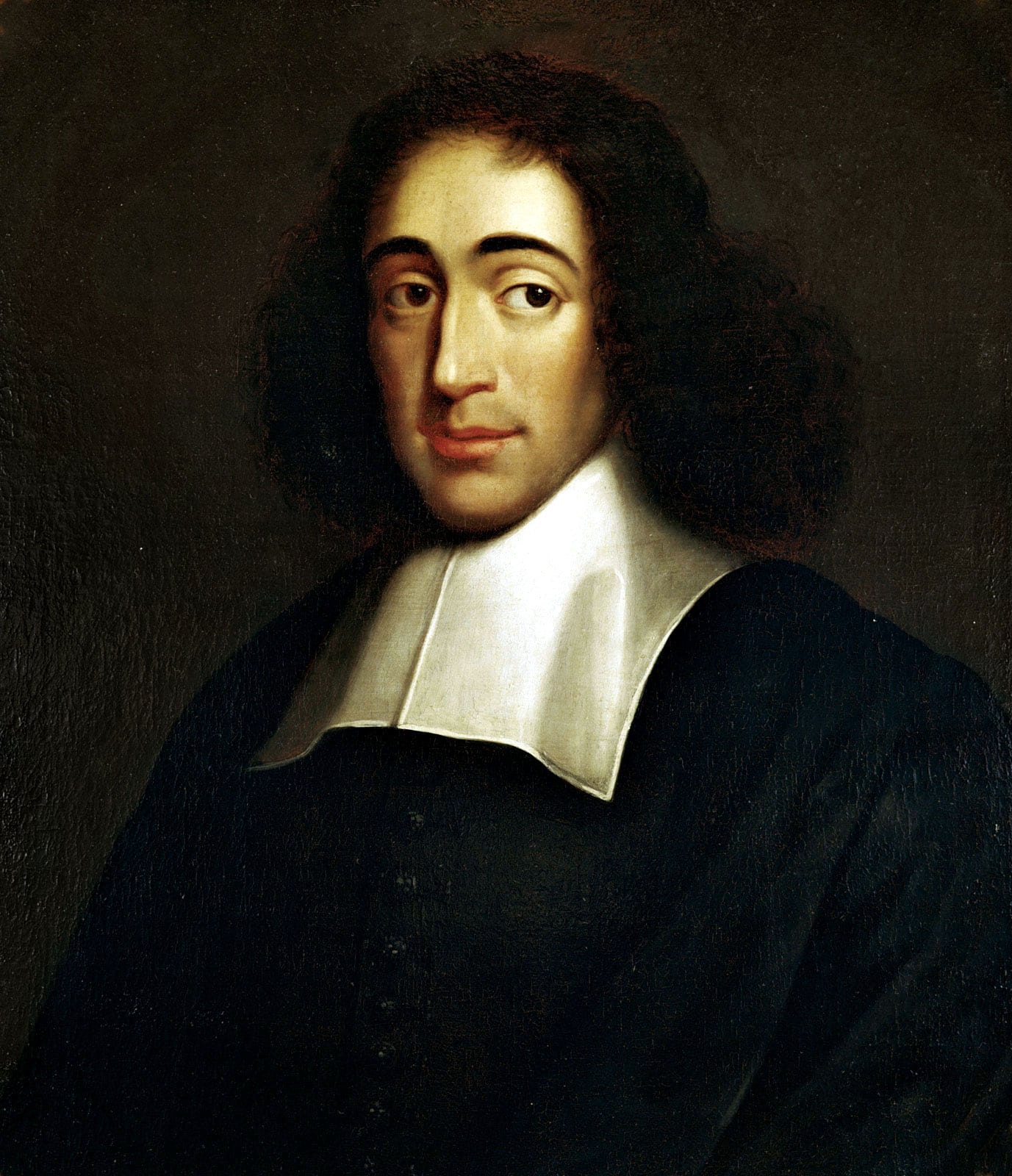
Baruch Spinoza
इन पर सहमत: परम सत्य क्या है? क्या ईश्वर है? · मैं कौन हूँ? क्या कोई सच्चा आत्म है? · हम दुःख क्यों भोगते हैं?
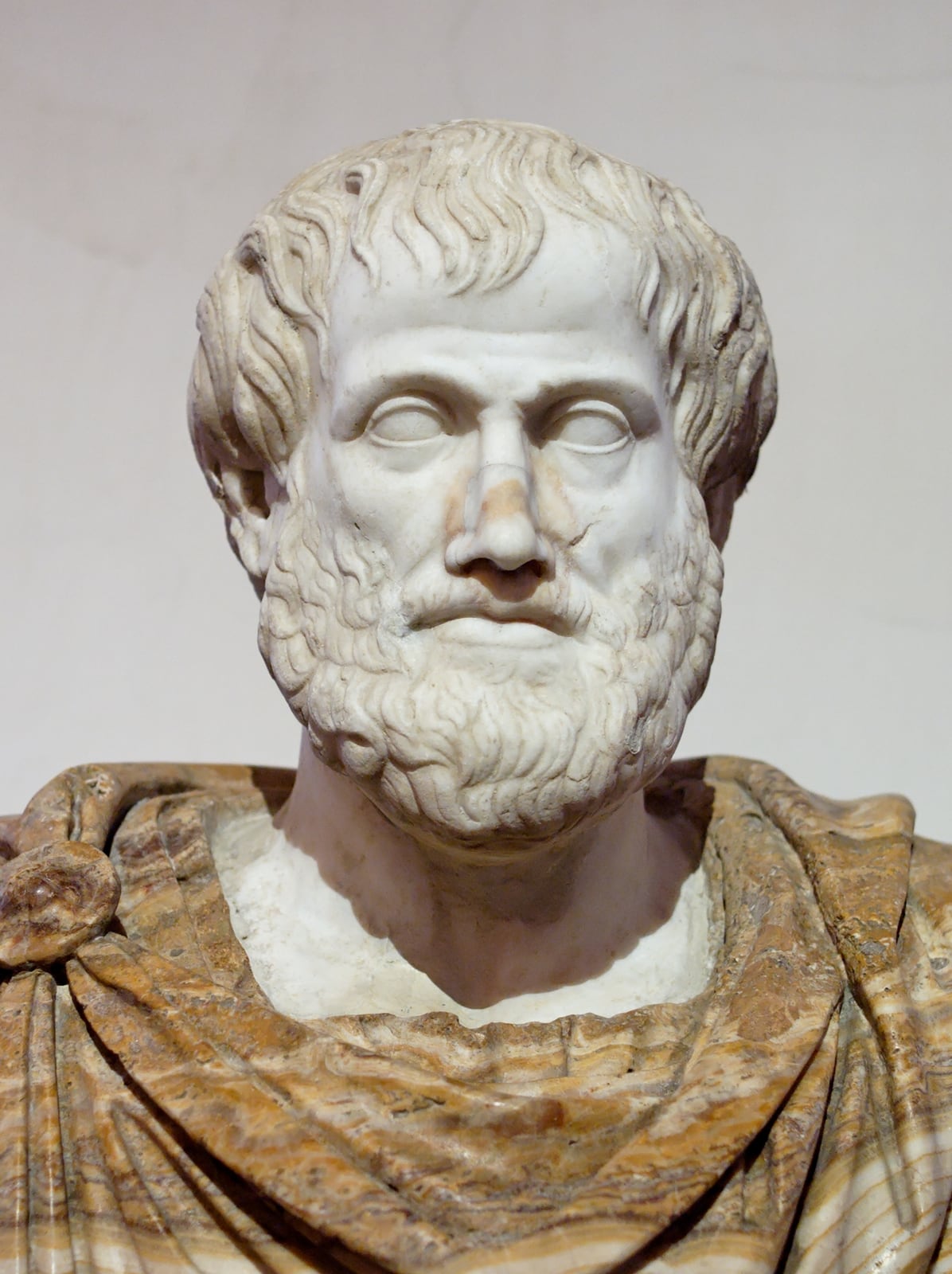
Aristotle
इन पर सहमत: परम सत्य क्या है? क्या ईश्वर है? · मृत्यु के बाद क्या होता है? · क्या संसार वास्तविक है?
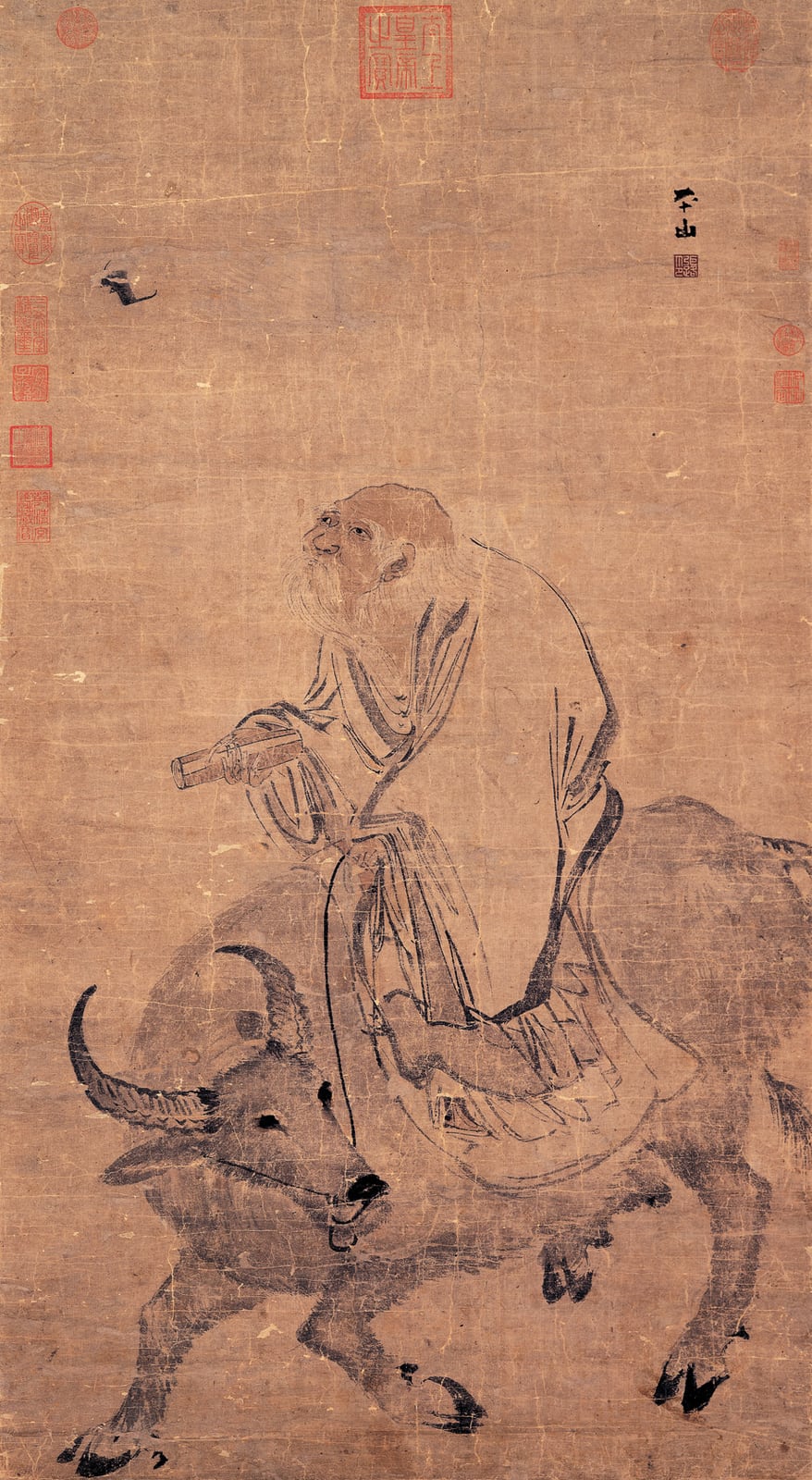
Laozi
इन पर सहमत: मृत्यु के बाद क्या होता है? · क्या संसार वास्तविक है? · ध्यान या प्रार्थना क्यों करें?
Leo Tolstoy
इन पर सहमत: क्या हम स्वतंत्र हैं, या सब कुछ पूर्वनिर्धारित है? · परम सत्य क्या है? क्या ईश्वर है? · मैं कौन हूँ? क्या कोई सच्चा आत्म है?
इनसे भिन्न सोचते हैं

Chaitanya Mahaprabhu
इन पर टकराव: मैं कौन हूँ? क्या कोई सच्चा आत्म है? · क्या गुरु आवश्यक है?

Dōgen
इन पर टकराव: मैं कौन हूँ? क्या कोई सच्चा आत्म है? · क्या गुरु आवश्यक है?
Rumi
इन पर टकराव: मैं कौन हूँ? क्या कोई सच्चा आत्म है? · क्या गुरु आवश्यक है?
Jesus of Nazareth
इन पर टकराव: मैं कौन हूँ? क्या कोई सच्चा आत्म है? · क्या गुरु आवश्यक है?
प्रसंग और वृत्तांत
प्रसंग और वृत्तांत
साक्ष्यc. 500 a. C. (incierto)
"There are gods here too"
वृत्तांत का स्रोत: Aristotle, Parts of Animals I 5, 645a17–23, who introduces it with "it is said". It is the oldest testimony to an anecdote about Heraclitus and does not come from the late biographical tradition, though Aristotle writes a century and a half later.
विवादितc. 500 a. C.
The king who gave up the throne
वृत्तांत का स्रोत: Diogenes Laertius IX 6, quoting the Successions of Antisthenes of Rhodes (2nd century BCE). Strabo (XIV 1.3) confirms that the descendants of Androclus, founder of Ephesus, kept the royal title and its honours.
सत्यापन-योग्य नहींc. 490–480 a. C. (tradicional)
Knucklebones in the temple of Artemis
वृत्तांत का स्रोत: Diogenes Laertius IX 2–3 (3rd century CE), without a named source. Burnet (Early Greek Philosophy, § 63, n. 324) and Chitwood (Death by Philosophy, 2004) show how the biographical tradition derived these scenes from the fragments.
सत्यापन-योग्य नहींs. V a. C. (tradicional)
The Delian diver
वृत्तांत का स्रोत: Diogenes Laertius II 22 (life of Socrates, quoting Ariston) and IX 11–12 (quoting Seleucus the grammarian and Croton). It is not found in Plato or Xenophon.
विवादितc. 475 a. C. (tradicional)
Death under the dung
वृत्तांत का स्रोत: Diogenes Laertius IX 3–5, with the versions of Hermippus, Neanthes, Ariston and Hippobotus. Ava Chitwood (Death by Philosophy, 2004), and Burnet before her, showed that the story is built from his fragments: water as the death of soul (B36), corpses more fit to be thrown out than dung (B96), contempt for doctors (B58). The versions contradict one another.
स्रोत: Chitwood, Ava. Death by Philosophy: The Biographical Tradition in the Life and Death of the Archaic Philosophers Empedocles, Heraclitus, and Democritus. University of Michigan Press, Ann Arbor, 2004.
सत्यापन-योग्य नहींtópico helenístico y romano
The weeping philosopher
वृत्तांत का स्रोत: Seneca, On Anger II 10.5 and On Tranquillity of Mind 15.2; Juvenal, Satires X 28–32; Lucian, Philosophies for Sale 13–14. The word "melancholy" comes from Theophrastus according to Diogenes Laertius IX 6. It is a literary commonplace, not a biographical fact.
स्रोत: Séneca. De ira II 10.5 y De tranquillitate animi 15.2; Juvenal, Sátiras X 28–32; Luciano, Subasta de vidas 13–14 (el tópico de Heráclito que llora y Demócrito que ríe).
विवादितc. 500 a. C. (tradicional)
The book deposited in the temple
वृत्तांत का स्रोत: Diogenes Laertius IX 6; Theophrastus quoted in the same passage. Kahn (1979) and Burnet discuss the report without wholly rejecting it.
शिक्षाएँ
शिक्षाएँ
वे अवधारणाएँ जो उनके चिंतन को रूप देती हैं, उनके संदर्भ में समझाई गई।
Logoslogos
The book's central concept, present in B1, B2, B45, B50, B72 and B115.
स्रोत: Kahn, Charles H. The Art and Thought of Heraclitus: An Edition of the Fragments with Translation and Commentary. Cambridge University Press, Cambridge, 1979.
Unity of oppositesunidad-de-los-contrarios
A doctrine transmitted chiefly by Hippolytus (B51–B67), who links it to Noetus' theology.
स्रोत: Kirk, G. S., Raven, J. E. y Schofield, M. The Presocratic Philosophers: A Critical History with a Selection of Texts, 2.ª ed. Cambridge University Press, Cambridge, 1983, cap. VI (Heraclitus of Ephesus). Trad. esp. de Jesús García Fernández, Los filósofos presocráticos, Gredos, Madrid, 1987.
Ever-living firefuego-siempre-vivo
The cosmology of fragments B30, B31, B64, B66, B90.
स्रोत: Kirk, G. S. Heraclitus: The Cosmic Fragments. Cambridge University Press, Cambridge, 1954.
The river and fluxel-rio
Fragments B12, B49a and B91; testimonies of Plato (Cratylus 402a) and Aristotle (Metaphysics Γ 5, 1010a10–15).
Polemos: war and justicepolemos
Fragments B53, B80 and A22 (Aristotle, Eudemian Ethics VII 1, 1235a25).
स्रोत: Kirk, G. S., Raven, J. E. y Schofield, M. The Presocratic Philosophers: A Critical History with a Selection of Texts, 2.ª ed. Cambridge University Press, Cambridge, 1983, cap. VI (Heraclitus of Ephesus). Trad. esp. de Jesús García Fernández, Los filósofos presocráticos, Gredos, Madrid, 1987.
The soul (psyche)psyche
Fragments B36, B45, B77, B85, B101, B115–B119.
स्रोत: Kahn, Charles H. The Art and Thought of Heraclitus: An Edition of the Fragments with Translation and Commentary. Cambridge University Press, Cambridge, 1979.
वीडियो
वीडियो
रिकॉर्डिंग, साक्षात्कार और वृत्तचित्र। वीडियो YouTube से चलते हैं; वे यहाँ संग्रहीत नहीं हैं।
Heraclitus: Pre-Socratic Philosophy
व्याख्यान· EN· 2022· 28 min
Philosophy Overdose
HoP 005 - Old Man River - Heraclitus
व्याख्यान· EN· 2020· 18 min
history of philosophy without any gapsआधिकारिक चैनल
2) The Pre-Socratics: Xenophanes and Heraclitus
व्याख्यान· EN· 2016· 74 min
Adam Rosenfeldआधिकारिक चैनल
Prof. Richard Capobianco: Heidegger's Readings of Heraclitus: The Metaphysical and Spiritual Import
व्याख्यान· EN· 2023· 33 min
Stonehill Collegeआधिकारिक चैनल
Heraclitus of Ephesus | The Logos | Philosophy Core Concepts
विश्लेषण· EN· 2020· 19 min
Gregory B. Sadler - That Philosophy Guyआधिकारिक चैनल
Heraclitus of Ephesus | Strife, Opposition, and Harmony | Philosophy Core Concepts
विश्लेषण· EN· 2020· 20 min
Gregory B. Sadler - That Philosophy Guyआधिकारिक चैनल
Heráclito de Éfeso
वृत्तचित्र· ES· 2016· 22 min
UNEDआधिकारिक चैनल
Conferencia Teresa Oñate "Heráclito"
व्याख्यान· ES· 2018· 134 min
Hercritia-Cátedra de Hermenéutica Críticaआधिकारिक चैनल
Heráclito, Empédocles y Anaxágoras | Historia de la filosofía (7/61)
व्याख्यान· ES· 2017· 68 min
Ernesto Castroआधिकारिक चैनल
Filosofía más allá de la academia. Ciclo de filosofía antigua. Parménides y Heráclito
व्याख्यान· ES· 2022· 88 min
Universidad Nacional Abierta y a Distancia UNADआधिकारिक चैनल
Héraclite avec André Laks
साक्षात्कार· FR· 2010· 56 min
Résonance[s]
Hans-Georg Gadamer über Heraklit/on Heraclitus (full, 1989)
साक्षात्कार· DE· 1989· 50 min
PhilosophieKanal
चित्रशाला
चित्रशाला
सत्यापित लाइसेंस वाले चित्र। प्रत्येक में उसके रचयिता और श्रेय का उल्लेख सुरक्षित है।
पांडुलिपियाँ
पांडुलिपियाँ
पांडुलिपि-साक्ष्य और प्राचीन पाठ, उनके संरक्षक और अध्ययन की शर्तों सहित।
GRC · Minúscula griega · c. 222–235 d. C.; copia del s. XIV
Ἱππολύτου κατὰ πασῶν αἱρέσεων ἔλεγχος (Refutatio omnium haeresium), libros IV–X
- संरक्षित पाठ-साक्ष्य
- Códice en papel, único testigo de los libros IV–X; atribuido a Orígenes hasta mediados del s. XIX
- संरक्षक
- Bibliothèque nationale de France, París · Supplément grec 464
संबंध
संबंध
प्रभाव, शिष्यत्व और वैचारिक निकटता। प्रमाणित संबंध को विश्लेषण से पहचानी गई समानता से अलग दर्शाया गया है।
इनसे मतभेद
He criticises him in B40 among the learned without understanding; B129, of disputed authenticity, accuses him of appropriating others' writings and calls his wisdom "artful knavery".
प्रमाणित संबंध
इनसे मतभेद
Jenófanes
He names him in B40 alongside Hesiod, Pythagoras and Hecataeus. Sotion made him Xenophanes' pupil, a report Burnet considers improbable.
प्रमाणित संबंध
इनसे मतभेद
Homero
B42 calls for him to be thrown out of the contests and flogged; B56 cites him as an example of how men are deceived about what is visible.
प्रमाणित संबंध
इनसे मतभेद
Hesíodo
"Teacher of most", he did not know that day and night are one (B57); he also appears in B40 and B106.
प्रमाणित संबंध
इनके समकालीन
They were contemporaries. Many scholars read in Parmenides B6 ("two-headed mortals… for whom the path of all things turns back on itself") a polemical allusion to Heraclitus; others deny it.
विश्लेषण से पहचानी गई समानता
इन्हें प्रभावित किया
Diogenes Laertius (II 22) tells that Euripides lent him Heraclitus' book and that he asked for "a Delian diver" to understand it; the anecdote has no contemporary confirmation.
विश्लेषण से पहचानी गई समानता
इन्हें प्रभावित किया
According to Aristotle (Metaphysics A 6), he knew the Heraclitean Cratylus in his youth and kept the conviction that sensible things flow; he discusses the doctrine in the Cratylus and the Theaetetus.
प्रमाणित संबंध
इन्हें प्रभावित किया
He quotes and criticises him: he accuses him of denying the principle of non-contradiction (Metaphysics Γ 3), comments on the ambiguity of his prose (Rhetoric III 5) and transmits the anecdote of the oven.
प्रमाणित संबंध
इन्हें प्रभावित किया
The Stoics, from Zeno and Cleanthes—author of Explanations of Heraclitus—adopted fire as principle and logos as the reason of the cosmos.
प्रमाणित संबंध
इन्हें प्रभावित किया
The Meditations quote and paraphrase Heraclitus (IV 46, VI 42); fragments DK B71–B76 come from them.
प्रमाणित संबंध
इन्हें प्रभावित किया
He took from Heraclitus the term "enantiodromia"—the turning of something into its opposite—and defined it in Psychological Types (1921).
प्रमाणित संबंध
इनसे मिलते-जुलते विचार
Empedocles' Love and Strife extend, in another key, the Heraclitean tension between harmony and war.
विश्लेषण से पहचानी गई समानता
इनसे मिलते-जुलते विचार
The complementarity of opposites, the praise of the hidden and water as an image of change bring the Daodejing close to Heraclitus' fragments; the comparison has been common since the nineteenth century, without historical contact.
विश्लेषण से पहचानी गई समानता
इनसे मिलते-जुलते विचार
Siddhartha Gautama, the Buddha
Approximate contemporaries, both made continual change a key to reality, though the Buddha understood it as liberating impermanence and Heraclitus as ordering measure.
विश्लेषण से पहचानी गई समानता
स्रोत
स्रोत
इस प्रविष्टि के लिए देखे गए ग्रंथ-सूची और सूचीपत्र।
- Wikidata, entidad Q41155 «Heraclitus» (146 enlaces entre wikis; P31=Q5). Registra nacimiento en 535 a. C. y muerte en 470 a. C., ambos en Éfeso.
- Diógenes Laercio. Vidas y opiniones de los filósofos ilustres, libro IX, 1–17 (Heráclito), y II 22, VII 174, s. III d. C. Trad. inglesa de C. D. Yonge, Bohn, Londres, 1853 (Project Gutenberg n.º 57342); trad. inglesa de R. D. Hicks, Loeb Classical Library, 1925 (Wikisource).
- Diels, Hermann y Kranz, Walther. Die Fragmente der Vorsokratiker, 6.ª ed., 3 vols. Weidmann, Berlín, 1951–1952; cap. 22 (Heraklit), A (testimonios) y B (fragmentos 1–126, más los dudosos y espurios). Texto griego de los fragmentos B consultado en la transcripción de Wikisource en griego.
- Kirk, G. S., Raven, J. E. y Schofield, M. The Presocratic Philosophers: A Critical History with a Selection of Texts, 2.ª ed. Cambridge University Press, Cambridge, 1983, cap. VI (Heraclitus of Ephesus). Trad. esp. de Jesús García Fernández, Los filósofos presocráticos, Gredos, Madrid, 1987.
- Kahn, Charles H. The Art and Thought of Heraclitus: An Edition of the Fragments with Translation and Commentary. Cambridge University Press, Cambridge, 1979.
- Burnet, John. Early Greek Philosophy, 2.ª ed. Adam and Charles Black, Londres, 1908, cap. III (Herakleitos of Ephesos), §§ 63–80 (Project Gutenberg n.º 67097).
- Graham, Daniel W. «Heraclitus». The Stanford Encyclopedia of Philosophy, ed. Edward N. Zalta y Uri Nodelman; primera publicación el 8 de febrero de 2007, revisión sustancial del 8 de diciembre de 2023.
- Laks, André y Most, Glenn W. (eds. y trads.). Early Greek Philosophy, vol. III: Early Ionian Thinkers, Part 2. Loeb Classical Library 526, Harvard University Press, Cambridge (Mass.), 2016.
- Graham, Daniel W. (ed. y trad.). The Texts of Early Greek Philosophy: The Complete Fragments and Selected Testimonies of the Major Presocratics, 2 vols. Cambridge University Press, Cambridge, 2010.
- Eggers Lan, Conrado y Juliá, Victoria E. (introd., trad. y notas). Los filósofos presocráticos I. Biblioteca Clásica Gredos 12, Gredos, Madrid, 1978 (incluye Heráclito).
- Chitwood, Ava. Death by Philosophy: The Biographical Tradition in the Life and Death of the Archaic Philosophers Empedocles, Heraclitus, and Democritus. University of Michigan Press, Ann Arbor, 2004.
- Aristóteles. Partes de los animales I 5, 645a17–23 (la anécdota del horno); Metafísica A 6, 987a29–b1 (Platón y Crátilo) y Γ 3, 1005b23–25; Retórica III 5, 1407b11–18 (la puntuación de B1). Trad. inglesa de W. Ogle (1882) y W. D. Ross (1908), Internet Classics Archive (MIT).
- Platón. Crátilo 402a; Teeteto 152d–e y 160d; Sofista 242d–e; Banquete 187a. Trad. inglesa de Benjamin Jowett, The Dialogues of Plato, 3.ª ed., Clarendon Press, Oxford, 1892 (Project Gutenberg n.º 1616, Cratylus).
- Attridge, Harold W. First-Century Cynicism in the Epistles of Heraclitus. Harvard Theological Studies 29, Scholars Press, Missoula, 1976; y Malherbe, Abraham J. (ed.), The Cynic Epistles: A Study Edition, Scholars Press, Missoula, 1977.
- Séneca. De ira II 10.5 y De tranquillitate animi 15.2; Juvenal, Sátiras X 28–32; Luciano, Subasta de vidas 13–14 (el tópico de Heráclito que llora y Demócrito que ríe).
- Fairbanks, Arthur (ed. y trad.). The First Philosophers of Greece: An Edition and Translation of the Remaining Fragments of the Pre-Sokratic Philosophers. Kegan Paul, Trench, Trübner, Londres, 1898 (Project Gutenberg n.º 78670).
- Bywater, Ingram (ed.). Heracliti Ephesii reliquiae. Clarendon Press, Oxford, 1877; y Patrick, G. T. W., The Fragments of the Work of Heraclitus of Ephesus on Nature, translated from the Greek text of Bywater, N. Murray, Baltimore, 1889 (Internet Archive).
- «Heraclitus», Wikipedia en inglés, y «Heráclito», Wikipedia en español (consultadas para contrastar datos y bibliografía; texto propio).
- Open Library (Internet Archive): ediciones de los fragmentos de Heráclito y de las colecciones de presocráticos verificadas por ISBN.
- Bibliothèque nationale de France. Hippolyte, Réfutation de toutes les hérésies (notice de titre conventionnel), y manuscrito Supplément grec 464 (s. XIV), único testigo de los libros IV–X; ed. M. Marcovich, Hippolytus. Refutatio omnium haeresium, De Gruyter, Berlín, 1986.
- Mondolfo, Rodolfo. Heráclito. Textos y problemas de su interpretación. Siglo XXI, México, 1966 (reed. 2007).
- García Calvo, Agustín. Razón común. Edición crítica, ordenación, traducción y comentario de los restos del libro de Heraclito. Lucina, Madrid, 1985 (Lecturas presocráticas II).
- Marcovich, Miroslav. Heraclitus. Greek Text with a Short Commentary. Editio maior. Universidad de los Andes, Mérida (Venezuela), 1967.
- Kirk, G. S. Heraclitus: The Cosmic Fragments. Cambridge University Press, Cambridge, 1954.
- Jung, Carl Gustav. Psychologische Typen. Rascher, Zúrich, 1921, cap. XI, «Definiciones», s. v. «Enantiodromie».
- Marco Aurelio. Meditaciones IV 46 y V 16. Trad. inglesa de George Long, 1862 (Project Gutenberg n.º 2680).
- अधिकार-धारक
- Textos antiguos en dominio público; cada traducción y edición crítica pertenece a su traductor o editorial
पुष्टि की प्रतीक्षा में
जो यह प्रविष्टि अभी तक निश्चित नहीं कर सकी है। हम उसे भर देने के बजाय कह देना बेहतर समझते हैं।
- Fechas: se adopta c. 535–475 a. C. (Wikidata y uso común); Diógenes Laercio solo da la madurez en la 69.ª olimpiada (504–501) y la edad de sesenta años al morir (así traduce Hicks; la versión de Yonge dice «setenta», probablemente por error).
- Ediciones con ISBN no verificado en catálogo: Diels-Kranz (Weidmann; los ISBN de la reimpresión de 2005 no indican volumen), Marcovich (Mérida, 1967, sin ISBN) y Mouraviev (solo se ha verificado una parte).
- Traducción española de dominio público de los fragmentos: no localizada en línea con URL estable.
- Manuscrito BnF Supplément grec 464: no se ha localizado digitalización en Gallica; añadir el enlace si existe.
- Imagen de la moneda de Éfeso: licencia «Public domain» según Commons sin plantilla específica; revisar la ficha si se usa como principal.
- Programas de afiliación: ninguno verificado (Gredos, Alianza, Cambridge, Harvard). Lista vacía.
- Año de los vídeos: el de la grabación cuando la descripción lo indica y, si no, el de publicación en YouTube.
2026-10-25 को शोधित