सिनिकवाद
Diogenes of Sinope
Διογένης ὁ Σινωπεύς · Διογένης ὁ Κυνικός
लगभग 412 ई.पू. – लगभग 323 ई.पू.ऐतिहासिक रूप से प्रमाणित व्यक्ति
यूनानी दार्शनिक (लगभग 412–323 ई.पू.), सिनिक संप्रदाय की केंद्रीय विभूति। जाली सिक्कों के एक कांड के बाद सिनोप से निर्वासित होकर वे एथेंस और कोरिंथ में स्वेच्छा से अपनाई गई निर्धनता में रहे, मिट्टी के एक मटके में सोते और रूढ़ियों के विरुद्ध सबके सामने «प्रकृति के अनुसार» जीवन जीते। उनके लिखे में से कुछ नहीं बचा: हम उन्हें सैकड़ों कथनों और प्रसंगों से जानते हैं, जिनमें से कई किंवदंतियाँ हैं और जिन्हें मुख्यतः डायोजिनीज़ लेर्शियस ने एकत्र किया। उन्होंने स्वयं को «विश्व-नागरिक» कहा।
- कृतियाँ
- 33कृतियाँ
- संस्करण
- 17संस्करण
- उद्धरण
- 11उद्धरण
- वीडियो
- 12वीडियो
- चित्र
- 6चित्र
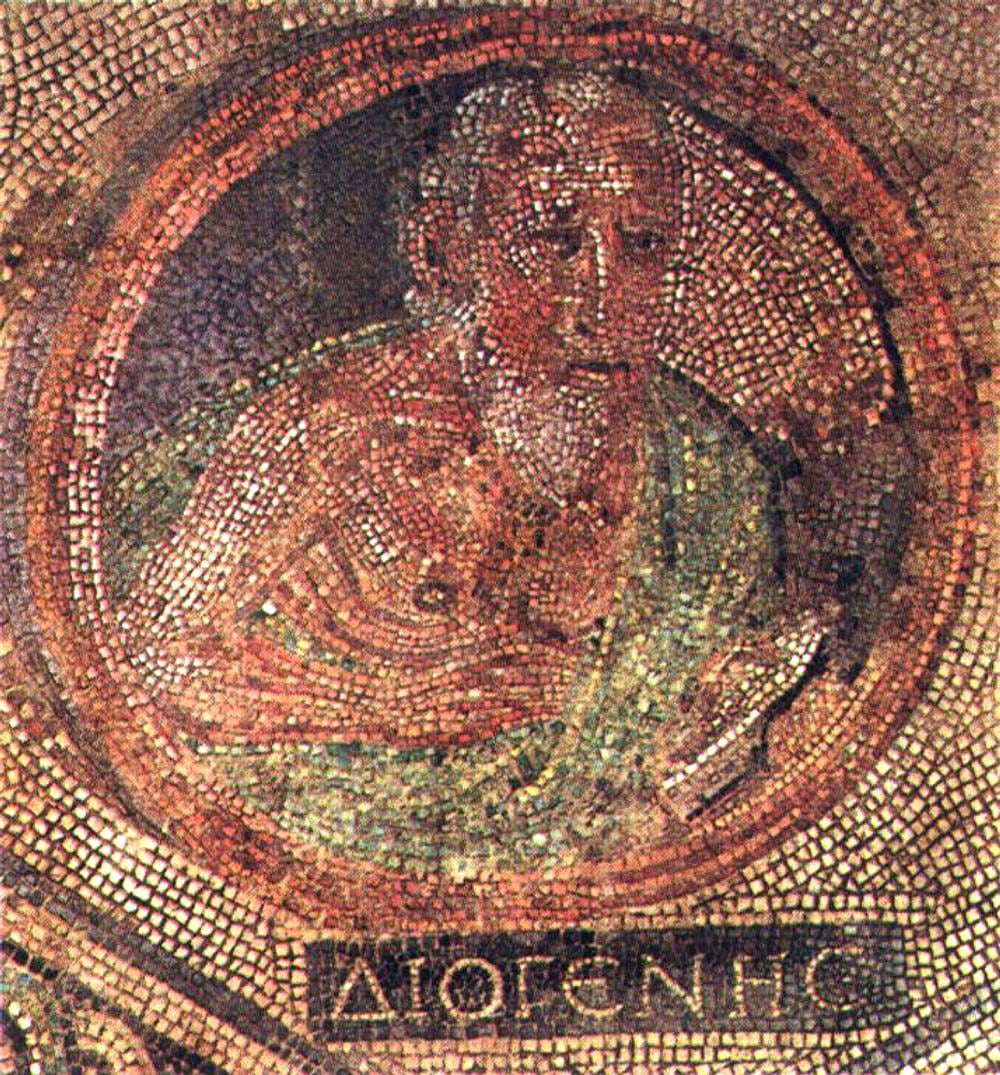
Mosaico de Diógenes (Colonia) · Public domain
उनके अपने शब्दों में
«Diogenes the Dog called taverns "the mess-rooms of Attica".»Aristóteles, Retórica III 10, 1411a24, como ejemplo de metáfora. Es el único dicho de Diógenes atestiguado por un contemporáneo. Griego: Wikisource griega (Ρητορική/3); inglés: W. Rhys Roberts (1924); español: traducción propia.

मूल विचार
Defacing the currency (paracharattein to nomisma): Literally, the phrase names the offence that banished Diogenes from Sinope: defacing or debasing the coinage.
संदर्भ में देखें
जीवनी
7 मिनट का पाठ
स्पैनिश मूल से सहायता-प्राप्त अनुवाद, मातृभाषी अनुवादक द्वारा समीक्षा लंबित।
प्रसंगों से बना एक मनुष्य
सिनोप के डायोजिनीज़ की एक भी प्रामाणिक पंक्ति नहीं बची। जो कुछ हम जानते हैं, वह लगभग पूरा एक ही परवर्ती स्रोत से आता है — डायोजिनीज़ लेर्शियस के ग्रंथ «प्रसिद्ध दार्शनिकों के जीवन» की छठी पुस्तक से, जो उनकी मृत्यु के पाँच शताब्दियों से भी अधिक बाद लिखी गई; यह हेलेनिस्टिक जीवनीकारों की सूचनाएँ और, सबसे बढ़कर, सैकड़ों ख्रेइया एकत्र करती है: छोटे, चुटीले और आसानी से याद रहने वाले कथन, जो मुँह-ज़बानी फैले, वक्तृत्व-कला की पाठशालाओं तक पहुँचे और अक्सर एक साथ कई व्यक्तियों के नाम जोड़ दिए गए। एकमात्र निश्चित समकालीन साक्षी अरस्तू हैं, जो «वक्तृत्व-शास्त्र» में एथेंस की मधुशालाओं पर «कुत्ते» की एक उक्ति उद्धृत करते हैं। इसलिए उनका जीवन लिखने के लिए धैर्यपूर्वक यह अलग करना पड़ता है कि क्या प्रमाणित है और क्या परंपरा ने धीरे-धीरे उनके नाम मढ़ दिया।
सिनोप और सिक्का
उनका जन्म लगभग 412 ई.पू. में काला सागर के दक्षिणी तट पर मिलेतुस की बस्ती सिनोप में हुआ: यह तिथि इस बात से निकाली जाती है कि लेर्शियस के अनुसार 323 में «लगभग नब्बे वर्ष की आयु में» उनकी मृत्यु हुई, यद्यपि सेंसोरिनस उनकी आयु इक्यासी वर्ष बताते हैं। वे हिकेसियस के पुत्र थे, जो एक सर्राफ़ (त्रापेज़ितेस) थे और सार्वजनिक धन का प्रबंधन करते थे। लेर्शियस एक कांड के कई वृत्तांत देते हैं: डायोक्लीज़ के अनुसार पिता ने सिक्कों में मिलावट की और पुत्र को निर्वासित होना पड़ा; यूबुलाइडीज़ के अनुसार यह स्वयं डायोजिनीज़ ने किया, जिसे उन्होंने अपने संवाद «पोर्डालोस» में स्वीकार भी किया था। एक और वृत्तांत अपोलो की एक देववाणी जोड़ता है, जिसने उन्हें «सिक्के को बदल देने» (पाराखाराट्टेइन टो नोमिस्मा) का आदेश दिया था — एक परामर्श जिसे उन्होंने अक्षरशः लिया, फिर समझ पाए कि उसका आशय रीति-रिवाजों से था। ई.पू. चौथी शताब्दी के मध्य के सिनोप के वे सिक्के, जिन्हें छेनी से विकृत किया गया था, और हिकेसियस के नाम वाले अन्य सिक्के, इस कांड को कुछ आधार देते हैं; किंतु देववाणी सुकरात की देववाणी की नकल पर गढ़ी गई परवर्ती रचना प्रतीत होती है।
एथेंस: गुरु और मटका
निर्वासित होकर वे एथेंस पहुँचे। लेर्शियस बताते हैं कि वे सुकरात के साथी एंटिस्थनीज़ के पास गए, जो शिष्य स्वीकार नहीं करते थे; जब उन्होंने उन्हें भगाने के लिए डंडा उठाया, तो डायोजिनीज़ ने अपना सिर आगे कर दिया: जब तक उनके पास सिखाने को कुछ है, उन्हें ऐसी कठोर लकड़ी नहीं मिलेगी जो उन्हें दूर कर सके। यह भेंट अनिश्चित है, क्योंकि एंटिस्थनीज़ की मृत्यु लगभग 366 में हो गई थी और डायोजिनीज़ का निर्वासन उसके बाद का हो सकता है; कुछ आलोचकों को संदेह है कि सुकरात–एंटिस्थनीज़–डायोजिनीज़ की यह कड़ी बाद में गढ़ी गई, ताकि सिनिक संप्रदाय को, और फिर स्टोइक दर्शन को, एक सुकराती वंश-परंपरा मिल सके। जिस मित्र से उन्होंने एक छोटा-सा घर माँगा था, वह देर कर रहा था, तो उन्होंने अगोरा के पास देवमाता के मंदिर मेत्रोन के एक बड़े मटके (पिथोस) को अपना निवास बना लिया। यह लकड़ी का पीपा नहीं था — ऐसा पात्र उनके समय के यूनान के लिए अपरिचित था — बल्कि अनाज या तेल रखने का मिट्टी का एक विशाल मटका था; जुवेनल भी उसे टेस्टा, अर्थात् मिट्टी का पात्र, ही कहते हैं। पीपा एक परवर्ती छवि है, जिसे आधुनिक चित्रकला ने स्थिर कर दिया।
प्रकृति के अनुसार जीना
डायोजिनीज़ जो सिखाते थे, वह एक जीवन-पद्धति थी। लेर्शियस उन्हें यह विचार देते हैं कि अभ्यास दो प्रकार का है, शरीर का और आत्मा का, और कि निरंतर साधना (आस्केसिस) सब पर विजय पा सकती है; कि प्रकृति जो श्रम माँगती है उसे उन व्यर्थ श्रमों पर वरीयता देनी चाहिए जो रीति थोपती है, और कि सुख की उपेक्षा, एक बार उसकी आदत पड़ जाए, तो स्वयं सुख से भी अधिक सुखद हो जाती है। वे कहते थे कि वे भाग्य के सामने साहस, विधि के सामने प्रकृति और आवेग के सामने विवेक रखते हैं। इसी से उनकी निर्लज्जता (अनाइडेइया) उपजी: वे अगोरा में भोजन करते थे और सबके सामने वह करते थे जिसे निजी माना जाता था, इस तर्क के साथ कि जो घर में लज्जाजनक नहीं, वह चौक में भी नहीं। और इसी से उनकी स्पष्टवादिता, पार्रेसिया, जिसे लेर्शियस के अनुसार वे «मनुष्यों में सबसे सुंदर वस्तु» मानते थे। जब उनसे पूछा गया कि वे कहाँ के हैं, तो उन्होंने एक ऐसे शब्द से उत्तर दिया जिसका भविष्य लंबा रहा: कॉस्मोपॉलिटेस, विश्व-नागरिक।
प्लेटो, सिकंदर और दीपक
उनके बहुत-से प्रसंग उन्हें दार्शनिकों और सत्ताधारियों के आमने-सामने खड़ा करते हैं। यह सुनकर कि प्लेटो मनुष्य की परिभाषा «पंखहीन द्विपाद प्राणी» के रूप में करते हैं, वे उनके पास पंख नोचा हुआ एक मुर्गा ले आए: «यह रहा प्लेटो का मनुष्य।» उन्होंने दिन-दहाड़े दीपक जलाया और यह कहते हुए घूमे कि «मैं एक मनुष्य खोज रहा हूँ»; कोई भी प्राचीन स्रोत «ईमानदार» शब्द नहीं जोड़ता। और कोरिंथ के क्रेनियन में, जब सिकंदर उनके सामने आ खड़ा हुआ और जो चाहें माँगने को कहा, तो उन्होंने उससे धूप से हट जाने को कहा। यह दृश्य सिसेरो, प्लूटार्क, एरियन और लेर्शियस सुनाते हैं, और प्लूटार्क जोड़ते हैं कि राजा ने कहा कि यदि वह सिकंदर न होता तो डायोजिनीज़ होना चाहता। वे 336 या 335 में मिल सकते थे, जब सिकंदर इस्थमस में था; किंतु इस संवाद का रूप ख्रेइया का पूर्ण रूप है और सदियों तक यह ज्ञानी और राजा पर एक पाठशालीय घिसा-पिटा प्रसंग बना रहा, इसलिए इसकी ऐतिहासिकता को निश्चित नहीं माना जा सकता।
कोरिंथ और दास-बाज़ार
उन्होंने अपने अंतिम वर्ष कोरिंथ में बिताए। एक कहानी के अनुसार, जिसे लेर्शियस आंशिक रूप से मेनिपस के व्यंग्य «डायोजिनीज़ की बिक्री» से लेते हैं, ईजिना जाते समय समुद्री लुटेरों ने उन्हें पकड़ लिया और क्रीट में बेच दिया; जब नीलामी करने वाले ने पूछा कि वे क्या कर सकते हैं, तो उन्होंने उत्तर दिया «मनुष्यों पर शासन» और ज़ेनियाडीज़ नाम के एक धनी कोरिंथवासी की ओर इशारा किया: «मुझे उसे बेच दो, उसे एक स्वामी की ज़रूरत है।» ज़ेनियाडीज़ ने उन्हें अपने पुत्रों की शिक्षा सौंप दी। कथा का व्यंग्यात्मक मूल और उसका आदर्शात्मक स्वरूप — अपने स्वामी से अधिक स्वतंत्र दास — उस पर संदेह करने को प्रेरित करते हैं, और प्राचीन काल में ही इस बारे में भिन्न-भिन्न वृत्तांत प्रचलित थे कि उन्हें मुक्त कर दिया गया या वे अपने ख़रीदार के घर में ही बूढ़े हुए।
अनेक वृत्तांतों वाली मृत्यु
उनकी मृत्यु लगभग 323 ई.पू. में हुई, परंपरा के अनुसार कोरिंथ के द्वार पर स्थित व्यायामशाला क्रेनियन में। लेर्शियस तीन कारण बताते हैं: कच्चा ऑक्टोपस खाने से उदरशूल, ऑक्टोपस बाँटते समय एक कुत्ते का काटना, या स्वेच्छा से साँस रोक लेना — वह वृत्तांत जिसका गुणगान कवि सर्सिडास पहले ही कर चुके थे और जिसे उनके शिष्यों ने उन्हें अपने लबादे में लिपटा मृत पाकर निकाला था। मैग्नेशिया के डेमेट्रियस का दावा था कि उनकी मृत्यु उसी दिन हुई जिस दिन बेबीलोन में सिकंदर की — एक ऐसा संयोग जो विश्वसनीय होने के लिए कुछ अधिक ही सुघड़ है। सिसेरो बताते हैं कि उन्होंने कहा था कि उन्हें बिना दफ़नाए फेंक दिया जाए, और जब मित्रों ने आपत्ति की कि जंगली पशु उन्हें खा जाएँगे, तो उन्होंने उन्हें भगाने के लिए एक डंडा माँगा: यदि उन्हें कुछ अनुभव ही नहीं होगा, तो उन्हें क्या फ़र्क़ पड़ता?
जो उन्होंने लिखा, या नहीं लिखा
लेर्शियस तेरह संवादों, पत्रों और सात त्रासदियों की सूची देते हैं, पर जोड़ते हैं कि सोसिक्रेटीज़ और सैटिरस इससे इनकार करते थे कि डायोजिनीज़ ने कुछ भी लिखा, और सैटिरस त्रासदियों को उनके शिष्य ईजिना के फ़िलिस्कस की रचना मानते थे; सोशन ने एक अन्य, भिन्न सूची दी। इन सबमें से केवल शीर्षक और साक्ष्य बचे हैं। सबसे विवादित कृति «गणराज्य» (पोलिटेइया) है, जो स्त्रियों और संतानों की साझेदारी, मुद्रा के रूप में गिट्टों के उपयोग और नरभक्षण जैसे निषेधों के प्रति उदासीनता का पक्ष लेती थी। कुछ स्टोइकों ने, उस पाठ से असहज होकर जिसने उनके संप्रदाय के संस्थापक को प्रेरित किया था, उसे प्रक्षिप्त घोषित कर दिया; गदारा के फ़िलोडेमस ने हरकुलेनियम के पपाइरसों में सुरक्षित एक ग्रंथ में उत्तर दिया कि क्लीन्थीज़ और क्रिसिपस उसे प्रामाणिक मानकर उद्धृत करते थे, और आज अधिकांश विद्वान उसे प्रामाणिक मानते हैं। इसके विपरीत, उनके नाम वाले इक्यावन «पत्र» रोमन युग के वक्तृत्व-अभ्यास हैं।
कुत्ते की विरासत
उनके शिष्य थीब्स के क्रेटीज़ ने सिनिक जीवन-पद्धति सिटियम के ज़ेनो को सौंपी, जो आगे चलकर स्टोआ की स्थापना करने वाले थे; स्टोइकों के माध्यम से डायोजिनीज़ एपिक्टेटस तक पहुँचे, जो उन्हें स्वतंत्र दार्शनिक के आदर्श के रूप में प्रस्तुत करते हैं, और मार्कस ऑरेलियस तक, जो उन्हें हेराक्लिटस और सुकरात के साथ सिकंदर और सीज़र से ऊपर रखते हैं। साम्राज्य-काल में सिनिक दर्शन फिर पनपा, और डायोजिनीज़ की छवि — दीपक, मटका, सिकंदर की धूप — चित्रकला में, जेरोम से वॉटरहाउस तक, और आधुनिक दर्शन में पहुँची: 1984 के अपने अंतिम व्याख्यानों में मिशेल फ़ूको ने उनमें चरम सीमा तक ले जाई गई पार्रेसिया पढ़ी — अपने ही जीवन से कहा गया सत्य।
स्रोत: Diógenes Laercio. Vidas y opiniones de los filósofos ilustres, libro VI, 20–81 (Diógenes), 85–93 (Crates) y 104–105 (doctrina cínica), s. III d. C. Trad. inglesa de R. D. Hicks, Lives of Eminent Philosophers, vol. II, Loeb Classical Library 185, Heinemann / Harvard University Press, 1925 (Wikisource en inglés); texto griego en Wikisource griega; trad. de C. D. Yonge, Bohn, Londres, 1853 (Project Gutenberg n.º 57342). · Diógenes Laercio. Los diez libros de Diógenes Laercio sobre las vidas, opiniones y sentencias de los filósofos más ilustres, trad. de José Ortiz y Sanz, tomo II (libros VI–X). Imprenta Real, Madrid, 1792 (ejemplar de la Biblioteca de la Universidad de Sevilla en Internet Archive). · Plutarco. Vida de Alejandro 14, en Vidas paralelas, s. I–II d. C. Trad. inglesa llamada «de Dryden», revisada por Arthur Hugh Clough, Plutarch's Lives, 1864 (Project Gutenberg n.º 674). · Cicerón. Disputaciones tusculanas I 104 y V 92, 45 a. C. Texto latino en The Latin Library; trad. inglesa de C. D. Yonge, Cicero's Tusculan Disputations, Harper, Nueva York, 1877 (Project Gutenberg n.º 14988). · Aristóteles. Retórica III 10, 1411a24 («el Perro» llama a las tabernas «los comedores comunes del Ática»). Trad. inglesa de W. Rhys Roberts, Oxford, 1924 (Internet Classics Archive, MIT); texto griego en Wikisource griega (Ρητορική/3).
कालक्रम
जीवन, वर्ष-दर-वर्ष
प्रत्येक बिंदु एक प्रमाणित घटना है। उसे स्रोत और निश्चितता के स्तर सहित पढ़ने के लिए क्लिक करें।
लगभग 412 ई.पू.0 वर्षSinope (Paflagonia)
Birth
Born in Sinope, son of the banker Hicesias. The date is inferred from his death in 323 "at nearly ninety" (Diogenes Laertius VI 76); Censorinus gives eighty-one, which would point to 404. Wikidata records 412, 403 and 400. Years BCE are expressed as negative numbers.
संभावितDiógenes Laercio. Vidas y opiniones de los filósofos ilustres, libro VI, 20–81 (Diógenes), 85–93 (Crates) y 104–105 (doctrina cínica), s. III d. C. Trad. inglesa de R. D. Hicks, Lives of Eminent Philosophers, vol. II, Loeb Classical Library 185, Heinemann / Harvard University Press, 1925 (Wikisource en inglés); texto griego en Wikisource griega; trad. de C. D. Yonge, Bohn, Londres, 1853 (Project Gutenberg n.º 57342).
उनके निधन के बाद
- लगभग 312 ई.पू.Zeno of Citium, pupil of Crates
- लगभग 225 ई.पू.Diogenes Laertius writes his life
- लगभग 108 ई.पू.Epictetus and the ideal Cynic
- लगभग 50 ई.पू.Philodemus defends Diogenes' Republic
- 1860Gérôme's Diogenes
- 1984Foucault and Cynic parrhesia
लगभग 412 ई.पू. · 0 वर्ष
Birth
Born in Sinope, son of the banker Hicesias. The date is inferred from his death in 323 "at nearly ninety" (Diogenes Laertius VI 76); Censorinus gives eighty-one, which would point to 404. Wikidata records 412, 403 and 400. Years BCE are expressed as negative numbers.
संभावित
लगभग 362 ई.पू.
The coinage scandal and exile
He or his father debases the coinage of Sinope and Diogenes goes into exile (Diogenes Laertius VI 20–21, in contradictory versions). Sinopean coins of the mid-fourth century BCE defaced with a chisel support a historical core; the exact date is unknown and it is debated whether it preceded or followed Antisthenes' death (c. 366).
विवादित
लगभग 360 ई.पू.
Arrival in Athens and the jar in the Metroon
He settles in Athens, adopts the doubled cloak and the wallet and lives in a clay jar (pithos) in the Metroon beside the agora (Diogenes Laertius VI 22–23). His link with Antisthenes (VI 21) is uncertain on chronological grounds.
संभावित
338 ई.पू.
Prisoner of Philip
According to Dionysius the Stoic (in Diogenes Laertius VI 43), after the battle of Chaeronea he is brought before Philip II; asked who he is, he answers "a spy upon your insatiable greed" and is set free.
परंपरा
लगभग 336 ई.पू.
The encounter with Alexander
Alexander, chosen at the Isthmus as leader of the expedition against Persia, visits him at the Craneum and receives the answer "stand out of my sun" (Plutarch, Alexander 14; Arrian, Anabasis VII 2.1; Cicero, Tusculans V 92; Diogenes Laertius VI 38). An episode of disputed historicity.
विवादित
लगभग 330 ई.पू.
Aristotle quotes "the Dog"
In the Rhetoric (III 10, 1411a24), written in these years, Aristotle records a metaphor by "the Dog": taverns are "the common messes of Attica". It is the only certain contemporary testimony about Diogenes.
संभावित
लगभग 323 ई.पू.
Death
He dies at a great age. Diogenes Laertius (VI 76–79) gives three causes—raw octopus, dog bite, holding his breath—and the report by Demetrius of Magnesia that he died on the same day as Alexander (10–11 June 323). He is buried by the gate to the Isthmus, beneath a pillar topped by a marble dog.
संभावित
लगभग 312 ई.पू.
Zeno of Citium, pupil of Crates
Zeno of Citium reaches Athens and becomes a pupil of Crates of Thebes, Diogenes' pupil (Diogenes Laertius VII 2–4); his Republic, written "on the dog's tail", continues Diogenes' own.
संभावित
लगभग 225 ई.पू.
Diogenes Laertius writes his life
Diogenes Laertius writes the Lives of Eminent Philosophers; Book VI (20–81) is the main source on Diogenes and preserves the list of his writings. The date of the work is approximate (first half of the third century).
संभावित
लगभग 108 ई.पू.
Epictetus and the ideal Cynic
In the Discourses recorded by Arrian (III 22, "On Cynicism"), Epictetus presents Diogenes as the model of the free philosopher and messenger of the gods. Years BCE are negative; this one, CE, is positive.
संभावित
लगभग 50 ई.पू.
Philodemus defends Diogenes' Republic
In his treatise On the Stoics (PHerc. 155 and 339), Philodemus of Gadara maintains, against the Stoics who held it spurious, that Diogenes' Republic is genuine and that Cleanthes and Chrysippus quoted it.
प्रमाणित
1860
Gérôme's Diogenes
Jean-Léon Gérôme paints Diogenes seated in his clay jar lighting his lamp, surrounded by dogs; the painting is now in the Walters Art Museum, Baltimore.
प्रमाणित
1984
Foucault and Cynic parrhesia
In his last course, The Courage of Truth (February–March 1984), Michel Foucault devotes several lectures to Cynicism and to Diogenes as a radical form of telling the truth with one's own life.
प्रमाणित
कृतियाँ
आवश्यक कृतियाँ
वे कृतियाँ जिनके बिना उनकी विरासत को समझा नहीं जा सकता।
परवर्ती संकलन · लगभग 300 ई.पू.
Sayings and anecdotes (chreiai)
Χρεῖαι / Ἀποφθέγματα Διογένους
Hundreds of short replies and exemplary scenes that in effect make up Diogenes' surviving work: the lamp lit in broad daylight, the plucked fowl shown to Plato, the "stand out of my sun" said to Alexander, the cup thrown away on seeing a child drink, the sale into slavery, the "citizen of the world". The genre, the chreia, was a school exercise in rhetoric, which explains its polished form and its ease in migrating from one figure to another. Read together, they sketch a coherent ethic: self-sufficiency, training, frankness and mockery of convention.
7 संस्करण · amazon.com

पारंपरिक आरोपण
Republic (Politeia)
Πολιτεία
A political treatise known only from testimonies, chiefly Philodemus and Diogenes Laertius (VI 72–73). It proposed a community without marriage—the free union of the man who persuades with the woman who consents—with children held in common, knucklebones instead of coinage, indifference to dietary and religious taboos, cannibalism included, and the idea that the only right constitution is that of the cosmos. It inspired the Republic of Zeno of Citium, written according to tradition "on the dog's tail", and stands at the origin of ancient cosmopolitanism.
2 संस्करण · amazon.es
संपूर्ण कृतित्व (33)
Letters of Diogenes (Cynic Epistles)
50
Diogenes of Sinope
Letters
The Conscious LibraryLetters
Diogenes of Sinope
Cephalion
The Conscious LibraryCephalion
Diogenes of Sinope
Ichthyas
The Conscious LibraryIchthyas
Diogenes of Sinope
The Jackdaw
The Conscious LibraryThe Jackdaw
Diogenes of Sinope
Pordalus
The Conscious LibraryPordalus
Diogenes of Sinope
The Athenian Demos
The Conscious LibraryThe Athenian Demos
Diogenes of Sinope
Art of Ethics
The Conscious LibraryArt of Ethics
Diogenes of Sinope
On Wealth
The Conscious LibraryOn Wealth
Diogenes of Sinope
Erotikos (On Love)
The Conscious LibraryErotikos (On Love)
Diogenes of Sinope
Theodorus
The Conscious LibraryTheodorus
Diogenes of Sinope
Hypsias
The Conscious LibraryHypsias
Diogenes of Sinope
Aristarchus
The Conscious LibraryAristarchus
Diogenes of Sinope
On Death
The Conscious LibraryOn Death
Diogenes of Sinope
Helen
The Conscious LibraryHelen
Diogenes of Sinope
Thyestes
The Conscious LibraryThyestes
Diogenes of Sinope
Heracles
The Conscious LibraryHeracles
Diogenes of Sinope
Achilles
The Conscious LibraryAchilles
Diogenes of Sinope
Medea
The Conscious LibraryMedea
Diogenes of Sinope
Chrysippus
The Conscious LibraryChrysippus
Diogenes of Sinope
Oedipus
The Conscious LibraryOedipus
Diogenes of Sinope
On Virtue
The Conscious LibraryOn Virtue
Diogenes of Sinope
On the Good
The Conscious LibraryOn the Good
Diogenes of Sinope
The Beggar
The Conscious LibraryThe Beggar
वचन
किसी निश्चित कृति में स्थित वचन। प्रत्येक के साथ उसका स्रोत और विश्वसनीयता का स्तर है।
I am looking for a man.Ἄνθρωπον ζητῶ.
संभावितDiógenes Laercio VI 41: lo decía mientras recorría la ciudad con una lámpara encendida a pleno día. Dicho transmitido como chreía, sin fuente nombrada. Griego: Diógenes Laercio, ed. de Wikisource griega; inglés: R. D. Hicks (Loeb, 1925, dominio público); español: traducción propia.
अप्रामाणिक या विवादित आरोपण वाले उद्धरण (2)
«I am looking for an honest man.»
The ancient saying (Diogenes Laertius VI 41) is "I am looking for a man" (anthropon zeto), that is, a human being worthy of the name. The adjective "honest" is a modern addition found in no Greek or Latin source.
«Diogenes lived in a barrel.»
Not a quotation but a commonplace that often accompanies his sayings. Greek sources speak of a pithos, a large clay storage jar (Diogenes Laertius VI 23 and 43), and Juvenal calls it a testa, earthenware (Satires XIV 308–310). The wooden barrel is a later image spread by modern iconography.
अंतिम शब्द
परस्पर विरोधी संस्करण
«"How am I then injured by being torn by those animals, if I have no sensation?"»quid igitur mihi ferarum laniatus oberit nihil sentienti?
There are no reliable last words. What is transmitted are instructions about his body, in versions that do not agree. Cicero (Tusculans I 104) relates that he ordered himself to be thrown out unburied; when his friends objected—"to the birds and beasts?"—he asked them to leave a stick beside him to drive them off, and when they said he would not perceive them, he answered with the sentence quoted. Diogenes Laertius (VI 79) records other variants: that he be cast out unburied for any beast to feed on, thrust into a ditch with a little dust over him, or thrown into the Ilissus to be useful to his brethren; and, according to Eubulus (VI 32), that he asked to be buried face down because what was below would soon be on top. The circumstances of his death also vary (raw octopus, dog bite, holding his breath, VI 76–77), and Antisthenes of Rhodes' version says his friends found him already dead, wrapped in his cloak, which would rule out any final words. English: C. D. Yonge (1877); Spanish: own translation.
स्रोत: Cicerón. Disputaciones tusculanas I 104 y V 92, 45 a. C. Texto latino en The Latin Library; trad. inglesa de C. D. Yonge, Cicero's Tusculan Disputations, Harper, Nueva York, 1877 (Project Gutenberg n.º 14988).
पूछें
उनकी कृतियाँ क्या उत्तर देती हैं
मानवता के बारह महान प्रश्न और उनके ग्रंथ उनका जो उत्तर देने देते हैं, संदर्भों सहित। हम कभी उनके मुख में अपने शब्द नहीं रखते।
परम सत्य क्या है? क्या ईश्वर है?
The gods exist, but the Dog's philosophy is played out in conduct
पारलौकिक के प्रति संयमउनके सिद्धांत से निष्कर्षित
Diogenes left no theology, and his writings were lost; what survives are sayings and anecdotes collected centuries later, above all by Diogenes Laertius. In them the gods appear as a model of self-sufficiency: it belongs to the gods to need nothing, and to those like them to need little. Laertius also attributes to him a syllogism by which everything belongs to the gods, the wise are friends of the gods and friends hold their goods in common, so everything belongs to the wise. At the same time he mocks votive offerings and ritual purifications. The divine serves as a horizon; attention is set on living according to nature.
इस प्रश्न की अन्य गुरुओं से तुलना करेंमैं कौन हूँ? क्या कोई सच्चा आत्म है?
He did not theorise the self: he tested it by stripping off conventions
इस पर कुछ नहीं कहा
The sayings and anecdotes Diogenes Laertius collects about Diogenes of Sinope contain no theory of the soul and no answer to the question of who I am. What they do show is a practice: reducing what one needs in order to discover what remains once wealth, reputation and customs are removed. That is why he throws away his cup on seeing a child drink with his hands, answers “citizen of the world” to someone asking where he is from, and looks for a man with a lamp in broad daylight. The Cynic self is defined by what it does not need and by the frankness with which it speaks, not by a substance to be known.
इस प्रश्न की अन्य गुरुओं से तुलना करेंहम दुःख क्यों भोगते हैं?
Whoever needs much suffers; free is whoever comes close to needing nothing
तृष्णा और आसक्तिउनके सिद्धांत से निष्कर्षित
The anecdotes Diogenes Laertius transmits sketch a consistent diagnosis. Humans make themselves wretched by depending on the superfluous: wealth, comforts, honours, other people's opinions. The gods need nothing and whoever resembles them needs little; that is why Diogenes lived in a jar and threw away his cup on seeing a child drink with his hands. Against fortune he set courage, against convention nature, and against passion reason. Suffering comes not from things but from attachment to needs that convention has created; the remedy is training, a daily exercise of privation that makes light what once seemed indispensable.
इस प्रश्न की अन्य गुरुओं से तुलना करेंमृत्यु के बाद क्या होता है?
How can something be an evil if we do not feel it?
मौन या संयमस्पष्ट रूप से कहा है
The anecdotes collected by Diogenes Laertius show Diogenes treating death with the same nonchalance as other conventions. Asked whether death was an evil, he replied how could it be, since we do not feel it when it is present. He asked to be thrown out unburied when he died so that the beasts could have their share, and when told they would tear him apart he suggested leaving him a stick to drive them off; if he would not feel them, what did it matter. None of the sayings describes a life after death. Attention is directed to living now without fear, and funeral rites appear as one more convention.
इस प्रश्न की अन्य गुरुओं से तुलना करेंमुक्ति या उद्धार कैसे प्राप्त होता है?
Nothing is achieved without training, of body and soul together
अनुशासित साधना सेस्पष्ट रूप से कहा है
Diogenes Laertius attributes to Diogenes a doctrine of training (askesis) that is the closest thing to a method in Cynicism. There is a twofold exercise, of body and soul, and neither suffices without the other; nothing in life succeeds without training, and training can overcome everything. That is why Diogenes rolled in hot sand in summer and embraced frozen statues in winter, and begged from statues to get used to refusal. The aim is self-sufficiency and freedom: to be prepared for any fortune, as he said when asked what he had gained from philosophy. To be freed is to strip oneself, by daily exercise, of the needs imposed by convention.
इस प्रश्न की अन्य गुरुओं से तुलना करेंक्या गुरु आवश्यक है?
He followed Antisthenes against his will, but taught by example
सहायक, पर अनिवार्य नहींउनके सिद्धांत से निष्कर्षित
Tradition relates that Diogenes wished to become a disciple of Antisthenes, who admitted no one, and that when Antisthenes raised his staff against him he offered his head, saying he would find no stick hard enough to drive him off while he had something to say. Later, sold as a slave, he offered to govern men and educated the sons of his buyer, Xeniades, teaching them to live simply. But his pedagogy is above all demonstrative: showing with his own body that one can live without the superfluous. The teacher orients and provokes; the training, however, each person does, and Diogenes distrusted any authority not proved by conduct.
इस प्रश्न की अन्य गुरुओं से तुलना करेंक्या संसार वास्तविक है?
I see the table, not “tableness”: the real is what is before us
परिवर्तनशील प्राकृतिक व्यवस्थाउनके सिद्धांत से निष्कर्षित
Diogenes elaborated no cosmology, but the anecdotes passed down by Laertius show his attitude. When Plato spoke of the Forms and named “tableness” and “cupness”, Diogenes replied that he saw the table and the cup but not tableness or cupness. To a sophist proving by arguments that motion does not exist, he answered by getting up and walking about. His ethical programme — to live according to nature, not convention — presupposes that nature is real and holds the measure. The world is not an appearance over another reality but the only stage, to be inhabited with the least.
इस प्रश्न की अन्य गुरुओं से तुलना करेंप्रेम क्या है?
Erotic love, a pastime of the idle; frankness, the most beautiful thing
इस पर कुछ नहीं कहा
Diogenes wrote an Erotic dialogue, now lost, and what survives about love in his sayings is scant and disdainful. According to Diogenes Laertius, he called erotic love the occupation of those with nothing to do, and treated sexual desire as a natural need to be satisfied without fuss or convention. In the surviving material there is no doctrine of love as a path, nor an ethic of compassion. The closest is his cosmopolitanism — being a citizen of the world — and his idea that the most beautiful thing among humans is frankness, exercised precisely towards those one wishes to improve. Later tradition made the Cynics physicians of humanity.
इस प्रश्न की अन्य गुरुओं से तुलना करेंक्या हम स्वतंत्र हैं, या सब कुछ पूर्वनिर्धारित है?
Setting courage against fortune: freedom is won by training
वास्तविक स्वतंत्र इच्छाउनके सिद्धांत से निष्कर्षित
Diogenes did not theorise about determinism, but freedom (eleutheria) is one of the axes of Cynicism. According to Diogenes Laertius, he said he set courage against fortune, nature against convention and reason against passion; and he declared that he preferred freedom above all. When he was sold as a slave, he asked to be sold to someone who needed a master, reversing the roles. Philosophy had at least given him readiness for any fortune. That freedom is not metaphysical but practical: that of one who, needing little, depends on no one. Fortune exists and strikes, but the response to it lies in each person's hands.
इस प्रश्न की अन्य गुरुओं से तुलना करेंध्यान या प्रार्थना क्यों करें?
He mocks purifications and votive offerings; his practice is training
इस पर कुछ नहीं कहा
The anecdotes attribute to Diogenes no positive teaching on prayer or meditation; what they transmit is mockery. To someone purifying himself with water he said that errors of life were not washed off that way, any more than errors of grammar. Before the votive offerings at Samothrace, dedicated by those who had been saved, he remarked that there would have been many more if those who were not saved had offered them too. He criticised people for asking the gods for what seemed good to them and not for what truly is. His daily exercise is not prayer or contemplation but the training of body and soul to need little.
इस प्रश्न की अन्य गुरुओं से तुलना करेंक्या बुद्धि परम को जान सकती है?
He cared for reason to live by, not to speculate on the ultimate
इस पर कुछ नहीं कहा
Diogenes did not pronounce on whether reason can know the ultimate, and the anecdotes show a deliberate lack of interest in such questions. He marvelled that grammarians investigated the ills of Odysseus and ignored their own, that musicians tuned the lyre and left their souls out of tune, and that mathematicians gazed at the sun and moon without seeing what lay at their feet. At the same time, he valued reason as a practical guide: he said that to live one needed reason or a halter. Cynic reason serves to unmask conventions and live according to nature; speculation about the ultimate seemed to him time wasted.
इस प्रश्न की अन्य गुरुओं से तुलना करेंसंसार से हटें या उसे बदलें?
Defacing the currency: overturning the city's values through one's own life
क्रांति भीतर हैउनके सिद्धांत से निष्कर्षित
Diogenes did not withdraw to the desert: he lived right in the street, in Athens and Corinth, in full view. But neither did he seek to govern or reform the laws. His motto, according to tradition, was “deface the currency”, an allusion to an episode of counterfeiting at Sinope that he turned into a programme: to discredit current values — wealth, fame, lineage, conventional modesty — and replace them with those of nature. He declared himself a citizen of the world and said that the only right constitution is the one that embraces the cosmos. His method was provocative example and frankness. The transformation he sought was not political but a revolution in each person's way of living.
इस प्रश्न की अन्य गुरुओं से तुलना करें
निकटता और तनाव
निकटता और तनाव
उनके मतों के आधार पर प्रश्न-दर-प्रश्न आकलित। प्रत्येक सहमति या टकराव का कारण क्लिक करने पर।
इनसे मिलता-जुलता सोचते हैं
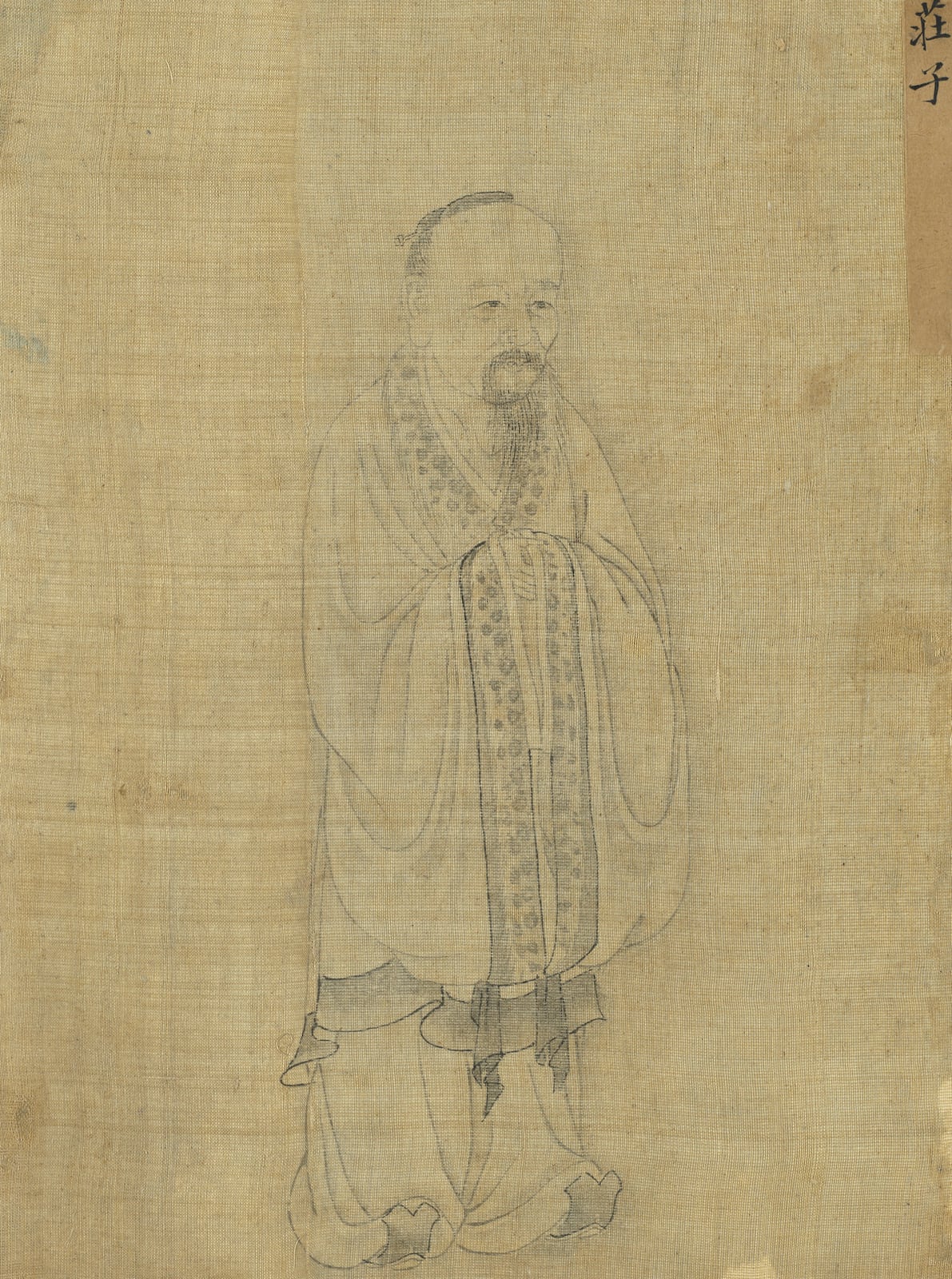
Zhuangzi
इन पर सहमत: हम दुःख क्यों भोगते हैं? · मृत्यु के बाद क्या होता है? · क्या गुरु आवश्यक है?
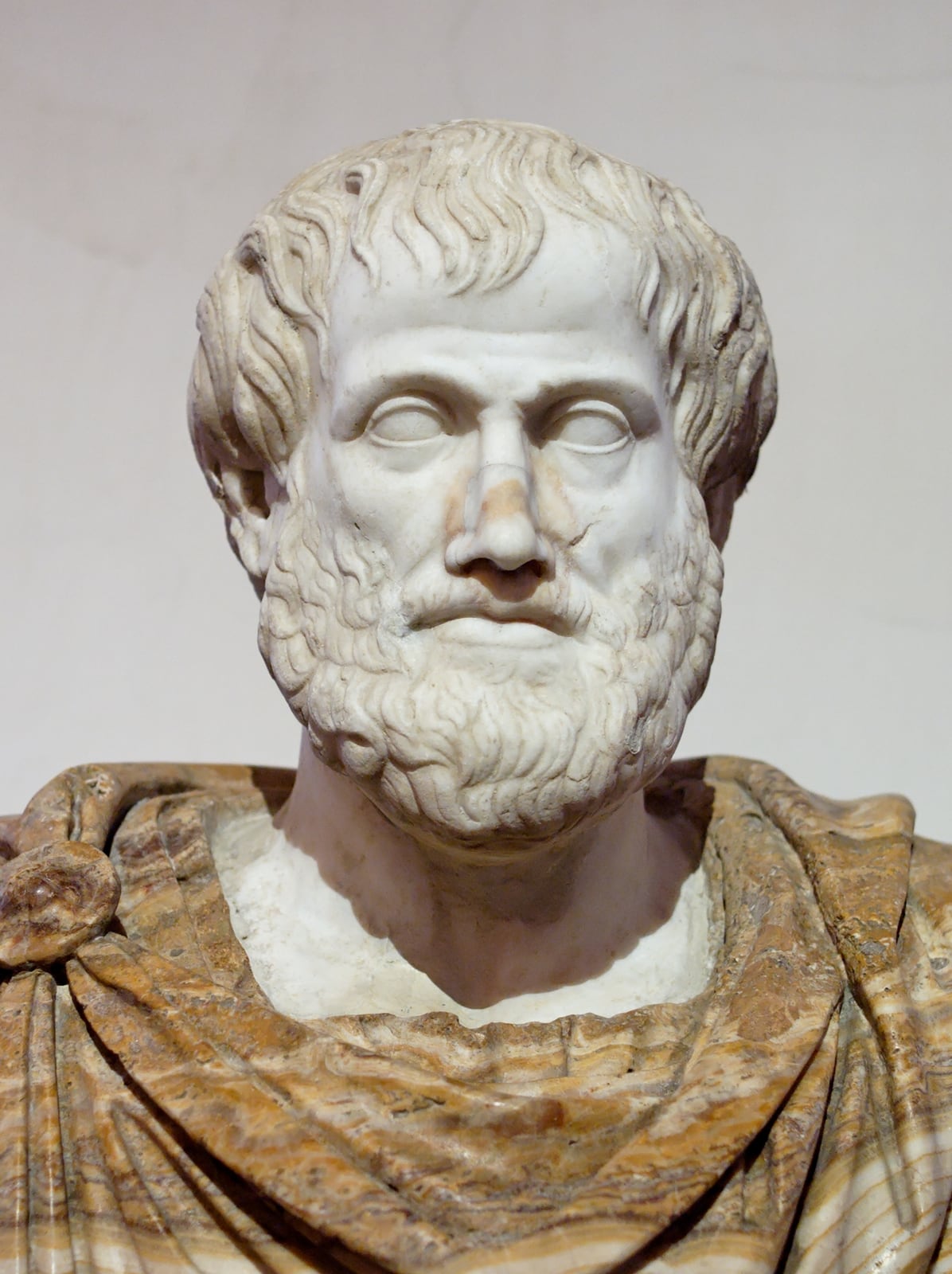
Aristotle
इन पर सहमत: मृत्यु के बाद क्या होता है? · क्या गुरु आवश्यक है? · क्या संसार वास्तविक है?

Epicurus
इन पर सहमत: हम दुःख क्यों भोगते हैं? · मुक्ति या उद्धार कैसे प्राप्त होता है? · क्या संसार वास्तविक है?

Pema Chödrön
इन पर सहमत: हम दुःख क्यों भोगते हैं? · मुक्ति या उद्धार कैसे प्राप्त होता है? · क्या गुरु आवश्यक है?
इनसे भिन्न सोचते हैं
Alan Watts
इन पर टकराव: मुक्ति या उद्धार कैसे प्राप्त होता है?

Baal Shem Tov
इन पर टकराव: परम सत्य क्या है? क्या ईश्वर है? · हम दुःख क्यों भोगते हैं? · मृत्यु के बाद क्या होता है?
Hafez
इन पर टकराव: परम सत्य क्या है? क्या ईश्वर है? · हम दुःख क्यों भोगते हैं? · मृत्यु के बाद क्या होता है?
Helena Roerich
इन पर टकराव: परम सत्य क्या है? क्या ईश्वर है? · हम दुःख क्यों भोगते हैं? · मृत्यु के बाद क्या होता है?
प्रसंग और वृत्तांत
प्रसंग और वृत्तांत
विवादित336–335 a. C. (si ocurrió)
Stand out of my sun
वृत्तांत का स्रोत: Plutarch, Alexander 14 (with the line "were I not Alexander…"); Arrian, Anabasis VII 2.1; Cicero, Tusculans V 92; Diogenes Laertius VI 32, 38, 60 and 68. The sources date from the first century BCE to the third CE. The meeting is chronologically possible, but the reply has the shape of a school chreia and circulated as a rhetorical exercise; most historians regard it as of uncertain historicity or legendary. The same-day death comes from Demetrius of Magnesia (Diogenes Laertius VI 79).
साक्ष्यc. 360–340 a. C.
The jar in the Metroon (and the barrel that never was)
वृत्तांत का स्रोत: Diogenes Laertius VI 23, citing Diogenes' own (lost) letters, and VI 43; Juvenal, Satires XIV 308–314. Life in the pithos is well attested in the ancient tradition; its transformation into a barrel comes from later readings of the Latin dolium and from medieval and modern iconography (Roubineau 2023).
मौखिक परंपराs. IV a. C.
The lamp in broad daylight
वृत्तांत का स्रोत: Diogenes Laertius VI 41 (the lamp), VI 32 (citing Hecato's Chreiai: "I called for men") and VI 60 (Olympia). Laertius gives no source for the lamp. It is a chreia of oral and school transmission; its meaning is certain, its historicity is not. The adjective "honest" is modern.
मौखिक परंपराc. 360–347 a. C.
Plato's man
वृत्तांत का स्रोत: Diogenes Laertius VI 40 (the fowl), VI 26 (the carpets, with a variant attributed to Sotion), VI 53 ("tablehood") and VI 54 ("a Socrates gone mad", a phrase Aelian, Varia Historia XIV 33, puts in Plato's mouth). They are chreiai with no contemporary source; the playful definition of featherless bipeds is in Plato, Statesman 266e.
विवादितfecha desconocida
Sell me to that man; he needs a master
वृत्तांत का स्रोत: Diogenes Laertius VI 29–31 and 74–75, citing The Sale of Diogenes by the satirist Menippus of Gadara (third century BCE), a work of the same title by Eubulus and Cleomenes' On Pedagogues. The origin in a satire, the exemplary tone and the contradictory versions of his release lead many specialists to regard it as literary fiction; others accept a historical core. Lucian took up the motif in Philosophies for Sale.
विवादितmediados del s. IV a. C.
Defacing the currency
वृत्तांत का स्रोत: Diogenes Laertius VI 20–21, 56 and 71, with contradictory sources (Diocles, Eubulides and Diogenes' own lost Pordalus). Sinopean coins of c. 350–340 BCE defaced with a chisel and issues bearing the name of Hicesias (Hikesio) support a historical core, according to Navia and Branham; the oracle is generally considered a later invention inspired by Socrates' own.
स्रोत: Navia, Luis E. Diogenes the Cynic: The War Against the World. Humanity Books, Amherst (Nueva York), 2005.
विवादितc. 323 a. C.
Three deaths and a marble dog
वृत्तांत का स्रोत: Diogenes Laertius VI 76–79, with multiple sources (Cercidas, Antisthenes of Rhodes, Demetrius of Magnesia). The tomb with the marble dog is also mentioned by Pausanias (II 2.4) at the entrance to Corinth. The causes of death are mutually incompatible and several have a symbolic intent (the dog, self-mastery); the synchronism with Alexander is legendary.
शिक्षाएँ
शिक्षाएँ
वे अवधारणाएँ जो उनके चिंतन को रूप देती हैं, उनके संदर्भ में समझाई गई।
Defacing the currency (paracharattein to nomisma)paracharattein-to-nomisma
Diogenes Laertius VI 20–21, 56 and 71. It is the key through which ancient tradition read his whole life, and the one modern studies take up (Desmond, Roubineau).
Askesis (training)askesis
Diogenes Laertius VI 70–71, a passage studied by Marie-Odile Goulet-Cazé (L'Ascèse cynique, 1986). The notion passed into Stoicism and, by other routes, into the vocabulary of Christian monasticism.
Self-sufficiency (autarkeia)autarkeia
Diogenes Laertius VI 37, 78 and 105. The idea has Socratic roots (Xenophon, Memorabilia I 6.10) and will be central to Stoicism and Epicureanism, though with different content.
Shamelessness (anaideia)anaideia
Diogenes Laertius VI 35, 58, 61 and 69. The early Stoics inherited part of this programme, as Zeno's Republic shows; the Stoics of the imperial age softened it.
Frankness (parrhesia)parresia
Diogenes Laertius VI 69; Foucault, Le Courage de la vérité (2009). Cynic parrhesia became a commonplace of imperial-age moral literature (Epictetus, Dio of Prusa, Lucian).
स्रोत: Foucault, Michel. Le Courage de la vérité. Le gouvernement de soi et des autres II. Cours au Collège de France, 1983–1984, ed. Frédéric Gros. Gallimard / Seuil (Hautes Études), París, 2009.
Citizen of the world (kosmopolites)kosmopolites
Diogenes Laertius VI 63 and 72; Schofield, The Stoic Idea of the City (1991). It is one of Cynicism's legacies most studied by contemporary political philosophy.
स्रोत: Schofield, Malcolm. The Stoic Idea of the City. Cambridge University Press, Cambridge, 1991 (cap. 1 y apéndices sobre la República de Diógenes y la de Zenón).
Nature versus convention (physis and nomos)physis-nomos
Diogenes Laertius VI 22, 37, 38 and 71–73. The tension between Cynic radicalism and its Stoic domestication is well documented in Philodemus (On the Stoics) and in Diogenes Laertius VII 32–34.
वीडियो
वीडियो
रिकॉर्डिंग, साक्षात्कार और वृत्तचित्र। वीडियो YouTube से चलते हैं; वे यहाँ संग्रहीत नहीं हैं।
Los filósofos cínicos (I): los sabios insumisos · La March
व्याख्यान· ES· 2025· 64 min
Fundación Juan Marchआधिकारिक चैनल
Los filósofos cínicos (II): la búsqueda de valores naturales · La March
व्याख्यान· ES· 2025· 69 min
Fundación Juan Marchआधिकारिक चैनल
Cinismos. Parte I. Carlos García Gual
व्याख्यान· ES· 2025· 92 min
A 6 Mil Pies. Crítica y transvaloración
Cynics, Stoics, Epicureans
व्याख्यान· EN· 2021· 46 min
Gresham Collegeआधिकारिक चैनल
The philosophy of cynicism - William D. Desmond
विश्लेषण· EN· 2019· 5 min
TED-Edआधिकारिक चैनल
Thomas W. Laqueur: Diogenes and His "Preposterous" Views on the Dead || Radcliffe Institute
व्याख्यान· EN· 2014· 3 min
Harvard Universityआधिकारिक चैनल
Hellenistic Philosophy 2.3.2 Diogenes of Sinope and Cynicism (version 1)
व्याख्यान· EN· 2020· 30 min
Monte Johnson
Diogenes of Sinope, Cynicism, & Ancient Athens | Philosophers In The Midst Of History
व्याख्यान· EN· 2025· 85 min
Gregory B. Sadler - That Philosophy Guy
Diogenes Laertes, Lives of Philosophers | Diogenes' Cynic Mode of Living | Philosophy Core Concepts
विश्लेषण· EN· 2021· 17 min
Gregory B. Sadler - That Philosophy Guy
Diogenes Expert Inger Kuin On The Most Misunderstood Philosopher | Daily Stoic Podcast
साक्षात्कार· EN· 2026· 70 min
Daily Stoic
Diógenes, Epicuro y Crisipo | Historia de la filosofía (8/61)
व्याख्यान· ES· 2017· 87 min
Ernesto Castro
Foucault - Le courage de la vérité 5 - 29 février 1984 - Cours au Collège de France
व्याख्यान· FR· 1984· 103 min
Cours Philo
चित्रशाला
चित्रशाला
सत्यापित लाइसेंस वाले चित्र। प्रत्येक में उसके रचयिता और श्रेय का उल्लेख सुरक्षित है।
पांडुलिपियाँ
पांडुलिपियाँ
पांडुलिपि-साक्ष्य और प्राचीन पाठ, उनके संरक्षक और अध्ययन की शर्तों सहित।
GRC · Minúscula griega · Obra de c. 225 d. C.; copia del s. XII
Βίοι καὶ γνῶμαι τῶν ἐν φιλοσοφίᾳ εὐδοκιμησάντων (Codex Borbonicus, «B»)
- संरक्षित पाठ-साक्ष्य
- Uno de los tres testimonios principales y completos de la obra, con el Parisinus graecus 1759 (P) y el Laurentianus 69.13 (F), según la edición crítica de Tiziano Dorandi.
- संरक्षक
- Biblioteca Nazionale «Vittorio Emanuele III», Nápoles · Neapolitanus III B 29
GRC · Mayúscula griega (papiro) · s. I a. C.
Φιλοδήμου Περὶ τῶν Στωικῶν (PHerc. 155 y 339)
- संरक्षित पाठ-साक्ष्य
- Rollos de papiro carbonizados en la erupción del Vesubio del 79 d. C., hallados en la Villa de los Papiros de Herculano.
- संरक्षक
- Biblioteca Nazionale «Vittorio Emanuele III», Officina dei Papiri Ercolanesi, Nápoles · PHerc. 155; PHerc. 339
संबंध
संबंध
प्रभाव, शिष्यत्व और वैचारिक निकटता। प्रमाणित संबंध को विश्लेषण से पहचानी गई समानता से अलग दर्शाया गया है।
इनसे प्रभावित
Cynicism claimed descent from Socrates through Antisthenes; Plato reportedly called Diogenes "a Socrates gone mad" (Diogenes Laertius VI 54; Aelian, Varia Historia XIV 33).
प्रमाणित संबंध
इनके शिष्य
Antístenes
Diogenes Laertius (VI 21) relates that Antisthenes accepted him as a pupil after trying to drive him off with his staff; the relationship is doubtful on chronological grounds (Antisthenes died around 366).
प्रमाणित संबंध
इनसे मतभेद
Diogenes Laertius (VI 24–26, 40, 53–54, 58) transmits many jibes between them—the plucked fowl, the carpets, "tablehood"; they are anecdotes of late tradition, but reflect a real opposition between Cynicism and the Academy.
प्रमाणित संबंध
इनके समकालीन
Aristotle quotes in the Rhetoric (III 10, 1411a24) a metaphor by "the Dog" about taverns: the only certain contemporary testimony on Diogenes. Diogenes Laertius (V 18) adds an anecdote about figs between them, of doubtful historicity.
प्रमाणित संबंध
इनके गुरु
Crates de Tebas
Crates, the "door-opener", was his most famous pupil according to Diogenes Laertius (VI 85–87) and passed Cynicism on to Zeno of Citium.
प्रमाणित संबंध
इन्हें प्रभावित किया
A pupil of Crates (Diogenes Laertius VII 2–4); his Republic, which an ancient joke says he wrote "on the dog's tail", continues Diogenes', as Philodemus stresses in On the Stoics.
प्रमाणित संबंध
इनके समकालीन
Epicurus (b. 341 BCE) did his ephebic service in Athens around 323, the year Diogenes died; there is no report that they met. Epicurean ethics expressly rejected the Cynic life: the sage, according to Epicurus, "will not play the Cynic" (Diogenes Laertius X 119).
विश्लेषण से पहचानी गई समानता
इन्हें प्रभावित किया
Epictetus devotes Discourse III 22 ("On Cynicism") to the ideal Cynic and holds up Diogenes as a model of freedom and frankness.
प्रमाणित संबंध
इन्हें प्रभावित किया
In the Meditations (VIII 3) he places Diogenes, with Heraclitus and Socrates, above Alexander, Caesar and Pompey; in XI 6 he compares his freedom of speech with that of Old Comedy.
प्रमाणित संबंध
इनसे भेंट
Alejandro Magno
The encounter at the Craneum is transmitted by Plutarch, Arrian, Cicero and Diogenes Laertius; it is chronologically possible (336–335 BCE), but its historicity is debated.
विश्लेषण से पहचानी गई समानता
इनसे मिलते-जुलते विचार
Some scholars (F. Gerald Downing, John Dominic Crossan) have compared Jesus' itinerancy, poverty and social critique with those of the Cynics; the hypothesis is much debated and implies no direct influence.
विश्लेषण से पहचानी गई समानता
इनसे मिलते-जुलते विचार
A typological parallel: rejection of convention, humour and a preference for the natural over the artificial bring them together, without any historical contact.
विश्लेषण से पहचानी गई समानता
स्रोत
स्रोत
इस प्रविष्टि के लिए देखे गए ग्रंथ-सूची और सूचीपत्र।
- Wikidata, entidad Q59180 «Diogenes of Sinope» (122 enlaces entre wikis; P31=Q5). Registra nacimiento en 412, 403 o 400 a. C. y muerte en 323 a. C. (precisión: año); lugar de muerte, Corinto.
- Diógenes Laercio. Vidas y opiniones de los filósofos ilustres, libro VI, 20–81 (Diógenes), 85–93 (Crates) y 104–105 (doctrina cínica), s. III d. C. Trad. inglesa de R. D. Hicks, Lives of Eminent Philosophers, vol. II, Loeb Classical Library 185, Heinemann / Harvard University Press, 1925 (Wikisource en inglés); texto griego en Wikisource griega; trad. de C. D. Yonge, Bohn, Londres, 1853 (Project Gutenberg n.º 57342).
- Diógenes Laercio. Los diez libros de Diógenes Laercio sobre las vidas, opiniones y sentencias de los filósofos más ilustres, trad. de José Ortiz y Sanz, tomo II (libros VI–X). Imprenta Real, Madrid, 1792 (ejemplar de la Biblioteca de la Universidad de Sevilla en Internet Archive).
- Plutarco. Vida de Alejandro 14, en Vidas paralelas, s. I–II d. C. Trad. inglesa llamada «de Dryden», revisada por Arthur Hugh Clough, Plutarch's Lives, 1864 (Project Gutenberg n.º 674).
- Cicerón. Disputaciones tusculanas I 104 y V 92, 45 a. C. Texto latino en The Latin Library; trad. inglesa de C. D. Yonge, Cicero's Tusculan Disputations, Harper, Nueva York, 1877 (Project Gutenberg n.º 14988).
- Aristóteles. Retórica III 10, 1411a24 («el Perro» llama a las tabernas «los comedores comunes del Ática»). Trad. inglesa de W. Rhys Roberts, Oxford, 1924 (Internet Classics Archive, MIT); texto griego en Wikisource griega (Ρητορική/3).
- Malherbe, Abraham J. (ed. y trad.). The Cynic Epistles: A Study Edition. Scholars Press para la Society of Biblical Literature, Missoula, 1977 (Sources for Biblical Study, 12).
- Giannantoni, Gabriele (ed.). Socratis et Socraticorum Reliquiae, 4 vols. Bibliopolis, Nápoles, 1990; vol. II, sección V B: testimonios y fragmentos de Diógenes de Sinope.
- Dorandi, Tiziano. «Filodemo, Gli Stoici (PHerc. 155 e 339)». Cronache Ercolanesi 12 (1982). Edición del tratado de Filodemo que defiende la autenticidad de la República de Diógenes y discute la de Zenón.
- Schofield, Malcolm. The Stoic Idea of the City. Cambridge University Press, Cambridge, 1991 (cap. 1 y apéndices sobre la República de Diógenes y la de Zenón).
- Dudley, Donald R. A History of Cynicism from Diogenes to the 6th Century A.D. Methuen, Londres, 1937.
- Navia, Luis E. Diogenes the Cynic: The War Against the World. Humanity Books, Amherst (Nueva York), 2005.
- Desmond, William D. Cynics. Acumen, Stocksfield, 2008 (Ancient Philosophies, 3); ed. estadounidense University of California Press, 2008.
- Roubineau, Jean-Manuel. Diogène. L'antiphilosophe. Presses Universitaires de France, París, 2020; trad. inglesa: Dangerous Life and Ideas of Diogenes the Cynic, Oxford University Press, Nueva York, 2023.
- Piering, Julie. «Diogenes of Sinope». Internet Encyclopedia of Philosophy (ISSN 2161-0002), Universidad de Tennessee en Martin.
- Branham, R. Bracht y Goulet-Cazé, Marie-Odile (eds.). The Cynics: The Cynic Movement in Antiquity and Its Legacy. University of California Press, Berkeley, 1996.
- Epicteto. Disertaciones recogidas por Arriano III 22 («Sobre el cinismo»), c. 108 d. C. Trad. inglesa de George Long, A Selection from the Discourses of Epictetus with the Encheiridion (Project Gutenberg n.º 10661).
- Marco Aurelio. Meditaciones VIII 3 y XI 6 (numeración estándar; en la traducción de Casaubon, VIII 3 y XI 5), c. 170–180 d. C. Trad. inglesa de Meric Casaubon (1634), Meditations (Project Gutenberg n.º 2680).
- «Diogenes», Wikipedia en inglés, y «Diógenes de Sinope», Wikipedia en español (consultadas para contrastar datos y bibliografía; texto propio).
- Open Library (Internet Archive): ediciones de Diógenes Laercio y de los cínicos verificadas por ISBN.
- García Gual, Carlos. La secta del perro. Diógenes Laercio: Vidas de los filósofos cínicos. Alianza Editorial, Madrid, 1987.
- Juvenal. Sátiras XIV 308–314 («dolia nudi non ardent Cynici… testa cum vidit in illa magnum habitatorem»), comienzos del s. II d. C. Texto latino en The Latin Library.
- Arriano. Anábasis de Alejandro VII 2.1, s. II d. C. Trad. inglesa de E. J. Chinnock, The Anabasis of Alexander, Hodder and Stoughton, Londres, 1884 (Project Gutenberg n.º 46976).
- Foucault, Michel. Le Courage de la vérité. Le gouvernement de soi et des autres II. Cours au Collège de France, 1983–1984, ed. Frédéric Gros. Gallimard / Seuil (Hautes Études), París, 2009.
- Wikimedia Commons: Jean-Léon Gérôme, «Diogenes» (1860), Walters Art Museum, Baltimore, n.º 37.131; ficha del fichero con la descripción del museo.
- Hard, Robin (trad.). Diogenes the Cynic: Sayings and Anecdotes, with Other Popular Moralists. Oxford University Press (Oxford World's Classics), Oxford, 2012.
- Juliano. Discursos «Contra los cínicos ignorantes» y «Al cínico Heraclio», 362 d. C. Trad. inglesa de Wilmer Cave Wright, The Works of the Emperor Julian, vol. II, Loeb Classical Library, 1913 (Wikisource en inglés).
- Dorandi, Tiziano (ed.). Diogenes Laertius: Lives of Eminent Philosophers. Cambridge University Press (Cambridge Classical Texts and Commentaries, 50), Cambridge, 2013 (edición crítica; introducción sobre la tradición manuscrita: B, P y F).
- Martín García, José Antonio (ed. y trad.). Los filósofos cínicos y la literatura moral serioburlesca, 2 vols., revisión de Cristóbal Macías Villalobos. Akal (Clásica), Madrid, 2008.
- अधिकार-धारक
- Textos antiguos en dominio público; cada traducción y edición moderna pertenece a su traductor o editorial
पुष्टि की प्रतीक्षा में
जो यह प्रविष्टि अभी तक निश्चित नहीं कर सकी है। हम उसे भर देने के बजाय कह देना बेहतर समझते हैं।
- Fecha de nacimiento: se adopta c. 412 a. C. (muerte en 323 «casi a los noventa», Diógenes Laercio VI 76); Censorino da 81 años (c. 404) y Wikidata registra 412, 403 y 400. Fecha y lugar exactos de la muerte, inciertos (Corinto según la tradición mayoritaria).
- Tradiciones: el catálogo (content/traditions.json) no tiene «cinismo»; se asigna provisionalmente «stoicism» por la filiación Diógenes–Crates–Zenón. Valorar dar de alta una tradición «cynicism».
- Edición española con ISBN de la República y de los testimonios: solo se ha verificado el ISBN de Akal (2008), que Open Library registra sin tomo; confirmar si corresponde al vol. I o al II.
- Manuscritos: no se ha verificado digitalización oficial del Neapolitanus III B 29 de Diógenes Laercio ni de los papiros PHerc. 155 y 339; añadir también el Parisinus gr. 1759 (P) y el Laurentianus 69.13 (F) con sus enlaces cuando se comprueben.
- Numismática: citar la publicación original sobre las monedas de Sinope desfiguradas y con el nombre de Hicesias (se ha usado la síntesis de Navia y Branham).
- Programas de afiliación: ninguno verificado (Alianza, Akal, OUP, Harvard). Lista vacía.
- Vídeos: no se ha encontrado un documental de televisión pública dedicado a Diógenes en un canal oficial; el curso de Foucault y la conferencia de García Gual proceden de canales no oficiales.
2026-10-25 को शोधित